

- Gladiator has recently received the processed results from a high-definition drone-borne aeromagnetic survey completed over the Whitehorse Copper Belt, the survey has successfully:
- Identified potential extensions to known mineralization;
- Highlighted significant un-drilled exploration targets associated with high-magnetic responses; and
- Supports a strong correlation between occurrences of magnetite-copper skarn mineralization and reported magnetic anomalies.
- Identified potential extensions to known mineralization;
- The results of the survey supports Gladiator’s belief that a survey of this detail and extent can be utilised effectively as a direct detection tool of mineralized bodies under cover.
- An initial review of the survey has identified significant new target areas associated with high magnetic responses that has driven Gladiator to stake an additional 54 km2 of claims, bringing the total area of the Whitehorse Copper Project to 133 km2
- In response to the acquisition of a significant quality data set and the new staking, Gladiator has advanced its summer field campaigns to immediately commence follow up on magnetic targets having already commenced geological mapping, rock chipping and soil sampling with ground-based geophysics (IP and EM) to commence shortly ahead of planned drilling.



De Grey Mining has recommenced exploration drilling at the Becher Project in Western Australia’s Pilbara region, following up on promising results from late 2023. The project is part of the Egina Joint Venture between De Grey and Novo Resources (TSX:NVO), covering a strategically significant land position in the gold-prospective Mallina Basin.
Novo Executive Co-Chairman and Acting CEO Mike Spreadborough commented in a press release: “This is an exciting time for the Egina JV with the recommencement of AC and RC drilling programs at our flagship Becher Project. De Grey are focused on undertaking a further 28,000m of combined drilling, which of course is a follow on from the initial program completed at the end of 2023 and will continue to advance key targets identified by Novo historically. Becher is a highly prospective and high priority exploration target. We eagerly await the results of the drilling programs and look forward to updating shareholders in due course.”
In the fourth quarter of 2023, De Grey completed over 10,500 meters of aircore (AC) and reverse circulation (RC) drilling at Becher, testing multiple targets including the Heckmair and Lowe intrusions, and the Irvine and Bonatti shear corridors. Significant results were returned from both the Lowe and Heckmair prospects, which have been designated as priority areas for follow-up work.
The new drilling campaign, which began in late May 2024, involves two rigs conducting a proposed 28,000-meter combined AC and RC program. De Grey plans to follow up on encouraging results at Lowe, Heckmair, and Whillans prospects.
At the Lowe prospect, located approximately 20 kilometers west-southwest of De Grey’s 12.7 million ounce Hemi Gold Project, previous RC drilling intersected 8 meters at 4.7 grams per tonne gold from 97 meters depth in one hole. The current program includes 220 AC holes totaling about 11,000 meters to test the western extension of the target stratigraphy, as well as six RC holes totaling approximately 500 meters.
The Heckmair prospect yielded notable base metal results in late 2023, including intersections of silver, copper, lead, and zinc, along with gold values. De Grey interprets these results as potentially indicative of a mineralized system within a 1.5-kilometer long fault zone. The ongoing RC program at Heckmair comprises 27 holes for about 3,000 meters, testing the fault over a 2-kilometer strike length.
Additionally, an extensive AC program of 532 holes for approximately 23,500 meters is underway across the project area. This work aims to expand geochemical coverage over untested mafic and ultramafic intrusions, including anomaly definition at Lowe and Heckmair, and preliminary testing of the Bonatti, Irvine, and Whillans prospects.
The Becher Project is part of the broader Egina Gold Camp, which Novo Resources describes as a highly prospective gold belt. The Egina Joint Venture, formed in June 2023, allows De Grey to earn a 50% interest in the project by spending A$25 million over four years, with a minimum commitment of A$7 million by December 2024.
Results from the current drilling programs are anticipated in the second half of 2024. However, it should be noted that while the area shows promising indicators, there is no assurance that a commercially viable mineral deposit will be determined at the Becher Project.
The Egina Joint Venture area, combined with De Grey’s existing holdings, covers approximately 2,500 square kilometers in the Mallina Basin. This region has gained significant attention following De Grey’s Hemi discovery, although the presence of similar mineralization at Becher remains to be proven.
Highlights from the results are as follows:
- Follow-up aircore (AC) and reverse circulation (RC) drilling programs have been commenced by De Grey Mining (De Grey) at Novo’s flagship Becher Project (Becher), using two drill rigs. The focus is on testing gold and base metal mineralisation at the priority Heckmair and Lowe Prospects.
- Becher is part of the Egina Joint Venture, where major ASX-listed Western Australian gold explorer and developer De Grey is earning-in through a minimum spend of A$7 million to December 2024, as part of a required A$25 million spend over 4 years to earn 50% of the joint venture. De Grey is the manager of the Egina Joint Venture.
- Becher lies adjacent to De Grey’s 12.7 Moz1 Hemi Gold Project.
- Exploration completed to date by Novo and De Grey at Becher has identified both intrusion-hosted and structurally controlled gold mineralisation similar in nature to that at the Hemi deposit.
- De Grey plans to undertake a further 28,000 m of combined AC and RC drilling, adding to the ~10,500 m already completed at Becher in Q4 2023.
- Separately, drilling by Novo at Nunyerry North, where a ~4,000 m RC drill program commenced in late May, is advancing with the program expected to be completed in early July and assay results received later in the month.
- Following completion of drilling at Nunyerry North, exploration at key Pilbara targets will shift to either AC drilling at the Balla Balla Gold Project or RC drilling in the Karratha District gold and gold-copper (+-platinum-palladium) targets, dependent on the timing of heritage surveys and final approvals, which are expected in late July 2024.
The above references an opinion and is for information purposes only. It is not intended to be investment advice. Seek a licensed professional for investment advice. The author is not an insider or shareholder of any of the companies mentioned above.
 DLP Resources Resumes Drilling at NZOU Critical Metals Project in British Columbia
DLP Resources (TSXV:DLP) has announced the continuation of drilling at its NZOU critical metals project in southeastern British Columbia, Canada. The company is targeting a Sullivan-type zinc-lead-silver deposit in the area.
Ian Gendall, President and CEO of DLP commented in a press release: “We are very excited to be continuing the drilling of NZ23-01 to target a potential critical metals Sullivan-type zinc system on the NZOU property. Previous drilling in 2020, 2021, 2022 and 2023 has continued to vector us from the southwest to the northeastern end of this extensive 5000m MT geophysical trend.”
On June 18, 2024, DLP resumed drilling on hole NZ23-01, which was initially started in 2023. The drill hole, collared in Middle Aldridge siltstones, reached a depth of 1330 meters at the top of the Sullivan horizon in July 2023 before operations were halted due to permit restrictions.
The company reports that alteration observed in the hole included locally intense zones of albitization, associated with garnets, chlorite, and epidote. A strongly chloritized and sericitized section was noted from 449.0m to 480m. Minor pyrrhotite and pyrite occurrences were observed throughout the hole, with traces of sphalerite noted locally.
At 1317.0m, the drill intersected what the company refers to as “Sullivan time,” with sediments containing disseminated pyrrhotite and thin pyrrhotite layers parallel to bedding. Some weakly disseminated sphalerite associated with the pyrrhotite was also observed.
DLP Resources is aiming to drill an additional 300 meters, potentially reaching a total depth of approximately 1650 meters. This extension is intended to identify the true thickness of the Sullivan horizon and confirm any development of economic zinc-lead-silver mineralization.
The company’s exploration is guided by magnetotelluric (MT) geophysical anomalies that extend over an area of 5000m x 500m to the northeast of a previous drill hole, DD21-02. These conductive zones are believed to be associated with pyrrhotite related to the extension of the Sullivan Horizon.
DLP Resources states that both geophysical and geological data support the potential for a significant mineralized Sullivan-type zinc-lead-silver system approximately 3.7km northeast of DD21-02. A strong conductive anomaly extends from approximately 700m to beyond the targeted depth of 1500m to 1700m on the current drill section.
The company draws comparisons to the historic Sullivan mine, located approximately 52km north of the NZOU drilling site. The Sullivan mine, which operated for 92 years, reportedly produced 160 million tons of ore containing 8 million tons of lead, 7 million tons of zinc, and 285 million ounces of silver.
In addition to the drilling news, DLP Resources announced the granting of 230,000 stock options and 100,000 restricted share units (RSUs) to a founder and three contractors. The options are exercisable for 5 years at prices of $0.36 and $0.465. The RSUs will vest one year from the date of grant.
Highlights from the results are as follows:
- In 2020, DLP extended the original PAN18-01 hole, renamed PAN18-01-Ex, drilled by Teck from 1425m to 1711m and intersected the Sullivan horizon with weak zinc mineralization and good chlorite and sericite alteration.
- In 2021, drill hole DD21-02 was drilled on the chargeability anomaly approximately 1.2 km to the NE of PAN18-01-EX. Hole DD21-02 like PAN18-01-EX, was drilled on the PJX’s DD property and intersected an extensive thickness (168m) of fragmentals, part of the Sullivan Horizon, from 1705m with abundant pyrrhotite with hydrothermal alteration of secondary biotite and sericite + chlorite visible throughout. Finely laminated Sullivan horizon siltstone/argillite was intersected at the base of the fragmentals from 1861.24m to top of Lower Aldridge banded siltstones at 1873.31m. A 7.6m interval of the Sullivan siltstones/argillites with fine grained disseminated sphalerite (zinc-iron sulphide) and wispy bands of pyrrhotite (iron-sulphide) was observed from 1861.24m to 1873.31m. Within this section there was a 2.92m interval with 0.16% Zn and 0.06% Pb from 1861.26m to 1864.18m. The highest values in this interval were 0.27% Zn, 0.11% Pb and 2.5ppm Ag (see DLP Press Release of November 9, 2021).
- In 2022, DLP drilled MD22-01 on the Moby Dick property and hit a major fault at around 1200m. A re-drill off a downhole wedge placed at 1150m also had to be abandoned at 1305m due to poor drilling conditions. The hole ended in Middle Aldridge sediments with weak pyrrhotite mineralization and intense sericite alteration with trace tourmaline within the fault zone.
The above references an opinion and is for information purposes only. It is not intended to be investment advice. Seek a licensed professional for investment advice. The author is not an insider or shareholder of any of the companies mentioned above.

Tocvan Ventures (CSE:TOC) has released an update on its 2024 drilling program at the Pilar Gold-Silver project in Sonora, Mexico.
“We are extremely pleased with the progress of the 2024 drill program, having completed 3.3 kilometers of the planned seven kilometers of drilling at Pilar already.” commented Brodie Sutherland, CEO. “So far this year, we have hit the most significant step-outs ever at Pilar. With more results pending we are looking forward to the remaining half of the year. To enhance our understanding of Pilar and build out our geologic model, core drilling will be implemented again at Pilar. In 2022, an initial core program yielded some of the best results ever from the Main Zone, we look to continue that work this year. Across the broader expansion area numerous targets are taking shape, our focus will be on the immediate expansion of Pilar and defining new areas of mineralization along with areas suitable for mine development infrastructure. There is a large footprint to sample, and we are excited to display the ultimate scale of Pilar.”
The company reports completing 3,268 meters of reverse circulation (RC) drilling across 26 holes so far this year at the road-accessible project. Results are pending for 11 of those drill holes, totaling 1,442.8 meters.
Drilling operations have been temporarily paused to allow for review of results and assessment of summer weather conditions. Tocvan is considering adding a second drill rig later this year to conduct core drilling, which would help build out the geological model and support resource estimation efforts.
“We are extremely pleased with the progress of the 2024 drill program, having completed 3.3 kilometers of the planned seven kilometers of drilling at Pilar already,” said CEO Brodie Sutherland. He noted the company has achieved its most significant step-out results to date at Pilar this year.
Summer field work is planned to further evaluate the geology and geochemistry of the project’s expansion area. Initial sampling has indicated a mineralized footprint 2.5 times larger than the current drill-tested zone at Pilar. Grid soil sampling, mapping, and rock chip sampling will be conducted to better define the extent of mineralization.
The company also reported that recent placer mining activity has opened up a new prospective corridor in the northern part of the property, which Tocvan plans to evaluate for potential targets.
Tocvan describes Pilar as a structurally controlled low-sulphidation epithermal system hosted in andesite rocks. The company has expanded its land position in the area to 22 square kilometers.
Samples from the drilling program were prepared and analyzed by ALS Limited facilities in Mexico and Canada using industry-standard methods. Quality control measures included the systematic insertion of certified reference samples and blanks.
The technical information in the update was reviewed and approved by Brodie A. Sutherland, CEO of Tocvan Ventures and a Qualified Person as defined by Canadian National Instrument 43-101.
Tocvan Ventures Corp. is an exploration and development company focused on gold and silver projects in Sonora, Mexico. The company has approximately 51 million shares outstanding.
Highlights from the results are as follows:
- Total of 3,268 meters drilled from 26 RC Drillholes
- Results pending for 11 drillholes totaling 1,442.8 meters
- Summer Surface Mapping, Rock and Soil Sampling Planned Across Southern Block of Expansion Area
- Definition of Expansion Area Footprint; Mine Development Planning
- Placer Miners Open Up New Area in Northern Expansion Block Expanding Target Potential
Pilar Drill Highlights:
- 2022 Phase III Diamond Drilling Highlights include (all lengths are drilled thicknesses):
- 116.9m @ 1.2 g/t Au, including 10.2m @ 12 g/t Au and 23 g/t Ag
- 108.9m @ 0.8 g/t Au, including 9.4m @ 7.6 g/t Au and 5 g/t Ag
- 63.4m @ 0.6 g/t Au and 11 g/t Ag, including 29.9m @ 0.9 g/t Au and 18 g/t Ag
- 2021 Phase II RC Drilling Highlights include (all lengths are drilled thicknesses):
- 39.7m @ 1.0 g/t Au, including 1.5m @ 14.6 g/t Au
- 47.7m @ 0.7 g/t Au including 3m @ 5.6 g/t Au and 22 g/t Ag
- 29m @ 0.7 g/t Au
- 35.1m @ 0.7 g/t Au
- 2020 Phase I RC Drilling Highlights include (all lengths are drilled thicknesses):
- 94.6m @ 1.6 g/t Au, including 9.2m @ 10.8 g/t Au and 38 g/t Ag;
- 41.2m @ 1.1 g/t Au, including 3.1m @ 6.0 g/t Au and 12 g/t Ag;
- 24.4m @ 2.5 g/t Au and 73 g/t Ag, including 1.5m @ 33.4 g/t Au and 1,090 g/t Ag
- 15,000m of Historic Core & RC drilling. Highlights include:
- 21.0m @ 38.3 g/t Au and 38 g/t Ag
- 13.0m @ 9.6 g/t Au
- 9.0m @ 10.2 g/t Au and 46 g/t Ag
- 61.0m @ 0.8 g/t Au
- Pilar Bulk Sample Summary:
- 62% Recovery of Gold Achieved Over 46-day Leaching Period
- Head Grade Calculated at 1.9 g/t Au and 7 g/t Ag; Extracted Grade Calculated at 1.2 g/t Au and 3 g/t Ag
- Bulk Sample Only Included Coarse Fraction of Material (+3/4″ to +1/8″)
- Fine Fraction (-1/8″) Indicates Rapid Recovery with Agitated Leach
- Agitated Bottle Roll Test Returned Rapid and High Recovery Results: 80% Recovery of Gold and 94% Recovery of Silver after Rapid 24-hour Retention Time
- Additional Metallurgical Studies:
- Gravity Recovery with Agitated Leach Results of Five Composite Samples Returned
- 95 to 99% Recovery of Gold
- 73 to 97% Recovery of Silver
- Includes the Recovery of 99% Au and 73% Ag from Drill Core Composite at 120-meter depth.
The above references an opinion and is for information purposes only. It is not intended to be investment advice. Seek a licensed professional for investment advice. The author is not an insider or shareholder of any of the companies mentioned above.
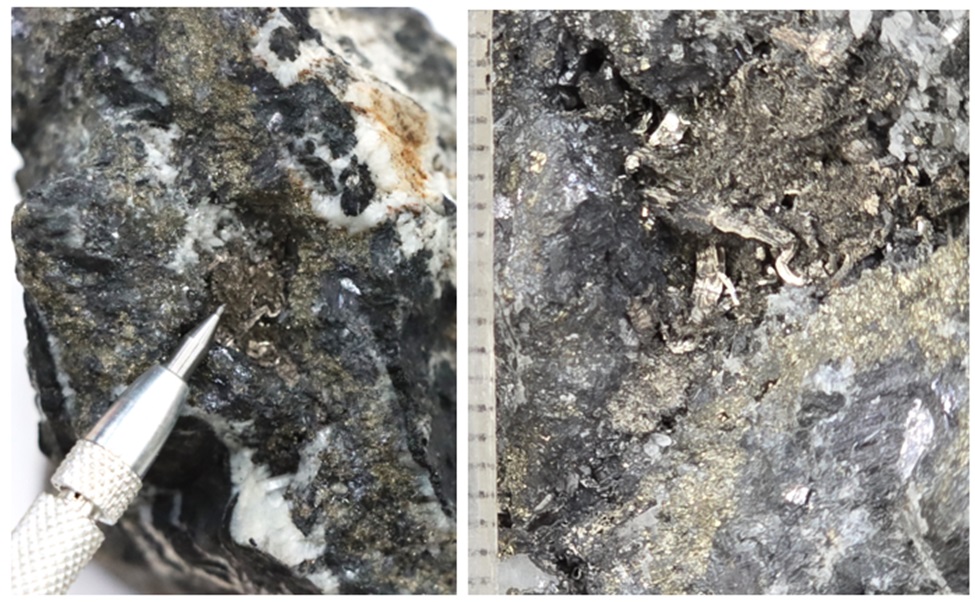
Solaris Resources (TSX:SLS) (NYSEAmerican:SLSR), has reported the discovery of significant precious metal deposits, which have substantially expanded the known area of epithermal-style mineral alteration. Initially concentrated in the Caya area, this mineralization has now been traced through the adjacent Mateo target and several kilometers further south. The expansion was identified through reconnaissance rock-chip sampling in the newly explored southern region. This sampling program yielded impressive results, with assays revealing up to 11,570 grams per tonne of silver (g/t Ag) and 12.3 grams per tonne of gold (g/t Au) across a 30-centimeter section of breccia outcrop.
These findings represent a major breakthrough in Solaris’ exploration activities at the Warintza Project. In response to these promising results, the company has intensified its fieldwork efforts to further delineate and refine potential drilling targets. Solaris anticipates commencing exploration drilling in this newly discovered area either towards the end of the third quarter or early in the fourth quarter of 2024.
Highlights from the results are as follows:
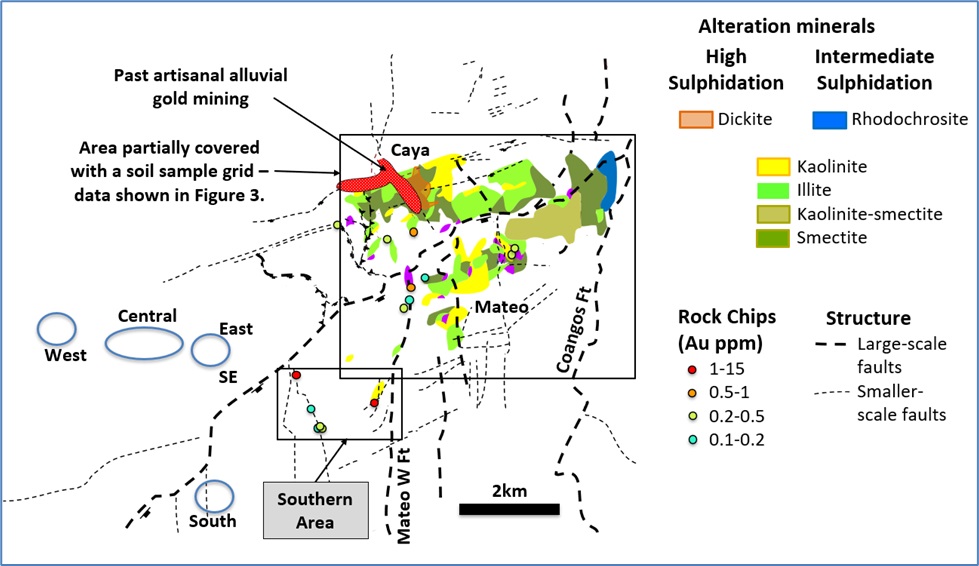
- Ongoing regional exploration east of the Warintza cluster has expanded the area of interest for epithermal mineralization from the Caya-Mateo area several kilometres to the south (Figure 2)
- Epithermal deposits can be genetically related to porphyry systems and host rich concentrations of gold and silver, with this association well documented in southeastern Ecuador
- The newly-sampled southern area is affected by minor fault splays off a major regional fault thought to be of Jurassic age, with kilometer-scale displacement across it
- This fault separates intrusive-dominated geology to the west hosting the Warintza porphyry cluster from primarily volcanic-sedimentary geology to the east hosting epithermal mineralization
- The footwall (western side) of this fault forms the margin of an adjacent north-south pull-apart basin filled with volcanic-sedimentary sequences
- Initial reconnaissance rock-chip sampling in this area has returned values of up to 11,570 g/t Ag and 12.3 g/t Au across 30cm of breccia outcrop with exceptionally high concentrations of epithermal pathfinder elements (Figure 1)
- In addition to the above, sporadic high gold values of between 4 g/t and 9 g/t, with silver values up to 150 g/t, in rock chip sampling have also been returned, with anomalous pathfinder values consistently occurring over an area 1km by 2km
- The working exploration concept is that these samples represent high-level expressions of an intermediate sulphidation epithermal system at depth
- Detailed mapping and sampling of this area has commenced, with vectors from geochemical data and mineral alteration to be used to refine targets
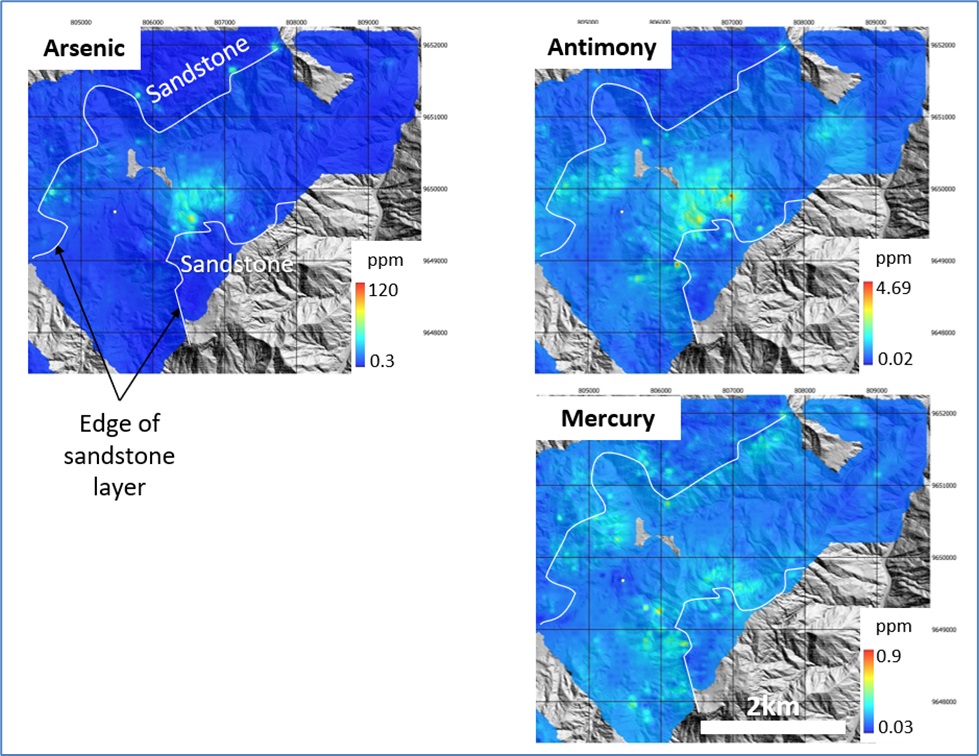
- Separately, recent sampling and spectral mapping in the Caya-Mateo target area have outlined pathfinder element and alteration anomalies at the margins of overlying sandstones (Figure 3)
- Mateo requires follow-up programs to extend coverage southeast over this large target area and establish metal and alteration zonation to define its core
- A series of geotechnical holes previously planned in Caya-Mateo to support Pre-Feasibility technical studies near the epithermal target area, are expected to commence in July and are expected to provide valuable exploration data
- Initial exploration drilling at Caya, Mateo and the new southern area will be planned on the basis of the ongoing exploration work and scheduled for late Q3/24 – early Q4/24
The above references an opinion and is for information purposes only. It is not intended to be investment advice. Seek a licensed professional for investment advice. The author is not an insider or shareholder of any of the companies mentioned above.

Hercules Silver (TSXV:BIG) has released an update on its ongoing drilling program at the Hercules Project in western Idaho. The company, which focuses on developing copper and silver resources, has encountered variable porphyry alteration and mineralization in its recent drilling activities.
Chris Paul, CEO and Director of the Company, commented in a press release: “Despite challenging drilling conditions encountered early on, the Company continues to see evidence of a large mineral system. It maintains a strong cash position of $24 million to execute another 17,000 meters of its planned 20,000 meter drill program, and continue testing the system across significant strike length.”
According to the report, an inferred northeast-southwest fault appears to offset mineralization northwest of the area drilled in 2023. Drill holes HER-24-02 and HER-24-03 intersected distal phyllic alteration with strong pyrite “D” veins. The company’s geologists detected long intervals of pyrophyllite and dickite alteration using portable spectrometer readings. These findings represent advanced argillic alteration, which is typical of the shallowest part of a porphyry system, often referred to as a “lithocap”.
Hercules Silver’s Vice President of Exploration, Christopher Longton, suggests that these results indicate either downward or lateral movement northwest of the fault, potentially preserving offset high-grade mineralization.
The company has continued its drilling program southward along a geophysically prospective corridor toward the Belmont Zone. As of the latest update, holes HER-24-05 and HER-24-06 are still in progress, with hole 05 recently reaching the Lower Plate formation.
However, the drilling program has faced some challenges. Hole HER-24-07 had to be terminated before reaching the Lower Plate due to strong artesian water flow beneath the Belmont Zone. The company plans to re-drill this hole in the fall when aquifer levels may be lower. Hercules Silver noted that 2024 has experienced abnormally heavy rainfall throughout the winter and spring, which may have contributed to the excessive water flow in the aquifer under Belmont.
Looking ahead, the company has outlined plans for three additional drill holes, designated as PH-24-08, -09, and -10. These holes are designed to test a potential northeast-southwest structural control. The primary objective of the drilling program remains to locate the highest-grade core of the porphyry system.
Assay results from the current drilling are expected by mid-summer, which should provide more concrete data on the mineralization encountered.
The Hercules Project, located northwest of Cambridge, Idaho, is fully owned by Hercules Silver Corp. The company describes the site as hosting the Leviathan porphyry copper system, which it characterizes as a significant new copper discovery in the United States. Hercules Silver’s exploration efforts are supported by a strategic investment from Barrick Gold.
Christopher Longton, who holds a BS degree and is a Certified Professional Geologist (CPG), has reviewed and approved the scientific and technical information in the company’s news release. Longton serves as the Qualified Person for Hercules Silver as defined by National Instrument 43-101, which sets standards for disclosure of mineral projects in Canada.
Investors and interested parties should note that exploration results are inherently uncertain and that further work and analysis are required to determine the economic viability of any mineral deposits at the Hercules Project. The company’s statements regarding the significance of the Leviathan porphyry copper system are based on current exploration data and should be considered in the context of ongoing exploration activities.
Hercules Silver Corp. is listed on the TSX Venture Exchange under the symbol BIG, on the OTCQB market under BADEF, and on the Frankfurt Stock Exchange under 8Q7.
Highlights from the results are as follows:
- Since mobilizing three drill rigs between late April and early May, a total of 3,000m have now been cored in 5 completed and 2 in progress drill holes ranging in length from 411 to 516m. 1 drill rig is currently moving to the next pad (Figure 1).
- Assay results are anticipated in batches, with the first set of results expected by mid summer.
- Challenging drilling conditions in the Upper Plate resulted in slower than anticipated production rates at the start of the program. To compensate for this and ensure adequate strike length is covered early in the program, large step-outs, up to 1km south, are now underway.
- The Phase III Drill Program is the largest yet and is expected to continue for the remainder of the year, testing a multi kilometer geophysical target area.
- In addition to the ongoing drilling, the Company has now completed a more detailed geological map, focused on the exposed Lower Plate (Triassic) rocks in the east of the Property and key lithological and structural controls which will further refine the drill targeting. Results of the detailed surface mapping will be released in the coming weeks.
- Geochemical soil and rock sampling of newly acquired claims is currently underway, aimed at identifying additional porphyry centers.
The above references an opinion and is for information purposes only. It is not intended to be investment advice. Seek a licensed professional for investment advice. The author is not an insider or shareholder of any of the companies mentioned above.
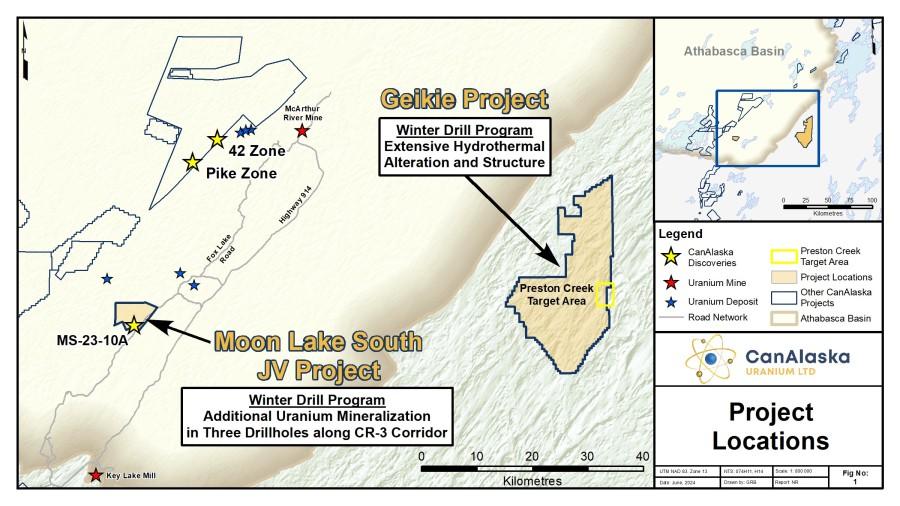
CanAlaska Uranium (TSXV:CVV) has reported diamond drill results from its partner-operated programs completed during the winter of 2024 on the Geikie and Moon Lake South Projects.
CanAlaska CEO, Cory Belyk, commented in a press release: “Results from the Geikie project are very encouraging and display all the characteristics of an Athabasca Basin basement-hosted uranium deposit fingerprint. The Preston Creek area is starting to favourably respond to our exploration effort and further drilling is clearly warranted. In addition, Denison continues to advance the Moon Lake South Joint Venture toward discovery. The existence of additional mineralization in drill holes along the CR3 corridor hints at its potential to host a uranium deposit.”
The 2024 winter exploration program on the Geikie Project consisted of eight completed diamond drill holes totaling 2,295 metres. The program was designed to follow-up on the success of the 2023 drill program and to test high-priority gravity anomalies identified during the 2023 Airborne Gravity Gradiometer (AGG) survey.
Drilling in the Preston Creek area intersected a wide quartz-rich fault zone showing cataclastic reactivation, intense hydrothermal fluid activity, redox-style alteration, pervasive clay alteration, and localized elevated radiometry. Drill hole observations suggest that the previously identified gravity low in the Preston Creek target area is related to a broad hydrothermal fluid system. This gravity low feature remains untested to the northeast where it extends for approximately 1,500 metres.
Geochemical assay results from the drill program are pending. The Geikie project is currently being fully-funded and operated by Basin Energy Ltd. under an option agreement.
The 2024 winter exploration program on the Moon Lake South Project consisted of eight completed diamond drill holes for a total of 5,634 metres. The program was designed to evaluate the potential to expand the footprint of high-grade uranium mineralization discovered in 2023 drill hole MS-23-10A (2.46% U3O8 over 8.0 metres) and test conductivity anomalies identified from recent ground-based Stepwise Moving Loop Electromagnetic (SWML EM) surveys.
Uranium mineralization was encountered in three of the eight drill holes completed during the winter 2024 program:- MS-24-23 intersected 0.12% eU3O8 over 0.6 metres
– MS-24-25 intersected 0.12% eU3O8 over 0.4 metres
– MS-24-27 intersected 0.08% eU3O8 over 0.2 metres
Geochemical assay results for the 2024 Moon Lake South winter program are pending.
The Moon Lake South project is a Joint Venture with Denison Mines Corp., the operator. CanAlaska currently holds a 25% ownership in the MLSJV and is funding the Company’s share of the 2024 exploration program.
Highlights from the results are as follows:
Moon Lake South Radiometric Equivalent Grade Intervals
| Drillhole Number |
From (m) |
To (m) |
Length (m)4 |
Average Grade (%eU3O8)5,6 |
| MS-24-23 (1) | 503.7 | 504.3 | 0.6 | 0.12 |
| MS-24-25 (2) | 589.4 | 589.8 | 0.4 | 0.12 |
| MS-24-27 (3) | 536.4 | 536.6 | 0.2 | 0.08 |
|
||||
The above references an opinion and is for information purposes only. It is not intended to be investment advice. Seek a licensed professional for investment advice. The author is not an insider or shareholder of any of the companies mentioned above.

American Eagle Gold Corp. (TSXV:AE) (OTCQB:AMEGF) has announced that a second diamond drill rig is now operational on its NAK copper-gold project in British Columbia. Early reports indicate that drilling has encountered chalcopyrite, bornite, and molybdenite mineralization consistent with nearby holes drilled previously.
The company is anticipating receiving the final merged inversion modeling of its geophysical data, which includes further IP surveying across five lines completed recently, along with three lines completed in late 2023 and historical data collected by previous operators. Preliminary inversion modelling of this data, combined with the results of the company’s 2022 and 2023 drilling, has been used to guide the placement of this season’s drill collars.
The 2024 drill program, currently planned for 15,000 metres, aims to link, better define, and expand upon the historical North and South zones, which the company showed in its 2022 and 2023 drill programs to extend to considerable depths along a strike length of 750 m and across a width of 400 m. Notable intercepts from 2023 include 900 m of 0.50% Copper Equivalent from surface in the North zone and 302 metres of 1.09% Copper Equivalent within 606 m of 0.74% Copper Equivalent starting from 98 metres downhole in the South Zone.
The NAK Project lies within the Babine copper-gold porphyry district of central British Columbia and has excellent infrastructure through all-season roads. Historical drilling and geophysical, geological, and geochemical work at NAK, which began in the 1960’s, tested only to shallow depths but revealed a very large near-surface copper-gold system that measures over 1.5 km x 1.5 km.
American Eagle follows a rigorous sampling methodology and internal QA/QC protocol, with samples submitted to ALS Geochemistry in Langley, British Columbia for preparation and analysis. All samples are analyzed for gold, silver, copper, molybdenum and a suite of 45 other major and trace elements.
American Eagle is focused on exploring its NAK copper-gold porphyry project in west-central British Columbia, Canada. Mark Bradley, B.Sc., M.Sc., P.Geo., a Certified Professional Geologist and ‘qualified person’ for the purposes of Canada’s National Instrument 43-101 Standards of Disclosure for Mineral Properties, has verified and approved the information contained in this news release.
Highlights from the results are as follows:
- NAK24-18 has surpassed 750 metres and still drilling. It was collared 100 m north of NAK23-17, with the goal of testing favourable geology and its related geophysical expression in the area west of the Babine porphyry stock.
- NAK24-19, being drilled by the new rig, aims to test the near surface gold-rich mineralization encountered at the historical South Zone, to depth to the southeast. It is intended to traverse through a large and untested area along the southern margin of the Babine porphyry stock.
- NAK24-20, which will be drilled by the first rig, is planned to collar 100 m to the north of NAK24-18, and will continue to test the area being tested by that hole, with the aim of tracking the “IP shoulder” (a moderate chargeability response) which links the historical North and South zones at NAK.
Collar details for holes drilled in the 2022, 2023 and 2024 drill program: Table 1
| Hole | UTM_Grid | UTM_East | UTM_North | Azimuth | Dip |
| NAK22-01 | NAD83_Z9 | 675281 | 6129359 | n/a | -90 |
| NAK22-02 | NAD83_Z9 | 675281 | 6129359 | 340 | -70 |
| NAK22-03 | NAD83_Z9 | 675201 | 6129658 | n/a | -90 |
| NAK22-04 | NAD83_Z9 | 675181 | 6129862 | n/a | -90 |
| NAK22-05 | NAD83_Z9 | 675105 | 6130067 | n/a | -90 |
| NAK22-06 | NAD83_Z9 | 675376 | 6129782 | 260 | -77 |
| NAK22-07 | NAD83_Z9 | 675181 | 6129862 | 170 | -81 |
| NAK23-08 | NAD83_Z9 | 675341 | 6129341 | 270 | -60 |
| NAK23-09 | NAD83_Z9 | 675990 | 6129284 | 20 | -65 |
| NAK23-10 | NAD83_Z9 | 675357 | 6129415 | 270 | -60 |
| NAK23-11 | NAD83_Z9 | 675215 | 6129340 | 270 | -60 |
| NAK23-12 | NAD83_Z9 | 674999 | 6129846 | 80 | -70 |
| NAK23-13 | NAD83_Z9 | 675205 | 6129773 | 270 | -60 |
| NAK23-14 | NAD83_Z9 | 675260 | 6129934 | 260 | -70 |
| NAK23-15 | NAD83_Z9 | 675211 | 6129232 | 270 | -60 |
| NAK23-16 | NAD83_Z9 | 675166 | 6129479 | 265 | -65 |
| NAK23-17 | NAD83_Z9 | 674969 | 6129377 | 105 | -73 |
| NAK24-18 | NAD83_Z9 | 674961 | 6129472 | 90 | -77 |
| NAK24-19 | NAD83_Z9 | 675219 | 6129390 | 120 | -55 |
| NAK24-20 | NAD83_Z9 | 674946 | 6129573 | 90 | -70 |
The above references an opinion and is for information purposes only. It is not intended to be investment advice. Seek a licensed professional for investment advice. The author is not an insider or shareholder of any of the companies mentioned above.
The above references an opinion and is for information purposes only. It is not intended to be investment advice. Seek a licensed professional for investment advice. The author is not an insider or shareholder of any of the companies mentioned above.

New Found Gold (TSXV:NFG, NYSEA:NFGC) has provided an update on its deep drilling program at its 100% owned Queensway Project, located 15km west of Gander, Newfoundland. The company has engaged Devico Directional Drilling Services to enhance its ongoing exploration efforts.
The Queensway Project, which is intersected by the Trans-Canada Highway and has logging roads crosscutting the project area, benefits from high voltage electric power lines running through the project area and easy access to a highly skilled workforce. New Found Gold is currently undertaking a 650,000m drill program at Queensway and is well-funded for this initiative, with cash and marketable securities of approximately $56 million as of June 2024.
Melissa Render, VP of Exploration for New Found, commented in a press release: “Our quest to unlock the deep potential of Queensway is off to a good start. With 12 holes completed, we are rapidly advancing our understanding of the geological environment and acquiring data that will help us to refine our interpretation of the 3-D seismic survey. Through 500,000+ meters of near-surface drilling, our team has developed a robust understanding of the controls on mineralization at Queensway and we are keen to apply that knowledge to this untested domain. In our search for staying at the forefront of exploration technology, we are proud to add directional drilling to our arsenal of tools. Devico is a renowned, industry-leader in directional drilling and the application of this technology should help us to lower cost, while increasing efficiency.”
Greg Matheson, P. Geo., Chief Operating Officer, and a Qualified Person as defined under National Instrument 43-101, has reviewed and approved the scientific and technical information disclosed in the press release. Mr. Matheson has consented to the publication of the press release dated June 11, 2024, and certifies that it fairly and accurately represents the scientific and technical information that forms the basis for the release.
New Found Gold Corp. holds a 100% interest in the Queensway Project, which is located just 18km from Gander International Airport. The company acknowledges the financial support of the Junior Exploration Assistance Program, Department of Natural Resources, Government of Newfoundland and Labrador.
Investors seeking to contact the company are encouraged to visit New Found Gold’s website, www.newfoundgold.ca, and submit their inquiries through the investor inquiry form. The company’s management has pledged to respond to all investor inquiries within 24 hours.
Highlights from the results are as follows:
- In early March, the Company announced commencement of its deep drilling program at Queensway to test targets derived from the initial 3-D seismic interpretation. To date, a total of 10,345m have been completed in 12 drill holes ranging in length from 550 to 1,230m. The program is ongoing and results are pending.
- Referring to Figure 1 below, initial targets selected include down-dip step-outs on some of the most significant mineralized zones and structures:
- At Jackpot and Lotto, the Company has drilled three holes targeting the zones at depth in areas that coincide with apparent structural breaks and reflectors in the 3-D seismic data.
- At K2, one hole was drilled to test the down-dip extension of the K2 structure while continuing on to test a prospective region where the Glenwood and the Appleton Fault zones converge and coincide with a reflective feature in the seismic data.
- At Iceberg, two drill holes have been completed testing the Keats-Baseline-Fault Zone (“KBFZ”) in an area where the KBFZ appears to change direction based on the seismic interpretation. At the same time, the Company is extending several existing Iceberg holes towards the Appleton Fault Zone (“AFZ”) to target a previously untested and highly prospective ‘wedge’ between the KBFZ and the AFZ and below Keats West.
- Two drill holes have been completed at the south extension of Keats, targeting the down plunge extension of the KBFZ.
- The Company has engaged Devico AS, a division of IMDEX, a leading supplier of directional drilling services, to apply its DeviDrill steerable core barrel technology at Queensway. Devico is in the process of deploying a team of technicians to the project site that will work closely with New Found and onsite drill contractors to apply this directional drilling technology that will enable branch holes. Branching involves single-hole re-entry and directional drilling techniques to branch off existing holes at depth and more quickly target and define areas of interest.
The above references an opinion and is for information purposes only. It is not intended to be investment advice. Seek a licensed professional for investment advice. The author is not an insider or shareholder of any of the companies mentioned above.
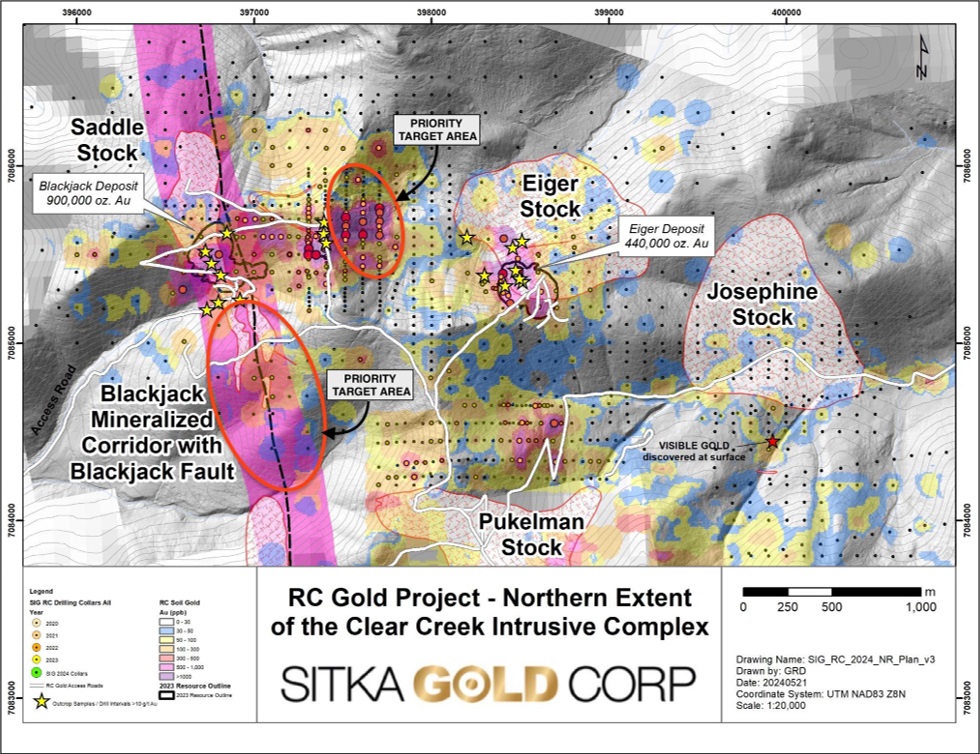
Highlights from the results are as follows:
| COG g/t Au | Blackjack Zone | Eiger Zone | Combined | ||||||||
| Tonnes 000’s | Au g/t | 0z Au 000’s | Tonnes 000’s | Au g/t | 0z Au 000’s | Tonnes 000’s | Au g/t | 0z Au 000’s | |||
| 0.20 | 35,798 | 0.80 | 921 | 32,523 | 0.45 | 471 | 68,321 | 0.63 | 1,391 | ||
| 0.25 | 33,743 | 0.83 | 900 | 27,362 | 0.50 | 440 | 61,105 | 0.68 | 1,340 | ||
| 0.30 | 31,282 | 0.88 | 885 | 22,253 | 0.55 | 393 | 53,535 | 0.74 | 1,279 | ||
| 0.35 | 29,065 | 0.92 | 860 | 17,817 | 0.60 | 344 | 46,882 | 0.80 | 1,203 | ||
| 0.40 | 26,975 | 0.96 | 833 | 14,506 | 0.66 | 308 | 41,481 | 0.86 | 1,140 | ||
Notes
1. Mineral resource estimate prepared by Ronald G. Simpson of GeoSim Services Inc. with an effective date of January 19, 2023. Mineral Resources are classified using the 2014 CIM Definition Standards.
2. The cut-off grade of 0.25 g/t Au is believed to provide a reasonable margin over operating and sustaining costs for open-pit mining and processing
3. Mineral resources are constrained by an optimised pit shell using the following assumptions: US$1800/oz Au price; a 45° pit slope; assumed metallurgical recovery of 85%; mining costs of US$2.00 per tonne; processing costs of US$8.00 per tonne; G&A of US$1.50/t.
4. Mineral resources are not mineral reserves and do not have demonstrated economic viability.
5. Totals may not sum due to rounding.
The above references an opinion and is for information purposes only. It is not intended to be investment advice. Seek a licensed professional for investment advice. The author is not an insider or shareholder of any of the companies mentioned above.

In an exclusive interview with First Phosphate (CSE:PHOS) (OTC:FRSPF)(FSE:KD0) a mineral development company dedicated to extracting and purifying phosphate for the Lithium Iron Phosphate (LFP) battery industry, we explore their unique approach, strategic advantages, and growth plans within the rapidly expanding LFP battery supply chain.
First Phosphate Corp. differentiates itself by its commitment to producing high purity phosphate material in a responsible manner with a low anticipated carbon footprint. As CEO John Passalacqua explains, “First Phosphate is dedicated to building an integrated downstream supply chain that goes from phosphate mine to the creation of purified phosphoric acid (PPA) and eventually to the production of lithium iron phosphate (LFP) cathode active material.”
Geographic Advantage and Mineral Claims
Holding over 1,500 square kilometers of royalty-free land claims in the Saguenay-Lac-St-Jean Region of Quebec, Canada, First Phosphate Corp. enjoys a strategic location with significant benefits. Passalacqua elaborates, “We are at 70 kms from the deep sea port, on major highway and near major infrastructure and electricity.”
Quebec’s reputation as a friendly mining jurisdiction and an electric vehicle hub for North America further positions First Phosphate Corp. to meet the growing demand for LFP battery materials. “Saguenay-Lac-St-Jean is already the aluminium valley of north america so tremendous infrastructure exists there already right down into the heart of automotible heartland of north america,” adds Passalacqua.
Anorthosite Igneous Phosphate Rock
First Phosphate Corp.’s properties consist of rare anorthosite igneous phosphate rock, yielding high purity phosphate material devoid of harmful elements. This sets the company apart from other phosphate producers. Passalacqua explains, “95% of the World’s Phosphate is found in heavy metal laden Sedimentary Rock. Only 4% of the World’s Phosphate is found in Clean Igneous Carbonatite Rock. Only 1% of the World’s Phosphate is found in Even Cleaner Igneous Anorthosite found mostly only in Quebec, Canada.”
The purity and quality of First Phosphate Corp.’s phosphate rock contribute significantly to the production of battery-grade purified phosphoric acid for the LFP battery industry. According to Passalacqua, “Up to 90% of feedstock can be converted to purified phosphoric acid (PPA) for LFP battery, allowing strict focus on LFP battery technology client downstream, with mine size 8-10x smaller, Capex focused on value added, and enabling a full circular economy.”
Pilot Plants and Processing
First Phosphate Corp. has established a Phosphate Concentrate Pilot Plant and a Purified Phosphoric Acid (PPA) Pilot Plant to optimize their metallurgical processes and produce high-quality phosphate materials. Passalacqua highlights, “The pilot plant optimises the Company’s metallurgical process for the production of a super high grade phosphate concentrate approaching 41% P2O5. The pilot plant has produced over 900 kilograms of apatite concentrate which have been sent to the facilities of Prayon SA (“Prayon”) in Belgium for the production of battery-grade purified phosphoric acid (“PPA”). The battery-grade PPA produced will then be sent to Company partners for homologation into their LFP cathode active material production processes. The pilot plant also produces valuable, marketable recoveries of ilmenite and magnetite.”
The company’s advanced mining and refinement methods ensure an environmentally clean and circular approach to phosphate production. “We are able to fully recycle all Gypsum into building materials using our partner, Rapidwall,” states Passalacqua.
Key Projects and Properties
First Phosphate Corp. is making significant progress on its key projects, such as the Bégin-Lamarche Property and the Lac à l’Orignal Flagship Property. Passalacqua shares, “A 26,000 m drill program was completed this winter where we found exceptional high grade phosphate in 4 main areas over a 3 km magnetic strike zone. We are currently in the process of establishing a mineral resource estimate and Preliminary Economic Assessment.”
Recent News and Developments
The recent addition of apatite (phosphate) to the Critical and Strategic Minerals List of Canada has impacted First Phosphate Corp. positively. “It affects flow through raises. It affects access to government funding and visibility for initiatives within the government,” explains Passalacqua.
First Phosphate Corp. has also signed Memorandums of Understanding with Groupe Goyette and Craler Inc. to enhance their logistical footprint and global freight competencies. These agreements support the company’s growth strategy, as Passalacqua elaborates, “Many projects in critical minerals do not have the infrastructure around them to make it into viable production but First Phosphate does. Through these key players and others in the region of Saguenay-Lac-St-Jean, we are better able to attain economic viability which will be more broadly demonstrated in our upcoming PEA.”
ESG and Sustainability
First Phosphate Corp.’s commitment to responsible and sustainable operations is evident in their ESG practices. “We are hoping to almost fully recycle all tailings and waste rock into valuable secondary materials. We can already produce saleable quantities of iron (magnetite) and titanium (ilmenite). We can also recycle the gypsum from the phosphoric acid production since it is very pure,” states Passalacqua.
As investors increasingly prioritize ESG factors, First Phosphate Corp. positions itself as a responsible and sustainable choice. “As above, we hope to use the most sustainable practices in the industry,” affirms Passalacqua.
Market Outlook and Growth
With the demand for LFP batteries expected to grow significantly, First Phosphate Corp. plans to scale its operations strategically. “We plan to enter with small projects with lower capex in three integrated verticals (mine, PPA secondary transformation and LFP CAM production) with leading industry partners to establish and then to grow slowly from there,” explains Passalacqua.
The company’s long-term growth plans involve expanding its presence in the global LFP battery supply chain. “We are using partnerships with leading industry players in various verticals to work quickly on building a supply chain for North America,” says Passalacqua.
A Compelling Investment Opportunity
When asked what sets First Phosphate Corp. apart as a compelling investment opportunity, Passalacqua emphasizes, “We are fully dedidated to phosphate and LFP battery industry and have a significant bench of global leading professionals focus on that day in and day out.”
He adds, “We are perhaps one of the better positioned players in North America for the oncoming onslaught of LFP battery demand coming to North America. 70% of all batteries output in China are LFP. That trend is on its way hear like tsunami. We are positioned and have been positioning for 2 years now.”
The above references an opinion and is for information purposes only. It is not intended to be investment advice. Seek a licensed professional for investment advice. The author is not an insider or shareholder of any of the companies mentioned above.
The above references an opinion and is for information purposes only. It is not intended to be investment advice. Seek a licensed professional for investment advice. The author is not an insider or shareholder of any of the companies mentioned above.
Highlights from the results:
Review of ALT-23-001 intercept area hosting the 211.65 metres of 0.46 g/tonne gold:
- Hosted in semi-crowed, quartz-plagioclase porphyry
- Indicates that silica filled fractures hosting sulphide mineralization occur in areas of higher-grade gold concentrations
- Semi-massive, poly-metallic veins can contain high-grade gold concentrations.
The above references an opinion and is for information purposes only. It is not intended to be investment advice. Seek a licensed professional for investment advice. The author is not an insider or shareholder of any of the companies mentioned above.
Highlights from the results are as follows:
Table 1 – Assay Results
| Hole ID | Date Reported | From (m) |
To (m) |
Interval (m) |
Cu (%) |
Mo (%) |
Au (g/t) |
CuEq¹ (%) |
| SLSE-35 | June 11, 2024 | 0 | 580 | 580 | 0.33 | 0.02 | 0.04 | 0.42 |
| Including | 0 | 189 | 189 | 0.41 | 0.02 | 0.04 | 0.50 | |
| SLSE-34 | 0 | 522 | 522 | 0.28 | 0.02 | 0.03 | 0.36 | |
| Including | 66 | 318 | 252 | 0.31 | 0.02 | 0.03 | 0.40 | |
| SLSE-33 | 6 | 550 | 544 | 0.40 | 0.02 | 0.06 | 0.50 | |
| Including | 54 | 135 | 81 | 0.60 | 0.02 | 0.07 | 0.73 |
Notes to table: True widths are interpreted to be very close to drilled widths due to the bulk-porphyry style mineralized zones at Warintza.
Table 2 – Collar Locations
| Hole ID | Easting | Northing | Elevation (m) |
Depth (m) |
Azimuth (degrees) |
Dip (degrees) |
| SLSE-35 | 801485 | 9648192 | 1129 | 580 | 90 | -80 |
| SLSE-34 | 801483 | 9648241 | 1170 | 523 | 40 | -80 |
| SLSE-33 | 801532 | 9647848 | 1154 | 550 | 50 | -85 |
Notes to table: The coordinates are in WGS84 17S Datum.
Endnotes
- Copper-equivalence calculated as: CuEq (%) = Cu (%) + 4.0476 × Mo (%) + 0.487 × Au (g/t), utilizing metal prices of US$3.50/lb Cu, US$15.00/lb Mo, and US$1,500/oz Au, and assumes recoveries of 90% Cu, 85% Mo, and 70% Au based on preliminary metallurgical test work.
The above references an opinion and is for information purposes only. It is not intended to be investment advice. Seek a licensed professional for investment advice. The author is not an insider or shareholder of any of the companies mentioned above.
The above references an opinion and is for information purposes only. It is not intended to be investment advice. Seek a licensed professional for investment advice. The author is not an insider or shareholder of any of the companies mentioned above.

In a recent report, UBS, a leading global investment bank, has raised its gold price forecasts, expecting the precious metal to reach $2,800 per ounce by the end of 2025. The bank’s upward revision is attributed to stromg structural support and persistent demand for gold, driven by macroeconomic uncertainty, geopolitical risks, and increased allocations to the safe-haven asset.
Key Findings from the UBS Report
- Gold Price Forecast: UBS has increased its 2024 forecast to $2,600/oz, up from the previous target of $2,500/oz. The bank expects gold to push to $2,800/oz by the end of 2025, with a long-term forecast of $2,241 in real terms.
- Central Bank Demand: UBS expects central bank demand for gold to reach 950-1,000 metric tons in 2024, up from 800-850 metric tons previously. This surge in demand is attributed to central banks’ desire to diversify their foreign exchange reserves and preserve the value of their assets during economic uncertainty.
- Geopolitical Tensions: Ongoing geopolitical tensions, including the approaching US election, conflicts in the Middle East and Ukraine, and US-China trade tensions, are expected to support gold as a hedge against financial instability and political conflicts.
- Investor Sentiment: The report highlights that the private wealth community and long-term investors have yet to fully allocate to gold, suggesting that consensus upgrades to add gold or increase gold allocations could be the catalyst for further price increases.
- Gold Mining Stocks: UBS has upgraded several gold mining stocks to a BUY rating and increased their target prices, as miners look attractive heading into FY25, with stocks under UBS coverage trading at FY25 EV/EBITDA of less than 5 and free cash flow yields of more than 10%.
Impact of Central Bank Gold Purchases on Prices and Investor Sentiment
When central banks buy gold, it signals their confidence in the metal as a reliable store of value and a safe-haven investment, boosting investor sentiment and driving up demand for gold.
Sustained periods of central bank gold purchases can contribute to a bull market in gold, as investors anticipate continued demand and price appreciation. Conversely, decreased buying or sales may lead to a bear market. Large-scale central bank gold purchases can also lead to price spikes, which may influence short-term trading decisions.
Mining Industry Outlook and Its Influence on Gold Prices
The mining industry outlook is centered on three key themes over the coming year: spot prices falling, unit costs rising, and miners tilting toward growth. Gold prices are expected to benefit from falling interest rates and increased demand from central banks and investors seeking safe-haven assets.
Gold and silver mining companies are poised to perform well in 2024 due to the “2x/FX effect,” where mining stocks are twice as leveraged to gold prices. This, combined with a weaker USD, could result in a threefold return for European investors.
Miners are taking several measures to mitigate the effects of high energy costs, including optimizing energy use, integrating renewable energy sources, and implementing energy-efficient technologies and practices.
With central banks increasing their gold purchases and investors yet to fully allocate to gold, the outlook for the precious metal remains bullish, with prices expected to reach new highs by 2025 if UBS analysis holds over the coming 18 months.
As the mining industry shifts its focus toward growth and cost optimization, gold mining stocks are should also benefit from these market conditions.
The above references an opinion and is for information purposes only. It is not intended to be investment advice. Seek a licensed professional for investment advice. The author is not an insider or shareholder of any of the companies mentioned above.

Trafigura Group, a major commodity trading company, has reached a settlement in a London lawsuit brought by billionaire brothers David and Simon Reuben over an alleged nickel fraud scandal. The case, filed in June 2023 by the Reubens’ company Hyphen Trading Ltd., accused Trafigura of delivering fraudulent shipping documents when it sold Hyphen a 404-ton cargo of nickel in September 2022 for $8.4 million.
The settlement, reached in May 2024 according to court documents, resulted in the case being dismissed “by consent” after Trafigura paid the Reuben brothers an undisclosed sum. Spokespeople for both Trafigura and the Reubens declined to comment on the specifics of the settlement.
Background of the Nickel Fraud Scandal
In February 2023, Trafigura shocked global metal markets by announcing it expected to lose nearly $600 million in what it called a “systematic fraud” perpetrated by Indian businessman Prateek Gupta. Trafigura accused Gupta of selling it thousands of tons of nickel that turned out to be worthless rubble upon inspection. Gupta’s spokesperson stated he planned a “robust response” to Trafigura’s allegations.
The scandal raised concerns about the use of counterfeit shipping documents, known as bills of lading, in the nickel market. These documents represent legal ownership of commodity cargoes and are often used as collateral for financing. Hyphen’s lawsuit alleged that both it and Trafigura claimed to possess the original bills of lading for the disputed nickel shipment, suggesting at least one set was fraudulent.
Details of Hyphen’s Lawsuit
In its complaint, Hyphen provided a detailed account of its attempts to locate and take delivery of the nickel it had purchased from Trafigura. The 404-ton cargo, loaded onto the container ship OOCL Jakarta in Kaohsiung, Taiwan, was supposed to be delivered to Hyphen in Rotterdam. However, the containers inexplicably remained on the vessel during its return trip to Asia before finally being unloaded in Jeddah, Saudi Arabia.
Hyphen alleged that Trafigura repeatedly ignored or refused its requests for information about the cargo’s location and stonewalled attempts to inspect the goods, citing “logistical complications.” It was only in April 2024 that lawyers for the shipping line OOCL informed Hyphen that the bill of lading it had received from Trafigura was likely fraudulent.
The lawsuit also implicated Techies Logistics (S) Pte, a Singapore freight forwarding company, in the alleged fraud. Hyphen claimed that Techies was listed as the “forwarding agent” on OOCL’s copy of the bill of lading and had ordered the cargo to be sent back to Jeddah after it arrived in Rotterdam. “Hyphen infers that Techies’ actions (whether known or unknown to Trafigura) were motivated by a complicity or other kind of involvement in the Gupta Fraud,” the complaint stated. Techies did not respond to requests for comment.
Ongoing Legal Battles and Implications
While the London lawsuit has been settled, Hyphen and Trafigura remain embroiled in a separate legal dispute in Singapore over another nickel cargo. Trafigura also continues to pursue legal action against Prateek Gupta, with a judge dismissing Gupta’s attempt to lift a freezing order against him in December 2023.
The nickel fraud scandal has sent shockwaves through the commodities industry, raising questions about the security of shipping documentation and the potential for widespread fraud. Trafigura has made staffing and operational changes in response to the incident, but the full implications for the company and the broader nickel market remain to be seen as legal proceedings unfold.
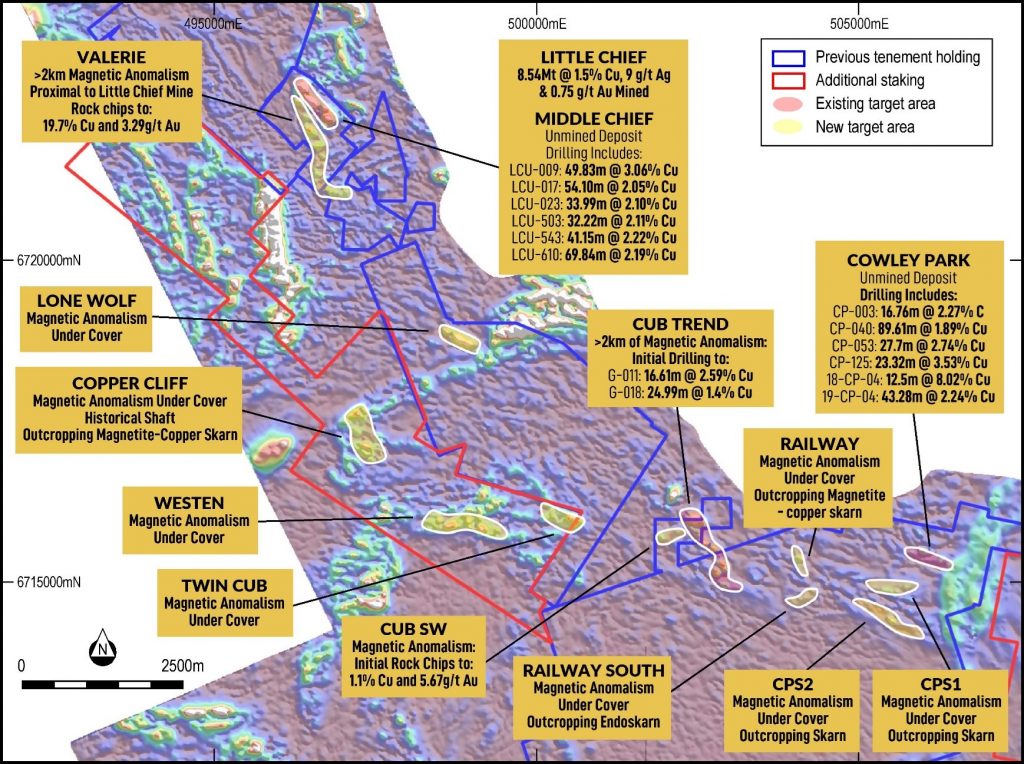
Gladiator Metals (TSXV:GLAD) has announced an update on exploration at the Whitehorse Copper Project, where recently completed drone magnetic surveys have identified multiple, significant, undrilled, large-scale magnetic anomalies along strike of historical mining operations at the Cowley Park and Cub Trend deposits.
Gladiator CEO, Jason Bontempo commented in a press release: “With historical, economic discoveries of copper mineralization in the Whitehorse area largely driven by outcropping occurrences, this first-time survey of its size, coverage and latest technology was designed to explore prospective sections of geology for magnetite-copper skarns hidden under thin cover. Given the high magnetic response of previously identified bodies of magnetite-copper skarn mineralization, Gladiator is confident that this survey can act as a direct detection tool for further zones of high-grade copper mineralization. Multiple, new, undrilled magnetic anomalies have been identified by the survey indicating the extensive new discovery potential of high-grade copper in the Whitehorse Copper Project area. Gladiator’s field crews are now active, on the ground, following up on these identified anomalies and we look forward to updating the market on the developing target areas ahead of drilling later this year.”
The processed results from the high-definition drone-borne aeromagnetic survey completed over the Whitehorse Copper Belt have successfully identified potential extensions to known mineralization, highlighted significant un-drilled exploration targets associated with high-magnetic responses, and supported a strong correlation between occurrences of magnetite-copper skarn mineralization and reported magnetic anomalies.
Gladiator believes that a survey of this detail and extent can be effectively utilized as a direct detection tool for mineralized bodies under cover. The survey results have prompted the company to stake an additional 54 km2 of claims, bringing the total area of the Whitehorse Copper Project to 133 km2.
In response to the acquisition of this significant quality data set and the new staking, Gladiator has advanced its summer field campaigns to immediately commence follow-up on magnetic targets. The company has already begun geological mapping, rock chipping, and soil sampling, with ground-based geophysics (IP and EM) set to commence shortly ahead of planned drilling.
Historical exploration of the Whitehorse Copper Belt was largely driven by the discovery of outcropping zones of copper skarn mineralization, with drilling stepping out from these initial discoveries to determine the size and potential of prospective areas. The recent survey was designed to target areas of prospective geology under the thin glacial tills and glaciofluvial sediments that cover much of the Whitehorse Copper Belt.
The drone magnetics also act as a preliminary geological tool to help map out the contact between the Cretaceous Whitehorse Batholith and the Triassic Lewes Carbonate sediments, which is the primary vector for mineralization in the district. The constraint of this prospective horizon under the thin cover sequences will help to open up multiple new areas for exploration in the coming months and focus Gladiator’s efforts on more prospective targets.
Summer field campaigns have now commenced and will follow up on all identified targets and magnetic anomalies with mapping, rock chipping, and soil sampling, to be shortly followed by ground-based geophysical surveys (IP and EM). These surveys are designed to advance and prioritize target areas ahead of planned drilling campaigns in Q3 2024.
Work completed to date, including the review of the aeromagnetic data received, has identified more than 30 drill-ready, high-grade regional targets associated with copper-rich skarns at the contact between the Cretaceous age Whitehorse Plutonic Suite and the Triassic to Jurassic Lewes River Group’s clastic and carbonate metasediments. Cumulatively, there is more than 35km of underexplored strike on the contact, which is highly prospective for high-grade copper+/-molybdenum+/-silver+/-gold.
Highlights from the results are as follows:
The above references an opinion and is for information purposes only. It is not intended to be investment advice. Seek a licensed professional for investment advice. The author is not an insider or shareholder of any of the companies mentioned above.
If you would like to receive our free newsletter via email, simply enter your email address below & click subscribe.
 Follow us on Twitter
 Become our facebook fan
CONNECT WITH US
Tweets
Tweet with hash tag #miningfeeds or @miningfeeds and your tweets will be displayed across this site.
MOST ACTIVE MINING STOCKS
Daily Gainers
 CMC Metals Ltd. CMC Metals Ltd. |
CMB.V | +900.00% |
 Eden Energy Ltd Eden Energy Ltd |
EDE.AX | +200.00% |
| GoviEx Uranium Inc. |
GXU.V | +42.86% |
| Eagle Nickel Ltd. |
ENL.AX | +41.67% |
| Citigold Corp. Limited |
CTO.AX | +33.33% |
| Mount Burgess Mining NL |
MTB.AX | +33.33% |
| Exalt Resources Limited |
ERD.AX | +31.94% |
| Casa Minerals Inc. |
CASA.V | +30.00% |
| Cariboo Rose Resources Ltd |
CRB.V | +28.57% |
| Belmont Resources Inc. |
BEA.V | +28.57% |