Sepror and Potássio do Brasil (Brazil Potash) have joined forces to push forward the development of the mining industry in Amazonas, a move set to generate thousands of jobs within the next four years. This collaboration aims to explore the mineral sylvinite, the primary raw material for potassium, in the municipality of Autazes, located 113 kilometers from Manaus.
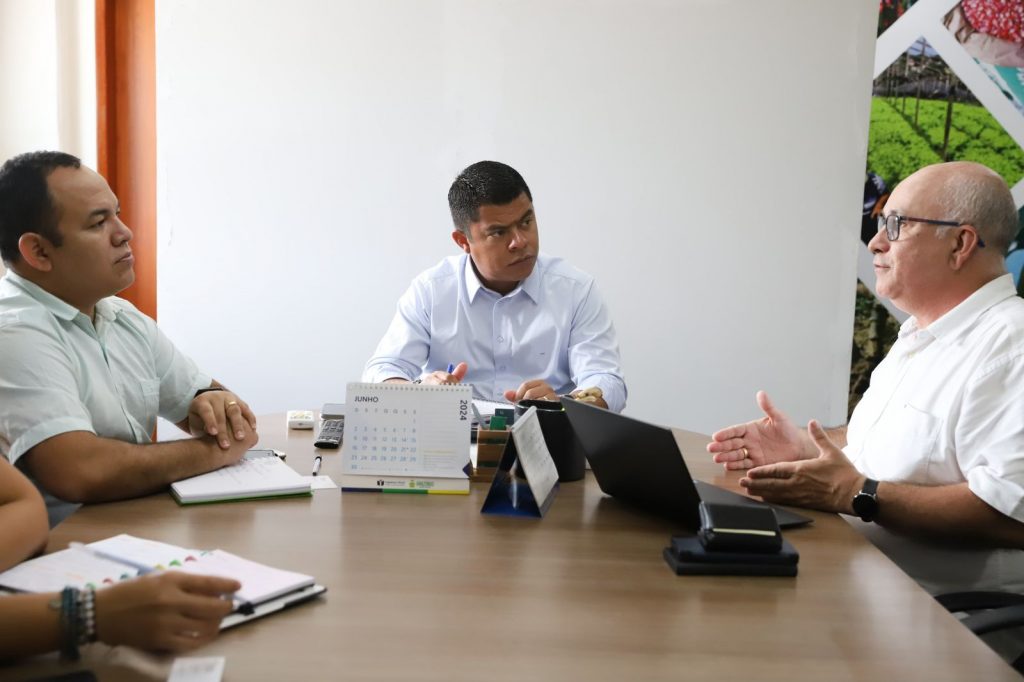
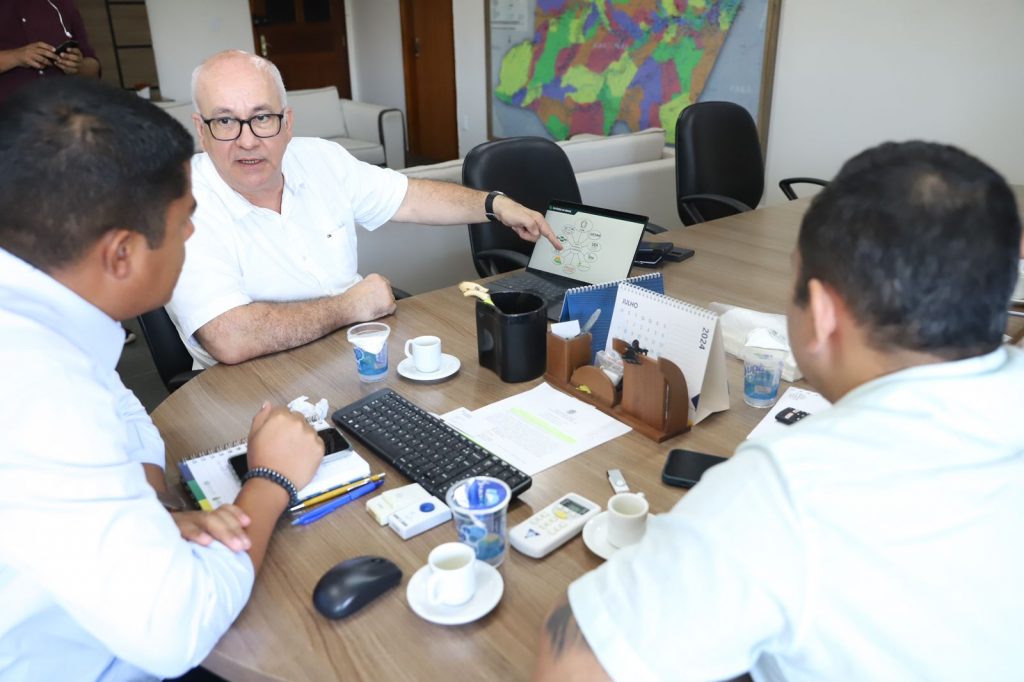
Potássio do Brasil Ltda, led by president Adriano Espeschit, is at the forefront of this project. The company is already in the implementation phase, complying with various legal and environmental standards. This Wednesday, Espeschit met with the Secretary of State for Rural Production, Daniel Borges, and executive secretaries Larissa França and Eirie Vinhote to discuss a Technical Cooperation Agreement (TCT). This agreement aims to benefit the communities in the Rio Madeira region where the mining industry will be established.
Daniel Borges commented: “We, as the Government of Amazonas, support the Autazes Potassium Project with great enthusiasm, understanding that the demand for this mineral is large and permanent, that is, it will greatly help the Brazilian Primary Sector, in addition to the benefits of implementing this structure in the interior of our state, which will benefit thousands of people with new job opportunities, all aligned with the Amazon region and its specificities.”
The exploration of sylvinite has been contemplated for over 30 years. Now, it is on the verge of becoming a reality, promising to bring significant economic benefits to the local population. The projects under this initiative will include individual and collective training, as well as the creation of new businesses to supply products and services, such as uniforms and food for the employees of Potássio do Brasil.
Daniel Borges emphasized that the development of the Primary Sector is a key priority for Governor Wilson Lima. The exploration of Autazes Sylvinite stands out as a major driver of this development. Potássio do Brasil plans to occupy a 500-hectare area for the exploration of sylvinite. However, the company’s social commitments extend beyond this area. They include acquiring land for economically viable crops, which was among the topics discussed during the meeting. These proposals aim to bring development to the indigenous communities and tribes of the Mura ethnic group residing in the region.
“Potassio do Brasil began investing in the Amazon in 2016 and we have already outlined several projects that will bring sustainable development to this region, even before the Silvinita mining industry began operating. So, in addition to all the licensing and authorization, we are seeking out stakeholders like Sepror, to be as assertive as possible regarding the needs of the communities and the correct way to reach them. I am grateful for the reception and I assure you that I am optimistic about the possibility of a partnership with Sepror”, highlighted Adriano Espeschit.
Potássio do Brasil has guaranteed that at least 80% of the workforce in the silvinite exploration industry will be sourced from Amazonas, with a preference for individuals from the Autazes region. This commitment opens up numerous opportunities for training and employment for the local population.
In addition to this major project, Potássio do Brasil has already initiated several other projects in collaboration with various institutions. One notable partnership is with the Brazilian Agricultural Research Corporation (Embrapa). Together, they have established two native tree seedling nurseries, which have produced tens of thousands of trees. Two indigenous staff members have planted at least 60,000 trees on deforested and degraded lands, contributing significantly to the restoration of the green layer above ground.
The partnership between Sepror and Potássio do Brasil marks a significant step forward in the development of the mining industry in Amazonas. With the alignment of the Technical Cooperation Agreement and the ongoing projects, this collaboration promises to bring economic growth, job creation, and environmental restoration to the region. The exploration of sylvinite in Autazes is set to become a cornerstone of Amazonas’ economic development, benefiting both the local population and the broader region.
The above references an opinion and is for information purposes only. It is not intended to be investment advice. Seek a licensed professional for investment advice. The author is not an insider or shareholder of any of the companies mentioned above.

Monetary Metals is quickly becoming a leader in the precious metals investment space by offering a unique platform that allows investors to earn interest on their gold and silver holdings. Unlike traditional companies that profit from fees on sales and storage of metals, Monetary Metals earns its fees from businesses that utilize these precious metals productively. This approach benefits investors but also supports businesses in various industries, including gold miners and producers.
Keith Weiner, founder of Monetary Metals, shares the inspiration behind the company’s inception: “I am a serial entrepreneur. I sold my last company (a software technology developer) on August 19 2008. As the markets careened over the edge shortly thereafter I was sitting with the money I made in the acquisition in a few too-big-to-fail banks. At first I felt bemused. And lucky. But as events progressed I was alarmed. I started studying markets and economics to understand what had happened.”
Weiner’s journey led him to a critical realization: “I eventually realized that the monetary system is based on irredeemable currency. And this system has an unstable interest rate and exponentially growing debt. These are features not bugs.” This understanding became the foundation for Monetary Metals, with a mission to reintroduce gold into the economy by offering interest on it. “If gold earns no interest then people just hoard it. It remains a dry asset and it won’t circulate. But interest draws it out.”
Monetary Metals’ leasing program allows investors to earn a yield on their precious metals without selling them. This method contrasts with the traditional approach of buying gold and waiting for its value to increase before selling. By earning a yield, investors can enjoy a return on their gold holdings while retaining ownership. As Weiner puts it, “Traditionally you buy gold and wait for it to go up. Then you sell it. You make dollars and only by getting rid of your gold. The yield is a way to make an evergreen return on your gold without selling it. It’s like having your cake and eating it too!”
The company offers various lease and bond options tailored to different investor needs. Weiner explains, “Leases are for businesses who use gold or silver as inventory or work-in-progress such as jewelers refiners recyclers coatings manufacturers etc. What makes a lease a lease is that the metal is physically present. We could show up scrape all the metal together put it on a scale and it weighs more than the lease amount. It does not belong to the lessee is not on their balance sheet and is not available to their creditors in any possible bankruptcy.” Lease rates typically range from 2.5% to 5%.
For businesses that earn income in gold or silver, such as mining companies, Monetary Metals offers gold and silver bonds. “Loans which we sell as a securities offering called a gold bond (or silver bond) are for businesses who earn gold or silver income. Such as mining companies. The metal is sold to pay for equipment contractors payroll diesel fuel etc. The risk is obviously different than in a lease. Interest rates will be mid single digits to upper teens (our current silver bond open for investors at the moment will pay 12%),” Weiner elaborates.
To ensure the security of investors’ metals, Monetary Metals employs a rigorous due diligence process. This involves getting to know the business owners, directors, and officers, checking credit and criminal records, reviewing financials and track records, and conducting on-site observations. “Obviously you can’t give gold to just anybody. We have a 360-degree process. We get to know the people (owners directors officers) of the business we talk to other industry people who know them we pull their credit and criminal records we look at their financials and track record we go on site to observe their processes in actual operation,” Weiner explains. For mining companies, additional diligence includes examining geology, mine plans, and metallurgy.
Recent developments at Monetary Metals include the release of their Gold Outlook Report, which provides economic analysis and price forecasts for gold and silver. Weiner highlights key insights from the report: “I think the main takeaway is that interest rates must necessarily resume their long falling trend. This is because there’s little demand for credit at higher rates. Little demand means little new supply of bonds.” He adds, “Another is that the gold and silver markets changed character post covid with the incredible increase in government deficits that began then (and has not let up since). We are now in a bull market unlike 2012-2018.”
Monetary Metals has also introduced new lease and bond offerings, such as a silver lease paying 5% annually. “We are always working to match supply of leases and bonds with demand or to put it another way to match demand for metal with supply. As our marketplace grows we are increasing the number and size of both lease and bond deals. We want to make sure every gold and silver owner has an opportunity which fits his risk-return profile,” says Weiner.
The company’s expansion plans include opening an office in Dubai to tap into a market of gold-savvy investors and enhancing their client platform to streamline the process of buying metal and transferring cash. “We have connected our client platform to the banking system so now clients can buy metal and through the same screen direct their bank to send the cash via ACH,” Weiner mentions. They have also completed a SOC-2 level 2 audit, ensuring compliance with business and IT procedures designed to safeguard their systems and client assets.
In their latest investment round, Monetary Metals secured significant funding, including a gold bond issuance that raised over $11 million. These funds will boost marketing efforts, improve their software platform, and streamline operations, ultimately enhancing the investor experience. “We of course will increase our marketing efforts to make the world aware of what we are doing. And also we are investing more in our software platform and operations to make the process easier and smoother for investors. We also issued a gold bond to add to our coffers. We raised 4700 ounces (over $11M),” Weiner explains.
Monetary Metals differentiates itself by paying a return on gold, addressing a common objection to owning gold made by serious investors like Warren Buffet. They have successfully executed 57 leases over eight years, creating a liquid market for yield on gold. This innovative approach offers a compelling opportunity for investors looking to benefit from their precious metals holdings while supporting productive enterprises. Weiner sums it up: “We are trying to help the world rediscover the merits of gold and using gold to finance productive enterprise. We do this by paying a return on gold which also happens to answer the main objection to owning gold made by serious investors like Warren Buffet.”
The above references an opinion and is for information purposes only. It is not intended to be investment advice. Seek a licensed professional for investment advice. The author is not an insider or shareholder of any of the companies mentioned above.

Doubleview Gold (TSXV:DBG) has announced the resumption of drilling at its Hat Project in Northern British Columbia. The drilling had previously paused due to a short worker relief stoppage. This project builds upon an extensive database of technical and statistical models, culminating in the company’s first Mineral Resource Estimate (MRE – V1), announced last week.
Mr. Farshad Shirvani, president & CEO of the Company, commented in a press release: “We shifted our focus from building an initial resource at the polymetallic Hat deposit to expanding the same. Several opportunities to improve the maiden resource were identified which we want to realize promptly during this year’s field season, including very targeted drilling.”
Micon International Limited authored the MRE, meeting criteria for potentially economic extraction. The estimate detailed an indicated resource of 150 million tonnes (Mt) and an inferred resource of 477 Mt at a 0.2% copper equivalent (CuEq) cut-off grade. This translates to an indicated resource of 1.353 billion pounds (Blb) of CuEq at 0.408% CuEq, including 733 million pounds (Mlb) of copper, 28 Mlb of cobalt, 929 thousand ounces of gold, and 2 million ounces of silver. The inferred resource comprises 3.619 Blb of CuEq at 0.344% CuEq cut-off grade, including 1.945 Blb of copper, 91 Mlb of cobalt, 2.328 million ounces of gold, and 7.575 million ounces of silver. Additionally, the scandium potential for the Hat Deposit is estimated between 300 to 500 million tonnes at an average grade of 40 ppm (0.004%) Sc2O3.
The 2024 drilling program has specific objectives: improving grade and exploring mineralization trends, conducting in-fill drilling to better define the mineral deposit’s envelope, targeting shallower mineralization areas to enhance grade and tonnage, and enriching the database for future exploration and resource estimates. The parameters of the MRE-V1 have guided this exploration, focusing initially on the central Lisle Zone to define mineralization and confirm its westerly extension. Drill holes H072 to H075 played a key role, and hole H076 is expected to yield similar results. The company has sent core samples from H072 to H075 for analysis, with assay data anticipated soon.
Quality assurance and control measures ensure core samples are processed to high standards. ALS Canada Ltd. in North Vancouver prepares the samples, using specific procedures to ensure accuracy. Each sample is dried, crushed, and homogenized before being pulverized. They are then analyzed for a range of elements using various assays, ensuring comprehensive data.
Highlights from the results are as follows:
| Drill Hole ID |
UTM – East |
UTM – North |
Elevation | Max- Depth |
Azimuth | Dip | Area |
| H072 | 347,866 | 6,453,952 | 956.5 | 761 | 212 | -75 | Lisle West |
| H073 | 347,866 | 6,453,952 | 956.5 | 771 | 225 | -85 | Lisle West |
| H074 | 347,866 | 6,453,952 | 956.5 | 609 | 262.5 | -85 | Lisle West |
| H075 | 347,866 | 6,453,952 | 956.5 | 537 | 0 | -90 | Lisle West |
The above references an opinion and is for information purposes only. It is not intended to be investment advice. Seek a licensed professional for investment advice. The author is not an insider or shareholder of any of the companies mentioned above.

Blue Star Gold (TSXV:BAU) has announced a significant mineral discovery at its Roma Project in Nunavut. The discovery, referred to as HI, involves a 17-meter section of semi-to-massive sulphides found during fieldwork. This news marks a crucial development for Blue Star, which is focused on mineral exploration in the Kitikmeot.
Grant Ewing, CEO of Blue Star, commented in a press release: “Due to the abundance of mineral showings throughout our prospective landholdings, the current exploration program is assessing both critical mineral and gold targets. The first drill hole on the HI target has potentially resulted in an exciting new base metal discovery. Our team is very encouraged by similarities in the drill core to MMG’s High Lake deposit, located ~12 kilometres to the south. Follow-up drilling is underway, and we look forward to assay results which are expected in August. The proposed Grays Bay Road, a major infrastructure development in Nunavut that is currently undergoing permitting, is located only 6 kilometres to the east of the HI discovery.”
Fieldwork revealed massive sulphide mineralization in a surface gossan within felsic volcanic rock. Sampling of this area, particularly a 0.6-meter-wide section containing massive sphalerite, returned a high zinc content of 17.75%. An electromagnetic survey later identified a strong conductor, modeled as a plate measuring 320 by 100 meters and plunging north around 180 meters below the surface. This gossan and surface sampling site is located approximately 200 meters south of the conductor.
The first drill hole targeting this conductor reached a depth of 291 meters. It intersected several rock units, including a Proterozoic diabase sill, a late Archean granitoid unit, and a package of sericite-altered felsic tuffs. This section hosted a 17-meter zone of stringer to massive sulphide mineralization, which included a 1.7-meter interval of massive sphalerite and buckshot pyrite, and a 1.3-meter interval of massive pyrrhotite with chalcopyrite. These findings align with the modeled strong conductor. Follow-up drilling is currently in progress.
Noranda originally identified this area in 1975 and drilled two shallow holes in 1976, which intersected stringer to massive sulphide mineralization but with sub-ore grades. Noranda then dropped the claims.
The HI discovery bears similarities to the High Lake VMS deposit’s West Zone, located about 12 kilometers south-southeast. The West Zone was also a blind discovery based on a strong EM conductor, with a discovery hole featuring a 19.4-meter interval of stringer to massive sulphides. This interval graded 3.85% copper, 1.38% zinc, 0.89 grams per tonne gold, and 104 grams per tonne silver. The West Zone’s resources are approximately 9.1 million tonnes with notable concentrations of copper, zinc, lead, gold, and silver. However, there is no guarantee that the HI discovery will yield similar results or that continued exploration will define an economic resource.
The 2024 exploration drilling program continues, focusing on gold targets at the Ulu Project and the HI discovery. The next steps for the gold component include assessing other targets in the Flood Zone area, as well as the Central and Zebra Zones. So far, the team has completed approximately 1,725 meters of the planned drill program.
Prospecting samples, taken from outcrop, subcrop, and felsenmeer, follow a strict chain of custody to ALS Geochemistry in Yellowknife for preparation and final analysis in North Vancouver. Samples undergo specific preparation and analysis procedures, including fire assay for gold and four acid digestion for other elements. Drill samples follow the same protocols.
The Gray’s Bay Road and Port Project (GBRPP) envisions a deepwater port on Coronation Gulf and an all-season road connecting Nunavut to the Northwest Territories. This infrastructure would enhance accessibility to Blue Star’s projects, lower operating costs, and improve the supply chain for the region. The project promises to connect Northern products to global markets and ensure year-round supply delivery.
Blue Star Gold Corp. focuses on mineral exploration and development in Nunavut. With 270 square kilometers of mineral properties in the High Lake Greenstone Belt, Blue Star owns the Ulu Gold Project, comprising the Ulu Mining Lease and Hood River Property, and the Roma Project. The company boasts a high-grade gold resource at the Flood Zone deposit and numerous high-potential exploration targets. The proximity to the future deep-water port at Grays Bay and the proposed all-weather Grays Bay Road adds to the strategic value of their landholdings.
Highlights from the results are as follows:
- Greenstone Belt
- First Blue Star drill hole assessing the HI VMS target intercepted a 17.1-metre interval of semi-to-massive sulphide mineralization (Figure 2); assays are pending
- Follow-up drilling is underway to assess the large target zone
- Drilling continues at gold targets on the Company’s Ulu Project, including Mikigon and Nutaaq
The above references an opinion and is for information purposes only. It is not intended to be investment advice. Seek a licensed professional for investment advice. The author is not an insider or shareholder of any of the companies mentioned above.

Golden Cariboo Resources (CSE:GCC) has announced a significant new discovery at the Halo Zone, 830 meters from the Quesnelle Gold Quartz Mine. The company revealed that three of the six drill holes targeting the Halo Zone have intersected multiple instances of visible gold. This discovery is based on early results from drill holes QGQ24-13 through QGQ24-15, which showed visible gold within quartz-carbonate veins ranging from 0.5 to 3.0 mm in size. Notably, the first instance of visible gold was observed at a depth of 32.00 meters in drill hole QGQ24-13.
Golden Cariboo’s President and CEO, commented in a press release: “The presence of multiple visible gold intersections in the three drill holes at the Halo zone constitutes a new discovery on the property and a considerable step forward for this project. This adds to our previous successes where The Company has intersected gold mineralization in all holes to date, including multiple broad intercepts.”
The visible gold was found intermittently in the three drill holes, within broad zones of alteration and veining. The Halo Zone is located 400 meters northwest of Hole QGQ24-09 and may represent a separate trend from the North Hixon zone. These six diamond drill holes are the first to be drilled at the Halo Zone, marking a significant step in exploration as there is no historic drilling data for this area. The drill hole collars for these discoveries are 830 meters from the closest drill hole collar at the Quesnelle Gold Quartz Mine (QGQ23-03).
Golden Cariboo Resources Ltd. focuses on rediscovering the Cariboo Gold Rush through targeted drilling and trenching programs on its Quesnelle Gold Quartz Mine property. This property is almost fully surrounded on three sides by Osisko Development. Historically, over 101 placer gold creeks on the 90 km trend from the Cariboo Hudson mine north to the Quesnelle Gold Quartz Mine property have recorded production, and successful placer mining continues today.
Located 4 km northeast of Hixon in central British Columbia, the Quesnelle Gold Quartz Mine property is road accessible and includes the Quesnelle Quartz gold-silver deposit, discovered in 1865 during placer mining activities. Hixon Creek, which runs through the old workings, has seen small-scale placer production since the mid-1860s.
The above references an opinion and is for information purposes only. It is not intended to be investment advice. Seek a licensed professional for investment advice. The author is not an insider or shareholder of any of the companies mentioned above.
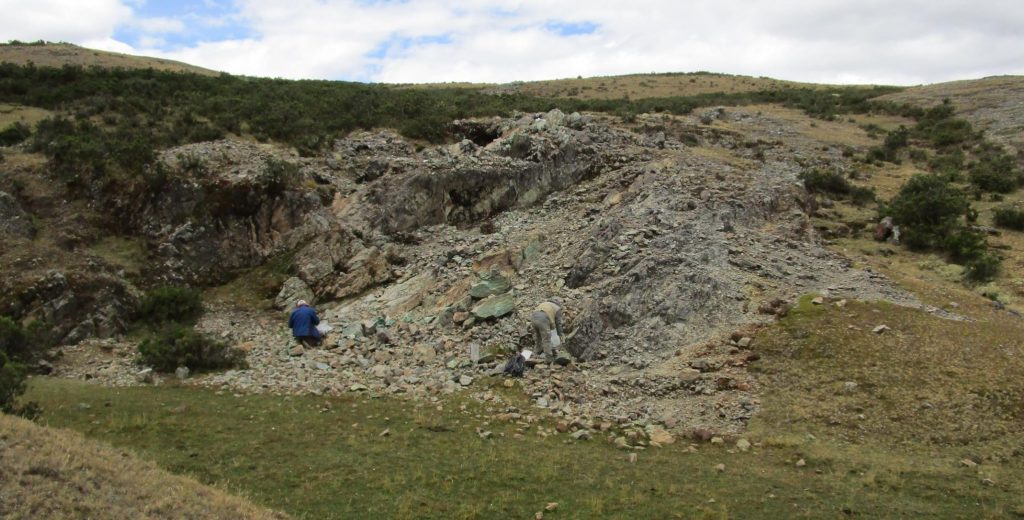
Condor Resources (TSXV:CN) has recently undergone significant strategic and leadership changes. We sat down with the team at Condor to take a look at these developments, understand their new plans for key projects, and get a clearer picture of what lies ahead for the company.
Shifting Focus to High-Quality Gold Projects
Condor Resources has a history of exploration success in Peru, leveraging a strong geological team and excellent community relationships. Recently, the company has shifted its focus to high-quality gold projects. When asked about the strategic rationale behind this shift, Condor explained, “For the past ten years, the company has operated as a project generator predominantly focused on exploration assets in Peru. Over the past several years, Condor has optioned or JV’d three of its major projects to partners who continue to advance them while Condor maintains an economic interest in each.” This strategy shift aligns with the potential seen in projects like Pucamayo and Huinac Punta, offering greater upside in developing these projects internally rather than partnering with others.
Leadership Changes and Their Impact
The company has recently appointed a new CEO and welcomed back Dr. Quinton Hennigh to the board. On the influence of these leadership changes, the company stated, “The board had made the decision to shift direction towards a more traditional exploration and development model based on the perceived potential of these projects. The company continues to be open to partnerships on its other unoptioned properties as well as other corporate opportunities, and views this shift as more of an evolution in its strategy.”
Financial Position and Future Exploration Plans
Condor’s financial position has been bolstered by a payment from Element79 for the Lucero Project. Discussing this transaction, Condor mentioned, “The payment from Element 79 Gold was to get caught up from a prior obligation under their acquisition of the Lucero project. We are expecting further payments this year and in future which will be put towards our exploration activities and corporate costs. Historically, this has been a great method of limiting dilution for the company rather than accessing the equity markets.”
Exploration Highlights: Pucamayo and Other Projects
Pucamayo stands out as Condor’s flagship project in Peru. The company described its geological features and exploration results: “Pucamayo is a high to intermediate sulfidation epithermal target with two hydro-magmatic centres, with mineralization of gold, silver, and associated elevated values for lead, zinc, copper demonstrated in its 2023 drilling activities and through grab samples.” The extensive drilling and geochemical analysis have revealed a significant potential, particularly in the southern part of the project area.
Other notable projects include Huinac Punta and Andrea. Huinac Punta, a high-grade silver CRD-type target, has shown promising results with historical grab samples indicating high silver content. “Condor has done a great job in the past of communicating with our local partner communities and delivering on our commitments, so we continue to have their great support as we move through this process,” the company noted.
Andrea, a high sulfidation epithermal target, also holds promise. Condor highlighted, “It seems now, however, that the local community is interested in restarting discussions with us at the behest of the younger generation which is more open to resource exploration. This gives us again the opportunity to show them how Condor is a great partner and steward for the environments in which we operate.”
Criteria for Evaluating New Opportunities
Condor has a history of identifying and advancing high-quality projects. The company elaborated on their evaluation criteria: “In recent history, the company has been successful at identifying and securing projects that are geologically exciting through a low-cost means of staking directly and are generally unencumbered with respect to royalties or other factors.”
Condor remains optimistic despite market fluctuations. “Condor Resources has a diverse portfolio of projects that give it optionality for a number of different types of market. We have milestone cash payments and stock grants that come in through our prior transactions. All this together, Condor has a lot of flexibility in its decision making as well as many pathways for investment returns from any of its curated list of projects.”
The company has also emphasized their commitment to responsible mining practices: “Condor Resources has always been a leader in the area of ESG and sustainability in the mining exploration industry. These are conversations that are ongoing in nature, dialogues with the communities that continue through our activities and afterwards so that our plans are understood and clear and welcomed.”
Investors have several milestones to watch for in the coming months. Condor Resources mentioned, “Our DIA application at Pucamayo is expected in the coming months as is the completion of the Consulta Previa process at Huinac Punta that would enable us to start our activities. Also, with Teck Resources working through its own DIA at Cobreorco, the completion of that process would enable them to start drilling as well, which would be an excellent event for Condor given our presumed 25% interest in the project.”

Baselode Energy (TSXV:FIND) has announced the discovery of a new zone of radioactivity located six kilometers northeast of the ACKIO site. This finding comes from recent drilling efforts in the area, where two drill holes, HK24-009 and HK24-010, were strategically placed based on geophysical surveys indicating a gravity low, magnetic low, and conductive response within an interpreted north-south oriented Tabbernor fault zone.
James Sykes, CEO, President, and Director of Baselode, commented in a press release: “We’re very excited about this new discovery on Hook, on the second hole of our regional exploration program. HK24-010 intersected over 30 metres of continuous radioactivity at approximately 173 metres vertical depth. This new discovery is hosted within a massive alteration corridor similar in scale to what we have observed at our ACKIO zone 6 km to the southwest. We believe the alteration corridor has mobilized uranium from the host rocks and deposited it within a redox front, similar to what we interpret for HK24-010. We intend to follow-up drilling in this area in the coming weeks after completing exploration drilling in a logistically efficient order on other targets with stronger geophysical anomalisms. Hook’s regional exploration aim was to discover new zones of uranium mineralization and we’re well on our way with this new prospect.”
Drill hole HK24-009 intersected 130 meters of massive hydrothermal alteration, characterized by alternating hematite and white clay within orthogneiss. Radioactivity measurements, taken with a gamma probe, averaged 20 counts-per-second (cps) in the altered rocks. In fresh rock types, readings of 34 cps and 69 cps were recorded, with a notable zone of anomalous radioactivity measuring 177 cps over 4.3 meters.
Drill hole HK24-010 showed even more extensive alteration, intersecting over 230 meters of structurally controlled hydrothermal alteration similar to HK24-009. Gamma probe radioactivity averaged 23 cps within the altered rocks down to a depth of 200.8 meters. Beyond this, the readings spiked to an average of 275 cps over 33.7 meters, including a peak of 473 cps over 6.8 meters. This higher radioactivity is associated with structurally controlled hydrothermal hematite and minor redox alteration within the basal 2.5 meters of metasedimentary rocks and pegmatite. Fresh rock at the end of this drill hole averaged 60 cps.
The samples from these drill holes have been sent to the Saskatchewan Research Council for further uranium and multi-element analysis. Baselode Energy Corp. plans to release these results once they have been reviewed.
It is important to note that Baselode uses gamma probe readings as a preliminary indication of the presence of radioactive materials, including uranium, thorium, and potassium. These readings do not directly quantify or qualify the uranium concentrations in the rock samples. Any gamma probe readings above 100 cps are considered anomalous, with background radioactivity typically measuring between 20 and 70 cps.
Baselode Energy Corp. controls approximately 272,804 hectares in the Athabasca Basin area of northern Saskatchewan, Canada. This land package is entirely owned by Baselode and is not subject to any option agreements or underlying royalties. The Company first discovered the ACKIO near-surface uranium prospect in September 2021. This prospect includes nine separate uranium pods with mineralization starting as shallow as 28 meters below the surface and extending to depths of approximately 300 meters. The ACKIO site remains open at depth and to the north, south, and east.
The company’s exploration approach, known as Athabasca 2.0, focuses on discovering near-surface, basement-hosted, high-grade uranium deposits outside the Athabasca Basin. Baselode employs innovative and well-understood geophysical methods to map deep structural controls and identify shallow drilling targets.
Highlights from the results are as follows:
- Intersected over 30 metres of continuous radioactivity within a massive hydrothermal alteration system
- New zone discovered on the second drill hole of Hook’s regional exploration program, 6 km from ACKIO discovery
- Demonstrates the fertility of the uranium corridor along Baselode’s Hook Project
The above references an opinion and is for information purposes only. It is not intended to be investment advice. Seek a licensed professional for investment advice. The author is not an insider or shareholder of any of the companies mentioned above.
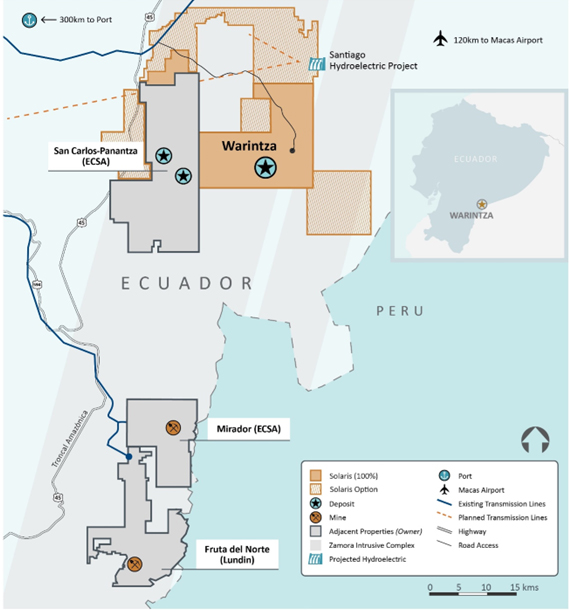
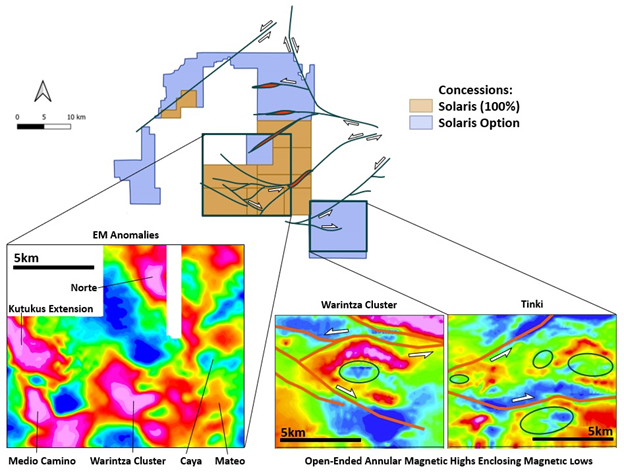
Solaris Resources (TSX:SLS)(NYSEAmerican:SLSR) has announced an In-Pit Mineral Resources Estimate (MRE) for its Warintza Project in southeastern Ecuador. The ongoing mineral resource drilling encompasses over 30,000 meters in the second half of 2024, targeting open extensions and upgrading mineral resources to support the Pre-Feasibility Study (PFS) set for the second half of 2025. Concurrent district exploration programs are also targeting complementary discoveries from an expanded portfolio of epithermal gold/silver and porphyry copper targets.
Mr. Javier Toro, Chief Operating Officer, commented in a press release: “We are very pleased to be able to release this standalone MRE which draws on our combined years of experience with open pit copper projects in the Americas. This new MRE provides a solid foundation for future updates and a robust mine plan with a low strip ratio, simple metallurgy and clean concentrates. In support of the PFS, we are doing further technical, infill and extensional drilling into open areas within and adjacent to the pit shell.”
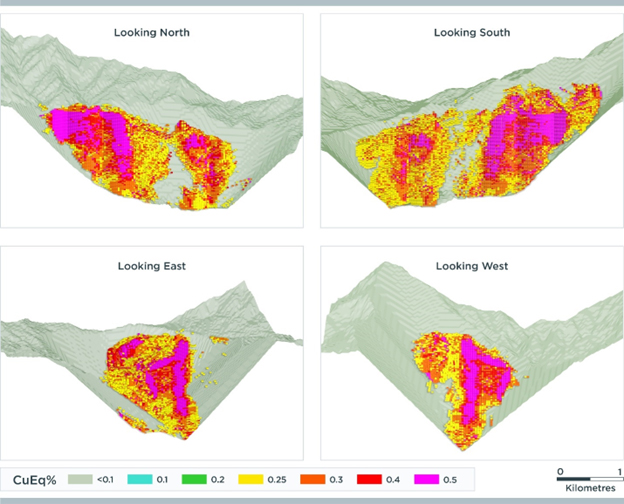
The In-Pit Mineral Resources at Warintza include 232 million tonnes (Mt) at 0.64% copper equivalent (CuEq) in the measured category and 677 Mt at 0.49% CuEq in the indicated category, resulting in a total of 909 Mt at 0.53% CuEq in measured and indicated categories. An additional 1,426 Mt at 0.37% CuEq is inferred at a base case cut-off grade of 0.25% CuEq. At a higher cut-off grade of 0.50% CuEq, the resources include 157 Mt at 0.76% CuEq in the measured category and 269 Mt at 0.69% CuEq in the indicated category, totaling 427 Mt at 0.71% CuEq in measured and indicated categories, with an additional 177 Mt at 0.62% CuEq in the inferred category.
Warintza is strategically located at a low elevation within the southeast Ecuador mining district. The site benefits from a direct highway connection to Pacific ports and access to low-cost hydroelectric grid power, with potential further development at the adjoining Santiago G8 project. The region has seen significant socioeconomic improvement from mining exploration and development over the past decade.
The 2024 drilling program involves 60,000 meters, with over 30,000 meters planned for the second half of the year. This drilling will be conducted from 140 holes on 80 platforms to provide improved coverage, targeting open lateral extensions, upgrading mineral resources, and converting remaining uncategorized blocks within the pit shell to support the PFS in 2025. Additionally, metallurgical, geotechnical, and hydrogeological drilling is ongoing.
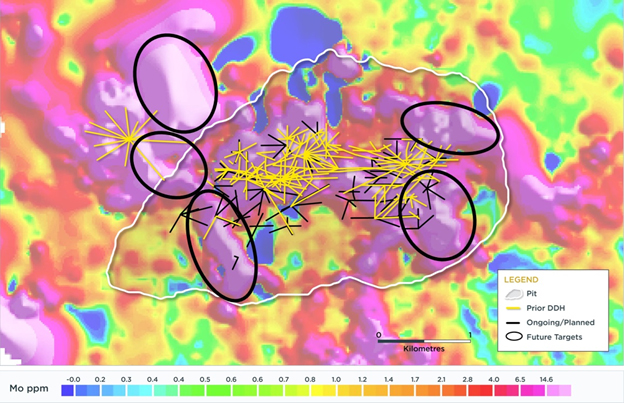
Complementary district exploration efforts are also underway. Fieldwork is targeting epithermal-style gold-silver mineralization south of Caya-Mateo, where recent sampling has returned values between 4 and 12 grams per tonne (g/t) of gold. Field crews are also focused on mapping and sampling combined geophysical and geochemical porphyry copper targets.
Highlights from the results are as follows:
Table 1: Warintza Mineral Resource Estimate Sensitivity
| Cut-off | Category | Tonnage | Grade | |||
| CuEq (%) | (Mt) | CuEq (%) | Cu (%) | Mo (%) | Au (g/t) | |
| 0.15% | Measured | 246 | 0.61 | 0.45 | 0.02 | 0.05 |
| Indicated | 836 | 0.44 | 0.30 | 0.02 | 0.04 | |
| M&I | 1,082 | 0.48 | 0.34 | 0.02 | 0.04 | |
| Inferred | 3,135 | 0.27 | 0.20 | 0.01 | 0.04 | |
| 0.25% (Base Case) |
Measured | 232 | 0.64 | 0.47 | 0.02 | 0.05 |
| Indicated | 677 | 0.49 | 0.34 | 0.02 | 0.04 | |
| M&I | 909 | 0.53 | 0.37 | 0.02 | 0.05 | |
| Inferred | 1,426 | 0.37 | 0.27 | 0.01 | 0.04 | |
| 0.35% | Measured | 207 | 0.68 | 0.50 | 0.03 | 0.06 |
| Indicated | 497 | 0.56 | 0.40 | 0.02 | 0.05 | |
| M&I | 704 | 0.60 | 0.43 | 0.02 | 0.05 | |
| Inferred | 640 | 0.47 | 0.34 | 0.02 | 0.05 | |
| 0.50% (Higher Grade) |
Measured | 157 | 0.76 | 0.56 | 0.03 | 0.06 |
| Indicated | 269 | 0.69 | 0.50 | 0.03 | 0.05 | |
| M&I | 427 | 0.71 | 0.52 | 0.03 | 0.06 | |
| Inferred | 177 | 0.62 | 0.45 | 0.02 | 0.07 | |
Notes to Table 1:
- The Mineral Resource Estimate was prepared in accordance with the Canadian Institute of Mining, Metallurgy and Petroleum (“CIM”) Definition Standards for Mineral Resources and Mineral Reserves, adopted by the CIM Council on May 10, 2014.
- Reasonable prospects for eventual economic extraction assume open-pit mining with conventional flotation processing and were tested using Whittle and Minesight pit optimization software with the following assumptions: metal prices of US$4.00/lb Cu, US$20.00/lb Mo, and US$1,850/oz Au; operating costs of US$1.50/t+US$0.02/t per bench mining, US$5.0/t milling, US$1.0/t G&A, and recoveries of 90% Cu, 85% Mo, and 70% Au based on preliminary metallurgical testwork.
- Metal price assumptions for copper, molybdenum and gold are based on a discount to the lesser of the 3-year trailing average (in accordance with US Securities and Exchange Commission guidance) and current spot prices for each metal.
- Mineral Resources include grade capping and dilution. Grade was interpolated by ordinary kriging populating a block model with block dimensions of 25m x 25m x 15m.
- Mineral Resources that are not Mineral Reserves do not have demonstrated economic viability.
- Copper-equivalent grade calculation for reporting assumes metal prices of US$4.00/lb Cu, US$20.00/lb Mo, and US$1,850/oz Au, and recoveries of 90% Cu, 85% Mo, and 70% Au based on preliminary metallurgical testwork and includes provisions for downstream selling costs. CuEq formula: CuEq (%) = Cu (%) + 5.604 × Mo (%) + 0.623 × Au (g/t).
- The Mineral Resources estimate was prepared by Mario E. Rossi, FAusIMM, RM-SME, Principal Geostatistician of Geosystems International Inc., who is an Independent Qualified Person under NI 43-101. The Mineral Resources estimate is at a base case of 0.25% CuEq¹ cut-off grade and other estimates at varying cut-off grades are included only to demonstrate the sensitivity of the Mineral Resources estimate and are not the QP’s estimate of the Mineral Resources for the property.
- In Mr. Rossi’s opinion, there are currently no relevant factors or legal, political, environmental, or other risks that could materially affect the potential development of Mineral Resources.
- All figures are rounded to reflect the relative accuracy of the estimate and therefore may not appear to add precisely.
- The effective date of the mineral resource estimate is July 1, 2024.
Endnotes
- Copper-equivalence grade calculation for reporting assumes metal prices of US$4.00/lb Cu, US$20.00/lb Mo, and US$1,850/oz Au, and recoveries of 90% Cu, 85% Mo, and 70% Au based on preliminary metallurgical testwork and includes provisions for downstream selling costs. CuEq formula: CuEq (%) = Cu (%) + 5.604 × Mo (%) + 0.623 × Au (g/t).
The above references an opinion and is for information purposes only. It is not intended to be investment advice. Seek a licensed professional for investment advice. The author is not an insider or shareholder of any of the companies mentioned above.
Brazil Potash has announced the formation of an advisory board to support the advancement of its Autazes potash project towards construction. The board will be chaired by Mayo Schmidt and includes Kátia Abreu, Luis Adams, Helio Diniz, Maria Claudia Guimaraes, Cidinho Santos, and William Steers. These individuals bring a wealth of experience in various sectors, particularly in Brazil’s agricultural, legal, financial, and mining industries.
Brazil Potash’s Executive Chairman Stan Bharti commented “Brazil Potash has assembled a very impressive advisory board with extensive depth of networks in the fertilizer sector, Brazil’s government and the investment community that will contribute meaningfully to transitioning our construction ready Autazes Project into the next major potash producer. Each advisory board member is a skilled leader with a strong network that will provide good advice and insights to our international board of directors with majority having on-the-ground presence in the heartland of Brazil’s farming community, Mato Grosso.”
Mayo Schmidt, the advisory board chair, has an extensive background in leading major companies. He previously served as Chairman and CEO of Nutrien, the world’s largest potash producer, where he managed global acquisitions and initial public offerings. Schmidt also held top positions at Viterra and Hydro One and has a history of working with major agricultural companies like General Mills and ConAgra.
Kátia Abreu, a former Brazilian Minister of Agriculture and Senator, brings significant political and agricultural expertise. Abreu has served as head of Brazil’s National Agriculture and Livestock Confederation, representing over a million producers. She was also a vice-presidential candidate in Brazil’s 2018 elections.
Luis Adams, a former Attorney General of Brazil, offers legal expertise. Adams is currently a partner at Tauil Chequer Advogados, associated with Mayer Brown in São Paulo. His tenure as Attorney General under Presidents Lula and Dilma saw him lead major judiciary cases and environmental agreements.
Helio Diniz, one of Brazil Potash’s founders, has over 40 years of experience in mining. He played a crucial role in the development of Brazil’s Sao Bento gold mine and the discovery of the Araguaia Nickel Deposit. Diniz also has experience with Xstrata and Forbes & Manhattan Inc., founding several companies, including Aguia Metais, Belo Sun Mining, and Irati Petroleo e Energia.
Maria Claudia Guimaraes brings financial market experience, having held senior positions at Bank of America Merrill Lynch, ING Bank, and ABN AMRO. She has served as an independent director for companies like Petrobras and currently runs Baobá Investimentos, a strategic financial advisory firm.
Cidinho Santos, a former Senator for Mato Grosso, focuses on agriculture. He co-owns Unibras Industria e Comercio de Biodiesel Ltda. and Uniao Avicola Agroindustrial Ltda., which are involved in biodiesel production and poultry processing.
William Steers has over three decades of experience in capital markets and project development in Brazil. He has worked with Docas Investimentos S.A. and served as an independent director for Petro Rio S.A., Brazil’s largest private oil and gas company.
Brazil Potash’s domestic production is expected to significantly impact global food security. Brazil, a leading exporter of agricultural goods, currently imports over 95% of its potash needs despite having one of the largest potash basins in its backyard. The company aims to reduce greenhouse gas emissions by cutting maritime transportation and producing potash locally.
Brazil Potash’s project is nearing construction readiness, with a completed feasibility study, EISA, and most necessary permits obtained. The company expects to deliver potash at competitive costs, contributing to Brazil’s agricultural sector and reducing environmental impact.
The above references an opinion and is for information purposes only. It is not intended to be investment advice. Seek a licensed professional for investment advice. The author is not an insider or shareholder of any of the companies mentioned above.

NorthIsle Copper and Gold (TSXV:NCX) has announced significant progress in its exploration at West Goodspeed, British Columbia. The company reported intercepting porphyry-related copper mineralization over an 800-meter strike length. This development comes after completing over 3,077 meters of drilling at the site.
Robin Tolbert, Vice President Exploration of Northisle commented in a press release: “Initial returns from West Goodspeed are promising, with our team’s 2024 exploration strategy demonstrating a high rate of success of intercepting mineralization. These results are preliminary, but we are encouraged by the drilling to date and look forward to receiving assays over the coming weeks.”
The assays from the first completed hole of 2024 (GS24-06) revealed copper and gold mineralization over approximately 200 meters, starting just nine meters below the surface. These findings, detailed in Table 1 of their report, highlight the presence of chalcopyrite observed in all 2024 drill holes. While these initial results are promising, NorthIsle cautions that they are preliminary and not indicative of a deposit with economically viable extraction prospects.
The calculations for copper and gold equivalents used by NorthIsle are based on prices of US$3.50 per pound for copper and US$1,800 per ounce for gold, with the assumptions of 100% recovery rates. The company’s 2024 Resource Estimate for Northwest Expo also used these prices.
Seven drill holes, totaling more than 3,077 meters, have been completed at West Goodspeed in 2024, with further drilling planned. The goal is to target higher-grade potassic zones often found in similar porphyry systems. All holes have shown visually observed copper mineralization within quartz-sericite-pyrite and chlorite-magnetite altered volcaniclastics, as well as feldspar porphyry and quartz diorite intrusive rocks. This type of mineralization is consistent with the potassic zone of a porphyry system.
The mineralization has been estimated to extend over a strike length of 800 meters, a dip length of 300 meters, and a true width of 50 to 150 meters, with the volume remaining open along strike and up and down dip. These positive initial results have led to additional drilling to better understand the extent and structural controls of the mineralization.
In addition to drilling at West Goodspeed, NorthIsle plans to stage additional drilling at the Northwest Expo target starting in the second half of July. The company is utilizing reactivated forest service roads for drilling, which first encountered significant mineralization in 2023. Subsequent drill holes have confirmed porphyry-style copper mineralization.
NorthIsle has also engaged Precision Geosurveys Inc. to conduct a high-resolution airborne gradient magnetic survey to assist in drill planning. This survey covers the area from Northwest Expo to southeast of the Goodspeed target.
NorthIsle has laid out a detailed exploration and development plan for 2024, with various milestones already completed. These include geophysics results, metallurgical testing, and the commencement of the 2024 drilling program. The company anticipates further exploration results in the third quarter of 2024 and a mineral resource estimate update. A Preliminary Economic Assessment (PEA) for the North Island Project is expected in the fourth quarter of 2024.
Highlights from the results are as follows:
- Northisle has now completed 7 new diamond drill holes totaling over 3,077m in its 2024 Phase 1 West Goodspeed drill program which commenced in May 2024
- GS24-06 intercepted copper and gold mineralization over more than 200m depth from 9m below surface
- Significant intercepts include 68m grading 0.56% Cu Eq. and 59.8m grading 0.37% Cu Eq.
- Mineralization is found within intense stockwork veining indicative of multiple phases of hydrothermal activity commonly found in the proximity of mineralized porphyry systems
- Porphyry-related alteration with chalcopyrite has been visibly observed in all 2024 holes, with systematic spot pXRF scanning confirming the presence of copper mineralization
- The target remains open along strike as well as up and down dip
The above references an opinion and is for information purposes only. It is not intended to be investment advice. Seek a licensed professional for investment advice. The author is not an insider or shareholder of any of the companies mentioned above.

Founders Metals (TSXV:FDR) (OTCQX:FDMIF) has launched its 2024 drill program at the Antino Gold Project in southeastern Suriname. The company plans to drill up to 7,000 meters at the Buese area, starting with an initial 3,000-meter phase 1 program using its recently acquired third diamond drill.
Colin Padget, Founders’ President & CEO, commented in a press release: “We are very encouraged by the results of the preliminary work completed at Buese and are excited for the ongoing drilling. Historical work primarily targeted the high-grade shears and other mineralization separate from the Filuca intrusive. Given our recent work and updated geological interpretation, phase 1 of our drilling focuses on the bulk-tonnage potential of the Filuca intrusive and the high-grade shears zones along its edge.”
The Buese area covers over 600 hectares, located approximately six kilometers southeast of Upper Antino and the Froyo Gold Zone. Gold mineralization at Buese has been mapped over two kilometers along the southeastern extent of the Antino Gold Trend. The mineralization occurs within and along the margins of the Filuca tonalite intrusion. Recent artisanal mining exposed heavily altered outcrops, showing multiple generations of quartz and quartz-carbonate veins throughout the exposed body.
Founders’ recent exploration results, combined with historical auger sampling and limited past drilling of the Filuca intrusive, indicate significant potential for bulk-tonnage gold mineralization. This setting and style of mineralization are similar to the multi-million ounce Omai and Yaou gold deposits in Guyana and French Guiana, respectively.
Founders’ exploration work includes new ground magnetic and IP geophysical surveys, auger and rock sampling, detailed mapping, and analysis of historical drilling. The company has defined several high-priority drill targets. Geological mapping has successfully defined over 35,000 square meters of the tonalitic Filuca intrusive, with surface sampling confirming substantial gold mineralization associated with an extensive quartz and quartz-carbonate stockwork vein system. Channel sample results from Buese include 9.34 g/t Au over 8.0 meters and 11.87 g/t Au over 12.0 meters, with up to 113.0 g/t Au.
Highlights from the results are as follows:
- Founders-owned third diamond drill rig now operating
- Start of 3,000 m phase 1 drilling program at Buese
- New induced polarization (IP) and ground magnetic surveys support previously unidentified mineralized structures confirmed with high-grade gold samples at surface
- Channel sample grading 9.34 grams per tonne (g/t) gold (Au) over 8.0 m including 1.0 m of 42.56 g/t Au as well as previously released results of up to 113.0 g/t Au
- Over 35,000 m2 of mapped Filuca intrusive with potentially a much larger subsurface body supported by recent geophysics
The above references an opinion and is for information purposes only. It is not intended to be investment advice. Seek a licensed professional for investment advice. The author is not an insider or shareholder of any of the companies mentioned above.

Goliath Resources (TSXV:GOT) has announced the discovery of a new mineralized zone at its Golddigger Property in British Columbia’s Golden Triangle. The company reported finding visible gold and strong sulphide mineralization in the first drill hole of its 2024 exploration program.
Dr. Quinton Hennigh, Technical and Geologic Director of strategic shareholder, Crescat Capital, commented in a press release: “Just recently, I explained why I think this is going to be a summer of discovery for Goliath. The Company rightly persists to test new ideas and targets that have consistently generated better and better results from Surebet and other targets across the Golddigger Project. And here we are, just one week into the program, with what appears to be a major new discovery of a gold-rich zone, possibly a root feeder to the Surebet and related structures. The abundant particles of visible gold observed in this new zone give reason for a lot of excitement, especially given that mineralization is spatially associated with what might prove to be a causative intrusion. Other indicators support this magmatic association including the presence of molybdenum and bismuth-rich minerals in the sulfide assemblage of the vein breccia. I think the team at Goliath has done a remarkable job of identifying this target using sound science, and they should be congratulated for this remarkable discovery.”
Drill hole GD-24-235, collared from the Golden Gate Pad, intersected multiple mineralized veins containing visible gold, galena, sphalerite, pyrrhotite, and pyrite. The hole, drilled to a depth of 696 meters at an azimuth of 180 degrees and dip of 81 degrees, passed through a sedimentary sequence of mudrocks, an intermediate intrusive unit, multiple intermediate dykes, and andesite.
A significant interval of 22.4 meters containing a porphyritic intrusion with veins showing visible gold, molybdenum, and bismuth mineralization was reported. The company states this increases their confidence in the proximity of the feeder source for the Surebet system, which remains open for further exploration.
The drill hole was designed to intercept the Bonanza shear and test below an area where a previous hole (GD-23-197) intersected 9 meters grading 34.03 g/t gold equivalent in 2023. Goliath Resources reports that mineralization observed in the new hole is similar to what was seen in the 2023 drill hole, suggesting comparable gold grades may be expected.
Several mineralized intervals were highlighted in the company’s announcement:
– A 12-meter interval of high vein density from 445-457 meters downhole
– A quartz vein with significant mineralization from 445.4-447.39 meters
– Another quartz vein from 450.17-450.64 meters with visible gold
– Multiple quartz-sulphide veins observed between 550 and 650 meters downhole
– A 24.4-meter porphyritic intrusive unit from 529.29-553.67 meters
The 2024 drill program at the Golddigger Property is planned for 15,000 meters across 62 drill holes from 22 pad locations. Two drill rigs are currently operating on site. The program will focus on testing the potential feeder source at depth, discovering new veins, expanding the known vein footprint, and increasing vein continuity.
Goliath Resources controls 66,608 hectares at the Golddigger Property, which is located within the Eskay Rift geological setting of British Columbia’s Golden Triangle. The property is situated near other significant mining projects in the region and is reported to have good access to infrastructure, including proximity to tide water and road connections.
The company reports that previous metallurgical work on the Surebet discovery at Golddigger showed gold recoveries of 92.2%, including 48.8% free gold from gravity separation alone, with no cyanide required for gold recovery.
Highlights from the results are as follows:
- Discovery of a new deep zone, the “Mothership Feeder Zone” containing abundant visible gold and strong sulphide mineralization in quartz breccia at 648 meters downhole and 125 meters in elevation above the valley floor from GD-24-235, the first drill hole of 2024 (see image below).
- Discovery of a new 24.4 meter porphyritic intrusion between 529.29 – 553.67 meters downhole containing veins with abundant visible gold, molybdenite up to 2 mm in size and bismuth indicates increased confidence in the proximity of the feeder source of the Surebet system that remains wide open. (see image below).
- An accompanying infographic is available here
- Results from this first drill hole confirms the strong potential for additional discovery during the 2024 drill program that has just began.
- Follow up on this newly discovered zone is underway with several deeper drill holes planned testing to greater depth inclusive of a 900 meter hole that is being drilled now.
- GD-24-235 is the first drill hole of 2024 which has intersected multiple strongly mineralized veins containing visible gold, galena, sphalerite, pyrrhotite and pyrite mineralization in both the sedimentary and volcanic units.
- GD-24-235 intersected a 12 meter interval of high vein density between 445 – 457 meters downhole, with multiple large quartz-sulphide veins at the contact between sedimentary and volcanic units containing abundant visible gold, up to 2 % sphalerite, 1 % galena, 1 % chalcopyrite, 2 % pyrrhotite, and 3 % pyrite.
- Within the andesite unit of GD-24-235, a 10 meter interval hosting a series of closely spaced quartz-sulphide veins have being observed between 550 and 650 meters downhole with abundant visible gold, up to 30 % pyrrhotite, 3 % chalcopyrite, 1 % sphalerite, and 1 % pyrite (see image below).
- An accompanying infographic is available here
- Drill hole GD-24-235 was designed to intercept the Bonanza shear and volcanics below where drill hole GD-23-197 from 2023 intersected 9 meters of 34.03 g/t AuEq or 1.09 oz/t AuEq (32.55 g/t Au and 65.71 g/t Ag) in 2023.
- The mineralization observed in hole GD-24-235 from the 445.4 – 447.39 meter downhole interval is reminiscent of what was observed from 449.37 – 458.40 meters in GD-23-197, suggesting that similar gold grades can be expected from this interval; assays pending (see comparison image below).
- An accompanying infographic is available here
- The drill program on Surebet is focused on testing its potential feeder source at depth above and below the valley floor, discovering new additional veins/shears, expansion of the known 10 vein footprint, and increased continuity of veins/shears.
Surebet Highlights:
- Colorado School of Mines study confirmed in its report, an extensive porphyry feeder source at depth for the high-grade gold mineralising fluids at Surebet, this provides excellent potential for additional upside drill discovery and expansion at depth (see About CASERM below).
- Several lines of evidence, including metals content and geochemical trace elements hot spots, zonation, type, origin of fluids and age of the mineralization strongly suggest vectoring in on a possible Porphyry Feeder Source.
- Exceptional continuity and excellent metallurgical recoveries of 92.2% Gold from gravity & flotation, inclusive of 48.8% Free Gold from gravity alone at a 327 micron crush; no deleterious minerals or cyanide required.
- The Golddigger property is fully permitted until 2029 for 199 drill pads.
- 66,930 meters have been drilled to date at the Golddigger property (2021 – 2023).
- 44 holes (or 35%) of 124 holes drilled in 2023 contained Visible Gold with nuggets up to 11 mm in size.
- 11 holes to date are greater than 100 and up to 513 gm AuEq.
- Best hole drilled to date is GD-23-180 assaying 65.00 g/t AuEq (64.88 g/t Au and 8.03 g/t Ag) over 7.90 meters, including 86.99 g/t AuEq (86.84 g/t Au and 6.52 g/t Ag) over 5.90 meters.
- Mineralization is exposed at surface for 1.0 kilometers of strike and 1.1 kilometers down-dip extent with 700 meters of vertical relief with exceptional continuity.
- 10 mineralized vein horizons have been identified to date and remain open.
- The mineralized footprint of the Surebet discovery corresponds to 1.8 km2, the equivalent in size to >336 NFL football fields.
The above references an opinion and is for information purposes only. It is not intended to be investment advice. Seek a licensed professional for investment advice. The author is not an insider or shareholder of any of the companies mentioned above.

North Peak Resources (TSXV:NPR) has announced the next phase of its drilling program at the Prospect Mountain Property in Eureka, Nevada. The company has completed preliminary testing of the Industry and Silver Connor fault network and is now shifting focus to the West side of the mountain.
Mike Sutton, Director & Geologist, commented in a press release: “Wabash was the focus of a systematic drilling campaign in 1999 and the intersections that were returned were interpreted as shallow dipping pods of mineralization. A new interpretation is that the intersections are aligning with the steeply dipping faults and if so, continuity of mineralization greatly improves and increases the tonnage potential and this has been supported by the finding of a sub-vertical mineralized fault at surface. The historical vertical holes are not suited to cut across sub-vertical zones.”
The new drilling targets the Duke, Banner, and Silver Connor fault system in the Wabash area, which contains several historical mines including Wabash, Williams, and Silver Connor. These fault systems are known conduits for gold-bearing fluids in the region’s deposits. The northern part of the property shows geological similarities to i-80’s Archimedes/Hilltop area and the historic Richmond/Eureka/Fad zones.
The Eureka mining district has a significant production history, with over 2.9 million ounces of gold extracted to date. This figure includes 1.45 million ounces from the Richmond-Eureka mine between 1869 and 1901, and 1.46 million ounces from the Archimedes Pit between 1998 and 2020.
The Wabash area was previously explored in 1999 by European American Resources, which conducted a 27,618-foot (8,418-meter) reverse circulation drilling campaign. Historical drill results from this program included several notable intersections, such as 24.4 meters grading 8.2 g/t gold and 22.6 g/t silver in hole PM-W-92, and 21.3 meters grading 4.5 g/t gold and 35.0 g/t silver in hole PM-W-12.
Mike Sutton, Director and Geologist at North Peak Resources, commented on the new interpretation of these historical results: “The intersections were originally interpreted as shallow dipping pods of mineralization. Our new interpretation suggests they may align with steeply dipping faults, which could significantly improve continuity of mineralization and increase tonnage potential.”
The current drilling program will include holes up to 900 feet in length, with several angled to test this new interpretation. Some holes will also twin historical intersections to verify previous results.
Multi-element assays from the reverse circulation drill holes have indicated anomalous antimony and high arsenic levels, with relatively low lead and zinc. This geochemical signature is consistent with historical smelter observations and suggests the mineralization is of an “Intermediate” style, exhibiting mainly Carlin-type characteristics but also showing a carbonate replacement deposit (CRD) signature.
The Prospect Mountain Property is situated within the Battle Mountain Eureka trend, in an area known as the Southern Eureka Gold Belt. This region is known for three styles of mineralization: Carlin-style gold and silver, carbonate replacement gold, silver, lead, and zinc (CRD), and carbonate-hosted porphyry-related skarn lead, zinc, and gold associated with Cretaceous intrusions.
A Plan of Operations is in place for part of the property, covering 81 acres. This plan allows for surface exploration, underground mining of up to 365,000 tons per annum, and certain infrastructural works, including water extraction and containment facilities.
North Peak Resources is a Canadian-based gold exploration and development company listed on the TSX Venture Exchange. The company focuses on acquiring historic sites with low-cost producing gold and other metals properties that have near-term production potential and an expected mine life of at least 8 years in the northern hemisphere. In May 2023, North Peak acquired an initial 80% interest in the Prospect Mountain Mine complex.
The above references an opinion and is for information purposes only. It is not intended to be investment advice. Seek a licensed professional for investment advice. The author is not an insider or shareholder of any of the companies mentioned above.

Q2 Metals (TSXV:QTWO) has announced the extension of a mineralized zone to 750 meters at its Cisco Lithium Property in Quebec’s James Bay region. The company reported this development as part of its ongoing 2024 exploration program.
Neil McCallum, Q2 Metals VP of Exploration, commented in a press release: “Our Spring 2024 drill program has advanced extremely well in a short amount of time. Every hole drilled this campaign has intersected mineralized pegmatite and we are eager to continue to define and expand on the scale of Cisco and its potential to be a significant deposit.”
The Spring 2024 Drill Campaign, which began in May, aimed to confirm and expand upon the mineralized CO1 Zone identified by previous property vendors in 2023. Initial results from drill hole CS24-010, announced on June 17, 2024, revealed significant spodumene-pegmatite intervals, including five spans greater than 10 meters wide, with a total mineralized interval of 194.8 meters.
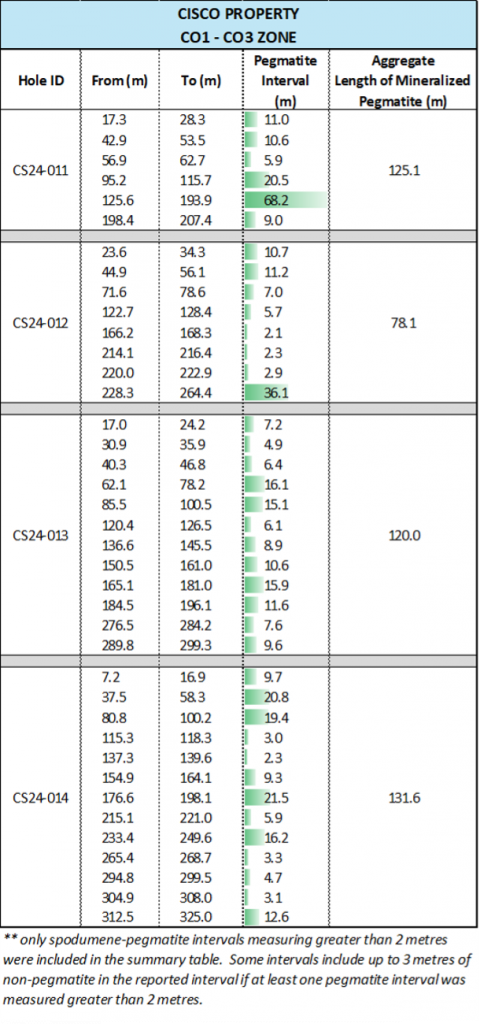
Recent drilling has further extended the known mineralization. Four additional holes (CS24-011 to 014), totaling approximately 1,215 meters, targeted the area between the CO1 and CO3 outcrops. These new results have helped define a spodumene mineralized pegmatite with a strike length of 750 meters, which remains open in all directions.
The company noted that the mineralized intervals encountered do not represent true width, and the modeled pegmatite zone is being refined with each new hole. The drilling program has confirmed that mineralization continues between the CO1 and CO3 outcrop zones, with pegmatite bodies trending roughly 45 to 60 degrees in a northeast-southwest direction. This verification has implications for potential mineralization continuity across a larger 1.1 by 1.7 kilometer area. Q2 Metals plans to continue testing the mineralization along strike in both directions within the CO1-CO3 Zones before moving on to other surface-mineralized areas, including the CO2 outcrop located approximately 1.2 km east of the CO1 Zone.
The Cisco Property, comprising 222 mineral claims over 11,374 hectares, is situated in the Frotet Evans Greenstone Belt of the southern James Bay Lithium District. This geological setting also hosts the Sirmac and Moblan lithium deposits, located 130 km and 180 km away, respectively.
All rock and drill core samples from the project are being processed at SGS Canada’s preparation facility in Val D’Or, Quebec, with final analysis conducted at their laboratory in Burnaby, BC. The company has implemented a quality assurance and quality control protocol following industry best practices.
As exploration continues, Q2 Metals aims to further define and expand the lithium potential of its properties in this emerging lithium district.
Highlights from the results are as follows:
- Four (4) additional holes for approximately 1,215 metres (m) have been drilled at the Cisco discovery zone (CO1 Zone) as drilling continues to the CO3 Zone, located 750 m southwest, confirming and extending previously encountered mineralization.
- Drill hole CS24-011 encountered six (6) individual spodumene pegmatite intervals, for a total cumulative width of 125.1 m.
- Drill hole CS24-012 encountered eight (8) spodumene pegmatite intervals, for a total cumulative width of 78.1 m.
- Drill hole CS24-013 encountered twelve (12) spodumene pegmatite intervals for a total cumulative width of 120.0 m.
- Drill hole CS24-014 encountered thirteen (13) spodumene pegmatite intervals for a total cumulative width of 131.6 m.
The above references an opinion and is for information purposes only. It is not intended to be investment advice. Seek a licensed professional for investment advice. The author is not an insider or shareholder of any of the companies mentioned above.

Emerita Resources (TSXV:EMO) has announced additional significant mineralization from its drilling program at the El Cura deposit area, part of the company’s wholly owned Iberian Belt West (IBW) project.
David Gower, P.Geo., CEO of Emerita, commented in a press release: “We are very encouraged with the recent results at El Cura. Drilling on the western side of the area has returned excellent copper-gold values over significant widths and this zone is growing significantly. A step out such as EC014 with the thickness and continuity we are seeing in the mineralized zone represents a material increase to the El Cura deposit. The location adjacent to the conceptual haulage ramp for the potential IBW development also makes it a very attractive target for possible mining in future”.
Highlights from the results are as follows:
- Drill Hole EC014 intersected 11.4 m of massive sulfide. Assay results are pending. This is the deepest and thickest intercept to date on El Cura area at approximately 350 m vertical depth.
- Drill Hole EC014 is located along section 9750E, which shows a series of 5 holes, all of which have intersected mineralization.
- Mineralization has been intersected from near-surface to approximately 350 m vertical depth. Drill Hole EC014 indicates the massive mineralized zone is likely becoming thicker. The zone remains open at depth.
- Intercepts in section 9750E are more than 600 m west of the historic El Cura mine workings.
- As announced on June 25th, Emerita has added a second drill rig and plans an additional 15 drill holes to delineate the new El Cura
The IBW project, located in Spain, hosts three previously identified Volcanogenic Massive Sulfide (VMS) deposits: La Infanta, La Romanera, and El Cura. Recent drilling at El Cura has intersected substantial mineralization over an area of approximately 400 meters by 300 meters within a mineralized corridor extending at least 600 meters in strike length.
Initial drilling results from the western portion of the explored area included hole EC007, which intersected 2.2 meters grading 2.9% copper, 2.3% lead, 4.6% zinc, 2.81 grams per tonne gold, and 82.5 grams per tonne silver. Following these results, the company completed an additional six drill holes, three of which were drilled along section 9750E to test the continuity of the mineralized lens at depth.
The company has now planned 15 more drill holes to follow up on these findings. To date, approximately 220 meters of strike length has been tested, focusing on the westernmost 200 meters of the 600-meter corridor in the area of section 9750E. Massive to semi-massive sulfides were intersected down to 340 meters below surface in hole EC013, and drill hole EC014 has extended the mineralization another 60 meters down-dip.
David Gower, CEO of Emerita, expressed optimism about the recent results, noting the excellent copper-gold values over significant widths in the western side of the area. He highlighted that the step-out represented by EC014, with its thickness and continuity, represents a material increase to the El Cura deposit.
The company has allocated two drills to expand the mineralization encountered to date on section 9750E. One drill is testing the continuity of the mineralization at depth, while the other is exploring continuity to the east and west from section 9750E. The recently completed drill hole EC014 encountered 11.4 meters of massive sulfide with chalcopyrite and galena, cross-cut by chalcopyrite veining. Assays for this hole are pending.
Drill results to date at El Cura show a high-grade massive sulfide body that strikes WNW-ESE, dips steeply to the north, and plunges to the west. It is characterized by high grades in copper and gold. For example, hole EC012 yielded 3.4 meters grading 1.7% copper and 3.09 grams per tonne gold, while EC013 intersected 10.6 meters grading 1.7% copper and 0.95 grams per tonne gold. The true thickness is approximately 75 to 85% of the intercept length, with good drill core recoveries averaging 98%.
The 11.4-meter thick intercept of drill hole EC014 has verified the extension of the mineralization for an additional 60 meters down-dip. With a second rig now drilling, Emerita aims to accelerate the program and test the continuity of the mineralization both to the east and west.
All three deposits at the IBW project – La Infanta, La Romanera, and El Cura – remain open for expansion along strike and at depth. The company continues its exploration efforts to further define and expand these resources.
The above references an opinion and is for information purposes only. It is not intended to be investment advice. Seek a licensed professional for investment advice. The author is not an insider or shareholder of any of the companies mentioned above.
In an exclusive interview with MiningFeeds, Mark Jarvis, CEO of Giga Metals (TSXV:GIGA), shared insights into the company’s ambitious plans to develop the Turnagain Nickel Project in north-central British Columbia. As one of the world’s largest undeveloped sulphide nickel deposits, Turnagain holds immense potential to meet the growing demand for critical minerals driven by the electric vehicle and renewable energy sectors.
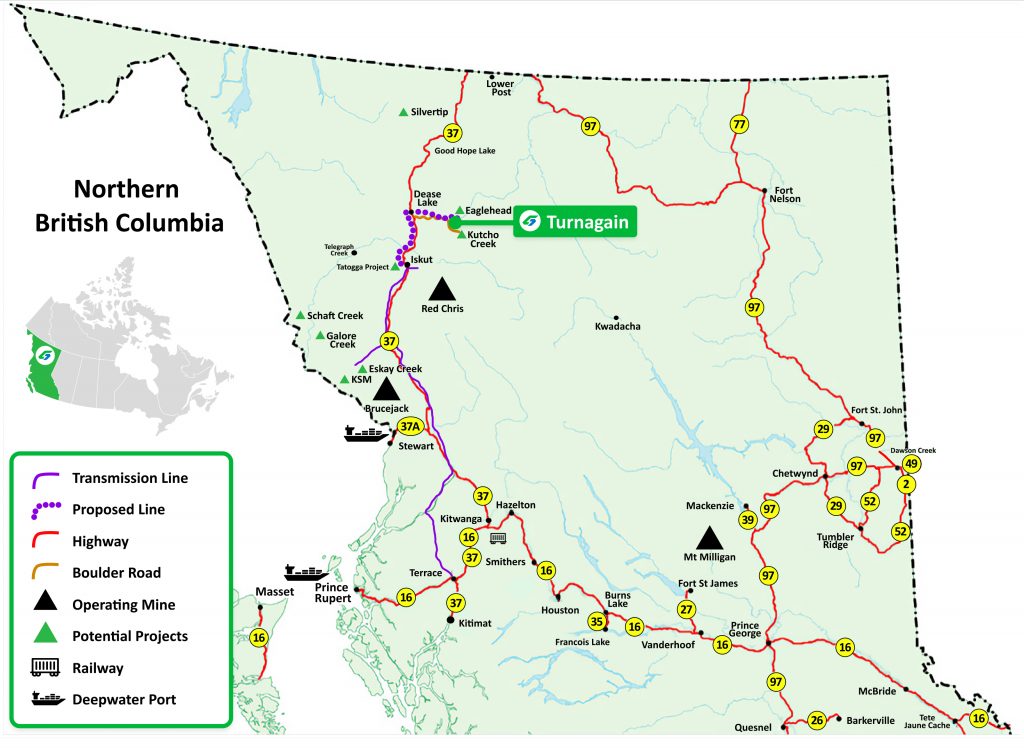
“Giga Metals Corporation is a junior mining company focused on developing its Turnagain Nickel Project in north-central British Columbia on the traditional territory of the Tahltan and the Kaska Dena, about 65 kilometres east of the community of Dease Lake and 400 kilometres by highway from the Port of Stewart,” stated Mark Jarvis
The Turnagain Project, held in Hard Creek Nickel, a subsidiary owned 85% by Giga Metals Corporation and 15% by Mitsubishi Corporation, recently released a positive Pre-Feasibility Study (PFS) in October 2023. The company has emphasized the project’s scale, mine life, mineralogy, and product as key factors setting it apart from other nickel cobalt deposits worldwide.
“The Turnagain Project PFS models an annual output of 37,288 t/y Nickel and Cobalt with a projected mine life of 30 years based on 950 million tonnes of reserves,” Jarvis explained. “These reserves are a subset of 1.5 billion tonnes of measured and indicated resources and 1.1 billion tonnes of inferred resources which leaves room for a longer mine life with further development.”
The project’s low strip ratio of 0.4 tonnes waste/1 tonne ore contributes to its positive economics and reduces the amount of waste to be managed. The deposit is much younger and therefore has less alteration products compared to other “similar” nickel deposits, resulting in higher recoveries and a simpler processing flow sheet.
“Ninety nine percent of the recoverable nickel and cobalt are contained in the mineral pentlandite. That, combined with very low levels of alteration products such as talc and clay, means that the recovery flow sheet is shorter and simpler than peer projects,” Jarvis stated. “A shorter, simpler flow sheet equates to lower technical risk and faster project ramp-up.”
Giga Metals has set an ambitious goal to develop the world’s first carbon-neutral nickel mine:
“The current design of the Turnagain Project uses a few strategies to achieve carbon neutrality including the use of a hydroelectric power, and electric equipment such as shovels and drills and an electric trolley-assisted haul fleet that significantly reduces fuel consumption,” said Jarvis. “Not included in the PFS are a fully electrified mine haul fleet and sequestration of carbon dioxide through mineral carbonation. Electric mining fleets are currently in the testing stage, and the company expects that these fleets will be commercially available by the time the Turnagain Project is in production. Carbon mineralization directly from the air into the tailings has been proven through a number of test programs with world-leading experts and the opportunity for carbon sequestration is considered in the tailings management facility design, but it is premature to specify exactly how much carbon will be sequestered in a real-world functioning tailings management facility.”
The company’s partnership with Mitsubishi Corporation will be instrumental in advancing the Turnagain project to the Bankable Feasibility Level. The company has consistently emphasized the importance of this partnership and how it supports Giga Metals’ growth strategy.
“Mitsubishi Corporation is an incredibly supportive partner and Giga Metals values the relationship,” Mark Jarvis stated. “Mitsubishi Corp. is very committed to getting this mine built and is actively connecting us with various potential strategic partners. Mitsubishi Corp. is known for their due diligence and their endorsement in the project has given us a high level of credibility with other companies.”
Giga Metals is actively exploring additional strategic partnerships to further advance their projects and tap into new opportunities in the nickel and cobalt market.
“The most recent report from Macquarie Commodities Strategy states that there is an 838,000 t/y of increased nickel demand forecasted for battery applications by 2030,” CEO Mark Jarvis noted. “This means that 24 large new nickel projects need to be built in the next six years to meet this demand. Given Turnagain’s modeled supply of 35,000 tons/year of Nickel and 2,000 tons/year of Cobalt and long mine life, the company is well positioned to meet the growing demand of these critical minerals.”
Lyle Davis, the newly appointed Chair of the Giga Metals Board, brings extensive experience in corporate finance and corporate governance of public companies.
Martin Vydra, Giga’s President, is an engineer with extensive experience in managing operating nickel mines and refineries and in marketing nickel and cobalt products to end users. He is leading Giga’s process for engaging new large partners to help develop the project.
Lyle Trytten, the company’s Manager of Development, is a recognized expert in extractive metallurgy and is called upon by governments and international agencies to help them understand technical aspects of the nickel supply chain, from the mine site to the battery cathode.
“We have a small but immensely competent team,” said Mr. Jarvis.
Giga Metals places great importance on investor engagement and transparent communication. Jarvis discussed the company’s participation in virtual investor conferences, bi-annual ‘townhall’ styled Question and Answer sessions, social media posts, monthly email newsletters, and attendance at conferences and roadshows. Additionally, Lyle Trytten participates in panels and events to discuss technical aspects of the nickel market and educate the public.
“We believe transparent communication with our community is important because development takes time, and we hope that our investors’ patience will be richly rewarded,” Jarvis stated.
When asked what sets Giga Metals apart as a compelling investment opportunity, Jarvis emphasized the uniqueness of the Turnagain Project as one of the few 100% nickel sulphide projects of its kind in the world. Despite the current low nickel prices, Giga Metals remains undervalued in the stock market, presenting a unique opportunity for investors.
“Giga Metals represents highly leveraged exposure to the nickel market, particularly right now with prices so low,” Jarvis concluded. “Our goal is to work tirelessly to unlock the inherent value of the project for our shareholders.”
As Giga Metals continues to advance the Turnagain Nickel Project and explore strategic partnerships, the company is well-positioned to contribute to the growing demand for responsibly sourced nickel and cobalt in the rapidly evolving electric vehicle and renewable energy sectors and will be watched closely by investors for news on its flagship project and more in its project portfolio.
The above references an opinion and is for information purposes only. It is not intended to be investment advice. Seek a licensed professional for investment advice. The author is not an insider or shareholder of any of the companies mentioned above.

The above references an opinion and is for information purposes only. It is not intended to be investment advice. Seek a licensed professional for investment advice. The author is not an insider or shareholder of any of the companies mentioned above.

Targa Exploration (CSX:TEX) recently announced a strategic shift towards gold and lithium exploration. This decision aligns with their vision for growth and value creation in the mining sector. CEO Cameron Tymstra explained the rationale behind this pivot and provided insights into the company’s current projects and future plans in a recent interview with MiningFeeds.
“The real driving force behind our transition to more of a gold focus came from the results of our 2023 exploration program at Opinaca. We went there in 2023 looking for lithium and ended up identifying two very large gold anomalies in the till samples that we took across the property. It is these new gold anomalies that has us very excited about the potential to make a meaningful gold discovery at Opinaca in the near future and represents an incredible opportunity for Targa shareholders. With the steep decline in lithium prices since early 2023 and strong performance in gold this year, it was a no-brainer to focus on Opinaca’s gold discovery potential going forward.”
The Opinaca Gold Project has emerged as a major focus for Targa Exploration. The discovery of a 5km x 4km gold anomaly in 2023 marks a significant milestone. CEO Cameron Tymstra elaborated on this discovery and the company’s expectations for the ongoing exploration campaign in the area.
“As soon as we saw the gold-in-till anomalies at Opinaca, we looked for comparable data with other known gold mines and deposits in Quebec with similar glaciation histories. Those known deposits had till anomalies with similar Au values to what we saw at Opinaca but our footprint seems to be even larger, and we have identified a second anomaly about 12km to the southeast of the larger one. Given that Opinaca covers ground with no history of mineral exploration and very sparse government mapping, we believe there is very real blue-sky potential for discovery and this is why we nearly doubled the size of our land package. We just wrapped up our next phase of work at Opinaca and we expect lab results from that program starting in late July and into August. We have submitted nearly 2,600 additional till samples, 130 rock samples from boulders and outcrops and 70 Heavy Mineral Concentrate samples. We believe the data from those samples will help us pinpoint potential bedrock sources of the gold we are seeing in the till. After all, gold doesn’t come from nowhere!”
Targa Exploration’s partnership with Kenorland Minerals has played a crucial role in the Opinaca project. Tymstra highlighted the value this partnership brings and its contribution to the efficient execution of the exploration program.
“Kenorland has a strong track record of discovery success in this sort of glacial terrain in Quebec. They recently used the same till sampling exploration strategy on a project with another partner that ultimately led to a significant gold deposit discovery. That same team is guiding the exploration for us at Opinaca and I am excited to say that the early stage till sampling data we have at Opinaca is notably larger than the early stage results Kenorland had on their other discovery. They are experts at all phases of exploration in Quebec and we benefit from their ability to negotiate preferred rates with their subcontractors as they use those teams for fieldwork across their portfolio all summer long, which ultimately saves our shareholders money.”
The company recently completed a non-brokered private placement, raising $1.375 million. Tymstra explained how Targa plans to allocate these funds across its various projects and outlined key milestones for investors.
“Those funds, combined with funds remaining from another private placement in December put our treasury around C$2.5M at the start of the exploration season. The lion’s share of our exploration budget this year is allocated to Opinaca with limited funds being used on a few basic prospecting programs on our other lithium projects to keep those claims in good standing. The key milestones and news items coming up in the next few months will certainly be the results coming in from the Opinaca field work that we just wrapped up. We also plan to return to Opinaca in September once those results are in to follow-up with additional prospecting and sampling. Our goal this year is ultimately to track down the bedrock source of the gold so we can begin identifying drill targets for a future drill program.”
In addition to the Opinaca project, Targa has a diverse portfolio of lithium and gold projects. CEO Cameron Tymstra provided an overview of these projects and their potential contribution to the company’s resource base.
“We assembled a large portfolio of early stage lithium assets in 2023 that span four Canadian provinces and cover over 400,000ha of land. Our two assets in Manitoba are historic lithium occurrences and our other assets are early stage prospects with various lithium indicators that we have been following up on. With the potential at Opinaca and the slow lithium market, we will be limiting our lithium exploration work this year to basic prospecting and mapping to assess some of our Ontario and Saskatchewan assets for their lithium potential and to keep those mineral claims in good standing.”
The exploration program at Opinaca involves both till sampling and boulder/outcrop prospecting:
“Till sampling is great for covering large areas of ground quickly to assess for mineral potential in the area. However it does not tell us what mineralization style or deposit type those elements in the till are coming from. The in-fill till sampling we just completed will help us narrow down the area where a bedrock source could be located but mineralized boulders will help us understand what sort of rocks we should be looking for in the bedrock. Ultimately its mineralized bedrock that we want to find prior to bringing in a drill, though many gold deposits are buried under till or under a lake and some geophysics may be required to better understand what lies below for picking out drill targets.”
Targa Exploration is listed on multiple stock exchanges. CEO Cameron Tymstra discussed the company’s current market position and steps being taken to enhance visibility and attract a broader investor base.
“We have only recently switched our focus to gold. We have recently rebranded our website and slide deck to reflect this. Now we are getting out to conferences and roadshows, and conducting interviews to spread the word about Opinaca’s big gold potential and bring new eyeballs to Targa.”
“Whether we are conducting exploration in-house or relying on professional partners like Kenorland, engaging with local communities is a very important part of our business. We try to ensure that local stakeholders are fully consulted about our exploration plans well in advance of those activities to create opportunities for relationship building, understand and address concerns, and maximize the benefits that our programs can generate for the local community.”
Looking beyond the current exploration program, Targa Exploration’s long-term goals in the lithium and gold sectors aim to differentiate the company in a competitive market: “Targa started out taking on large projects in underexplored regions. We knew not all of those projects would bear fruit but we only needed one of them to hit in order for us to start creating value for Targa shareholders. We really believe Opinaca was that big hit for us in 2023. We are now focused on uncovering the potential at Opinaca and ultimately making a discovery on behalf of our shareholders. Our board and advisors have a strong track record of discovery success and translating that success in the field to success for investors, and that is exactly the path we want to put Targa on going forward.”
CEO Cameron Tymstra also highlighted some of the upcoming catalysts and major news items that investors should watch for.
“Over the remainder of the summer we expect our sample results to start rolling in from the lab. We have three different types of samples in the lab; fine fraction tills, hard rock samples, and Heavy Mineral Concentrates, which will provide us with different types of data. We also expect to return to Opinaca in September for additional exploration work, the details of which will depend on the results that we are waiting on. This is the most exciting time of the year for Canadian explorers and we are very eager to start seeing results come in and our investors should be as well.”
Targa Exploration’s strategic shift towards gold and lithium exploration reflects a calculated move to capitalize on emerging opportunities and market conditions. With a promising project at Opinaca and a diverse portfolio of lithium and gold assets, Targa Exploration aims to create significant value for its shareholders and position itself as a leading player in the sector.
The above references an opinion and is for information purposes only. It is not intended to be investment advice. Seek a licensed professional for investment advice. The author is not an insider or shareholder of any of the companies mentioned above.

Solaris Resources Inc. (TSX: SLS)(NYSEAmerican:SLSR) recently reported drill results from its ongoing 2024 drilling program at the Warintza Project in southeastern Ecuador. The latest findings include the final assays for the upcoming updated mineral resource estimate, anticipated later this month.
- Drill hole SLSE-36, positioned at the southeasternmost platform at Warintza Southeast, revealed 148 meters of 0.72% copper equivalent (CuEq) within a larger interval of 325 meters of 0.51% CuEq from the surface. This hole remains open in strong mineralization, with the final 34 meters averaging 0.90% CuEq.
- SLS-77, located on the northern boundary of the Northeast Extension of Warintza Central, returned 108 meters of 0.70% CuEq from near the surface within a broader interval of 273 meters of 0.57% CuEq from the surface.
- SLS-78, drilled from a new platform 100 meters to the west, showed 78 meters of 0.70% CuEq within a larger interval of 114 meters of 0.65% CuEq from a depth of 72 meters before hitting low-grade granodiorite.
- SLS-79, drilled from the same platform at a steeper inclination, returned 78 meters of 0.60% CuEq from near the surface within a broader interval of 248 meters of 0.50% CuEq, ending in strong mineralization.
- SLST-03, drilled approximately 300 meters south of Warintza Central at the Trinche platform, aimed to convert undefined waste within the expected pit shell. This hole returned 312 meters of 0.62% CuEq within a larger interval of 1,028 meters of 0.30% CuEq from the surface.
- Patrimonio hole 04, consistent with holes 01 and 02, intersected a roughly 150-meter thick tabular zone of replacement mineralization dipping shallowly to the west. The source of this mineralization has not yet been found. SLSP-03, collared at a higher elevation, intersected a low-grade layer in the host lava sequence before passing into a barren, post-mineral porphyry that intruded and displaced the targeted mineralized layer. Mineral alteration zoning and geochemistry suggest that the core of the mineralized system lies to the south.
The 2024 drill program has recently expanded to 60,000 meters, comprising 140 holes from 80 platforms, providing significantly improved drilling coverage. By the end of June, 27,000 meters in 74 holes were completed. Seven rigs are targeting over 8 kilometers of drilling in July, facilitated by improved site logistics from infrastructure development.
Current drilling focuses on Patrimonio exploration, resource extension at Warintza Southeast, and infill and technical drilling to support the Prefeasibility Study (PFS) in the second half of 2025. This includes geotechnical holes that are expected to provide insights into the geology of the Caya-Mateo epithermal gold and silver target area.
Solaris Resources’ continued efforts at the Warintza Project underscore its commitment to expanding and defining the mineral resources within this promising area. The anticipated updated mineral resource estimate will likely provide further clarity on the potential and future development of the Warintza Project.
Other results include:
Table 1 – Assay Results
| Hole ID | Date Reported | From (m) | To (m) | Interval (m) | Cu (%) | Mo (%) | Au (g/t) | CuEq¹ (%) |
| SLS-79 | July 09, 2024 | 15 | 263 | 248 | 0.41 | 0.02 | 0.05 | 0.50 |
| Including | 54 | 132 | 78 | 0.52 | 0.01 | 0.05 | 0.60 | |
| SLS-78 | 72 | 186 | 114 | 0.54 | 0.02 | 0.07 | 0.65 | |
| Including | 93 | 171 | 78 | 0.58 | 0.02 | 0.08 | 0.70 | |
| SLS-77 | 0 | 273 | 273 | 0.43 | 0.02 | 0.10 | 0.57 | |
| Including | 21 | 129 | 108 | 0.56 | 0.02 | 0.10 | 0.70 | |
| SLSE-36 | 0 | 325 | 325 | 0.40 | 0.02 | 0.05 | 0.51 | |
| Including | 177 | 325 | 148 | 0.58 | 0.03 | 0.07 | 0.72 | |
| Including | 291 | 325 | 34 | 0.76 | 0.03 | 0.08 | 0.90 | |
| SLSP-04 | 30 | 204 | 174 | 0.25 | 0.02 | 0.06 | 0.35 | |
| Including | 104 | 152 | 48 | 0.30 | 0.02 | 0.08 | 0.43 | |
| SLSP-03 | 0 | 310 | 310 | 0.10 | 0.01 | 0.04 | 0.14 | |
| SLST-03 | 16 | 1044 | 1028 | 0.24 | 0.01 | 0.03 | 0.30 | |
| Including | 646 | 958 | 312 | 0.51 | 0.02 | 0.06 | 0.62 |
Notes to table: True widths are interpreted to be very close to drilled widths due to the bulk-porphyry style mineralized zones at Warintza.
Table 2 – Collar Locations
| Hole ID | Easting | Northing | Elevation (m) |
Depth (m) |
Azimuth (degrees) | Dip (degrees) |
| SLS-79 | 800197 | 9648470 | 1340 | 263 | 270 | -88 |
| SLS-78 | 800197 | 9648469 | 1340 | 220 | 270 | -65 |
| SLS-77 | 800439 | 9648493 | 1271 | 324 | 320 | -85 |
| SLSE-36 | 801529 | 9647848 | 1154 | 325 | 220 | -85 |
| SLSP-04 | 799364 | 9647811 | 1526 | 309 | 145 | -60 |
| SLSP-03 | 799349 | 9647450 | 1627 | 310 | 40 | -65 |
| SLST-03 | 800192 | 9647550 | 1592 | 1123 | 330 | -50 |
Notes to table: The coordinates are in WGS84 17S Datum.
Endnotes
- Copper-equivalence calculated as: CuEq (%) = Cu (%) + 4.0476 × Mo (%) + 0.487 × Au (g/t), utilizing metal prices of US$3.50/lb Cu, US$15.00/lb Mo, and US$1,500/oz Au, and assumes recoveries of 90% Cu, 85% Mo, and 70% Au based on preliminary metallurgical test work.
The above references an opinion and is for information purposes only. It is not intended to be investment advice. Seek a licensed professional for investment advice. The author is not an insider or shareholder of any of the companies mentioned above.

Sitka Gold (TSXV:SIG) has announced an expansion of its planned 2024 exploration program at the RC Gold Project in Yukon. The company will now include diamond drilling and additional surface work on the newly acquired Clear Creek property claims, which complete the consolidation of the Clear Creek Intrusive Complex.
Cor Coe, Director and CEO of Sitka Gold, commented in a press release: “The accumulation of data from several years of systematic exploration by previous operators on the newly acquired Clear Creek Property has generated several high-quality exploration targets. The newly acquired claims cover at least three intrusion related gold targets that are geologically similar to our developing Blackjack gold deposit and the team is very excited to begin assessing the property by testing the Rhosgobel intrusion, where historical work strongly indicates the potential for the presence of a multi-million ounce gold deposit. Sitka’s initial discovery of the Blackjack and Eiger gold deposits came about through a similar process of review and compilation of a large historical database and we see the ability to accelerate the discovery of additional gold deposits by utilizing our growing knowledge of the intrusion-related gold systems in this area in conjunction with the comprehensive Clear Creek data-set as we continue our exploration activities across this emerging mining district.”
The RC Gold Project now covers 431 square kilometers and includes four high-priority areas that have seen previous drilling and require further exploration. These areas are:
1. The Rhosgobel intrusion, with historical drilling results of up to 1.03 g/t gold over 67.1 m
2. The Contact zone, with drill results up to 20.3 g/t gold over 10.7 m
3. The Bear Paw Breccia, which intersected up to 1.87 g/t gold over 42.6 m
4. The Pukelman intrusion, with results of 1.20 g/t gold over 10.0 m
Sitka Gold is currently conducting diamond drilling at RC Gold as part of a planned 15,000 metre drilling program for 2024. The first target area to be tested is the Rhosgobel Intrusion, where shallow historical drilling in 1995 by Kennecott outlined a large area of intrusion-related gold mineralization. Previous drilling at Rhosgobel was limited to a vertical depth of approximately 60 metres.
The company has engaged GroundTruth Exploration to conduct grid-based soil sampling in an area south of the Blackjack deposit. This area, known as the G2 zone, was previously prospected in 2015, with 13 surface float samples collected ranging from trace to 43.4 g/t gold.
Additional exploration activities planned for 2024 include:
– Geological mapping and prospecting in the G2 to Pukelman West corridor
– Exploration along the Blackjack fault mineralized corridor from the Blackjack deposit south through the Pukelman West and Rhosgobel intrusion
– Integration of recently acquired data from the southern portion of the Clear Creek Intrusive Complex
– Development of drilling plans for additional known areas of mineralization
The acquisition of the Clear Creek property completes Sitka Gold’s 100% ownership of the Clear Creek Intrusive Complex, adding several underexplored areas with potential for new gold discoveries.
On January 19, 2023, Sitka Gold announced an Initial Mineral Resource Estimate for the RC Gold Property of 1,340,000 ounces of gold, classified as inferred. This resource is contained in two zones: The Blackjack and Eiger deposits. Both deposits are potentially open pit minable and amenable to heap leaching, with initial bottle roll tests indicating gold recoveries of up to 94% with minimal NaCN consumption.
The RC Gold Project is located approximately 100 kilometres east of Dawson City, Yukon, and is accessible via a secondary gravel road from the Klondike Highway. It is positioned between Victoria Gold’s Eagle Gold Mine and the former Brewery Creek Gold Mine.
As exploration continues, Sitka Gold aims to further define and expand the known gold mineralization within the RC Gold Project area.
- 2024 exploration has begun on the newly acquired Clear Creek property
- First diamond drilling program ever to be completed on the Rhosgobel Intrusion since historical shallow reverse circulation drilling in 1995 to follow up on holes 95-15 which intersected 50.3 m of 1.07 g/t gold and 95-16 which intersected 67.1 m of 1.03 g/t gold with both holes ending in strong gold mineralization.
- Grid geochemistry currently underway to infill gaps to the south of the Blackjack deposit on the high potential Pukelman West intrusion and G2 zone on the newly acquired Clear Creek claims.
- Integration of newly acquired datasets (geological, geophysical, geochemical) with Sitka Gold data.
- Geological mapping and prospecting following up on the high grade G2 zone, Contact zone and other highly prospective gold targets.
Significant drill hole results from the Clear Creek Property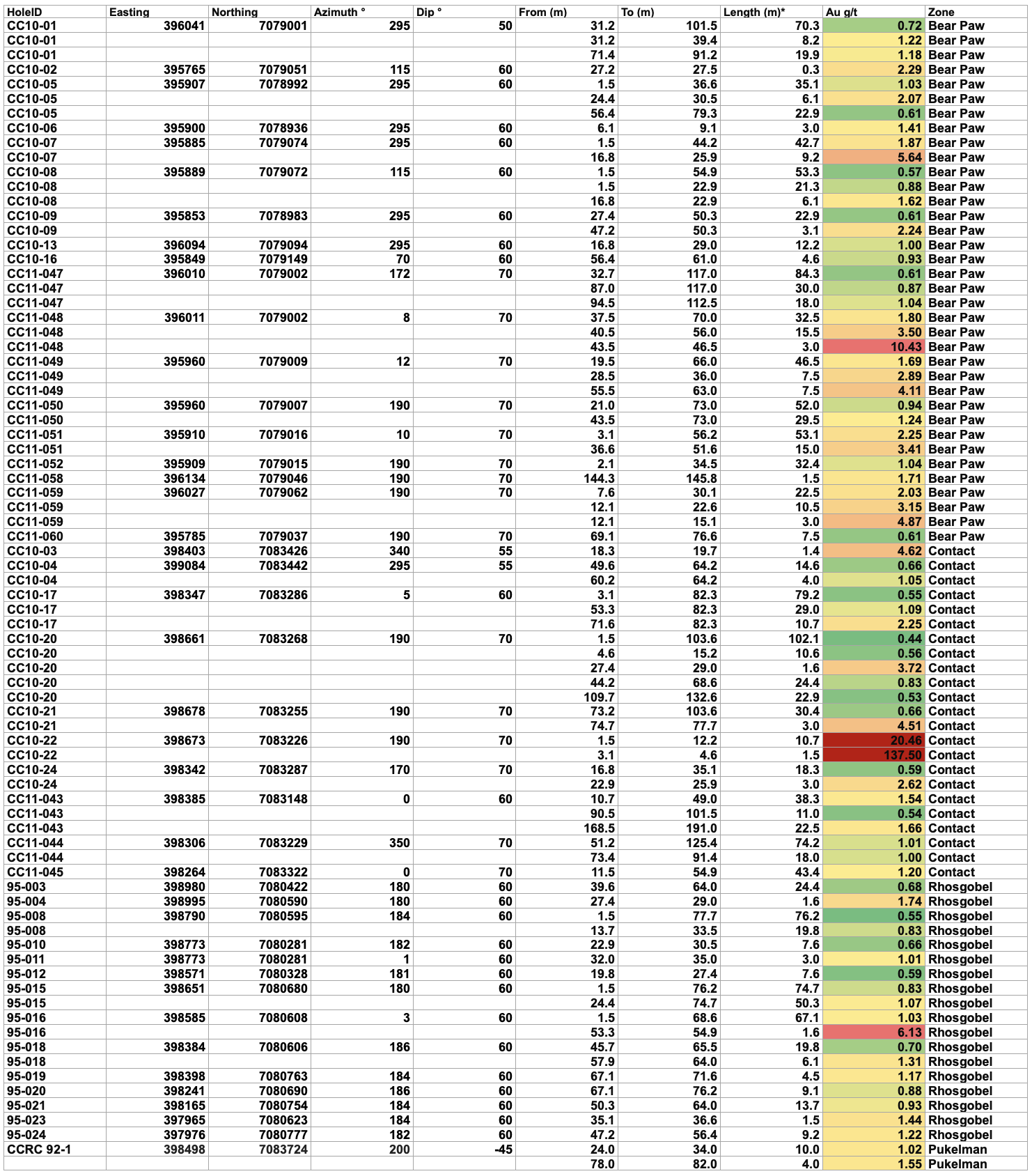
RC Gold Inferred Mineral Resource Estimate
| COG g/t Au | Blackjack Zone | Eiger Zone | Combined | ||||||||
| Tonnes 000’s | Au g/t | 0z Au 000’s | Tonnes 000’s | Au g/t | 0z Au 000’s | Tonnes 000’s | Au g/t | 0z Au 000’s | |||
| 0.20 | 35,798 | 0.80 | 921 | 32,523 | 0.45 | 471 | 68,321 | 0.63 | 1,391 | ||
| 0.25 | 33,743 | 0.83 | 900 | 27,362 | 0.50 | 440 | 61,105 | 0.68 | 1,340 | ||
| 0.30 | 31,282 | 0.88 | 885 | 22,253 | 0.55 | 393 | 53,535 | 0.74 | 1,279 | ||
| 0.35 | 29,065 | 0.92 | 860 | 17,817 | 0.60 | 344 | 46,882 | 0.80 | 1,203 | ||
| 0.40 | 26,975 | 0.96 | 833 | 14,506 | 0.66 | 308 | 41,481 | 0.86 | 1,140 | ||
The above references an opinion and is for information purposes only. It is not intended to be investment advice. Seek a licensed professional for investment advice. The author is not an insider or shareholder of any of the companies mentioned above.
 Chakana Copper Reports Initial Results from Soledad Project Scout Drilling Program
Chakana Copper (TSXV:PERU) has announced preliminary results from its ongoing scout drilling program at the Soledad project in Ancash, Peru. The company has completed three initial drill holes in the Mega-Gold target area, part of a fully funded 3,000-meter program that began on April 5, 2024.
“We are encouraged to see the extent of alteration indicating a large hydrothermal system in the drilling thus far in the Mega-Gold area defined by strong quartz-sericite-pyrite overprinting early chlorite alteration with abundant pyrite mineralization and frequent occurrences of chalcopyrite and molybdenite. The results in the first three holes are also important in demonstrating the extent of tourmaline alteration in veins, breccias and replacements. We view this as indicating the same event related to the high-grade tourmaline breccia pipes that are part of the initial resource we published in 2022 (see news release dated February 23, 2022). In addition, for the first time, we have seen a late-mineral intrusion containing mineralized xenoliths with quartz-tourmaline-chalcopyrite. Although we have not seen long intersections in these first three holes, we are encouraged by the strengthening grades over narrow intervals. Application of hyperspectral core scanning technology to all of the drill core will help us identify mineral zoning patterns important in locating mineralizing intrusions,” stated President and CEO David Kelley.
The current drilling campaign aims to test three types of targets: high-grade breccia-hosted mineralization at Estremadoyro, porphyry-related mineralization in the Mega-Gold area, and precious metal mineralization at the La Joya high-sulfidation epithermal zone. To date, eight holes totaling 2,425.2 meters have been drilled at Mega-Gold, with an additional 465.5 meters drilled in three holes at La Joya.
The first three scout holes at Mega-Gold were drilled on the eastern side of the target area. Hole MGDH24-001 intersected volcanic rocks with deep oxidation to 109 meters depth, followed by phyllic alteration overprinting earlier propylitic alteration. Anomalous low-level enrichment of gold, copper, and molybdenum was observed.
Hole MGDH24-002 cut a similar volcanic sequence intruded by granodiorite and hydrothermal breccias. A 2-meter interval from 89 meters depth returned 1.8 g/t gold and 0.35% copper. The hole also encountered zones of low-level gold, copper, and molybdenum enrichment.
MGDH24-003 was stopped prematurely at 234.1 meters in a fault zone. It intersected andesitic tuff and andesite with hydrothermal breccias and granodiorite. A 1.5-meter interval from 127.5 meters depth yielded 11.05 g/t gold.
David Kelley, a Qualified Person as defined by NI 43-101, reviewed and approved the technical information in the company’s news release.
In addition to the drilling program, Chakana has contracted Hyperspectral Intelligence Inc. to utilize the geoLOGr hyperspectral core scanning system on current and select previous drill core samples. This technology is designed to identify alteration minerals associated with various mineral deposit types.
Chakana will participate in The Rule Symposium from July 7-11, 2024, in Boca Raton, Florida, where investors can meet with management to learn more about the Soledad project and recent results.
The company also reported that a scheduled US$1,000,000 payment to Condor Resources, due on June 23, 2024, as part of an option agreement on three claims at the northern end of the expanded Soledad project, has not yet been made. Discussions between the companies are ongoing regarding this matter.
Chakana Copper Corp is a Canadian-based minerals exploration company focused on advancing the Soledad Project in Peru. An initial mineral resource estimate for seven breccia pipes was announced in Q1 2022, with an Inferred Resource of 4.8 million tonnes assumed to be extractable by underground mining methods, plus an additional 1.9 million tonnes assumed to be extractable by open pit mining methods.
The company follows rigorous sampling and analytical protocols that meet or exceed industry standards. Core samples are analyzed at ALS facility in Callao, Lima, Peru, using various techniques including 4-acid digestion and fire assay.
Highlights from Mega-Gold Scout Drilling Include:
- Reporting three holes (1,041 m) from the eastern side of the Mega-Gold target area
- Widespread alteration identified with quartz-sericite-pyrite overprinting chlorite alteration
- Up to 15% pyrite encountered with traces of chalcopyrite and molybdenite in each hole
- Narrow intervals of strong mineralization: 2 m of 1.8 gpt gold and 0.35% copper in MGDH24-002 from 89.0 m, and 1.5 m of 11.05 gpt gold in MGDH24-003 from 127.5 m
- Persistent anomalous levels of gold noted in geochemical results
- Abundant hydrothermal breccia encountered, cutting pre-mineral granodiorite
- Late-mineral granodiorite identified with mineralized xenoliths
- Assays pending for five additional holes completed in central and western parts of Mega-Gold target area and three holes at La Joya
- Hyperspectral core scanning initiated on Mega-Gold and La Joya drill holes
The above references an opinion and is for information purposes only. It is not intended to be investment advice. Seek a licensed professional for investment advice. The author is not an insider or shareholder of any of the companies mentioned above.

The above references an opinion and is for information purposes only. It is not intended to be investment advice. Seek a licensed professional for investment advice. The author is not an insider or shareholder of any of the companies mentioned above.

Silver Elephant Mining (TSX:ELEF) has announced the discovery of gallium and indium at its Pulacayo-Paca silver-lead-zinc project in Bolivia’s Potosi department. The company reported assay results showing gallium levels up to 34 g/t and indium levels up to 266 g/t over a 750-meter strike length.
The assays were conducted on 199 core samples from 12 diamond drill holes at the site. These samples were selected based on their proximity to previous drill holes that had shown promising results for gallium and indium. Earlier testing on those holes had revealed 99 meters containing 27.8 g/t gallium and 9.7 g/t indium.
According to Silver Elephant, the gallium and indium occurrences appear to correlate with zinc mineralization at the site. The company stated it will continue evaluating the potential of these elements, noting they could add significant value to any concentrate produced from future mining operations.
The Pulacayo-Paca project, Silver Elephant’s flagship operation, began production in October 2023. While primarily focused on silver, lead and zinc, these new findings suggest the possibility of additional valuable minerals at the site.
Bill Pincus, an independent consultant acting as a qualified person under NI 43-101 guidelines, supervised the technical aspects of this announcement. The company employed standard Quality Assurance/Quality Control protocols during the drilling campaigns, including the use of standards and blanks comprising 3-5% of analyzed material.
This announcement comes amid growing interest in gallium and indium, which are used in various high-tech applications including semiconductors and flat-panel displays. The discovery of these elements at an existing silver mine could potentially enhance the project’s economic viability.
It should be noted that while these initial results are promising, further testing and evaluation will be necessary to determine the full extent and economic potential of the gallium and indium mineralization at the Pulacayo-Paca project.
| HOLE ID | FROM m | TO m | WIDTH m | Ag g/t | Pb % | Zn % | Ga g/t | In g/t |
| PUD156 | 247.3 | 248 | 0.7 | 934 | 5.67 | 6.16 | 4.56 | 266.00 |
| 11PUD231 | 30 | 31 | 1 | 1 | 0.53 | 0.01 | 7.58 | 12.25 |
| 11PUD231 | 42 | 43 | 1 | 1 | 0.65 | 0.02 | 10.05 | 14.55 |
| 11PUD231 | 48 | 49 | 1 | 2 | 1.56 | 0.02 | 34.80 | 42.40 |
| 11PUD231 | 101 | 102 | 1 | 108 | 1.91 | 8.71 | 5.56 | 38.40 |
| 11PUD231 | 111 | 112 | 1 | 345 | 5.83 | 10.85 | 8.83 | 74.80 |
| 11PUD231 | 119 | 120 | 1 | 145 | 2.20 | 1.23 | 10.20 | 29.00 |
| PUD069 | 254 | 255 | 1 | 40 | 1.10 | 5.44 | 4.61 | 11.15 |
| PUD069 | 278 | 279 | 1 | 44 | 0.17 | 6.65 | 2.42 | 20.30 |
| PUD069 | 290 | 291 | 1 | 98 | 0.91 | 1.20 | 2.57 | 17.75 |
| PUD069 | 296 | 297 | 1 | 620 | 0.44 | 8.79 | 3.04 | 16.40 |
| PUD069 | 310 | 311 | 1 | 169 | 0.24 | 7.73 | 7.08 | 219.00 |
| 11PUD220 | 84 | 85 | 1 | 74 | 2.67 | 2.95 | 2.61 | 14.50 |
| PUD046 | 227 | 228 | 1 | 54 | 1.02 | 4.35 | 3.90 | 10.30 |
| PUD046 | 233 | 234 | 1 | 93 | 1.62 | 3.82 | 7.29 | 21.60 |
| PUD046 | 261 | 262 | 1 | 106 | 1.47 | 1.81 | 1.84 | 20.80 |
| PUD046 | 267 | 268 | 1 | 314 | 1.71 | 2.44 | 2.53 | 20.00 |
| PUD046 | 273 | 274 | 1 | 62 | 0.96 | 4.91 | 4.61 | 37.50 |
| PUD046 | 279 | 280 | 1 | 56 | 0.51 | 5.48 | 5.45 | 32.70 |
| PUD046 | 285 | 286 | 1 | 199 | 1.99 | 6.70 | 3.77 | 29.50 |
| PUD046 | 291 | 292 | 1 | 786 | 10.95 | 3.59 | 5.74 | 51.00 |
| PUD046 | 296 | 297 | 1 | >100 | 0.83 | >10000 | 2.05 | 12.40 |
| PUD098 | 63 | 64.15 | 1.15 | 77 | 1.74 | 3.89 | 2.93 | 12.60 |
| PUD098 | 154 | 155 | 1 | 44 | 0.71 | 5.84 | 5.18 | 43.40 |
| PUD098 | 159 | 160 | 1 | 1.29 | 0.15 | 0.66 | 4.64 | 14.00 |
| PUD098 | 184 | 185 | 1 | 41 | 0.94 | 5.43 | 2.52 | 12.90 |
| PUD098 | 190 | 191 | 1 | 650 | 10.90 | 12.95 | 6.84 | 83.90 |
| PUD187 | 316 | 317 | 1 | 15 | 0.06 | 1.63 | 3.27 | 13.25 |
| PUD267 | 33.5 | 35 | 1.5 | 40 | 1.22 | 1.21 | 3.78 | 15.90 |
| HOLE ID | FROM m | TO m | WIDTH m | TRUE WIDTH m | Ag g/t | Pb % | Zn % |
| PUD 156 | 241 | 278 | 37 | 22.78 | 74.65 | 0.33 | 0.82 |
| including… | 246.6 | 253 | 6.4 | 3.94 | 217.49 | 0.99 | 1.36 |
| 11PUD 231 | 21 | 23 | 2 | 0.94 | 199.5 | 9.35 | 0.06 |
| 11PUD 231 | 40 | 47 | 7 | 3.29 | 92 | 2.53 | 0.07 |
| including… | 45 | 46 | 1 | 0.47 | 407 | 6.72 | 0.07 |
| 101 | 106 | 5 | 2.35 | 54.4 | 1.07 | 3.32 | |
| 109 | 114 | 5 | 2.35 | 96.4 | 1.77 | 4.7 | |
| 117 | 120 | 3 | 1.41 | 79 | 1.37 | 4.45 | |
| PUD 069 | 276 | 306 | 30 | 22.98 | 413.9 | 3.59 | 1.2 |
| 11PUD 220 | 35.2 | 56 | 20.8 | 9.76 | 79.3 | 0.9 | 0.62 |
| 65 | 68 | 3 | 1.41 | 44.7 | 0.75 | 0.6 | |
| 80 | 89 | 9 | 4.22 | 119.7 | 2.6 | 2.64 | |
| PUD 040 | 237 | 241 | 4 | 2.29 | 7.25 | 1.1 | 3.49 |
| PUD 046 | 225 | 309 | 84 | 70.44 | 106.29 | 0.86 | 2.26 |
| including… | 284 | 303 | 19 | 15.93 | 258.47 | 1.8 | 2.85 |
| PUD 187 | 315 | 317 | 2 | 1.53 | 13.5 | 0.08 | 1.74 |
| 324 | 326 | 2 | 1.53 | 7 | 0.01 | 1.14 | |
| PUD 267 | 31.5 | 67 | 35.5 | 25.10 | 54.3 | 4.31 | 0.92 |
| including… | 48 | 58 | 10 | 7.07 | 146.7 | 9.79 | 1.97 |
| PUD 267 | 117 | 123 | 6 | 4.24 | 47.8 | 1.11 | 0.25 |
| including… | 121 | 122 | 1 | 0.71 | 238 | 3.61 | 0.86 |
| 127.5 | 131 | 3.5 | 2.47 | 1.3 | 1.45 | 0.25 | |
| 139.5 | 142 | 2.5 | 1.77 | 2.4 | 1.68 | 0.2 | |
| PUD 271 | 123 | 126 | 3 | 2.12 | 1 | 0.005 | 0.012 |
| PUD 098 | 178 | 215 | 37 | 29.93 | 48.8 | 1.06 | 2.9 |
| Including… | 189 | 193 | 14 | 11.33 | 304.4 | 5.15 | 10.69 |
| PND 108 | 15 | 65 | 50 | 48.30 | 135 | 1.42 | 0.4 |
| including… | 33 | 57 | 24 | 23.18 | 200 | 2.12 | 0.6 |
| and… | 33 | 43 | 10 | 9.66 | 257 | 1.49 | 0.41 |
| 94 | 96 | 2 | 1.93 | 160 | 0.52 | 0.94 | |
| PND 110 | 9 | 182 | 173 | 122.33 | 95 | 1.4 | 1.63 |
| incl… | 9 | 98 | 89 | 62.93 | 279 | 1.17 | 1.28 |
| and… | 9 | 28 | 19 | 13.43 | 718 | 0.74 | 0.05 |
| and… | 9 | 12 | 3 | 2.12 | 145 | 0.9 | 0.07 |
| and… | 16 | 28 | 12 | 8.49 | 1085 | 0.71 | 0.04 |
| and… | 44 | 180 | 138 | 97.58 | 87 | 2.01 | 1.59 |
| and… | 44 | 46.5 | 2.5 | 1.77 | 111 | 1.09 | 0.61 |
| and… | 44 | 98 | 54 | 38.18 | 98 | 1.52 | 2.03 |
| and… | 52 | 54 | 2 | 1.41 | 115 | 1.33 | 1.61 |
| and… | 60 | 82 | 22 | 15.56 | 328 | 1.43 | 1.98 |
| and… | 61 | 65 | 4 | 2.83 | 1248 | 2.88 | 1.93 |
| and… | 86 | 94 | 8 | 5.66 | 270 | 2.74 | 2.83 |
| and… | 97 | 98 | 1 | 0.71 | 155 | 3.03 | 3.26 |
The above references an opinion and is for information purposes only. It is not intended to be investment advice. Seek a licensed professional for investment advice. The author is not an insider or shareholder of any of the companies mentioned above.
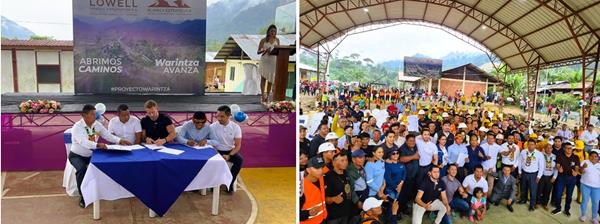
Solaris Resources (TSX:SLS)(NYSEAmerican:SLSR) has issued a statement to address false and misleading claims made by anti-mining NGOs regarding the social license of its Warintza Project in southeastern Ecuador. The company emphasizes that the Warintza Project resides on the ancestral lands of the Warints and Yawi communities, which have been officially registered and defined by the Ecuadorian government since 2002. These communities are the sole legal entities with rights and authority over these lands.
The International Labor Organization has recognized the Warints and Yawi as the sole titleholders of their ancestral lands. It has also acknowledged the legality of the Strategic Alliance, a governance structure created by Solaris to ensure community consent for the Warintza Project. This Alliance is managed by an Advisory Board of Directors comprising company representatives and democratically elected members from each community.
The Ecuadorian Ministry of Environment has conducted two consultation processes, confirming that the Warints and Yawi communities are directly influenced by the Warintza Project. These consultations have successfully facilitated the project’s progression from initial exploration to advanced exploration, following an Environmental Impact Assessment and the issuance of an Environmental License.
Solaris has obtained explicit consent for the project from the Warints and Yawi through formal community agreements. These agreements include an Impact and Benefits Agreement signed in 2020 and subsequently updated in 2022 and 2024 to reflect the project’s growth and commitment to its host communities. Notably, all surrounding communities contribute employees to the project, and many have expressed interest in partnering with Solaris regarding their own lands.
In March 2024, Solaris signed a trilateral cooperation agreement with the Interprovincial Federation of Shuar Centers (FICSH), the highest authority representing 143,000 Shuar indigenous people, and the Alliance for Entrepreneurship and Innovation of Ecuador. This agreement was signed in the presence of senior Ecuadorian government officials. Mr. David Tankamash, President of FICSH, commented at the time, “We support the Warints and Yawi communities and reject the efforts of foreign NGOs who act against the will and interest of our members.”
Solaris cautions shareholders and investors against the misinformation propagated by NGOs and other third parties. The company reiterates its commitment to transparency and encourages interested parties to seek accurate information directly from them.
Mr. Froilan Juank, President of the Yawi Shuar Center, commented: “We are the legitimate registered owners of the Ancestral Lands on which the Warintza Project resides and we have the right and have chosen, through our General Assembly, to participate in the Project through our Strategic Alliance and Impact and Benefits Agreement.”
Mr. Agustin Kayak, Trustee of the Warints Shuar Center, stated: “We and the Yawi community have decided to move forward with the Warintza Project. We are the owners of the lands where Warintza is located. We work together, the two communities of Warints and Yawi, for the well-being and development of our people.”
Mr. Emmanuel Delaune, Manager of Ecuadorean state-owned mining company, Empresa Nacional Minera, stated: “Solaris is an example to follow with its Warintza Model, which contributes to the local development of the Shuar communities through transparency, citizen participation, environmental stewardship and social development. These are the principles by which Solaris has earned the necessary credentials to operate in this area of Ecuador.”
The above references an opinion and is for information purposes only. It is not intended to be investment advice. Seek a licensed professional for investment advice. The author is not an insider or shareholder of any of the companies mentioned above.
 Aero Energy and Fortune Bay Report High Radioactivity in Second Drill Hole at Murmac Uranium Project
Fortune Bay (TSXV:FOR) has announced the intersection of highly elevated radioactivity in the second drill hole (M24-017) of its 2024 exploration drilling program at the Murmac Uranium Project in northern Saskatchewan. The drilling program is being funded by Aero Energy (TSXV:AERO) and operated by Fortune Bay, under an Option Agreement executed on December 15, 2023.
Dale Verran, CEO for Fortune Bay, commented in a press release: “The broad zone of strong radioactivity intersected in M24-017 is a highly encouraging start to the 2024 drilling program at Murmac and testament to the quality of the targets on the Project. This new discovery of shallow radioactivity, within favorable structured graphitic rocks, indicates the potential for a high-grade, basement-hosted deposit. Together with our partners, Aero Energy, we look forward to following up this result.”
Drill hole M24-017 encountered an average of 1,309 counts per second over 8.7 metres in graphitic pelite, with readings reaching up to 33,600 counts per second using a handheld RS-125 Spectrometer. Visible uranium mineralization was associated with the highest readings.
The hole was drilled to test an electromagnetic (EM) conductor on the Howland Corridor at the intersection of a cross-cutting fault with numerous historical uranium occurrences and radioactive showings. The target, designated H15, is characterized by a subtle EM high with a coincident gravity low. The interpreted EM conductor extends approximately 1.2 kilometres, with about 1 kilometre of previously untested area beneath Howland Lake.
Preliminary results from NQ2 drill core measurements show intermittent radioactivity in the hangingwall quartzite between 81.10 and 85.80 metres down hole. The graphitic unit hosting the strong radioactivity is currently interpreted to be dipping at approximately 70° towards the southeast. The drill hole was oriented towards an azimuth of 310° (True North) with a dip of -55°.
Fortune Bay’s Technical Director, Gareth Garlick, P.Geo., who is a Qualified Person as defined by NI 43-101, has reviewed and approved the technical information in the announcement. The Company notes that the nature and orientation of any possible mineralization have not yet been constrained, and potential mineralization true thicknesses have not yet been determined.
Next steps for the project include systematic collection of drill core samples from zones with radioactivity higher than 300 cps. These samples will be submitted to SRC Geoanalytical Laboratories in Saskatoon for U3O8 assay and multi-element characterization. Fortune Bay is currently assessing options to follow up and begin constraining the extents of the strong radioactivity, including down-dip and along-strike testing of the host graphitic unit.
The company has verified the majority of historical uranium occurrences through field prospecting and sampling, however there is a risk that future confirmation work and exploration may produce results that substantially differ from the unverified historical results.
Fortune Bay Corp. is an exploration and development company with ownership in two advanced gold exploration projects in Canada and Mexico, as well as seven uranium exploration projects on the northern rim of the Athabasca Basin, Saskatchewan. The company aims to build a mid-tier exploration and development company through the advancement of its existing projects and strategic acquisitions.
This news represents a significant development in the ongoing exploration of the Murmac Uranium Project, though it is important to note that further testing and analysis are required to determine the full extent and economic viability of any uranium mineralization at the site.
Highlights from the results are as follows:
- Drilling is still underway on hole M24-017 (target H15); drill core has been received and logged to a depth of 94.5 metres at the time of release.
- Strong radioactivity is dominantly hosted in structured graphitic pelite, immediately below the contact with hematized quartzite (hangingwall), approximately 70 to 78 metres vertically below surface.
- Radioactivity highlights include a maximum of 33,600 counts per second over 0.1 metre (from 86.1 to 86.2 metres), with a length weighted average of 1,309 counts per second over 8.7 metres (from 85.8 to 94.5 metres).
- Drilling is ongoing and the zone of strong radioactivity remains open up- and down-dip, as well as along strike in both directions.
- This is the first drill hole testing a previously unexplored electromagnetic (“EM”) conductor on the Howland Corridor under the shallow Howland Lake.
- The Company is currently planning appropriate follow-up holes.
- There are an additional 11 high-priority targets at Murmac which have been approved for drilling, and multiple other targets under consideration
Table 1. Radioactivity intersections logged to date in hole M24-017.
|
Log |
From (m) |
To (m) |
Length (m) |
cps |
Measurement Type |
|
Hangingwall |
81.10 |
81.70 |
0.60 |
432 |
Length Weighted Average |
|
82.55 |
82.65 |
0.10 |
350 |
Individual Measurements |
|
|
82.65 |
82.75 |
0.10 |
770 |
||
|
82.75 |
82.85 |
0.10 |
1,010 |
||
|
82.85 |
82.95 |
0.10 |
480 |
||
|
82.95 |
83.05 |
0.10 |
340 |
||
|
84.00 |
84.10 |
0.10 |
300 |
Individual Measurements |
|
|
84.10 |
84.20 |
0.10 |
400 |
||
|
84.20 |
84.30 |
0.10 |
1,300 |
||
|
84.30 |
84.40 |
0.10 |
1,800 |
||
|
84.40 |
84.50 |
0.10 |
850 |
||
|
84.50 |
84.60 |
0.10 |
380 |
||
|
85.50 |
85.80 |
0.30 |
317 |
Length Weighted Average |
|
|
Graphitic Pelite – |
85.80 |
86.00 |
0.20 |
335 |
Length Weighted Average |
|
86.00 |
86.10 |
0.10 |
520 |
Individual Measurements |
|
|
86.10 |
86.20 |
0.10 |
33,600 |
||
|
86.20 |
86.30 |
0.10 |
9,150 |
||
|
86.30 |
86.45 |
0.15 |
7,050 |
||
|
86.45 |
86.55 |
0.10 |
3,660 |
||
|
86.55 |
86.65 |
0.10 |
1,360 |
||
|
86.65 |
86.75 |
0.10 |
390 |
||
|
86.75 |
86.85 |
0.10 |
440 |
||
|
86.85 |
87.00 |
0.15 |
480 |
||
|
87.00 |
87.15 |
0.15 |
2,640 |
||
|
87.15 |
87.30 |
0.15 |
3,750 |
||
|
87.30 |
87.40 |
0.10 |
1,520 |
||
|
87.40 |
88.20 |
0.80 |
463 |
Length Weighted Average |
|
|
88.20 |
91.20 |
3.00 |
335 |
Length Weighted Average |
|
|
91.20 |
91.35 |
0.15 |
700 |
Individual Measurements |
|
|
91.35 |
91.45 |
0.10 |
480 |
||
|
91.45 |
91.55 |
0.10 |
530 |
||
|
91.55 |
91.65 |
0.10 |
380 |
||
|
91.65 |
91.75 |
0.10 |
370 |
||
|
91.75 |
91.90 |
0.15 |
850 |
||
|
91.90 |
92.00 |
0.10 |
810 |
||
|
92.00 |
92.10 |
0.10 |
4,110 |
||
|
92.10 |
92.20 |
0.10 |
10,680 |
||
|
92.20 |
92.30 |
0.10 |
740 |
||
|
92.30 |
92.45 |
0.15 |
360 |
||
|
92.45 |
92.60 |
0.15 |
600 |
||
|
92.60 |
94.50 |
1.90 |
318 |
Length Weighted Average |
|
|
Total Graphitic Pelite |
85.80 |
94.50 |
8.70 |
1,309 |
Length Weighted Average |
The above references an opinion and is for information purposes only. It is not intended to be investment advice. Seek a licensed professional for investment advice. The author is not an insider or shareholder of any of the companies mentioned above.
If you would like to receive our free newsletter via email, simply enter your email address below & click subscribe.
 Follow us on Twitter
 Become our facebook fan
CONNECT WITH US
Tweets
Tweet with hash tag #miningfeeds or @miningfeeds and your tweets will be displayed across this site.
MOST ACTIVE MINING STOCKS
Daily Gainers
 CMC Metals Ltd. CMC Metals Ltd. |
CMB.V | +900.00% |
 Eden Energy Ltd Eden Energy Ltd |
EDE.AX | +200.00% |
| GoviEx Uranium Inc. |
GXU.V | +42.86% |
| Eagle Nickel Ltd. |
ENL.AX | +41.67% |
| Citigold Corp. Limited |
CTO.AX | +33.33% |
| Mount Burgess Mining NL |
MTB.AX | +33.33% |
| Exalt Resources Limited |
ERD.AX | +31.94% |
| Casa Minerals Inc. |
CASA.V | +30.00% |
| Cariboo Rose Resources Ltd |
CRB.V | +28.57% |
| Belmont Resources Inc. |
BEA.V | +28.57% |