Great Atlantic Resources (TSXV:GR), through its wholly-owned subsidiary Golden Promise Mines Inc., has reached a milestone in its 2024 diamond drilling program at the Golden Promise Gold Property in central Newfoundland. The company recently completed its seventh and eighth drill holes, marking a significant development in the exploration of its flagship project. Located in the gold-rich Jaclyn Main Zone (JMZ), these holes intersected quartz veins containing visible gold, an indicator of potential gold reserves in the region.
The recent drilling activities, holes GP-24-163 and GP-24-164, targeted the western part of the JMZ. Both were drilled on the same northwest-southeast alignment as previous holes in the 2024 drilling campaign, continuing a consistent approach that seeks to accurately define the gold-bearing veins in the JMZ. Each hole was positioned at an angle to reach the steeply dipping JMZ, which trends east to slightly northeast, and the aim was to intercept gold-bearing quartz veins at depths up to 100 meters.
These two holes followed six earlier ones (GP-24-157 through GP-24-162), all drilled within close proximity to each other. Like their predecessors, holes GP-24-163 and GP-24-164 intersected visible gold-bearing veins, reinforcing initial findings and adding to the understanding of the vein’s structure and mineralization. Drill hole GP-24-163 was drilled at a slight northwest angle (343.5 degrees azimuth) with a dip of 53 degrees, reaching a depth of 65 meters. Visible gold was found within a quartz vein at a depth of 37.05 to 37.80 meters, covering a 0.75-meter core length. Hole GP-24-164, drilled nearby at a northwest angle of 344 degrees and with a steeper dip of 64 degrees, went deeper, reaching 71.5 meters. Visible gold in this hole appeared in a vein between 54.56 and 55.35 meters, over a core length of 0.79 meters. Both of these holes were positioned between previous drill holes, extending the continuity of gold-bearing veins across the drilling section.
To date, all eight completed holes of the 2024 drilling program have cumulatively reached 716.5 meters in depth. Drill cores from each hole have been, or will be, submitted for detailed gold and multi-element analysis. Results from these analyses will contribute to a comprehensive understanding of the JMZ’s resource potential, aiding in both the planning and future development phases.
Looking ahead, three more holes are planned to complete this phase of the drilling program. These additional holes will incorporate Novamera Inc.’s Guidance Technology, a proprietary imaging system designed to enhance the understanding of the vein’s shape, geometry, and continuity. The arrival of Novamera’s imaging equipment on-site is anticipated soon, and these upcoming drill holes will utilize Novamera’s technology to generate higher-resolution data that may improve decision-making on subsequent extraction efforts.
The ongoing 2024 drilling campaign, as well as the planned bulk sampling, is financially supported in part by DIGITAL, Canada’s Global Innovation Cluster for digital technologies. This co-investment aligns with a broader project to introduce data-driven solutions within the mining sector. The upcoming bulk sample, projected to weigh approximately 2,700 tonnes, is scheduled for extraction following the completion of the current drilling phase and regulatory approval. Once authorized, this bulk sampling will employ Novamera’s Surgical Mining technology, which integrates artificial intelligence, machine learning, and advanced hardware with conventional drilling methods. This innovative approach aims to minimize extraction costs compared to conventional mining techniques, potentially providing a significant cost advantage.
In addition to these technological advances, Great Atlantic’s recent exploration aligns with a historical resource estimate conducted in 2018 for the Jaclyn Main Zone. That report, filed as a National Instrument 43-101 compliant inferred resource estimate, indicated 357,500 tonnes of material with an average grade of 10.4 grams per tonne (g/t) gold, amounting to an inferred resource of approximately 119,900 ounces of gold, uncapped. This estimate, compiled by Greg Z. Mosher, M.Sc. App., P.Geo., and Larry Pilgrim, B.Sc., P.Geo., remains a foundational reference for the JMZ’s potential, providing a framework against which current findings can be measured.
Golden Promise Mines Inc., the exploration-focused subsidiary conducting this drilling, holds several other gold properties in central Newfoundland, with Golden Promise being the largest and most advanced among them. Situated in the Exploits Subzone of the Newfoundland Dunnage Zone, this property shares geological similarities with other gold-bearing regions nearby. The Exploits Subzone, recognized for its gold deposits, has attracted considerable interest from mining companies. Among these properties, Golden Trust, another asset owned by Golden Promise Mines Inc., lies within one kilometer of Calibre Mining Corp.‘s Valentine Gold Mine, highlighting the area’s gold mining potential.
The above references an opinion and is for information purposes only. It is not intended to be investment advice. Seek a licensed professional for investment advice. The author is not an insider or shareholder of any of the companies mentioned above.
 Patriot Battery Metals (TSX:PMET) has issued an update on its ongoing exploration and development activities at its Shaakichiuwaanaan Property in Quebec, formerly known as the Corvette Project. Located in the Eeyou Istchee James Bay region, this site benefits from year-round road access and nearby powerline infrastructure, key logistical advantages for the project’s development. The company, listed on multiple exchanges, has made progress with its exploration efforts, emphasizing its drive to meet the schedule set for its Feasibility Study, anticipated to be completed by the latter half of 2025.
Patriot announced a Preliminary Economic Assessment (PEA) for the property on August 21, 2024. This assessment highlighted a positive economic scenario for developing the CV5 Spodumene Pegmatite, which hosts lithium-bearing mineralization. Concurrently, the company has pursued extensive data collection, analyzing options and conducting studies to support the project’s Feasibility Study. This work has included field and desktop programs, covering drilling, engineering, metallurgy, channel sampling, geological mapping, environmental assessments, and community engagement.
Between early June and October 20, 2024, Patriot completed approximately 65,000 meters of drilling across 262 holes at Shaakichiuwaanaan. This brings the total drilled in 2024 to about 127,700 meters from 428 holes, with over 234,000 meters drilled to date at the property. The primary aim of the recent drilling has been to upgrade inferred resources to indicated resources at the CV5 Spodumene Pegmatite, which would enhance the mineral resource classification and provide a firmer foundation for the Feasibility Study.
As part of its summer-fall infill drill program, Patriot targeted inferred blocks from the August 2024 Mineral Resource Estimate (MRE) to align with the mine plan in the PEA and ongoing project optimizations. In total, the company completed around 52,300 meters across 154 holes along the 4.6-kilometer strike length of CV5. Drilling concluded in early October, with all samples now at the laboratory for assay. Results will be compiled and released in bulk in an upcoming announcement.
As the infill drilling data becomes available, the company continues to refine the geological model for CV5. This model will play a central role in constructing a classified block model, which will then be handed over to independent engineering consultants for integration into the final Feasibility Study mine plan. With significant infill drilling now complete, Patriot expects to reduce drilling expenses significantly from the end of the third quarter of 2025.
Alongside infill drilling at CV5, Patriot conducted step-out drilling at the CV13 Spodumene Pegmatite. This area holds the high-grade Vega Zone, which the company discovered in late 2024. Approximately 10,000 meters of drilling across 33 holes targeted this zone. Results from the winter drill program included 51.7 meters at 1.77% Li2O, with sections showing grades as high as 5.16% Li2O, and another interval showing 34.4 meters at 2.90% Li2O. Assays from the summer-fall drilling program at CV13 will be released after all sample analyses are complete.
Patriot’s exploration program also covers critical studies on geotechnical, hydrogeological, and geomechanical aspects. These studies aim to provide essential data for the CV5 Spodumene Pegmatite Feasibility Study. Much of the data collection in these areas has taken place during the summer-fall season, with the geotechnical campaign expected to conclude in the coming weeks.
Starting in June, the geotechnical campaign has involved over 60 drill holes, several of which are also being used to gather hydrogeological data. These drill holes focus on proposed infrastructure sites, including areas designated for a process plant, mining camp, stockpiles, waste rock, tailings management, and an open-pit location. Each hole has been analyzed for overburden and bedrock profiles, and samples were collected for granulometry and other detailed analyses. The data gathered will support decisions about bearing capacity, foundation types, and construction methods for these infrastructure sites.
Patriot Battery Metals’ progress at Shaakichiuwaanaan continues to advance the project toward feasibility, while resource classification and infrastructure planning receive in-depth attention. As results from drilling and assays are finalized, Patriot aims to share further findings to update stakeholders on the development trajectory of this resource project.
Highlights from the results are as follows:
- 2024 drill campaign nearly complete having drilled ~127,700 m (428 holes) at Shaakichiuwaanaan since January.
- Results for more than 65,000 m (262 holes) remain to be reported pending final assays from the summer-fall program.
- The 2024 infill drill campaign at the CV5 Spodumene Pegmatite further supports conversion of Inferred resources to Indicated resources, underpinning the Feasibility Study on schedule for the third quarter 2025.
- Updated Mineral Resource Statement targeted for March/April 2025.
- Results for approximately 10,000 m (33 holes) of follow-up drilling at the CV13 Spodumene Pegmatite’s high-grade Vega Zone remain to be reported pending final assays.
- Geotechnical, hydrogeological, and geomechanical drilling to support the Feasibility Study anticipated to be finished within two weeks, completing the bulk of the 2024 calendar year exploration spend.
- Includes monitoring well installation and several long-duration pump tests.
- Various trade-offs and development studies underway in support of the Feasibility Study.
- 2024 surface exploration complete, which included channel sampling, geological mapping, and prospecting of the broader CV Lithium Trend – results to be presented in a subsequent news release.
- Environmental field programs have progressed to plan and a summary will be presented in a subsequent news release.
The above references an opinion and is for information purposes only. It is not intended to be investment advice. Seek a licensed professional for investment advice. The author is not an insider or shareholder of any of the companies mentioned above.

Palamina Corp. (TSXV:PA) has launched two drilling campaigns in the Puno Orogenic Gold Belt (POGB), located in southeastern Peru. This gold belt is one of the least explored of its kind in the world, stretching across approximately 1,900 square kilometers. The company is advancing its own Usicayos Gold Project and participating in a second drilling initiative at Winshear Gold Corp.’s Gaban Project.
Palamina’s primary focus is on its Usicayos Gold Project, where it has six distinct exploration projects. The current drilling program, set for a total of 3,000 meters, is nearing its halfway mark. So far, the company has completed three diamond drill holes in the SDO East Zone. Drilling has also begun in the SDO South Zone, with the fourth hole complete and the fifth hole underway. These efforts aim to locate the potential bedrock source of gold in the Madre de Dios basin’s alluvial goldfields, situated to the north of POGB.
At the same time, Palamina is involved in another drilling campaign through its 15.4% stake in Winshear Gold Corp. Winshear has initiated its first drilling program at the Gaban Project’s Coritiri zone. This campaign, covering a distance of 1,600 meters, marks Winshear’s inaugural drilling efforts in the POGB. Palamina previously owned the Gaban Project before selling it to Winshear. As part of the sale, Palamina retains a 2% Net Smelter Return (NSR) royalty on the project, allowing them to potentially benefit from future production.
The POGB, where both projects are located, has gained renewed interest since the construction of the Intercontinental Highway in 2008, which improved road access to this remote area. This has led to a modern-day gold rush in the Madre de Dios region. Much of the gold mining in this region has been carried out by artisanal and small-scale miners, whose operations are generally restricted to depths of 50 to 100 meters due to operational limitations. However, mineralized orogenic gold systems in the POGB are known to extend to depths exceeding 1,000 meters. This suggests a potentially untapped gold resource in the region, one that Palamina and Winshear hope to explore with these drilling campaigns.
These two drilling programs represent significant efforts to explore and assess the mineral potential within the POGB. Both Palamina and Winshear aim to identify the primary bedrock source of gold that has fed the alluvial goldfields to the north. If successful, these campaigns could open up further opportunities for gold mining in the region and attract more investment to this underexplored area.
Palamina’s projects have benefited from historical and current mining activities in the region, as previous artisanal mining operations have provided partial ground-truthing. Artisanal miners have long exploited gold in the POGB, particularly near the surface, which has offered preliminary insights into the gold-bearing potential of this belt. Palamina is building on this groundwork with its more sophisticated and technically advanced exploration methods.
The above references an opinion and is for information purposes only. It is not intended to be investment advice. Seek a licensed professional for investment advice. The author is not an insider or shareholder of any of the companies mentioned above.

Spanish Mountain Gold (TSXV:SPA) has released an update on its 2024 drilling program at its project in the Cariboo Gold Corridor in British Columbia. The latest drill results confirm the extension of mineralized zones, adding valuable data for the company’s exploration plans. The drill program involved 11 NQ-sized diamond drill holes, totaling 5,590 meters. These were positioned along the northwestern edge of the deposit, aimed at extending and deepening known mineralized areas.
The first drill hole, 24-DH-1267, achieved its intended goals by intercepting three zones of mineralization, confirming the presence of gold both near the surface and at greater depths. The results highlight three mineralized horizons and provide insight into the geological controls of the area.
Details of the 2024 Drill Program
The company’s drill program this year aimed to enhance understanding of the site’s geology and improve the resource model. The initial plan involved nine holes, but due to encouraging early results, the company expanded the program to include two additional holes. These extra holes were drilled in the newly modeled K Zone, which is located at surface level. Spanish Mountain Gold aimed to gather more comprehensive data through methods such as downhole surveying, oriented core analysis, and X-ray fluorescence (XRF) testing. The company hopes this approach will refine the resource model and improve understanding of mineralization control.
In its efforts to minimize environmental impact, Spanish Mountain Gold used renewable diesel, reducing its carbon footprint by 72% compared to conventional diesel use. This aligns with the company’s focus on sustainability. The drill program’s success is credited to Hard Rock Diamond Drilling, the Williams Lake First Nation, and SkyWest Environmental, who all worked together to navigate challenges, including wildfire restrictions.
Intercept Details of Hole 24-DH-1267
Hole 24-DH-1267 intersected three notable mineralized zones, confirming the presence of gold and adding new data on mineralization patterns.
•Upper Intercept (Slipper Zone): The drill intersected 80.00 meters of mineralization, grading 0.44 grams per tonne (g/t) of gold, which included a higher-grade section of 22.50 meters at 0.74 g/t. This area was previously evaluated only with limited reverse circulation (RC) drilling. The Slipper Zone is now considered a promising near-surface area that could support the company’s strategy for staged production. Additional assays from other holes in this area are pending.
•Middle Intercept (NS-Fault 1): The drilling also targeted a north-south fault zone known as NS-Fault 1, which is associated with mineralization in the area. The drill intercepted 91.50 meters at 0.22 g/t gold, confirming the fault’s potential as a significant feature of the resource. The presence of NS-Fault 1 reinforces the company’s new geological interpretation of the deposit.
•Lower Intercept: At depth, the drill intersected 8.50 meters grading 0.67 g/t of gold and a deeper section of 41.00 meters at 0.19 g/t. This result suggests that the mineralization extends further than previously thought, opening the deposit up for potential future exploration at greater depths. The lower intercept aligns with the company’s new model that incorporates deep mineralized zones linked to a second north-south fault, NS-Fault 2.
Portable XRF analysis across all drill holes detected the presence of critical elements such as manganese, magnesium, nickel, and titanium. While these elements were not the primary focus of this drill program, they have attracted the company’s interest. Spanish Mountain Gold plans to investigate these elements further as part of its 2025 exploration program.
Spanish Mountain Gold awaits results from additional drill holes that are expected to provide further insight into the mineralized zones’ continuity and expansion potential. The company will consider these findings in planning the 2025 drill program, where it expects to explore the new depths identified and potentially expand the known mineralization.
The above references an opinion and is for information purposes only. It is not intended to be investment advice. Seek a licensed professional for investment advice. The author is not an insider or shareholder of any of the companies mentioned above.

Ridgeline Minerals (TSXV:RDG) has provided an update on its ongoing exploration at the Swift gold project in Nevada, a project operated under an exploration earn-in agreement with Nevada Gold Mines (NGM). The announcement, made on October 17, 2024, detailed progress on the drill program, which had faced initial delays.
Chad Peters, Ridgeline’s President, CEO & Director commented in a press release: “We are encouraged by the visual results of the first hole, which continues to show evidence of a strong Carlin-Type gold system at Swift. The 2024 program is building from positive drilling results in 2022, which intersected widespread alteration and low-grade Carlin-Type gold mineralization across multiple framework drill holes. Drilling in 2024 will attempt to vector in on higher grade gold mineralization hosted within proposed structural traps along the projection of the Mill Creek Thrust, a significant structural control and conduit for gold mineralization at Swift.”
The drill program at Swift was originally set to begin in early June, but was postponed until August due to unexpected permitting delays through the Bureau of Land Management (BLM). Despite these setbacks, drilling has since advanced, with the first of up to three deep core holes now completed. Samples from this initial hole, designated SW24-006, have been submitted to ALS Minerals in Elko, Nevada, an independent, certified, and accredited laboratory. The analysis of these samples will provide further insights into the project’s potential.
Under the earn-in agreement, Nevada Gold Mines has the right to acquire a 60% interest in the Swift project. To earn this initial stake, NGM must complete a minimum of $20 million in qualifying work expenditures over five years. As of June 30, 2024, approximately $7.5 million of this commitment had already been met. NGM also retains the option to increase its stake to 70% by investing an additional $10 million in qualifying expenditures before the end of 2029.
Further terms of the earn-in agreement allow NGM to increase its interest by an additional 5%, bringing its total potential stake to 75%. This would be contingent upon NGM deciding to finance Ridgeline’s portion of any necessary debt for mine development or construction. If NGM exercises this option, Ridgeline would retain a 25% interest in the project. Should NGM opt not to increase its interest to 70%, their maximum interest would be 65%.
The Swift project, located in Nevada’s Cortez district, is a key asset for Ridgeline, which holds a diversified portfolio of exploration projects across the state. In addition to Swift, Ridgeline operates other Nevada projects such as Big Blue, Bell Creek, and Coyote, all of which are 100% owned. The company also has other earn-in agreements, including one with NGM for the Black Ridge project and another with South32 for the Selena project.
The above references an opinion and is for information purposes only. It is not intended to be investment advice. Seek a licensed professional for investment advice. The author is not an insider or shareholder of any of the companies mentioned above.

Libero Copper & Gold (TSXV:LBC) has initiated a resource expansion program at its Mocoa Porphyry Copper-Molybdenum Deposit in Colombia, with significant progress after two years of groundwork. On October 16, 2024, the Vancouver-based company announced the start of drilling with hole MD-044. This hole is part of a broader plan to drill up to 14,000 meters, advancing the Mocoa Project located in Colombia’s Jurassic Copper Belt near the town of Mocoa, Putumayo.
Ian Harris, President and CEO of Libero Copper, highlighted the collaboration with local communities and regional stakeholders in advancing the project in a press release: “The initiation of drilling marks an important milestone for the project—our drills are turning again after several years,” Harris said. The company aims to expand the deposit’s high-grade copper and molybdenum zones, underlining its commitment to sustainable and responsible development.
Resource Expansion Efforts
Libero Copper has been conducting extensive evaluations of the Mocoa deposit, leading to a refined geological model for the site. The resource expansion program includes step-out drilling to confirm extensions of mineralized zones and in-fill drilling to better understand the distribution of copper and molybdenum grades. Airborne geophysics and fieldwork have informed the resource expansion plan, which targets areas believed to hold significant potential for high-grade copper and molybdenum.
The drilling campaign began with hole MD-044, positioned on the same pad as the previous hole MD-043. The company plans for MD-044 to reach a depth of 1,200 meters, oriented north-to-south with a -60-degree dip. This hole will explore the continuity of high-grade zones extending northeast below an initial inferred mineral resource. Previous drilling at the site, such as the notable MD-043, intersected mineralization with grades of 0.58% copper equivalent (CuEq) over 1,228.5 meters, which included an 840.3-meter section at a higher 0.72% CuEq.
The current drilling program will enhance understanding of the site’s geology, focusing on two high-grade zones with distinct directional trends. One zone trends westward, while the other trends northeast, indicating the complexity of the porphyry system at Mocoa. Earlier drilling by B2Gold in 2008 had already highlighted the potential of the high-grade center of the deposit, revealing extensive potassic alteration and quartz veins that suggest a strong copper-molybdenum mineralization system at depth.
Regulatory Compliance and Environmental Measures
Libero Copper has undertaken a comprehensive review to ensure compliance with Colombian regulatory and environmental standards. The company has implemented various measures to minimize its environmental footprint, including an expanded rainwater collection system that reduces reliance on external water sources. Additionally, a greywater capture system has been put in place to manage wastewater, which is then disposed of by an external contractor.
The company has also ensured that drilling operations use existing pads to limit surface disturbance. According to Libero Copper, the regional environmental agency confirmed in September 2024 that the company’s environmental plans did not require further approval, allowing the project to proceed without delay.
The company’s environmental efforts coincide with recent legal developments that have clarified the path forward for the Mocoa Project. In August 2024, Colombia’s Consejo del Estado annulled a 2018 Municipal Accord from the Mocoa Municipal Council that had restricted medium and large-scale mining activities. Although Libero Copper had argued that the 2018 accord was not enforceable, the ruling has removed legal ambiguities, paving the way for the project’s continuation.
Mobilization and Site Preparation
Libero Copper has completed key mobilization activities to support the drilling program. The Mocoa camp is now fully operational, with accommodation facilities for up to 50 personnel and a secured rainwater supply. The company has reopened essential access routes to facilitate movement of equipment and personnel. Among the equipment on-site is the KD-1000 rig, a modular and portable drilling rig capable of reaching depths of over 1,200 meters.
In preparing the camp, the company undertook significant site work, including terrain leveling, clearing, and pruning to ensure safe and efficient access. These efforts have created a stable base for ongoing exploration and resource expansion at Mocoa.
Libero Copper’s current phase of drilling, up to 14,000 meters, forms part of a long-term strategy to realize the Mocoa Project’s potential. The company acknowledges that further permits may be necessary as the project advances, particularly if new drilling pads are required. However, Libero Copper states that it has the required permits in place for this initial phase and will seek additional permits as needed.
The above references an opinion and is for information purposes only. It is not intended to be investment advice. Seek a licensed professional for investment advice. The author is not an insider or shareholder of any of the companies mentioned above.
 Golden Cariboo Resources (CSE:GCC) has reported significant findings in its ongoing drilling operations within the Halo zone, part of the Quesnelle Gold Quartz Mine property. The latest updates include the presence of visible gold and extensive quartz-carbonate veining in drill hole QGQ24-16, as well as ongoing work on drill hole QGQ24-17. This drilling program is part of the company’s targeted efforts to expand known mineralization areas on this historically rich gold site.
Golden Cariboo’s President and CEO Frank Callaghan commented in a press release: “We’ve only scratched the surface of this massive gold system. Through the excellent work of Dr. Palmer and the team we’ve increased our understanding of these structurally-controlled gold deposits on the property. Adding onto that, the MMI geochemistry results should help the technical team get a hint at what’s below the surface where there is till cover. Drilling continues to deliver examples of visible gold at the Halo zone and we anticipate continuing to deliver exceptional results. We’re seeing additional quartz veining and alteration within drill hole QGQ24-17 in unexplored territory.”
New Drilling Uncovers Visible Gold
The company completed drill hole QGQ24-16, which reached a depth of 362.10 meters (1188 feet) and revealed multiple instances of visible gold. According to Golden Cariboo, this particular drill hole was executed with an azimuth of 315 degrees and a dip of -45 degrees, targeting an extension of mineralization in the Halo zone. Golden Cariboo is continuing its work on the neighboring drill hole QGQ24-17, which has reached a depth of 343.21 meters (1126 feet) so far. Both holes have intersected extensive quartz-carbonate veining, indicating the potential for further mineralization.
The ongoing exploration seeks to map out the potential of these newly identified mineral zones, with the two drill holes positioned 150 meters north of previously known mineralization in the Halo zone. This positioning indicates that the company is actively pursuing expansion beyond the established boundaries of the existing deposit.
Additional MMI Soil Sampling and Mapping Programs
Golden Cariboo Resources also announced the completion of a Mobile Metal Ion (MMI) soil sampling program and a field mapping program. The MMI soil sampling, conducted around the Halo and North Hixon zones, is intended to detect elements commonly associated with gold deposits. This method can help identify anomalies in the soil that may indicate the presence of gold mineralization beneath the surface.
The mapping program aimed to further define the structural characteristics of the Halo zone, North Hixon zone, and Main zone. Through this program, Golden Cariboo’s geologists collected data on the kinematic history and structural features of the area, information crucial to understanding the mineral system’s geometry. These insights will inform future drilling efforts and guide the company’s exploration strategy as it continues to assess and define the property’s potential.
Golden Cariboo Resources’ Quesnelle Gold Quartz Mine Property
Golden Cariboo Resources’ primary project, the Quesnelle Gold Quartz Mine property, sits 4 kilometers northeast of Hixon in British Columbia and is accessible by road. The property encompasses the Quesnelle Quartz gold-silver deposit, which dates back to 1865 and was originally discovered during the Cariboo Gold Rush. Historically, Hixon Creek, which cuts through the site, has been a productive placer gold creek, and small-scale placer mining still occurs there.
The company’s exploration efforts focus on this property, which is largely surrounded on three sides by Osisko Development Corp., another prominent player in the region. Over 101 placer gold creeks have been recorded along a 90-kilometer trend from the Cariboo Hudson Mine to the Quesnelle property, underscoring the area’s rich mining history and potential.
The above references an opinion and is for information purposes only. It is not intended to be investment advice. Seek a licensed professional for investment advice. The author is not an insider or shareholder of any of the companies mentioned above.
US Gold Corp. (NASDAQ:USAU) has achieved several key milestones in advancing its flagship CK Gold Project in Wyoming. The company secured crucial permits over the past few months, positioning the project closer to production.
The Wyoming Department of Environmental Quality (WDEQ) issued a surface mine permit on May 15, 2024, enabling US Gold to advance work on updating the pre-feasibility study (PFS) of December 2021 which demonstrated CK’s robust economics based on significantly lower gold and copper prices today. The PFS update is expected to be completed around the third quarter of 2024. The company is also focused on completing a full feasibility study (FS) incorporating opportunities for project enhancements, including the high-quality aggregate representing considerable upside to the project’s economics. According to US Gold Corp’s President and CEO, George Bee, substantial progress has already been made to the FS in terms of advanced engineering, plant design and equipment procurement.
In accordance with the granting of the surface mine permit, the company completed two of three associated conditions – the pollutant discharge elimination system (WPDES) permit, and reclamation bond acceptance. The final condition required for advancing the project, the air quality permit, is expected to be completed in the coming weeks, which aligns with the company’s previous guidance.
With the regulatory path mostly clear, US Gold Corp. has turned its attention to optimizing project economics and exploring financing strategies. Based on the PFS of December 2021, the project boasts strong fundamentals, outlining reserves of 1 million ounces of gold and 248 million pounds of copper, using conservative price assumptions of $1,625 per ounce of gold and $325 per pound of copper. Given current higher commodity prices, the project’s economics are even more favorable than initially projected. Capital costs will also be expected to see an increase although ongoing optimization of the plant and engineering should enhance project economics.
US Gold Corp. is considering multiple project financing avenues to minimize equity dilution, including non-traditional capital sources and the potential for municipal bonds. Wyoming has a history of funding mining projects through various business development funding, which could cover a portion of the capital expenditures at competitive rates. Additionally, the company is exploring prepayment agreements for forward-selling part of its initial production to offset capital costs.
A major part of US Gold Corp’s strategy includes the monetization of waste rock. The CK Gold project is expected to produce approximately 35-40 million tons of granodiorite during mining operations. This rock, typically viewed as waste, is highly suitable for rail ballasts and roads and could be sold as value-added aggregate. The company sees potential to generate significant revenue by selling this material which nearby Martin Marietta quarry charges $20-25 per ton for the same type of rock. Adding a potential revenue stream from the aggregate presents optionality and opportunities to US Gold Corp. in addition to the State which would garner additional royalty payments. This represents a unique opportunity to enhance the project’s overall profitability.
Beyond production, US Gold Corp. is also considering the possibility of using the mine pit for water storage after the mine’s closure. This initiative could provide long-term benefits to the local community, contributing to the region’s infrastructure needs.
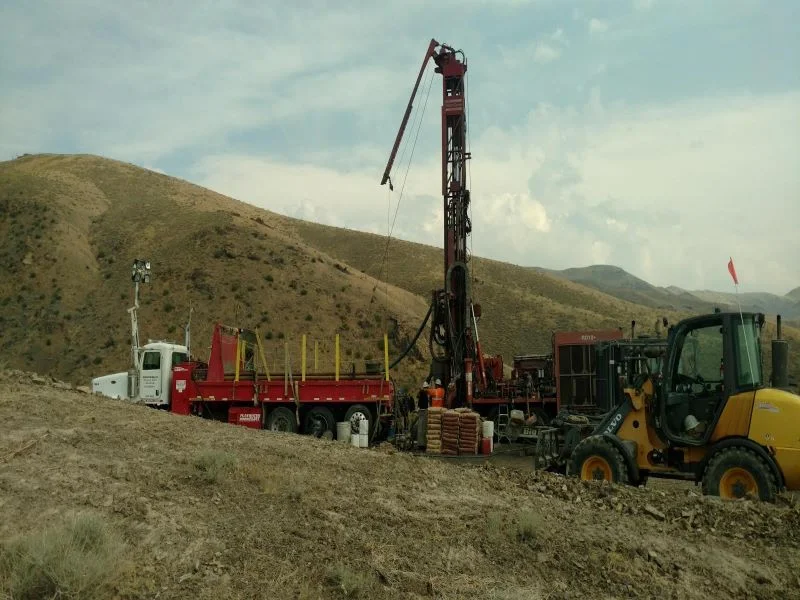
The CK Gold project is located just outside Cheyenne, Wyoming, approximately 1.5 hours from Denver, Colorado. The proximity to major infrastructure and skilled labor provides a logistical advantage for the development of the project. Without a doubt, Wyoming’s mining-friendly policies have played a role in the relatively smooth permitting process, helping to keep the project on track.
With the remaining air quality permit expected soon, US Gold Corp. is tracking a timeline that few other companies have been able to achieve. The company continues to optimize its economic outlook in value-accretive ways and alternative financing methods to maximize returns for its investors and minimize dilution.
The CK Gold project is on the verge of becoming a major player in Wyoming’s gold and copper mining industry, with the potential for strong profitability and long-term benefits for the local community.
The above references an opinion and is for information purposes only. It is not intended to be investment advice. Seek a licensed professional for investment advice. The author is not an insider or shareholder of any of the companies mentioned above.

Cerro de Pasco Resources Inc. (CSE:CDPR) has announced that its Phase 1 drilling program at the Quiulacocha Tailings Project in Peru is nearly complete. The program includes 40 drill holes, and the company has reported the initial results from its analysis, revealing valuable insights into the composition of the tailings.
CDPR’s CEO, Guy Goulet, commented in a press release: “We are very encouraged by these initial results, particularly as they relate to silver grades. This is the first time the Quiulacocha tailings have been systematically drilled and analyzed. Beyond zinc, lead, silver, copper and gold, the focus on metals such as gallium and indium provide the potential for payable by-product metal credits to be included in the planned concentrates. Representative composite samples will also undergo metallurgical testing to allow for inputs into a study. Based on the results of this campaign, we will prepare Phase 2 drilling, which is expected to commence in the second quarter of 2025 across the remainder of the tailings.”
The Quiulacocha Tailings Project, a part of the El Metalurgista concession, spans approximately 115 hectares and contains about 75 million tonnes of processed mining material dating back to the 1920s. This material, extracted from copper-silver-gold deposits and later from zinc-lead-silver deposits, provides a significant source of metals like silver, zinc, and lead. Cerro de Pasco Resources is working on reprocessing these tailings to recover valuable metals, an effort that aligns with the company’s focus on environmental remediation and creating economic opportunities in the local community.
Initial Drill Results
The first drill hole, designated SPT04, reached a depth of 19 meters and provided initial geochemical assay results from the shallow northwestern area of the tailings. These assays, conducted by Inspectorate Services Perú S.A.C., a subsidiary of Bureau Veritas, showed concentrations of silver, zinc, and lead. The analysis used multiple methods, including Inductively Coupled Plasma (ICP) to detect 60 elements, Atomic Absorption for upper metal limits, and Fire Assay to test for gold. The results suggest the presence of pyrite, which makes up an estimated 50% of the tailings. CDPR plans to evaluate the potential recovery of pyrite as part of its metallurgical test work program.
Drilling and Sample Collection
CDPR has partnered with Ingetrol Comercial S.A.C. and ConeTec Peru for the drilling process, utilizing percussion and sonic drilling techniques to improve accuracy. As of October 14, the company had completed 32 out of the planned 40 drill holes, with depths reaching up to 42 meters. A total of 430 samples from 21 drill holes have been collected and sent for analysis, with the program scheduled for completion by the end of October, ahead of the rainy season.
Samples from the drilling are transported in freezer containers to prevent oxidation and maintain integrity. Once in Lima, they undergo testing at Bureau Veritas’ laboratories. The company has also sent composite samples to Bureau Veritas’ facility in Antofagasta, Chile, for further metallurgical testing. This testing will inform the project’s mineral resource estimate and the feasibility of metal and pyrite recovery.
Geophysical Studies
The company has also completed Phase 1 of its geophysical studies, which focused on dry areas of the Quiulacocha Tailings. Conducted by Geomain Ingenieros S.A.C., these studies included depth readings ranging from 20 to over 40 meters. These findings contribute to understanding the tailings’ physical characteristics, which will support further exploration and eventual recovery efforts.
Project Background and Concession Rights
CDPR holds the title to the El Metalurgista concession, which gives it exploration and exploitation rights for the Quiulacocha Tailings. The Peruvian Ministry of Energy and Mines has confirmed these rights. The tailings storage facility at Quiulacocha, formed from decades of mining, initially contained high-grade copper, silver, and gold, which transitioned to zinc, lead, and silver in later years. The company’s ongoing work at Quiulacocha involves reprocessing the tailings, an effort that could provide economic benefits and environmental remediation in line with local community needs.
The above references an opinion and is for information purposes only. It is not intended to be investment advice. Seek a licensed professional for investment advice. The author is not an insider or shareholder of any of the companies mentioned above.

US Gold Corp (NASDAQ:USAU) has provided a significant update on the engineering and optimization efforts for its flagship CK Gold Project in Wyoming. After securing essential permits earlier this year, the company is now focusing on refining the project’s economics and advancing value accretive potential.
With gold, copper, and silver prices nearing historic highs, US Gold Corp is taking steps to optimize its operations. The completion of the updated pre-feasibility study (PFS) for the CK Gold Project, has been paused to incorporate engineering optimization studies and technological advancements for maximum results in addition to rising commodity prices. This strategic decision aims to establish a more efficient and profitable mining operation that aligns with the long-term vision of the company.
Permitting and Pre-Feasibility Study Update
In May 2024, US Gold Corp secured its Mine Operating Permit from the Wyoming Department of Environmental Quality (WDEQ), marking a key regulatory milestone. This permit allows the company to move forward with site preparation and construction while simultaneously resuming work on updating its December 2021 PFS. The updated study, which restarted in June 2024, will take into account changes required by permit commitments, engineering optimizations, and rising metal prices.
US Gold Corp’s management believes that this is an opportune moment to finalize the engineering optimization studies that could significantly improve efficiencies and project economics. The company is ideally positioned to capitalize on the current near-historic highs for gold, copper, and silver, by securing optimal mine production parameters before finalizing any production decisions.
In commenting on the engineering studies in a recent press release, George Bee, President and CEO said, “The time to make changes to a project is during the initial engineering so that the Feasibility Study (FS) is well thought out and durable. Nothing upsets project controls and cost management more than change orders once construction has started, and we will go into development with a well-engineered project consistent with the permit constraints and optimized for the best possible outcome.”
Luke Norman, Chairman added, “While gold, copper and silver prices are pushing new highs, the equity markets in the junior sector are still adjusting to a new reality. Although the CK Project is permitted in principle and ready for development, we have time to accomplish these optimization opportunities. Testing alternative, mine-proven flotation technologies offers potential to further increase the economic framework of the mine. Furthermore, we are still looking to build value, based on investigations to commercialize the rock that we mine and set aside to extract the gold and copper ore. Adding a potential revenue stream from the vlaue added waste rock aggregate could also offer additional benefits to both U.S. Gold Corp and the State which would garner additional royalty payments. This commercialization also has the potential to offer alternative closure scenarios where the exhausted pit could serve as future water storage to reduce cost and disruption in the nearby Curt Gowdy Park where the current city reservoirs are situated” adding that “any of these potential changes would of course be subject to discussion with interested parties and additional permitting.”
Engineering Optimization for Tailings and Water Management
One of the critical areas under review is the optimization of the Tailings Management Facility (TMF). US Gold Corp has enlisted the expertise of Tierra Group International (TGI), a Denver-based geotechnical engineering firm, to evaluate the TMF’s design. The goal is to improve the stacking sequence and road access to the facility, potentially lowering capital costs without altering the TMF footprint or design concepts. As part of this effort, the TMF will now incorporate a membrane composite liner rather than the modified soil liner initially considered in the 2021 PFS.
Water management is another area where the company sees opportunities for improvement. In June 2024, the CK Gold Project received its water discharge permit (WYPDES) from the WDEQ, which established specific standards for water use and discharge. In response, US Gold Corp has tasked TGI with revising the site-wide water management plan and water balance model. TGI is exploring ways to enhance water harvesting within the project’s property boundaries, which would reduce the amount of external water the company needs to purchase. US Gold Corp already has an agreement in place with the Cheyenne Board of Public Utility to buy water for its operations, but improved internal water management could significantly lower costs.
Process Plant Trade-off Study Aiming for Higher Efficiency
Another focal point of US Gold Corp’s ongoing studies is optimizing the process plant. The 2021 PFS outlined plans for a 20,000 ton-per-day sulfide concentrator, which uses conventional crushing, grinding and flotation to generate a sulfide concentrate. However, recent advancements in flotation technology have prompted the company to reconsider this approach.
US Gold Corp has started investigating alternative flotation equipment that could improve metal recovery rates and reduce operational costs. Specifically, the company is exploring the use of Jameson Cells and IsaMill technology, which have demonstrated potential benefits in other comparable mining operations. These technologies offer the possibility of improving metal recoveries, lowering the capital requirements by reducing the mill building size, and cutting operational costs by decreasing energy consumption and labor needs.
To determine the suitability of these technologies for the CK Gold Project, US Gold Corp has shipped 150 kilograms of ore-grade material to a metallurgical laboratory for testing. The results of these tests will be crucial in shaping the final design of the processing plant, with the goal of improving overall efficiency and maximizing output.
Beyond the 2021 PFS – NPV Upside
US Gold Corp’s ongoing efforts to optimize the CK Gold Project come at a time when the project’s economics already appear robust – the 2021 PFS has projected 1 million ounces of gold and 248 million pounds of copper in reserves, with all-in sustaining costs (AISC) of $800 per ounce of gold. These estimates were based on conservative metal price assumptions of 1,625 per ounce of gold and $325 per pound of copper. While AISC is expected to be revised upward to reflect inflation and rise in input costs, the project’s outlook appears rock solid.
The potential sale of 35-40 million tons of granodiorite, which will be extracted during mining operations as aggregate material, could provide a significant additional revenue stream. This waste rock, of a quality suitable for rail ballasts and roads, is similar to material sold by nearby quarries for $20-25 per ton, offering a unique opportunity to significantly enhance the project’s profitability.
CK Expansion Potential
Another NPV upside not factored into the PFS is the potential for resource expansion. Over 80% of historical drill holes ended in mineralization and/or not closed off laterally. CK is open at depth below 800 ft and southeast along strike with 2,900 ft of strike length still untested; in other words, the deposit is wide open. Furthermore, the depth and strike length volumetrics are sufficient to suggest a doubling of the current gold-copper resource if mineralization proves to continue along strike. And one can conjecture what that means in terms of more saleable aggregate.
The CK Gold Project is located in a sparsely populated area with favorable air and water quality conditions, all of which has contributed to a relatively smooth permitting process. The company has secured most of the necessary permits, including industrial siting, mine operating, and water discharge permits. The final air quality permit is expected soon, which will fully clear the regulatory path to production. Cheyenne, located just 1.5 hours from Denver, offers proximity to major infrastructure and skilled workforce, further strengthening the project’s long-term viability.
The Next Steps
US Gold Corp’s next steps include completing the engineering optimization studies and finalizing the updated PFS later this fall. The Feasibility Study already well underway is expected in the first quarter of 2025. With these enhancements, the company expects to significantly improve project economics and prepare for the decision to move toward full-scale production.
While the CK Gold Project continues to advance, US Gold remains committed to finding creative solutions to reduce costs and maximize the project’s value. The company’s focus on operational efficiency, water management, and innovative technologies is setting the stage for a more sustainable and profitable mining operation in Wyoming.
With most of the key regulatory permits in hand and ongoing engineering work nearing completion, the CK Gold Project is well-positioned to move forward. As US Gold Corp continues to optimize the project and explore expansion opportunities, it is clear that the CK Gold Project could become a major project for Wyoming’s gold and copper mining industry.
The above references an opinion and is for information purposes only. It is not intended to be investment advice. Seek a licensed professional for investment advice. The author is not an insider or shareholder of any of the companies mentioned above.

Sitka Gold (TSXV:SIG) has reported multiple sightings of visible gold in the first two diamond drill holes at the Rhosgobel intrusion, located within its RC Gold Project in Yukon. This marks the first diamond drilling at Rhosgobel, approximately five kilometers south of the company’s Blackjack gold deposit. The ongoing drilling at Rhosgobel reveals gold mineralization extending 250 meters beyond previous depths, suggesting that the mineralized system may be larger and more complex than originally thought. The company awaits assay results from these holes and other ongoing drilling activities at the RC Gold Project.
Cor Coe, CEO and Director of Sitka Gold, commented in a press release: “The visuals of the first two diamond drill holes to ever be completed at the Rhosgobel intrusion-related gold target (Figures 1, 2, 3 and 6) have exceeded expectations with several occurrences of visible gold observed in DDRCRG-24-001 and 002. The visual results from our first pass of drilling at Rhosgobel are very encouraging and highlight the significant potential of the many high-priority targets we have yet to drill within the Clear Creek Intrusive Complex (see Figure 5). We eagerly await the assays from these holes which suggest that robust gold mineralization continues from surface to a vertical depth at least 250 metres below the extent of historical drilling and showcase the potential for Rhosgobel to host another significant intrusion-related gold deposit within the Clear Creek Intrusive Complex analogous to our growing Blackjack deposit. Diamond drilling utilising oriented core at Rhosgobel has provided valuable information to Sitka’s technical team confirming the similar structural and geological controls on gold mineralization that occur at the Blackjack and Eiger deposits, located approximately 5 kilometres to the north, and the team is excited to apply the knowledge gained from our geological modelling to further advance this exciting target.”
The Rhosgobel intrusion, part of the Clear Creek Intrusive Complex (CCIC), is the southernmost exposed feature in a series of mineral-rich intrusions occupying an area roughly 8 by 15 kilometers. These intrusions likely originate from a shared magmatic source deep within the earth. They consist of various rock types, including quartz monzonite, granodiorite, and diorite, with associated felsic and lamprophyre dykes. Collectively, these features form a substantial mineralized system with significant gold potential.
The Blackjack gold deposit, which lies five kilometers north of Rhosgobel, shares geological similarities with the latter. Blackjack is situated within a quartz monzonite intrusion that exhibits feldspar megacrystic phases. Rhosgobel, aligned with the northerly Blackjack fault, shows similar geological traits and holds potential for comparable gold mineralization. Prior exploration in 1995 by Kennecott utilized shallow reverse circulation drilling and indicated widespread gold throughout Rhosgobel. The latest diamond drilling appears to validate those earlier findings, with gold observed at much greater depths.
In these new drill holes, Sitka Gold has encountered a complex network of quartz veins and breccias, containing substantial amounts of coarse scheelite, pyrrhotite, pyrite, and occasional arsenopyrite, which are typical indicators of gold-bearing systems. Visible gold was seen within the quartz veins and breccias, often in conjunction with minerals like bismuthinite, scheelite, and occasionally molybdenite. Pervasive alteration of the host rock includes quartz-sericite and sericite-chlorite, with intensified alteration occurring around the quartz veins.
The first of these drill holes, designated DDRCRG-24-001, reached a depth of 303.6 meters. Drilled at a dip of -50 degrees and an azimuth of 10 degrees, it targeted the extension of gold mineralization previously found in historical drill holes CCRC-95-15 and CCRC-95-16. This hole revealed roughly 200 meters of altered and mineralized feldspar megacrystic quartz monzonite, along with 100 meters of weakly altered quartz monzonite. Visible gold was noted at depths of 118.3 and 119.5 meters, confirming the presence of gold at these intervals.
The second drill hole, DDRCRG-24-002, extended deeper, reaching 400.8 meters. It was drilled at a steeper angle with a dip of -75 degrees, also targeting historical intersections and the mineralized zone identified in DDRCRG-24-001. This hole encountered a 50-meter section of oxidized and mineralized feldspar megacrystic quartz monzonite before transitioning into areas with high vein density, characterized by large quartz veins with strong alteration, faulting, and mineralization. Visible gold was found at numerous points within the drill core, specifically at 229.3, 249.6, 249.61, 299.5, 299.53, 299.66, 300.6, 303.11, 303.24, 303.38, and 307.4 meters. These observations align with the mineralized zones seen in DDRCRG-24-001, supporting the notion of a large, contiguous system.
The above references an opinion and is for information purposes only. It is not intended to be investment advice. Seek a licensed professional for investment advice. The author is not an insider or shareholder of any of the companies mentioned above.
Ares Strategic Mining (CSE:ARS) has gone through a large and long evolution, transforming from a project-focused mining company to an emerging force in manufacturing fluorspar—a mineral critical to various U.S. industries. Ares, the only permitted fluorspar mine in the U.S., is positioning itself as a domestic solution to growing national and global demand for this essential resource.
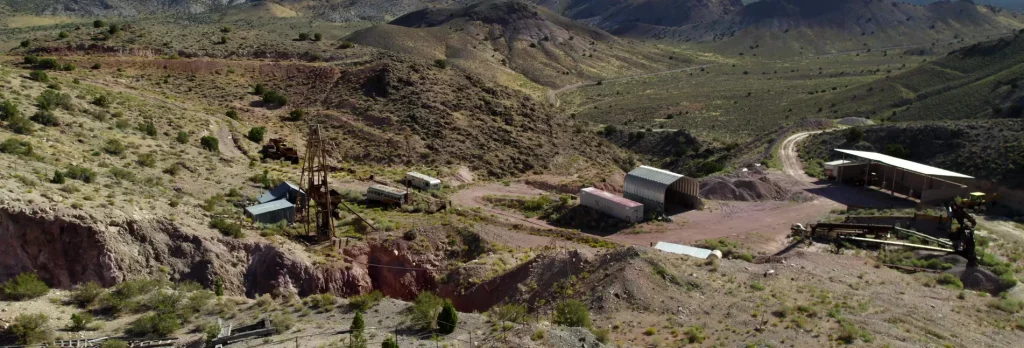
The company’s beginnings reflect a targeted approach to projects that could quickly yield revenue without excessive capital investment. Ares found its fluorspar project already operational on a small scale, with artisanal miners bagging fluorspar directly from the ground. This unusual scenario signaled that processing the mineral would require a simpler facility than most large mining operations, reducing both costs and time to production. Over the years, the company has expanded significantly, acquiring a 50-acre site complete with two large manufacturing plants, a rail spur, and the necessary mining equipment. It has evolved from a mere prospect into a fully-fledged mining and manufacturing enterprise with customers actively placing orders for its products.
We spoke with Ares Strategic Mining CEO James Walker about the company’s past, present and future plans:
Can you give us a brief history of ARES Strategic Mining and how it has evolved over the years?
The company began from a desire to locate projects which could be accelerated quickly to production and revenue, while requiring relatively less capital. When the fluorspar project was located it was already licensing and artisanal miners were bagging fluorspar for sale straight from the ground, that’s almost never seen anywhere in mining. This was a clear indication that any processing facility would not need to be as comprehensive as typical large plants, meaning a less expensive and time-consuming path to production.
Over the recent years, the project has evolved from a prospective project, through geophysics, drilling, LiDAR, and metallurgy, to become a project with a 50-acre industrially zoned site with two owned large manufacturing plants, buildings, its own rail spur, heavy mining equipment all purchased, mineworks and ramps all installed, and customers putting in orders for products. It’s been a profound transformation.
ARES is known for being the only permitted fluorspar mine in the U.S. Can you explain the significance of fluorspar to American industries?
Fluorspar is one of the most ubiquitously required industrial minerals in industry. It is also a critical mineral, vital to the economic security of the country. Metallurgical grade (metspar) fluorspar constitutes approximately 35–40% of global production, primarily used in steel production as a flux that lowers melting temperatures and aids impurity removal. Metspar is also used in the manufacture of cement and glass industries. Acid grade fluorspar (acidspar), accounting for about 60–65% of production, is essential for aluminum production and hydrofluoric acid manufacturing—the primary source of all fluorochemicals. Lithium-ion batteries (integral to defense technologies like Uninterruptible Power Supply (UPS) modules for C5ISR suites, and the shift to electric vehicles (EVs)), require substantial amounts of fluorspar. Fluorspar is also essential to uranium enrichment, whereby natural uranium (U3O8) is converted into uranium hexafluoride (UF6), a gaseous form of uranium that is suitable for enrichment.
With the transition from mining to manufacturing, what opportunities and challenges do you foresee for ARES in the coming years?
The opportunities are huge. Ares could have involvement in more Department of Defence-related contracts as it would provide a domestic source of a mineral vital to the defense industry, even being part of larger funding and defense programs. This would also be possible under Department of Energy contracts, whereby contracts for major projects have their bids strengthened by having a domestic supply chain over international reliances.
The challenges will of course come, in the form of sourcing the right people, managing the expansion competently, and shifting focus from building to customer relations, quality control, and export logistics. Either way these are challenges we’re excited to face as we transition to become manufacturing company.
The Lost Sheep Mine in Utah is a key asset for ARES. Can you tell us more about the project’s progress and its current stage of development?
We have now installed over 700 ft of ramp installation to bring us to the target depth needed to pull out ore. This structure has also been shotcreted, rock bolted, and reinforced by steel. We have bought all the heavy mining equipment needed to mine, and the put in place all necessary permissions and procedures to begin mining. We also have two large plots, a processing site, customers, utilities and buildings. We have made huge progress since we took this project on.
Are there any other mining projects or explorations that ARES is currently focusing on or plans to develop in the future?
We want to turn the company into a large domestic producer and supplier for fluorspar, catering to several major industries. Part of our expansion will involve secondary and tertiary mine sites at our Utah mining site, but there are other prospective fluorspar targets around the United States, which were previous producers, that can be revived and commissioned. We have the knowledge and expertise to revive these former operations and expand the company greatly.
ARES is on the verge of becoming a manufacturing company. What does this transition mean for the company and its stakeholders?
For our stakeholders and shareholders, this will mean a fundamentally different way investors and markets will view our company, as it will be a manufacturing company instead of an exploration company. This will attract a new type of investor and allow for new types of investment based on production and revenue. For the Company it will mean a shift in priorities, from development to manufacturing, and a shifting focus to optimal output and product quality control.
How do you see ARES contributing to the growing demand for domestic critical minerals in the U.S.?
Ares has an opportunity to be an intrinsic part of many significant and vital supply chains which support the country, from uranium enrichment for civil and defense programs, to steel for infrastructure, to products for the chemical industry, to components for the transition to electric vehicles. All of these areas are growth industries, and Ares has the opportunity to grow alongside all of these industries as it expands its operations to deliver the products they need.
What steps is ARES taking to ensure long-term growth and sustainability in its operations?
ARES Strategic Mining is taking several strategic steps to ensure long-term growth and sustainability in its operations, focusing on operational efficiency. One of the key pillars of ARES’s approach is vertical integration, where the company is working to control every aspect of the fluorspar supply chain—from mining to processing. By investing in manufacturing facilities and infrastructure, ARES aims to reduce reliance on external suppliers, streamline its operations, and enhance its ability to meet market demand efficiently. This vertical integration also allows the company to capture more value from its products and maintain better control over production costs, positioning it for sustained growth as demand for fluorspar rises in industries such as defense, energy, and electric vehicles.
ARES is also focusing on strategic partnerships and financing to fuel its growth. The company has secured significant investments, including from institutional investors, which will provide the necessary capital to scale operations and complete essential projects. Moreover, by leveraging initiatives like the Listed Issuer Financing Exemption (LIFE), ARES can access additional funding efficiently, ensuring a steady flow of capital to support expansion and modernization.
Lastly, ARES is deeply committed to market diversification. The company’s fluorspar products cater to a wide range of industries, including steel production, aluminum manufacturing, and the burgeoning electric vehicle and renewable energy sectors. This diversification reduces ARES’s exposure to market volatility in any one sector, ensuring more stable revenue streams over the long term. By continually expanding its customer base and exploring new applications for fluorspar, ARES is positioning itself for sustained growth in both domestic and international markets.
Recently, ARES welcomed an institutional investor as a new equity partner. How will this partnership support the company’s growth strategy?
ARES Strategic Mining’s recent partnership with an institutional investor as a new equity partner is set to significantly bolster the company’s growth strategy. This partnership brings a vital infusion of capital that will support the expansion of ARES’ manufacturing capabilities and further development of its mining infrastructure. With these increased financial resources, the company can enhance its production capacity, acquire additional equipment, and optimize its operations, ensuring it meets the growing demand for fluorspar, especially within the U.S. market. Beyond financial benefits, the involvement of an institutional investor enhances ARES’ credibility in the industry, potentially attracting more investors and opening doors for further strategic partnerships. This backing also aligns with ARES’ long-term goal of vertical integration, allowing the company to manage its entire supply chain, from mining to manufacturing, more efficiently. Ultimately, the institutional partnership provides both the capital and the industry validation necessary to drive ARES’ expansion and solidify its position as a leading domestic supplier of fluorspar.
You recently closed the first tranche of a private placement offering. Can you explain the purpose of this offering and how the funds will be utilized?
ARES’ recent closing of the first tranche of a private placement offering is aimed at raising capital to support its ongoing expansion and operational initiatives, particularly as the company transitions from purely mining to processing and manufacturing high-grade fluorspar products. This capital injection will be instrumental in completing infrastructure projects, enhancing processing facilities, and potentially acquiring more advanced mining equipment, all of which are crucial to scaling production and meeting increasing market demand.
Additionally, the funds raised through the private placement are likely to be allocated toward advancing ARES’s vertical integration strategy, which includes building and optimizing its fluorspar manufacturing plants. This will allow the company to process raw fluorspar into products ready for various industrial uses, such as hydrofluoric acid production, aluminum manufacturing, and applications in the growing lithium-ion battery market. The private placement also positions ARES to strengthen its balance sheet, giving it the financial flexibility to explore new market opportunities, expand its customer base, and ensure its operational resilience amid fluctuating economic conditions. By securing these funds, ARES can continue its trajectory toward becoming a key player in the domestic and global fluorspar markets, while maintaining control over its production and supply chain.
There’s been news about the Listed Issuer Financing Exemption. How does this initiative align with ARES’s broader financing strategy?
The Listed Issuer Financing Exemption (LIFE) initiative provides a valuable financing mechanism that aligns well with ARES’ broader strategy of securing capital efficiently to support its growth. The LIFE initiative allows publicly listed companies to raise funds without the need for a prospectus, making it a more streamlined and cost-effective way to access the capital markets. This is particularly advantageous for companies like ARES, which are in the process of scaling their operations and require continuous funding to expand their mining and manufacturing capabilities.
For ARES, this exemption aligns with its strategy of minimizing capital expenditure while maximizing operational growth. By utilizing LIFE, ARES can raise necessary funds without the extensive regulatory requirements and costs typically associated with traditional public offerings. This enables the company to access capital more quickly and with fewer legal and administrative hurdles, allowing management to focus on executing its business plan. The funds raised through this initiative can be directed toward key projects, such as enhancing their fluorspar processing infrastructure, increasing production capacity, or acquiring new equipment to meet the growing demand for fluorspar in various industries.
The fluorspar market is critical but not widely understood. How do you see market demand for fluorspar evolving, both domestically and internationally?
The fluorspar market, while critical to many industries, often flies under the radar in public discussions about strategic minerals. Domestically, the demand for fluorspar is poised to increase significantly, driven by its essential role in key sectors such as steel production, aluminum manufacturing, and the growing electric vehicle (EV) industry. As the U.S. pushes for more domestic production of critical minerals and less reliance on foreign supply chains, fluorspar, which is vital for producing hydrofluoric acid and fluorochemicals, will play a larger role in national economic security. This is particularly relevant given its application in manufacturing lithium-ion batteries, a cornerstone of the electric vehicle revolution. Furthermore, fluorspar is critical in uranium enrichment for the nuclear industry, underscoring its importance to defense technologies and energy independence. With the U.S. government placing increased emphasis on securing domestic sources of critical minerals, the demand for fluorspar is expected to grow, positioning ARES as a key supplier in meeting these needs.
Internationally, the fluorspar market is also evolving. As global industries, particularly in Asia and Europe, continue to expand their capacities in steel production, electronics, and renewable technologies, the demand for fluorspar will likely rise. Countries like China, which has traditionally been a dominant producer, are beginning to limit exports to safeguard their own domestic supplies, creating opportunities for other producers to fill the gap in the global market. Additionally, the global shift toward decarbonization and the development of green technologies will further drive demand for fluorspar, particularly its role in producing high-performance materials for clean energy applications. This opens new avenues for international trade and partnerships for fluorspar producers, who will need to respond to the increasing demand for high-quality, sustainable sources of the mineral. In this context, ARES is well-positioned to capitalize on both domestic and international market trends, ensuring a stable supply of fluorspar to industries that are critical to the future economy.
What impact do you anticipate from current geopolitical and economic shifts on the fluorspar supply chain and ARES’s operations?
Current geopolitical and economic shifts are likely to have a significant impact on the fluorspar supply chain and ARES’ operations. One of the most prominent factors is the increasing push for economic nationalism and securing critical mineral supply chains within national borders. The U.S., for instance, has made it a priority to reduce reliance on foreign sources for strategic materials like fluorspar, which is crucial for industries such as defense, energy, and advanced manufacturing. This shift could work in ARES’s favor, as the company operates the only permitted fluorspar mine in the U.S., positioning it as a key domestic supplier in a market that is likely to see increasing demand due to government policies encouraging the use of domestic resources. As international tensions rise, particularly with China reducing exports of key minerals to prioritize its domestic needs, companies like ARES stand to benefit from increased focus on securing local supply chains.
On the economic front, global inflation, fluctuating commodity prices, and disruptions in trade flows caused by conflicts or sanctions could lead to higher costs and uncertainties for fluorspar production and transportation. However, ARES’s vertical integration strategy, which aims to oversee the entire process from mining to manufacturing, will help mitigate some of these risks. By having more control over its supply chain and processing capabilities, ARES can better manage costs and reduce its vulnerability to global price shocks. Moreover, as industries such as electric vehicles, renewable energy, and defense continue to expand, demand for fluorspar is expected to remain robust, offsetting some of the potential economic challenges. In this landscape, ARES is well-positioned to adapt to shifting geopolitical and economic conditions, leveraging its domestic presence and growing infrastructure to ensure continued operational success and market relevance.
What message do you have for current and potential investors in ARES?
We are excited to share the remarkable progress ARES has made and to invite you to join us on this journey of growth and opportunity. As the only permitted fluorspar mining company in the United States, we are positioned at the forefront of a critical industry, supplying a mineral that is essential to steel, aluminum, electric vehicles, and even defense technologies. Our focus on vertical integration, innovation, and sustainability sets us apart, allowing us to control the supply chain from the mine to high-quality products ready for the most demanding markets.
We have great momentum —our facilities are expanding, customers are placing orders, and institutional investors are recognizing our potential. With the continued support of investors like you, we are unlocking new opportunities to strengthen domestic supply chains, fuel the renewable energy transition, and drive forward American industry. Our recent capital raises, strategic partnerships, and commitment to long-term sustainability are just the beginning of what we know will be a transformational future for ARES.
The global demand for fluorspar is rising, and ARES is leading the way in delivering high-quality, domestically produced resources that are critical to the future of technology and industry. Together, we will capitalize on the immense potential of this market and solidify our position as a leader in the strategic minerals sector.
How do you plan to create continued value for shareholders as the company moves into its next phase of development?
Operational Expansion and Vertical Integration: ARES is expanding its operations by not only increasing fluorspar mining activities but also developing its processing and manufacturing capabilities. By controlling the supply chain from mine to market, we aim to capture greater value at each stage of production. This vertical integration will allow us to reduce costs, improve efficiency, and better meet the growing demand for fluorspar in critical industries, such as steel, aluminum, and renewable energy technologies.
Strategic Partnerships and Market Diversification: We are actively pursuing strategic partnerships and customer agreements that will ensure a steady demand for our products across a range of industries. With fluorspar being a vital mineral in various applications—from hydrofluoric acid production to electric vehicles and lithium-ion batteries—our diversified customer base will help stabilize revenues and reduce exposure to market fluctuations. By expanding into new international markets, we are also opening additional avenues for growth and revenue.
Sustainability and Innovation: Our commitment to sustainability is key to our long-term strategy. As demand for critical minerals used in clean energy technologies continues to rise, ARES is uniquely positioned to support the transition to a low-carbon economy. Through environmentally responsible mining practices and the development of high-quality fluorspar products essential for renewable technologies, we are aligning ourselves with global sustainability trends, which will increase both demand for our products and the value we provide to shareholders.
Capital Efficiency and Growth-Focused Financing: We are strategically leveraging financing tools to efficiently raise capital while minimizing dilution for our shareholders. These funds will support our operational expansion and ensure that we are well-capitalized to execute our growth strategy. By maintaining a disciplined approach to financing and capital allocation, we are ensuring that shareholder value is prioritized as we scale the business.
Robust Market Position and Industry Leadership: As the only permitted fluorspar mining operation in the U.S., ARES holds a unique and highly valuable market position. With increasing attention on securing domestic supply chains for critical minerals, we are well-placed to benefit from government support and growing industry demand. By continuing to strengthen our leadership in the U.S. fluorspar market, we aim to deliver sustainable, long-term growth and increased value for our shareholders.
The above references an opinion and is for information purposes only. It is not intended to be investment advice. Seek a licensed professional for investment advice. The author is not an insider or shareholder of any of the companies mentioned above.

Power Metals (TSXV:PWM) has reported findings from its recent drilling at the Case Lake Project (CLP) in northeastern Ontario. In the first round of drillhole assays from the summer 2024 program, the company uncovered substantial high-grade cesium deposits. The first three drill holes revealed cesium oxide (Cs2O) mineralization at levels as high as 22.58%. Following these results, Power Metals plans to begin an additional 2,500 meters of drilling to explore the area further once all assay results are in.
Haydn Daxter, Power Metals CEO commented in a press release: “The Phase II drilling program has been very successful for the Company with continued results displaying high-grade cesium in pollucite evident from the first three drill holes. We are also very pleased to commence our planning for Phase III drilling next month on the back of Phase II and the increased level of interest in cesium. Whilst exploration has been ongoing, we look forward to updates on the metallurgical test work later this year from Tomra and SGS, along with continued support from the Ontario Government.”
The 2024 Phase II drilling program at the CLP aimed to expand on known cesium deposits, particularly targeting the West Joe and Main Zone areas. The initial findings from drill holes PWM-24-207, PWM-24-208, and PWM-24-209 showed cesium-rich mineralization, with samples from PWM-24-207 reaching individual Cs2O grades of up to 22.58%. The drill core from PWM-24-207 also exhibited high levels of pollucite, a rare cesium mineral, confirming the deposit’s potential. Other samples from these drill holes showed Cs2O grades ranging from 1.35% to 7.51%. In total, Power Metals completed 29 diamond drill holes spanning 2,620 meters during Phase II.
With the Phase II program now complete, Power Metals has announced plans for a Phase III drill program at the CLP. This phase will involve another 2,500 meters of drilling and will start once remaining assay results are available, likely in the coming weeks. The company has cited increased interest from cesium industry specialists as a motivating factor for accelerating the timeline.
In parallel with its exploration activities, Power Metals has applied for additional funding from the Ontario Government. The company already received approval for the Ontario Junior Exploration Program (OJEP) grant and has now applied for the Critical Minerals Innovation Fund (CMIF), which could provide up to $500,000 for projects aimed at strengthening Ontario’s critical mineral sector. The Canadian Government recently updated its Critical Minerals Strategy, with cesium included as one of the prioritized minerals, aligning with Power Metals’ current endeavors at CLP.
Globally, there are only three high-grade cesium resources—Tanco in Manitoba, Bakita in Zimbabwe, and Sinclair in Western Australia—that have been mined to date. Based on technical reviews of these mines, Power Metals believes the Case Lake Project could become the fourth major cesium deposit. The company plans to continue with resource development for the remainder of the year, once all data from the recent drill programs is processed.
The Case Lake Project is situated 80 kilometers east of Cochrane, near the Ontario-Quebec border. It covers a substantial area, with 585 cell claims across several townships in the Larder Lake Mining Division. The property is known for its pegmatite swarms, which consist of spodumene-bearing lithium-cesium-tantalum (LCT) pegmatites that extend approximately 10 kilometers. Power Metals has undertaken several exploration programs on this site since 2017, drilling over 22,000 meters. A technical report filed in 2017 documents these activities.
In addition to CLP, Power Metals holds interests in other properties with potential LCT pegmatites. The Pelletier Property, located 50 kilometers south of Hearst, northeastern Ontario, comprises 337 mineral claims spanning 7,000 hectares. The property is located within the Porcupine mining division, featuring pegmatitic granites that intrude into metasedimentary and amphibolite rock units near an Archean terrane boundary.
Further east, the Decelles Property covers 669 claims over 38,404 hectares near Val-d’Or and Rouyn-Noranda, about 600 kilometers from Montreal. Power Metals acquired the Decelles Property, along with the nearby Mazerac Property, from Winsome Resources in 2023. This acquisition allowed Winsome Resources to increase its stake in Power Metals to 19.59%. The Decelles Property sits within the Pontiac sub-province and features S-type LCT pegmatites with spodumene and beryl, similar to nearby lithium-rich areas.
Finally, the Mazerac Property, approximately 30 kilometers from Decelles, covers 14,700 hectares of LCT-prospective ground. This property also features S-type pegmatites within the Pontiac Group. Both Decelles and Mazerac are in a region with a strong mining infrastructure, near the established mining centers of Val-d’Or and Rouyn-Noranda.
Highlights from the results are as follows:
- PWM-24-207: 8.65 m at 1.60% Li2O, 5.74% Cs₂O and 378 ppm Ta from 16.35m
- Including 3.0m @ 1.67 % Li2O, 15.86% Cs₂O and 119 ppm Ta from 18.35m
- Including 1.0m @ 1.72 % Li2O, 22.58% Cs₂O and 130 ppm Ta from 18.35m
- PWM-24-208: 7.02 m at 1.25% Li2O,1.77% Cs₂O and 355 ppm Ta from 16.38m
- Including 3.0m @ 0.77% Li2O, 3.98% Cs₂O and 457 ppm Ta from 19.00m
- PWM-24-209: 5.71m at 1.19% Li2O,1.42% Cs₂O and 287 ppm Ta from 20.07m
- Including 2.5m @ 1.37 % Li2O, 3.18% Cs₂O and 456 ppm Ta from 22.50m
The above references an opinion and is for information purposes only. It is not intended to be investment advice. Seek a licensed professional for investment advice. The author is not an insider or shareholder of any of the companies mentioned above.
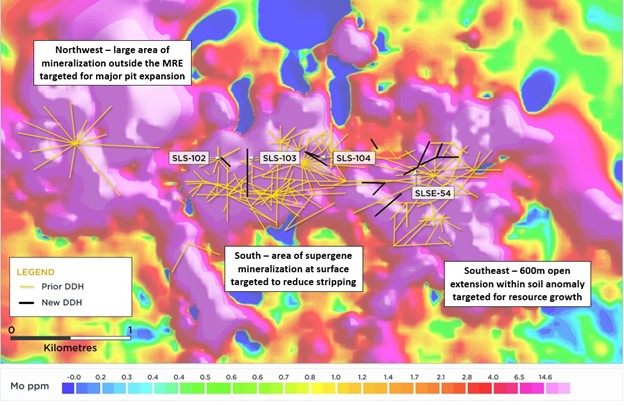
Solaris Resources (TSX:SLS) (NYSEAmerican:SLSR) has announced assay results from its ongoing 2024 drilling program at the Warintza Project in southeastern Ecuador. The results reveal high-grade mineralization near the surface, improving previously modeled grades and expanding the potential of the resource in several key areas of the site.
The company, which has drilled over 53,000 meters by the end of the third quarter of 2024, is aiming to exceed its 60,000-meter target for the year. The latest drill holes, SLS-103, SLSE-54, SLS-102, and SLSE-52, add significant mineralization in areas that had not been extensively drilled. Holes SLS-103 and SLSE-54, located in the northwest and northeast sectors, respectively, have intersected new high-grade mineralization at surface, with much of the mineralization falling outside the current Mineral Resource Estimate (MRE). This marks an important step in expanding the known resource, as these results indicate higher grades than previously modeled in these regions.
Key intercepts include 87 meters of 1.23% CuEq, 93 meters of 1.01% CuEq, and 84 meters of 1.00% CuEq. These findings bolster the company’s ongoing efforts to improve the quality of the resource, particularly in sparsely drilled zones within the northwest, north, and northeast areas of the project.
In addition to the resource expansion efforts, Solaris is conducting exploration drilling in an area featuring a large soil anomaly on the opposite side of a granodiorite formation, which shapes the northwestern pit wall. Assays from this exploration are expected in the coming weeks.
With high productivity on-site due to infrastructure investments, Solaris remains on track to exceed its 2024 drilling plan. Current efforts include drilling focused on expanding open extensions of the resource, infill drilling to upgrade existing resources, and further geotechnical and condemnation drilling.
Highlights from the results include:
Northwest, North and Northeast Sectors:
- SLS-102 (drilled northwest): 93m of 1.01% CuEq² within 156m of 0.74% CuEq² from surface
- SLS-103 (drilled north): 87m of 1.23% CuEq² within 528m of 0.59% CuEq² from surface
- SLS-104 (drilled southeast): 84m of 1.00% CuEq² within 485m of 0.77% CuEq² from surface
- SLSE-54 (drilled southwest): 258m of 0.52% CuEq² within 399m of 0.41% CuEq² from surface
Table 1 – Mineral Resource Extension, Infill and Condemnation Results
| Hole ID | Date Reported |
From (m) |
To (m) |
Interval (m) |
Cu (%) |
Mo (%) |
Au (g/t) |
CuEq² (%) |
Comments |
| SLS-104 | Oct 7, 2024 | 0 | 485 | 485 | 0.56 | 0.03 | 0.06 | 0.77 | Northern sector – infill |
| Including | 45 | 129 | 84 | 0.82 | 0.02 | 0.07 | 1.00 | ||
| Including | 45 | 255 | 210 | 0.69 | 0.03 | 0.07 | 0.90 | ||
| Including | 45 | 485 | 440 | 0.61 | 0.03 | 0.06 | 0.82 | ||
| SLS-103 | 0 | 528 | 528 | 0.26 | 0.05 | 0.04 | 0.59 | Northwest sector – infill and extensional | |
| Including | 21 | 108 | 87 | 1.00 | 0.03 | 0.11 | 1.23 | ||
| Including | 21 | 483 | 462 | 0.29 | 0.06 | 0.05 | 0.64 | ||
| Including | 240 | 345 | 105 | 0.28 | 0.08 | 0.02 | 0.72 | ||
| SLS-102 | 0 | 156 | 156 | 0.46 | 0.04 | 0.08 | 0.74 | Northwest sector – infill | |
| Including | 57 | 150 | 93 | 0.73 | 0.04 | 0.09 | 1.01 | ||
| SLS-101 | 0 | 307 | 307 | 0.06 | 0.01 | 0.02 | 0.14 | Northwest sector – condemnation | |
| SLSE-60 | 0 | 290 | 290 | 0.16 | 0.01 | 0.03 | 0.23 | Northeast sector – infill | |
| Including | 93 | 290 | 197 | 0.21 | 0.01 | 0.04 | 0.30 | ||
| Including | 141 | 290 | 149 | 0.24 | 0.01 | 0.05 | 0.35 | ||
| Including | 207 | 290 | 83 | 0.28 | 0.02 | 0.03 | 0.43 | ||
| SLSE-58 | 0 | 453 | 453 | 0.03 | 0.00 | 0.01 | 0.04 | Northeast sector – condemnation | |
| SLSE-57 | 0 | 660 | 660 | 0.22 | 0.01 | 0.05 | 0.30 | Southeast sector – extensional | |
| Including | 552 | 660 | 108 | 0.49 | 0.02 | 0.06 | 0.61 | ||
| SLSE-56 | 0 | 381 | 381 | 0.09 | 0.00 | 0.03 | 0.11 | Northeast sector – condemnation | |
| SLSE-55 | 0 | 473 | 473 | 0.12 | 0.00 | 0.02 | 0.16 | Northeast sector – condemnation | |
| SLSE-54 | 0 | 399 | 399 | 0.29 | 0.01 | 0.04 | 0.41 | Northeast sector – infill and extensional | |
| Including | 0 | 258 | 258 | 0.37 | 0.02 | 0.05 | 0.52 | ||
| Including | 81 | 231 | 150 | 0.43 | 0.02 | 0.05 | 0.60 | ||
| SLSE-53 | 0 | 455 | 455 | 0.04 | 0.00 | 0.02 | 0.07 | Northeast sector – condemnation | |
| SLSE-52 | 0 | 138 | 138 | 0.15 | 0.01 | 0.03 | 0.23 | Southeast sector – condemnation | |
| SLSE-51 | 0 | 257 | 257 | 0.15 | 0.01 | 0.03 | 0.20 | Southeast sector – condemnation |
Notes to Table 1: True widths are interpreted to be very close to drilled widths due to the bulk-porphyry style mineralized zones at Warintza.
Table 2 – Collar Locations
| Hole ID | Easting | Northing | Elevation (m) |
Depth (m) |
Azimuth (degrees) | Dip (degrees) |
| SLS-104 | 800383 | 9648303 | 1411 | 485 | 110 | -70 |
| SLS-103 | 799760 | 9648031 | 1575 | 528 | 360 | -56 |
| SLS-102 | 799568 | 9648147 | 1403 | 253 | 315 | -60 |
| SLS-101 | 799760 | 9648031 | 1575 | 307 | 180 | -45 |
| SLSE-60 | 801800 | 9648235 | 1102 | 290 | 243 | -54 |
| SLSE-58 | 801806 | 9648243 | 1098 | 454 | 90 | -58 |
| SLSE-57 | 801150 | 9647610 | 1396 | 660 | 45 | -60 |
| SLSE-56 | 801163 | 9648335 | 1309 | 382 | 326 | -71 |
| SLSE-55 | 801597 | 9648134 | 1155 | 473 | 25 | -50 |
| SLSE-54 | 801596 | 9648136 | 1154 | 481 | 240 | -70 |
| SLSE-53 | 801802 | 9648239 | 1100 | 455 | 23 | -68 |
| SLSE-52 | 801248 | 9647968 | 1252 | 354 | 270 | -46 |
| SLSE-51 | 801246 | 9647967 | 1252 | 257 | 225 | -45 |
Notes to Table 2: The coordinates are in WGS84 17S Datum.
Endnotes
- Refer to the technical report entitled “Mineral Resource Estimate Update – NI 43-101 Technical Report, Warintza Project, Ecuador” with an effective date of July 1, 2024 and available on SEDAR+ under the Company’s profile at www.sedarplus.ca and on the Company’s website.
- Copper-equivalence grade calculation for reporting assumes metal prices of US$4.00/lb Cu, US$20.00/lb Mo, and US$1,850/oz Au, and recoveries of 90% Cu, 85% Mo, and 70% Au based on preliminary metallurgical testwork. CuEq formula: CuEq (%) = Cu (%) + 5.604 × Mo (%) + 0.623 × Au (g/t).
The above references an opinion and is for information purposes only. It is not intended to be investment advice. Seek a licensed professional for investment advice. The author is not an insider or shareholder of any of the companies mentioned above.

Golden Lake Exploration (CSE:GLM) has announced an expansion to its current drilling program, with new plans to include the Sterling Tunnel mine within its Jewel Ridge property in Nevada. This move adds to Golden Lake’s ongoing efforts in one of the most prolific gold regions in the United States, the Battle Mountain-Eureka gold belt in Eureka County, Nevada. The expansion aims to build on the company’s exploration success in the area, which already hosts other significant mining activities by North Peak Resources Ltd. and i-80 Gold Corp.
The Jewel Ridge property, located close to critical infrastructure and adjacent to other high-profile exploration projects, is a central focus of Golden Lake’s exploration strategy. The Sterling Tunnel mine, which is part of this property, features extensive underground workings and several surface pits. These pits have shown high-grade carbonate replacement deposit (CRD) mineralization, a feature that has attracted interest for further drilling.
The mineralization at Sterling Tunnel is hosted in brecciated, altered dolomite, known as Hamburg dolomite. This rock formation has been altered and bleached, with gold and silver mineralization occurring within structurally controlled gossan zones. The mineralization is suggestive of fault zone replacement deposits, a geological feature that can lead to high-grade mineral concentrations.
Golden Lake Exploration has already conducted grab sampling in the area, which yielded promising results. These samples included some high-grade assays of gold, silver, lead, and zinc.
Highlights from these samples include:– 29.49 grams per tonne (g/t) of gold, 181.00 g/t silver, 0.89% lead, and 0.40% zinc
– 11.69 g/t gold, 333.00 g/t silver, 4.00% lead, and 0.61% zinc
– 7.95 g/t gold, 223.00 g/t silver, 0.92% lead, and 1.44% zinc
– 7.70 g/t gold, 209.00 g/t silver, 3.76% lead, and 8.46% zinc
– 0.30 g/t gold, 42.00 g/t silver, 0.35% lead, and 9.53% zinc
While these grab samples are not necessarily representative of the overall grade of the mineralization across the entire site, they provide critical insights into the prospectivity of the Sterling Tunnel mine. The samples were collected by Golden Lake’s personnel and analyzed at ALS Labs in Elko, Nevada, with results showing significant potential for economically viable mineralization. The analysis followed industry-standard procedures, including fire assay for gold and multi-element assays for other minerals.
Despite its historical significance and the evidence of high-grade mineralization, the Sterling Tunnel mine has never been tested by diamond drilling, making this upcoming drill program the first of its kind for the site. Golden Lake Exploration plans to begin drilling at the Sterling Tunnel mine within the next week, with the work expected to take two to three days to complete. Results from the drilling will be released as they become available.
Golden Lake’s decision to expand its drill program comes on the heels of a recent announcement in September 2024, detailing progress on its flagship Jewel Ridge property. The company remains focused on advancing exploration activities in this well-known gold belt, where numerous successful mining operations are underway. By including Sterling Tunnel in the drilling plan, Golden Lake aims to further explore and potentially develop additional resources that could enhance the value of the Jewel Ridge property.
The assays from Sterling Tunnel, analyzed at ALS Labs in Nevada, utilized various sophisticated methods for determining gold and other element concentrations. These methods included the Au-AA23 assay, which employs fire assay techniques combined with atomic absorption, and the ME-MS61 method, which involves four-acid digestion and inductively coupled plasma atomic emission spectroscopy for multi-element analysis. Over-limit samples were further analyzed using the OG62 method, ensuring high levels of accuracy and reliability in the reported data.
The above references an opinion and is for information purposes only. It is not intended to be investment advice. Seek a licensed professional for investment advice. The author is not an insider or shareholder of any of the companies mentioned above.

Abitibi Metals (CSE:AMQ) has announced the addition of a second drill rig to its Phase II drilling program at the B26 polymetallic deposit, located in Quebec, Canada. The company, which has been steadily advancing its efforts at the high-grade deposit, plans to complete a total of 16,500 metres of drilling by the end of 2024. This announcement marks a significant milestone in Abitibi’s exploration efforts, as the company continues to explore two priority targets that have shown promising signs of mineralization.
Jonathon Deluce, CEO and President of Abitibi Metals, commented in a press release: “We are excited to announce the arrival of a second drill for our Phase 2 drill program at the B26 Deposit. The addition of this drill underscores our commitment to accelerating the exploration process and building credibility for our target size of 30 – 50 million tonnes at B26. With Phase 1 having successfully extended mineralization close to surface, this second drill will allow us to further test high-priority targets across the Mid-Level and Western Plunge Targets. Currently the first rig is drilling 1274-24-342 which is an important up to 400 metre step-out to test the western-plunge downdip. The first hole of Phase II (338) is the deepest intercept in the Project’s history. Pending positive assays, we look forward to cost effectively continuing to expand the mineralized zones with additional directional drilling at multiple levels covering the western plunge target. While some shareholders may have concerns about the current drilling depth, it’s important to emphasize that given the size and scale of our target, this depth is still considered shallow for a potential underground mine. When comparing the alteration signature to other significant deposits in the Abitibi region, the potential for B26 suggests a much deeper system, making this drilling phase essential for fully understanding the deposit’s potential.”
The B26 deposit has been a focal point for Abitibi since it entered into an option agreement with SOQUEM Inc. on November 16, 2023. Under the terms of this agreement, Abitibi has the option to earn an 80% interest in the deposit over a seven-year period. SOQUEM, a subsidiary of Investissement Québec, is a key player in the Quebec mining industry, promoting exploration and development in the region.
The Phase II drilling program at B26 focuses on two main targets: the Western Plunge Target and the Mid-Level Resource Growth Target. These areas have seen limited drilling in the past, and Abitibi aims to further define the extent of mineralization within these zones as part of its larger goal to establish a resource base of 30 to 50 million tonnes.
So far, Abitibi has completed three drill holes and a wedge, totaling 3,385 metres. These efforts have been aimed at exploring both the Western Plunge and Mid-Level Resource targets. Two additional drill holes are currently in progress, using the company’s expanded drilling capacity.
One of the ongoing drill holes, labeled 1274-24-342, has a planned total length of 1,500 metres, with 1,400 metres of vertical depth. This hole targets the Western Plunge, a key area of interest due to prior drill results from 1274-16-236, which intercepted 5.08% copper equivalent (Cu Eq) over 7.1 metres. The current drilling aims to further assess this zone and explore step-out sections up to 400 metres from the previous interception. Depending on assay results, this drill hole could be used as a launching point for further wedge or directional holes, providing additional data on the Western Plunge at various levels.
The second drill hole underway, labeled 1274-24-345, is planned to reach 600 metres in total length. This hole targets the Mid-Level Resource, located approximately 100 metres away from a previous drill hole, 1274-13-97, which intercepted 2.86% Cu Eq over 4.7 metres. The goal of this hole is to better define the Mid-Level Resource and provide more information on the mineralization in this area.
Recent core observations from completed drill holes have provided encouraging signs of mineralization. In particular, drill hole 1274-23-338 and its wedge, 1274-23-338-W1, showed strong chalcopyrite stringer mineralization. Chalcopyrite, a key copper-bearing mineral, was found in concentrations ranging from 2% to 20% over intervals of several metres. The wedge hole intercepted a zone of mineralization from 1159.4 to 1230 metres in depth, with significant chalcopyrite concentrations observed over a stretch of 71 metres. These findings are particularly notable as they support the Western Plunge thesis, further validating the potential of this target zone.
Abitibi’s ongoing efforts at B26 are guided by a strategic vision to expand the resource base and build a significant polymetallic deposit. The company’s current drilling campaign is focused on two critical areas with high upside potential. The Western Plunge and Mid-Level Resource targets represent opportunities to uncover substantial mineralization, and Abitibi aims to gather enough data to define a 30 to 50 million tonne resource at B26.
The B26 deposit itself hosts a historical resource estimate of 7 million tonnes at 2.94% Cu Eq in the indicated category, with an additional 4.4 million tonnes at 2.97% Cu Eq in the inferred category. Abitibi’s current exploration efforts are aimed at updating and expanding this resource estimate as drilling progresses.
SOQUEM, Abitibi’s partner at B26, plays a key role in the development of Quebec’s mining industry. The organization, a subsidiary of Investissement Québec, focuses on the exploration and development of mining properties within the province. SOQUEM promotes local economic development through its exploration initiatives and seeks to position Quebec as a leader in the mineral sector, with an emphasis on innovation and strategic mineral resources.
As Abitibi continues its work at B26, the company remains focused on unlocking the deposit’s full potential. The addition of a second drill rig underscores the importance of this phase of exploration, as the company looks to gather the data necessary to advance the project and establish the resource base it envisions.
Highlights from the update are as follows:
- Second Drill Rig Added: Phase 2 drill program is targeting 16,500 metres with the aim of building credibility for an exploration target supporting our vision to define a 30 – 50 million tonne resource at B26.
- Major Step-Out Drilling: The first rig is currently drilling an up to 400-metre step-out hole (1274-24-342) to test the Western Plunge downdip that would expand known mineralization including 5.08% Cu Eq over 7.1 metres in 1274-16-236.
- Significant Mineralization Encountered: Initial drilling from Phase II has shown strong chalcopyrite stringer mineralization over 81 metres, with the deepest intercept in the Project’s history identified in the first hole (1274-23-338, see news release dated September 5, 2024). This coupled with the recently drilled wedge (1274-23-338-W1), which indicates strong mineralization composed of chalcopyrite stringers developed against late-tectonic quartz veining, highlights significant potential for resource expansion.
The above references an opinion and is for information purposes only. It is not intended to be investment advice. Seek a licensed professional for investment advice. The author is not an insider or shareholder of any of the companies mentioned above.

U.S. Gold Corp. (NASDAQ:USAU), a mining company focused on the development and exploration of precious metal projects in the United States, is making major strides toward realizing near-term production at its flagship CK Gold-Copper Project in Wyoming, matched only by an enviable portfolio of district-scale exploration projects in the mining-friendly states of Nevada and Idaho. Each asset is a company maker, highly relevant In today’s M&A climate.
The CK Gold Project, in the State of Wyoming, reached a critical threshold in late April 2024 with the granting of a Surface Mine Permit, bringing the project a major step closer to development and production. Concurrently, its exploration assets in Nevada and Idaho, present exceptional future value potential. The Keystone Project, a 20 square mile land package situated just 11 miles south of Nevada Gold’s (ABX-NEM JV) second largest gold mine, the Cortez Hill Complex, represents a compelling analogue to the discoveries that made the Carlin Trend legendary.
Let’s take a closer look at these projects and how the company expects to maximize potential at each of them.
CK Gold Project: Near-Term Production Potential
The CK Gold Project, located in the Silver Crown Mining District of southeast Wyoming, approximately 20 miles west of Cheyenne, has been the primary focus of U.S. Gold Corp.’s recent efforts. The project was initially discovered in 1881 and has seen various phases of exploration and limited mining over the years. The company acquired the project from Energy Fuels in 2014 and has since conducted several drilling campaigns to define and expand the resource.
CK Gold is a large-tonnage, development-stage gold-copper deposit with high-grade mineralization exposed at surface, surrounded by a broader, lower-grade zone. According to the company’s SK-1300 Technical Report Preliminary Feasibility Study (PFS) released in December 2021, the project supports a solid reserve and resource base. The PFS highlights proven and probable reserves of 1.44 million gold equivalent (AuEq) ounces, including 1.01 million ounces of gold and 248 million pounds of copper, and 1.58 million AuEq ounces of measured and indicated resources, plus 0.357 million AuEq ounces of inferred resources.
The project’s economics are compelling, even more so given the gold and copper price assumptions back in December 2021 of $1,625 per ounce and a copper price of $3.25 per pound, a far cry from the surging gold price today of over US $2,600 and copper steadily above $4.00. CK’s economics favour gold at around 70% of the project’s value versus copper at an estimated 30%. And while the 2021 PFS contemplates all-in sustaining costs (AISC) that will likewise reflect the ongoing rise in costs driven by inflation, management still targets a 10-year mine life producing on average 108,500 AuEq ounces [135,300 AuEq in years 1-3], a two-year payback, and very robust net present value and internal rate of return. The company is in the process of updating the 2021 PFS which is expected to be completed later this year, followed by the Feasibility Study (FS) in the first part of 2025 incorporating project upside opportunities.
According to George Bee, USAU’s President and CEO acclaimed for developing and operating some of the largest successful mining operations the world over, “the time to make changes to the project is during the initial engineering stage so that the FS will be well thought out and durable, optimized for the best possible outcome”.
CK’s permitting status has been a significant focus for U.S. Gold Corp. which was rewarded in May of this year with the receipt of the Surface Mine Permit from the Wyoming Department of Environmental Quality (WDEQ), a critical milestone that essentially clears the way towards project development. Of the three ancillary conditions associated with the Permit, only one remains and is expected in the coming weeks. With these permits in place, U.S. Gold Corp. will have cleared all major regulatory hurdles to move forward with the CK Gold Project’s development, potentially attracting interest from major mining companies and financing partners.
While not currently a feature of the company’s operating plan and pending consideration under a separate or supplemental permit, it has become clear that the rock moved and set aside to get at the copper and gold is not waste rock as is the case with most mines but a valuable resource. The rock has been proven out as a top-quality aggregate and rail ballast resource, made economical by the proximity to a large market in the surrounding area and the northern part of the Colorado front range.
The rock, one of several value-added features, has the potential to virtually double the project’s NPV and set U.S. Gold Corp. apart from other metal mining companies.
Further Exploration Upside in Nevada
While the CK Gold Project offers near-term production potential, U.S. Gold Corp. is also advancing exploration projects in Nevada, a state known for its rich mineral endowment and favourable mining policies. The company’s key exploration assets include the Keystone Gold Project on the Cortez Gold Trend, a royalty on the Maggie Creek Project adjacent to Newmont’s Carlin operations which have produced over 90 million ounces of gold, and the Challis Gold Project in Idaho. The Nevada trends are home to some of the most productive gold mines in the United States and George Bee should know; he was a mine manager at the Goldstrike Mine for Barrick Gold during the early days of operations that propelled Barrick to where it is today.
The Keystone Project, a massive land position between ABX/NEM’s Cortez Hill operation and McEwen’s Gold Bar Mine, has seen extensive exploration, including geochemical sampling, geophysical surveys and drilling. While U.S. Gold Corp. has yet to undertake a major drilling program at Keystone, the exploration work completed to date suggests significant potential for a major discovery. The company’s strategy involves systematically testing the most promising targets identified through its comprehensive exploration efforts.
Market Outlook
Given the upward trajectory in gold, silver, and copper prices, the company has good reason for its enthusiastic outlook.
Considering the number of pre-development gold and copper mines battling federal and foreign regulatory hurdles for mining permits, it is no wonder that U.S Gold Corp. is making the radar of analysts in Canada and the U.S. Alliance Global Partners maintains a price target of $15.25 per share, while H.C. Wainwright & Co. has set a target of $11 per share. These valuations reflect CK’s robust value proposition in a safe jurisdiction, and a highly accomplished technical and management team, but surprisingly very little value is attributed to the exploration upside.
The above references an opinion and is for information purposes only. It is not intended to be investment advice. Seek a licensed professional for investment advice. The author is not an insider or shareholder of any of the companies mentioned above.
If you would like to receive our free newsletter via email, simply enter your email address below & click subscribe.
 Follow us on Twitter
 Become our facebook fan
CONNECT WITH US
Tweets
Tweet with hash tag #miningfeeds or @miningfeeds and your tweets will be displayed across this site.
MOST ACTIVE MINING STOCKS
Daily Gainers
 CMC Metals Ltd. CMC Metals Ltd. |
CMB.V | +900.00% |
 Eden Energy Ltd Eden Energy Ltd |
EDE.AX | +200.00% |
| GoviEx Uranium Inc. |
GXU.V | +42.86% |
| Eagle Nickel Ltd. |
ENL.AX | +41.67% |
| Citigold Corp. Limited |
CTO.AX | +33.33% |
| Mount Burgess Mining NL |
MTB.AX | +33.33% |
| Exalt Resources Limited |
ERD.AX | +31.94% |
| Casa Minerals Inc. |
CASA.V | +30.00% |
| Cariboo Rose Resources Ltd |
CRB.V | +28.57% |
| Belmont Resources Inc. |
BEA.V | +28.57% |