Glencore (LON:GLEN) reported a 5% increase in South African energy coal production during the first quarter of 2025, with output rising to 4.2 million tonnes. The company credited the increase to improved fleet performance and the initiation of new stockpile reclamation activities.
Despite this regional boost, Glencore’s overall energy coal production dropped by 7% to 23.4 million tonnes. The global decline reflected the planned closure of two mines in Australia — Glendell and Integra. Energy coal volumes at Cerrejón in Colombia also fell by 5%, a reduction that the company described as a market rebalancing measure. Glencore stated that despite these declines, full-year production guidance remains unchanged.
In ferrochrome, the company’s South African operations produced 277,000 tonnes in the first quarter, down 7% from the same period last year. The company attributed the drop to ongoing pressure on smelting conversion margins. As part of a broader review of smelting sustainability, Glencore will indefinitely suspend the Boshoek smelter in North West from May and the Wonderkop smelter, also in North West, from June. The more energy-efficient Lion smelter in Mpumalanga will continue operations.
Glencore’s copper production fell sharply. First-quarter own-sourced copper output came in at 167,900 tonnes, a 30% decline year-on-year. In contrast, cobalt production jumped by 44% to 9,500 tonnes. CEO Gary Nagle said that copper production had a slow start but predicted stronger performance in the remaining quarters of 2025. He pointed to improvements at several sites. In Chile, the Collahuasi operation is expected to meet targets following pit reorientation, an expanded truck fleet, and better water availability. At Peru’s Antapaccay mine, the initially high strip ratio is expected to drop throughout the year, potentially increasing output in the second half. In the Democratic Republic of Congo, the Kamoto Copper Company is transitioning from ore stock feed to run-of-mine feed, a shift anticipated to improve throughput and production.
In steelmaking coal, the company reported solid numbers. Canadian operations under Elk Valley Resources produced 6.6 million tonnes in the first quarter. Total steelmaking coal production across all assets stood at 8.3 million tonnes. Nagle described volumes in both steelmaking and energy coal segments as “tracking well.”
Zinc production reached 213,600 tonnes in the first quarter, up 4% from the previous year. The increase was largely driven by stronger performance at the Antamina joint venture in Peru and Australian assets.
On the marketing side, Glencore reported a slower first quarter but maintained its full-year earnings forecast. The company expects its Marketing segment to finish the year within the previously set $2.2 billion to $3.2 billion range, likely near the midpoint.
Looking ahead, Nagle warned that commodity markets have become more volatile since the end of the quarter. He attributed the instability to global financial market movements and uncertainty surrounding new U.S. tariffs. He emphasized that Glencore has prioritized risk management in response to these developments, particularly given its exposure to complex supply chains across the U.S., China, Europe, and Canada.
Although no major disruptions to commodity trade routes have occurred so far, Glencore expects potential shifts in physical trade flows in the coming months due to evolving tariff structures. Nagle suggested that these changes could create new opportunities for the company’s Marketing division.
The above references an opinion and is for information purposes only. It is not intended to be investment advice. Seek a licensed professional for investment advice. The author is not an insider or shareholder of any of the companies mentioned above.

Freeport-McMoRan, one of the largest publicly traded copper producers, announced on Thursday that rising tariffs are expected to push up its costs of goods purchased in the United States by about 5%. The company pointed to the Trump administration’s sweeping tariffs on most U.S. imports and the rapidly escalating trade war with China as key drivers of this increase. The broader mining industry has been thrown into uncertainty by the growing tensions, with many companies now scrambling to find alternative supply chains.
In a statement, Freeport-McMoRan said it is closely watching how U.S. trade policy might affect global economic growth and copper demand. The company confirmed that it is actively evaluating different sourcing options to help offset the potential financial impact of the tariffs.
The first quarter results reflected the financial strain. Freeport-McMoRan reported it produced 868 million recoverable pounds of copper, down from 1.09 billion recoverable pounds during the same period last year. At the same time, its unit cash costs for copper rose significantly, climbing to $2.07 per pound from $1.51 per pound a year ago.
The cost pressures and lower production numbers contributed to a notable decline in profits. Net income attributable to common shareholders fell to $352 million, or 24 cents per share, for the three months ended March 31. This is down from $473 million, or 32 cents per share, reported for the same quarter last year.
Based in Phoenix, Arizona, Freeport-McMoRan emphasized that it will continue to monitor market conditions closely. With the trade dispute between the U.S. and China showing no immediate signs of resolution, the company faces a challenging environment moving into the rest of the year.
The company’s earnings report comes at a time when mining companies worldwide are trying to gauge the full impact of tariffs on their operations. Although copper prices have remained relatively resilient, any prolonged weakness in global trade or manufacturing could start to weigh on demand for industrial metals, adding another layer of uncertainty for producers like Freeport-McMoRan.
Executives did not provide a revised full-year outlook in Thursday’s announcement but indicated that efforts to manage rising costs would be ongoing. Meanwhile, the market continues to react to broader geopolitical risks that have already forced many industries to reassess their strategies.
Freeport-McMoRan’s first quarter numbers show the combined effects of reduced output and higher production expenses, two issues that could continue to challenge the company if trade tensions persist. The company’s ability to secure alternative supply chains and contain its cost inflation will likely play a major role in determining how it weathers the rest of the year.
There was no immediate comment from Freeport-McMoRan on whether it expects tariffs to impact its future investment plans or operations outside the United States. However, the company’s acknowledgment of potential indirect impacts on copper demand signals that the wider economic environment remains a key concern as global markets adapt to ongoing trade disruptions.
For now, Freeport-McMoRan joins a growing list of American businesses facing the ripple effects of international trade disputes, higher costs, and slowing production, with no clear resolution in sight.
The above references an opinion and is for information purposes only. It is not intended to be investment advice. Seek a licensed professional for investment advice. The author is not an insider or shareholder of any of the companies mentioned above.

Australia’s Alkane Resources (ASX:ALK) has announced it will acquire Canadian miner Mandalay Resources (TSX: MND) in an all-share transaction valued at approximately A$560 million, or US$358 million. The deal, made through a court-approved plan of arrangement, will combine the two companies into a single diversified producer of gold and antimony, operating across Australia and Sweden.
According to the terms released, Alkane will purchase all issued and outstanding shares of Mandalay. Shareholders of Mandalay will receive 7.875 Alkane shares for every Mandalay share they hold. Once the transaction is finalized, Mandalay’s shareholders will own 55% of the new company, leaving Alkane’s existing shareholders with a 45% stake. The newly merged entity will keep the Alkane Resources name and will continue its listing on the Australian Securities Exchange. It also plans to seek a listing on the Toronto Stock Exchange, broadening its presence across two major mining markets.
The merged company is expected to have an implied market capitalization of around A$1.01 billion, or approximately US$640 million. Production projections for the new Alkane Resources stand at 160,000 gold-equivalent ounces in 2025. That figure is forecast to rise to over 180,000 ounces in 2026, drawn from its three primary operations: Alkane’s Tomingley gold project in New South Wales, Mandalay’s Costerfield gold-antimony mine in Victoria, and the Björkdal gold mine located in Sweden.
The boards of both companies unanimously approved the merger. Their decision comes during a period of heightened consolidation across the gold mining sector, fueled by record-high bullion prices. Gold recently reached an all-time high of US$3,500.05 per ounce, representing a rise of over 25% so far this year. Factors such as ongoing geopolitical instability and aggressive gold purchases by central banks have helped push prices upward, driving companies to seek scale and operational synergies through mergers and acquisitions.
The Alkane-Mandalay agreement follows several other major transactions in the industry. Earlier this year, Equinox Gold completed its C$2.6 billion acquisition of Calibre Mining. Not long after, Spartan Delta agreed to a A$2.4 billion takeover offer from Australia’s Ramelius Resources. South Africa’s Gold Fields made a A$3.3 billion bid for Gold Road Resources, though that attempt was ultimately rejected. Just last week, Northern Star Resources finalized its A$5 billion takeover of De Grey Mining.
Leadership for the new Alkane Resources will be provided by Nic Earner, who currently serves as Alkane’s managing director. The companies expect the transaction to close in the third quarter of 2025, subject to shareholder approvals, regulatory consents, and other customary closing conditions.
The above references an opinion and is for information purposes only. It is not intended to be investment advice. Seek a licensed professional for investment advice. The author is not an insider or shareholder of any of the companies mentioned above.

Copper prices climbed to their highest level in two weeks this week on Tuesday, buoyed by a weaker US dollar that helped offset ongoing concerns about global trade tensions. Trading in both London and New York showed renewed short-term optimism among investors, even as broader uncertainty surrounding international trade policies remains unresolved. On the London Metal Exchange (LME), copper prices rose as much as 1.6%, reaching $9,305 per tonne by 9:54 a.m. local time. Over in the US, copper futures for May delivery on the COMEX jumped to $4.834 per pound, which translates to $10,634 per tonne.
The gains came a day after a Bloomberg dollar index dropped to its lowest level in 15 months. A weaker dollar typically benefits commodities like copper by making them cheaper for holders of other currencies, spurring demand. That relationship continues to play out in metals markets despite the underlying economic risks.
April has been volatile for copper and other metals, driven in large part by shifting geopolitical narratives and economic policy signals. The latest rise in copper comes against the backdrop of global uncertainty stirred by US President Donald Trump’s recent move to impose sweeping import tariffs. The tariffs have raised concerns about slower global growth, which would reduce demand for industrial metals like copper. Still, the dollar’s recent decline appears to be providing some short-term relief.
Beyond the immediate market dynamics, the longer-term outlook for copper also reflects a growing geopolitical dimension. A joint analysis by MINING.COM and The Northern Miner looked into global copper production through the lens of strategic control. They divided global output into five geopolitical categories: American-controlled, Chinese-controlled, Russian-controlled, Coalition of the Willing, and Undrafted.
This classification highlights how copper, a metal critical to electrical infrastructure and the green energy transition, is increasingly tied to broader geopolitical competition. The mapping of copper production into these “spheres of control” illustrates how strategic access and influence could shape future supply chains, with implications for pricing, availability, and political leverage.
In the near term, traders and analysts remain focused on the balance between macroeconomic headwinds and currency-driven tailwinds. The recent move in copper prices underscores the metal’s sensitivity to dollar fluctuations, while also pointing to the fragility of investor confidence in an environment marked by protectionist trade policies and shifting alliances. This week’s rebound shows how quickly sentiment can shift when currency trends and policy expectations intersect.
The above references an opinion and is for information purposes only. It is not intended to be investment advice. Seek a licensed professional for investment advice. The author is not an insider or shareholder of any of the companies mentioned above.

As global pressure builds to transition toward clean energy, the world’s copper mines are under increasing scrutiny. Copper is central to nearly every facet of the modern economy—used in everything from electric vehicles to infrastructure and power grids. With that demand expected to rise sharply, the world’s biggest copper producers are working to keep pace. Mining giant BHP (ASX:BHP) projects global copper demand will soar 70% by 2050, hitting 50 million tonnes per year. BloombergNEF has pegged the required investment to meet broader raw materials needs—of which copper plays a central role—at $2.1 trillion by the middle of the century. The race is on not only to discover new reserves but to ramp up output at existing operations.
Here’s how the ten largest copper mines performed in 2024 as they remain central to the energy transition narrative.
Escondida Leads Global Output
The Escondida mine in Chile retained its position as the top copper producer worldwide. Output climbed 16% in 2024 to reach 1.28 million tonnes. The site is operated by BHP, which holds a 57.5% stake. Rio Tinto owns 30%, and the remainder is held by Japan’s Mitsubishi and JX Advanced Metals.
Escondida’s production jump was aided by BHP’s broader expansion strategy. In February, the company announced it would invest $2 billion into optimizing the mine’s concentrator—part of a larger $10.8 billion plan revealed last year to improve and extend operations across its copper portfolio. In the first quarter of 2025 alone, BHP reported a 10% rise in copper production, crediting the ramp-up at Escondida.
Indonesia’s Grasberg Rebounds
Grasberg, located in Indonesia and jointly owned by Freeport McMoRan and PT Mineral Industri Indonesia, secured second place with 816,466 tonnes in 2024—an increase of 8.4% over the previous year. After weather-related disruptions in 2023, including floods and landslides that damaged milling infrastructure, operations returned to normal, boosting annual output.
Collahuasi Output Slips Slightly
Third on the list is the Collahuasi mine, another major site in Chile. Co-owned by Glencore, Anglo American, and Mitsui, the mine produced 558,636 tonnes in 2024. That figure marked a 2.5% decrease from 2023, when production totaled just over 573,000 tonnes.
Kamoa-Kakula Expands Operations
The Kamoa-Kakula copper complex in the Democratic Republic of Congo (DRC) ranked fourth, with production up 11% to 437,061 tonnes in 2024. The mine, which is jointly owned by Ivanhoe Mines, Zijin Mining, the DRC government, and Crystal River Global, gained attention in 2023 for being the lowest carbon-emitting major copper mine in the world.
Buenavista Maintains Steady Growth
In Mexico, the Buenavista mine produced 433,000 tonnes of copper in 2024, making it the fifth-largest globally. The figure represents a 4% year-on-year rise. Operated by Southern Copper, a Grupo Mexico subsidiary, Buenavista has been in continuous operation since 1899, making it the oldest copper mine in North America still producing.
Cerro Verde Sees Decline
Cerro Verde in Peru produced 430,459 tonnes in 2024, placing it sixth among global copper mines. The output marked a 3.7% drop from the previous year. The open-pit mine is operated as a joint venture involving Freeport McMoRan, Buenaventura, and Sumitomo.
Antamina Edges Lower
Another Peruvian mine, Antamina, ranked seventh. Co-owned by Glencore, BHP, Teck Resources, and Mitsubishi, the mine recorded 413,000 tonnes of copper output in 2024, representing a 2.1% decrease from 2023.
Tenke Fungurume Jumps After Investment
The Tenke Fungurume mine in the DRC posted one of the largest year-over-year production increases among the top ten. Estimated 2024 output reached 400,000 tonnes—a 42.7% jump. China’s CMOC, which jointly owns the mine with Congo’s state-controlled Gécamines, completed a $2.51 billion expansion project in 2023 aimed at doubling capacity. The boost in 2024 reflects the first full year of operations following the expansion.
Poland’s KGHM Stable
In Europe, the only mine to make the list was KGHM Polska Miedz, located in Poland. The mine produced an estimated 395,160 tonnes in 2024, a nearly unchanged figure compared to its 2023 output of 395,400 tonnes.
Russia’s Polar Division Rounds Out the Top Ten
The final entry on the list is the Polar Division copper mine, owned by Norilsk Nickel. Located in Russia, the mine produced approximately 345,000 tonnes in 2024—up 6.3% from 324,600 tonnes the year before.
Together, these ten mines accounted for over 5.8 million tonnes of copper production in 2024, underscoring their central role in meeting global supply needs. With copper demand projected to keep climbing and infrastructure across the globe leaning more heavily on the metal, pressure will remain on these sites—and their operators—to continue expanding.
The above references an opinion and is for information purposes only. It is not intended to be investment advice. Seek a licensed professional for investment advice. The author is not an insider or shareholder of any of the companies mentioned above.

The mining licence for the Bougouni lithium project in southern Mali has officially been transferred to Les Mines de Lithium de Bougouni (LMLB), a subsidiary of London-listed Kodal Mining UK. This follows approval of the transfer of the Foulaboula exploitation permit, which is the central licence for the project.
The transfer was from Future Minerals to LMLB and is effective immediately. It confirms that the licence remains valid and in good legal standing. Kodal Mining UK operates the project, while Kodal itself holds a 49% stake in the company.
The transfer comes at a key moment for the Bougouni project, which has already achieved its first production of lithium spodumene concentrate as of February. Construction is nearing completion, and preparations are ongoing for the start of exports. The company stated that exports are expected to begin in the next quarter, pending finalisation of the necessary export permits.
Authorities in Mali have also approved and finalised all required compliance steps for the inclusion of the government as a shareholder in LMLB. This approval was completed before the licence transfer received the green light.
The Bougouni lithium project is fully funded and considered Kodal Mining UK’s flagship operation. The site is located in Mali’s Sikasso region in the southern part of the country, an area that has become a focus for international lithium exploration due to its geological potential. The project’s development has progressed over the past year, with infrastructure construction advancing and processing facilities brought online. The milestone of producing first concentrate marked a shift from development to operational readiness.
Kodal Mining UK has not released further details on volumes or timelines for lithium shipments but indicated that discussions around export permitting are active and close to completion. The Bougouni project has drawn attention within the mining sector due to its strategic importance in the global lithium supply chain, particularly as demand for battery minerals continues to grow. The confirmation of the licence transfer removes a significant procedural step in the project’s development and clears the way for initial commercial operations to begin soon.
The government of Mali’s participation as a shareholder reflects the country’s broader approach to mining partnerships, aiming for direct involvement in large-scale projects. This inclusion was a required element before the mining licence could be transferred. With the permitting process in its final stages and physical infrastructure nearing full operational status, the Bougouni lithium project appears on track to enter the next phase of production and export in the coming months.
The above references an opinion and is for information purposes only. It is not intended to be investment advice. Seek a licensed professional for investment advice. The author is not an insider or shareholder of any of the companies mentioned above.

The above references an opinion and is for information purposes only. It is not intended to be investment advice. Seek a licensed professional for investment advice. The author is not an insider or shareholder of any of the companies mentioned above.

Rare earth elements (REEs) are a group of 17 metals essential for various modern technologies. Applications include electric vehicle motors, such as the approximately 2.5 kg of neodymium used in a Tesla Model Y, and defense systems. An F-35 aircraft incorporates over 900 pounds of REEs, while a Virginia-class submarine utilizes 9,200 pounds. The global supply chain for these materials, long defined by China’s market dominance, is experiencing shifts due to geopolitical actions. These include export controls implemented by China, efforts by the United States to increase domestic supply, and negotiations involving Ukraine’s mineral resources. What’s next for rare earth minerals?
China has a dominant position in the global rare earth market. It accounts for nearly two-thirds of global raw REE mining and controls the majority of the subsequent processing stages, particularly for heavy REEs, where its processing share approached 100 percent until recently. In early April 2025, China implemented new export restrictions targeting seven medium and heavy rare earths—samarium, gadolinium, terbium, dysprosium, lutetium, scandium, and yttrium—as well as magnets derived from them. Exporters now require special licenses, reportedly involving processing times of 45 days or more. Concurrently, 16 US firms, primarily in the defense and aerospace sectors, were added to an export control list, restricting their access. Market data indicated immediate effects, with the price of dysprosium increasing approximately 30 percent month-over-month to $300 per kilogram in April 2025. China’s REE exports to the US reportedly decreased by 52 percent year-over-year in the first quarter of 2025. These controls have been reported as both a response to US tariffs and a use of resource supply as a strategic tool.
The United States is highly reliant on imports for REEs and other critical minerals, importing 100 percent of its supply for at least 15 such minerals and sourcing over 70 percent of its REE imports from China. In response to this dependency, the US government has initiated several measures to bolster domestic supply chains. Recent executive orders focus on streamlining mine permitting processes, identifying federal lands suitable for mineral production, and employing the Defense Production Act (DPA) to support domestic industry. The Department of Defense has allocated over $439 million since 2020 towards establishing a domestic “mine-to-magnet” supply chain, with the stated goal of meeting US defense requirements by 2027. Efforts include supporting potential domestic projects such as the Elk Creek Project in Nebraska and the Halleck Creek deposit in Wyoming, complementing existing operations like MP Materials in Mountain Pass, California, which mainly processes light REEs. Significant challenges remain, including long mine development timelines (averaging 18-29 years in the US), high capital costs ($500 million to $1 billion reported for a mine and separation plant), environmental regulations, and a lack of sufficient domestic capacity for processing heavy REEs.
Ukraine has substantial mineral resources and has become a factor in global REE supply discussions. The country holds deposits of 22 out of 34 materials designated as critical by the European Union, including significant lithium, graphite, and titanium reserves. Estimates suggest Ukraine holds around 5 percent of global REE reserves, although assessments of commercial viability often rely on Soviet-era geological surveys conducted 30 to 60 years ago. Negotiations are ongoing between the US and Ukraine regarding potential access to these minerals, possibly linked to US aid. Reports indicate Ukrainian President Zelenskyy has expressed caution regarding the terms, while other officials see potential benefits. An outline agreement was reportedly signed recently. The ongoing conflict significantly complicates resource development. Reports indicate approximately 20 percent of Ukraine’s mineral deposits and about 50 percent of its potential REE deposits are located in Russian-occupied or contested areas. Damage to infrastructure, particularly energy generation vital for mining, presents another major obstacle. Russia has also reportedly offered the US joint ventures in occupied Ukrainian territories. Substantial investment and modern exploration would be required to develop these resources, contingent on security and stability.
China’s established control over REE processing and its recent export restrictions have prompted the US to intensify efforts aimed at supply chain diversification and domestic production enhancement. Ukraine presents potential mineral resources, but development faces significant geopolitical and practical hurdles due to the ongoing conflict and uncertain economic viability based on current data. These dynamics will likely contribute to increased price volatility in critical mineral markets, and a global push towards developing alternative REE sources and processing capabilities outside of China.
The above references an opinion and is for information purposes only. It is not intended to be investment advice. Seek a licensed professional for investment advice. The author is not an insider or shareholder of any of the companies mentioned above.

Newmont (NYSE:NEM) has jumped to the number four spot among the world’s most valuable mining companies, following the completion of its non-core asset divestiture program. The company finalized the sale of its Akyem gold mine in Ghana and its Porcupine operation in Canada, bringing in about $850 million in after-tax proceeds before any closing adjustments.
These two transactions mark the final steps in a divestiture strategy Newmont kicked off in February 2024. The overall program aimed to raise $4.3 billion in gross proceeds, with $3.8 billion expected from selling off non-core assets and the remaining $527 million from divesting other investments. With these latest deals completed, Newmont has now shed all six of the non-core operations it initially targeted.
The company’s market position reflects the market’s response. Shares of Newmont have risen 52% since the beginning of the year, significantly outperforming major peers like BHP, Rio Tinto, and Southern Copper, all of which have posted negative returns so far in 2025. On Wednesday, Newmont stock was up 3.1% in midday trading on the New York Stock Exchange, pushing its market capitalization to $63.41 billion.
Discovery Silver acquired the Porcupine asset earlier in January. The operation produced 260,000 ounces of gold in 2023. The Akyem sale was the final divestment in the sequence, completing a process that had been underway for months.
Newmont’s CEO, Tom Palmer, called the completion of the asset sales a milestone for the company, noting that the exit from these non-core assets was a key goal of the restructuring strategy rolled out earlier in the year. Newmont’s divestiture program came during a period of shifting market dynamics and tightening investor focus on capital discipline. Shedding less strategic operations allowed the company to sharpen its focus on higher-return assets and projects.
The company’s rise to fourth place in market value among global mining firms reflects both investor confidence and a stronger financial position, bolstered by the cash generated from the divestitures. The company now trails only BHP, Rio Tinto, and Vale in market capitalization within the mining sector. So far, Newmont has not disclosed any immediate plans for how it will allocate the proceeds from these recent sales. Analysts are watching closely to see whether the miner will increase shareholder returns, reduce debt, or reinvest in core operations. While the broader mining sector has struggled to find solid footing in the first months of 2025, Newmont’s streamlined portfolio and clear execution on its asset sale strategy have helped it stand out.
The above references an opinion and is for information purposes only. It is not intended to be investment advice. Seek a licensed professional for investment advice. The author is not an insider or shareholder of any of the companies mentioned above.


Disclaimer: the information provided by Jesse Colombo on X, LinkedIn, Facebook, in The Bubble Bubble Report newsletter on Substack, and elsewhere is for informational and educational purposes only and should not be construed as investment, financial, or trading advice. Nothing in this content constitutes a recommendation, solicitation, or offer to buy or sell any securities, commodities, or financial instruments.
All investments carry risk, and past performance is not indicative of future results. Readers should conduct their own research and consult with a qualified financial advisor before making any investment decisions. The author and publisher disclaim any liability for financial losses or damages incurred as a result of reliance on the information provided.

Tertiary Minerals (LON:TYM) has completed an initial scout drilling program at its Mukai copper project in Zambia. The drilling involved three diamond drill holes, totaling approximately 554 meters in length, which were aimed at testing the potential of the project’s copper and nickel mineralization. The results from these drill holes have returned near-surface anomalous copper and nickel mineralization, confirming the potential of the area for future exploration.
The project is situated in an area of considerable interest, due to its proximity to First Quantum Minerals’ (FQM) Trident project. In 2023, Tertiary conducted surface sampling, which confirmed the Mukai project as a high-priority drill target. The copper-in-soil anomaly identified in this survey, along with the nickel-in-soil anomalies, made it an attractive exploration site for FQM, who is managing the exploration during its due diligence period. FQM’s involvement comes as part of a broader agreement, and the results of the drilling program are being assessed as part of this 24-month due diligence process.
Two of the drill holes targeted a broad copper-in-soil anomaly, while the third hole was aimed at testing the geology of the Tirosa basin. These holes intersected both copper and nickel mineralization at shallow depths. Specifically, two of the drill holes were positioned on the basin’s margin, within the Lower Roan Subgroup siliclastic sediments, which is situated beneath the target mineralized units. The third hole, which was drilled within the basin, traversed through both Upper Roan and Lower Roan geological formations, reaching the footwall units.
Despite the promising findings, Tertiary’s Managing Director Richard Belcher emphasized that much of the area remains untested, and there is still considerable potential upside to the project. Only one of the three holes drilled so far has tested the target units, leaving much of the copper-in-soil and nickel-in-soil anomalies unexplored. As a result, Tertiary believes further exploration could reveal additional mineralization, enhancing the project’s prospects.
Belcher also noted that FQM has confirmed that the drilling, along with other preparatory work, has met the minimum expenditure requirements for the first year of the due diligence period. The amount spent on the project has reached $500,000, as stipulated under the terms of the agreement.
Looking ahead, Tertiary continues to work closely with FQM to plan the next steps for exploration at the Mukai project. The results from the scout drilling have generated interest in the potential for both copper and nickel mineralization in the area, but significant parts of the project remain unexplored. With continued exploration, there could be substantial discoveries in the coming months, though the company has emphasized the need for more drilling to fully assess the mineralization potential.
The above references an opinion and is for information purposes only. It is not intended to be investment advice. Seek a licensed professional for investment advice. The author is not an insider or shareholder of any of the companies mentioned above.

Antofagasta (LON:ANTO), a UK-based copper mining company, is set to launch a significant new exploration phase at its Cachorro project in northern Chile, a move that highlights the company’s ongoing commitment to expanding its copper portfolio in the region. The project, which is strategically located between Antofagasta’s Centinela and Antucoya operations, is positioned to benefit from synergies with existing infrastructure, including processing facilities, should the project move forward.
The company has submitted an environmental impact statement (DIA) to Chilean regulators, marking the official start of the exploration phase. The approval of this environmental impact statement is a crucial step before Antofagasta can proceed with its planned investment. Pending regulatory approval, Antofagasta plans to invest $220 million over a seven-year period. This investment will fund the drilling of more than 700 holes and the construction of a horizontal tunnel designed to facilitate underground exploration, with a target depth of 300 meters.
The next stage of exploration at Cachorro will focus heavily on improving geological models and resource categorization. Antofagasta aims to enhance its understanding of the mineral resource at the site, which could help refine the potential scale of the operation and provide more detailed information for future development. In addition to drilling, baseline environmental monitoring will be conducted to assess the potential impact of the project. These environmental assessments will include biodiversity protection initiatives, groundwater studies, and archaeological surveys to ensure the project adheres to local and national regulatory standards.
Furthermore, the permitting process will involve commitments from Antofagasta to support the local economy. This includes plans to create jobs within the community and engage regional suppliers, which is seen as a key aspect of the project’s development. These efforts are intended to foster local support and align the project with the broader economic interests of the surrounding area.
The Cachorro project itself was first discovered in 2017, and its potential has been recognized since its initial findings. The site currently hosts a mineral resource of 255 million tonnes with a grade of 1.26% copper and a silver content of 4 grams per tonne. These figures place Cachorro among the most important manto-type copper deposits in Chile’s coastal belt, a region renowned for its mineral wealth. Antofagasta has emphasized that the size and grade of the resource make Cachorro a significant asset in its broader portfolio of mining operations in the country.
This exploration push comes at a time when the global copper market is facing increasing demand, driven by factors such as the transition to renewable energy and the growing use of electric vehicles. As one of the world’s leading copper producers, Antofagasta’s developments in Chile are seen as crucial not only for the company’s growth but also for the future of global copper supply.
While the approval of the environmental impact statement is still pending, the proposed exploration phase represents a significant step forward for Antofagasta in its effort to increase production and strengthen its position in the global copper market. The company’s plans, if approved, are poised to unlock further potential at Cachorro, contributing to its ongoing projects in Chile and supporting the broader efforts to meet rising demand for copper.
The outcome of the environmental review process will determine whether these ambitious plans will come to fruition, but for now, Antofagasta’s investment in the future of the Cachorro project signals its confidence in the long-term potential of copper mining in northern Chile.
The above references an opinion and is for information purposes only. It is not intended to be investment advice. Seek a licensed professional for investment advice. The author is not an insider or shareholder of any of the companies mentioned above.

Gold prices climbed sharply on Thursday as investors turned to the metal in response to rising tensions between the United States and China. The move comes after the U.S. government announced a significant increase in tariffs on Chinese goods, prompting concerns about economic fallout and reigniting demand for safe-haven assets.
The surge in gold prices follows President Donald Trump’s announcement on Wednesday that tariffs on Chinese imports would increase to 125%, up from 104%. That move intensified the ongoing trade dispute between the world’s two largest economies, which have been locked in a series of escalating tariff exchanges over the past week. Although the White House simultaneously opted to temporarily reduce tariffs on several other countries, the gesture did little to calm markets focused on the deepening rift with China, a major global consumer of metals.
Edward Meir, analyst at Marex, said the current economic outlook supports further gains in gold. “If we enter a slow growth period, which is our base case, we think rates will eventually head lower and push gold higher since inflation worries will still be with us for much of the year due to tariff impacts,” Meir said. He added that gold could reach $3,200 per ounce by the end of the month, possibly sooner.
The broader context driving gold’s rise includes more than just trade tensions. The metal has gained over 18% so far in 2025. The rally has been supported by several factors: ongoing speculation that the Federal Reserve may soon cut interest rates, central banks continuing to build gold reserves, geopolitical uncertainty in the Middle East and Ukraine, and increased demand for gold-backed exchange-traded funds.
Minutes from the Fed’s latest meeting showed most policymakers agreed the U.S. economy faces simultaneous risks of higher inflation and slower growth. Some officials also acknowledged the “difficult tradeoffs” they may soon face, highlighting the uncertainty surrounding future monetary policy decisions. With inflation still an issue and economic activity potentially slowing, the Fed may have limited room to adjust interest rates without unintended consequences.
That tension affects gold’s outlook. Although the metal benefits when interest rates fall, persistent inflation could force the Fed to keep rates elevated, which would typically dampen demand for non-yielding assets like gold.
The above references an opinion and is for information purposes only. It is not intended to be investment advice. Seek a licensed professional for investment advice. The author is not an insider or shareholder of any of the companies mentioned above.

Global uranium supplies could begin to run dangerously low before the end of the century. That’s the warning from the latest edition of the “Red Book,” a detailed report released every two years by the Nuclear Energy Agency (NEA) and the International Atomic Energy Agency (IAEA). The findings are blunt: without significant new investment in uranium exploration and mining, the nuclear industry could face a major fuel shortfall by the 2080s.
The alarm comes at a moment when nuclear power is undergoing a rapid resurgence. Driven by climate targets, energy security concerns, and the growing energy demands of artificial intelligence systems, nuclear energy is seeing a dramatic spike in interest—and with it, uranium demand is accelerating.
A Supply Crisis Decades in the Making
The Red Book lays out a scenario in which global nuclear capacity could increase by 130% by 2050 compared to 2022 levels. That projection assumes a high-growth path, reflecting current trends in climate policy and energy consumption. But it also reveals a troubling gap between existing uranium supply and future requirements. Technically, the world has enough uranium resources identified on paper to meet that growth. In practice, those resources are still in the ground—and largely untapped.
Decades of underinvestment in uranium exploration and mining, fueled by historically low prices and market volatility, have left the industry ill-equipped to scale quickly. Many mines closed during the downturn, and new exploration efforts stalled. As a result, current production levels and mining infrastructure are not positioned to meet the rising demand curve.
The report is based on data compiled through early 2023. Since then, momentum behind nuclear power has only increased. Governments are expanding nuclear strategies. Private companies are funneling money into small modular reactors (SMRs). Global energy discussions are shifting rapidly toward cleaner baseload power. The actual demand picture could already be outpacing the report’s projections.
Tech Industry Influence
One of the more surprising drivers of uranium demand is the tech sector. Data centers powering AI models and cloud services consume vast amounts of energy. Tech giants like Google, Amazon, and Meta are now looking to nuclear energy to stabilize their long-term energy footprints. In some cases, they’re even investing directly in next-generation nuclear technologies. It’s a notable shift—AI, long seen as a purely digital challenge, now has a very physical dependency: uranium.
This connection between nuclear power and artificial intelligence is becoming clearer. If nuclear is to serve as the backbone for digital infrastructure, then uranium becomes a strategic commodity not just for governments but for the private sector. That reality adds new urgency to the need for reliable, long-term supply.
East Asia is taking the lead in nuclear expansion. As of the end of 2022, the region had 111 gigawatts of installed nuclear capacity. That number could more than triple by 2050. China continues to invest heavily in domestic nuclear power to diversify its energy mix and reduce reliance on coal. South Korea and Japan are also expanding capacity, driven by a mix of environmental goals and geopolitical strategy.
In the West, enthusiasm is growing too. More than 20 countries—including the US, UK, and several European nations—have pledged to triple global nuclear energy capacity by 2050. If that growth materializes, it will place even more pressure on the uranium supply chain, which is already showing signs of strain.
Exploration Shortfall Poses Long-Term Risk
One of the biggest bottlenecks isn’t demand—it’s exploration. The Red Book identifies a deep investment gap in uranium exploration. Turning a newly discovered uranium deposit into a functioning mine can take more than a decade. The industry’s current pace of exploration won’t support the kind of scale-up needed by mid-century.
Many known uranium deposits are also not economically viable without substantial capital. High-grade sources like Canada’s Athabasca Basin, Kazakhstan’s reserves, and parts of Australia offer the best potential, but developing them requires billions in upfront costs and long permitting processes.
This lag time matters. Even if uranium prices spike in response to future shortages, that alone won’t speed up the timeline for bringing new supply online. Without near-term investment, today’s resource estimates could become tomorrow’s bottlenecks.
Private Investment Picks Up—But Is It Enough?
Private sector interest in uranium is growing. Between 2020 and 2023, nuclear investment rose by nearly 50%, according to the International Energy Agency. Venture capital is now flowing into advanced mining techniques, exploration startups, and alternative uranium sources like seawater and phosphate rock. These developments could help diversify supply in the long term.
But most of these approaches remain experimental. Traditional, high-grade uranium deposits remain the most reliable way to meet the coming surge in demand. Without large-scale investment and policy support, new supply will lag behind demand, increasing the risk of shortages.
The shift toward nuclear power has also added a new geopolitical dimension to uranium. As countries double down on nuclear strategies, control over uranium resources could become a critical issue. Nations with strong reserves may find themselves in a stronger negotiating position, while others—especially those dependent on imports—face energy insecurity. Kazakhstan currently dominates global uranium production. But regional instability or trade disputes could disrupt that supply. At the same time, Western governments are trying to reduce reliance on Russian-enriched uranium. That means rebuilding domestic capabilities for enrichment, conversion, and storage—adding more pressure on already stretched supply chains.
A more secure, diversified uranium supply chain will require international cooperation, regulatory reform, and coordinated investment. Right now, those efforts are lagging behind demand.
Time Is Running Out
The Red Book’s message is unambiguous. The world cannot continue to scale up nuclear energy without also investing in the raw materials it requires. The 2080s may seem far off, but in the energy world, 55 years is the blink of an eye. From discovery to development to delivery, bringing new uranium to market is a decades-long process.
Governments and companies face a choice. They can act now—fund exploration, fast-track permitting, rebuild mining infrastructure—or they can wait and risk a crisis that could derail not just climate goals, but the foundation of digital economies increasingly reliant on stable, carbon-free power.
The world is entering a new nuclear era. Whether that era is defined by growth and stability or by shortages and disruption will depend on what happens over the next decade. The clock is already ticking, and the Nuclear Energy Agency is flashing warning signs.
The above references an opinion and is for information purposes only. It is not intended to be investment advice. Seek a licensed professional for investment advice. The author is not an insider or shareholder of any of the companies mentioned above.
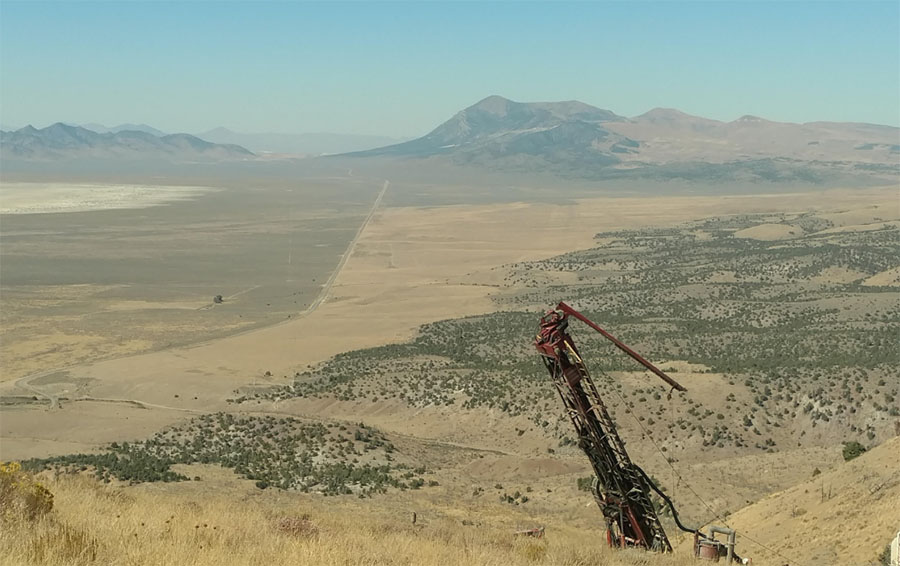
The Keystone Project, managed by U.S. Gold Corp. (NASDAQ:USAU), is located within Nevada’s Cortez Trend, a region renowned for its substantial gold deposits. This project is a significant exploration project aimed at uncovering untapped gold reserves in one of the United States’ most prolific mining areas.
The Cortez Trend has been a focal point for gold mining, hosting several large-scale operations. The region’s geological composition, characterized by favorable stratigraphy and structural features, has contributed to its rich mineralization. The Keystone Project’s location within this trend positions it strategically for potential discoveries.
Home to several world-class deposits, the trend boasts geological formations that are highly conducive to gold mineralization, including favorable stratigraphy and structures that allow gold to accumulate in economically viable concentrations.
The region is part of Nevada’s broader “Gold Belt,” which has made the state one of the top gold producers globally. Advances in geological understanding and mining technology have enabled companies to continually uncover new resources in the Cortez Trend, reinforcing its status as a critical hub for gold mining. Its success serves as a model for exploration efforts in other parts of the world, emphasizing the importance of detailed geological studies and sustained investment.
Keystone Project
Encompassing approximately 20 square miles, the Keystone Project is an under-explored area with complex intrusive-centered gold-bearing hydrothermal systems. U.S. Gold Corp. has consolidated mineral rights over this district, enabling comprehensive exploration efforts. The project’s geology shares similarities with other significant deposits in the Cortez and Carlin Trends, including comparable stratigraphy, lithologic characteristics, structure, and alteration patterns.
Since acquiring the Keystone Project, U.S. Gold Corp. has implemented systematic exploration programs, including gravity surveys, geochemical sampling, geological mapping, and scout drilling. These efforts have identified extensive areas with strong gold and pathfinder geochemistry, indicating the presence of a large epithermal gold system. Notably, the 2019 drilling program in the Nina Skarn target area encountered significant gold mineralization, with one hole reporting two thick intervals of oxidized, cyanide-soluble, gold-bearing skarn mineralization.
In September 2023, U.S. Gold Corp. completed a hyperspectral study of the Keystone Project, utilizing WorldView-3 satellite data to identify near-surface hydrothermal alteration zones. This study led to the discovery of multiple high-priority targets, enhancing the project’s exploration potential. Field investigations and sampling of these hotspots are underway to refine drill targets further.
The Importance of New Mining Projects
Developing new mining projects like Keystone can significantly impact local and state economies. Such projects often lead to job creation, infrastructure development, and increased tax revenues. In regions like Nevada, where mining is a critical industry, new projects contribute to economic diversification and stability.
As existing mines approach the end of their productive lives, discovering new deposits is needed to ensuring the long-term viability of the sector. Newer exploration techniques, such as hyperspectral imaging, advanced geophysical surveys, and machine learning, have enhanced the ability to locate previously hidden reserves, and U.S. Gold Corp. will look to leverage these latest techniques and technologies as it expands the exploration potential of the Keystone Project.
The above references an opinion and is for information purposes only. It is not intended to be investment advice. Seek a licensed professional for investment advice. The author is not an insider or shareholder of any of the companies mentioned above.

Copper markets experienced one of their most volatile trading sessions in over a decade on Monday, as a steep early-morning plunge in prices was met with a wave of buying from Chinese consumers. The surge in demand helped reverse losses and triggered a dramatic intraday rebound, even as concerns about global economic growth and an escalating trade war continued to weigh heavily on other financial markets.
Prices on the London Metal Exchange (LME) dropped sharply at the start of the trading day, falling as much as 7.7% within the first 15 minutes. The rapid selloff briefly pushed copper below $8,500 per metric ton, sparking alarm among traders and analysts. However, by late morning, the market had staged a remarkable recovery, with prices rising by nearly $1,000 in just over two hours. According to LME data, it was the largest intraday move since the 2009 financial crisis.
Traders familiar with the situation said that the initial decline was met with strong buying interest from Chinese fabricators and importers. With copper prices on the LME falling significantly below domestic Chinese rates, importers rushed to take advantage of the price differential. The sudden jump in demand came after Chinese markets had been closed on Friday for a public holiday, during which Beijing announced its response to recently imposed U.S. tariffs. China, which is the world’s largest consumer of copper, has a well-established history of stepping in during periods of price weakness. Similar patterns of opportunistic buying were seen during the aftermath of the 2008 global financial crisis and again in 2020, following the onset of the COVID-19 pandemic.
This time, however, the copper market is being rocked by heightened geopolitical tensions and fears of an economic slowdown. The latest market rout began last week after former U.S. President Donald Trump announced a new round of tariffs, including broad measures that could impact metals trade. In response, China unveiled countermeasures, further rattling markets.
Before Monday’s reversal, copper was on track for a more than 16% decline over three days — a level of volatility not seen since the height of the 2008 crash. The sheer speed and scale of the collapse triggered a spike in trading volumes. During the second hour of LME trading, volumes reached their highest level for any hour since Trump’s initial election in 2016.
While the rebound was significant, analysts cautioned that further price declines remain possible. Citigroup Inc. issued a note on Monday forecasting short-term copper prices between $7,500 and $8,000 per ton. Bank of America went further, suggesting prices could fall to as low as $5,700 amid deteriorating economic indicators and tariff-related disruptions.
Adding to the volatility, copper flows have been shifting globally in recent months. Anticipating the potential for U.S. import tariffs, traders have been redirecting metal from China to the United States. That dynamic has pushed U.S. copper prices to a premium, encouraging a surge in shipments ahead of any formal trade restrictions. As a result, Chinese consumers have seen a tightening in domestic supply, increasing the urgency to purchase material once prices dropped.
The price gap between copper traded in Shanghai and on the LME reached nearly $1,000 per ton at one point on Monday — a rare and extreme disparity that made importing copper into China highly lucrative. Copper premiums in China, a measure of the extra cost buyers are willing to pay over futures prices, jumped to $87 per ton, the highest level since December 2023. Several traders said they were unable to satisfy all the demand from Chinese buyers, as much of the metal had already been diverted to fulfill U.S.-bound shipments.
Whether the Chinese buying will be sufficient to stabilize the copper market remains uncertain. The macroeconomic backdrop continues to cast a long shadow over metals markets, with investors now reevaluating their growth forecasts amid the latest phase of trade hostilities between the world’s two largest economies.
The above references an opinion and is for information purposes only. It is not intended to be investment advice. Seek a licensed professional for investment advice. The author is not an insider or shareholder of any of the companies mentioned above.

Lithium Americas (TSX:LAC) announced on Tuesday that it has reached a final investment decision (FID) for the construction of the first phase of the Thacker Pass lithium mine in Nevada. The milestone marks a significant step in the development of one of the largest known lithium resources in the United States. The Thacker Pass project is a joint venture between Lithium Americas and General Motors (GM), with both companies increasing their financial commitments to move forward with construction. Lithium Americas contributed an additional $192 million, while General Motors added $100 million. These investments have allowed the joint venture to secure full funding for the first phase of the project, which is expected to be completed by late 2027.
A Step Toward Domestic Lithium Production
The United States has been working to expand its domestic lithium production as demand for electric vehicles (EVs) and renewable energy storage continues to grow. The Thacker Pass mine is a key component of this effort, aiming to strengthen the country’s supply chain for lithium, a critical mineral used in battery production.
The project received significant financial backing from the U.S. government. Last year, the Department of Energy (DOE) finalized a $2.26 billion loan to Lithium Americas to support the construction of the mine. In addition, the joint venture between Lithium Americas and GM had access to $650 million in funding. These investments highlight the strategic importance of the project in the broader push for energy independence and the transition to electric mobility.
Once operational, the first phase of the Thacker Pass mine is expected to produce 40,000 metric tons of battery-quality lithium carbonate annually. This output would be enough to supply lithium for up to 800,000 electric vehicles per year.
Environmental and Economic Considerations
While the Thacker Pass project represents a significant step forward for domestic lithium production, it has also been the subject of environmental and community concerns. Some local groups and environmental organizations have expressed opposition, citing potential impacts on water resources, wildlife, and cultural sites. Lithium Americas has stated that it is committed to responsible mining practices and environmental stewardship.
The mine is also expected to bring economic benefits to the region. The construction and operation of Thacker Pass will create jobs and contribute to local and state economies. However, debates continue over the long-term environmental impact versus the economic and strategic advantages of increasing domestic lithium production.
The decision to move forward with Thacker Pass comes as demand for lithium continues to rise globally. With automakers increasing EV production and governments implementing stricter emissions regulations, securing a stable supply of lithium has become a priority for industries reliant on battery technology.
For General Motors, the investment aligns with its broader strategy to transition to electric vehicles. The automaker has previously announced plans to produce a majority of its vehicles as EVs by the next decade and has been securing lithium and other battery materials to support its production goals.
The completion of the first phase of Thacker Pass in 2027 will add a significant domestic source of lithium to the U.S. market, potentially reducing reliance on foreign suppliers. If successful, the project could serve as a model for future lithium development in the country.
The above references an opinion and is for information purposes only. It is not intended to be investment advice. Seek a licensed professional for investment advice. The author is not an insider or shareholder of any of the companies mentioned above.

B2Gold Corp. (TSX:BTO) has released a revised life-of-mine plan for its Goose project in Nunavut, Canada, confirming its previous timeline and cost projections but reducing its high-confidence resource estimate. The update, which reflects a stricter resource model, led to a nearly 10% drop in B2Gold’s stock price this week.
The Goose project is B2Gold’s first development in the Back River gold district, an 80-kilometer belt containing 11 mineral claim blocks. The company expects to pour its first gold from the site in the second quarter of 2025, with commercial production ramping up in the following quarter.
According to the newly released technical report, the Goose project contains 11.3 million tonnes of gold reserves with an average grade of 6.82 grams per tonne (g/t), amounting to a total of 2.48 million ounces. This reserve base is projected to support nine years of continuous gold production, with an annual output of approximately 270,000 ounces. Production is expected to peak at 300,000 ounces per year between 2026 and 2031.
The updated mine plan maintains the project’s estimated construction and development cost at C$1.54 billion (US$1.08 billion), the same figure B2Gold reported in fall 2024. However, operating costs are now projected to be higher than originally anticipated. The new all-in sustaining cost (AISC) estimate is $1,547 per ounce, up from the previous estimate of $1,363 per ounce.
Impact of Stricter Resource Model
B2Gold’s updated technical report includes a more conservative approach to resource estimation, leading to a reclassification of some indicated mineral resources into the inferred category. As a result, the project now holds 3.56 million ounces of indicated resources and 2.44 million ounces of inferred resources.
BMO Capital Markets issued a note on Friday stating that the stricter resource model had a “slight negative impact” on the Goose project’s overall estimates. Following the report, B2Gold’s stock price declined 9.5% by midday, trading at C$4.11 per share, with a market capitalization of C$5.4 billion. The company’s 52-week high stood at C$4.84, while its low was C$3.16.
Despite this adjustment, BMO maintained its “outperform” rating for B2Gold but lowered its price target to C$6.50, reflecting the updated resource estimates and increased costs.
B2Gold’s Response and Future Resource Expansion Plans
B2Gold addressed the changes in a press release, stating that it remains “highly confident” in its ability to convert a significant portion of the inferred resources into indicated resources through additional in-fill drilling. The company pointed to its historical success in upgrading resource classifications across its operations, noting that it has previously converted more than 75% of inferred resources to indicated status.
The updated mine plan currently includes open-pit mining at the Echo, Umwelt, Llama, and Goose deposits, as well as underground mining at Umwelt. B2Gold believes that additional drilling could lead to resource upgrades for the Echo, Llama, and Goose underground deposits, which were considered in previous mine plans but are not yet included in the current reserve estimate.
Potential Production Enhancements
With the first gold production at Goose expected within the next three months, B2Gold has initiated multiple studies to optimize operations and enhance production efficiency.
One potential improvement under evaluation is the addition of a semi-autogenous grinding (SAG) mill, which would increase the mill’s throughput from 4,000 tonnes per day to 6,000 tonnes per day. The company is also exploring ways to exceed its planned production from the Umwelt underground deposit, which is expected to begin high-grade stope ore production in the third quarter of 2025. Potential optimizations include the development of additional active production levels and alternative mining methods to reduce costs.
Additionally, B2Gold is reviewing the feasibility of modifying its approach to the Goose project’s winter ice road. The company is assessing whether the road could be constructed and operated on a less-than-annual basis, which could impact logistics and cost efficiency.
Exploration and Growth Opportunities
Beyond the current mine plan, B2Gold is continuing exploration efforts to expand the resource base at Goose. The company has outlined a 12,000-meter drilling program targeting extensions of the Llama and Umwelt deposits, which are among the largest and highest-grade resources in the area.
Other high-priority targets include Nuvuyak, Mammoth, and Hook, which were identified during the 2023-24 exploration campaign. B2Gold plans to follow up on these targets in the coming months to evaluate their potential contribution to the Goose project’s resource base.
The above references an opinion and is for information purposes only. It is not intended to be investment advice. Seek a licensed professional for investment advice. The author is not an insider or shareholder of any of the companies mentioned above.

Copper prices are set for a sharp downturn in the coming months, according to BNP Paribas, which has issued a stark warning that the industrial metal’s recent rally is unsustainable. The French bank cited the ongoing rush to ship copper to the United States before the potential implementation of a 25% tariff as a key factor in the recent price surge. However, with the timeline for these tariffs reportedly shortening, BNP now expects a significant price drop as demand slows and global supply rises.
Copper has seen a substantial price increase since the White House launched a broad investigation into national security risks associated with the metal, a move that could result in steep import tariffs. Earlier this week, copper prices in London reached a nine-month high, exceeding $10,000 per tonne, while US copper contracts also hit a historic peak. This divergence between US and global copper prices created a pricing dislocation, prompting traders to accelerate shipments to American buyers before tariffs take effect.
Estimates suggest that hundreds of thousands of tonnes of copper are currently en route to the US as market participants attempt to frontload inventory ahead of the policy shift. However, a Bloomberg report published this week suggested that the tariffs could arrive within weeks rather than months, leaving little time for additional shipments to be redirected.
Following the report, the metal’s rally lost momentum. As of today, copper is trading at $9,846.50 per tonne on the London Metal Exchange (LME), down 0.8% for the day, while US copper prices have declined by 0.1%.
BNP Paribas Forecasts a Market Reversal
BNP Paribas now predicts that copper prices will fall to $8,500 per tonne by the end of the second quarter, citing a combination of fading US demand and an expected surplus in global supply.
Wilson added that the focus will shift toward the broader impact of US trade policies on global demand. As protectionist measures restrict trade flows, BNP Paribas has revised down its global copper consumption growth forecast from 3.1% to 2.3% for the year. Additionally, the bank now expects a global copper surplus of 460,000 tonnes, a significant increase from its previous estimate of 124,000 tonnes.
Diverging Market Opinions
Despite BNP Paribas’ bearish outlook, not all analysts agree that copper prices will collapse. Some believe that structural demand drivers, particularly in China and the broader electrification movement, could support prices in the long term. China remains the world’s largest consumer of copper, and its economic policies play a crucial role in determining global demand. Recent stimulus measures aimed at boosting infrastructure and industrial activity could provide a counterbalance to the negative effects of US trade barriers.
The upcoming months will be critical in determining the trajectory of copper prices. If the US imposes the anticipated 25% tariff sooner than expected, the short-term market impact could be severe, particularly for traders who have stockpiled copper in anticipation of higher demand.
At the same time, a weakening global economic outlook, driven in part by rising protectionism, could weigh on copper demand beyond just the US. BNP Paribas’ revised forecasts suggest that the copper market is heading toward an oversupply scenario, which would likely pressure prices downward.
However, long-term trends, such as the transition to renewable energy and increased electrification, could support copper demand in the years ahead. The metal remains essential for electric vehicles, power grids, and battery storage, industries that continue to expand despite near-term economic uncertainty.
With the White House’s tariff decision looming, the copper market remains in flux. Investors and traders will be closely monitoring policy announcements, economic indicators, and supply chain disruptions to gauge the next phase of price movements. While BNP Paribas predicts a sharp decline in copper prices, opposing views suggest that underlying demand trends could provide some level of support.
The above references an opinion and is for information purposes only. It is not intended to be investment advice. Seek a licensed professional for investment advice. The author is not an insider or shareholder of any of the companies mentioned above.
If you would like to receive our free newsletter via email, simply enter your email address below & click subscribe.
 Follow us on Twitter
 Become our facebook fan
CONNECT WITH US
Tweets
Tweet with hash tag #miningfeeds or @miningfeeds and your tweets will be displayed across this site.
MOST ACTIVE MINING STOCKS
Daily Gainers
 CMC Metals Ltd. CMC Metals Ltd. |
CMB.V | +900.00% |
 Eden Energy Ltd Eden Energy Ltd |
EDE.AX | +200.00% |
| GoviEx Uranium Inc. |
GXU.V | +42.86% |
| Eagle Nickel Ltd. |
ENL.AX | +41.67% |
| Citigold Corp. Limited |
CTO.AX | +33.33% |
| Mount Burgess Mining NL |
MTB.AX | +33.33% |
| Exalt Resources Limited |
ERD.AX | +31.94% |
| Casa Minerals Inc. |
CASA.V | +30.00% |
| Cariboo Rose Resources Ltd |
CRB.V | +28.57% |
| Belmont Resources Inc. |
BEA.V | +28.57% |