Leaders from Brazil Potash Corp. have received a formal invitation from the Mura Indigenous Council – CIM to participate in the annual Mura Indigenous Cultural Festival (FECIM) on August 29th and 30th.
The invitation was extended to CEO Matt Simpson, Raphael Bloise, the Interim President of Potássio do Brasil, and Advisory Board Director Con Steers. The company executives are invited to join community events during the festival, which will be held at Jair Tupinambá Park in Autazes. Additionally, the Tuxaua (chief) and leaders of the Aldeia Patauá village extended a separate invitation for the company leaders to attend a lunch in the village.
The company noted that the invitations signify a strengthening partnership with the Mura communities, who are key stakeholders in the development of the company’s Autazes Potash Project.
“We are deeply honored by these invitations from the Mura Indigenous Council – CIM and the Tuxaua and leaders of Aldeia Patauá,” said Matt Simpson, CEO of Brazil Potash. “This reflects the genuine partnership we have built with the Mura people and their continued support for our project. FECIM represents an important celebration of Mura culture and our shared commitment to sustainable development.”
This event follows a Preliminary Cooperation Agreement signed between the two parties in January 2025, which formalized steps toward creating a sustainable development program referred to as “Mura Well Being.”
The Mura Indigenous Council (CIM) represents more than 18,000 Mura Indigenous people across the Madeira River region.
ISSUER-PAID ADVERTISEMENT. BRAZIL POTASH CORP., or the “Company,” has or will pay [] (“Publisher”) in cash $[________1000_____] for marketing services, including advertisements. This advertisement is part of those issuer-paid marketing services. This compensation should be viewed as a major conflict with the Publisher’s ability to be unbiased.
FORWARD LOOKING STATEMENTS. This publication contains forward-looking statements, including statements regarding expected continual growth of the featured company and/or industry. The Publisher notes that statements contained herein that look forward in time, which include everything other than historical information, involve risks and uncertainties that may affect the companies’ actual results of operations. Factors that could cause actual results to differ include, but are not limited to, government regulations concerning potash production, the size and growth of the market for potash, the companies’ ability to fund its capital requirements in the near term, the ability to construct the project and long term, pricing pressures, etc.
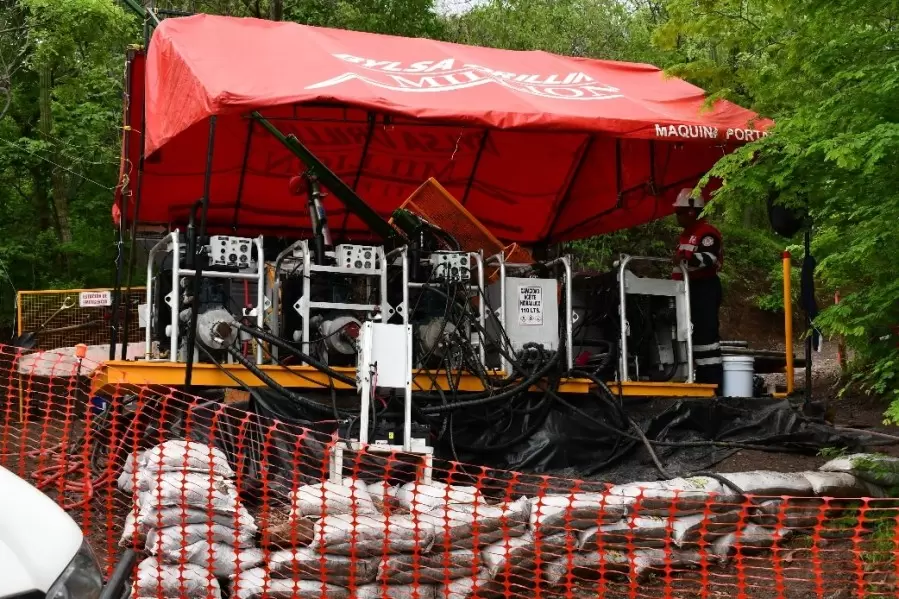
Minaurum Gold Inc. (TSXV: MGG) (OTCQX: MMRGF) has expanded its exploration activities at the Alamos Silver Project in Sonora, Mexico, with the recent mobilization of additional drilling rigs. The company announced that four drill rigs are now operating at the site as part of an ongoing 10,000-metre infill drilling program.
Darrell Rader, President & CEO of Minaurum Gold, commented in a press release: “With a robust treasury, the addition of key SilverCrest senior resource development experts, and the discovery of a stacked vein system at Promontorio, we are aggressively advancing exploration and fast-track drilling toward a maiden resource estimate at the Alamos Silver Project. We look forward to several project catalysts in the near term including drill results from the infill campaign.”
According to a corporate statement issued today, over 3,000 metres of drilling have already been completed. The current phase of exploration is focused on several key zones within the Alamos project area, specifically the Promontorio, Europa-Guadalupe, and Travesía zones. These areas have been identified as high-priority targets based on previous geological assessments and are central to the company’s efforts to better define the mineralization potential of the property.
The infill drilling campaign is expected to generate critical data that will contribute directly to the project’s maiden resource estimate. No timeline was provided for the release of the estimate, but all drill results from the current program are to be included in the calculation.
Details on the Alamos Silver Project
The Alamos Silver Project is located in the southern portion of the state of Sonora, a region that has historically hosted a number of mineral exploration and mining operations. Minaurum has been active in the region for several years and has conducted a range of exploration programs, including surface sampling, geophysical surveys, and earlier phases of drilling.
The current program represents one of the company’s most intensive exploration campaigns to date on the Alamos property. The use of infill drilling—drilling that targets gaps in data between existing drill holes—is aimed at increasing the geological confidence of known mineralized zones, particularly as Minaurum works toward establishing a formal resource estimate under industry-standard guidelines such as NI 43-101.
The addition of two more rigs to the existing operation—bringing the total to four—is a notable increase in the pace of exploration activity at Alamos. This acceleration suggests that the company is prioritizing the completion of the 10,000-metre program and the delivery of its first mineral resource estimate.
Infill drilling is a critical step in the resource definition process. By increasing the density of drill data, it allows geologists to more accurately model subsurface geology and assess the grade and continuity of mineralized zones. This, in turn, supports the classification of resources into measured, indicated, or inferred categories, which are essential for economic evaluations and future project planning.
Implications for the Project’s Development Timeline
While Minaurum has not disclosed specific timelines for the completion of drilling or the release of the maiden resource estimate, the deployment of additional rigs suggests a desire to expedite the process. Resource estimates are typically foundational documents in the development of mining projects, influencing both internal decision-making and potential interest from investors, joint-venture partners, or acquirers.
Once completed, a resource estimate could serve as the basis for more advanced economic studies, such as a Preliminary Economic Assessment (PEA) or a Prefeasibility Study (PFS). However, Minaurum has not announced whether it intends to proceed with such studies following the current drilling program.
Regional and Industry Context
The Sonora region is among the most prolific mining jurisdictions in Mexico, particularly for silver, copper, and gold. The presence of multiple active mines and exploration projects has made the state a focal point for both domestic and international mining firms. Alamos, situated within this broader mineralized corridor, is viewed as a geologically prospective area due to its structural and lithological setting.
Minaurum’s expanded drilling campaign comes at a time when silver exploration has seen renewed interest globally, amid shifting market dynamics and continued demand from industrial and green-energy sectors. While commodity prices can influence exploration budgets and timelines, Minaurum has not made any public statements tying this drilling program to specific market conditions.
The company has not yet released assay results from the current drilling program. These results are typically processed by independent laboratories and may take several weeks or months to be reported, depending on sample backlog and analytical procedures. Once available, the results will provide more insight into the grades, widths, and continuity of mineralization at the targeted zones.

Pacific Ridge Exploration (TSXV: PEX; OTCQB: PEXZF; FSE: PQWN) has provided an update on its ongoing drilling activities at the 100%-owned RDP copper-gold project, located in the Golden Horseshoe region of north-central British Columbia. The RDP project lies at the southern end of the Toodoggone district, approximately 40 kilometres west of the company’s flagship Kliyul copper-gold project.
Blaine Monaghan, President & CEO of Pacific Ridge, commented in a press release: “We are very pleased with what we are seeing so far. Strong copper mineralization is present in many of the drill holes and drilling has confirmed that the porphyry copper-gold-silver mineralization at Day is hosted in a tabular body that remains open. We look forward to reporting the drill results from the 2025 RDP drill program.”
The company resumed drilling at RDP in 2025 following significant mineralized intercepts reported from the 2022 program. The current drilling campaign is focused on the Day target, where the company is working to define the geometry and continuity of porphyry-style copper-gold-silver mineralization first encountered in earlier exploration.
Background and Previous Results
In 2022, drilling at the Day target returned what Pacific Ridge described at the time as one of the province’s top porphyry copper-gold intersections that year. Drill hole RDP-22-005 intersected 107.2 metres grading 1.39% copper equivalent (CuEq), or 2.06 grams per tonne (g/t) gold equivalent (AuEq). The interval included 0.63% copper, 1.10 g/t gold, and 2.91 g/t silver, within a broader zone of 497.2 metres averaging 0.66% CuEq (0.37% copper, 0.40 g/t gold, and 1.60 g/t silver).
The 2025 drilling campaign is primarily aimed at verifying the presence and orientation of a westward-striking, steeply northward-dipping tabular body of porphyry copper-gold-silver mineralization. Drilling is being conducted from multiple pads designed to test the extent of mineralization laterally and at depth.
Drill Hole RDP-25-010
The first hole of the 2025 campaign, RDP-25-010, was collared approximately 40 metres southwest of RDP-22-005. It was drilled at an azimuth of 60° and a dip of 72°. Quartz-magnetite-sulphide veining was observed in the first five metres of the hole. However, the drill encountered a late-mineral intrusive from 5 metres to 175.5 metres, leading to the hole’s termination.
Drill Hole RDP-25-011
From the same drill pad, hole RDP-25-011 was drilled at an azimuth of 48° and dip of 65°, to a total depth of 431 metres. The hole was positioned to intersect mineralization beneath and northwest of RDP-22-005. It encountered patchy potassic alteration—mainly potassium feldspar and magnetite—and zones of quartz-magnetite-sulphide veining, with visible chalcopyrite and minor bornite. These features were hosted in early-mineral monzodiorite and hydrothermal breccia units. The company reports that this hole extended known mineralization by at least 50 metres to the north, and that mineralization remains open in that direction.
Drill Holes RDP-25-012 and RDP-25-013
Two additional holes, RDP-25-012 and RDP-25-013, were drilled from a pad located 170 metres northeast of RDP-22-005. These were designed to test the continuity of the interpreted tabular mineralized body between RDP-22-005 and RDP-23-007. The latter was drilled in 2023, ending in a final intercept of 19.0 metres grading 0.45% CuEq (0.32% copper, 0.19 g/t gold, 1.08 g/t silver).
RDP-25-012 was drilled at an azimuth of 48° and dip of 65°, reaching a depth of 363 metres. RDP-25-013 was drilled at an azimuth of 160° and dip of 70°, extending to a total length of 582 metres. Both holes intersected copper-sulphide mineralization—including chalcopyrite and bornite—within potassically-altered monzodiorite and hydrothermal breccia. These findings support the hypothesis of a steeply dipping, tabular zone of porphyry copper-gold mineralization. In RDP-25-013, mineralization was observed to a vertical depth of 500 metres and remains open at depth.
Ongoing Work: RDP-25-014
As of the latest update, RDP-25-014 is in progress. This hole is being drilled from the same pad as RDP-25-011, at an azimuth of 160° and a dip of 70°. No preliminary results from this hole were reported in the latest release.
Broader Project Context
The RDP project is one of several copper-gold exploration properties held by Pacific Ridge in British Columbia. In addition to RDP and the flagship Kliyul project, the company’s portfolio includes the Chuchi, Onjo, and Redton copper-gold projects. All of the projects are located in areas of active or historical exploration within the Quesnel and Stikine terranes of central and northern B.C., known for hosting porphyry copper-gold deposits.
The RDP project, specifically, is situated in the Toodoggone region—an area that has seen increased exploration activity in recent years due to renewed interest in porphyry systems. The Day target, where current drilling is focused, is one of several prospective zones within the RDP property.
The company has not yet reported assay results from the 2025 drill holes. Further updates are expected as analytical data becomes available and additional holes are completed. The primary focus remains on determining the size, geometry, and grade continuity of the mineralized system at the Day target.

Antofagasta PLC (LON: ANTO), the Chilean mining group, reported its highest profit margins in four years on Thursday, citing a combination of increased copper production, lower operational costs, and stronger commodity prices. The company’s financial results for the first half of 2025 showed substantial year-over-year gains, with core earnings up nearly 60%, underscoring the continued importance of copper and gold in a commodities market shaped by the global energy transition.
Financial Performance
In its half-year report, Antofagasta said pretax profit had risen to $1.16 billion, up from $712.6 million in the first half of 2024. Earnings before interest, taxes, depreciation, and amortization (EBITDA) also grew by 60%, reaching $2.23 billion. The company’s EBITDA margin climbed 12 percentage points to 58.8%, marking the highest profitability level the miner has posted since 2021.
The margin expansion and earnings growth were supported by stronger pricing conditions for copper and gold, along with increased production volumes and reduced per-unit costs.
Production and Sales
Antofagasta attributed its earnings growth in large part to an 11% increase in copper output, with 314,900 tonnes produced during the first half of 2025. The rise in output was primarily driven by increased operational performance at the Centinela Concentrates and Los Pelambres plants in Chile.
In line with the increase in production, first-half copper sales rose 17%, reflecting both higher volumes and market prices. The company also reported a 53% surge in gold sales, which contributed to overall revenue and helped reduce net cash costs due to gold’s role as a by-product in the company’s operations.
Antofagasta said lower cash costs during the period also helped bolster profitability, though it did not provide specific unit cost figures in the initial release. Reductions in energy, input, and logistical expenses have been cited by mining firms in the region as contributing factors in recent quarters.
Dividend Declaration
Following the strong financial results, Antofagasta’s board declared an interim dividend of 16.6 cents per share, more than double the 7.9 cents paid during the same period last year. The dividend was based on the company’s earnings performance and reflected the board’s decision to return a portion of the profits to shareholders.
The company remains majority-owned by Chile’s Luksic family, one of the wealthiest and most influential families in Latin America, with longstanding involvement in mining, banking, and industrial sectors.
Copper prices have remained elevated through much of 2025, supported by strong global demand tied to electrification, renewable energy infrastructure, and battery manufacturing. As the energy transition accelerates, copper is widely viewed as a critical material, especially in technologies such as electric vehicles and wind and solar power systems.
Global copper supply has struggled to keep pace with demand, partly due to regulatory hurdles, aging mines, and project delays. These supply-side constraints, along with persistent consumption growth, have kept prices above historical averages, benefitting producers like Antofagasta.
Gold prices have also remained relatively strong during the period, supported by macroeconomic uncertainty, central bank purchases, and hedging activity from investors.
Antofagasta’s results come during wider challenges and opportunities in the global mining industry. While demand for transition-related metals is growing, companies continue to face cost pressures, environmental regulations, and geopolitical risks. In Chile specifically, debates over mining royalties, water rights, and environmental permitting continue to shape the sector’s operating environment. Chile remains the world’s top copper-producing country and a focal point for new exploration and investment. The government has recently emphasized balancing economic development with environmental protection and social equity, creating a complex landscape for operators like Antofagasta. The company has invested in sustainability initiatives and infrastructure expansions at its key sites, though it has yet to disclose detailed long-term capital expenditure plans or ESG performance figures in the current release.
Looking ahead, Antofagasta will release its next production and financial update later in the year. While first-half results position the company on strong financial footing, performance in the latter half will depend on a combination of internal execution and external market dynamics, including metal prices, cost inflation, labor relations, and weather-related risks. The miner’s ability to maintain or improve its margins may hinge on commodity price stability and continued cost controls. In the absence of revised guidance, investor attention is likely to focus on operational consistency and the outlook for dividend policy heading into 2026.
For now, the first-half results confirm Antofagasta’s strong positioning amid ongoing structural demand for copper and gold.
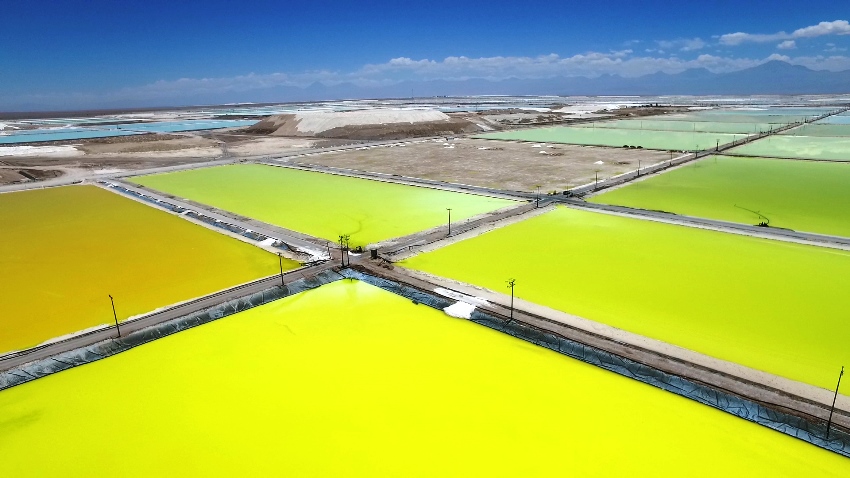
Sociedad Química y Minera de Chile S.A. (SQM), the world’s largest lithium producer by market value, reported a significant decline in second-quarter earnings but reaffirmed its commitment to expanding production capacity amid signs of a modest recovery in lithium prices.
Felipe Smith, senior commercial vice president of lithium, told analysts Wednesday: “We expect that with the recent price recovery in China, our sales price in Q3 should be higher than in Q2.”
“Some of the contracts we had in place, hit the lower limits set in those contracts, affecting the volumes agreed,” chief executive officer Ricardo Ramos said in the statement.
In a financial update released Wednesday, the Santiago-based firm said its core earnings attributable to shareholders, before items, dropped 28% year-on-year to $307.9 million in the quarter ending June 30. Total revenues also fell 19% to approximately $1 billion, reflecting lower sales volumes and persistently weak spot prices in the lithium market. Despite the downturn, SQM raised its full-year sales volume guidance, pointing to improving demand conditions and recent price movements driven by output cuts in China. The company said it expects a 10% increase in sales volumes from its Chilean operations in 2025 and boosted expectations for its international division, projecting sales of about 20,000 tons of lithium carbonate equivalent.
Chinese Output Cuts Fuel Price Uptick
Lithium prices have been under sustained pressure for over a year, dragged down by a global supply glut stemming from increased production capacity and slower-than-expected demand growth. Prices remain more than 80% below their peak levels.
However, recent cutbacks in China — including the temporary closure of a major lithium mine operated by battery manufacturer Contemporary Amperex Technology Co. Ltd. (CATL) — have triggered a partial rebound. The Chinese mine is expected to be offline for at least three months, a development that has contributed to a price rally among global lithium producers.
Speaking to analysts, Felipe Smith, SQM’s Senior Commercial Vice President of Lithium, noted that prices in China have picked up pace in recent weeks. He added that the company anticipates at least a 10% increase in lithium sales volumes during the current quarter compared to April–June.
Continued Capital Investment and Expansion Plans
SQM is pressing forward with its long-term strategy focused on expanding production capacity rather than curtailing output in response to market weakness — a contrast to higher-cost producers that have opted to scale back operations.
The company reaffirmed its capital expenditure budget of $750 million for 2025. These funds are aimed at increasing annual lithium carbonate capacity in Chile to 240,000 tons by 2026 and lithium hydroxide capacity to 100,000 tons by the end of 2025.
In addition, SQM announced that its Kwinana refinery joint venture in Australia achieved first commercial production in July. The facility is projected to reach a nameplate capacity of 50,000 tons of lithium hydroxide annually by the end of 2026, with half of that output allocated to SQM.
The lithium sector continues to navigate a challenging environment marked by oversupply and price volatility. Several producers have responded by curbing output, delaying projects, or adjusting business models. In contrast, SQM’s approach suggests confidence in the medium-term fundamentals of the lithium market, including expectations for accelerating demand tied to the global energy transition.
While the company did not specify the absolute volume behind the projected 10% increase from its Chilean facilities, it emphasized that both domestic and international operations are expected to contribute to higher total sales volumes in the coming quarters.

Apex Critical Metals Corp. (CSE: APXC; OTCQX: APXCF; FWB: KL9), has released an update on its 2025 diamond drilling program at the Cap Critical Minerals Project, located in central British Columbia. The company is currently conducting an exploration campaign targeting carbonatite-hosted niobium and rare earth element (REE) mineralization.
Sean Charland, CEO of Apex, commented in a press release: “As drilling continues, we are encouraged with the initial mineral observations by our geological team by what we’ve now identified within drill core samples, based on visual observations and portable XRF results, as mineralized carbonatite at our Cap project.”
Drill Program Overview
The Cap Project, 100% owned by Apex, spans approximately 2,500 hectares and is situated about 85 kilometers northeast of Prince George, British Columbia. The 2025 exploration initiative, fully funded and permitted under a five-year Multi-Year Area-Based (MYAB) permit, includes plans for up to 1,500 metres of diamond drilling.
To date, four drill holes — designated CAP25-005, CAP25-006, CAP25-007, and CAP25-008 — have been completed, totaling 1,097 metres. Drilling has taken place near the eastern edge of a previously identified coincident soil geochemical and geophysical anomaly. The company reports that all completed holes intersected various intervals of carbonatite, fenite, and/or syenite lithologies. These intersected intervals range from a few metres to over 300 metres in core length, although the true thickness and geometry of the carbonatite body remain unconfirmed. Geological observations currently suggest a near-vertical orientation of the carbonatite.
Preliminary Observations and Sampling
Geological logging of drill core and spot checks using portable X-ray fluorescence (XRF) instruments have identified visible occurrences of pyrochlore — a niobium-bearing mineral — as well as various rare earth minerals. However, the company emphasizes that these findings are based on visual identification and preliminary spot XRF readings. As such, no definitive conclusions can be drawn regarding niobium or REE content until laboratory assay results are received and verified.
Core samples from the first two completed drill holes (CAP25-005 and CAP25-006) have already been processed and sent to Activation Laboratories Ltd. in Kamloops, British Columbia, for analysis. The company’s onsite geological team continues to process core from the remaining holes. Laboratory assay results from submitted samples are expected over the coming weeks and are anticipated to continue into the fall.
Sampling and Analytical Protocols
Drilling operations have utilized a helicopter-supported diamond drill rig producing NQ-size core. All core samples are being prepared at Activation Laboratories’ Kamloops facility under standard sample preparation procedures. This includes drying, crushing (to ensure 80% passes 2 mm), splitting (250 grams), and pulverizing to 95% passing 105 µm.
Analytical methods will include:
- XRF analysis (Code 8) for niobium (Nb₂O₅), zirconium (ZrO₂), and tantalum (Ta₂O₅).
- REE Assay via lithium metaborate/tetraborate fusion followed by analysis with ICP and ICP/MS.
- Fire Assay (1A2) for gold content.
Samples were collected by sawing drill core in half, with one half sent for analysis and the other half retained onsite. The sampling program incorporates a Quality Assurance/Quality Control (QA/QC) protocol, including the insertion of certified reference materials and silica blanks at a rate of approximately 5% each.
Project Background
The Cap Project is one of several exploration-stage properties held by Apex Critical Metals focused on identifying and developing critical mineral deposits in Canada. The Cap property covers a 25-square-kilometre area that hosts a 1.8-kilometre niobium-in-soil geochemical trend, initially identified in earlier fieldwork. The site is of particular interest due to its carbonatite-hosted mineral potential, which is considered globally rare.
Carbonatites, the target rock type at the Cap Project, are known globally for hosting a wide range of economically important minerals, including niobium, REEs, tantalum, and phosphate, along with occasional copper and gold mineralization. Globally significant niobium deposits such as Araxá and Catalão in Brazil, and Niobec in Quebec, are hosted in carbonatite systems. Similarly, major REE operations such as Mountain Pass (USA), Mount Weld (Australia), and Bayan Obo (China) are carbonatite-hosted.
In addition to the Cap Project, Apex Critical Metals holds other exploration-stage carbonatite and alkaline rock projects:
- Bianco Project in northwestern Ontario, covering 3,735 hectares over a known carbonatite complex.
- Lac Le Moyne Project in Quebec, spanning 4,025 hectares, situated near Commerce Resources Corp.’s Eldor Carbonatite Complex.
Each of these properties is considered prospective for critical minerals, with a particular focus on REEs and niobium.
Apex Critical Metals will continue processing and sampling drill core from the 2025 Cap drill program. Laboratory assay results are expected to inform the next phase of exploration, including potential follow-up drilling and geological modeling.

African Rainbow Minerals (JSE:ARI), a South African-based mining company primarily involved in gold, platinum, and coal operations, has significantly increased its stake in Canadian junior miner Surge Copper Corp. (TSXV:SURG), according to public filings and company statements released this week.
The transaction saw African Rainbow Minerals (ARM) purchase approximately 25.78 million shares of Surge Copper at a price of C$0.175 per share. This latest acquisition—valued at roughly C$4.51 million—raises ARM’s total ownership in the Canadian company to 19.9%, or approximately 68.74 million shares outstanding. This most recent investment comes despite the acquisition price being above Surge Copper’s current market value. As of the most recent market close on Friday, Surge Copper’s shares were trading at C$0.14, giving the company a market capitalization of C$44.9 million. ARM stated that the purchase was made for investment purposes, though no further details were provided about its intentions or potential plans to increase its stake beyond the current level.
African Rainbow Minerals first entered into Surge Copper in April 2024 with the purchase of approximately 39.61 million shares at C$0.095 per share. In June 2024, ARM increased its holdings further by acquiring another 1.58 million shares at C$0.15, exercising investor rights aimed at preventing dilution of its initial investment.
With the cumulative transactions completed to date—including the most recent 6.46% increase in ownership—ARM now stands as a major strategic shareholder in Surge Copper, approaching the 20% threshold that would typically trigger additional regulatory disclosure requirements in many jurisdictions.
Surge Copper’s Flagship Project: Berg
Surge Copper’s primary asset is the Berg copper-molybdenum project located in central British Columbia. The Berg deposit is a large-scale porphyry system wholly owned by Surge and currently being developed as a potential standalone open-pit mining operation.
According to a preliminary economic assessment (PEA) released in 2023, the Berg project contains over 1 billion tonnes of measured and indicated mineral resources. These resources host an estimated 5.1 billion pounds of copper and 633 million pounds of molybdenum.
The PEA outlined a projected mine life of 30 years, during which time the project could produce approximately 3.8 billion pounds of copper and 402 million pounds of molybdenum. Based on these figures, Berg could rank among Canada’s top copper producers and become the country’s largest molybdenum producer.
The economic analysis provided in the PEA assigned the project a post-tax net present value (NPV) of C$2.1 billion and an internal rate of return (IRR) of 20%. The project’s initial capital cost is estimated at C$1.97 billion, with a projected payback period of four years.
Surge Copper is currently progressing the Berg project through technical de-risking, including a resource update and further studies aimed at advancing the project to the pre-feasibility stage.
ARM’s investment in Surge Copper reflects broader trends in the mining sector, particularly among diversified miners seeking increased exposure to copper amid growing global demand linked to electrification, renewable energy, and infrastructure development.
While ARM has historically concentrated on South African gold, coal, and platinum group metals, its growing stake in a Canadian copper-molybdenum developer signals a diversification in both commodity focus and geographical reach. The company has not disclosed whether it plans to seek a more active role in Surge Copper’s project development or management.
Surge Copper has not issued a statement regarding ARM’s latest share acquisition.
No changes to the company’s board or management have been announced in relation to the investment.
With a significant portion of the resource already defined and preliminary economics in place, Surge Copper is expected to release a resource update in the coming months. The company’s next milestone will be the completion of a pre-feasibility study, which will provide further detail on the technical and economic viability of the Berg project.
Environmental assessments, permitting, infrastructure planning, and financing remain ahead in the project development timeline. Surge has not provided a specific target date for the start of construction or production. As ARM continues to build its position in the company, attention may shift to how this strategic investment might influence the project’s development pace or attract additional capital or joint venture partners.

Brazil Potash Corp. is rapidly advancing the development of its flagship Autazes Potash Project in Amazonas, delivering key milestones that bring the company closer to domestic potash production and reduced reliance on imports. With Brazil currently importing over 95% of the potash it uses, the Autazes project is a strategic national asset. Once operational, it will supply ~20% of the country’s needs, positioning Brazil Potash as a critical player in the nation’s agricultural supply chain.
Key Installation Licenses for Construction Secured Throughout 2024, Brazil Potash received 21 Installation Licenses for Autazes Project construction from the State of Amazonas Environmental Protection Agency (IPAAM) covering the mine shafts, processing plant, road and port. These licenses authorize the company to begin full-scale construction at the Autazes site. It’s a major regulatory step, confirming Brazil Potash’s compliance with all environmental and technical requirements.These licenses also reflect the successful completion of an extensive review process, including environmental studies and stakeholder engagement, allowing the company to start building core infrastructure.
Port Terminal Development Underway To support efficient logistics, Brazil Potash plans to build a dedicated port terminal on the Madeira River. In May 2025, the company completed site preparation for this terminal, a key logistical asset that will support the transport of potash to Brazil’s central farming regions. By relying on river barges instead of truck transport, the company projects a reduction of up to 1.4 million tons of CO₂ emissions per year compared to traditional methods. This aligns with Brazil Potash’s stated goal of minimizing environmental impact through smarter infrastructure planning.
Advancing Environmental Protections In April 2025, Brazil Potash signed a critical fauna rescue contract with Ecology Suporte Ambiental e Engenharia. The contract covers the safe relocation of wildlife from areas scheduled for vegetation suppression and construction. These activities are taking place under approved vegetation suppression permits, and all rescue operations follow guidelines from Brazil’s IBAMA and IPAAM agencies.This move ensures that environmental protection efforts are embedded into every stage of project development. The fauna rescue program is one of several components of the company’s broader environmental management plan.
Financial Strength and Construction Readiness Earlier this year, Brazil Potash reported strong progress on the financial front, including commercial offtake agreements and access to a $75 million equity line of credit.Once operational, the project will supply 2.4 million tons of potash annually, with scalable potential in later phases. With logistics infrastructure in place, environmental safeguards enforced, Brazil Potash is now positioned to enter the domestic fertilizer market.
ISSUER-PAID ADVERTISEMENT. BRAZIL POTASH CORP., or the “Company,” has or will pay [] (“Publisher”) in cash $[1000 for marketing services, including advertisements. This advertisement is part of those issuer-paid marketing services. This compensation should be viewed as a major conflict with the Publisher's ability to be unbiased. FORWARD LOOKING STATEMENTS. This publication contains forward-looking statements, including statements regarding expected continual growth of the featured company and/or industry. The Publisher notes that statements contained herein that look forward in time, which include everything other than historical information, involve risks and uncertainties that may affect the companies’ actual results of operations. Factors that could cause actual results to differ include, but are not limited to, government regulations concerning potash production, the size and growth of the market for potash, the companies’ ability to fund its capital requirements in the near term, the ability to construct the project and long term, pricing pressures, etc.

Global lithium prices and mining stocks surged sharply on Monday after Contemporary Amperex Technology Co. Ltd. (CATL), the world’s largest battery manufacturer, shut down operations at one of the most significant lithium mines in China. The closure has intensified market speculation about broader regulatory crackdowns amid Beijing’s ongoing efforts to curb overcapacity across various sectors.
“I think it will mean the lithium price in the near term has very big upside,” Matty Zhao, co-head of China equity research at the lender, said in a Bloomberg TV interview.
“For CATL we do not expect any meaningful operational impact to battery production from the Jiangxi mine suspension,” said Eugene Hsiao, the head of China equity strategy at Macquarie Capital. “The concern from the mine suspension is less on CATL and more on if the broader lithium supply chain can see tighter capacity, and if this will be coordinated via Chinese government actions.”
“We believe this could be part of the government’s anti-involution initiative,” Citigroup Inc. analysts said in a note.
The halted operation, located in Jiangxi province’s Yichun city — widely known as China’s lithium capital — is the Jianxiawo mine, operated by CATL. According to a company statement released Monday, the shutdown stems from the expiration of the mine’s license on August 9. CATL confirmed it is seeking to renew the permit but did not provide further details on the timeline. Sources familiar with the matter told Bloomberg that the operation will be suspended for at least three months.
Bank of America Corp. estimates that the Jianxiawo mine contributes around 6% of global lithium output. Combined with other mining operations in the Yichun region, the area collectively supplies at least 11% of global production, making the shutdown particularly significant for a market already grappling with fluctuating demand and recent oversupply.
Price Movements
In response to the news, lithium carbonate prices on the Guangzhou Futures Exchange hit the exchange’s daily limit and remained there throughout Monday. The most-active contract, for November delivery, rose by 8% to 81,000 yuan per metric ton, up from 75,000 yuan on Friday.
Spot market prices for lithium carbonate in China also climbed, increasing by 3% to 75,500 yuan per ton, according to data from Asian Metal Inc. On the Liyang Zhonglianjin E-Commerce platform, a key domestic benchmark for investors, lithium carbonate prices for November delivery jumped more than 10,000 yuan to approximately 85,500 yuan per ton.
Market Reaction
The suspension triggered a global rally in lithium-related equities. In Hong Kong trading, Tianqi Lithium Corp. surged as much as 19%, while Ganfeng Lithium Group Co. rose 21%. Shares of CATL itself gained up to 2.8%, despite the company stating the shutdown would have minimal impact on its overall operations.
Regulatory Uncertainty and Oversupply Concerns
The shutdown comes amid growing concerns about overcapacity in China’s industrial sectors. The Chinese government has launched what has been dubbed the “anti-involution” campaign — a term referring to efforts aimed at reducing inefficient competition and deflationary pressures within industries. Investors have been closely watching for signs of regulatory action in sectors ranging from e-commerce to electric vehicles (EVs) and steel production.
In the case of the lithium industry, an audit of mining operations around Yichun city recently uncovered non-compliance issues in registration and approvals. According to notes from brokers and analysts, local authorities have requested that eight mining firms in the region submit updated reserves reports by the end of September. This has fueled speculation that additional shutdowns or regulatory delays could be imminent.
The uncertainty has added to volatility in a market already under pressure from a global supply glut and slowing EV demand. Analysts note that the EV industry has faced headwinds globally, including changes in policy such as former President Donald Trump’s rollback of EV incentives in the United States, which has tempered demand for battery metals.
CATL’s Vertical Integration Strategy
CATL’s strategy in recent years has focused heavily on vertical integration — investing directly in the mining and refining of key battery materials like lithium, nickel, and cobalt. The goal has been to secure long-term supply chains and reduce production costs. This model has been instrumental in supporting China’s broader push to become the dominant player in global EV manufacturing.
While the company stated the current shutdown would have limited impact on its operations, market observers remain cautious. Given the Jianxiawo mine’s scale and strategic importance, any prolonged disruption could reverberate through the lithium supply chain.
While prices have spiked in the short term, analysts suggest that broader demand fundamentals — particularly tied to the EV sector — will ultimately determine the trajectory of the lithium market in the coming months.

TDG Gold Corp. (TSXV: TDG; OTCQX: TDGGF) has mobilized a second drill rig to its 100%-owned Greater Shasta-Newberry (GSN) exploration project in northern British Columbia’s Toodoggone District. The move is part of an accelerated, fully funded exploration initiative targeting potential copper-gold-silver mineralization, as the company advances its 2025 Phase I drilling program.
The GSN project is located immediately adjacent to the AuRORA1 discovery, a copper-gold porphyry system announced in 2024 by Freeport McMoRan Inc. and Amarc Resources Ltd. While TDG has no ownership in AuRORA1 or related adjacent properties, the proximity has shaped exploration strategies at GSN, particularly around TDG’s AuWEST target area, which lies directly west of the Freeport-Amarc discovery.
Additional Drill Rig Deployed
The newly mobilized second drill rig will focus on rapidly testing new exploration targets generated through an integrated analysis of geophysical, geochemical, and geological data. This includes results from the 2025 Induced Polarization (IP) surveys currently being conducted.
According to TDG, the targets have been identified by overlaying multiple datasets, including IP responses, alteration mapping, structural data, and regional magnetic anomalies. Both drill rigs are now operating in the AuWEST area. Drilling locations will remain flexible and data-driven, based on ongoing interpretations of geological and geophysical findings.
The second drill rig is scheduled to begin operations by the end of this week.
Current Drilling Activity and Early Results
So far, one near-vertical drill hole has been completed, reaching a depth of 645 metres. This hole was designed to assess whether mineralization related to the AuRORA1 system extends onto TDG’s GSN property. Additionally, it targeted a gold-in-soil geochemical anomaly that aligns with IP anomalies in the same area.
The drill core from the initial hole has been sent for expedited assay analysis. TDG stated that results will be released once appropriate evaluations have been completed. No specific timeline has been provided for when assay results will be made public.
Phase I Drilling and Geophysical Analysis
The 2025 Phase I exploration program is supported by geophysical data from the ongoing IP survey, as well as previous airborne and ground magnetic surveys. TDG reports that the geophysical data has outlined both upper and lower anomalies, some of which appear to share characteristics with the AuRORA1 copper-gold-silver discovery.
Of particular interest is the upper anomaly, which occurs at a similar elevation to AuRORA1. Drill spacing has been planned at approximately 100 metres between holes to help delineate the scale and continuity of any mineralization. However, TDG notes that these intervals could be adjusted based on geological interpretations from early drilling.
Context: GSN and the Evolving Toodoggone District
TDG Gold is a significant mineral tenure holder in the Toodoggone District, controlling approximately 50,000 hectares of both brownfield and greenfield terrain. The GSN project, covering roughly 5.5 square kilometres, was first outlined as a major exploration target in January 2023.
GSN gained additional exploration interest following the January 2025 announcement of the nearby AuRORA1 discovery by Freeport and Amarc. While TDG has clarified that it holds no interest in the adjacent discovery, the presence of significant mineralization nearby has influenced its exploration focus.
In 2024, TDG expanded its exploration footprint within the region by identifying new copper-gold targets across an area referred to as the “Baker Complex.” The Baker Complex, spanning approximately 53 square kilometres, includes the North Quartz and Trident targets, both announced in the first half of 2024.
In addition to GSN, TDG’s portfolio in the Toodoggone includes several historical mining operations such as the Shasta and Baker mines, which produced intermittently between 1981 and 2012. Combined, these sites have more than 65,000 metres of historical drilling data. The company has updated the mineral resource estimate for Shasta in 2025, noting the deposit remains open at depth and along strike.
Expansion into Anyox District
In July 2025, TDG completed the acquisition of Anyox Copper Ltd., adding over 10,000 hectares of mineral tenure on British Columbia’s Anyox Peninsula, part of the southern end of the Golden Triangle. The acquisition includes the former producing Hidden Creek copper-gold mine and gives TDG access to a volcanogenic massive sulphide (VMS) system with copper, gold, lead, zinc, and silver potential.
Exploration at Anyox is expected to commence in the second half of 2025. The area is considered historically significant due to past production but has seen limited modern exploration.

Pan Global Resources (TSXV:PGZ) has released an update on the advancement of exploration and drilling activities at its two key projects in Spain: the Escacena Project in the Iberian Pyrite Belt of southern Spain and the Cármenes Project in the northern León region. The company is also in the process of selecting a consultant to produce a National Instrument 43-101-compliant Technical Report for the La Romana deposit, including a maiden Mineral Resource Estimate.
Tim Moody, Pan Global’s President and CEO, commented in a press release: “The 2025 drill programs at the Escacena and Cármenes Projects are testing a compelling suite of high-priority targets, highlighting excellent potential for additional new discoveries of significant mineralization. Simultaneously, the team is advancing the plans for the La Romana copper-tin-silver deposit’s maiden Resource due for delivery before year-end, and the step-out drill program is targeting wider zones of higher-grade mineralization for inclusion in the maiden Resource. We look forward to providing updates as results are available.”
Escacena Project Advancing Toward Resource Definition
At the Escacena Project, Pan Global is moving forward with a Technical Report that will include the first formal Mineral Resource Estimate for the La Romana copper-tin-silver deposit. The Technical Report will conform to NI 43-101 standards, the Canadian standard for mineral project disclosure. Consultant selection for the report is currently underway.
The Escacena Project consists of a 5,760-hectare land package fully controlled by Pan Global. Located in the eastern portion of the Iberian Pyrite Belt, the area is within 40 kilometers of three active mining operations and associated processing infrastructure. It is also located near the operational Riotinto mine and directly borders the former Aznalcóllar and Los Frailes mines. The adjacent Los Frailes property is in the final permitting stage for redevelopment by Minera Los Frailes, a subsidiary of Grupo México.
Within Escacena, Pan Global has identified multiple mineralized targets. In addition to La Romana, which is being advanced toward resource delineation, other discoveries include the La Pantoja copper-tin-silver zone and the Cañada Honda copper-gold occurrence. The company has also outlined numerous other targets that remain at earlier stages of exploration. These include Bravo, Barbacena, El Pozo, Romana Norte, San Pablo, Zarcita, Hornitos, La Jarosa, Romana Deep, and Cortijo. The variety and distribution of targets indicate the project’s potential for hosting multiple deposits.
Cármenes Project: Northern Spain Copper-Nickel-Cobalt Targets Under Evaluation
In addition to Escacena, Pan Global continues to explore its Cármenes Project, located approximately 55 kilometers north of León in northern Spain. The project comprises five 100%-owned Investigation Permits covering a total of 5,653 hectares. The project area is geologically situated within the same belt that hosts Orvana Minerals’ Orovalle copper-gold mining operation and the Salamon gold deposit.
Cármenes is considered prospective for carbonate-hosted breccia pipe-style mineralization. These “pipe-like” ore bodies can extend vertically for over a kilometer and may contain copper, nickel, cobalt, and gold mineralization. Historical records show that the area was previously mined at the Profunda and Providencia sites during the early 20th century, primarily for copper and cobalt, with additional nickel production. Although mining operations ceased in the 1930s, numerous smaller historical workings are still present in the area, indicating the possibility of undiscovered breccia pipes.
Current exploration activities at Cármenes are targeting multiple bodies with breccia-style mineralization. The geology suggests the potential for mineralized “clusters” that could host several vertically extensive deposits within the same structural corridors.
Pan Global Resources is focused on exploring for copper-rich and polymetallic mineral deposits in Spain. The company has prioritized copper due to its role in global electrification efforts and the European Union’s classification of copper as a Strategic Raw Material. The company is also targeting gold, a metal that continues to trade at historically high prices.
The company notes that the Iberian Pyrite Belt offers favorable conditions for mineral exploration and development, including modern infrastructure, a history of mining activity, available processing capacity, and established permitting processes. Southern Spain is regarded as a tier-one jurisdiction for mining, and Pan Global continues to engage with local communities and authorities in the region.
In northern Spain, the Cármenes Project benefits from a similarly long mining history and existing infrastructure, which support cost-effective exploration.

Kingfisher Metals (TSXV:KFR) has provided a detailed update on its 7,500-meter drilling campaign at the HWY 37 Project, a large-scale copper-gold exploration initiative located in British Columbia’s Golden Triangle. The company’s latest efforts have focused primarily on the Williams porphyry copper-gold system and additional targets across the project area, including Upper and Lower Hank.
Dustin Perry, CEO, commented in a press release: “So far, the 2025 drill program has matched our expectations of vertically extending porphyry mineralization at Williams as well as providing a much clearer understanding of this highly prospective district. Our exploration hypothesis indicates vertical continuity of the gold-rich bornite zone, and these holes demonstrate that bornite continues to depth where it was predicted.”
The 849 square-kilometre HWY 37 Project is among the largest contiguous land positions in the Golden Triangle, consolidated by Kingfisher through purchases and option agreements.
Drilling Expands Mineralized Zone at Williams Target
Drilling at the Williams area has returned notable results, extending known potassic alteration and associated copper sulfide mineralization. Hole HW-25-004 intersected intense potassic alteration over a 478-meter interval, with chalcopyrite and bornite present as vein, stringer, disseminated, and blebby mineralization. This mineralized zone extended approximately 150 meters below the limits of historical drilling, with bornite now confirmed from surface to a vertical depth of 680 meters. The hole ended at 884.9 meters, continuing to show traces of chalcopyrite to the bottom.
The drill hole was located upslope and north of the previously defined potassic zone, targeting a deeper extension of the system. After passing through the Williams thrust fault at 327 meters, the drill intersected copper-bearing mineralization down to the end of the hole.
The company stated that these findings build on the mineralogical information from historical drill hole HNK-18-013, offering additional insights into the system’s depth and geometry.
Geological Interpretation and Intrusive Phases
Earlier in the program, hole HW-25-001 was drilled from the west of the main alteration zone. Despite complications related to faulting and directional deviation from its planned azimuth, the hole still intersected potassic and phyllic alteration with chalcopyrite and minor bornite from 390 to 726 meters, bottoming in early mineral monzanite at 803 meters. Notably, the drilling identified two distinct porphyry intrusive phases, which had previously been categorized as a single unit. The distinction is expected to improve geological modeling and guide future drill targeting.
Hank Creek and Eastern Targets
Drill holes HW-25-002 and HW-25-003 were designed to test shallow chargeability anomalies southeast of Williams, across Hank Creek. Both holes intersected widespread quartz-sericite-pyrite-carbonate alteration in the upper 250 to 350 meters before entering a polyphase diatreme breccia interpreted to pre-date the mineralizing events at Williams. Diatreme breccias of this nature are often linked to porphyry copper-gold systems and are typically emplaced either before or after the main mineralizing phase.
Surface mapping combined with drill data suggests that several targets—including the Kaip and Williams East zones—are located along the margins of this breccia, where porphyry-style mineralization may exist. The deep chargeability anomaly targeted in these holes remains unexplained, and additional work is planned.
Drilling Challenges at Upper Hank
At the Upper Hank porphyry target, hole HW-25-005 was abandoned at 280 meters, short of the intended 800-meter depth, due to drilling difficulties. The hole cut through a mapped pyrite-rich breccia and encountered two narrow porphyry intrusions showing mineral textures similar to those observed at Williams. A re-drill of this target, HW-25-006, is currently underway to test the deeper chargeability anomaly.
Lower Hank Drilling Continues
Hole HW-25-007 is actively drilling the Lower Hank porphyry target. The drill is planned to intersect a steep quartz-sericite-pyrite-carbonate body mapped at surface, which contains more than 5% pyrite to a depth of approximately 200 meters. The targeted mineralization is associated with a broad, low-angle plunging zone of copper-gold-silver mineralization intersected in historical drilling. Below 250 meters, the drill will test a strong chargeability anomaly (>25 mV/V) for the presence of a deeper porphyry system at a comparable elevation to Williams.
Regional Exploration Activities Underway
In addition to drilling, regional geophysical and geochemical surveys are advancing. An airborne magnetotelluric (MMT) survey is approximately 65% complete. Induced polarization (IP) crews began work on July 26, focusing on the Hank-Williams-Mary trend.
A soil sampling campaign was recently completed, collecting over 750 samples. The program aimed to address gaps in historical soil coverage, especially between the Hank-Williams corridor and the Mary-ME zone. Additional sampling was conducted northeast of the Mary and ME targets, and within a valley southeast of Hank and ME.

The U.S. Bureau of Land Management (BLM) has granted federal approval for the Spring Valley gold project in Nevada, making it the first domestic gold mining development to receive such authorization in more than ten years. The project is being advanced by Solidus Resources, a wholly owned subsidiary of Waterton Mining, a privately held firm. The approval, formally issued through a Record of Decision (ROD), is a major regulatory milestone for the Spring Valley mine, which is set to become the largest independent gold mining operation in the United States, according to the company.
The BLM’s issuance of the ROD this week formally authorizes Solidus Resources to proceed with development activities at the site. The federal approval concludes a permitting process that began in 2018 following a pre-feasibility study and years of exploration and study-related work.
Waterton, via Solidus Resources, plans to move forward with the construction and operationalization of the mine, which is located in Pershing County within Nevada’s historic Spring Valley mining district.
Historical and Modern Exploration at Spring Valley
The Spring Valley district has a long mining history dating back to 1868, having previously produced a range of minerals including gold, silver, lead, mercury, copper, antimony, and pinite.
Modern exploration efforts began in 1996, initially conducted by Kennecott Minerals Company, which targeted the source of gold found in Spring Valley’s placer deposits. Subsequent exploration and development programs were carried out by companies such as Echo Bay, Midway Gold, and Barrick Gold.
Solidus Resources took over the project in 2015, initiating further exploration that included the drilling of 232 holes, as well as comprehensive metallurgical testing, geotechnical assessments, hydrological modeling, and economic evaluations. These efforts culminated in a 2018 pre-feasibility study, which formed the basis for the permitting application submitted to the BLM.
2025 Feasibility Study and Project Economics
Earlier in 2025, Solidus published a feasibility study outlining the projected scale and financial parameters of the Spring Valley project. The study envisions a heap-leach gold mine with an operational life of more than 10 years. Average annual production is expected to exceed 300,000 ounces of gold, with an average of 348,000 ounces annually over the first five years of operations.
The feasibility study outlines all-in sustaining costs of $1,103 per ounce of gold, based on current technical and economic assumptions. The project carries an after-tax net present value (NPV) of $1.5 billion, assuming a 5% discount rate, and an internal rate of return (IRR) of 36%. The estimated payback period for initial capital costs is two years.
Initial capital expenditures required to bring the mine into production are estimated at $823 million. These figures are based on gold price assumptions of $2,400 per ounce in 2028 and $2,200 per ounce from 2029 onward, as reflected in industry consensus projections.
Resource Estimates and Mine Design
The feasibility study incorporates the most recent resource estimate for the Spring Valley deposit. This includes 4.4 million ounces of gold in total mineral resources, inclusive of reserves, and an additional 600,000 ounces in the indicated and inferred resource categories. These estimates were calculated using a gold price of $1,700 per ounce and a cut-off grade of 0.004 ounces per ton.
The mine is designed as a conventional open-pit, heap-leach operation, relying on established mining methods suitable for large-scale, low-grade gold deposits. The project will involve ore crushing, stacking, leaching, and gold recovery facilities, along with associated infrastructure such as water supply systems and haul roads.
The BLM’s approval follows a comprehensive environmental review under the National Environmental Policy Act (NEPA), including public consultation, environmental impact assessments, and coordination with other federal and state agencies.
While the ROD represents federal approval, the project must still secure various state-level permits before full-scale construction can begin. These include water use permits, air quality certifications, and other regulatory clearances overseen by Nevada state agencies.
The approval of Spring Valley comes at a time of renewed interest in domestic mineral production, particularly gold, amid global supply chain uncertainties and increased demand for strategic resources. The approval also reflects a broader trend in U.S. resource policy aimed at reducing reliance on imported metals and encouraging domestic mining investments.
Spring Valley’s status as the largest independent gold mine in the country will place it among the leading U.S. gold producers in terms of annual output, once operational. Its development is expected to have economic implications for Pershing County and the surrounding region, including job creation and increased demand for goods and services.
With federal approval now secured, Solidus Resources is expected to initiate construction planning and finalize procurement for key infrastructure components. The company has not yet announced a definitive construction start date or projected first production timeline.
In the meantime, the firm will continue working with local stakeholders and regulatory bodies to complete outstanding state-level requirements and to ensure compliance with environmental and operational standards.
If you would like to receive our free newsletter via email, simply enter your email address below & click subscribe.
 Follow us on Twitter
 Become our facebook fan
CONNECT WITH US
Tweets
Tweet with hash tag #miningfeeds or @miningfeeds and your tweets will be displayed across this site.
MOST ACTIVE MINING STOCKS
Daily Gainers
 CMC Metals Ltd. CMC Metals Ltd. |
CMB.V | +900.00% |
 Eden Energy Ltd Eden Energy Ltd |
EDE.AX | +200.00% |
| GoviEx Uranium Inc. |
GXU.V | +42.86% |
| Eagle Nickel Ltd. |
ENL.AX | +41.67% |
| Citigold Corp. Limited |
CTO.AX | +33.33% |
| Mount Burgess Mining NL |
MTB.AX | +33.33% |
| Exalt Resources Limited |
ERD.AX | +31.94% |
| Casa Minerals Inc. |
CASA.V | +30.00% |
| Cariboo Rose Resources Ltd |
CRB.V | +28.57% |
| Belmont Resources Inc. |
BEA.V | +28.57% |