


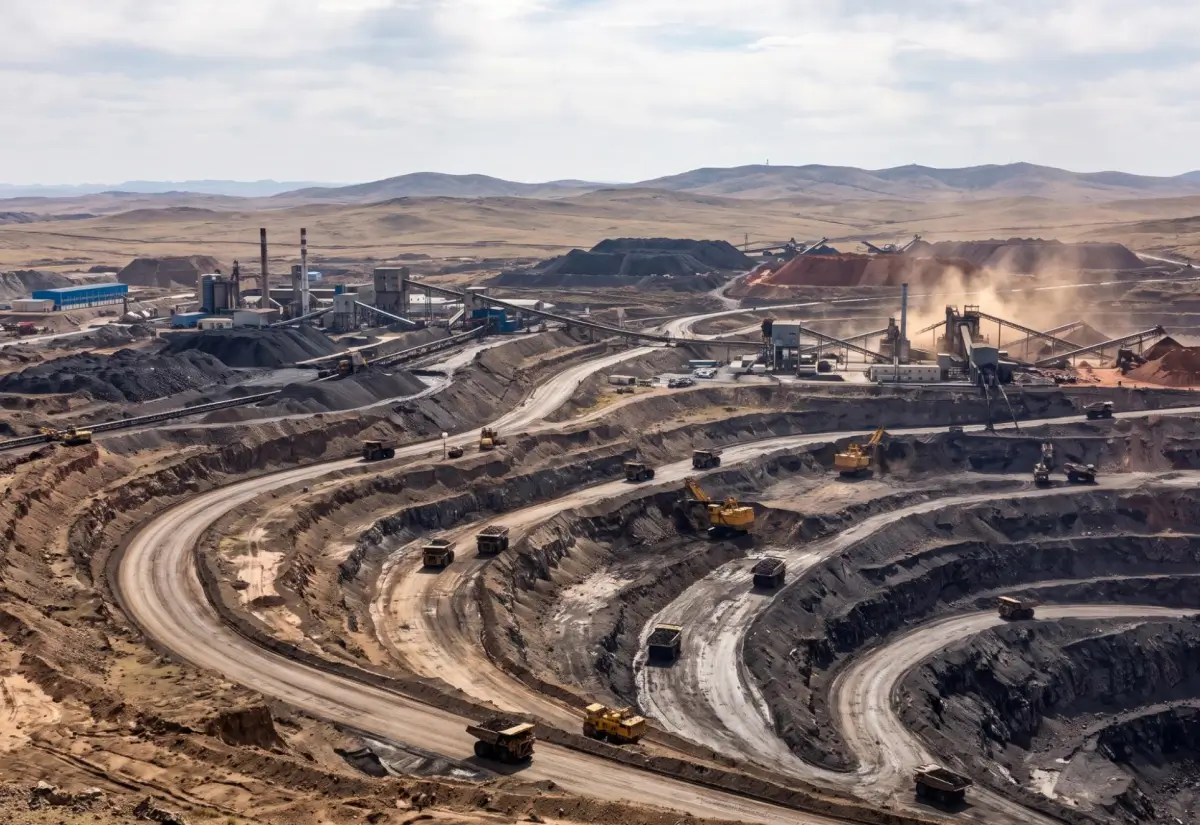
Two of China’s largest rare earth producers more than doubled net profits in the first nine months of 2026 compared with the same period last year, benefiting from higher mineral prices, increased sales, and government production restrictions.
China Northern Rare Earth reported net earnings of 3.65 billion yuan (US$547 million), while China Rare Earth Resources and Technology recorded 408 million yuan (US$61 million).
China Northern Rare Earth’s revenue rose 36.5% during the period, with net profit climbing 136.6%. China Rare Earth Resources and Technology reported revenue growth of 6.5%, with earnings up 112.4%.
The results indicate stronger profit margins, supported by higher rare earth selling prices, increased sales, and improved operating efficiency.
Bayan Obo Mine Expansion Supports Mineral Supply
China Northern Rare Earth obtains much of its mineral feedstock from Bayan Obo in Inner Mongolia, the world’s largest rare earth deposit.
The mining complex contains substantial iron ore resources, along with rare earth-bearing minerals, niobium-bearing minerals, and fluorite. The complex recovers rare earth concentrates from iron ore processing streams and supplies them to downstream separation facilities.
In August, Baogang Group announced plans to increase annual mining capacity at Bayan Obo by 50%, primarily to expand iron ore production.
The proposed expansion could increase the availability of rare earth-bearing material, although commercial rare earth output will remain subject to mineral recovery rates and government processing allocations.
Rare Earth Concentrate Prices Strengthen
Higher mineral valuations have improved conditions for companies supplying China’s rare earth processing industry.
In October, Baotou Steel and China Northern Rare Earth established a new concentrate transaction price of 38,769 yuan (US$5,793) per dry tonne for material containing 50% rare earth oxides, excluding tax.
The price represents an increase of approximately 48% compared with the corresponding period last year.
The arrangement covers the concentrate that Baotou Steel supplies to China Northern Rare Earth under an established related-party pricing mechanism. Prices are adjusted quarterly using rare earth oxide market data, connecting the value of mined concentrates to downstream conditions.
Higher concentrate prices increase revenue potential for mineral suppliers while raising feedstock costs for processors.
China Northern Rare Earth benefited from higher selling prices and increased sales volumes, which lifted gross profit during the first nine months of 2026. The company also reported reductions in processing costs.
Government Quotas Continue to Shape Production
China maintains strict production quotas for rare earth mining, smelting, and separation, limiting how much material approved operators can extract and process.
The government has consolidated rare earth mining and processing quotas under China Northern Rare Earth and China Rare Earth Group, the parent company of China Rare Earth Resources and Technology. This has concentrated control over production among the country’s largest rare earth operators.
The quotas help control mineral supply and prevent excessive production, which has previously contributed to falling rare earth prices. Tighter supply conditions can support the selling prices and profitability of both companies.
In August 2025, Chinese authorities expanded the quota framework to cover domestic processing of imported rare earth raw materials. The regulations also strengthened reporting and tracking requirements for producers.
These controls carry considerable influence over the global market, with China accounting for approximately 69% of worldwide rare earth mine production in 2025.
Higher Oxide Prices Support Producer Earnings
Neodymium-praseodymium oxide prices have climbed approximately 62% since April 2025, according to Shanghai Metals Market data.
The price recovery follows a downturn in 2024 that reduced profitability across China’s rare earth industry.
Demand for neodymium and praseodymium comes primarily from permanent magnet manufacturing, including applications in electric vehicles, wind turbines, and industrial machinery.
China Northern Rare Earth also reported higher sales of rare earth metals, magnetic materials, and polishing products, along with record production of its main separated rare earth products.
Higher selling prices, stronger sales volumes, and improved processing efficiency have supported earnings growth, while government production quotas continue to influence mineral availability and pricing across China’s rare earth industry.




