



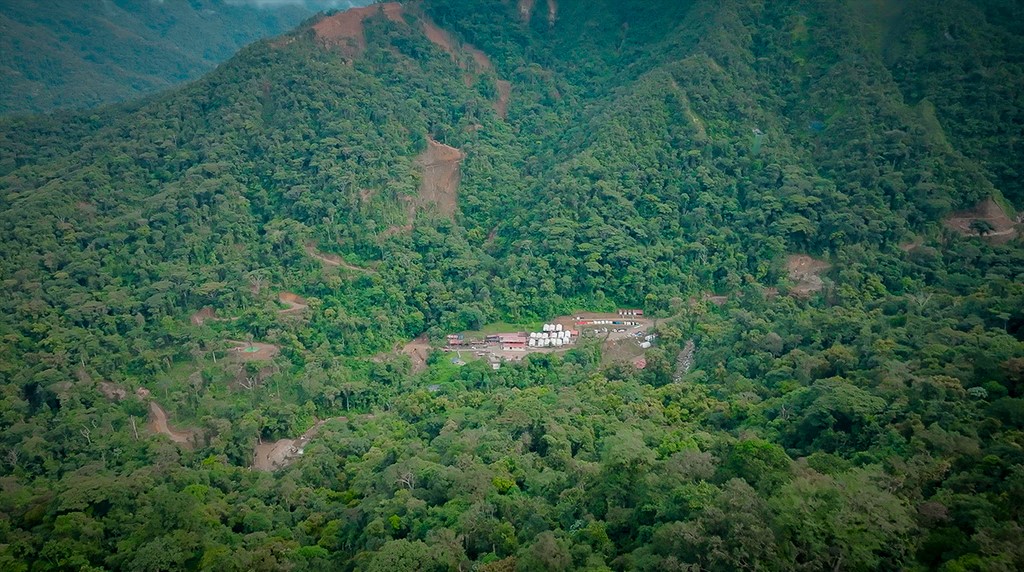
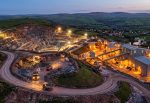
Image source: https://www.solarisresources.com/warintza
As concerns about future copper supply continue to grow, attention across the mining industry is increasingly shifting toward a relatively small group of development projects capable of delivering meaningful production over the next several decades. Among them is the Warintza Project in southeastern Ecuador, where Solaris Resources (TSX:SLS) is advancing what has become one of the world’s largest undeveloped copper assets.
Discovered in 2000 by renowned geologist David Lowell, Warintza has evolved from an exploration prospect into a major copper development project with a resource base measured in billions of tonnes. Today, it represents the cornerstone asset of Solaris Resources and the company’s primary focus as it works toward a future construction decision.
The project is located in Ecuador’s southeastern mining corridor, an area that has attracted growing investment from the global mining industry in recent years. For Solaris Resources, the combination of scale, geology, infrastructure access, and permitting progress has helped place Warintza among the most closely followed copper projects currently advancing through the development pipeline.
A Deposit Built for Scale
Few new copper discoveries have reached the scale of Warintza.
The project’s latest resource estimate outlines 5.8 billion tonnes, providing the foundation for a large-scale operation with the potential to produce copper for decades to come. A maiden reserve estimate of 1.3 billion tonnes completed as part of the project’s Pre-Feasibility Study established a mine plan spanning more than two decades, with additional resources offering opportunities for future expansion.
For mining companies seeking new sources of long-term copper supply, deposits of this magnitude are becoming increasingly difficult to find. Industry-wide exploration success rates have declined over time, while permitting challenges and rising capital requirements have limited the number of major projects moving toward development.
Within that context, Warintza occupies a relatively rare position in the global copper sector.
Moving Beyond Exploration
The project’s evolution accelerated in late 2025 when Solaris Resources released its Pre-Feasibility Study, providing the first detailed look at how a future mining operation could be developed.
The study outlined the capability of producing over 300,000 tonnes of copper equivalent annually during its first five years, supported by a low strip ratio and access to higher-grade material early in the mine schedule. It also demonstrated operating costs that place the project in the industry’s lowest-cost quartile.
While production and cost estimates often attract the most attention, the study also marked an important transition point for Warintza, with engineering, permitting, financing, and execution now becoming the primary focus.
A Key Permitting Milestone
In April, Solaris Resources announced it had received technical approval of the Environmental Impact Assessment for Warintza following a multi-year review by Ecuadorian authorities.
The approval represented one of the most significant milestones the project has achieved to date. Government reviewers examined environmental studies, water management plans, biodiversity programs, engineering designs, and community engagement frameworks before granting approval.
For investors and industry observers, the decision removed substantial uncertainty about the project’s path forward.
Solaris Resources is now advancing through the remaining stages of Ecuador’s permitting process, including the government-led Free, Prior, and Informed Consultation process, with the goal of securing all necessary approvals by the end of 2026.
Engineering Work Continues
At the same time, technical work remains active across the project.
Last month, Solaris restarted drilling at Warintza as part of the ongoing Feasibility Study, focusing on collecting geotechnical and hydrogeological information to support mine planning, infrastructure design, and tailings facility engineering.
The work builds upon data collected during earlier phases of development and is intended to provide the level of detail required for final project planning.
Together, the feasibility program and permitting process represent the two most important workstreams currently underway at Warintza.
Financing and Community Engagement
Project advancement has also been supported by access to capital. Following completion of key development milestones, Solaris Resources gained access to an additional US$50 million under its financing agreement with Royal Gold, providing funding for ongoing engineering, permitting, and exploration activities.
Additionally important has been the company’s engagement with local communities. Warintza operates under an Impact and Benefits Agreement with nearby Shuar communities, establishing a formal structure for participation and benefit-sharing as the project advances.
Solaris Resources has made community engagement a key component of its approach at Warintza and has also provided university scholarships to locals through its Warintza Educa program, with some graduates joining the company after their studies.
Looking Ahead
The global mining industry faces a widely discussed challenge: bringing enough new copper supply online to meet future demand. While many projects are still years away from advanced development, Solaris Resources’ Warintza Project continues to advance through a series of important milestones.
A completed Pre-Feasibility Study, ongoing feasibility work, major permitting progress, secured financing, and one of the largest copper resource bases currently under development have combined to place the project among the industry’s most closely watched assets.
 Follow us on Twitter
 Become our facebook fan




Comments are closed.