



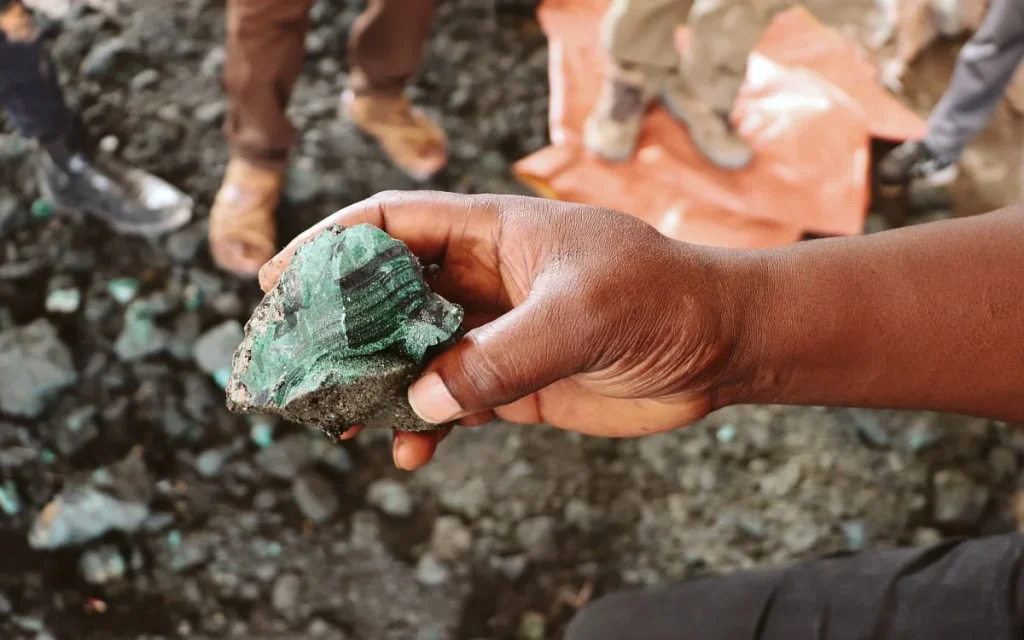
Congo has imposed a new set of conditions on cobalt exporters, adding layers of compliance to an already complex quota system that replaced a months-long export ban earlier this year. A joint circular from the country’s mines and finance ministries, dated November 26 and reviewed by Reuters, outlines fresh requirements that took immediate effect and are reshaping how producers navigate one of the world’s most critical mineral supply chains.
The Democratic Republic of Congo (DRC), which produces more than 70% of global cobalt — a key component in electric vehicle batteries — now requires exporters to pre-pay a 10% mining royalty within 48 hours of submitting origin and sales declarations. In addition, companies must secure a compliance certificate before any shipment proceeds. The new obligations come on top of mandatory quota verification, joint sampling and weighing of lots, sealing of export parcels, and the issuance of a new Quota Verification Certificate (AVQ) by the Authority for the Regulation and Control of Strategic Mineral Substances’ Markets (ARECOMS). According to the circular, the AVQ is now compulsory documentation and must accompany export files along with a checklist of certificates from several government agencies. All mineral exports will also undergo physical inspections and fall under multi-agency oversight at every stage. Exporters must obtain a “liberatory receipt” confirming royalty payment before customs authorities clear any shipment.
The updated rules follow Congo’s decision in October to scrap an export ban that had halted shipments for months. The government replaced the ban with a quota regime intended to boost state revenues and tighten regulatory oversight. However, despite the lifting of the ban, no cobalt shipments have moved since, as producers work to interpret and comply with the evolving framework. Congo allocated 18,125 metric tons of cobalt export quotas for the fourth quarter of 2025 and plans for 96,600 tons annually beginning in 2026. China’s CMOC and Swiss-based Glencore received the largest allocations, while ARECOMS reserved 10% of total quotas as a strategic stockpile. Authorities have warned that failure to meet the new conditions could result in severe penalties, including licence revocation.
Analysts are also raising concerns. Duncan Hay of Panmure Liberum in a recent note said the unpredictability of Congo’s export regulations is likely to affect both trade flows and market stability. “Congo’s shifting export rules offer no certainty — last-minute royalty demands and complex paperwork will keep exports and prices volatile,” he said. Cobalt prices have climbed sharply from a nine-year low of around $10 per pound in February, when the export ban was first introduced. The metal is currently trading around $24 per pound, or $52,910 per metric ton, compared with $16 per pound, or $35,275 per ton, in August. Hay added that further instability in supply could weigh on long-term battery demand. Beyond cobalt, the DRC is also one of the world’s largest suppliers of copper. Recent reforms form part of a broader effort by the government to exert greater control over mineral production and distribution. Last month, Congo launched its first batch of traceable artisanal cobalt and signed a partnership with Swiss commodity trader Mercuria to market cobalt, copper and other critical minerals.
As exporters attempt to meet the new compliance standards, trade flows remain at a standstill, and uncertainty continues to build over how the latest conditions will shape the global supply chain for one of the most strategically important materials in the energy transition.
 Follow us on Twitter
 Become our facebook fan







Comments are closed.