



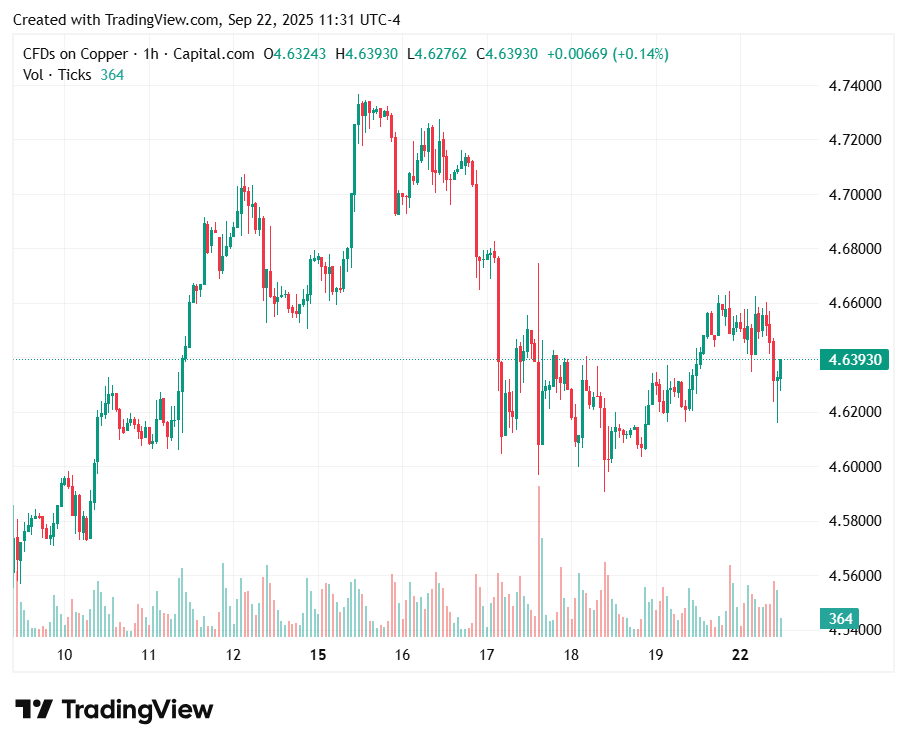
Copper markets held their ground on Monday and early this weee, as traders are watching the latest developments at one of the world’s largest copper mines against ongoing supply constraints and firm demand. Three-month copper futures on the CME traded above $10,000 per ton ($4.6125 per pound), slipping 0.3% on the day. In London, prices hovered just under $10,000 per ton, maintaining most of Friday’s advance. Market participants attributed the stability to uncertainty surrounding the future of Freeport McMoRan’s Grasberg mine in Indonesia, which has been shuttered since a mud flow accident earlier this month.
The incident at Grasberg, the second-largest copper producer globally, occurred two weeks ago when seven workers were trapped underground. Freeport confirmed on Monday that the bodies of two workers have been recovered, while five remain unaccounted for. The company stated that operations will remain suspended while search and recovery efforts continue.
The prolonged shutdown raises questions about the near-term balance of global copper supplies. Analysts noted that an extended suspension at Grasberg could significantly tighten the market, which has already been constrained by disruptions and underinvestment in new projects. Supply limitations have played a central role in supporting copper prices throughout 2025.
Citigroup analysts recently projected that copper is likely to close out this year with cautious stability before potentially making a more pronounced push toward $12,000 per ton in 2026. That outlook assumes that demand, particularly from electrification and infrastructure projects, will remain resilient while supply challenges persist.
The Grasberg mine, a critical component of global copper output, has been at the center of market attention since Freeport announced the temporary suspension. With uncertainty over the timeline for resuming production, traders are closely monitoring developments to gauge the potential impact on inventories and pricing trends.
For now, prices remain elevated compared to historical levels, reflecting the market’s sensitivity to supply shocks. Whether the Grasberg situation evolves into a longer-term disruption may prove decisive for copper’s trajectory heading into next year.
 Follow us on Twitter
 Become our facebook fan









Comments are closed.