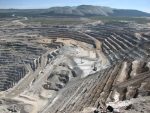
Lundin Mining Corporation (TSE:LUN) has announced that it will pay a dividend of $0.09 per share on the 11th of September. This makes the dividend yield 2.7%, which will augment investor returns quite nicely.
Check out our latest analysis for Lundin Mining
Lundin Mining's Dividend Is Well Covered By Earnings
If the payments aren't sustainable, a high yield for a few years won't matter that much. Prior to this announcement, the company was paying out 121% of what it was earning, however the dividend was quite comfortably covered by free cash flows at a cash payout ratio of only 57%. Generally, we think cash is more important than accounting measures of profit, so with the cash flows easily covering the dividend, we don't think there is much reason to worry.
Looking forward, earnings per share is forecast to rise exponentially over the next year. If recent patterns in the dividend continue, we could see the payout ratio reaching 53% which is fairly sustainable.
historic-dividendLundin Mining's Dividend Has Lacked Consistency
Even in its relatively short history, the company has reduced the dividend at least once. This suggests that the dividend might not be the most reliable. Since 2016, the dividend has gone from $0.0882 total annually to $0.259. This works out to be a compound annual growth rate (CAGR) of approximately 14% a year over that time. It is great to see strong growth in the dividend payments, but cuts are concerning as it may indicate the payout policy is too ambitious.
Lundin Mining Might Find It Hard To Grow Its Dividend
With a relatively unstable dividend, it's even more important to evaluate if earnings per share is growing, which could point to a growing dividend in the future. We are encouraged to see that Lundin Mining has grown earnings per share at 15% per year over the past five years. While EPS is growing at a decent rate, but future growth could be limited by the amount of earnings being paid out to shareholders.
Our Thoughts On Lundin Mining's Dividend
In summary, while it's good to see that the dividend hasn't been cut, we are a bit cautious about Lundin Mining's payments, as there could be some issues with sustaining them into the future. The company is generating plenty of cash, which could maintain the dividend for a while, but the track record hasn't been great. We would probably look elsewhere for an income investment.
Investors generally tend to favour companies with a consistent, stable dividend policy as opposed to those operating an irregular one. However, there are other things to consider for investors when analysing stock performance. As an example, we've identified 2 warning signs for Lundin Mining that you should be aware of before investing. Looking for more high-yielding dividend ideas? Try our collection of strong dividend payers.
Have feedback on this article? Concerned about the content? Get in touch with us directly. Alternatively, email editorial-team (at) simplywallst.com.This article by Simply Wall St is general in nature. We provide commentary based on historical data and analyst forecasts only using an unbiased methodology and our articles are not intended to be financial advice. It does not constitute a recommendation to buy or sell any stock, and does not take account of your objectives, or your financial situation. We aim to bring you long-term focused analysis driven by fundamental data. Note that our analysis may not factor in the latest price-sensitive company announcements or qualitative material. Simply Wall St has no position in any stocks mentioned.
Have feedback on this article? Concerned about the content? Get in touch with us directly. Alternatively, email editorial-team@simplywallst.com
VANCOUVER, BC, Aug. 2, 2024 /CNW/ – (TSX: LUN) (Nasdaq Stockholm: LUMI) Lundin Mining Corporation ("Lundin Mining" or the "Company") is pleased to announce the closing of an increase to its existing term loan ("Term Loan"), maturing on July 27, 2027, in the principal amount of $350 million, in connection with the previously announced closing of an additional nineteen percent (19%) interest in SCM Minera Lumina Copper Chile ("Lumina Copper"). See press release dated June 26, 2024 "Lundin Mining Exercises Option to Increase Ownership in Caserones to 70% and Receives Commitments to Increase the Term Loan by $350 Million".
The Company has used the Term Loan to refinance the drawdown of the existing $1.75 billion revolving credit facility that was used to fund the upfront cash consideration of $350 million for the additional acquisition of nineteen percent (19%) of the issued and outstanding equity of Lumina Copper, which owns the Caserones copper-molybdenum mine in Chile.
The Term Loan bears interest on US dollar denominated drawn funds at an annual rate equal to the Term Secured Overnight Financing Rate plus a credit spread adjustment plus an applicable margin of 1.60% to 2.65%, depending upon the Company's net leverage ratio. The Term Loan is unsecured, save and except for a charge over certain assets in the United States of America, and has similar covenants to the Company's existing $1.75 billion revolving credit facility.
BMO Capital Markets, ING Capital LLC and The Bank of Nova Scotia have acted as Joint Lead Arrangers and Joint Bookrunners. Bank of Montreal is acting as Administrative Agent and Bank of Montreal, Canadian Imperial Bank of Commerce, ING Capital LLC and The Bank of Nova Scotia are acting as Co-Sustainability Structuring Agent. Bank of Montreal, The Bank of Nova Scotia, ING Capital LLC, Canadian Imperial Bank of Commerce, Fédération des Caisses Desjardins du Québec, The Toronto-Dominion Bank, Bank of America N.A., Royal Bank of Canada, Export Development Canada, National Bank of Canada, MUFG Bank Ltd, Canada Branch, and Citibank N.A., Canada Branch, acted as lenders.
About Lundin Mining
Lundin Mining is a diversified Canadian base metals mining company with operations and projects in Argentina, Brazil, Chile, Portugal, Sweden and the United States of America, primarily producing copper, zinc, gold and nickel.
The information in this release is subject to the disclosure requirements of Lundin Mining under the Swedish Financial Instruments Trading Act. The information was submitted for publication, through the agency of the contact persons set out below on August 2, 2024 at 14:30 Vancouver Time.
Cautionary Statement on Forward-Looking Information
Certain of the statements made and information contained herein is "forward-looking information" within the meaning of applicable Canadian securities laws. All statements other than statements of historical facts included in this document constitute forward-looking information, including but not limited to statements regarding the Company's plans, prospects and business strategies. Words such as "believe", "expect", "anticipate", "contemplate", "target", "plan", "goal", "aim", "intend", "continue", "budget", "estimate", "may", "will", "can", "could", "should", "schedule" and similar expressions identify forward-looking statements.
Forward-looking information is necessarily based upon various estimates and assumptions including, without limitation, the expectations and beliefs of management, including that the Company can access financing, appropriate equipment and sufficient labour; assumed and future price of copper, nickel, zinc, gold and other metals; anticipated costs; ability to achieve goals; the prompt and effective integration of acquisitions; that the political environment in which the Company operates will continue to support the development and operation of mining projects; and assumptions related to the factors set forth below. While these factors and assumptions are considered reasonable by Lundin Mining as at the date of this document in light of management's experience and perception of current conditions and expected developments, these statements are inherently subject to significant business, economic and competitive uncertainties and contingencies. Known and unknown factors could cause actual results to differ materially from those projected in the forward-looking statements and undue reliance should not be placed on such statements and information. Such factors include, but are not limited to: global financial conditions, market volatility and inflation, including pricing and availability of key supplies and services; risks inherent in mining including but not limited to risks to the environment, industrial accidents, catastrophic equipment failures, unusual or unexpected geological formations or unstable ground conditions, and natural phenomena such as earthquakes, flooding or unusually severe weather; uninsurable risks; volatility and fluctuations in metal and commodity demand and prices; significant reliance on assets in Chile; reputation risks related to negative publicity with respect to the Company or the mining industry in general; delays or the inability to obtain, retain or comply with permits; risks relating to the development of the Josemaria Project; health and safety laws and regulations; risks associated with climate change; risks relating to indebtedness; economic, political and social instability and mining regime changes in the Company's operating jurisdictions, including but not limited to those related to permitting and approvals, nationalization or expropriation without fair compensation, environmental and tailings management, labour, trade relations, and transportation; inability to attract and retain highly skilled employees; risks inherent in and/or associated with operating in foreign countries and emerging markets, including with respect to foreign exchange and capital controls; project financing risks, liquidity risks and limited financial resources; health and safety risks; compliance with environmental, unavailable or inaccessible infrastructure, infrastructure failures, and risks related to ageing infrastructure; changing taxation regimes; the inability to effectively compete in the industry; risks associated with acquisitions and related integration efforts, including the ability to achieve anticipated benefits, unanticipated difficulties or expenditures relating to integration and diversion of management time on integration; risks related to mine closure activities, reclamation obligations, environmental liabilities and closed and historical sites; reliance on key personnel and reporting and oversight systems, as well as third parties and consultants in foreign jurisdictions; information technology and cybersecurity risks; risks associated with the estimation of Mineral Resources and Mineral Reserves and the geology, grade and continuity of mineral deposits including but not limited to models relating thereto; actual ore mined and/or metal recoveries varying from Mineral Resource and Mineral Reserve estimates, estimates of grade, tonnage, dilution, mine plans and metallurgical and other characteristics; ore processing efficiency; community and stakeholder opposition; regulatory investigations, enforcement, sanctions and/or related or other litigation; financial projections, including estimates of future expenditures and cash costs, and estimates of future production may not be reliable; enforcing legal rights in foreign jurisdictions; risks associated with the use of derivatives; risks relating to joint ventures and operations; environmental and regulatory risks associated with the structural stability of waste rock dumps or tailings storage facilities; exchange rate fluctuations; compliance with foreign laws; potential for the allegation of fraud and corruption involving the Company, its customers, suppliers or employees, or the allegation of improper or discriminatory employment practices, or human rights violations; risks relating to dilution; risks relating to payment of dividends; counterparty and customer concentration risks; activist shareholders and proxy solicitation matters; estimation of asset carrying values; relationships with employees and contractors, and the potential for and effects of labour disputes or other unanticipated difficulties with or shortages of labour or interruptions in production; conflicts of interest; existence of significant shareholders; challenges or defects in title; internal controls; risks relating to minor elements contained in concentrate products; the threat associated with outbreaks of viruses and infectious diseases; and other risks and uncertainties, including but not limited to those described in the "Managing Risks" section of the Company's MD&A and the "Risks and Uncertainties" section of the Company's Annual Information Form for the year ended December 31, 2023, which are available on SEDAR+ at www.sedarplus.com under the Company's profile.
Lundin Mining Announces Closing of $350 million Term Loan in Connection with the Caserones Option Exercise (CNW Group/Lundin Mining Corporation)
SOURCE Lundin Mining Corporation
Cision
View original content to download multimedia: http://www.newswire.ca/en/releases/archive/August2024/02/c3122.html
The analysts might have been a bit too bullish on Lundin Mining Corporation (TSE:LUN), given that the company fell short of expectations when it released its second-quarter results last week. Results showed a clear earnings miss, with US$1.1b revenue coming in 7.2% lower than what the analystsexpected. Statutory earnings per share (EPS) of US$0.16 missed the mark badly, arriving some 28% below what was expected. Earnings are an important time for investors, as they can track a company's performance, look at what the analysts are forecasting for next year, and see if there's been a change in sentiment towards the company. Readers will be glad to know we've aggregated the latest statutory forecasts to see whether the analysts have changed their mind on Lundin Mining after the latest results.
See our latest analysis for Lundin Mining
Taking into account the latest results, the consensus forecast from Lundin Mining's 17 analysts is for revenues of US$4.38b in 2024. This reflects a modest 7.5% improvement in revenue compared to the last 12 months. Statutory earnings per share are predicted to soar 217% to US$0.70. In the lead-up to this report, the analysts had been modelling revenues of US$4.49b and earnings per share (EPS) of US$0.72 in 2024. It's pretty clear that pessimism has reared its head after the latest results, leading to a weaker revenue outlook and a minor downgrade to earnings per share estimates.
The analysts made no major changes to their price target of CA$17.44, suggesting the downgrades are not expected to have a long-term impact on Lundin Mining's valuation. The consensus price target is just an average of individual analyst targets, so – it could be handy to see how wide the range of underlying estimates is. There are some variant perceptions on Lundin Mining, with the most bullish analyst valuing it at CA$20.09 and the most bearish at CA$8.65 per share. This is a fairly broad spread of estimates, suggesting that analysts are forecasting a wide range of possible outcomes for the business.
Looking at the bigger picture now, one of the ways we can make sense of these forecasts is to see how they measure up against both past performance and industry growth estimates. We can infer from the latest estimates that forecasts expect a continuation of Lundin Mining'shistorical trends, as the 16% annualised revenue growth to the end of 2024 is roughly in line with the 15% annual growth over the past five years. Compare this with the broader industry, which analyst estimates (in aggregate) suggest will see revenues grow 16% annually. It's clear that while Lundin Mining's revenue growth is expected to continue on its current trajectory, it's only expected to grow in line with the industry itself.
The Bottom Line
The most important thing to take away is that the analysts downgraded their earnings per share estimates, showing that there has been a clear decline in sentiment following these results. They also downgraded their revenue estimates, although as we saw earlier, forecast growth is only expected to be about the same as the wider industry. The consensus price target held steady at CA$17.44, with the latest estimates not enough to have an impact on their price targets.
Keeping that in mind, we still think that the longer term trajectory of the business is much more important for investors to consider. At Simply Wall St, we have a full range of analyst estimates for Lundin Mining going out to 2026, and you can see them free on our platform here..
We don't want to rain on the parade too much, but we did also find 2 warning signs for Lundin Mining that you need to be mindful of.
Have feedback on this article? Concerned about the content? Get in touch with us directly. Alternatively, email editorial-team (at) simplywallst.com.This article by Simply Wall St is general in nature. We provide commentary based on historical data and analyst forecasts only using an unbiased methodology and our articles are not intended to be financial advice. It does not constitute a recommendation to buy or sell any stock, and does not take account of your objectives, or your financial situation. We aim to bring you long-term focused analysis driven by fundamental data. Note that our analysis may not factor in the latest price-sensitive company announcements or qualitative material. Simply Wall St has no position in any stocks mentioned.
Have feedback on this article? Concerned about the content? Get in touch with us directly. Alternatively, email editorial-team@simplywallst.com
China is weighing on copper prices, but surging demand for AI and electric vehicles and looming supply shortfalls should make FCX and TECK big winners.
With earnings season in full swing, updates from key companies across the globe are providing insights into how certain markets are performing.
Investors this week will see updates from the Oracle of Omaha’s Berkshire Hathaway, after Warren Buffet trimmed his Apple and BofA positions. In Europe, the continent’s most valuable company by market capitalisation will tell markets if Ozempic is still number one.
From the Middle East, the world’s sixth most valuable company will provide investors an insight on how it has been dealing with the fluctuations in oil prices.
Berkshire Hathaway (BRK-B) – Reports second-quarter results on Saturday 3 August
As Berkshire Hathaway prepares to report its second-quarter earnings on Saturday, will look for any insights into the company's massive cash reserves, which stood at approximately $189bn (£148bn) at the end of March. This significant cash position has sparked speculation about potential uses, whether it be deploying capital into new investments or continuing to build the reserve.
In recent months, Berkshire has made some major adjustments to its investment portfolio. After trimming its Apple (AAPL) stake in the first quarter, the conglomerate further reduced its holdings in Bank of America (BAC) by approximately $3bn. These moves have left market watchers curious about Berkshire's investment strategy moving forward.
A focal point for analysts and investors alike will be the performance of Berkshire's insurance segment, the largest contributor to its revenue and pre-tax earnings. The firm's insurance operations have consistently been a pillar of strength, and updates on this segment are highly anticipated.
Unlike most companies, where net income and earnings per share are the main metrics of interest, Berkshire Hathaway's earnings reports require a nuanced understanding.
Read more: Bank of England cuts interest rates from 16-year high
Due to accounting rules affecting its extensive investment portfolio, net income can fluctuate significantly, often misleading less informed investors.
As past earnings reports have highlighted, the key figure to watch is operating income, which Warren Buffett himself has identified as a more accurate measure of the company's underlying business performance. At the end of the first quarter, operating income reached $11.2bn, up from $8.1bn a year earlier.
Wall Street expects operating profits excluding investment gains to drop about 6% year over year to $6,520 per class A share.
Key points of interest in the upcoming report include the company's stock buybacks, current cash levels, insurance profits, and any adjustments to its significant Apple stake. Observers are particularly curious whether Berkshire's cash reserves will surpass the $200bn mark and if share repurchase activity has increased from the $2.6bn recorded in the first quarter.
Saudi Aramco (2222.SR) – Reports second-quarter results on Wednesday 7 August
Saudi Aramco is expected to report a modest decline in second-quarter profit, as a rise in benchmark oil prices was insufficient to counterbalance a reduction in production levels, according to consensus estimates. The oil giant's output could see a gradual increase in the fourth quarter, contingent on OPEC+ adhering to its current plan to begin tapering production cuts, according to Bloomberg Intelligence.
The energy company is anticipated to deliver $124bn in total dividend payments in 2024, translating to a yield of 6.8%, one of the highest among global oil majors, according to Bloomberg analyst Salih Yilmaz.
During Q2 2024, Saudi Arabia's oil production averaged around 9.01 million barrels per day (bpd). Meanwhile, the average crude oil price stood at approximately $85.3 per barrel, up from $75.7 per barrel in Q2 2023.
Analysts at Al Rajhi Capital anticipate that Saudi Aramco's Q2 2024 revenue will remain largely flat year-on-year. The increase in brent prices (BZ=F) is expected to nearly offset the impact of lower production volumes compared to the same period last year. However, the downstream business may continue to face challenges due to weak refining margins amid slower demand.
Glencore (GLEN.L) – Reports first-half results Wednesday 7 August
Mining heavyweight Glencore is set to reveal whether it will proceed with a demerger of its coal assets in its upcoming half-year financial review.
The announcement follows the completion of a major acquisition last month, in which Glencore secured a significant portion of Teck Resource’s (TECK-A.TO) steelmaking coal business. The company has been consulting its shareholders on whether to keep the combined coal operations within the Glencore portfolio or spin them off into a separate entity.
As one of the world's largest producers and exporters of thermal coal, Glencore anticipates producing between 98 million and 106 million metric tons of thermal coal in 2024. The acquisition of Teck's assets is expected to significantly boost its steelmaking coal output, raising it from 7-9 million tons to an estimated 19-21 million tons annually.
Despite speculation about a potential demerger, analysts from Jefferies, UBS, and Bank of America have expressed scepticism. They say that shareholders value the robust cash flow generated by Glencore's coal business, especially when it is used for capital returns and share buybacks.
"Investors appreciate the strong cash flow from coal, particularly if it is channelled to capital returns/buybacks," noted analysts from Bank of America.
Read more: HSBC gives shareholders $4.8bn as profits rise
In addition to the potential restructuring of its coal division, Glencore is still dealing with legal issues. The UK's Serious Fraud Office (SFO) has charged several former executives, including Alex Beard, the company's former head of oil trading, in connection with an investigation into alleged corruption.
Beard, who became a billionaire following Glencore's 2011 IPO, alongside former colleagues Andrew Gibson, Paul Hopkirk, Ramon Labiaga, and Martin Wakefield, faces charges related to alleged bribery in securing oil contracts across Cameroon, Nigeria, and Ivory Coast from 2007 to 2014. The accused are scheduled to appear at Westminster Magistrates' Court on 10 September.
Investors will be closely monitoring Glencore's announcement, not only for the decision on the potential demerger but also for any updates on the ongoing legal proceedings and their implications for the company's future.
Novo Nordisk (NVO) – Reports second-quarter results on Wednesday 7 August
Novo Nordisk A/S, Europe's most valuable company, is anticipated to raise its financial guidance when it reports earnings next week, driven by overwhelming demand for its weight-loss therapy Wegovy.
Analysts forecast a robust performance, with revenue expected to rise approximately 26% year-over-year to 68.47bn Danish kroner (£7.76bn/$9.9bn), and profits projected to increase nearly 10% to 21.27bn kroner (£2.41bn/$3.08bn), according to estimates compiled by Visible Alpha.
The Danish pharmaceutical giant, along with rival Eli Lilly (LLY), has faced challenges in meeting the surging demand for their weight-loss medications. Both companies have acknowledged that supply may lag behind demand despite efforts to scale up production.
The Danish pharmaceutical company previously updated its outlook in May, factoring in potential supply constraints for its popular weight-loss drugs, including Wegovy and Ozempic, throughout 2024. Despite these challenges, Novo Nordisk indicated that its revenue growth could surpass current projections, contingent on successful investments in expanding production capacity.
As demand continues to outstrip supply, Novo Nordisk's efforts to scale up manufacturing are seen as critical to meeting market needs and sustaining the company's growth trajectory.
Despite the dominance of Novo Nordisk and Eli Lilly in the weight-loss drug market, competition is on the horizon. Emerging players like Viking Therapeutics and Swiss pharmaceutical giant Roche have reported positive early trial results for their own weight-loss treatments.
Still, JPMorgan analysts remain confident in the continued dominance of Novo Nordisk and Eli Lilly in this market segment.
You can read Yahoo Finance's full calendar here.
Download the Yahoo Finance app, available for Apple and Android.
(Bloomberg) — BHP Group workers in Chile rejected the company’s wage offer at the close of regular talks, thrusting the process into a final mediation phase in a bid to avoid a strike at the world’s biggest copper mine.
Most Read from Bloomberg
-
Kamala Harris Wipes Out Trump’s Swing-State Lead in Election Dead Heat
-
While ‘Pod Save America’ Tries to Unite Democrats, Its Staff Rebels
-
Ackman’s IPO Dream Implodes From $25 Billion to Zero in Weeks
-
Stocks Sink Before Jobs as Tech Hit on Earnings: Markets Wrap
Members of the main union at the Escondida mine voted against the terms of a new wage contract, according to a statement from the group late Thursday.
In a statement, BHP said that operations continue to function normally and that the company will request the mandatory mediation period allowed under Chile’s collective bargaining rule before a strike can begin. That period includes five business days of mediation, which can then be extended for another five days if both sides agree.
Copper traders, investors and rival producers are paying close attention to the labor talks at Escondida. The mine churns out more than 1 million metric tons a year, about 5% of all the world’s mined copper, easily making it the biggest single supplier.
The negotiations come at a time of global tightness of copper concentrate — the raw material produced at Escondida and used to feed smelters — even though the market for refined metal is well supplied for now. Benchmark copper futures on the London Metal Exchange surged to a record in May as bullish investors placed bets on shortages, but prices have since pulled back by roughly 19%.
Collective bargaining in Chile is often marked by brinkmanship and last-minute agreements, though Escondida has also been the scene of lengthy strikes in the past.
Most Read from Bloomberg Businessweek
-
Retailers Locked Up Their Products—and Broke Shopping in America
-
Inside GunTube, the YouTube Subculture Linked to the Trump Shooter
©2024 Bloomberg L.P.
SANTIAGO (Reuters) -Workers at BHP's Escondida, the world's largest copper mine, rejected an offer for a new collective bargaining agreement, setting the stage for a potential strike, the union said on Thursday.
A total of 2,371 workers, or about 99.75% of union members, voted in favor of the strike. In a statement, the union said the call for a strike was "overwhelmingly backed by partners" that saw the offer made "no legitimate progress towards worker goals."
The union reiterated its demand for 1% of dividends to distribute equally among workers and said the current offer by the company also extended work days and cut benefits.
The statement said the current offer uses "one-time bonuses that try to hide the definitive loss of conditions."
Chilean legislation lets either party call for five days of government mediation, extendable by another five days if both parties agree, to avert a strike.
In a statement, BHP said it would request government mediation in "the coming days" and hopes to reach "an agreement compatible with worker aspirations and Escondida's future sustainability."
BHP owns more than half of Escondida, along with Rio Tinto and JECO Corp.
(Reporting by Fabian Cambero and Daina Beth Solomon; Editing by Alexander Villegas, Brendan O'Boyle and David Gregorio)
Investors interested in Basic Materials stocks should always be looking to find the best-performing companies in the group. Has Agnico Eagle Mines (AEM) been one of those stocks this year? Let's take a closer look at the stock's year-to-date performance to find out.
Agnico Eagle Mines is a member of the Basic Materials sector. This group includes 237 individual stocks and currently holds a Zacks Sector Rank of #12. The Zacks Sector Rank includes 16 different groups and is listed in order from best to worst in terms of the average Zacks Rank of the individual companies within each of these sectors.
The Zacks Rank emphasizes earnings estimates and estimate revisions to find stocks with improving earnings outlooks. This system has a long record of success, and these stocks tend to be on track to beat the market over the next one to three months. Agnico Eagle Mines is currently sporting a Zacks Rank of #2 (Buy).
The Zacks Consensus Estimate for AEM's full-year earnings has moved 8.5% higher within the past quarter. This signals that analyst sentiment is improving and the stock's earnings outlook is more positive.
According to our latest data, AEM has moved about 40.7% on a year-to-date basis. In comparison, Basic Materials companies have returned an average of -2.4%. As we can see, Agnico Eagle Mines is performing better than its sector in the calendar year.
Another stock in the Basic Materials sector, Lundin Mining (LUNMF), has outperformed the sector so far this year. The stock's year-to-date return is 23.2%.
Over the past three months, Lundin Mining's consensus EPS estimate for the current year has increased 8.8%. The stock currently has a Zacks Rank #2 (Buy).
Breaking things down more, Agnico Eagle Mines is a member of the Mining – Gold industry, which includes 37 individual companies and currently sits at #56 in the Zacks Industry Rank. This group has gained an average of 22.9% so far this year, so AEM is performing better in this area.
Lundin Mining, however, belongs to the Mining – Non Ferrous industry. Currently, this 12-stock industry is ranked #65. The industry has moved +16.6% so far this year.
Agnico Eagle Mines and Lundin Mining could continue their solid performance, so investors interested in Basic Materials stocks should continue to pay close attention to these stocks.
Want the latest recommendations from Zacks Investment Research? Today, you can download 7 Best Stocks for the Next 30 Days. Click to get this free report
Agnico Eagle Mines Limited (AEM) : Free Stock Analysis Report
Lundin Mining Corp. (LUNMF) : Free Stock Analysis Report
To read this article on Zacks.com click here.
Lundin Mining (TSE:LUN) Second Quarter 2024 ResultsKey Financial Results
-
Revenue: US$1.08b (up 84% from 2Q 2023).
-
Net income: US$121.6m (up 106% from 2Q 2023).
-
Profit margin: 11% (up from 10.0% in 2Q 2023). The increase in margin was driven by higher revenue.
-
EPS: US$0.16 (up from US$0.077 in 2Q 2023).
All figures shown in the chart above are for the trailing 12 month (TTM) period
Lundin Mining Revenues and Earnings Miss Expectations
Revenue missed analyst estimates by 7.2%. Earnings per share (EPS) also missed analyst estimates by 28%.
Looking ahead, revenue is forecast to grow 4.5% p.a. on average during the next 3 years, compared to a 16% growth forecast for the Metals and Mining industry in Canada.
Performance of the Canadian Metals and Mining industry.
The company's share price is broadly unchanged from a week ago.
Risk Analysis
It's still necessary to consider the ever-present spectre of investment risk. We've identified 2 warning signs with Lundin Mining, and understanding these should be part of your investment process.
Have feedback on this article? Concerned about the content? Get in touch with us directly. Alternatively, email editorial-team (at) simplywallst.com.This article by Simply Wall St is general in nature. We provide commentary based on historical data and analyst forecasts only using an unbiased methodology and our articles are not intended to be financial advice. It does not constitute a recommendation to buy or sell any stock, and does not take account of your objectives, or your financial situation. We aim to bring you long-term focused analysis driven by fundamental data. Note that our analysis may not factor in the latest price-sensitive company announcements or qualitative material. Simply Wall St has no position in any stocks mentioned.
Have feedback on this article? Concerned about the content? Get in touch with us directly. Alternatively, email editorial-team@simplywallst.com
Written by Amy Legate-Wolfe at The Motley Fool Canada
Filo (TSX:FIL) shares powered higher this week as the company announced it would be acquired in a joint venture. BHP and Lundin Mining announced it would be buying the company for $4.5 billion.
In return, shares surged by up to 10% after the news – all ahead of earnings from all three companies. So, what’s so good about Filo stock? And is it still a buy for investors ahead of acquisition approval?
Why Filo
First, let’s get into why Filo stock has been so interesting to BHP and Lundin in the first place. Both companies are currently aiming to expand on a global scale, driven by the increasing demand for copper. Filo owns several attractive assets that would give these companies a significant increase in size and potential.
In fact, for Lundin, the Josemaria project combined with Filo’s Filo del Sol project would consolidate key assets in South America. The acquisition will also benefit from recent legislation passed in Argentina, supporting mining projects that are entering into development.
And, of course, overall this enhances both companies’ market position. It will diversify the asset base and operations for both companies, while reducing project-specific risks. This will create a larger market profile, while also making the companies more resilient.
The details
So let’s get into whether an investment in Filo still offers value. As mentioned both stocks are buying in a 50/50 acquisition for $4.5 billion. Filo shareholders will be bought out at $33 per share, which was a 32.2% premium over the 30-day moving average before July 11, 2024.
Again, the deal still needs the stamp of approval. But it looks likely. Especially with a continued move around the globe to consolidate as well as expand copper projects that are essential for the clean energy transition.
The deal is expected to close in early 2025. So investors have about that long to see if shares rise further, as the company’s share price is still below the $33 per share amount.
Bottom line
Shares of Filo stock may be up, but as long as they remain below that $33 per share price, you can still gain a huge win. While we’re still waiting on approval, it looks likely. And that could mean investors can gain access to major returns in the near future. In fact, analysts agree, not just for an investment in Filo stock, but in BHP and Lundin stock as well.
So, given the current trading price of $32 and the acquisition offer of $33 per share, there appears to be immediate upside potential for Filo shareholders. The strategic benefits of the joint venture with BHP and Lundin, coupled with the increasing demand for copper, present a compelling case for investment. However, investors should consider the potential risks and uncertainties associated with the deal completion and inherent volatility in the mining sector.
Yet if you are comfortable with the associated risks and have a positive outlook on the copper market, buying Filo stock at $32 could be a good opportunity to capitalize on the expected acquisition premium and long-term growth potential of its projects. So certainly consider adding it to your watchlist today.
The post Why Shares of Filo Stock Are Powering Higher appeared first on The Motley Fool Canada.
Should you invest $1,000 in Filo Mining right now?
Before you buy stock in Filo Mining, consider this:
The Motley Fool Stock Advisor Canada analyst team just identified what they believe are the 10 best stocks for investors to buy now… and Filo Mining wasn’t one of them. The 10 stocks that made the cut could potentially produce monster returns in the coming years.
Consider MercadoLibre, which we first recommended on January 8, 2014 … if you invested $1,000 in the “eBay of Latin America” at the time of our recommendation, you’d have $16,864.27!*
Stock Advisor Canada provides investors with an easy-to-follow blueprint for success, including guidance on building a portfolio, regular updates from analysts, and two new stock picks each month – one from Canada and one from the U.S. The Stock Advisor Canada service has outperformed the return of S&P/TSX Composite Index by 27 percentage points since 2013*.
See the 10 stocks * Returns as of 7/31/24
More reading
Fool contributor Amy Legate-Wolfe has no position in any of the stocks mentioned. The Motley Fool has no position in any of the stocks mentioned. The Motley Fool has a disclosure policy.
2024
Written by Amy Legate-Wolfe at The Motley Fool Canada
Investing in Canadian companies right now can be a bit tricky. Yet when it comes to identifying strong companies, investors want to look more towards the future, rather than the past.
While the past can tell us a lot, such as how the company manages to bring in profit and revenue, it can also keep us from focusing on growth opportunities. This is especially true during a time like now, when the TSX continues to stick around the $22,000 mark.
With that in mind, today we’re going to look at three top stocks on the TSX that offer major opportunities for investors. Especially in the long run.
Lundin mining
Lundin Mining (TSX:LUN) is a key player in the copper production sector. And that’s great news, given that copper is set to explode in use not just over the next few years, but immediately. Since we need copper for everything from plumbing to electric vehicles, companies like Lundin have proven essential.
And notably, price weakness as of late with the price of copper fluctuating has made Lundin stock a great opportunity, especially after the company’s recent earnings reports. In the first quarter of 2024, Lundin stock reported a significant increase in copper production from its Chapada and Caserones mines. Chapada saw a 10,138-tonne increase in copper production and 14,000 ounces of gold, driven by higher recoveries and lower production costs. Caserones produced 34,216 tonnes of copper and 864 tonnes of molybdenum, benefitting from favourable foreign exchange rates due to the Chilean peso weakening against the US dollar.
Plus, investors can look forward to more growth, and dividends! Lundin Mining is actively engaged in expansion and exploration activities. The company is advancing its Josemaria Project with a targeted capital expenditure of $225 million and sustaining capital expenditures of $840 million. All while offering up a 2.5% dividend yield, with shares down 22% from 52-week highs. This makes it a prime opportunity for investors.
Nutrien
Another long-term buy is certainly Nutrien (TSX:NTR). The company focuses on fertilizer nutrients such as potash, and this has proven to provide the dividend stock with attention over the last few years. Potash prices soared when Russia invaded Ukraine, as Russia is a major producer of the fertilizer, but sanctions meant we needed fertilizer from elsewhere.
However, the price of potash shrunk, and so too did Nutrien stock. Yet that hasn’t turned the company into a bad buy. We need companies like Nutrien stock for the future, with arable land only decreasing. And the company is already seeing a turnaround.
During its first quarter, Nutrien stock reported earnings per share (EPS) of $0.61, exceeding analysts’ expectations of $0.46. The company achieved revenue of $7.27 billion, closely aligning with the expected $7.29 billion. And again, it offers up a solid dividend yield of 4.2%. So as the company continues to take over the market share of this sector, continue to keep it on your radar.
VXC ETF
Now it doesn’t all have to be about stocks. If you want global exposure, now is the time to do it. The markets around the world continue to wait with bated breath on when the right time will be to get back into the markets. And right now, if you want a deal, is the time.
That’s why Vanguard FTSE Global All Cap ex Canada Index ETF (TSX:VXC) is a prime choice. VXC provides broad exposure to a wide range of large-, mid-, and small-cap stocks across developed and emerging markets outside of Canada. VXC has demonstrated strong performance over the past year, with a total return of 20.7%. Since its inception, the exchange-traded fund (ETF) has an average annual return of 9.1%, including dividends.
Yes, dividends. While growth has been strong, investors can also grab a dividend yield of 1.6%. Plus, it offers an ultra-low management expense ratio of just 0.22%. So with strong dividends, global exposure, all for a low cost on high returns, VXC is a safe investment for every investor.
The post 3 of the Best Stocks to Buy Right Now in Canada appeared first on The Motley Fool Canada.
Should you invest $1,000 in Lundin Mining Corporation right now?
Before you buy stock in Lundin Mining Corporation, consider this:
The Motley Fool Stock Advisor Canada analyst team just identified what they believe are the 10 best stocks for investors to buy now… and Lundin Mining Corporation wasn’t one of them. The 10 stocks that made the cut could potentially produce monster returns in the coming years.
Consider MercadoLibre, which we first recommended on January 8, 2014 … if you invested $1,000 in the “eBay of Latin America” at the time of our recommendation, you’d have $16,864.27!*
Stock Advisor Canada provides investors with an easy-to-follow blueprint for success, including guidance on building a portfolio, regular updates from analysts, and two new stock picks each month – one from Canada and one from the U.S. The Stock Advisor Canada service has outperformed the return of S&P/TSX Composite Index by 27 percentage points since 2013*.
See the 10 stocks * Returns as of 7/31/24
More reading
Fool contributor Amy Legate-Wolfe has positions in Vanguard FTSE Global All Cap Ex Canada Index ETF. The Motley Fool recommends Nutrien. The Motley Fool has a disclosure policy.
2024
Written by Amy Legate-Wolfe at The Motley Fool Canada
If there are two things every Canadian investor wants right now, it’s value and dividends. We want companies that offer up great share prices but that have been climbing … and that offer dividends — oh, and that have a positive outlook.
Luckily, there are a few that tick all these boxes. Today, we’re going to get into why investors will want to consider Lundin Mining (TSX:LUN), Propel Holdings (TSX:PRL), and TC Energy (TSX:TRP).
Propel Holdings
First, we have Propel Holdings, a stock that has demonstrated strong value over the years. The financial technology company has beaten out earnings estimates quarter after quarter, with its lending platform demonstrating that it’s only starting to grow.
Take its recent earnings. In 2023, the company reported revenues of $316.49 million, a 39.51% increase from the previous year. Net income also surged by 83.61%, reaching $27.78 million. What’s more, the company’s price-to-earnings (P/E) ratio sits at just 21.9, which is far lower than the industry average.
Furthermore, Propel Holdings stock also offers a dividend yield of 1.93%. This comes to $0.52 per share annually. Growth in its many brands will continue to capture market share and sustain this dividend growth. As well as returns, which are up a whopping 232% in the last year! So, if you were to put $5,000 towards this dividend stock, here is what you could get if we see even half that growth.
|
COMPANY |
RECENT PRICE |
NUMBER OF SHARES |
DIVIDEND |
TOTAL PAYOUT |
FREQUENCY |
PORTFOLIO TOTAL |
|
PRL – now |
$27.59 |
181 |
$0.52 |
$94.12 |
quarterly |
$5,000 |
|
PRL – 115% |
$59.32 |
181 |
$0.52 |
$94.12 |
quarterly |
$10,736.92 |
Lundin Mining
Shares of Lundin stock were up this week after the company announced a 50/50 joint acquisition of a copper miner. The $4.5 billion acquisition would bring in a major increase in copper production, and consolidate copper production in Argentina.
It’s great timing, as the company continues to maintain record copper production. Lundin Mining has made strategic acquisitions to bolster its resource base. The recent acquisition of a 70% stake in the Caserones copper-molybdenum mine in Chile for $350 million enhances its production capacity and positions the company favourably in the copper market.
Meanwhile, Lundin stock continues to offer a strong dividend yield currently at 2.53%. This comes to $0.36 per share on an annual basis. Furthermore, it has returned 21% in the last year to investors, while trading at just 1.63 times book value. So, again, here is what you could receive from a $5,000 investment.
|
COMPANY |
RECENT PRICE |
NUMBER OF SHARES |
DIVIDEND |
TOTAL PAYOUT |
FREQUENCY |
PORTFOLIO TOTAL |
|
LUN – now |
$13.88 |
360 |
$0.36 |
$129.60 |
quarterly |
$5,000 |
|
PRL – 21% |
$16.79 |
360 |
$0.36 |
$129.60 |
quarterly |
$6,046.13 |
TC Energy
Finally, we have TC Energy stock. It, too, made headlines this week as the company announced the largest sale of indigenous equity ownership in Canadian history. According to the company, the sale implied an enterprise value of about $1.65 billion.
And this isn’t the first. The company has been actively involved in strategic investments and partnerships. For instance, TC Energy has recently entered Canada’s largest Indigenous equity ownership agreement, selling a stake in its Nova Gas Transmission System for $1 billion to Indigenous communities.
Meanwhile, TRP stock continues to offer a strong dividend. It currently puts up a 6.62% dividend yield coming to $3.84 per share on an annual basis. That’s while trading at just 22.13 times earnings, with shares up 22.45% in the last year. So, here’s what that $5,000 would get you.
|
COMPANY |
RECENT PRICE |
NUMBER OF SHARES |
DIVIDEND |
TOTAL PAYOUT |
FREQUENCY |
PORTFOLIO TOTAL |
|
LUN – now |
$58 |
86 |
$3.84 |
$330.24 |
quarterly |
$5,000 |
|
PRL – 22% |
$70.76 |
86 |
$3.84 |
$330.24 |
quarterly |
$6,085.36 |
Bottom line
If you’re looking for dividends, returns, and more, all three could provide investors with strong long-term income. You could add thousands to your portfolio in the next year. And that’s without even including dividend income. But when it comes to long-term holds, these are likely to be some of the most valuable assets you own.
The post Got $5,000? Buy and Hold These 3 Value Dividend Stocks for Years appeared first on The Motley Fool Canada.
Should you invest $1,000 in Lundin Mining Corporation right now?
Before you buy stock in Lundin Mining Corporation, consider this:
The Motley Fool Stock Advisor Canada analyst team just identified what they believe are the 10 best stocks for investors to buy now… and Lundin Mining Corporation wasn’t one of them. The 10 stocks that made the cut could potentially produce monster returns in the coming years.
Consider MercadoLibre, which we first recommended on January 8, 2014 … if you invested $1,000 in the “eBay of Latin America” at the time of our recommendation, you’d have $16,864.27!*
Stock Advisor Canada provides investors with an easy-to-follow blueprint for success, including guidance on building a portfolio, regular updates from analysts, and two new stock picks each month – one from Canada and one from the U.S. The Stock Advisor Canada service has outperformed the return of S&P/TSX Composite Index by 27 percentage points since 2013*.
See the 10 stocks * Returns as of 7/31/24
More reading
Fool contributor Amy Legate-Wolfe has no position in any of the stocks mentioned. The Motley Fool has positions in and recommends Propel. The Motley Fool has a disclosure policy.
2024
(Bloomberg) — BHP Group Ltd. — fresh from being rebuffed by Anglo American Plc — swooped to buy Filo Corp., teaming up with Lundin Mining Corp. in a $3 billion deal to gain South American copper assets.
Most Read from Bloomberg
-
Luxury Heir Alleges His $13 Billion Hermès Fortune Has Vanished
-
Rich Hong Kong Families Sell Mansions at Discounts to Repay Debt
-
Tesla Analyst Nearly Crashes While Using ‘Full Self-Driving’
-
Harris’ Running-Mate Search Zeroes In on Three Top Contenders
Growth in copper has been a focus for much of Chief Executive Officer Mike Henry’s tenure. The world’s No. 1 miner has spent the past few years running the rule over its main rivals, making its biggest acquisition in a decade and — in recent months — taking a $49 billion punt at Anglo.
The strategy reflects a recognition that the company is too dependent on commodities such as iron ore and coal and doesn’t have enough copper, an essential metal for the energy transition. It also mirrors a wider reality across the global industry, as the top producers rush to expand in copper at a time when large new mines are hard to find and increasingly costly to build.
The deal announced Tuesday will give BHP a 50% stake in Filo — which owns a big copper project that straddles the Argentina-Chile border — as well as half of Lundin’s neighboring Josemaria operation, with the intention to combine both ventures to cut costs.
The hefty price tag for undeveloped mines that won’t be in production for years and will require billions of dollars to develop shows how seriously the largest miners view copper expansion and how few projects of this size there are to buy.
Combining two neighboring sites to make a bigger and more efficient mine is also in vogue across the industry, with Glencore Plc’s CEO championing the need to consolidate assets in places such as Canada and Chile.
The industrial metal is increasingly coveted for its use in wind and solar energy equipment and wiring for electricity grids and data centers.
BHP’s cash payment for the proposed transactions is expected to be about $2.1 billion. The total price for Filo is around C$4.1 billion ($3 billion), or about C$33 per share. That compares with Canada-listed Filo’s closing share price of C$27.98 on July 12, before a Bloomberg report that it was a takeover target.
Lundin Mining worked with Rothschild & Co and Morgan Stanley on the deal, while Filo was advised by BMO Capital Markets. BHP worked with TD Securities on the transaction.
BHP’s shares fell 1.3% in Sydney.
Copper prices surged to a record in May, but have dropped by almost a fifth since then, largely due to concerns over a deteriorating Chinese demand outlook. Consumption is expected to increase in the longer term, with BHP’s Henry previously saying it would double over the next two decades.
“This transaction aligns with BHP’s strategy to acquire attractive early-stage copper projects and enter into strategic partnerships with parties where complementary skills and experience can deliver long-term economic and social value,” he said in a statement.
While Anglo’s copper portfolio is already in production, BHP will have to start from scratch with Filo del Sol and Josemaria, in a region where there’s little infrastructure.
Josemaria is the more advanced of the two projects, with potential first production later this decade, according to CRU Group analyst Craig Lang. Given the challenges associated with securing producing copper assets, there are likely to be more similar acquisitions in the future, he said.
–With assistance from Mark Burton.
Most Read from Bloomberg Businessweek
©2024 Bloomberg L.P.
BHP Group Limited
TORONTO, July 29, 2024 (GLOBE NEWSWIRE) — BHP and Lundin Mining Corporation (Lundin Mining) have agreed to jointly acquire 100% of Filo Corp., a Toronto Stock Exchange (TSX) listed company, through a Canadian plan of arrangement (Filo Acquisition). Filo Corp. owns 100% of the Filo del Sol (FDS) copper project.
BHP and Lundin Mining have also agreed to form a 50/50 joint venture to hold the FDS and Josemaria projects (Joint Venture) located in the Vicuña district of Argentina and Chile (together with the Filo Acquisition, the Proposed Transaction). Lundin Mining owns 100% of the Josemaria project. The Joint Venture will create a long-term partnership between BHP and Lundin Mining to jointly develop an emerging copper district with world-class potential.
BHP’s total cash payment for the Proposed Transaction is expected to be approximately US$2.1 billion.
Mike Henry, Chief Executive Officer of BHP said:
“The proposed transaction builds on a multi-year relationship between BHP and the Lundin Group of companies through which we have developed a strong understanding of the resource potential of the Vicuña district and the possible pathways for development of the Filo del Sol and Josemaria projects.
This transaction aligns with BHP’s strategy to acquire attractive early-stage copper projects and enter into strategic partnerships with parties where complementary skills and experience can deliver long-term economic and social value.
The joint venture with Lundin Mining will advance the development of the Vicuña district, which offers the potential to become a major contributor to the economy of Argentina for decades to come. At the same time, by partnering with Lundin Mining, BHP is continuing to invest in the growth of a robust mining sector in Canada.”
Summary of the Proposed Transaction
Filo Corp. Acquisition
BHP and Lundin Mining have agreed to jointly acquire Filo Corp. for total consideration of approximately C$4.1 billion, or C$33.00 per Filo Corp. share. This represents a premium of 32.2% to Filo Corp.’s 30-day volume weighted average price on the TSX for the period ending 11 July 2024, being the day before press speculation of a transaction, and a premium of 12.2% to Filo Corp.’s last closing price on the TSX on 29 July 2024.
Filo Corp. shareholders may choose to receive cash, Lundin Mining shares or a combination of cash and Lundin Mining shares. BHP’s share of the consideration for the Filo Acquisition will be approximately C$1,908 million (US$1,377 million) in cash. Lundin Mining’s share of the consideration for the Filo Acquisition will be approximately C$859 million in cash and C$1,289 million in Lundin Mining shares.
The Filo Acquisition will be implemented by a court-approved plan of arrangement under the Canada Business Corporations Act and will require approval by Filo Corp. shareholders in accordance with applicable Canadian corporate and securities laws.
The Board of Directors of Filo Corp. unanimously recommends (excluding certain directors who are required to abstain from voting) that the shareholders of Filo vote in favour of the Filo Acquisition.
Each of the directors and senior officers and certain other shareholders of Filo Corp., representing in aggregate approximately 35% of the issued and outstanding shares of Filo Corp., have entered into voting support agreements and have agreed to vote in favour of the Filo Acquisition unless the Arrangement Agreement is terminated.
In connection with the Filo Acquisition, BHP and Lundin Mining have also agreed to subscribe for 3,484,848 common shares of Filo Corp. at a price of C$33.00 per share for aggregate gross proceeds of C$115 million (the Filo Share Placement) to provide interim financing to Filo Corp.
On closing of the Filo Acquisition, Lundin Mining and BHP will each own 50% of Filo Corp. and the FDS project.
Joint Venture
BHP and Lundin Mining have agreed to form the Joint Venture immediately following closing of the Filo Acquisition. Each of BHP and Lundin Mining would hold a 50% interest in the Joint Venture. Under the Joint Venture, the projects will be progressed in accordance with international industry standards to deliver economic and social value.
BHP would acquire 50% of the Josemaria project from Lundin Mining for cash consideration of approximately US$690 million, subject to certain purchase price adjustments (Josemaria Transaction).
BHP and Lundin Mining would each contribute their respective 50% interests in Filo Corp. and the Josemaria project into the Joint Venture.
Strategic rationale
Consolidating the FDS and Josemaria projects:
-
Facilitates development optionality at a district scale: The proximity of the FDS and Josemaria projects allows for infrastructure to be shared between the projects, with greater economies of scale and increased optionality for staged expansions, as well as the incorporation of future exploration as the district matures.
-
Accelerates development: Leverages the advanced stage of engineering and permitting at the Josemaria project to progress the combined FDS and Josemaria projects on a phased development timeline that recognises improving investment conditions in Argentina and the copper demands of the global energy transition.
The benefits of the Proposed Transaction to BHP include:
-
Aligned with BHP’s copper growth strategy: The transactions align with BHP’s strategy to acquire early-stage copper projects as one of the levers to increase its exposure to future facing commodities.
-
Access to an emerging copper district with significant potential: The large-scale, high-grade sulphide deposit at the FDS project is considered to represent one of the most significant copper discoveries globally in recent decades.
-
Entry to a highly prospective jurisdiction with an experienced partner: Establishment of BHP’s presence in Argentina would be supported by the Lundin Group which has over 30 years of experience operating in the country.
The benefits of the Proposed Transaction to Filo Corp. shareholders include:
-
Immediately crystallises value at a compelling premium: The Filo Acquisition provides Filo Corp. shareholders the opportunity to realise immediate value from the discovery of FDS at a compelling premium.
-
Continued exposure to the district: The Proposed Transaction provides a path to develop FDS to its full potential, backed by two experienced copper miners. Filo Corp. shareholders would have the ability to retain exposure to the district through shares in Lundin Mining.
Details on Filo Corp. and Lundin Mining
Filo Corp. owns 100% of FDS, which is an advanced-stage copper exploration project located along the border of the San Juan Province in Argentina and the Atacama Region of Chile. BHP acquired an initial 5% equity interest in Filo Corp. in March 2022, following the discovery of the high-grade Aurora Zone at FDS. BHP and Filo Corp. subsequently formed a joint advisory committee to share expertise, exploration concepts and discuss future project development. Since then, Filo Corp. has continued to expand FDS, extending the strike length of mineralisation to over 5 kilometres, with multiple reported drill intercepts over 1,000 metres grading more than 1.0% copper equivalent.
Lundin Mining is a diversified Canadian base metals mining company with operations and projects in Argentina, Brazil, Chile, Portugal, Sweden and the United States of America, primarily producing copper, zinc, gold and nickel. Lundin Mining owns 100% of the Josemaria project, which is an advanced-stage copper project, located approximately 10 kilometres from FDS in San Juan Province, Argentina. A feasibility study for the Josemaria project was completed in November 2020 and an Environmental Social Impact Assessment was approved by the Mining Authority of San Juan, Argentina in April 2022. The Josemaria project features favourable topography for the placement of infrastructure for the district, with expansion potential.
Further details of the Proposed Transaction
The Filo Acquisition and the Josemaria Transaction are inter-conditional, whereby completion of each transaction is dependent on completion of each of the other transactions. Lundin Mining shareholder approval is not required for the Proposed Transaction.
Filo Acquisition
BHP Investments Canada Inc., a wholly owned subsidiary of BHP Group Limited, and Lundin Mining have entered into a definitive agreement with Filo Corp. (the Arrangement Agreement) to jointly acquire 100% of Filo Corp.’s issued and outstanding common shares not already owned by BHP and Lundin Mining. The Arrangement Agreement also includes customary deal protections, including non-solicitation provisions that apply to Filo Corp. (subject to customary "fiduciary out" provisions), a right for BHP and Lundin Mining to match an unsolicited superior competing proposal to acquire Filo Corp., a termination payment of C$135 million payable by Filo Corp. (half payable to Lundin Mining and half payable to BHP) and a reverse termination payment of C$135 million payable (half by Lundin Mining and half by BHP) to Filo Corp.
In addition to Filo Corp. shareholder approval, completion of the Filo Acquisition is subject to customary Canadian court approvals, the receipt of applicable regulatory, securities authorities and stock exchange approvals, and other customary closing conditions.
Filo Corp. will prepare an information circular for its shareholders with further information regarding the Filo Acquisition.
Filo Share Placement
The Filo Share Placement will be funded equally by BHP (C$57.5 million) and Lundin Mining (C$57.5 million). On closing of the Filo Share Placement, BHP and Lundin Mining will own 7.1% and 1.7%, respectively, of Filo Corp.’s issued and outstanding shares.
The Filo Share Placement is not conditional on completion of the Filo Acquisition and is expected to complete on or before 12 August 2024.
Filo Corp. intends to use the proceeds from the Filo Share Placement to fund ongoing exploration and general working capital expenses.
Joint Venture
BHP and Lundin Mining have executed a term sheet which will form the basis for negotiation of the definitive Joint Venture agreement. BHP and Lundin Mining expect to enter into the Joint Venture by completion of the Proposed Transaction.
Indicative timetable
Closing is expected to occur in the first quarter of 2025 subject to satisfaction of the conditions to closing.
Advisors and Counsel
TD Securities Inc. is acting as financial advisor to BHP with Stikeman Elliot LLP acting as legal counsel.
Authorised for release by Stefanie Wilkinson, Group General Counsel and Group Company Secretary
|
Contacts |
|
|
Media media.relations@bhp.com |
Investor Relations investor.relations@bhp.com |
|
Australia and Asia Gabrielle Notley+61 411 071 715 |
Australia and AsiaJohn-Paul Santamaria +61 499 006 018 |
|
Europe, Middle East and AfricaNeil Burrows+44 7786 661 683North AmericaMegan Hjulfors+1 403-605-2314 |
Europe, Middle East and AfricaJames Bell+44 7961 636 432 |
|
Americas Renata Fernandez+56 9 8229 5357 |
Americas Monica Nettleton+1 (416) 518-6293 |
|
BHP Group LimitedABN 49 004 028 077LEI WZE1WSENV6JSZFK0JC28Registered in AustraliaLevel 18, 171 Collins StreetMelbourneVictoria 3000 AustraliaTel: +61 1300 55 4757 Fax: +61 3 9609 3015BHP Group is headquartered in Australiabhp.com |
|
Southern Copper Corporation SCCO reported second-quarter 2024 earnings of $1.22 per share, which beat the Zacks Consensus Estimate of $1.13. The bottom line marked a 73% improvement from the -year-ago quarter, mainly driven by higher sales volumes and prices of copper, molybdenum, silver and zinc. This was somewhat offset by elevated operating costs related to sales volumes, G&A and exploration expenses. Net sales were $3.12 billion, up 35.5% from the year-ago quarter. The figure also surpassed the consensus estimate of $2.96 billion.
Southern Copper reported a 78.1% year-over-year surge in zinc sales volumes. Molybdenum volumes were up 21.4%, silver volumes improved 31.6% and copper sales volumes were up 5.5%. The rise in sales volumes as well as higher prices for copper (15%), molybdenum (3.9%), zinc (12.2%) and silver (19%) drove the increase in sales.
The cost of sales rose 9% year over year to $1.25 billion. Total operating costs were up 8% year over year to $1.5 billion.
Southern Copper Corporation Price, Consensus and EPS Surprise
Southern Copper Corporation Price, Consensus and EPS Surprise
Southern Copper Corporation price-consensus-eps-surprise-chart | Southern Copper Corporation Quote
Operating profit was $1.6 billion, reflecting a 78.5% year-over-year improvement. The operating margin was 51.5% compared with 39.1% in the year-ago quarter. Adjusted EBITDA jumped 61% year over year to $1.8 billion. Adjusted EBITDA margin was 57.6%, a 914-basis point expansion from the year-ago quarter’s margin of 48.5%.
Production Details
Copper: SCCO mined 242,474 tons of copper, up 7% year over year. This was driven by an increase in production at the company’s Peruvian operations due to higher ore grades. Copper sales were up 5.5% year over year to 231,105 tons.Molybdenum: The company mined 7,654 tons of molybdenum, reflecting a year-over-year improvement of 21%, driven by higher output at all operations, barring La Caridad, as well as higher ore grades and recoveries. Molybdenum sales were 7,640 tons, a 21.4% increase from 6,295 tons in the second quarter of 2023.Zinc: The company’s zinc production surged 73% year over year to 29,419 tons attributed to the contribution from the new Buenavista zinc concentrator. Zinc sales surged 78% year over year to 39,012 tons.
Silver: Southern Copper’s silver production was up 8% year over year to 5.2 million ounces. Sales increased 31.6% year over year to 5.3 million ounces.
Cash Flow & Balance Sheet Updates
Southern Copper generated net cash from operating activities of around $1 billion, up from $0.8 billion in the year-ago comparable quarter. Cash and cash equivalents were $1.9 billion at the end of the quarter compared with $1.15 billion as of the end of 2023. Long-term debt was $5.76 billion as of Jun 30, 2024, lower than the debt balance of $6.25 billion as of Dec 31, 2023.
SCCO made capital investments worth $332 million, 31.4% higher than the spending in the year-ago comparable quarter.
Guidance for 2024
SCCO expects to produce 963,000 tons of copper, which projects a 6% increase from 2023. Molybdenum production is expected to be around 27,400 tons, 2% higher year over year. The company expects to produce 20.6 million ounces of silver, 12% higher than the prior year. Zinc output is expected at around 121,800 tons, which represents an 86% increase from the 2023 production level.
Price Performance
Shares of Southern Copper have gained 19% in the past year compared with the industry’s 7.5% growth.
Zacks Investment Research
Image Source: Zacks Investment Research
Zacks Rank
Southern Copper currently carries a Zacks Rank #3 (Hold). You can see the complete list of today’s Zacks #1 Rank (Strong Buy) stocks here.
Peer Performances
Teck Resources TECK reported second-quarter 2024 adjusted earnings per share (EPS) of 58 cents, which surpassed the Zacks Consensus Estimate of 47 cents by a margin of 23%. The bottom line marked a 37% plunge from earnings of 91 cents per share reported in the year-ago quarter.
Gains from increased copper sales from QB, elevated copper prices and higher steelmaking coal sales volumes were offset by lower steelmaking coal prices. Finance and depreciation and amortization expenses increased year over year, as Teck Resources has started taking the depreciation of QB assets into account and is no longer capitalizing interest on the project. The decline in earnings was also attributed to the reduced ownership in Elk Valley Resources, TECK’s steelmaking coal business.
Freeport-McMoRan Inc. FCX reported adjusted EPS of 46 cents in the second quarter, which topped the Zacks Consensus Estimate of 39 cents. The bottom line was 31% higher than the year-ago quarter’s EPS of 35 cents. Including one-time items, earnings were 42 cents per share, up around 83% from 23 cents in the year-ago quarter.
Revenues rose roughly 15% year over year to $6,624 million. The figure surpassed the Zacks Consensus Estimate of $5,985.9 million. The company witnessed higher copper and gold prices in the quarter, which helped offset the impact of lower sales volumes.
Vale S.A. VALE reported second-quarter adjusted EPS of 43 cents, which beat the Zacks Consensus Estimate of 38 cents. The bottom line marked a 115% surge from earnings of 20 cents per share reported in the year-ago quarter. The improvement in earnings was attributed to higher iron ore shipments, increased copper sales, as well improved copper and iron ore prices. However, this was somewhat offset by a decline in nickel sales volumes and prices.
Vale’s net operating revenues were up 3% year over year to around $9.92 billion. The top line missed the Zacks Consensus Estimate of $9.97 billion.
Want the latest recommendations from Zacks Investment Research? Today, you can download 7 Best Stocks for the Next 30 Days. Click to get this free report
Freeport-McMoRan Inc. (FCX) : Free Stock Analysis Report
VALE S.A. (VALE) : Free Stock Analysis Report
Southern Copper Corporation (SCCO) : Free Stock Analysis Report
Teck Resources Ltd (TECK) : Free Stock Analysis Report
To read this article on Zacks.com click here.
Futures linked to Canada's main stock index struggled for direction on Tuesday, ahead of a raft of earnings and U.S. Federal Reserve's interest-rate decision later in the week that will provide direction for the global monetary policy.
The TSX Composite Index dived 35.24 points to close Monday at 22,779.57.
The Canadian dollar eked up 0.05 cents to 72.22 cents U.S.
September futures eked up 0.1% Tuesday.
Some major Canadian companies, such as BCE, Canadian Natural Resources, Canadian Pacific Kansas City and Enbridge, are due to report quarterly earnings this week.
Global miner BHP Group and Canada-listed Lundin Mining will jointly take over developer Filo Corp for $4.5 billion, as they move to progress the South American projects.
ON BAYSTREET
The TSX Venture Exchange slumped 4.96 points Monday to 574.37.
ON WALLSTREET
Stock futures rose marginally on Tuesday as investors awaited key corporate earnings and the beginning of the Federal Reserve’s policy meeting.
Futures for the Dow Jones Industrials gathered 23 points, or 0.1%, to 40,794.
Futures for the S&P 500 index hiked 10 points, or 0.2%, at 5,513.
Futures for the NASDAQ took on 43.75 points, or 0.2%, to 19,252.50.
Read:
-
AI Tidal Wave: How Semiconductor Stocks Are Outpacing Tech Giants
-
Generative AI to Benefit from Trillion-Dollar Tech Company Investments
-
The Race to Secure Data in a Quantum World: Tech Developers Lead the Charge
-
Copper Price Set to Rebound Amid Supply Shortages and EV Demand Surge, Miners Respond
CrowdStrike shares fell more than 4% amid media reports that Delta Air Lines hired attorney David Boies to seek damages from CrowdStrike and Microsoft after an outage this month led to thousands of flight cancellations.
Merck shares fell more than 1% in the premarket as weaker-than-expected guidance for the full year overshadowed a strong second-quarter report. Pfizer, meanwhile, climbed 1.8% on stronger-than-anticipated earnings and revenue. The company also raised its full-year top- and bottom-line guidance.
Investors will also watch closely for numbers from Microsoft, Advanced Micro Devices and Starbucks after the closing bell.
So far, more than 40% of the S&P 500 companies have reported their results with 79% posting earnings that exceeded Wall Street expectations, according to LSEG. That compares to a five-year average earnings beat rate of 77%
The Fed’s two-day policy meeting is set to begin Tuesday where central bank Chief Jerome Powell could signal the timing and number of rate cuts expected in the next few months.
On Tuesday, traders will be watching for job openings data for the month of June. Economists polled by Dow Jones are calling for 8.1 million job openings, the same as in May. Consumer confidence for July is also slated for release.
In Japan, the Nikkei 225 gained 0.2% Tuesday, while in Hong Kong, the Hang Seng index faltered 1.4%.
Oil prices ditched 50 cents to $75.32 U.S. a barrel.
Gold prices gained $10.50 to $2,388.30
VANCOUVER, BC, July 30, 2024 /CNW/ – (TSX: LUN) (Nasdaq Stockholm: LUMI) Lundin Mining Corporation ("Lundin Mining" or the "Company") today announced that its Board of Directors has declared a regular quarterly dividend of Canadian Dollars ("CAD") $0.09 per share, payable on September 11, 2024, to shareholders of record at the close of business on August 30, 2024. The first day of trading without dividend ("ex-dividend date") will be August 30, 2024, for shares traded on TSX. For shares traded on Nasdaq Stockholm, the ex-dividend date will be August 29, 2024. This dividend qualifies as an 'eligible dividend' for Canadian income tax purposes. The declaration, timing, amount and payment of future dividends remain at the discretion of the Board of Directors.
Dividends on shares traded on the Toronto Stock Exchange ("TSX") will be paid in CAD on September 11, 2024. Dividends on shares traded on Nasdaq Stockholm will be paid in Swedish kronor in accordance with Euroclear principles on September 16, 2024. To execute the payment of the dividend, a temporary administrative cross-border transfer closure will be applied by Euroclear from August 28, 2024 up to and including August 30, 2024 during which period shares of the Company cannot be transferred between TSX and Nasdaq Stockholm.
About Lundin Mining
Lundin Mining is a diversified Canadian base metals mining company with projects and operations in Argentina, Brazil, Chile, Portugal, Sweden and the United States of America, primarily producing copper, zinc, nickel and gold.
The information in this release is subject to the disclosure requirements of Lundin Mining under the EU Market Abuse Regulation. The information was submitted for publication, through the agency of the contact persons set out below on July 30, 2024 at 14:25 Pacific Standard Time.
Cautionary Statement on Forward-Looking Information
Certain of the statements made and information contained herein is "forward-looking information" within the meaning of applicable Canadian securities laws. All statements other than statements of historical facts included in this document constitute forward-looking information, including but not limited to statements regarding the Company's plans, prospects and business strategies; the timing of payment and amount of any dividend; expectations regarding settlement; eligibility of any dividend for tax purposes; and declaration, timing, amount, and payment of future dividends. Words such as "believe", "expect", "anticipate", "contemplate", "target", "plan", "goal", "aim", "intend", "continue", "budget", "estimate", "may", "will", "can", "could", "should", "schedule" and similar expressions identify forward-looking statements.
Forward-looking information is necessarily based upon various estimates and assumptions including, without limitation, the expectations and beliefs of management, including assumed and future price of copper, nickel, zinc, gold and other metals; anticipated costs; ability to achieve goals; and assumptions related to the factors set forth below. While these factors and assumptions are considered reasonable by Lundin Mining as at the date of this document in light of management's experience and perception of current conditions and expected developments, these statements are inherently subject to significant business, economic and competitive uncertainties and contingencies. Known and unknown factors could cause actual results to differ materially from those projected in the forward-looking statements and undue reliance should not be placed on such statements and information. Such factors include, but are not limited to: global financial conditions, market volatility and inflation, including pricing and availability of key supplies and services; risks inherent in mining including but not limited to risks to the environment, industrial accidents, catastrophic equipment failures, unusual or unexpected geological formations or unstable ground conditions, and natural phenomena such as earthquakes, flooding or unusually severe weather; uninsurable risks; volatility and fluctuations in metal and commodity demand and prices; risks inherent in and/or associated with operating in foreign countries and emerging markets, including with respect to foreign exchange and capital controls; project financing risks, liquidity risks and limited financial resources; risks associated with the estimation of Mineral Resources and Mineral Reserves and the geology, grade and continuity of mineral deposits including but not limited to models relating thereto; actual ore mined and/or metal recoveries varying from Mineral Resource and Mineral Reserve estimates, estimates of grade, tonnage, dilution, mine plans and metallurgical and other characteristics; ore processing efficiency; financial projections, including estimates of future expenditures and cash costs, and estimates of future production may not be reliable; exchange rate fluctuations; compliance with foreign laws; and other risks and uncertainties, including but not limited to those described in the "Managing Risks" section of the Company's MD&A and the "Risks and Uncertainties" section of the Company's Annual Information Form for the year ended December 31, 2023 and the period ending June 30, 2024, which are available on SEDAR+ at www.sedarplus.ca under the Company's profile.
All of the forward-looking statements made in this document are qualified by these cautionary statements. Although the Company has attempted to identify important factors that could cause actual results to differ materially from those contained in forward-looking information, there may be other factors that cause results not to be as anticipated, estimated, forecast or intended and readers are cautioned that the foregoing list is not exhaustive of all factors and assumptions which may have been used. Should one or more of these risks and uncertainties materialize, or should underlying assumptions prove incorrect, actual results may vary materially from those described in forward-looking information. Accordingly, there can be no assurance that forward-looking information will prove to be accurate and forward-looking information is not a guarantee of future performance. Readers are advised not to place undue reliance on forward-looking information. The forward-looking information contained herein speaks only as of the date of this document. The Company disclaims any intention or obligation to update or revise forward‐looking information or to explain any material difference between such and subsequent actual events, except as required by applicable law.
Lundin Mining Announces Declaration of Regular Dividend (CNW Group/Lundin Mining Corporation)
SOURCE Lundin Mining Corporation
Cision
View original content to download multimedia: http://www.newswire.ca/en/releases/archive/July2024/30/c6978.html
VANCOUVER, BC, July 30, 2024 /CNW/ – (TSX: LUN) (Nasdaq Stockholm: LUMI) Lundin Mining Corporation ("Lundin Mining" or the "Company") today reported its second quarter 2024 financial results. Unless otherwise stated, results are presented in United States dollars on a 100% basis.
Jack Lundin, President and CEO commented, "During the quarter we generated record quarterly revenue of $1.1 billion which contributed to a strong financial performance for the Company. Adjusted EBITDA1 for the quarter was $461 million and free cash flow from operations1 was $338 million driven by stronger commodity prices and working capital inflows.
"At Candelaria, while mill throughput in the first half of the year was strong, we expect to achieve a significant step-up in production in the second half of the year with planned higher grades and higher mining rates from ore in Phase 11. This production step-up has started to materialize during the month of July from the open pit.
"Our team remains dedicated to enhancing operational performance, prioritizing safety and cost optimization. Cash costs1 for the quarter were at the lower end of our guidance range. We are well-positioned for a strong second half of the year and are on track to meet our consolidated production guidance for copper, gold, and zinc. Additionally, we have reduced our guidance for sustaining capital expenditures by $45 million."
Second Quarter Operational and Financial Highlights
-
Copper Production: Consolidated production of 79,708 tonnes of copper in the second quarter.
-
Other Production: During the quarter, a total of 47,460 tonnes of zinc, 1,721 tonnes of nickel and approximately 32,000 ounces of gold were produced.
-
Revenue: $1,083.6 million in the second quarter with a realized copper price1 of $4.79 /lb.
-
Net Earnings and Adjusted Earnings1: Net earnings attributable to shareholders of the Company were $121.6 million or $0.16 per share in the second quarter with adjusted earnings of $122.1 million or $0.16 per share.
-
Adjusted EBITDA1: $460.9 million generated during the quarter.
-
Cash Generation: Cash provided by operating activities was $491.8 million and free cash flow from operations1 was $337.5 million, which was increased by a working capital release of $121.9 million.
-
Growth: On July 2, 2024, the Company exercised its option to increase ownership in Caserones to 70%, which adds an additional 25,000 tonnes of attributable copper production to Lundin Mining's production profile2.
-
Sustainability Report: On July 10, 2024 the Company published its annual 2023 Sustainability Report that highlights the Company's material environmental, health & safety, governance and social performance during the year.
-
Outlook: Second quarter 2024 production and cash costs were aligned with expectations, the Company's full year guidance remains unchanged with the exception of nickel:
-
Caserones: Annual copper production guidance range for the Caserones mine for 2024 has been increased to 124,000 – 135,000 tonnes (previously 120,000 – 130,000 tonnes). Cash cost guidance for Caserones remains unchanged.
-
Eagle Mine: Annual nickel production guidance range for the Eagle mine for 2024 has been reduced to 7,000 – 9,000 tonnes (previously 10,000 – 13,000 tonnes) and the copper production guidance range has been reduced to 5,000 – 7,000 tonnes (previously 9,000 – 12,000 tonnes). Cash cost guidance per pound of nickel for the Eagle mine has increased to $3.20/lb – $3.40/lb (previously $2.80/lb – $3.00/lb)
-
Sustaining Capital Expenditures: Will be reduced by $45 million and are expected to total $795 million (previously $840 million) due to reductions in planned spending at Caserones, Neves-Corvo and Zinkgruvan.
-
|
_________________________________ |
|
1 These are non-GAAP measures. Please refer to the Company's discussion of non-GAAP and other performance measures in its Management's Discussion and Analysis ("MD&A") for the three and six months ended June 30, 2024 and the Reconciliation of Non-GAAP measures section at the end of this news release. |
|
2 Based on Caserones 2024 production guidance as outlined in the news release 'Lundin Mining Provides 2024 Guidance & Announces 2023 Production Results' dated January 14, 2024. |
Summary Financial Results
|
Three months ended June 30, |
Six months ended June 30, |
|||||
|
US$ Millions (except per share amounts) |
2024 |
2023 |
2024 |
2023 |
||
|
Revenue |
1,083.6 |
588.5 |
2,020.6 |
1,339.9 |
||
|
Gross profit |
279.5 |
52.8 |
464.9 |
266.2 |
||
|
Attributable net earningsa |
121.6 |
59.1 |
135.5 |
205.7 |
||
|
Net earnings |
156.7 |
61.3 |
215.3 |
226.6 |
||
|
Adjusted earningsa,b |
122.1 |
45.6 |
167.3 |
171.3 |
||
|
Adjusted EBITDAb |
460.9 |
191.8 |
823.7 |
528.7 |
||
|
Basic earnings per share ("EPS")a |
0.16 |
0.08 |
0.18 |
0.27 |
||
|
Diluted EPSa |
0.16 |
0.08 |
0.17 |
0.27 |
||
|
Adjusted EPSa,b |
0.16 |
0.06 |
0.22 |
0.22 |
||
|
Cash provided by operating activities |
491.8 |
194.8 |
759.3 |
406.7 |
||
|
Adjusted operating cash flowb |
369.9 |
110.6 |
683.5 |
345.7 |
||
|
Adjusted operating cash flow per shareb |
0.48 |
0.14 |
0.88 |
0.45 |
||
|
Free cash flow from operationsb |
337.5 |
20.7 |
405.2 |
91.8 |
||
|
Free cash flowb |
236.8 |
(84.6) |
235.1 |
(118.8) |
||
|
Cash and cash equivalents |
452.8 |
190.2 |
452.8 |
190.2 |
||
|
Net debt excluding lease liabilitiesb |
893.8 |
201.3 |
893.8 |
201.3 |
||
|
Net debtb |
1,152.9 |
229.8 |
1,152.9 |
229.8 |
||
|
a Attributable to shareholders of Lundin Mining Corporation. |
|||||||
|
b These are non-GAAP measures. Please refer to the Company's discussion of non-GAAP and other performance measures in its Management's Discussion and Analysis for the three and six months ended June 30, 2024 and the Reconciliation of Non-GAAP Measures section at the end of this news release. |
|||||||
-
For the three months ended June 30, 2024, the Company generated revenue of $1,083.6 million, driven by 78,662 tonnes of copper sold at a realized price of $4.79 /lb. Revenue benefited from higher realized copper and zinc prices, including $94.5 million positive provisional pricing adjustments on prior period concentrate sales.
-
Gross profit of $279.5 million and Adjusted EBITDA of $460.9 million in the three months ended June 30, 2024 reflect higher realized copper and zinc prices despite the impacts of planned lower grades and maintenance activities on copper concentrate sales from Candelaria and Caserones, respectively.
-
Net earnings attributable to shareholders of the Company were $121.6 million or $0.16 per share in the three months ended June 30, 2024, and included higher tax expense due to higher taxable earnings and the utilization of prior period tax losses.
-
Adjusted earnings attributable to shareholders of the Company for the three months ended June 30, 2024 were $122.1 million or $0.16 per share after removing a loss on foreign exchange due to the translation of deferred tax balances and expenses relating to the partial suspension of underground operations at Eagle, among other things.
-
Cash and cash equivalents as at June 30, 2024 were $452.8 million. Cash provided by operating activities amounted to $491.8 million and cash used to fund investing activities amounted to $252.2 million. The Company had a net debt excluding lease liabilities1 balance of $893.8 million as at June 30, 2024 (December 31, 2023 – $946.2 million).
-
Free cash flow1 for the three months ended June 30, 2024 of $236.8 million reflected higher copper and zinc realized prices, positive working capital changes and reduced capital expenditure at Candelaria.
-
During the three months ended June 30, 2024, the Company entered into zero cost collar contracts in the total amount of $222 million (equivalent to BRL 1.1 billion) with collar ranges of BRL 5.00 to BRL 6.11.
-
As at July 30, 2024, the Company had a cash balance of approximately $288.0 million and a net debt excluding lease liabilities balance of approximately $1,338.0 million.
|
______________________________________ |
|
1 These are non-GAAP measures. Please refer to the Company's discussion of non-GAAP and other performance measures in its Management's Discussion and Analysis ("MD&A") for the three and six months ended June 30, 2024 and the Reconciliation of Non-GAAP measures section at the end of this news release. |
Operational Performance
Total Production
|
(Contained metal)a |
2024 |
2023 |
||||||
|
YTD |
Q2 |
Q1 |
Total |
Q4 |
Q3 |
Q2 |
Q1 |
|
|
Copper (t)b |
167,721 |
79,708 |
88,013 |
314,798 |
103,337 |
89,942 |
60,057 |
61,462 |
|
Zinc (t) |
93,148 |
47,460 |
45,688 |
185,161 |
50,719 |
49,774 |
36,115 |
48,553 |
|
Nickel (t) |
4,976 |
1,721 |
3,255 |
16,429 |
3,729 |
4,290 |
4,686 |
3,724 |
|
Gold (koz)b |
65 |
32 |
33 |
149 |
44 |
35 |
34 |
36 |
|
Molybdenum (t)b |
1,578 |
714 |
864 |
2,024 |
928 |
1,096 |
— |
— |
|
a. Tonnes (t) and thousands of ounces (koz) |
||||||||
|
b. Candelaria and Caserones production is on a 100% basis. |
||||||||
Candelaria (80% owned): Candelaria produced 31,170 tonnes of copper and approximately 17,000 ounces of gold in concentrate on a 100% basis in the three months ended June 30, 2024. Production in the quarter was impacted by lower grades and recoveries, partially offset by higher throughput. During the three months ended June 30, 2024, mining rates were impacted by the interface of the open pit and historic underground mining stopes, requiring more stockpiled ore to be processed which reduced grades and recoveries. Access to higher grade ore is anticipated in the second half of 2024 as per the mine sequence. Three of four stopes have now been filled and blasted, with work on the fourth expected to begin in Q3, and not expected to impact production in the second half of 2024. Production costs were reduced by lower sales volumes and favourable foreign exchange as a result of the CLP weakening against the US dollar; however, cash cost of $2.18/lb was negatively impacted by lower sales volumes.
Caserones (51% owned): Caserones produced 29,775 tonnes of total copper and 714 tonnes of molybdenum on a 100% basis in the three months ended June 30, 2024. Copper and molybdenum concentrate production was impacted in the quarter by extended mill maintenance and weather events which reduced mining activities and limited tailings deposition. Recoveries were also temporarily reduced by changes in the mining sequence and flotation circuit disruptions. Production costs in the quarter were lower than planned primarily due to lower copper concentrate and molybdenum sales volume, as well as favourable foreign exchange. Cash cost also benefitted from favourable foreign exchange.
Chapada (100% owned): Chapada produced 9,106 tonnes of copper and approximately 15,000 ounces of gold in concentrate in the three months ended June 30, 2024 and was impacted by lower grades and recoveries combined with lower mill availability due to unplanned conveyor maintenance and vibration screen failure. Lower grades were a result of a shift to processing increased amounts of stockpiled ore and an optimized mine plan that significantly reduces waste movement. Production costs were reduced by lower sales volumes and favourable foreign exchange. Cash cost of $2.05/lb benefited from higher gold by-product credits combined with favourable foreign exchange and mining cost decreases due to operational improvements.
Eagle (100% owned): Eagle produced 1,721 tonnes of nickel and 1,563 tonnes of copper in the three months ended June 30, 2024. A fall of ground in the lower ramp restricted access to Eagle East, limiting production. Mining rates are expected to be reduced until late 2024 while ramp rehabilitation is completed, deferring the extraction of ore from Eagle East into future years. Production costs were reduced by lower sales volumes and royalty expense, partially offset by higher maintenance costs. Nickel cash cost1 of $3.23/lb was impacted by lower sales volumes, partially offset by higher by-product credits.
Neves-Corvo (100% owned): Neves-Corvo produced 7,347 tonnes of copper and 25,696 tonnes of zinc in the three months ended June 30, 2024, both of which were impacted by lower grades due to changes in mine sequencing as a result of Lombador south requiring additional development work. Production costs increased due to an increase in sales volumes and cash cost of $1.70/lb benefited from increased sales volumes and higher by-product credits.
Zinkgruvan (100% owned): Zinkgruvan produced 21,764 tonnes of zinc and 8,966 tonnes of lead in the three months ended June 30, 2024 reflecting higher throughput and grades. Copper production of 747 tonnes was impacted by reduced availability of copper ore. Production costs increased due to higher sales volumes and zinc cash cost of $0.39/lb reflected lower copper by-product credits.
Outlook
Production and cash cost guidance for 2024 has been updated from that disclosed in the Company's Management's Discussion and Analysis for the year ended December 31, 2023.
The Company remains on track to meet annual production and cash cost guidance for all metals with the exception of nickel, and has reduced sustaining capital expenditure guidance from $840 million to $795 million with reductions at Caserones, Neves-Corvo, and Zinkgruvan. Expenditure guidance related to the Josemaria Project of $225 million and exploration of $48 million each remain on target for 2024.
Metal production continues to be weighted to the second half of the year at Candelaria, Chapada and Neves-Corvo due to mine sequencing and resultant forecasted grade profiles. Grade is expected to increase significantly at Candelaria in the second half of 2024 once access is opened to higher-grade ore. As a result of production challenges at Neves-Corvo in the first half of 2024, copper production at that operation continues to track to the lower end of its annual production guidance range. In the first half of 2024, cash cost per pound at most operations benefited from increased realized prices on by-product sales.
Guidance at Caserones has been increased to reflect production from the first half of the year and expected throughput and grades for the remainder of the year. At the Eagle mine, a fall of ground in the lower ramp restricted access to Eagle East, limiting production. Mining rates are expected to be reduced until late 2024 while ramp rehabilitation is completed, deferring the extraction of ore from Eagle East into future years. As a result, the annual nickel and copper production guidance ranges for the Eagle mine for 2024 have been reduced.
2024 Production and Cash Cost Guidance
|
Guidancea |
Revised Guidance |
|||||
|
(contained metal) |
Production |
Cash Cost ($/lb)b |
Production |
Cash Cost ($/lb)b |
||
|
Copper (t) |
Candelaria (100%) |
160,000 – 170,000 |
1.60 – 1.80c |
160,000 – 170,000 |
1.60 – 1.80c |
|
|
Caserones (100%) |
120,000 – 130,000 |
2.60 – 2.80 |
124,000 – 135,000 |
2.60 – 2.80 |
||
|
Chapada |
43,000 – 48,000 |
1.95 – 2.15d |
43,000 – 48,000 |
1.95 – 2.15d |
||
|
Eagle |
9,000 – 12,000 |
5,000 – 7,000 |
||||
|
Neves-Corvo |
30,000 – 35,000 |
1.95 – 2.15c |
30,000 – 35,000 |
1.95 – 2.15c |
||
|
Zinkgruvan |
4,000 – 5,000 |
4,000 – 5,000 |
||||
|
Total |
366,000 – 400,000 |
366,000 – 400,000 |
||||
|
Zinc (t) |
Neves-Corvo |
120,000 – 130,000 |
120,000 – 130,000 |
|||
|
Zinkgruvan |
75,000 – 85,000 |
0.45 – 0.50c |
75,000 – 85,000 |
0.45 – 0.50c |
||
|
Total |
195,000 – 215,000 |
195,000 – 215,000 |
||||
|
Nickel (t) |
Eagle |
10,000 – 13,000 |
2.80 – 3.00 |
7,000 – 9,000 |
3.20 – 3.40 |
|
|
Gold (koz) |
Candelaria (100%) |
100 – 110 |
100 – 110 |
|||
|
Chapada |
55 – 60 |
55 – 60 |
||||
|
Total |
155 – 170 |
155 – 170 |
||||
|
Molybdenum (t) |
Caserones (100%) |
2,500 – 3,000 |
2,500 – 3,000 |
|||
|
a. Guidance as outlined in the Company's Management Discussion and Analysis ("MD&A") for the year ended December 31, 2023. b. Cash costs are based on various assumptions and estimates, including but not limited to: production volumes, commodity prices (Cu: $3.75/lb, Zn: $1.10/lb, Pb: $0.90/lb, Au: $1,800/oz, Mo: $20.00/lb, Ag: $23.00/oz), foreign exchange rates (€/USD:1.05, USD/SEK:10.50, USD/CLP:850, USD/BRL:5.00) and production costs. Cash cost is a non-GAAP measure – see the Company's Management Discussion and Analysis for the three and six months ended June 30, 2024 and the Reconciliation of Non-GAAP Measures at the end of this news release. c. 68% of Candelaria's total gold and silver production are subject to a streaming agreement, and silver production at Zinkgruvan and Neves-Corvo are also subject to streaming agreements. Cash costs are calculated based on receipt of approximately $429/oz gold and $4.28/oz to $4.68/oz silver. d. Chapada's cash cost is calculated on a by-product basis and does not include the effects of its copper stream agreements. Effects of the copper stream agreements are reflected in copper revenue and will impact realized price per pound. |
2024 Capital Expenditure Guidanceb
|
($ millions) |
Guidancea |
Revisions |
Revised Guidance |
|
|
Candelaria (100% basis) |
300 |
— |
300 |
|
|
Caserones (100% basis) |
205 |
(30) |
175 |
|
|
Chapada |
110 |
— |
110 |
|
|
Eagle |
25 |
— |
25 |
|
|
Neves-Corvo |
125 |
(10) |
115 |
|
|
Zinkgruvan |
75 |
(5) |
70 |
|
|
Other |
— |
— |
— |
|
|
Total Sustaining |
840 |
(45) |
795 |
|
|
Josemaria |
225 |
— |
225 |
|
|
Total Capital Expenditures |
1,065 |
(45) |
1,020 |
|
a. Guidance as outlined in the Company's Management Discussion and Analysis ("MD&A") for the year ended December 31, 2023. b. Sustaining capital expenditure is a supplementary financial measure and expansionary capital expenditure is a non-GAAP measure – see the Company's Management Discussion and Analysis for the three and six months ended June 30, 2024 and the Reconciliation of Non-GAAP Measures at the end of this news release. |
||||
Exploration
During the quarter ended June 30, 2024, exploration activity focused on in-mine and near-mine targets at the Company's operations. Exploration drilling at Zinkgruvan was focused on resource expansion and drilling at Candelaria was focused on Candelaria Norte and La Espanola. Drilling at Chapada concentrated on delineating the high-grade, near-mine trend at Corpo Sul, adding high grade resources to Sauva and testing geochemical anomalies in the Sauva area Curicaca and Curio.
At Caserones, exploration activity remains lower during the winter season. Exploration drilling continues in the lower portion of the mineral resource in search of higher-grade copper breccia bodies that could improve the average grade of the resource, and potentially expand it. Near-mine drilling at Angelica has been paused for winter since April.
At Josemaria, seasonal exploration drilling ended in early April at the Cumbre Verde Target, located west of the Josemaria ore body. Six holes were drilled targeting the same mineralized system and structures that hosted high grade mineralization on the neighbouring property that may potentially run towards the Cumbre Verde Target. Initial results highlight favorable levels of copper/gold/silver mineralization in veins and porphyry. The data obtained will help further refine and target this mineralization. Work will continue throughout the remainder of 2024 with drilling to recommence after the winter season.
There was no exploration drilling at Neves-Corvo and Eagle in the quarter.
About Lundin Mining
Lundin Mining is a diversified Canadian base metals mining company with projects and operations in Argentina, Brazil, Chile, Portugal, Sweden and the United States of America, primarily producing copper, zinc, nickel and gold.
The information in this release is subject to the disclosure requirements of Lundin Mining under the EU Market Abuse Regulation. The information was submitted for publication, through the agency of the contact persons set out below on July 30, 2024 at 14:30 Vancouver Time.
Technical Information
The scientific and technical information in this press release has been prepared in accordance with the disclosure standards of National Instrument 43-101 ("NI 43-101") and has been reviewed by Arman Barha, P.Eng., Vice President, Technical Services, a "Qualified Person" under NI 43-101. Mr. Barha has verified the data disclosed in this release and no limitations were imposed on his verification process.
Reconciliation of Non-GAAP Measures
The Company uses certain performance measures in its analysis. These performance measures have no standardized meaning within generally accepted accounting principles under International Financial Reporting Standards and, therefore, amounts presented may not be comparable to similar data presented by other mining companies. For additional details please refer to the Company's discussion of non-GAAP and other performance measures in its Management's Discussion and Analysis for the three and six months ended June 30, 2024 which is available on SEDAR+ at www.sedarplus.com.
Cash Cost per Pound and All-in Sustaining Costs per pound can be reconciled to Production Costs on the Company's Condensed Interim Consolidated Statement of Earnings as follows:
|
Three months ended June 30, 2024 |
|||||||
|
Operations |
Candelaria |
Caserones |
Chapada |
Eagle |
Neves-Corvo |
Zinkgruvan |
|
|
($000s, unless otherwise noted) |
(Cu) |
(Cu) |
(Cu) |
(Ni) |
(Cu) |
(Zn) |
Total |
|
Sales volumes (Contained metal): |
|||||||
|
Tonnes |
29,999 |
29,862 |
8,293 |
2,018 |
7,898 |
18,510 |
|
|
Pounds (000s) |
66,137 |
65,834 |
18,283 |
4,449 |
17,412 |
40,808 |
|
|
Production costs |
606,426 |
||||||
|
Less: Royalties and other |
(22,324) |
||||||
|
584,102 |
|||||||
|
Deduct: By-product credits |
(210,112) |
||||||
|
Add: Treatment and refining |
38,577 |
||||||
|
Cash cost |
143,935 |
171,255 |
37,570 |
14,381 |
29,682 |
15,744 |
412,567 |
|
Cash cost per pound ($/lb) |
2.18 |
2.60 |
2.05 |
3.23 |
1.70 |
0.39 |
|
|
Add: Sustaining capital |
60,544 |
35,328 |
25,241 |
3,980 |
27,921 |
13,301 |
|
|
Royalties |
3,551 |
9,275 |
1,631 |
3,906 |
1,207 |
— |
|
|
Reclamation and other closure accretion and depreciation |
1,858 |
1,094 |
2,727 |
1,592 |
1,320 |
951 |
|
|
Leases & other |
3,026 |
18,619 |
775 |
1,533 |
194 |
78 |
|
|
All-in sustaining cost |
212,914 |
235,571 |
67,944 |
25,392 |
60,324 |
30,074 |
|
|
AISC per pound ($/lb) |
3.22 |
3.58 |
3.72 |
5.71 |
3.46 |
0.74 |
|
|
Three months ended June 30, 2023 |
|||||||
|
Operations |
Candelaria |
Caserones |
Chapada |
Eagle |
Neves-Corvo |
Zinkgruvan |
|
|
($000s, unless otherwise noted) |
(Cu) |
(Cu) |
(Cu) |
(Ni) |
(Cu) |
(Zn) |
Total |
|
Sales volumes (Contained metal): |
|||||||
|
Tonnes |
36,347 |
— |
10,164 |
3,859 |
6,170 |
9,374 |
|
|
Pounds (000s) |
80,132 |
— |
22,408 |
8,507 |
13,603 |
20,666 |
|
|
Production costs |
405,198 |
||||||
|
Less: Royalties and other |
(7,969) |
||||||
|
397,229 |
|||||||
|
Deduct: By-product credits |
(122,636) |
||||||
|
Add: Treatment and refining |
32,514 |
||||||
|
Cash cost |
171,520 |
— |
60,351 |
15,990 |
54,271 |
4,975 |
307,107 |
|
Cash cost per pound ($/lb) |
2.14 |
— |
2.69 |
1.88 |
3.99 |
0.24 |
|
|
Add: Sustaining capital |
123,417 |
— |
19,690 |
3,562 |
22,133 |
15,994 |
|
|
Royalties |
— |
— |
2,029 |
4,920 |
83 |
— |
|
|
Reclamation and other closure accretion and depreciation |
2,444 |
— |
1,847 |
3,011 |
1,296 |
739 |
|
|
Leases & other |
3,654 |
— |
1,171 |
897 |
148 |
100 |
|
|
All-in sustaining cost |
301,035 |
— |
85,088 |
28,380 |
77,931 |
21,808 |
|
|
AISC per pound ($/lb) |
3.76 |
— |
3.80 |
3.34 |
5.73 |
1.06 |
|
|
Six months ended June 30, 2024 |
|||||||
|
Operations |
Candelaria |
Caserones |
Chapada |
Eagle |
Neves-Corvo |
Zinkgruvan |
|
|
($000s, unless otherwise noted) |
(Cu) |
(Cu) |
(Cu) |
(Ni) |
(Cu) |
(Zn) |
Total |
|
Sales volumes (Contained metal): |
|||||||
|
Tonnes |
63,535 |
65,073 |
17,035 |
4,181 |
13,784 |
34,335 |
|
|
Pounds (000s) |
140,071 |
143,461 |
37,556 |
9,218 |
30,388 |
75,696 |
|
|
Production costs |
1,173,560 |
||||||
|
Less: Royalties and other |
(42,294) |
||||||
|
1,131,266 |
|||||||
|
Deduct: By-product credits |
(375,420) |
||||||
|
Add: Treatment and refining |
85,528 |
||||||
|
Cash cost |
283,425 |
337,694 |
76,305 |
33,630 |
71,739 |
38,581 |
841,374 |
|
Cash cost per pound ($/lb) |
2.02 |
2.35 |
2.03 |
3.65 |
2.36 |
0.51 |
|
|
Add: Sustaining capital |
160,076 |
78,082 |
54,440 |
8,058 |
50,334 |
27,642 |
|
|
Royalties |
6,519 |
18,089 |
3,248 |
6,584 |
1,942 |
— |
|
|
Reclamation and other closure accretion and depreciation |
4,025 |
2,134 |
5,406 |
3,560 |
2,655 |
2,137 |
|
|
Leases & other |
6,059 |
34,000 |
1,540 |
2,769 |
258 |
156 |
|
|
All-in sustaining cost |
460,104 |
469,999 |
140,939 |
54,601 |
126,928 |
68,516 |
|
|
AISC per pound ($/lb) |
3.28 |
3.28 |
3.75 |
5.92 |
4.18 |
0.91 |
|
|
Six months ended June 30, 2023 |
|||||||
|
Operations |
Candelaria |
Caserones |
Chapada |
Eagle |
Neves-Corvo |
Zinkgruvan |
|
|
($000s, unless otherwise noted) |
(Cu) |
(Cu) |
(Cu) |
(Ni) |
(Cu) |
(Zn) |
Total |
|
Sales volumes (Contained metal): |
|||||||
|
Tonnes |
71,917 |
— |
19,236 |
6,594 |
14,201 |
25,986 |
|
|
Pounds (000s) |
158,550 |
— |
42,408 |
14,537 |
31,308 |
57,289 |
|
|
Production costs |
822,962 |
||||||
|
Less: Royalties and other |
(20,055) |
||||||
|
802,907 |
|||||||
|
Deduct: By-product credits |
(279,601) |
||||||
|
Add: Treatment and refining |
69,129 |
||||||
|
Cash cost |
345,212 |
— |
107,669 |
30,630 |
84,163 |
24,761 |
592,435 |
|
Cash cost per pound ($/lb) |
2.18 |
— |
2.54 |
2.11 |
2.69 |
0.43 |
|
|
Add: Sustaining capital |
214,103 |
— |
35,717 |
10,664 |
47,194 |
30,462 |
|
|
Royalties |
— |
— |
4,252 |
10,606 |
1,813 |
— |
|
|
Reclamation and other closure accretion and depreciation |
4,751 |
— |
3,648 |
5,969 |
2,620 |
1,800 |
|
|
Leases & other |
6,797 |
— |
2,137 |
1,644 |
306 |
202 |
|
|
All-in sustaining cost |
570,863 |
— |
153,423 |
59,513 |
136,096 |
57,225 |
|
|
AISC per pound ($/lb) |
3.60 |
— |
3.62 |
4.09 |
4.35 |
1.00 |
|
Adjusted EBITDA can be reconciled to Net Earnings (Loss) on the Company's Condensed Interim Consolidated Statement of Earnings as follows:
|
Three months ended June 30, |
Six months ended June 30, |
||||
|
($thousands) |
2024 |
2023 |
2024 |
2023 |
|
|
Net earnings |
156,733 |
61,302 |
215,288 |
226,613 |
|
|
Add back: |
|||||
|
Depreciation, depletion and amortization |
197,658 |
130,505 |
382,150 |
250,752 |
|
|
Finance income and costs |
36,307 |
15,897 |
72,001 |
31,596 |
|
|
Income taxes |
56,162 |
(19,601) |
106,728 |
29,092 |
|
|
446,860 |
188,103 |
776,167 |
538,053 |
||
|
Unrealized foreign exchange loss (gain) |
3,173 |
(19,285) |
(12,327) |
(10,641) |
|
|
Unrealized losses (gains) on derivative contracts |
(3,974) |
14,403 |
48,858 |
(6,263) |
|
|
Ojos del Salado sinkhole (recoveries) expenses |
710 |
11,900 |
(321) |
16,482 |
|
|
Revaluation loss (gain) on marketable securities |
(85) |
(3,464) |
(2,515) |
(3,902) |
|
|
Partial suspension of underground operations at Eagle |
9,824 |
— |
9,824 |
— |
|
|
Revaluation gain on Caserones purchase option |
(12,431) |
— |
(11,728) |
— |
|
|
Write-down of capital works in progress |
17,188 |
— |
17,188 |
— |
|
|
Gain on disposal of subsidiary |
— |
— |
— |
(5,718) |
|
|
Other |
(407) |
97 |
(1,432) |
686 |
|
|
Total adjustments – EBITDA |
13,998 |
3,651 |
47,547 |
(9,356) |
|
|
Adjusted EBITDA |
460,858 |
191,754 |
823,714 |
528,697 |
|
Adjusted Earnings and Adjusted EPS can be reconciled to Net Earnings (Loss) Attributable to Lundin Mining Shareholders on the Company's Condensed Interim Consolidated Statement of Earnings as follows:
|
Three months ended June 30, |
Six months ended June 30, |
||||
|
($thousands, except share and per share amounts) |
2024 |
2023 |
2024 |
2023 |
|
|
Net earnings attributable to Lundin Mining shareholders |
121,589 |
59,109 |
135,472 |
205,729 |
|
|
Add back: |
|||||
|
Total adjustments – EBITDA |
13,998 |
3,651 |
47,547 |
(9,356) |
|
|
Tax effect on adjustments |
1,981 |
(54) |
214 |
(3,180) |
|
|
Deferred tax arising from foreign exchange translation |
(13,666) |
(20,175) |
(19,966) |
(28,289) |
|
|
Non-controlling interest on adjustments |
(1,821) |
(1,134) |
4,031 |
69 |
|
|
Other |
— |
4,186 |
— |
6,293 |
|
|
Total adjustments |
492 |
(13,526) |
31,826 |
(34,463) |
|
|
Adjusted earnings |
122,081 |
45,583 |
167,298 |
171,266 |
|
|
Basic weighted average number of shares outstanding |
776,173,888 |
772,255,656 |
774,033,611 |
771,739,532 |
|
|
Net earnings attributable to shareholders |
0.16 |
0.08 |
0.18 |
0.27 |
|
|
Total adjustments |
— |
(0.02) |
0.04 |
(0.05) |
|
|
Adjusted earnings per share |
0.16 |
0.06 |
0.22 |
0.22 |
|
Free Cash Flow from Operations and Free Cash Flow can be reconciled to Cash provided by Operating Activities on the Company's Condensed Interim Consolidated Statement of Cash Flows as follows:
|
Three months ended June 30, |
Six months ended June 30, |
||||
|
($thousands) |
2024 |
2023 |
2024 |
2023 |
|
|
Cash provided by operating activities |
491,770 |
194,844 |
759,301 |
406,719 |
|
|
Sustaining capital expenditures |
(167,803) |
(187,820) |
(381,063) |
(343,384) |
|
|
General exploration and business development |
13,536 |
13,693 |
26,987 |
28,458 |
|
|
Free cash flow from operations |
337,503 |
20,717 |
405,225 |
91,793 |
|
|
General exploration and business development |
(13,536) |
(13,693) |
(26,987) |
(28,458) |
|
|
Expansionary capital expenditures |
(87,120) |
(91,650) |
(143,101) |
(182,169) |
|
|
Free cash flow |
236,847 |
(84,626) |
235,137 |
(118,834) |
|
Adjusted Operating Cash Flow and Adjusted Operating Cash Flow per Share can be reconciled to Cash Provided by Operating Activities on the Company's Condensed Interim Consolidated Statement of Cash Flows as follows:
|
Three months ended June 30, |
Six months ended June 30, |
||||
|
($thousands, except share and per share amounts) |
2024 |
2023 |
2024 |
2023 |
|
|
Cash provided by operating activities |
491,770 |
194,844 |
759,301 |
406,719 |
|
|
Changes in non-cash working capital items |
(121,896) |
(84,207) |
(75,761) |
(61,015) |
|
|
Adjusted operating cash flow |
369,874 |
110,637 |
683,540 |
345,704 |
|
|
Basic weighted average number of shares outstanding |
776,173,888 |
772,255,656 |
774,033,611 |
771,739,532 |
|
|
Adjusted operating cash flow per share |
$ 0.48 |
0.14 |
0.88 |
0.45 |
|
Net debt and net debt excluding lease liabilities can be reconciled to Debt and Lease Liabilities, Current Portion of Debt and Lease Liabilities and Cash and Cash Equivalents on the Company's condensed interim consolidated balance sheet as follows:
|
($thousands) |
June 30, 2024 |
December 31, 2023 |
|
Debt and lease liabilities |
(1,282,492) |
(1,273,162) |
|
Current portion of total debt and lease liabilities |
(315,695) |
(212,646) |
|
Less deferred financing fees (netted in above) |
(7,547) |
(6,374) |
|
(1,605,734) |
(1,492,182) |
|
|
Cash and cash equivalents |
452,809 |
268,793 |
|
Net debt |
(1,152,925) |
(1,223,389) |
|
Lease liabilities |
259,164 |
277,208 |
|
Net debt excluding lease liabilities |
(893,761) |
(946,181) |
Cautionary Statement on Forward-Looking Information
Certain of the statements made and information contained herein are "forward-looking information" within the meaning of applicable Canadian securities laws. All statements other than statements of historical facts included in this document constitute forward-looking information, including but not limited to statements regarding the Company's plans, prospects and business strategies; the Company's guidance on the timing and amount of future production and its expectations regarding the results of operations; expected costs; permitting requirements and timelines; timing and possible outcome of pending litigation; the results of any Preliminary Economic Assessment, Pre-Feasibility Study, Feasibility Study, or Mineral Resource and Mineral Reserve estimations, life of mine estimates, and mine and mine closure plans; anticipated market prices of metals, currency exchange rates, and interest rates; the development and implementation of the Company's Responsible Mining Management System; the Company's ability to comply with contractual and permitting or other regulatory requirements; anticipated exploration and development activities at the Company's projects; expansion projects and the realization of additional value; expectations regarding, and ability to complete, the acquisition of Filo Corp. and the 50/50 joint venture with BHP; the anticipated development and other plans with respect to the acquisition and joint venture; the Company's integration of acquisitions and expansions and any anticipated benefits thereof; and expectations for other economic, business, and/or competitive factors. Words such as "believe", "expect", "anticipate", "contemplate", "target", "plan", "goal", "aim", "intend", "continue", "budget", "estimate", "may", "will", "can", "could", "should", "schedule" and similar expressions identify forward-looking information.
Forward-looking information is necessarily based upon various estimates and assumptions including, without limitation, the expectations and beliefs of management, including that the Company can access financing, appropriate equipment and sufficient labour; assumed and future price of copper, zinc, gold, nickel and other metals; anticipated costs; ability to achieve goals; the prompt and effective integration of acquisitions; that the political environment in which the Company operates will continue to support the development and operation of mining projects; and assumptions related to the factors set forth below. While these factors and assumptions are considered reasonable by Lundin Mining as at the date of this document in light of management's experience and perception of current conditions and expected developments, these statements are inherently subject to significant business, economic and competitive uncertainties and contingencies. Known and unknown factors could cause actual results to differ materially from those projected in the forward-looking information and undue reliance should not be placed on such information. Such factors include, but are not limited to: global financial conditions, market volatility and inflation, including pricing and availability of key supplies and services; risks inherent in mining including but not limited to risks to the environment, industrial accidents, catastrophic equipment failures, unusual or unexpected geological formations or unstable ground conditions, and natural phenomena such as earthquakes, flooding or unusually severe weather; uninsurable risks; volatility and fluctuations in metal and commodity demand and prices; significant reliance on assets in Chile; reputation risks related to negative publicity with respect to the Company or the mining industry in general; delays or the inability to obtain, retain or comply with permits; risks relating to the development of the Josemaria Project; health and safety laws and regulations; risks associated with climate change; risks relating to indebtedness; economic, political and social instability and mining regime changes in the Company's operating jurisdictions, including but not limited to those related to permitting and approvals, nationalization or expropriation without fair compensation, environmental and tailings management, labour, trade relations, and transportation; inability to attract and retain highly skilled employees; risks inherent in and/or associated with operating in foreign countries and emerging markets, including with respect to foreign exchange and capital controls; project financing risks, liquidity risks and limited financial resources; health and safety risks; compliance with environmental, unavailable or inaccessible infrastructure, infrastructure failures, and risks related to ageing infrastructure; changing taxation regimes; the inability to effectively compete in the industry; the inability to currently control Filo Corp. and the ability to satisfy the conditions and consummate the acquisition of Filo Corp. and the joint venture transaction with BHP on the proposed terms and expected schedule; risks associated with acquisitions, expansions and related integration efforts, including the ability to achieve anticipated benefits, unanticipated difficulties or expenditures relating to integration and diversion of management time on integration; risks related to mine closure activities, reclamation obligations, environmental liabilities and closed and historical sites; reliance on key personnel and reporting and oversight systems, as well as third parties and consultants in foreign jurisdictions; information technology and cybersecurity risks; risks associated with the estimation of Mineral Resources and Mineral Reserves and the geology, grade and continuity of mineral deposits including but not limited to models relating thereto; actual ore mined and/or metal recoveries varying from Mineral Resource and Mineral Reserve estimates, estimates of grade, tonnage, dilution, mine plans and metallurgical and other characteristics; ore processing efficiency; community and stakeholder opposition; regulatory investigations, enforcement, sanctions and/or related or other litigation; financial projections, including estimates of future expenditures and cash costs, and estimates of future production may not be reliable; enforcing legal rights in foreign jurisdictions; risks associated with the use of derivatives; risks relating to joint ventures and operations; environmental and regulatory risks associated with the structural stability of waste rock dumps or tailings storage facilities; exchange rate fluctuations; compliance with foreign laws; potential for the allegation of fraud and corruption involving the Company, its customers, suppliers or employees, or the allegation of improper or discriminatory employment practices, or human rights violations; risks relating to dilution; risks relating to payment of dividends; counterparty and customer concentration risks; activist shareholders and proxy solicitation matters; estimation of asset carrying values; relationships with employees and contractors, and the potential for and effects of labour disputes or other unanticipated difficulties with or shortages of labour or interruptions in production; conflicts of interest; existence of significant shareholders; challenges or defects in title; internal controls; risks relating to minor elements contained in concentrate products; the threat associated with outbreaks of viruses and infectious diseases; mining rates and rehabilitation projects; mill shut downs; and other risks and uncertainties, including but not limited to those described in the "Risks and Uncertainties" section of the Company's MD&A for the three and six months ended June 30, 2024 and the "Risks and Uncertainties" section of the Company's Annual Information Form for the year ended December 31, 2023, which are available on SEDAR+ at www.sedarplus.com under the Company's profile.
All of the forward-looking information in this document are qualified by these cautionary statements. Although the Company has attempted to identify important factors that could cause actual results to differ materially from those contained in forward-looking information, there may be other factors that cause results not to be as anticipated, estimated, forecasted or intended and readers are cautioned that the foregoing list is not exhaustive of all factors and assumptions which may have been used. Should one or more of these risks and uncertainties materialize, or should underlying assumptions prove incorrect, actual results may vary materially from those described in forward-looking information. Accordingly, there can be no assurance that forward-looking information will prove to be accurate and forward-looking information is not a guarantee of future performance. Readers are advised not to place undue reliance on forward-looking information. The forward-looking information contained herein speaks only as of the date of this document. The Company disclaims any intention or obligation to update or revise forward‐looking information or to explain any material difference between such and subsequent actual events, except as required by applicable law.
Lundin Mining Second Quarter 2024 Results (CNW Group/Lundin Mining Corporation)
SOURCE Lundin Mining Corporation
Cision
View original content to download multimedia: http://www.newswire.ca/en/releases/archive/July2024/30/c2451.html
VANCOUVER, British Columbia (AP) — VANCOUVER, British Columbia (AP) — Lundin Mining Corp. (LUNMF) on Tuesday reported earnings of $121.6 million in its second quarter.
On a per-share basis, the Vancouver, British Columbia-based company said it had net income of 16 cents.
The base metals mining company posted revenue of $1.08 billion in the period.
_____
This story was generated by Automated Insights (http://automatedinsights.com/ap) using data from Zacks Investment Research. Access a Zacks stock report on LUNMF at https://www.zacks.com/ap/LUNMF
Southern Copper Corporation SCCO reported second-quarter 2024 earnings of $1.22 per share, which beat the Zacks Consensus Estimate of $1.13. The bottom line marked a 73% improvement from the -year-ago quarter, mainly driven by higher sales volumes and prices of copper, molybdenum, silver and zinc. This was somewhat offset by elevated operating costs related to sales volumes, G&A and exploration expenses. Net sales were $3.12 billion, up 35.5% from the year-ago quarter. The figure also surpassed the consensus estimate of $2.96 billion.
Southern Copper reported a 78.1% year-over-year surge in zinc sales volumes. Molybdenum volumes were up 21.4%, silver volumes improved 31.6% and copper sales volumes were up 5.5%. The rise in sales volumes as well as higher prices for copper (15%), molybdenum (3.9%), zinc (12.2%) and silver (19%) drove the increase in sales.
The cost of sales rose 9% year over year to $1.25 billion. Total operating costs were up 8% year over year to $1.5 billion.
Southern Copper Corporation Price, Consensus and EPS Surprise
Southern Copper Corporation Price, Consensus and EPS Surprise
Southern Copper Corporation price-consensus-eps-surprise-chart | Southern Copper Corporation Quote
Operating profit was $1.6 billion, reflecting a 78.5% year-over-year improvement. The operating margin was 51.5% compared with 39.1% in the year-ago quarter. Adjusted EBITDA jumped 61% year over year to $1.8 billion. Adjusted EBITDA margin was 57.6%, a 914-basis point expansion from the year-ago quarter’s margin of 48.5%.
Production Details
Copper: SCCO mined 242,474 tons of copper, up 7% year over year. This was driven by an increase in production at the company’s Peruvian operations due to higher ore grades. Copper sales were up 5.5% year over year to 231,105 tons.Molybdenum: The company mined 7,654 tons of molybdenum, reflecting a year-over-year improvement of 21%, driven by higher output at all operations, barring La Caridad, as well as higher ore grades and recoveries. Molybdenum sales were 7,640 tons, a 21.4% increase from 6,295 tons in the second quarter of 2023.Zinc: The company’s zinc production surged 73% year over year to 29,419 tons attributed to the contribution from the new Buenavista zinc concentrator. Zinc sales surged 78% year over year to 39,012 tons.
Silver: Southern Copper’s silver production was up 8% year over year to 5.2 million ounces. Sales increased 31.6% year over year to 5.3 million ounces.
Cash Flow & Balance Sheet Updates
Southern Copper generated net cash from operating activities of around $1 billion, up from $0.8 billion in the year-ago comparable quarter. Cash and cash equivalents were $1.9 billion at the end of the quarter compared with $1.15 billion as of the end of 2023. Long-term debt was $5.76 billion as of Jun 30, 2024, lower than the debt balance of $6.25 billion as of Dec 31, 2023.
SCCO made capital investments worth $332 million, 31.4% higher than the spending in the year-ago comparable quarter.
Guidance for 2024
SCCO expects to produce 963,000 tons of copper, which projects a 6% increase from 2023. Molybdenum production is expected to be around 27,400 tons, 2% higher year over year. The company expects to produce 20.6 million ounces of silver, 12% higher than the prior year. Zinc output is expected at around 121,800 tons, which represents an 86% increase from the 2023 production level.
Price Performance
Shares of Southern Copper have gained 19% in the past year compared with the industry’s 7.5% growth.
Zacks Investment Research
Image Source: Zacks Investment Research
Zacks Rank
Southern Copper currently carries a Zacks Rank #3 (Hold). You can see the complete list of today’s Zacks #1 Rank (Strong Buy) stocks here.
Peer Performances
Teck Resources TECK reported second-quarter 2024 adjusted earnings per share (EPS) of 58 cents, which surpassed the Zacks Consensus Estimate of 47 cents by a margin of 23%. The bottom line marked a 37% plunge from earnings of 91 cents per share reported in the year-ago quarter.
Gains from increased copper sales from QB, elevated copper prices and higher steelmaking coal sales volumes were offset by lower steelmaking coal prices. Finance and depreciation and amortization expenses increased year over year, as Teck Resources has started taking the depreciation of QB assets into account and is no longer capitalizing interest on the project. The decline in earnings was also attributed to the reduced ownership in Elk Valley Resources, TECK’s steelmaking coal business.
Freeport-McMoRan Inc. FCX reported adjusted EPS of 46 cents in the second quarter, which topped the Zacks Consensus Estimate of 39 cents. The bottom line was 31% higher than the year-ago quarter’s EPS of 35 cents. Including one-time items, earnings were 42 cents per share, up around 83% from 23 cents in the year-ago quarter.
Revenues rose roughly 15% year over year to $6,624 million. The figure surpassed the Zacks Consensus Estimate of $5,985.9 million. The company witnessed higher copper and gold prices in the quarter, which helped offset the impact of lower sales volumes.
Vale S.A. VALE reported second-quarter adjusted EPS of 43 cents, which beat the Zacks Consensus Estimate of 38 cents. The bottom line marked a 115% surge from earnings of 20 cents per share reported in the year-ago quarter. The improvement in earnings was attributed to higher iron ore shipments, increased copper sales, as well improved copper and iron ore prices. However, this was somewhat offset by a decline in nickel sales volumes and prices.
Vale’s net operating revenues were up 3% year over year to around $9.92 billion. The top line missed the Zacks Consensus Estimate of $9.97 billion.
Want the latest recommendations from Zacks Investment Research? Today, you can download 7 Best Stocks for the Next 30 Days. Click to get this free report
Freeport-McMoRan Inc. (FCX) : Free Stock Analysis Report
VALE S.A. (VALE) : Free Stock Analysis Report
Southern Copper Corporation (SCCO) : Free Stock Analysis Report
Teck Resources Ltd (TECK) : Free Stock Analysis Report
To read this article on Zacks.com click here.
MELBOURNE (Reuters) -Global miner BHP Group and Canada-listed Lundin Mining will jointly take over developer Filo Corp for C$4.5 billion ($3.25 billion), the companies said on Monday, as they move to progress the South American projects.
BHP and Lundin will form a 50/50 joint venture to hold both the Filo del Sol and Josemaria projects around the Argentine-Chile border.
BHP and Lundin have offered C$33 per Filo share, reflecting a 12.2% premium to the Canadian copper miner's last close on Monday. Under the deal, BHP is expected to pay a total of $2.1 billion in cash.
Reuters reported on July 12 that Lundin and BHP were weighing a joint bid.
"BHP has been looking to bulk up their copper outlook. "We are still bullish on the outlook for copper, even though it has come off a long way, the medium term fundamentals remain positive," said analyst Baden Moore of CLSA.
The deal is demonstrating to BHP's shareholders that BHP has other strategies to build their copper exposure, although I don't think it means they have definitively walked away from Anglo," he added.
The deal comes as BHP in May walked away from a blockbuster $49 billion bid to take over Anglo American which rejected three proposed offers from its bigger rival over the course of six weeks, as it strove to beef up its copper holdings.
It comes as miners race to build out their pipelines of copper, a metal whose use is expected to underpin the energy transition. Shares fell 1% in a downbeat market.
The world's biggest miners are increasingly preferring to buy instead of building assets to grow, given rising costs for developing new mines and a blow-out in time lines for regulatory approvals.
($1 = 1.3854 Canadian dollars)
(Reporting by Melanie Burton in Melbourne and Rishav Chatterjee and Gursimran Kaur in Bengaluru; Editing by Alan Barona and Stephen Coates)
By Fabian Cambero
SANTIAGO (Reuters) – The union at BHP's Escondida mine in Chile, the world's largest copper mine, has called on its nearly 2,400 members to reject a final contract offer from the company and prepare for a strike, the union president said.
Union President Patricio Tapia told Reuters that workers will vote from Monday to Thursday. The union's stance on the contract offer has not previously been reported.
If workers reject the deal, a strike could start immediately. But Chilean legislation lets either party call for five days of government mediation, extendable by another five days if both parties agree.
Tapia in the interview on Saturday said that if union members strike, the company would not be able to produce copper since replacement workers are prohibited by law and the union represents 98.5% of frontline operational workers at Escondida.
In 2017, more than 2,300 union members took part in a 44-day strike at Escondida, hurting production and pushing global copper prices up.
"We are much better prepared (for a strike) than before. We have a significant strike logistics fund, four times larger than the one from 2017," Tapia said. "And we also have credit agreements to meet the basic needs of workers and their families for a long time."
Tapia said that workers were proposing that they receive an amount equal to 1% of shareholder dividends. This amount would be paid over the three-year life of a new contract.
In fiscal 2023, BHP has said it paid out $8.6 billion which would be about $36,000 for each of Escondida's 2,390 workers.
"We have the right to expect that profits will be shared with workers," Tapia said, adding that record copper prices make Escondida a "fabulous business."
Few details on BHP's contract offer were disclosed aside from a proposed a 20 million Chilean peso ($21,044) bonus per worker.
BHP told Reuters its offer would increase benefits and add new ones.
"With this latest offer the company hopes to reach a new agreement that recognizes workers' contributions and allows us to move forward in a sustainable way in face of Escondida's challenges," the company said in a statement.
Tapia said the union also wanted to improve conditions for workers who lose their jobs due to outsourcing and automation as well as health benefits, bonuses and more.
The union and BHP have repeatedly clashed due to work stoppages, pressure to increase production and complaints about worker safety.
($1 = 950.3900 Chilean pesos)
(Reporting by Fabian Cambero; Editing by Alexander Villegas and Cynthia Osterman)
Consideration for the Acquisition to be $33.00 per share in a mix of cash and Lundin Mining shares; concurrently, Filo announces a C$115 Million Private Placement to BHP and Lundin Mining in connection with the Acquisition
VANCOUVER, BC, July 29, 2024 /CNW/ – Filo Corp. (TSX: FIL) (Nasdaq First North Growth Market: FIL) (OTCQX: FLMMF) ("Filo", or the "Company") is pleased to announce it has entered into a binding agreement (the "Arrangement Agreement") with BHP ("BHP") and Lundin Mining Corporation ("Lundin Mining", together with BHP, the "Purchaser Parties") (TSX: LUN) (OMX: LUMI) whereby the Purchaser Parties will acquire all of the outstanding common shares of Filo that they do not already own (the "Filo Shares") through a plan of arrangement (the "Transaction"). PDF Version
Concurrent with the Transaction, BHP and Lundin Mining will form a Canadian joint venture ("JV") into which the Filo del Sol copper-gold-silver project and the Josemaria copper-gold project (currently 100% owned by Lundin Mining and located in the San Juan Province of Argentina in the same region as Filo del Sol) will be contributed, allowing for the joint development of the Vicuña district. BHP and Lundin Mining will each own a 50% interest in the JV following the Transaction.
Highlights of the deal
-
Crystalizes immediate value for Filo shareholders and delivers a clear and credible path to developing Filo del Sol to its full potential, backed by two of the world's leading copper miners;
-
Consolidation of two key assets in the Vicuña district by the JV creates a market-leading operational footprint in the district and offers:
-
Strong balance sheet capacity to fund future project development;
-
Potential to capture synergies and operational efficiencies; and
-
The ability for Filo del Sol to benefit from recently passed legislation in Argentina benefiting projects entering development;
-
-
Filo shareholders that receive Lundin Mining shares will maintain upside exposure to the JV, while also benefiting from:
-
Jurisdictional and project risk diversification in a company with diversified asset portfolio with long-life assets operating globally;
-
Exposure to strong and increasing cash flow generation and dividends; and
-
Enhanced market profile with greater share liquidity.
-
Under the terms of the Transaction, Filo shareholders, excluding BHP and Lundin Mining, will receive total consideration of approximately C$4.1 billion, representing C$33.00 per Filo Share, based on the 5-day volume weighted average price of Lundin Mining shares as of today's close on the TSX. Filo shareholders will be able to elect to receive the consideration as either (i) C$33.00 in cash per Filo Share or (ii) 2.3578 Lundin Mining shares per Filo Share, or some combination of cash and shares, subject to proration. The total cash consideration will be subject to maximum cash consideration of approximately C$2,767 million (representing 68.2% of the aggregate total consideration). The total share consideration will be subject to maximum share consideration of 92.1 million Lundin Mining Shares (representing 31.8% of the aggregate total consideration). Shareholders that do not make an election will be deemed to have elected to receive cash consideration. The consideration represents a premium of 32.2% and 25.8% to the unaffected 30-day volume weighted average price and the unaffected closing price, respectively, of the Filo Shares on the TSX for the period ending July 11, 2024, being the day before press speculation of a transaction. On closing of the Transaction, Filo shareholders are expected to own approximately 11% of Lundin Mining, on a fully diluted basis.
Jamie Beck, President, CEO and Director of Filo said, "I'm very happy to announce this transaction today, which delivers compelling value to Filo's shareholders. The Transaction delivers a 17.4% premium to the unaffected all time high for Filo's shareholders while offering exposure to the future development of Filo del Sol in addition to Lundin Mining's high-quality operating portfolio. The total consideration represents approximately C$924 million in value above Filo's unaffected market capitalization on July 11, 2024."
Mr. Beck continued, "Our copper-gold-silver exploration success at Filo has been unmatched since spinning the Company out in 2016, and now is the right moment to hand the project off to its next stewards to maximize the potential of this remarkable discovery. Since their initial investment in Filo in 2022, BHP has proven to be a fantastic partner who has shared in our vision of the potential at Filo del Sol. That vision began in 2002 when this property was first acquired by the Lundin Family who had the conviction and perseverance to advance the project over the next two decades – characteristics I'm sure will continue under Lundin Mining's ownership. It's not easy pulling together three parties to an agreement like this. I'm excited to combine Filo del Sol along with Josemaria into the JV, consolidating two key assets in the Vicuña district in this joint venture, whose partners have the financial strength, technical expertise, and operational experience to advance Filo del Sol at the pace and scale it deserves while committing to the highest ESG practices globally."
Details of the Transaction
The Transaction, which is not subject to any financing conditions, will be carried out by way of a court-approved plan of arrangement under the Canada Business Corporations Act and will require approval by (1) 66⅔% of the votes cast by Filo shareholders, and (2) a simple majority of the votes cast by Filo shareholders, excluding votes from certain shareholders, as required under Multilateral Instrument 61-101 – Protection of Minority Security Holders in Special Transactions at a special meeting expected to be held to consider the Transaction. In addition to approval by Filo shareholders, the Transaction is also subject to the receipt of court approval, regulatory approvals including approval by the TSX, and the admission to trading of the new Lundin Mining shares and other customary closing conditions for transactions of this nature. Lundin Mining will prepare documentation as required under the EU Prospectus Regulation and Lundin Mining shareholder approval is not required. The Transaction is expected to be completed in the first quarter of 2025, subject to the satisfaction of closing conditions.
The Swedish Securities Council (Sw. Aktiemarknadsnämnden) has granted Filo, BHP and Lundin Mining relief from the obligation to comply with the requirements of Section VI of the Swedish Takeover Rules for Certain Trading Platforms in connection with the Transaction.
The Arrangement Agreement provides for customary deal-protection provisions, including a non-solicitation covenant on the part of Filo and a right for the Purchaser Parties to match any Superior Proposal (as defined in the Arrangement Agreement). The Arrangement Agreement includes a termination fee of C$135 million, payable by Filo, under certain circumstances (including if the Arrangement Agreement is terminated by Filo in respect of a Superior Proposal) and a reverse termination fee of C$135 million, payable by the Purchaser Parties, under certain circumstances. The directors and officers of Filo, in addition to certain securityholders, including Nemesia S.à.r.l, a private company controlled by a Trust settled by the late Adolf H. Lundin, owning in aggregate approximately 35% of Filo's voting securities have entered into voting support agreements pursuant to which they have agreed to vote all the securities they own or control in favour of the Transaction.
Filo Board of Directors and Special Committee Recommendations
A special committee comprised of independent directors of Filo (the "Special Committee") unanimously recommended the Transaction to the board of directors of the Company (the "Filo Board"). The Filo Board has evaluated the Arrangement Agreement with the Company's management and legal and financial advisors and, following the receipt and review of the unanimous recommendation from the Special Committee, the Filo Board unanimously (subject to certain directors declaring a conflict and abstaining from voting on the matter) determined that the Transaction is in the best interest of the Company, approved the Transaction and recommended that the Company's shareholders vote in favour of the Transaction, all subject to the terms and conditions contained in the Arrangement Agreement.
Each of BMO Capital Markets and National Bank Financial have provided an opinion to the Special Committee and Filo Board stating that, as of the date of such opinions and based upon and subject to various assumptions, limitations and qualifications therein, the consideration to be received by the Filo shareholders pursuant to the Arrangement Agreement is fair, from a financial point of view, to such shareholders, excluding the Purchaser Parties.
Further details regarding the terms of the Transaction are set out in the Arrangement Agreement, which will be publicly filed by Filo under its profile at www.sedarplus.ca. Additional information regarding the terms of the Arrangement Agreement, the background to the Transaction, the rationale for the recommendations made by the Special Committee and the Filo Board and how Filo shareholders can participate in and vote at the special meeting to be held to consider the Transaction, will be provided in the management information circular for the special meeting which will be mailed to shareholders and also filed at www.sedarplus.ca. Shareholders are urged to read these and other relevant materials when they become available.
Concurrent Private Placement
Concurrent with entering into the Arrangement Agreement, Filo and each of the Purchaser Parties entered into a subscription agreement pursuant to which each of the Purchaser Parties will subscribe for 3,484,848 Filo Shares at an issue price of C$33.00 per Filo Share, or approximately C$115 million in the aggregate (the "Concurrent Private Placement"). Upon completion of the Concurrent Private Placement, BHP and Lundin Mining will hold approximately 7.1% and 1.7% of the total issued and outstanding Filo Shares, respectively. The Concurrent Private Placement entails a dilution of approximately 2.7% of the number of shares and votes in the Company (calculated as the number of newly issued shares divided by the total number of shares in the Company after the Concurrent Private Placement). Through the Concurrent Private Placement, the number of shares and votes in the Company will increase by 3,484,848 from 131,200,800 to 134,685,648. The proceeds from the Concurrent Private Placement will be used by Filo to fund the development of the Filo del Sol project, general working capital expenses and general and administration expenses for the period between announcement and closing of the Transaction, in accordance with Filo's budget. The Concurrent Private Placement is not conditional on completion of the Transaction and is expected to complete on or before August 12, 2024.
Advisors and Counsel
BMO Capital Markets is acting as financial advisor to Filo and National Bank Financial is providing a fixed fee fairness opinion to the Special Committee and the Filo Board. Blake, Cassels & Graydon LLP is acting as legal advisors to the Company. Stikeman Elliott LLP is acting as legal advisors to BHP. Cassels Brock & Blackwell LLP and Sullivan & Cromwell LLP are acting as legal advisors to Lundin Mining.
About Filo Corp.
Filo is a Canadian exploration and development company focused on advancing its 100% owned Filo del Sol copper-gold-silver deposit located in San Juan Province, Argentina and adjacent Region III, Chile. The Company's shares are listed on the TSX and Nasdaq First North Growth Market under the trading symbol "FIL", and on the OTCQX under the symbol "FLMMF". Filo is a member of the Lundin Group of Companies.
Additional Information
The Company's certified adviser on the Nasdaq First North Growth Market is Aktieinvest FK AB, +46 8 506 51703, rutger.ahlerup@aktieinvest.se.
The information contained in this news release was accurate at the time of dissemination, but may be superseded by subsequent news release(s).
This press release contains inside information that Filo Corp. is required to make public pursuant to the EU Market Abuse Regulation. The information was submitted for publication by the contact persons below on July 29, 2024 at 7:30pm EDT.
Follow Us
Twitter: https://twitter.com/filo_corp
LinkedIn: https://www.linkedin.com/company/filocorp/
Instagram: https://www.instagram.com/filo_corp/
Facebook: https://www.facebook.com/FiloCorpOfficial
CAUTIONARY NOTE REGARDING FORWARD-LOOKING INFORMATION
This press release includes certain "forward-looking information" and "forward-looking statements" (collectively "forward-looking information") within the meaning of applicable securities legislation. All statements, other than statements of historical fact, included herein may be forward-looking statements, including, without limitation, statements relating to the consummation and timing of the Transaction; the consummation of the Concurrent Private Placement; the satisfaction of the conditions precedent to the Transaction; the strengths, characteristics and potential of Lundin Mining post-Transaction; timing, receipt and anticipated effects of court and regulatory approvals; the impact of the Transaction on employees and local stakeholders; and discussion of future plans, projects, objectives, estimates and forecasts and the timing related thereto. Forward-looking information is frequently, but not always, identified by words such as "expects", "anticipates", "believes", "intends", "estimates", "potential", "possible", and similar expressions, or statements that events, conditions, or results "will", "may", "could", or "should" occur or be achieved. These forward-looking statements may also include statements regarding perceived merit of properties; exploration plans and budgets; mineral reserves and resource estimates; work programs; capital expenditures; timelines; strategic plans; market prices for precious and base metals; or other statements that are not statements of fact. In addition, statements relating to "mineral resources" and "mineral reserves" are deemed to be forward-looking information, as they involve the implied assessment, based on certain estimates and assumptions that the mineral resources and mineral reserves described can be profitably produced in the future.
Forward-looking information involves various risks and uncertainties. There can be no assurance that such information will prove to be accurate, and actual results and future events could differ materially from those anticipated in such information. Important factors that could cause actual results to differ materially from the Company's expectations include failure to receive the required court and regulatory approvals to effect the Transaction; changes in laws, regulations and government practices; the potential of a third party making a superior proposal to the Transaction; risks pertaining to the outbreak of the global pandemics; government regulation of mining operations; environmental risks; and other risks and uncertainties disclosed in the Company's periodic filings with Canadian securities regulators and in other Company reports and documents filed with applicable securities regulatory authorities from time to time, including the Company's Annual Information Form available under the Company's profile at www.sedarplus.ca. In addition, these statements involve assumptions made with regards to the Company's ability to develop the Filo del Sol project and to achieve the results outlined in the Technical Report; the ability to raise the capital required to fund construction and development of the Filo del Sol project; and the results and impact of future exploration at the Filo del Sol project. The Company's forward-looking information reflects the beliefs, opinions, and projections on the date the statements are made. The Company assumes no obligation to update the forward-looking information or beliefs, opinions, projections, or other factors, should they change, except as required by law.
BHP and Lundin Mining to Acquire Filo for C$4.5 Billion (CNW Group/Filo Corp.)
SOURCE Filo Corp.
Cision
View original content to download multimedia: http://www.newswire.ca/en/releases/archive/July2024/29/c9164.html
VANCOUVER, BC, July 29, 2024 /CNW/ – (TSX: LUN) (Nasdaq Stockholm: LUMI) Lundin Mining Corporation ("Lundin Mining" or the "Company") and BHP have entered into a definitive agreement (the "Arrangement Agreement") with Filo Corp. (TSX: FIL) (Nasdaq First North Growth Market: FIL) (OTCQX: FLMMF) ("Filo") to jointly acquire 100% of Filo's issued and outstanding common shares (each, a "Filo Share") not already owned by Lundin Mining and BHP pursuant to a court-approved plan of arrangement (the "Filo Acquisition"). Under the terms of the Arrangement Agreement the offer implies a value of C$33.00 per Filo Share, representing a premium of 32.2% to Filo's unaffected 30-day volume weighted average price ("VWAP") up to July 11, 2024.
Concurrently with the completion of the Filo Acquisition, Lundin Mining and BHP will form a 50/50 joint venture (the "Joint Venture") to hold the Filo del Sol project ("FDS") and Lundin Mining's Josemaria project. BHP will pay Lundin Mining cash consideration of US$690 million as consideration for Lundin Mining contributing the Josemaria project to the Joint Venture. The Joint Venture will create a long-term partnership between Lundin Mining and BHP to jointly develop an emerging copper district with world-class potential that could support a globally ranked mining complex.
Jack Lundin, Lundin Mining President and CEO, commented "This strategic transaction is the key to unlocking the enormous value that the Vicuña District represents. As we partner to acquire Filo del Sol, one of the world's largest undeveloped copper-gold-silver deposits, with its true size yet to be defined, we are very excited about the future of the Company and our role in developing this region. Combined with the Josemaria project, we are now positioned to create a multi-generational mining district with significant synergies and cost savings on a scale that has the potential to become one of the world's largest of its kind. Importantly, we gain a valued partner in BHP and together we aim to generate long-term value through combining complementary skills and experiences, foundational to our near-term goal of becoming a top-tier copper producer."
Strategic Rationale
District Development Opportunity of the Filo del Sol and Josemaria Projects:
-
Facilitates development optionality at a district scale: The proximity of the FDS and the Josemaria projects allows for the potential of infrastructure to be shared between the projects, with greater economies of scale and increased optionality for staged expansions, as well as the incorporation of future exploration as the district matures.
-
Accelerates development: Leverages the advanced stage of engineering and permitting at the Josemaria project to progress and study a combined FDS and Josemaria projects on a phased development timeline that recognises improving investment conditions in Argentina and the copper demands of the global energy transition.
Alignment with Lundin Mining's Strategy:
-
Secures an experienced partner for the development of the Vicuña district: The partnership will benefit from BHP's extensive global expertise in large-scale project development and integrated district-scale operations.
-
Maintains balance sheet strength: The cash impact to Lundin Mining relating to the transaction is marginally positive with Lundin Mining paying aggregate cash consideration to the Filo shareholders of C$859 million (US$620 million) and receiving cash consideration of US$690 million from BHP pursuant to the Josemaria Transaction (as defined below). Lundin Mining will continue to fund Josemaria on a 100% basis up to the end of the year, after which funding will be split 50/50 with BHP, subject to certain adjustment mechanisms.
-
Access to an emerging copper district with significant potential: The large-scale, high-grade sulphide deposit at FDS is one of the most significant copper discoveries globally in recent decades.
The Benefits of the Filo Acquisition to Filo Shareholders Include:
-
Immediately crystallizes value at a compelling premium: The Filo Acquisition provides Filo shareholders the opportunity to realize immediate value from the discovery of FDS at a compelling premium.
-
Continued exposure to the district: The Filo Acquisition provides a path to develop FDS to its full potential, backed by two experienced copper miners. Filo shareholders will have the ability to retain exposure to the district through common shares of Lundin Mining (each, a "Lundin Share").
Transaction Highlights
Filo Acquisition
BHP and Lundin Mining have agreed to jointly acquire Filo for total consideration of approximately C$4.1 billion, or C$33.00 per Filo Share. This represents a premium of 32.2% to Filo's unaffected 30-day volume weighted average price up to July 11, 2024, and a premium of 12.2% to Filo's last closing price on the TSX on July 29, 2024.
Filo shareholders may choose to receive in exchange for each Filo Share: C$33.00 in cash, 2.3578 Lundin Shares or any combination thereof, subject to an aggregate cap of C$2,767 million in cash and 92.1 million Lundin Shares (the "Maximum Shares"). In the event that the aggregate amount of the cash consideration or share consideration elected by all Filo shareholders exceeds the respective limits, the consideration will be pro-rated and Filo shareholders will receive the other form of consideration for the balance of their Filo Shares. Any cash payments for Filo Shares traded on Nasdaq First North Growth Market will be paid in Swedish kronor in accordance with Euroclear Sweden principles. On closing of the Filo Acquisition, existing shareholders of Lundin Mining and Filo are expected to own approximately 89% and 11% of Lundin Mining, respectively.
Lundin Mining's share of the consideration for the Filo Acquisition is approximately C$2,148 million (US$1,550 million), consisting of up to C$859 million in cash and C$1,289 million in Lundin Shares.
The Filo Acquisition will be implemented by a court-approved plan of arrangement under the Canada Business Corporations Act and will require approval by Filo shareholders in accordance with applicable Canadian corporate and securities laws.
Each of the directors and senior officers and certain other shareholders of Filo, representing in aggregate approximately 35% of the issued and outstanding Filo Shares, have entered into voting support agreements and have agreed to vote in favour of the Filo Acquisition unless the Arrangement Agreement is terminated.
In connection with the Filo Acquisition, BHP and Lundin Mining have each agreed to subscribe for 1,742,424 Filo Shares at a price of C$33.00 per share for aggregate gross proceeds of up to approximately C$115 million (the "Filo Share Placement") to provide interim financing to Filo, funded equally by BHP and Lundin Mining. The Filo Share Placement is not contingent on the closing of the Filo Acquisition or the Josemaria Transaction (as defined below).
On closing of the Filo Acquisition, Lundin Mining and BHP will each own 50% of Filo and the FDS project.
Formation of the Joint Venture
BHP and Lundin Mining have agreed to form the Joint Venture concurrently with the closing of the Filo Acquisition. Each of BHP and Lundin Mining would hold a 50% interest in the Joint Venture. Under the Joint Venture, the projects will be developed in accordance with sound mining principles consistent with international industry standards to deliver economic and social value.
BHP will pay US$690 million in cash to Lundin Mining, subject to certain adjustments, as consideration for Lundin Mining contributing the Josemaria project to the Joint Venture (the "Josemaria Transaction").
Lundin Mining and BHP will each contribute their respective interests in Filo and Lundin Mining will contribute the Josemaria project to the Joint Venture.
Transaction details
The Filo Acquisition, Josemaria Transaction and formation of the Joint Venture are inter-conditional, whereby completion of each transaction is dependent on completion of each of the other transactions.
Filo Acquisition
BHP Investments Canada Inc., a wholly owned subsidiary of BHP Group Limited, and Lundin Mining have entered the Arrangement Agreement with Filo. The Arrangement Agreement includes customary deal-protection measures, including non-solicitation provisions that apply to Filo (subject to customary "fiduciary out" provisions), a right for BHP and Lundin Mining to match an unsolicited superior competing proposal to acquire Filo, a termination payment of C$135 million payable by Filo (half payable to Lundin Mining and half payable to BHP) in certain circumstances and a reverse termination payment of C$135 million payable by Lundin Mining and BHP to Filo in certain circumstances. In addition to the approval of Filo shareholders, the Filo Acquisition is also subject to the receipt of court approval, regulatory approvals including the approval by the TSX, and the admission to trading of the new Lundin Mining Shares and other customary closing conditions for transactions of this nature.
The Filo Acquisition, the Josemaria Transaction, the Filo Share Placement and the entering into of the Arrangement Agreement has been unanimously approved by the Board of Directors of Lundin Mining (excluding certain Directors who abstained from voting). A special committee of independent Directors of Lundin Mining unanimously recommended that the Board of Directors of Lundin Mining approve the Filo Acquisition, the Josemaria Transaction, the Filo Share Placement and the entering into of the Arrangement Agreement. Lundin Mining will prepare documentation as required under the EU Prospectus Regulation. Lundin Mining shareholder approval is not required for the Filo Acquisition, the Josemaria Transaction or the Filo Share Placement.
Rothschild & Co has provided a fairness opinion to the Board of Directors of Lundin Mining and Morgan Stanley Canada Ltd. has provided a fairness opinion to the Lundin Mining special committee, each stating that, as of the date of such opinion, and based upon and subject to the assumptions, limitations and qualifications stated in such opinion, (i) the consideration to be paid by Lundin Mining for its effective interest in the Filo Shares pursuant to the Filo Acquisition is fair, from a financial point of view, to Lundin Mining; (ii) the consideration to be received by Lundin Mining pursuant to the Josemaria Transaction is fair, from a financial point of view, to Lundin Mining; and (iii) in the aggregate, the consideration to be paid by Lundin Mining for its effective interest in the Filo Shares pursuant to the Filo Acquisition and the consideration to be received by Lundin Mining pursuant to the Josemaria Transaction is fair, from a financial point of view, to Lundin Mining.
BMO Capital Markets has provided a fairness opinion to the Board of Directors of Filo and National Bank Financial has provided a fairness opinion to the Filo special committee, each stating that, as of the date of such opinion, and based upon and subject to the assumptions, limitations and qualifications stated in such opinion, that the consideration to be received by Filo shareholders pursuant to the Filo Acquisition is fair, from a financial point of view, to Filo shareholders.
None of the securities to be issued pursuant to the Transaction have been or will be registered under the United States Securities Act of 1933, as amended (the "U.S. Securities Act"), or any state securities laws, and any securities issuable in the Filo Acquisition are anticipated to be issued in reliance upon the available exemption from such registration requirements pursuant to Section 3(a)(10) of the U.S. Securities Act and applicable exemptions under state securities laws. This news release does not constitute an offer to sell or the solicitation of an offer to buy any securities.
Filo Share Placement
The Filo Share Placement will be funded equally by BHP (approximately C$57.5 million) and Lundin Mining (approximately C$57.5 million). On closing of the Filo Share Placement, BHP and Lundin Mining will own approximately 7.1% and 1.7%, respectively, of the issued and outstanding Filo Shares.
The Filo Share Placement is not conditional on completion of the Filo Acquisition and is expected to complete on or before August 12, 2024.
Filo intends to use the proceeds from the Filo Share Placement to fund ongoing exploration and general working capital expenses.
Joint Venture and Josemaria Transaction
The Josemaria Transaction is subject to the receipt of regulatory approvals and other customary closing conditions for transactions of this nature.
BHP and Lundin Mining have executed a term sheet which will form the basis for negotiation of the definitive Joint Venture agreement. BHP and Lundin Mining expect to enter into the Joint Venture agreement by completion of the Filo Acquisition.
Indicative timetable
Closing is expected to occur in the first quarter of 2025 subject to satisfaction of the conditions to closing.
Advisors and Counsel
In connection with the Filo Acquisition and the Josemaria Transaction, Lundin Mining has retained Rothschild & Co as financial advisor, Cassels Brock & Blackwell LLP and Sullivan & Cromwell LLP as legal counsel. Morgan Stanley Canada Limited is acting as financial advisor and Fasken Martineau DuMoulin LLP is acting as legal counsel to the special committee of the Lundin Mining Board of Directors.
In connection with the Filo Acquisition and the Josemaria Transaction, BHP has retained TD Securities as financial advisor and Stikeman Elliot LLP as legal counsel.
In connection with the Filo Acquisition, Filo has retained BMO Capital Markets as financial advisor and Blake, Cassels & Graydon LLP as legal counsel. National Bank Financial is providing a fixed fee fairness opinion to the Filo special committee and the Filo Board of Directors.
Filo del Sol and Josemaria Project Highlights
Filo owns 100% of the FDS deposit, which is an advanced-stage copper exploration project located along the border of the San Juan Province in Argentina and the Atacama Region of Chile. Filo has continued to expand FDS, extending the strike length of mineralisation to over 5 kilometres, with multiple reported high grade copper drill intercepts.
Lundin Mining owns 100% of the Josemaria project, which is an advanced stage copper project, located approximately 10 kilometres from FDS in San Juan Province, Argentina. A feasibility study for the Josemaria project was completed in November 2020 and an Environmental Social Impact Assessment was approved by the Mining Authority of San Juan, Argentina in April 2022. The Josemaria project features favourable topography for the placement of infrastructure for the district, with expansion potential.
About Lundin Mining
Lundin Mining is a diversified Canadian base metals mining company with operations and projects in Argentina, Brazil, Chile, Portugal, Sweden and the United States of America, primarily producing copper, zinc, gold and nickel.
The information in this news release is information that Lundin Mining is required to make public under the EU Market Abuse Regulation. The information was submitted for publication, through the agency of the contact persons set out below on July 29, 2024 at 16:30 PDT.
Analyst and Investor Webcast and Conference Call:
The Company will hold a telephone conference call and webcast at [06:00 PDT, 9:00 EDT, 15:00 CET] on Tuesday, July 30, 2024 to discuss the highlights of the transaction. Conference call details are provided below. Please dial in 15 minutes prior to the call start to ensure placement into the conference on time.
-
Call-in number for the conference call (North America): [+1 289 514 5100]
-
Call-in number for the conference call (North America Toll Free): [+1 800 717 1738]
-
Call-in number for the conference call (UK): [+44 203 428 1383]
-
Call-in number for the conference call (UK): [+61 2 8017 1385]
To view the live webcast presentation, please log on using this direct link:
The presentation slideshow will also be available in PDF format on the Lundin Mining website www.lundinmining.com before the conference call. A replay of the telephone conference will be available after the completion of the call.
Call-in numbers for the replay are (North America): [+1 888 660 6264]. The passcode for the replay is: [64144]
A replay of the webcast will be available by clicking on the [direct link] above.
Cautionary Statement on Forward-Looking Information
Certain of the statements made and information contained herein are "forward-looking information" within the meaning of applicable Canadian securities laws. All statements other than statements of historical facts included in this document constitute forward-looking information, including but not limited to statements regarding the Company's plans, prospects and business strategies; the completion of the acquisition of Filo and the timing thereof; the establishment and operation of a new joint venture with BHP; the realization of synergies in the Vicuña district; the identification of additional value creation opportunities; the Company's guidance on the timing and amount of future production and its expectations regarding the results of operations; expected costs; permitting requirements and timelines; the results of any Preliminary Economic Assessment, Pre-Feasibility Study, Feasibility Study, or Mineral Resource and Mineral Reserve estimations, the Company's ability to comply with contractual and permitting or other regulatory requirements; anticipated exploration and development activities at the Company's projects; expansion projects and the realization of additional value; the Company's integration of acquisitions and expansions and any anticipated benefits thereof; the Company's ability to become a top tier copper producer; and expectations for other economic, business, and/or competitive factors. Words such as "believe", "expect", "anticipate", "contemplate", "target", "plan", "goal", "aim", "intend", "continue", "budget", "estimate", "may", "will", "can", "could", "should", "schedule" and similar expressions identify forward-looking information.
Forward-looking information is necessarily based upon various estimates and assumptions including, without limitation, the expectations and beliefs of management, including that the Company can access financing, appropriate equipment and sufficient labour; assumed and future price of copper, zinc, nickel, gold and other metals; anticipated costs; ability to achieve goals and identify and realize opportunities; the prompt and effective integration of acquisitions, including the completion of each of the acquisition of Filo, the establishment of the joint venture with BHP and the realization of synergies and economies of scale in connection therewith; the prompt and effective integration of acquisitions; that the political environment in which the Company operates will continue to support the development and operation of mining projects; and assumptions related to the factors set forth below. While these factors and assumptions are considered reasonable by Lundin Mining as at the date of this document in light of management's experience and perception of current conditions and expected developments, these statements are inherently subject to significant business, economic and competitive uncertainties and contingencies. Known and unknown factors could cause actual results to differ materially from those projected in the forward-looking information and undue reliance should not be placed on such information. Such factors include, but are not limited to: global financial conditions, market volatility and inflation, including pricing and availability of key supplies and services; risks inherent in mining including but not limited to risks to the environment, industrial accidents, catastrophic equipment failures, unusual or unexpected geological formations or unstable ground conditions, and natural phenomena such as earthquakes, flooding or unusually severe weather; uninsurable risks; volatility and fluctuations in metal and commodity demand and prices; significant reliance on assets in Chile; reputation risks related to negative publicity with respect to the Company or the mining industry in general; delays or the inability to obtain, retain or comply with permits; risks relating to the development of the Josemaria Project; health and safety laws and regulations; risks associated with climate change; risks relating to indebtedness; economic, political and social instability and mining regime changes in the Company's operating jurisdictions, including but not limited to those related to permitting and approvals, nationalization or expropriation without fair compensation, environmental and tailings management, labour, trade relations, and transportation; inability to attract and retain highly skilled employees; risks inherent in and/or associated with operating in foreign countries and emerging markets, including with respect to foreign exchange and capital controls; project financing risks, liquidity risks and limited financial resources; health and safety risks; compliance with environmental, unavailable or inaccessible infrastructure, infrastructure failures, and risks related to ageing infrastructure; changing taxation regimes; the inability to effectively compete in the industry; risks associated with acquisitions partnerships, including the completion of each of the acquisition of Filo and the establishment of the joint venture with BHP; expansions and and related integration efforts, including the ability to achieve anticipated benefits, unanticipated difficulties or expenditures relating to integration and diversion of management time on integration; risks related to mine closure activities, reclamation obligations, environmental liabilities and closed and historical sites; reliance on key personnel and reporting and oversight systems, as well as third parties and consultants in foreign jurisdictions; information technology and cybersecurity risks; risks associated with the estimation of Mineral Resources and Mineral Reserves and the geology, grade and continuity of mineral deposits including but not limited to models relating thereto; actual ore mined and/or metal recoveries varying from Mineral Resource and Mineral Reserve estimates, estimates of grade, tonnage, dilution, mine plans and metallurgical and other characteristics; ore processing efficiency; community and stakeholder opposition; regulatory investigations, enforcement, sanctions and/or related or other litigation; financial projections, including estimates of future expenditures and cash costs, and estimates of future production may not be reliable; enforcing legal rights in foreign jurisdictions; risks associated with the use of derivatives; risks relating to joint ventures and operations; environmental and regulatory risks associated with the structural stability of waste rock dumps or tailings storage facilities; exchange rate fluctuations; compliance with foreign laws; potential for the allegation of fraud and corruption involving the Company, its customers, suppliers or employees, or the allegation of improper or discriminatory employment practices, or human rights violations; risks relating to dilution; risks relating to payment of dividends; counterparty and customer concentration risks; activist shareholders and proxy solicitation matters; estimation of asset carrying values; relationships with employees and contractors, and the potential for and effects of labour disputes or other unanticipated difficulties with or shortages of labour or interruptions in production; conflicts of interest; existence of significant shareholders; challenges or defects in title; internal controls; risks relating to minor elements contained in concentrate products; the threat associated with outbreaks of viruses and infectious diseases; mining rates and rehabilitation projects; mill shut downs; and other risks and uncertainties, including but not limited to those described in the " Risks and Uncertainties" section of the Company's MD&A for the three months ended March 31, 2024 and the "Risks and Uncertainties" section of the Company's Annual Information Form for the year ended December 31, 2023, which are available on SEDAR+ at www.sedarplus.com under the Company's profile.
All of the forward-looking information in this document are qualified by these cautionary statements. Although the Company has attempted to identify important factors that could cause actual results to differ materially from those contained in forward-looking information, there may be other factors that cause results not to be as anticipated, estimated, forecasted or intended and readers are cautioned that the foregoing list is not exhaustive of all factors and assumptions which may have been used. Should one or more of these risks and uncertainties materialize, or should underlying assumptions prove incorrect, actual results may vary materially from those described in forward-looking information. Accordingly, there can be no assurance that forward-looking information will prove to be accurate and forward-looking information is not a guarantee of future performance. Readers are advised not to place undue reliance on forward-looking information. The forward-looking information contained herein speaks only as of the date of this document. The Company disclaims any intention or obligation to update or revise forward‐looking information or to explain any material difference between such and subsequent actual events, except as required by applicable law.
Lundin Mining and BHP to Acquire Filo and Form a 50/50 Joint Venture to Progress the Filo del Sol and Josemaria Projects (CNW Group/Lundin Mining Corporation)
SOURCE Lundin Mining Corporation
Cision
View original content to download multimedia: http://www.newswire.ca/en/releases/archive/July2024/29/c5338.html
Vancouver, British Columbia–(Newsfile Corp. – July 25, 2024) – Flying Nickel Mining Corp. (TSXV: FLYN) (OTCQB: FLYNF) (the "Company" or "Flying Nickel") is pleased to announce that shareholders of the Company (the "Shareholders") have overwhelmingly approved the previously announced arrangement (the "Arrangement") involving the Company and Nevada Vanadium Mining Corp. ("Nevada Vanadium") at the Company's annual general and special meeting (the "Meeting") held on July 23, 2024.
The special resolution approving the Arrangement (the "Arrangement Resolution") was required to be approved by a majority of votes cast by Shareholders present virtually or represented by proxy at the Meeting excluding Shareholders described in items (a) through (d) of Section 8.1(2) of Multilateral Instrument 61-101 – Protection of Minority Security Holders in Special Transactions ("Disinterested Shareholders").
A total of 69,279,808 common shares of the Company ("Common Shares"), representing approximately 78.67% of votes entitled to be cast at the Meeting, were represented in person and by proxy at the Meeting. Approximately 94.94% of the votes eligible to be cast by Disinterested Shareholders were voted in favour of the Arrangement Resolution.
Shareholders of Nevada Vanadium also approved the Arrangement by the requisite majorities at a meeting of shareholders of Nevada Vanadium held on July 23, 2024. Nevada Vanadium intends to seek a final order approving the Arrangement from the British Columbia Supreme Court on August 2, 2024 at 9:45 a.m. Closing of the Arrangement remains subject to satisfaction of certain customary closing conditions, including receipt of final court, stock exchange and regulatory approvals. Subject to the satisfaction of these closing conditions, the parties currently expect to complete the Arrangement in August, 2024.
Further details regarding the Arrangement, including the principal closing conditions and the anticipated benefits for Shareholders, can be found in the joint management information circular of the Company and Nevada Vanadium dated May 24, 2024 (the "Circular") in respect of the Meeting, which can be found under the Company's SEDAR+ profile at www.sedarplus.ca.
The Company is also pleased to announce that all other resolutions proposed at the Meeting were duly passed, including the election of directors as follows:
|
Nominee |
# Votes For |
% Votes For |
# Votes Withheld |
% Votes Withheld |
|
Greg Hall |
33,006,395 |
97.11% |
980,895 |
2.89% |
|
John Lee |
32,862,291 |
96.69% |
1,124,999 |
3.31% |
|
Masateru Igata |
32,901,515 |
96.80% |
1,085,775 |
3.20% |
|
Neil Duboff |
32,909,475 |
96.83% |
1,077,815 |
3.17% |
Shareholders also voted in favour of the appointment of Mao & Ying LLP as auditors of the Company until the close of the next annual meeting of shareholders of the Company and approved the Company's rolling 10% incentive plan.
About Flying Nickel
Flying Nickel is a nickel sulphide exploration-stage mining company. The Company is advancing its 100% owned Minago nickel project in the Thompson nickel belt in Manitoba, Canada.
Further information on the Company can be found at www.flynickel.com.
FLYING NICKEL MINING CORP.
ON BEHALF OF THE BOARD
John LeeChief Executive Officer
For more information about the Company, please contact:Phone: Phone: 1.877.664.2535 / 1.877.6NICKELEmail: info@flynickel.com
Neither the TSX Venture Exchange nor its Regulation Services Provider (as that term is defined in policies of the TSX Venture Exchange) accepts responsibility for the adequacy or accuracy of this release.
Forward-Looking Statements and Cautionary Disclaimers
References to $ herein refer to the lawful currency of Canada and references to US$ herein refer to the lawful currency of the United States.
This press release does not constitute an offer of securities for sale in the United States. The securities being offered have not been, nor will they be, registered under the United States Securities Act of 1933, as amended, and such securities may not be offered or sold within the United States absent U.S. registration or an applicable exemption from U.S. registration requirements.
This press release contains "forward-looking information" within the meaning of applicable Canadian securities legislation. Generally, forward-looking information can be identified by the use of forward-looking terminology such as "plans", "expects" or "does not expect", "is expected", "budget", "scheduled", "estimates", "forecasts", "intends", "anticipates" or "does not anticipate", or "believes", or variations of such words and phrases or state that certain actions, events or results "may", "could", "would", "might" or "will be taken", "occur" or "be achieved". These forward-looking statements or information may relate to the final approval of the Arrangement, closing of the Arrangement and the Company's ongoing business plan, exploration and work program.
Forward-looking statements are necessarily based upon a number of assumptions that, while considered reasonable by management of the Company at the time, are inherently subject to business, market and economic risks, uncertainties and contingencies that may cause actual results, performance or achievements to be materially different from those expressed or implied by forward-looking statements. Such assumptions include, but are not limited to, assumptions regarding the completion of the Arrangement, including receipt of required regulatory, court and stock exchange approvals, the ability of the Company and Nevada Vanadium to satisfy, in a timely manner, the other conditions to the closing of the Arrangement, other expectations and assumptions concerning the Arrangement, and that general business and economic conditions will not change in a material adverse manner. Although the Company has attempted to identify important factors that could cause actual results to differ materially from those contained in forward-looking information, there may be other factors that cause results not to be as anticipated, estimated or intended. There can be no assurance that such information will prove to be accurate, as actual results and future events could differ materially from those anticipated in such statements. Accordingly, readers should not place undue reliance on forward-looking information.
Such statements represent the current views of the Company with respect to future events and are necessarily based upon a number of assumptions and estimates that, while considered reasonable by the Company, are inherently subject to significant business, economic, competitive, political and social risks, contingencies and uncertainties. Risks and uncertainties include, but are not limited to the following: inability of the Company and Nevada Vanadium to complete the Arrangement, a material adverse change in the timing of any completion and the terms and conditions upon which the Arrangement is completed; inability to satisfy or waive all conditions to closing the Arrangement as set out in the Arrangement Agreement; the inability of the Company to realize the benefits anticipated from the Arrangement and the timing to realize such benefits; unanticipated changes in market price for Common Shares; changes to the Company's and/or Nevada Vanadium's current and future business plans and the strategic alternatives available thereto; treatment of the Arrangement under applicable laws; regulatory determinations and delays; any impacts of COVID-19 on the business of the Company and the ability to advance the Company's projects; stock market conditions generally; demand, supply and pricing for uranium; and general economic and political conditions in Canada and other jurisdictions where the applicable party conducts business. Other factors which could materially affect such forward-looking information are described in the risk factors in the Circular, the Company's management's discussion and analyses and other filings with the Canadian securities regulators which are available under the Company's profile on SEDAR+ at www.sedarplus.ca. The Company does not undertake to update any forward-looking information, except in accordance with applicable securities laws.
To view the source version of this press release, please visit https://www.newsfilecorp.com/release/217733
Vancouver, British Columbia–(Newsfile Corp. – July 22, 2024) – Flying Nickel Mining Corp. (TSXV: FLYN) (OTCQB: FLYNF) ("Flying Nickel") and Norway House Cree Nation ("NHCN") are pleased to announce that they have entered into a binding letter of intent dated July 21, 2024 (the "Agreement") pursuant to which Flying Nickel proposes to sell its Minago Nickel project and its related assets and undertaking located in the Thompson Nickel Belt of Manitoba, Canada (the "Minago Assets") to NHCN (the "Proposed Transaction").
In consideration for the Minago Assets, at the closing of the Proposed Transaction, NHCN shall surrender all of the common shares in the capital of Flying Nickel ("Flying Nickel Shares") held by NHCN immediately prior to closing of the Proposed Transaction. Total consideration will either be payment of (i) $7.3 million in cash and surrender of 31,015,206 (35.2%) of Flying Nickel Shares, or (ii) $8 million in cash and surrender of 17,561,862 (19.9%) of Flying Nickel Shares.
Blackstone, Sparta and NHCN (the "Shareholders") will support Flying Nickel's management at the annual general and special meeting of Flying Nickel currently scheduled to take place on July 23, 2024 (the "July 23 Meeting"), including voting in favor of the proposed plan of arrangement pursuant to which Flying Nickel would acquire all of the issued and outstanding common shares of Nevada Vanadium Mining Corp. (the "NV Merger"), and the four board nominees proposed by Flying Nickel (the "Flying Nickel Slate"). The alternative slate of directors proposed by the Shareholders has been withdrawn.
Norway House Cree Nations currently holds 17,561,862 (19.9%) Flying Nickel Shares, and collectively Blackstone Minerals Limited ("Blackstone") and Sparta AG ("Sparta") hold 13,453,344 (15.3%) Flying Nickel Shares.
The Shareholders acknowledge that some shareholders of Flying Nickel may have submitted a form of proxy or voting information form naming "Michael Ly" or "Jamie Kagan" (the "Proxyholders") with the intention to cast their shares based on the Shareholders' press release dated June 27, 2024. The Proxyholders have the discretion to cast those votes as they deem fit, and have determined that any shares represented by form of proxy or voting information form submitted that named the Proxyholders, other than forms of proxy and voting information forms submitted by the Shareholders, will not be voted at the July 23 Meeting.
Flying Nickel has agreed to waive the proxy voting deadline and receive completed proxies at any time prior to 10:00 a.m. on July 23, 2024.
Information Regarding the Proposed Transaction
Pursuant to the Agreement, Flying Nickel and NHCN have agreed to use commercially reasonable efforts to negotiate a definite transaction agreement in respect of the Proposed Transaction by August 20, 2024 (the "Definitive Agreement"). At present and assuming execution of the Definitive Agreement, the Proposed Transaction is expected to be effected by way of a court-approved plan of arrangement under the Business Corporations Act (British Columbia) and will be subject to the approval of the shareholders of Flying Nickel, the TSX Venture Exchange (the "TSXV") and the Supreme Court of British Columbia. The Agreement is subject to termination in certain instances, including if NHCN is not satisfied with their due diligence investigations.
The Proposed Transaction will be subject to approval at a special meeting of Flying Nickel shareholders to be held at a date and location to be determined (the "Flying Nickel Meeting") by at least a majority of the votes cast on the resolution to approve the Proposed Transaction by the minority Flying Nickel shareholders present in person or represented by proxy and entitled to vote at the Flying Nickel Meeting. The minority shareholders are defined by securities legislation and, among others, is expected to exclude NHCN.
All of NHCN's shares will be excluded from voting on the Proposed Transaction. Blackstone and Sparta have executed voting support agreements in connection with the Proposed Transaction. It is expected that each of Oracle Commodity Holding Corp. and the directors and officers of Flying Nickel (together, the "Supporting Shareholders"), which currently own approximately 11.0% of the issued and outstanding Flying Nickel Shares on a non-diluted basis will execute voting support agreements in connection with the Proposed Transaction. The Supporting Shareholders are expected to own approximately 31.9% of the issued and outstanding Flying Nickel Shares on a non-diluted basis following the completion of the NV Merger.
Completion of the Proposed Transaction will be subject to customary conditions as set out in the Definitive Agreement, including the board of directors of Flying Nickel obtaining a customary fairness opinion in respect of the Proposed Transaction and receipt of all necessary court and regulatory approvals. The Definitive Agreement shall include customary representations and warranties of each party.
Full details of the Proposed Transaction will be included in the meeting materials with respect to the Flying Nickel Meeting.
No finder's fee is expected to be paid by either Flying Nickel or NHCN to any party in connection with the Proposed Transaction.
Related Party Transaction
The Proposed Transaction is expected to constitute a "related party transaction" pursuant to Multilateral Instrument 61-101 – Protection of Minority Security Holders in Special Transactions ("MI 61-101") and is not expected to constitute an Arm's Length Transaction as defined in the policies of the TSXV for Flying Nickel, due to the shareholding of NHCN as described herein. Flying Nickel is exempt from the formal valuation requirement pursuant to section 4.4(a) of MI 61-101 as an issuer not listed on a specified market.
Early Warning Report Matters
This press release is being issued pursuant to National Instrument 62-103 – The Early Warning System and Related Take-Over Bid and Insider Reporting Issues, which requires a report to be filed under Flying Nickel's profile on SEDAR+ profile at www.sedarplus.ca containing additional information respecting the foregoing matters. To receive a copy of the report filed in respect of the above matters, please contact Jamie Kagan at jk@tdslaw.com.
About Flying Nickel Mining Corp.
Flying Nickel Mining Corp. is a premier nickel sulphide mining and exploration company. Flying Nickel is advancing its 100% owned Minago Nickel project in the Thompson nickel belt in Manitoba, Canada.
Further information on Flying Nickel can be found at www.flynickel.com.
ABOUT NHCN
Norway House Cree Nation is a dynamic First Nation community in northern Manitoba, with 8,700 members and significant population growth. Strategically located, 800 Km north of Winnipeg at the top of Lake Winnipeg, NHCN serves as an economic hub for neighbouring communities. It has a progressive Leadership that is focused on education, economic development and employment. It has been working with the Province of Manitoba and other First Nations to move the Minago Project forward.
FOR FURTHER INFORMATION PLEASE CONTACT:
FLYING NICKEL MINING CORP.ON BEHALF OF THE BOARDJohn LeeChief Executive OfficerFor more information about Flying Nickel, please contact:Suite 1610 – 409 Granville StreetVancouver, BC V6C 1T2Phone: 1.877.664.2535 / 1.877.6NICKELEmail: info@flynickel.com
Norway House Cree NationP.O. Box 250, Norway HouseManitoba, R0B 1B0Telephone: (204) 934-2309Attention: Jamie KaganEmail: jk@tdslaw.com
Neither the TSX Venture Exchange nor its Regulation Services Provider (as that term is defined in policies of the TSX Venture Exchange) accepts responsibility for the adequacy or accuracy of this release.
Forward-looking Statements and Cautionary Disclaimers
References to $ herein refer to the lawful currency of Canada and references to US$ herein refer to the lawful currency of the United States.
This press release does not constitute an offer of securities for sale in the United States. The securities being offered have not been, nor will they be, registered under the United States Securities Act of 1933, as amended, and such securities may not be offered or sold within the United States absent U.S. registration or an applicable exemption from U.S. registration requirements.
Completion of the Proposed Transaction is subject to a number of conditions, including but not limited to, execution of a Definitive Agreement, completion of due diligence by NHCN, TSXV acceptance, court and disinterested shareholder approval. Where applicable, the Proposed Transaction cannot close until the required approvals are obtained.
There can be no assurance that the Proposed Transaction will be completed as proposed or at all. Investors are cautioned that, except as disclosed in the management information circular to be prepared in connection with the Proposed Transaction, any information released or received with respect to the Proposed Transaction may not be accurate or complete and should not be relied upon. Trading in the securities of Flying Nickel should be considered highly speculative.
The TSX Venture Exchange Inc. has in no way passed upon the merits of the Proposed Transaction and has neither approved nor disapproved the contents of this news release.
This news release is not an offer to sell or the solicitation of an offer to buy any securities in any jurisdiction, nor shall there be any sale of securities in any jurisdiction in which such offer, solicitation or sale would be unlawful.
This news release contains certain "forward-looking statements" and "forward-looking information" under applicable Canadian and United States securities laws. Forward-looking statements and forward-looking information include, but are not limited to, statements with respect to the Proposed Transaction, Flying Nickel's transaction with Nevada Vanadium, the number of Flying Nickel Shares owned and expected to be owned by certain parties who are executing voting support agreements, the composition of consideration for the Proposed Transaction, the terms of the Proposed Transaction and the execution of a Definitive Agreement, and the ability of Flying Nickel to obtain the requisite TSXV, shareholder, court and other approvals in connection with the Proposed Transaction. Except for statements of historical fact relating to Flying Nickel, certain information contained herein constitutes forward-looking statements. Forward-looking statements are frequently characterized by words such as "anticipates," "may," "can," "plans," "believes," "estimates," "expects," "projects," "targets," "intends," "likely," "will," "should," "to be", "potential" and other similar words, or statements that certain events or conditions "may", "should" or "will" occur, including, without limitation, that all conditions precedent to the Proposed Transaction will be met and the realization of the anticipated benefits derived therefrom for shareholders of Flying Nickel and perception of (i) the quality and the potential of Flying Nickel's assets, (ii) the consideration offered to Flying Nickel, and (iii) the potential of Flying Nickel's business following completion of the Proposed Transaction. Forward-looking statements are based on the opinions and estimates of management of Flying Nickel at the date the statements are made, and are based on a number of assumptions and subject to a variety of risks and uncertainties and other factors that could cause actual events or results to differ materially from those projected in the forward-looking statements. Many of these assumptions are based on factors and events that are not within the control of Flying Nickel, there is no assurance they will prove to be correct and are not guarantees of future performance and actual results may differ materially from those in the forward-looking statements.
Factors that could cause actual results to vary materially from results anticipated by such forward-looking statements include changes in market conditions; cash flow and availability of financing; the ability of Flying Nickel to obtain the requisite court, shareholder, TSXV and other third party approvals; exercise of any dissent rights, trades in the market, issuances of securities or exercises of convertible securities and other factors that could alter the share capital of Flying Nickel or other parties; risks relating to the availability and timeliness of permitting and governmental approvals; supply of, and demand for metals; fluctuating commodity prices and currency exchange rates; the possibility of project cost overruns or unanticipated costs and expenses; labour disputes and other risks of the mining industry.
These factors are discussed in greater detail in Flying Nickel's most recent MD&A filed on SEDAR+ at www.sedarplus.ca, which also provide additional general assumptions in connection with these statements. Flying Nickel cautions that the foregoing list of important factors is not exhaustive. Investors and others who base themselves on forward-looking statements contained herein should carefully consider the above factors as well as the uncertainties they represent and the risk they entail. Flying Nickel believes that the expectations reflected in those forward-looking statements are reasonable, but no assurance can be given that these expectations will prove to be correct and such forward-looking statements included in this news release should not be unduly relied upon. These statements speak only as of the date of this news release.
Although Flying Nickel has attempted to identify important factors that could cause actual actions, events or results to differ materially from those described in forward-looking statements, there may be other factors that cause actions, events or results not to be anticipated, estimated or intended. There can be no assurance that forward-looking statements will prove to be accurate, as actual results and future events could differ materially from those anticipated in such statements. Flying Nickel undertakes no obligation to publicly update or revise any forward-looking statements, whether as a result of new information, future events or otherwise except as required by applicable securities laws. The reader is cautioned not to place undue reliance on forward-looking statements. Statements concerning mineral reserve and resource estimates may also be deemed to constitute forward-looking statements to the extent they involve estimates of the mineralization that will be encountered as the property is developed. Further, Flying Nickel may make changes to its business plans that could affect results.
Not for distribution to United States newswire services or for dissemination in the United States.
To view the source version of this press release, please visit https://www.newsfilecorp.com/release/217287
Futures for markets in Canada’s largest centre were flat on Tuesday, as gains in gold were offset by falling crude prices, while markets awaited the domestic inflation data for more clues on the next move by the Bank of Canada
The TSX Composite Index surged 78.16 points to conclude Monday at 22,751.68.
The Canadian dollar stayed put at 73.11 cents U.S.
September futures subsided 0.04% Tuesday.
In corporate news, Teck Resources on Monday amended its cash tender offers by increasing the maximum purchase amount to approximately $1.38 billion from $1.25 billion.
In the economic data Monday, Statistics Canada reported the consumer price index in June rose 2.7% on a year-over-year basis, down from a 2.9% gain in May. On a seasonally adjusted monthly basis, the CPI rose 0.1% in June.
Canada Mortgage and Housing Corporation reported the total monthly seasonally adjusted annual rate (SAAR) of housing starts for all areas in Canada decreased 9% in June (241,672 units) compared to May (264,929),
ON BAYSTREET
The TSX Venture Exchange edged ahead 0.85 points Monday to 594.55.
ON WALLSTREET
S&P 500 futures edged higher on Tuesday after Bank of America’s stronger-than-expected earnings report excited investors about what the the new reporting season would bring.
Futures for the Dow Jones Industrials gained 16 points to 40,530.
Futures for the much-broader index took on seven points, or 0.1%, at 5,690.
Read:
-
Bill Gates' Nuclear Bet: Why North American Uranium Projects Are Key to Powering AI and Homes
-
Addressing AI's Energy Hunger: Solutions from Leading Data Center Developers
-
Quantum Computing and Cybersecurity: Preparing for the Future of AI
-
Tech Companies Leading the Charge in the Transformative AI Era
-
Exposing 'AI Washing': Real Tech Developers Making Authentic AI Contributions
Futures for the NASDAQ Composite progressed 40.75 points, or 0.2% to 20,624.50.
Bank of America rose more than 1% before the bell after earnings came in ahead of analyst forecasts. It’s the latest household name to post quarterly financial results as the new reporting season kicks into gear.
Those moves follow a winning day on Wall Street that pushed the Dow to all-time highs. Investors bet that the unsuccessful assassination attempt on former President Donald Trump would be a tailwind for the Republican presidential candidate and his party in November’s election.
A victory for the GOP at the polls could pave the way for favorable tax and fiscal policies for investors.
Investors will watch for June retail sales data expected Tuesday morning. Economists polled by Dow Jones are anticipating a decline of 0.4% from May, but an increase of 0.1% when excluding auto sales.
Data on import prices and the housing market is also on the docket.
In Japan, the Nikkei 225 index returned to trading after a long weekend to gain 0.2%, while in Hong Kong, the Hang Seng fell 1.6%.
Oil prices declined $1.36 to $80.55 U.S. a barrel.
Gold prices brightened $15.80 to $2,444.70
Investing.com– Most Asian stocks rose on Tuesday, tracking gains on Wall Street amid increasing expectations for a September interest rate cut, while Chinese markets lagged on concerns over a cooling economy and headwinds from U.S. politics.
Regional markets took positive cues from a strong finish on Wall Street, after dovish-leaning comments from Federal Reserve Chair Jerome Powell showed the central bank had more confidence that inflation was easing.
Increased speculation over a Donald Trump presidency also supported stock markets, on hopes that such a scenario will result in an easier regulatory environment.
U.S. stock index futures rose in Asian trade.
Chinese stocks lag on Trump fears, weak GDP
China’s Shanghai Shenzhen CSI 300 and Shanghai Composite indexes moved in a flat-to-low range, while Hong Kong’s Hang Seng index slid 1.5%.
Speculation over a second term for Trump dented Chinese stocks, given that the former president has maintained a strong rhetoric against China. Trump had imposed steep tariffs on China during his term, sparking a prolonged trade war between Washington and Beijing in the late-2010s.
Trump was seen gaining an edge over President Joe Biden in the 2024 presidential race, especially after a failed assassination attempt on Trump seemingly boosted the former president’s popularity.
Trump on Monday was officially nominated as the Republican presidential candidate, and picked Ohio Senator J.D. Vance as his running mate.
Chinese stocks were already reeling from fears of a renewed trade war with the west, after the European Union joined the U.S. in imposing steep import tariffs on key industries.
Underwhelming second-quarter gross domestic product data, released on Monday, also further dented sentiment towards China.
Focus is now on the ongoing Third Plenum of the Chinese Communist Party, amid growing pressure on Beijing to release more stimulus.
Broader Asian markets mostly advanced on Tuesday, with South Korea’s KOSPI adding 0.1%.
Japan’s Nikkei 225 and TOPIX were the best performers for the day, rising 0.5% and 0.8%, respectively, as they also caught up to their peers after a holiday on Monday.
Futures for India’s Nifty 50 index pointed to a positive open, after the index and the BSE Sensex 30 continued to notch record highs on optimism over the Indian economy.
Australian stocks stall below record highs as Rio Tinto weighs
Australia’s ASX 200 fell 0.2% from record highs, weighed chiefly by losses in heavyweight miner Rio Tinto Ltd (ASX:RIO).
Rio Tinto fell 2.3% after its second- quarter iron ore shipments missed estimates due to disruptions stemming from a train derailment.
While shipments still rose despite slowing demand in China, the firm’s outlook was somewhat clouded by increased uncertainty over the Chinese economy.
Weakness in China also bodes poorly for other Australian commodity stocks, given that China is the country’s biggest export destination.
Rio's peer BHP Group Ltd (ASX:BHP) fell 1.7%. BHP is also set to report its quarterly production figures this week.
Related Articles
Asian stocks drift higher as rate cut bets grow; China lags
Exclusive-In blow to Biden, Teamsters consider no endorsement in 2024 race
Asian shares fall as China drags, dollar in demand
Teck Resources Ltd
VANCOUVER, British Columbia, July 15, 2024 (GLOBE NEWSWIRE) — Teck Resources Limited (TSX: TECK.A and TECK.B, NYSE: TECK) (“Teck”) today announced (i) the results of its previously announced six separate offers (the “Offers”) to purchase for cash the outstanding notes of the series listed in the table below (collectively, the “Notes”) and (ii) that it has amended the Offers by increasing the Maximum Purchase Amount from US$1.25 billion to approximately US$1.384 billion, an amount sufficient to accept all Notes in full.
The Offers were made upon the terms and subject to the conditions set forth in the Offer to Purchase dated July 4, 2024 relating to the Notes (the “Offer to Purchase”) and the notice of guaranteed delivery attached as Appendix A thereto (the “Notice of Guaranteed Delivery” and, together with the Offer to Purchase, the “Tender Offer Documents”). Capitalized terms used but not defined in this announcement have the meanings given to them in the Offer to Purchase.
The Offers expired at 5:00 p.m. (Eastern time) on July 15, 2024 (the “Expiration Date”). The Initial Settlement Date will be the second business day after the Expiration Date and is expected to be July 17, 2024. The Guaranteed Delivery Settlement Date will be the second business day after the Guaranteed Delivery Date and is expected to be July 19, 2024.
According to information provided by Global Bondholder Services Corporation, the Information and Tender Agent in connection with the Offers, US$1,367,481,000 combined aggregate principal amount of Notes were validly tendered prior to or at the Expiration Date and not validly withdrawn. In addition, US$16,311,000 combined aggregate principal amount of Notes were tendered pursuant to the Guaranteed Delivery Procedures and remain subject to the Holders’ performance of the delivery requirements under such procedures. The table below provides certain information about the Offers, including the aggregate principal amount of each series of Notes validly tendered and not validly withdrawn at or prior to the Expiration Date and the aggregate principal amount of Notes reflected in Notices of Guaranteed Delivery delivered at or prior to the Expiration Date pursuant to the Tender Offer Documents.
|
Acceptance PriorityLevel(1) |
|
Title of Security |
|
CUSIP/ISIN |
|
Principal AmountOutstanding |
|
TotalConsideration (1) |
|
PrincipalAmountTendered(2) |
|
PrincipalAmountAccepted(2) |
|
PrincipalAmountReflected inNotices ofGuaranteedDelivery |
|
1 |
|
3.900% Notes due 2030 |
|
878742BG9 / US878742BG94 |
|
US$502,948,000 |
|
US$957.01 |
|
US$319,967,000 |
|
US$319,967,000 |
|
US$15,404,000 |
|
2 |
|
6.125% Notes due 2035 |
|
878742AE5 / US878742AE55 |
|
US$336,272,000 |
|
US$1,057.76 |
|
US$147,016,000 |
|
US$147,016,000 |
|
US$250,000 |
|
3 |
|
6.000% Notes due 2040 |
|
878742AS4 / US878742AS42 |
|
US$473,186,000 |
|
US$1,024.93 |
|
US$275,748,000 |
|
US$275,748,000 |
|
US$310,000 |
|
4 |
|
6.250% Notes due 2041 |
|
878742AW5 / US878742AW53 |
|
US$396,064,000 |
|
US$1,046.82 |
|
US$143,109,000 |
|
US$143,109,000 |
|
US$105,000 |
|
5 |
|
5.200% Notes due 2042 |
|
878744AB7 / US878744AB72 |
|
US$395,177,000 |
|
US$933.73 |
|
US$228,315,000 |
|
US$228,315,000 |
|
US$240,000 |
|
6 |
|
5.400% Notes due 2043 |
|
878742AZ8 / US878742AZ84 |
|
US$367,054,000 |
|
US$954.36 |
|
US$253,326,000 |
|
US$253,326,000 |
|
US$2,000 |
(1) The total consideration for each series of Notes (such consideration, the “Total Consideration”) payable per each US$1,000 principal amount of such series of Notes validly tendered for purchase.
(2) The amounts exclude the principal amounts of Notes for which Holders have complied with certain procedures applicable to guaranteed delivery pursuant to the Guaranteed Delivery Procedures. Such amounts remain subject to the Guaranteed Delivery Procedures. Notes tendered pursuant to the Guaranteed Delivery Procedures are required to be tendered at or prior to 5:00 p.m. (Eastern time) on July 17, 2024.
Overall, US$1,367,481,000 principal amount of Notes have been accepted for purchase, excluding the Notes delivered pursuant to the Guaranteed Delivery Procedures. The Maximum Purchase Condition (after giving effect to the increase described above) has been satisfied with respect to the Offers in respect of each of the series of Notes. Accordingly, all Notes that have been validly tendered and not validly withdrawn at or prior to the Expiration Date have been accepted for purchase.
Upon the terms and subject to the conditions set forth in the Offer to Purchase, Holders whose Notes have been accepted for purchase in the Offers will receive the applicable Total Consideration specified in the table above for each US$1,000 principal amount of such Notes, which will be payable in cash on the applicable Settlement Date.
In addition to the applicable Total Consideration, Holders whose Notes have been accepted for purchase will be paid the Accrued Coupon Payment. Interest will cease to accrue on the Initial Settlement Date for all Notes accepted in the Offers, including those tendered pursuant to the Guaranteed Delivery Procedures. Under no circumstances will any interest be payable because of any delay in the transmission of funds to Holders by the Depository Trust Company (“DTC”) or its participants.
The Offers are subject to the satisfaction of certain conditions as described in the Offer to Purchase. Teck reserves the right, subject to applicable law, to waive any and all conditions to any Offer. If any of the conditions is not satisfied, Teck is not obligated to accept for payment, purchase or pay for, and may delay the acceptance for payment of, any tendered notes, in each event subject to applicable laws, and may terminate or alter any or all of the Offers.
Teck retained BofA Securities, Inc. and RBC Capital Markets, LLC to act as the lead dealer managers (the “Lead Dealer Managers”) for the Offers and BMO Capital Markets Corp., TD Securities (USA) LLC, SMBC Nikko Securities America, Inc. and CIBC World Markets Corp. to act as co-dealer managers (the “Co-Dealer Managers” and, together with the Lead Dealer Managers, the “Dealer Managers”) for the Offers. Questions regarding the terms and conditions for the Offers should be directed to BofA Securities, Inc. at (888) 292-0070 (toll-free) or (980) 387-3907 (collect), or RBC Capital Markets, LLC at (877) 381-2099 (toll-free) or (212) 618-7843 (collect).
Global Bondholder Services Corporation acted as the Information and Tender Agent for the Offers. Questions or requests for assistance related to the Offers or for additional copies of the Offer to Purchase may be directed to Global Bondholder Services Corporation in New York by telephone at +1 (212) 430-3774 (for banks and brokers only) or +1 (855) 654-2015 (for all others toll-free), or by email at contact@gbsc-usa.com. You may also contact your broker, dealer, commercial bank, trust company or other nominee for assistance concerning the Offers. The Tender Offer Documents can be accessed at the following link: https://www.gbsc-usa.com/teck/.
If Teck terminates any Offer with respect to one or more series of Notes, it will give prompt notice to the Information and Tender Agent, and all Notes tendered pursuant to such terminated Offer will be returned promptly to the tendering Holders thereof. With effect from such termination, any Notes blocked in DTC will be released.
This announcement is for informational purposes only. This announcement is not an offer to purchase or a solicitation of an offer to sell any Notes or any other securities of Teck or any of its subsidiaries. The Offers were made solely pursuant to the Offer to Purchase. The Offers were not made to Holders of Notes in any jurisdiction in which the making or acceptance thereof would not be in compliance with the securities, “blue sky” or other laws of such jurisdiction. In any jurisdiction in which the securities laws or “blue sky” laws require the Offers to be made by a licensed broker or dealer, the Offers will be deemed to have been made on behalf of Teck by the Dealer Managers or one or more registered brokers or dealers that are licensed under the laws of such jurisdiction.
No action has been or will be taken in any jurisdiction that would permit the possession, circulation or distribution of either this announcement, the Offer to Purchase or any material relating to us or the Notes in any jurisdiction where action for that purpose is required. Accordingly, neither this announcement, the Offer to Purchase nor any other offering material or advertisements in connection with the Offers may be distributed or published, in or from any such country or jurisdiction, except in compliance with any applicable rules or regulations of any such country or jurisdiction.
Forward-looking Statements This news release contains certain forward-looking information and forward-looking statements as defined in applicable securities laws (collectively referred to as “forward-looking statements”). Forward-looking statements include: statements regarding the terms and timing for completion of the Offers, including the settlement dates of the Notes accepted for purchase; and the satisfaction or waiver of certain conditions of the Offers.
Forward-looking statements involve known and unknown risks, uncertainties and other factors, which may cause the actual results, performance or achievements of Teck to be materially different from any future results, performance or achievements expressed or implied by the forward-looking statements. Factors that may cause actual results to vary include, but are not limited to, conditions in financial markets, investor response to the Offers, and other risk factors as detailed from time to time in Teck’s reports filed with Canadian securities administrators and the U.S. Securities and Exchange Commission.
Readers are cautioned against unduly relying on forward-looking statements. Forward-looking statements are made as of the date of the relevant document and, except as required by law, Teck undertakes no obligation to update publicly or otherwise revise any forward-looking statements, whether as a result of new information or future events or otherwise.
About TeckTeck is a leading Canadian resource company focused on responsibly providing metals essential to economic development and the energy transition. Teck has a portfolio of world-class copper and zinc operations across North and South America and an industry-leading copper growth pipeline. We are focused on creating value by advancing responsible growth and ensuring resilience built on a foundation of stakeholder trust. Headquartered in Vancouver, Canada, Teck’s shares are listed on the Toronto Stock Exchange under the symbols TECK.A and TECK.B and the New York Stock Exchange under the symbol TECK. Learn more about Teck at www.teck.com or follow @TeckResources.
Investor Contact: Fraser PhillipsSenior Vice President, Investor Relations and Strategic Analysis 604.699.4621fraser.phillips@teck.com Media Contact:Dale SteevesDirector, Stakeholder Relations 236.987.7405dale.steeves@teck.com
Teck Resources Ltd
VANCOUVER, British Columbia, July 15, 2024 (GLOBE NEWSWIRE) — Teck Resources Limited (TSX: TECK.A and TECK.B, NYSE: TECK) (“Teck”) today announced the pricing terms of its previously announced six separate offers (the “Offers”) to purchase for cash up to US$1,250,000,000 aggregate principal amount of its outstanding notes of the series listed in the table below (collectively, the “Notes”).
The Offers are made upon the terms and subject to the conditions set forth in the Offer to Purchase dated July 4, 2024 relating to the Notes (the “Offer to Purchase”) and the notice of guaranteed delivery attached as Appendix A thereto (the “Notice of Guaranteed Delivery” and, together with the Offer to Purchase, the “Tender Offer Documents”). Capitalized terms used but not defined in this announcement have the meanings given to them in the Offer to Purchase.
Set forth in the table below is the applicable Total Consideration for each series of Notes, as calculated as of 2:00 p.m. (Eastern time) today, July 15, 2024, in accordance with the Offer to Purchase.
|
Acceptance Priority Level(1) |
Title of Security |
CUSIP/ISIN |
Par Call Date(2) |
Maturity Date |
Principal Amount Outstanding |
Reference Security(3) |
Reference Yield |
Fixed Spread(3) |
Total Consideration(2) (3) |
|
1 |
3.900% Notes due 2030 |
878742BG9 / US878742BG94 |
04/15/2030 |
07/15/2030 |
US$502,948,000 |
4.250% U.S. Treasury due June 30, 2029 |
4.132% |
+60 bps |
$957.01 |
|
2 |
6.125% Notes due 2035 |
878742AE5 / US878742AE55 |
N/A |
10/01/2035 |
US$336,272,000 |
4.375% U.S. Treasury due May 15, 2034 |
4.229% |
+120 bps |
$1,057.76 |
|
3 |
6.000% Notes due 2040 |
878742AS4 / US878742AS42 |
02/15/2040 |
08/15/2040 |
US$473,186,000 |
4.625% U.S. Treasury due May 15, 2044 |
4.555% |
+120 bps |
$1,024.93 |
|
4 |
6.250% Notes due 2041 |
878742AW5 / US878742AW53 |
01/15/2041 |
07/15/2041 |
US$396,064,000 |
4.625% U.S. Treasury due May 15, 2044 |
4.555% |
+125 bps |
$1,046.82 |
|
5 |
5.200% Notes due 2042 |
878744AB7 / US878744AB72 |
09/01/2041 |
03/01/2042 |
US$395,177,000 |
4.625% U.S. Treasury due May 15, 2044 |
4.555% |
+125 bps |
$933.73 |
|
6 |
5.400% Notes due 2043 |
878742AZ8 / US878742AZ84 |
08/01/2042 |
02/01/2043 |
US$367,054,000 |
4.625% U.S. Treasury due May 15, 2044 |
4.555% |
+125 bps |
$954.36 |
|
(1) |
Subject to the satisfaction or waiver of the conditions of the Offers described in the Offer to Purchase, if the Maximum Purchase Condition is not satisfied with respect to every series of Notes, Teck will accept Notes for purchase in the order of their respective Acceptance Priority Level specified in the table above (with 1 being the highest Acceptance Priority Level and 6 being the lowest Acceptance Priority Level). It is possible that a series of Notes with a particular Acceptance Priority Level will not be accepted for purchase even if one or more series with a higher or lower Acceptance Priority Level are accepted for purchase. |
|
(2) |
For each series of Notes in respect of which a par call date is indicated, the calculation of the applicable Total Consideration (as defined below) has been performed to either the maturity date or such par call date, in accordance with standard market convention. |
|
(3) |
The total consideration for each series of Notes (such consideration, the “Total Consideration”) payable per each US$1,000 principal amount of such series of Notes validly tendered for purchase has been based on the applicable Fixed Spread specified in the table above for such series of Notes, plus the applicable yield based on the bid-side price of the applicable U.S. Treasury reference security as specified in the table above, as quoted on the applicable Bloomberg Reference Page as of 2:00 p.m. (Eastern time) today, July 15, 2024. See “Description of the Offers—Determination of the Total Consideration” in the Offer to Purchase. The Total Consideration does not include the applicable Accrued Coupon Payment (as defined below), which will be payable in cash in addition to the applicable Total Consideration. |
The Offers will expire at 5:00 p.m. (Eastern time) on July 15, 2024, unless extended or earlier terminated (such date and time with respect to an Offer, as the same may be extended with respect to such Offer, the “Expiration Date”). Notes may be validly withdrawn at any time at or prior to 5:00 p.m. (Eastern time) on July 15, 2024, unless extended with respect to any Offer.
For Holders who deliver a Notice of Guaranteed Delivery and all other required documentation at or prior to the Expiration Date, upon the terms and subject to the conditions set forth in the Tender Offer Documents, the deadline to validly tender Notes using the Guaranteed Delivery Procedures (as defined in the Offer to Purchase) will be the second business day after the Expiration Date and is expected to be 5:00 p.m. (Eastern time) on July 17, 2024, unless extended with respect to any Offer (the “Guaranteed Delivery Date”).
The Initial Settlement Date will be the second business day after the Expiration Date and is expected to be July 17, 2024. The Guaranteed Delivery Settlement Date will be the second business day after the Guaranteed Delivery Date and is expected to be July 19, 2024. Each of the Initial Settlement Date and the Guaranteed Delivery Settlement Date is herein referred to as a “Settlement Date.”
Upon the terms and subject to the conditions set forth in the Offer to Purchase, Holders whose Notes are accepted for purchase in the Offers will receive the applicable Total Consideration for each US$1,000 principal amount of such Notes in cash on the applicable Settlement Date.
In addition to the applicable Total Consideration, Holders whose Notes are accepted for purchase will receive a cash payment equal to the accrued and unpaid interest on such Notes from and including the immediately preceding interest payment date for such Notes to, but excluding, the Initial Settlement Date (the “Accrued Coupon Payment”). Interest will cease to accrue on the Initial Settlement Date for all Notes accepted in the Offers, and Holders whose Notes are tendered pursuant to the Guaranteed Delivery Procedures and are accepted for purchase will not receive payment in respect of any interest for the period from and including the Initial Settlement Date. Under no circumstances will any interest be payable because of any delay in the transmission of funds to Holders by The Depository Trust Company (“DTC”) or its participants.
The Offers are subject to the satisfaction of certain conditions as described in the Offer to Purchase. Teck reserves the right, subject to applicable law, to waive any and all conditions to any Offer. If any of the conditions is not satisfied, Teck is not obligated to accept for payment, purchase or pay for, and may delay the acceptance for payment of, any tendered notes, in each event subject to applicable laws, and may terminate or alter any or all of the Offers. The Offers are not conditioned on the tender of any aggregate minimum principal amount of Notes of any series (subject to minimum denomination requirements as set forth in the Offer to Purchase).
Teck has retained BofA Securities, Inc. and RBC Capital Markets, LLC to act as the lead dealer managers (the “Lead Dealer Managers”) for the Offers and BMO Capital Markets Corp., TD Securities (USA) LLC, SMBC Nikko Securities America, Inc. and CIBC World Markets Corp. to act as co-dealer managers (the “Co-Dealer Managers” and, together with the Lead Dealer Managers, the “Dealer Managers”) for the Offers. Questions regarding the terms and conditions for the Offers should be directed to BofA Securities, Inc. at (888) 292-0070 (toll-free) or (980) 387-3907 (collect), or RBC Capital Markets, LLC at (877) 381-2099 (toll-free) or (212) 618-7843 (collect).
Global Bondholder Services Corporation will act as the Information and Tender Agent for the Offers. Questions or requests for assistance related to the Offers or for additional copies of the Offer to Purchase may be directed to Global Bondholder Services Corporation in New York by telephone at +1 (212) 430-3774 (for banks and brokers only) or +1 (855) 654-2015 (for all others toll-free), or by email at contact@gbsc-usa.com. You may also contact your broker, dealer, commercial bank, trust company or other nominee for assistance concerning the Offers. The Tender Offer Documents can be accessed at the following link: https://www.gbsc-usa.com/teck/.
If Teck terminates any Offer with respect to one or more series of Notes, it will give prompt notice to the Information and Tender Agent, and all Notes tendered pursuant to such terminated Offer will be returned promptly to the tendering Holders thereof. With effect from such termination, any Notes blocked in DTC will be released.
Holders are advised to check with any bank, securities broker or other intermediary through which they hold Notes as to when such intermediary would need to receive instructions from a beneficial owner in order for that Holder to be able to participate in, or withdraw their instruction to participate in the Offers before the deadlines specified herein and in the Offer to Purchase. The deadlines set by any such intermediary and DTC for the submission and withdrawal of tender instructions will also be earlier than the relevant deadlines specified herein and in the Offer to Purchase.
This announcement is for informational purposes only. This announcement is not an offer to purchase or a solicitation of an offer to sell any Notes or any other securities of Teck or any of its subsidiaries. The Offers are being made solely pursuant to the Offer to Purchase. The Offers are not being made to Holders of Notes in any jurisdiction in which the making or acceptance thereof would not be in compliance with the securities, “blue sky” or other laws of such jurisdiction. In any jurisdiction in which the securities laws or “blue sky” laws require the Offers to be made by a licensed broker or dealer, the Offers will be deemed to have been made on behalf of Teck by the Dealer Managers or one or more registered brokers or dealers that are licensed under the laws of such jurisdiction.
No action has been or will be taken in any jurisdiction that would permit the possession, circulation or distribution of either this announcement, the Offer to Purchase or any material relating to us or the Notes in any jurisdiction where action for that purpose is required. Accordingly, neither this announcement, the Offer to Purchase nor any other offering material or advertisements in connection with the Offers may be distributed or published, in or from any such country or jurisdiction, except in compliance with any applicable rules or regulations of any such country or jurisdiction.
Forward-looking StatementsThis news release contains certain forward-looking information and forward-looking statements as defined in applicable securities laws (collectively referred to as “forward-looking statements”). Forward-looking statements include: statements regarding the terms and timing for completion of the Offers, including the acceptance for purchase of any Notes validly tendered and the expected Expiration Date and settlement dates thereof; and the satisfaction or waiver of certain conditions of the Offers.
Forward-looking statements involve known and unknown risks, uncertainties and other factors, which may cause the actual results, performance or achievements of Teck to be materially different from any future results, performance or achievements expressed or implied by the forward-looking statements. Factors that may cause actual results to vary include, but are not limited to, conditions in financial markets, investor response to the Offers, and other risk factors as detailed from time to time in Teck’s reports filed with Canadian securities administrators and the U.S. Securities and Exchange Commission.
Readers are cautioned against unduly relying on forward-looking statements. Forward-looking statements are made as of the date of the relevant document and, except as required by law, Teck undertakes no obligation to update publicly or otherwise revise any forward-looking statements, whether as a result of new information or future events or otherwise.
About TeckTeck is a leading Canadian resource company focused on responsibly providing metals essential to economic development and the energy transition. Teck has a portfolio of world-class copper and zinc operations across North and South America and an industry-leading copper growth pipeline. We are focused on creating value by advancing responsible growth and ensuring resilience built on a foundation of stakeholder trust. Headquartered in Vancouver, Canada, Teck’s shares are listed on the Toronto Stock Exchange under the symbols TECK.A and TECK.B and the New York Stock Exchange under the symbol TECK. Learn more about Teck at www.teck.com or follow @TeckResources.
Investor Contact:Fraser PhillipsSenior Vice President, Investor Relations & Strategic Analysis604.699.4621fraser.phillips@teck.com
Media Contact:Dale SteevesDirector, Stakeholder Relations236.987.7405 dale.steeves@teck.com
If you would like to receive our free newsletter via email, simply enter your email address below & click subscribe.
 Follow us on Twitter
 Become our facebook fan
CONNECT WITH US
Tweets
Tweet with hash tag #miningfeeds or @miningfeeds and your tweets will be displayed across this site.
MOST ACTIVE MINING STOCKS
Daily Gainers
 CMC Metals Ltd. CMC Metals Ltd. |
CMB.V | +900.00% |
 Eden Energy Ltd Eden Energy Ltd |
EDE.AX | +200.00% |
| GoviEx Uranium Inc. |
GXU.V | +42.86% |
| Eagle Nickel Ltd. |
ENL.AX | +41.67% |
| Citigold Corp. Limited |
CTO.AX | +33.33% |
| Mount Burgess Mining NL |
MTB.AX | +33.33% |
| Exalt Resources Limited |
ERD.AX | +31.94% |
| Casa Minerals Inc. |
CASA.V | +30.00% |
| Cariboo Rose Resources Ltd |
CRB.V | +28.57% |
| Belmont Resources Inc. |
BEA.V | +28.57% |