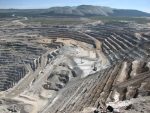
Shares of Teck Resources Limited TECK have gained 2% after the company sold its 77% stake in its steelmaking coal business, Elk Valley Resources (“EVR”), to Glencore plc GLNCY, signaling a full exit from coal. The $7.3 billion proceeds from the sale will be used to pay down debt, return cash to shareholders and invest in growing TECK's copper portfolio.
Background of the Sale
On Nov 13, 2023, Teck Resources announced that it agreed to sell its steelmaking coal business for an implied enterprise value of $9 billion. The majority stake (77%) was to be made to Glencore and 20% to Nippon Steel Corporation. The remaining 3% stake was agreed to be taken up by POSCO PKX. Per the agreement, on Jan 3, 2024, Nippon Steel acquired the 20% interest in EVR in exchange for its prior 2.5% interest in Elkview Operations and a payment of $1.3 billion in cash to Teck Resources on closing. Nippon Steel had also agreed to pay $0.4 billion to Teck Resources out of cash flows from EVR. Also, on the same date, Posco exchanged its previous 2.5% interest in Elkview Operations and its 20% interest in the Greenhills joint venture for a 3% stake in EVR.
Allocation of the Proceeds From the Deal
Debt Repayment & Share Buyback: From the sale proceeds, TECK will set aside $2 billion toward a debt reduction program. This includes the cash tender offer to purchase the $1.25 billion aggregate principal amount of its outstanding public notes. The company also intends to repurchase up to $2 billion of Class B subordinate voting shares.
Grow Copper Portfolio to Ride Energy Transition Trend: Teck Resources is a significant copper producer in the Americas, with four operating mines in Canada, Chile and Peru, and copper development projects in North and South America. Its main projects are Highland Valley Copper in Canada, and Quebrada Blanca (QB) and Carmen de Andacollo in Chile. The company also has an interest in the Antamina copper/zinc mine in Peru. With the ramp-up of QB this year, TECK expects to double its annual copper production to approximately 600,000 tons.
For the long term, Teck Resources has a pipeline of brownfield and greenfield development options, including the Galore Creek project in B.C. and the potential expansion of Trail Operations to include an electric vehicle battery recycling facility.
Teck Resources plans to use the balance of its proceeds from the sale of the steelmaking unit to advance its copper projects including the Highland Valley Copper Mine Life Extension, Zafranal Project, San Nicolas Project and QB debottlenecking. The current estimated capital cost attributable to the company for these projects is in the range of $3.3-$3.6 billion. With this funding, it expects to increase copper production by 30% by 2028.
The long-term outlook for copper is positive as demand for the metal is expected to grow, driven by electric vehicles, renewable energy and infrastructure investments. Yet, the fate of this metal’s supply remains uncertain and challenging, given the declining ore grades and the lack of major discoveries. Miners are, thus, focusing on increasing their exposure to future-facing commodities, such as copper and nickel, which are the key components for the green energy transition.
Price Performance
Shares of Teck Resources have risen 21.9% in the past year compared with the industry's 0.2% growth.
Zacks Investment Research
Image Source: Zacks Investment Research
Zacks Rank & a Stock to Consider
Teck Resources currently carries a Zacks Rank #3 (Hold). A better-ranked stock in the basic materials space is Carpenter Technology Corporation CRS, which currently sports a Zacks Rank #1 (Strong Buy). You can see the complete list of today's Zacks #1 Rank stocks here.The Zacks Consensus Estimate for fiscal 2024 earnings indicates year-over-year growth of 281.6%, CRS beat the consensus estimate in each of the last four quarters, with the average earnings surprise being 15.1%. The company's shares have soared 92.7% in the past year.
Want the latest recommendations from Zacks Investment Research? Today, you can download 7 Best Stocks for the Next 30 Days. Click to get this free report
POSCO (PKX) : Free Stock Analysis Report
Carpenter Technology Corporation (CRS) : Free Stock Analysis Report
Glencore PLC (GLNCY) : Free Stock Analysis Report
Teck Resources Ltd (TECK) : Free Stock Analysis Report
To read this article on Zacks.com click here.
VANCOUVER, BC, July 15, 2024 /CNW/ – Rokmaster Resources Corp. (TSXV: RKR) (OTCQB: RKMSF) (FSE: 1RR1) ("Rokmaster" or "the Company") announces that field work has begun on the Nechako Copper-Gold-Silver Project.
Crews completed an initial small prospecting and soil sampling program on the Mystery Property targeting porphyry copper-gold-molybdenum targets.
Crews also completed additional field work on the Fox-Coconut Property. The field work included geological mapping, prospecting, rock and soil sampling to further characterize the exploration targets on the Fox-Coconut Property where channel samples collected in 2014 returned a highlighted value of 7,342 grams per tonne ("gpt") silver and 45.3 gpt gold over 1.0 meter. Additional planned field work on the Mystery Property aims to further refine and expand on the large porphyry alteration zone and coincident large copper in soil anomalies which is suggestive of a porphyry copper-gold environment. See Rokmaster News Release dated May 15, 2024.
On Rokmaster's 100% owned Selkirk Project, located 30 km north of Revelstoke, BC, the Company has applied for drilling permits for Downie Gold and Keystone Properties targeting gold-silver-zinc-copper mineralization. The Rokmaster website provides further details on the Downie Gold, Keystone, and Rift Properties which comprise the Selkirk Project.
Scientific and technical information presented above has been prepared in accordance with Canadian regulatory requirements as set out in National Instrument 43-101 and reviewed and approved by Eric Titley, P.Geo., a Qualified Person as defined by National Instrument 43-101 Standards of Disclosure for Mining Projects, has reviewed and approved of the technical disclosure in this news release.
On Behalf of the Board of Directors of
Rokmaster Resources Corp.
John Mirko,President & Chief Executive Officer.
Neither TSX Venture Exchange nor its Regulation Services Provider (as that term in defined in the policies of the TSX Venture Exchange) accepts responsibility for the adequacy or accuracy of this press release.
CAUTIONARY NOTE REGARDING FORWARD LOOKING STATEMENTS: This news release may contain forward-looking information within the meaning of applicable securities laws ("forward-looking statements"). Forward-looking statements are statements that are not historical facts and are generally, but not always, identified by the words "expects," "plans," "anticipates," "believes," "intends," "estimates," 'projects," "potential" and similar expressions, or that events or conditions "will," "would," "may," "could" or "should" occur. These forward-looking statements are subject to a variety of risks and uncertainties which could cause actual events or results to differ materially from those reflected in the forward-looking statements, including, without limitation: risks related to fluctuations in metal prices; uncertainties related to raising sufficient financing to fund the planned work in a timely manner and on acceptable terms; changes in planned work resulting from weather, logistical, technical or other factors; the possibility that results of work will not fulfill expectations and realize the perceived potential of the Company's properties; risk of accidents, equipment breakdowns and labour disputes or other unanticipated difficulties or interruptions; the possibility of cost overruns or unanticipated expenses in the work program; the risk of environmental contamination or damage resulting from Rokmaster's operations and other risks and uncertainties. Any forward-looking statement speaks only as of the date it is made and, except as may be required by applicable securities laws, the Company disclaims any intent or obligation to update any forward-looking statement, whether as a result of new information, future vents or results or otherwise.
SOURCE Rokmaster Resources Corp.
Cision
View original content to download multimedia: http://www.newswire.ca/en/releases/archive/July2024/15/c1296.html
Key Insights
-
Significantly high institutional ownership implies BHP Group's stock price is sensitive to their trading actions
-
47% of the business is held by the top 25 shareholders
-
Using data from analyst forecasts alongside ownership research, one can better assess the future performance of a company
To get a sense of who is truly in control of BHP Group Limited (ASX:BHP), it is important to understand the ownership structure of the business. With 53% stake, institutions possess the maximum shares in the company. Put another way, the group faces the maximum upside potential (or downside risk).
Since institutional have access to huge amounts of capital, their market moves tend to receive a lot of scrutiny by retail or individual investors. As a result, a sizeable amount of institutional money invested in a firm is generally viewed as a positive attribute.
Let's delve deeper into each type of owner of BHP Group, beginning with the chart below.
View our latest analysis for BHP Group
ownership-breakdownWhat Does The Institutional Ownership Tell Us About BHP Group?
Institutional investors commonly compare their own returns to the returns of a commonly followed index. So they generally do consider buying larger companies that are included in the relevant benchmark index.
We can see that BHP Group does have institutional investors; and they hold a good portion of the company's stock. This suggests some credibility amongst professional investors. But we can't rely on that fact alone since institutions make bad investments sometimes, just like everyone does. If multiple institutions change their view on a stock at the same time, you could see the share price drop fast. It's therefore worth looking at BHP Group's earnings history below. Of course, the future is what really matters.
Since institutional investors own more than half the issued stock, the board will likely have to pay attention to their preferences. We note that hedge funds don't have a meaningful investment in BHP Group. BlackRock, Inc. is currently the company's largest shareholder with 6.8% of shares outstanding. With 6.1% and 5.5% of the shares outstanding respectively, State Street Global Advisors, Inc. and The Vanguard Group, Inc. are the second and third largest shareholders.
On studying our ownership data, we found that 25 of the top shareholders collectively own less than 50% of the share register, implying that no single individual has a majority interest.
While studying institutional ownership for a company can add value to your research, it is also a good practice to research analyst recommendations to get a deeper understand of a stock's expected performance. Quite a few analysts cover the stock, so you could look into forecast growth quite easily.
Insider Ownership Of BHP Group
While the precise definition of an insider can be subjective, almost everyone considers board members to be insiders. Company management run the business, but the CEO will answer to the board, even if he or she is a member of it.
Most consider insider ownership a positive because it can indicate the board is well aligned with other shareholders. However, on some occasions too much power is concentrated within this group.
Our data suggests that insiders own under 1% of BHP Group Limited in their own names. We do note, however, it is possible insiders have an indirect interest through a private company or other corporate structure. It is a very large company, so it would be surprising to see insiders own a large proportion of the company. Though their holding amounts to less than 1%, we can see that board members collectively own AU$51m worth of shares (at current prices). Arguably recent buying and selling is just as important to consider. You can click here to see if insiders have been buying or selling.
General Public Ownership
The general public, who are usually individual investors, hold a 41% stake in BHP Group. While this group can't necessarily call the shots, it can certainly have a real influence on how the company is run.
Next Steps:
It's always worth thinking about the different groups who own shares in a company. But to understand BHP Group better, we need to consider many other factors. To that end, you should be aware of the 3 warning signs we've spotted with BHP Group .
If you are like me, you may want to think about whether this company will grow or shrink. Luckily, you can check this free report showing analyst forecasts for its future.
NB: Figures in this article are calculated using data from the last twelve months, which refer to the 12-month period ending on the last date of the month the financial statement is dated. This may not be consistent with full year annual report figures.
Have feedback on this article? Concerned about the content? Get in touch with us directly. Alternatively, email editorial-team (at) simplywallst.com.This article by Simply Wall St is general in nature. We provide commentary based on historical data and analyst forecasts only using an unbiased methodology and our articles are not intended to be financial advice. It does not constitute a recommendation to buy or sell any stock, and does not take account of your objectives, or your financial situation. We aim to bring you long-term focused analysis driven by fundamental data. Note that our analysis may not factor in the latest price-sensitive company announcements or qualitative material. Simply Wall St has no position in any stocks mentioned.
Have feedback on this article? Concerned about the content? Get in touch with us directly. Alternatively, email editorial-team@simplywallst.com
Earnings are arguably the most important single number on a company's quarterly financial report. Wall Street clearly dives into all of the other metrics and management's input, but the EPS figure helps cut through all the noise.
The earnings figure itself is key, but a beat or miss on the bottom line can sometimes be just as, if not more, important. Therefore, investors should consider paying close attention to these earnings surprises, as a big beat can help a stock climb even higher.
2 Stocks to Add to Your Watchlist
The Zacks Earnings ESP, or Expected Surprise Prediction, aims to find earnings surprises by focusing on the most recent analyst revisions. The basic premise is that if an analyst reevaluates their earnings estimate ahead of an earnings release, it means they likely have new information that could possibly be more accurate. The core of the ESP model is comparing the Most Accurate Estimate to the Zacks Consensus Estimate, where the resulting percentage difference between the two equals the Expected Surprise Prediction.
The last thing we will do today, now that we have a grasp on the ESP and how powerful of a tool it can be, is to look at a qualifying stock. Pan American Silver (PAAS) holds a Zacks Rank #2 at the moment and its Most Accurate Estimate comes in at $0.13 a share 26 days away from its upcoming earnings release on August 7, 2024.
PAAS has an Earnings ESP figure of 9.35%, which, as explained above, is calculated by taking the percentage difference between the $0.13 Most Accurate Estimate and the Zacks Consensus Estimate of $0.12.
PAAS is part of a big group of Basic Materials stocks that boast a positive ESP, and investors may want to take a look at Southern Copper (SCCO) as well.
Slated to report earnings on August 6, 2024, Southern Copper holds a #2 (Buy) ranking on the Zacks Rank, and it's Most Accurate Estimate is $1.27 a share 25 days from its next quarterly update.
Southern Copper's Earnings ESP figure currently stands at 9.96% after taking the percentage difference between its Most Accurate Estimate and its Zacks Consensus Estimate of $1.16.
PAAS and SCCO's positive ESP figures tell us that both stocks have a good chance at beating analyst expectations in their next earnings report.
Find Stocks to Buy or Sell Before They're Reported
Use the Zacks Earnings ESP Filter to turn up stocks with the highest probability of positively, or negatively, surprising to buy or sell before they're reported for profitable earnings season trading. Check it out here >>
Want the latest recommendations from Zacks Investment Research? Today, you can download 7 Best Stocks for the Next 30 Days. Click to get this free report
Pan American Silver Corp. (PAAS) : Free Stock Analysis Report
Southern Copper Corporation (SCCO) : Free Stock Analysis Report
To read this article on Zacks.com click here.
Quarterly earnings season is about to quick start again, with key companies across the globe providing insights into how certain sectors are performing.
Investors will see updates from the mining world, with our focus staying on Anglo American, while Burberry will provide a gauge on the luxury goods industry after a slowdown in demand from China hit sales.
In Asia, semiconductor colossus TSMC is expected to come in above expectations, amid the artificial intelligence craze and ongoing demand for chips.
Across the pond, Netflix will try to convince investors it is as popular as ever, with revenue and earnings increases in the cards.
Here's what to look out for:
Anglo American (AAL.L) — Reports trading update on Thursday 18 July
Anglo-American was the target of a takeover bid by rival BHP (BHP.L) and it has announced its own restructuring plans in the aftermath of the failed mining mega-merger. So, investors will be sure to put the company’s first-half figures under the microscope.
Anglo is aiming to sell or separate its coal, platinum, nickel and diamond mining operations. What’s left will be a streamlined business that contains the company’s prized copper mines (BHP’s main target), its premium iron ore business and the Woodsmith fertiliser project in North Yorkshire.
Anglo is heavily exposed to copper and the industrial metal’s price is just starting to pull back after a strong run.
For the actual earnings report, AJ Bell tells investors to look for any hints on production costs.
“The details on the balance sheet, cash flow and profit and loss account will come with the actual first-half numbers, although do watch out for any changes in output forecasts and targets, as well as comments on cost of production and capital investment, since all of those will directly influence profits and cash flow,” Russ Mould, investment director, Danni Hewson, head of financial analysis, and Dan Coatsworth, investment analyst, all of AJ Bell, wrote.
Read more: How FTSE All-Share index listings are changing
“In the unlikely event that [CEO Duncan] Wanblad discusses annual profits or the dividend ahead of the first-half results in the following week, the current consensus forecast is for earnings before interest, taxes, depreciation and amortisation (EBITDA) to come in broadly flat in 2024, at $9.7bn, while a cut in the dividend to $0.83 per share from $0.96 is expected.”
The share price is still around 20% higher than it was before BHP’s interest became public on 25 April.
Burberry (BRBY.L) — Reports trading update on Friday 19 JulyA model presents a creation during a catwalk presentation for British fashion house Burberry’s Spring/Summer 2024 collection, at London Fashion Week in London. (HENRY NICHOLLS via Getty Images)
Trenchcoat-maker Burberry is not expected to impress investors next week, with retail same-store sales estimated to come in 16% lower in its fiscal first quarter, a slump made even starker by 18% growth in the same period last year.
UBS expects the focus to be on Chinese sales “as well as any signs of stabilisation/improvement among other consumer groups (i.e. Americans and Europeans)”.
JP Morgan has warned that the ‘re-acceleration’ of the luxury sector could be slower than anticipated, leading to downside risk for luxury stocks.
“The troubled times continue for Burberry, which has engaged in a round of sweeping job cuts in order to reduce costs. Sales fell 4% for the year to the end of March, and it looks like demand in the key market of China will continue to weaken,” IG said.
Shares in Burberry are down by more than half over the past year, to take them back to levels last seen in 2010.
Compared to its five-year average PE of 17 times earnings, Burberry now looks cheap at 11 times earnings. IG analysts warned that while the dividend yield is a solid 7%, investors should be aware that the payout may be cut should the group’s sales outlook continue to worsen.
For the year to March 2025, analysts currently expect sales to drop 6% to £2.8bn.
TSMC (TSM) — Reports quarterly update on Thursday 18 July
The AI craze has pushed Nvidia as other Magnificent 7 stocks to new heights but there is no AI without chips. And they are (almost) all being manufactured in Taiwan by TSMC.
Taiwan Semiconductor’s key tech giant clients such as Nvidia and Apple have almost nowhere else to turn for next-gen chip manufacturing.
TSMC’s anticipated order for next-generation two-nanometer technology will be a key catalyst in the second half, according to Citi analysts, who see AI and sovereign investment adding upside to the company’s 2030 revenue target of €44bn to €60bn, Bloomberg reported.
The Taiwan-based silicon giant disclosed in its latest monthly revenue report that net income for June was NT$207.87bn billion ($6.4bn), an increase of 32.9% compared with a year ago.
Read more: How to invest in AI as the rally continues
Figures for May and April were NT$229.62bn ($7.04bn/) and NT$236.02bnn (£5.41bn/$7.24bn), both up on the same period last year. TSMC is projected to grow sales by roughly 21% in FY24 and FY25.
“Taiwan Semiconductor is one of the most straightforward buy-and-hold options in all of technology alongside the likes of Nvidia and others because chips are the lifeblood of the economy and TSM is the semiconductor manufacturer,” according to Zachs Research.
“Any near-term pullback down to some of Taiwan Semiconductor stock’s key shorter-dated or longer-dated moving averages could mark a screaming buy signal for long-term investors,” Zachs’ analysts added.
Netflix (NFLX) — Reports second-quarter results on Thursday 18 July
Synonymous with streaming services, Netflix will show investors how it is fighting to stay on top and prove it can keep attracting new subscribers amid fierce competition.
Netflix expects its revenue to increase 16% year-over-year (YoY) to $9.49bn (£7.3bn) in the second quarter of 2024 but analysts predict Netflix's Q2 revenue will be slightly higher at $9.53bn. In the first quarter of 2024, Netflix's revenue was $9.37bn, up 15% from the prior year.
Morningstar equity analyst Matthew Dolphin provides a guide to what investors should focus on. “We're most interested in details on Netflix's ad-supported service, especially regarding how the firm is coming along in monetising it, as well as an update on the size of the ad-supported user base," he said.
“Generally, we'll be looking to see if subscriber growth is slowing substantially after Netflix passed the tailwind from its password-sharing crackdown, and whether it will stop regularly disclosing this metric in 2025.
“We will also be interested in international sales and subscriber growth. This will be a key driver for the company when/if domestic growth slows,” he wrote.
As AJ Bell writes, Netflix no longer gives specific guidance for quarterly net subscriber additions, although co-chief executive officers Greg Peters and Ted Sarandos did suggest at the first-quarter stage that net adds would come in below the first quarter’s bumper 9.3 million (the best first quarter since the pandemic and lockdowns in Q1 2020). That took the total subscriber base to a fraction under 270 million, up from 233 million in Q1 2023 and 167 million before the pandemic swept the globe.
Matt Britzman, equity analyst at Hargreaves Lansdown, is also keen to look at subscribers: “One thing to watch for is the number of new paid subscribers in the second quarter. Management has already warned it’ll be lower quarter-on-quarter due to the normal seasonal demand patterns. These have been a little skewed in recent years, but looking at 2018/19 numbers, net new subscribers were down 34% and 70% respectively across the first and second quarters – so don’t be surprised to see something in that range.
“Best in class content is one of the reasons Netflix has been able to consistently deliver sector leading churn rates. It’s expensive, but Netflix remains the only company set to increase content spend, giving a comparative advantage versus legacy media and its challengers.”
Other companies reporting next week include:
Monday 15 July
Robert Walters (RWA.L)
Orkla (ORK.OL)
Goldman Sachs (GS)
BlackRock (BLK)
Tuesday 16 July
Ocado (OCDO.L)
Intermediate Capital (ICG.L)
B&M European Value Retail (BME.L)
Bloomsbury Publishing (BMY.L)
McBride (MCB.L)
Richemont (CFR.SW)
NCC (NCC.L)
UnitedHealth (UNH)
Bank of America (BAC)
Morgan Stanley (MS)
Omnicom (OMC)
Wednesday 17 July
Renold (RNO.L)
HVIVO (HVO.L)
BHP (BHP.L)
ASML (ASML)
Assa Abloy (ASSA-B.ST)
Svenska Handelsbanken (SHB-B.ST)
Johnson & Johnson (JNJ)
CSX (CSX)
US Bancorp (USBC.VI)
Las Vegas Sands (LVS)
Citizens Financial (CZFS)
United Airlines (UAL)
Alcoa (AA)
Bank OZK (OZK)
Thursday 18 July
SSE (SSE.L)
Diploma (DPLM.L)
Dunelm (DNLM.L)
Kier (KIE.L)
QinetiQ (QQ.L)
ABB (ABBNY)
Atlas Copco (ATCO-A.ST)
Volvo (VOLV-A.ST)
EQT (EQT)
Publicis (PUB.PA)
Nokia (NOK)
Volvo Car (VOLCAR-B.ST)
SKF (SKF-B.ST)
Abbott Labs (ABL.MU)
Blackstone (BX)
DR Horton (DHI)
Tractor Supply (TSCO)
Domino’s Pizza (DPZ)
Interpublic (IPG)
American Airlines (AAL)
Alaska Airlines (ALK)
Friday 19 July
Bridgepoint (BPT.L)
Schindler (SHLRF)
Kone (KNEBV.HE)
Sandvik (SAND.ST)
Saab (SAABBS.XC)
Electrolux (ELUXY)
American Express (AXP)
Schlumberger (SLB)
Halliburton (HAL)
You can read Yahoo Finance's full calendar here.
Download the Yahoo Finance app, available for Apple and Android.
The proven Zacks Rank system focuses on earnings estimates and estimate revisions to find winning stocks. Nevertheless, we know that our readers all have their own perspectives, so we are always looking at the latest trends in value, growth, and momentum to find strong picks.
Considering these trends, value investing is clearly one of the most preferred ways to find strong stocks in any type of market. Value investors use a variety of methods, including tried-and-true valuation metrics, to find these stocks.
In addition to the Zacks Rank, investors looking for stocks with specific traits can utilize our Style Scores system. Of course, value investors will be most interested in the system's "Value" category. Stocks with "A" grades for Value and high Zacks Ranks are among the best value stocks available at any given moment.
One company value investors might notice is Amerigo Resources (ARREF). ARREF is currently holding a Zacks Rank of #1 (Strong Buy) and a Value grade of A.
Investors should also recognize that ARREF has a P/B ratio of 1.95. Investors use the P/B ratio to look at a stock's market value versus its book value, which is defined as total assets minus total liabilities. This company's current P/B looks solid when compared to its industry's average P/B of 3.68. ARREF's P/B has been as high as 2.34 and as low as 1.27, with a median of 1.58, over the past year.
Value investors also frequently use the P/S ratio. This metric is found by dividing a stock's price with the company's revenue. This is a popular metric because sales are harder to manipulate on an income statement, so they are often considered a better performance indicator. ARREF has a P/S ratio of 1.36. This compares to its industry's average P/S of 3.11.
Finally, investors will want to recognize that ARREF has a P/CF ratio of 8.95. This figure highlights a company's operating cash flow and can be used to find firms that are undervalued when considering their impressive cash outlook. This stock's P/CF looks attractive against its industry's average P/CF of 21.67. Over the past 52 weeks, ARREF's P/CF has been as high as 10.75 and as low as 6.34, with a median of 8.42.
Another great Mining – Non Ferrous stock you could consider is Lundin Mining (LUNMF), which is a # 2 (Buy) stock with a Value Score of A.
Shares of Lundin Mining are currently trading at a forward earnings multiple of 12.45 and a PEG ratio of 0.26 compared to its industry's P/E and PEG ratios of 24.29 and 1.41, respectively.
LUNMF's price-to-earnings ratio has been as high as 18.82 and as low as 7.75, with a median of 12.34, while its PEG ratio has been as high as 1.98 and as low as 0.24, with a median of 1.07, all within the past year.
Additionally, Lundin Mining has a P/B ratio of 1.43 while its industry's price-to-book ratio sits at 3.68. For LUNMF, this valuation metric has been as high as 1.58, as low as 0.72, with a median of 1.04 over the past year.
These are only a few of the key metrics included in Amerigo Resources and Lundin Mining strong Value grade, but they help show that the stocks are likely undervalued right now. When factoring in the strength of its earnings outlook, ARREF and LUNMF look like an impressive value stock at the moment.
Want the latest recommendations from Zacks Investment Research? Today, you can download 7 Best Stocks for the Next 30 Days. Click to get this free report
Amerigo Resources Ltd. (ARREF) : Free Stock Analysis Report
Lundin Mining Corp. (LUNMF) : Free Stock Analysis Report
To read this article on Zacks.com click here.
(Bloomberg) — Lundin Mining Corp. has approached BHP Group about making a joint bid for copper miner Filo Corp., people with knowledge of the matter said, in a move that could solve fundraising needs for a neighboring project it wants to build.
Most Read from Bloomberg
-
Trump Emerges Defiant From Rally Attack Set to Shake Up ’24 Race
-
BlackRock Says Gunman From Trump Rally Appeared in Firm’s Ad
-
I Was at the Trump Rally Where He Was Shot. Here Is What I Saw
-
Trump’s Bloodied, Defiant Image After Shooting Pumps Up His Base
Lundin has held preliminary discussions with BHP about teaming up on a possible deal for Filo, according to the people, who asked not to be identified as the information is private. Shares of Filo jumped as much as 12% on the news before giving back some gains. The stock traded 8% higher at 3:36 p.m. in Toronto, giving the company a market value of about C$3.7 billion ($2.7 billion).
It’s unclear how receptive BHP is to the proposal. The wealthy Lundin family, who own about 15% of their eponymously named miner, have a 32% stake in Filo while BHP holds nearly 6%, according to data compiled by Bloomberg.
Lundin has pitched the idea of buying out other shareholders in Filo and then combining the target’s Filo del Sol copper project — located on the Argentina-Chile border — with Lundin’s neighboring Josemaria operation, the people said. Bringing the two assets together would make it easier for Lundin to finance their development while bringing BHP much-needed growth in copper.
Talks are at a preliminary stage and there are no guarantees they will proceed with a bid, the people said. Representatives for BHP and Lundin declined to comment. Filo didn’t immediately respond to requests for comment.
Lundin is keen to develop the Josemaria project in Argentina, a vast copper and gold deposit in the Andes, and has said it is looking to bring in a partner. The company is considering a potential sale of two European zinc mines as it looks to raise funds and focus more on copper, Bloomberg reported last month.
The world’s biggest mining companies are all seeking to expand in copper, in anticipation of rising prices as demand for clean power and data centers is forecast to outstrip supply in future years.
BHP made a blockbuster $49 billion bid for Anglo American Plc earlier this year — primarily for its suite of South American copper mines — but was left frustrated when its target turned down its offer.
–With assistance from Thomas Seal.
(Updates with shares in second paragraph.)
Most Read from Bloomberg Businessweek
©2024 Bloomberg L.P.
By Clara Denina and Anirban Sen
TORONTO/NEW YORK (Reuters) -Canada's Lundin Mining Corp and mining giant BHP Group are weighing a potential joint bid for Filo Corp, people familiar with the matter told Reuters on Friday.
The talks between Lundin and BHP are at an early stage, the sources said, adding that there is no guarantee that the two companies will team up on a bid for Filo.
Canada-listed shares of Filo jumped as much as 12% on the news on Friday. The shares pared some gains and closed at C$27.98, giving the company a market capitalization of C$3.44 billion ($2.52 billion).
The consideration for a possible takeover comes as there is ongoing work to merge the Josemaria project that belongs to Lundin Mining with the Filo del Sol project, one of the sources said, adding that combining the infrastructure between the mines would cost between $5 billion to $8 billion. The sources requested anonymity as the discussions are confidential.
The Lundin family holds a 32% stake in copper miner Filo Corp, while BHP holds a 6% stake in the company, according to recent regulatory filings and LSEG data. Filo is focussed on building the Filo del Sol project in the Chile-Argentina border.
Lundin, BHP and Filo Corp did not immediately respond to a Reuters request for comment.
The deal deliberations come weeks after BHP walked away from a blockbuster $49 billion bid to take over Anglo American, which rejected three proposed offers from its bigger rival over the course of six weeks.
The world's biggest miners are increasingly preferring to buy instead of building assets to grow, given rising costs for developing new mines and a blow-out in timelines for regulatory approvals.
The copper industry is expected to witness consolidation in the near term, as the world's biggest miners are attempting to increase access to a metal central to the global shift towards clean energy and electric vehicles, according to analysts.
Bloomberg News reported earlier on Friday that Lundin had pitched BHP on a joint bid for Filo.
($1 = 1.3634 Canadian dollars)
(Additional reporting by Divya Rajagopal in Toronto and Mrinalika Roy in Bengaluru; Editing by Maju Samuel and Josie Kao)
(Bloomberg) — Rio Tinto Group is studying proposals for potential bids for companies including Teck Resources Ltd., Sky News reported, citing people it didn’t identify.
Most Read from Bloomberg
-
Biden Vows to Stay in 2024 Race Even as NATO Gaffes Risk His Campaign
-
JPMorgan Notches Record Profit on Visa Gain, Dealmaking Jump
-
Tesla Delays Robotaxi Event in Blow to Musk’s Autonomy Drive
-
FCC Says It’s Investigating Massive Breach of AT&T Customer Data
The mining giant has drawn up a list of possible targets in the wake of BHP Group’s failed bid for Anglo American Plc, and has held talks with bankers, Sky said. It’s unclear whether Rio will choose to make a move on Teck, it said, also citing a person close to the company who said no offer was imminent.
Many in the industry expect a fresh wave of acquisitions following BHP’s bid, but mega deals between the biggest firms are likely to attract stiff regulatory scrutiny, particularly as Western governments sharpen their focus on supply chains for critical minerals such as copper. Last week, Canada said it would only approve foreign takeovers of its largest miners in “exceptional” circumstances.
Teck this week closed the sale of its coal business to Glencore Plc, leaving the company focused on copper and zinc mines. It’s viewed in the industry as an attractive takeover target, but any deal would need the support of controlling shareholder Norman Keevil. Glencore initially tried to buy all of Teck last year, but was strongly rejected by both the company and Keevil.
A spokesperson for Rio Tinto said it doesn’t comment on market rumors.
(Updates with response from Rio in final paragraph.)
Most Read from Bloomberg Businessweek
-
Ukraine Is Fighting Russia With Toy Drones and Duct-Taped Bombs
-
He’s Starting an Olympics Rival Where the Athletes Are on Steroids
©2024 Bloomberg L.P.
(Bloomberg) — BHP Group Ltd. will close its loss-making nickel business in Australia until at least early 2027, after a global glut of the metal spread havoc through the market.
Most Read from Bloomberg
-
Saudis Warned G-7 Over Russia Seizures With Debt Sale Threat
-
Saudi Prince’s Trillion-Dollar Makeover Faces Funding Cutbacks
-
Modi’s Embrace of Putin Irks Biden Team Pushing Support for Kyiv
-
Archegos’ Bill Hwang Convicted of Fraud, Market Manipulation
-
Stocks See Big Rotation as Yields Sink on Fed Bets: Markets Wrap
The company will place its Nickel West business on “care and maintenance” from October due to low prices of the metal used in electric-vehicle batteries, it said in a statement Thursday. It will also halt the development of its West Musgrave nickel mine.
BHP plans to spend A$450 million ($304 million) a year to support a potential restart should market conditions and the outlook for nickel improve.
Nickel prices have crashed in recent years as new, low-cost production from Indonesia floods the global market. Benchmark futures on the London Metal Exchange have slumped about 20% since hitting a peak in May, when several mine closures prompted a bump higher. LME nickel traded around $16,960 a ton on Thursday.
The overall price slump has damaged prospects for established producers. Anglo American Plc is the process of looking to either sell or shut its nickel unit, while Glencore has moved to halt operations on the islands of New Caledonia.
Traditionally, nickel has been split into two categories: low grade for making stainless steel, and high grade for batteries. A huge Indonesian expansion of low-grade production led to a surplus, and — crucially — processing innovations have allowed that glut to be refined into a high-quality product.
That upended long-held views on the commodity by many in the industry. BHP previously sought to make nickel a key pillar of its pivot away from fossil fuels.
Market Outlook
BHP and other Australian producers have historically been major suppliers of the forms of refined nickel that underpin prices on the LME. The country accounted for 72% of the nickel in the exchange’s warehousing network in January 2023.
By June this year that share had slipped to 29%, with a steady stream of deliveries of Russian and Chinese metal helping to fuel to a 45% decline in prices over the period. The market is now bracing for a further wave of deliveries from newly built metal refineries in Indonesia that could drag prices lower still.
BHP said Thursday it has a constructive view of nickel from 2030 onwards as demand continues to grow, though it will need to see a sustainable deficit in the market before restarting operations.
The suspension comes after BHP in February announced a $3.5 billion impairment to the Nickel West asset and launched a strategic review. BHP’s Australian nickel business includes open-cut and underground mines, concentrators, and a smelter in Kalgoorlie. It also includes a refinery in Kwinana as well as the West Musgrave project it inherited when it bought Oz Minerals Ltd. last year.
(Updates with LME nickel prices in fourth paragraph.)
Most Read from Bloomberg Businessweek
-
Ukraine Is Fighting Russia With Toy Drones and Duct-Taped Bombs
-
At SpaceX, Elon Musk’s Own Brand of Cancel Culture Is Thriving
©2024 Bloomberg L.P.
MELBOURNE (Reuters) — Australia's BHP Group will temporarily suspend its Nickel West operations and West Musgrave project from October, the miner said on Thursday, as it reels from a plunge in metal prices and an oversupply in the global market.
The world's largest listed miner intends to review its decision to temporarily suspend its Western Australia nickel operations by February 2027.
"We have not been able to overcome the substantial economic challenges driven by a global oversupply of nickel," said Geraldine Slattery, BHP's Australia president.
BHP will invest around $300 million every year after a transition period to support a possible re-start of the nickel business.
Nickel prices have recovered from three year lows below $16,000 touched at the start of the year, but they are still down by more than a quarter from year ago levels.
Global nickel producers have been squeezed by Indonesia's emergence as a supply powerhouse and by the move away from using nickel in batteries, which have contributed to a 40% price slump in the metal over the past year to around $16,800 a metric ton.
A tonne of nickel powder made by BHP Group sits in a warehouse at its Nickel West division, south of Perth
Australia has been trying to develop a processing industry to add value to mineral resources like copper, nickel and rare earths that are key to the transition away from fossil fuels, including moving downstream into battery chemicals production.
But producers are facing structural issues such as low prices and high construction and labour costs.
Australian battery metals producer IGO also said on Thursday it has paused a study to develop a plant to make precursor materials for battery chemicals amid low nickel prices.
BHP will release its quarterly production report next Wednesday.
(Reporting by Melanie Burton in Melbourne and Rishav Chatterjee in Bengaluru; Editing by Subhranshu Sahu and Keith Weir)
The latest trading session saw Southern Copper (SCCO) ending at $114.59, denoting a -1.5% adjustment from its last day's close. The stock trailed the S&P 500, which registered a daily loss of 0.88%. Meanwhile, the Dow gained 0.08%, and the Nasdaq, a tech-heavy index, lost 1.95%.
Prior to today's trading, shares of the miner had gained 7.65% over the past month. This has outpaced the Basic Materials sector's loss of 2.77% and the S&P 500's gain of 5.11% in that time.
The investment community will be paying close attention to the earnings performance of Southern Copper in its upcoming release. On that day, Southern Copper is projected to report earnings of $1.16 per share, which would represent year-over-year growth of 65.71%. Meanwhile, our latest consensus estimate is calling for revenue of $2.93 billion, up 27.14% from the prior-year quarter.
SCCO's full-year Zacks Consensus Estimates are calling for earnings of $4.33 per share and revenue of $11.46 billion. These results would represent year-over-year changes of +39.23% and +15.77%, respectively.
Investors might also notice recent changes to analyst estimates for Southern Copper. These latest adjustments often mirror the shifting dynamics of short-term business patterns. As such, positive estimate revisions reflect analyst optimism about the company's business and profitability.
Our research suggests that these changes in estimates have a direct relationship with upcoming stock price performance. To exploit this, we've formed the Zacks Rank, a quantitative model that includes these estimate changes and presents a viable rating system.
The Zacks Rank system ranges from #1 (Strong Buy) to #5 (Strong Sell). It has a remarkable, outside-audited track record of success, with #1 stocks delivering an average annual return of +25% since 1988. Over the past month, the Zacks Consensus EPS estimate has shifted 5.43% upward. Southern Copper is currently a Zacks Rank #2 (Buy).
In terms of valuation, Southern Copper is presently being traded at a Forward P/E ratio of 26.87. Its industry sports an average Forward P/E of 16.12, so one might conclude that Southern Copper is trading at a premium comparatively.
Meanwhile, SCCO's PEG ratio is currently 1.18. The PEG ratio bears resemblance to the frequently used P/E ratio, but this parameter also includes the company's expected earnings growth trajectory. The Mining – Non Ferrous industry had an average PEG ratio of 0.79 as trading concluded yesterday.
The Mining – Non Ferrous industry is part of the Basic Materials sector. This industry, currently bearing a Zacks Industry Rank of 66, finds itself in the top 27% echelons of all 250+ industries.
The Zacks Industry Rank is ordered from best to worst in terms of the average Zacks Rank of the individual companies within each of these sectors. Our research shows that the top 50% rated industries outperform the bottom half by a factor of 2 to 1.
To follow SCCO in the coming trading sessions, be sure to utilize Zacks.com.
Want the latest recommendations from Zacks Investment Research? Today, you can download 7 Best Stocks for the Next 30 Days. Click to get this free report
Southern Copper Corporation (SCCO) : Free Stock Analysis Report
To read this article on Zacks.com click here.
Teck Resources Ltd
VANCOUVER, British Columbia, July 11, 2024 (GLOBE NEWSWIRE) — Teck Resources Limited (TSX: TECK.A and TECK.B, NYSE: TECK) (“Teck”) today announced that it has completed the sale of its remaining 77% interest in the steelmaking coal business to Glencore plc. Teck received total cash proceeds of US$7.3 billion, subject to customary closing adjustments.
About TeckTeck is a leading Canadian resource company focused on responsibly providing metals essential to economic development and the energy transition. Teck has a portfolio of world-class copper and zinc operations across North and South America and an industry-leading copper growth pipeline. We are focused on creating value by advancing responsible growth and ensuring resilience built on a foundation of stakeholder trust. Headquartered in Vancouver, Canada, Teck’s shares are listed on the Toronto Stock Exchange under the symbols TECK.A and TECK.B and the New York Stock Exchange under the symbol TECK. Learn more about Teck at www.teck.com or follow @TeckResources.
Investor Contact:Fraser PhillipsSenior Vice President, Investor Relations & Strategic Analysis604.699.4621fraser.phillips@teck.com
Media Contact:Dale SteevesDirector, Stakeholder Relations236.987.7405 dale.steeves@teck.com
The analysts covering Teck Resources Limited (TSE:TECK.B) delivered a dose of negativity to shareholders today, by making a substantial revision to their statutory forecasts for this year. Both revenue and earnings per share (EPS) forecasts went under the knife, suggesting analysts have soured majorly on the business.
Following the downgrade, the consensus from 14 analysts covering Teck Resources is for revenues of CA$14b in 2024, implying a noticeable 6.3% decline in sales compared to the last 12 months. Statutory earnings per share are anticipated to fall 16% to CA$2.60 in the same period. Before this latest update, the analysts had been forecasting revenues of CA$17b and earnings per share (EPS) of CA$3.68 in 2024. Indeed, we can see that the analysts are a lot more bearish about Teck Resources' prospects, administering a measurable cut to revenue estimates and slashing their EPS estimates to boot.
See our latest analysis for Teck Resources
Analysts made no major changes to their price target of CA$74.24, suggesting the downgrades are not expected to have a long-term impact on Teck Resources' valuation.
Taking a look at the bigger picture now, one of the ways we can understand these forecasts is to see how they compare to both past performance and industry growth estimates. We would highlight that sales are expected to reverse, with a forecast 8.4% annualised revenue decline to the end of 2024. That is a notable change from historical growth of 8.9% over the last five years. Compare this with our data, which suggests that other companies in the same industry are, in aggregate, expected to see their revenue grow 15% per year. It's pretty clear that Teck Resources' revenues are expected to perform substantially worse than the wider industry.
The Bottom Line
The biggest issue in the new estimates is that analysts have reduced their earnings per share estimates, suggesting business headwinds lay ahead for Teck Resources. Unfortunately analysts also downgraded their revenue estimates, and industry data suggests that Teck Resources' revenues are expected to grow slower than the wider market. The lack of change in the price target is puzzling in light of the downgrade but, with a serious decline expected this year, we wouldn't be surprised if investors were a bit wary of Teck Resources.
So things certainly aren't looking great, and you should also know that we've spotted some potential warning signs with Teck Resources, including recent substantial insider selling. For more information, you can click here to discover this and the 2 other warning signs we've identified.
Of course, seeing company management invest large sums of money in a stock can be just as useful as knowing whether analysts are downgrading their estimates. So you may also wish to search this free list of stocks with high insider ownership.
Have feedback on this article? Concerned about the content? Get in touch with us directly. Alternatively, email editorial-team (at) simplywallst.com.This article by Simply Wall St is general in nature. We provide commentary based on historical data and analyst forecasts only using an unbiased methodology and our articles are not intended to be financial advice. It does not constitute a recommendation to buy or sell any stock, and does not take account of your objectives, or your financial situation. We aim to bring you long-term focused analysis driven by fundamental data. Note that our analysis may not factor in the latest price-sensitive company announcements or qualitative material. Simply Wall St has no position in any stocks mentioned.
Have feedback on this article? Concerned about the content? Get in touch with us directly. Alternatively, email editorial-team@simplywallst.com
For Immediate Release
Chicago, IL – July 10, 2024 – Today, Zacks Equity Research discusses Southern Copper Corp. SCCO, Freeport-McMoRan Inc. FCX, Lundin Mining LUNMF, Coeur Mining CDE and Ero Copper ERO.
Industry: Mining – Non-Ferrous
Link: https://www.zacks.com/commentary/2298570/5-non-ferrous-metal-mining-stocks-to-watch-in-a-promising-industry
The prospects of the Zacks Mining – Non Ferrous industry appear promising at the moment, backed by the upward trajectory in metal prices. The demand for non-ferrous metals is expected to be supported by the energy-transition trend, which will buoy the industry.
We suggest keeping a close eye on companies like Southern Copper Corp., Freeport-McMoRan Inc., Lundin Mining, Coeur Mining and Ero Copper. These companies are strategically focused on building reserves, technological investments, cost control and enhancing production efficiency, positioning them well to capitalize on the industry's growth potential.
About the Industry
The Zacks Mining – Non Ferrous industry comprises companies that produce non-ferrous metals, including copper, gold, silver, cobalt, molybdenum, zinc, aluminum and uranium. These metals are utilized by various industries, including aerospace, automotive, packaging, construction, machinery, electronics, transportation, jewelry, chemical and nuclear energy.
Mining is a long, complex and capital-intensive process. Significant exploration and development to evaluate the size of the deposit, followed by the assessment of ways to extract and process ore efficiently, safely and responsibly, precede the actual mining operations. Miners continuously seek opportunities to grow their reserves and resources through targeted near-mine exploration and business development. They strive to upgrade and improve the quality of their existing assets internally and through acquisitions.
What's Shaping the Future of the Mining – Non Ferrous Industry?
Improving Metal Prices to Aid Industry: Copper prices have notched gains of more than 18.8% so far this year, aided by supply concerns and signs of improving demand from top consumer China. Gold has appreciated 14.5% so far this year. Gold prices are currently around $2,360 an ounce following key U.S. jobs data that showed a softening labor market, fueling expectations of interest rate cuts in September.
Backed by these factors, silver prices are currently around $31 an ounce, yielding a 29.7% year-to-date gain. Silver prices have also gained support on expectations that China will unveil more stimulus measures and demand from the solar panel sector. Uranium prices are currently at $86 per pound, the highest in two weeks, amid robust demand and tight supply. The United States and 20 other countries intend to triple their nuclear power by 2050.
Meanwhile, investors continue to assess the impacts of the U.S. ban on Russian nuclear fuel imports may have on the global supply chains. Overall, industry players are dealing with depleting resources, declining supply in old mines and a lack of new mines. Development projects are inherently risky and capital-intensive. While demand has been strong, there will be an eventual deficit in metal supply, leading to a situation that will bolster metal prices. This, in turn, will favor the industry in the long haul.
Efforts Underway to Sustain Margins Amid High Costs: The industry has been facing a shortage of skilled workforce lately, which has hiked wages. Industry players have also been grappling with escalating production costs, including electricity, water and materials, as well as higher freight expenses and supply-chain issues. Since the industry cannot control the prices of its products, it focuses on improving sales volumes, increasing operating cash flows and lowering unit net cash costs. Industry participants are opting for alternative energy sources to minimize fuel-price volatility and secure supply. Miners are now committed to cost-reduction strategies and digital innovation to drive operating efficiencies.
Strong Demand to Support Industry: The demand for non-ferrous metals will remain high in the future, given their wide use in primary sectors, including transportation, electricity, construction, telecommunication, energy and information technology. The demand for electric vehicles and renewable energy is expected to be a significant growth driver for metals like copper and nickel in the years to come. The plan to overhaul and upgrade the nation’s infrastructure, and promote green policies, per the U.S. Infrastructure Investment and Jobs Act, will also require a massive amount of non-ferrous metals.
Zacks Industry Rank Indicates Bright Prospects
The group’s Zacks Industry Rank, basically the average of the Zacks Rank of all the member stocks, indicates bright prospects for the near term. The Zacks Mining – Non Ferrous industry, an 11-stock group within the broader Zacks Basic Materials Sector, currently carries a Zacks Industry Rank #63, which places it in the top 25% of 250 Zacks industries. Our research shows that the top 50% of the Zacks-ranked industries outperforms the bottom 50% by a factor of more than 2 to 1.
Looking at the aggregate earnings estimate revisions, it appears that analysts are gradually gaining confidence in this group’s earnings growth potential. Since the beginning of this year, the industry’s earnings estimates for the current year have been revised upward by 15%.
Before we present a few stocks that you may want to consider for your portfolio, let us look at the industry’s recent stock-market performance and its valuation picture.
Industry Versus S&P 500 & Sector
The Zacks Mining- Non Ferrous Industry has outperformed its sector and the Zacks S&P 500 composite over the past 12 months. The stocks in this industry have collectively gained 45.4% in the past year compared with the Zacks Basic Materials sector’s rise of 3.4%. The S&P 500 has grown 27.7% in the said time frame.
Industry's Current Valuation
Based on the forward 12-month EV/EBITDA ratio, a commonly used multiple for valuing Mining- Non Ferrous stocks, we see that the industry is currently trading at 7.8X compared with the S&P 500’s 15.11X. The Basic Materials sector’s trailing 12-month EV/EBITDA is at 7.03X.
Over the last five years, the industry traded as high as 9.36X and as low as 3.35X, the median being 6.57X.
5 Mining – Non Ferrous Stocks to Keep a Tab on
Ero Copper: The company has been progressing with its strategic initiatives, which will drive significant near-term growth. In June, the company received the operational license for the Tucumã Project, thus clearing the last remaining approval necessary for commercial operation. First concentrate is expected early in the third quarter of 2024.
Copper production from the Tucumã Operations is anticipated between 17,000 and 25,000 tons in the second half of 2024. For 2025, production is projected at 53,000-58,000, marking Tucumã’s first full year of production. The Caraíba mill expansion, which is expected to increase mill throughput capacity from 3.2 million tons per year to 4.2 million tons per year, was completed in December 2023.
The Xavantina operations achieved record gold production in the first quarter of 2024, driven by favorable grade reconciliations that have continued into the second quarter. Backed by this, ERO raised its guidance for 2024 gold production to 60,000-65,000 ounces from the prior stated 55,000-60,000 ounces. ERO is on track to double copper production to more than 100,000 tons in 2025. ERO shares have gained 41% in the past six months.
The Zacks Consensus Estimate for the Vancouver, Canada-based company’s fiscal 2024 earnings indicates year-over-year growth of 95.4%. The estimate has moved up 9% in the past 90 days. The company has a trailing four-quarter earnings surprise of 53.9%, on average. ERO currently sports a Zacks Rank #1 (Strong Buy).
You can see the complete list of today’s Zacks #1 Rank stocks here.
Lundin Mining: The company increased its stake in the Caserones copper mine to 70% on Jul 2, 2024, resulting in an additional 120,000-130,000 tons of copper being added to its production profile on a 100% basis. This move adds a long-life asset in a tier-one jurisdiction strategically located in the Vicuña District, solidifying LUNMF’s position as a meaningful copper producer globally.
While maintaining a focus on growth plans and capital allocation, the company is committed to optimizing assets and operational efficiencies to drive down costs. Exploration efforts, with a $48-million budget for 2024, include drilling campaigns at Caserones, Josemaria, Chapada and Zinkgruvan, targeting various high-potential areas and extensions to existing deposits. LUNMF shares have gained 45.7% in the past six months.
The Zacks Consensus Estimate for Vancouver, Canada-based LUNMF’s fiscal 2024 earnings suggests a year-over-year improvement of 91%. The consensus estimate has moved up 42% in the past 90 days. It has a long-term estimated earnings growth rate of 48.1%. The company currently carries a Zacks Rank #2 (Buy).
Southern Copper: The company has the largest copper reserve in the industry and operates world-class assets in investment-grade countries, such as Mexico and Peru. SCCO expects copper production to rise 4% year over year and reach 948,800 tons in 2024. The company expects this growth to be driven by the Pilares project running at full capacity and ramp up of the Buenavista zinc concentrators.
The company’s capital investment program for this decade exceeds $15 billion and includes investments at the Buenavista Zinc, Pilares, El Pilar and El Arco projects in Mexico, and the Tia Maria, Los Chancas and Michiquillay projects in Peru. Given its constant commitment to increasing low-cost production and growth investments, the company is well-poised to continue delivering an enhanced performance. SCCO shares gained 41.3% in the last six months.
The Zacks Consensus Estimate for the Phoenix, AZ-based company’s fiscal 2024 earnings suggests year-over-year growth of 39%. The estimate has moved up 26% over the past 90 days. SCCO has a long-term estimated earnings growth rate of 22.8%. The company currently carries a Zacks Rank #2.
Freeport-McMoRan: The company's efforts to expand reserves through exploration near existing mines will fuel growth. FCX is implementing the latest technologies and data analytics in leaching processes across its North America and South America operations. Initial results are providing incremental low-cost additions to FCX’s expected annual production and the potential to add to its reserves.
Production from Safford/Lone Star is approaching 300 million pounds of copper annually, ahead of the initial plan to produce more than 200 million pounds per year. FCX is ramping up underground production at Grasberg in Indonesia, increasing milling rates. It is on track with its smelter projects in Indonesia (the Manyar smelter and precious metals refinery projects) and achieved a 92% completion milestone at the end of the first quarter of 2024.
PT-FI completed a project to install additional milling facilities in December 2023 that would increase its milling capacity to roughly 240,000 metric tons of ore per day. The company’s focus on cost management and lowering debt levels is commendable. FCX shares have gained 23.8% in the past six months.
The Zacks Consensus Estimate for the company’s earnings for fiscal 2024 has moved up 3.6% over the past 60 days. The estimate indicates year-over-year growth of 11.7%. FCX has a trailing four-quarter earnings surprise of 23.5%, on average. It has a long-term estimated earnings growth rate of 14.2%. The Phoenix, AZ-based company currently carries a Zacks Rank #3 (Hold).
Coeur Mining: In April 2024, the company announced that its newly expanded Rochester silver and gold mine in Nevada achieved commercial production. The company expects 2024 production to be 4.8-6.6 million ounces of silver and 37,000-50,000 ounces of gold. Production is expected to gain from commissioning and ramp-up at Rochester.
Once fully operational, throughput levels are estimated to be 2.5 times higher than in the past, making Rochester one of the world's largest open-pit heap leach operations. It is expected to be America's largest source of domestically produced and processed silver and will be a key driver of CDE's cash flow growth.
In June, the company reported results from its multi-year exploration drilling and development program at the Kensington underground gold mine, which is encouraging with high grades and wide intercepts encountered in Elmira South, and Upper and Lower Kensington. The findings affirm that the project is well-positioned for a return to a sustained period of free cash flow generation and to be an important contributor to Coeur’s U.S.-centric portfolio of long-lived mines in North America. Backed by these developments, the company’s shares have gained 139% in the past six months.
This Chicago, IL-based company explores, develops and produces gold, silver, zinc and lead properties, with five operations in the United States, Mexico and Canada. The Zacks Consensus Estimate for CDE’s fiscal 2024 earnings suggests a year-over-year improvement of 134.8%. The consensus estimate has moved up to an earnings per share of 8 cents from the expected loss of 5 cents 90 days ago. The company currently carries a Zacks Rank #3.
Why Haven’t You Looked at Zacks' Top Stocks?
Since 2000, our top stock-picking strategies have blown away the S&P's +7.0 average gain per year. Amazingly, they soared with average gains of +44.9%, +48.4% and +55.2% per year.
Today you can access their live picks without cost or obligation.
See Stocks Free >>
Media Contact
Zacks Investment Research
800-767-3771 ext. 9339
support@zacks.com
https://www.zacks.com
Past performance is no guarantee of future results. Inherent in any investment is the potential for loss. This material is being provided for informational purposes only and nothing herein constitutes investment, legal, accounting or tax advice, or a recommendation to buy, sell or hold a security. No recommendation or advice is being given as to whether any investment is suitable for a particular investor. It should not be assumed that any investments in securities, companies, sectors or markets identified and described were or will be profitable. All information is current as of the date of herein and is subject to change without notice. Any views or opinions expressed may not reflect those of the firm as a whole. Zacks Investment Research does not engage in investment banking, market making or asset management activities of any securities. These returns are from hypothetical portfolios consisting of stocks with Zacks Rank = 1 that were rebalanced monthly with zero transaction costs. These are not the returns of actual portfolios of stocks. The S&P 500 is an unmanaged index. Visit https://www.zacks.com/performance for information about the performance numbers displayed in this press release.
Want the latest recommendations from Zacks Investment Research? Today, you can download 7 Best Stocks for the Next 30 Days. Click to get this free report
Freeport-McMoRan Inc. (FCX) : Free Stock Analysis Report
Southern Copper Corporation (SCCO) : Free Stock Analysis Report
Coeur Mining, Inc. (CDE) : Free Stock Analysis Report
Lundin Mining Corp. (LUNMF) : Free Stock Analysis Report
Ero Copper Corp. (ERO) : Free Stock Analysis Report
To read this article on Zacks.com click here.
Lundin Mining logo (CNW Group/Lundin Mining Corporation)
VANCOUVER, BC, July 10, 2024 /CNW/ – (TSX: LUN) (Nasdaq Stockholm: LUMI) Lundin Mining Corporation ("Lundin Mining" or the "Company") is pleased to announce the publication of its 2023 Sustainability Report (the "Report") which highlights the Company's material environment, health & safety, governance and social performance during the year.
Jack Lundin, President and CEO, commented "We are pleased to present our annual Sustainability Report, which highlights Lundin Mining's commitment to responsible and sustainable practices within the mineral resource industry. This report is integral to our Company's overall strategy for disciplined growth in the copper and base metals sector. Each year, we invest considerable effort into enhancing this document and demonstrating how we are improving the quality of our mining operations through important initiatives such as enhanced safety management standards, emissions reductions, and following best practices on tailings management across our global sites."
Since 2010, Lundin Mining has reported on the environmental, health & safety, governance and social issues that are of greatest interest to communities near its operations, employees, investors and other stakeholders in a comprehensive, stand-alone document. The 2023 Sustainability Report has been prepared in accordance with the Global Reporting Initiative ("GRI") Standards. The Report is available on Lundin Mining's website (lundinmining.com).
2023 Highlights Include:
-
Candelaria and Caserones, our two largest operations, achieved certification to The Copper Mark™ standard, the leading global assurance framework for social and environmental responsibility in the copper industry.
-
The Company advanced key greenhouse gas ("GHG") emission reduction initiatives, including Candelaria signing a new power purchase agreement ("PPA") where 80% of its electricity supply will come from renewable sources.
-
Scope 2 emissions reductions were further advanced by Caserones' and Zinkgruvan's investments in a 100%-renewable electricity supply, supported by an I-REC certificate and a Guarantee of Origin.
-
As of 2023, the active tailings facilities at Candelaria and Chapada fully conform to the Global Industry Standard on Tailings Management ("GISTM"). Neves-Corvo achieved 98% conformance in 2023. We are progressing toward full conformance at Neves-Corvo and the two active tailings facilities at our recently acquired Caserones Mine in 2024. Our active tailings facilities at Eagle and Zinkgruvan, which are classified as lower-consequence facilities, will conform with the GISTM in 2025, along with all other applicable inactive or closed facilities.
-
Direct community investments across our corporate and sites totalled approximately $6.1 million in 2023. These investments supported education, health, culture, community development and small business development.
-
Excellent safety performance with a Total Recordable Incident Frequency rate ("TRIF") of 0.43, a Company record. In addition, our All-Injury Frequency ("AIF") rate improved to 1.56, while the Lost Time Injury Frequency ("LTIF") also improved to 0.30.
-
The Visible Felt Leadership program provided opportunities for coaching and recorded 21,768 interactions across Lundin Mining.
-
Board composition exceeded targets with 37.5% of directors identified as visible minorities.
-
Transitioned to a new whistleblower management system, with better reporting practices, enabling the Company to address issues more effectively and implement meaningful changes.
-
Commenced the development of our Human Rights Guideline and finalized Candelaria human rights impact assessment.
Lundin Mining has filed its 2023 ESTMA Report and 2024 Modern Slavery Report which can be found on the Company's website (lundinmining.com).
About Lundin Mining
Lundin Mining is a diversified Canadian base metals mining company with operations and projects in Argentina, Brazil, Chile, Portugal, Sweden and the United States of America, primarily producing copper, zinc, gold and nickel.
The information in this release is subject to the disclosure requirements of Lundin Mining under the Swedish Financial Instruments Trading Act. The information was submitted for publication, through the agency of the contact persons set out below on July 10, 2024 at 14:30 Pacific Time.
Cautionary Statement on Forward-Looking Information
Certain of the statements made and information contained herein is "forward-looking information" within the meaning of applicable Canadian securities laws. All statements other than statements of historical facts included in this document constitute forward-looking information, including but not limited to statements regarding the Company's plans, prospects and business strategies; the Company's guidance on the timing and amount of future production and its expectations regarding the results of operations; expected costs; permitting requirements and timelines; timing and possible outcome of pending litigation; the results of any Preliminary Economic Assessment, Feasibility Study, or Mineral Resource and Mineral Reserve estimations, life of mine estimates, and mine and mine closure plans; anticipated market prices of metals, currency exchange rates, and interest rates; the development and implementation of the Company's Responsible Mining Management System; the Company's ability to comply with contractual and permitting or other regulatory requirements; anticipated exploration and development activities at the Company's projects; the Company's integration of acquisitions and any anticipated benefits thereof; and expectations for other economic, business, and/or competitive factors. Words such as "believe", "expect", "anticipate", "contemplate", "target", "plan", "goal", "aim", "intend", "continue", "budget", "estimate", "may", "will", "can", "could", "should", "schedule" and similar expressions identify forward-looking statements.
Forward-looking information is necessarily based upon various estimates and assumptions including, without limitation, the expectations and beliefs of management, including that the Company can access financing, appropriate equipment and sufficient labour; assumed and future price of copper, nickel, zinc, gold and other metals; anticipated costs; ability to achieve goals; the prompt and effective integration of acquisitions; that the political environment in which the Company operates will continue to support the development and operation of mining projects; and assumptions related to the factors set forth below. While these factors and assumptions are considered reasonable by Lundin Mining as at the date of this document in light of management's experience and perception of current conditions and expected developments, these statements are inherently subject to significant business, economic and competitive uncertainties and contingencies. Known and unknown factors could cause actual results to differ materially from those projected in the forward-looking statements and undue reliance should not be placed on such statements and information. Such factors include, but are not limited to: global financial conditions, market volatility and inflation, including pricing and availability of key supplies and services; risks inherent in mining including but not limited to risks to the environment, industrial accidents, catastrophic equipment failures, unusual or unexpected geological formations or unstable ground conditions, and natural phenomena such as earthquakes, flooding or unusually severe weather; uninsurable risks; volatility and fluctuations in metal and commodity demand and prices; significant reliance on assets in Chile; reputation risks related to negative publicity with respect to the Company or the mining industry in general; delays or the inability to obtain, retain or comply with permits; risks relating to the development of the Josemaria Project; health and safety laws and regulations; risks associated with climate change; risks relating to indebtedness; economic, political and social instability and mining regime changes in the Company's operating jurisdictions, including but not limited to those related to permitting and approvals, nationalization or expropriation without fair compensation, environmental and tailings management, labour, trade relations, and transportation; inability to attract and retain highly skilled employees; risks inherent in and/or associated with operating in foreign countries and emerging markets, including with respect to foreign exchange and capital controls; project financing risks, liquidity risks and limited financial resources; health and safety risks; compliance with environmental, unavailable or inaccessible infrastructure, infrastructure failures, and risks related to ageing infrastructure; changing taxation regimes; the inability to effectively compete in the industry; risks associated with acquisitions and related integration efforts, including the ability to achieve anticipated benefits, unanticipated difficulties or expenditures relating to integration and diversion of management time on integration; risks related to mine closure activities, reclamation obligations, environmental liabilities and closed and historical sites; reliance on key personnel and reporting and oversight systems, as well as third parties and consultants in foreign jurisdictions; information technology and cybersecurity risks; risks associated with the estimation of Mineral Resources and Mineral Reserves and the geology, grade and continuity of mineral deposits including but not limited to models relating thereto; actual ore mined and/or metal recoveries varying from Mineral Resource and Mineral Reserve estimates, estimates of grade, tonnage, dilution, mine plans and metallurgical and other characteristics; ore processing efficiency; community and stakeholder opposition; regulatory investigations, enforcement, sanctions and/or related or other litigation; financial projections, including estimates of future expenditures and cash costs, and estimates of future production may not be reliable; enforcing legal rights in foreign jurisdictions; risks associated with the use of derivatives; risks relating to joint ventures and operations; environmental and regulatory risks associated with the structural stability of waste rock dumps or tailings storage facilities; exchange rate fluctuations; compliance with foreign laws; potential for the allegation of fraud and corruption involving the Company, its customers, suppliers or employees, or the allegation of improper or discriminatory employment practices, or human rights violations; risks relating to dilution; risks relating to payment of dividends; counterparty and customer concentration risks; activist shareholders and proxy solicitation matters; estimation of asset carrying values; relationships with employees and contractors, and the potential for and effects of labour disputes or other unanticipated difficulties with or shortages of labour or interruptions in production; conflicts of interest; existence of significant shareholders; challenges or defects in title; internal controls; risks relating to minor elements contained in concentrate products; the threat associated with outbreaks of viruses and infectious diseases; and other risks and uncertainties, including but not limited to those described in the "Managing Risks" section of the Company's MD&A and the "Risks and Uncertainties" section of the Company's Annual Information Form for the year ended December 31, 2023, which are available on SEDAR+ at www.sedarplus.com under the Company's profile.
All of the forward-looking statements made in this document are qualified by these cautionary statements. Although the Company has attempted to identify important factors that could cause actual results to differ materially from those contained in forward-looking information, there may be other factors that cause results not to be as anticipated, estimated, forecast or intended and readers are cautioned that the foregoing list is not exhaustive of all factors and assumptions which may have been used. Should one or more of these risks and uncertainties materialize, or should underlying assumptions prove incorrect, actual results may vary materially from those described in forward-looking information. Accordingly, there can be no assurance that forward-looking information will prove to be accurate and forward-looking information is not a guarantee of future performance. Readers are advised not to place undue reliance on forward-looking information. The forward-looking information contained herein speaks only as of the date of this document. The Company disclaims any intention or obligation to update or revise forward‐looking information or to explain any material difference between such and subsequent actual events, except as required by applicable law.
Lundin Mining Publishes 2023 Sustainability Report (CNW Group/Lundin Mining Corporation)
SOURCE Lundin Mining Corporation
Cision
View original content to download multimedia: http://www.newswire.ca/en/releases/archive/July2024/10/c5576.html
Teck Resources Ltd
VANCOUVER, British Columbia, July 10, 2024 (GLOBE NEWSWIRE) — Teck Resources Limited (TSX: TECK.A and TECK.B, NYSE: TECK) (“Teck”) will release its second quarter 2024 earnings results before market open on Wednesday, July 24, 2024.
A webcast to review the results will be held as follows:
|
Date: |
Wednesday, July 24, 2024 |
|
Time: |
8:00 a.m. PT / 11:00 a.m. ET |
|
Listen-Only Webcast: |
|
|
Dial In for Investor & Analyst Q&A: |
647.484.8814 or 1.844.763.8274 |
|
|
Quote “Teck Resources”, to join the call |
|
Alternate, pre-register to the call for Q&A: |
An archive of the webcast will be available at teck.com within 24 hours.
About TeckTeck is a leading Canadian resource company focused on responsibly providing metals essential to economic development and the energy transition. Teck has a portfolio of world-class copper and zinc operations across North and South America and an industry-leading copper growth pipeline. We are focused on creating value by advancing responsible growth and ensuring resilience built on a foundation of stakeholder trust. Headquartered in Vancouver, Canada, Teck’s shares are listed on the Toronto Stock Exchange under the symbols TECK.A and TECK.B and the New York Stock Exchange under the symbol TECK. Learn more about Teck at www.teck.com or follow @TeckResources.
Investor Contact:Ellen LaiCoordinator, Investor Relations604.699.4257ellen.lai@teck.com
Media Contact:Dale SteevesDirector, Stakeholder Relations236.987.7405dale.steeves@teck.com
The prospects of the Zacks Mining – Non Ferrous industry appear promising at the moment, backed by the upward trajectory in metal prices. The demand for non-ferrous metals is expected to be supported by the energy-transition trend, which will buoy the industry.We suggest keeping a close eye on companies like Southern Copper Corporation SCCO, Freeport-McMoRan Inc. FCX, Lundin Mining LUNMF, Coeur Mining CDE and Ero Copper ERO. These companies are strategically focused on building reserves, technological investments, cost control and enhancing production efficiency, positioning them well to capitalize on the industry's growth potential.
About the Industry
The Zacks Mining – Non Ferrous industry comprises companies that produce non-ferrous metals, including copper, gold, silver, cobalt, molybdenum, zinc, aluminum and uranium. These metals are utilized by various industries, including aerospace, automotive, packaging, construction, machinery, electronics, transportation, jewelry, chemical and nuclear energy. Mining is a long, complex and capital-intensive process. Significant exploration and development to evaluate the size of the deposit, followed by the assessment of ways to extract and process ore efficiently, safely and responsibly, precede the actual mining operations. Miners continuously seek opportunities to grow their reserves and resources through targeted near-mine exploration and business development. They strive to upgrade and improve the quality of their existing assets internally and through acquisitions.
What's Shaping the Future of the Mining – Non Ferrous Industry?
Improving Metal Prices to Aid Industry: Copper prices have notched gains of more than 18.8% so far this year, aided by supply concerns and signs of improving demand from top consumer China. Gold has appreciated 14.5% so far this year. Gold prices are currently around $2,360 an ounce following key U.S. jobs data that showed a softening labor market, fueling expectations of interest rate cuts in September. Backed by these factors, silver prices are currently around $31 an ounce, yielding a 29.7% year-to-date gain. Silver prices have also gained support on expectations that China will unveil more stimulus measures and demand from the solar panel sector. Uranium prices are currently at $86 per pound, the highest in two weeks, amid robust demand and tight supply. The United States and 20 other countries intend to triple their nuclear power by 2050. Meanwhile, investors continue to assess the impacts of the U.S. ban on Russian nuclear fuel imports may have on the global supply chains. Overall, industry players are dealing with depleting resources, declining supply in old mines and a lack of new mines. Development projects are inherently risky and capital-intensive. While demand has been strong, there will be an eventual deficit in metal supply, leading to a situation that will bolster metal prices. This, in turn, will favor the industry in the long haul.Efforts Underway to Sustain Margins Amid High Costs: The industry has been facing a shortage of skilled workforce lately, which has hiked wages. Industry players have also been grappling with escalating production costs, including electricity, water and materials, as well as higher freight expenses and supply-chain issues. Since the industry cannot control the prices of its products, it focuses on improving sales volumes, increasing operating cash flows and lowering unit net cash costs. Industry participants are opting for alternate energy sources to minimize fuel-price volatility and secure supply. Miners are now committed to cost-reduction strategies and digital innovation to drive operating efficiencies.Strong Demand to Support Industry: The demand for non-ferrous metals will remain high in the future, given their wide use in primary sectors, including transportation, electricity, construction, telecommunication, energy and information technology. The demand for electric vehicles and renewable energy is expected to be a significant growth driver for metals like copper and nickel in the years to come. The plan to overhaul and upgrade the nation’s infrastructure, and promote green policies, per the U.S. Infrastructure Investment and Jobs Act, will also require a massive amount of non-ferrous metals.
Zacks Industry Rank Indicates Bright Prospects
The group’s Zacks Industry Rank, basically the average of the Zacks Rank of all the member stocks, indicates bright prospects for the near term. The Zacks Mining – Non Ferrous industry, an 11-stock group within the broader Zacks Basic Materials Sector, currently carries a Zacks Industry Rank #63, which places it in the top 25% of 250 Zacks industries. Our research shows that the top 50% of the Zacks-ranked industries outperforms the bottom 50% by a factor of more than 2 to 1.Looking at the aggregate earnings estimate revisions, it appears that analysts are gradually gaining confidence in this group’s earnings growth potential. Since the beginning of this year, the industry’s earnings estimates for the current year have been revised upward by 15%.Before we present a few stocks that you may want to consider for your portfolio, let us look at the industry’s recent stock-market performance and its valuation picture.
Industry Versus S&P 500 & Sector
The Zacks Mining- Non Ferrous Industry has outperformed its sector and the Zacks S&P 500 composite over the past 12 months. The stocks in this industry have collectively gained 45.4% in the past year compared with the Zacks Basic Materials sector’s rise of 3.4%. The S&P 500 has grown 27.7% in the said time frame.
One-Year Price Performance
Industry's Current Valuation
Based on the forward 12-month EV/EBITDA ratio, a commonly used multiple for valuing Mining- Non Ferrous stocks, we see that the industry is currently trading at 7.8X compared with the S&P 500’s 15.11X. The Basic Materials sector’s trailing 12-month EV/EBITDA is at 7.03X. This is shown in the charts below.
Enterprise Value/EBITDA (EV/EBITDA) Ratio (F12M)Enterprise Value/EBITDA (EV/EBITDA) Ratio (F12M)
Over the last five years, the industry traded as high as 9.36X and as low as 3.35X, the median being 6.57X.
5 Mining – Non Ferrous Stocks to Keep a Tab on
Ero Copper: The company has been progressing with its strategic initiatives, which will drive significant near-term growth. In June, the company received the operational license for the Tucumã Project, thus clearing the last remaining approval necessary for commercial operation. First concentrate is expected early in the third quarter of 2024. Copper production from the Tucumã Operations is anticipated between 17,000 and 25,000 tons in the second half of 2024. For 2025, production is projected at 53,000-58,000, marking Tucumã’s first full year of production. The Caraíba mill expansion, which is expected to increase mill throughput capacity from 3.2 million tons per year to 4.2 million tons per year, was completed in December 2023. The Xavantina operations achieved record gold production in the first quarter of 2024, driven by favorable grade reconciliations that have continued into the second quarter. Backed by this, ERO raised its guidance for 2024 gold production to 60,000-65,000 ounces from the prior stated 55,000-60,000 ounces. ERO is on track to double copper production to more than 100,000 tons in 2025. ERO shares have gained 41% in the past six months.The Zacks Consensus Estimate for the Vancouver, Canada-based company’s fiscal 2024 earnings indicates year-over-year growth of 95.4%. The estimate has moved up 9% in the past 90 days. The company has a trailing four-quarter earnings surprise of 53.9%, on average. ERO currently sports a Zacks Rank #1 (Strong Buy). You can see the complete list of today’s Zacks #1 Rank stocks here.
Price: ERO
Lundin Mining: The company increased its stake in the Caserones copper mine to 70% on Jul 2, 2024, resulting in an additional 120,000-130,000 tons of copper being added to its production profile on a 100% basis. This move adds a long-life asset in a tier-one jurisdiction strategically located in the Vicuña District, solidifying LUNMF’s position as a meaningful copper producer globally. While maintaining a focus on growth plans and capital allocation, the company is committed to optimizing assets and operational efficiencies to drive down costs. Exploration efforts, with a $48-million budget for 2024, include drilling campaigns at Caserones, Josemaria, Chapada and Zinkgruvan, targeting various high-potential areas and extensions to existing deposits. LUNMF shares have gained 45.7% in the past six months.The Zacks Consensus Estimate for Vancouver, Canada-based LUNMF’s fiscal 2024 earnings suggests a year-over-year improvement of 91%. The consensus estimate has moved up 42% in the past 90 days. It has a long-term estimated earnings growth rate of 48.1%. The company currently carries a Zacks Rank #2 (Buy).
Price: LUNMF
Southern Copper: The company has the largest copper reserve in the industry and operates world-class assets in investment-grade countries, such as Mexico and Peru. SCCO expects copper production to rise 4% year over year and reach 948,800 tons in 2024. The company expects this growth to be driven by the Pilares project running at full capacity and ramp up of the Buenavista zinc concentrators. The company’s capital investment program for this decade exceeds $15 billion and includes investments at the Buenavista Zinc, Pilares, El Pilar and El Arco projects in Mexico, and the Tia Maria, Los Chancas and Michiquillay projects in Peru. Given its constant commitment to increasing low-cost production and growth investments, the company is well-poised to continue delivering an enhanced performance. SCCO shares gained 41.3% in the last six months.The Zacks Consensus Estimate for the Phoenix, AZ-based company’s fiscal 2024 earnings suggests year-over-year growth of 39%. The estimate has moved up 26% over the past 90 days. SCCO has a long-term estimated earnings growth rate of 22.8%. The company currently carries a Zacks Rank #2.
Price: SCCO
Freeport-McMoRan: The company's efforts to expand reserves through exploration near existing mines will fuel growth. FCX is implementing the latest technologies and data analytics in leaching processes across its North America and South America operations. Initial results are providing incremental low-cost additions to FCX’s expected annual production and the potential to add to its reserves. Production from Safford/Lone Star is approaching 300 million pounds of copper annually, ahead of the initial plan to produce more than 200 million pounds per year. FCX is ramping up underground production at Grasberg in Indonesia, increasing milling rates. It is on track with its smelter projects in Indonesia (the Manyar smelter and precious metals refinery projects) and achieved a 92% completion milestone at the end of the first quarter of 2024. PT-FI completed a project to install additional milling facilities in December 2023 that would increase its milling capacity to roughly 240,000 metric tons of ore per day. The company’s focus on cost management and lowering debt levels is commendable. FCX shares have gained 23.8% in the past six months.The Zacks Consensus Estimate for the company’s earnings for fiscal 2024 has moved up 3.6% over the past 60 days. The estimate indicates year-over-year growth of 11.7%. FCX has a trailing four-quarter earnings surprise of 23.5%, on average. It has a long-term estimated earnings growth rate of 14.2%. The Phoenix, AZ-based company currently carries a Zacks Rank #3 (Hold).
Price: FCX
Coeur Mining: In April 2024, the company announced that its newly expanded Rochester silver and gold mine in Nevada achieved commercial production. The company expects 2024 production to be 4.8-6.6 million ounces of silver and 37,000-50,000 ounces of gold. Production is expected to gain from commissioning and ramp-up at Rochester. Once fully operational, throughput levels are estimated to be 2.5 times higher than in the past, making Rochester one of the world's largest open-pit heap leach operations. It is expected to be America's largest source of domestically produced and processed silver and will be a key driver of CDE's cash flow growth. In June, the company reported results from its multi-year exploration drilling and development program at the Kensington underground gold mine, which is encouraging with high grades and wide intercepts encountered in Elmira South, and Upper and Lower Kensington. The findings affirm that the project is well-positioned for a return to a sustained period of free cash flow generation and to be an important contributor to Coeur’s U.S.-centric portfolio of long-lived mines in North America. Backed by these developments, the company’s shares have gained 139% in the past six months.This Chicago, IL-based company explores, develops and produces gold, silver, zinc and lead properties, with five operations in the United States, Mexico and Canada. The Zacks Consensus Estimate for CDE’s fiscal 2024 earnings suggests a year-over-year improvement of 134.8%. The consensus estimate has moved up to an earnings per share of 8 cents from the expected loss of 5 cents 90 days ago. The company currently carries a Zacks Rank #3.
Price: CDE
Want the latest recommendations from Zacks Investment Research? Today, you can download 7 Best Stocks for the Next 30 Days. Click to get this free report
Southern Copper Corporation (SCCO) : Free Stock Analysis Report
Freeport-McMoRan Inc. (FCX) : Free Stock Analysis Report
Coeur Mining, Inc. (CDE) : Free Stock Analysis Report
Lundin Mining Corp. (LUNMF) : Free Stock Analysis Report
Ero Copper Corp. (ERO) : Free Stock Analysis Report
To read this article on Zacks.com click here.
Southern Copper and gold stock Agnico eagle surged above early buy points on hopeful signs for U.S. and China policy.
Previously, we published a detailed report on the 3o Wealthiest People in Australia. In this article, will discuss the wealthiest person in Australia.
An Analysis of the Australian Economy
Australia, one of the leading mining countries in the world, is currently facing economic headwinds due to rampant inflation. According to a detailed report by KPMG, the Australian economy is currently reporting sluggish growth. GDP in the last quarter of 2023 slowed down to 0.2% from 0.3% in the preceding quarter. GDP growth rate is expected to reach 1.7% by December 2024 and 2.3% by December 2023. On the flip side, inflation is expected to reach 3.5% by the end of 2024 and decline to 2.7% by the end of 2025.
On June 27, the Deutsche Bank reported a higher-than-expected inflation rate of 4%, up from 3.6% in April. The industries most affected include housing, food and beverages, transport, and alcohol and tobacco each reporting price increases by 5.2%, 3.3%, 4.9%, and 6.7% respectively. Experts suggest that the Australian Reserve Bank must not go through with rate cuts anytime soon and instead raise rates until inflation subsides. HSBC is currently predicting a 30% chance of an interest rate rise by the end of this year by 25 basis points to 4.6%. You can also take a look at the wealthiest people in Czech Republic.
Is Mining the Largest Industry in Australia?
Mining is one of the largest industries by exports in Australia and contributed $2.4 trillion in export revenue over the past decade. The industry has generated 21% of economic growth in the country and has paid $252 billion in mining wages over the past decade. As of now, Australia has more than 100 prospective mining and processing projects worth $50 billion of investment that will provide almost 30,000 construction jobs and 20,000 operating jobs. The world is set to achieve zero net emissions by 2050, providing Australia with a generous opportunity, and given the time it takes to mine crucial minerals, the country must direct adequate investment right now.
On April 26, the Mineral Council of Australia published a detailed report on the feasibility of mining projects in Australia. According to the report, the country is currently missing out on $68 billion of potential investment as most mining projects are pulled out before execution amid environmental challenges. The report states that the risk attached to mining developments in Australia has significantly increased. Only 5% of projects get a favorable decision or go ahead, of those 20% of projects are executed, and 80% of them are abandoned altogether. One can deduce that while there are enough projects, there is not enough investment to complete them.
The Largest Mining Company in Australia
BHP Group Limited (NYSE:BHP) is one of the largest mining and iron ore companies in Australia, operating in more than 90 countries. The company mines copper, silver, zinc, uranium, gold, iron ore, nickel, and energy coal. The company mines copper for renewable energy, nickel for electric vehicles, metallurgical coal for steel, and potash for sustainable farming. You can also read our piece on the biggest iron ore mining companies in Australia.
In its operational review for the nine months ended March 31, 2024, BHP Group Limited (NYSE:BHP) reported that it is on track to meet copper, iron ore, and energy coal production for the year. It added that copper volumes increased by approximately 10% and Western Australia Iron Ore delivered strong growth in low-cost iron ore, despite heavy rainfalls. Increased copper production was primarily due to mining in areas of high-grade ores. Copper production in South Australia increased by 49%, as extra volume came from Prominent Hill and Carrapateena. During the nine months, the company spent $311 million on mineral exploration and evaluation and executed two major projects. The first project, known as the Jensen Stage 1, entailed the design, engineering, and construction of an underground mine containing potash. The second project, Jensen stage 2, entailed the development of more mining districts, the completion of a shaft hoist infrastructure, and the expansion of facilities to support more production capacity.
BHP Group Limited (NYSE:BHP) is working hard to revolutionize the mining process. On July 4, the company launched a project worth $250 million to install infrastructure that will facilitate the movement of trucks inside mines. The project will significantly reduce the fuel consumption of the company's extraction trucks allowing it to advance to its goal of reaching zero operational greenhouse gas emissions by 2050. The project will require an average of 112 people every day and a maximum of 160 people. As of now, BHP Group Limited (NYSE:BHP) has six autonomous trucks, and by 2025, it expects to have the largest fleet of autonomous equipment in South America.
Now that we have studied the Australian economy, let's take a look at the wealthiest person in Australia. You can also read our piece on the biggest precious metals and minerals companies in Australia in 2024.
The Wealthiest Person in Australia
dan-freeman-7Zb7kUyQg1E-unsplash
Our Methodology
To compile our list of the 30 wealthiest people in Australia, we utilized the real time billionaires data from Forbes and ranked the wealthiest people in Australia in ascending order of their net worths, as of July 6.
At Insider Monkey we are obsessed with the stocks that hedge funds pile into. The reason is simple: our research has shown that we can outperform the market by imitating the top stock picks of the best hedge funds. Our quarterly newsletter’s strategy selects 14 small-cap and large-cap stocks every quarter and has returned 275% since May 2014, beating its benchmark by 150 percentage points (see more details here).
The Wealthiest Person in Australia Gina Rinehart
Net Worth as of July 6, 2024: $31.3 Billion
Gina Rinehart is the wealthiest person in Australia with a net worth of $31.3 billion. She became the executive chairwoman of Hancock Prospecting in 1992. The company was in utter financial distress when Rinehart took over. She orchestrated a project, the Roy Hill mining project, that started shipments to Asia in 2015. She also invested in the earth minerals and gas sector and is one of the largest cattle producers in Australia. At the end of 2023, her company and Chilean mineral company SQM agreed to make a joint acquisition agreement of Azure Minerals. She is the 54th richest person in the world.
Interested to see other wealthy individuals in Australia? Head over to our free detailed report on the 30 Wealthiest People in Australia.
At Insider Monkey, we delve into a variety of topics; however, our expertise lies in identifying the top performing stocks. Currently, Artificial Intelligence (AI) technology stands out as one of the most promising fields. If you are looking for an AI stock that is more promising than NVDA but that trades at less than 5 times its earnings, check out our report about the cheapest AI stock.
READ NEXT: Analyst Sees a New $25 Billion “Opportunity” for NVIDIA and Jim Cramer is Recommending These 10 Stocks in June.
Disclosure: None. This article is originally published on Insider Monkey.
By Divya Rajagopal
TORONTO (Reuters) -Shares of Canadian companies that mine critical minerals such as copper and uranium fell on the Toronto Stock Exchange (TSX)on Monday as investors assessed the potential impact of Canada's announcement last week that it would restrict large mergers and acquisitions in the sector.
Last Thursday, Industry Minister Francois-Philippe Champagne cleared London-listed Glencore's takeover of the coal unit of Teck Resources under strict conditions after taking into account the "net benefit" that the deal would carry for Canadians. But he added Canada in future would allow large mergers and acquisitions in the sector only under the "most exceptional circumstances."
Champagne said the ministry would set a high bar for clearing deals involving large Canadian companies in the critical minerals sector, reflecting the strategic importance of critical minerals and the need for Canada to protect its interests.
Dean McPherson, head of global mining at TSX, said the government's announcement was not a "positive development," describing the new policy as "concerning."
On Monday six critical mineral companies were among the top losers in opening trade on the Toronto Stock Exchange. Copper miners, including Capstone Copper Hudbay Minerals, Teck Resources, First Quantum Minerals, Ivanhoe Mines were all down by over 3% around 1 p.m. Eastern Time, while uranium miner Cameco Corp was down 2.13%.
"This updated policy significantly compresses M&A optionality and potentially restricts financing options for Canadian miners. As a result, we now anticipate most Canadian miners to trade at lower valuation multiples vs. global peers," said an analyst note led by Scotiabank analyst Orest Wowkodaw.
Canada has identified 31 minerals, including copper, uranium, lithium and nickel, that it considers critical for their strategic uses in modern technology and the transition from fossil fuels, such as in electric vehicle batteries.
"The door has not been closed but narrowed even further on investments in critical minerals," said Calvin Goldman, former head of Canada's Competition Bureau, who now runs an independent practice on advising clients in foreign investments. "So business community, get ready because you have to be fully prepared, as now they have to satisfy increasingly quiet strict criteria," Goldman added.
Under the Investment Canada Act, the government can reject a proposed acquisition or inbound foreign investment if the government believes the deal represents a threat to national security or if it fails to satisfy the criteria for bringing a "net benefit" to Canadians.
In the last two years, Canada has asked Chinese investors to divest from Canadian critical mining companies after a national security review, signaling that investments from certain countries such as China will come under tougher scrutiny.
Some of the largest investors in leading Canadian copper companies are Chinese. Teck Resources counts China Investment Corp as its biggest shareholder. First Quantum's largest shareholder is China's state-owned copper miner Jianxi Copper and Ivanhoe Mines has Hong Kong-headquartered CITC Metal Group has its leading shareholder.
(Reporting by Divya Rajagopal; Editing by Frank McGurty)
(Bloomberg) — Canada is making it harder for foreign firms to acquire its biggest mining companies, potentially taking some of the global industry’s attractive takeover targets off the table.
Most Read from Bloomberg
-
Biden Narrows Gap With Trump in Swing States Despite Debate Loss
-
Boeing to Plead Guilty to Fraud for Violating Deal Over 737 Max Crashes
-
Hedge Funds That Piled Into Big Tesla Short Stung by Huge Rally
The Canadian government will only approve foreign takeovers of large Canadian mining companies involved in critical minerals production “in the most exceptional of circumstances,” according to the latest guidelines from Industry Minister Francois-Philippe Champagne. The directive issued on Thursday is part of a sweeping effort by Prime Minister Justin Trudeau’s government to protect Canada’s critical minerals sector and national security interests.
The move appears to insulate domestic companies from takeovers when the world’s biggest mining firms are hunting for metals that underpin the global transition away from fossil fuels. Industry giants such as Glencore Plc, BHP Group Ltd. and Rio Tinto Plc have been seeking to boost exposure to metals like copper as the appetite for large, transformational deals returns across the industry.
Canadian mining firms, in turn, have become appealing targets. Teck Resources Ltd. spent much of last year fending off Glencore’s $23 billion takeover attempt before the Swiss company opted instead to just buy the company’s steelmaking-coal business. The federal government approved the $6.9 billion deal on Thursday, while also setting new criteria for future foreign mining deals.
Canada and its Western allies have become increasingly concerned about securing critical minerals needed for goods ranging from electric vehicle batteries to electronics, prompting them to push to develop supply chains to loosen China’s global dominance over the industry.
“This high bar is reflective of the strategic importance of Canada’s critical minerals sector and how important it is that we take decisive action to protect it,” Champagne said in a statement. The government’s list of 34 critical minerals includes copper, zinc, potash and uranium.
A spokesperson for the government declined to comment further on what might constitute exceptional circumstances for transactions. The Mining Association of Canada declined to comment on the new directive.
Foreign takeovers of mining companies have been a touchy topic in Canada ever since a wave of deals 18 years ago took out some of the country’s biggest players, including nickel miner Inco Ltd. and aluminum producer Alcan Inc. When BHP proposed a takeover of Potash Corp. of Saskatchewan Inc. in 2010, then-Prime Minister Stephen Harper’s government blocked the deal on the grounds it wouldn’t be of “net benefit” to the country.
Teck is one of the few large Canadian metals producers that survived a wave of industry takeovers, even though it has long been coveted by foreign competitors for its copper and zinc assets spread across the Americas. The Vancouver-based company is widely expected to become an acquisition target when founder and top investor Norman Keevil gives up control of the company in the coming years.
“Essentially they are saying to Glencore, don’t bother coming back for the other half of Teck,” said Canadian mining financier Pierre Lassonde, who launched a competing bid for Teck’s coal assets last year. “It looks to me like Ottawa is prepared to ring-fence the Canadian critical metals industry with this new directive.”
Bloomberg has reported previously that Rio Tinto had looked in the past at Canadian copper miner First Quantum Minerals Ltd., among other potential deals, although Rio Chief Executive Officer Jakob Stausholm had so far rejected the idea.
Other big Canadian miners include fertilizer producer Nutrien Ltd. and uranium giant Cameco Corp., in addition to Ivanhoe Mines Ltd., which has large copper and zinc operations in the Democratic Republic of Congo.
The new directives go even further than a crackdown on foreign takeovers from state-owned entities that began in October 2022. Champagne’s ministry has thwarted several recent attempts by Chinese companies to make inroads in Canada’s critical minerals sector through takeovers or major investments. But Thursday’s comments signal that the federal government is wary of foreign takeovers even from companies in friendly nations.
Canada’s crackdown could also constrict access to capital for companies that rely on foreign investment to fund exploration and mining projects. The government is “limiting” funding to the industry with their “more aggressive statements,” said Shane Nagle, a metals and mining analyst with National Bank of Canada. “If that’s going to be challenging to do, they’ll just go elsewhere.”
–With assistance from Laura Dhillon Kane.
(Updates with additional details and background.)
Most Read from Bloomberg Businessweek
-
A World-First Psychedelics Experiment Is Unfolding in Australia
-
Dragons and Sex Are Now a $610 Million Business Sweeping Publishing
-
The Fried Chicken Sandwich Wars Are More Cutthroat Than Ever Before
©2024 Bloomberg L.P.
(Bloomberg) — Canada is making it harder for foreign firms to acquire its biggest mining companies, potentially taking some of the global industry’s attractive takeover targets off the table.
Most Read from Bloomberg
-
Biden Narrows Gap With Trump in Swing States Despite Debate Loss
-
Boeing to Plead Guilty to Fraud for Violating Deal Over 737 Max Crashes
-
Hedge Funds That Piled Into Big Tesla Short Stung by Huge Rally
The Canadian government will only approve foreign takeovers of large Canadian mining companies involved in critical minerals production “in the most exceptional of circumstances,” according to the latest guidelines from Industry Minister Francois-Philippe Champagne. The directive issued on Thursday is part of a sweeping effort by Prime Minister Justin Trudeau’s government to protect Canada’s critical minerals sector and national security interests.
The move appears to insulate domestic companies from takeovers when the world’s biggest mining firms are hunting for metals that underpin the global transition away from fossil fuels. Industry giants such as Glencore Plc, BHP Group Ltd. and Rio Tinto Plc have been seeking to boost exposure to metals like copper as the appetite for large, transformational deals returns across the industry.
Canadian mining firms, in turn, have become appealing targets. Teck Resources Ltd. spent much of last year fending off Glencore’s $23 billion takeover attempt before the Swiss company opted instead to just buy the company’s steelmaking-coal business. The federal government approved the $6.9 billion deal on Thursday, while also setting new criteria for future foreign mining deals.
Canada and its Western allies have become increasingly concerned about securing critical minerals needed for goods ranging from electric vehicle batteries to electronics, prompting them to push to develop supply chains to loosen China’s global dominance over the industry.
“This high bar is reflective of the strategic importance of Canada’s critical minerals sector and how important it is that we take decisive action to protect it,” Champagne said in a statement. The government’s list of 34 critical minerals includes copper, zinc, potash and uranium.
A spokesperson for the government declined to comment further on what might constitute exceptional circumstances for transactions. The Mining Association of Canada declined to comment on the new directive.
Foreign takeovers of mining companies have been a touchy topic in Canada ever since a wave of deals 18 years ago took out some of the country’s biggest players, including nickel miner Inco Ltd. and aluminum producer Alcan Inc. When BHP proposed a takeover of Potash Corp. of Saskatchewan Inc. in 2010, then-Prime Minister Stephen Harper’s government blocked the deal on the grounds it wouldn’t be of “net benefit” to the country.
Teck is one of the few large Canadian metals producers that survived a wave of industry takeovers, even though it has long been coveted by foreign competitors for its copper and zinc assets spread across the Americas. The Vancouver-based company is widely expected to become an acquisition target when founder and top investor Norman Keevil gives up control of the company in the coming years.
“Essentially they are saying to Glencore, don’t bother coming back for the other half of Teck,” said Canadian mining financier Pierre Lassonde, who launched a competing bid for Teck’s coal assets last year. “It looks to me like Ottawa is prepared to ring-fence the Canadian critical metals industry with this new directive.”
Bloomberg has reported previously that Rio Tinto had looked in the past at Canadian copper miner First Quantum Minerals Ltd., among other potential deals, although Rio Chief Executive Officer Jakob Stausholm had so far rejected the idea.
Other big Canadian miners include fertilizer producer Nutrien Ltd. and uranium giant Cameco Corp., in addition to Ivanhoe Mines Ltd., which has large copper and zinc operations in the Democratic Republic of Congo.
The new directives go even further than a crackdown on foreign takeovers from state-owned entities that began in October 2022. Champagne’s ministry has thwarted several recent attempts by Chinese companies to make inroads in Canada’s critical minerals sector through takeovers or major investments. But Thursday’s comments signal that the federal government is wary of foreign takeovers even from companies in friendly nations.
Canada’s crackdown could also constrict access to capital for companies that rely on foreign investment to fund exploration and mining projects. The government is “limiting” funding to the industry with their “more aggressive statements,” said Shane Nagle, a metals and mining analyst with National Bank of Canada. “If that’s going to be challenging to do, they’ll just go elsewhere.”
–With assistance from Laura Dhillon Kane.
(Updates with additional details and background.)
Most Read from Bloomberg Businessweek
-
A World-First Psychedelics Experiment Is Unfolding in Australia
-
Dragons and Sex Are Now a $610 Million Business Sweeping Publishing
-
The Fried Chicken Sandwich Wars Are More Cutthroat Than Ever Before
©2024 Bloomberg L.P.
Canada's main stock index opened higher on Friday amid broader gains, after U.S. data showed an unexpected rise in unemployment rate, boosting hopes that the Federal Reserve could start trimming rates in September.
The TSX Composite Index sagged 104.62 points to begin Friday at 22,139.40.
The Canadian dollar gave back 0.20 cents to 73.25 cents U.S.
In corporate news, the federal government approved Switzerland-based miner Glencore's $6.93-billion takeover of Teck Resources' steelmaking coal unit with strict conditions to preserve jobs. Teck shares gained 99 cents, or 1.4%, to $69.94.
On the economic front, Statistics Canada the economy lost 1,400 jobs in June, boosting the unemployment rate 0.2 percentage points to 6.4%. Elsewhere, the seasonally-adjusted IVEY PMI leaped to 62.5 in June to 52.0 from 52.0 in May and 50.2 in June 2023. A reading above 50 indicates an increase in activity.
ON BAYSTREET
The TSX Venture Exchange slid 0.78 points to 579.10.
All but two of the 12 TSX subgroups were down in the first hour, with energy slumping 1.7%, industrials off 0.8%, and consumer discretionary stocks trailing 0.4%.
The two gainers proved to be gold, shining 1.5% brighter, and materials, stronger by 0.5%.
ON WALLSTREET
Stocks were mostly little changed, but the S&P 500 managed to tick higher as the benchmark index heads for yet another weekly gain during the holiday-shortened trading week.
The Dow Jones Industrials dipped 90.39 points to open Friday at 39,217.61.
Read:
-
Addressing AI's Energy Hunger: Solutions from Leading Data Center Developers
-
Quantum Computing and Cybersecurity: Preparing for the Future of AI
-
Tech Companies Leading the Charge in the Transformative AI Era
-
Exposing 'AI Washing': Real Tech Developers Making Authentic AI Contributions
-
Cancer Rates Surge: Key Biotech Stocks Leading the Charge in Oncology Drug Development
The much-broader index inched up 3.26 points to 5,540.28.
The NASDAQ pushed forward 75.52 points to 18,263.83.
The S&P 500's rally this year has grown to 16% with the benchmark on pace for its fourth positive week in the last five as investors bet any economic weakness later this year will be met with a Federal Reserve rate cut.
Widely monitored labour data released Friday morning reflected a 206,000 increase in nonfarm payroll adds in June and a slight uptick in the unemployment rate, which rose to 4.1%. Economists expected the jobless rate to remain steady at 4%.
The NASDAQ has improved 3.2%, and S&P 500 has climbed more 1.6% in the week. Both closed at all-time highs and notched new intraday records on Wednesday. The Dow has lagged this week, adding around 0.3%.
Nvidia shares dropped 0.6% following a rare Wall Street downgrade, which cited limited upside for the chipmaker. The stock is still up 2.6% for the week. Tesla rose 1%, adding to its whopping week-to-date gain of more than 25%.
Prices for the 10-year Treasury jumped, lowering yields to 4.31% from Wednesday’s 4.35%. Treasury prices and yields move in opposite directions.
Oil prices eked up 0.02 cents at $83.90 U.S. a barrel.
Gold prices bounced $17.60 to $2,387
(Bloomberg) — Shares of Teck Resources Ltd. jumped the most since April on the company’s plans to cut debt and return cash to shareholders thanks to proceeds from the sale of its steelmaking coal business to Glencore Plc.
Most Read from Bloomberg
-
Biden Narrows Gap With Trump in Swing States Despite Debate Loss
-
Iran Elects President Who Wants to Revive Nuclear Talks With West
-
Private Credit Funds With No Skin in Game a Worry: Credit Weekly
The Canadian mining company said it will buy back as much as $2 billion of B class shares, and distribute roughly $182 million to shareholders through a special dividend in September. It will also start a debt reduction program of up to $2 billion, which includes a cash tender offer to repurchase $1.25 billion in public notes.
The stock posted intraday gains of more than 5%.
Teck announced the moves Thursday after Canada’s federal government cleared the way for Glencore’s $6.9 billion acquisition of its coal assets. The transaction underscores the company’s pivot toward metals that will be critical for the energy transition, such as copper. The completion of the deal marks a new era for Teck, said Chief Executive Officer Jonathan Price.
The proceeds from the deal will also be used to fund Teck’s suite of copper projects. The company is pushing ahead on an extension at its Highland Valley copper mine in Canada, while advancing early-stage projects in Mexico and Peru. It’s also finishing construction on a major extension to its flagship Quebrada Blanca mine in Chile, which is expected to double the firm’s overall copper production.
The estimated capital cost for those projects is between $3.3 billion and $3.6 billion, Teck said.
The deal gives Teck a pathway to increase copper production by a further 30% as early as 2028, Price said in a statement.
“This transaction will enable us to reduce debt and retain significant cash to fund our near-term metals growth and maintain a resilient balance sheet, while also providing a significant return of cash to our shareholders,” said Price.
Most Read from Bloomberg Businessweek
-
Dragons and Sex Are Now a $610 Million Business Sweeping Publishing
-
The Fried Chicken Sandwich Wars Are More Cutthroat Than Ever Before
-
For Tesla, a Smaller Drop in Sales Is Something to Celebrate
©2024 Bloomberg L.P.
Teck Resources Limited TECK has secured all necessary approvals for the sale of its remaining 77% stake in its steelmaking coal business, Elk Valley Resources (“EVR”), to Glencore plc GLNCY. The transaction is set to close on Jul 11, 2024, and will yield total cash proceeds of $6.9 billion (CAD $9.5 billion). The proceeds will be used to lower debt while returning cash to shareholders. This move should help the company expand its extensive copper portfolio and capitalize on the energy transition trend.On Nov 13, 2023, Teck Resources announced that it has agreed to sell its entire stake in its steelmaking coal business for an implied enterprise value of $9 billion. The majority of the sale (77%) was to be made to Glencore and 20% to Nippon Steel Corporation, which completed the acquisition of the 20% interest in EVR on Jan 3, 2024, with a payment of $1.3 billion in cash to TECK.POSCO PKX has taken up the remaining 3% interest in EVR. This was in exchange for Posco’s current 2.5% interest in Elkview Operations and its 20% interest in the Greenhills joint venture.
Proceeds to be Used in Debt Repayment, Share Buy Back & Copper Investment
From the sale proceeds, TECK will set aside $2 billion toward a debt reduction program. This includes the cash tender offer to purchase the $1.25 billion aggregate principal amount of Teck Resources’ outstanding public notes.The company also intends to repurchase up to $2 billion of Class B subordinate voting shares.Teck Resources is a significant copper producer in the Americas, with four operating mines in Canada, Chile and Peru, and copper development projects in North and South America. Its main projects are Highland Valley Copper in Canada, and Quebrada Blanca (‘QB’) and Carmen de Andacollo in Chile. The company also has an interest in Antamina copper/zinc mine in Peru. With the ramp-up of QB this year, TECK expects to double its annual copper production to approximately 600,000 tons.
For the long term, Teck Resources has a pipeline of brownfield and greenfield development options, including the Galore Creek project in B.C. and the potential expansion of Trail Operations to include an electric vehicle battery recycling facility.
Teck Resources plans to use the balance of its proceeds from the sale of the steelmaking unit to advance its copper projects including the Highland Valley Copper Mine Life Extension, Zafranal Project, San Nicolas Project and QB debottlenecking. The current estimated capital cost attributable to the company for these projects is in the range of $3.3-$3.6 billion. With this funding, it expects to increase copper production by 30% by 2028.The long-term outlook for copper is positive as demand for the metal is expected to grow, driven by electric vehicles, renewable energy and infrastructure investments. Yet, the fate of this metal’s supply remains uncertain and challenging, given the declining ore grades and the lack of major discoveries. Miners are, thus, focusing on increasing their exposure to future-facing commodities, such as copper and nickel, which are the key components for the green energy transition.
Preliminary Update on Q2
Teck Resources also provided unaudited second-quarter 2024 steelmaking coal sales volumes and realized prices. Steelmaking coal sales were 6.4 million tons, near the high end of the guided range of 6.0-6.4 million tons. Sales improved 10.3% year over year and were 7% higher sequentially.The realized steelmaking coal price averaged $237 per ton, lower than $264 in the year-ago quarter and $297 in the first quarter of 2024. The company expects to report a negative provisional pricing adjustment of $50 million in the second quarter.TECK is slated to report second-quarter 2024 results on Jul 24, 2024. The Zacks Consensus Estimate for the quarter’s earnings is 47 cents per share, indicating a year-over-year decline of 48%. The estimate for revenues is pinned at $2.93 billion, which indicates a year-over-year increase of 11.88%.
Price Performance
Shares of Teck Resources have risen 23% in the past year compared with the industry's 2.4% growth.
Zacks Investment Research
Image Source: Zacks Investment Research
Zacks Rank & A Stock to Consider
Teck Resources currently carries a Zacks Rank #3 (Hold). A better-ranked stock from the basic materials space is Ero Copper Corp. ERO, which sports a Zacks Rank #1 (Strong Buy) at present. You can see the complete list of today’s Zacks #1 Rank stocks here.
The Zacks Consensus Estimate for Ero Copper’s 2024 earnings is pegged at $1.66 per share. The consensus estimate for 2024 earnings has moved 20.3% north in the past 60 days. ERO has a trailing four-quarter average earnings surprise of 53.9%. Its shares have risen 14.9% in a year.
Want the latest recommendations from Zacks Investment Research? Today, you can download 7 Best Stocks for the Next 30 Days. Click to get this free report
POSCO (PKX) : Free Stock Analysis Report
Glencore PLC (GLNCY) : Free Stock Analysis Report
Teck Resources Ltd (TECK) : Free Stock Analysis Report
Ero Copper Corp. (ERO) : Free Stock Analysis Report
To read this article on Zacks.com click here.
Futures tied to Canada's main stock index climbed on Friday as gold and copper prices rose, while investors awaited crucial domestic and U.S. employment data to gauge the trajectory of interest-rate cuts in both economies.
The TSX Composite Index gained 20.35 points to close Thursday at 22,244.02.
The Canadian dollar took on 0.03 cents to 73.48 cents U.S.
September futures were up 0.3% Friday.
In corporate news, the Canadian government approved Switzerland-based miner Glencore's $6.93-billion takeover of Teck Resources' steelmaking coal unit with strict conditions to preserve jobs.
On the economic front, Statistics Canada reports the economy lost 1,400 jobs in June, boosting the unemployment rate 0.2 percentage points to 6.4%.
Later this morning (about 10 a.m. EDT) IVEY School of Business releases its PMI report for June.
ON BAYSTREET
The TSX Venture Exchange regained 3.61 points to conclude Thursday at 579.88.
ON WALLSTREET
S&P 500 futures were little changed as investors readied for Friday’s closely watched jobs report.
Futures for the Dow Jones Industrials slid 26 points, or 0.1%, to 39,610.
Futures for the much-broader index eked up 0.25 points at 5,590.50.
Read:
-
Addressing AI's Energy Hunger: Solutions from Leading Data Center Developers
-
Quantum Computing and Cybersecurity: Preparing for the Future of AI
-
Tech Companies Leading the Charge in the Transformative AI Era
-
Exposing 'AI Washing': Real Tech Developers Making Authentic AI Contributions
-
Cancer Rates Surge: Key Biotech Stocks Leading the Charge in Oncology Drug Development
Futures for the NASDAQ Composite advanced 23 points, or 0.1% to 20,434.50.
The three major indexes are on track to finish the holiday-shortened trading week up. The NASDAQ gained 2.5% and S&P 500 has climbed more than 1.4% in the week. Both closed at all-time highs and notched new intraday records on Wednesday. The Dow has lagged this week, adding around 0.5%
Markets in the U.S. were closed for Independence Day.
Those moves come as traders geared up for the widely monitored labour data due Friday morning. Economists polled by Dow Jones are forecasting nonfarm payroll adds of 200,000 jobs in June and the unemployment rate to hold steady at 4%. They also expect hourly wages to climb 0.3% from May for an annualized gain of 3.9%.
The report comes as traders consider the latest economic data pointing to softening in the economy — and what it means for the Federal Reserve’s monetary policy decisions going forward.
ADP figures released Wednesday showed less private payroll growth than anticipated in June, while weekly jobless claims came in higher than economists forecast. On top of that, a reading of the service sector from the Institute for Supply Management unexpectedly indicated a contraction.
In Japan, the Nikkei 225 fell 1.28 points Friday, while the Hang Seng in Hong Kong sank 1.3%.
Oil prices edged up 0.01 cents to $83.89 U.S. a barrel.
Gold prices gathered $4.90 to $2,374.30
(Bloomberg) — Canada has approved Glencore Plc’s $6.9-billion acquisition of Teck Resources Ltd.’s metallurgical coal business, while the latter announced a $2 billion share buyback and pledged to boost copper output.
Most Read from Bloomberg
-
Kamala Harris Is Having a Surprise Resurgence as Biden’s Campaign Unravels
-
Singapore Couples Are Marrying Earlier to Buy Homes, Leading Some to Regret
-
Biden’s Fourth of July Shrouded by Pressure to Drop 2024 Bid
-
An Insider’s Guide to Keir Starmer’s 100-Day Action Plan for UK
Teck Chief Executive Officer Jonathan Price said the transaction with Glencore marked a new era as the company focused on metals for the energy transition.
“We will build on our core portfolio of strong, cash-generating assets through development of our near-term copper growth projects,” Price said in a statement. Completion would provide substantial funding, giving Teck a pathway to increase copper production by a further 30% as early as 2028, he said.
Earlier, the Canadian government approved the coal deal, although there were several stringent conditions to protect local jobs and the environment.
Industry Minister Francois-Philippe Champagne approved the Glencore transaction of the British Columbia-based business, Elk Valley Resources, late Thursday after sources told Bloomberg the announcement was imminent.
In the deal announced last fall, Swiss commodities trader Glencore will acquire a 77% stake in Teck’s coal business, while steelmakers Nippon Steel Corp. and Posco — which own minority stakes in Teck coal mines — will hold the rest.
In a statement, Champagne said the government had secured a commitment from Teck to reinvest a significant amount of the proceeds into its copper growth portfolio, positioning the company for leadership in critical minerals.
He also raised the bar for approval of any future foreign transactions involving large Canadian mining companies engaged in significant critical minerals operations. Moving forward, any such acquisitions will only be found to be in Canada’s interest in “the most exceptional of circumstances.”
“Today’s decision will result in a well-capitalized Teck that is better able to pursue its ambitions as a major Canadian mining player in critical minerals,” Champagne said.
The two companies spent much of last year in a bitter public fight after Teck rejected an unsolicited $23 billion offer from Glencore, which proposed creating two new metals- and coal-focused companies. The Glencore offer, while unsuccessful, was enough to disrupt an earlier plan by Teck to spin off its coal business.
For Teck, the ultimate deal ended its struggle to find a solution for its mines that produce steelmaking coal after years of studying various options, while securing the cash it needs to fund its metals business.
Champagne said Glencore made legally binding pledges to: establish and maintain a head office for Elk Valley Resources in Vancouver; maintain regional offices in Calgary and Sparwood, BC; ensure that a majority of its directors are Canadians and at least 66% of all executives and senior managers are Canadians — all for at least the next 10 years.
For the next five years, it must maintain “significant employment levels” at Elk Valley Resources, Champagne said.
Glencore has also made binding environmental commitments, he said, including taking responsibility for stewardship through to 2050 — even if it sells or disposes of the asset — and investing an additional C$350 million ($257 million) in rehabilitation and closure activities over five years.
Finally, Glencore agreed to maintain Teck’s “leading commitments” to Indigenous people, including honoring existing pledges to communities and boosting their participation in benefits from the business, including job and procurement opportunities.
“Canada welcomes foreign investment and acknowledges its importance to the mining sector,” said Champagne, though he warned: “The government will not hesitate to act when it is of the view that a transaction would be harmful to Canada’s economic interests or the environment.”
In explaining his decision to raise the standard for approval of future acquisitions involving large Canadian critical minerals firms, he said it was spurred in part by the “circumstances that led to this transaction.”
“Canadians cannot ignore that we are in a world of geopolitical competition, with critical minerals at the very core of advanced industrial and defense policies,” he said.
Large mining takeovers by foreign companies have been a touchy topic in Canada ever since a wave of deals more than 15 years ago took out some of the country’s biggest players, including nickel miner Inco Ltd. and aluminum producer Alcan Inc. When BHP Group proposed a takeover of Potash Corp. of Saskatchewan in 2010, then-Prime Minister Stephen Harper’s government blocked the deal on the grounds that it wouldn’t be of “net benefit” to the country.
Teck’s BC coal mines have been under heightened scrutiny with pollution seeping into a watershed shared with Idaho and Montana becoming a sore spot for US relations — enough so that US President Joe Biden and Trudeau issued a joint statement last year committing to “reduce and mitigate” the impacts of water contamination in the region.
(Adds details of buyback)
Most Read from Bloomberg Businessweek
-
Dragons and Sex Are Now a $610 Million Business Sweeping Publishing
-
For Tesla, a Smaller Drop in Sales Is Something to Celebrate
-
The Fried Chicken Sandwich Wars Are More Cutthroat Than Ever Before
©2024 Bloomberg L.P.
Teck Resources Ltd
VANCOUVER, British Columbia, July 04, 2024 (GLOBE NEWSWIRE) — Teck Resources Limited (TSX: TECK.A and TECK.B, NYSE: TECK) (“Teck”) today announced the commencement of six separate offers (the “Offers”) to purchase for cash up to US$1,250,000,000 aggregate principal amount of its outstanding notes of the series listed in the table below (collectively, the “Notes”). Subject to the Maximum Purchase Condition (as defined below), the series of Notes that are purchased in the Offers will be based on the acceptance priority levels (each, an “Acceptance Priority Level”) set forth in the table below. If a given series of Notes is accepted for purchase pursuant to the Offers, all Notes of that series that are validly tendered will be accepted for purchase. No series of Notes will be subject to proration pursuant to the Offers.
The Offers are made upon the terms and subject to the conditions set forth in the Offer to Purchase dated July 4, 2024 relating to the Notes (the “Offer to Purchase”) and the notice of guaranteed delivery attached as Appendix A thereto (the “Notice of Guaranteed Delivery” and, together with the Offer to Purchase, the “Tender Offer Documents”). Capitalized terms used but not defined in this announcement have the meanings given to them in the Offer to Purchase.
|
AcceptancePriorityLevel(1) |
Title of Security |
CUSIP/ISIN |
Par CallDate(2) |
Maturity Date |
PrincipalAmountOutstanding |
ReferenceSecurity(3) |
BloombergReferencePage |
FixedSpread(3) |
|
1 |
3.900% Notes due 2030 |
878742BG9 / US878742BG94 |
04/15/2030 |
07/15/2030 |
US$502,948,000 |
4.250% U.S. Treasury due June 30, 2029 |
FIT1 |
+60 bps |
|
2 |
6.125% Notes due 2035 |
878742AE5 / US878742AE55 |
N/A |
10/01/2035 |
US$336,272,000 |
4.375% U.S. Treasury due May 15, 2034 |
FIT1 |
+120 bps |
|
3 |
6.000% Notes due 2040 |
878742AS4 / US878742AS42 |
02/15/2040 |
08/15/2040 |
US$473,186,000 |
4.625% U.S. Treasury due May 15, 2044 |
FIT1 |
+120 bps |
|
4 |
6.250% Notes due 2041 |
878742AW5 / US878742AW53 |
01/15/2041 |
07/15/2041 |
US$396,064,000 |
4.625% U.S. Treasury due May 15, 2044 |
FIT1 |
+125 bps |
|
5 |
5.200% Notes due 2042 |
878744AB7 / US878744AB72 |
09/01/2041 |
03/01/2042 |
US$395,177,000 |
4.625% U.S. Treasury due May 15, 2044 |
FIT1 |
+125 bps |
|
6 |
5.400% Notes due 2043 |
878742AZ8 / US878742AZ84 |
08/01/2042 |
02/01/2043 |
US$367,054,000 |
4.625% U.S. Treasury due May 15, 2044 |
FIT1 |
+125 bps |
|
(1) |
|
Subject to the satisfaction or waiver of the conditions of the Offers described in the Offer to Purchase, if the Maximum Purchase Condition is not satisfied with respect to every series of Notes, Teck will accept Notes for purchase in the order of their respective Acceptance Priority Level specified in the table above (with 1 being the highest Acceptance Priority Level and 6 being the lowest Acceptance Priority Level). It is possible that a series of Notes with a particular Acceptance Priority Level will not be accepted for purchase even if one or more series with a higher or lower Acceptance Priority Level are accepted for purchase. |
|
(2) |
|
For each series of Notes in respect of which a par call date is indicated, the calculation of the applicable Total Consideration (as defined below) may be performed to either the maturity date or such par call date, in accordance with standard market convention. |
|
(3) |
|
The total consideration for each series of Notes (such consideration, the “Total Consideration”) payable per each US$1,000 principal amount of such series of Notes validly tendered for purchase will be based on the applicable Fixed Spread specified in the table above for such series of Notes, plus the applicable yield based on the bid-side price of the applicable U.S. Treasury reference security as specified in the table above, as quoted on the applicable Bloomberg Reference Page as of 2:00 p.m. (Eastern time) on July 15, 2024, unless extended with respect to the applicable Offer (such date and time with respect to an Offer, as the same may be extended with respect to such Offer, the “Price Determination Date”). The Total Consideration does not include the applicable Accrued Coupon Payment (as defined below), which will be payable in cash in addition to the applicable Total Consideration. |
|
|
|
|
The Offers will expire at 5:00 p.m. (Eastern time) on July 15, 2024, unless extended or earlier terminated (such date and time with respect to an Offer, as the same may be extended with respect to such Offer, the “Expiration Date”). Notes may be validly withdrawn at any time at or prior to 5:00 p.m. (Eastern time) on July 15, 2024, unless extended with respect to any Offer.
For Holders who deliver a Notice of Guaranteed Delivery and all other required documentation at or prior to the Expiration Date, upon the terms and subject to the conditions set forth in the Tender Offer Documents, the deadline to validly tender Notes using the Guaranteed Delivery Procedures (as defined in the Offer to Purchase) will be the second business day after the Expiration Date and is expected to be 5:00 p.m. (Eastern time) on July 17, 2024, unless extended with respect to any Offer (the “Guaranteed Delivery Date”).
The Initial Settlement Date will be the second business day after the Expiration Date and is expected to be July 17, 2024. The Guaranteed Delivery Settlement Date will be the second business day after the Guaranteed Delivery Date and is expected to be July 19, 2024. Each of the Initial Settlement Date and the Guaranteed Delivery Settlement Date is herein referred to as a “Settlement Date.”
Upon the terms and subject to the conditions set forth in the Offer to Purchase, Holders whose Notes are accepted for purchase in the Offers will receive the applicable Total Consideration for each US$1,000 principal amount of such Notes in cash on the applicable Settlement Date. Promptly after 2:00 p.m. (Eastern time) on July 15, 2024, the Price Determination Date, unless extended with respect to any Offer, Teck will issue a press release specifying, among other things, the Total Consideration for each series of Notes validly tendered and accepted.
In addition to the applicable Total Consideration, Holders whose Notes are accepted for purchase will receive a cash payment equal to the accrued and unpaid interest on such Notes from and including the immediately preceding interest payment date for such Notes to, but excluding, the Initial Settlement Date (the “Accrued Coupon Payment”). Interest will cease to accrue on the Initial Settlement Date for all Notes accepted in the Offers, and Holders whose Notes are tendered pursuant to the Guaranteed Delivery Procedures and are accepted for purchase will not receive payment in respect of any interest for the period from and including the Initial Settlement Date. Under no circumstances will any interest be payable because of any delay in the transmission of funds to Holders by The Depository Trust Company (“DTC”) or its participants.
Teck’s obligation to complete an Offer with respect to a particular series of Notes validly tendered is conditioned on the satisfaction of conditions described in the Offer to Purchase, including that the aggregate principal amount purchased for the Offers (the “Aggregate Purchase Amount”) not exceed US$1,250,000,000 (the “Maximum Purchase Amount”), and on the Maximum Purchase Amount being sufficient to include the aggregate principal amount of all validly tendered Notes of such series (after accounting for all validly tendered Notes accepted for purchase that have a higher Acceptance Priority Level) (the “Maximum Purchase Condition”). Teck reserves the right, but is under no obligation, to increase or waive the Maximum Purchase Amount, in its sole discretion subject to applicable law, with or without extending the Withdrawal Date. No assurance can be given that Teck will increase or waive the Maximum Purchase Amount. If Holders tender more Notes in the Offers than they expect to be accepted for purchase based on the Maximum Purchase Amount and Teck subsequently accepts more than such Holders expected of such Notes tendered as a result of an increase of the Maximum Purchase Amount, such Holders may not be able to withdraw any of their previously tendered Notes. Accordingly, Holders should not tender any Notes that they do not wish to be accepted for purchase.
If the Maximum Purchase Condition is not satisfied with respect to each series of Notes, for (i) a series of Notes (the “First Non-Covered Notes”) for which the Maximum Purchase Amount is less than the sum of (x) the Aggregate Purchase Amount for all validly tendered First Non-Covered Notes and (y) the Aggregate Purchase Amount for all validly tendered Notes of all series having a higher Acceptance Priority Level as set forth in the table above (with 1 being the highest Acceptance Priority Level and 6 being the lowest Acceptance Priority Level) than the First Non-Covered Notes, and (ii) all series of Notes with an Acceptance Priority Level lower than the First Non-Covered Notes (together with the First Non-Covered Notes, the “Non- Covered Notes”), Teck may, at any time on or prior to the Expiration Time:
|
(a) |
|
terminate an Offer with respect to one or more series of Non-Covered Notes for which the Maximum Purchase Condition has not been satisfied, and promptly return all validly tendered Notes of such series, and any other series of Non-Covered Notes, to the respective tendering Holders; or |
||
|
(b) |
|
waive the Maximum Purchase Condition with respect to one or more series of Non-Covered Notes and accept all Notes of such series, and of any series of Notes having a higher Acceptance Priority Level, validly tendered; or |
||
|
(c) |
|
if there is any series of Non-Covered Notes with a lower Acceptance Priority Level than the First Non-Covered Notes for which: |
||
|
|
|
(i) |
|
the Aggregate Purchase Amount necessary to purchase all validly tendered Notes of such series, plus |
|
|
|
(ii) |
|
the Aggregate Purchase Amount necessary to purchase all validly tendered Notes of all series having a higher Acceptance Priority Level than such series of Notes, other than any series of Non-Covered Notes that has or have not also been accepted as contemplated by this clause (c), is equal to, or less than, the Maximum Purchase Amount, accept all validly tendered Notes of all such series having a lower Acceptance Priority Level, until there is no series of Notes with a higher or lower Acceptance Priority Level to be considered for purchase for which the conditions set forth above are met. |
|
|
|
|
|
|
It is possible that a series of Notes with a particular Acceptance Priority Level will fail to meet the conditions set forth above and therefore will not be accepted for purchase even if one or more series with a higher or lower Acceptance Priority Level are accepted for purchase.
For purposes of determining whether the Maximum Purchase Condition is satisfied, Teck will assume that all Notes tendered pursuant to the Guaranteed Delivery Procedures will be duly delivered at or prior to the Guaranteed Delivery Date and Teck will not subsequently adjust the acceptance of the Notes in accordance with the Acceptance Priority Levels if any such Notes are not so delivered. Teck reserves the right, subject to applicable law, to waive the Maximum Purchase Condition with respect to any Offer.
The Offers are subject to the satisfaction of these conditions and certain other conditions. Teck reserves the right, subject to applicable law, to waive any and all conditions to any Offer. If any of the conditions is not satisfied, Teck is not obligated to accept for payment, purchase or pay for, and may delay the acceptance for payment of, any tendered notes, in each event subject to applicable laws, and may terminate or alter any or all of the Offers. The Offers are not conditioned on the tender of any aggregate minimum principal amount of Notes of any series (subject to minimum denomination requirements as set forth in the Offer to Purchase).
Teck has retained BofA Securities, Inc. and RBC Capital Markets, LLC to act as the lead dealer managers (the “Lead Dealer Managers”) for the Offers and BMO Capital Markets Corp., TD Securities (USA) LLC, and CIBC World Markets Corp. to act as co-dealer managers (the “Co-Dealer Managers” and, together with the Lead Dealer Managers, the “Dealer Managers”) for the Offers. Questions regarding the terms and conditions for the Offers should be directed to BofA Securities, Inc. at (888) 292-0070 (toll-free) or (980) 387-3907 (collect), or RBC Capital Markets, LLC at (877) 381-2099 (toll-free) or (212) 618-7843 (collect).
Global Bondholder Services Corporation will act as the Information and Tender Agent for the Offers. Questions or requests for assistance related to the Offers or for additional copies of the Offer to Purchase may be directed to Global Bondholder Services Corporation in New York by telephone at +1 (212) 430-3774 (for banks and brokers only) or +1 (855) 654-2015 (for all others toll-free), or by email at contact@gbsc-usa.com. You may also contact your broker, dealer, commercial bank, trust company or other nominee for assistance concerning the Offers. The Tender Offer Documents can be accessed at the following link: https://www.gbsc-usa.com/teck/.
If Teck terminates any Offer with respect to one or more series of Notes, it will give prompt notice to the Information and Tender Agent, and all Notes tendered pursuant to such terminated Offer will be returned promptly to the tendering Holders thereof. With effect from such termination, any Notes blocked in DTC will be released.
Holders are advised to check with any bank, securities broker or other intermediary through which they hold Notes as to when such intermediary would need to receive instructions from a beneficial owner in order for that Holder to be able to participate in, or withdraw their instruction to participate in the Offers before the deadlines specified herein and in the Offer to Purchase. The deadlines set by any such intermediary and DTC for the submission and withdrawal of tender instructions will also be earlier than the relevant deadlines specified herein and in the Offer to Purchase.
This announcement is for informational purposes only. This announcement is not an offer to purchase or a solicitation of an offer to sell any Notes or any other securities of Teck or any of its subsidiaries. The Offers are being made solely pursuant to the Offer to Purchase. The Offers are not being made to Holders of Notes in any jurisdiction in which the making or acceptance thereof would not be in compliance with the securities, “blue sky” or other laws of such jurisdiction. In any jurisdiction in which the securities laws or “blue sky” laws require the Offers to be made by a licensed broker or dealer, the Offers will be deemed to have been made on behalf of Teck by the Dealer Managers or one or more registered brokers or dealers that are licensed under the laws of such jurisdiction.
No action has been or will be taken in any jurisdiction that would permit the possession, circulation or distribution of either this announcement, the Offer to Purchase or any material relating to us or the Notes in any jurisdiction where action for that purpose is required. Accordingly, neither this announcement, the Offer to Purchase nor any other offering material or advertisements in connection with the Offers may be distributed or published, in or from any such country or jurisdiction, except in compliance with any applicable rules or regulations of any such country or jurisdiction.
Forward-looking StatementsThis news release contains certain forward-looking information and forward-looking statements as defined in applicable securities laws (collectively referred to as “forward-looking statements”). Forward-looking statements include: statements regarding the terms and timing for completion of the Offers, including the acceptance for purchase of any Notes validly tendered and the expected Expiration Date and settlement dates thereof; and the satisfaction or waiver of certain conditions of the Offers.
Forward-looking statements involve known and unknown risks, uncertainties and other factors, which may cause the actual results, performance or achievements of Teck to be materially different from any future results, performance or achievements expressed or implied by the forward-looking statements. Factors that may cause actual results to vary include, but are not limited to, conditions in financial markets, investor response to the Offers, and other risk factors as detailed from time to time in Teck’s reports filed with Canadian securities administrators and the U.S. Securities and Exchange Commission.
Readers are cautioned against unduly relying on forward-looking statements. Forward-looking statements are made as of the date of the relevant document and, except as required by law, Teck undertakes no obligation to update publicly or otherwise revise any forward-looking statements, whether as a result of new information or future events or otherwise.
About Teck Teck is a leading Canadian resource company focused on responsibly providing metals essential to economic development and the energy transition. Teck has a portfolio of world-class copper and zinc operations across North and South America and an industry-leading copper growth pipeline. We are focused on creating value by advancing responsible growth and ensuring resilience built on a foundation of stakeholder trust. Headquartered in Vancouver, Canada, Teck’s shares are listed on the Toronto Stock Exchange under the symbols TECK.A and TECK.B and the New York Stock Exchange under the symbol TECK. Learn more about Teck at www.teck.com or follow @TeckResources.
Investor Contact:Fraser PhillipsSenior Vice President, Investor Relations and Strategic Analysis604.699.4621fraser.phillips@teck.com
Media Contact:Dale SteevesDirector, Stakeholder Relations 236.987.7405dale.steeves@teck.com
Teck Resources Ltd
Proceeds will go towards reducing debt, funding copper growth, and returning cash to shareholders
VANCOUVER, British Columbia, July 04, 2024 (GLOBE NEWSWIRE) — Teck Resources Limited (TSX: TECK.A and TECK.B, NYSE: TECK) (“Teck”) today announced that the sale of its remaining 77% interest in the steelmaking coal business, Elk Valley Resources (“EVR”), to Glencore plc (“Glencore”) has now received all necessary regulatory approvals.
The transaction is now expected to close on July 11. Teck expects to receive total cash proceeds of US$6.9 billion (CAD $9.5 billion)1 from the sale of the 77% interest in EVR, excluding closing adjustments.
“We are pleased that we will achieve a complete separation of the metals and steelmaking coal businesses to position Teck for its next phase of growth and responsible value creation,” said Sheila Murray, Chair of the Board. “We are confident that our leadership team is executing the right strategy to maximize long-term value for shareholders and all stakeholders.”
“This transaction marks a new era for Teck as a company focused entirely on providing metals that are essential to global development and the energy transition,” said Jonathan Price, President and CEO. “Moving forward as a pure-play energy transition metals company, we will build on our core portfolio of strong, cash-generating assets through development of our near-term copper growth projects. Completion of this transaction will provide substantial funding for our projects, giving Teck a pathway to increase copper production by a further 30% as early as 2028.”
“This transaction will enable us to reduce debt and retain significant cash to fund our near-term metals growth and maintain a resilient balance sheet, while also providing a significant return of cash to our shareholders,” said Price.
Note:
1. All USD to CAD figures calculated at an exchange rate of 1.37.
Transaction Use of ProceedsSubject to closing of the transaction and consistent with Teck’s Capital Allocation Framework, Teck intends to allocate proceeds from the sale of the steelmaking coal business as follows:
1. Cash Return to Shareholders
-
Repurchase of up to US$2.0 billion (CAD$2.75 billion) of Class B subordinate voting shares.
-
Distribution of approximately US$182 million (CAD$250 million) through the declaration of an eligible dividend of CAD$0.50, to be declared by Teck’s Board of Directors on both the Class A common and Class B subordinate shares. The supplemental dividend is expected be paid on September 27, 2024, to shareholders of record at the close of business on September 13, 2024. This one-time supplemental dividend is in addition to the regular base quarterly dividend of $0.125 per share, for an expected total eligible dividend payable of $0.625 per share.
-
Total announced cash return to shareholders from the 100% sale of EVR of US$2.6 billion (CAD$3.5 billion).
2. Debt Reduction
-
Execute a debt reduction program of up to US$2.0 billion (CAD$2.75 billion), including the cash tender offer separately announced today to purchase US$1.25 billion aggregate principal amount of Teck’s outstanding public notes.
3. Well-Funded, Value-Accretive Copper Growth
-
Remaining proceeds, net of taxes and transaction costs, will be retained to fund near-term copper growth. Teck will continue to advance its near-term copper projects, including the Highland Valley Copper Mine Life Extension, Zafranal Project, San Nicolas Project and QB debottlenecking, with the first sanction decisions expected in 2025. The current estimated capital cost attributable to Teck for these projects is US$3.3 –$3.6 billion (CAD $4.5–$4.9 billion).
4. Taxes and Transaction Costs
-
Estimated US$750 million (CAD$1.0 billion) to pay taxes and transaction costs.
Value Creation: Executing on Copper Growth The completion of the sale of EVR positions Teck as an industry-leading energy transition metals producer, poised to unlock the value of its unrivalled copper growth portfolio.
Teck operates a premium portfolio of long-life, high-quality producing assets in stable and well-understood jurisdictions in the Americas. With the ramp up of QB in 2024, Teck expects to double its copper production to approximately 600,000 tonnes/year.
In parallel, Teck is employing a rigorous investment framework in executing on its near-term copper pipeline, including QB debottlenecking, the Highland Valley Copper Mine Life Extension, Zafranal Project and San Nicolas Project. These are relatively low-complexity projects, with competitive capital intensities and located in well-established mining jurisdictions, with sanctioning as early as 2025. Longer-term, Teck will progress a suite of meaningful brownfield and greenfield development options, including the Galore Creek project in B.C. and the potential expansion of Trail Operations to include an electric vehicle battery recycling facility.
This diverse pipeline of projects provides an ongoing value creation opportunity for shareholders with significant long-term growth potential, enabled by a resilient balance sheet and disciplined capital allocation.
Share Repurchase DetailThe share repurchase is to be completed under the normal course issuer bid (“NCIB”), subject to market conditions and receipt of applicable regulatory approvals in connection with the renewal of the NCIB in November 2024. Any repurchases following November 21, 2024, depend on regulatory approval of a renewed NCIB. The company will determine the timing of any purchases and may repurchase fewer or a greater number of shares, subject to market conditions, the requirements of the issuer bid program, and applicable securities laws.
AdvisorsBarclays Capital Canada Inc., Ardea Partners LP, TD Securities Inc., and CIBC World Markets Inc. served as financial advisors to Teck. Stikeman Elliott LLP and Paul, Weiss, Rifkind, Wharton & Garrison LLP served as legal advisors, and Felesky Flynn LLP served as legal tax advisor.
BMO Capital Markets, Goldman Sachs & Co. LLC, and Origin Merchant Partners served as financial advisors to the Special Committee and Blake, Cassels & Graydon LLP and Sullivan & Cromwell LLP served as legal advisors to the Special Committee.
Forward Looking StatementsThis news release contains certain forward-looking information and forward-looking statements as defined in applicable securities laws (collectively referred to as forward-looking statements). These statements relate to future events or our future performance. All statements other than statements of historical fact are forward-looking statements. The use of any of the words “continue”, “estimate”, “expect”, “may”, “will”, “potential”, and similar expressions is intended to identify forward-looking statements. These statements involve known and unknown risks, uncertainties and other factors that may cause actual results or events to differ materially from those anticipated in such forward-looking statements. These statements speak only as of the date of this news release.
These forward-looking statements include, but are not limited to, statements relating to the expected closing of the transaction, the timing of closing of the transaction; Teck’s business and assets and its strategy going forward, including with respect to future and ongoing project development; the expected use of proceeds, including the timing and format of any cash returns to shareholders; the anticipated benefits of the transaction; our ability to satisfy the conditions of closing; and other statements that are not historical facts.
Although we believe that the forward-looking statements in this news release are based on information and assumptions that are current, reasonable and complete, these statements are by their nature subject to a number of factors that could cause actual results to differ materially from management’s expectations and plans as set forth in such forward-looking statements, including, without limitation, the following factors, many of which are beyond our control and the effects of which can be difficult to predict: the possibility that the transaction does not close when expected or at all because of the occurrence of any event, change or other circumstances that could give rise to the right of one or both of the parties to terminate the transaction; the possibility that the anticipated benefits from the transaction are not realized in the time frame anticipated or at all as a result of changes in general economic and market conditions, including credit, market, currency, operational, commodity, liquidity and funding risks generally and relating specifically to the transaction; laws and regulations and their enforcement; the possibility that the business of Teck may not perform as expected or in a manner consistent with historical performance; reputational risks and the reaction of Teck’s customers, suppliers and employees to the transaction; the possibility that the transaction may be more expensive to complete than anticipated, including as a result of unexpected factors or events; material adverse changes in economic and industry conditions; general competitive, economic, political and market conditions; and other risks inherent to our business and/or factors beyond Teck’s control which could have a material adverse effect on Teck or the ability to consummate the transaction or alter the currently expected use of proceeds from the transaction.
Inherent in forward-looking statements are risks and uncertainties beyond our ability to predict or control. Further information concerning risks, assumptions and uncertainties associated with these forward- looking statements and our business can be found in our most recent Annual Information Form filed under our profile on SEDAR+ (www.sedarplus.ca) and on EDGAR (www.sec.gov) under cover of Form 40-F, as well as subsequent filings that can also be found under our profile. We assume no obligation to update forward-looking statements except as required under securities laws.
About TeckTeck is a leading Canadian resource company focused on responsibly providing metals essential to economic development and the energy transition. Teck has a portfolio of world-class copper and zinc operations across North and South America and an industry-leading copper growth pipeline. We are focused on creating value by advancing responsible growth and ensuring resilience built on a foundation of stakeholder trust. Headquartered in Vancouver, Canada, Teck’s shares are listed on the Toronto Stock Exchange under the symbols TECK.A and TECK.B and the New York Stock Exchange under the symbol TECK. Learn more about Teck at www.teck.com or follow @TeckResources.
Investor Contact:Fraser PhillipsSenior Vice President, Investor Relations & Strategic Analysis604.699.4621fraser.phillips@teck.com
Media Contact:Dale SteevesDirector, Stakeholder Relations236.987.7405 dale.steeves@teck.com
If you would like to receive our free newsletter via email, simply enter your email address below & click subscribe.
 Follow us on Twitter
 Become our facebook fan
CONNECT WITH US
Tweets
Tweet with hash tag #miningfeeds or @miningfeeds and your tweets will be displayed across this site.
MOST ACTIVE MINING STOCKS
Daily Gainers
 CMC Metals Ltd. CMC Metals Ltd. |
CMB.V | +900.00% |
 Eden Energy Ltd Eden Energy Ltd |
EDE.AX | +200.00% |
| GoviEx Uranium Inc. |
GXU.V | +42.86% |
| Eagle Nickel Ltd. |
ENL.AX | +41.67% |
| Citigold Corp. Limited |
CTO.AX | +33.33% |
| Mount Burgess Mining NL |
MTB.AX | +33.33% |
| Exalt Resources Limited |
ERD.AX | +31.94% |
| Casa Minerals Inc. |
CASA.V | +30.00% |
| Cariboo Rose Resources Ltd |
CRB.V | +28.57% |
| Belmont Resources Inc. |
BEA.V | +28.57% |