In this article, we will be discussing the Top 20 Copper Producing Countries in The World. If you want to skip our detailed analysis of the global copper sector, along with all-share buyout proposal by BHP Group, go directly to the Top 5 Copper Producing Countries In The World.
Copper; the first metal manipulated by humans, still stands as one of the most important metals. From its use in mobile phones, laptops, homes, and automobiles, copper is the third most used metal in the world. According to USGS, an average US resident requires 12 pounds of copper each year to sustain their lifestyle. Furthermore, it is believed that this demand is going to continue to grow in years to come.
Research presented in Yahoo Finance shows that the global market for copper was $308.67 billion in 2023 and it is forecasted to grow to $504.93 billion by 2033, projecting a Compound Annual Growth Rate (CAGR) of 5.04% during the forecasted period. While the demand for copper is expected to increase with prices averaging around $8,602 in 2024 and $9,070 in 2025, according to S&P Global Commodity Insights, the production is having a hard time keeping up. The production levels from the existing copper mines are anticipated to decline over the remainder of decade.
The biggest increase in demand for copper is coming from the shift towards green economy. Technologies like EVs, solar panels, wind turbines and batteries require a lot more copper than the traditional fossil fuel-based technologies. Modern renewable energy systems use up to 12 times more copper than non-renewable energy systems, according to the Copper Alliance. A great example of this is usage of copper in EVs, that require four times more copper than regular cars. And with these energy transitions on the rise, the demand for copper is estimated to increase by almost 600% by the year 2030.
We can see that these high levels of demand for copper and shortages in supply is exactly the motivation behind BHP’s (NYSE:BHP) bid for Anglo American plc (LSE:AAL.L). Earlier this week on April 25, 2024, Anglo American plc (LSE:AAL.L) announced that it had received an all-share buyout proposal from BHP Group (NYSE:BHP). While Anglo has quite a few businesses ranging from diamonds to platinum, the biggest aim and prize for BHP is copper. “First and foremost” the proposed takeover is about copper, William Tankard, principal analyst of base metals at CRU Group, told CNN. BHP is the world’s second-biggest producer of mined copper, while Anglo American plc (LSE:AAL.L) is the sixth biggest, according to an Insider Monkey article.
Anglo has copper mines in Chile and Peru, countries in which BHP Group (NYSE:BHP) also has operations. This deal, if goes through, could end up creating the world’s biggest copper miner which would be able to produce around 10% of global copper output amounting to 2.6 million metric tons of copper a year, as given by Business Day. This would put BHP Group well ahead of Freeport-McMoRan (NYSE:FCX).
The $39 billion takeover bid, however, has been rejected by Anglo American, stating that the big significantly undervalued the firm and its future prospects. There is a high likelihood that BHP might push harder and make a return with a better offer given the stakes it sees in the company, and the copper mining. However, if that happens, it also makes it very probable that other market giants like Vale S.A. (NYSE:VALE), Rio Tinto (NYSE:RIO), and Freeport-McMoRan (NYSE:FCX) also come and join the race to the bid.
Thus, it can be seen from all that's discussed above, that copper is one of the most in-demand metals. And hence, the makers across the world are very keen on capitalizing on any opportunity that has a potential to open or expand hold on the copper production, as can be seen from GHP proposal to Anglo. Thus, let's now take a look at Top 20 Copper Producing Countries in the World.
Top 20 Copper Producing Countries in The World
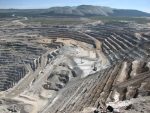
An open pit mine, with heavy machinery extracting copper ore in the background.
Methodology
To create our list of Top 20 Copper Producing Countries In The World, we gathered data on the copper production levels for each country. Latest data available for each country has been sourced from credible sources including US Geological Survey and World Mining Data. The values have also been cross referenced from multiple platforms like NASDAQ, Insider Monkey, and Investing News Network. With the acquired data, we have listed the Top 20 Copper Producing Countries In The World in ascending order based on the production levels of copper per annum in each country.
By the way, Insider Monkey is an investing website that tracks the movements of corporate insiders and hedge funds. By using a similar consensus approach, we identify the best stock picks of more than 900 hedge funds investing in US stocks. The top 10 consensus stock picks of hedge funds outperformed the S&P 500 Index by more than 140 percentage points over the last 10 years (see the details here). Whether you are a beginner investor or professional one looking for the best stocks to buy, you can benefit from the wisdom of hedge funds and corporate insiders.
20. Spain
Copper Production in 2021: 138,060 metric tons
We are starting our list of Top 20 Copper Producing Countries In The World with Spain. Spain contributes 0.55% to global production, according to Mining Technology. Copper exports for Spain are expected to grow at CAGR of 2% between 2022 and 2026. One of the leading producers of copper in Spain is the First Quantum Minerals, producing 101,776 tons of copper in the first quarter of 2024, ending 31 March 2024. In 2022 Copper Ore was the 35th most imported product in Spain. Moreover, in January 2024, Spain exported Copper Ore worth $101.96 million and imported Copper Ore worth $230.84 million.
19. Uzbekistan
Copper Production in 2021: 148,500 metric tons
In 2022, Uzbekistan exported $4.17 million worth of Copper Ore, ranking as the 59th largest exporter of Copper Ore globally, according to OEC. During the same year, Copper Ore stood as the 221st most exported product from Uzbekistan. Kazakhstan ($204 million) and Azerbaijan ($10.3 million) emerged as the fastest-growing import markets for Copper Ore in Uzbekistan.
18. Myanmar
Copper Production in 2021: 200,360 metric tons
The Letpadaung Copper Mine in Sagaing, Myanmar, held the title of the largest mine in the country, with an annual production of around 36.92 million tons, according to Global Data. Wanbao Mining Co Ltd owns the Letpadaung Copper Mine, which is scheduled to remain operational until 2051.
17. Mongolia
Copper Production in 2021: 303,030 metric tons
Oyu Tolgoi in Mongolia is one of the world's largest deposits of gold and copper, owned by Rio Tinto Group (NYSE:RIO). Rio Tinto Group (NYSE:RIO) is a British-Australian company, which is all about metals and mining. According to OEC, the country is one of the key copper exporters to China and exported 335,000 metric tons of copper to the country in the first quarter of the year 2022. Amidst the ongoing advancements in Mongolia's mining sector, the nation is poised to rank as the fifth-largest copper producer by 2030.
16. Iran
Copper Production in 2021: 313,612 metric tons
Iran plans to invest $15 billion to expand its copper production over the next five years. Iran aims to raise its annual copper cathode production capacity from 280,000 tons currently to over one million tons. New explorations have commenced in South Khorasan province in eastern Iran, with similar efforts underway in other provinces.
Amir Hassan Zadeh, deputy for economic affairs of the governorate of Kerman said that “The future of the nation is tied to the copper industry.”
15. Panama
Copper Production in 2021: 331,000 metric tons
Cobre Panama is an open-pit copper mine situated in the Colon Province of Panama. The copper mine, developed with an estimated investment of £5.3 billion ($7 billion), began commercial production in September 2019. Business Insider reported that the mine was responsible for 1.5% of the world’s copper before it shut down. At full capacity the mine is said to produce whopping 320,000 tons of copper!
14. Brazil
Copper Production in 2021: 335,761 metric tons
Brazilian economy is strongly supported by its mining industry and is also the biggest reason for Brazil’s positive balance of trade. The Brazilian mining giant Vale S.A. (NYSE:VALE), owns the largest mines in the country. The two largest mines Salobo Mine and Sossego Mine, both located in Para, are owned by Vale S.A. (NYSE:VALE). In 2023, Vale S.A. (NYSE:VALE) produced 66,800 metric tons of copper from its Sossego Mine, according to Reuters, while the Salobo Mine squeezed in a production of 136.88 thousand tons of copper in 2023.
13. Poland
Copper Production in 2021: 391,300 metric tons
Poland is one of the top countries in the world when it comes to electrolyte copper production. The country also holds impressive reserves of copper amounting to almost 36 million tons. In 2021, Poland exported copper worth $5.97 billion and was in included in the largest exporters of copper. The largest mine, owned by KGHM Polska Miedź S.A, is Rudna mine which produces copper and silver.
12. Kazakhstan
Copper Production in 2021: 511,940 metric tons
Kazakhstan produces 4% of the total copper produced in the world but it is it expected to see a slight decline in its production. According to Mining Technology, this decline of CAGR 0.63% is forecasted for the period 2022 to 2026 by Global Data. Out of the 709 mines that are operational in the world, 24 of them exist in Kazakhstan. Few of the biggest of these are Aktogay and Zhezkazgan, producing 229.78 thousand tons and 171.38 thousand tons of copper, respectively.
11. Canada
Copper Production in 2021: 541,648 metric tons
Canada holds copper reserves of almost 900 million tons in huge deposits of sulfide and porphyry. British Columbia is the single largest producer of copper in Canada, producing 53% of the total copper production. This province also has Canada’s biggest copper mine named Highland Valley that alone in 2022 produced 119,000 tons of copper, according to Government of Canada.
10. Mexico
Copper Production in 2023: 750,000 metric tons
The nation possesses nearly 53 million metric tons of reserves. The Buenavista del Cobre Mine in Sonora stands as Mexico's largest mine, giving out a production of 427.44 thousand tons of copper. According to the National Institute of Statistics and Geography, Mexico saw a 1.4% decrease in copper production in July 2022 compared to the previous year. This decline affected the entire mining industry in the country, resulting from mine closures, operational delays, and reduced ore grades.
9. Zambia
Copper Production in 2023: 760,000 metric tons
Copper plays a major role in the Zambian economy and accounts for 75% of the country’s total export earnings. The Mopani Copper Mines in Zambia produce most of the country's copper, squirting out a production volume of 72,694 metric tons in 2022; they represent Africa's largest copper deposit. The Lumwana mine is another significant operation in Zambia. It is owned by Barrick Gold Corporation (NYSE: GOLD).
As per UK investment firm SP Angel, Zambia's new president, Hakainde Hichilema, aims to boost investments in the country and intends to triple its copper production in the next decade.
8. Australia
Copper Production in 2023: 810,000 metric tons
The second largest copper reserves in the world belong to Australia second only to Chile at 93 million tons. About 10% of Australia's revenue comes from copper exports. In 2021, half of Australia's exports went to China, with Japan and South Korea following closely behind. The Olympic Dam deposit in Australia is home to one of the country's largest copper reserves, producing 205,000 tons in 2021, and is owned by BHP group limited (NYSE:BHP).
7. Indonesia
Copper Production in 2023: 840,000 metric tons
Indonesia is also one of the world's top copper producing countries. Grasberg Block Cave Mine, which is located in Papua which is owned by Freeport-McMoRan (NYSE:FCX) produces the most copper around 26.4 million tons per annum. Though as per the remarks of the President of Indonesia the country might ban the export of copper to improve the resource processing industry.
6. Russia
Copper Production in 2023: 910,000 metric tons
Russia has around 62 million tons of copper deposits. Udokan deposits in Siberia are Russia’s largest deposits and the third largest deposits in the world. Russia has begun production at the country’s largest untapped copper deposit. The initial stage of this metallurgical plant is said to be launched in 2024. It will handle up to 15 million tons of ore per year.
Click to continue reading and find out about Top 5 Copper Producing Countries In The World.
Suggested Articles:
Disclosure: None. Top 20 Copper Producing Countries In The World is originally published on Insider Monkey.
By Clara Denina and Eric Onstad
LONDON (Reuters) -Anglo American's chair will meet its top 30 shareholders to hear views on BHP's $39 billion bid for the miner, he told an annual general meeting on Tuesday, where he was restricted from discussing the spurned offer by takeover regulations.
Anglo rejected the offer on Friday, saying it was opportunistic, significantly undervaluing the company and its future prospects.
Some questions and comments from shareholders echoed broader concerns about the price and nature of BHP's bid.
"To what extent can you survive if you reject the offer?" one shareholder asked.
Chair Stuart Chambers said business was proceeding as usual, having asked shareholders at the start of the AGM for no questions about the bid because the company couldn't respond under restrictions applied by the UK Takeover Code.
The world's biggest listed mining group BHP is considering making an improved offer for Anglo, a source familiar with the matter told Reuters on Saturday.
"It's not the board that decides, but you," Chambers added.
Another shareholder thanked Chambers for rejecting "the comedy offer" from BHP, saying he valued the company at 41 pounds a share.
Under UK takeover rules, BHP has until May 22 to come back with a formal offer after the group said last week it would pay 25.08 pounds per Anglo share, a premium of 31% from the previous day's close.
Anglo shares were down 3.5% at 26.53 pounds on Tuesday.
In February Anglo announced a review of all its assets, after reporting a 94% plunge in annual profit and writedowns at its diamond and nickel operations.
At the time, CEO Duncan Wanblad said the two assets dragging on Anglo's portfolio were its Anglo Platinum and diamonds businesses.
A source told Reuters last week that Anglo was looking for partners for its De Beers diamonds business, which is among the assets BHP has said it would review after completion of any deal.
Last week's bid included a spin out of Anglo's iron ore and platinum assets in South Africa, where BHP has no activities.
(Reporting by Clara Denina and Eric Onstad; Editing by Veronica Brown, Alexander Smith and Jan Harvey)
Virtual Investor Conferences
Company Executives Share Vision and Answer Questions Live at VirtualInvestorConferences.com
NEW YORK, April 29, 2024 (GLOBE NEWSWIRE) — Virtual Investor Conferences, the leading proprietary investor conference series, today announced the agenda for Uranium, Battery, and Precious Metals Virtual Investor Conference to be held April 30th – May 2nd. Individual investors, institutional investors, advisors, and analysts are invited to attend.
REGISTER NOW AT: https://bit.ly/3UwFWI7It is recommended that investors pre-register and run the online system check to expedite participation and receive event updates. There is no cost to log-in, attend live presentations, or schedule 1×1 meetings with management.
“Our Virtual Investor Conferences are a great way for issuers to effectively and seamlessly expand their reach among investors,” said Jason Paltrowitz, Executive Vice President of Corporate Services at OTC Markets Group. “We’re looking forward to hosting the 3-day Uranium, Battery and Precious Metals Virtual Investor Conference which will feature over 15 different companies currently trading on the OTCQX, OTCQB, and Pink Markets.”
April 30th
|
EasternTime (ET) |
Presentation |
Ticker(s) |
|
9:30 AM |
Bannerman Energy Ltd. |
|
|
10:30 AM |
Global Atomic Corp. |
|
|
11: 00 AM |
F3 Uranium Corp. |
|
|
11:30 AM |
Western Uranium & Vanadium Corp. |
|
|
1:00 PM |
Myriad Uranium Corp. |
|
|
1:30 PM |
C2C Metals Corp. |
May 1st
|
EasternTime (ET) |
Presentation |
Ticker(s) |
|
9:30 AM |
Novo Resources Corp. |
|
|
10:00 AM |
CleanTech Lithium Plc |
|
|
10: 30 AM |
Outcrop Silver |
|
|
11:30 AM |
WallBridge Mining Company Ltd. |
|
|
12:00 PM |
Minera Alamos, Inc. |
|
|
1:00 PM |
Graphite One Inc. |
|
|
1:30 PM |
Spruce Ridge Resources Ltd |
|
|
2:00 PM |
AbraSilver Resource Corp. |
|
|
2:30 PM |
White Gold Corp. |
May 2nd
|
EasternTime (ET) |
Presentation |
Ticker(s) |
|
9:30 AM |
Serabi Gold Plc |
|
|
10:30 AM |
Silver Range Resources Ltd. |
|
|
11: 00 AM |
Newcore Gold Ltd. |
To facilitate investor relations scheduling and to view a complete calendar of Virtual Investor Conferences, please visit www.virtualinvestorconferences.com.
About Virtual Investor Conferences®
Virtual Investor Conferences (VIC) is the leading proprietary investor conference series that provides an interactive forum for publicly traded companies to seamlessly present directly to investors.
Providing a real-time investor engagement solution, VIC is specifically designed to offer companies more efficient investor access. Replicating the components of an on-site investor conference, VIC offers companies enhanced capabilities to connect with investors, schedule targeted one-on-one meetings and enhance their presentations with dynamic video content. Accelerating the next level of investor engagement, Virtual Investor Conferences delivers leading investor communications to a global network of retail and institutional investors.
Media Contact: OTC Markets Group Inc. +1 (212) 896-4428, media@otcmarkets.com
Virtual Investor Conferences Contact:John M. ViglottiSVP Corporate Services, Investor AccessOTC Markets Group (212) 220-2221johnv@otcmarkets.com
The world’s largest mining company has a problem. Australia’s BHP has set out its intention to snap up the rival miner Anglo American in a multibillion-pound deal that would reshape the global industry. Its proposed £31bn takeover plan has already been rebuffed as a lowball offer that undervalues the company. But Anglo’s deep roots in South Africa could be a far more sensitive issue to address.
Africa’s most advanced economy was built on mining. For more than 150 years since the first discovery of diamonds, gold and coal, the industry has remained South Africa’s economic lifeblood. Today it is the world’s fifth largest producer of coal and diamonds and the 10th largest producer of gold.
As a result, Anglo American has held a role at the centre of South Africa’s fortunes, affording the company enormous soft power in the country’s economic and political development. In return, South Africa’s government is Anglo’s largest shareholder, with a 7% stake held via its Public Investment Corporation. A takeover would in effect strip South Africa of a 100-year bond with one of the world’s biggest companies.
“Nobody here views this deal favourably,” said James Lorimer, the shadow minister for mining and natural resources. “Anglo American’s business here was once the jewel in the crown of South Africa’s economy. Under this deal it could be sold off for parts from someone else’s company.”
BHP has made clear that its interest lies in copper. Anglo American’s vast copper reserves in Chile and Peru would make BHP the world’s largest producer of copper at a time when it has never been more profitable.
It is in the extraction of copper – a vital building block in the development of renewable energy projects and electric vehicles – that the mining industry can see a clear path ahead into a low-carbon future.
By contrast, South Africa’s assets are considered a risk rather than a reward. BHP plans to exclude shares in Anglo’s Kumba Iron Ore and its Amplats platinum businesses to reduce its exposure to the South African market, which it exited in 2015 by spinning out the mining company South32. Its subsidiary De Beers, the world’s largest diamond miner, has revealed a slump in production as luxury spending slips and lab-grown diamond alternatives begin to erode its market share.
BHP’s reluctance to forge fresh ties with South Africa appears mutual, if comments made by Gwede Mantashe, the country’s mining minister, are anything to go by. Mantashe, an ANC veteran and former trade union leader, told the Financial Times that he was opposed to the deal because South Africa’s previous experience with BHP was “not positive”. The company “never did much for South Africa”, he said.
Anglo occupies a unique position within the country: it was built on the backs of cheap black labour during decades of institutionalised racial oppression, but its founders also acted as a driving force behind the dismantling of the apartheid state.
Today it uses its considerable lobbying power to urge the government to overhaul its floundering public services, for example by pushing for investment to put an end to rolling electricity blackouts, in an attempt to salvage the country’s economic growth. It has spent more than $6bn (£4.8bn) in the country in the past five years, including investments in South Africa’s underfunded education system – De Beers has for decades sponsored students through university scholarships.
“So many of us have grown up with the idea of ‘rapacious’ mining companies,” Lorimer said. “But in many ways these large listed companies make for better corporate citizens. As big international companies leave South Africa, we run the risk of attracting piratical players who are after profit and not much else.”
Anglo was founded in 1917 by Ernest Oppenheimer, a German immigrant to London who first moved to Johannesburg at the turn of the century as a young diamond broker. He used £1m from UK and US investors to establish Anglo American and within 40 years it was the world’s largest producer of gold, while its twin, De Beers, commanded 90% of the world’s diamond trade.
At the height of Anglo’s industrial power the business magnate also played a role in nudging South Africa’s apartheid government towards constitutional reform. Shortly before his death he offered discreet financial backing to the 156 anti-apartheid activists, including Nelson Mandela, who faced South Africa’s 1956 Treason Trials.
His son, Harry Oppenheimer, assumed leadership of the company and took up his father’s brand of pragmatic liberalism in the late 1950s. He backed proposals for constitutional reform that would water down the ruling National party’s agenda of racial oppression – but he stopped short of supporting the ANC-led liberation movement’s calls for universal franchise.
Still, the company was “indelibly connected” to South Africa’s political reformation, according to Michael Cardo, the author of a biography of Harry Oppenheimer and South Africa’s former shadow minister of employment until his resignation from politics in February.
“Anglo is enmeshed with the history of South Africa in the 20th century – its industrial-economic development as well as its political evolution from a white supremacist state to a non-racial democracy,” he said.
“It would be a matter of some consequence if this deal went through. It would be a significant loss for South Africa which could diminish its status as a major mining player on the world stage. It would speak to the state of South Africa today. The government could well see this deal as a massive blow to the dignity and self-worth of the country. It’s politically significant and speaks to South Africa’s status on the world stage.”
With South Africa just weeks away from what is expected to be the closest democratic election in its history, the loss would be keenly political, too. Lorimer, who is part of the Democratic Alliance, said the deal exemplified the collapse of the economy under the ANC. “We used to have a world-leading mining industry, but now nobody wants to invest here,” he said.
A senior Tory MP is preparing to seek assurances from BHP over whether its attempted £31bn takeover of Anglo American will impact a major mining project in the north of England.
Sir Robert Goodwill, whose Scarborough and Whitby constituency is home to the Woodsmith project, said he would push BHP to reiterate its commitment to the fertiliser mine if its acquisition goes ahead.
The proposed Woodsmith mine in Yorkshire is Britain’s largest private-sector infrastructure project with an estimated cost of $9bn, employing around 1,400 local people.
It is expected to start production in 2027 but analysts at US investment bank Berenberg said BHP can “probably delay the Woodsmith project” given that it already has a separate fertiliser mine in Canada.
The warning from Sir Robert, who is also chairman of the Environment, Food and Rural Affairs Committee, comes after BHP made an unsolicited £31bn offer for Anglo American last week which was rejected.
It has so far failed to convince the London-listed company to sell, although its future remains unclear after it emerged activist investor Elliott has built up a $1bn stake in the business.
Sir Robert told The Telegraph: “If this takeover does go ahead, I’d be very keen to have an early meeting with BHP to seek reassurances that this won’t delay the Woodsmith project.
“They’re ploughing £1m a day into what will be the deepest mine in the United Kingdom, it’s more than a mile deep.
“They’re digging a 23-mile tunnel from Whitby to Teesport. Much of which has been completed.”
He said that if BHP does manage to pull off its acquisition, Woodsmith would serve as the “jewel in the company’s crown”.
Sir Robert added that mothballing the plant “would not be an option given how advanced construction is”.
Anglo American took over the Yorkshire mine after the company completed a rescue deal for Sirius Minerals in 2020.
It has since ploughed hundreds of millions of pounds into the project, which involves extracting a polyhalite, a new fertiliser product, from a mile underneath the North York Moors National Park and transporting it through a 23-mile tunnel to Teesside.
BHP was contacted for comment.
(Adds BHP comment on paragraph 3, comment from Anglo American investors in paragraph 6)
April 27 (Reuters) – BHP Group is considering making an improved offer for Anglo American after its $39 billion initial proposal was rejected by the London-listed miner, a source familiar with the matter told Reuters.
BHP is in discussions on a revised bid for Anglo American to be made in coming weeks, the source said. The deliberations are ongoing and the group has not yet made a decision on the size and structure of the new proposal, the source added.
BHP said it does not comment on what it called "rumour and speculation", while Anglo American did not immediately respond to a Reuters request for comment.
Anglo American rejected BHP's $39 billion takeover offer on Friday, saying it significantly undervalued the miner and its future prospects.
Under UK takeover rules, BHP has until May 22 to come back with a formal offer for Anglo American. It is expected to sweeten its 25.08 pounds per share offer to try to clinch a deal that would create the world's biggest miner of copper, a metal central to the clean energy shift.
Some Anglo American investors, who asked not to be named because of the sensitivity of the matter, told Reuters the company is worth around 30 pounds a share.
Anglo shares closed at 26.43 pounds on Friday.
Much of the focus of BHP's bid has been on copper. A tie-up with Anglo would forge a group accounting for about 10% of global output of the metal, which due to its conductivity and resistance to corrosion is used in everything from electric vehicles and power grids to construction.
A deal, if successful, would be the largest mining takeover globally in 2024 so far and would rank among the top 10 largest deals ever for the sector, LSEG data showed. (Reporting by Rishabh Jaiswal in Bengaluru and Clara Denina in London; Editing by David Evans and David Holmes)
(Reuters) -BHP Group is considering making an improved offer for Anglo American after its $39 billion initial proposal was rejected by the London-listed miner, a source familiar with the matter told Reuters.
BHP is in discussions on a revised bid for Anglo American to be made in coming weeks, the source said. The deliberations are ongoing and the group has not yet made a decision on the size and structure of the new proposal, the source added.
BHP said it does not comment on what it called "rumour and speculation", while Anglo American did not immediately respond to a Reuters request for comment.
Anglo American rejected BHP's $39 billion takeover offer on Friday, saying it significantly undervalued the miner and its future prospects.
Under UK takeover rules, BHP has until May 22 to come back with a formal offer for Anglo American. It is expected to sweeten its 25.08 pounds per share offer to try to clinch a deal that would create the world's biggest miner of copper, a metal central to the clean energy shift.
Some Anglo American investors, who asked not to be named because of the sensitivity of the matter, told Reuters the company is worth around 30 pounds a share.
Anglo shares closed at 26.43 pounds on Friday.
Much of the focus of BHP's bid has been on copper. A tie-up with Anglo would forge a group accounting for about 10% of global output of the metal, which due to its conductivity and resistance to corrosion is used in everything from electric vehicles and power grids to construction.
A deal, if successful, would be the largest mining takeover globally in 2024 so far and would rank among the top 10 largest deals ever for the sector, LSEG data showed.
(Reporting by Rishabh Jaiswal in Bengaluru and Clara Denina in London; Editing by David Evans and David Holmes)
(Bloomberg) — BHP Group is considering making an improved proposal for Anglo American PLC after its $39 billion initial offer was rejected by the London-listed miner, according to people familiar with the matter.
Most Read from Bloomberg
-
Musk Makes Surprise China Visit in Search of Tesla Revenue Boost
-
Musk’s China Trip Pays Off With Key Self-Driving Hurdles Cleared
-
Elliott Built ‘Large’ Stake in Buffett-Favored Sumitomo, Source Says
-
Yen Watchers Ask When Japan Will Step In as Slide Accelerates
The Australian miner is discussing with its advisers a revised proposal for Anglo American in the coming weeks, the people said, asking not to be identified as the matter is private. BHP is also in the process of discussing the merits of a deal with its key shareholders and trying to convince them to back the offer, the people said.
Read more: BHP’s $39 Billion Bid for Anglo American Was Years in the Making
BHP’s deliberations are ongoing and it hasn’t made a final decision on the size and structure of the new proposal, the people said.
A BHP spokesman declined to comment.
Anglo this week rejected an all-share deal in which it would spin off controlling stakes in South African platinum and iron ore companies to its shareholders before being acquired by BHP. The total per-share value of the non-binding proposal was about £25.08, BHP said. Anglo Chairman Stuart Chambers called the proposal “opportunistic” and said it failed to value the company’s prospects.
A tie-up with Anglo would give BHP roughly 10% of global copper mine supply ahead of an expected shortage that many market watchers have predicted will send prices soaring. If successful, the transaction would mark a return to large-scale dealmaking for BHP.
Most Read from Bloomberg Businessweek
-
Modi Is $20 Trillion Short on His Grand Plan for India’s Economy
-
Biden Strategy to Tame Gas Prices Is in Peril as Iran Sanctions Pressure Mounts
-
Caught Between the US and China, a Powerful AI Upstart Chooses Sides
-
US White-Collar Job Growth Stalls, Even in Pandemic Boomtowns
©2024 Bloomberg L.P.
(Bloomberg) — When Mike Henry took over as chief executive officer of BHP Group in 2020, the world’s biggest mining company had lost its swagger.
Most Read from Bloomberg
-
Musk Makes Surprise China Visit in Search of Tesla Revenue Boost
-
Musk’s China Trip Pays Off With Key Self-Driving Hurdles Cleared
-
Elliott Built ‘Large’ Stake in Buffett-Favored Sumitomo, Source Says
-
Yen Watchers Ask When Japan Will Step In as Slide Accelerates
Bruised by a series of painful missteps and a run-in with activist Elliott Investment Management, the Anglo-Australian behemoth was kicking crucial decisions down the road, and increasingly aware that its reliance on fossil-fuel-heavy commodities could start turning investors away.
Detail-focused and exacting, Henry didn’t fit the stereotype of the hard-charging and charismatic mining executive that the industry so often turned to for its leaders. But he moved quickly and methodically, and within 20 months BHP had announced the most dramatic shakeup since its creation two decades earlier. The company would sell off its oil and gas business and dismantle a dual listing structure that it had outgrown years earlier; it finally greenlit a giant potash mine in Henry’s native Canada after years of wavering.
BHP also started making a tentative return to acquisitions. The industry’s biggest player had spent years on the M&A sidelines, serving penitence for a series of disastrous takeover bids and deals. So Henry started small. When he found himself in a bidding war, the CEO showed he was willing to walk away. Eventually, BHP worked itself up to a $6.4 billion copper takeover last year.
The decisions of the past few years may appear disparate, but each one, according to people familiar with the matter, was always aiming toward the same goal. For years, it’s been an open secret in the mining industry that BHP’s boss was looking for the “Big One” — a mega-deal to supercharge the company’s copper business.
And now, it’s finally time.
The news this week that BHP proposed a $39 billion deal to partly break up and then acquire Anglo American Plc has set the mining industry alight. The proposal, which Anglo swiftly and forcefully rejected on Friday, would mark the end of one of the world’s oldest mining companies and hand BHP control of some of the best and biggest copper mines at a time when the world is barreling toward a supply shortage.
BHP, which has a market value of about $140 billion, has made copper a central part of its strategy, betting that supply will struggle to keep pace with demand for metal to build electric vehicles, solar panels and high-voltage cables. But the company’s expansion options at its own assets are not enough to offset its retreat from fossil fuels, creating pressure to add new mines from outside. The offer is also sparking predictions that it will set off a wider wave of mining M&A, with many of BHP and Anglo’s rivals scouting for their own copper deals.
But there are huge question marks over whether BHP can pull it off. Henry and his team have come up with a complicated, multistep deal that would ensure BHP only gets the parts of Anglo it actually wants, and minimizes risks for the company. Yet critics are already calling the deal unworkable, and it’s not clear how the CEO’s logic-driven approach will deal with the less predictable real-world realities: even if Anglo can be convinced by an improved bid, BHP will still need to win over regulators in what can be politically charged approval processes.
And Elliott has once again reared its head. Bloomberg reported Friday that the activist has emerged as one of Anglo’s biggest shareholders, introducing a new unknown to the situation in the form of an old adversary.
For Henry, 58, this is the culmination of years of strategizing and preparation. When Anglo suffered a series of setbacks that sent its shares plunging and put its management on the back foot, the CEO of BHP was ready to act, according to people familiar with his thinking. The company has been working seriously on the proposal for months with Henry personally leading the charge, and is undeterred by Anglo’s initial rejection. It’s likely to soon come back with an improved proposal, the people said.
Read: Anglo’s Stumbles Make It Prey for Mining’s Biggest Predator
“He’s spent a long time, very deliberately putting himself in a position where he can now move quickly and opportunistically," said George Cheveley, a portfolio manager at Ninety One UK Ltd., a shareholder in both companies, and who worked at BHP in the mid-2000s. “He's an incredibly hard working, detailed person.”
In discussions with people who know and work with Henry, “detailed” is a word that comes up a lot. He’s often several steps ahead of others, they say, and employees have learned it’s best to admit ignorance rather than trying to bluff their way through a conversation. Decisions are invariably based on cold logic and hard facts.
Born in Canada to a navy family, Henry has Japanese heritage and is fluent in the language, having first worked for Mitsubishi Corp. before joining BHP in 2003. Over the next 17 years he worked his way up through the ranks, running trading and coal operations before taking over the miner’s Australian business, where its biggest and most profitable mines are located.
When Henry became CEO he soon took steps to start cleaning up the company’s portfolio of assets and implementing changes that would ultimately make it easier to pursue a deal when the time came. One of the biggest moves was the collapse of the company’s dual listing, which dated back to its creation two decades earlier when Australia’s BHP Ltd. merged with rival Billiton. In announcing the decision to leave London, he emphasized how it would unleash the company's agility to do deals quickly.
While the changes reshaped BHP, it was still stuck with a major long-term problem: Its business was dominated by iron ore and coal and lacked big enough growth options in copper and nickel, the sort of “future facing” commodities that many investors favor for their exposure to the energy transition.
By early 2022, Henry had beefed up his deal team and issued marching orders — they would start evaluating BHP’s big copper-producing rivals, including Freeport-McMoRan Inc. and Glencore Plc.
For BHP, the prospect of any mega-deal means contending with a history of painful missteps, as the miner has repeatedly fallen short in its most ambitious moves. The company made an audacious $150 billion run at number-two miner Rio Tinto Group that eventually failed, while a $39-billion pursuit of Potash Corp. of Saskatchewan Inc. collapsed when the Canadian government moved against the company. Before Henry took over, BHP's most recent big deal was a hugely expensive foray into shale, which it quickly reversed.
Read: BHP Seeks to Break Mining’s M&A Curse with Thorny Anglo Deal
But Henry also recognized that BHP had missed opportunities in the past and had not been prepared enough or nimble enough to pounce when its rival were wounded. He was determined he would be ready next time.
Cracks Show
It was around the same time — in the first half of 2022 — that cracks were starting to show at one of BHP’s smaller rivals, Anglo American. A few days after new CEO Duncan Wanblad took the helm, the company announced a major setback at its mines, with production falling and costs rising.
But it was over the course of last year that the pressure really built up. Many of the issues were outside of Anglo’s control — the diamond market imploded, platinum prices collapsed and rail and port problems in South Africa have squeezed exports from the company’s cash-cow iron ore business. Anglo is the only major miner with big platinum and diamond businesses and is particularly exposed to South Africa. Its complicated structure — with majority shareholdings in two large, listed South African mining companies — and its unusual product mix have been part of the reason it hasn’t been successfully targeted previously.
The biggest disappointment, however, came in December, when the London-based company announced a big and surprising cut to its copper production, sending its shares plunging. Anglo’s management has been under increasing pressure since then — it started a review of its businesses and faced calls from some analysts and investors to pare back expansion plans or even sell some assets.
Wanblad, a 57-year-old South African, is also a long-time employee, and like his counterpart at BHP is described by employees as deeply analytical.
People close to Henry say he’s been confused by Anglo’s failure to take tough decisions to address its problems. BHP had kept a file on Anglo for years, but the mounting missteps in recent months spurred the company to start looking at a potential deal more seriously, eventually culminating in the proposal first reported by Bloomberg this week.
Separate First
BHP has outlined a deal in which it wants Anglo to first separate out its South African platinum and iron ore businesses — spinning them off to shareholders — before proceeding with an all-share takeover. At last Tuesday’s closing prices, the share ratio would value Anglo at £31.1 billion, according to BHP’s calculations.
It’s easy to see Henry’s focus on detail and logic in the proposal. BHP would only go ahead with the takeover if Anglo completes its exit from the South African companies, simplifying its structure and reducing exposure to a country where miners have long contended with power shortages, logistics disruptions and fractious labor relations. The company has also flagged its intention to put assets including De Beers, the iconic diamond business, under strategic review — generally business speak for “up for sale.”
Anglo has pushed back hard on the design of the deal, arguing that it creates uncertainty and “significant execution risks,” in addition to its assessment that the offer itself undervalues the company. Spinning off the South African businesses would take time, leaving Anglo exposed to changes in commodity prices and other factors— potentially for months — despite already having agreed to a takeover price.
And there are other uncertainties. The deal, which would give BHP roughly 10% of global copper mine output, is likely to raise antitrust red flags, especially in its biggest customer China.
Read: China Could Hinder BHP’s Bid to Become Copper’s Top Producer
Some South African politicians have already reacted negatively to the announcement, raising questions about whether BHP has a strategy to ensure a deal doesn’t turn into a political lightning rod, especially in an election year. While Anglo is listed and headquartered in London, it’s a deeply South African company ingrained with the country’s history, politics and economy.
When the African mining industry gathered in Cape Town in February, Anglo boss Wanblad was one of the keynote speakers, a few hours after President Cyril Ramaphosa took the stage. Nobody questioned the absence of Henry or other senior BHP executives — unlike Anglo, the company doesn't operate any pits or shafts in Africa. But in hindsight, Henry’s absence seems like a curiously missed opportunity to meet with key politicians and other influential figures.
“There's a lot of issues and obstacles to overcome, so we'll have to see,’’ said Professor Frederik Anseel, the Interim Dean at UNSW Business School — one of Australia's leading business universities. “South African government, a bit of competitor analysis, China involvement. Clearly these are hurdles BHP will need to take and I think the first reactions from South Africa were not super positive.’’
Henry will also need to convince his own investors that Anglo’s vulnerability presents a can’t-miss opportunity to snap up valuable copper mines.
And while he’s successfully transformed the company, not all of his strategic moves have paid off. Henry initially championed nickel — a metal used to make electric vehicle batteries — as a parallel commodity to copper. The company looked to expand its existing operations and went on the hunt for deals, but a glut of supply from Indonesia has sent prices plunging, forcing BHP to take a $2.5 billion writedown on its flagship mine and consider shutting it altogether.
But the foray also holds some insight into Henry’s strategy. When its offer for a Canadian nickel project turned into a bidding war, BHP ended up walking away. Company insiders point to this as a differentiator from his predecessors: The ego-driven culture of the past is gone, they say, and BHP would rather lose out on a deal than risk destroying value.
What happens now? Under UK takeover law BHP has until May 22 to either announce a firm intention to make an offer or walk away, and the company is expected to return soon with an improved proposal in the hopes of winning over Anglo’s board and management. Analysts at Jefferies and Co. have suggested the per-share value for the whole company will need to be at least £28 for Anglo to take it seriously and enter talks.
And the arrival of Elliott on the scene presents a potential wild card. The activist hedge fund led by Paul Singer amassed its 2.5% holding in Anglo over recent months, Bloomberg reported on Friday. The firm is known for stepping in to beaten-down stocks and then pushing companies to take measures ranging from share buybacks to outright sales of the business.
Many in the industry believe the BHP offer has fired the gun on a new wave of restructuring for the global mining industry — and one that is almost certain to involve Anglo, whether or not BHP succeeds.
“For a while we’ve felt that within mining there’s probably some consolidation due. While nobody wants to be the one who is consolidated, Anglo are in a position now where they have to make the best of it,” said Chevely, the portfolio manager at Ninety One. “In a year’s time, I don’t think Anglo is sat there as the same company they are today.”
–With assistance from William Clowes, Jack Farchy and Mark Burton.
Most Read from Bloomberg Businessweek
-
Modi Is $20 Trillion Short on His Grand Plan for India’s Economy
-
Biden Strategy to Tame Gas Prices Is in Peril as Iran Sanctions Pressure Mounts
-
Caught Between the US and China, a Powerful AI Upstart Chooses Sides
-
US White-Collar Job Growth Stalls, Even in Pandemic Boomtowns
©2024 Bloomberg L.P.
Teck Resources (TSE:TECK.B) First Quarter 2024 ResultsKey Financial Results
-
Revenue: CA$3.99b (up 5.4% from 1Q 2023).
-
Net income: CA$343.0m (down 71% from 1Q 2023).
-
Profit margin: 8.6% (down from 31% in 1Q 2023). The decrease in margin was driven by higher expenses.
-
EPS: CA$0.66 (down from CA$2.27 in 1Q 2023).
All figures shown in the chart above are for the trailing 12 month (TTM) period
Teck Resources Revenues and Earnings Miss Expectations
Revenue missed analyst estimates by 6.5%. Earnings per share (EPS) also missed analyst estimates by 26%.
Looking ahead, revenue is expected to decline by 13% p.a. on average during the next 3 years, while revenues in the Metals and Mining industry in Canada are expected to grow by 15%.
Performance of the Canadian Metals and Mining industry.
The company's shares are up 6.2% from a week ago.
Risk Analysis
You still need to take note of risks, for example – Teck Resources has 1 warning sign we think you should be aware of.
Have feedback on this article? Concerned about the content? Get in touch with us directly. Alternatively, email editorial-team (at) simplywallst.com.This article by Simply Wall St is general in nature. We provide commentary based on historical data and analyst forecasts only using an unbiased methodology and our articles are not intended to be financial advice. It does not constitute a recommendation to buy or sell any stock, and does not take account of your objectives, or your financial situation. We aim to bring you long-term focused analysis driven by fundamental data. Note that our analysis may not factor in the latest price-sensitive company announcements or qualitative material. Simply Wall St has no position in any stocks mentioned.
(Bloomberg) — The last time BHP Group took a swing at another major miner, it was Rio Tinto Plc back in 2007. That could have been a blockbuster $150 billion takeover, but with metals prices crashing as the financial crisis took hold and with China signaling its discontent, the plan crumbled.
Most Read from Bloomberg
-
Javier Milei Fuels Wild Rally That Makes Peso No. 1 in World
-
Plunging Home Prices, Fleeing Companies: Austin’s Glow Is Fading
-
Huawei’s New Phone Runs Latest Version of Made-in-China Chip
-
US Economy Slows and Inflation Jumps, Damping Soft-Landing Hopes
-
Fed’s Preferred Core Inflation Gauge Rose at Brisk Pace in March
Having confirmed a takeover approach for rival Anglo American Plc on Thursday only to have it swiftly rejected, executives at the world’s biggest digger will be wringing their hands. They need a better outcome this time — even with one of the most complex deals the industry has seen in years.
The sector as a whole has a dismal track record when it comes to acquisitions. Caught out by the scale of China’s economic acceleration at the start of the century and desperate to add supply, mining giants went on a shopping spree. The result was that billions of shareholder dollars were incinerated through poor purchases and investments in often overly ambitious, large-scale projects.
BHP is no exception. It failed in a $39-billion pursuit of Potash Corp. of Saskatchewan Inc. It did pull off the $12.1 billion purchase of Petrohawk Energy Corp. in 2011 — but the move into shale proved to be an expensive mistake. It resulted in the early exit of chief executive Marius Kloppers, and BHP ultimately cut its losses and sold out to BP Plc in 2018.
BHP retreated into its role as a conservative heavyweight and flagship Australian company, focusing on cleaning up the consequences of the splurge. It appointed appropriately technocratic leaders and sold assets rather than buying them, spinning off what became South32 Ltd. in 2015. It only began testing the acquisition waters again in 2022, securing the $6.4 billion purchase of copper producer OZ Minerals Ltd.
“The large deals in the past have been hard to deliver, hard to show how they add value. In a number of cases, you roll forward a couple of years and deals are unwound,” said David Radclyffe, managing director at Global Mining Research in Sydney.
“So given that this deal is a complex structure, with complex geographies, and a complex commodity mix — it appears that the real opportunity is copper, BHP just has to take all the rest and deal with that as it can — it does raise a few flags.”
Digging Deep
Eager to cherry-pick the best of Anglo American’s assets outside South Africa and to seize copper assets before the metal’s price really takes off, BHP is betting on an unusually byzantine structure. Its $39 billion all-share offer is dependent on spinning off Anglo American Platinum and Kumba Iron Ore, and it has already said assets beyond copper, metallurgical coal and iron ore would be “subject to strategic review.”
Pulling off such a deal will be tricky.
Buyers for businesses like diamond arm De Beers are not plentiful, and that’s before considering the additional challenge of navigating any sales demanded by global antitrust authorities, as China and other major jurisdictions consider the impact of allowing BHP to become the world’s largest copper producer.
Even when such deals do work, the fallout can be dud assets that weigh on the balance sheet for years. BHP’s 2001 purchase of Billiton — the deal that created today’s miner — took years to clean up.
In large part, the willingness to take on such a drawn out and risky bid is in itself a reflection of the lack of options for miners eager to expand out of steelmaking commodities — which have underpinned profitability for years — and into the ingredients of a green energy transition. That includes many metals where scale is simply too small, and others where there are simply too few assets available to buy — including copper, which broke through $10,000 a ton on Friday for the first time in two years.
“BHP can probably pull this off this time because at least it is the right time in the cycle,” said Matthew Langsford, portfolio manager at Sydney-based Terra Capital, who is interested in copper but isn’t a shareholder in BHP or Anglo American. “We are a long way from large new copper supply coming to market and inventories are low.”
Anglo’s swift rejection — and its shares — suggest BHP will have to pay more to win over Anglo. That will add another layer of complexity, and test the balance between paying enough to capture its quarry and remaining below levels that will rattle shareholders with long memories.
“I 100% agree with the logic. Obviously it’s a complicated deal with what needs to happen, but the thing that worries me with BHP is their propensity to overspend sometimes. Once they’ve made their decision, if it’s got too much friction they generally increase their offer,” said Matthew Haupt, portfolio manager at Wilson Asset Management in Sydney and who is underweight on BHP.
“You wouldn’t expect much more – between 5% and 10%. Even 10% would be a stretch.”
–With assistance from Clara Ferreira Marques, Annie Lee, Yasufumi Saito and Sybilla Gross.
(Updates with Anglo rejection of the deal, copper threshold, comment in paragraph 15)
Most Read from Bloomberg Businessweek
-
US White-Collar Job Growth Stalls, Even in Pandemic Boomtowns
-
Caught Between the US and China, a Powerful AI Upstart Chooses Sides
-
How North Korea’s Man in the West Ran Afoul of US Authorities
-
Studio Behind Dune Eyes Growth, Even Without a Paramount Merger
-
A Hedge Fund Billionaire’s Cash Helped Fund a ‘Predatory’ Lender
©2024 Bloomberg L.P.
By Clara Denina and Melanie Burton
LONDON (Reuters) -Anglo American rejected BHP's 31.1 billion pound ($39 billion) takeover offer on Friday, saying it significantly undervalued the miner and its future prospects.
BHP, which has until May 22 to make a binding bid, is expected to sweeten its 25.08 pound per share offer to try to clinch a deal that would create the world's biggest miner of copper, a metal central to the clean energy shift.
Reuters reported on Thursday, citing two sources, that Anglo's management did not consider the proposal attractive.
"We would need to see more money on the table before we sold our shares," said Todd Warren, a portfolio manager at Tribeca Investment Partners in Sydney, which holds shares in Anglo.
Anticipation among analysts and investors that BHP would increase its offer were reflected in Anglo's London-listed shares, which hit their highest level in a year. They were trading about 3.5% higher at 26.50 pounds at 1612 GMT.
News that activist investor Elliott has built a $1 billion position in Anglo, according to a person with knowledge of the stake, also buoyed the stock.
New York-based Elliott locked horns with BHP in 2017, when it built a 5% stake in the Australian miner and pushed for a series of strategic changes in order to return more cash to shareholders.
Anglo said the BHP deal's complexity created uncertainty and that it was already well-placed to create significant value from assets aligned with the energy transition and other demand trends.
"The BHP proposal is opportunistic and fails to value Anglo American's prospects," Anglo Chairman Stuart Chambers said in a statement, adding that it diluted the value upside for Anglo's shareholders relative to BHP's.
The mining group started a strategic review of its assets in February in response to a 94% fall in annual profit and a series of writedowns caused by lower commodity demand.
Much of the focus of BHP's bid has been on copper. A tie-up with Anglo would forge a group accounting for about 10% of global output of the metal, which due to its conductivity and resistance to corrosion is used in everything from electric vehicles and power grids to construction.
Mining has seen a mergers and acquisitions rush as companies seek more exposure to metals needed for the global energy transition, and further consolidation could follow.
A deal, if successful, would be the largest mining takeover globally in 2024 and among the top 10 largest deals for the sector ever, LSEG data shows.
BHP's shares closed 4.6% lower in Australia after the world's largest listed mining group on Thursday offered holders of Anglo shares a premium of 31% to Wednesday's market close.
Investors may also have concerns about the merits of the deal as it faces different regional jurisdictions and some Anglo businesses are lower-margin than BHP's, analysts said.
"It's not clear how BHP adds value to the deal if it is required to offer considerably more," said Brenton Saunders, a portfolio manager at Pendal, of the deal's complex structure.
The Australian group's CEO Mike Henry and other BHP executives including Chief Financial Officer Vandita Pant will brief investors on their proposal next week, fund managers said.
SOUTH AFRICA
A condition of BHP's proposal is that Anglo first distributes to shareholders its stakes in Anglo American Platinum (Amplats) and Kumba Iron Ore, both of which operate in South Africa, where BHP has no assets.
A source familiar with BHP's thinking said those assets would be better managed locally. BHP jettisoned its smaller assets years ago to focus on higher-volume commodities.
Kumba is hobbled by a failing logistics network while Amplats, which faces lower metal prices and falling demand, said in February it was embarking on a restructuring that could affect about 3,700 jobs.
Any exit by Anglo, which was founded in Johannesburg in 1917 and employs more than 40,000 South Africans, would be a further economic blow to the country, whose miners have been cutting jobs and investment as platinum especially falls out of favour.
South Africa's Public Investment Corporation (PIC) holds 6.99% of Anglo American, LSEG data shows, and the government is scrutinising BHP's proposal.
The move comes weeks before a general election in which voter anger about a stagnant economy and high unemployment could cost the long-governing African National Congress its majority.
On Friday, Impala Platinum announced it could cut 3,900 jobs in South Africa due to lower metal prices.
Beyond South Africa, attention turned to potential antitrust hurdles in China, the world's biggest buyer of copper, and in Japan and India, which take BHP's steel-making coal.
Glencore was forced to sell its interest in Xstrata's Las Bambas copper project in 2013 to clear a hurdle set by Chinese regulators for its $35 billion deal.
(Reporting by Clara Denina in London, Melanie Burton in Melbourne, Scott Murdoch in Sydney; additional reporting Archisma Iyer; Writing by Miyoung Kim, Elaine Hardcastle and Alexander Smith; Editing by Sonali Paul, Neil Fullick, Jamie Freed and Catherine Evans)
(Bloomberg) — When former boss Mark Cutifani left Anglo American Plc in mid-April 2022, things had rarely looked better for the century-old miner. Metals prices soared as the world emerged from lockdowns, the company had recently posted its best-ever annual profit and the popular industry veteran was handing over to a trusted lieutenant. Anglo stock hit a record the same day.
Most Read from Bloomberg
-
Javier Milei Fuels Wild Rally That Makes Peso No. 1 in World
-
Plunging Home Prices, Fleeing Companies: Austin’s Glow Is Fading
-
Huawei’s New Phone Runs Latest Version of Made-in-China Chip
-
US Economy Slows and Inflation Jumps, Damping Soft-Landing Hopes
Two years later, the company’s reputation is in tatters. A series of missteps had sent its value plunging by half. And now industry heavyweight BHP Group is moving in.
BHP’s proposal to break up Anglo and cherry pick its best assets marks a humbling moment for the mining house founded by the storied Oppenheimer dynasty and owner of the iconic De Beers diamond business. While analysts broadly expect BHP will need to sweeten its offer — which valued Anglo at about $39 billion — the move is raising existential questions about the future of the company and whether it can continue in its current form.
BHP’s shares closed 2.2% lower in London on Thursday after it announced its proposal, while Anglo’s shares jumped 16%, leaving its market capitalization around the value of BHP’s bid. Dual-listed BHP fell as much as 4.7% in Sydney on Friday, the most since September.
For BHP, the crisis at Anglo has come at the perfect time. The smaller company, which owns a handful of the world’s most desirable copper mines, is suddenly vulnerable just as the industry leader is finally ready to flex its dealmaking muscles, after years of holding back.
And it’s not the only one — other big miners have also been shifting their focus back to acquisitive growth. Anglo has been underperforming at a time when money is pouring into the wider metals and commodities space, and rumors had swirled for months that the floundering miner was in play.
Read: Mega Miners Are Hunting for Deals After Decade on the Sidelines
So when BHP Chairman Ken MacKenzie picked up the phone to his counterpart at Anglo earlier this month to make his proposal, it was a call that Anglo had been expecting for months in some form or other, according to people close to the company.
“Anglo was the most-liked stock a couple of years ago,” said Ben Davis, an analyst at Liberum Capital. “Repeated guidance disappointments and relative underperformance of its commodity basket has left it vulnerable to approaches.”
In many ways, the seeds of Anglo’s troubles months were sown well before Cutifani’s triumphant exit.
Just days after he left, the company announced a major setback at its mines, with production falling and costs rising. And what initially looked like a one-off for an otherwise reliable producer spiraled out from there. Problems multiplied across the portfolio, while Anglo revealed a cost blowout at the flagship fertilizer project the company had bought a few years earlier.
The disasters continued to pile up. Many of the issues were outside of Anglo’s control — the diamond market imploded, platinum prices collapsed and rail and port problems in South Africa have squeezed exports from the company’s cash-cow iron ore business. Anglo is the only major miner with big platinum and diamond businesses and is particularly exposed to South Africa, which means it lagged rivals who weren’t dealing with the same hurdles.
As the pressures built, Anglo’s balance sheet was already stretched by its ambitious plan to build a fertilizer mine in the north of England. Unpopular with some investors, the project — long championed by new CEO Duncan Wanblad — kept getting more expensive and completion further away.
Read: Massive New UK Mine Hinges on a Market that Barely Exists
The real kicker came in December, during a routine update on Anglo’s business. Investors had been expecting cuts in South Africa, which were disappointing but not surprising.
But the market reacted in shock to a much bigger bombshell: Anglo’s South American copper mines — the company’s crown jewels — would need to slash production by roughly 20% to reduce costs. The shares cratered, plunging 19% in a single day.
The company has sought to turn the corner, telling investors it’s reviewing all its businesses. Anglo is open to selling its De Beers mining unit and looking for a partner for the big English fertilizer project.
But its weakness has left the company vulnerable. BHP has made a nonbinding proposal to buy Anglo in an all-share deal that valued the smaller company at about $39 billion based on Tuesday’s prices, BHP said in a statement on Thursday morning. Crucially, BHP wants Anglo to first split off the South African platinum and iron ore businesses, spinning them out to existing shareholders, before a takeover could happen.
Anglo said late Wednesday it was assessing the proposal, confirming it had received an approach after Bloomberg first reported BHP’s interest.
The move is a convoluted way for BHP to get its hands on Anglo’s coveted copper mines, and the clearest evidence yet that the largest producers are ready to dive back into dealmaking. The companies spent much of the past decade under a type of self-enforced ban, after a series of disastrous deals led to billions in writedowns and a cost a series of CEOs their jobs.
Now, flush with cash and having rebuilt investor trust, the industry is turning back to growth — and going in search of copper. The deal proposed by BHP would create by far the world’s biggest copper producer, just as demand for the energy transition is predicted to soar.
Read: An Eye-Watering Squeeze in Copper Ore Is Firing Up the Bulls
BHP CEO Mike Henry, who had transformed the company by getting out of oil and gas, was given a mandate by his board to seek transformational deals, and was already running the numbers on rivals including Freeport-McMoRan Inc. and Glencore Plc in early 2022, Bloomberg reported at the time.
One of the keys for BHP to pull off a deal for Anglo may lie in South Africa. The country’s state pension fund manager is Anglo’s biggest shareholder, and the group’s platinum and iron ore companies are two of South Africa’s biggest listed stocks. (Anglo is the majority owner of both but they have small free floats on the Johannesburg Stock Exchange.)
In a statement on Thursday, the Public Investment Corp. reiterated that the mining sector is of critical importance to the country and that any opportunities that arise need to take this factor into account.
Read: South Africa Mines Minister Signals Opposition to BHP-Anglo Deal
Anglo has long links with the country: Founded in 1917 by entrepreneur Ernest Oppenheimer, Anglo American was built on the back of South Africa’s giant gold mines. Moving into diamonds with control of De Beers after Oppenheimer was elected to the board in 1926 — it owns 85% of the company after selling it and then buying it back — and then adding platinum and coal, Anglo grew rich and powerful through much of the 20th century.
As Apartheid sanctions bit, the company invested more in South Africa, becoming a sprawling conglomerate. Then, as international markets became accessible again, it rapidly grew overseas, building and buying coal mines in Australia, iron ore in Brazil and copper in Chile and Peru.
To be sure, this is not Anglo American’s first crisis. In 2015, the company almost collapsed amid huge debts and tumbling metal prices. Cutifani intially announced plans to sell half its mines, before backtracking as commodity prices recovered.
The difficulties at the time saw Indian billionaire Anil Agarwal grab a 20% stake in the company, which led to two years of deep speculation about his plans for the business. The tycoon ultimately walked away, unwinding his position.
While Anglo survived the attentions of Agarwal, the show of interest from the world’s biggest mining company may be more difficult to move past.
–With assistance from Millie Munshi and Jessica Zhou.
(Updates with share prices in fourth paragraph)
Most Read from Bloomberg Businessweek
-
US White-Collar Job Growth Stalls, Even in Pandemic Boomtowns
-
Caught Between the US and China, a Powerful AI Upstart Chooses Sides
-
How North Korea’s Man in the West Ran Afoul of US Authorities
-
Studio Behind Dune Eyes Growth, Even Without a Paramount Merger
-
A Hedge Fund Billionaire’s Cash Helped Fund a ‘Predatory’ Lender
©2024 Bloomberg L.P.
(Bloomberg) — Copper made a fresh push toward five digits as BHP Group Ltd.’s blockbuster offer to buy Anglo American Plc lent support to bulls who say the metal is headed for long-term shortages and high prices.
Most Read from Bloomberg
-
Javier Milei Fuels Wild Rally That Makes Peso No. 1 in World
-
Plunging Home Prices, Fleeing Companies: Austin’s Glow Is Fading
-
Huawei’s New Phone Runs Latest Version of Made-in-China Chip
-
US Economy Slows and Inflation Jumps, Damping Soft-Landing Hopes
The world’s biggest miner has proposed a $39 billion takeover of Anglo, chiefly targeting its smaller rival’s South American copper mines. The size and timing of the bid — with copper up 16% this year — is a stark sign of how resources giants are trying to muscle in on a commodity that’s crucial to green industries.
“A lack of new mined copper resources is a major obstacle for the energy transition and mining companies are facing growing resistance to building new mines, forcing them to merge to achieve growth,” Yongcheng Zhao, principal copper analyst at Benchmark Minerals Intelligence, wrote in an emailed note.
Copper has surged in April amid optimism about a recovery in global manufacturing, and despite signs of softness in the physical market, especially in China. Investment from hedge funds taking a longer-term view on prices will help to sustain gains, according to Citigroup Inc. analysts.
Goldman Sachs Group Inc. reiterated a forecast that prices will hit an all-time high of $12,000 over the next 12 months, while BlackRock Inc. fund manager Olivia Markham said in an interview Wednesday that miners will be reluctant to push the button on new projects if prices remain below that level.
Copper on the London Metal Exchange rose 0.9% to $9,948 a ton by 11:15 a.m. in Shanghai, having spent most of this week fluctuating just below $10,000 a ton. Zinc was up 1%, while other metals were steady.
Most Read from Bloomberg Businessweek
-
US White-Collar Job Growth Stalls, Even in Pandemic Boomtowns
-
Caught Between the US and China, a Powerful AI Upstart Chooses Sides
-
How North Korea’s Man in the West Ran Afoul of US Authorities
-
Studio Behind Dune Eyes Growth, Even Without a Paramount Merger
-
A Hedge Fund Billionaire’s Cash Helped Fund a ‘Predatory’ Lender
©2024 Bloomberg L.P.
(Bloomberg) — Anglo American Plc has rejected a $39 billion takeover proposal from BHP Group, saying it significantly undervalues the company.
Most Read from Bloomberg
-
Javier Milei Fuels Wild Rally That Makes Peso No. 1 in World
-
US Economy Slows and Inflation Jumps, Damping Soft-Landing Hopes
-
Plunging Home Prices, Fleeing Companies: Austin’s Glow Is Fading
-
Malaysia in Talks With Tycoons on Casino to Revive $100 Billion Forest City
-
Huawei’s New Phone Runs Latest Version of Made-in-China Chip
Under the proposed all-share deal, Anglo would first spin off controlling stakes in South African platinum and iron ore companies to its shareholders before being acquired by BHP. The total per-share value of the non-binding proposal was about £25.08, BHP said Thursday.
Anglo’s rejection was widely expected. Analysts and some Anglo investors had seen BHP’s proposal as well below the sort of price that would bring the 107-year-old miner to the table. BHP will now have to improve its offer if it wants to start talks.
“The BHP proposal is opportunistic and fails to value Anglo American’s prospects,” Anglo Chairman Stuart Chambers said in a statement.
Read More: BHP Makes $39 Billion Anglo Approach to Create Mining Giant
Just two years ago, Anglo was trading at almost £43 a share, but it’s been battered by major operational and market setbacks. Anglo shares were steady in London, after jumping 16% on Thursday.
A tie-up with Anglo would give BHP roughly 10% of global copper mine supply ahead of an expected shortage that many market watchers have predicted will send prices soaring. If successful, the transaction would mark a return to large-scale dealmaking for BHP, while potentially flushing out other suitors aiming to boost their exposure to the metal that’s closely linked to the global energy transition.
Anglo has long been viewed as a potential target among the largest miners, particularly because it owns attractive South American copper operations at a time when most of the industry is eager to add reserves and production. Still, suitors have been put off by Anglo’s complicated structure and mix of other commodities from platinum to diamonds, and especially its deep exposure to South Africa.
BHP had sought to navigate that challenge by insisting that Anglo separate its two South African units as a condition of a takeover.
That suggestion was also was also dismissed by Anglo on Friday, with the company saying it was unappealing to its investors.
“The proposed structure is also highly unattractive, creating substantial uncertainty and execution risk borne almost entirely by Anglo American, its shareholders and its other stakeholders,” Chambers said.
Within 24 hours of BHP’s pursuit coming to light, South Africa — as many have always expected in a deal involving Anglo — has started to move to center stage.
South Africa’s state owned pension fund is the Anglo’s biggest shareholder and yesterday the country’s mines minster signaled his opposition to the deal.
(Updates with shares in fifth paragraph and details throughout)
Most Read from Bloomberg Businessweek
-
US White-Collar Job Growth Stalls, Even in Pandemic Boomtowns
-
Caught Between the US and China, a Powerful AI Upstart Chooses Sides
-
How North Korea’s Man in the West Ran Afoul of US Authorities
-
A Hedge Fund Billionaire’s Cash Helped Fund a ‘Predatory’ Lender
-
Studio Behind Dune Eyes Growth, Even Without a Paramount Merger
©2024 Bloomberg L.P.
Alphabet (GOOG)
Alphabet’s first-quarter revenue jumped 15% as Google’s parent company announced its first-ever dividend of 20 cents a share alongside a $70bn (£56bn) stock buyback.
Google posted $80.5bn in revenue for the first quarter of 2024 and reported $1.89 in earnings per share, up from $1.17 – beating analysts’ expectations on both counts.
The company also announced its first dividend, of $0.20 per share, and said the payout would become quarterly.
“Our leadership in AI [artificial intelligence] research and infrastructure, and our global product footprint, position us well for the next wave of AI innovation,” CEO Sundar Pichai said in the earnings release.
Shares in Alphabet were up roughly 15% in premarket trading. The jump pushed Alphabet’s market cap past $2tn.
Intel (INTC)
Intel reported first-quarter earnings on Thursday that beat Wall Street expectations for earnings per share but the company's Q2 outlook fell short of Wall Street's estimates, sending the stock sliding.
In the first quarter, Intel reported a net loss of $400m, or 9 cents per share, versus a net loss of $2.8bn, or 66 cents per share, last year.
Revenue was $12.7bn versus $11.7bn a year ago, a 9% year-over-year increase.
Read more: FTSE 100 LIVE: European stocks rise as traders digest US tech earnings and Bank of Japan decision
Intel said it anticipates Q2 revenue of between $12.5bn and $13.5bnn. Analysts were anticipating $13.63bn for the coming quarter. “We are making steady progress against our priorities and delivered a solid quarter,” said CEO Pat Gelsinger.
Microsoft (MSFT)
Microsoft’s heavy bet on AI appears to be paying off as the world’s largest public company reported $61.86bn revenue for the last quarter.
Total revenue increased 17% to $61.86bn during the first three months of 2024, the third quarter of its financial year, surpassing analyst expectations of some $60.88bn. Earnings per share increased 20% to $2.94, ahead of the expected $2.83.
"Microsoft’s AI-powered earnings demonstrate that doubling down on innovation is paying off," Jeremy Goldman, senior director of briefings at Emarketer, told Reuters, pointing to the company's early moves in generative AI, such as its large investment in ChatGPT maker OpenAI.
Sales in Microsoft’s cloud division, its biggest revenue driver that includes its Azure computing platform, climbed 21% during the quarter to $26.7bn, compared with analysts’ forecasts for $26.2bn and above company guidance.
Amazon (AMZN)
Amazon are higher in premarket trading following a pair of strong quarters from mega-cap peers Microsoft and Alphabet.
Amazon is scheduled to report its first-quarter financial results after the US market close on April 30. The company is expected to report earnings of 83 cents per share on revenue of $142.495bn, according to estimates from Benzinga Pro.
Investors should keep an eye out for any fluctuations to the share price at the open following reports that the Federal Trade Commission asked a judge to force Amazon to reveal what it tells company leaders about using the encrypted messaging app Signal to discuss sensitive topics and about preserving documents related to antitrust matters, according to a new court filing.
Read more: UK consumer confidence rises amid personal finance optimism
In September, the FTC filed a suit against Amazon, arguing that the company has illegally maintained a monopoly and artificially raised prices for consumers.
Anglo American (AAL.L)
British mining giant Anglo American has rejected a £31.1bn takeover offer by Australian rival BHP (BHP.L)
The FTSE 100 miner said the bid was “opportunistic” and “significantly undervalues Anglo American and its future prospects”.
The unsolicited approach from BHP would include a structure which “is highly unattractive” for Anglo’s shareholders, “given the uncertainty and complexity inherent in the proposal, and significant execution risks”, the board said.
The bid would have seen BHP pay £25.08 for every Anglo American share, which would include stock in Anglo subsidiaries Anglo Platinum and Kumba Iron Ore.
It would be conditional on Anglo demerging its entire shareholdings in the two businesses to its shareholders.
The board said that it had unanimously rejected the proposal.
Anglo’s shares surged by 16.1% on Thursday after news of the bid emerged, valuing the miner at £31.4bn and above the offer price from BHP.
Watch: Alphabet's dividend an 'olive branch for investors': Analyst
Download the Yahoo Finance app, available for Apple and Android.
(Bloomberg) — BHP Group Ltd.’s $39-billion bid to create a global copper giant risks irking its biggest customer China, where authorities have a history of intervening to stymie or water down international mergers.
Most Read from Bloomberg
-
Plunging Home Prices, Fleeing Companies: Austin’s Glow Is Fading
-
Javier Milei Fuels Wild Rally That Makes Peso No. 1 in World
-
Fed’s Preferred Core Inflation Gauge Rose at Brisk Pace in March
-
Billionaire Stephen Ross Believes in South Florida—and Is Spending Big to Transform It
A takeover of Anglo American Plc. would catapult BHP into the top spot for copper producers, with 10% or more of the world’s output. That could be a red flag for Beijing, which has long bemoaned China’s weak purchasing power against the miners that dominate trade in raw materials.
“This may invite close scrutiny from a competition perspective, specifically China’s smelting industry,” Bloomberg Intelligence analysts Grant Sporre and Alon Olsha wrote in a note. The deal comes just as Chinese copper processors are struggling to turn a profit on supplies from miners like BHP.
China’s State Administration For Market Regulation didn’t immediately respond to a faxed request for comment.
The potential for Chinese involvement, perhaps by forcing asset sales in exchange for approval, is among a swathe of challenges that BHP Chief Executive Officer Mike Henry faces in pulling off an ambitious but complex deal. Foremost, of course, is Anglo’s rejection of the bid, which it says significantly undervalues the company.
In 2013, Chinese regulators ordered Glencore Plc to offload a major new copper project in Peru to get approval for its $30 billion takeover of Xstrata Plc. Before that, Beijing helped frustrate BHP’s mega-bid to buy rival Rio Tinto Plc, a $147 billion deal that ultimately collapsed.
The Glencore-Xstrata case offers a precedent, according to Ying Song, partner at Anjie Broad Law Firm who has advised international clients in cases involving China’s antitrust authorities.
“For copper production, the Chinese market relies on global supply to a great extent, so my preliminary impression is that this case would be scrutinized under what’s called the normal procedure,” Song said.
The State Administration for Market Regulation, which oversees competition cases, would seek opinion from industry regulators like the Ministry of Industry and Information Technology, as well as experts, downstream consumers and industry bodies such as the China Nonferrous Metals Association.
Copper’s applications in advanced manufacturing and items crucial to the energy transition, such as solar panels and batteries, are likely to sharpen Beijing’s interest in the acquisition, given China’s dominance of the world’s clean energy and electric vehicle sectors.
Other aspects may draw less attention. Although a combined BHP-Anglo steelmaking coal business could account for as much as 19% of all seaborne shipments — most of which end up in China — that’s still less than BHP’s share in 2022, according to Bloomberg Intelligence.
–With assistance from Yujing Liu and William Clowes.
(Updates with comments from lawyer in seventh paragraph)
Most Read from Bloomberg Businessweek
-
US White-Collar Job Growth Stalls, Even in Pandemic Boomtowns
-
Caught Between the US and China, a Powerful AI Upstart Chooses Sides
-
How North Korea’s Man in the West Ran Afoul of US Authorities
-
Studio Behind Dune Eyes Growth, Even Without a Paramount Merger
-
A Hedge Fund Billionaire’s Cash Helped Fund a ‘Predatory’ Lender
©2024 Bloomberg L.P.
(Bloomberg) — BHP Group Ltd.’s bid to spin off Anglo American Plc’s South African assets as part of a takeover proposal shows how the economic policies of the ruling African National Congress have undermined investor confidence in the country, the main opposition party said.
Most Read from Bloomberg
-
Plunging Home Prices, Fleeing Companies: Austin’s Glow Is Fading
-
Wall Street Humbled as Fast-Reversing Markets Confound the Pros
-
Apple Intensifies Talks With OpenAI for iPhone Generative AI Features
-
Javier Milei Fuels Wild Rally That Makes Peso No. 1 in World
The offer by BHP envisages Anglo offloading majority stakes in Anglo American Platinum Ltd., the world’s largest miner of the metal by market value, and Kumba Iron Ore Ltd. to shareholders. Anglo on Friday rejected the £31.1 billion ($38.7 billion) proposal by BHP because it “significantly undervalues” the company.
South Africans head to the polls next month in an election in which the ANC is at risk of losing its national majority for the first time since coming to power three decades ago. It’s hemorrhaging support because of voter dissatisfaction with its management of the economy, including the collapse of state rail and port infrastructure that has hampered mining exports.
“You cannot force a business to do business with you or stay in your country or in your jurisdiction,” Dion George, shadow minister of finance for the Democratic Alliance, said at a briefing in Johannesburg on Friday. “This a very sorry indictment of what we have under the ANC government’s failed and misguided economic policy.”
South African Mineral Resources and Energy Minister Gwede Mantashe, who also serves as the chairman of the ANC, signaled his opposition to the proposal.
“I wouldn’t support it,” Mantashe said by phone on Thursday. “I don’t think Anglo will agree to that. I wouldn’t if I was on the board.”
South Africa’s mining industry is already in a fragile state in a country with one of the world’s highest unemployment rates. Platinum mines, including those owned by Anglo’s subsidiary, either have already cut thousands of jobs or are considering following suit. The upheaval that may result from a successful takeover by BHP, which has divested from the country, adds another concern for labor unions even if the shares in the iron ore and platinum units would be distributed among Anglo’s existing shareholders under BHP’s rebuffed proposal.
Ultimately, whoever ends up owning Amplats and Kumba will have to interact with underperforming state-owned power company Eskom Holdings SOC Ltd. and port and rail company Transnet SOC Ltd. Both have impaired mining productivity, from unreliable power supply to a lack of trains to move mineral exports.
“If you look at the political landscape of the country itself, it’s not giving any confidence to any person,” said Joseph Mathunjwa, president of the Association of Mineworkers and Construction Union, the largest labor group in the platinum industry.
Anglo was founded in 1917 by entrepreneur and philanthropist Ernest Oppenheimer on the back of South Africa’s giant gold mines, before moving into diamonds, platinum and coal. Last year, AngloGold Ashanti Ltd. — a company formed in 1998 through the combination of Anglo American’s gold assets — moved its primary listing to New York.
“The problem here with the Anglo sale, the reason why they are doing it, is because they’ve lost confidencBHP Makes $39 Billion Anglo Approach to Create Mining Giante in our economy and they’re buying forward cover in case we have a massive problem after May 29,” George said.
Most Read from Bloomberg Businessweek
-
US White-Collar Job Growth Stalls, Even in Pandemic Boomtowns
-
Caught Between the US and China, a Powerful AI Upstart Chooses Sides
-
How North Korea’s Man in the West Ran Afoul of US Authorities
-
Studio Behind Dune Eyes Growth, Even Without a Paramount Merger
-
How a Massive Hack of Psychotherapy Records Revealed a Nation’s Secrets
©2024 Bloomberg L.P.
(Bloomberg) — Elliott Investment Management has built a roughly $1 billion stake in Anglo American Plc, the UK-listed miner that’s received an unsolicited takeover approach from Australia’s BHP Group Ltd.
Most Read from Bloomberg
-
Elliott Said to Have Built ‘Large’ Stake in Buffett-Favored Sumitomo
-
Apple Intensifies Talks With OpenAI for iPhone Generative AI Features
The activist hedge fund led by Paul Singer has exposure to almost 33.6 million Anglo American shares via derivatives, according to a UK regulatory filing Friday that confirmed a report by Bloomberg News. The firm amassed the 2.5% holding over recent months, according to people familiar with the matter, who asked not to be identified discussing confidential information.
The investment puts Elliott among Anglo American’s 10 biggest shareholders, data compiled by Bloomberg show. Anglo American shares jumped as much as 6.3% in London after Bloomberg News reported the stake.
Elliott also has a 0.07% short position in BHP, a separate filing shows. Representatives for Elliott and Anglo American declined to comment.
Elliott’s presence in Anglo American’s stock emerges with the mining company the subject of takeover interest from BHP. The Australian miner has proposed an acquisition that values its smaller rival at £31.1 billion ($38.9 billion) and would create the world’s top copper producer. Bloomberg News reported BHP’s approach on Wednesday. Anglo American said the proposal significantly undervalues the company.
Singer’s firm is known for stepping in to beaten-down stocks and then pushing companies to take measures ranging from share buybacks to outright sales of the business.
“We like to see value-driven investors in the register,” said Giuseppe Bivona, chief investment officer at another activist, Bluebell Capital Partners, which built a stake in Anglo American in February. The company “is surely worth much more than BHP is offering.”
Anglo American has long been viewed as a potential target among the largest miners, particularly because it owns attractive South American copper operations at a time when most of the industry is eager to add reserves and production.
But suitors have been put off by its complicated structure and mix of other commodities, as well as its deep exposure to South Africa. In February, Anglo American reported a steep drop in profit and lowered its dividend on the back of falling demand for diamonds and platinum group metals — commodities that are unique to its portfolio.
BHP has proposed an all-share deal in which Anglo would first spin off controlling stakes in South African platinum and iron ore companies to its shareholders.
Read More: Anglo’s Stumbles Make It Prey for Mining’s Biggest Predator
Shares in Anglo American closed 3.2% higher in London on Friday at 2,643.00 pence, giving it a market value of about £32.4 billion. The stock surged 16% Thursday after BHP’s approach. Even after this week’s rally, the stock is still down more than a third from its peak two years ago.
Elliott took a sizable position in BHP in 2017 and pushed it to spin off certain oil assets. In 2021, the miner struck deals that extended its withdrawal from fossil fuels, including a sale of oil and gas operations to Woodside Petroleum Ltd.
Singer’s firm has been involved with other metals companies as well. In 2022 Elliott held talks with Kinross Gold Corp. that resulted in the miner announcing a $300 million share buyback. And it’s the majority shareholder in Triple Flag Precious Metals Corp., which provides financing for mining companies. It’s also setting up a new venture, Hyperion, to invest in mining assets.
–With assistance from Thomas Biesheuvel, Fareed Sahloul and Nishant Kumar.
(Updates Anglo’s closing price in 11th paragraph.)
Most Read from Bloomberg Businessweek
-
Caught Between the US and China, a Powerful AI Upstart Chooses Sides
-
US White-Collar Job Growth Stalls, Even in Pandemic Boomtowns
-
How North Korea’s Man in the West Ran Afoul of US Authorities
-
How a Massive Hack of Psychotherapy Records Revealed a Nation’s Secrets
-
Studio Behind Dune Eyes Growth, Even Without a Paramount Merger
©2024 Bloomberg L.P.
Elliott Investment Management has amassed a roughly $1 billion stake in Anglo American Plc, adding another twist to the drama sparked by BHP Group’s unsolicited takeover approach for the mining company, Bloomberg’s Crystal Tse tells Sonali Basak on “Bloomberg Markets.”
Teck Resources TECK reported first-quarter 2023 adjusted earnings per share (EPS) of 56 cents, missing the Zacks Consensus Estimate of 87 cents. The bottom line marked a 58% plunge from earnings of $1.32 per share reported in the year-ago quarter. Gains from increased prices for steelmaking coal and higher copper sales volumes were offset by lower zinc and copper prices and lower steelmaking coal sales volumes. Earnings were also impacted by increased unit costs at the steelmaking and Quebrada Blanca (QB) operations.
Including one-time items, EPS from continuing operations was 48 cents in the first quarter of 2024 compared with $1.65 in the year-ago quarter. This reflected the reduced ownership of Elk Valley Resources (“EVR”), lower copper and zinc prices, and higher unit costs at steelmaking coal and QB operations. Also, finance expenses and depreciation and amortization expenses were higher year over year as the depreciation of a majority of the QB assets has started and interest capitalization ceased.Net sales amounted to around $2.96 billion compared with $2.8 billion in the year-ago quarter. The top line, however, missed the Zacks Consensus Estimate of $2.99 billion.
The gross profit was CAD$1.29 billion ($0.95 billion), marking a 22.6% plunge from the year-ago quarter. The gross margin was 32.3% compared with the year-ago quarter’s 44%.
Teck Resources Ltd Price, Consensus and EPS SurpriseTeck Resources Ltd Price, Consensus and EPS Surprise
Teck Resources Ltd price-consensus-eps-surprise-chart | Teck Resources Ltd Quote
The adjusted EBITDA was CAD$1.69 billion ($1.25 billion), which marked a 14% decline from the year-earlier period. The EBITDA margin was 42.5% in the quarter under review compared with the year-ago quarter’s 52.1%.
Segment Performances
The Steelmaking Coal segment reported sales of CAD$2.37 billion ($1.75 billion), reflecting a year-over-year increase of 1.5%. First-quarter sales volumes were reported at 5.9 million tons, down 5% due to extreme cold weather in January as well as rail impacts in the first two months of the year. This was somewhat offset by higher steelmaking prices.
The segment reported a gross profit of CAD$1.12 billion ($0.8 billion), which was down 12% from the first quarter of 2023 due to higher unit operating costs and lower sales volumes, partially offset by higher realized steelmaking coal prices.
The Copper segment’s net sales surged 41% year over year to CAD$1.08 billion ($0.8 billion) in the reported quarter, attributed to higher production offset by lower copper prices.
Copper production for the first quarter was reported at 99,000 tons, 74% higher than the first quarter of 2023. Copper in concentrate production from QB was at 43,300 tons, reflecting the ongoing ramp-up. Improved performances at Antamina and Highland Valley Copper were offset by lower output at Carmen de Andacollo due to the extreme drought conditions.
The segment’s gross profit was CAD$106 million ($79 million) in the reported quarter, which marked a 59% plunge from the year-ago quarter. This was attributed to lower copper prices and the loss incurred at QB, as it is progressing ramp-up of production and the company has commenced depreciation of the operating assets.
The Zinc segment’s net sales were down 12% year over year to CAD$541 million ($401 million) in the reported quarter as higher production levels were offset by owing to lower zinc prices. The segment’s gross profit marked a significant year-over-year drop of 51% to CAD$63 million ($47 million).
Cash Flow & Balance Sheet
Teck Resources generated a cash flow of CAD$0.04 billion ($0.03 billion), which was substantially down compared with $1.09 billion ($0.8 billion) of cash flow in the first quarter of 2023. The company had cash and cash equivalents of CAD$1.3 billion ($0.9 billion) at the end of the first quarter of 2024 compared with CAD$0.7 billion ($0.5 billion) at the end of 2023. The company’s debt was CAD$6.17 billion ($4.52 billion) at the end of the first quarter of 2024.
TECK returned around CAD$145 million ($107 million) to shareholders in the first quarter through the purchase of CAD$80 million ($59 million) of Class B subordinate voting shares under its normal course issuer bid, and CAD$65 million ($58 million) as dividends.
Guidance
Teck Resources expects steelmaking coal production to be between 24 million tons and 26 million tons in 2024. Copper production is anticipated to be 465,000-540,000 tons. Zinc production is projected between 565,000 tons and 630,000 tons. Refined zinc output is estimated between 275,000 tons and 290,000 tons.
For second-quarter 2024, the company expects sales of zinc in concentrate of 50,000-60,000 tons at Red Dog. Steelmaking coal sales are projected to be 6.0-6.4 million tons for the quarter.
Update on Sale of Steelmaking Coal Unit
On Nov 13, 2023, Teck Resources announced that it has agreed to sell its entire stake in its steelmaking coal business, EVR, for an implied enterprise value of $9 billion. The majority of the sale (77%) will be made to Glencore plc GLNCY, 20% to Nippon Steel Corporation and 3% to POSCO PKX.Nippon Steel Corporation completed the acquisition of the 20% interest in EVR on Jan 3, 2024, with a payment of $1.3 billion in cash to Teck. On Jan 3, 2024, POSCO exchanged its 2.5% interest in Elkview Operations and 20% stake in the Greenhills joint venture for a 3% interest in EVR. The sale to Glencore is expected to close by the third quarter of 2024. Until the deal is closed, Teck will continue to operate the steelmaking coal business and will retain all cash flows.Proceeds will be used to strengthen TECK’s balance sheet while returning cash to shareholders. It will help the company focus on growing its extensive copper portfolio and thereby capitalize on the energy transition trend.
Price Performance
The company’s shares have gained 8.4% in the past year compared with the industry’s 8.9% growth.
Zacks Investment Research
Image Source: Zacks Investment Research
Zacks Rank & Stock to Consider
Teck Resources currently carries a Zacks Rank #3 (Hold).
A better-ranked stock in the basic materials space is Avient AVNT, which carries a Zacks Rank #2 (Buy). You can see the complete list of today’s Zacks #1 Rank (Strong Buy) stocks here.The Zacks Consensus Estimate for Avient’s current fiscal year earnings is pegged at $2.55 per share, indicating year-over-year growth of 8%. AVNT beat the Zacks Consensus Estimate in three of the last four quarters while matching it once, the average earnings surprise being 7.1%. The company’s shares have gained around 15% in the past year.
Want the latest recommendations from Zacks Investment Research? Today, you can download 7 Best Stocks for the Next 30 Days. Click to get this free report
POSCO (PKX) : Free Stock Analysis Report
Glencore PLC (GLNCY) : Free Stock Analysis Report
Teck Resources Ltd (TECK) : Free Stock Analysis Report
Avient Corporation (AVNT) : Free Stock Analysis Report
To read this article on Zacks.com click here.
Teck Resources Limited (TSE:TECK.B) just released its latest quarterly report and things are not looking great. Results showed a clear earnings miss, with CA$4.0b revenue coming in 6.5% lower than what the analystsexpected. Statutory earnings per share (EPS) of CA$0.65 missed the mark badly, arriving some 26% below what was expected. This is an important time for investors, as they can track a company's performance in its report, look at what experts are forecasting for next year, and see if there has been any change to expectations for the business. So we collected the latest post-earnings statutory consensus estimates to see what could be in store for next year.
Check out our latest analysis for Teck Resources
Taking into account the latest results, the consensus forecast from Teck Resources' ten analysts is for revenues of CA$15.8b in 2024. This reflects a satisfactory 4.0% improvement in revenue compared to the last 12 months. Statutory earnings per share are predicted to bounce 60% to CA$4.97. Before this earnings report, the analysts had been forecasting revenues of CA$16.9b and earnings per share (EPS) of CA$5.21 in 2024. It's pretty clear that pessimism has reared its head after the latest results, leading to a weaker revenue outlook and a small dip in earnings per share estimates.
The analysts made no major changes to their price target of CA$68.17, suggesting the downgrades are not expected to have a long-term impact on Teck Resources' valuation. Fixating on a single price target can be unwise though, since the consensus target is effectively the average of analyst price targets. As a result, some investors like to look at the range of estimates to see if there are any diverging opinions on the company's valuation. Currently, the most bullish analyst values Teck Resources at CA$88.00 per share, while the most bearish prices it at CA$45.00. This is a fairly broad spread of estimates, suggesting that analysts are forecasting a wide range of possible outcomes for the business.
Another way we can view these estimates is in the context of the bigger picture, such as how the forecasts stack up against past performance, and whether forecasts are more or less bullish relative to other companies in the industry. It's pretty clear that there is an expectation that Teck Resources' revenue growth will slow down substantially, with revenues to the end of 2024 expected to display 5.4% growth on an annualised basis. This is compared to a historical growth rate of 8.9% over the past five years. By way of comparison, the other companies in this industry with analyst coverage are forecast to grow their revenue at 14% per year. So it's pretty clear that, while revenue growth is expected to slow down, the wider industry is also expected to grow faster than Teck Resources.
The Bottom Line
The most important thing to take away is that the analysts downgraded their earnings per share estimates, showing that there has been a clear decline in sentiment following these results. Unfortunately, they also downgraded their revenue estimates, and our data indicates underperformance compared to the wider industry. Even so, earnings per share are more important to the intrinsic value of the business. The consensus price target held steady at CA$68.17, with the latest estimates not enough to have an impact on their price targets.
Following on from that line of thought, we think that the long-term prospects of the business are much more relevant than next year's earnings. At Simply Wall St, we have a full range of analyst estimates for Teck Resources going out to 2026, and you can see them free on our platform here..
However, before you get too enthused, we've discovered 2 warning signs for Teck Resources (1 makes us a bit uncomfortable!) that you should be aware of.
Have feedback on this article? Concerned about the content? Get in touch with us directly. Alternatively, email editorial-team (at) simplywallst.com.This article by Simply Wall St is general in nature. We provide commentary based on historical data and analyst forecasts only using an unbiased methodology and our articles are not intended to be financial advice. It does not constitute a recommendation to buy or sell any stock, and does not take account of your objectives, or your financial situation. We aim to bring you long-term focused analysis driven by fundamental data. Note that our analysis may not factor in the latest price-sensitive company announcements or qualitative material. Simply Wall St has no position in any stocks mentioned.
BHP Group Limited
BHP and Carlton Trail College MOU Signing
Photo (L-R): Amy Yeager, Carlton Trail College President and CEO; Deanna Gaetz, Carlton Trail College Business and Skills Training Director; Phillip Tysoe Lead Principal Training, BHP; Bianca Matthews, Manager Organizational Readiness, BHP; Jennifer Fafard, Coordinator Training, BHP
SASKATOON, Saskatchewan, April 25, 2024 (GLOBE NEWSWIRE) — BHP and Carlton Trail College are pleased to announce that they have signed a Memorandum of Understanding (MOU) to enhance educational and training opportunities for the mining industry in Saskatchewan. BHP and Carlton Trail College have worked together for several years, partnering to deliver pre-apprenticeship and related industry training. The signing of this MOU is an exciting next step that advances the partnership and mining training opportunities in the province.
The MOU outlines initial steps in the development of an industry-leading, immersive training program. The program will be aligned to existing provincial curriculum and pathways available through Carlton Trail College, such as the Mining Essentials which was created in 2010 by the Mining Industry Human Resources Council (MiHR) and the Assembly of First Nations (AFN).
“This is a very exciting time for the province of Saskatchewan with several projects, like BHP’s Jansen potash mine driving economic growth. At Jansen alone we have 800 site-based roles. The opportunity for people of all backgrounds to build a meaningful and rewarding career in the trades is immense – and access to training in local communities helps open the door,” said Graham Reynolds, General Manager of Operational Readiness, BHP.
“The demand for skilled tradespeople, especially in the mining industry, will only increase in the coming years,” said Amy Yeager, Carlton Trail College President and CEO. “By focusing on training for trades that are needed now and into the future, this partnership offers an exciting opportunity to enhance our impact, work more cooperatively with industry and contribute to a stronger Saskatchewan.”
As part of Saskatchewan’s post-secondary sector, Carlton Trail College already works with mining and related industry partners to help provide training and workforce development solutions to some of the labour force challenges that are being experienced.
By working together in a more coordinated manner with BHP and others, the partnership looks towards the future as it seeks to establish a responsive, long-term industry training model to build an inclusive, skilled and sustainable mining workforce.
About BHP
BHP is a global resources company with its Canadian operational headquarters in Saskatoon, Saskatchewan and global business development headquarters in Toronto. BHP has a global workforce of approximately 80,000 people working in locations across Canada, Australia, Asia, the UK, US and Latin America. BHP produces commodities essential for global decarbonization, economic development and food security including copper, nickel, iron ore, metallurgical coal and is developing the Jansen potash project in Saskatchewan, Canada.
Further information on BHP can be found at: bhp.com
About Carlton Trail College
Established in 1973, Carlton Trail College offers in-depth, applied learning to provide post-secondary education and skills training, academic upgrading and essential skills courses, English Language Training, as well as industry and workforce development to individuals, businesses and organizations across east-central Saskatchewan.
Further information about Carlton Trail College can be found at: carltontrailcollege.com.
For media inquiries, contact:
Megan Hjulfors, BHPMedia RelationsTel (403) 605-2314
Jennifer Brooks, Carlton Trail CollegeAdvancement and External AffairsTel (306) 682-6851Email brooksj@carltontrailcollege.com
A photo accompanying this announcement is available at https://www.globenewswire.com/NewsRoom/AttachmentNg/69c5774e-7c21-4bcd-a956-f1a5e72cf2e0
By Sinead Cruise, Kirstin Ridley and Samuel Indyk
LONDON (Reuters) – Anglo American's London-listed shares spiked in late UK trade on Wednesday, hours before the miner announced a $39 billion bid by rival BHP Group, raising questions from some lawyers, investors and commentators about possible leaks.
Shares in Anglo rose by around 2.8% between 1500 GMT and the market close at 1530 GMT in London on Wednesday. Anglo issued a statement around 2300 GMT saying it had received an approach from BHP.
The late bounce before the bid proposal was revealed, which if successful would forge the world's biggest copper miner, contrasted with modest share price gains of between 0.2-0.5% at Anglo's peers Rio Tinto, Glencore and Antofagasta in the 35 minutes before the London market closed.
"This spike in Anglo's share price before the public announcement of the BHP bid raises questions about the integrity of the UK's markets which the Financial Conduct Authority (FCA) are likely to want to investigate," said Harvey Knight, head of the financial services regulatory group at law firm Withers LLP.
Britain's FCA does not typically comment on individual trading irregularities which it investigates and declined to comment on whether it would review the activity.
In a statement emailed to Reuters, the regulator said it "cannot comment on individual cases".
A spokesperson for Anglo American declined to comment when asked whether the company had contacted the FCA about any potential irregular trading or whether the regulator had been in touch.
"The price spiked significantly. Someone was either very lucky or very knowledgeable," said Richard Bernstein, chief investment officer of activist investor Crystal Amber.
Shares in miners like Anglo can move sharply following changes in commodity prices, or major currencies like sterling and the U.S. dollar.
Regulated companies and individuals in Britain have an obligation to detect and report suspicious trading if there are reasonable grounds to suspect market abuse, such as insider dealing or market manipulation.
"Between private chat networks, secure texting apps, and even burner phones, there are many more ways for material, non-public information to be shared via undetected means than there ever were previously," Peter C. Earle, Senior Economist, The American Institute for Economic Research, told Reuters.
"The financial markets are in an information dissemination arms race. Some of it is above board, and some of it below."
(Reporting By Sinead Cruise, Kirstin Ridley and Samuel Indyk; Additional reporting by Amanda Cooper and Nell Mackenzie Editing by Elisa Martinuzzi and Elaine Hardcastle)
By Clara Denina, Amy-Jo Crowley and Anousha Sakoui
LONDON (Reuters) -Anglo American's management does not consider a proposed $39 billion takeover offer from BHP Group as attractive, two sources told Reuters, as some investors and analysts dismissed it as opportunistic.
BHP on Thursday offered Anglo's shareholders 25.08 pounds ($31.39) per share, or $38.8 billion, a premium of 31% to the market close on Wednesday. It would take over Anglo after a spin-off of two assets.
Speaking on condition of anonymity because the matter is private, one of the sources said the offer did not address the complexities of demerging the Anglo American Platinum and Kumba Iron Ore businesses in South Africa.
BHP has until May 22 to come back with a binding bid.
Anglo, which has a market value of $36.7 billion, said it would be reviewing the offer, without elaborating.
The proposed tie-up would create a group with around one tenth of the global output of copper, which is in demand for its use in electric vehicles and new technologies, such as automation and artificial intelligence.
BHP has made the offer as Anglo continues a strategic review of its assets started in February in response to a 94% fall in annual profit and a series of writedowns caused by to lower commodity demand.
One of the sources said Anglo's management was continuing "full steam ahead" with the review.
The company has also been looked for other ways to strengthen its position.
Two sources close to the matter said Anglo American in March picked investment bank RBC Capital Markets to begin a syndication process for its costly Woodsmith fertiliser project in northeast England, accelerating the search for an investor to share the $9 billion capital cost.
RBC was not immediately available to comment.
Another source said Anglo American was looking for partners for its diamonds De Beers business, which is among the assets BHP has said it would review after completion of any deal.
Analysts, meanwhile, also said the offer was probably not enough and that Anglo American's assets could be a better fit for othe major mining companies.
"This (BHP's) offer isn't enough to get either the board or the shareholders over the line," Liberum analyst Ben Davis said.
Analysts at Deutsche Bank said the "strategic rationale" of a merger could be as strong for Rio Tinto and Glencore.
"The proposed offer by BHP could potentially spur alternative bidders to enter the frame," they said.
Rio Tinto and Glencore both declined to comment on any possible interest and BHP declined to give any additional details beyond its offer.
Nichola Stein, portfolio manager at Coronation Fund Managers, which holds Anglo American shares, was also dismissive.
"The offer price appears quite opportunistic, especially when they say: get rid of the stuff we don't want before it …even goes through, making it conditional on that," Stein said.
(Reporting by Clara Denina, Pratima Desai, Amy-Jo Crowley, Anousha Sakoui; additional reporting by Felix Njini. Editing by Veronica Brown and Barbara Lewis)
April 25 (Reuters) – Brazilian miner Vale SA sees no impact from BHP Group's bid for Anglo American on the latter's Minas-Rio project, its CEO, Eduardo Bartolomeu, said on Thursday.
"We don't see any impact on the Minas-Rio deal. It's being done, of course, by Anglo and will be respected by whoever comes after, if they come after," said the CEO, during a conference call with analysts on the firm's first-quarter results.
Questioned about potential interest in Anglo's assets, Bartolomeo also said that Vale would "clearly" be interested, but that it has "better options in-house".
"We are much more interested in accelerating and executing our projects," said the executive.
(Reporting by Marta Nogueira; Editing by Steven Grattan)
South Africa has thrown a £31bn bid for mining titan Anglo American into immediate doubt after a minister criticised the deal.
Gwede Mantashe, South Africa’s minerals resources minister, said he was against the takeover of Anglo by rival BHP Billiton, because the country’s experience with the company was “not positive”.
Mr Mantashe said BHP’s merger with South African miner Billiton in 2001, which led to the formation of BHP Billiton, “never did much for South Africa”.
Speaking to the Financial Times, he said: “What we saw is that it dumped coal and then created a small company called South32, which is now marginal.”
The comments suggest the takeover bid, which would create the world’s largest copper miner, is likely to face fierce political opposition in Johannesburg during an election year.
Anglo employs 36,000 people in South Africa, and the miner is deeply enmeshed in the fabric of the country.
BHP stunned the market by unveiling a complex £25.08 per share bid for rival Anglo in a deal which would reshape the global mining sector.
Anglo shareholders have been offered BHP shares worth £16.60. The remainder will be in shares in Amplats and Kumba, Anglo’s two South African listed subsidiaries.
The takeover would be in two steps, with Amplats and Kumba demerged to Anglo’s shareholders before BHP takes over the remainder.
BHP faced an immediate backlash from investors, who said the bid undervalued the company.
Abrdn fund manager Iain Pyle said the £25.08 bid was “opportunistic offer” seeking to take advantage of Anglo’s recent operational weakness.
“To fully reflect the longer term value of the assets it would need to be higher,” he said.
Nick Stansbury, from Legal & General Investment Management which is Anglo American’s eleventh largest shareholder, described the bid as a “highly opportunistic approach”.
A top 20 Anglo shareholder added: “The probability of BHP winning the deal at this price (£25.08) is zero. It’s a question about whether BHP is being opportunistic or if it’s more serious. If it’s more serious, they need to put up more money.”
South Africa’s Public Investment Corporation (PIC), Anglo’s biggest shareholder, also said it would study the offer carefully.
Anglo has been under pressure since a shock cut to production guidance in December sent shares crashing.
BHP’s approach could lead to a partial break-up of the group.
“It likely acts as a catalyst for management to think about how best to realise value from a diverse portfolio. Selling off assets individually may be a realistic way to create more value,” said My Pyle.
The company is considering a sale of De Beers to release cash as part of its defence, according to a report in the Wall Street Journal.
De Beers is valued at about $6.4bn, according to HSBC.
News of the bid had sparked anxiety inside De Beers, industry sources told the Telegraph.
The diamond miner has not been considered particularly profitable for the past two to three years and it has had to make greater financial concessions to the government in Botswana, where it still has decades of reserves left in the ground.
(Bloomberg) — BHP Group Ltd. proposed a takeover of Anglo American Plc that valued the smaller miner at £31.1 billion ($38.9 billion), in a deal that would create the world’s top copper producer while sparking the industry’s biggest shakeup in over a decade.
Most Read from Bloomberg
-
US Economy Slows and Inflation Jumps, Damping Soft-Landing Hopes
-
Malaysia in Talks With Tycoons on Casino to Revive $100 Billion Forest City
-
Biden’s Gains Against Trump Vanish on Deep Economic Pessimism, Poll Shows
-
Zuckerberg Asks for Patience as Meta’s AI Push Spooks Market
BHP, already the largest miner, proposed an all-share deal in which Anglo would first spin off controlling stakes in South African platinum and iron ore companies to its shareholders before being acquired by BHP. The total per-share value of the non-binding proposal was about £25.08, BHP said.
A tie-up with Anglo would give BHP roughly 10% of global copper mine supply ahead of an expected shortage that many market watchers have predicted will send prices soaring. If successful, the transaction would mark a return to large-scale dealmaking for BHP, while potentially flushing out other suitors aiming to boost their exposure to the metal that’s closely linked to the global energy transition.
Read: Anglo American Share Price Shows Traders Envisage Sweeter Bid
Anglo shares jumped 14% in London on Thursday to £25.07 apiece, for a market value of £30.7 billion. The company said in a statement late Wednesday that its board was reviewing the proposal, which it confirmed after Bloomberg first reported BHP’s interest. BHP, which has a value of about $146 billion, fell 2.6%.
Anglo American has long been viewed as a potential target among the largest miners, particularly because it owns attractive South American copper operations at a time when most of the industry is eager to add reserves and production. However, suitors have been put off by its complicated structure and mix of other commodities from platinum to diamonds, and especially its deep exposure to South Africa.
Read: Anglo Must Push BHP Right Up to the Pain Barrier: Chris Hughes
Anglo has faced a series of major setbacks over the past year as prices for some of its key products plunged, while operational difficulties have forced the company to slash its production targets — driving down its valuation and leaving the company vulnerable to potential bidders.
Read: Anglo American Posts Steep Profit Fall and Lowers Dividend
Still, analysts suggested that BHP may need to raise its offer — Anglo shares were trading above £30 early last year.
“We would be surprised if this is BHP’s final offer,” analysts from Jefferies LLC led by Christopher LaFemina said in an emailed note. “We estimate that a price of at least £28/sh would be necessary for serious discussions to take place, and a takeout price of well above £30 per share would be the outcome if other bidders were to get involved.”
A successful takeover would represent the first mega deal among the world’s biggest diversified miners in more than a decade. BHP and its rivals spent years on the sidelines after a series of disastrous transactions, but there has been a growing expectation that the industry is heading for a wave of M&A as companies are flush with cash and management teams have worked hard to reassure investors that they have learned from past mistakes.
BHP last year bought copper producer OZ Minerals Ltd. for about $6.4 billion in its first major purchase in years, but has otherwise focused until now on selling assets such as oil, gas and coal.
The clear lure here would be Anglo’s South American copper business, long eyed by bigger players in the industry — even though it has recently faced setbacks and has had to reduce its production forecasts.
While BHP said that Anglo’s non-South African iron ore business and its coking coal mines in Australia would fit well with its existing operations, the future of Anglo’s De Beers diamond unit was less certain.
BHP — which was once a major diamond producer itself — said that business would be put on a strategic review, along with other Anglo assets, which would likely include its nickel operations in Brazil. Anglo itself has already been reviewing the future of its business units including De Beers.
Why BHP Is Targeting Anglo in Mining Mega Deal: QuickTake
Both companies are also investing in new fertilizer businesses — BHP is building a massive potash mine in Canada, while Anglo is developing a polyhalite mine on the east coast of England.
The combination proposed by BHP would be likely to draw antitrust scrutiny, particularly given the large percentage of global copper production that would be concentrated into a single company. Governments around the world are increasingly viewing copper as a strategic mineral, given its central role in the energy transition.
BHP produced about 1.2 million tons of copper in 2023 on an equity basis, while Anglo’s output was 826,000 tons.
It’s also possible that the proposal for Anglo could now prompt others to make a move. No. 2 miner Rio Tinto Group has also been investing in copper production, while Glencore Plc last year made an unsuccessful offer for Teck Resources Ltd., which has a coveted copper business, before eventually reaching a deal for the Canadian company’s coal assets.
Read: BHP Bid for Anglo American Set to Unleash M&A: Energy Daily
The bid comes with copper prices trading around two-year highs near $10,000 a ton, and many prominent figures in the industry calling for further gains as a supply crisis deepens. Along with the closure of a giant mine in Panama, major production setbacks at Anglo American have contributed to an unexpected squeeze on mined supplies, and added urgency to long-running warnings that the market could see historic deficits as demand accelerates during the energy transition.
Anglo’s valuation may make it more attractive, but it remains a highly complicated business. The company owns majority stakes in two South African-listed miners — Anglo American Platinum Ltd. and Kumba Iron ore Ltd. It also has a long and complicated relationship with South Africa, where the state pension fund manager is its biggest shareholder.
South Africa’s Public Investment Corp. said it will assess any offers that are presented to shareholders, but reiterated that “the mining sector remains a critical part of the South African economy, impacting a wide variety of stakeholders, therefore, new opportunities that may arise in the sector need to take these factors and long-term sustainability into account.”
Centerview Partners, Goldman Sachs Group Inc. and Morgan Stanley are advising Anglo American.
–With assistance from Mark Burton and Loni Prinsloo.
(Updates with banking advisors, response from shareholder.)
Most Read from Bloomberg Businessweek
-
US White-Collar Job Growth Stalls, Even in Pandemic Boomtowns
-
Caught Between the US and China, a Powerful AI Upstart Chooses Sides
-
A Hedge Fund Billionaire’s Cash Helped Fund a ‘Predatory’ Lender
-
Big Junk Food’s Campaign to Get You Eating Doritos and Oreos for Dinner
-
Studio Behind Dune Eyes Growth, Even Without a Paramount Merger
©2024 Bloomberg L.P.
The deal highlights the strengthening demand for metals such as copper in artificial intelligence and electric vehicles.
Teck Resources Ltd (TECK) came out with quarterly earnings of $0.56 per share, missing the Zacks Consensus Estimate of $0.72 per share. This compares to earnings of $1.32 per share a year ago. These figures are adjusted for non-recurring items.
This quarterly report represents an earnings surprise of -22.22%. A quarter ago, it was expected that this company would post earnings of $1.01 per share when it actually produced earnings of $1.02, delivering a surprise of 0.99%.
Over the last four quarters, the company has surpassed consensus EPS estimates just once.
Teck Resources , which belongs to the Zacks Mining – Miscellaneous industry, posted revenues of $2.96 billion for the quarter ended March 2024, missing the Zacks Consensus Estimate by 1.03%. This compares to year-ago revenues of $2.8 billion. The company has not been able to beat consensus revenue estimates over the last four quarters.
The sustainability of the stock's immediate price movement based on the recently-released numbers and future earnings expectations will mostly depend on management's commentary on the earnings call.
Teck Resources shares have added about 7.5% since the beginning of the year versus the S&P 500's gain of 6.3%.
What's Next for Teck Resources?
While Teck Resources has outperformed the market so far this year, the question that comes to investors' minds is: what's next for the stock?
There are no easy answers to this key question, but one reliable measure that can help investors address this is the company's earnings outlook. Not only does this include current consensus earnings expectations for the coming quarter(s), but also how these expectations have changed lately.
Empirical research shows a strong correlation between near-term stock movements and trends in earnings estimate revisions. Investors can track such revisions by themselves or rely on a tried-and-tested rating tool like the Zacks Rank, which has an impressive track record of harnessing the power of earnings estimate revisions.
Ahead of this earnings release, the estimate revisions trend for Teck Resources: mixed. While the magnitude and direction of estimate revisions could change following the company's just-released earnings report, the current status translates into a Zacks Rank #3 (Hold) for the stock. So, the shares are expected to perform in line with the market in the near future. You can see the complete list of today's Zacks #1 Rank (Strong Buy) stocks here.
It will be interesting to see how estimates for the coming quarters and current fiscal year change in the days ahead. The current consensus EPS estimate is $0.79 on $3.01 billion in revenues for the coming quarter and $2.87 on $11.99 billion in revenues for the current fiscal year.
Investors should be mindful of the fact that the outlook for the industry can have a material impact on the performance of the stock as well. In terms of the Zacks Industry Rank, Mining – Miscellaneous is currently in the top 37% of the 250 plus Zacks industries. Our research shows that the top 50% of the Zacks-ranked industries outperform the bottom 50% by a factor of more than 2 to 1.
One other stock from the same industry, Globe Specialty Metals (GSM), is yet to report results for the quarter ended March 2024.
This producer of silicon metal and silicon-based alloys is expected to post quarterly loss of $0.02 per share in its upcoming report, which represents a year-over-year change of -140%. The consensus EPS estimate for the quarter has remained unchanged over the last 30 days.
Globe Specialty Metals' revenues are expected to be $343.45 million, down 14.3% from the year-ago quarter.
Want the latest recommendations from Zacks Investment Research? Today, you can download 7 Best Stocks for the Next 30 Days. Click to get this free report
Teck Resources Ltd (TECK) : Free Stock Analysis Report
Ferroglobe PLC (GSM) : Free Stock Analysis Report
If you would like to receive our free newsletter via email, simply enter your email address below & click subscribe.
 Follow us on Twitter
 Become our facebook fan
CONNECT WITH US
Tweets
Tweet with hash tag #miningfeeds or @miningfeeds and your tweets will be displayed across this site.
MOST ACTIVE MINING STOCKS
Daily Gainers
 CMC Metals Ltd. CMC Metals Ltd. |
CMB.V | +900.00% |
 Eden Energy Ltd Eden Energy Ltd |
EDE.AX | +200.00% |
| GoviEx Uranium Inc. |
GXU.V | +42.86% |
| Eagle Nickel Ltd. |
ENL.AX | +41.67% |
| Citigold Corp. Limited |
CTO.AX | +33.33% |
| Mount Burgess Mining NL |
MTB.AX | +33.33% |
| Exalt Resources Limited |
ERD.AX | +31.94% |
| Casa Minerals Inc. |
CASA.V | +30.00% |
| Cariboo Rose Resources Ltd |
CRB.V | +28.57% |
| Belmont Resources Inc. |
BEA.V | +28.57% |