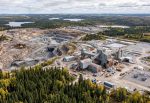
(Bloomberg) — Canada is making it harder for foreign firms to acquire domestic mining companies by imposing measures that could protect top takeover targets from large global rivals.
Most Read from Bloomberg
-
Kamala Harris Is Having a Surprise Resurgence as Biden’s Campaign Unravels
-
Singapore Couples Are Marrying Earlier to Buy Homes, Leading Some to Regret
-
Stocks Up as Path to September Fed Cut Gets Wider: Markets Wrap
-
Biden’s Fourth of July Shrouded by Pressure to Drop 2024 Bid
The Canadian government will only approve foreign takeovers of Canadian mining companies “in the most exceptional of circumstances,” according to the latest guidelines from Industry Minister Francois-Philippe Champagne. The directive issued on Thursday is part of a sweeping effort by Prime Minister Justin Trudeau’s government to protect Canada’s critical minerals sector and national security interests.
The move appears to insulate domestic companies from takeovers when the world’s biggest mining firms are hunting for metals that underpin the global transition away from fossil fuels. Industry giants such as Glencore Plc, BHP Group Ltd. and Rio Tinto Plc have been seeking to boost exposure to metals like copper as the appetite for large, transformational deals returns across the industry.
Canadian mining firms, in turn, have become appealing targets. Teck Resources Ltd. spent much of last year fending off Glencore’s $23 billion takeover attempt before the Swiss company opted instead to just buy the company’s steelmaking coal business. The federal government approved the $6.9 billion deal on Thursday, while also setting new criteria for future foreign mining deals.
“This high bar is reflective of the strategic importance of Canada’s critical minerals sector and how important it is that we take decisive action to protect it,” Champagne said in a statement.
Foreign takeovers of mining companies have been a touchy topic in Canada ever since a wave of deals 18 years ago took out some of the country’s biggest players, including nickel miner Inco Ltd. and aluminum producer Alcan Inc. When BHP proposed a takeover of Potash Corp. of Saskatchewan Inc. in 2010, then-Prime Minister Stephen Harper’s government blocked the deal on the grounds it wouldn’t be of “net benefit” to the country.
Teck is one of the few large Canadian metals producers that survived a wave of industry takeovers, even though it has long been coveted by foreign competitors for its copper and zinc assets spread across the Americas. The Vancouver-based company is widely expected to become an acquisition target when founder and top investor Norman Keevil gives up control of the company in the coming years.
“Essentially they are saying to Glencore, don’t bother coming back for the other half of Teck,” said Canadian mining financier Pierre Lassonde, who launched a competing bid for Teck’s coal assets last year. “It looks to me like Ottawa is prepared to ring-fence the Canadian critical metals industry with this new directive.”
The new directives go even further than a crackdown on foreign takeovers from state-owned entities that began in October 2022. Champagne’s ministry has thwarted several recent attempts by Chinese companies to make inroads in Canada’s critical minerals sector through takeovers or major investments. But Thursday’s comments signal that the federal government is weary of foreign takeovers even from companies in friendly nations.
Canada’s crackdown could also constrict access to capital for companies that rely on foreign investment to fund exploration and mining projects. The government is “limiting” funding to the industry with their “more aggressive statements,” said Shane Nagle, a metals and mining analyst with National Bank of Canada. “If that’s going to be challenging to do, they’ll just go elsewhere.”
–With assistance from Laura Dhillon Kane.
Most Read from Bloomberg Businessweek
-
Dragons and Sex Are Now a $610 Million Business Sweeping Publishing
-
For Tesla, a Smaller Drop in Sales Is Something to Celebrate
-
The Fried Chicken Sandwich Wars Are More Cutthroat Than Ever Before
©2024 Bloomberg L.P.
Rio Tinto RIO has completed the construction of a 3.5-megawatt solar power plant at its Diavik Diamond Mine. It is the largest off-grid solar power plant in Canada’s northern territories. This initiative aligns with RIO’s global decarbonization objectives, which include a 50% reduction in Scope 1 & 2 emissions by 2030 and achievement of net-zero emissions by 2050.In line with this, RIO also announced plans to build two new 5.25MW solar farms in Gumatj and Rirratjingu country on the Gove Peninsula in Australia’s Northern Territory. They are expected to reduce the region’s annual diesel consumption by about 20% and lower annual carbon emissions by more than 12,000 tons.The solar plant at Diavik is equipped with 6,620 solar panels. In addition to harnessing direct sunlight, these bi-facial panels will generate energy from the light reflected off the snow that covers Diavik for the major part of the year. The plant is expected to generate around 4.2 million kilowatt-hours of carbon-free electricity annually. It will cut diesel consumption at the site by approximately 1 million liters per year. The plant is expected to lower emissions by 2,900 tons of CO2 equivalent, which is almost the same as eliminating the emissions of 630 cars.The solar power plant adds to Diavik’s efforts to boost renewable energy generation at the site. It already features a wind power plant that is the largest wind power installation in Northern Canada. The wind plant has generated more than 195 million kilowatt-hours of electricity since it started operating in 2012, cutting 118,000 tons of CO2 emissions and saving the equivalent of 43.4 million liters of diesel fuel.In 2023, Rio Tinto’s Scope 1 and 2 emissions were 32.6Mt CO2e, which marked a reduction of 5.5% from its 2018 baseline. The company spent $130 million on decarbonization projects during 2023.Rio Tinto plans to invest capital in the range of $5- $6 billion by 2030 to deliver on its decarbonization strategy. The company has made some advancements in its sustainability efforts during the first half of fiscal 2024.Recently, the company announced that it is set to install carbon-free aluminum smelting cells at its Arvida smelter in Québec, Canada, utilizing the first technology license issued by the ELYSIS joint venture. The groundbreaking ELYSIS technology aims to eliminate all direct greenhouse gases from the conventional aluminum smelting process, by producing oxygen as a byproduct, while improving efficiency by producing more aluminum at lower costs.Rio Tinto is also investing $143 million to develop a research and development facility in Western Australia to test the effectiveness of its breakthrough low-carbon ironmaking process, BioIron.In May 2024, Rio Tinto and BHP Group BHP joined forces to trial large battery-powered haul trucks manufactured by Caterpillar CAT and Komatsu KMTUY in the Pilbara region of Western Australia.
The trials will kick off in the second half of 2024 with two Cat 793 haul trucks. This will be followed by two Komatsu 930 haul trucks in 2026. BHP will trial the Caterpillar trucks, while Rio Tinto will test the Komatsu trucks. This collaboration between two leading global miners with two of the world’s largest haul truck manufacturers also seeks to address the critical challenge of zero-emissions haulage.BHP Group is also pursuing its long-term goal of net zero Scope 3 GHG emissions by 2050. The company expects to cut down operational GHG emissions by at least 30% from 2020 levels by 2030.In fiscal 2023, BHP spent $122 million on initiatives associated with emission reductions, in areas such as steelmaking and shipping. From fiscal 2024 to 2030, the company expects to spend around $4 billion on operational decarbonization, with plans reflecting an annual capital allocation between approximately $250 million and $950 million per year over the next five years.
Price Performance & Zacks RankZacks Investment Research
Image Source: Zacks Investment Research
In the past year, shares of Rio Tinto have gained 4.7% against the industry’s 2.4% decline.Rio Tinto currently carries a Zacks Rank #3 (Hold). You can see the complete list of today’s Zacks #1 Rank (Strong Buy) stocks here.
Want the latest recommendations from Zacks Investment Research? Today, you can download 7 Best Stocks for the Next 30 Days. Click to get this free report
Caterpillar Inc. (CAT): Free Stock Analysis Report
BHP Group Limited Sponsored ADR (BHP): Free Stock Analysis Report
Rio Tinto PLC (RIO): Free Stock Analysis Report
Komatsu Ltd. (KMTUY): Free Stock Analysis Report
To read this article on Zacks.com click here.
BHP Group BHP has submitted an Environmental Impact Statement to Chile's environmental regulator to seek approval to build an electric trolley system that will assist in the movement of trucks at the Escondida mine. This $250-million project will help cut down the fuel consumption of BHP’s extraction trucks and also advance its goal of achieving net-zero operational greenhouse gas emissions by 2050.The project entails the construction of an electrical substation and transmission lines within and around the Escondida Norte pit. These facilities will electrically assist in the movement of the trucks in the mine. This will be more beneficial in the areas where the trucks have to ascend loaded with ore and typically consume more fuel.With this new technology, the trucks will be propelled by electrical power instead of diesel. Overall, the implementation of this system will cut down operational greenhouse gas emissions while improving productivity associated with truck performance given the higher travel speed.Escondida, located in the Atacama Desert in Northern Chile, is the world's largest producer of copper concentrates and cathodes. BHP operates and owns 57.5% of the Escondida mine, a joint venture with Rio Tinto RIO (30%) and Japan-based JECO Corp (12.5%). Escondida’s two pits feed three concentrator plants and two leaching operations (oxide and sulphide). The trolley project is in addition to other technological transformation initiatives that the company currently has for the progressive incorporation of autonomy in its mining process. Escondida currently operates six autonomous trucks. By 2025, it expects to have the largest fleet of autonomous equipment in South America.Carbon emissions from the combustion of diesel account for a major part of BHP’s Scope 1 and 2 emissions. The company is, thus, focused on initiatives to replace diesel from its operations. This will require a complete overhaul of the mining operations.To this end, BHP and Rio Tinto, in May 2024, announced that they will trial large battery-powered haul trucks manufactured by Caterpillar Inc. CAT and Komatsu KMTUY in the Pilbara region of Western Australia. This testing aims to accelerate the potential deployment of these trucks.The trials will kick off in the second half of 2024 with two Cat 793 haul trucks. This will be followed by two Komatsu 930 haul trucks in 2026. BHP will trial the Caterpillar trucks while Rio Tinto will test the Komatsu trucks. In 2021, Rio Tinto and BHP worked with both Caterpillar and Komatsu to support the development and validation of their prototype battery-electric haul trucks.Based on the findings of these tests, Caterpillar and Komatsu will be able to work on refining their truck and battery design. This will likely pave the way for the testing of a larger number of haul trucks and ultimately, the potential deployment of battery-run haul truck fleets into RIO’s and BHP’s mining operations.This collaboration between two leading global miners with two of the world’s largest haul truck manufacturers marks a significant step toward addressing the critical challenge of zero-emissions haulage.
Price Performance
BHP shares have dipped 2.1% in a year against the industry’s 0.4% growth.
Zacks Investment Research
Image Source: Zacks Investment Research
BHP currently carries a Zacks Rank #3 (Hold). You can see the complete list of today’s Zacks #1 Rank (Strong Buy) stocks here.
Want the latest recommendations from Zacks Investment Research? Today, you can download 7 Best Stocks for the Next 30 Days. Click to get this free report
Caterpillar Inc. (CAT): Free Stock Analysis Report
BHP Group Limited Sponsored ADR (BHP): Free Stock Analysis Report
Rio Tinto PLC (RIO): Free Stock Analysis Report
Komatsu Ltd. (KMTUY): Free Stock Analysis Report
To read this article on Zacks.com click here.
(Reuters) -BHP Group has notified tens of thousands of its workers across the globe that it was cutting their incentive pay after the miner failed to meet its performance goals, the Australian Financial Review reported on Thursday.
The world's largest listed miner will only pay 80% of short-term incentives that were on offer in 2023-24, the AFR reported, citing BHP's employees.
"The docking of incentives has upset some BHP employees who contacted the Australian Financial Review pointing to hiring freezes in some divisions that impacted the ability to hit targets and what they see as unrealistic internal goals," the report said.
These incentives apply to all of BHP's workers and can add up to about 15% of their salaries, according to the report.
The company's leadership cited misses on cost and production targets across some of its divisions, as well as the death of a worker at its Saraji coal mine in Queensland in January as the reason behind the incentive cuts, the AFR reported.
Moreover, workers at BHP's Queensland coal division will receive only 70% of their incentives, the report added, following two production forecast downgrades and the fatality.
This incentive cut comes at a time when Australia's Mining and Energy Union has filed for "same job same pay" orders covering labour-hire workers at BHP's Queensland coal mines, which, if successful, would further weigh on its expenses.
The miner reported in February that its first-half profit was hit by an impairment charge worth $2.5 billion related to its Western Australia nickel business. It also said some global corporate teams were being disbanded in an effort to cut costs.
The company has also failed to meet its target of 3% year-on-year growth in the number of female employees to meet its goal of gender balance by 2025, according to the AFR.
However, BHP said in February it became the first miner in Chile to cross 40% female representation, more than doubling the national industry average.
BHP did not immediately respond to a Reuters request for comment.
(Reporting by Aaditya Govind Rao in Bengaluru; Editing by Savio D'Souza and Anil D'Silva)
BHP Group Limited
Electric trolley system at a mine site
A trolley to electrically assist the movement of extraction trucks.
-
The project will allow the mining company to advance BHP's global target of net zero operating greenhouse gas emissions by 2050.
-
It considers an investment of approximately US$ 250 million for the installation of infrastructure that will electrically assist the movement of extraction trucks, in areas where the highest fuel consumption currently takes place.
SANTIAGO, Chile, July 03, 2024 (GLOBE NEWSWIRE) — Escondida | BHP submitted an Environmental Impact Statement (DIA) to the Environmental Impact Assessment System (SEIA), to advance in the "Implementation of the Mining Truck Electrification System in Escondida Norte" project, which seeks to assist the movement of these pieces of equipment inside the mine by means of a trolley system.
The project includes the construction of a new electrical substation and transmission lines both inside and around the Escondida Norte pit. These facilities will electrically assist the movement of trucks inside the mine in the areas where they go up loaded with ore and, consequently, consume more fuel. With this new technology, instead of using diesel, they will be propelled by electrical power, thus reducing the operational greenhouse gas emissions and improving productivity associated with truck performance given the higher travel speed.
About the project, President of Escondida | BHP, Alejandro Tapia, said that "the electric trolley system is one of the initiatives with which we seek to move towards a safer and more sustainable way of operating hand in hand with technology. This project will allow us to reduce the fuel consumption of our extraction trucks and thus advance our goal of net zero operational greenhouse gas emissions by 2050."
The initiative considers an investment of approximately US$ 250 million and during its construction phase an approximate workforce of 112 people on average per day and a maximum of 160 people will be required.
The trolley project is in addition to other technological transformation initiatives that the company maintains in different stages of study and execution, including the progressive incorporation of autonomy in its mining equipment. To date, Escondida | BHP has six autonomous trucks in full operation and by 2025 it expects to have the largest fleet of autonomous equipment in South America.
A photo accompanying this announcement is available at https://www.globenewswire.com/NewsRoom/AttachmentNg/a4d97b96-b422-47c6-bf27-54fb97871d83
CONTACT: Josie Brophy, BHP Media Relations josephine.brophy@bhp.com
SANTIAGO (Reuters) – Australian mining company BHP requested a permit to build a $250 million electric trolley system at its Escondida copper mine from Chile's environmental regulator, the firm said on Wednesday.
The planned project includes the installation of a trolley system to assist the transit of mining trucks in areas with high fuel consumption, according to a company statement.
"This project will allow us to reduce fuel consumption from our extraction trucks, and as a result move towards our net zero greenhouse gas emissions goal in our operations by 2050," said BHP Escondida's chief Alejandro Tapia.
(Reporting by Fabian Cambero; Writing by Kylie Madry and Stéphanie Hamel; Editing by David Alire Garcia)
(Bloomberg) — Anglo American Plc is considering options to push ahead with a sale of its coal business after an explosion at its flagship Australian mine, including the possibility of selling individual assets or excluding the damaged operation from a potential deal.
Most Read from Bloomberg
-
China Can End Russia’s War in Ukraine With One Phone Call, Finland Says
-
Biden Faces Mounting Pressure as Report Says He Is Weighing Exit
The plan to exit coal formed part of a dramatic restructuring program announced earlier this year by Anglo, as the London-based miner was trying to fend off a takeover pursuit by larger rival BHP Group.
While it also intends to spin off its platinum unit and either sell or separate diamond miner De Beers, the company had been planning to tackle the coal sale first, seen internally and by investors as the most easily achievable part of the restructuring. Anglo has said it already received interest in the assets and a deal for the highly attractive coking coal mines in Australia would have demonstrated early progress to investors looking for signs that Anglo’s go-it-alone approach offers better value than the rejected bid from BHP.
The plan was thrown into question on Saturday when an methane explosion deep underground started a huge fire at Anglo’s Grosvenor coal mine in Queensland. It’s likely to be several months before the company is able to safely reenter the mine, let alone restart mining.
However, the company is reluctant to abandon the sales process despite the setback, given the strong early interest it received in the mines, according to people familiar with the matter. Before the accident, Anglo had been planning to kick off a sales process in the coming months with a view to reaching a deal by the end of the year, said the people, who asked not to be identified discussing private information.
While the company had not laid out how it was going to sell the unit, its options now could include selling the rest of the coal business without Grosvenor or selling the other mines individually, the people said, emphasizing that no final decisions have been made.
While excluding Grosvenor from a sale would result in a lower price, Anglo is keen to move forward and demonstrate that it’s making progress after its board unanimously rejected the approach from BHP in May. The world’s biggest miner is currently restricted from making a fresh approach for Anglo but a six-month regulatory standstill will expire later this year.
A spokesman for Anglo declined to comment.
Anglo rose as much as 2.1% in London to 2,447 pence. The stock slumped as much as 4% Monday after news of the explosion.
Besides a sale of its coal business, Anglo is also working on plans to spin off its majority stake in Anglo American Platinum Ltd. and exit its ownership of De Beers. The company would prefer to wait for a recovery in the diamond market, the people said, as the internal view at the company is that De Beers should command a price that reflects its status as a trophy asset.
(Updates with shares in ninth paragraph.)
Most Read from Bloomberg Businessweek
-
China’s Investment Bankers Join the Communist Party as Morale (and Paychecks) Shrink
-
The Fried Chicken Sandwich Wars Are More Cutthroat Than Ever Before
-
Dragons and Sex Are Now a $610 Million Business Sweeping Publishing
-
For Tesla, a Smaller Drop in Sales Is Something to Celebrate
©2024 Bloomberg L.P.
We recently compiled a list of the 10 Best Potash Stocks to Buy. In this article, we are going to take a look at where BHP Group Limited (NYSE:BHP) stands against the other potash stocks.
Global Potash Market: Rising Demand, Key Players, and Future Growth Projections
Potash encompasses various minerals rich in potassium, primarily potassium chloride (muriate of potash), which dominates the global market. Other compounds like sulfate of potash make up the remainder of the market. As the world's population is expected to reach over 9.7 billion by 2050, the need for potash-based fertilizers will only continue to rise.
The agricultural sector uses more than 95% of the world's potash production, with the remainder going toward commercial and industrial goods like detergents. The US Geological Survey states that historically, a third of the world's potash supply has come from Russia and Belarus combined.
In addition to phosphate and nitrogen, potash is necessary for crop health and is vital for plant growth. However, intensive farming depletes potash reserves, making synthetic fertilizers necessary. Potash prices skyrocketed as a result of the conflict between Russia and Ukraine, reaching a high of over $1200 per metric ton in April 2022 before falling to $328 per metric ton, which is still more than pre-Covid levels. As a result, nations like the US, Brazil, and Morocco have looked for substitute suppliers to lessen their dependency on Belarus and Russia. Grants have also been issued by the US to increase regional fertilizer production. You can also see our post on the top fertilizer stocks to purchase based on hedge funds' 10 Best Fertilizer Stocks to Buy According to Hedge Funds for further information.
The global potash market was valued at USD 57.74 billion in 2022 and is expected to grow at a CAGR of 4.9% from 2023 to 2032, reaching USD 93.50 billion by 2032. The potassium chloride product segment dominated the market with a revenue share of 52.7% in 2022, driven by the surge in agricultural activities. The top 15 national fertilizer markets consume 78% of global potash, while 133 countries consume only 5%. Major players in the potash market include JSC Belaruskali, Compass Minerals, Mosaic Company, Uralkali, and Rio Tinto.
Our Methodology
To rank the 10 best potash stocks, we first conducted sampling, and gathered potash stocks from relevant ETFs. We the narrowed down further based on high upside potential, strong buy analyst recommendations, and large market capitalizations. From this list, we then ranked the top 10 potash stocks according to the number of hedge fund holders in Q1 2024.
Why are we interested in the stocks that hedge funds pile into? The reason is simple: our research has shown that we can outperform the market by imitating the top stock picks of the best hedge funds. Our quarterly newsletter's strategy selects 14 small-cap and large-cap stocks every quarter and has returned 275% since May 2014, beating its benchmark by 150 percentage points (see more details here).
An aerial view of a mining operation in action, with large trucks and yellow diggers.
BHP Group Limited (NYSE:BHP)
Number of Hedge Fund Holders: 25
BHP Group Limited (NYSE:BHP) is one of the world's largest diversified mining companies, with operations spanning various commodities including copper, iron ore, coal, nickel, and potash. BHP announced a $7.7 billion investment in its Jansen potash project in Canada in November 2023, set to become one of the world's largest potash mines. BHP Group has received a Moderate Buy rating from 7 Wall Street analysts based on recent forecasts. The average price target is $57.34, ranging from $35.36 to $68.00. This average suggests a marginal 1.06% change from the current price of $56.74.
In Q1 2024, there were 25 hedge fund holders in the company, up from 24 in the previous quarter. Fisher Asset Management held the largest position in the company with 20,501,178 shares worth $1,182,712,992, comprising 0.55% of the company’s total portfolio.
In the first half of 2024 (HY24), BHP Group Limited (NYSE:BHP) reported revenues of $27.2 billion, marking a 6% year-over-year increase driven by higher iron ore and copper prices. Profit after taxation reached $1.7 billion, with $927 million attributable to BHP shareholders. BHP achieved a 7% rise in copper production and maintained strong operational performance at its Western Australia Iron Ore operations. The company declared an interim dividend of 72 US cents per share.
Overall BHP ranks 7th on our list of the best potash stocks to buy. You can visit 10 Best Potash Stocks to Buy to see the other potash stocks that are on hedge funds’ radar. While we acknowledge the potential of BHP as an investment, our conviction lies in the belief that AI stocks hold greater promise for delivering higher returns, and doing so within a shorter timeframe. If you are looking for an AI stock that is more promising than BHP but that trades at less than 5 times its earnings, check out our report about the cheapest AI stock.
READ NEXT: Analyst Sees a New $25 Billion “Opportunity” for NVIDIA and Jim Cramer is Recommending These 10 Stocks in June.
Disclosure: None. This article is originally published at Insider Monkey.
We recently compiled a list of the 10 Best Potash Stocks to Buy. In this article, we are going to take a look at where Compass Minerals International, Inc. (NYSE:CMP) stands against the other potash stocks.
Global Potash Market: Rising Demand, Key Players, and Future Growth Projections
Potash encompasses various minerals rich in potassium, primarily potassium chloride (muriate of potash), which dominates the global market. Other compounds like sulfate of potash make up the remainder of the market. As the world's population is expected to reach over 9.7 billion by 2050, the need for potash-based fertilizers will only continue to rise.
The agricultural sector uses more than 95% of the world's potash production, with the remainder going toward commercial and industrial goods like detergents. The US Geological Survey states that historically, a third of the world's potash supply has come from Russia and Belarus combined.
In addition to phosphate and nitrogen, potash is necessary for crop health and is vital for plant growth. However, intensive farming depletes potash reserves, making synthetic fertilizers necessary. Potash prices skyrocketed as a result of the conflict between Russia and Ukraine, reaching a high of over $1200 per metric ton in April 2022 before falling to $328 per metric ton, which is still more than pre-Covid levels. As a result, nations like the US, Brazil, and Morocco have looked for substitute suppliers to lessen their dependency on Belarus and Russia. Grants have also been issued by the US to increase regional fertilizer production. You can also see our post on the top fertilizer stocks to purchase based on hedge funds' 10 Best Fertilizer Stocks to Buy According to Hedge Funds for further information.
The global potash market was valued at USD 57.74 billion in 2022 and is expected to grow at a CAGR of 4.9% from 2023 to 2032, reaching USD 93.50 billion by 2032. The potassium chloride product segment dominated the market with a revenue share of 52.7% in 2022, driven by the surge in agricultural activities. The top 15 national fertilizer markets consume 78% of global potash, while 133 countries consume only 5%. Major players in the potash market include JSC Belaruskali, Compass Minerals, Mosaic Company, Uralkali, and Rio Tinto.
Our Methodology
To rank the 10 best potash stocks, we first conducted sampling, and gathered potash stocks from relevant ETFs. We the narrowed down further based on high upside potential, strong buy analyst recommendations, and large market capitalizations. From this list, we then ranked the top 10 potash stocks according to the number of hedge fund holders in Q1 2024.
Why are we interested in the stocks that hedge funds pile into? The reason is simple: our research has shown that we can outperform the market by imitating the top stock picks of the best hedge funds. Our quarterly newsletter's strategy selects 14 small-cap and large-cap stocks every quarter and has returned 275% since May 2014, beating its benchmark by 150 percentage points (see more details here).
A close up of an essential mineral being extracted from a large rock wall.
Compass Minerals International, Inc. (NYSE:CMP)
Number of Hedge Fund Holders: 25
Global provider of vital minerals, Compass Minerals International, Inc. (NYSE:CMP) was founded in 1844 and has its headquarters located in Overland Park, Kansas. Its two primary business sectors are Plant Nutrition, which sells sulfate of potassium (SOP) products for use as agricultural inputs, and Salt, which makes deicing salt for highways.
Compass Minerals International, Inc. (NYSE:CMP) holds a portfolio of cost-advantaged assets, including the Ontario rock salt mine and brine operations at the Great Salt Lake in Utah, which can provide a competitive edge. Compass Minerals International has received a Moderate Buy rating from 4 Wall Street analysts based on recent forecasts. The average price target is $17.00, with a range from $13.00 to $23.00. This average implies a potential 60.53% increase from the current price of $10.59. In Q1 2024, there were 25 hedge fund holders in the company, up from 14 in the previous quarter. Select Equity Group held the largest position in the company with 2,944,721 shares worth $46,349,909, comprising 0.16% of the fund’s total portfolio.
Overall CMP ranks 6th on our list of the best potash stocks to buy. You can visit 10 Best Potash Stocks to Buy to see the other potash stocks that are on hedge funds’ radar. While we acknowledge the potential of CMP as an investment, our conviction lies in the belief that AI stocks hold greater promise for delivering higher returns, and doing so within a shorter timeframe. If you are looking for an AI stock that is more promising than CMP but that trades at less than 5 times its earnings, check out our report about the cheapest AI stock.
READ NEXT: Analyst Sees a New $25 Billion “Opportunity” for NVIDIA and Jim Cramer is Recommending These 10 Stocks in June.
Disclosure: None. This article is originally published at Insider Monkey.
In this article, we will take a look at the Largest Uranium Producing Country in the World. We have also compiled a full free list of the 12 Largest Uranium Producing Countries in the World.
The Rising Uranium Market: A Powerhouse for Nuclear Energy and Global Growth
Uranium is a naturally occurring radioactive element found in the earth’s crust that is necessary for the creation of nuclear energy. Due to its high radioactivity and long half-life, uranium is not only used as a fuel in nuclear reactors but is also an essential component in the manufacture of nuclear bombs and warheads. The global uranium market was valued at $2,736.31 million in 2022 and it is projected to reach an impressive valuation of $3,398.52 million by the year 2028. The uranium market is forecast to grow at a compound annual growth rate of 3.68% during the forecast period of 2023 to 2028, according to a report on 360 Market Updates. This market is expected to expand given the rise in demand for the heavy metal. Moreover, the demand for uranium in nuclear reactors is forecast to increase at a rate of 28% by the year 2030, with the main reason for the increased demand being the government’s aims to achieve net-zero targets globally. With an expected increase of 14% in nuclear capacity by 2030 and an expected increase of 76% by the year 2040, the demand for uranium is going to show an upward trajectory in the coming years.
As evident, increased demand leads to a surge in prices. Uranium prices grew by 50% across the globe in 2023. Some of the factors, other than the increase in demand that contributed to the price increase, were supply chain disruptions, long-term contracting, and the boost in producer activity by traditional and ancillary players. What started off at $50 in the beginning of 2023, gradually increased to $60 in September, and then just a few weeks after September, uranium prices jumped to the $70s. To meet the rising demand, and to capitalize on the growing prices, companies are also increasing their production for uranium. Global uranium production is expected to grow by 11.7% to more than 60.3 kilotons (kt) in 2024, according to a report by Mining.com. Some of the companies leading uranium production are Cameco Corporation (NYSE:CCJ) and BHP Group Limited (NYSE:BHP).
Cameco Corporation (NYSE:CCJ)
Cameco Corporation (NYSE:CCJ) is a Canadian mining company that accounts for almost 17% of the global production. The company had the second-highest production of uranium in 2022, amounting to 5,675 tons. One of Cameco Corporation’s operating areas is the McArthur River Uranium Mine, which boasts the world’s largest high-grade uranium deposit with proven reserves of 265.5 million pounds as of 2023.
During the financial year 2023, Cameco Corporation (NYSE:CCJ) reported revenue of $2,588 million, showing a growth rate of almost 39% from the prior year when the revenue stood at $1,868 million. The company’s gross profit, however, had an increase of more than 100% as it grew from $233 million in 2022 to $562 million in 2023.
BHP Group Limited (NYSE:BHP)
BHP Group Limited (NYSE:BHP) is a prominent Australian multinational mining and metals public company with corporate headquarters located in Melbourne, Australia. As one of the biggest uranium-producing companies in the world, BHP Group Limited (NYSE:BHP) accounted for 6% of the global uranium supply. As of 2022, the company produced 2,813 tons of uranium.
The company reported a revenue of $53.82 billion for financial year 2023 . This was a decrease of $11.3 billion compared to the previous year due to lower prices across iron ore, metallurgical coal, and copper. BHP Group Limited (NYSE:BHP), however, was successful in taking home an underlying profit of $6.6 billion, for the 6 months ending 31 December 2023.
The Largest Uranium Producing Country in the World
A close up of the reactor core, highlighting the complexity of the uranium power process.
Methodology
For the purpose of this ranking, we referred to the data provided by the World Nuclear Association on World Uranium Mining Production. Based on the latest values for each country for the year 2022, we arranged the data in ascending order and the top 12 countries with the highest uranium production were picked.
At Insider Monkey we are obsessed with the stocks that hedge funds pile into. The reason is simple: our research has shown that we can outperform the market by imitating the top stock picks of the best hedge funds. Our quarterly newsletter’s strategy selects 14 small-cap and large-cap stocks every quarter and has returned 275% since May 2014, beating its benchmark by 150 percentage points (see more details here).
1. Kazakhstan
Production from mines in 2022: 21,227 metric tons
In 2022, Kazakhstan emerged as the world's top uranium producer. Its total output of 21,227 metric tons represented a significant 43 percent of the global uranium supply, according to the World Nuclear Association. Kazatomprom, the nation's state-owned uranium mining company, holds the title of the world's largest producer, with operations and partnerships spanning multiple regions. Concerns arose when news surfaced that Kazakhstan might not meet its production targets for 2024 and 2025, contributing significantly to uranium prices surpassing the $100 mark.
To learn about other top online ESL courses and programs, you can check out our detailed report 20 Best Online ESL Courses and Programs. At Insider Monkey, we delve into a variety of topics, ranging from the best online ESL courses to business aspects; however, our expertise lies in identifying the top-performing stocks. Currently, Artificial Intelligence (AI) technology stands out as one of the most promising fields. If you are looking for an AI stock that is more promising than NVDA but that trades at less than 5 times its earnings, check out our report about the cheapest AI stock.
You can see the full free list by going to the 12 Largest Uranium Producing Countries in the World.
READ NEXT: Analyst Sees a New $25 Billion “Opportunity” for NVIDIA and Jim Cramer is Recommending These 10 Stocks in June.
Disclosure: None. This article is originally published at Insider Monkey
Wallbridge Mining Company Limited
TORONTO, June 27, 2024 (GLOBE NEWSWIRE) — Wallbridge Mining Company Limited (TSX:WM, OTCQB:WLBMF) (“Wallbridge” or the “Company”) held its Annual Meeting of Shareholders (the “Meeting”) on June 26, 2024.
A total of 375,770,677 shares or 36.98% of the outstanding shares of the Company were represented at the Meeting. All of the matters submitted to the shareholders for approval as set out in the Company's notice of meeting and management information circular dated May 17, 2024 (“MIC”) were approved by the requisite majority of votes cast at the Meeting.
Voting on the following matters, as described in the MIC, were as follows:
To Set the Number of Directors at Seven (7)
|
Votes For |
Votes Against |
||
|
Number |
Percent |
Number |
Percent |
|
327,860,364 |
87.25% |
47,910,313 |
12.75% |
Election of Directors for the Ensuing Year
The following directors were elected until the next annual meeting of shareholders or until their successors are otherwise duly elected or appointed: Brian Penny, Janet Wilkinson, Michael Pesner, Anthony Makuch, Jeffery Snow, Danielle Giovenazzo and Brian Christie.
|
|
Votes For |
Votes Withheld |
||
|
|
Number |
Percent |
Number |
Percent |
|
Brian Penny |
307,933,143 |
87.647% |
43,398,663 |
12.353% |
|
Janet Wilkinson |
325,213,100 |
92.566% |
26,118,706 |
7.434% |
|
Michael Pesner |
289,152,398 |
82.302% |
62,179,408 |
17.698% |
|
Anthony Makuch |
343,276,508 |
97.707% |
8,055,298 |
2.293% |
|
Jeffery Snow |
345,531,527 |
98.349% |
5,800,279 |
1.651% |
|
Danielle Giovenazzo |
289,089,828 |
82.284% |
62,241,978 |
17.716% |
|
Brian Christie |
344,870,421 |
98.161% |
6,461,385 |
1.839% |
Appointment of KPMG LLP as Auditor of the Corporation for the ensuing year and authorizing the Directors to fix their remuneration
|
Votes For |
Votes Withheld |
||
|
Number |
Percent |
Number |
Percent |
|
373,296,489 |
99.342% |
2,474,188 |
0.658% |
About Wallbridge Mining
Wallbridge is focused on creating value through the exploration and sustainable development of gold projects along the Detour-Fenelon Gold Trend in Québec’s Northern Abitibi region while respecting the environment and communities where it operates.
Wallbridge’s most advanced projects, Fenelon Gold (“Fenelon”) and Martiniere Gold (“Martiniere”) incorporate a combined 3.05 million ounces of indicated gold resources and 2.35 million ounces of inferred gold resources. Fenelon and Martiniere are located within an 830 square kilometre exploration land package controlled by Wallbridge.
Wallbridge has reported a positive Preliminary Economic Assessment (“PEA”) at Fenelon that estimates average annual gold production of 212,000 ounces over 12 years.
Wallbridge also holds a 15.79% interest in the common shares of NorthX Nickel Corp. (formerly “Archer Exploration”) as a result of the sale of the Company’s portfolio of nickel assets in Ontario and Québec. For further information please visit the Company’s website at https://wallbridgemining.com/ or contact:
Wallbridge Mining Company Limited
|
Brian Penny, CPA, CMAChief Executive OfficerEmail: bpenny@wallbridgemining.comM: +1 416 716 8346 |
Victoria Vargas, B.Sc. (Hon.) Economics, MBACapital Markets AdvisorEmail: vvargas@wallbridgemining.comM: +1 289 242 3599 |
Cautionary Note Regarding Forward-Looking InformationThe information in this document may contain forward-looking statements or information (collectively, “FLI”) within the meaning of applicable Canadian securities legislation. FLI is based on expectations, estimates, projections and interpretations as at the date of this document.
All statements, other than statements of historical fact, included herein are FLI that involve various risks, assumptions, estimates and uncertainties. Generally, FLI can be identified by the use of statements that include, but are not limited to, words such as “seeks”, “believes”, “anticipates”, “plans”, “continues”, “budget”, “scheduled”, “estimates”, “expects”, “forecasts”, “intends”, “projects”, “predicts”, “proposes”, "potential", “targets” and variations of such words and phrases, or by statements that certain actions, events or results “may”, “will”, “could”, “would”, “should” or “might”, “be taken”, “occur” or “be achieved.”
FLI in this document may include, but is not limited to: statements regarding the results of the PEA; the potential future performance of the Common Shares; future drill results; the Company’s ability to convert inferred resources into measured and indicated resources; environmental matters; stakeholder engagement and relationships; parameters and methods used to estimate the MRE’s at Fenelon and Martiniere (collectively the “Deposits”); the prospects, if any, of the Deposits; future drilling at the Deposits; and the significance of historic exploration activities and results.
FLI is designed to help you understand management’s current views of its near- and longer-term prospects, and it may not be appropriate for other purposes. FLI by their nature are based on assumptions and involve known and unknown risks, uncertainties and other factors which may cause the actual results, performance, or achievements of the Company to be materially different from any future results, performance or achievements expressed or implied by such FLI. Although the FLI contained in this document is based upon what management believes, or believed at the time, to be reasonable assumptions, the Company cannot assure shareholders and prospective purchasers of securities of the Company that actual results will be consistent with such FLI, as there may be other factors that cause results not to be as anticipated, estimated or intended, and neither the Company nor any other person assumes responsibility for the accuracy and completeness of any such FLI. Except as required by law, the Company does not undertake, and assumes no obligation, to update or revise any such FLI contained in this document to reflect new events or circumstances. Unless otherwise noted, this document has been prepared based on information available as of the date of this document. Accordingly, you should not place undue reliance on the FLI, or information contained herein.
Furthermore, should one or more of the risks, uncertainties or other factors materialize, or should underlying assumptions prove incorrect, actual results may vary materially from those described in FLI.
Assumptions upon which FLI is based, without limitation, include: the results of exploration activities, the Company’s financial position and general economic conditions; the ability of exploration activities to accurately predict mineralization; the accuracy of geological modelling; the ability of the Company to complete further exploration activities; the legitimacy of title and property interests in the Deposits; the accuracy of key assumptions, parameters or methods used to estimate the MREs and in the PEA; the ability of the Company to obtain required approvals; geological, mining and exploration technical problems; failure of equipment or processes to operate as anticipated; the evolution of the global economic climate; metal prices; foreign exchange rates; environmental expectations; community and non-governmental actions; and, the Company’s ability to secure required funding. Risks and uncertainties about Wallbridge's business are discussed in the disclosure materials filed with the securities regulatory authorities in Canada, which are available at www.sedarplus.ca.
Cautionary Notes to United States InvestorsWallbridge prepares its disclosure in accordance with NI 43-101 which differs from the requirements of the U.S. Securities and Exchange Commission (the "SEC"). Terms relating to mineral properties, mineralization and estimates of mineral reserves and mineral resources and economic studies used herein are defined in accordance with NI 43-101 under the guidelines set out in CIM Definition Standards on Mineral Resources and Mineral Reserves, adopted by the Canadian Institute of Mining, Metallurgy and Petroleum Council on May 19, 2014, as amended. NI 43-101 differs significantly from the disclosure requirements of the SEC generally applicable to US companies. As such, the information presented herein concerning mineral properties, mineralization and estimates of mineral reserves and mineral resources may not be comparable to similar information made public by U.S. companies subject to the reporting and disclosure requirements under the U.S. federal securities laws and the rules and regulations thereunder.
(Bloomberg) — The world’s biggest mining company, BHP Group Ltd., said it may not reach its goal of cutting greenhouse emissions created by its customers and suppliers to net zero by 2050.
Most Read from Bloomberg
-
YouTuber Dr Disrespect Was Allegedly Kicked Off Twitch for Messaging Minor
-
VW Latches Onto Rivian in $5 Billion EV Pact to Regain Momentum
-
Nvidia Rout Takes Breather as Traders Scour Charts for Support
-
Julian Assange Leaves Court ‘Free Man,’ Ending 14-Year Drama
“Achievement of this goal is uncertain, particularly given the challenges of a net zero pathway for our customers in steelmaking, and we cannot ensure the outcome alone,” BHP said, referring to its so-called Scope 3 emissions target in an investor presentation Wednesday.
The major iron ore, coal and copper producer said it was still aiming for net zero by 2050 and had “made strong progress on our strategy in the areas of steelmaking and maritime decarbonization via partnerships, trials and pilots.”
The global mining industry is facing growing pressure from investors and environmentalists to reduce its carbon footprint. For miners like BHP that produce vast quantities of iron ore for steelmaking, a particularly carbon-intensive material that forms the backbone of the world’s housing and infrastructure, Scope 3 dwarfs the emissions that the companies are directly responsible for.
BHP said it’s on track to reach its a goal to slash its Scope 1 and 2 operational emissions by a third by 2030. It achieved this — albeit briefly — during fiscal 2023, but indicated it may see some volatility in its greenhouse gas emissions due to “planned activity and growth at our operations.”
The company’s head of carbon management, Graham Winkelman, said in a call with investors on Wednesday it will see a small increase in emissions in the year to June 30.
“The pathway to net zero will be non-linear as we organically grow our business,” BHP said in the presentation. Cutting emissions would require “significant effort” and collaboration across the mining supply chain, from shipping through to smelting of iron ore.
Most Read from Bloomberg Businessweek
-
How Jeff Yass Became One of the Most Influential Billionaires in the 2024 Election
-
Why BYD’s Wang Chuanfu Could Be China’s Version of Henry Ford
-
Independence Without Accountability: The Fed’s Great Inflation Fail
©2024 Bloomberg L.P.
By Melanie Burton
MELBOURNE (Reuters) -BHP Group's operational carbon emissions are set for a "small increase" this financial year, an executive revealed on Wednesday, as the miner said its "non linear" path to net zero requires overcoming growth and technological challenges.
Still, the world's largest listed miner is on track to cut those emissions by at least 30% by 2030, President for Climate Graham Winkelman told an investor briefing.
BHP has the least ambitious near-term target among the four biggest iron ore miners, with the most aggressive, Fortescue, aiming for zero operational emissions over the same time frame. Iron ore is primarily used to make steel.
BHP has earmarked $4 billion for operational carbon cuts by 2030. It had spent $122 million as at the end of its last fiscal year.
The miner is increasing the use of solar power, particularly at its Chilean copper operations, and decarbonising its trucking fleets over the medium term.
Emissions have climbed due to "organic growth", Winkelman said. Miners must dig deeper to maintain production levels for ore that is falling in metal content. That means more activity per metric ton of mined metal, which raises diesel consumption.
The miner has been under pressure from investors to offer more detail on its carbon reduction plan, and to set a target for emissions reduction from customers. Steelmaking accounts for around 7% of global emissions.
"We expect that BHP will want to join peers like Rio Tinto in keeping pace with investor expectations to clearly disclose forward expenditure, technologies, timelines and the policies needed towards zero emissions steel," said Naomi Hogan of the Australasian Centre for Corporate Responsibility.
BHP, which has said customer emissions are out of its control, aims to support the industry's decarbonisation by developing technology and pathways capable of reducing emissions intensity by 30% by 2030.
Such technology includes a tie-up with top iron ore producer Rio Tinto to produce environment-friendlier green iron at Australia's Port Kembla.
The miner also expects carbon capture, utilisation and storage (CCUS) to abate emissions from blast furnace steelmaking which uses its coking coal. CCUS is as yet unproven for such use at commercial scale.
Coking coal accounted for almost a fifth of BHP's underlying profit in the last financial year and was a driver in its attempt to buy Anglo American in April.
BHP is also looking at ammonia-fuelled ships and at methane drainage before mining which could help cut methane emissions by as much as half at its Australian coal mines.
It has said it does not intend to rely on carbon offsets to reach its 2030 target. Still, CLSA analyst Baden Moore anticipates that BHP may need to build a carbon offset portfolio.
"Longer term, I think carbon offsets are going to be a feature for a lot of these high emissions portfolios where there are hard-to-abate sectors," he said.
BHP's Scope 3 or customer emissions last year stood at 370.5 million tons, around two-thirds of those of Rio Tinto. Its operational emissions stood at 9.8 million tonnes, around one third of Rio's levels.
The miner is set to offer more details at its annual earnings briefing on Aug. 27.
(Reporting by Melanie Burton; Editing by Jamie Freed and Christopher Cushing)
SANTIAGO (Reuters) – Mining giant BHP and the union representing workers at its Spence copper mine in Chile will kick off on Wednesday government-mediated talks aimed at averting a strike, both parties said.
BHP activated a mandatory five-day period of government mediation, typical of such labor talks in Chile, after union members massively rejected a new contract offer from the company earlier this week, paving the way for a strike.
"We will meet in a couple of hours to start the mandatory mediation after BHP requested that," union head Ronald Salcedo told Reuters. "The talks will last five business days, so we can try and reach an agreement. If not, the strike begins next Wednesday."
The union represents more than 1,100 workers at the copper mine located in northern Chile. Their previous collective agreement expired on May 31.
BHP said that the Spence mine, which produced 249,000 metric tons of copper last year, continues to operate normally while it seeks an amicable solution with the union.
After the initial five-day period, the parties can agree to extend the talks for another five days if they make progress in reaching an agreement.
Chile is the world's largest copper producer.
(Reporting by Fabian Andres Cambero; Editing by Mark Potter)
(Bloomberg) — Days after BHP Group failed to secure the $49 billion takeover of smaller rival Anglo American Plc, investors have one message for Chief Executive Mike Henry — keep your cool.
Most Read from Bloomberg
-
Modi Vows to Retain Power Even as Party Loses India Majority
-
Short Sellers in Danger of Extinction After Crushing Stock Gains
-
Mnuchin Chases Wall Street Glory With His War Chest of Foreign Money
-
Treasuries Gain as JOLTS Spurs Faster Fed-Cut Bets: Markets Wrap
-
Intel CEO Takes Aim at Nvidia in Fight for AI Chip Dominance
BHP argues it showed restraint in the battle for Anglo, a welcome attribute in a sector notorious for burning billions of dollars of on underwhelming projects and ill-timed acquisitions just over a decade ago. The question now is whether that discipline holds, even with all mining bosses gunning for more volume in copper, the single most coveted metal as the energy transition accelerates.
The Anglo tilt was an ambitious bid to transform the world’s largest miner into the top global producer of the red metal in one fell swoop. Having faltered, people familiar with the matter say BHP won’t rush into more — at least in part because there are few alternatives when it comes to copper. Major deposits are increasingly rare and costly to develop, while the most obvious acquisition targets are effectively out of reach, either because of ownership or valuation.
Anglo comes back into view in six months time under UK Takeover Panel rules, and BHP will wait until then and reconsider its options, said the people, who declined to be named as the discussions are not public.
“What is in BHP’s portfolio is going to take time to deliver and it’s not going to be cheap. That was one of the reasons why they saw an opportunity in Anglo to take their interest in three key assets in Chile,” said David Radclyffe, managing director at Global Mining Research. “Copper is one of those commodities everyone wants to be in, the problem being there aren’t many of those assets and it’s incredibly hard to deliver them.”
The battle over the past weeks has mesmerized the mining sector. A tussle between two of the industry’s largest players, it would have been the most significant tie-up in over a decade — and one of the most complex to boot. Under BHP’s all-share proposals, Anglo would have had to spin off its South African platinum and iron ore assets, before then being purchased by the Australian mining giant.
Anglo’s board rejected the repeated offers, and opted instead for its own turnaround plan.
Read more: CEO Who Said No to $49 Billion Must Now Dismantle Anglo American
That makes the next six months — and beyond, given the intricacy of Anglo’s plan — crucial. If the rescue blueprint falters, the company may be back on the table at a lower price. If it succeeds, Anglo may end up closer to the copper-focused company BHP had sought in the first place.
BHP’s Australian shares have dropped 1.8% since May 28, the day before the miner said it would walk away from the Anglo bid.
Rival Suitors
The trouble for BHP is that down the line other bidders could also step in, including rivals Rio Tinto Ltd., and Glencore Plc. Neither is perfectly positioned today, but both may well be later this year, as investors and executives warm to the idea of deals and Glencore completes its acquisition of Teck’s steelmaking coal business. All are eager to bump up copper production.
Industry bankers and executives have reviewed deals centered on the industrial metal for years, running the rule over copper-heavy like Antofagasta Plc, First Quantum Minerals Ltd and Freeport-McMoRan Inc — but either family owners or expensive valuations have held back approaches, especially in an industry where shareholders remember past profligacy only too well.
“There has been a longer-term positioning by BHP to do more acquisitions, but does that necessarily mean that sort of gives them a blank check to go and do acquisitions at elevated premiums? I don’t think so,” RBC Capital Markets analyst Kaan Peker said.
BHP’s scale, of course, means it does have options of its own. Iron ore remains a cash cow, and its $3.6 billion South Flank iron ore project expansion is on track to reach full production this year — good news even if concerns are growing about the longer-term demand prospects for the steelmaking material.
Its copper portfolio is also substantial, with its massive mines in Chile — including Escondida, the world’s biggest — and Australia churning out more than 1.2 million tons a year. BHP is expanding exploration across the Oak Dam project and drilling at Olympic Dam in South Australia, with its mineral resource estimate expected to be expanded later this calendar year.
But over the coming months, copper deals are unlikely to be far from executives’ minds.
“They’ve clearly shown their hand and basically confirmed what a lot of people have been saying, what companies themselves are saying,” said Sam Berridge, portfolio manager at Perennial Value Management Ltd., which doesn’t hold BHP because it’s negative about long-term iron ore demand.
The cost and the time it takes to build copper projects from scratch are simply too off-putting, Berridge said: “The hurdles there are so high that M&A is a much more appealing option.”
–With assistance from Martin Ritchie.
(Updates with shares in ninth paragraph)
Most Read from Bloomberg Businessweek
-
The Budget Geeks Who Helped Solve an American Economic Puzzle
-
Startup Brings New Hope to the Pursuit of Reviving Frozen Bodies
-
Disney Is Banking On Sequels to Help Get Pixar Back on Track
-
How Rage, Boredom and WallStreetBets Created a New Generation of Young American Traders
©2024 Bloomberg L.P.
Rio Tinto RIO announced that it will invest $143 million to develop a research and development facility in Western Australia to test the effectiveness of its breakthrough low-carbon ironmaking process, BioIron.
BioIron uses raw biomass material produced from agricultural by-products instead of metallurgical coal and is heated using a combination of gas released by the biomass and high-efficiency microwaves powered by renewable energy, which turns the iron ore into metallic iron. This process uses approximately 65% less electricity during steel making compared with other green hydrogen technologies.
Per Rio Tinto’s projections, when combined with renewable energy and carbon-circulation by fast-growing biomass, BioIron has the potential to reduce carbon dioxide emissions by up to 95% compared with the current blast furnace method.
The initiative to build the research and development facility follows successful trials of BioIron in a small-scale pilot plant in Germany. The new facility will include a pilot plant that will be 10 times the size of the German plant and capable of producing one ton of direct reduced iron per hour. The BioIron process will be tested for the first time at a semi-industrial scale. The plant will provide the required data to assess further scaling of the technology to a larger demonstration plant.
The plant has been designed in collaboration with the University of Nottingham, Metso Corporation and Western Australian engineering company Sedgman Onyx. Fabrication of the equipment is set to begin this year, with commissioning expected in 2026.
Industry-Wide Efforts to Lower Emissions
Steelmaking is responsible for around 8% of the world’s carbon emissions. Most of these emissions are created during the industrial process of transforming the raw material, iron ore into steel. Miners, through individual research and partnerships, are working on developing technologies and solutions to reduce the greenhouse gas (GHG) emission intensity of the steelmaking process.
Steelmaking accounts for 66% of Rio Tinto’s Scope 3 emissions. It has targeted reductions in Scope 1 and 2 carbon emissions of 15% by 2025 and 50% by 2030, relative to 2018 levels. The company expects to achieve net zero emissions from its operations by 2050.
In 2023, RIO achieved a 5.5% reduction in Scope 1 and 2 GHG emissions, which was below its 2018 baseline. The company spent $425 million on decarbonization efforts in 2023. It has budgeted a total capital spending of $5–$6 billion over the 2022–2030 period, including $1.5 billion cumulative spending over the 2024–2026 period.
Rio Tinto’s peer Fortescue Ltd FSUGY has set a target to reach net zero Scope 3 emissions by 2040. The steelmaking process is the largest source of its Scope 3 emissions, accounting for 98% of emissions.
Fortescue has identified solutions to eliminate approximately 90% of its carbon dioxide equivalent terrestrial emissions associated with its Australian iron operations by 2030. In September 2022, the company committed $6.2 billion to achieve this plan.
Another big miner, BHP Group BHP is also pursuing its long-term goal of net zero Scope 3 GHG emissions by 2050. The company expects to cut down operational GHG emissions by at least 30% from 2020 levels by 2030.
In fiscal 2023, BHP spent $122 million on initiatives associated with emission reductions, in areas such as steelmaking and shipping. From fiscal 2024-2030, BHP expects to spend around $4 billion on operational decarbonization, with plans reflecting an annual capital allocation between approximately $250 million and $950 million per year over the next five years.
Another iron miner, VALE S.A VALE plans to invest at least $2 billion to reduce its direct and indirect carbon emissions (Scopes 1 and 2) by 33% by 2030 compared with its emissions in 2017. It will also help reduce its suppliers’ emissions (Scope 3) by 15% by 2035 compared with the emission level in 2018. Vale aims to become carbon neutral by 2050.
Price Performance & Zacks Rank
In the past year, shares of Rio Tinto have gained 10.4% compared with the industry’s 15.8% growth.
Zacks Investment Research
Image Source: Zacks Investment Research
Rio Tinto currently carries a Zacks Rank #3 (Hold). You can see the complete list of today’s Zacks #1 Rank (Strong Buy) stocks here.
Want the latest recommendations from Zacks Investment Research? Today, you can download 7 Best Stocks for the Next 30 Days. Click to get this free report
BHP Group Limited Sponsored ADR (BHP) : Free Stock Analysis Report
VALE S.A. (VALE) : Free Stock Analysis Report
Rio Tinto PLC (RIO) : Free Stock Analysis Report
Fortescue Ltd. Sponsored ADR (FSUGY) : Free Stock Analysis Report
To read this article on Zacks.com click here.
For Immediate Release
Chicago, IL – June 4, 2024 – Zacks.com announces the list of stocks featured in the Analyst Blog. Every day the Zacks Equity Research analysts discuss the latest news and events impacting stocks and the financial markets. Stocks recently featured in the blog include: BHP Group BHP, Anglo American AAL, Vistra VST, Tyler Technologies TYL and Barrick Gold GOLD.
Here are highlights from Monday’s Analyst Blog:
A.I. Reshapes Corporate America: Global Week Ahead
The start of a new calendar month can mean only one thing for investors: Time for the all-important monthly U.S. employment report.
But also, this time around? Look out for a likely European Central Bank (ECB) rate cut.
As well as the outcome of India's marathon general election.
Next are Reuters' five world market themes, re-ordered for equity traders—
(1) On Friday, traders get to see the MAY U.S. non-farm payroll report.
Is the U.S. economy finally cooling?
It will take several months of data to answer that question. But one key piece of the puzzle comes with the closely watched employment report out on Friday, June 7th.
Investors had been worried that an overly strong economy might prevent the U.S. Federal Reserve from lowering rates this year at all, or even require a rate rise.
But those concerns were put to rest last month, albeit temporarily, by data showing slowing inflation and a cooling labor market.
Still, policymakers have urged patience on rate cuts, saying they would like to see several months of data to be sure inflation is heading back towards their +2.0% target.
The MAY employment report could prove the U.S. economy is losing steam, if it shows the slowdown in job creation has continued.
(2) On Thursday, the European Central Bank (ECB) should cut its policy rate.
The ECB is all but certain to become the first major central bank to cut interest rates this cycle on Thursday.
Policymakers have practically promised a June cut that is expected to lower the bank's key rate by 25 basis points to 3.75%.
So, all focus will be on what hints ECB boss Christine Lagarde gives on what happens next.
Inflation in the bloc's dominant services sector remains sticky and its economy is recovering faster than expected, while a closely-watched wage growth figure accelerated last quarter, leaving the outlook beyond June less certain.
Traders are still much more confident that the ECB will cut rates multiple times this year compared to its U.S. and British peers, though they have also reduced their bets on its moves.
They now expect two cuts and less than a 50% chance of a third — compared with three when the ECB last met and at least five at the start of the year.
(3) A revival in U.K. Mergers & Acquisitions is happening.
BHP Group may have failed in its bid for Anglo American, taking $49 billion out of bankers' league tables. But the emergence of the bid in April highlights a revival in U.K. M&A.
April saw 38 companies in the U.K. under offer, the most since June 2022, according to Peel Hunt. Take one away and that high-water mark doesn't change.
Bankers pinpoint that it's companies driving the charge, and they expect more U.K. deals, as the interest rate outlook and economic backdrop stabilize and competition from private equity funds for assets is still muted.
Driving the inbound interest is the persistent cheapness of U.K. assets.
The FTSE 100 12-month forward price-to-earnings ratio continues to trade at the widest discount to the S&P500's since at least 1990, and lags the performance in the pan-European STOXX 600 and Germany's DAX.
(4) In the USA, summer vacation driving season has begun. Gasoline prices?
The oil market is entering into a sweet spot in the year — the summer driving season in the United States.
The price of crude is up +10% year-on-year, and intensifying Middle East tensions are keeping the market nervous.
Meanwhile, gasoline futures have fallen by -7%, offering a potential boon to customers at the pump.
But, U.S. gasoline inventories aren't declining as quickly as they ordinarily would at this time of year, which suggests consumption isn't quite hot enough to put a dent into supply.
A measure of demand for immediate delivery of crude is also around its lowest since December.
A lot is riding on the outlook for growth and, therefore, demand for fuel.
The world's biggest oil exporters are expected to maintain their existing supply cuts at an OPEC meeting on June 2nd.
(5) India counts votes on Tuesday, June 4th. Mexico headed to the polls Sunday.
India's six-week long national election is in its final stages, with votes due to be counted on June 4th.
Exit polls, out on Sunday June 3rd, were confirming Modi's win. So, investors should be gearing up for Prime Minister Narendra Modi securing a third term in office.
Markets see a Modi win as providing political stability and continuity in India to support sustained economic growth. Indian equities outperformed most major markets in 2023 and are already trading at lofty valuations.
They could get another boost if Modi remains in power, even as part of a coalition government.
Mexicans also went to the polls on Sunday June 3rd. Former Mexico City Mayor Claudia Sheinbaum won by at least 30 percentage points in Mexico's presidential election.
The Mexican peso has sold off heavily in the past week, as traders ponder the uncertainty for the Mexican economy, stemming from the vote.
Zacks #1 Rank (STRONG BUY) Stocks
This week, I picked two Texas-based large cap stocks, and one Canadian gold miner.
(1) Vistra: This is a $105 stock, found in the U.S. Electric Power Utility Industry, with a market capitalization of $36B. I see a Zacks Value score of C, a Zacks Growth score of B and a Zacks Momentum score of B.
Vistra Energy Corp. is an energy company. It offers electricity and power generation, distribution and transmission solutions. Vistra is based in Dallas, Texas.
(2) Tyler Technologies: This is a $477 stock, found in the U.S. Business Software Services Info Tech Industry, with a market capitalization of $20.2B. I see a Zacks Value score of F, a Zacks Growth score of C and a Zacks Momentum score of B.
Tyler Technologies is a leading provider of integrated information-management solutions and services for the public sector.
Clients consist primarily of federal, state, county and municipal agencies, school districts, and other local government offices.
· In counties, clients include the auditor, treasurer, tax assessor/collector, county clerk, district clerk, county and district court judges, probation officers, sheriff and county appraiser.
· At municipal government sites, clients include directors of various departments, including administration, finance, utilities, public works, code enforcement, personnel, purchasing, taxation, municipal court and police.
The company's software solutions & services are grouped into the following areas:
1. Financial Management and Education
2. Courts and Justice
3. Public Safety
4. Property Appraisal and Tax
5. Planning, Regulatory and Maintenance
6. Land and Vital Records Management
7. Data and Insights, and
8. Case Management and Business Process Management
Tyler serves its customers both on-premise and in cloud.
By leveraging Tyler private cloud, the company delivers its applications through Software-as-a-Service ("SaaS") model. In October 2019, the company entered into a partnership agreement with Amazon Web Services for cloud-hosting services.
Tyler reported revenues of $1.95 billion in 2023.
The Plano, TX-based company derives revenues from six sources: (i) Sales of software licenses and royalties, (ii) Subscription-based arrangements, (iii) Software services, (iv) Maintenance and support (v) Appraisal services, and (vi) Hardware and other.
Subscription-based revenues are primarily derived from Tyler's SaaS arrangements, as well as transaction-based offerings such as e-filing solutions, online dispute resolution solutions, and online payment services.
Moreover, client-support services comprise a significant base of recurring maintenance revenues. During 2023, approximately 24% of Tyler's revenues were attributable to ongoing support and maintenance agreements.
Tyler faces competition from Oracle, Infor, SAP AG, Workday, CentralSquare, Thomson Reuters, Motorola Solutions and Axon Enterprise.
(3) Barrick Gold: This is a $17 stock, found in the Basic Materials – Gold Mining Industry, with a market capitalization of $29.7B. I see a Zacks Value score of B, a Zacks Growth score of C and a Zacks Momentum score of A.
Barrick Gold, based in Toronto, Canada, is one of the largest gold mining companies in the world.
The company has many advanced exploration and development projects located across five continents.
Barrick is placed amongst the top gold producers with peers, such as Newmont (based in the United States) and AngloGold Ashanti (based in South Africa).
The company produced 4.05 million ounces of gold and 420 million pounds of copper in 2023. Barrick had 77 million ounces (oz) of proven and probable gold reserves at the end of 2023. The company generated total revenues of roughly $11.4 billion in 2023.
The company's strategy to create value for its shareholders is focused on the following key areas:
· Maximizing the benefits of rising metal prices by meeting operational and financial targets
· Increasing gold and copper reserves and production through exploration and selective acquisitions
· Maximizing the value of its existing mines and properties by leveraging its expertise and regional infrastructure
· Growing production by investing in and developing high return projects
· Continuing to improve corporate social responsibility practices to maintain and strengthen its incense to operate
By executing on this strategy, the company expects to increase earnings and cash flow and enhance its shareholders' leverage to metal prices.
In September 2018, Barrick entered into a share-for-share merger agreement with Randgold Resources Ltd. The merger was successfully completed on Jan 1, 2019. The deal formed an industry-leading gold company and strengthened Barrick's position.
Post-merger, Barrick has the ability to generate strong cash flow to support robust investment and return cash to shareholders.
Higher operating metrics, including lowest total cash cost position as well as highest adjusted EBITDA margin are likely to support sustainable investment in growth and shareholder returns.
Why Haven't You Looked at Zacks' Top Stocks?
Since 2000, our top stock-picking strategies have blown away the S&P's +7.0 average gain per year. Amazingly, they soared with average gains of +44.9%, +48.4% and +55.2% per year.
Today you can access their live picks without cost or obligation.
See Stocks Free >>
Media Contact
Zacks Investment Research
800-767-3771 ext. 9339
support@zacks.com
https://www.zacks.com
Past performance is no guarantee of future results. Inherent in any investment is the potential for loss. This material is being provided for informational purposes only and nothing herein constitutes investment, legal, accounting or tax advice, or a recommendation to buy, sell or hold a security. No recommendation or advice is being given as to whether any investment is suitable for a particular investor. It should not be assumed that any investments in securities, companies, sectors or markets identified and described were or will be profitable. All information is current as of the date of herein and is subject to change without notice. Any views or opinions expressed may not reflect those of the firm as a whole. Zacks Investment Research does not engage in investment banking, market making or asset management activities of any securities. These returns are from hypothetical portfolios consisting of stocks with Zacks Rank = 1 that were rebalanced monthly with zero transaction costs. These are not the returns of actual portfolios of stocks. The S&P 500 is an unmanaged index. Visit https://www.zacks.com/performance for information about the performance numbers displayed in this press release.
Want the latest recommendations from Zacks Investment Research? Today, you can download 7 Best Stocks for the Next 30 Days. Click to get this free report
BHP Group Limited Sponsored ADR (BHP) : Free Stock Analysis Report
American Airlines Group Inc. (AAL) : Free Stock Analysis Report
Barrick Gold Corporation (GOLD) : Free Stock Analysis Report
Tyler Technologies, Inc. (TYL) : Free Stock Analysis Report
Vistra Corp. (VST) : Free Stock Analysis Report
To read this article on Zacks.com click here.
BHP Group Limited
SASKATOON, Saskatchewan, June 03, 2024 (GLOBE NEWSWIRE) — Royal University Hospital Foundation and BHP are pleased to announce a $1 million donation from BHP that will transform the way the most utilized diagnostic procedure – X-ray imaging — is done at Royal University Hospital (RUH).
BHP’s donation to Royal University Hospital Foundation to fund new state-of-the-art digital technology for RUH’s two busiest X-ray suites will replace outdated computer and lengthier cassette-based processes in use for almost 20 years at the hospital. As a result, medical teams throughout RUH will have instant access to higher-quality images allowing for quicker decision-making and implementation of treatment plans.
“BHP is honoured to help bring new state-of-the-art X-ray technology to RUH to support advanced care and ultimately save lives in the province,” says Karina Gistelinck, BHP’s Asset President Potash. “There is nothing more important than the health of our families and loved ones. We are proud to be part of the Saskatchewan community and to play a role in supporting the health and wellness of the broader community.”
The provincial government welcomes BHP’s contribution in supporting equipment replacement for the X-ray suites at RUH.
“On behalf of the Government of Saskatchewan, I want to extend our thanks and gratitude to BHP for their generous donation that will help modernize the X-ray suites at the Royal University Hospital and will greatly benefit patients,” says Health Minister Everett Hindley. “Thank you also to the Royal University Hospital Foundation for their long-standing commitment and fundraising efforts to support medical excellence and advancements in care for patients at our province’s largest hospital. Announcements like this demonstrate the importance of a growing and prosperous economy that is able to support investment into essential services like health care.”
Annually, RUH’s General X-ray Department sees 68,000 patients and performs approximately 81,000 exams in its three X-ray rooms, which includes the two being upgraded through the support of BHP. X-rays are often the initial diagnostic resource requested by medical teams to help them assess, guide treatment, and monitor progress for a range of illnesses and injuries, for example, associated with emergency and trauma cases to planned orthopedic and various cancer surgeries.
“BHP’s generous gift will improve RUH’s X-ray imaging to produce higher quality images while using a reduced dose of radiation making the environment safer for both patients and medical teams,” says Bryan Witt, Vice President of Clinical and Support Services for the Saskatchewan Health Authority (SHA). “Better image quality leads to a more accurate diagnosis resulting in more timely and effective treatment.”
Royal University Hospital Foundation is extremely thankful to BHP for its generous gift and its commitment to advancing patient care excellence at RUH.
“We are very fortunate to have a community partner like BHP whose generosity is so important in keeping the province’s largest clinical, teaching, and research hospital at the forefront of modern medicine in Saskatchewan,” says Jennifer Molloy, CEO, Royal University Hospital Foundation. “With the support of donors like BHP, we are helping ensure patients with the most life-threatening illnesses and injuries receive the best specialized and complex life-saving care available in the province while at RUH.”
The refurbished X-ray suites are expected to be operational later this year. In recognition of BHP’s generosity, RUH’s medical imaging area is being named “BHP Medical Imaging Centre.”
(Editors: Please see next page for corporate and media contact information)
ABOUT ROYAL UNIVERSITY HOSPITAL FOUNDATIONRoyal University Hospital Foundation, located in Saskatoon, Saskatchewan, is the philanthropic bridge between the community and Royal University Hospital, the largest clinical, teaching and research hospital in the province. RUH Foundation, a registered charity, and its donors provide RUH with the additional resources it needs to advance patient care innovation and excellence in order to provide life-saving care to the most sick and injured from across Saskatchewan. Further information on RUH Foundation can be found at ruhf.org
ABOUT BHPBHP is a global resources company with its Canadian operational headquarters in Saskatoon, Saskatchewan, and global business development headquarters in Toronto. BHP has a global workforce of approximately 80,000 people working in locations across Canada, Australia, Asia, the UK, US and Latin America. BHP produces commodities essential for global decarbonisation, economic development, and food security including copper, nickel, iron ore, metallurgical coal and is developing the Jansen potash project in Saskatchewan, Canada. Further information on BHP can be found at bhp.com
MEDIA INQUIRIESRoyal University Hospital FoundationDaryl OshanekSenior Communications Officer306-655-0628daryl.oshanek@ruhf.org
BHPMegan HjulforsMedia RelationsBHP403-605-2314
For Immediate Release
Chicago, IL – June 3, 2024 – Zacks.com announces the list of stocks featured in the Analyst Blog. Every day the Zacks Equity Research analysts discuss the latest news and events impacting stocks and the financial markets. Stocks recently featured in the blog include: Eli Lilly and Company LLY, T-Mobile US, Inc. TMUS, BHP Group Limited BHP, American International Group, Inc. AIG and Exelon Corporation EXC.
Here are highlights from Friday’s Analyst Blog:
The Zacks Research Daily presents the best research output of our analyst team. Today's Research Daily features new research reports on 16 major stocks, including Eli Lilly and Company, T-Mobile US, Inc. and BHP Group Limited. These research reports have been hand-picked from the roughly 70 reports published by our analyst team today.You can see all of today’s research reports here >>>
Eli Lilly’s shares have outperformed the Zacks Large Cap Pharmaceuticals industry over the year-to-date period (+41.5% vs. +15.9%). The company boasts a solid portfolio of core drugs for diabetes, autoimmune diseases and cancer. Its revenue growth is being driven by higher demand for drugs like Mounjaro, Verzenio, Jardiance, Taltz and others.
Lilly’s new tirzepatide medicines, diabetes drug Mounjaro and obesity medicine, Zepbound, are seeing exceptionally strong demand trends. Lilly has also launched some other new products like Omvoh and Jaypirca. Mounjaro, Zepbound and other new products are expected to drive Lilly’s top line in 2024. Lilly is also making rapid pipeline progress in areas like obesity, diabetes and Alzheimer’s.
However, generic competition for some drugs, rising pricing pressure and challenges in meeting strong demand for incretin products like Zepbound and Mounjaro are some top-line headwinds.
(You can read the full research report on Eli Lilly here >>>)
Shares of T-Mobile have outperformed the Zacks Wireless National industry over the past year (+23.7% vs. +21.3%). The company continues to boast a leadership position in the 5G market. It's 5G network covers 98% of Americans, or around 330 million people in the country.
T-Mobile inked a definitive agreement to acquire U.S. Cellular’s wireless operations, along with 30% of its spectrum assets. The transaction is likely to facilitate a competitive market with increased options and enable T-Mobile to expand its fast-growing home broadband and fixed wireless offerings. Healthy demand for postpaid services is a tailwind.
However, the highly competitive and saturated U.S. telecom market lowers its growth potential. The residual value of the surrendered phones, which the companies look to sell in other markets, may induce liquidity risk if the plan falls apart. The rising debt burden negatively impacts investors' confidence.
(You can read the full research report on T-Mobile here >>>)
BHP’s shares have gained +11.7% over the past year against the Zacks Mining – Miscellaneous industry’s gain of +21.9%. The company can witness potential rebound in iron ore prices driven by infrastructure demand in the United States and the automotive sector. The demand for electric vehicles is expected to support copper and nickel prices.
BHP’s investment in projects focused on future-facing commodities like copper, nickel and potash will aid growth. Its efforts to improve operational efficiency through technology will also continue to boost margins.
However, BHP’s fiscal 2024 iron ore production guidance is 254-264.5 Mt, indicating 1% year-over-year growth at the midpoint. Copper production is expected to grow 5.7% to 1,720-1,910 kt, while nickel is projected to increase 2.5% to 77-87 kt. Iron ore prices have been on a downtrend recently due to weaker-than-expected demand in China. The contraction in the manufacturing sector has weighed on copper prices.
(You can read the full research report on BHP here >>>)
Other noteworthy reports we are featuring today include American International Group, Inc. and Exelon Corporation.
Media Contact
Zacks Investment Research
800-767-3771 ext. 9339
support@zacks.com
https://www.zacks.com
Past performance is no guarantee of future results. Inherent in any investment is the potential for loss. This material is being provided for informational purposes only and nothing herein constitutes investment, legal, accounting or tax advice, or a recommendation to buy, sell or hold a security. No recommendation or advice is being given as to whether any investment is suitable for a particular investor. It should not be assumed that any investments in securities, companies, sectors or markets identified and described were or will be profitable. All information is current as of the date of herein and is subject to change without notice. Any views or opinions expressed may not reflect those of the firm as a whole. Zacks Investment Research does not engage in investment banking, market making or asset management activities of any securities. These returns are from hypothetical portfolios consisting of stocks with Zacks Rank = 1 that were rebalanced monthly with zero transaction costs. These are not the returns of actual portfolios of stocks. The S&P 500 is an unmanaged index. Visit https://www.zacks.com/performance for information about the performance numbers displayed in this press release.
Want the latest recommendations from Zacks Investment Research? Today, you can download 7 Best Stocks for the Next 30 Days. Click to get this free report
Exelon Corporation (EXC) : Free Stock Analysis Report
Eli Lilly and Company (LLY) : Free Stock Analysis Report
BHP Group Limited Sponsored ADR (BHP) : Free Stock Analysis Report
American International Group, Inc. (AIG) : Free Stock Analysis Report
T-Mobile US, Inc. (TMUS) : Free Stock Analysis Report
To read this article on Zacks.com click here.
Friday, May 31, 2024The Zacks Research Daily presents the best research output of our analyst team. Today's Research Daily features new research reports on 16 major stocks, including Eli Lilly and Company (LLY), T-Mobile US, Inc. (TMUS) and BHP Group Limited (BHP). These research reports have been hand-picked from the roughly 70 reports published by our analyst team today.You can see all of today’s research reports here >>>Eli Lilly shares have outperformed the Zacks Large Cap Pharmaceuticals industry over the year-to-date period (+41.5% vs. +15.9%). The company boasts a solid portfolio of core drugs for diabetes, autoimmune diseases and cancer. Its revenue growth is being driven by higher demand for drugs like Mounjaro, Verzenio, Jardiance, Taltz and others.Lilly’s new tirzepatide medicines, diabetes drug Mounjaro and obesity medicine, Zepbound, are seeing exceptionally strong demand trends. Lilly has also launched some other new products like Omvoh and Jaypirca. Mounjaro, Zepbound and other new products are expected to drive Lilly’s top line in 2024. Lilly is also making rapid pipeline progress in areas like obesity, diabetes and Alzheimer’s.However, generic competition for some drugs, rising pricing pressure and challenges in meeting strong demand for incretin products like Zepbound and Mounjaro are some top-line headwinds.(You can read the full research report on Eli Lilly here >>>)Shares of T-Mobile have outperformed the Zacks Wireless National industry over the past year (+23.7% vs. +21.3%). The company continues to boast a leadership position in the 5G market. It's 5G network covers 98% of Americans, or around 330 million people in the country.T-Mobile inked a definitive agreement to acquire U.S. Cellular’s wireless operations, along with 30% of its spectrum assets. The transaction is likely to facilitate a competitive market with increased options and enable T-Mobile to expand its fast-growing home broadband and fixed wireless offerings. Healthy demand for postpaid services is a tailwind.However, the highly competitive and saturated U.S. telecom market lowers its growth potential. The residual value of the surrendered phones, which the companies look to sell in other markets, may induce liquidity risk if the plan falls apart. The rising debt burden negatively impacts investors' confidence.(You can read the full research report on T-Mobile here >>>)BHP shares have gained +11.7% over the past year against the Zacks Mining – Miscellaneous industry’s gain of +21.9%. The company can witness potential rebound in iron ore prices driven by infrastructure demand in the United States and the automotive sector. The demand for electric vehicles is expected to support copper and nickel prices.BHP’s investment in projects focused on future-facing commodities like copper, nickel and potash will aid growth. Its efforts to improve operational efficiency through technology will also continue to boost margins.However, BHP’s fiscal 2024 iron ore production guidance is 254-264.5 Mt, indicating 1% year-over-year growth at the midpoint. Copper production is expected to grow 5.7% to 1,720-1,910 kt, while nickel is projected to increase 2.5% to 77-87 kt. Iron ore prices have been on a downtrend recently due to weaker-than-expected demand in China. The contraction in the manufacturing sector has weighed on copper prices.(You can read the full research report on BHP here >>>)Other noteworthy reports we are featuring today include American International Group, Inc. (AIG), HP Inc. (HPQ) and Exelon Corporation (EXC).Director of ResearchSheraz MianNote: Sheraz Mian heads the Zacks Equity Research department and is a well-regarded expert of aggregate earnings. He is frequently quoted in the print and electronic media and publishes the weekly Earnings Trends and Earnings Preview reports. If you want an email notification each time Sheraz publishes a new article, please click here>>>
Today's Must Read
Lilly (LLY) New Products Hold Key to Sales Growth in 2024
T-Mobile (TMUS) Rides on Healthy Demand, Strategic Buyout
Investments to Drive BHP Group (BHP) Amid Price Volatility
Featured Reports
AIG's Cost-Reduction Initiatives Aid, Debt Remains HighThe Zacks analyst expects AIG's cost-control efforts to continue boosting the bottom line. However, the company's massive debt level remains a concern.
GenAI-Enabled PCs to Aid HP (HPQ) Personal Systems RevenuesPer the Zacks analyst, growing interest in generative artificial intelligence-enabled PCs might give a fresh boost to HP's Personal Systems segment revenues in fiscal 2024 and beyond.
Regulated Investment and Revenue Decoupling Aid Exelon (EXC)Per the Zacks analyst, Exelon's planned $34.5B investment to strengthen transmission and distribution lines and revenue decoupling mitigates the impact of load fluctuation to boost its performance.
NOV Inc. (NOV) to Benefit from Large Installed Base of RigsThe Zacks analyst believes that NOV's large installed base of rigs worldwide will provide it with a steady recurring revenue stream but is worried over the low dividend yield.
Buyouts, Loans Aid Prosperity Bancshares (PB) Amid Cost WoesPer the Zacks analyst, Prosperity Bancshares will continue to benefit from acquisitions. solid loan pipeline, deposits and rise in fee income. Yet, weak mortgage income and high costs are headwinds.
Solid Comps Run to Fuel Urban Outfitters' (URBN) Top LinePer the Zacks analyst, Urban Outfitters commitment to improve comps, invest in direct-to-consumer business and expand e-commerce sales bode well. Comps rose 4.6% during first- quarter fiscal 2025.
Omnicell (OMCL) Banks on Advanced Services, Macro Woes WorryThe Zacks Analyst is impressed with the growing recognition of Omnicell's Advanced Services among the health systems, which are helping to transform pharmacy care. Yet, macro issues pose risks.
New Upgrades
DuPont (DD) Benefits from Productivity Actions, New ProductsPer the Zacks analyst, DuPont's cost and productivity improvement actions will support its margins. It should also gain from new product launches in high-growth markets.
Solid Buyouts & Telecomm Business Prospect Aid Dycom (DY)Per the Zacks analyst, Dycom is banking on strong contributions from acquisitions and significant opportunities from major industry participants, as they are deploying 1-gigabit wireline networks.
Immunovant (IMVT) Pipeline Progress Exhibits Upbeat ProspectsPer the Zacks Analyst, IMVT's lead candidate, IMVT-1402, has significant potential to become a best-in-class medication for a broad set of autoimmune indications, giving it an edge over competitors.
New Downgrades
Technology & Product Investment Costs Hurt Insperity (NSP)Per the Zacks analyst, Insperity's investments toward technology, product and service offerings is likely to keep the bottom line under pressure.
Rising Costs & Higher Competition Hurts Arrow Electronics (ARW)Per the Zacks analyst, rising costs, a highly leveraged balance sheet and intense competition are major concerns for Arrow Electronics.
Multifamily Normalization Hurts Builders FirstSource (BLDR)Per the Zacks analyst, continued multifamily normalization is hurting Builders FirstSource. Also, high costs and a cyclical market is added concern.
Want the latest recommendations from Zacks Investment Research? Today, you can download 7 Best Stocks for the Next 30 Days. Click to get this free report
Exelon Corporation (EXC) : Free Stock Analysis Report
HP Inc. (HPQ) : Free Stock Analysis Report
Eli Lilly and Company (LLY) : Free Stock Analysis Report
BHP Group Limited Sponsored ADR (BHP) : Free Stock Analysis Report
American International Group, Inc. (AIG) : Free Stock Analysis Report
T-Mobile US, Inc. (TMUS) : Free Stock Analysis Report
To read this article on Zacks.com click here.
BHP Group BHP has made a statement that it has officially dropped its bid to acquire Anglo American NGLOY. This ends BHP’s six-week pursuit for the takeover of Anglo American, which would have created a global mining giant focused on copper and other minerals that are expected to drive the transition to renewable energy.BHP’s statement comes after Anglo American’s announcement on May 22 that its board had unanimously rejected BHP’s third unsolicited, non-binding and highly conditional takeover proposal. This offer referred to BHP’s increased and final bid of $49 billion made on May 20.BHP’s earlier proposals for a potential combination with Anglo American were submitted to the company’s board on May 7 (valued at $42.67 billion) and Apr 16 (deal value of $39 billion).BHP’s all-share offer for Anglo American required that the company would have to complete two separate demergers of its entire shareholdings in Anglo American Platinum Limited and Kumba Iron Ore Limited to its shareholders, before the takeover. The all-share offer and required demergers would be inter-conditional.Anglo American stated that the offer did not meet the board’s expectations of value delivered to its shareholders. Also, the requirement to pursue two demergers of publicly listed companies is unprecedented. Further, this combination would require additional material approvals. The approvals required would likely result in material conditions being imposed that would disproportionately impact the value of Anglo American Platinum and Kumba and, subsequently, the value delivered to Anglo American’s shareholders.NGLOY had, however, provided an extension of seven days till May 29, to BHP to come up with a binding offer and propose solutions to address the risks and concerns over the value impact on its shareholders. BHP has decided not to pursue the bid anymore.BHP is now subject to restrictions per Rule 2.8 of the Takeover Code, and will not be able to make any further offer within the next six months. It can make an offer if a new party bids for Anglo American.BHP’s plans for the takeover of Anglo American reflected its ongoing strategy to strengthen its portfolio, which will enable it to focus on commodities like copper, nickel and potash to ride on growing global trends such as decarbonization, electrification population growth, rising living standards in the developing countries among others. In sync with this, BHP Group has joined forces with mining companies focused on early-stage copper and nickel projects, and made additional investments in fiscal 2023 in Brixton Metals, Midland Exploration, Filo Mining and Kabanga Nickel. Following the completion of the acquisition of OZL in May 2023, BHP established the Copper South Australia province. The addition of the Prominent Hill and Carrapateena operations, combined with the Olympic Dam and the potential Oak Dam development, is expected to unlock a pathway to increase volumes and value from the province.
Price Performance
BHP’s shares have gained 4.1% in a year compared with the industry’s 17.2% growth.
Zacks Investment Research
Image Source: Zacks Investment Research
Zacks Rank & Stocks to Consider
BHP currently carries a Zacks Rank #3 (Hold).Some better-ranked stocks from the basic materials space are Carpenter Technology Corporation CRS and Ecolab Inc. ECL. CRS currently sports a Zacks Rank #1 (Strong Buy) and ECL carries a Zacks Rank #2 (Buy), at present. You can see the complete list of today’s Zacks #1 Rank stocks here.The Zacks Consensus Estimate for Carpenter Technology’s 2024 earnings is pegged at $4.18 per share. The consensus estimate for 2024 earnings has moved 6% north in the past 60 days. It has an average trailing four-quarter earnings surprise of 15.1%. CRS shares have gained 134.9% in a year.The consensus estimate for Ecolab’s 2024 earnings is pegged at $6.59 per share, indicating an increase of 26.5% from the prior year’s reported number. It has an average trailing four-quarter earnings surprise of 1.3%. ECL shares have gained 34.5% in a year.
Want the latest recommendations from Zacks Investment Research? Today, you can download 7 Best Stocks for the Next 30 Days. Click to get this free report
Ecolab Inc. (ECL) : Free Stock Analysis Report
BHP Group Limited Sponsored ADR (BHP) : Free Stock Analysis Report
Carpenter Technology Corporation (CRS) : Free Stock Analysis Report
Anglo American (NGLOY) : Free Stock Analysis Report
To read this article on Zacks.com click here.
By Melanie Burton and Scott Murdoch
SYDNEY (Reuters) -BHP Group investors welcomed the top global miner's decision to walk away from a $49 billion plan to take over Anglo American, which rejected three proposed offers from its bigger rival over the past six weeks.
BHP's decision to withhold a binding bid came after Anglo said it would not grant the Australia-headquartered mining group a further extension to iron out details of a deal that called for Anglo to first spin off its South African assets.
The developments ended a tense standoff between the two global mining giants and negotiations in which shareholders warned BHP not to pay too much to secure control over Anglo.
"It was one of the best opportunities out there for them and it was always going to be hard to complete. I applaud them for showing discipline," said Andy Forster, senior investment officer at Argo Investments, which holds BHP shares.
BHP's timing was good but the complexity of the deal requiring demergers and a copper price rally made it difficult to execute, Forster said.
While BHP's Australian-listed shares fell 1.75% on Thursday, they were in line with its peers.
Winning the Anglo deal would have been a career defining victory for BHP CEO Mike Henry, who has reshaped the company since moving into the top job in January 2020, including buying copper producer Oz Minerals for $6.4 billion last year.
"I don’t think it reflects badly on Mike Henry and BHP. It was an opportunistic bid and one that made a lot of sense," said Matthew Haupt, lead portfolio manager at Wilson Asset Management, a BHP investor.
WHAT NEXT FOR BHP
BHP aimed to win control of Anglo's prized copper assets in Latin America and increase access to a metal central to the global shift towards clean energy and electric vehicles, as well as its metallurgical coal assets in Australia.
"As investors, it wasn’t obvious that the proposed deal was very accretive. Yes it would bring more copper to the portfolio, but depending on what they paid for it, it's not necessarily accretive to the share price," Pendal Group portfolio manager Brenton Saunders said.
BHP's tilt at Anglo reflected a growing preference among miners for buying over building assets to grow, given rising costs for developing new mines and a blowout in timelines for regulatory approvals, mining industry sources in Perth said. Building a new mine now averages more than 16 years, according to figures from S&P Global.
"Clearly they remain acquisitive and will be sifting through their other targets for building out the copper portfolio," said John Milroy, a private client adviser at Ord Minnett.
BHP could target London-listed Antofagasta or Canada's Lundin Mining, which both have copper assets in northern Chile where BHP has its Pampa Norte operations, said RBC analyst Kaan Peker.
"Anto is the one that screams the most synergies…but they are very expensive. Most of these you’re going to pay a large premium, so you have to have a lot of synergies to justify it," he added.
BHP declined to comment.
Instead of chasing Anglo, Pendal's Saunders said BHP will have to revert attention to its own growth opportunities in Pilbara iron ore and copper in South Australia and Chile, and hopefully lift dividends.
If it wants to go for Anglo, BHP now has to wait six months before it can approach the company again under British corporate laws. It can return sooner if a new party bids for its takeover target.
After BHP scrapped its proposal, Anglo said it was fully focused on delivering plans it has set out to increase value to shareholders, including divesting its less profitable assets to focus on expanding copper output.
Anglo's shares closed 3% lower at 24.80 pounds in London trading on Wednesday.
"BHP will bide its time for six months and see how investors agitate on the Anglo side," Peker said.
(Reporting by Melanie Burton in Melbourne, Scott Murdoch and Praveen Menon in Sydney; Editing by Christopher Cushing and Sonali Paul)
(Bloomberg) — BHP Group decided against making a firm offer for Anglo American Plc, instead walking away for now from what would have been the biggest mining deal in over a decade.
Most Read from Bloomberg
-
World’s Largest Nuclear Plant Sits Idle While Energy Needs Soar
-
Warning Signals Are Flashing for Homeowners in Texas and Florida
-
‘Not Gonna Be Pretty:’ Covid-Era Homebuyers Face Huge Rate Jump
-
New BYD Hybrid Can Drive Non-Stop for More Than 2,000 Kilometers
-
Insurers Sink as UnitedHealth Sees ‘Disturbance’ in Medicaid
The announcement — less than one hour before a 5 p.m. UK deadline — marked an abrupt end to the five-week public battle between two of mining’s biggest names. It will ratchet up the pressure on Anglo Chief Executive Officer Duncan Wanblad to deliver on an ambitious turnaround plan, while his counterpart at BHP may have to look elsewhere for the copper growth that Anglo would have provided.
BHP’s shares fell 1% in Sydney as of 10:09 a.m. local time.
Anglo has repeatedly rebuffed proposals from BHP to partly break up and then acquire the 107-year-old company, but last week agreed to extend the cutoff to allow for talks. The two sides were unable to agree on BHP’s complicated $49 billion deal structure and Anglo said earlier Wednesday it saw no reason for another delay despite a last-minute appeal from BHP.
Read More: Anglo Won’t Extend BHP Deadline, Threatening $49 Billion Bid
A successful takeover would have created a commodities powerhouse that towered over its closest rivals, significantly increasing BHP’s copper production at a time when miners and their investors are positioning for a prolonged period of tight metal supply and rising prices.
BHP’s decision to walk away instead of sweetening or changing its bid also reflects a new reality for the mining industry: the biggest producers have finally returned to dealmaking after years on the sidelines, but boards and managements are wary of angering investors after spending the past decade rebuilding their companies’ reputations following a series of disastrous and expensive takeovers.
The pressure is now on CEO Wanblad to show that Anglo can generate more value for shareholders as a standalone company, after unveiling a radical plan to overhaul the business earlier this month. Analysts and investors have also suggested that BHP or another rival could still target Anglo in the future, particularly if the company succeeds in exiting some of its less attractive businesses. UK takeover rules require BHP to stay away for six months unless Anglo receives a rival bid.
Anglo’s shares fell 3.1% on Wednesday but remain well above the levels seen before Bloomberg first reported the takeover interest. Prices for key commodities including copper and iron ore have rallied over the same period.
BHP first approached Anglo with a proposal in mid-April for the smaller company to spin off its majority stakes in two listed South African miners before an all-share acquisition of the rest of the group. Anglo rejected the offer and instead rushed out a plan to overhaul its business by exiting diamonds, platinum and coal, while slowing spending on a massive UK fertilizer project.
Read More: BHP and Anglo Remain Split on South Africa as Time Runs Out
Anglo has long been viewed as a potential target because of its lucrative copper mines, but its complicated structure and unusual mix of niche commodities have largely kept suitors away. A series of setbacks sent its share price plunging late last year, leaving the company vulnerable to BHP and its CEO Mike Henry, who has been seeking a big deal to grow in copper.
But while BHP has twice increased the number of shares it was willing to pay for Anglo, Henry has held firm in insisting on the spinoffs and refrained from adding a cash element to the deal.
Bloomberg reported last week the sides were closer on value after BHP’s second increase, but the structure remained a key sticking point and the companies and their advisors have been unable to find a solution.
Anglo’s objections to BHP’s proposal have centered on South Africa, which has loomed front and center of a potential deal since it became public. It is home to some of Anglo’s biggest operations, employing tens of thousands of people, and the company has deep political and social ties to the country.
Read More: BHP’s $39 Billion Bid for Anglo American Was Years in the Making
Anglo was concerned that BHP’s demand that it first exit Anglo American Platinum Ltd. and Kumba Iron Ore Ltd. could leave the newly independent Johannesburg-listed companies to carry the cost of any concessions imposed by South Africa, reducing their value and ultimately penalizing the current Anglo investors who would receive the shares in the spinoffs. The multistep deal would require several layers of approval in South Africa, where deals are subjected to “public interest” assessment and authorities have a record of extracting substantial concessions from companies.
The two sides appeared to talk past each other on Wednesday, as BHP emphasized the commitments it has made to ensure regulatory approval in South Africa, while Anglo repeated its concerns that the approvals may result in a loss of value for its shareholders depending on the conditions imposed by authorities.
BHP argued that Anglo should extend the deadline for a second time and offered to discuss a break-up fee if the deal didn’t receive regulatory approvals, but the smaller company’s board said it didn’t see any reason to do so given the continued gulf between their two positions.
–With assistance from Mark Burton, Georgina McKay, Martin Ritchie and Andrew Janes.
(Updates with BHP share move in third paragraph.)
Most Read from Bloomberg Businessweek
-
Why Dave & Buster’s Is Transforming Its Arcades Into Casinos
-
The Secret Ozempic Recipe Behind Novo's Race to Boost Supplies
©2024 Bloomberg L.P.
Investing.com – European stock markets largely fell Thursday, with rising global bond yields hitting sentiment ahead of the release of highly anticipated inflation data at the end of the week.
At 03:10 ET (07:10 GMT), the DAX index in Germany traded 0.3% lower, and the FTSE 100 in the U.K. dropped 0.2% while the CAC 40 in France rose 0.1%.
Rising yields hit sentiment
Equities have retreated in Europe, following the weakness on Wall Street and the losses in Asia overnight, with sentiment pressured by rising U.S. Treasury yields as worries about inflation play into the narrative that interest rates will remain elevated for longer than expected.
The two-year U.S. Treasury yield traded near the 5% level on Thursday while the 10-year yield stayed near its strongest level in weeks.
Data released on Wednesday showed consumer prices in Germany rose more than forecast in May, ensuring that the spotlight is shining even more brightly on the eurozone's reading on Friday.
The eurozone inflation release is expected to tick up 2.5% in May year-on-year, from 2.4% in April.
The European Central Bank is widely expected to cut interest rates next week, but uncertainty over what follows is making investors nervous.
Over in the U.S., the focus is squarely on upcoming gross domestic product data later in the session, and more importantly the PCE price index data, the Federal Reserve’s preferred inflation gauge, on Friday.
Several Fed officials have warned that there needs to be more substantial progress on inflation before the U.S. central bank should be considering cuts.
BHP walks away from Anglo deal
In corporate news, BHP Group (NYSE:BHP) tock fell 1.7% after the mining giant decided against making a formal offer for Anglo American (LON:AAL), walking away from its $49 billion takeover deal.
"We were unable to reach agreement with Anglo American on our specific views in respect of South African regulatory risk and cost," BHP said in a statement, adding that it did not get "key information" from Anglo to address these risks.
Crude slips despite US inventory draw
Crude prices slipped lower Thursday, as wider concerns over high borrowing costs outweighed optimism over a bigger-than-expected draw in U.S. inventories.
By 03:10 ET, the U.S. crude futures (WTI) traded 0.3% lower at $79.03 per barrel, while the Brent contract dropped 0.3% to $83.1 per barrel.
Data from the American Petroleum Institute showed on Wednesday that U.S. oil inventories shrank nearly 6.5 million barrels last week, much more than expectations for a draw of 1.9 million barrels.
The data usually heralds a similar reading from official inventory data, which is due later Thursday. The outsized draw suggested that U.S. fuel demand was picking up with the onset of the travel-heavy summer season, widely seen as the Memorial Day weekend.
Related Articles
European stocks largely lower; key inflation data looms
Global fund launches fly in China as yuan slumps
Japan stocks lower at close of trade; Nikkei 225 down 1.32%
Investing.com — Anglo American 's (LON:AAL) proposed restructuring drive will "take time" as the miner looks to turn the page after a takeover bid by rival BHP Group (LON:BHPB) failed earlier this week, analysts at UBS said in a note downgrading their rating of the stock to "Neutral" from "Buy."
On Wednesday, mining giant BHP ditched its proposed multi-billion plan to acquire Anglo, bringing an end to six weeks of negotiations.
BHP's objective was to fold in Anglo's lucrative copper assets in Latin America, but the deal collapsed with both sides at odds over its complex structure. Under the terms of the proposed acquisition, Anglo would have had to offload its South African platinum and iron ore divisions — a prospect that Anglo ultimately rejected.
Following the collapse of the talks, Anglo told shareholders that it was now focused on delivering a planned overhaul of the company. Anglo has said it is looking to potentially divest several less profitable parts of its operations, including its De Beers diamond unit and its steelmaking coal division, and instead hone in on expanding its copper output.
The move comes as copper prices have shot up this year thanks to the red metal's use in items seen as necessary for both the green energy transition and the data centers powering the development of artificial intelligence.
However, the analysts flagged that Anglo's overhaul will not turn it into a "pure-play" copper miner, adding that they expect 30% of its of 2025 core income will derive from its iron ore segment.
They also noted that Anglo could be the target of another acquisition attempt in "6 plus months" if it does not successfully carry out the restructuring push.
Shares in U.K.-listed Anglo were marginally higher on Thursday. They have risen by more than 26% so far this year.
Related Articles
Anglo overhaul to "take time" following BHP's failed takeover attempt – UBS
Factbox-Over 196,000 still without power in Texas and Arkansas after storms
Exclusive-Google, augmented reality startup Magic Leap strike partnership deal
By Anousha Sakoui, Amy-Jo Crowley and Lucy Raitano
LONDON (Reuters) – BHP Group's $49 billion bid for Anglo American may have failed but the move highlights how companies have been leading a charge to snap up UK assets as they seek growth in a relatively undervalued market, bankers and analysts said.
"Bidder appetite has definitely accelerated especially among the global corporates," said James Robinson, Head of UK & Ireland M&A, at JPMorgan. "They've been running the slide rule over UK plc for a long time but we are really seeing a pivot to action. Do we continue to see more? The answer is yes."
Besides BHP's bid for Anglo, International Paper 7.4 billion pound bid for DS Smith, Quanex's 788 million pound deal to acquire engineering firm Tyman and Barratt Developments 2.6 billion pound bid for Redrow highlights are among the companies that have seized on UK prospects.
BHP's deal faltered because it couldn't get Anglo to agree on the structure of its offer, a complex deal that involved Anglo agreeing to spinning off two South African units. But driving the offer upswing is the lower valuation of UK companies, giving bidders access to growth in global markets but at a fraction of the price, bankers said.
As at the end of April there were 38 companies under offer in the UK, the highest number since June 2022, according to Peel Hunt. And more of those companies are in the FTSE-100, the analysts found. Take one deal out and the high water mark still stands.
Had BHP Group gone ahead it would have been the largest UK takeover since Takeda made a 45.3 billion pound bid for Shire in 2019. The UK market has been in the doldrums in recent years like M&A globally, which had slowed after a record year in 2021, as companies sat on the sidelines amid a surge in interest rates. The first quarter of 2024 has already seen a rebound in global dealmaking.
Now borrowing costs have peaked and the economic outlook is improving, executives are making bolder strategic moves.
"We're seeing a lot more strategic-led deals, with shares being used as consideration," said Kirshlen Moodley, head of UK M&A at BNP Paribas.
While London's FTSE 100 index has reached record highs, based on forward earnings it is still trading near its deepest discount compared to U.S. markets. The FTSE's 12-month forward price-to-earnings ratio trades at a discount of around 45%, the widest since at least 1990. The FTSE also lags the pan-European STOXX 600 and Germany's DAX.
"The velocity of public M&A deals is pretty unlike any period I can think of in the recent past," said Geoff Iles, head of UK M&A at Bank of America. "There's a sense of opportunity given valuations and exchange rates and given there is less competition from private equity at the moment."
But that dislocation in values has led in many cases for bids to be fought out in public and to the pushing up bid premia, bankers said.
The premium in UK bids completed in 2023 was 44%, well above the long term median of 34.2%, according to BNP Paribas.
While activity from private equity funds has seen an uptick with bids such as Thoma Bravo's $5.32 billion cash bid for cybersecurity firm Darktrace, companies can take advantage of the lack of competition as private equity activity remains below historically low levels, bankers said.
UK-targeted financial sponsor related deals has reached 19.8 billion pounds, up from 12.2 billion pounds in the same period last year but down from 42.8 billion pounds in 2022, according to Dealogic data.
Private equity dealmaking has remained a lower share of dealmaking as higher rates have made leveraged financing more expensive.
The M&A market still faces uncertainty of higher interest rates and economic uncertainty and now an election. "As the UK general election approaches, some may opt to wait for greater political clarity before launching their M&A processes," said Gareth Camp, Partner at Clifford Chance.
(Reporting by Anousha Sakoui, Amy-Jo Crowley and Lucy Raitano; editing by David Evans)
(Bloomberg) — At 7:30 a.m. on Wednesday morning, Anglo American Plc Chairman Stuart Chambers wrapped up a board meeting from the company’s London headquarters, on the street where its iconic De Beers business had called home for almost a century.
Most Read from Bloomberg
-
Donald Trump Becomes First Former US President Guilty of Crimes
-
World’s Largest Nuclear Plant Sits Idle While Energy Needs Soar
-
Insurers Sink as UnitedHealth Sees ‘Disturbance’ in Medicaid
The directors had spent the past hour discussing an overnight request from BHP Group to extend the deadline for its $49 billion takeover bid, set to expire later in the day. Halfway through their meeting, phones lit up with what would prove to be BHP’s final move in the six-week tug-of-war: a statement making its case for a deal, and a public plea for more time.
But Anglo’s directors reached a unanimous decision. There would be no more chances.
The board’s verdict all but assured Anglo’s continued survival — at least for now. But it’s also fired the starting pistol on a new chapter for the 107-year-old company and its South African boss, Duncan Wanblad, who must now make good on a dramatic turnaround plan while under the scrutiny of predatory rivals, as well as shareholders who have just watched a 39% takeover premium walk out the door.
“I don’t want anything to get in the way of getting this done,” Wanblad said Thursday. “We want to demonstrate early progress, and continuous progress. It will get done.”
The CEO has been in the job for just over two years. He inherited a company that was riding high, buoyed by strong commodity markets, but things quickly soured as weaker prices laid bare a series of problems across the company’s sprawling portfolio that had been bubbling below the surface.
Read: Anglo’s Stumbles Make It Prey for Mining’s Biggest Predator
Now he’s promised to save Anglo by breaking it apart, with an ambitious plan to exit platinum and coal, and either sell or spin off De Beers. Wanblad still needs to find a solution to a huge, half-built fertilizer project in the northeast of England that he championed before becoming CEO. And he’ll need to do it all while looking over his shoulder: BHP can come back in six months if it chooses. And the businesses that Anglo has committed to hive off are the same ones that have long deterred other suitors.
“The pressure is on Anglo,” said Liberum analyst Ben Davis. “If they don’t deliver, they are done. Even if they do deliver, they are probably done.”
Discussed Defense
In the weeks after the takeover bid first became public, both companies appeared to be on the back foot. BHP was left fumbling after an initial mishandling of South Africa — including a hastily arranged dash by CEO Mike Henry in the midst of the country’s most tightly contested election since the end of apartheid — while Anglo was caught without an alternative strategy of its own to offer shareholders.
The London-based miner knew its plunging share price could make it a target, and had been discussing for months with its bankers how to defend against an unwanted bid. And yet when BHP Chairman Ken MacKenzie phoned his counterpart Chambers on April 16, it still came as a shock.
The proposal would remain a secret for another week, until a Bloomberg report forced Anglo to confirm the approach. From there, the clock started ticking: under UK takeover rules a bidder has one month to make a binding offer or walk away, unless the target agrees to allow more time.
Read More: BHP Abandons $49 Billion Bid After Anglo Refuses More Talks
This account of how BHP’s ambitious plan to create a new copper-mining giant fell apart is based on conversations with a dozen people close to the two companies, who asked not to be identified discussing private information.
From Anglo’s perspective, the biggest hindrance to a deal was always BHP’s requirement that the company first exit its South African platinum and iron ore units, and the larger miner’s apparent dismissal of the country where Anglo was founded, and where mining remains one of the biggest employers and the state pension fund manager is Anglo’s second-biggest shareholder.
Move Faster
But first the company needed a plan of its own. Investors who had already grown frustrated with Anglo’s poor performance and wanted details about its business review that had been underway for almost a year.
Faced with a growing clamor to move faster and explain to shareholders why they wouldn’t just want to take BHP’s offer, Wanblad and his team spent much of the second week of May thrashing out the final details of a plan.
The CEO was supposed to be in Miami on May 14 along with nearly all his peers — including BHP’s Henry — for one of the industry’s biggest conferences.
Anticipation built ahead of the event as the mining world looked forward to the opposing CEOs sharing a stage. But Wanblad canceled his plans at the last minute, choosing instead to unveil Anglo’s new strategy from the company’s London HQ.
Read More: Anglo Goes for Bold Breakup Plan in Move to Fend Off BHP
The scale of the restructuring both shocked and impressed investors, going further than many had expected.
So far, investors appear to be backing the CEO. Anglo shares have barely reacted to BHP’s walking away and remain well above the levels seen before the bid became public.
But there remain huge questions over whether Wanblad and his team can deliver. And the last-minute nature of the plan has also left some investors queasy. When Wanblad was asked on the day what he planned to do with a small manganese business in South Africa, his answer seemed to be: we haven’t got that far yet.
Video Calls
In the week that Anglo was finalizing its plan, the company received a second, higher offer from BHP. Again, the larger miner asked that Anglo first spin off its stakes in Anglo American Platinum Ltd. and Kumba Iron Ore Ltd. Again, Anglo’s board said no.
It was only after a third proposal that the board indicated it was willing to talk. BHP made its new offer on May 20, and Anglo two days later agreed to extend the deadline for a binding offer by one week.
Optimism in the BHP camp surged that a deal could be close, especially after Anglo’s bankers contacted BHP’s advisers on May 23 to sign non-disclosure agreements.
But the promised talks amounted to very little: Video calls last Friday between advisers for the two sides were stilted and accomplished little. Anglo sent BHP a long letter outlining its concerns over the potential loss of value for its shareholders as a result of the spinoffs, and the BHP team spent the weekend working before sending over a final proposal with some additional commitments on South Africa. But Anglo had heard enough. By around lunch time on Wednesday it was clear the deal was dead.
Anglo felt confident in drawing the line based on conversations with its investors, people familiar with the matter said. One of BHP’s key tactics was an attempt to apply pressure on Anglo via the other company’s shareholders, but the strategy didn’t play out.
South Africa’s Public Investment Corp. issued a statement saying that BHP’s proposal needed to be reworked, while BlackRock Inc., Anglo’s biggest holder, kept its cards close to its chest.
While the deal never became publicly acrimonious, there was a growing resentment within both camps, and the two sides have largely appeared to talk past each other in public. Most of the negotiations were handled by advisors, entirely virtually. The company’s respective chairmen spoke on several occasions. Wanblad and Henry never met or spoke.
Copper Growth
The primary appeal for BHP’s failed bid was Anglo’s copper mines in Chile and Peru, at a time when all the world’s biggest miners and their investors are positioning for a prolonged period of tight metal supply and rising prices.
Under the company’s own plan, copper will remain the centerpiece, alongside iron ore, which it produces in South Africa and Brazil.
Of the businesses that Wanblad has promised to hive off, coal will probably be the easiest. Anglo’s steelmaking coal mines are highly sought after by rivals, and Glencore Plc is among potential bidders, according to people familiar with the matter.
But the rest of the radical transformation appears fraught with pitfalls.
Anglo’s restructuring is “a seismic reshaping of the company,” said Iain Pyle, a fund manager at abrdn, who holds Anglo shares. “It may need patience to sell the less obviously attractive assets in a way that creates value.”
Of all of Anglo’s businesses, De Beers probably poses the biggest challenge. The one-time monopoly plays an outsized role in the diamond industry even though its market share is only about 30%. In addition to mines, it also has a retail network, a synthetic diamond making business and its own luxury jewelry brand.
Read More: Anglo Ditching De Beers Is Hard Blow for Troubled Diamond Market
There are also few natural buyers. Rivals like Rio Tinto Group once coveted the business, but now the industry’s big players have all turned their back on diamonds — selling De Beers was top of BHP’s to-do list after a takeover. Any deal would also need to account for the government of Botswana, which owns 15% of De Beers.
The diamond market imploded last year and the company is keen to wait for a recovery before looking to sell. Despite its challenges, the internal view is that De Beers should command a price that reflects its status as a trophy asset.
Unable or Unwilling
Wanblad also needs to oversee the distribution of Anglo’s shares in Johannesburg-listed Amplats to the company’s existing investors, to complete its exit from platinum. Anglo believes the demerger would avoid scrutiny by South Africa’s antitrust authorities, which was one of its biggest concerns under BHP’s plan. However, many Anglo shareholders could be unable or unwilling to hold stock in the South African firm, causing an outflow of capital and a likely decline in the share price at the beginning of Amplats’ independent life.
Perhaps the most controversial element in Wanblad’s plan is a decision to keep a giant fertilizer mine that Anglo is building in the UK, although he has slowed spending on the site. The Woodsmith project, which would have cost $9 billion in total, is unpopular with many investors given uncertainties about the market and the amount of capital its sucked from the business. The company wants to bring in a partner, to lower its share of the bills and risk.
Wanblad will have to reassure investors that he is the right leader to carry out such a drastic shake up of Anglo.
The CEO has already tested investors’ patience at times since taking the helm. Shareholders were particularly furious at being blindsided in December by the sudden announcement that Anglo was cutting 20% of its copper production.
Should Wanblad stumble, BHP and others are likely to be back and shareholders will be less forgiving.
“Anglo may well remain a target, especially for its copper assets,” said Pyle. “We may yet see bidders come back once Anglo has done some of the hard work reshaping the group themselves”
Most Read from Bloomberg Businessweek
-
Disney Is Banking On Sequels to Help Get Pixar Back on Track
-
The Secret Ozempic Recipe Behind Novo’s Race to Boost Supplies
-
Why Dave & Buster’s Is Transforming Its Arcades Into Casinos
©2024 Bloomberg L.P.
Investing.com– Anglo American PLC (LON:AAL) was downgraded by Jefferies after a takeover attempt by mining giant BHP Group Ltd (ASX:BHP) fell through this week, with the brokerage citing potential risks as the copper miner undertakes a major restructuring.
Jefferies downgraded Anglo’s London shares to Hold from Buy, and also cut the stock’s price target to 2,700 pence from 3,200 pence. The new PT represents an upside of about 9% from current levels.
BHP dropped its $49 billion bid for Anglo this week after the London-listed copper miner rejected a last-minute request for more time to hash out a better deal.
The key point of contention in the deal was BHP’s demands that Anglo offload its South African platinum and iron ore businesses, which Anglo found problematic.
Jefferies analysts said that Anglo must now execute its own proposed restructuring, which includes a demerger of the South African business, a sale or spin-off of its De Beers diamond unit, a sale of its metallurgical coal business and a review of its nickel business.
While the demergers and reviews do represent potential value, with Jefferies predicting a potential share price of 30.77 to 32.59 pounds from the de-mergers, it largely depends on Anglo’s ability to execute the restructuring without “significant value leakage.”
De Beers presents the greatest risk, given that the diamond unit could be sold or spun-off at a much lower valuation, which could also be the case for the metallurgical coal unit.
A demerger of Anglo’s South African assets is also expected to be rife with political and financial complexities, given that the assets face high regulatory risk in South Africa.
Jefferies’ downgrade of the stock was based on these risks, with the brokerage forecasting that Anglo’s restructuring will likely take longer than expected, at least 18 months.
But Jefferies analysts said they still expected a “considerably higher share price” from Anglo in the long-term.
Related Articles
Anglo American: Jefferies downgrades to Hold as $49 bln BHP offer falls through
Sony stresses PlayStation user engagement as hardware sales taper off
Investors relieved BHP walked from $49 billion Anglo takeover deal
Anglo American (AAL.L) has rejected BHP Group’s (BHP) request to extend the discussion deadline on its $49 billion takeover offer. BHP has until 5 p.m. BST Wednesday to commit to an offer.
Yahoo Finance’s Seana Smith and Brad Smith discuss the deal and its potential impact on the commodities landscape.
For more expert insight and the latest market action, click here to watch this full episode of Morning Brief.
This post was written by Melanie Riehl
Video Transcript
Anglo American officially rejecting BHPS request to extend the deadline for talks on its $49 billion takeover offer.
The deal deadline will remain at 5 p.m. London time today.
You’re taking a look at the stock reaction here.
Uh, pre market.
We’re seeing BHP group here flat, just barely to the downside.
Anglo American down by about 1.9% amid a wave of consolidation that we’ve seen in the broader energy sector and specifically oil and gas landscape right now, looking at Anglo American under just a bit of pressure off nearly 2% in pre market.
Now this comes after, like you were just saying they rejected the BHP’s request here for more time.
So what happens next?
So BHP has until 5 p.m. London time today to commit to an offer offer or walk away for six months.
And R BC analyst uh Marina Clara was out with a quick reaction here, noting the Anglo was already below the implied value of BH BS latest offer.
So she sees further pressure as the probability of an acquisition is repriced in terms of what could happen next.
Talk about a possible hostile takeover, she’s saying that BHP is unlikely to go hostile, given the complexity of this deal.
So again, you’re looking at BHP here in pre market up just over 1%.
On the flip side, you’ve got Anglo American those shares off nearly 2%.
But again, BHP has until 5 p.m. London time today to commit to an offer or walk away for six months, right?
And just to further clarify, I should have said commodities landscape consolidation that we’ve seen because this is really more on the multinational mining elements of, uh, some of the commodities, uh, of of course, are, as Anglo American would say in their tag line, improving people’s lives.
So, uh, ultimately, at the end of the day, this would kind of consolidate things like diamonds, platinum, copper, iron ore and so forth.
In some of the mining efforts there
(Bloomberg) — Anglo American Plc said it won’t give BHP Group any further time to commit to a takeover offer, threatening to end a $49 billion pursuit by the world’s biggest mining company.
Most Read from Bloomberg
-
World’s Largest Nuclear Plant Sits Idle While Energy Needs Soar
-
‘Not Gonna Be Pretty:’ Covid-Era Homebuyers Face Huge Rate Jump
-
Warning Signals Are Flashing for Homeowners in Texas and Florida
-
New BYD Hybrid Can Drive Non-Stop for More Than 2,000 Kilometers
The decision sets up a dramatic climax to the five-week battle between two of mining’s biggest names, just hours before a 5 p.m. deadline. Anglo has repeatedly rebuffed proposals from BHP to partly break up and then acquire the 107-year-old company, but last week agreed to a one-week extension to a UK deadline in order to extend talks. BHP must now decide whether to make a firm offer without the support of Anglo’s board in the coming hours, or walk away for six months.
Anglo is opposed to BHP’s complicated deal structure and the two sides have been unable to find a solution. BHP made a last-minute push to pressure Anglo’s board earlier on Wednesday, citing commitments it has made to help get the deal approved in South Africa and saying it believed the risks were manageable.
Read: BHP Asks for More Time in Last-Minute Plea to Anglo
Just over three hours later, Anglo said its biggest concerns have still not been addressed.
“BHP has not addressed the board’s fundamental concerns relating to the disproportionate execution risk associated with the proposed structure and the value that would ultimately be delivered to Anglo American’s shareholders,” it said. “The board has therefore unanimously concluded that there is no basis for a further extension.”
Anglo’s shares retreated as much as 7.6% after its statement before paring the losses to trade 1.7% lower. The stock is trading about 17% below the implied value of the most recent BHP proposal.
Bloomberg has previously reported that BHP had no intention of going hostile with an offer directly to Anglo’s shareholders, which would also require it to buy the whole of Anglo, including the South African businesses.
A successful takeover would create a commodities powerhouse that towered over its closest rivals, significantly increasing BHP’s copper production at a time when miners and their investors are positioning for a prolonged period of tight metal supply and rising prices. The bid has also cemented the return to large-scale M&A among the largest mining companies, after a string of disastrous deals left BHP and its rivals on the sidelines for over a decade.
If BHP walks away, the pressure will be on Anglo and Chief Executive Officer Duncan Wanblad to show that its turnaround strategy can generate more value than BHP was offering. The company, which was left vulnerable after a series of setbacks over the past year, has outlined a plan to exit coal, diamonds and platinum and slow down spending on a massive UK fertilizer mine.
Read more: BHP and Anglo Remain Split on South Africa as Time Runs Out
Anglo’s objections to BHP’s proposal have centered on South Africa, which has loomed front and center of a potential deal ever since Bloomberg first reported the takeover approach. It is home to some of Anglo’s biggest operations, employing tens of thousands of people, and the company has deep political and social ties to the country.
Anglo is concerned that BHP’s demand that it first exit Anglo American Platinum Ltd. and Kumba Iron Ore Ltd. could leave the newly independent Johannesburg-listed companies to carry the cost of any concessions imposed by South Africa, reducing their value and ultimately penalizing the current Anglo investors who would receive the shares in the spinoffs. The multistep deal would require several layers of approval in South Africa, where deals are subjected to “public interest” assessment and authorities have a record of extracting substantial concessions from companies.
As a result, Anglo, which this month rushed out a radical restructuring plan of its own, wanted BHP to either change the structure or commit to cover any future costs to its own shareholders.
BHP said in its statement earlier on Wednesday it was confident the deal would be approved and that the risks are “quantifiable and manageable,” based on similar transactions.
BHP said it’s also willing to discuss paying a break-up fee if the deal isn’t approved, without giving a proposed figure.
It has agreed to share in the costs of any additional employee-ownership requirements of the South African businesses and make commitments on issues like charitable spending and local procurement in South Africa. BHP noted that it had “already factored the costs associated with these risks into the offer ratio of its proposal.”
Several of Anglo’s biggest shareholders said last week that they supported the company’s efforts to persuade BHP to change the structure of its takeover proposal or compensate for the risks it presented. Elliott Investment Management has also emerged as one of Anglo’s biggest shareholders, but has yet to comment publicly on the BHP proposals.
(Updates with context and shares.)
Most Read from Bloomberg Businessweek
©2024 Bloomberg L.P.
If you would like to receive our free newsletter via email, simply enter your email address below & click subscribe.
 Follow us on Twitter
 Become our facebook fan
CONNECT WITH US
Tweets
Tweet with hash tag #miningfeeds or @miningfeeds and your tweets will be displayed across this site.
MOST ACTIVE MINING STOCKS
Daily Gainers
 Wallbridge Mining Co. Ltd. Wallbridge Mining Co. Ltd. |
WM.TO | +1,900.00% |
| Galore Resources Inc. |
GRI.V | +100.00% |
| Midlands Minerals Corp. |
MEX.V | +66.88% |
 Redstone Resources Ltd Redstone Resources Ltd |
RDS.AX | +50.00% |
| GoviEx Uranium Inc. |
GXU.V | +42.86% |
| Mount Burgess Mining NL |
MTB.AX | +33.33% |
| Casa Minerals Inc. |
CASA.V | +30.00% |
| Poseidon Nickel Limited |
POS.AX | +25.00% |
| Azincourt Energy Corp. |
AAZ.V | +20.00% |
| ALX Uranium Corp. |
AL.V | +16.67% |