Here are three stocks added to the Zacks Rank #5 (Strong Sell) List today:
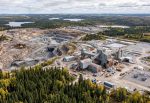
Equinox Gold Corp. EQX engages in the exploration and development of mineral properties. The Zacks Consensus Estimate for its current year earnings has been revised 20% downward over the last 60 days.
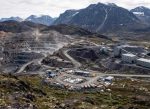
BHP Group Limited BHP is a resources company that operates in Petroleum, Copper, Iron Ore, and Coal segments. The Zacks Consensus Estimate for its current year earnings has been revised 18.4% downward over the last 60 days.
Honda Motor Co., Ltd. HMC manufactures, and distributes motorcycles, automobiles, power products, and other products. The Zacks Consensus Estimate for its current year earnings has been revised 10.3% downward over the last 60 days.
View the entire Zacks Rank #5 List.
Want the latest recommendations from Zacks Investment Research? Today, you can download 7 Best Stocks for the Next 30 Days. Click to get this free report BHP Group Limited Sponsored ADR (BHP) : Free Stock Analysis Report Honda Motor Co., Ltd. (HMC) : Free Stock Analysis Report Equinox Gold Corp. (EQX) : Free Stock Analysis Report To read this article on Zacks.com click here. Zacks Investment Research
It hasn’t been the best quarter for BHP Group Limited (ASX:BHP) shareholders, since the share price has fallen 24% in that time. Looking further back, the stock has generated good profits over five years. Its return of 56% has certainly bested the market return!
So let’s investigate and see if the longer term performance of the company has been in line with the underlying business’ progress.
Check out our latest analysis for BHP Group
While markets are a powerful pricing mechanism, share prices reflect investor sentiment, not just underlying business performance. One imperfect but simple way to consider how the market perception of a company has shifted is to compare the change in the earnings per share (EPS) with the share price movement.
Over half a decade, BHP Group managed to grow its earnings per share at 46% a year. The EPS growth is more impressive than the yearly share price gain of 9% over the same period. So one could conclude that the broader market has become more cautious towards the stock. This cautious sentiment is reflected in its (fairly low) P/E ratio of 8.68.
The image below shows how EPS has tracked over time (if you click on the image you can see greater detail).
We like that insiders have been buying shares in the last twelve months. Even so, future earnings will be far more important to whether current shareholders make money. This free interactive report on BHP Group’s earnings, revenue and cash flow is a great place to start, if you want to investigate the stock further.
What About Dividends?
It is important to consider the total shareholder return, as well as the share price return, for any given stock. The TSR incorporates the value of any spin-offs or discounted capital raisings, along with any dividends, based on the assumption that the dividends are reinvested. So for companies that pay a generous dividend, the TSR is often a lot higher than the share price return. We note that for BHP Group the TSR over the last 5 years was 148%, which is better than the share price return mentioned above. This is largely a result of its dividend payments!
A Different Perspective
While it’s never nice to take a loss, BHP Group shareholders can take comfort that , including dividends,their trailing twelve month loss of 1.0% wasn’t as bad as the market loss of around 4.0%. Longer term investors wouldn’t be so upset, since they would have made 20%, each year, over five years. It could be that the business is just facing some short term problems, but shareholders should keep a close eye on the fundamentals. I find it very interesting to look at share price over the long term as a proxy for business performance. But to truly gain insight, we need to consider other information, too. To that end, you should learn about the 3 warning signs we’ve spotted with BHP Group (including 1 which shouldn’t be ignored) .
BHP Group is not the only stock insiders are buying. So take a peek at this free list of growing companies with insider buying.
Please note, the market returns quoted in this article reflect the market weighted average returns of stocks that currently trade on AU exchanges.
Have feedback on this article? Concerned about the content? Get in touch with us directly. Alternatively, email editorial-team (at) simplywallst.com.This article by Simply Wall St is general in nature. We provide commentary based on historical data and analyst forecasts only using an unbiased methodology and our articles are not intended to be financial advice. It does not constitute a recommendation to buy or sell any stock, and does not take account of your objectives, or your financial situation. We aim to bring you long-term focused analysis driven by fundamental data. Note that our analysis may not factor in the latest price-sensitive company announcements or qualitative material. Simply Wall St has no position in any stocks mentioned.
Join A Paid User Research SessionYou’ll receive a US$30 Amazon Gift card for 1 hour of your time while helping us build better investing tools for the individual investors like yourself. Sign up here
BHP has announced plans to tackle biodiversity loss, in a move that the world’s biggest mining company hopes will put it ahead of rivals in the race to secure the best mineral deposits in the shift to clean energy. The biodiversity goal is part of a wider “social value” scorecard published on Tuesday that includes plans for a revised strategy on indigenous relations and full adherence to a programme on combating sexual assault and harassment in 2023. “The scrutiny of our industry continues to be high and the expectations on us are also high,” said BHP’s chief external affairs officer Caroline Cox.
By Nick Carey
LONDON (Reuters) – UK startup Circulor, which uses blockchain technology to map supply chains for companies pursuing greener, more sustainable production, said on Tuesday it had raised $25 million to fund expansion, primarily in the United States.
The Series B funding round brings Circulor's fundraising over the last two years to $45 million. The funding round was led by early Tesla investor Westly Group and included investments from the venture capital arms of Volvo Cars, Jaguar Land Rover (JLR) and BHP Group, the world's largest listed miner.
Westly Group founder Steve Westly told Reuters that Circulor is "very much like Tesla," a pioneer in electric vehicles (EVs)that is the world's largest carmaker by market capitalisation.
"The market is going that direction in an extraordinarily rapid way… and Circulor is by far the leader in this sector," he said.
Circulor is working with carmakers including Volvo, Tata Motors unit JLR, plus miners and energy companies BHP and TotalEnergies, to trace their supply chains as they pursue environmental, social and corporate governance (ESG) goals.
BHP has used Circulor's blockchain platform to track the carbon emissions of nickel from the point when it was mined to Tesla's "gigafactory" in Shanghai.
Circulor CEO Douglas Johnson-Poensgen said demand for supply chain visibility has grown in response to regulatory pressure from the U.S. Securities and Exchange Commission (SEC).
Global supply chain disruptions have given manufacturers further reason to seek scrutiny over every stage of a component's journey.
"U.S. industry is increasingly interested in not just origin, but also demonstrating ESG performance because the SEC has made clear that the greenwashing and war of glossy brochures isn't good enough," Johnson-Poensgen told Reuters.
The U.S. government has also pushed for domestic EV battery production, which Johnson-Poensgen said will intensify the need for better supply chain mapping.
"Clearly the global arms race for battery materials is going to spread to the U.S. pretty quick," he said. "The one thing I think most folks can agree on is whatever the reason for supply chain visibility, it is now mission critical."
Johnson-Poensgen added that Circulor plans an initial public offering "in due course".
(Reporting By Nick Carey; editing by Barbara Lewis)
(Updates with BHP comment on royalty hike)
By Harish Sridharan
June 22 (Reuters) – Queensland's bigger-than-expected hike in coal royalties could embolden other Australian states and resources-heavy countries around the world to make similar moves, analysts warned on Wednesday.
Australia's second-largest state, which aims to deliver a budget surplus by 2024-25, said on Tuesday it would increase royalties on coal production after a 10-year freeze, to capture windfall profit from rocketing coal prices.
The move promises an extra A$1.2 billion ($836 million) in 2023 financial year taxes for the state that's home to coal mines owned by industry leaders like BHP Group Ltd, Glencore PLC, Anglo American PLC and Peabody Energy Corp.
"We had expected QLD (Queensland) to increase royalties but the magnitude of the increase & the lack of consultation with the mining industry in our opinion sets a concerning precedent, especially when many governments are looking to balance budgets post-COVID," analysts at UBS said in a note.
Resources lobbies in Queensland slammed the move, saying it would compound the tax burden on coal producers who already pay double the royalty rate in Australia's other major coal-producing state, New South Wales (NSW).
"The cost of doing business in Queensland is already high, and further cost pressures will discourage investment, operational growth, job creation and local business spending," Edgar Basto, President Minerals Australia at BHP, said in an emailed statement to Reuters.
While NSW left its rate unchanged, analysts said they would be keeping an eye out for the Commonwealth Budget in October to see if there were any plans to lift rates for iron ore or other miners, considering the boom most commodities saw recently in the wake of the Russia-Ukraine conflict.
"While NSW did not follow the Queensland government's decision to hike royalties, record high commodity prices and ongoing budget deficits could pressure other governments to raise mining taxes," Australian brokerage firm Barrenjoey said.
UBS also flagged the risk of other mining countries like Chile, Peru, Canada and Zambia raising taxes over the next two years after Queensland's move.
Chile, a major copper producer, is already set to push forward its tax reform plans that include a bill on mining royalties, while Indonesia announced plans of raising royalty tariffs on tin production earlier this week.
(Reporting by Harish Sridharan and Sameer Manekar in Bengaluru; Editing by Subhranshu Sahu)
(Bloomberg) — BHP Group u-turned on its plan to exit from thermal coal, after surging prices made the assets more valuable and a shift in investor attitudes has reduced pressure on the company to stop mining the dirtiest fuel.
Most Read from Bloomberg
-
China Says It May Have Detected Signals From Alien Civilizations
-
Stocks Jump as Powell Soothes Wall Street’s Nerves: Markets Wrap
-
Fed Hikes 75 Basis Points; Powell Says 75 or 50 Likely in July
-
World’s Central Banks Got It Wrong, and Economies Pay the Price
-
Americans Are Building Vacation-Home Empires With Easy-Money Loans
The world’s biggest resources companies and their shareholders have been grappling for years with the question of whether to get out of the fossil-fuel business. BHP already sold out of a giant coal mine in Colombia and its biggest rival, Rio Tinto Group, completely exited coal years ago, while top shipper Glencore Plc says it will hold onto its mines until they run out of coal sometime before 2050.
Investors Pushed Mining Giants to Quit Coal. Now It’s Backfiring
Now investors are growing increasingly wary of the unintended consequences of divestment, especially as spiking energy prices make it a lucrative business for new owners — meaning more coal could end up being produced for longer. Anglo American Plc spun off its South African coal mines last year into a new company that immediately announced it planned to increase production.
As a result, pressure from ESG-focused investors to quickly sell coal assets has been replaced by calls on major commodity producers to focus on the responsible — and accelerated — closure of the operations.
“Use of asset divestment as a tool to lower carbon footprints and avoid responsible closure is not acceptable,” Harriet Kater, climate lead for Australia at the Australasian Centre for Corporate Responsibility, a shareholder activist group, said in a statement.
In fact, BHP will seek to extend the operation’s life until the end of the decade, from the current permitting through 2026. The company said it will work with the local community over the next eight years on a closure plan.
While the company was still looking to sell the mine, it surprised investors by applying to extend mining until 2045, which prompted concerns that a potential buyer could keep the operation open until then.
BHP’s move to exit the business has also been complicated by a price surge that saw Asia’s benchmark Newcastle coal advance to a record high last month. BHP sold its stake in the Cerrejon coal mine to Glencore before prices spiked, which given the structure of the deal meant Glencore got the asset almost for free.
Glencore Gets Rich on Coal, But Questions Persist Over Exit Plan
Glencore itself is on course to make record profits from its coal business this year and could overtake Rio Tinto to become the world’s second most profitable miner as a result. The company has been forced to revisit the debate over its coal strategy this year as some investors push for more detail about the plan to wind down coal mines. However, the plan still received support from 76% of investors in a vote in April.
BHP has been seeking to shed fossil fuel assets as Chief Executive Office Mike Henry focuses the company around its top-earning iron ore unit, and on metals tied to the energy transition, including copper and nickel.
A sprawling oil and gas unit was divested to Woodside Energy Group in a deal completed this month, while the firm also last year sold a package of Australian metallurgical coal assets.
BHP has a provision of about $700 million for the closure of Mt Arthur and expects rehabilitation work to last about 10 to 15 years after mining ends, the company said in its statement.
(Updates with chart and additional background.)
Most Read from Bloomberg Businessweek
-
Sheryl Sandberg’s Wedding Expenses Are the Least of Facebook’s Sheryl Sandberg Problems
-
Janet Yellen Is Struggling at the Treasury Job She Never Wanted
-
A Ragtag Band of Hackers Is Waging Cyberwar on Putin’s Supply Lines
-
A Billion-Dollar Crypto Gaming Startup Promised Riches and Delivered Disaster
-
The Fed Tried to Protect Main Street. Now It May Have to Make Everyone Suffer
©2022 Bloomberg L.P.
By Sonali Paul
BRISBANE (Reuters) -Woodside Petroleum's shareholders on Thursday voted for a merger with BHP Group's petroleum arm to create a top 10 global independent oil and gas producer worth $40 billion, according to a vote count at the company's annual meeting.
Of the total final votes, 98.66% were in favour of the deal.
The merger, agreed last August, advances top global miner BHP's effort to move away from fossil fuels, as it looks to decarbonise, while doubling Woodside's oil and gas production and beefing up its funding for growth.
"The merger is an opportunity for Woodside to increase its contribution to the world's growing energy needs and build the scale, resilience and diversity to thrive through the energy transition," Chief Executive Officer Meg O'Neill told shareholders.
BHP will be paid in Woodside shares, giving BHP investors a 48% stake in the merged group, which will have assets in Australia, the United States, Mexico, Senegal and Trinidad.
While backing the merger, shareholders were disappointed with Woodside's climate plan, which does not set targets for reducing its customers' emissions, called Scope 3 emissions.
Nearly 49% of the votes were against the climate plan, which Woodside put to an advisory vote for the first time.
Two proxy advisers recommended voting against the plan.
Woodside Chairman Richard Goyder ordered the microphone to be cut off after one proxy for a shareholder asked whether the company's plans to invest in fossil fuels were "morally mad, economically mad or both", to which the chairman replied, "Or neither".
However, Goyder said the company clearly needs to engage more with shareholders to explain that its plans are in line with Paris Agreement goals.
O'Neill said Woodside's strategy on Scope 3 is to come up with clean products, such as hydrogen, for its customers.
(Reporting by Sonali Paul; Editing by Christopher Cushing and Rashmi Aich)
By Sonali Paul
MELBOURNE (Reuters) – Woodside Petroleum does not expect heavy selling of the company's shares by BHP Group investors if Woodside's acquisition of BHP's petroleum business goes ahead in June, Chief Executive Meg O'Neill said on Tuesday.
Woodside shareholders are set to vote on Thursday on a $40 billion merger to create a top 10 global independent oil and gas producer. BHP shareholders will hold a 48% stake in the enlarged group to be called Woodside Energy.
There have been concerns that investors who own BHP shares but do not currently hold Woodside may seek to dump the Woodside shares they will be issued in the deal.
However O'Neill said her conversations with BHP shareholders were going "really well" in explaining the expected returns from the enlarged group, its capital management framework and the strength of the balance sheet.
Woodside has also been talking to U.S. investors to highlight the differences between it and independent peers in the United States, which are focused on shale production and oil, in contrast to Woodside's offshore oil and gas and liquefied natural gas (LNG) assets.
"At the end of the day, we believe there'll be demand for Woodside shares that outpaces the supply that's available. So we think the flowback risk is largely mitigated," O'Neill told reporters on the sidelines of the Australian Petroleum Production and Exploration Association's annual conference.
"But that said, I do recognise this is a big transaction. We are issuing a large number of new shares, so we expect we'll see a bit of volatility for the next few months. But I don't think it will be enduring."
She said only a small number of BHP shareholders are in jurisdictions where they will not be able to hold Woodside shares, such as South Africa.
Assuming the deal goes ahead, Woodside is well positioned to benefit from European and Asian buyers seeking alternatives to Russian supply, which has been curtailed by sanctions.
O'Neill told Reuters the company's $4.6 billion Sangomar oil project in Senegal, where the company has been looking to sell down its 82% stake since July, has attracted "a bit more interest" in the wake of the Ukraine conflict.
"Obviously with commodity prices where they are, people are seeing near-term opportunity from this asset," she said.
Sangomar, due to start up in 2023, will produce sour crude similar to Russia's Urals crude, which European refiners use.
"So we do expect there'll be a lot of interest in the market from the European refiners for the Senegalese grades," O'Neill told Reuters.
(Reporting by Sonali Paul; Editing by Richard Pullin and Kenneth Maxwell)
For Immediate Release
Chicago, IL – April 29, 2022 – Zacks Value Investor is a podcast hosted weekly by Zacks Stock Strategist Tracey Ryniec. Every week, Tracey will be joined by guests to discuss the hottest investing topics in stocks, bonds and ETFs and how it impacts your life. To listen to the podcast, click here: https://www.zacks.com/stock/news/1910543/lessons-from-the-grande-dame-of-dividends
Lessons from the Grande Dame of Dividends
Welcome to Episode #279 of the Value Investor Podcast.
-
(0:15) -Zacks Market Edge Podcast Archive
-
(2:10) – Lessons From A Investing Newsletter Legend: Geraldine Weiss
-
(13:15) – Tracey’s Top Stock Picks: Stock Screen Breakdown
-
(28:45) – Episode Roundup: BHP, DVN, DOW, WSBC, WPC
-
Podcast@Zacks.com
Every week, Tracey Ryniec, the editor of Zacks Value Investor portfolio, shares some of her top value investing tips and stock picks.
This week, the New York Times featured an obituary on investing legend Geraldine Weiss. She died at age 96 in California.
According to the obituary, which Weiss gave an interview for in March, she started the Investment Quality Trends newsletter in 1966, and retired from editing it in 2002 at age 76.
It's focus was on dividends because, she said in the obituary, dividends represent the here and now. She became known as the "grande dame of dividends."
Her strategy combined both fundamental and technical analysis, which was rare for that time period.
Can you find Geraldine Weiss stocks in 2022?
Screening for Geraldine Weiss Dividend Stocks
Zacks doesn't have a predefined screen with Geraldine's strategy, but maybe it should. Instead, Tracey recreated it by combining the Zacks Ranks of #1 (Strong Buy) and #2 (Buy) with a dividend yield over 4% and at least 5 years of dividend growth.
This screen returned 47 stocks.
5 Top Ranked Dividend Stocks Yielding Over 4%
1. BHP Group (BHP)
BHP Group is an Australian mining giant which mines copper, iron ore and nickel.
Shares are up 11.5% year-to-date but are still cheap, on a P/E basis, with a forward P/E of just 7.7.
BHP Group is paying out a juicy yield of 9.3%.
Is it time to get a piece of BHP Group's payout?
2. Devon Energy (DVN)
Devon Energy is an oil and natural gas company. Shares are up 32% year-to-date as energy remains the best performing sector on Wall Street.
Devon Energy is paying both a fixed, and a variable, dividend thanks to record free cash flow. Combined, the dividend yield was 7.1%.
But Devon Energy is about to report first quarter results which are expected to be red-hot due to elevated crude and natural gas prices in 2022. Will the yield rise?
Devon Energy remains dirt cheap, even with the shares surging, with a forward P/E of 6.6.
Is Devon Energy the perfect combination of both growth and income?
3. Dow Inc. (DOW)
Dow has already reported its first quarter results. It saw sales up 28% year-over-year as it saw strong demand across its end markets.
Dow is paying a dividend yielding 4.2%.
Shares are up 20% year-to-date but remain cheap, with a forward P/E of just 8.4.
Should Dow be on your short list?
4. WesBanco, Inc. (WSBC)
WesBanco is a West Virginia-based regional bank. Shares have fallen 5% year-to-date and have a forward P/E of 12.9.
WesBanco shares currently yield 4.2%. It has a 5-year historic growth rate of 5.5%.
Should investors be looking at the banks with the Federal Reserve raising rates in 2022?
5. W.P. Carey Inc. (WPC)
W.P. Carey is a REIT that focuses on commercial real estate in the industrial, warehouse, office, retail and self-storage areas. It has properties in the United States and Northern and Western Europe.
Shares are up 3.1% year-to-date and have a forward P/E of just 16.
W.P. Carey pays a dividend yielding 5%. It will report earnings on Apr 29, 2022.
Are REITs like W.P. Carey back in favor 2 years after the start of the COVID pandemic?
What Else do you Need to Know About Geraldine Weiss and Dividend Investing?
Tune into this week's podcast to find out.
Why Haven't You Looked at Zacks' Top Stocks?
Our 5 best-performing strategies have blown away the S&P's impressive +28.8% gain in 2021. Amazingly, they soared +40.3%, +48.2%, +67.6%, +94.4%, and +95.3%. Today you can access their live picks without cost or obligation.
See Stocks Free >>
Tracey Ryniec is the Value Stock Strategist for Zacks.com. She is also the Editor of the Insider Trader and Value Investor services. You can follow her on twitter at @TraceyRyniec and she also hosts the Zacks Market Edge Podcast on iTunes.
About Zacks
Zacks.com is a property of Zacks Investment Research, Inc., which was formed in 1978. The later formation of the Zacks Rank, a proprietary stock picking system; continues to outperform the market by nearly a 3 to 1 margin. The best way to unlock the profitable stock recommendations and market insights of Zacks Investment Research is through our free daily email newsletter; Profit from the Pros. In short, it's your steady flow of Profitable ideas GUARANTEED to be worth your time! Click here for your free subscription to Profit from the Pros.
Follow us on Twitter: https://twitter.com/zacksresearch
Join us on Facebook: https://www.facebook.com/ZacksInvestmentResearch/
Zacks Investment Research is under common control with affiliated entities (including a broker-dealer and an investment adviser), which may engage in transactions involving the foregoing securities for the clients of such affiliates.
Media Contact
Zacks Investment Research
800-767-3771 ext. 9339
support@zacks.com
https://www.zacks.com/performance
Past performance is no guarantee of future results. Inherent in any investment is the potential for loss. This material is being provided for informational purposes only and nothing herein constitutes investment, legal, accounting or tax advice, or a recommendation to buy, sell or hold a security. No recommendation or advice is being given as to whether any investment is suitable for a particular investor. It should not be assumed that any investments in securities, companies, sectors or markets identified and described were or will be profitable. All information is current as of the date of herein and is subject to change without notice. Any views or opinions expressed may not reflect those of the firm as a whole. Zacks Investment Research does not engage in investment banking, market making or asset management activities of any securities. These returns are from hypothetical portfolios consisting of stocks with Zacks Rank = 1 that were rebalanced monthly with zero transaction costs. These are not the returns of actual portfolios of stocks. The S&P 500 is an unmanaged index. Visit https://www.zacks.com/performance for information about the performance numbers displayed in this press release.
Want the latest recommendations from Zacks Investment Research? Today, you can download 7 Best Stocks for the Next 30 Days. Click to get this free report Devon Energy Corporation (DVN) : Free Stock Analysis Report BHP Group Limited Sponsored ADR (BHP) : Free Stock Analysis Report Dow Inc. (DOW) : Free Stock Analysis Report W.P. Carey Inc. (WPC) : Free Stock Analysis Report WesBanco, Inc. (WSBC) : Free Stock Analysis Report To read this article on Zacks.com click here. Zacks Investment Research
Some have more dollars than sense, they say, so even companies that have no revenue, no profit, and a record of falling short, can easily find investors. Unfortunately, high risk investments often have little probability of ever paying off, and many investors pay a price to learn their lesson.
So if you're like me, you might be more interested in profitable, growing companies, like BHP Group (ASX:BHP). While profit is not necessarily a social good, it's easy to admire a business that can consistently produce it. In comparison, loss making companies act like a sponge for capital – but unlike such a sponge they do not always produce something when squeezed.
See our latest analysis for BHP Group
How Quickly Is BHP Group Increasing Earnings Per Share?
As one of my mentors once told me, share price follows earnings per share (EPS). That makes EPS growth an attractive quality for any company. It certainly is nice to see that BHP Group has managed to grow EPS by 23% per year over three years. If the company can sustain that sort of growth, we'd expect shareholders to come away winners.
I like to take a look at earnings before interest and (EBIT) tax margins, as well as revenue growth, to get another take on the quality of the company's growth. The good news is that BHP Group is growing revenues, and EBIT margins improved by 11.0 percentage points to 50%, over the last year. Ticking those two boxes is a good sign of growth, in my book.
You can take a look at the company's revenue and earnings growth trend, in the chart below. Click on the chart to see the exact numbers.
Fortunately, we've got access to analyst forecasts of BHP Group's future profits. You can do your own forecasts without looking, or you can take a peek at what the professionals are predicting.
Are BHP Group Insiders Aligned With All Shareholders?
We would not expect to see insiders owning a large percentage of a AU$233b company like BHP Group. But we are reassured by the fact they have invested in the company. To be specific, they have US$50m worth of shares. That's a lot of money, and no small incentive to work hard. Even though that's only about 0.02% of the company, it's enough money to indicate alignment between the leaders of the business and ordinary shareholders.
Is BHP Group Worth Keeping An Eye On?
For growth investors like me, BHP Group's raw rate of earnings growth is a beacon in the night. I think that EPS growth is something to boast of, and it doesn't surprise me that insiders are holding on to a considerable chunk of shares. So this is very likely the kind of business that I like to spend time researching, with a view to discerning its true value. Don't forget that there may still be risks. For instance, we've identified 2 warning signs for BHP Group (1 can't be ignored) you should be aware of.
You can invest in any company you want. But if you prefer to focus on stocks that have demonstrated insider buying, here is a list of companies with insider buying in the last three months.
Please note the insider transactions discussed in this article refer to reportable transactions in the relevant jurisdiction.
Have feedback on this article? Concerned about the content? Get in touch with us directly. Alternatively, email editorial-team (at) simplywallst.com.This article by Simply Wall St is general in nature. We provide commentary based on historical data and analyst forecasts only using an unbiased methodology and our articles are not intended to be financial advice. It does not constitute a recommendation to buy or sell any stock, and does not take account of your objectives, or your financial situation. We aim to bring you long-term focused analysis driven by fundamental data. Note that our analysis may not factor in the latest price-sensitive company announcements or qualitative material. Simply Wall St has no position in any stocks mentioned.
(Bloomberg) — U.K. dividends are now seen reaching 92.2 billion pounds ($116.4 billion) this year thanks to a boost from commodities firms, providing an additional lift to one of Europe’s best-performing stock markets.
Most Read from Bloomberg
-
Russia to Cut Gas to Poland and Bulgaria, Making Energy a Weapon
-
Ukraine Latest: Russia Says It Cut Gas Flows to Poland, Bulgaria
-
Elon Musk Lands Deal to Take Twitter Private for $44 Billion
-
Tech Stocks Fall Postmarket on Drag From Earnings: Markets Wrap
That’s the view of consulting firm Link Group Plc, which cited higher payouts from mining and oil companies, as well as the contribution from U.K. bank dividends, for a 4.5 billion-pound hike to its January forecast.
Adjusted underlying payouts — excluding special dividends and accounting for the shift of mining giant BHP Group Ltd away from a primary listing in London earlier this year — will rise 15% to 85.8 billion pounds, the report said.
“Commodity and oil prices have soared, bolstering the prospects for two of the U.K.’s biggest dividend paying sectors, while banking payouts continue their post-Covid-19 recovery at a slightly faster pace than we expected,” said Ian Stokes, managing director, corporate markets U.K. and Europe at Link Group.
After slumping in the aftermath of the pandemic, dividends have been bouncing back from a nine-year low of 64.4 billion in 2020, according to Link Group’s data. In the first quarter, U.K. payouts were up 12.2% excluding special dividends and BHP’s impact, the report said.
U.K. stocks have outperformed most other major benchmarks this year, partly due to the high proportion of oil and mining stocks in the U.K.’s gauge. The country’s FTSE 100 Index — little changed year-to-date compared with a more than 10% decline for the S&P 500 Index — also still offers one of the highest forward dividend yields globally, at about 4%.
Still, the reliance on commodities sectors for payouts carries risks.
“The mining sector cannot sustain its breakneck pace of dividend increases nor the size of its special dividends indefinitely, but the boom continues for now,” Stokes said, adding that the war in Ukraine was partly responsible as it has pushed commodities prices higher.
Other risks for U.K. companies — and their dividends — this year come from input cost pressures weighing on margins and the squeeze on U.K. consumers.
“Mid-cap companies are likely to suffer a greater impact from the constraints on consumer demand caused by cost-of-living increases, but the biggest companies are more insulated or are even benefiting – notably the oil and mining sectors,” the report said.
Most Read from Bloomberg Businessweek
-
China’s Biggest Covid Failure Is Not Deploying an mRNA Vaccine
-
The 400 Airplanes That Russia Seized Have Become an Epic Insurance Struggle
-
Elon Musk Stakes a $44 Billion Claim on the Future of Free Speech
-
Why Nasal Sprays Are Poised to Be the Next Weapon for Fighting Covid
©2022 Bloomberg L.P.
(Bloomberg) — Australia’s top natural gas exporter is exploring new investments on top of the $12 billion Scarborough development that it approved last year on expectations that new supply will be needed to alleviate market tightness.
Most Read from Bloomberg
-
Elon Musk Lands Deal to Take Twitter Private for $44 Billion
-
‘Weak Sauce’: Elon Musk’s 2018 Feud With Saudi Fund Revealed
-
Anger in Japan as Ukraine Links Emperor Hirohito to Adolf Hitler
-
Ukraine Latest: Lavrov Warns of Nuclear War; Biden Names Envoy
-
Ketanji Brown Jackson Won’t Lose Her Seat If Breyer ‘Unretires’
The lead contender is the Browse development, Meg O’Neill, the chief executive officer of Perth-based Woodside Petroleum Ltd. said in an interview. That multibillion-dollar collaboration with majors including BP Plc and Shell Plc has struggled to get off the ground, with a previous plan to develop it into a floating LNG plant scrapped in 2016 because of weak prices.
The war in Ukraine, which has led to nations avoiding purchases from top exporter Russia, the energy transition and surging demand are creating a period of upheaval that has seen an unprecedented tightening of natural gas supply. Woodside and other Australian producers are joining their peers from the U.S. to Qatar in exploring ways to boost exports and bridge the worsening deficit.
“The industry has under-invested for the last few years,” O’Neill said by telephone. “We are seeing the market being structurally tight — to be able to address that, more investment is required.”
Europe is expected to boosts imports of liquefied natural gas to curb dependence on Russian pipeline fuel, outpacing additional supplies and keeping prices elevated. The high rates have benefited Woodside, which on Tuesday said that its first quarter sales roughly doubled from the same period last year.
A planned merger with BHP Group’s oil and gas business could also help unlock investments in fields outside Australia, according to O’Neill. BHP has several gas assets in Trinidad & Tobago, which could potentially supply that nation’s Atlantic LNG export plant, she said.
Most Read from Bloomberg Businessweek
-
Why Nasal Sprays Are Poised to Be the Next Weapon for Fighting Covid
-
Shanghai’s Lockdown Missteps Undermine Financial Hub Ambitions
-
This Earnings Season Will Be a Weird One for Industrial Companies
©2022 Bloomberg L.P.
(Reuters) – BHP Group Ltd cut its annual copper production outlook on Thursday as operations at its Escondida project in Chile took a hit over protests by workers and environmental activists, as well as labour shortages due to rising COVID-19 cases.
Chile, the world's top copper producer, earlier this month sued BHP among others miners over alleged environmental damages caused by its operations in the Atacama salt flats.
That, along with road blockades, threats of work stoppage over alleged worker contract breaches, and surging COVID-19 infections at Escondida has affected production at the project, which houses the world's largest copper deposit.
"Our Chilean assets experienced a challenging operating environment in the March 2022 quarter due to a reduction in our operational workforce as a result of a significant increase in COVID-19 cases in Chile," the miner said in its third-quarter production report.
Copper production from Escondida is now expected between 1,000 thousand tonnes (kt) and 1,030 kt for 2022, down from its previous range of 1,020 kt to 1,080 kt, resulting in a slight downgrade to total copper output forecast to between 1,570 kt and 1,620 kt.
The miner has logged 1,112 kt of copper output so far this financial year, down 10% from last year. Its third-quarter iron ore output from Western Australia came in flat from last year, and missed consensus estimates.
(Reporting by Sameer Manekar in Bengaluru; Editing by Sherry Jacob-Phillips)
By Sonali Paul and Sameer Manekar
MELBOURNE (Reuters) -Exxon Mobil Corp and BHP Group said on Thursday they will go ahead with a project to boost gas output from their Gippsland Basin Kipper field off southeast Australia, which would help fill a looming gas shortage in the local market.
Exxon's Esso Australia said the project would cost about A$400 million ($291 million) to extract an additional 200 petajoules (PJ) of gas over the coming five years, adding that about 30 PJ will be produced next year.
The country's regulators have warned that eastern Australia faces a gas shortfall from 2026, largely because the ageing gas fields in the Gippsland Basin Joint Venture, which has been the biggest supplier into the market for decades, are drying up.
Esso operates the joint venture in a 50-50 partnership with global miner BHP.
The extra production from the Gippsland Basin will come online ahead of five proposed liquefied natural gas (LNG) import terminals, looking to serve the same market. Only one of those has begun preliminary construction work.
BHP's stake in the Gippsland Basin joint venture is set to go to Woodside Petroleum pending a vote of the Australian company's shareholders in May on a merger with BHP's petroleum business.
BHP will continue to contribute its 50% share of the Gippsland Basin Joint Venture's development spending for as long as it remains a stakeholder, a BHP spokesperson said.
Esso Australia also said it was advancing funding decisions to begin production from the Turrum field in Bass Strait, offshore Victoria.
($1 = 1.3723 Australian dollars)
(Reporting by Sameer Manekar in Bengaluru and Sonali Paul in Melbourne; Editing by Uttaresh.V and Rashmi Aich)
* Extra gas output needed by mid-decade
* First 30 PJ of extra output expected in 2023
* Exxon vying with proposed LNG import terminals (Adds BHP comment, LNG import background)
By Sonali Paul and Sameer Manekar
MELBOURNE, March 17 (Reuters) – Exxon Mobil Corp and BHP Group said on Thursday they will go ahead with a project to boost gas output from their Gippsland Basin Kipper field off southeast Australia, which would help fill a looming gas shortage in the local market.
Exxon's Esso Australia said the project would cost about A$400 million ($291 million) to extract an additional 200 petajoules (PJ) of gas over the coming five years, adding that about 30 PJ will be produced next year.
The country's regulators have warned that eastern Australia faces a gas shortfall from 2026, largely because the ageing gas fields in the Gippsland Basin Joint Venture, which has been the biggest supplier into the market for decades, are drying up.
Esso operates the joint venture in a 50-50 partnership with global miner BHP.
The extra production from the Gippsland Basin will come online ahead of five proposed liquefied natural gas (LNG) import terminals, looking to serve the same market. Only one of those has begun preliminary construction work.
BHP's stake in the Gippsland Basin joint venture is set to go to Woodside Petroleum pending a vote of the Australian company's shareholders in May on a merger with BHP's petroleum business.
BHP will continue to contribute its 50% share of the Gippsland Basin Joint Venture's development spending for as long as it remains a stakeholder, a BHP spokesperson said.
Esso Australia also said it was advancing funding decisions to begin production from the Turrum field in Bass Strait, offshore Victoria.
($1 = 1.3723 Australian dollars) (Reporting by Sameer Manekar in Bengaluru and Sonali Paul in Melbourne; Editing by Uttaresh.V and Rashmi Aich)
Investors worried about the twin threats of inflation and armed conflict on their portfolio should not ignore income as a decent yield can help shore up returns during periods of market volatility.
Jason Hollands, managing director of DIY investing platform Bestinvest, said: "The income on an investment is generally the more reliable – though not guaranteed – component of overall returns, and adds valuable ballast to a portfolio through thick and thin.
"But it can prove especially reassuring during times of volatility."
Here are Hollands' five global fund ideas for income seekers to consider for their 2021/22 ISA.
Redwheel UK Equity Income
This fund – managed by boutique Redwheel (formerly RWC Partners) has a ‘value’ approach of targeting cheap stocks which are typically larger companies. Its holdings include value stalwarts Legal & General (LGEN.L) and Dettol maker Reckitt Benckiser (RKT.L). Another more glamorous stock is Revolution Beauty Group (REVB.L) which produces vegan lipsticks and skincare products.
Revolution Beauty Group performance over the past six months. Chart: Yahoo Finance UK
Evenlode Global Income
This fund invests in a concentrated portfolio of 36 stocks that the managers have targeted because they provide a high return on capital and generate strong free cashflow.
Read more: Five ways for investors to make the most out of capital gains tax exemptions
These are typically larger companies and the managers tend to hold them for the long-term. Unlike most global funds which can look more like US funds when you look below the bonnet, Evenlode Global Income is 38% invested in the US, holds a similar amount in Europe and has 21% in the UK. Current holdings include US consumer firm Proctor & Gamble (PG), which owns brands ranging from Pampers to Old Spice, and Swiss pharmaceutical giant Roche (RHHBY). It favours companies delivering sustainable real dividend growth rather than focusing purely on high yielders.
Swiss pharmaceutical giant Roche is known to provide sustainable dividend growth. Chart: Yahoo Finance UK
BlackRock Continental European Income
As well as a high yield this fund target dividend growth and long-term outperformance, and since launch have delivered all three. Its holdings include Danish pharmaceutical firm Novo Nordisk (NVO) and Italian energy group Enel (ENEL.MI). The fund stands comparison not just with the top income funds, but those in the whole European sector.
The fund has been managed since launch in 2011 by Andreas Zoellinger, who has spent almost his entire career at BlackRock. In 2021, Brian Hall joined as co-manager.
Jupiter Japan Income
This is a high-yielding Japan fund that aims to provide long-term capital and dividend growth. It currently yields 2.24%. Japan has historically been a low-yielding market but in recent years reforms have encouraged companies to become more shareholder friendly, with dividend payouts more commonplace.
The Jupiter Japan Income fund invests predominantly in Japanese equities, but does have the freedom to invest 30% of the fund outside of Japan or in other funds. The investment process focuses on finding companies with the ability and willingness to grow dividends.
The fund managers have stressed they do not aim to maximise yield but rather are willing to invest in high-growth areas as long as they offer some yield. Recent purchases included Roland (7944.T) (high-yield with some growth), Tokyo Electron (TOELY) (high-growth with some yield) and Aruhi (7198.T) (high-growth with high-yield).
Chipmaking giant Tokyo Electron has been targeted by investors betting on a semiconductor boom. Chart: Yahoo Finance UK
Read more: European Central Bank leaves interest rates unchanged
This fund has provided consistent outperformance relative to other Japanese higher income funds. Since inception it has outperformed the MSCI Japan index 87% of the time.
Schroder Oriental Income
This investment trust, managed by Richard Sennitt, has delivered a growing dividend every year since it launched in 2005. It is currently yielding 4%, with distributions paid quarterly. While it predominantly invests in equities, it also has the flexibility to invest in bonds and preference shares.
The portfolio invests across both developed and emerging Asia, excluding Japan, with the largest country exposures being Taiwan (25%), Australia (17%), Singapore (15%) and Hong Kong (13%). Key sector themes include technology (30%), financials (26%) and real estate (18%). Notable holdings include Taiwan Semiconductor Manufacturing Co. (TSM) (10.2%), Samsung Electronics (SMSN.IL) (7.8%) and Australian mining giant BHP Group (BHP) (4.9%).
Watch: What are SPACS?
Firms paid shareholders $1.47tn (£1tn) in dividends last year, the highest total ever recorded, but 2022 is on track to be even better according to the latest Janus Henderson Global Dividend Index.
Global dividends surged 14.7% to reach a new high of $1.47tn, with records broken in a number of countries, including the US, Brazil, China and Sweden.
Nine-tenths of companies globally increased or held their dividends steady as banks and miners delivered three-fifths of the $212bn increase in payouts.
Banks saw dividends jump by 40% — or $50.5bn — driven by restoring payouts to more normal levels given that regulators had curbed distributions in many parts of the world in 2020.
More than one quarter of the annual dividend increase came from miners, which benefited from soaring commodity prices.
Read more: Anglo American more than triples annual payout with $6.2bn in dividends
Record payments from the miners reflected the strength of their profits — the mining sector distributed $96.6bn over the year, almost double the previous record set in 2019.
That is 10 times more than during the slump in 2015-16, with BHP (BHP) becoming the world’s largest dividend payer.
Consumer discretionary and industrial companies saw dividends increase by 12.8% and 10% respectively, while healthcare and pharmaceutical groups grew their dividends by 8.5%. Technology companies, whose profit growth continued relatively uninterrupted by the pandemic, added $17bn — an increase of 8%.
The global dividend surge was also boosted by record one-off special dividends.
World’s biggest dividend payers. Table: Janus Henderson Global Dividend Index
“A large part of the 2021 dividend recovery came from a narrow range of companies and sectors in a few parts of the world. But beneath these big numbers, there was broad based growth both geographically and by sector," Jane Shoemake, client portfolio manager, global equity income at Janus Henderson, said.
"In the context of the dramatic rebound seen in the banking sector, and the exceptional cyclical surge from mining companies, it would be easy to overlook the encouraging growth seen from those sectors that have delivered consistent increases in recent years, like the technology sector.”
Read more: Lloyds profits jump to £6.9bn as lender announces £2bn share buyback plan
Payouts reached new records in a number of countries including the US, Australia, China and Sweden, but one third of the rebound came from just two countries — Australia and the UK. A combination of surging mining payouts and restored banking distributions made the biggest contribution to growth in the two nations.
In the UK, dividends rose 44.3% on a headline basis in 2021, an increase of $28.9bn. Payouts increased 21.2% ahead of the global average. The total was driven by record special dividends paid by the mining sector, though miners’ regular dividends were also sharply higher.
UK banking dividends meanwhile only jumped back to half their pre-pandemic strength — due mainly to HSBC (HSBA.L) — and oil payouts were lower year-on-year due to the delayed impact of cuts announced in 2020.
More widely, three-quarters of UK companies in the index increased payouts or held them steady. After the 2021 mining boom, banking and recovering oil dividends are forecast to be the main engine of 2022 dividend growth in the UK.
“Having underperformed other equity markets in recent years, the UK equity market looks very attractively valued on both an earnings and dividend yield basis and we have exposure to a number of UK companies that are trading at a significant valuation discount to their international peers,” Shoemake added.
For 2022, Janus Henderson expects global dividends to jump up 3.1% and reach a new record of $1.52tn.
Watch: What are SPACs?
Rio Tinto (RIO.L) posted bumper annual profits and said it would pay shareholders a record final dividend of $7.7bn (£5.6bn) as it cashes in on soaring commodity prices.
Profits surged 72% on 2020, reaching the highest levels in the company's 149-year history, as iron ore earnings roughly doubled.
The firm paid out a total dividend for 2021 worth $16.8bn – a record for the miner and one of the largest in UK corporate history.
The FTSE 100 (^FTSE) mining giant announced it reaped annual underlying earnings of $21.4bn in 2021 thanks to surging iron ore prices and strong demand from China.
Underlying ebitda (earnings before interest, tax deprecation, and amortisation) rose 58% compared to 2020 to $37.7bn, on revenue of $63.5bn. It ended the year with a net cash position of $1.6bn.
Ebitda is a measure tracked by analyst, and the results were broadly in line with market expectations
Iron ore hit a record of over $230 a tonne in May, however, prices in the commodity have been volatile.
The commodity retreated to the mid $80s in the second half of last year as China reined in the output of its steel makers to meet stricter environmental standards. The market has since rallied, touching $150 earlier in 2022 after monetary easing and relaxed climate targets raised confidence in robust Chinese steel output in the coming year.
Rio Tinto CEO Jakob Stausholm said "the recovery of the global economy, driven by industrial production, resulted in significant price strength for our major commodities" and allowed for the results.
The London-based group expects the cost of production at its Pilbara iron ore business in the range of $19.50 to $21 per ton in 2022, compared to $18.60 per ton in 2022.
Looking ahead it expects capital expenditure of about $8bn this year, rising to around $9bn to $10bn in 2023 and 2024.
Read more: Barclays to buy back £1bn of shares and raise dividend as profits soar
Shares in the company declined 0.2% on Wednesday morning in London.
Graph: Yahoo Finance
It comes as the Anglo-Australian miner is reeling from a damning report detailing a culture of racism and harassment and claims of sexual assault at the company.
Stausholm who took the reins at the company just over a year ago, published the report and has also been working to overhaul the miner's reputation after it destroyed an ancient Aboriginal site in 2020.
Rio Tinto also announced plans to diversify its business. "Our agenda is an ambitious, multi-year journey which we are determined to deliver and we have already taken the first steps, with underground operations under way following the Oyu Tolgoi agreement and a binding agreement to acquire the Rincon lithium project in Argentina," Satusholm said.
Mining companies have emerged as dividend-paying stalwarts of the London stock market since the coronavirus pandemic.
Glencore (GLEN.L), the world’s biggest miner, announced a $4bn payout, while BHP (BHP) recently posted strong results and declared a record $7.6bn half-year dividend, and Chile-focused miner Antofagasta (ANTO.L) reported a record dividend of $1.4bn earlier this week.
Watch: Why are gas prices rising?
(Bloomberg) — Iron ore plummeted as Beijing ramped up a campaign to stop prices overheating, prompting BHP Group Ltd. — one of the world’s top producers — to caution that supply and demand will determine prices.
Most Read from Bloomberg
-
Putin Seeks Diplomatic Solution Amid ‘Partial’ Troop Pullback
-
Putin Sees Basis for Talks After Scholz Meeting: Ukraine Update
-
Sarcasm in Ukraine Roils Markets Swinging Between War, Peace
Prices tumbled as much as 13% in Singapore on signs that authorities in China will intensify efforts to quell a big rally since mid-November. Several iron ore companies received a warning about speculation and hoarding at a meeting with regulators in Beijing, while the official China Daily newspaper railed against what it called “guerrilla war” by speculators in China and outside.
The fresh regulatory attention highlights a difficult balancing act for Beijing, which wants to steady the economy — boosting steel consumption — without reprising last year’s damaging bout of commodity inflation. Iron ore’s demand prospects look robust, according to Mike Henry, Chief Executive Officer of BHP, the No.3 global iron ore supplier.
“At the end of the day, the iron ore price will be determined by supply and demand,” Henry said in a Bloomberg TV interview, answering a question about Beijing’s efforts to cool prices. “Given the strong outlook we see on the demand side, plus some of the supply-side constraints, we think that will provide a measure of support to pricing.”
Iron ore had risen more than 60% from mid-November to smash through $150 a ton last week, triggering initial actions by regulators including port checks, higher futures trading fees and a warning against disinformation.
“The government’s rhetoric on cracking down on iron ore prices is expected to drive trading for the near term as the market awaits more specific measures,” Wei Ying, an analyst with China Industrial Futures Ltd., said by phone.
Let’s Talk
On Tuesday, some Chinese iron ore trading firms were summoned to a meeting with a trio of powerful government departments — including the markets regulator, the economic planning agency, and the securities regulator — to discuss “abnormal” prices. The companies were warned against hoarding and speculation, according to an official statement.
And an editorial in the English-language China Daily urged stronger steps to stabilize prices as the government boosts cyclical demand including infrastructure spending. The paper blamed “domestic and foreign capital” for fueling speculative price gains.
Futures on the Singapore Exchange were down 8.8% at $134.05 a ton by 4:16 p.m. local time. On China’s Dalian Commodity Exchange, prices closed down 10% at their daily limit.
Like BHP, some analysts also question whether efforts to rein in prices can have lasting impact if the physical market tightens further.
“History has taught us that these sharp plunges after Chinese rhetoric on investigating and supervising iron ore prices are short and temporary,” said Atilla Widnell, managing director at Navigate Commodities. A fall in supplies from Australia and Brazil — together with rising steel production — have created a very finely balanced market, he said.
Most Read from Bloomberg Businessweek
-
China Is Showing Off the Digital Yuan at the Olympics. Can the U.S. Compete?
-
The Billion-Dollar Nickel-Swap Scandal That Shocked Singapore
-
Pramila Jayapal Is Imposing Discipline on the Democratic Left
-
The Loan Shark Trump Freed From Prison Is Lending Money Again
©2022 Bloomberg L.P.
The market rally sold off Thursday as bond yields soared on hot inflation data and expectations of a “dramatically” more-hawkish Fed.
Investment company T. Rowe Price Real Assets Fund, Inc. (Current Portfolio) buys BHP Group, Martin Marietta Materials Inc, Vulcan Materials Co, Wesdome Gold Mines, Simon Property Group Inc, sells Polymetal International PLC, CyrusOne Inc, Sandstorm Gold, Lundin Mining Corp, Digital Realty Trust Inc during the 3-months ended 2021Q3, according to the most recent filings of the investment company, T. Rowe Price Real Assets Fund, Inc.. As of 2021Q3, T. Rowe Price Real Assets Fund, Inc. owns 242 stocks with a total value of $4.2 billion. These are the details of the buys and sells.
-
New Purchases: MLM, VMC, KIM, NSC, CMS, JYEU, COF, COF, 00435, JBLU, UAL, ALK, ALGT, DAL, SNCY, ULCC, LUV, CP, CSX, CNR, KRR, MESA,
-
Added Positions: BHP, WDO, SPG, GRNG, NEE, COP, FP, CVX, PXD, MAR, UNP, HHC, EQNR, GALP, HTHT, EOG, SBAC, 5401, PRU, FRT, KNT, DVN, HES, 01209, PEB, HST, ESS, D, BVN, AKZA, RPM, ALQ, HUBB, SHW, LEG, CAT, DEI, REXR, MGY, EFX, FABG, LUNE, CHX, EPI A, AKR, MMK, TEN, 8976, WEC, HAL, 8803, SAND, IBE, DAR, EPI B, ENTG, WEIR, NST, WHD, XEL, HLT, CTPNV, PPG, STERV, SO, 9616,
-
Reduced Positions: EQIX, WPC, ATC, UTG, LIN, CPT, VALE3, WELL, MOCORP, O, SSW, IMP, VER, ARE, WPM, REG, PLD, PSA, STLD, IMI, 01997, FNV, EQR, HR, AVB, STOR, 00016, DSM, AAL, NHY, KOJAMO, CUBE, SLG, NNN, 8801, ANTO, COL, AVY, CF, EPR, 3436, ELS, CRDA, SRE, EPRT, HIW, OZL, SCCO, KWR, LBRT, 8804, 3287, SAFM, CLNX, AIRC, DLN, PSPN, ACC, ADC, IIPR, SHO, SRC, LXP, HTA, TRNO, RYN, EGP, BYG, PKG, CAR.UN, UPM, MAG, KRC, HKHGF, GFC,
-
Sold Out: POLY, CONE, SAND, LUN, DLR, WLK, SLR, CG, 09698, LNN, GLEN, C31, HUN, DTE, TTC, 1COV, GPK, VMI, CE, NK, BUCN, EMR, PXT, PAAS, NHM, JBGS, ABX, ARRY, UE, AEM, WY, YRI, EDV, EQX, BTO, PE&OLES, HMY, SIL, IMG, ELD, TXG, SEA, NG, NGD,
For the details of T. Rowe Price Real Assets Fund, Inc.'s stock buys and sells,go to https://www.gurufocus.com/guru/t.+rowe+price+real+assets+fund%2C+inc./current-portfolio/portfolio
These are the top 5 holdings of T. Rowe Price Real Assets Fund, Inc.
BHP Group Ltd (BHP) – 4,898,700 shares, 3.08% of the total portfolio. Shares added by 158.69%
Prologis Inc (PLD) – 972,172 shares, 2.87% of the total portfolio. Shares reduced by 3.23%
SPDR Oil & Gas Exploration and Production ETF (XOP) – 1,086,549 shares, 2.47% of the total portfolio.
Welltower Inc (WELL) – 1,099,115 shares, 2.13% of the total portfolio. Shares reduced by 6.54%
Camden Property Trust (CPT) – 558,578 shares, 1.94% of the total portfolio. Shares reduced by 9.14%
New Purchase: Martin Marietta Materials Inc (MLM)
T. Rowe Price Real Assets Fund, Inc. initiated holding in Martin Marietta Materials Inc. The purchase prices were between $339.74 and $390.42, with an estimated average price of $363.69. The stock is now traded at around $438.590000. The impact to a portfolio due to this purchase was 0.73%. The holding were 90,366 shares as of 2021-09-30.
New Purchase: Vulcan Materials Co (VMC)
T. Rowe Price Real Assets Fund, Inc. initiated holding in Vulcan Materials Co. The purchase prices were between $169.16 and $193.41, with an estimated average price of $178.97. The stock is now traded at around $207.490000. The impact to a portfolio due to this purchase was 0.71%. The holding were 178,638 shares as of 2021-09-30.
New Purchase: Kimco Realty Corp (KIM)
T. Rowe Price Real Assets Fund, Inc. initiated holding in Kimco Realty Corp. The purchase prices were between $19.57 and $22.3, with an estimated average price of $21.38. The stock is now traded at around $24.030000. The impact to a portfolio due to this purchase was 0.31%. The holding were 636,807 shares as of 2021-09-30.
New Purchase: Norfolk Southern Corp (NSC)
T. Rowe Price Real Assets Fund, Inc. initiated holding in Norfolk Southern Corp. The purchase prices were between $239.24 and $273.35, with an estimated average price of $256.57. The stock is now traded at around $291.530000. The impact to a portfolio due to this purchase was 0.21%. The holding were 36,854 shares as of 2021-09-30.
New Purchase: CMS Energy Corp (CMS)
T. Rowe Price Real Assets Fund, Inc. initiated holding in CMS Energy Corp. The purchase prices were between $58.86 and $65.61, with an estimated average price of $62.4. The stock is now traded at around $63.910000. The impact to a portfolio due to this purchase was 0.2%. The holding were 140,699 shares as of 2021-09-30.
New Purchase: Lendlease Global Commercial REIT (JYEU)
T. Rowe Price Real Assets Fund, Inc. initiated holding in Lendlease Global Commercial REIT. The purchase prices were between $0.84 and $0.92, with an estimated average price of $0.87. The stock is now traded at around $0.870000. The impact to a portfolio due to this purchase was 0.14%. The holding were 9,065,500 shares as of 2021-09-30.
Added: BHP Group Ltd (BHP)
T. Rowe Price Real Assets Fund, Inc. added to a holding in BHP Group Ltd by 158.69%. The purchase prices were between $36.39 and $54.06, with an estimated average price of $46.64. The stock is now traded at around $41.320000. The impact to a portfolio due to this purchase was 1.89%. The holding were 4,898,700 shares as of 2021-09-30.
Added: Wesdome Gold Mines Ltd (WDO)
T. Rowe Price Real Assets Fund, Inc. added to a holding in Wesdome Gold Mines Ltd by 98.57%. The purchase prices were between $10.06 and $12.93, with an estimated average price of $12.03. The stock is now traded at around $11.300000. The impact to a portfolio due to this purchase was 0.61%. The holding were 6,530,424 shares as of 2021-09-30.
Added: Simon Property Group Inc (SPG)
T. Rowe Price Real Assets Fund, Inc. added to a holding in Simon Property Group Inc by 61.12%. The purchase prices were between $117.19 and $136.42, with an estimated average price of $130.23. The stock is now traded at around $158.430000. The impact to a portfolio due to this purchase was 0.39%. The holding were 333,855 shares as of 2021-09-30.
Added: Granges AB (GRNG)
T. Rowe Price Real Assets Fund, Inc. added to a holding in Granges AB by 176.85%. The purchase prices were between $99.45 and $122.5, with an estimated average price of $113.07. The stock is now traded at around $106.800000. The impact to a portfolio due to this purchase was 0.29%. The holding were 1,596,252 shares as of 2021-09-30.
Added: NextEra Energy Inc (NEE)
T. Rowe Price Real Assets Fund, Inc. added to a holding in NextEra Energy Inc by 244.35%. The purchase prices were between $74.19 and $86.48, with an estimated average price of $80.63. The stock is now traded at around $91.320000. The impact to a portfolio due to this purchase was 0.28%. The holding were 323,086 shares as of 2021-09-30.
Added: ConocoPhillips (COP)
T. Rowe Price Real Assets Fund, Inc. added to a holding in ConocoPhillips by 24.13%. The purchase prices were between $52.44 and $68.04, with an estimated average price of $57.76. The stock is now traded at around $73.210000. The impact to a portfolio due to this purchase was 0.25%. The holding were 814,293 shares as of 2021-09-30.
Sold Out: Polymetal International PLC (POLY)
T. Rowe Price Real Assets Fund, Inc. sold out a holding in Polymetal International PLC. The sale prices were between $1208.4 and $1662.4, with an estimated average price of $1499.69.
Sold Out: CyrusOne Inc (CONE)
T. Rowe Price Real Assets Fund, Inc. sold out a holding in CyrusOne Inc. The sale prices were between $70.51 and $80.7, with an estimated average price of $75.23.
Sold Out: Sandstorm Gold Ltd (SAND)
T. Rowe Price Real Assets Fund, Inc. sold out a holding in Sandstorm Gold Ltd. The sale prices were between $5.6 and $7.96, with an estimated average price of $6.92.
Sold Out: Lundin Mining Corp (LUN)
T. Rowe Price Real Assets Fund, Inc. sold out a holding in Lundin Mining Corp. The sale prices were between $8.77 and $11.77, with an estimated average price of $10.47.
Sold Out: Digital Realty Trust Inc (DLR)
T. Rowe Price Real Assets Fund, Inc. sold out a holding in Digital Realty Trust Inc. The sale prices were between $144.45 and $168, with an estimated average price of $156.92.
Sold Out: Westlake Chemical Corp (WLK)
T. Rowe Price Real Assets Fund, Inc. sold out a holding in Westlake Chemical Corp. The sale prices were between $78.98 and $93.55, with an estimated average price of $85.74.
Here is the complete portfolio of T. Rowe Price Real Assets Fund, Inc.. Also check out:1. T. Rowe Price Real Assets Fund, Inc.'s Undervalued Stocks2. T. Rowe Price Real Assets Fund, Inc.'s Top Growth Companies, and3. T. Rowe Price Real Assets Fund, Inc.'s High Yield stocks4. Stocks that T. Rowe Price Real Assets Fund, Inc. keeps buyingThis article first appeared on GuruFocus.
Investment company Aberdeen Emerging Markets Equity Income Fund, Inc. (Current Portfolio) buys Prosus NV, TCS Group Holding PLC, Kotak Mahindra Bank, ASM International NV, Li Ning Co, sells Naspers, Vale SA, China Resources Land, Ping An Insurance (Group) Co. of China, BHP Group PLC during the 3-months ended 2021Q3, according to the most recent filings of the investment company, Aberdeen Emerging Markets Equity Income Fund, Inc.. As of 2021Q3, Aberdeen Emerging Markets Equity Income Fund, Inc. owns 75 stocks with a total value of $510 million. These are the details of the buys and sells.
-
New Purchases: PRX, TCS, KOTAKBANK, ASM, 02331, 035720,
-
Added Positions: FPT, 00700, TCB, 09698, BBRI, SE, 00881, GMEXICOB, LUKOY, 09988, 01299, RAIL3, 300274, 03968, AMS,
-
Reduced Positions: VALE, 01109, BHP, OMAB, 01928, 2330, 601012, 02343, SBER, 002812, WEGE3, TCS, NVTK,
-
Sold Out: NPN, 02318, EDU, GLTR,
For the details of Aberdeen Emerging Markets Equity Income Fund, Inc.'s stock buys and sells,go to https://www.gurufocus.com/guru/aberdeen+emerging+markets+equity+income+fund%2C+inc./current-portfolio/portfolio
These are the top 5 holdings of Aberdeen Emerging Markets Equity Income Fund, Inc.
Samsung Electronics Co Ltd (005935) – 736,593 shares, 8.42% of the total portfolio.
Taiwan Semiconductor Manufacturing Co Ltd (2330) – 2,004,000 shares, 8.12% of the total portfolio. Shares reduced by 4.48%
Tencent Holdings Ltd (00700) – 463,300 shares, 5.42% of the total portfolio. Shares added by 10.60%
Alibaba Group Holding Ltd (09988) – 981,500 shares, 3.56% of the total portfolio. Shares added by 7.57%
LONGi Green Energy Technology Co Ltd (601012) – 886,034 shares, 2.21% of the total portfolio. Shares reduced by 10.74%
New Purchase: Prosus NV (PRX)
Aberdeen Emerging Markets Equity Income Fund, Inc. initiated holding in Prosus NV. The purchase prices were between $67.66 and $82.48, with an estimated average price of $74.45. The stock is now traded at around $72.500000. The impact to a portfolio due to this purchase was 1.29%. The holding were 82,042 shares as of 2021-09-30.
New Purchase: TCS Group Holding PLC (TCS)
Aberdeen Emerging Markets Equity Income Fund, Inc. initiated holding in TCS Group Holding PLC. The purchase prices were between $82.72 and $100.55, with an estimated average price of $90.64. The stock is now traded at around $81.300000. The impact to a portfolio due to this purchase was 0.81%. The holding were 45,168 shares as of 2021-09-30.
New Purchase: Kotak Mahindra Bank Ltd (KOTAKBANK)
Aberdeen Emerging Markets Equity Income Fund, Inc. initiated holding in Kotak Mahindra Bank Ltd. The purchase prices were between $1641.65 and $2068.2, with an estimated average price of $1790.68. The stock is now traded at around $1748.400000. The impact to a portfolio due to this purchase was 0.76%. The holding were 144,706 shares as of 2021-09-30.
New Purchase: ASM International NV (ASM)
Aberdeen Emerging Markets Equity Income Fund, Inc. initiated holding in ASM International NV. The purchase prices were between $267.4 and $374.8, with an estimated average price of $318.07. The stock is now traded at around $382.800000. The impact to a portfolio due to this purchase was 0.68%. The holding were 8,821 shares as of 2021-09-30.
New Purchase: Li Ning Co Ltd (02331)
Aberdeen Emerging Markets Equity Income Fund, Inc. initiated holding in Li Ning Co Ltd. The purchase prices were between $72.35 and $107.7, with an estimated average price of $92.46. The stock is now traded at around $81.700000. The impact to a portfolio due to this purchase was 0.56%. The holding were 249,000 shares as of 2021-09-30.
New Purchase: Kakao Corp (035720)
Aberdeen Emerging Markets Equity Income Fund, Inc. initiated holding in Kakao Corp. The purchase prices were between $115000 and $163000, with an estimated average price of $144323. The stock is now traded at around $114500.000000. The impact to a portfolio due to this purchase was 0.41%. The holding were 21,215 shares as of 2021-09-30.
Added: FPT Corp (FPT)
Aberdeen Emerging Markets Equity Income Fund, Inc. added to a holding in FPT Corp by 114.61%. The purchase prices were between $84700 and $97500, with an estimated average price of $92543.9. The stock is now traded at around $93800.000000. The impact to a portfolio due to this purchase was 0.56%. The holding were 1,310,000 shares as of 2021-09-30.
Added: Vietnam Technological and Commercial Joint Stock b (TCB)
Aberdeen Emerging Markets Equity Income Fund, Inc. added to a holding in Vietnam Technological and Commercial Joint Stock b by 1125.00%. The purchase prices were between $48000 and $56600, with an estimated average price of $50934.1. The stock is now traded at around $48900.000000. The impact to a portfolio due to this purchase was 0.48%. The holding were 1,225,000 shares as of 2021-09-30.
Added: GDS Holdings Ltd (09698)
Aberdeen Emerging Markets Equity Income Fund, Inc. added to a holding in GDS Holdings Ltd by 288.42%. The purchase prices were between $48 and $74.3, with an estimated average price of $60.33. The stock is now traded at around $43.850000. The impact to a portfolio due to this purchase was 0.42%. The holding were 412,500 shares as of 2021-09-30.
Added: PT Bank Rakyat Indonesia (Persero) Tbk (BBRI)
Aberdeen Emerging Markets Equity Income Fund, Inc. added to a holding in PT Bank Rakyat Indonesia (Persero) Tbk by 34.29%. The purchase prices were between $3372.67 and $3850, with an estimated average price of $3558.73. The stock is now traded at around $4070.000000. The impact to a portfolio due to this purchase was 0.32%. The holding were 23,671,586 shares as of 2021-09-30.
Added: Sea Ltd (SE)
Aberdeen Emerging Markets Equity Income Fund, Inc. added to a holding in Sea Ltd by 32.90%. The purchase prices were between $267 and $353.36, with an estimated average price of $307.05. The stock is now traded at around $222.050000. The impact to a portfolio due to this purchase was 0.3%. The holding were 19,692 shares as of 2021-09-30.
Added: Zhongsheng Group Holdings Ltd (00881)
Aberdeen Emerging Markets Equity Income Fund, Inc. added to a holding in Zhongsheng Group Holdings Ltd by 48.30%. The purchase prices were between $59.9 and $76.65, with an estimated average price of $68.23. The stock is now traded at around $60.550000. The impact to a portfolio due to this purchase was 0.27%. The holding were 522,000 shares as of 2021-09-30.
Sold Out: Naspers Ltd (NPN)
Aberdeen Emerging Markets Equity Income Fund, Inc. sold out a holding in Naspers Ltd. The sale prices were between $2290.87 and $3011.33, with an estimated average price of $2634.29.
Sold Out: Ping An Insurance (Group) Co. of China Ltd (02318)
Aberdeen Emerging Markets Equity Income Fund, Inc. sold out a holding in Ping An Insurance (Group) Co. of China Ltd. The sale prices were between $51.35 and $74.9, with an estimated average price of $64.92.
Sold Out: New Oriental Education & Technology Group Inc (EDU)
Aberdeen Emerging Markets Equity Income Fund, Inc. sold out a holding in New Oriental Education & Technology Group Inc. The sale prices were between $1.7 and $7.81, with an estimated average price of $3.23.
Sold Out: Globaltrans Investment PLC (GLTR)
Aberdeen Emerging Markets Equity Income Fund, Inc. sold out a holding in Globaltrans Investment PLC. The sale prices were between $6.81 and $8.5, with an estimated average price of $7.61.
Reduced: Vale SA (VALE)
Aberdeen Emerging Markets Equity Income Fund, Inc. reduced to a holding in Vale SA by 30.96%. The sale prices were between $13.8 and $22.94, with an estimated average price of $19.65. The stock is now traded at around $13.910000. The impact to a portfolio due to this sale was -0.97%. Aberdeen Emerging Markets Equity Income Fund, Inc. still held 513,047 shares as of 2021-09-30.
Reduced: China Resources Land Ltd (01109)
Aberdeen Emerging Markets Equity Income Fund, Inc. reduced to a holding in China Resources Land Ltd by 44.22%. The sale prices were between $26 and $32.85, with an estimated average price of $29.41. The stock is now traded at around $33.300000. The impact to a portfolio due to this sale was -0.84%. Aberdeen Emerging Markets Equity Income Fund, Inc. still held 1,425,500 shares as of 2021-09-30.
Reduced: BHP Group PLC (BHP)
Aberdeen Emerging Markets Equity Income Fund, Inc. reduced to a holding in BHP Group PLC by 39.07%. The sale prices were between $370.38 and $486.99, with an estimated average price of $436.95. The stock is now traded at around $457.680000. The impact to a portfolio due to this sale was -0.59%. Aberdeen Emerging Markets Equity Income Fund, Inc. still held 167,316 shares as of 2021-09-30.
Reduced: Grupo Aeroportuario del Centro Norte SAB de CV (OMAB)
Aberdeen Emerging Markets Equity Income Fund, Inc. reduced to a holding in Grupo Aeroportuario del Centro Norte SAB de CV by 49.8%. The sale prices were between $46.62 and $52.86, with an estimated average price of $48.61. The stock is now traded at around $52.950000. The impact to a portfolio due to this sale was -0.53%. Aberdeen Emerging Markets Equity Income Fund, Inc. still held 55,318 shares as of 2021-09-30.
Reduced: Sands China Ltd (01928)
Aberdeen Emerging Markets Equity Income Fund, Inc. reduced to a holding in Sands China Ltd by 24.54%. The sale prices were between $14.86 and $32.6, with an estimated average price of $25.11. The stock is now traded at around $18.180000. The impact to a portfolio due to this sale was -0.39%. Aberdeen Emerging Markets Equity Income Fund, Inc. still held 1,538,800 shares as of 2021-09-30.
Reduced: Yunnan Energy New Material Co Ltd (002812)
Aberdeen Emerging Markets Equity Income Fund, Inc. reduced to a holding in Yunnan Energy New Material Co Ltd by 20.51%. The sale prices were between $231.7 and $310.08, with an estimated average price of $267.58. The stock is now traded at around $235.950000. The impact to a portfolio due to this sale was -0.16%. Aberdeen Emerging Markets Equity Income Fund, Inc. still held 95,368 shares as of 2021-09-30.
Here is the complete portfolio of Aberdeen Emerging Markets Equity Income Fund, Inc.. Also check out:1. Aberdeen Emerging Markets Equity Income Fund, Inc.'s Undervalued Stocks2. Aberdeen Emerging Markets Equity Income Fund, Inc.'s Top Growth Companies, and3. Aberdeen Emerging Markets Equity Income Fund, Inc.'s High Yield stocks4. Stocks that Aberdeen Emerging Markets Equity Income Fund, Inc. keeps buyingThis article first appeared on GuruFocus.
Investment company American Century Capital Portfolios Inc (Current Portfolio) buys iShares Russell 1000 Growth ETF, Teradyne Inc, Lennar Corp, Royal Dutch Shell PLC, Fox Corp, sells Royal Dutch Shell PLC, iShares Russell 1000 Value ETF, Lennar Corp, Linde PLC, Marsh & McLennan Inc during the 3-months ended 2021Q3, according to the most recent filings of the investment company, American Century Capital Portfolios Inc. As of 2021Q3, American Century Capital Portfolios Inc owns 183 stocks with a total value of $-5 million. These are the details of the buys and sells.
-
New Purchases: MET, BBL, TXN, MS, SIEGY, CBSH, HRC, EIX, PB, SIE, AMCR, MC, AZE, VICI, MDLZ, OLPX,
-
Added Positions: IWF, TER, LEN, RDS.A, FOXA, ATCO A, HEI, TSLA, MCHP, XLU, APD, USFD, PG, AGCO, PRU, AON, WM, AZN, CAT, BMY, BEN, PPG, AMZN, CSX, TRV, VOW, SLB, ANET, AEP, F, SO, SYK, ED, LRCX, VLO, XLV, UNM, LUMN, FBHS, C, BAC, CVNA, MTB, NA, SAN, CVX, VTR, BRX, TSCO, ARKK, STT, KR, OZK, WHR, CARR, HRL, SLG, KNEBV, NOC, VOLV B, UPM, 6367, OLLI, FDX, UNH, FDS, ANTO, DIS, HCA, SIG, KEYS, WERN, GPC, ABT, MRK, UL, CPB, AMC, ELUX B, NSC, CERN, SR, OGS, VOW3, 6754, HEIO, ADP, EPD,
-
Reduced Positions: RDS.B, IWD, LEN.B, LIN, FOX, ATCO B, MMC, BHP, INTC, GS, HIG, GE, PNW, MSFT, HEI.A, BAX, ACI, JNJ, TTE, BKR, DUK, DE, EMR, 6503, FFIN, SEE, CAG, CSCO, SYY, RSG, BK, USB, AB, IYR, PTON, AKZA, PCAR, RHHBY, JCI, EQIX, MAS, SJM, AD, GL, PFE, CNC, AAP, MDT, XLY, JPM, DLTR, WMT, XEL, FCX, BDX, WELL, MNDI, TJX, GALP, UNP, AOS, SCHP, GM, PKG, HUSQ B, RY, VFC, BURL, CMS, HTLD, V, UHS,
-
Sold Out: ALXN, AMAT, UMBF, AXTA, TPR, LMT, MGP, PFG, UPS, VZ, S, S, XMTR,
For the details of AC ALTERNATIVES MARKET NEUTRAL VALUE FUND's stock buys and sells,go to https://www.gurufocus.com/guru/ac+alternatives+market+neutral+value+fund/current-portfolio/portfolio
These are the top 5 holdings of AC ALTERNATIVES MARKET NEUTRAL VALUE FUND
Tesla Inc (TSLA) – -2,793 shares, 45.50% of the total portfolio. Shares added by 9999.00%
Fox Corp (FOXA) – -47,769 shares, 40.25% of the total portfolio. Shares added by 9999.00%
Heico Corp (HEI) – -14,217 shares, 39.39% of the total portfolio. Shares added by 9999.00%
iShares Russell 1000 Growth ETF (IWF) – -6,768 shares, 38.97% of the total portfolio. Shares added by 9999.00%
Teradyne Inc (TER) – -16,779 shares, 38.48% of the total portfolio. Shares added by 9999.00%
New Purchase: MetLife Inc (MET)
American Century Capital Portfolios Inc initiated holding in MetLife Inc. The purchase prices were between $55.86 and $63.61, with an estimated average price of $60.22. The stock is now traded at around $58.590000. The impact to a portfolio due to this purchase was -8.23%. The holding were 6,347 shares as of 2021-09-30.
New Purchase: BHP Group PLC (BBL)
American Century Capital Portfolios Inc initiated holding in BHP Group PLC. The purchase prices were between $49.74 and $66.71, with an estimated average price of $60.12. The stock is now traded at around $57.370000. The impact to a portfolio due to this purchase was -6.05%. The holding were 5,682 shares as of 2021-09-30.
New Purchase: Texas Instruments Inc (TXN)
American Century Capital Portfolios Inc initiated holding in Texas Instruments Inc. The purchase prices were between $183.8 and $200.65, with an estimated average price of $190.58. The stock is now traded at around $184.240000. The impact to a portfolio due to this purchase was -4.51%. The holding were 1,116 shares as of 2021-09-30.
New Purchase: Morgan Stanley (MS)
American Century Capital Portfolios Inc initiated holding in Morgan Stanley. The purchase prices were between $87.64 and $105.45, with an estimated average price of $99.05. The stock is now traded at around $95.370000. The impact to a portfolio due to this purchase was -4.24%. The holding were 2,076 shares as of 2021-09-30.
New Purchase: Siemens AG (SIEGY)
American Century Capital Portfolios Inc initiated holding in Siemens AG. The purchase prices were between $74.42 and $88.48, with an estimated average price of $82.05. The stock is now traded at around $82.240000. The impact to a portfolio due to this purchase was -3.85%. The holding were 2,232 shares as of 2021-09-30.
New Purchase: Commerce Bancshares Inc (CBSH)
American Century Capital Portfolios Inc initiated holding in Commerce Bancshares Inc. The purchase prices were between $62.89 and $71.53, with an estimated average price of $67.11. The stock is now traded at around $66.320000. The impact to a portfolio due to this purchase was -3.41%. The holding were 2,446 shares as of 2021-09-30.
Added: Merck & Co Inc (MRK)
American Century Capital Portfolios Inc added to a holding in Merck & Co Inc by 56.21%. The purchase prices were between $71.68 and $78.83, with an estimated average price of $76.11. The stock is now traded at around $76.410000. The impact to a portfolio due to this purchase was -1.5%. The holding were 2,643 shares as of 2021-09-30.
Added: Electrolux AB (ELUX B)
American Century Capital Portfolios Inc added to a holding in Electrolux AB by 24.71%. The purchase prices were between $200.2 and $246.9, with an estimated average price of $221.85. The stock is now traded at around $208.300000. The impact to a portfolio due to this purchase was -0.45%. The holding were 4,648 shares as of 2021-09-30.
Sold Out: MGM Growth Properties LLC (MGP)
American Century Capital Portfolios Inc sold out a holding in MGM Growth Properties LLC. The sale prices were between $35.88 and $43.1, with an estimated average price of $39.21.
Sold Out: Principal Financial Group Inc (PFG)
American Century Capital Portfolios Inc sold out a holding in Principal Financial Group Inc. The sale prices were between $59.2 and $68.12, with an estimated average price of $64.21.
Sold Out: Applied Materials Inc (AMAT)
American Century Capital Portfolios Inc sold out a holding in Applied Materials Inc. The sale prices were between $127.2 and $144.09, with an estimated average price of $135.81.
Sold Out: Verizon Communications Inc (VZ)
American Century Capital Portfolios Inc sold out a holding in Verizon Communications Inc. The sale prices were between $54.01 and $56.55, with an estimated average price of $55.34.
Sold Out: UMB Financial Corp (UMBF)
American Century Capital Portfolios Inc sold out a holding in UMB Financial Corp. The sale prices were between $84.93 and $98.65, with an estimated average price of $91.24.
Sold Out: SentinelOne Inc (S)
American Century Capital Portfolios Inc sold out a holding in SentinelOne Inc. The sale prices were between $40.04 and $72.75, with an estimated average price of $54.95.
Reduced: iShares Russell 1000 Growth ETF (IWF)
American Century Capital Portfolios Inc reduced to a holding in iShares Russell 1000 Growth ETF by 9999%. The sale prices were between $271.28 and $291.83, with an estimated average price of $282.17. The stock is now traded at around $292.030000. The impact to a portfolio due to this sale was -43.72%. American Century Capital Portfolios Inc still held -6,768 shares as of 2021-09-30.
Reduced: Teradyne Inc (TER)
American Century Capital Portfolios Inc reduced to a holding in Teradyne Inc by 9999%. The sale prices were between $109.17 and $129.38, with an estimated average price of $121.64. The stock is now traded at around $155.710000. The impact to a portfolio due to this sale was -42.35%. American Century Capital Portfolios Inc still held -16,779 shares as of 2021-09-30.
Reduced: Lennar Corp (LEN)
American Century Capital Portfolios Inc reduced to a holding in Lennar Corp by 9999%. The sale prices were between $93.68 and $108.84, with an estimated average price of $102.27. The stock is now traded at around $105.810000. The impact to a portfolio due to this sale was -42.28%. American Century Capital Portfolios Inc still held -18,778 shares as of 2021-09-30.
Reduced: Royal Dutch Shell PLC (RDS.A)
American Century Capital Portfolios Inc reduced to a holding in Royal Dutch Shell PLC by 9999%. The sale prices were between $37.08 and $44.57, with an estimated average price of $40.36. The stock is now traded at around $41.930000. The impact to a portfolio due to this sale was -41.22%. American Century Capital Portfolios Inc still held -39,690 shares as of 2021-09-30.
Reduced: Fox Corp (FOXA)
American Century Capital Portfolios Inc reduced to a holding in Fox Corp by 9999%. The sale prices were between $34.72 and $40.25, with an estimated average price of $36.83. The stock is now traded at around $36.390000. The impact to a portfolio due to this sale was -40.47%. American Century Capital Portfolios Inc still held -47,769 shares as of 2021-09-30.
Reduced: Atlas Copco AB (ATCO A)
American Century Capital Portfolios Inc reduced to a holding in Atlas Copco AB by 9999%. The sale prices were between $523.2 and $610.6, with an estimated average price of $577.36. The stock is now traded at around $586.400000. The impact to a portfolio due to this sale was -39.67%. American Century Capital Portfolios Inc still held -29,500 shares as of 2021-09-30.
Here is the complete portfolio of AC ALTERNATIVES MARKET NEUTRAL VALUE FUND. Also check out:1. AC ALTERNATIVES MARKET NEUTRAL VALUE FUND's Undervalued Stocks2. AC ALTERNATIVES MARKET NEUTRAL VALUE FUND's Top Growth Companies, and3. AC ALTERNATIVES MARKET NEUTRAL VALUE FUND's High Yield stocks4. Stocks that AC ALTERNATIVES MARKET NEUTRAL VALUE FUND keeps buyingThis article first appeared on GuruFocus.
(Adds background)
Dec 21 (Reuters) – Miner BHP Group said on Tuesday it has received all regulatory and competition approvals for the unification of its corporate structure.
The company has been listed in Australia and the UK since 2001, when it merged with Billiton Plc, but proposed in August to consolidate the two by keeping its primary base in Sydney.
The decision to consolidate BHP's structure was triggered by recent changes in the company's portfolio and a drop in the earnings contribution from UK assets.
BHP expects the unification to be complete by Jan. 31, 2022 after the shareholders' vote for both BHP Group Ltd and BHP Group Plc is held on Jan. 20. (Reporting by Savyata Mishra in Bengaluru; Editing by Shounak Dasgupta)
Investment company Fidelity Hastings Street Trust (Current Portfolio) buys Universal Music Group NV, SAP SE, Glencore PLC, Salesforce.com Inc, Meta Platforms Inc, sells BHP Group, Siemens AG during the 3-months ended 2021Q3, according to the most recent filings of the investment company, Fidelity Hastings Street Trust. As of 2021Q3, Fidelity Hastings Street Trust owns 90 stocks with a total value of $1.6 billion. These are the details of the buys and sells.
-
New Purchases: UMG, SAP, GLEN, CRM, PHG, BABA, FDX,
-
Added Positions: GE, WFC, XOM, BAC, FB, AAL, BA, FCX, SPG, HES, MAR, SYY, PNC, AIR, ABT, KDP, BMY, SO, BAYN, CI, NTDOY,
-
Reduced Positions: BHP, VIV, JPM, SIEGY, CAT, BUD, UNH, GM, PSX, VZ, ROK,
For the details of Fidelity Mega Cap Stock Fund's stock buys and sells,go to https://www.gurufocus.com/guru/fidelity+mega+cap+stock+fund/current-portfolio/portfolio
These are the top 5 holdings of Fidelity Mega Cap Stock Fund
General Electric Co (GE) – 1,142,904 shares, 7.33% of the total portfolio. Shares added by 8.49%
Microsoft Corp (MSFT) – 332,966 shares, 5.84% of the total portfolio.
Wells Fargo & Co (WFC) – 1,853,121 shares, 5.35% of the total portfolio. Shares added by 10.73%
Bank of America Corp (BAC) – 1,876,661 shares, 4.96% of the total portfolio. Shares added by 4.91%
Exxon Mobil Corp (XOM) – 1,312,487 shares, 4.80% of the total portfolio. Shares added by 8.23%
New Purchase: Universal Music Group NV (UMG)
Fidelity Hastings Street Trust initiated holding in Universal Music Group NV. The purchase prices were between $23 and $25.1, with an estimated average price of $23.59. The stock is now traded at around $24.000000. The impact to a portfolio due to this purchase was 0.81%. The holding were 487,399 shares as of 2021-09-30.
New Purchase: SAP SE (SAP)
Fidelity Hastings Street Trust initiated holding in SAP SE. The purchase prices were between $135.04 and $150.2, with an estimated average price of $145.19. The stock is now traded at around $137.650000. The impact to a portfolio due to this purchase was 0.77%. The holding were 92,100 shares as of 2021-09-30.
New Purchase: Glencore PLC (GLEN)
Fidelity Hastings Street Trust initiated holding in Glencore PLC. The purchase prices were between $2.96 and $3.52, with an estimated average price of $3.25. The stock is now traded at around $3.584000. The impact to a portfolio due to this purchase was 0.23%. The holding were 770,300 shares as of 2021-09-30.
New Purchase: Salesforce.com Inc (CRM)
Fidelity Hastings Street Trust initiated holding in Salesforce.com Inc. The purchase prices were between $237.55 and $285.63, with an estimated average price of $254.07. The stock is now traded at around $253.120000. The impact to a portfolio due to this purchase was 0.22%. The holding were 12,800 shares as of 2021-09-30.
New Purchase: Koninklijke Philips NV (PHG)
Fidelity Hastings Street Trust initiated holding in Koninklijke Philips NV. The purchase prices were between $44.18 and $49.04, with an estimated average price of $46.08. The stock is now traded at around $34.520000. The impact to a portfolio due to this purchase was 0.17%. The holding were 60,900 shares as of 2021-09-30.
New Purchase: Alibaba Group Holding Ltd (BABA)
Fidelity Hastings Street Trust initiated holding in Alibaba Group Holding Ltd. The purchase prices were between $145.08 and $221.87, with an estimated average price of $182.3. The stock is now traded at around $120.250000. The impact to a portfolio due to this purchase was 0.03%. The holding were 3,400 shares as of 2021-09-30.
Added: Meta Platforms Inc (FB)
Fidelity Hastings Street Trust added to a holding in Meta Platforms Inc by 40.61%. The purchase prices were between $336.95 and $382.18, with an estimated average price of $360.33. The stock is now traded at around $334.900000. The impact to a portfolio due to this purchase was 0.17%. The holding were 27,700 shares as of 2021-09-30.
Added: Anglo American PLC (AAL)
Fidelity Hastings Street Trust added to a holding in Anglo American PLC by 20.29%. The purchase prices were between $24.71 and $34.44, with an estimated average price of $29.97. The stock is now traded at around $28.470000. The impact to a portfolio due to this purchase was 0.13%. The holding were 363,359 shares as of 2021-09-30.
Added: Marriott International Inc (MAR)
Fidelity Hastings Street Trust added to a holding in Marriott International Inc by 53.85%. The purchase prices were between $130 and $154.32, with an estimated average price of $139.53. The stock is now traded at around $150.760000. The impact to a portfolio due to this purchase was 0.07%. The holding were 22,000 shares as of 2021-09-30.
Added: Abbott Laboratories (ABT)
Fidelity Hastings Street Trust added to a holding in Abbott Laboratories by 27.40%. The purchase prices were between $116.66 and $129.06, with an estimated average price of $122.86. The stock is now traded at around $136.090000. The impact to a portfolio due to this purchase was 0.04%. The holding were 26,500 shares as of 2021-09-30.
Added: Southern Co (SO)
Fidelity Hastings Street Trust added to a holding in Southern Co by 36.73%. The purchase prices were between $61.34 and $67.32, with an estimated average price of $64.37. The stock is now traded at around $67.550000. The impact to a portfolio due to this purchase was 0.02%. The holding were 20,100 shares as of 2021-09-30.
Reduced: BHP Group Ltd (BHP)
Fidelity Hastings Street Trust reduced to a holding in BHP Group Ltd by 36.24%. The sale prices were between $52.56 and $80.24, with an estimated average price of $68.45. The stock is now traded at around $58.450000. The impact to a portfolio due to this sale was -0.49%. Fidelity Hastings Street Trust still held 188,570 shares as of 2021-09-30.
Reduced: Siemens AG (SIEGY)
Fidelity Hastings Street Trust reduced to a holding in Siemens AG by 35.74%. The sale prices were between $74.42 and $88.48, with an estimated average price of $82.05. The stock is now traded at around $84.750000. The impact to a portfolio due to this sale was -0.05%. Fidelity Hastings Street Trust still held 17,979 shares as of 2021-09-30.
Here is the complete portfolio of Fidelity Mega Cap Stock Fund. Also check out:1. Fidelity Mega Cap Stock Fund's Undervalued Stocks2. Fidelity Mega Cap Stock Fund's Top Growth Companies, and3. Fidelity Mega Cap Stock Fund's High Yield stocks4. Stocks that Fidelity Mega Cap Stock Fund keeps buyingThis article first appeared on GuruFocus.
Rating Action: Moody's affirms Woodside's Baa1 ratings; outlook remains negativeGlobal Credit Research – 15 Dec 2021Sydney, December 15, 2021 — Moody's Investors Service ("Moody's") has affirmed the Baa1 issuer rating of Woodside Petroleum Ltd. At the same time Moody's also affirmed the (P)Baa1 rating on the backed senior unsecured medium-term note (MTN) program and Baa1 backed senior unsecured ratings of Woodside Finance Limited. The outlook is negative."IMPORTANT NOTICE: MOODY'S RATINGS AND PUBLICATIONS ARE NOT INTENDED FOR USE BY RETAIL INVESTORS. SUCH USE WOULD BE RECKLESS AND INAPPROPRIATE. SEE FULL DISCLAIMERS BELOW."RATINGS RATIONALEThe affirmation of Woodside's ratings and the negative outlook reflect Moody's expectation that the company's standalone credit profile and credit metrics will weaken from the significant spending and execution risks associated with the recently approved Pluto-Scarborough LNG growth project.Until a successful merger with BHP's (BHP Group Limited, A2 stable) petroleum business completes, and/or further sell downs of project stakes occur, the negative outlook continues to reflect Moody's expectation for ongoing execution and funding risks associated with Woodside's expansion projects. Given the large scale and funding needs of these projects, Moody's expects that without the merger completing, or further reductions in Woodside's stake in its projects, that credit metrics would weaken to near, or below, the current rating tolerance thresholds during project development.However, the affirmation also considers the potential positive impacts from a successful merger, which would significantly increase the scale of Woodside's production and reserves, while materially improving diversity and providing substantial additional cash flow to fund growth. As such, based on Moody's current assumptions, the rating agency expects that the rating could be stabilized on successful completion of the merger.If the merger does not complete as planned, Woodside's credit profile could weaken further, in part, reflecting BHP's put option for its stake in the Scarborough upstream portion of the $12 billion Pluto-Scarborough LNG project. If the put is executed, Woodside would be required to purchase BHP's stake in the project for around $1.0 billion, which would add to Woodside's already significant funding needs for the project and increase its stake in the project without the additional cash flow that a successful merger would bring. Woodside could also be required to make additional payments to BHP, including reimbursement fees of around $160 million. Under this scenario, Moody's expects that credit metrics would weaken to below its tolerance levels for the rating and that the company's exposure to potential execution risks from the project would increase.However, Woodside is continuing to progress a potential reduction of its equity stake in the Scarborough upstream project and a sell down of its around 82% stake in its $4.6 billion (100% basis) Sangomar project in Senegal, both of which would bring in proceeds to help fund Woodside's large capital needs over the next several years. Selling down these stakes would also reduce the company's capital requirements for these projects and its exposure to potential execution risks.Woodside is progressing with the merger with BHP's petroleum division following the signing of a binding share sale agreement (SSA) in November 2021. Under the terms of the agreement, Woodside will acquire the entire share capital of BHP Petroleum International Pty Ltd (BHP Petroleum) in exchange for new Woodside shares. A successful merger with BHP Petroleum would be credit positive as it would approximately double production levels, materially increase reserves, broaden operational and geographic diversity, and allow the company to benefit from high margin production over the next several years, which would materially increase cash flow generation and support project development.At the same time as announcing the binding SSA for the merger, Woodside also sanctioned the $12 billion Pluto-Scarborough LNG project. The sanctioning of this project followed an equity stake sale to GIP for a 49% share of the downstream Pluto Train 2 LNG processing portion of the project for an $835 million accelerated capital contribution. The downstream portion of the project represents around $6.3 billion of the $12 billion total project cost on an 100% basis.The sell down of Woodside's share in Pluto Train 2 is in line with management's target to reduce its stakes in growth projects to help reduce funding needs and lessen exposure to execution risks associated with its growth ambitions. While Moody's sees the stake sale as supportive for Woodside's credit profile, the rating agency notes that under the terms of the agreement Woodside retains an increased exposure to cost overruns up to the level of the accelerated capital contribution paid by GIP. However, under these terms Woodside also retains the benefits if the project comes in under its expected budget.The Baa1 rating continues to reflect Woodside's large and diversified hydrocarbon reserve base and consistent production levels. Woodside's NWS LNG, Pluto LNG, Wheatstone LNG and domestic gas operations continue to benefit from long-term offtake contracts with primarily highly rated counterparties, which will underpin volumes and benefit from more stable pricing mechanisms that helps to provide some buffer to the volatility in oil and gas prices. Woodside also continues to benefit from low production costs across its operations. The company's low-cost position and stability from contracts is evident in its ability to generate peer leading EBITDA margins averaging around 75% for the last five years.The rating is balanced against Woodside's: (1) exposure to the cyclical hydrocarbon industry, which can lead to significant swings in earnings and cash flow; (2) concentration risk and the reliance on 3 LNG plants for the vast majority of revenue and earnings; (3) increasing carbon transition and regulatory risks facing upstream companies as the world moves towards cleaner energy, and; (4) the capital intensity of its current and future projects, including Scarborough-Pluto LNG, which will come with significant execution risks.OUTLOOKThe negative outlook reflects Moody's expectation that, without a successful completion of the merger or further equity reductions in its large growth projects, Woodside's credit metrics will be at weak levels for the rating, which could lead to a downgrade without other initiatives to improve its financial profile.ENVIRONMENTAL, SOCIAL AND GOVERNANCE (ESG) RISKSESG attributes have limited credit impact today but have the potential to pressure Woodside's ratings over time (CIS-3). Woodside has high environmental risk (E-4) exposure and high social risk (S-4) exposure partially mitigated by its conservative financial policies, solid governance practices and low production costs.Woodside will continue to face a high level of environmental and social risks largely driven by a high-risk exposure to carbon transition, as well as changing demographic and societal trends from the greater community focus and push by global governments to reduce carbon emissions and meet net zero pledges to limit climate change. However, Woodside's primarily gas production, with a significant exposure to LNG sold to Asia, where gas will play a key role in transition strategies, helps to mitigate this risk. Woodside also has a 2030 target to reduce scope 1 and 2 emissions by 30% and aspiration for net zero by 2050.The company has also recently guided that it targeting to spend around $5 billion on new energy projects by 2030. Woodside has several project opportunities it is considering with four potential projects expected to progress over the next several years focused on hydrogen, ammonia and solar.Governance risks are neutral-to-low (G-2) reflecting Woodside's conservative financial policies, good governance, and a successful track record of executing on large projects and meeting guidance. Woodside's conservative financial management is highlighted by its excellent liquidity levels, low gearing and conservative gearing target, as well as its track record of issuing equity and implementing dividend reinvestment programs to support credit metrics.LIQUIDITYMoody's considers Woodside's liquidity as excellent benefiting from around $3.0 billion of cash and around $3.0 billion of availability under committed credit facilities for June 2021.This combined with operating cash flow of around $2.7-3.0 billion under Moody's base case assumptions, will be more than adequate to cover cash uses which includes capital expenditures (net of sales proceeds) and dividends (net of DRP proceeds) of around $3.6-3.8 billion over the next 12 months.A successful merger would further improve Woodside's liquidity as it would add significant cash flow generation to support Woodside's funding needs for its large growth projects.FACTORS THAT COULD LEAD TO AN UPGRADE OR DOWNGRADE OF THE RATINGSGiven the negative outlook, a ratings upgrade is unlikely over the next 12-18 months reflecting our expectation for volatility in commodity prices and the increased funding requirements and execution risks stemming from the company's large project pipeline.Woodside's outlook could be stabilized if: 1) the merger is successfully completed as planned, or 2) the company executes on further reductions in its equity stakes in its large projects, such that credit metrics will be sustained at appropriate levels for the rating through project development. Specifically, the ratings could be stabilized if RCF/net debt remains above 35% on a sustained basis.Woodside's rating could be downgraded if: 1) oil prices remain low for a prolonged period such that there is a significant decline in earnings and operating cash flow; 2) the merger does not complete and there is not a corresponding reduction in equity stakes in major projects; the company pursues a more aggressive financial policy, which result in weaker credit metrics, and/or; 3) liquidity declines meaningfully.Specifically, credit metrics indicative of downward pressure include Woodside's RCF/net debt sustained below 35% and/or EBITDA/Interest expense falling below 6.0x.The principal methodology used in these ratings was Independent Exploration and Production published in August 2021 and available at https://www.moodys.com/researchdocumentcontentpage.aspx?docid=PBC_1284973. Alternatively, please see the Rating Methodologies page on www.moodys.com for a copy of this methodology.BACKGROUNDWoodside Petroleum Ltd (Woodside) is an Australian independent exploration and production (E&P) company, with an annual production of around 100 million barrels of oil equivalent (boe), and proved and probable reserves of around 1.04 billion boe as of 31 December 2020.Woodside's operations produce LNG, crude oil, condensate, pipeline gas for domestic consumption and LPG. Woodside operates the significant NWS joint venture in the state of Western Australia. The project contributed 31 MMboe of LNG in 2020. The company also operates the Pluto LNG project, which contributed around 44 MMboe of LNG and has ownership stakes in the Wheatstone LNG project, which delivered around 15 MMboe for the year.REGULATORY DISCLOSURESFor further specification of Moody's key rating assumptions and sensitivity analysis, see the sections Methodology Assumptions and Sensitivity to Assumptions in the disclosure form. Moody's Rating Symbols and Definitions can be found at: https://www.moodys.com/researchdocumentcontentpage.aspx?docid=PBC_79004.For ratings issued on a program, series, category/class of debt or security this announcement provides certain regulatory disclosures in relation to each rating of a subsequently issued bond or note of the same series, category/class of debt, security or pursuant to a program for which the ratings are derived exclusively from existing ratings in accordance with Moody's rating practices. For ratings issued on a support provider, this announcement provides certain regulatory disclosures in relation to the credit rating action on the support provider and in relation to each particular credit rating action for securities that derive their credit ratings from the support provider's credit rating. For provisional ratings, this announcement provides certain regulatory disclosures in relation to the provisional rating assigned, and in relation to a definitive rating that may be assigned subsequent to the final issuance of the debt, in each case where the transaction structure and terms have not changed prior to the assignment of the definitive rating in a manner that would have affected the rating. For further information please see the ratings tab on the issuer/entity page for the respective issuer on www.moodys.com.For any affected securities or rated entities receiving direct credit support from the primary entity(ies) of this credit rating action, and whose ratings may change as a result of this credit rating action, the associated regulatory disclosures will be those of the guarantor entity. Exceptions to this approach exist for the following disclosures, if applicable to jurisdiction: Ancillary Services, Disclosure to rated entity, Disclosure from rated entity.The ratings have been disclosed to the rated entity or its designated agent(s) and issued with no amendment resulting from that disclosure.These ratings are solicited. Please refer to Moody's Policy for Designating and Assigning Unsolicited Credit Ratings available on its website www.moodys.com.Regulatory disclosures contained in this press release apply to the credit rating and, if applicable, the related rating outlook or rating review.Moody's general principles for assessing environmental, social and governance (ESG) risks in our credit analysis can be found at http://www.moodys.com/researchdocumentcontentpage.aspx?docid=PBC_1288235.The Global Scale Credit Rating on this Credit Rating Announcement was issued by one of Moody's affiliates outside the EU and is endorsed by Moody's Deutschland GmbH, An der Welle 5, Frankfurt am Main 60322, Germany, in accordance with Art.4 paragraph 3 of the Regulation (EC) No 1060/2009 on Credit Rating Agencies. Further information on the EU endorsement status and on the Moody's office that issued the credit rating is available on www.moodys.com.The Global Scale Credit Rating on this Credit Rating Announcement was issued by one of Moody's affiliates outside the UK and is endorsed by Moody's Investors Service Limited, One Canada Square, Canary Wharf, London E14 5FA under the law applicable to credit rating agencies in the UK. Further information on the UK endorsement status and on the Moody's office that issued the credit rating is available on www.moodys.com.Please see www.moodys.com for any updates on changes to the lead rating analyst and to the Moody's legal entity that has issued the rating.Please see the ratings tab on the issuer/entity page on www.moodys.com for additional regulatory disclosures for each credit rating. Matthew Moore Senior Vice President Corporate Finance Group Moody's Investors Service Pty. Ltd. Level 10 1 O'Connell Street Sydney NSW 2000 Australia JOURNALISTS: 61 2 9270 8141 Client Service: 852 3551 3077 Patrick Winsbury Associate Managing Director Corporate Finance Group JOURNALISTS: 61 2 9270 8141 Client Service: 852 3551 3077 Releasing Office: Moody's Investors Service Pty. Ltd. Level 10 1 O'Connell Street Sydney NSW 2000 Australia JOURNALISTS: 61 2 9270 8141 Client Service: 852 3551 3077 © 2021 Moody’s Corporation, Moody’s Investors Service, Inc., Moody’s Analytics, Inc. and/or their licensors and affiliates (collectively, “MOODY’S”). All rights reserved.CREDIT RATINGS ISSUED BY MOODY'S CREDIT RATINGS AFFILIATES ARE THEIR CURRENT OPINIONS OF THE RELATIVE FUTURE CREDIT RISK OF ENTITIES, CREDIT COMMITMENTS, OR DEBT OR DEBT-LIKE SECURITIES, AND MATERIALS, PRODUCTS, SERVICES AND INFORMATION PUBLISHED BY MOODY’S (COLLECTIVELY, “PUBLICATIONS”) MAY INCLUDE SUCH CURRENT OPINIONS. MOODY’S DEFINES CREDIT RISK AS THE RISK THAT AN ENTITY MAY NOT MEET ITS CONTRACTUAL FINANCIAL OBLIGATIONS AS THEY COME DUE AND ANY ESTIMATED FINANCIAL LOSS IN THE EVENT OF DEFAULT OR IMPAIRMENT. SEE APPLICABLE MOODY’S RATING SYMBOLS AND DEFINITIONS PUBLICATION FOR INFORMATION ON THE TYPES OF CONTRACTUAL FINANCIAL OBLIGATIONS ADDRESSED BY MOODY’S CREDIT RATINGS. CREDIT RATINGS DO NOT ADDRESS ANY OTHER RISK, INCLUDING BUT NOT LIMITED TO: LIQUIDITY RISK, MARKET VALUE RISK, OR PRICE VOLATILITY. CREDIT RATINGS, NON-CREDIT ASSESSMENTS (“ASSESSMENTS”), AND OTHER OPINIONS INCLUDED IN MOODY’S PUBLICATIONS ARE NOT STATEMENTS OF CURRENT OR HISTORICAL FACT. MOODY’S PUBLICATIONS MAY ALSO INCLUDE QUANTITATIVE MODEL-BASED ESTIMATES OF CREDIT RISK AND RELATED OPINIONS OR COMMENTARY PUBLISHED BY MOODY’S ANALYTICS, INC. AND/OR ITS AFFILIATES. MOODY’S CREDIT RATINGS, ASSESSMENTS, OTHER OPINIONS AND PUBLICATIONS DO NOT CONSTITUTE OR PROVIDE INVESTMENT OR FINANCIAL ADVICE, AND MOODY’S CREDIT RATINGS, ASSESSMENTS, OTHER OPINIONS AND PUBLICATIONS ARE NOT AND DO NOT PROVIDE RECOMMENDATIONS TO PURCHASE, SELL, OR HOLD PARTICULAR SECURITIES. MOODY’S CREDIT RATINGS, ASSESSMENTS, OTHER OPINIONS AND PUBLICATIONS DO NOT COMMENT ON THE SUITABILITY OF AN INVESTMENT FOR ANY PARTICULAR INVESTOR. MOODY’S ISSUES ITS CREDIT RATINGS, ASSESSMENTS AND OTHER OPINIONS AND PUBLISHES ITS PUBLICATIONS WITH THE EXPECTATION AND UNDERSTANDING THAT EACH INVESTOR WILL, WITH DUE CARE, MAKE ITS OWN STUDY AND EVALUATION OF EACH SECURITY THAT IS UNDER CONSIDERATION FOR PURCHASE, HOLDING, OR SALE.MOODY’S CREDIT RATINGS, ASSESSMENTS, OTHER OPINIONS, AND PUBLICATIONS ARE NOT INTENDED FOR USE BY RETAIL INVESTORS AND IT WOULD BE RECKLESS AND INAPPROPRIATE FOR RETAIL INVESTORS TO USE MOODY’S CREDIT RATINGS, ASSESSMENTS, OTHER OPINIONS OR PUBLICATIONS WHEN MAKING AN INVESTMENT DECISION. IF IN DOUBT YOU SHOULD CONTACT YOUR FINANCIAL OR OTHER PROFESSIONAL ADVISER.ALL INFORMATION CONTAINED HEREIN IS PROTECTED BY LAW, INCLUDING BUT NOT LIMITED TO, COPYRIGHT LAW, AND NONE OF SUCH INFORMATION MAY BE COPIED OR OTHERWISE REPRODUCED, REPACKAGED, FURTHER TRANSMITTED, TRANSFERRED, DISSEMINATED, REDISTRIBUTED OR RESOLD, OR STORED FOR SUBSEQUENT USE FOR ANY SUCH PURPOSE, IN WHOLE OR IN PART, IN ANY FORM OR MANNER OR BY ANY MEANS WHATSOEVER, BY ANY PERSON WITHOUT MOODY’S PRIOR WRITTEN CONSENT.MOODY’S CREDIT RATINGS, ASSESSMENTS, OTHER OPINIONS AND PUBLICATIONS ARE NOT INTENDED FOR USE BY ANY PERSON AS A BENCHMARK AS THAT TERM IS DEFINED FOR REGULATORY PURPOSES AND MUST NOT BE USED IN ANY WAY THAT COULD RESULT IN THEM BEING CONSIDERED A BENCHMARK.All information contained herein is obtained by MOODY’S from sources believed by it to be accurate and reliable. Because of the possibility of human or mechanical error as well as other factors, however, all information contained herein is provided “AS IS” without warranty of any kind. MOODY'S adopts all necessary measures so that the information it uses in assigning a credit rating is of sufficient quality and from sources MOODY'S considers to be reliable including, when appropriate, independent third-party sources. However, MOODY’S is not an auditor and cannot in every instance independently verify or validate information received in the rating process or in preparing its Publications.To the extent permitted by law, MOODY’S and its directors, officers, employees, agents, representatives, licensors and suppliers disclaim liability to any person or entity for any indirect, special, consequential, or incidental losses or damages whatsoever arising from or in connection with the information contained herein or the use of or inability to use any such information, even if MOODY’S or any of its directors, officers, employees, agents, representatives, licensors or suppliers is advised in advance of the possibility of such losses or damages, including but not limited to: (a) any loss of present or prospective profits or (b) any loss or damage arising where the relevant financial instrument is not the subject of a particular credit rating assigned by MOODY’S.To the extent permitted by law, MOODY’S and its directors, officers, employees, agents, representatives, licensors and suppliers disclaim liability for any direct or compensatory losses or damages caused to any person or entity, including but not limited to by any negligence (but excluding fraud, willful misconduct or any other type of liability that, for the avoidance of doubt, by law cannot be excluded) on the part of, or any contingency within or beyond the control of, MOODY’S or any of its directors, officers, employees, agents, representatives, licensors or suppliers, arising from or in connection with the information contained herein or the use of or inability to use any such information.NO WARRANTY, EXPRESS OR IMPLIED, AS TO THE ACCURACY, TIMELINESS, COMPLETENESS, MERCHANTABILITY OR FITNESS FOR ANY PARTICULAR PURPOSE OF ANY CREDIT RATING, ASSESSMENT, OTHER OPINION OR INFORMATION IS GIVEN OR MADE BY MOODY’S IN ANY FORM OR MANNER WHATSOEVER.Moody’s Investors Service, Inc., a wholly-owned credit rating agency subsidiary of Moody’s Corporation (“MCO”), hereby discloses that most issuers of debt securities (including corporate and municipal bonds, debentures, notes and commercial paper) and preferred stock rated by Moody’s Investors Service, Inc. have, prior to assignment of any credit rating, agreed to pay to Moody’s Investors Service, Inc. for credit ratings opinions and services rendered by it fees ranging from $1,000 to approximately $5,000,000. MCO and Moody’s Investors Service also maintain policies and procedures to address the independence of Moody’s Investors Service credit ratings and credit rating processes. Information regarding certain affiliations that may exist between directors of MCO and rated entities, and between entities who hold credit ratings from Moody’s Investors Service and have also publicly reported to the SEC an ownership interest in MCO of more than 5%, is posted annually at www.moodys.com under the heading “Investor Relations — Corporate Governance — Director and Shareholder Affiliation Policy.”Additional terms for Australia only: Any publication into Australia of this document is pursuant to the Australian Financial Services License of MOODY’S affiliate, Moody’s Investors Service Pty Limited ABN 61 003 399 657AFSL 336969 and/or Moody’s Analytics Australia Pty Ltd ABN 94 105 136 972 AFSL 383569 (as applicable). This document is intended to be provided only to “wholesale clients” within the meaning of section 761G of the Corporations Act 2001. By continuing to access this document from within Australia, you represent to MOODY’S that you are, or are accessing the document as a representative of, a “wholesale client” and that neither you nor the entity you represent will directly or indirectly disseminate this document or its contents to “retail clients” within the meaning of section 761G of the Corporations Act 2001. MOODY’S credit rating is an opinion as to the creditworthiness of a debt obligation of the issuer, not on the equity securities of the issuer or any form of security that is available to retail investors.Additional terms for Japan only: Moody's Japan K.K. (“MJKK”) is a wholly-owned credit rating agency subsidiary of Moody's Group Japan G.K., which is wholly-owned by Moody’s Overseas Holdings Inc., a wholly-owned subsidiary of MCO. Moody’s SF Japan K.K. (“MSFJ”) is a wholly-owned credit rating agency subsidiary of MJKK. MSFJ is not a Nationally Recognized Statistical Rating Organization (“NRSRO”). Therefore, credit ratings assigned by MSFJ are Non-NRSRO Credit Ratings. Non-NRSRO Credit Ratings are assigned by an entity that is not a NRSRO and, consequently, the rated obligation will not qualify for certain types of treatment under U.S. laws. MJKK and MSFJ are credit rating agencies registered with the Japan Financial Services Agency and their registration numbers are FSA Commissioner (Ratings) No. 2 and 3 respectively.MJKK or MSFJ (as applicable) hereby disclose that most issuers of debt securities (including corporate and municipal bonds, debentures, notes and commercial paper) and preferred stock rated by MJKK or MSFJ (as applicable) have, prior to assignment of any credit rating, agreed to pay to MJKK or MSFJ (as applicable) for credit ratings opinions and services rendered by it fees ranging from JPY125,000 to approximately JPY550,000,000.MJKK and MSFJ also maintain policies and procedures to address Japanese regulatory requirements.
(Bloomberg) — Wyloo Metals Pty Ltd., owned by billionaire mining magnate Andrew Forrest, has boosted its offer to buy out Canadian nickel explorer Noront Resources Ltd., reigniting a battle with rival suitor BHP Group after talks broke down on a compromise deal.
Most Read from Bloomberg
-
Zero Taxes, Golf and Beach Houses Create a Crypto Island Paradise
-
Boris Johnson’s Furious MPs Worry That His Next Misstep Could Be Fatal
Wyloo’s proposal at C$1.10 per share trumps BHP’s bid of C$0.75, which currently has the support of the Noront board. Earlier, BHP said it had been unable to win backing from Wyloo — already a major shareholder in the Canadian company — for its offer. Wyloo’s latest offer is nearly 60% above the C$0.70 per share proposal it made back in August.
The revised offer “continues to provide those shareholders who believe in the long-term potential of Noront with the opportunity to participate in Noront’s continued growth by remaining as shareholders,” Wyloo said in a statement. Forrest’s company, which holds a 37.2% stake in Noront, said it was confident of being able to submit a formal offer given its terms “are clearly financially superior.”
The deal values Noront at C$617 million ($430 million), according to Bloomberg calculations based on shares outstanding. It currently has a market capitalization of about C$409 million.
BHP and Wyloo have been in a bidding war since August to gain access to Noront’s high-grade Canadian nickel deposits in a largely untapped region of northern Ontario dubbed the Ring of Fire.
Mining heavyweights are racing to control more supplies of raw materials that are key to transitioning to low-carbon energy sources. Nickel is one of the key metals used in lithium-ion batteries for electric vehicles.
Forrest, chairman and founder of iron ore producer Fortescue Metals Group Ltd., plans to lead a new board of directors at Noront if the takeover approach is successful.
Wyloo said it would not support any alternative offers for Noront and, without its support, “a competing plan of arrangement cannot be successful.” BHP has previously said its offer doesn’t require the support of Wyloo to proceed.
Wyloo has engaged Maxit Capital LP as its financial advisor.
Most Read from Bloomberg Businessweek
-
From the Great Resignation to Lying Flat, Workers Are Opting Out
-
The Hunt for a Single Shot to Defeat Omicron and All Coronaviruses
-
Return-to-Office Chaos Is the Best Thing to Happen to Consultants Since Y2K
©2021 Bloomberg L.P.
* Wyloo raises offer to C$1.10 a share, 47% higher than BHP's
* For now, Noront's board recommends BHP's offer
* Wyloo is Noront's largest shareholder with 37.2% stake (Rewrites with Wyloo's improved offer)
Dec 13 (Reuters) – Australian billionaire Andrew Forrest's Wyloo Metals on Monday raised its offer for Canadian nickel producer Noront Resources Ltd shortly after failing to come to an agreement to support a rival bid by BHP Group .
Wyloo, Noront's top shareholder, increased its offer to C$1.10 a share, valuing the Canadian miner at C$616.9 million ($485.25 million), 57% higher than its prior bid and outmatching BHP's C$0.75 per-share offer.
The move by Wyloo is the latest twist in the bidding war between the two miners from Australia for the supply of a key battery metal used in electric vehicles.
With a stake of 37.2% in Noront, Wyloo said it does not intend on supporting any other offer and that "a competing take-over bid will be unlikely to meet any minimum tender condition."
For now, BHP's offer has the support of the Noront board and requires minimum acceptances of 50%, it said.
Following months of competing bids, Wyloo had been discussing about supporting the offer by BHP, the world's largest listed miner.
At the heart of the tussle was Noront's Eagle Nest nickel asset in Canada's so-called Ring of Fire, a high-grade deposit of the metal, as well as copper and palladium.
Noront and BHP did not immediately respond to requests for comment on Wyloo's sweetened offer.
($1 = 1.2713 Canadian dollars) (Reporting by Arundhati Dutta and Nikhil Kurian Nainan in Bengaluru; Editing by Diane Craft and Subhranshu Sahu)
A number of companies have recently opted to scrap their dual listing structures in a bid to simplify and streamline their business.
Royal Dutch Shell (RDSA.L) (RDSB.L) was the latest firm to announce an overhaul of its operations, revealing earlier this month that it will move its headquarters from the Netherlands to the UK.
The oil giant has been registered in the Netherlands for tax purposes since 2005, but its origins as a dual company dates back to 1907 when Koninklijke Olie merged with Shell Transport and Trading.
However, the company said that at the time it was not envisaged that the share structure would be permanent.
In August, BHP Group (BHP.L) (BHP.AX), the world’s largest miner, also decided to ditch its 20-year old structure, uprooting its base in London for a full move to Sydney.
The move meant an automatic trigger of BHP’s removal from the FTSE 100 (^FTSE) under UK stock market rules, although it will continue to have a standard listing on the London Stock Exchange.
Read more: Travel and oil stocks hit as new Covid variant spooks markets
In contrast, mining company Rio Tinto (RIO.L) said last week it had no plans to follow in the footsteps of its peers, calling the move a needless expense that would eradicate advantages for its shareholders.
It currently operates under a one-management, one-board structure.
What is a dual-listed company?
Many publicly-traded firms are listed on more than one stock exchange, however, dual-listed companies have two primary listings with two separate legal identities that function as one economic entity.
Most take on a dual-listed structure to gain access to more capital and liquidity as it features in two or more stock markets.
“Dual listings effectively require everything to be done twice and the bill has to be paid in both time and money,” Danni Hewson, financial analyst at AJ Bell, said. “A single listing is cleaner and leaner.”
Story continues
While there are pros and cons of dual listings, with the main criticism being complexity and cost, here are a few reasons why companies are getting rid of them:
Improved performance
One of the key things Shell highlighted in its announcement this month was that it aims to “strengthen its competitiveness” and “increase the speed and flexibility of capital and portfolio actions".
The simplified structure to a single class of shares allows a company to boost shareholder payouts, creating a larger single pool of ordinary shares that can be bought back by the company.
“The change to the share classes removes a disadvantage Shell had versus its peers,” Oswald Clint, analyst at brokerage firm Sanford C Bernstein, said.
Watch: What is inflation and why is it important?
“It will end the misalignment of two different tax and revenue authorities, removing friction and withholding tax issues around buybacks, while allowing them to increase materially.”
Last year consumer goods giant Unilever (ULVR.L) said it too was getting rid of its Anglo-Dutch structure, which has been in place since 1930, in favour of a London base to provide “greater strategic flexibility”.
It now has its primary stock market listing in London, with a secondary listing in the Netherlands and the US.
Mergers and acquisitions
Another benefit of having a single legal structure is allowing the firm to be more readily available for takeovers, mergers and demergers.
According to analysts, dual structures can make stock-based acquisitions and corporate restructurings more difficult.
A month ago, Wall Street activist Third Point revealed a $750m (£558m) stake in Shell. The investor, run by billionaire Dan Loeb, had previously called for the oil giant to split into multiple businesses to increase its value.
Third Point accused Shell of having “an incoherent, conflicting set of strategies attempting to appease multiple interests but satisfying none”.
Watch: Third point buys stake in Shell
More and more big businesses are facing similar pressures to be simpler, to allow them to innovate and integrate.
Peter O'Connor, of Shaw and Partners in Sydney, said: "The probability of Rio collapsing its dual share structure and moving it to a London listing is moving towards 100, having been at around 50 on the scale of probability for years."
Ken MacKenzie, chairman of BHP, said the company would be simpler and more efficient, with greater flexibility to shape our portfolio for the future.
“Our plans will better enable BHP to pursue opportunities in new and existing markets and create value and returns over generations.”
Read more: Unilever to ditch dual structure for single HQ in London
Post-Brexit Britain
A dual structure can bring some tax advantages, however, in Shell’s case while the Netherlands withholds a 15% tax on dividends for Dutch-domiciled companies, the UK does not.
Under Shell’s dual class share system, holders of the “A” shares receive normal dividends and are subject to the tax.
However payments for “B” shares are distributed through a “dividend access mechanism” that essentially sees them streamed through a trust registered on the Channel Island of Jersey, avoiding the Dutch withholding tax.
The arrangement was approved by Dutch tax authorities in a confidential deal, although its legality under European Union law was doubted by some tax experts.
Shell and Unilever had both previously lobbied for the Dutch to get rid of their dividend withholding tax. It was later revealed to be a "decisive" factor for Unilever when it decided to relocate to London.
Watch: What are SPACs?
By Clyde Russell
LAUNCESTON, Australia (Reuters) – For the first time in a decade a massive new liquefied natural gas (LNG) project has been approved for construction in Australia, but the Scarborough venture's structure and market realities indicate it may well be the last of its kind.
Woodside Petroleum and BHP Group gave final backing on Monday to the $12 billion plan to develop the Scarborough natural gas field off Western Australia and expand the onshore Pluto LNG plant to process the fuel.
The deal also sees Woodside merge with BHP's petroleum arm, with BHP shareholders to be issued new Woodside shares and ending up with about 48% of the expanded share capital.
Scarborough field lies about 375 kilometres (233 miles) off the coast of Western Australia state and holds about 11.1 trillion cubic feet of dry gas.
Woodside expects to produce about 8 million tonnes of LNG per annum at the to-be-built second train at its Pluto liquefaction plant, and is targeting first cargo in 2026.
The company also said that the all-in cost of the LNG to be produced is around $5.80 per million British thermal units (mmBtu), which is well below the current spot price of $36.70, but also considerably higher than the $1.85 the super-chilled fuel sank to in May last year during the height of the coronavirus pandemic.
The Scarborough and Pluto second train developments are also the first major LNG project to reach a final investment decision in Australia in about a decade, and comes after the industry spent around $200 billion to expand capacity to around 80 million tonnes, making the country the world's biggest LNG exporter.
At first glance the deal seems positive for both Woodside and BHP.
It transforms Woodside into a top-10 global independent oil and gas company and allows BHP, the world's biggest listed miner, an opportunity to profitably exit an area of business no longer viewed as core and frees it to concentrate on producing metals viewed as essential to the energy transition.
Story continues
However, it also means that Woodside will face increasing environmental opposition to its business, especially in the wake of the COP26 climate summit and mounting calls for an end to new oil, gas and coal projects.
Woodside argues that Scarborough contains "only around 0.1% carbon dioxide, and Scarborough gas processed through the efficient and expanded Pluto LNG facility supports the decarbonisation goals of our customers in Asia."
It's highly unlikely that environmental and climate groups will share this view, and already they are lining up to fight against the new development.
The Conservation Council of Western Australia is bringing a case challenging the state's approval, without a full environmental review, to allow Woodside to process gas at the Pluto LNG plant from an expanded number of fields.
FINANCING
While there is likely to be ongoing and highly visible opposition to Scarborough, there are also other concerns more behind the scenes.
As part of the deal, Woodside entered into an agreement to sell 49% of the planned second LNG train at the Pluto processing plant to private equity group Global Infrastructure Partners (GIP).
The terms of deal effectively commit GIP to providing financing, but virtually all of the risk lies with Woodside with regards to potential cost overruns, regulatory hurdles and changes to emissions liabilities.
While GIP has a solid track record of investment in major projects around the globe, the involvement of private equity in a major LNG project in Australia breaks the usual pattern of partnering with global oil companies, major trading houses or utility customers in Asia.
The deal with GIP doesn't look advantageous to Woodside, implying that it was unable to find any takers among more traditional partners.
This could be a sign that LNG projects are getting harder to finance and that already the major buyers in Japan and South Korea are thinking of ways to meet their net-zero emissions targets by transitioning away from LNG.
The Scarborough LNG will also be hitting the market just around the same time as major expansions from Qatar and Russia also come to market, potentially creating an overhang of LNG at a time when major buyers are likely to be increasingly transitioning to renewable alternatives.
Effectively, Woodside is taking a bet that LNG will last in Asia's energy mix for far longer than it should if net-zero emissions goals are to be achieved.
(Editing by Muralikumar Anantharaman)
If you would like to receive our free newsletter via email, simply enter your email address below & click subscribe.
 Follow us on Twitter
 Become our facebook fan
CONNECT WITH US
Tweets
Tweet with hash tag #miningfeeds or @miningfeeds and your tweets will be displayed across this site.
MOST ACTIVE MINING STOCKS
Daily Gainers
 Wallbridge Mining Co. Ltd. Wallbridge Mining Co. Ltd. |
WM.TO | +1,900.00% |
| Galore Resources Inc. |
GRI.V | +100.00% |
| Midlands Minerals Corp. |
MEX.V | +66.88% |
 Redstone Resources Ltd Redstone Resources Ltd |
RDS.AX | +50.00% |
| GoviEx Uranium Inc. |
GXU.V | +42.86% |
| Mount Burgess Mining NL |
MTB.AX | +33.33% |
| Casa Minerals Inc. |
CASA.V | +30.00% |
| Poseidon Nickel Limited |
POS.AX | +25.00% |
| Azincourt Energy Corp. |
AAZ.V | +20.00% |
| ALX Uranium Corp. |
AL.V | +16.67% |