(Reuters) -Canadian union Unifor said on Sunday about 900 workers had started strike action at global miner Rio Tinto's operations in the western Canadian province of British Columbia.
Unifor issued a 72-hour strike notice on Wednesday after nearly seven weeks of unproductive talks over proposed changes to workers' retirement benefits and unresolved grievances.
In an emailed statement to Reuters, a spokesperson for the miner said that the union refused the company’s proposal to request the intervention of a mediator.
"Rio Tinto has made every effort to reach a mutually beneficial agreement through negotiating with Unifor over the past seven weeks, and will continue to do so," the company said in the statement.
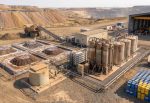
The union represents about 900 workers at the miner's aluminium smelting plant in Kitimat and power generating facility in Kemano.
"Rio Tinto was given every opportunity to reach a fair deal but showed complete disregard for our issues," the union said in a statement.
Unifor said it was committed to resolving the labour dispute amicably and urged the company's management to reach a fair settlement.
The company said that required staff and employees are now taking on operational duties to ensure the smelter and powerhouse continue to function safely. Rio had earlier sought an order from the province's labour relations board declaring power plant workers essential, according to a union bulletin.
(Reporting by Rithika Krishna in Bengaluru and Jeff Lewis in Toronto; Additional reporting by Radhika Anilkumar and Vishal Vivek in BengaluruEditing by Mark Potter and Grant McCool)
(Adds statement from Rio Tinto)
July 25 (Reuters) – Canadian union Unifor said on Sunday about 900 workers had started strike action at global miner Rio Tinto's operations in the western Canadian province of British Columbia.
Unifor issued a 72-hour strike notice on Wednesday after nearly seven weeks of unproductive talks over proposed changes to workers' retirement benefits and unresolved grievances.
In an emailed statement to Reuters, a spokesperson for the miner said that the union refused the company’s proposal to request the intervention of a mediator.
"Rio Tinto has made every effort to reach a mutually beneficial agreement through negotiating with Unifor over the past seven weeks, and will continue to do so," the company said in the statement.
The union represents about 900 workers at the miner's aluminium smelting plant in Kitimat and power generating facility in Kemano.
"Rio Tinto was given every opportunity to reach a fair deal but showed complete disregard for our issues," the union said in a statement.
Unifor said it was committed to resolving the labour dispute amicably and urged the company's management to reach a fair settlement.
The company said that required staff and employees are now taking on operational duties to ensure the smelter and powerhouse continue to function safely.
Rio had earlier sought an order from the province's labour relations board declaring power plant workers essential, according to a union bulletin. (Reporting by Rithika Krishna in Bengaluru and Jeff Lewis in Toronto; Additional reporting by Radhika Anilkumar and Vishal Vivek in Bengaluru Editing by Mark Potter and Grant McCool)
UK dividends staged a dramatic recovery in the second quarter of the year, jumping 51.2% on a headline basis to £25.7bn ($35.3bn), new data has shown.
According to the latest UK dividend monitor from Link Group (LNK.AX), dividends beat initial forecasts, with payouts excluding special dividends at £24.3bn, up 43.8%. However, this was still one sixth lower than their pre-crisis average, highlighting the long road to full recovery.
The main driver was companies restarting dividends; around 90% of the year-on-year increase came from firms that had cancelled dividends in Q2 2020 due to the outbreak of COVID-19.
The bounce-back was fastest among mid-cap firms, reflecting the greater decline they suffered last year.
Almost every sector saw payouts rise year-on-year, however, the report showed that the three biggest dividend-paying sectors were mining, banking and oil.
Of the £8.7bn recovery in UK plc Q2 dividends year-on-year, the first two of these industries accounted for over two thirds of the increase, but the oil sector acted as a brake on the recovery.
Mining dividends made up a quarter of the second quarter total at £6.3bn, boosted by Rio Tinto (RIO). In the banking sector, HSBC (HSBA.L) was the biggest contributor, despite being under Prudential Regulation Authority (PRA) constraints during the period after a ban altogether in 2020.
The PRA is the organisation within the Bank of England (BoE) responsible for oversight of the sector.
Read more: Banks forced to axe dividends and may cut bonuses over COVID-19 crisis
Elsewhere, BAE Systems (BA.L) was also among a significant number of companies which returned to their usual schedule of paying a second-quarter dividend, having paid late in 2020.
Link Group said the biggest contribution to the upside surprise came from industrials, financials and basic materials, accounting for almost a third each.
It now expects headline dividend growth of 24.4% to a new total of £79.5bn this year, while underlying dividends are set to rise by 13.4% to £71.2bn. This is 3.9 percentage points, or £2.7bn, more than its April forecast.
The Australian-based IT service management firm said “the upside tailwinds will get less favourable from here” but that it expects banking dividends to “rebound now that regulatory limits have been scrapped.”
Read more: FTSE 100 dividends set to fall 20% in 2020
However this will not immediately bounce back to pre-pandemic levels as share buybacks will also feature.
“We have regularly cautioned over the last year that dividend patterns will be very noisy as we move through the recovery phase. This will make for choppy waters in the months ahead, but it does not mean we are pessimistic,” Ian Stokes, managing director, corporate markets UK and Europe, at Link Group said.
“All the indicators of economic growth look very encouraging, and companies have come out of the crisis in most cases with their balance sheets looking strong. Resurgent profits and healthy bank balances mean more dividends for shareholders. These wider trends also help explain why the regulator has lifted the embargo on dividends from capital-rich banks.”
Watch: Dividends and buybacks back on track
TORONTO (Reuters) -BHP Group has reached conditional agreement with a unit of Westshore Terminals Investment Corp for port services for the global miner's proposed Jansen potash mine in Canada, the terminal operator said late on Thursday, moving the project closer to fruition.
The port agreement is subject to approval by BHP's board and conditional on it moving ahead with Jansen's first phase, Westshore said in a release.
The world's biggest listed miner has estimated Jansen would cost up to $5.7 billion in its first phases.
The project in Canada's Saskatchewan province offers diversification into agricultural markets given that potash is a key element in plant nutrition that also makes crops more drought resistant.
"BHP confirms that Westshore Terminals Limited Partnership … has signed an agreement to provide port services for the Jansen potash project in Saskatchewan," BHP said in a statement to Reuters.
Last month BHP said it would present its board with a decision on whether to move ahead with Jansen after choosing between two port options.
"If the Jansen project does proceed, the agreement requires Westshore to handle potash for BHP for a term to 2051, subject to extension," Westshore said.
Under the agreement, Vancouver-based Westshore would construct infrastructure to handle potash at Westshore’s Roberts Bank Terminal by 2026, with BHP funding the construction.
The pact would become binding on BHP if it announces a final decision to proceed with Jansen's first stage, Westshore said.
Westshore's Toronto-listed shares climbed as much as 38% Friday.
(Reporting by Jeff Lewis; editing by Jason Neely, Kirsten Donovan)
London stocks were set to scrape out a gain out for the week, helped by miners and Vodafone, as investors sifted through a mixed set of economic data on Friday. “While there are questions around high-street retail demand despite government steps to reopen the economy, the saving grace appears to have come from football fans who drove up alcohol and food sales for the euro 2020 tournament,” said Joshua Mahony, senior market analyst at IG, in a note to clients. “July saw the U.K. economy’s recent growth spurt stifled by the rising wave of virus infections, which subdued customer demand, disrupted supply chains and caused widespread staff shortages, and cast a darkening shadow over the outlook,” said Chris Williamson, chief business economist at IHS Markit, in a press release.
(Adds BHP statement, Westshore shares)
TORONTO, July 23 (Reuters) – BHP Group has reached conditional agreement with a unit of Westshore Terminals Investment Corp for port services for the global miner's proposed Jansen potash mine in Canada, the terminal operator said late on Thursday, moving the project closer to fruition.
The port agreement is subject to approval by BHP's board and conditional on it moving ahead with Jansen's first phase, Westshore said in a release.
The world's biggest listed miner has estimated Jansen would cost up to $5.7 billion in its first phases.
The project in Canada's Saskatchewan province offers diversification into agricultural markets given that potash is a key element in plant nutrition that also makes crops more drought resistant.
"BHP confirms that Westshore Terminals Limited Partnership … has signed an agreement to provide port services for the Jansen potash project in Saskatchewan," BHP said in a statement to Reuters.
Last month BHP said it would present its board with a decision on whether to move ahead with Jansen after choosing between two port options.
"If the Jansen project does proceed, the agreement requires Westshore to handle potash for BHP for a term to 2051, subject to extension," Westshore said.
Under the agreement, Vancouver-based Westshore would construct infrastructure to handle potash at Westshore’s Roberts Bank Terminal by 2026, with BHP funding the construction.
The pact would become binding on BHP if it announces a final decision to proceed with Jansen's first stage, Westshore said.
Westshore's Toronto-listed shares climbed as much as 38% Friday.
(Reporting by Jeff Lewis; editing by Jason Neely, Kirsten Donovan)
Despite a major oil price crash on Monday, oil prices are now on course to close out the week more or less unchanged.


Friday, July 23rd, 2021
The news of OPEC+ bringing back withheld production in August 2021, following through with 400kbpd monthly increments over the remainder of this year, triggered a spectacular tumble in oil prices earlier this week. Despite pandemic-related risks surging in Southeast Asia and U.S. crude inventories rising for the first time since May, the second half of the week saw a surprising rebound as the market has grown to realize that additional OPEC+ supply would be offset by recovering global demand.
Venezuela Buys Diluents Again. The VLCC Rene discharged a cargo of condensate in Venezuela’s main export terminal of José, previously used by PDVSA to dilute extra-heavy Orinoco barrels to create transportable and refinable blends. The origin of the cargo is unknown, the supertanker’s last port of call was in Sri Lanka.
Iberdrola Might Spin-Off Wind Business. The Spanish wind energy giant Iberdrola (BME:IBE) is considering a spin-off of its wind business to raise funds, it said when presenting H1 2021 results this week. Beyond its traditional markets in Europe, Iberdrola has been increasing its presence in the Asia Pacific region, going after new markets like Vietnam, Korea, or Vietnam.
Germany-US Agree on Nord Stream-2 Deal. The White House will scrap sanctions targeting the nearly completed Nord Stream 2 gas pipeline that would bring Russian gas into Germany, in return for Berlin’s pledge to ensure Gazprom (MCX:GAZP) does not fully cut off transit via Ukraine.
Coal Prices Surge to Highest Level in More than Decade. Decreasing Chinese domestic production, unrest in South Africa, and weak hydro generation across the continent have pushed Asian coal prices to their highest level in 13 years, with Newcastle thermal coal FOB prices flirting with the $150 per metric ton threshold, double of what it was in early May.
Tesla Patents New Lithium Extraction Method. Tesla Motors (NASDAQ:TSLA) has filed a patent on a new lithium extraction method from ore using sodium chloride, a more environmentally friendly way of getting lithium, avoiding the usage of acid leaching. According to Tesla officials, the new method might lead to a 33% reduction in lithium cost.
India Seeks to Commercialize Crude Stocks. India has decided to commercialize half of its strategic reserves to encourage private participation in its SPR – companies would have the option to re-export 1.5 million tons of crude stored at SPR sites if Indian companies refuse to buy it. ADNOC remains the only oil major to commit to SPR participation in India.
TAP Fails the Expansion Test. The 10 BCm per year TAP pipeline that brings Azeri gas to Turkey and Europe failed to trigger any shipping interest as no binding bids were submitted for potential capacity bookings, stoking concerns that the European case for further gas conduits was overblown.
Iran Inaugurates Jask Terminal. Iranian officials claimed the new crude export terminal at Jask began operations on Thursday, even though no vessel-tracking data was able to spot a ship alongside the jetties. The 300kbpd capacity Jask will supplement Iran’s main export port at Kharg Island.
Related: U.S. Shale Sees Light At The End Of The Tunnel
US Natgas Futures Highest Level in Almost 3 Years. US natural gas futures rose to their highest level since December 2018 on the heels of warmer-than-expected weather and higher air conditioning power demand, writes Reuters. The front-month NYMEX Henry Hub futures for August surpassed the $4 per mmBtu mark, rising more than 55% this year to date.
Saudi Aramco Data Stolen. Saudi Arabia’s national oil company Saudi Aramco (TADAWUL:2222) confirmed media reports that there has been a data leak of company data (reported to amount to 1 terabyte) yet declined to comment whether the data had been used in a cyber-extortion attempt. Media reports indicate the ransom was set at $50 million.
India Considering Obligatory Green Hydrogen. India’s government is considering the introduction of obligatory green hydrogen use in certain industries, with the oil, steel, and chemical industry listed as prime candidates to fall under the effect of such measures. No details were provided on the assumed deadlines.
BHP Seeking an Oil Exit. Australia’s BHP Group (NYSE:BHP) is mulling a complete exit from the oil business, with its assets estimated at $15 billion or more, seeking to focus on its giant iron ore and copper businesses instead. Media reports suggest that Woodside Petroleum would be the prime candidate to pick up BHP’s oil and gas portfolio.
Barents Sea Prospects Cooling. In another blow to Norway’s strategic quest to tap into the Barents Sea’s assumed hydrocarbon bounty, Aker BP (AKRBP.OL) made only a minor discovery with its wildcat in licensing block PL858, sapping hopes that the Arctic shelf could maintain the European country’s production profile.
France Softens Narrative on China Nuclear Woes. The French EDF (EPA:EDF) suggested it would shut down the Taishan nuclear reactor if similar rod fuel sealing issues were to happen in France. Taishan, the first EPR-type reactor to become operational, has been reporting build-ups on inert gases, compelling nuclear watchdogs to monitor levels of radiation.
Rwanda Seeks Its Place Under the Sun. Rwandan authorities have reportedly allocated funds to start a 2D seismic survey around Lake Kivu, in the hope of finding hydrocarbons reserves similar to the ones TotalEnergies (EPA:TTE) is developing at Lake Albert in Uganda, soon to be a new 200kbpd producing hub in East Africa.
By Tom Kool for Oilprice.com
More Top Reads From Oilprice.com:
Read this article on OilPrice.com
BEDFORD, NS / ACCESSWIRE / July 23, 2021 / Silver Spruce Resources Inc. ("Silver Spruce" or the "Company") (TSXV:SSE) is pleased to announce the continuation of its Phase 1 exploration drilling at the El Mezquite Au-Ag property ("El Mezquite" or the "Property"). The first seven (7) drill holes are complete and have been submitted to the laboratory, and Layne de Mexico has added a second drill to the Property to aim to complete the 2,475 metres of drilling by the end of next week.
"We are pleased that the arrival of a second drill at El Mezquite will allow Silver Spruce to complete our Phase 1 program by the end of July and permit all samples to be fully logged and submitted to the lab before the second week of August. The technical team has been expanded with additional geologists and samplers to expedite our progress," stated Greg Davison, Silver Spruce Vice-President Exploration and Director. "The program was delayed for four weeks in order to deal with equipment logistical issues during which we demobilized the team and drill."

Figure 1. Looking north across Pad M1 (MEZ001, MEZ-002, MEZ-003) at El Mezquite showing RC rig from Layne de Mexico drilling on a southerly azimuth at -45° dip angle
"The Phase 1 RC program comprises 20 holes with a combined depth of 2,475 metres (950 metres completed) and will utilize eight drill pad locations focused around a 400m x 600m area with elevated precious metal values to 3.41 g/t Au and 387 g/t Ag. Collars were defined by several northeast-trending veins, structural lineaments and oxide/sulphide transitions interpreted from geological mapping, precious metal assays, multi-element geochemistry, epithermal alteration assemblages and coincident 3D IP chargeability anomalies," said Mr. Davison. "New targets also are developing from our ongoing geological, hyperspectral and LiDAR compilation, and incoming drill results."
The Company's first-ever drilling program at El Mezquite still is scheduled to be completed in July with samples submitted to ALS Global in Hermosillo on a weekly basis. Laboratory assay results were anticipated from two to six weeks after submittal. Customs clearance, courier transport logistics and laboratory workloads each have impacted the projected turnaround time for the assays. The data will be released once the final precious metal and multi-element results are in receipt and interpreted for the first seven (7) drill holes, and for the remaining thirteen (13) drill holes, and all of which will contribute to the program design for Phase 2 drilling after the summer rainy season.

Figure 2. Location Map for El Mezquite, Jackie and Diamante Concessions. Nicho mine development by Minera Alamos located 10 km SE of El Mezquite.
El Mezquite, a drill-ready precious metal project located 10 km northwest of the town of Tepoca, and 170 km southeast of the capital city of Hermosillo, eastern Sonora, Mexico, is very well situated in terms of logistics for exploration and is located only twelve kilometres northwest of the Nicho deposit currently under mine development by Minera Alamos (see Figure 2).
Exploration Overview
The Company undertook an exploration program including environmental permitting for drilling, geological mapping of geologic structures and lineaments, ortho-mosaic photography, rock geochemical and hyperspectral analysis, data compilation and GIS modeling, and a LiDAR survey. Ground truthing of the Au-Ag system with geological mapping and rock sampling was completed in three campaigns between July 2020 and March 2021. All aspects of the exploration program are conducted with strict adherence to COVID-19 protocols for personal safety.
All current samples from the 2020-2021 programs were submitted to ALS Global for gold, multi-element and hyperspectral analysis. Historical samples (>400) from the 2010-2019 programs also were submitted to provide complementary multi-element and hyperspectral data over the Property database. The final batch of assay results are in receipt and pending GIS upload and interpretation.
LiDAR survey and satellite hyperspectral interpretation results were received recently and are being updated into the project GIS database.
RC Drill Program
The environmental permit, required to drill the Property, was received from SEMARNAT (see Press Release April 20, 2021) and granted to the concession holder, Yaque Minerals S.A. de C.V. ("Yaque") by the Mexican Secretariat of Environment and Natural Resources (SEMARNAT).
The permit allows for fourteen (14) drill pads over the targets in the northern area of the concession. Individual holes are expected to reach depths of 100-200 metres to intersect the target intervals.
Land surface agreements were signed recently with three ranchers to facilitate full access to the Phase 1 collar locations.
Project Background
The 180-hectare Property is easily accessible from Mexican Highway #16 via a southerly-trending unpaved road which traverses through the centre of the known gold mineralization (see Figures 2 and 3). High voltage power lines are positioned along Highway #16.
The El Mezquite Project is located within the west-central portion of the Sierra Madre Occidental Volcanic Complex within the prominent northwest-trending "Sonora Gold Belt" of northern Mexico and parallel to the well-known, precious metals-rich Mojave-Sonora Megashear (see Figure 3).
Geochemical Analysis, Quality Assurance and Quality Control
Drill chip sample splits are delivered to the ALS sample preparation facility in Hermosillo, Sonora, Mexico. ALS Global in North Vancouver, British Columbia, Canada, is a facility certified as ISO 9001:2008 and accredited to ISO/IEC 17025:2005 from the Standards Council of Canada.
The samples are crushed to 70% passing 2mm (PREP-31) and a split of up to 250 grams pulverized to 85% passing 75 micrometres (-200 mesh). The sample pulps and crushed splits are transferred internally to ALS Global's North Vancouver analytical facility for gold and multi-element analysis. Pulps (50gram split) are submitted for Au analysis by Fire Assay with Atomic Absorption finish (Au-AA24).
The retained pulps also will be analysed by Four Acid Digestion followed by Inductively Coupled Plasma Atomic Emission Spectrometry (ICP-AES) multi-element analyses (ME-ICP61m) with Hg by Aqua Regia and ICP-MS (Hg-MS42).
Over-limit Au and Ag samples will be analyzed by Fire Assay with Gravimetric Finish Ore Grade (Au-GRA21 or Au-GRA22, Ag-GRA21). Overlimit base metals will be analyzed by Four Acid Digestion followed by Ore Grade Inductively Coupled Plasma Atomic Emission Spectrometry (ICP-AES) for Cu, Pb and Zn (Cu-OG62, Pb-OG62, Zn-OG62).
In-house quality control samples (blanks, standards, duplicates, preparation duplicates) are inserted into the sample set. ALS Global conducts its own internal QA/QC program of blanks, standards and duplicates, and the results will be provided with the Company sample certificates. The results of the ALS control samples are reviewed by the Company's QP and evaluated for acceptable tolerances.
All sample and pulp rejects will be stored at ALS Global pending full review of the analytical data, and future selection of pulps for independent third-party check analyses, as requisite.

Figure 3. Location Map of El Mezquite Property and Mines of the Sierra Madre Occidental
Qualified Person
Greg Davison, PGeo, Silver Spruce VP Exploration and Director, is the Company's internal Qualified Person for the El Mezquite Project and is responsible for approval of the technical content of this press release within the meaning of National Instrument 43-101 Standards of Disclosure for Mineral Projects ("NI 43-101"), under TSX guidelines.
About Layne de Mexico
Layne Mineral Services, a Granite Company, is one of the largest providers of drilling services in the Americas, and its Mexican subsidiary, Layne de Mexico, has its equipment and technical team based in Hermosillo, Sonora, Mexico.
About Silver Spruce Resources Inc.
Silver Spruce Resources Inc. is a Canadian junior exploration company which has signed Definitive Agreements to acquire 100% of the Melchett Lake Zn-Au-Ag project in northern Ontario, and with Colibri Resource Corp. in Sonora, Mexico, to acquire 50% interest in Yaque Minerales S.A de C.V. holding the El Mezquite Au project, a drill-ready precious metal project, and up to 50% interest in each of Colibri's early stage Jackie Au and Diamante Au-Ag projects, with the three properties located from 5 kilometres to 15 kilometres northwest from Minera Alamos's Nicho deposit, respectively. The Company also is pursuing exploration of the drill-ready and fully permitted Pino de Plata Ag project, located 15 kilometres west of Coeur Mining's Palmarejo Mine, in western Chihuahua, Mexico. Silver Spruce Resources Inc. continues to investigate opportunities that Management has identified or that have been presented to the Company for consideration.
Contact:
Silver Spruce Resources Inc.
Greg Davison, PGeo, Vice-President Exploration and Director
(250) 521-0444
gdavison@silverspruceresources.com
Michael Kinley, CEO and Director
(902) 402-0388
mkinley@silverspruceresources.com
info@silverspruceresources.com
www.silverspruceresources.com
Neither TSX Venture Exchange nor its Regulation Services Provider (as that term is defined in the policies of the TSX Venture Exchange) accepts responsibility for the adequacy or accuracy of this release.
Notice Regarding Forward-Looking Statements
This news release contains "forward-looking statements," Statements in this press release which are not purely historical are forward-looking statements and include any statements regarding beliefs, plans, expectations or intentions regarding the future, including but not limited to, statements regarding the private placement.
Actual results could differ from those projected in any forward-looking statements due to numerous factors. Such factors include, among others, the inherent uncertainties associated with mineral exploration and difficulties associated with obtaining financing on acceptable terms. We are not in control of metals prices and these could vary to make development uneconomic. These forward-looking statements are made as of the date of this news release, and we assume no obligation to update the forward-looking statements, or to update the reasons why actual results could differ from those projected in the forward-looking statements. Although we believe that the beliefs, plans, expectations and intentions contained in this press release are reasonable, there can be no assurance that such beliefs, plans, expectations or intentions will prove to be accurate.
SOURCE: Silver Spruce Resources Inc.
View source version on accesswire.com:
https://www.accesswire.com/656782/Silver-Spruce-Provides-Update-on-Phase-1-Drilling-and-Layne-de-Mexico-adds-2nd-Drill-at-El-Mezquite-Au-Ag-Project-Sonora-Mexico
TORONTO (Reuters) – Canadian union Unifor said on Wednesday miner Rio Tinto has been served with a 72-hour strike notice after nearly seven weeks of unproductive negotiations over proposed changes to workers' retirement income and benefit levels.
The union said it is seeking better retirement security for younger workers by moving newer employees from the company's Defined Contribution plan to a Defined Benefit plan.
"Rio Tinto is committed to working with the union to reach a mutually beneficial outcome to the ongoing bargaining process," a Rio spokesperson told Reuters.
Negotiations are also focused on a backlog of more than 300 grievances and the company's refusal to hire full-time workers leading to an overreliance on temporary employees, Unifor said.
Unifor says it represents about 900 workers at the company's aluminum smelting plant in Kitimat and power generating facility in Kemano.
(Reporting by Sabahatjahan Contractor in Bengaluru and Jeff Lewis in Toronto; Editing by Subhranshu Sahu)
(Adds Rio Tinto comment)
TORONTO, July 21 (Reuters) – Canadian union Unifor said on Wednesday miner Rio Tinto has been served with a 72-hour strike notice after nearly seven weeks of unproductive negotiations over proposed changes to workers' retirement income and benefit levels.
The union said it is seeking better retirement security for younger workers by moving newer employees from the company's Defined Contribution plan to a Defined Benefit plan.
"Rio Tinto is committed to working with the union to reach a mutually beneficial outcome to the ongoing bargaining process," a Rio spokesperson told Reuters.
Negotiations are also focused on a backlog of more than 300 grievances and the company's refusal to hire full-time workers leading to an overreliance on temporary employees, Unifor said.
Unifor says it represents about 900 workers at the company's aluminum smelting plant in Kitimat and power generating facility in Kemano. (Reporting by Sabahatjahan Contractor in Bengaluru and Jeff Lewis in Toronto; Editing by Subhranshu Sahu)
By Dhirendra Tripathi
Investing.com – BHP (NYSE:BHP) and Tesla (NASDAQ:TSLA) stocks were among the gainers in Thursday’s premarket trading following an agreement under which the miner will supply nickel to the electric vehicle maker.
BHP was up 1% and Tesla 0.4%.
Nickel is one of the key metals used to make batteries that run electric vehicles.
BHP will supply Tesla with nickel from its Nickel West asset in Western Australia that it claims is one of the most sustainable and lowest carbon emission nickel producers in the world.
The agreement is much broader than a mere supply agreement. The two companies will collaborate to make the entire battery supply chain more sustainable including working on storage solutions along with looking for more ways to deploy renewable energy, according to a joint statement.
According to BHP Chief Commercial Officer, Vandita Pant, demand for nickel in batteries is estimated to grow by over 500% over the next 10 years, in large part to support the world’s rising demand for electric vehicles.
Related Articles
BHP, Tesla Gain On Supply Pact For Nickel, Renewables Collaboration
Flush from Reddit rally, GameStop plots store revival
Volkswagen expects China EV sales to soar in H2
LONDON, July 22, 2021–(BUSINESS WIRE)–Rio Tinto has approved a $108 million investment in underground development to enable early orebody access and undertake orebody characterisation studies for underground mining at the Kennecott copper operations in the United States.
The investment builds on $25 million approved in early-2020 to complete a pre-feasibility study to determine the viability of underground mining operations at Kennecott. Potential underground mining would occur concurrently with open pit operations and result in increased copper output.
Kennecott holds the potential for a significant and attractive underground development, with declared Mineral Resources of 20 Mt at 3.65% copper and 1.62 g/t gold1 with further upside potential based on drilling.
The feasibility study work will focus on gathering critical geological, geotechnical and hydrogeological data to inform Rio Tinto’s assessment of underground development options and is expected to be completed in 2024. Existing infrastructure from previous underground projects will be extended to access the North Rim Skarn orebody, allowing for the development of crosscuts and further drilling of the resource. The project includes approximately 15,000 feet (4,500 metres) of lateral development, 1,000 feet (300 metres) of vertical development and associated support infrastructure.
The project will also include the trial of underground battery electric vehicles to reduce carbon emissions at Kennecott and across Rio Tinto’s global operations. Sandvik Mining and Rock Solutions will supply a battery electric haul truck and loader to evaluate performance and suitability for future underground mining fleets.
Pre-feasibility studies are also being progressed to extend open pit mining at Kennecott beyond 2032, with a further push back of the North Wall to allow access to Mineral Resources. This follows a $1.5 billion investment in the second phase of the South Wall Pushback project, approved in 2019, to allow open cut mining to continue between 2026 and 2032.
Rio Tinto Copper Chief Executive Bold Baatar said: "Kennecott holds a range of options to extend our supply of copper and other critical materials, to meet the strong demand being driven by electric vehicles and renewable power technologies.
"The operation is uniquely positioned to supply these emerging markets, with one of only two operating smelters in the United States that also processes concentrates from third parties, a long history delivering high quality products and significant resources that are yet to be developed."
1 This underground Mineral Resource estimate (North Rim Skarn) was included in Rio Tinto’s 2020 Annual Report released to the ASX on 22 February 2021 which is available at https://www.riotinto.com/invest/reports/annual-report. The Competent Person responsible for this Mineral Resource estimate was Ryan Hayes (AusIMM). Rio Tinto is not aware of any new information or data that materially affects this Mineral Resource estimate and confirms that all material assumptions and technical parameters underpinning this Mineral Resource estimate continue to apply and have not materially changed. The form and context in which the Competent Person’s findings are presented have not been materially modified from the 2020 Annual Report.
Notes to Editors
Kennecott operates an advanced copper and precious metals smelter, processing concentrate from Kennecott and third parties.
In addition to copper, Kennecott is one of the largest producers of gold, silver, and molybdenum in North America. Construction is underway on a plant to recover tellurium, a critical mineral used in solar panels, from copper refining at Kennecott. Rio Tinto is working with experts from the US Department of Energy’s Critical Materials Institute (CMI) on ways to extract further critical minerals from the existing refining and smelting processes.
View source version on businesswire.com: https://www.businesswire.com/news/home/20210722005163/en/
Contacts
Please direct all enquiries to media.enquiries@riotinto.com
Media Relations, UK
Illtud Harri
M +44 7920 503 600
David Outhwaite
M +44 7787 597 493
Media Relations, Americas
Matthew Klar
T +1 514 608 4429
Investor Relations, UK
Menno Sanderse
M: +44 7825 195 178
David Ovington
M +44 7920 010 978
Clare Peever
M +44 7788 967 877
Media Relations, Australia
Jonathan Rose
M +61 447 028 913
Matt Chambers
M +61 433 525 739
Jesse Riseborough
M +61 436 653 412
Investor Relations, Australia
Natalie Worley
M +61 409 210 462
Amar Jambaa
M +61 472 865 948
Rio Tinto plc
6 St James’s Square
London SW1Y 4AD
United Kingdom
T +44 20 7781 2000
Registered in England
No. 719885
Rio Tinto Limited
Level 7, 360 Collins Street
Melbourne 3000
Australia
T +61 3 9283 3333
Registered in Australia
ABN 96 004 458 404
Category: Kennecott
Tesla TSLA recently inked a deal with BHP Group BHP to secure the supply of nickel from the latter’s Nickel West mine based in Western Australia.
Per the latest alliance, Tesla and BHP will also collaborate to make the battery supply chain more efficient and sustainable, with key focus on raw material procurement using blockchain and exchange of know-how for battery raw-material production. The companies will also identify supply-chain partners who are most aligned with their vision and battery value chains.
BHP will also join hands with Tesla on energy storage solutions to reduce carbon emissions through the enhanced use of sustainable energy, coupled with battery storage.
Headquartered in Melbourne, Australia, BHP is a leading resources company globally. The mining giant extracts and processes minerals, oil and gas and its products are sold worldwide. The company is a notable producer of major commodities, including iron ore, metallurgical coal, nickel and copper.
Shining Prospects of Nickel Market
Amid the heightening climate-change concerns, development of batteries used to power electric vehicles (EVs) has become crucial in order to decarbonize the global economy. This, in turn, has buoyed the demand of metals, particularly copper and nickel, used in the production of batteries.
Nickel, a core ingredient used in lithium-ion batteries, helps reduce the usage of cobalt, which is much more expensive and has an ambiguous supply chain. Amid the soaring popularity of EVs worldwide, demand for nickel in batteries is projected to jump more than 500% over the next decade. Within the shining future prospects of nickel, BHP claims to be one of the most sustainable and lowest carbon emission nickel producers in the world.
California-based Tesla is the undisputed leader of EVs and battery storage systems, with a vision to accelerate the global transition to green transportation solutions.
With the demand for nickel set to boom in the near future and due to challenges faced in procuring nickel, Tesla CEO Elon Musk has repeatedly expressed his concerns about the future supplies of nickel and has urged miners to increase the production of nickel.
In fact, in order to facilitate in-house production of batteries, Tesla has entered into a series of deals with mining companies for the commodities it needs to make batteries. This includes securing cobalt, another metal used in batteries, from the Swiss miner Glencore and supporting a nickel venture in New Caledonia.
The deal with BHP to procure nickel is in sync with Tesla’s vision of in-house production of batteries, and will boost the EV behemoth’s ability to self-manufacture batteries. The agreement is Tesla’s latest effort to shield itself from future supply crunch of metals needed in battery production. The agreement confirms Tesla will become one of the biggest customers of BHP for sustainable and reliable supply of quality nickel crucial to the EV maker’s growth plans.
BHP has been hinting a deal with Tesla since last year. For BHP, the deal marks a revival for the company’s Nickel West division. The company failed to sell the unit in 2014 and has since then diverted the division to cater to battery makers, rather than conventional customers like the stainless steel industry.
Though details on the deal amount have not been revealed by the companies, Tesla had earlier noted that it anticipates spending more than $1 billion annually on raw material for batteries from Australia.
Tesla — which shares space with auto biggies like General Motors GM and Ford F — currently carries a Zacks Rank #3 (Hold). You can see the complete list of today’s Zacks #1 Rank (Strong Buy) stocks here.
Want the latest recommendations from Zacks Investment Research? Today, you can download 7 Best Stocks for the Next 30 Days. Click to get this free report
Ford Motor Company (F) : Free Stock Analysis Report
BHP Group Limited Sponsored ADR (BHP) : Free Stock Analysis Report
General Motors Company (GM) : Free Stock Analysis Report
Tesla, Inc. (TSLA) : Free Stock Analysis Report
To read this article on Zacks.com click here.
Thursday, July 22, 2021
The Zacks Research Daily presents the best research output of our analyst team. Today's Research Daily features new research reports on 16 major stocks, including BHP Group (BHP), Booking Holdings (BKNG), and CVS Health (CVS). These research reports have been hand-picked from the roughly 70 reports published by our analyst team today.
You can see all of today’s research reports here >>>
Q2 Earnings Season Scorecard
Including all of this morning's releases, we now have Q2 results from 103 S&P 500 members or 20.% of the index's total membership. Total earnings for these 103 index members are up +117.6% on +18.9% higher revenues, with 90.3% beating EPS estimates and a record 85.4% beating revenue estimates.
This is a notably improved performance from these 103 index members relative to what we have seen from the same group of companies in other recent periods, with the revenue outperformance notably standing out. Looking at Q2 as a whole, combining the actual results that have come out with estimates for the still to come companies, total S&P 500 earnings are currently expected to be up +72.7% on +19.8% higher revenues. For a detailed look at the Q2 earnings season and expectations for the coming periods, please check out our weekly Earnings Trends report >>>> All Around Earnings Strength
Today's Featured Research Reports
Shares of BHP have outperformed the Zacks Mining – Miscellaneous industry over the past year (+49.4% vs. +33.6%). The Zacks analyst believes that the company will continue to benefit from the rally in iron ore prices aided by strong demand in China. Improved industrial activity has led to a rally in copper prices, which is a positive for the company.
BHP’s efforts to make operations more efficient through the employment of smart technology will lead to a reduction in costs, thereby boosting margins. During fiscal 2021, the company achieved first production at four major development projects. It is currently involved in two major petroleum and potash projects, both of which are under development.
(You can read the full research report on BHP here >>>)
Booking Holdings shares have gained +7.9% over the last six months against the Zacks Internet Commerce industry’s loss of -21.4%. The Zacks analyst believes that steadily improving bookings, on the back of the re-opening of economy, have been benefiting the company.
The company remains optimistic about its highly variable cost structure and strong liquidity position, which it expects will help in navigating through the current crisis. Disruptions in the travel industry due to the pandemic and sluggishness in the agency business are major headwinds for the company.
(You can read the full research report on Booking Holdings here >>>)
Shares of CVS Health have gained +21.9% in the year to date period against the Zacks Retail Pharmacies and Drug Stores industry’s gain of +21.2%. The Zacks analyst is encouraged by the increasing demand for PBM and specialty pharmacy along with significant growth observed in the retail business.
The company’s consumer-centric digital strategy has become more relevant in the current environment as people are using technology more while staying indoors. A weak cough, cold and flu season, however, impacted growth within both Pharmacy Services and Retail/LTC in the first quarter. The repealing of the HIF for 2021 also hampered growth for Health Care Benefits unit.
(You can read the full research report on CVS Health here >>>)
Other noteworthy reports we are featuring today include Infosys (INFY), Chipotle Mexican Grill (CMG) and Exelon (EXC).
Sheraz Mian
Director of Research
Note: Sheraz Mian heads the Zacks Equity Research department and is a well-regarded expert of aggregate earnings. He is frequently quoted in the print and electronic media and publishes the weekly Earnings Trends and Earnings Preview reports. If you want an email notification each time Sheraz publishes a new article, please click here>>>
Want the latest recommendations from Zacks Investment Research? Today, you can download 7 Best Stocks for the Next 30 Days. Click to get this free report
Exelon Corporation (EXC) : Free Stock Analysis Report
Infosys Limited (INFY) : Free Stock Analysis Report
BHP Group Limited Sponsored ADR (BHP) : Free Stock Analysis Report
Chipotle Mexican Grill, Inc. (CMG) : Free Stock Analysis Report
CVS Health Corporation (CVS) : Free Stock Analysis Report
Booking Holdings Inc. (BKNG) : Free Stock Analysis Report
To read this article on Zacks.com click here.
Zacks Investment Research
(Bloomberg) — BHP Group is considering getting out of oil and gas in a multibillion-dollar exit that would accelerate its retreat from fossil fuels, according to people familiar with the matter.
The world’s biggest miner is reviewing its petroleum business and considering options including a trade sale, said the people, who asked not to be identified as the talks are private. The business, which is forecast to earn more than $2 billion this year, could be worth an estimated $15 billion or more, one of the people said.
BHP’s energy assets make it an outlier among the world’s biggest miners — rival Anglo American Plc has already exited thermal coal under investor pressure and BHP is trying to follow suit. The company has long said the oil business was one of its strategic pillars and argued that it will make money for at least another decade. But as the world tries to shift away from fossil fuels, BHP wants to avoid getting stuck with assets that more become more difficult to sell, the people said.
The deliberations are still at an early stage and no final decision has been made, the people said. A spokesman for BHP declined to comment.
The move comes as oil supermajors grapple with how to respond to investor pressure over climate, in some cases by shrinking their core production and adding renewable energy assets.
Read more: The Retreat of Exxon and the Oil Majors Won’t Stop Fossil Fuel
BHP wants to exit while it can still get a good price for the assets, aiming to repeat a 2018 sale of its shale business to BP Plc for $10.4 billion, the people said. And unlike big-oil rivals, BHP doesn’t depend on profits from the energy business, which are dwarfed by the company’s giant iron ore and copper units.
The timing could be good for an oil exit. The economic recovery from Covid-19 has transformed the fortunes of oil producers, with Brent oil futures having rallied about 60% in the past year.
By contrast, the company’s efforts to get out of thermal coal so far have been disappointing, after early bids for mines in Australia came in lower than the company’s own valuations last year.
Getting out of both thermal coal and petroleum would help BHP make its case to investors as a company geared toward commodities of the future. The miner is also expected to sanction a giant potash mine in Canada next month, which could make it a key supplier of the crop nutrient once production begins. BHP is scheduled to report annual results on Aug. 17.
BHP has been in oil and gas since the 1960s, and has assets in the Gulf of Mexico and off the coast of Australia. It produced 102.8 million barrels of oil equivalent in the year ending June 30.
“BHP is an outlier in the mining sector for its petroleum business and this is often cited in our investors discussions as a point of detraction,” said RBC Capital Markets analyst Tyler Broda. “With rising ESG pressures facing the industry, but also as this business potentially enters into a re-investment phase, we can see why management might be contemplating an exit.” Broda estimates the business is worth about $14.3 billion.
Read: Falling Oil Prices, Treasury Yields May Power New Energy Stocks
While divesting fossil fuel assets would help to strengthen BHP’s ESG metrics, it may have to sell them at a discount, Saul Kavonic, an analyst at Credit Suisse Group AG, said in a note. Exiting the oil and gas business could also leave the company short of medium-term growth catalysts, with the Jansen potash project in Canada “a late-decade story,” he added.
BHP shares rose as much as 2.3% in Sydney trading on Wednesday.
(Adds analyst comment in paragraph 12, share reaction)
More stories like this are available on bloomberg.com
Subscribe now to stay ahead with the most trusted business news source.
©2021 Bloomberg L.P.
Here are four stocks with buy rank and strong momentum characteristics for investors to consider today, July 21st:
NIKE, Inc. NKE: This leading designer, marketer and distributor of authentic athletic footwear, apparel, equipment and accessories has a Zacks Rank #1 (Strong Buy) and witnessed the Zacks Consensus Estimate for its current year earnings increasing 10.1% over the last 60 days.
NIKE, Inc. Price and Consensus

NIKE, Inc. price-consensus-chart | NIKE, Inc. Quote
Nike’s shares gained 22.8% over the last one month compared to S&P 500’s rise of 1.5%. The company possesses a Momentum Score of B.
NIKE, Inc. Price

NIKE, Inc. price | NIKE, Inc. Quote
Lululemon Athletica Inc. LULU: This company that designs and retails athletic clothing for women, men, and female youth has a Zacks Rank #1 and witnessed the Zacks Consensus Estimate for its current year earnings increasing 7.3% over the last 60 days.
Lululemon Athletica Inc. Price and Consensus

Lululemon Athletica Inc. price-consensus-chart | Lululemon Athletica Inc. Quote
Lululemon Athletica’s shares gained 8.8% over the last one month. The company possesses a Momentum Score of B.
Lululemon Athletica Inc. Price

Lululemon Athletica Inc. price | Lululemon Athletica Inc. Quote
BHP Group BHP: This resources company has a Zacks Rank #1 and witnessed the Zacks Consensus Estimate for its current year earnings increasing 20% over the last 60 days.
BHP Group Price and Consensus

BHP Group price-consensus-chart | BHP Group Quote
BHP’s shares gained 4.8% over the last one month. The company possesses a Momentum Score of B.
BHP Group Price

BHP Group price | BHP Group Quote
ABB Ltd ABB: This company that manufactures and sells electrification, industrial automation, and robotics and motion products has a Zacks Rank #1 and witnessed the Zacks Consensus Estimate for its current year earnings increasing 4.7% over the last 60 days.
ABB Ltd Price and Consensus

ABB Ltd price-consensus-chart | ABB Ltd Quote
ABB’s shares gained 4.1% over the last one month. The company possesses a Momentum Score of B.
ABB Ltd Price

ABB Ltd price | ABB Ltd Quote
See the full list of top ranked stocks here
Learn more about the Momentum score and how it is calculated here.
Want the latest recommendations from Zacks Investment Research? Today, you can download 7 Best Stocks for the Next 30 Days. Click to get this free report
NIKE, Inc. (NKE) : Free Stock Analysis Report
BHP Group Limited Sponsored ADR (BHP) : Free Stock Analysis Report
ABB Ltd (ABB) : Free Stock Analysis Report
lululemon athletica inc. (LULU) : Free Stock Analysis Report
To read this article on Zacks.com click here.
(Fixes typographical error in paragraph 2)
July 21 (Reuters) – Miner Rio Tinto on Wednesday decided to shut a furnace at its Richards Bay Minerals (RBM) project in South Africa, as supply of the raw material used to fuel it was hampered by an "escalation in the security situation".
Last month, it declared a force majeure on customer contracts and halted mining and smelting operations at the project following a violent community unrest and a report that an employee was killed in May.
The miner said shutting one of the four furnaces at the mineral sands project would reduce the use of its stockpile of feedstock and limit the long-term impacts of a shutdown on RBM's furnaces.
"Shutting a furnace has a major impact on the business and broader community and it not a decision we have taken lightly," Sinead Kaufman, chief executive of Rio's minerals division, said.
RBM will reassess the situation to decide on restarting the furnace or potentially shutting other furnaces depending on "when the safety and security position improves," Rio said.
All operations at RBM remain halted until further notice, the miner said. (Reporting by Shashwat Awasthi; Editing by Arun Koyyur)
MELBOURNE, Australia, July 21, 2021–(BUSINESS WIRE)–Rio Tinto’s Richards Bay Minerals (RBM) operation in South Africa will shut one of its four furnaces due to the depletion of available feedstock at the plant. This is the result of mining operations being halted following an escalation in the security situation at the operations which significantly hampered the mine’s ability to operate safely. Rio Tinto declared Force Majeure on our customer contracts at RBM on 30 June 2021.
The four furnaces at RBM are dependent on a stockpile of feedstock, which is being steadily depleted. RBM’s decision to shut one furnace will reduce the call on the stockpile and limit the long-term impacts of a shutdown on the RBM’s furnaces.
Rio Tinto chief executive Minerals, Sinead Kaufman, said: "Shutting a furnace has a major impact on the business and broader community and it not a decision we have taken lighty. However, we will not put production ahead of the safety of our people and there are still fundamental criteria that must be met before we can resume operations in a sustainable manner.
"We continue to work with national and provincial governments as well as community structures to find a lasting solution to the current situation so that operations can resume as soon as it is possible to safely do so."
RBM will regularly reassess the situation to make further decisions on any potential restart or the shutting of the other furnaces, depending on when the safety and security position improves.
RBM is one of the largest businesses in KwaZulu-Natal, with a workforce of some 5,000 people and the largest taxpayer in KwaZulu-Natal. The company contributed R8 billion to the national economy in 2020.
All operations at RBM remain halted until further notice.
This announcement is authorised for release to the market by Steve Allen, Rio Tinto’s Group Company Secretary.
View source version on businesswire.com: https://www.businesswire.com/news/home/20210720006316/en/
Contacts
Please direct all enquiries to media.enquiries@riotinto.com
Media Relations, UK
Illtud Harri
M +44 7920 503 600
David Outhwaite
M +44 7787 597 493
Media Relations, Americas
Matthew Klar
T +1 514 608 4429
Media Relations, Australia
Jonathan Rose
M +61 447 028 913
Matt Chambers
M +61 433 525 739
Jesse Riseborough
M +61 436 653 412
Investor Relations, UK
Menno Sanderse
M: +44 7825 195 178
David Ovington
M +44 7920 010 978
Clare Peever
M +44 7788 967 877
Investor Relations, Australia
Natalie Worley
M +61 409 210 462
Amar Jambaa
M +61 472 865 948
Rio Tinto plc
6 St James’s Square
London SW1Y 4AD
United Kingdom
T +44 20 7781 2000
Registered in England
No. 719885
Rio Tinto Limited
Level 7, 360 Collins Street
Melbourne 3000
Australia
T +61 3 9283 3333
Registered in Australia
ABN 96 004 458 404
Category: RBM
Category: General
By Melanie Burton
MELBOURNE (Reuters) – Rio Tinto is asking train drivers working in mineral-rich Western Australia to work more hours, following a move by rival BHP Group, as miners rush to ship millions of tonnes of iron ore amid soaring prices for the steel making material.
The push comes among a worsening skills shortage in Australia's west that has been exacerbated by strict coronavirus restrictions, which unions say have raised mental health risks for workers and their families.
Train driver Paul Bloxsom, who will leave Rio next month, said Western Australian border constraints to keep out COVID-19 that include a 14-day quarantine meant he had only seen his family in Queensland four times in 15 months.
"That's a challenge in itself, the isolation and the loneliness and so on. There was a combination of things, and I just had enough. And there's a lot more jobs going back at home on the east coast," he told Reuters.
Mine workers in Australia often live in cities and fly in and fly out (FIFO) to remote mine sites, a commute that can take anywhere from several hours to a day, including connections.
While miners in Western Australia are enjoying a commodity boom that has powered new construction projects, they are having to compete for workers with government-backed infrastructure projects on the other side of the country.
"Unlike previous construction-led growth periods for our sector, where up to 1,000 people a week were moving to Western Australia for work, there are now strong employment prospects in the eastern states," the state's Chamber of Minerals and Energy said last month.
International skilled migration has also dried up due to Australia's caps on immigration arrivals.
Miners have been looking for ways to ensure they can keep production at full tilt until Australia boosts its vaccination rates, said analyst Peter O'Connor of Shaw and Partners in Sydney.
"Short of keeping people in Western Australia on extended rosters, which wears people out, their options are limited – that is a real and present risk to production," he said.
For train drivers, Rio has asked for expressions of interest in a two-week on, one-week off roster, compared to the typical two-week on, two-week off roster, but said the request was voluntary and would include appropriate remuneration.
BHP has already mandated that roster for its FIFO train drivers as a temporary measure through to August 2022, blaming the skills shortage, but drawing criticism from the CFMEU union which says it has come at a cost for drivers and their families.
BHP, which has announced plans to train 200 new drivers, said it was offering interstate FIFO employees support including financial assistance for temporary and permanent relocation, flexible work options, as well as mental health support.
Rio said it is looking to recruit drivers, and is also providing temporary and permanent relocation packages for interstate workers.
The state government is also taking steps to boost skilled worker numbers, but noted in a statement its strong border measures have kept out COVID-19 and helped drive the national economy.
The CFMEU, however, wants miners and government to find ways for FIFO workers to spend less time in quarantine and more time with their families, said Greg Busson, secretary of the CFMEU mining and energy division.
"We have been dealing with this for 18 months now, surely we have some lessons learned," he said.
(Reporting by Melanie Burton; editing by Richard Pullin)
(Bloomberg) — Tesla Inc. has struck a nickel-supply deal with BHP Group, as the electric-car maker seeks to protect itself from a future supply crunch.
BHP will provide the automaker with the metal from its Nickel West operation in Western Australia, the world’s biggest miner said in a statement. BHP gave few further details, but said the companies would work together to make the battery supply chain more sustainable.
Telsa’s billionaire boss, Elon Musk, has repeatedly expressed concern about future supplies of nickel due to challenges in sustainable sourcing. Musk has pleaded with miners to produce more nickel, with demand set to skyrocket as the world increasingly moves toward electric vehicles.
Read more on Tesla’s plans to lock in supply as battery demand booms
Nickel is a key component in lithium-ion batteries, used in electric vehicles. It packs more energy into batteries and allows producers to reduce use of cobalt, which is more expensive and has a less transparent supply chain.
Telsa has struck a string of deals with mining companies for the commodities it needs to make batteries, including cobalt pacts with Glencore Plc and supporting a nickel venture in New Caledonia.
For BHP, it marks a turnaround for the company’s Nickel West business. The company unsuccessfully tried to sell the unit in 2014 and has since pivoted it to serve battery makers, rather than traditional customers such as the stainless steel industry.
Bloomberg originally reported that the two companies were in talks in October.
More stories like this are available on bloomberg.com
Subscribe now to stay ahead with the most trusted business news source.
©2021 Bloomberg L.P.
(Adds details and writes through)
MELBOURNE July 22 (Reuters) – Global miner BHP Group said on Thursday it signed a nickel supply agreement with Tesla Inc and will work with the electric carmaker on lowering carbon emissions in the battery supply chain.
Tesla said in June it expects to spend more than $1 billion a year on battery raw materials from Australia given the country's reliable mining industry and responsible production practices.
Western automaker are also seeking to diversify supply chains to lessen their dependence on China, in line with a policy by U.S. President Joe Biden's administration to rely on allies to supply of the bulk of metals for electric vehicles.
BHP said the metal will be supplied from its Nickel West project in Western Australia which is set to start producing nickel sulphate, a key battery chemical, and one that has much higher margins than nickel metal, in the September quarter.
Nickel makes batteries energy-dense, allowing cars to run further on a single charge.
BHP's nickel division accounts for less than 1 percent its earnings, which are dominated by iron ore.
BHP and Tesla will also look at end-to-end raw material tracing using blockchain, and work on energy storage solutions, the miner said in the statement. (Reporting by Melanie Burton and Nikhil Kurian Nainan in Bengaluru; Editing by Subhranshu Sahu and Richard Pullin)
U.S. Silica Holdings, Inc. SLCA has announced that its Industrial and Specialty Products unit will increase prices for most of its non-contracted silica sand, diatomaceous earth and clay products that are used mainly in applications like glass, foundry, paints, coatings, elastomers, roofing, chemicals, recreation, building products, agricultural, pet litter and other applications.
The increase will be up to 15%, on the basis of the product and grade, with effect from shipments beginning Sep 1, 2021.
The increased prices are requisite to help balance significant cost increases in energy, transportation, materials and manufacturing costs.
Shares of U.S. Silica have skyrocketed 170.9% over a year, outperforming the industry’s rise of 26%. Its earnings growth rate for the current year is pegged at 54.2%.

Image Source: Zacks Investment Research
In its last-quarter earnings call, the company has predicted sustainable long-term growth for 2021 and beyond. It is focused on prioritizing free cash flow, repositioning its Oil & Gas segment and expanding the Industrial and Specialty Products segment.
The company expects The Industrial & Specialty Products segment growth to outpace U.S. GDP. It expects the contribution margin of the segment to increase 5-10% sequentially in the second quarter.
In the Oil & Gas segment, the company expects a strong energy recovery as economic activity rebounds and gains momentum. For the second quarter, the contribution margin is projected to increase 30-35%. The company plans to deliver positive cash flow in 2021 and deleverage its balance sheet.
U.S. Silica Holdings, Inc. Price and Consensus

U.S. Silica Holdings, Inc. price-consensus-chart | U.S. Silica Holdings, Inc. Quote
Zacks Rank & Stocks to Consider
Currently, U.S. Silica carries a Zacks Rank #3 (Hold).
Better-ranked stocks in the basic materials space include Glencore PLC GLNCY and Rio Tinto PLC RIO, each sporting a Zacks Rank #1 (Strong Buy), and BHP Group BHP, carrying a Zacks Rank #2 (Buy). You can see the complete list of today’s Zacks #1 Rank stocks here.
Glencore has a projected earnings growth rate of 296.7% for the current year. The company’s shares have appreciated 74.3% over a year.
Rio Tinto has a projected earnings growth rate of 124.3% for the current year. The company’s shares have rallied 28.5% over a year.
BHP has a projected earnings growth rate of 192.5% for the current year. The company’s shares have grown 35% over a year.
Want the latest recommendations from Zacks Investment Research? Today, you can download 7 Best Stocks for the Next 30 Days. Click to get this free report
BHP Group Limited Sponsored ADR (BHP) : Free Stock Analysis Report
Rio Tinto PLC (RIO) : Free Stock Analysis Report
U.S. Silica Holdings, Inc. (SLCA) : Free Stock Analysis Report
Glencore PLC (GLNCY) : Free Stock Analysis Report
To read this article on Zacks.com click here.
BHP Group BHP released production details for the year ended Jun 30, 2021 and provided guidance for fiscal 2022. Total iron ore production rose 2% to 254 Mt (million tons) in fiscal 2021 courtesy of record production at Western Australia Iron Ore (WAIO). The company met production guidance for iron ore, copper, metallurgical coal, nickel and energy coal. Petroleum production for the 2021 financial year was slightly above guidance.
Production Highlights
In the April-June quarter, BHP’s iron ore production was down 2% year over year to 65.2 Mt. On a sequential basis, production, however, improved 9% primarily due to enhanced performance at WAIO. Brazilian miner, Vale S.A. VALE, reported its iron ore production for the second quarter of 2021 at 75.7 Mt, which came in 12% higher than the year-ago quarter and 11.3% higher than the first quarter of 2021. Last week, Rio Tinto plc RIO reported a 9% drop in second-quarter iron ore production to 75.9 Mt due to above average rainfall in the West Pilbara.
For the year ended Jun 30, 2021, BHP’s total iron ore production improved 2% year over year to a record 253.5 Mt, within the company’s provided guidance of 245 Mt to 255 Mt. WAIO production was up 1% to a record 252 Mt reflecting record production at Jimblebar and Mining Area C, which included first ore from South Flank in May 2021. This performance was impressive considering weather impact, temporary rail labor shortages due to COVID-19 related border restrictions and the planned Mining Area C and South Flank major tie-in activity. Strong operational performance across the supply chain reflected continued improvements in car dumper performance and reliability, and train cycle times.
Total petroleum production was 102.8 MMboe (million barrels of oil equivalent) for the period under review, down 6% year over year. Total copper production was down 5% year over year to 1,635.7 kt in fiscal 2020. Metallurgical coal production dipped 1% to 40.6 Mt, while energy coal production was 19.3 Mt, down 17% year over year. Nickel production was up 11% year over year to 89 kt.
Average realized prices for iron ore, copper and nickel in fiscal 2021 surged 69%, 52% and 17% respectively. Average realized prices for metallurgical coal declined 19%, while of thermal coal rose 2%. Average realized prices for oil (crude and condensate) and Natural gas were up 6% and 8%, respectively, while LNG prices slumped 22%.
Fiscal 2022 Production Guidance
In fiscal 2022, BHP expects to produce between 249 and 259 Mt of iron ore compared with 253.5 Mt produced in fiscal 2021 as WAIO continues to focus on incremental volume growth through productivity improvements. The company’s petroleum production guidance for fiscal 2022 is expected to be 99-106 MMboe. BHP anticipates copper production between 1,590 kt and 1,760 kt in fiscal 2022. Production guidance of Metallurgical coal for fiscal 2022 is at 39-44 Mt, while the same for energy coal is at 13-15 Mt. Nickel production for fiscal 2022 is now expected between 85 kt and 95 kt.
Development Projects on Track
During fiscal 2021, BHP successfully achieved first production at four major development projects, all of which were delivered either on or ahead of schedule and also within budget. The Atlantis Phase 3 petroleum project and the Spence Growth Option copper project achieved first production in the first half of the financial year. During the fiscal fourth quarter, the South Flank iron ore sustaining project in Western Australia, and the Ruby oil and gas project in Trinidad and Tobago achieved first production.
As of Jun 31, 2021, the company had two major projects under development in petroleum (Mad Dog Phase 2) and potash (Jansen mine shafts), with both of these on track. The Jansen Stage 1 project in Canada remains on track for a go or no-go decision in the next two months.
On 28 Jun, 2021, BHP announced that it had signed a Sale and Purchase Agreement with Glencore PLC GLNCY to divest its 33.3 per cent interest in Cerrejón, a non-operated energy coal joint venture in Colombia, for $294 million cash consideration. The transaction is expected to be completed in the second half of fiscal 2022.
BHP’s efforts to make operations more efficient through smart technology adoption across the entire value chain will continue to aid in reducing costs, thereby boosting margins. Focus on lowering debt will fuel growth.
Price Performance

Image Source: Zacks Investment Research
Over the last year, BHP’s shares have gained 35.7%, compared with the industry’s rally of 22.6%.
Zacks Rank
BHP currently carries a Zacks Rank #2 (Buy). You can see the complete list of today’s Zacks #1 Rank (Strong Buy) stocks here.
Want the latest recommendations from Zacks Investment Research? Today, you can download 7 Best Stocks for the Next 30 Days. Click to get this free report
BHP Group Limited Sponsored ADR (BHP) : Free Stock Analysis Report
VALE S.A. (VALE) : Free Stock Analysis Report
Rio Tinto PLC (RIO) : Free Stock Analysis Report
Glencore PLC (GLNCY) : Free Stock Analysis Report
To read this article on Zacks.com click here.
Symbol: AZM.TSX Venture
4.21 g/t Au over 39.5 m including 7.86 g/t Au over 14.0 m
3.28 g/t Au over 39.3 m including 9.57 g/t Au over 6.0 m
LONGUEUIL, QC, July 20, 2021 /CNW Telbec/ – Azimut Exploration Inc. ("Azimut" or the "Company") (TSXV: AZM) is pleased to report that it continues to intersect wide, high-grade gold intervals at the Patwon discovery on the Company's 100% owned Elmer Property (the "Property") in the James Bay region of Quebec.
Azimut recently completed a 15,135-metre (67 holes) diamond drilling program. This press release presents the results of (2) holes (813 m) from the program. The results for thirteen (13) other holes totalling 3,856.5 metres were previously reported (see press releases dated May 19 and June 22, 2021), and assay results are pending for the remaining 52 drill holes (15 on Patwon and 37 on new targets) (see press release dated June 2, 2021).
A comprehensive till survey and prospecting phase is underway on the Property. A new 20,000-metre drilling program is being prepared. An overview of the Company's drilling objectives will be provided once the program is finalized.
HIGHLIGHTS (Figures 1 to 8, Photos 1 to 5, Tables 1 to 4)
-
Hole ELM21-092 4.21 g/t Au over 39.5 m
-
Hole ELM21-100 3.28 g/t Au over 39.35 m (from 173.0 m to 212.35 m), including:
-
These new results continue to build a robust mineralized zone, including an impressive central core. This core zone tends to be wider with increasing depths, as suggested by the updated grade x thickness longitudinal section and cross-section L150E (Figures 5 and 8).
-
The mineralized body is currently defined over a strike length of 500 metres and a minimum depth of 450 metres, where the mineralized system remains open with a possible gold grade increase with depth. The average estimated true width is about 35 metres based on previously released results from 44 drill holes. True widths can reach up to 80 metres.
-
The central core extends from surface to a minimum depth of 450 metres, with an estimated true width of 50 metres and a grade x thickness factor ranging from 50 to 412 (based on true widths). This core zone correlates spatially with a vertically dipping felsic intrusion, indicating an excellent possibility for a kilometre-scale vertical extent of the Patwon zone. The core zone seems to widen to the west with depth.
-
Delineation drilling to expand the Patwon zone has been conducted on systematic 50-metre centres. No infill drilling has been undertaken at this stage. Figures 6 to 8 illustrate the progress accomplished since the 996-metre (7 holes) maiden drilling program reported in January 2020.
The Elmer Property comprises 515 claims covering 271.3 km2 over a 35-kilometre strike length. The Property is 285 kilometres north of the town of Matagami, 60 kilometres east of the village of Eastmain, and 5 kilometres west of the paved James Bay Road, a major all-season highway. The region benefits from quality infrastructure, including significant road access, a hydroelectric power grid and airports.
Drilling Contract and Analytical Protocols
The drilling contract was awarded to RJLL Drilling Inc. of Rouyn-Noranda, Quebec. The core diameter is NQ. Core samples are sent to AGAT Laboratories of Mississauga, Ontario. Gold is analyzed by fire assay, with atomic absorption and gravimetric finish for grades above 3.0 g/t Au. Samples are also analyzed for a 48-element suite using ICP. Azimut applies industry-standard QA/QC procedures to the program. Certified reference materials, blanks and field duplicates are included in all drill core batches sent to the laboratory.
Dr. Jean-Marc Lulin, P.Geo., prepared this press release as Azimut's Qualified Person under National Instrument 43-101. The program is managed by François Bissonnette, P.Geo., Operations Manager and Simon Houle, P.Geo., Chief Geologist. Both have reviewed the content of this press release.
About Azimut
Azimut is a mineral exploration company whose core business centres on target generation and partnership development. The Company is actively advancing the Patwon gold discovery on its 100%-owned flagship Elmer Property in the James Bay region.
The Company uses a pioneering approach to big data analytics (the proprietary AZtechMineTM expert system), enhanced by extensive exploration know-how. Azimut maintains rigorous financial discipline, a strong balance sheet and has 81.7 million shares issued and outstanding. Azimut's competitive edge against exploration risk is based on systematic regional-scale data analysis and multiple concurrently active projects.
Cautionary note regarding forward-looking statements
This press release contains forward-looking statements, which reflect the Company's current expectations regarding future events related to the drilling results at the Elmer Property. To the extent that any statements in this press release contain information that is not historical, the statements are essentially forward-looking and are often identified by words such as "consider", "anticipate", "expect", "estimate", "intend", "project", "plan", "potential", "suggest" and "believe". The forward-looking statements involve risks, uncertainties, and other factors that could cause actual results to differ materially from those expressed or implied by such forward-looking statements. There are many factors that could cause such differences, particularly volatility and sensitivity to market metal prices, impact of change in foreign currency exchange rates and interest rates, imprecision in reserve estimates, recoveries of gold and other metals, environmental risks including increased regulatory burdens, unexpected geological conditions, adverse mining conditions, community and non-governmental organization actions, changes in government regulations and policies, including laws and policies, global outbreaks of infectious diseases, including COVID-19, and failure to obtain necessary permits and approvals from government authorities, as well as other development and operating risks. Although the Company believes that the assumptions inherent in the forward-looking statements are reasonable, undue reliance should not be placed on these statements, which only apply as of the date of this document. The Company disclaims any intention or obligation to update or revise any forward-looking statement, whether as a result of new information, future events or otherwise, other than as required to do so by applicable securities laws. The reader is directed to carefully review the detailed risk discussion in our most recent Annual Report filed on SEDAR for a fuller understanding of the risks and uncertainties that affect the Company's business.
Neither TSX Venture Exchange nor its Regulation Services Provider (as that term is defined in the policies of the TSX Venture Exchange) accepts responsibility for the adequacy or accuracy of this release
Table 1 – Key Data on the Patwon Gold Zone, Elmer Property
Eeyou-Istchee James Bay region, Quebec
1) Discovery Milestones
-
2018: Acquisition of the Property through map designation, initial field visit and preliminary assessment (October)
-
2019: Prospecting, channel sampling, maiden drilling program (996 m, 7 holes)
-
2020: Second drilling program (10,515 m, 55 holes)
-
2021: Third drilling program (15,135.5 m, 67 holes)
2) Geological Context
-
Archean La Grande Subprovince
-
Patwon gold zone, 10 km north of Opinaca Subprovince boundary
-
Lower Eastmain greenstone belt with extensive shear zones
-
3-km-thick sequence of felsic volcanics
-
Porphyritic intrusions, mafic volcanics, gabbroic sills, polymictic conglomerates
3) Mineralization
-
Three mineralized quartz vein networks: subparallel to schistosity, subhorizontal and extensional veins
-
Adjacent wall rocks to the quartz veins usually mineralized
-
Pyrite: fine to coarse, disseminated, stringers, semi-massive to massive lenses
-
Frequent visible gold grains
-
Gold-bearing intervals generally show well-distributed values along core
4) Alteration
-
Pervasive silica
-
Sericite, carbonate, chlorite, feldspar, tourmaline
5) Geometry
-
NW-SE mineralized envelope subparallel to schistosity, dipping 70° to 75° to the north
-
Strike length of 500 metres
-
Minimum depth of 450 metres
-
Average estimated true width of 35 metres; true widths can reach up to 80 metres.
-
Consistent, predictable, wide mineralized zone (no internal complexity due to isoclinal folding or crosscutting barren dykes potentially creating internal dilution)
6) Metallurgy
-
Initial tests indicate excellent potential gold recoveries through gravity and cyanide leaching
-
Gold-only system with no deleterious elements like arsenic or bismuth
-
Additional tests in progress
7) Deposit Type and Controls
-
Shear-related orogenic gold-bearing system
-
Intensity of quartz veining may be partly controlled by rheologic contrasts between host lithologies (felsic intrusives, felsic volcanics and mafic rocks) within an extensive shear zone
8) Drilling Strategy and Next Step
-
Patwon gold zone situated on firm ground (no lakes in the vicinity), drillable year-round
-
Delineation drilling to expand the gold zone using systematic 50-metre to 100-metre centres
-
Preliminary design of the next drilling phase comprises 20,000 metres:
9) Additional Data
-
Elmer Drilling Data (locations and composites)
SOURCE Azimut Exploration Inc.

View original content: http://www.newswire.ca/en/releases/archive/July2021/20/c4116.html
MELBOURNE, Australia, July 20, 2021–(BUSINESS WIRE)–Rio Tinto and Bougainville community members, represented by the Human Rights Law Centre, have reached an agreement to identify and assess legacy impacts of the former Panguna copper mine in Bougainville. This follows several months of constructive discussions facilitated by the Australian OECD National Contact Point (AusNCP).
A joint committee of stakeholders will be formed to oversee a detailed independent assessment of the Panguna mine to identify and better understand actual and potential environmental and human rights impacts of the mine which ceased operating in 1989.
The Panguna Mine Legacy Impact Assessment Committee will be established by the Autonomous Bougainville Government (ABG) and the parties to the AusNCP process, Rio Tinto, the HRLC and the community members the HRLC represents. It will be chaired by an independent facilitator with representatives invited to join the Committee from the Independent State of Papua New Guinea (PNG), ASX-listed Bougainville Copper Limited (BCL), as well as other landowners and community representatives.
Rio Tinto chief executive Jakob Stausholm said, "This is an important first step towards engaging with those impacted by the legacy of the Panguna mine. It comes after months of constructive engagement with the HRLC and the community members they represent facilitated by the Australian National Contact Point, as well as engagement with other key stakeholders including the Autonomous Bougainville Government.
"Operations at Panguna ceased in 1989 and we’ve not had access to the mine since that time. Stakeholders have raised concerns about impacts to water, land and health and this process will provide all parties with a clearer understanding of these important matters, so that together we can consider the right way forward. We take this seriously and are committed to identifying and assessing any involvement we may have had in adverse impacts in line with our external human rights and environmental commitments and internal policies and standards."
The scope of the Impact Assessment, along with terms of reference for the Committee, have been drafted by the parties to the AusNCP process. The Impact Assessment will be predominantly funded by Rio Tinto with BCL contributing separately, provided that broader stakeholders on the Committee endorse the process and proposed methodology of the Impact Assessment, the Impact Assessment can be safely completed and an appropriate funding mechanism can be agreed. The ABG has confirmed its support for the process.
The Committee will appoint a chairperson and an independent third-party company (or consortium) to complete the Impact Assessment with strong environmental and human rights expertise as well as both global and regional experience.
Following the Impact Assessment, Rio Tinto and the other parties to the AusNCP process will discuss the recommendations from the Impact Assessment and the remaining commitments sought by the communities.
The joint statement from the parties to the AusNCP process is available at https://ausncp.gov.au/.
Background
The Panguna mine was operated by BCL, majority owned by Rio Tinto, for 17 years from 1972 until 1989, when operations were suspended due to an uprising against the mine and subsequent civil war. A peace agreement was signed in 2001 and Bougainville was given greater autonomy within PNG, with a non-binding referendum in favour of independence held in 2019.
Rio Tinto transferred its 53.83 per cent majority shareholding in BCL to the ABG and the PNG Government in 2016 for no consideration, enabling ABG and PNG to hold an equal share in BCL of 36.4 per cent each. BCL is an ASX listed company with the remaining 27.2 per cent held by public and institutional investors. Rio Tinto holds no shares in BCL.
In September 2020, the HRLC, representing 156 residents of villages in the vicinity of the Panguna mine, filed a complaint with the AusNCP against Rio Tinto. The complaint alleges that Rio Tinto is accountable for significant breaches of the OECD Guidelines for Multinational Enterprises relating to past and ongoing environmental and human rights impacts allegedly arising from the Panguna mine. The complaint also alleges that, notwithstanding its divestment, Rio Tinto is accountable for remediating these ongoing impacts as it has an ongoing obligation to provide for or cooperate in remediation where it identifies it has caused or contributed to harm. The complainants are seeking commitments from Rio Tinto to:
-
Engage with Panguna mine-affected communities to help find solutions and undertake formal reconciliation as per Bougainvillean custom;
-
Fund an independent environmental and human rights impact assessment of the mine by a team of qualified local and international experts to map impacts and to develop recommendations (Impact Assessment); and
-
Contribute to a substantial, independently managed fund, to help address the harms allegedly caused by the mine and assist long-term rehabilitation efforts.
The AusNCP accepted the complaint and Rio Tinto, HRLC and community representatives have been engaging productively through the ‘good offices’ of the AusNCP since November 2020.
This announcement is authorised for release to the market by Steve Allen, Rio Tinto’s Group Company Secretary.
View source version on businesswire.com: https://www.businesswire.com/news/home/20210720006261/en/
Contacts
Contacts
Please direct all enquiries to media.enquiries@riotinto.com
Media Relations, UK
Illtud Harri
M +44 7920 503 600
David Outhwaite
M +44 7787 597 493
Media Relations, Americas
Matthew Klar
T +1 514 608 4429
Investor Relations, UK
Menno Sanderse
M: +44 7825 195 178
David Ovington
M +44 7920 010 978
Clare Peever
M +44 7788 967 877
Media Relations, Australia
Jonathan Rose
M +61 447 028 913
Matt Chambers
M +61 433 525 739
Jesse Riseborough
M +61 436 653 412
Investor Relations, Australia
Natalie Worley
M +61 409 210 462
Amar Jambaa
M +61 472 865 948
Rio Tinto plc
6 St James’s Square
London SW1Y 4AD
United Kingdom
T +44 20 7781 2000
Registered in England
No. 719885
Rio Tinto Limited
Level 7, 360 Collins Street
Melbourne 3000
Australia
T +61 3 9283 3333
Registered in Australia
ABN 96 004 458 404
riotinto.com
Category: General
P17S NE Strike Length Now Drilled Over 600 m Outside of Reserve Pit
Figure 1

P17 Area Plan Map
Figure 2

P17S NE Extension Long Section 730250 – Looking West
VANCOUVER, British Columbia, July 20, 2021 (GLOBE NEWSWIRE) — Orezone Gold Corporation (TSX.V: ORE, OTCQX: ORZCF) (the “Company” or “Orezone”) is pleased to announce additional results from its ongoing drilling program to test the expansion potential of the P17 trend at its Bomboré Gold Project, located in Burkina Faso.
The focus of this latest drilling was to test the continuity of high-grade mineralization into the “Gap Zone” between P17S and P17. This area had not been previously subject to any drilling and represented a 600 m gap between the P17S NE extension and P17 to the north. With the success of these new results, the strike extent of P17S is now over 600 m outside of the existing reserve pit and remains open at depth and to the north towards P17.
Drilling Highlights
-
50 m of 1.40 g/t Au from 246 m including 3 m at 8.89 g/t Au in Hole BBD1074
-
21 m of 1.56 g/t Au from 88 m and a further 16.45 m of 2.35 g/t Au from 124 m
in Hole BBD1068
-
9 m of 2.06 g/t Au from 13 m in Hole BBD1070
Patrick Downey, President and CEO stated, “The P17 trend of mineralization is shaping up to be an outstanding exploration target for Bomboré. Intersecting such a broad zone of strong gold grade mineralization in the Gap Zone supports the Company’s belief that the P17 area has the potential to host a large-scale higher-grade gold resource amenable to open pit mining. It is noteworthy that the drilling is intercepting very broad continuous zones of mineralization that are hosted in a prospective folded granodiorite intrusive that is much thicker than the folded granodiorite within the P17S reserve pit. We have intercepted several limbs of these plunging structures which now extend into the Gap Zone and indicates the existence of a large promising target between P17S and P17, a mineralized trend with a potential strike extent of 1.7 km and open in multiple directions. Further drilling will infill this zone to confirm the continuity of the P17S extension to the shallow P17 zone to the north. We plan to re-commence drilling in Q4 after the 2021 rainy season has ended.”
Recent drilling in 2021 northeast of reserves and resources at P17S identified several wide, multigram intersections near surface and outside current reserves or resources such as BBD1066 which intersected 32.00 m of 3.98 g/t gold (see Orezone’s June 8, 2021 news release). This most recent drilling has also successfully intersected broad zones of mineralization at depth, extending the down plunge strike of the P17S NE deposit into the untested Gap Zone by 150 m. The P17S NE deposit remains open at depth and to the north.
Table 1: P17S Area 2021 Selected Drill Results
|
Hole |
From |
To |
Length |
Grade |
|
BBD1065 |
89.00 |
93.30 |
4.30 |
3.32** |
|
BBD1066 |
25.00 |
57.00 |
32.00 |
3.98** |
|
incl. |
34.00 |
40.00 |
6.00 |
14.70** |
|
BBD1068 |
41.00 |
65.00 |
24.00 |
0.78 |
|
and |
88.00 |
109.00 |
21.00 |
1.56 |
|
and |
124.00 |
140.45 |
16.45 |
2.35 |
|
incl. |
126.00 |
129.00 |
3.00 |
6.10 |
|
BB1070 |
13.00 |
22.00 |
9.00 |
2.06 |
|
incl. |
15.00 |
17.00 |
2.00 |
5.50 |
|
and |
46.00 |
66.60 |
20.60 |
0.94 |
|
BBD1073 |
205.00 |
207.00 |
2.00 |
10.13 |
|
incl. |
205.00 |
206.00 |
1.00 |
16.50 |
|
BBD1074 |
192.00 |
200.00 |
8.00 |
1.66 |
|
incl. |
197.00 |
198.00 |
1.00 |
7.10 |
|
and |
246.00 |
296.00 |
50.00 |
1.40 |
|
incl. |
246.00 |
257.00 |
11.00 |
1.49 |
|
incl. |
269.00 |
276.00 |
7.00 |
2.05 |
|
incl. |
279.00 |
282.00 |
3.00 |
8.89 |
* True widths for P17S area drilling are approximately 90% of drilled lengths.
** Results from June 8, 2021 news release restated following final leach residue assays.
Figure 1 accompanying this announcement is available at https://www.globenewswire.com/NewsRoom/AttachmentNg/0170ae68-8dc0-44ec-b146-1e35019b044f
Figure 2 accompanying this announcement is available at https://www.globenewswire.com/NewsRoom/AttachmentNg/4569fe73-30b4-4074-ab7a-f51374a115f6
About Orezone Gold Corporation
Orezone Gold Corporation (TSX.V: ORE OTCQX: ORZCF) is a Canadian development company which owns a 90% interest in Bomboré, one of the largest undeveloped gold deposits in Burkina Faso.
The 2019 feasibility study highlights Bomboré as an attractive shovel-ready gold project with forecasted annual gold production of 118,000 ounces over a 13+ year mine life at an All-In Sustaining Cost of US$730/ounce with an after-tax payback period of 2.5 years at an assumed gold price of US$1,300/ounce. Bomboré is underpinned by a mineral resource base in excess of 5 million gold ounces and possesses significant expansion potential. Orezone is fully funded to bring Bomboré into production with the first gold pour scheduled for Q3-2022.
Patrick Downey
President and Chief Executive Officer
Vanessa Pickering
Manager, Investor Relations
Tel: 1 778 945 8977 / Toll Free: 1 888 673 0663
info@orezone.com / www.orezone.com
Qualified Person
Dr. Pascal Marquis, Geo., Senior VP Exploration is the Qualified Person who has approved the scientific and technical information in this news release.
QA/QC
The mineralized intervals are based on a lower cut-off grade of 0.45 g/t, a minimal width of 1.5 m and up to a maximum of 2.0 m of dilution being included. The true width of the mineralization is approximately 90% of the drill length. The half-core drilling samples were cut using a diamond saw by Orezone employees. The samples were prepared by SGS Burkina Faso s.a.r.l. (“SGS”) at the Bomboré facility and then split by Orezone to 1 kg using Rotary Sample Dividers (“RSDs”). A 1-kg aliquot was analyzed for leachable gold at BIGS Global Burkina s.a.r.l. (“BIGS Global”) in Ouagadougou, by bottle-roll cyanidation using a LeachWellTM catalyst. The leach residues from all samples with a leach grade greater than or equal to 0.4 g/t were prepared by BIGS Global and then split by Orezone to 50 g using RSDs. A 50-g aliquot was analyzed by fire assay at SGS.
Orezone employs a rigorous Quality Control Program including a minimum of 10% standards, blanks and duplicates. The composite width and grade include the final leach residue assay results for most of the drill intercepts reported, with the details available in the tables posted on our web site.
For further information please contact Orezone at +1 (778) 945-8977 or visit the Company’s website at www.orezone.com.
Neither TSX Venture Exchange nor its Regulation Services Provider (as that term is defined in policies of the TSX Venture Exchange) accepts responsibility for the adequacy or accuracy of this release.
Cautionary Note Regarding Forward-Looking Statements
This press release contains certain information that may constitute “forward-looking information” within the meaning of applicable Canadian Securities laws and “forward-looking statements” within the meaning of applicable U.S. securities laws (together, “forward-looking statements”). Forward-looking statements are frequently characterized by words such as "plan", "expect", "project", "intend", "believe", "anticipate", "estimate", "potential", "possible" and other similar words, or statements that certain events or conditions "may", "will", "could", or "should" occur. Forward-looking statements in this press release include, but are not limited to, statements with respect to the potential at P17 and P17S, Bomboré project being fully funded to production and projected first gold by Q3-2022.
All such forward-looking statements are based on certain assumptions and analyses made by management in light of their experience and perception of historical trends, current conditions and expected future developments, as well as other factors management and the qualified persons believe are appropriate in the circumstances.
All forward-looking statements are subject to a variety of risks and uncertainties and other factors that could cause actual events or results to differ materially from those projected in the forward-looking statements including, but not limited to, delays caused by the COVID-19 pandemic, terrorist or other violent attacks, the failure of parties to contracts to honour contractual commitments, unexpected changes in laws, rules or regulations, or their enforcement by applicable authorities; the failure of parties to contracts to perform as agreed; social or labour unrest; changes in commodity prices; unexpected failure or inadequacy of infrastructure, the possibility of project cost overruns or unanticipated costs and expenses, accidents and equipment breakdowns, political risk, unanticipated changes in key management personnel and general economic, market or business conditions, the failure of exploration programs, including drilling programs, to deliver anticipated results and the failure of ongoing and uncertainties relating to the availability and costs of financing needed in the future, and other factors described in the Company's most recent annual information form and management discussion and analysis filed on SEDAR on www.sedar.com. Readers are cautioned not to place undue reliance on forward-looking statements.
Although the forward-looking statements contained in this press release are based upon what management of the Company believes are reasonable assumptions, the Company cannot assure investors that actual results will be consistent with these forward-looking statements. These forward-looking statements are made as of the date of this press release and are expressly qualified in their entirety by this cautionary statement. Subject to applicable securities laws, the Company does not assume any obligation to update or revise the forward-looking statements contained herein to reflect events or circumstances occurring after the date of this press release.
(Bloomberg) — Brazilian mining giant Vale SA produced slightly less iron ore than expected last quarter because of teething problems at a new plant in a fresh blow to an already tight global market for the steelmaking ingredient.
The world’s second-largest iron producer churned out 75.7 million metric tons in the second quarter compared with the 78 million-ton average estimate among analysts tracked by Bloomberg. The result was still up from both the previous three months and the Covid-impacted year-ago period.
Vale’s ongoing recovery from an early-2019 dam disaster makes it a major swing factor in a market in which demand remains strong despite China’s efforts to curb emissions and contain commodity inflation. Vale’s ability and willingness to expand and take back the No. 1 producer title it lost to Rio Tinto Group will help determine whether the market moves back into surplus. Rio Tinto has said suppliers are struggling to meet demand.
While Vale is resolving a rail interruption at one of its complexes in southern Brazil, production was held back by disruptions cause by the installation of a crusher plant at its S11D complex in the country’s north. The Rio de Janeiro-based also said it had pushed back resumption dates at other operations due to slower-than-expected permitting and extra work to increase dam safety.
Vale’s ramp-up took a hit in early June when it was ordered to restrict operations at its Timbopeba complex amid concerns surrounding the stability of another dam. In the first quarter, the partial resumption of Timbopeba had helped push up Vale’s output.
Still, Timbopeba delivered a better performance thanks to the commissioning of the three additional wet-processing lines in March. The company said a driver-less train solution at the complex is performing well.
In Monday’s production report, Vale maintained its full-year guidance of 315 million to 335 million tons and said it achieved annual output capacity of 330 million tons. The company expects to reach 350 million tons capacity by year-end and 400 million tons by the end of 2022.
Still, quarterly iron ore sales lagged output, coming in at 67.2 million tons. Rio Tinto said last week that its shipments fell 2% on the previous quarter and flagged annual exports could come in at the low end of its forecast, partly because of rainier-than-normal weather. BHP Group reported a 12% increase in quarterly shipments.
Vale is also one of the world’s largest nickel producers and a major copper supplier. Production of both metals fell in the second quarter and Vale said it’s reviewing annual guidance amid a strike at one of its complexes in Canada.
The Brazilian miner is set to release earnings on July 28.
(Updates with iron sales and nickel production)
More stories like this are available on bloomberg.com
Subscribe now to stay ahead with the most trusted business news source.
©2021 Bloomberg L.P.
ROUYN-NORANDA, Quebec, July 19, 2021 (GLOBE NEWSWIRE) — GLOBEX MINING ENTERPRISES INC. (GMX – Toronto Stock Exchange, G1MN – Frankfurt, Stuttgart, Berlin, Munich, Tradegate, Lang & Schwarz, L&S Exchange, TTM Zone, Stock Exchanges and GLBXF – OTCQX International in the US) is pleased to inform shareholders that it has optioned the 77-hectare, Eagle Gold Mine property located in Joutel township, Quebec to Maple Gold Mines Ltd.
Under the agreement, Maple has the option to pay $1,200,000, half in cash and half in shares, over a 5-year period to Globex and undertake $1,200,000 in exploration over 4 years in order to earn 100% interest in the Eagle Gold Mine property. The terms of the option are the following:
|
Anniversaries |
½ Cash, ½ Shares |
Work |
Comment |
|
|
On Signing |
$100,000 |
– |
Firm |
|
|
At 6 months |
$100,000 |
– |
Firm |
|
|
At 12 months |
$100,000 |
$200,000 |
Work Expenditure Firm by Month 12 |
|
|
At 18 months |
$125,000 |
– |
||
|
At 24 months |
$125,000 |
$300,000 |
||
|
At 36 months |
$150,000 |
$300,000 |
||
|
At 48 months |
$200,000 |
$400,000 |
||
|
At 60 months |
$300,000 |
– |
||
Globex will retain a 2.5% Gross Metal Royalty (GMR) of which 1% GMR may be purchased by Maple prior to commercial production for $1,500,000.
The Eagle Gold Mine adjoins the historic Telbel Gold Mine which together are reported to have produced 6,168,773 t grading 6.57 g/t Au. Historical resources at the Eagle Mine property are estimated at 277,710 t grading 5.83 g/t Au. (Source: SIGÉOM –Cogite number: 32E/08-0005).
Globex continues to hold a large package of claims in Joutel and adjoining Valrennes townships including the historic copper/zinc Poirier Mine which has reported production of 4,670,000 T grading 2.22% Cu and 748,000 T grading 5.58% Zn. A historical resource of 1,400,863 T grading 1.24% Cu and 9.77% Zn in the West and Q Zones, 300,000 T grading 8.05% Zn in the East lens and 534,000 T grading 2.5% Cu in the Main Zone are reported in a 1990 report by Bharti Engineering Associates Inc.
In addition, Globex owns the Joutel Copper Mine which produced 1,167,000 t grading 2.16% Cu between 1967 and 1975 and 372,400 t grading 8.88% Zn from 1972 and 1975 (Source: Dubé, 1993 – ET-90-12). In 1994, Aur Resources Inc. estimated a historic resource of 242,800 t grading 10.37% Zn (Source: Martin and Britt, 1994 – internal report, project # 16706). Globex also owns the Eagle Northwest property consisting of 11 kilometres of the Eagle /Telbel gold localizing horizon extending northwest from just beyond the Eagle Mine, and the historic Gagné mineralized area, located south of the Eagle Northwest property, where trench samples are reported to have returned 0.79 oz./t Au over 5 feet (27.09 g/t Au over 1.52 m), 0.44 oz./t Au over 5 feet (15.09 g/t Au over 1.52 m) and 0.52 oz./t Au over 5 feet (15.09 g/t Au over 1.52 m) (Source: Parent, 1981 – GM37949), and finally the Joutel P5 mineral occurrence where drill hole KR-96-08 returned a 2.21 metre intersection grading 7.86% Cu, 72.2 g/t Ag and 0.31 g/t Au (Source: Caillé, 1996 – GM54483).
The resources described above are historical and should not be relied upon. A qualified person has not done sufficient work for Globex to classify the historical estimates as current mineral resource under National Instrument 43-101 and CIM Standards for mineral resources and reserves.
This press release was written by Jack Stoch, Geo., President and CEO of Globex in his capacity as a Qualified Person (Q.P.) under NI 43-101.
|
We Seek Safe Harbour. |
Foreign Private Issuer 12g3 – 2(b) |
|
CUSIP Number 379900 50 9 |
|
|
For further information, contact: |
|
|
Jack Stoch, P.Geo., Acc.Dir. |
Tel.: 819.797.5242 |
Forward Looking Statements: Except for historical information, this news release may contain certain “forward looking statements.” These statements may involve a number of known and unknown risks and uncertainties and other factors that may cause the actual results, level of activity and performance to be materially different from the expectations and projections of Globex Mining Enterprises Inc. (“Globex”). No assurance can be given that any events anticipated by the forward-looking information will transpire or occur, or if any of them do so, what benefits Globex will derive therefrom. A more detailed discussion of the risks is available in the “Annual Information Form” filed by Globex on SEDAR at www.sedar.com.
For Immediate Release
Chicago, IL – July 19, 2021 – Zacks.com announces the list of stocks featured in the Analyst Blog. Every day the Zacks Equity Research analysts discuss the latest news and events impacting stocks and the financial markets. Stocks recently featured in the blog include: BHP Group BHP, Materion Corp. MTRN, Tronox Holdings plc TROX, MP Materials Corp. MP and Freeport-McMoRan Inc. FCX.
Here are highlights from Friday’s Analyst Blog:
U.S. Bulks Up Rare Earth Production: 5 Stocks to Track
According to the U.S. Geological Survey, China was responsible for 80% of rare earth imports in 2019. While the pandemic caused disruptions in the supply chain and exports fell short last year, China’s dominance over the rare earth market cannot be denied. After all, the country currently holds about 70% of the world’s known rare earth reserves.
The group of 17 elements is used in electric vehicles (EV), batteries, renewable energy systems and a wide range of electric appliances, ranging from smartphones, display panels, speakers, televisions and more. Cerium and neodymium are commonly used in smartphones, flat-screen TVs and LED lights as well as in F-35 fighter jets and missiles, radar and lasers by the U.S. Department of Defense. Elements like lanthanum are used in oil refining.
America is making an effort in upping its game in rare earth element production as several big trends are at play. President Joe Biden’s administration has massive investments planned in climate change technology, and rare earth elements are essential to this change. However, as the name suggests, these elements are not widely available, and extracting, processing and refining these elements entail several political and environmental issues.
Recently, Lynas Rare Earths Limited (LYSCF) received a $30-million grant from the U.S. government to open a new processing facility with Blue Line. The plant is one of the many rare earth production plants that Biden hopes to open in order to boost production and reduce reliance on China for the elements.
On Jul 13, the Senate Democrats reached an agreement on a $3.5-trillion budget plan that encompasses an expansion in Medicare, fund climate change initiatives and fulfill other parts of Biden’s economic agenda. The Democrats hope to pass this budget plan on top of a bipartisan infrastructure bill, which will surely aid the rare earth mining space.
As Biden plans to boost the EV market, supply-chain vulnerabilities might pose hindrances. In February, Biden ordered a federal review analysis of supply-chain vulnerabilities to make better investments in mines abroad and boost refining.
To address issues on groundwater and air pollution, as rare earth mining creates radioactive waste byproducts, the White House holds up an Initiative for Responsible Mining Assurance as a model for the mining industry. This model includes mining companies, unions and groups of advocates, and plans to create environmental and human rights principles for this industry.
In fact, it emphasizes getting prior and informed consent from Indigenous communities and local residents before mineral processing operations. Additionally, mining and processing companies have to arrange for the permanent disposal of toxic waste and build waste treatment facilities.
5 Stocks to Keep an Eye On
It may take America time to lower its reliance on China for rare earth elements but the new government funding will boost production which open up investment opportunities that investors should watch out for. Per a Valuates.com report, the global rare earth elements market size is projected to reach $3757.7 million by 2026, up from $2664.5 million in 2020, at a CAGR of 5.9%.
BHP Group engages in the exploration, development, and production of oil and gas properties, and also engages in mining of copper, silver, zinc, molybdenum, uranium, gold, iron ore, and metallurgical and energy coal. The company's expected earnings growth rate for the current year is more than 100% compared with the Zacks Mining – Miscellaneous industry’s projected earnings growth of 18.9%.
The Zacks Consensus Estimate for the company’s current-year earnings has been revised 21.7% upward over the past 60 days. BHP Group currently sports a Zacks Rank #1 (Strong Buy). You can see the complete list of today’s Zacks #1 Rank stocks here.
Materion Corp produces PVD rare earth elements for modern technologies and supports most major OEM thin film deposition platforms. The company's expected earnings growth rate for the ongoing year is 57.1% compared with the Zacks Mining – Miscellaneous industry’s projected earnings growth of 18.9%.
The Zacks Consensus Estimate for the company’s current-year earnings has been revised nearly 1% upward over the past 60 days. Materion holds a Zacks Rank #2 (Buy), at present.
Tronox operates titanium-bearing mineral sand mines, and beneficiation and smelting operations. The company's expected earnings growth rate for the current year is more than 100% compared with the Zacks Chemical – Diversified industry’s projected earnings growth of 27.6%. The Zacks Consensus Estimate for the company’s current-year earnings has been revised 6.7% upward over the past 60 days. Tronox presently carries a Zacks Rank #3 (Hold).
MP Materials engages in the ownership and operation of integrated rare-earth mining and processing facilities. This Zacks Rank #3 company's expected earnings growth rate for 2021 is 81.5% compared with the Zacks Mining – Miscellaneous industry’s projected earnings growth of 18.9%. The Zacks Consensus Estimate for the company’s current-year earnings has been revised nearly 29% upward over the past 90 days.
Freeport-McMoRan engages in the mining of mineral properties. This Zacks Rank #3 company's estimated earnings growth rate for the ongoing year is more than 100% against the Zacks Mining – Non Ferrous industry’s projected earnings decline of 1.3%. The Zacks Consensus Estimate for the company’s current-year earnings has been revised 10.2% upward over the past 60 days.
Media Contact
Zacks Investment Research
800-767-3771 ext. 9339
support@zacks.com
https://www.zacks.com
Past performance is no guarantee of future results. Inherent in any investment is the potential for loss. This material is being provided for informational purposes only and nothing herein constitutes investment, legal, accounting or tax advice, or a recommendation to buy, sell or hold a security. No recommendation or advice is being given as to whether any investment is suitable for a particular investor. It should not be assumed that any investments in securities, companies, sectors or markets identified and described were or will be profitable. All information is current as of the date of herein and is subject to change without notice. Any views or opinions expressed may not reflect those of the firm as a whole. Zacks Investment Research does not engage in investment banking, market making or asset management activities of any securities. These returns are from hypothetical portfolios consisting of stocks with Zacks Rank = 1 that were rebalanced monthly with zero transaction costs. These are not the returns of actual portfolios of stocks. The S&P 500 is an unmanaged index. Visit https://www.zacks.com/performance for information about the performance numbers displayed in this press release.
Want the latest recommendations from Zacks Investment Research? Today, you can download 7 Best Stocks for the Next 30 Days. Click to get this free report
FreeportMcMoRan Inc. (FCX) : Free Stock Analysis Report
BHP Group Limited Sponsored ADR (BHP) : Free Stock Analysis Report
Materion Corporation (MTRN) : Free Stock Analysis Report
MP Materials Corp. (MP) : Free Stock Analysis Report
Tronox Holdings PLC (TROX) : Free Stock Analysis Report
To read this article on Zacks.com click here.
Zacks Investment Research
Newmont Corporation’s NEM board recently approved the advancement of the Ahafo North Project to the execution stage. The project, exceeding the required internal rate of return (“IRR”), will be bringing profitable production from the best un-mined gold deposit in West Africa.
The Ahafo North Project includes four open-pit mines and the setting up of a stand-alone mill. The construction is expected to complete in the second half of 2023. At the current gold prices, production from the mine is expected to deliver more than 30% IRR.
It will also lead to the creation of approximately 1,800 jobs, with more than 550 permanent roles. The company aims to focus on the key aspect of achieving gender parity in the workforce after the commencement of operations.
There have been considerable engagements with traditional leaders, local and regional government agencies and also public stakeholder engagement meetings by the company. Stakeholders have backed the project’s infrastructure plans and permits necessary to begin construction.
The company remains dedicated to maintaining its stakeholder interaction by providing regular updates as the project proceeds. This will strengthen its social acceptance.
The full scope of funding will be deployed to high-impact activities, including but not limited to tasks like finalizing engineering and EPCM services, relocating of the national highway and support of additional resettlement activities, constructing and commissioning a 3.7-million-ton per annum plant, constructing a Tailings and Wastewater Management Storage Facility, and long-lead sourcing including the acquisition of 14 CAT 770 haul trucks.
Newmont noted that the project will expand its existing footprint in Ghana and add more than three million ounces of gold production over the initial 13-year mine life. It is committed to sustainably develop and operate the project to add value to its stakeholders.
Shares of Newmont have declined 3.8% over a year against the industry’s rise of 26%. Its earnings growth rate for the current year is pegged at 25.6%.

Image Source: Zacks Investment Research
In its first-quarter earnings call, the company said that it expects attributable gold production of 6.5 million ounces, gold cost applicable to sales (CAS) to be $750 per ounce and all-in sustaining costs (AISC) to be $970 per ounce. It also foresees an increase in gold production and is undertaking investments in its operating assets and other growth prospects.
Newmont Corporation Price and Consensus

Newmont Corporation price-consensus-chart | Newmont Corporation Quote
Zacks Rank & Stocks to Consider
Currently, Newmont carries a Zacks Rank #3 (Hold).
Better-ranked stocks in the basic materials space include Glencore PLC GLNCY and Rio Tinto Group RIO, both sporting a Zacks Rank #1 (Strong Buy), and BHP Group BHP, carrying a Zacks Rank #2 (Buy). You can see the complete list of today’s Zacks #1 Rank stocks here.
Glencore has a projected earnings growth rate of 296.7% for the current year. The company’s shares have appreciated 82.9% over a year.
Rio Tinto has a projected earnings growth rate of 124.3% for the current year. The company’s shares have grown 32.6% over a year.
BHP has a projected earnings growth rate of 192.5% for the current year. The company’s shares have gained 38.8% over a year.
Want the latest recommendations from Zacks Investment Research? Today, you can download 7 Best Stocks for the Next 30 Days. Click to get this free report
BHP Group Limited Sponsored ADR (BHP) : Free Stock Analysis Report
Newmont Corporation (NEM) : Free Stock Analysis Report
Rio Tinto PLC (RIO) : Free Stock Analysis Report
Glencore PLC (GLNCY) : Free Stock Analysis Report
If you would like to receive our free newsletter via email, simply enter your email address below & click subscribe.
 Follow us on Twitter
 Become our facebook fan
CONNECT WITH US
Tweets
Tweet with hash tag #miningfeeds or @miningfeeds and your tweets will be displayed across this site.
MOST ACTIVE MINING STOCKS
Daily Gainers
 Midlands Minerals Corp. Midlands Minerals Corp. |
MEX.V | +66.88% |
| GoviEx Uranium Inc. |
GXU.V | +42.86% |
 Mount Burgess Mining NL Mount Burgess Mining NL |
MTB.AX | +33.33% |
| Sparton Resources Inc. |
SRI.V | +33.33% |
| Artemis Resources Limited |
ARV.AX | +33.33% |
| Casa Minerals Inc. |
CASA.V | +30.00% |
| Zeus Resources Limited |
ZEU.AX | +25.00% |
| Poseidon Nickel Limited |
POS.AX | +25.00% |
| Richmond Minerals Inc. |
RMD.V | +23.53% |
| Aruma Resources Limited |
AAJ.AX | +20.00% |