



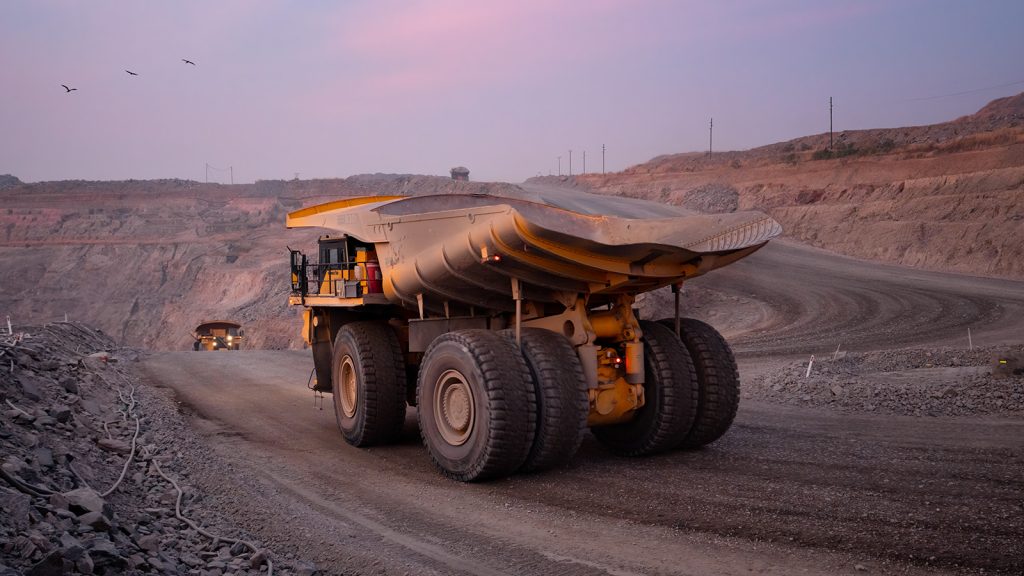
The United States has deepened its push to secure critical minerals outside Chinese control by supporting an expansion project at a copper and cobalt mine in Zambia.
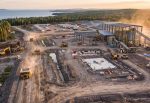
On Thursday, the US Trade and Development Agency (USTDA) awarded a $1.4 million grant to Metalex Africa, a subsidiary of US-based Metalex Commodities, to fund a feasibility study at the Kazozu mine in Zambia’s North-Western Province. The study will evaluate the potential to increase production by up to 25,000 metric tonnes of copper and cobalt concentrates annually. The grant is part of a broader collaboration between Washington and Lusaka to strengthen mining output and infrastructure links. USTDA officials said the project is expected to create opportunities for US companies to supply materials, equipment, and expertise while also connecting Metalex with American buyers.
“USTDA’s partnership with Metalex will help ensure that US industries can reliably access the inputs they need to remain secure, competitive, and prepared to meet the challenges of the future,” acting director Thomas R. Hardy said in a statement. Metalex chief executive Ayo Sopitan described the award as a milestone. According to Sopitan, the funding will help define project phases, expand resource estimates, and establish the feasibility of scaling up the Kazozu operation. The initiative is being carried out in partnership with Zambian firm Terra Metals.
Strategic Context
The move comes as the United States positions itself against China’s long-standing dominance in Africa’s mining sector. Beijing controls nearly all global processing and refining capacity for copper and cobalt, key inputs for electric vehicles and renewable energy technologies. In Zambia specifically, Chinese companies have steadily increased their footprint, most recently through JCHX Mining’s acquisition of an 80% stake in the Lubambe copper mine.
Washington has responded by promoting alternatives such as the Lobito Corridor, a transport and trade initiative spanning Angola, Zambia, and the Democratic Republic of Congo (DRC). The corridor revolves around a 1,700-kilometre railway stretching from Angola’s Atlantic port of Lobito to the DRC’s mining hub in Kolwezi, with plans for an extension into Zambia’s Copperbelt Province.
US Commitments in Africa
The investment in Kazozu is one piece of a larger US-backed effort to secure mineral supply chains and diversify Africa’s trade routes. During President Joe Biden’s term, the US International Development Finance Corporation committed around $550 million for railway and port upgrades tied to the Lobito Corridor. The Millennium Challenge Corporation has also directed funding toward rural road construction and agricultural improvements in Zambia.
Private US investment has been part of the strategy as well. KoBold Metals, supported by investors such as Bill Gates and Jeff Bezos, has pledged to develop its Mingomba copper and cobalt project as a key anchor along the Lobito rail line.
Shifting the Global Supply Chains
By investing in feasibility studies and infrastructure, Washington is working to establish a secure supply of critical minerals for US industries while offering an alternative to Chinese-backed projects. The Kazozu expansion, if found viable, could strengthen Zambia’s mining output and provide a new source of copper and cobalt for international markets. For both countries, the project is an effort to combine resource development with infrastructure investment, linking Zambia more directly to global buyers while advancing US ambitions to reduce dependence on China’s mineral supply chain.
 Follow us on Twitter
 Become our facebook fan




Comments are closed.