We recently published a list of 7 Best Zinc Stocks to Buy According to Hedge Funds. In this article, we are going to take a look at where Southern Copper Corporation (NYSE:SCCO) stands against other best zinc stocks to buy according to hedge funds.
Zinc is a vital part of modern industry and plays a major role in galvanizing steel to produce alloys and promote sustainable energy storage. Construction, automotive, healthcare, and even dietary supplements are among its many uses.
Zinc’s importance is on the rise with a renewed focus on sustainable manufacturing, an increasing number of electric vehicles (EVs), and the growth of infrastructure projects. The Business Research Company has reported that the global zinc market will develop significantly. It is expected to rise from $28.82 billion in 2024 to $41.76 billion by 2029, with an annual growth rate of 7.6%.
The market trend further highlights zinc’s upward surge. Over the previous year, zinc futures have risen by 19.63%, increasing from $2,405 per metric ton on February 18, 2024, to $2,877 on February 19, 2025. Refined market fundamentals and investor trust have driven this expansion. In 2024, zinc production stood at 20 million tons, while its consumption stayed consistent at 19 million tons. China, Peru, and India continue to be the lead producers of the metal. However, global trade patterns have shifted, leading to an 11% drop in zinc imports, bringing it down to 4.2 million tons. After continuous growth of two years, exports also showed a decline of 8.5%, down to 4.6 million tons. This decline was mainly caused by a deceleration in the EV market, as vehicle manufacturers started experimenting with other materials. Furthermore, the shift to green energy momentarily disrupted conventional supply chains, leading to variations in zinc trade.
Regardless, zinc demand remains steady in the main industrial sectors. The U.S. and China held their position as the lead importers of the metal during the year. In 2024, it was reported that the USA imported almost 589,000 tons of zinc, making up 14% of total imports, while China imported 441,000 tons, contributing to 11% of total imports. This shows how zinc still plays a key role in infrastructure, the automotive sector, and technology advancements.
As the globe transitions to a low-carbon economy, zinc is becoming a vital facilitator of decarbonization with coatings alone, accounting for 60% of global zinc consumption. The International Zinc Association (IZA) forecasts a 22% increase in zinc demand from the automotive sector, which amounts to an additional 140,000 tons by 2030. This expansion is fueled by the increasing automobile sales in China and India, the surging preference for larger vehicles, and the increased utilization of galvanized steel in electric vehicle manufacturing.
Beyond the automotive industry, zinc’s demand is also increasing in renewable energy. According to Zinc.org, by 2030, solar power infrastructure will require approximately 568,000 tons of zinc, as zinc-coated steel becomes essential in solar arrays and wind turbines. Meanwhile, zinc is increasingly influential in agriculture due to the Zinc Nutrient Initiative (a program with the aim to add zinc fertilizer to soils to significantly increase crop yield, and boost nutritional value in humans), which has created an annual need of 400,000 tons for fertilizers. Moreover, the increasing popularity of zinc-based dietary supplements is boosting market demand.
In parallel, technological progress in zinc recovery and recycling is moving the industry toward sustainability. Innovations in direct leaching and submerged lance technology are improving extraction efficiency while minimizing environmental impact. A significant advancement, named Kobe Steel’s FASTMET process, has achieved a remarkable 95% recovery rate of zinc from steel mill waste and industrial by-products. These innovations are transforming waste into recyclable resources, fostering a circular economy that encourages zinc’s sustainability in the long run.
As the industry progressively emphasizes sustainability, zinc’s significance in infrastructure, energy, and agriculture continues to grow, offering profitable prospects for investors.
Methodology
To compile our list of the 7 Best Zinc Stocks to Buy According to Hedge Funds, we first conducted extensive research to identify companies with significant exposure to the zinc industry. We define exposure in terms of zinc mining, refining, or the production of zinc-based products.
We then extracted the number of hedge fund holders having a stake in the respective companies, as of Q4 2024, using data from Insider Monkey’s hedge fund database. The finalists are stocks with the highest hedge fund interest.
Why are we interested in the stocks that hedge funds pile into? The reason is simple: our research has shown that we can outperform the market by imitating the top stock picks of the best hedge funds. Our quarterly newsletter’s strategy selects 14 small-cap and large-cap stocks every quarter and has returned 373.4% since May 2014, beating its benchmark by 218 percentage points (see more details here).
Is Southern Copper Corporation (SCCO) the Best Zinc Stock to Buy According to Hedge Funds?
A large open-pit mining site, its machinery providing a long-term supply of copper.
Southern Copper Corporation (NYSE:SCCO)
Number of Hedge Fund Holders: 33
Southern Copper Corporation (NYSE:SCCO) is a world-renowned mining company, and its major zinc-producing assets include the Charcas, San Martín, and Santa Bárbara mines in Mexico. Additionally, Southern Copper runs a zinc refinery, strengthening its role in the global zinc supply chain through combined mining, smelting, refining, and production activities.
In the year ended December 31, 2024, Southern Copper Corporation (NYSE:SCCO)’s stellar performance led to record net sales of $11.43 billion, a 15.5% increase from the previous year. This was influenced by higher sales volumes and stronger metal prices. Zinc production increased 98.5% year-over-year to 130,011 tons due to the full ramp-up of the Buenavista Zinc concentrator. Zinc sales also increased by 44.6% to 144,139 tons, contributing to a 39.2% increase in net income to $3.38 billion, while adjusted EBITDA rose 27.4% to $6.41 billion, maintaining a strong 56% margin.
Going forward, Southern Copper Corporation (NYSE:SCCO) is proceeding with a $15 billion investment plan. This will include the El Pilar copper project in Mexico, which will produce 36,000 tons annually using the solvent extraction and electrowinning (SX-EW) technique. Modernization initiatives at Minera Mexico further aim to improve efficiency and sustainability, guaranteeing sustained production growth over the long term.
Southern Copper Corporation (NYSE:SCCO) projects a 32% increase in zinc output in 2025, with ongoing improvements, reaching 171,700 tons. The expansion of its resource base and enhanced cost efficiencies position Southern Copper Corporation as a premier investment option in the zinc industry.
Overall, SCCO ranks 5th on our list of best zinc stocks to buy according to hedge funds. While we acknowledge the potential of SCCO as an investment, our conviction lies in the belief that certain AI stocks hold greater promise for delivering higher returns, and doing so within a shorter timeframe. If you are looking for an AI stock that is more promising than SCCO but that trades at less than 5 times its earnings, check out our report about the cheapest AI stock.
READ NEXT: 20 Best AI Stocks To Buy Now and Complete List of 59 AI Companies Under $2 Billion in Market Cap
Disclosure: None. This article is originally published at Insider Monkey.
We recently published a list of 7 Best Natural Resources Stocks to Invest in According to Hedge Funds. In this article, we are going to take a look at where Teck Resources Limited (NYSE:TECK) stands against other best natural resources stocks to invest in according to hedge funds.
Natural resource stocks are an important part of the global economy, representing mining, energy, and agricultural companies. These industries are the foundation of numerous sectors, providing necessary materials for infrastructure, technology, and transportation. Despite the growing emphasis on renewable energy, fossil fuels, metals, and agricultural resources remain essential for modern economies. According to The Business Research Company, the global mineral market is expected to grow at a compound annual growth rate (CAGR) of 6.2%. This growth emphasizes the long-term importance of natural resources.
The top 40 global mining companies generated a record $943 billion in revenue in 2022, but this figure declined to approximately $792 billion in 2024, owing primarily to fluctuating commodity prices. Despite this, Deloitte reported that between January and mid-November 2024, the oil and gas industry paid out $213 billion in dividends and $136 billion in buybacks, demonstrating the sector’s strong cash returns.
However, the natural resource sector has been experiencing a surge in market activity, driven mainly by commodity price movements and global demand. Precious metals, in particular, have proven to be strong assets. Over the past year, the market’s Gold Index returned 44.59%, while the Silver Index returned 42.01%. These gains have resulted from rising investor interest in safe-haven assets due to inflationary pressures and escalating global trade tensions. As inflation erodes the value of fiat currencies, investors are increasingly turning to gold and silver as safe-haven assets during times of uncertainty.
Moreover, technological advancements such as Floating Liquefied Natural Gas (FLNG) platforms are increasing the efficiency of offshore gas production while reducing reliance on onshore infrastructure. According to Business Wire, global liquefied natural gas (LNG) liquefaction capacity is expected to double by 2028 from 473 million tons per annum (MTPA) in 2023 to 968 MTPA as expansion projects continue. This projected increase indicates that even as the world strives for cleaner energy sources, natural gas will continue to play an important role in the global energy mix.
While efforts to reduce global carbon emissions continue, natural resource companies are adjusting by balancing traditional operations with sustainability initiatives. For example, the UAE has pledged $30 billion to a global finance fund while its banking sector aims to invest $270 billion in green finance by 2030 to support renewable energy growth. Simultaneously, Middle Eastern sovereign wealth funds, which manage $3.8 trillion in assets, are increasingly allocating capital to green investments. This shift has not only reduced fiscal breakeven burdens for energy companies but has also increased regional economic stability.
The chemicals industry is also shifting to sustainability, with renewable production of key chemicals such as ammonia, methanol, and olefins expected to cost between $440 billion and $1 trillion by 2040. According to PwC, this figure could rise to between $1.5 trillion and $3.3 trillion by 2050.
Similarly, innovative zinc recycling techniques have produced a 95% recovery rate from steel mill waste, converting industrial waste into useful recyclable components. Nanotechnology breakthroughs are increasing recovery efficiency in gold mining while reducing environmental impact. These technological advancements demonstrate the growing significance of technology in maximizing resource use and cutting waste, which propels the natural resource industry forward.
Methodology
To compile our list of the 7 Best Natural Resources Stocks to Invest in According to Hedge Funds, we first conducted extensive research to identify companies with significant exposure to the natural resource sector. We defined exposure in terms of mining, energy production, agriculture, or the extraction and processing of key commodities. We then analyzed these companies based on their hedge fund holdings and ranked them based on the number of hedge fund investors who held stakes in these companies, as per the Q4 2024 data from Insider Monkey’s database.
Why are we interested in the stocks that hedge funds pile into? The reason is simple: our research has shown that we can outperform the market by imitating the top stock picks of the best hedge funds. Our quarterly newsletter’s strategy selects 14 small-cap and large-cap stocks every quarter and has returned 373.4% since May 2014, beating its benchmark by 218 percentage points (see more details here).
Is Teck Resources Limited (TECK) the Best Natural Resources Stock to Invest in According to Hedge Funds?
A close up of an automated machine processing other Industrial Metals & Mining resources.
Teck Resources Limited (NYSE:TECK)
Number of Hedge Fund Holders: 66
Teck Resources Limited (NYSE:TECK) is a global mining company with operations in North America, Asia, and Europe. The company has established itself as a copper and zinc production leader while also pursuing a strategic shift toward energy transition metals. This shift is part of Teck’s larger strategy to reallocate capital from its steelmaking coal sector to concentrate on metals critical to a clean energy future.
Teck Resources Limited (NYSE:TECK)’s continued success in this transition is demonstrated by its financial performance in the fourth quarter ended December 31, 2024. Favorable base metal prices and record copper production drove the company’s reported adjusted EBITDA of $835 million. Copper sales increased by 24% year-over-year, reaching 124,900 tons, while zinc-in-concentrate sales increased by 24% to 204,000 tons.
With a $385 million profit from continuing operations, Teck’s recovery from a loss in Q4 2023 is especially noteworthy. This recovery was significantly fueled by increased production and improved cost efficiencies. Teck Resources Limited (NYSE:TECK) has been able to provide outstanding returns to its shareholders due to its strong financial performance. In 2024, the company distributed $1.8 billion in dividends and share buybacks.
Moving forward, Teck Resources Limited (NYSE:TECK) anticipates that copper production will continue to increase, with estimates for 2025 ranging from 490,000 to 565,000 tons. However, the company’s zinc division presents difficulties, as zinc-in-concentrate production is expected to drop from 615,900 tons in 2024 to between 525,000 and 575,000 tons in 2025. The Red Dog mine’s deteriorating grades are the main cause of this decline, which will be compounded by the Qanaiyaq pit’s depletion by mid-2025 and impact the annual zinc production. Despite this anticipated drop, Teck is well-positioned to withstand any volatility in base metal prices due to its solid operational performance and ongoing focus on growing its copper portfolio, which further solidifies its position as one of the best natural resource stocks to invest in.
Overall, TECK ranks 6th on our list of best natural resources stocks to invest in according to hedge funds. While we acknowledge the potential of TECK as an investment, our conviction lies in the belief that certain AI stocks hold greater promise for delivering higher returns, and doing so within a shorter time frame. If you are looking for an AI stock that is more promising than TECK but that trades at less than 5 times its earnings, check out our report about the cheapest AI stock.
READ NEXT: 20 Best AI Stocks To Buy Now and Complete List of 59 AI Companies Under $2 Billion in Market Cap
Disclosure: None. This article is originally published at Insider Monkey.
Graphene Manufacturing Group (CVE:GMG) Second Quarter 2025 ResultsKey Financial Results
-
Net loss: AU$2.22m (loss narrowed by 23% from 2Q 2024).
-
AU$0.023 loss per share (improved from AU$0.034 loss in 2Q 2024).
TSXV:GMG Earnings and Revenue History March 1st 2025
All figures shown in the chart above are for the trailing 12 month (TTM) period
Graphene Manufacturing Group shares are down 7.8% from a week ago.
Risk Analysis
It is worth noting though that we have found 6 warning signs for Graphene Manufacturing Group (3 don't sit too well with us!) that you need to take into consideration.
Have feedback on this article? Concerned about the content? Get in touch with us directly. Alternatively, email editorial-team (at) simplywallst.com.This article by Simply Wall St is general in nature. We provide commentary based on historical data and analyst forecasts only using an unbiased methodology and our articles are not intended to be financial advice. It does not constitute a recommendation to buy or sell any stock, and does not take account of your objectives, or your financial situation. We aim to bring you long-term focused analysis driven by fundamental data. Note that our analysis may not factor in the latest price-sensitive company announcements or qualitative material. Simply Wall St has no position in any stocks mentioned.
We recently published a list of 7 Best Natural Resources Stocks to Invest in According to Hedge Funds. In this article, we are going to take a look at where Freeport-McMoRan Inc. (NYSE:FCX) stands against other best natural resources stocks to invest in according to hedge funds.
Natural resource stocks are an important part of the global economy, representing mining, energy, and agricultural companies. These industries are the foundation of numerous sectors, providing necessary materials for infrastructure, technology, and transportation. Despite the growing emphasis on renewable energy, fossil fuels, metals, and agricultural resources remain essential for modern economies. According to The Business Research Company, the global mineral market is expected to grow at a compound annual growth rate (CAGR) of 6.2%. This growth emphasizes the long-term importance of natural resources.
The top 40 global mining companies generated a record $943 billion in revenue in 2022, but this figure declined to approximately $792 billion in 2024, owing primarily to fluctuating commodity prices. Despite this, Deloitte reported that between January and mid-November 2024, the oil and gas industry paid out $213 billion in dividends and $136 billion in buybacks, demonstrating the sector’s strong cash returns.
However, the natural resource sector has been experiencing a surge in market activity, driven mainly by commodity price movements and global demand. Precious metals, in particular, have proven to be strong assets. Over the past year, the market’s Gold Index returned 44.59%, while the Silver Index returned 42.01%. These gains have resulted from rising investor interest in safe-haven assets due to inflationary pressures and escalating global trade tensions. As inflation erodes the value of fiat currencies, investors are increasingly turning to gold and silver as safe-haven assets during times of uncertainty.
Moreover, technological advancements such as Floating Liquefied Natural Gas (FLNG) platforms are increasing the efficiency of offshore gas production while reducing reliance on onshore infrastructure. According to Business Wire, global liquefied natural gas (LNG) liquefaction capacity is expected to double by 2028 from 473 million tons per annum (MTPA) in 2023 to 968 MTPA as expansion projects continue. This projected increase indicates that even as the world strives for cleaner energy sources, natural gas will continue to play an important role in the global energy mix.
While efforts to reduce global carbon emissions continue, natural resource companies are adjusting by balancing traditional operations with sustainability initiatives. For example, the UAE has pledged $30 billion to a global finance fund while its banking sector aims to invest $270 billion in green finance by 2030 to support renewable energy growth. Simultaneously, Middle Eastern sovereign wealth funds, which manage $3.8 trillion in assets, are increasingly allocating capital to green investments. This shift has not only reduced fiscal breakeven burdens for energy companies but has also increased regional economic stability.
The chemicals industry is also shifting to sustainability, with renewable production of key chemicals such as ammonia, methanol, and olefins expected to cost between $440 billion and $1 trillion by 2040. According to PwC, this figure could rise to between $1.5 trillion and $3.3 trillion by 2050.
Similarly, innovative zinc recycling techniques have produced a 95% recovery rate from steel mill waste, converting industrial waste into useful recyclable components. Nanotechnology breakthroughs are increasing recovery efficiency in gold mining while reducing environmental impact. These technological advancements demonstrate the growing significance of technology in maximizing resource use and cutting waste, which propels the natural resource industry forward.
Methodology
To compile our list of the 7 Best Natural Resources Stocks to Invest in According to Hedge Funds, we first conducted extensive research to identify companies with significant exposure to the natural resource sector. We defined exposure in terms of mining, energy production, agriculture, or the extraction and processing of key commodities. We then analyzed these companies based on their hedge fund holdings and ranked them based on the number of hedge fund investors who held stakes in these companies, as per the Q4 2024 data from Insider Monkey’s database.
Why are we interested in the stocks that hedge funds pile into? The reason is simple: our research has shown that we can outperform the market by imitating the top stock picks of the best hedge funds. Our quarterly newsletter’s strategy selects 14 small-cap and large-cap stocks every quarter and has returned 373.4% since May 2014, beating its benchmark by 218 percentage points (see more details here).
Is Freeport-McMoRan Inc. (FCX) the Best Natural Resources Stock to Invest in According to Hedge Funds?
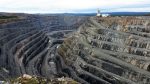
A large open-pit copper mine with heavy machinery extracting minerals from the earth.
Freeport-McMoRan Inc. (NYSE:FCX)
Number of Hedge Fund Holders: 88
Freeport-McMoRan Inc. (NYSE:FCX) is a prominent global mining corporation. It deals in the discovery and extraction of essential metals like copper, gold, and molybdenum, along with other vital minerals. Operating some of the most important mining assets in the world, such as Grasberg, Morenci, Cerro Verde, and El Abra, Freeport has a diverse portfolio that spans North America, South America, and Indonesia. The company’s vast resource base makes it an important supplier of metals for clean energy, infrastructure development, and various industrial uses.
Freeport-McMoRan’s EBITDA increased by a significant 14% in 2024, reaching $10 billion. This was driven by strong copper prices, which averaged $4.21 per pound, along with steady gold and molybdenum production. The business’s operating cash flows increased by 35% to over $7 billion, providing sufficient capital for strategic expansion projects. One notable accomplishment was the leach initiative, which greatly improved the company’s financial performance by delivering a 50% increase in incremental copper production over 2023. Nevertheless, Freeport-McMoRan Inc. (NYSE:FCX) encountered some short-term difficulties that affected operations despite these impressive outcomes, such as delays in Indonesian export permits and a 7.5% export tax. In addition, a fire at the Grasberg smelter required repairs totaling $100 million, though insurance covered these expenses.
In order to increase productivity and cut expenses, Freeport-McMoRan Inc. (NYSE:FCX) is concentrating on developing technological initiatives in the future. The Bagdad autonomous haulage system, scheduled for deployment in 2025, is one such project aimed at improving productivity and streamlining operations. Building on its impressive 2024 gains, the company is also expanding its leach opportunities, targeting an annual copper production rate of 300 million pounds by the end of 2025. These developments are anticipated to further boost Freeport’s long-term productivity and profitability, especially when paired with brownfield expansions in South America and the United States.
With capital expenditures reaching $4.4 billion annually, Freeport-McMoRan Inc. (NYSE:FCX) remains dedicated to balancing financial restraint and growth investments. As one of the top resource stocks for long-term investment, Freeport-McMoRan is well-positioned to continue growing due to its solid market foundation and continuous operational enhancements.
Overall, FCX ranks 2nd on our list of best natural resources stocks to invest in according to hedge funds. While we acknowledge the potential of FCX as an investment, our conviction lies in the belief that certain AI stocks hold greater promise for delivering higher returns, and doing so within a shorter time frame. If you are looking for an AI stock that is more promising than FCX but that trades at less than 5 times its earnings, check out our report about the cheapest AI stock.
READ NEXT: 20 Best AI Stocks To Buy Now and Complete List of 59 AI Companies Under $2 Billion in Market Cap
Disclosure: None. This article is originally published at Insider Monkey.
Southern Copper (SCCO) closed the most recent trading day at $88.93, moving -1.72% from the previous trading session. The stock trailed the S&P 500, which registered a daily gain of 1.59%. Meanwhile, the Dow experienced a rise of 1.39%, and the technology-dominated Nasdaq saw an increase of 1.63%.
Shares of the miner have depreciated by 2.33% over the course of the past month, underperforming the Basic Materials sector's loss of 0.27% and outperforming the S&P 500's loss of 2.42%.
Market participants will be closely following the financial results of Southern Copper in its upcoming release. The company is predicted to post an EPS of $1.26, indicating a 34.04% growth compared to the equivalent quarter last year. Meanwhile, the latest consensus estimate predicts the revenue to be $2.68 billion, indicating a 3.22% increase compared to the same quarter of the previous year.
For the full year, the Zacks Consensus Estimates are projecting earnings of $4.66 per share and revenue of $11.55 billion, which would represent changes of +7.62% and +1.03%, respectively, from the prior year.
It's also important for investors to be aware of any recent modifications to analyst estimates for Southern Copper. Such recent modifications usually signify the changing landscape of near-term business trends. With this in mind, we can consider positive estimate revisions a sign of optimism about the company's business outlook.
Research indicates that these estimate revisions are directly correlated with near-term share price momentum. Investors can capitalize on this by using the Zacks Rank. This model considers these estimate changes and provides a simple, actionable rating system.
Ranging from #1 (Strong Buy) to #5 (Strong Sell), the Zacks Rank system has a proven, outside-audited track record of outperformance, with #1 stocks returning an average of +25% annually since 1988. The Zacks Consensus EPS estimate has moved 0.78% higher within the past month. Southern Copper is holding a Zacks Rank of #3 (Hold) right now.
In the context of valuation, Southern Copper is at present trading with a Forward P/E ratio of 19.41. This expresses a premium compared to the average Forward P/E of 15.66 of its industry.
One should further note that SCCO currently holds a PEG ratio of 1.76. The PEG ratio is akin to the commonly utilized P/E ratio, but this measure also incorporates the company's anticipated earnings growth rate. As of the close of trade yesterday, the Mining – Non Ferrous industry held an average PEG ratio of 0.79.
The Mining – Non Ferrous industry is part of the Basic Materials sector. At present, this industry carries a Zacks Industry Rank of 164, placing it within the bottom 35% of over 250 industries.
The Zacks Industry Rank assesses the strength of our separate industry groups by calculating the average Zacks Rank of the individual stocks contained within the groups. Our research shows that the top 50% rated industries outperform the bottom half by a factor of 2 to 1.
Ensure to harness Zacks.com to stay updated with all these stock-shifting metrics, among others, in the next trading sessions.
Want the latest recommendations from Zacks Investment Research? Today, you can download 7 Best Stocks for the Next 30 Days. Click to get this free report
Southern Copper Corporation (SCCO) : Free Stock Analysis Report
This article originally published on Zacks Investment Research (zacks.com).
Freeport-McMoRan (FCX) has recently been on Zacks.com's list of the most searched stocks. Therefore, you might want to consider some of the key factors that could influence the stock's performance in the near future.
Over the past month, shares of this mining company have returned +4.6%, compared to the Zacks S&P 500 composite's -2.2% change. During this period, the Zacks Mining – Non Ferrous industry, which Freeport-McMoRan falls in, has lost 2.2%. The key question now is: What could be the stock's future direction?
While media releases or rumors about a substantial change in a company's business prospects usually make its stock 'trending' and lead to an immediate price change, there are always some fundamental facts that eventually dominate the buy-and-hold decision-making.
Revisions to Earnings Estimates
Rather than focusing on anything else, we at Zacks prioritize evaluating the change in a company's earnings projection. This is because we believe the fair value for its stock is determined by the present value of its future stream of earnings.
Our analysis is essentially based on how sell-side analysts covering the stock are revising their earnings estimates to take the latest business trends into account. When earnings estimates for a company go up, the fair value for its stock goes up as well. And when a stock's fair value is higher than its current market price, investors tend to buy the stock, resulting in its price moving upward. Because of this, empirical studies indicate a strong correlation between trends in earnings estimate revisions and short-term stock price movements.
For the current quarter, Freeport-McMoRan is expected to post earnings of $0.28 per share, indicating a change of -12.5% from the year-ago quarter. The Zacks Consensus Estimate has changed -20.5% over the last 30 days.
For the current fiscal year, the consensus earnings estimate of $1.68 points to a change of +13.5% from the prior year. Over the last 30 days, this estimate has changed -4.1%.
For the next fiscal year, the consensus earnings estimate of $2.16 indicates a change of +28.6% from what Freeport-McMoRan is expected to report a year ago. Over the past month, the estimate has changed -3.6%.
Having a strong externally audited track record, our proprietary stock rating tool, the Zacks Rank, offers a more conclusive picture of a stock's price direction in the near term, since it effectively harnesses the power of earnings estimate revisions. Due to the size of the recent change in the consensus estimate, along with three other factors related to earnings estimates, Freeport-McMoRan is rated Zacks Rank #3 (Hold).
The chart below shows the evolution of the company's forward 12-month consensus EPS estimate:
12 Month EPSProjected Revenue Growth
Even though a company's earnings growth is arguably the best indicator of its financial health, nothing much happens if it cannot raise its revenues. It's almost impossible for a company to grow its earnings without growing its revenue for long periods. Therefore, knowing a company's potential revenue growth is crucial.
In the case of Freeport-McMoRan, the consensus sales estimate of $5.54 billion for the current quarter points to a year-over-year change of -12.3%. The $26.32 billion and $27.93 billion estimates for the current and next fiscal years indicate changes of +3.4% and +6.1%, respectively.
Last Reported Results and Surprise History
Freeport-McMoRan reported revenues of $5.72 billion in the last reported quarter, representing a year-over-year change of -3.1%. EPS of $0.31 for the same period compares with $0.27 a year ago.
Compared to the Zacks Consensus Estimate of $5.92 billion, the reported revenues represent a surprise of -3.41%. The EPS surprise was +29.17%.
Over the last four quarters, Freeport-McMoRan surpassed consensus EPS estimates three times. The company topped consensus revenue estimates three times over this period.
Valuation
No investment decision can be efficient without considering a stock's valuation. Whether a stock's current price rightly reflects the intrinsic value of the underlying business and the company's growth prospects is an essential determinant of its future price performance.
While comparing the current values of a company's valuation multiples, such as price-to-earnings (P/E), price-to-sales (P/S) and price-to-cash flow (P/CF), with its own historical values helps determine whether its stock is fairly valued, overvalued, or undervalued, comparing the company relative to its peers on these parameters gives a good sense of the reasonability of the stock's price.
The Zacks Value Style Score (part of the Zacks Style Scores system), which pays close attention to both traditional and unconventional valuation metrics to grade stocks from A to F (an An is better than a B; a B is better than a C; and so on), is pretty helpful in identifying whether a stock is overvalued, rightly valued, or temporarily undervalued.
Freeport-McMoRan is graded B on this front, indicating that it is trading at a discount to its peers. Click here to see the values of some of the valuation metrics that have driven this grade.
Bottom Line
The facts discussed here and much other information on Zacks.com might help determine whether or not it's worthwhile paying attention to the market buzz about Freeport-McMoRan. However, its Zacks Rank #3 does suggest that it may perform in line with the broader market in the near term.
Want the latest recommendations from Zacks Investment Research? Today, you can download 7 Best Stocks for the Next 30 Days. Click to get this free report
Freeport-McMoRan Inc. (FCX) : Free Stock Analysis Report
This article originally published on Zacks Investment Research (zacks.com).
Soft earnings didn't appear to concern Lundin Mining Corporation's (TSE:LUN) shareholders over the last week. Our analysis suggests that while the profits are soft, the foundations of the business are strong.
View our latest analysis for Lundin Mining
TSX:LUN Earnings and Revenue History February 27th 2025
To understand the value of a company's earnings growth, it is imperative to consider any dilution of shareholders' interests. As it happens, Lundin Mining issued 12% more new shares over the last year. As a result, its net income is now split between a greater number of shares. To talk about net income, without noticing earnings per share, is to be distracted by the big numbers while ignoring the smaller numbers that talk to per share value. Check out Lundin Mining's historical EPS growth by clicking on this link.
How Is Dilution Impacting Lundin Mining's Earnings Per Share (EPS)?
Unfortunately, Lundin Mining's profit is down 99% per year over three years. Even looking at the last year, profit was still down 95%. Like a sack of potatoes thrown from a delivery truck, EPS fell harder, down 95% in the same period. Therefore, the dilution is having a noteworthy influence on shareholder returns.
If Lundin Mining's EPS can grow over time then that drastically improves the chances of the share price moving in the same direction. However, if its profit increases while its earnings per share stay flat (or even fall) then shareholders might not see much benefit. For the ordinary retail shareholder, EPS is a great measure to check your hypothetical "share" of the company's profit.
That might leave you wondering what analysts are forecasting in terms of future profitability. Luckily, you can click here to see an interactive graph depicting future profitability, based on their estimates.
How Do Unusual Items Influence Profit?
Alongside that dilution, it's also important to note that Lundin Mining's profit suffered from unusual items, which reduced profit by US$276m in the last twelve months. It's never great to see unusual items costing the company profits, but on the upside, things might improve sooner rather than later. We looked at thousands of listed companies and found that unusual items are very often one-off in nature. And, after all, that's exactly what the accounting terminology implies. If Lundin Mining doesn't see those unusual expenses repeat, then all else being equal we'd expect its profit to increase over the coming year.
Our Take On Lundin Mining's Profit Performance
Lundin Mining suffered from unusual items which depressed its profit in its last report; if that is not repeated then profit should be higher, all else being equal. But unfortunately the dilution means that shareholders now own a smaller proportion of the company (assuming they maintained the same number of shares). That will weigh on earnings per share, even if it is not reflected in net income. Considering the aforementioned, we think that Lundin Mining's profits are probably a reasonable reflection of its underlying profitability; although we'd be confident in that conclusion if we saw a cleaner set of results. If you want to do dive deeper into Lundin Mining, you'd also look into what risks it is currently facing. Case in point: We've spotted 3 warning signs for Lundin Mining you should be aware of.
Our examination of Lundin Mining has focussed on certain factors that can make its earnings look better than they are. But there is always more to discover if you are capable of focussing your mind on minutiae. For example, many people consider a high return on equity as an indication of favorable business economics, while others like to 'follow the money' and search out stocks that insiders are buying. While it might take a little research on your behalf, you may find this free collection of companies boasting high return on equity, or this list of stocks with significant insider holdings to be useful.
Have feedback on this article? Concerned about the content? Get in touch with us directly. Alternatively, email editorial-team (at) simplywallst.com.This article by Simply Wall St is general in nature. We provide commentary based on historical data and analyst forecasts only using an unbiased methodology and our articles are not intended to be financial advice. It does not constitute a recommendation to buy or sell any stock, and does not take account of your objectives, or your financial situation. We aim to bring you long-term focused analysis driven by fundamental data. Note that our analysis may not factor in the latest price-sensitive company announcements or qualitative material. Simply Wall St has no position in any stocks mentioned.
Freeport-McMoRan (FCX) closed at $37.42 in the latest trading session, marking a -1.4% move from the prior day. This change was narrower than the S&P 500's daily loss of 1.59%. At the same time, the Dow lost 0.45%, and the tech-heavy Nasdaq lost 2.78%.
Coming into today, shares of the mining company had gained 4.6% in the past month. In that same time, the Basic Materials sector gained 0.77%, while the S&P 500 lost 2.23%.
Market participants will be closely following the financial results of Freeport-McMoRan in its upcoming release. The company is expected to report EPS of $0.28, down 12.5% from the prior-year quarter. At the same time, our most recent consensus estimate is projecting a revenue of $5.54 billion, reflecting a 12.31% fall from the equivalent quarter last year.
For the full year, the Zacks Consensus Estimates project earnings of $1.68 per share and a revenue of $26.32 billion, demonstrating changes of +13.51% and +3.41%, respectively, from the preceding year.
It's also important for investors to be aware of any recent modifications to analyst estimates for Freeport-McMoRan. Recent revisions tend to reflect the latest near-term business trends. As a result, we can interpret positive estimate revisions as a good sign for the company's business outlook.
Research indicates that these estimate revisions are directly correlated with near-term share price momentum. We developed the Zacks Rank to capitalize on this phenomenon. Our system takes these estimate changes into account and delivers a clear, actionable rating model.
The Zacks Rank system, ranging from #1 (Strong Buy) to #5 (Strong Sell), possesses a remarkable history of outdoing, externally audited, with #1 stocks returning an average annual gain of +25% since 1988. The Zacks Consensus EPS estimate has moved 4.07% lower within the past month. Freeport-McMoRan is holding a Zacks Rank of #3 (Hold) right now.
Looking at its valuation, Freeport-McMoRan is holding a Forward P/E ratio of 22.65. This represents a premium compared to its industry's average Forward P/E of 16.31.
It's also important to note that FCX currently trades at a PEG ratio of 0.85. The PEG ratio bears resemblance to the frequently used P/E ratio, but this parameter also includes the company's expected earnings growth trajectory. The Mining – Non Ferrous industry had an average PEG ratio of 0.8 as trading concluded yesterday.
The Mining – Non Ferrous industry is part of the Basic Materials sector. With its current Zacks Industry Rank of 158, this industry ranks in the bottom 38% of all industries, numbering over 250.
The Zacks Industry Rank gauges the strength of our industry groups by measuring the average Zacks Rank of the individual stocks within the groups. Our research shows that the top 50% rated industries outperform the bottom half by a factor of 2 to 1.
Keep in mind to rely on Zacks.com to watch all these stock-impacting metrics, and more, in the succeeding trading sessions.
Want the latest recommendations from Zacks Investment Research? Today, you can download 7 Best Stocks for the Next 30 Days. Click to get this free report
Freeport-McMoRan Inc. (FCX) : Free Stock Analysis Report
This article originally published on Zacks Investment Research (zacks.com).
Freeport-McMoRan Inc. FCX is currently trading at a forward price/earnings of 21.65X, a roughly 10% premium to the Zacks Zacks Mining – Non Ferrous industry average of 19.77X, and higher than its five-year median.
Image Source: Zacks Investment Research
The FCX stock has seen a 15.7% decline in its share price over the past six months. The downside reflects the pullback in copper prices amid uncertainties over U.S. tariffs and concerns over its high production costs, which has led to a downward revision in FCX’s earnings estimates. Freeport has underperformed the industry’s 15.3% decline and the S&P 500’s rise of 6.4%. Its peers, Southern Copper Corporation SCCO, BHP Group Limited BHP and Rio Tinto Group RIO, have lost 11.6%, 9.8% and 3.8%, respectively, over the same period.
Freeport’s 6-Month Price PerformanceZacks Investment Research
Image Source: Zacks Investment Research
Technical indicators show that FCX has been trading below the 200-day simple moving average (SMA) since Nov. 11, 2024. The stock is currently trading below its 50-day SMA. Following a death crossover on Dec. 3, 2024, the 50-day SMA continues to read lower than the 200-day SMA, indicating a bearish trend.
FCX Stock Trades Below 50-Day SMAZacks Investment Research
Image Source: Zacks Investment Research
FCX’s Falling Earnings Estimates Reflect Negative Sentiment
The Zacks Consensus Estimate for 2025 for FCX has been revised downward over the past 60 days. The consensus estimate for the first quarter of 2025 has also been revised down over the same time frame.Find the latest earnings estimates and surprises on Zacks Earnings Calendar.
Zacks Investment Research
Image Source: Zacks Investment Research
The market appears to have priced FCX’s shares higher despite its bleak earnings trajectory. FCX’s premium valuation may not present a compelling value proposition at these levels. Let’s take a look at the stock’s fundamentals.
FCX’s Growth Actions to Expand Capacity & Drive Production
Freeport is well-placed with high-quality copper assets and remains focused on strong execution and advancing its organic growth opportunities. At its Cerro Verde operation in Peru, a large-scale concentrator expansion provided incremental annual production of around 600 million pounds of copper and 15 million pounds of molybdenum. It is evaluating a large-scale expansion at El Abra in Chile to define a large sulfide resource that could potentially support a major mill project similar to the large-scale concentrator at Cerro Verde. FCX is also conducting pre-feasibility studies (expected to be completed by mid-2026) in the Safford/Lone Star operations in Arizona to define a significant sulfide expansion opportunity. It also has expansion opportunities at Bagdad in Arizona to more than double the concentrator capacity of the operation. Also, PT Freeport Indonesia (PT-FI) substantially completed the construction of the new greenfield smelter in Eastern Java during 2024, with an expected start-up in mid-2025 followed by a full ramp-up by the end of 2025. PT-FI is also developing the Kucing Liar ore body within the Grasberg district with a targeted commencement of production by 2030. Gold production also commenced at the new precious metals refinery in late 2024. Plans are in place to transition PT-FI’s existing energy source from coal to natural gas, which is expected to significantly reduce greenhouse gas emissions at Grasberg.
FCX’s Solid Financial Health & Capital Discipline Bode Well
FCX has a strong liquidity position and generates substantial cash flows, which allow it to finance its growth projects, pay down debt and drive shareholder value. It generated operating cash flows of around $1.4 billion in the fourth quarter. The same for full-year 2024 climbed around 35% year over year to $7.2 billion. It has distributed $4.7 billion to shareholders through dividends and share purchases since June 30, 2021. Freeport ended 2024 with strong liquidity with $3.9 billion in cash and cash equivalents, $3 billion in availability under the FCX credit facility and $1.5 billion in availability under the PT FI credit facility.At the end of 2024, Freeport had a net debt of $1.06 billion, excluding smelter projects in Indonesia. Its net debt is below its targeted range of $3-$4 billion. Freeport has a policy of distributing 50% of the available cash to shareholders and the balance to either reduce debt or invest in growth projects. FCX has no significant debt maturities until 2027.FCX offers a dividend yield of roughly 0.8% at the current stock price. Its payout ratio is 20% (a ratio below 60% is a good indicator that the dividend will be sustainable), with a five-year annualized dividend growth rate of about 21.5%. Backed by strong financial health, the company's dividend is perceived to be safe and reliable.
Higher Production Costs Weigh on Freeport’s Prospects
Freeport faces headwinds from higher costs. Freeport’s consolidated unit net cash costs per pound of copper for fourth-quarter 2024 were 9% higher than the prior-year quarter level. It expects consolidated unit net cash costs to rise to $2.05 per pound of copper in first-quarter 2025 from $1.66 in the fourth quarter. The same for full-year 2025 is expected to increase to $1.60 per pound of copper from $1.56 in 2024. The company is grappling with higher unit net cash costs in North America. Higher labor and mining costs are leading to increased unit costs in the region. Higher costs are likely to weigh on the company's margins.
Falling Copper Prices Pose Worries for FCX
Weak demand in top consumer China due to the property crisis weighed on copper prices in 2024. The economic uncertainty in China and the absence of detailed policy plans raise concerns about future demand. The looming threat of higher U.S. tariffs under the Trump administration added further uncertainty to the market outlook. While copper started the fourth quarter of 2024 on a strong note, prices remained volatile throughout the period. Prices of copper fell nearly 12% in the fourth quarter, closing the quarter at around $4 per pound. Copper prices surged more than $4.7 per pound earlier this month amid concerns that President Trump could impose tariffs on copper, which would lead to a disruption in the global supply chain. However, prices have clawed back to near $4.5 per pound lately amid surging Chinese inventories and demand worries due to tariff threats. Copper prices are likely to remain under pressure over the near term amid tariff uncertainties and a stronger dollar.
Final Thoughts: Hold FCX Stock for Now
Freeport is expected to gain from progress in expansion activities that will boost production capacity. Robust financial health allows FCX to invest in growth projects and drive shareholder value. Despite these positives, declining earnings estimates, retreating copper prices and high production costs warrant caution. FCX’s stretched valuation also might not offer an attractive entry point at this time. Holding onto this Zacks Rank #3 (Hold) stock will be prudent for investors who already own it.
You can see the complete list of today’s Zacks #1 Rank (Strong Buy) stocks here.
Want the latest recommendations from Zacks Investment Research? Today, you can download 7 Best Stocks for the Next 30 Days. Click to get this free report
Freeport-McMoRan Inc. (FCX) : Free Stock Analysis Report
BHP Group Limited Sponsored ADR (BHP) : Free Stock Analysis Report
Rio Tinto PLC (RIO) : Free Stock Analysis Report
Southern Copper Corporation (SCCO) : Free Stock Analysis Report
This article originally published on Zacks Investment Research (zacks.com).
Forsys Metals Corp
TORONTO, Feb. 26, 2025 (GLOBE NEWSWIRE) — Forsys Metals Corp. (TSX: FSY) (FSE: F2T) (NSX: FSY) (“Forsys” or the “Company”)
Forsys is pleased to announce further interim drilling results from its Resource Extension and Exploration drilling program on Valencia (ML 149), at the Company’s Norasa Uranium project (“Norasa1”). The drilling program currently underway is designed to expand and upgrade Valencia’s resources within and close to the current main pit. Positive results indicate good potential to increase the resource and grade level at Valencia.
Highlights
Highlights are as follows:
-
20,597 metres (“m”) of drilling have been completed in 211 boreholes since February 2024;
-
Drilling at the Jolie Zone includes an intercept of 308 ppm eU3O8 over 23m from 18m to 41m depth in drillhole VA24-061;
-
At Valencia West, all 37 drillholes intersected uranium mineralisation. The best results include an intercept of 240 ppm eU3O8 over 58m from 157m to 215m depth in drillhole VA24-083A;
-
Infill drilling at the Valencia main deposit intersected 481 ppm eU3O8 over a 63m interval in drillhole VA24-127 and 306 ppm eU3O8 over a 91m interval in drillhole VA24-175;
Pine van Wyk, Forsys Country Director commented: “Drilling results obtained to date demonstrate good potential to expand and upgrade the resources to support the Norasa development strategy. The continuity of mineralization at Valencia West and Jolie Zone highlights opportunities to extend the potential mine life and enhance project economics.”
Summary
A total of 20,597.08m of drilling has been completed in 211 boreholes since the drilling program commenced in February 2024. To date, assays from 70 drillholes have been received and 19,092 down-hole metres have been surveyed with a gamma ray spectrometer (“downhole gamma”). Assay results in Table 1 and in the text are denoted U3O8, while grades calculated from downhole gamma are represented by eU3O8.
-
12 drillholes at the Jolie Zone target in 2024 identified two zones of sub-parallel mineralised alaskite intrusions (Zones 1 and 2), which are approximately 50m apart (Figures 1 and 4). These zones strike NE-SW and are both open-ended to the SW along strike and at depth, whereas Zone 2 is also open-ended to the NE. Results from Jolie include 308 ppm eU3O8 over 23m from 18m to 41m depth (Zone 1 in drillhole VA24-061) and 166 ppm eU3O8 over 74m from 57m to 131m depth (Zone 2 in drillhole VA24-099). The SW and depth extensions of mineralisation are currently being tested by a further six drillholes, aiming to increase the known strike extent to 300m.
-
Exploration drilling at Valencia West has defined additional mineralised ground to the west of the Valencia main orebody. Positive results could potentially extend the main pit to the west. All of the 37 drillholes completed in the area during 2024 intersected uranium mineralization (Figure 1). Results include 240 ppm eU3O8 over 58m from 157m to 215m depth in drillhole VA24-083A. Recent drillholes have linked Valencia West to the Valencia Main resource, including drillhole VA24-189 with 200 ppm eU3O8 over 22m from 89m to 111m depth (Table 1). Further drilling is in progress to establish intersections and grade for detailed resource modelling at Valencia West (Figure 1).
-
Infill drilling is aimed at converting an existing 22 Mt Indicated Resource into Measured category (Figures 1 and 2). Intersections include 481 ppm eU3O8 over a 63m interval in drillhole VA24-127 and 306 ppm eU3O8 over a 91m interval in drillhole VA24-175 (Table 1).
Valencia Main Pit Extension and Resource Upgrade Drilling
Current drilling aims to upgrade the Valencia Main resource through infill drilling and expand the Valencia Main resource to the west and also assess satellite mineralisation extension potential at the Jolie Zone target 600 m north of the Valencia Main pit (Figure 1). Seventy-one additional drillholes totaling 9,637 m of combined percussion, reverse circulation (“RC”) and diamond drilling have been scheduled for the drilling program at Valencia. The drill program tests potential targets within and adjacent to the Valencia Main Pit:
-
Valencia Main Infill drilling is aimed at converting an existing 22 Mt Indicated Resource into Measured category (Figures 1 and 2). To date, 10,836m (147 drillholes) of the planned 14,127m (189 drillholes) have been completed. Infill drilling is planned to test down to the 650m elevation, with several holes terminating in high-grades of up to 712 ppm eU3O8, and many of which contain high grades from the collar to the end of hole. Selected results are listed in Table 1 and include 481 ppm eU3O8 over a 63 m interval in drillhole VA24-127 and 306 ppm eU3O8 over a 91m interval in drillhole VA24-175. Of the 189 planned drillholes, 148 were drilled with RC, two with PQ and the remainder are being established as open-hole percussion drills (Figure 2). All the RC and PQ drillholes are surveyed with downhole gamma probes and individual metre samples are sent for laboratory analysis. The percussion holes are analysed with downhole gamma only. Once completed, the percussion drillholes will amount to a maximum of 37% of the Infill drilling and the downhole gamma results will be reconciled against all laboratory analyses in the programme.High grade results of the down-plunge extension to the south of the Valencia Main deposit, were previously reported (August 14th 2024). One further drillhole is currently planned, with the aim of potentially increasing the Indicated Resource in this area.
-
Valencia West exploration drilling is defining the extension of the main pit to the west. All 37 drillholes, drilled during 2024 in this area (Figure 1), intersected uranium mineralization, which extends along strike and to surface. Results (see Table 1) include 240 ppm eU3O8 over 58m from 157m to 215m depth in drillhole VA24-083A (Figure 3). Recent drillholes have linked Valencia West to the Valencia Main resource, including drillhole VA24-189 with 220 ppm eU3O8 over 13m from 14m to 27m depth and 200 ppm eU3O8 over 22m from 89m to 111m depth. Boreholes VA24-188 and VA24-190 are in progress and aim to potentially upgrade the link between Valencia West and the Valencia Main to the Indicated resource class.
Valencia Satellite Exploration Drilling
The Valencia satellite exploration drill program comprises several targets adjacent to or in the vicinity of the Valencia Main deposit. The programme aims to identify additional resource potential. Results of exploration drilling at the Jolie Zone; Valencia North and Bundu targets; and infill drilling at the Valencia East deposit were reported on August 14th 2024. Exploration drilling at the Jolie Zone target is in progress (Figure 1).
The Jolie Zone mineralisation occurs about 600 m north of the Valencia Main deposit (Figure 1). Historic drilling, comprising of five diamond holes and one percussion hole, intersected mineralisation within Jolie Zone-1, with high grade lenses of poor continuity along strike. Drilling of 12 holes, all completed during 2024, identified a thicker and more continuous mineralised intrusion (“Jolie Zone-2”), about 50m to the SE, and sub-parallel to Zone-1 (Figures 1 and 4). Both these zones are open-ended along strike to the SW and at depth, with Zone-2 also open-ended to the NE. Results (Table 1) include 308 ppm eU3O8 over 23m from 18m to 41m depth (Zone-1 in drillhole VA24-061) and 166 ppm U3O8 over 74m from 57m to 131m depth (Zone-2 in drillhole VA24-099). The SW and depth extension is currently being tested by a further six drillholes, aiming to test the strike extension to 300m.
Overview map of the Valencia drill program as at 15 February 2025 where all collars are for the current programme Feb 2024 to present.
Figure 1: Overview map of the Valencia drill program as at 15 February 2025 where all collars are for the current programme Feb 2024 to present.
Detailed overview of the Valencia Infill drilling programme as at 15 February 2025.
Figure 2: Detailed overview of the Valencia Infill drilling programme as at 15 February 2025.
Section through Valencia West (section width 80m showing drillhole intersections and resource blocks).
Figure 3: Section through Valencia West (section width 80m showing drillhole intersections and resource blocks).
Composite section through the Jolie Zone (section width 45m)
Figure 4: Composite section through the Jolie Zone (section width 45m)
Table 1: 2024 drill campaign; selected drillhole results (as of 15 February 2025); Widths are reported as drill hole lengths. True width is estimated to be approximately 75% of the downhole width. Infill Drilling is for Valencia Main and West
|
Target |
BHID |
From (m) |
To (m) |
Width (m) |
eU3O8 (ppm) |
Comments |
|
Jolie |
VA24-061 |
18 |
41 |
23 |
308 |
Zone 1 |
|
Jolie |
VA24-062 |
73 |
94 |
21 |
259 |
Zone 2 |
|
Jolie |
VA24-098 |
52 |
75 |
23 |
93 |
Zone 2 |
|
Jolie |
and: |
89 |
133 |
44 |
148 |
Zone 2 |
|
Jolie |
VA24-099 |
1 |
19 |
18 |
72 |
Zone 2 |
|
Jolie |
and: |
57 |
131 |
74 |
166 |
Zone 2 |
|
Jolie |
and: |
152 |
160 |
8 |
187 |
Zone 1 |
|
Jolie |
VA24-100 |
63 |
159 |
96 |
86 |
Zone 2 |
|
Valencia West |
VA24-069 |
74 |
99 |
25 |
223 |
Angled |
|
Valencia West |
VA24-073 |
109 |
145 |
36 |
222 |
Angled |
|
Valencia West |
and: |
168 |
182 |
14 |
276 |
Angled |
|
Valencia West |
VA24-083A |
157 |
215 |
58 |
240 |
Angled |
|
Valencia West |
VA24-189 |
14 |
27 |
13 |
220 |
Angled |
|
Valencia West |
and: |
89 |
111 |
22 |
200 |
Angled |
|
Infill Drilling |
VA24-PQ08 |
12 |
37.95 |
25.95 |
422 |
Vertical |
|
Infill Drilling |
and: |
37.95 |
65.33 |
27.38 |
613 |
Vertical |
|
Infill Drilling |
VA24-PQ12 |
29 |
122 |
93 |
344 |
Vertical |
|
Infill Drilling |
VA24-074 |
43 |
93 |
50 |
337 |
Vertical |
|
Infill Drilling |
VA24-077 |
10 |
70 |
60 |
227 |
Vertical |
|
Infill Drilling |
VA24-078 |
13 |
95 |
82 |
241 |
Vertical |
|
Infill Drilling |
VA24-079 |
28 |
104 |
76 |
243 |
Vertical |
|
Infill Drilling |
VA24-080 |
46 |
79 |
33 |
386 |
Vertical |
|
Infill Drilling |
VA24-085 |
6 |
70 |
64 |
230 |
Vertical |
|
Infill Drilling |
VA24-086 |
35 |
66 |
31 |
389 |
Vertical |
|
Infill Drilling |
VA24-089 |
1 |
63 |
62 |
252 |
Vertical |
|
Infill Drilling |
VA24-094 |
5 |
68 |
63 |
208 |
Vertical |
|
Infill Drilling |
VA24-097 |
18 |
74 |
56 |
221 |
Vertical |
|
Infill Drilling |
VA24-115 |
1 |
58 |
57 |
220 |
Vertical |
|
Infill Drilling |
VA24-119 |
5 |
59 |
54 |
232 |
Vertical |
|
Infill Drilling |
VA24-127 |
1 |
64 |
63 |
481 |
Vertical |
|
Infill Drilling |
VA24-128 |
1 |
61 |
60 |
228 |
Vertical |
|
Infill Drilling |
VA24-144 |
24 |
79 |
55 |
330 |
Angled |
|
Infill Drilling |
VA24-146 |
1 |
73 |
72 |
183 |
Angled |
|
Infill Drilling |
VA24-159 |
29 |
89 |
60 |
303 |
Angled |
|
Infill Drilling |
VA24-173 |
1 |
40 |
39 |
320 |
Vertical |
|
Infill Drilling |
VA24-174 |
1 |
75 |
74 |
271 |
Vertical |
|
Infill Drilling |
VA24-175 |
1 |
92 |
91 |
306 |
Angled |
|
Infill Drilling |
VA24-181 |
1 |
94 |
93 |
169 |
Angled |
|
Infill Drilling |
VA24-182 |
3 |
93 |
90 |
176 |
Angled |
|
Infill Drilling |
VA24-191 |
1 |
88 |
87 |
255 |
Angled |
|
|
|
|
|
|
|
|
QAQCRecent (2023-2024) Sampling and Assays
-
Samples were taken from the half cores and RC chips for geochemical assay guided by the routine downhole radiometric probe results and sent to Trace Elements Analysis Laboratories (Pty) Ltd (“TEA Labs”) at Swakopmund, Namibia for sample preparation and analyses by XRF. TEA Labs internal and external check tests were conducted by ICP analyses.
-
Forsys employs a QAQC program with Certified Reference Materials (CRMs), blanks, coarse duplicates, and pulp duplicates inserted into each batch of samples. The QAQC insert rate comprises 4 % CRMs using three CRM types with several, appropriate grades of U3O8; 4 % blanks and 8 % to 10 % duplicates. RC sample batches have three types of duplicates; a field duplicate split at the drill rig; a coarse duplicate split at prescribed intervals at the laboratory; and pulp duplicates, also split at the laboratory. Core samples have coarse and pulp duplicates split at the laboratory.
External Check Assay LaboratoryFour percent of the samples sent to TEA Labs are also submitted for check analyses to SGS Laboratories (“SGS”) in South Africa; SGS serves as the independent accredited laboratory to the programme. The sample results are further validated by comparison with the downhole radiometric scans.
Qualified Persons Statement for Mineral Resource The information in this release that relates to the Interim Drilling Results for the Norasa Project is based on information compiled or reviewed by Dr Guy Freemantle of The MSA Group (Pty) Ltd., Johannesburg, South Africa. The MSA Group are independent consultants to the Norasa Project, Namibia. Dr Freemantle holds a Bachelor of Science in Geology (2006) and Doctor of Philosophy in Geology (2017) both at the University of the Witwatersrand. He is a member of the Society of Economic Geologists (892905); a Fellow of the Geological Society of South Africa (965392); and is registered with SACNASP (Registration 117527). Dr Freemantle has practiced his profession continuously for 15 years and has sufficient experience and knowledge that is relevant to the style of mineralisation and type of deposits under consideration as well as to the activity that is being undertaken to fulfil requirements of a Qualified Person as per NI 43-101. Dr Freemantle consents to this release in the form and context in which it appears.
About Forsys Metals Corp.Forsys Metals Corp. (TSX: FSY, FSE: F2T, NSX: FSY) is an emerging uranium developer focused on advancing its wholly owned Norasa Uranium Project, located in the politically and uranium friendly jurisdiction of Namibia, Africa. The Norasa Uranium Project is comprised of the Valencia Uranium deposit (ML-149) and the nearby Namibplaas Uranium deposit (EPL-3638). Further information is available at the Company website www.forsysmetals.com
On behalf of the Board of Directors of Forsys Metals Corp. Richard Parkhouse, Investor Relations. For additional information please contact:
Pine van Wyk, Country Director, Forsysemail: pine@forsysmetals.com
Richard Parkhouse, Investor Relationsemail: rparkhouse@forsysmetals.com email: info@forsysmetals.com
Forward Looking Statement
Certain information contained in this press release constitutes "forward-looking information", within the meaning of Canadian legislation. Generally, these forward-looking statements can be identified by the use of forward-looking terminology such as "plans", "expects" or "does not expect", "is expected", "budget", "scheduled", "estimates", "forecasts", "intends", "anticipates" or "does not anticipate", or "believes", or variations of such words and phrases or state that certain actions, events or results "may", "could", "would", "might" or "will be taken", "occur", "be achieved" or "has the potential to". Forward looking statements contained in this press release are qualified in their entirety by the inherent risks and uncertainties surrounding future expectations. Among those factors which could cause actual results to differ materially are the following: market conditions and other risk factors listed from time to time in our reports filed with Canadian securities regulators on SEDAR+ at www.sedarplus.ca. The forward-looking statements included in this press release are made as of the date of this press release and Forsys Metals Corp disclaim any intention or obligation to update or revise any forward-looking statements, whether as a result of new information, future events or otherwise, except as expressly required by applicable securities legislation.
1 The Norasa Uranium Project (“Norasa“) is wholly owned by the Company’s 100% subsidiary Valencia Uranium (Pty) Ltd. (“Valencia Uranium”) and comprises the Valencia uranium deposits (held under ML-149) ("Valencia”) and the Namibplaas uranium deposit (under EPL-3638) (“Namibplaas”), located in the Erongo region of Namibia.
Photos accompanying this announcement are available at
https://www.globenewswire.com/NewsRoom/AttachmentNg/b7974a48-cf36-4bbb-a76f-056e415629b3
https://www.globenewswire.com/NewsRoom/AttachmentNg/c5556c7c-15ef-4706-ae9a-addfa2c1f87d
https://www.globenewswire.com/NewsRoom/AttachmentNg/ae9e944d-514a-495d-aaf4-a81e6bd61048
https://www.globenewswire.com/NewsRoom/AttachmentNg/fcf9917d-2dc0-45cc-b741-fd34c6821831
Key Insights
-
Using the 2 Stage Free Cash Flow to Equity, Alphamin Resources fair value estimate is CA$0.61
-
Current share price of CA$0.72 suggests Alphamin Resources is potentially trading close to its fair value
-
When compared to theindustry average discount of -222%, Alphamin Resources' competitors seem to be trading at a greater premium to fair value
Today we'll do a simple run through of a valuation method used to estimate the attractiveness of Alphamin Resources Corp. (CVE:AFM) as an investment opportunity by taking the forecast future cash flows of the company and discounting them back to today's value. We will use the Discounted Cash Flow (DCF) model on this occasion. Before you think you won't be able to understand it, just read on! It's actually much less complex than you'd imagine.
We generally believe that a company's value is the present value of all of the cash it will generate in the future. However, a DCF is just one valuation metric among many, and it is not without flaws. If you want to learn more about discounted cash flow, the rationale behind this calculation can be read in detail in the Simply Wall St analysis model.
View our latest analysis for Alphamin Resources
The Calculation
We are going to use a two-stage DCF model, which, as the name states, takes into account two stages of growth. The first stage is generally a higher growth period which levels off heading towards the terminal value, captured in the second 'steady growth' period. In the first stage we need to estimate the cash flows to the business over the next ten years. Seeing as no analyst estimates of free cash flow are available to us, we have extrapolate the previous free cash flow (FCF) from the company's last reported value. We assume companies with shrinking free cash flow will slow their rate of shrinkage, and that companies with growing free cash flow will see their growth rate slow, over this period. We do this to reflect that growth tends to slow more in the early years than it does in later years.
A DCF is all about the idea that a dollar in the future is less valuable than a dollar today, and so the sum of these future cash flows is then discounted to today's value:
10-year free cash flow (FCF) estimate
|
2025 |
2026 |
2027 |
2028 |
2029 |
2030 |
2031 |
2032 |
2033 |
2034 |
|
|
Levered FCF ($, Millions) |
US$69.2m |
US$59.3m |
US$53.8m |
US$50.7m |
US$49.0m |
US$48.2m |
US$47.9m |
US$48.1m |
US$48.6m |
US$49.3m |
|
Growth Rate Estimate Source |
Est @ -21.46% |
Est @ -14.31% |
Est @ -9.31% |
Est @ -5.81% |
Est @ -3.36% |
Est @ -1.64% |
Est @ -0.44% |
Est @ 0.40% |
Est @ 0.99% |
Est @ 1.40% |
|
Present Value ($, Millions) Discounted @ 11% |
US$62.6 |
US$48.5 |
US$39.8 |
US$33.9 |
US$29.6 |
US$26.4 |
US$23.7 |
US$21.5 |
US$19.7 |
US$18.0 |
("Est" = FCF growth rate estimated by Simply Wall St)Present Value of 10-year Cash Flow (PVCF) = US$324m
After calculating the present value of future cash flows in the initial 10-year period, we need to calculate the Terminal Value, which accounts for all future cash flows beyond the first stage. For a number of reasons a very conservative growth rate is used that cannot exceed that of a country's GDP growth. In this case we have used the 5-year average of the 10-year government bond yield (2.4%) to estimate future growth. In the same way as with the 10-year 'growth' period, we discount future cash flows to today's value, using a cost of equity of 11%.
Terminal Value (TV)= FCF2034 × (1 + g) ÷ (r – g) = US$49m× (1 + 2.4%) ÷ (11%– 2.4%) = US$615m
Present Value of Terminal Value (PVTV)= TV / (1 + r)10= US$615m÷ ( 1 + 11%)10= US$225m
The total value is the sum of cash flows for the next ten years plus the discounted terminal value, which results in the Total Equity Value, which in this case is US$549m. In the final step we divide the equity value by the number of shares outstanding. Relative to the current share price of CA$0.7, the company appears around fair value at the time of writing. Valuations are imprecise instruments though, rather like a telescope – move a few degrees and end up in a different galaxy. Do keep this in mind.
TSXV:AFM Discounted Cash Flow February 26th 2025Important Assumptions
Now the most important inputs to a discounted cash flow are the discount rate, and of course, the actual cash flows. You don't have to agree with these inputs, I recommend redoing the calculations yourself and playing with them. The DCF also does not consider the possible cyclicality of an industry, or a company's future capital requirements, so it does not give a full picture of a company's potential performance. Given that we are looking at Alphamin Resources as potential shareholders, the cost of equity is used as the discount rate, rather than the cost of capital (or weighted average cost of capital, WACC) which accounts for debt. In this calculation we've used 11%, which is based on a levered beta of 1.131. Beta is a measure of a stock's volatility, compared to the market as a whole. We get our beta from the industry average beta of globally comparable companies, with an imposed limit between 0.8 and 2.0, which is a reasonable range for a stable business.
SWOT Analysis for Alphamin Resources
Strength
-
Debt is not viewed as a risk.
-
Dividend is in the top 25% of dividend payers in the market.
Weakness
-
Earnings growth over the past year underperformed the Metals and Mining industry.
-
Current share price is above our estimate of fair value.
Opportunity
-
Annual revenue is forecast to grow faster than the Canadian market.
Threat
-
Dividends are not covered by earnings and cashflows.
Looking Ahead:
Valuation is only one side of the coin in terms of building your investment thesis, and it is only one of many factors that you need to assess for a company. It's not possible to obtain a foolproof valuation with a DCF model. Preferably you'd apply different cases and assumptions and see how they would impact the company's valuation. For instance, if the terminal value growth rate is adjusted slightly, it can dramatically alter the overall result. For Alphamin Resources, we've put together three further aspects you should further examine:
Risks: For instance, we've identified 1 warning sign for Alphamin Resources that you should be aware of.
Future Earnings: How does AFM's growth rate compare to its peers and the wider market? Dig deeper into the analyst consensus number for the upcoming years by interacting with our free analyst growth expectation chart.
Other High Quality Alternatives: Do you like a good all-rounder? Explore our interactive list of high quality stocks to get an idea of what else is out there you may be missing!
PS. Simply Wall St updates its DCF calculation for every Canadian stock every day, so if you want to find the intrinsic value of any other stock just search here.
Have feedback on this article? Concerned about the content? Get in touch with us directly. Alternatively, email editorial-team (at) simplywallst.com.This article by Simply Wall St is general in nature. We provide commentary based on historical data and analyst forecasts only using an unbiased methodology and our articles are not intended to be financial advice. It does not constitute a recommendation to buy or sell any stock, and does not take account of your objectives, or your financial situation. We aim to bring you long-term focused analysis driven by fundamental data. Note that our analysis may not factor in the latest price-sensitive company announcements or qualitative material. Simply Wall St has no position in any stocks mentioned.
FCX stock rose on an executive order late Tuesday that could lead to Trump tariffs on copper, but it won’t happen soon.
Release Date: February 25, 2025
For the complete transcript of the earnings call, please refer to the full earnings call transcript.
Positive Points
-
Aurelia Metals Ltd (AUMTF) reported a 34% reduction in total reportable injuries, highlighting improved safety performance.
-
The company achieved stronger operational performance with the assistance of higher gold prices, contributing to profitability.
-
Aurelia Metals Ltd (AUMTF) reported a healthy cash balance of 96.7%, indicating strong financial health.
-
The Federation project is on track and within budget, with commercial production expected in the second half of FY25.
-
The company has successfully managed to lower group operating costs compared to the previous fiscal year, enhancing cost efficiency.
Negative Points
-
Gold production of 215,000 ounces was slightly behind the planned target due to the sequence of high-grade gold stoke.
-
The company is facing challenges with inflationary pressures affecting wages and mining construction materials.
-
There is a need for significant work in terms of productivity improvement and reducing relative costs.
-
The CapEx for the Great Cobar project may be impacted by the current higher inflationary environment.
-
The company is still managing the transition to commercial production at Federation, with some uncertainties around timing.
Q & A Highlights
Q: When is Aurelia Metals anticipating to hit commercial production for the Federation project? A: Martin Cummings, CFO, stated that commercial production is expected in the fourth quarter of the current fiscal year, with a possibility of achieving it by July 1st.
Q: How is Aurelia Metals addressing inflationary pressures on the Great Cobar project? A: Brian Quinn, CEO, mentioned that while inflationary pressures are present, the team is optimizing capital costs and the mining sequence remains similar, with efforts to mitigate these impacts ongoing.
Q: Can you explain the financing cost of $8.3 million? A: Martin Cummings, CFO, explained that this includes the performance bond margin and amortization costs related to the refinancing done in 2023.
Q: What is the expected timeline for capital expenditure on the Great Cobar and plant expansion projects? A: Brian Quinn, CEO, indicated that capital expenditure is likely to commence in FY26, with costs spread over a two-year period as the declines and shafts are developed.
Q: How does the capital requirement for Great Cobar compare to Federation? A: Brian Quinn, CEO, noted that Great Cobar benefits from existing infrastructure, which reduces capital costs compared to Federation, which was developed from scratch.
Q: Has the processing of ore from Federation continued through January and February? A: Brian Quinn, CEO, confirmed that processing is ongoing, with bulk campaigns planned for March and April to optimize ore blending and processing.
Q: Is infill drilling a normal part of mine design as resources are updated? A: Brian Quinn, CEO, explained that infill drilling is standard practice to refine resource models and optimize mine design for productivity and cost efficiency.
Q: What are the plans for the Hera processing plant? A: Brian Quinn, CEO, stated that the Hera plant is being considered for future options, including potential toll processing for third parties, as the company focuses on optimizing existing projects.
For the complete transcript of the earnings call, please refer to the full earnings call transcript.
This article first appeared on GuruFocus.
Forsys Metals (FSY.TO) on Wednesday reported further interim drilling results from its resource exte
When you buy a stock there is always a possibility that it could drop 100%. But on a lighter note, a good company can see its share price rise well over 100%. For instance, the price of Antofagasta plc (LON:ANTO) stock is up an impressive 122% over the last five years. But it's down 5.7% in the last week. However, this might be related to the overall market decline of 1.1% in a week.
Since the long term performance has been good but there's been a recent pullback of 5.7%, let's check if the fundamentals match the share price.
Check out our latest analysis for Antofagasta
While the efficient markets hypothesis continues to be taught by some, it has been proven that markets are over-reactive dynamic systems, and investors are not always rational. One flawed but reasonable way to assess how sentiment around a company has changed is to compare the earnings per share (EPS) with the share price.
During five years of share price growth, Antofagasta achieved compound earnings per share (EPS) growth of 11% per year. This EPS growth is slower than the share price growth of 17% per year, over the same period. So it's fair to assume the market has a higher opinion of the business than it did five years ago. And that's hardly shocking given the track record of growth.
You can see how EPS has changed over time in the image below (click on the chart to see the exact values).
LSE:ANTO Earnings Per Share Growth February 26th 2025
It might be well worthwhile taking a look at our free report on Antofagasta's earnings, revenue and cash flow.
What About Dividends?
It is important to consider the total shareholder return, as well as the share price return, for any given stock. Whereas the share price return only reflects the change in the share price, the TSR includes the value of dividends (assuming they were reinvested) and the benefit of any discounted capital raising or spin-off. So for companies that pay a generous dividend, the TSR is often a lot higher than the share price return. In the case of Antofagasta, it has a TSR of 158% for the last 5 years. That exceeds its share price return that we previously mentioned. And there's no prize for guessing that the dividend payments largely explain the divergence!
A Different Perspective
Antofagasta shareholders are down 2.6% for the year (even including dividends), but the market itself is up 15%. However, keep in mind that even the best stocks will sometimes underperform the market over a twelve month period. Longer term investors wouldn't be so upset, since they would have made 21%, each year, over five years. It could be that the recent sell-off is an opportunity, so it may be worth checking the fundamental data for signs of a long term growth trend. I find it very interesting to look at share price over the long term as a proxy for business performance. But to truly gain insight, we need to consider other information, too. Consider for instance, the ever-present spectre of investment risk. We've identified 1 warning sign with Antofagasta , and understanding them should be part of your investment process.
If you would prefer to check out another company — one with potentially superior financials — then do not miss this free list of companies that have proven they can grow earnings.
Please note, the market returns quoted in this article reflect the market weighted average returns of stocks that currently trade on British exchanges.
Have feedback on this article? Concerned about the content? Get in touch with us directly. Alternatively, email editorial-team (at) simplywallst.com.This article by Simply Wall St is general in nature. We provide commentary based on historical data and analyst forecasts only using an unbiased methodology and our articles are not intended to be financial advice. It does not constitute a recommendation to buy or sell any stock, and does not take account of your objectives, or your financial situation. We aim to bring you long-term focused analysis driven by fundamental data. Note that our analysis may not factor in the latest price-sensitive company announcements or qualitative material. Simply Wall St has no position in any stocks mentioned.
VANCOUVER, BC / ACCESS Newswire / February 25, 2025 / Stillwater Critical Minerals Corp. (TSXV:PGE)(OTCQB:PGEZF)(FSE:J0G) (the "Company" or "Stillwater") is pleased to announce that, subject to the approval of the TSX Venture Exchange (the "TSX-V"), it has closed a second non-brokered private placement financing for additional proceeds of $500,001, through the issuance of 3,333,340 flow-through units at a price of $0.15 per unit ("Private Placement"). Each unit consists of one flow-through share of the Company and one-half of one transferable non-flow-through warrant, with each full warrant allowing the holder to purchase one common share of the Company at a price of $0.225 per share for twenty-four months. Warrants shall contain a customary acceleration provision, which shall be effective if the volume weighted average trading price of the common shares on the TSX-V is greater than $0.34 for a period of 20 consecutive trading days.
Michael Rowley, President and CEO, commented, "We are pleased with the additional interest shown in advancing our Kluane critical minerals project. As announced previously, work is expected to include ground geological programs and potential geophysical surveys, in addition to data compilation, to drive the selection of drill targets across this district-scale asset ahead of upcoming campaigns. We look forward to further announcements in the near term, in particular from our flagship Stillwater West project as we work with Glencore via the technical committee to finalize our exploration and resource expansion drill plan for 2025. Investors are invited to meet the team including Dr. Danie Grobler at booth 2724 at the PDAC in Toronto March 2nd to 5th, or at subsequent shows as listed below."
The Company intends to use the gross proceeds from the sale of the Flow-Through Shares to incur exploration expenses that are eligible "Canadian exploration expenses" that qualify as "flow-through critical mineral mining expenditures" as such terms are defined in the Income Tax Act (Canada).
All securities issued pursuant to the Placement will be subject to a four-month hold period from the date of issuance in accordance with applicable securities laws and the policies of the TSX-V. The securities have not been, and will not be, registered under the U.S. Securities Act or any U.S. state securities laws, and may not be offered or sold in the United States or to, or for the account or benefit of, U.S. persons, absent registration or any applicable exemption from the registration requirements of the U.S. Securities Act and applicable U.S. state securities laws. The private placement remains subject to the final approval of the TSX-V.
About the Kluane Critical Minerals Project
At 260 square kilometers, Stillwater's Kluane project represents the largest land position in the Kluane Ultramafic Belt; a mafic-ultramafic system that extends from northern BC through the Yukon to central Alaska and hosts multiple PGE-Ni-Cu deposits and occurrences. Located in Canada's Yukon Territory, the Kluane PGE-Ni-Cu project is on trend with the Wellgreen deposit, a past producing mine, now being advanced by Nickel Creek Platinum.
PGE-Ni-Cu mineralization in the Kluane belt typically occurs as magmatic disseminated to massive sulphides associated with mafic to ultramafic intrusive bodies. The most advanced targets on the Kluane project are on the Ellen property, where exploration has identified significant massive sulphide mineralization from drilling and trenching. Drilling includes 17 drill holes from 1954 to 1995 with 12 holes returning significant sulphide mineralization including 3.15% Cu over 5.2 meters in MC66-1, 1.64% Cu over 10.4 meters in MC66-2, 1.76% Cu over 5.5 meters in hole 95-1, and a 2.13-meter intersection grading 1.96% Cu and 2,098 ppb Au in hole 95-3. Trenching returned values of up to 7.2% Cu with 1 g/t Au and 1 g/t Pd. Strong copper plus gold soil geochemical signatures have been identified on the property that are coincident with a large geophysical conductor nearly one kilometer in length1 & 2.
The Spy claim block also includes some more advanced targets, including the Spy Sill, which has been traced for over 8 kilometers with widths of 75 to 100 meters at surface. Massive sulphide mineralization at the Spy target have assayed up to 5.5 g/t 3E (3.1 g/t Pt, 1.4 g/t Pd, 1.0 g/t Au) with 3.1% Ni, 2.8% Cu and 0.2% Co, and historic grab sample results of up to 90.7 g/t 3E (75.8 g/t Pt, 7.9 g/t Pd, 7.0 g/t Au) with 2.6% Ni, 10.5% Cu and 0.09% Co reported from footwall siltstones3.
Trenches from the Ultra block yielded up to 19.5 g/t 3E (5.5 g/t Pt, 13.5 g/t Pd, 0.5 g/t Au), with 4.1% Cu, and 1.7% Ni from an ultramafic sill4. Exploration on Ultra since 2017 has included ground-based geophysics, UAV imagery collection, and soil and rock sampling programs, which successfully advanced multiple targets for follow-up work as the Company systematically moves several zones to drill-ready status.
Upcoming Events
Stillwater's President and CEO, Michael Rowley, will be available at the following events in 2025, in addition to other events to be added as the Company rolls out its marketing plans over the coming year:
Prospectors and Developers Association of Canada Conference, booth #2724 (PDAC) – Toronto, Ontario, Canada, March 2-5, 2025. For information, click here.
Global Commodity Expo Florida – Fort Lauderdale, Florida, USA, May 11-13, 2025. For information, click here.
Global Commodity Expo Atlanta – Atlanta, Georgia, USA, May 14-16, 2025. For information, click here.
The Mining Investment Event of the North – Quebec City, Quebec, Canada, June 3-5, 2025. For information, click here.
Precious Metals Summit – Beaver Creek, Colorado, September 9-12, 2025. For information, click here.
Precious Metals Summit – Zurich, Switzerland, November 10-11, 2025. For information, click here.
About Stillwater Critical Minerals Corp.
Stillwater Critical Minerals (TSX.V:PGE)(OTCQB:PGEZF)(FSE:J0G) is a mineral exploration company focused on its flagship Stillwater West Ni-PGE-Cu-Co + Au project in the iconic and famously productive Stillwater mining district in Montana, USA. With the addition of two renowned Bushveld and Platreef geologists to the team and strategic investments by Glencore Plc, the Company is well positioned to advance the next phase of large-scale critical mineral supply from this world-class American district, building on past production of nickel, copper, and chromium, and the on-going production of platinum group, nickel, and other metals by neighboring Sibanye-Stillwater. An expanded NI 43-101 mineral resource estimate, released January 2023, positions Stillwater West with the largest nickel resource in an active US mining district as part of a compelling suite of nine minerals now listed as critical in the USA.
Stillwater also holds a 49% interest in the high-grade Drayton-Black Lake- gold project adjacent to Nexgold Mining's development-stage Goliath Gold Complex in northwest Ontario, currently under an earn-in agreement with Heritage Mining, and the Kluane PGE-Ni-Cu-Co critical minerals project on trend with Nickel Creek Platinum‘s Wellgreen deposit in Canada‘s Yukon Territory. The Company also holds the Duke Island Cu-Ni-PGE property in Alaska and maintains a back-in right on the high-grade past-producing Yankee-Dundee in BC, following its sale in 2013.
References
Davidson, G.S., 1995. Assessment report on the Ellen claims NTS A-113. Yukon Assessment Report 093356.
Pautlier, J., 2006. Geological and Geochemical Evaluation Report of the Ellen Project. Yukon Assessment Report 094776.
Bell, C. 1996. Report on 1995 geological and geochemical surveys on the Klu property. Yukon Assessment Report 0933371.
Casselman, S., 2005. Geological mapping and airborne surveying program on the Ultra property, Haines Junction area, Yukon Territory. Yukon Assessment Report 094485.
FOR FURTHER INFORMATION, PLEASE CONTACT:
Michael Rowley, President, CEO & Director – Stillwater Critical MineralsEmail: info@criticalminerals.com Phone: (604) 357 4790Web: http://criticalminerals.com Toll Free: (888) 432 0075
Quality Control and Quality Assurance
Ms. Debbie James, P.Geo., is the qualified person for the purposes of National Instrument 43-101, and she has reviewed and approved the technical disclosure contained in this news release. Ms. James is the Project Manager for the Kluane area and is not independent of the Company because she has received employment income from the Company and holds stock in the Company.
Historic samples were collected by reputable operators, using standard QAQC procedures and practices current at the time of collection. They are considered reliable. Samples are not necessarily representative of all the mineralization hosted in the area.
Forward-Looking Statements
This news release includes certain statements that may be deemed "forward-looking statements". All statements in this release, other than statements of historical facts including, without limitation, statements regarding potential mineralization, historic production, estimation of mineral resources, the realization of mineral resource estimates, interpretation of prior exploration and potential exploration results, the timing and success of exploration activities generally, the timing and results of future resource estimates, permitting time lines, metal prices and currency exchange rates, availability of capital, government regulation of exploration operations, environmental risks, reclamation, title, and future plans and objectives of the company are forward-looking statements that involve various risks and uncertainties. Although Stillwater Critical Minerals believes the expectations expressed in such forward-looking statements are based on reasonable assumptions, such statements are not guarantees of future performance and actual results or developments may differ materially from those in the forward-looking statements. Forward-looking statements are based on a number of material factors and assumptions. Factors that could cause actual results to differ materially from those in forward-looking statements include failure to obtain necessary approvals, unsuccessful exploration results, changes in project parameters as plans continue to be refined, results of future resource estimates, future metal prices, availability of capital and financing on acceptable terms, general economic, market or business conditions, risks associated with regulatory changes, defects in title, availability of personnel, materials and equipment on a timely basis, accidents or equipment breakdowns, uninsured risks, delays in receiving government approvals, unanticipated environmental impacts on operations and costs to remedy same, and other exploration or other risks detailed herein and from time to time in the filings made by the companies with securities regulators. Readers are cautioned that mineral resources that are not mineral reserves do not have demonstrated economic viability. Mineral exploration and development of mines is an inherently risky business. Accordingly, the actual events may differ materially from those projected in the forward-looking statements. For more information on Stillwater Critical Minerals and the risks and challenges of their businesses, investors should review their annual filings that are available at www.sedarplus.ca.
Neither the TSX Venture Exchange nor its Regulation Services Provider (as that term is defined in the policies of the TSX Venture Exchange) accepts responsibility for the adequacy or accuracy of this release.
SOURCE: Stillwater Critical Minerals Corp.
View the original press release on ACCESS Newswire
Lundin Mining (TSE:LUN) Full Year 2024 ResultsKey Financial Results
-
Revenue: US$3.42b (up 25% from FY 2023).
-
Net income: US$11.1m (down 95% from FY 2023).
-
Profit margin: 0.3% (down from 7.4% in FY 2023).
-
EPS: US$0.014 (down from US$0.26 in FY 2023).
LUN Production and Reserves
Copper
-
Production: 0.25 Mt (0.22 Mt in FY 2023)
-
Proved and probable reserves (ore): 3,391 Mt (3,179 Mt in FY 2023)
-
Number of mines: 4 (6 in FY 2023)
Zinc
-
Production: 0.192 Mt (0.185 Mt in FY 2023)
-
Proved and probable reserves (ore): 50.07 Mt (53.82 Mt in FY 2023)
-
Number of mines: 2 (2 in FY 2023)
Gold
-
Production: 139.4 troy koz (131 troy koz in FY 2023)
-
Proved and probable reserves (ore): 2,466 Mt (2,269 Mt in FY 2023)
-
Number of mines: 2 (2 in FY 2023)
TSX:LUN Revenue and Expenses Breakdown February 25th 2025
All figures shown in the chart above are for the trailing 12 month (TTM) period
Lundin Mining Revenues and Earnings Miss Expectations
Revenue missed analyst estimates by 2.6%. Earnings per share (EPS) also missed analyst estimates by 161%.
The primary driver behind last 12 months revenue was the Candelaria – Chile segment contributing a total revenue of US$1.62b (47% of total revenue). Notably, cost of sales worth US$1.91b amounted to 56% of total revenue thereby underscoring the impact on earnings. The most substantial expense, totaling US$769.7m were related to Non-Operating costs. This indicates that a significant portion of the company's costs is related to non-core activities. Explore how LUN's revenue and expenses shape its earnings.
Looking ahead, revenue is forecast to grow 2.3% p.a. on average during the next 3 years, compared to a 15% growth forecast for the Metals and Mining industry in Canada.
Performance of the Canadian Metals and Mining industry.
The company's shares are down 2.8% from a week ago.
Risk Analysis
It's still necessary to consider the ever-present spectre of investment risk. We've identified 3 warning signs with Lundin Mining, and understanding them should be part of your investment process.
Have feedback on this article? Concerned about the content? Get in touch with us directly. Alternatively, email editorial-team (at) simplywallst.com.This article by Simply Wall St is general in nature. We provide commentary based on historical data and analyst forecasts only using an unbiased methodology and our articles are not intended to be financial advice. It does not constitute a recommendation to buy or sell any stock, and does not take account of your objectives, or your financial situation. We aim to bring you long-term focused analysis driven by fundamental data. Note that our analysis may not factor in the latest price-sensitive company announcements or qualitative material. Simply Wall St has no position in any stocks mentioned.
We are making tracks locating the source of the epithermal deposit at Thor!
ESTES PARK, CO / ACCESS Newswire / February 25, 2025 / Taranis Resources Inc. ("Taranis" or the "Company") (TSX.V:TRO)(OTCQB:TNREF) is providing the second in a series of News Releases that detail exploration for a deep, underlying mineralized intrusive body at Thor. This News Release documents two drill holes (Thor-246 and Thor-247) that were drilled from a single setup 0.6 km southeast of the Broadview Mine. Both drill holes returned anomalous gold (up to 0.452 g/t Au) over substantial widths. These intercepts were drilled west of the Z-900/1300 anomaly (see attached plan map) and provides compelling information that the main body of the feature is mineralized. Taranis has provided a cross-section of these drill holes that shows the location of the section relative to the important geophysical anomalies, and it appears on the website www.taranisresources.com
Gold and Zinc Zones in Thor-246 and Thor-247
Taranis undertook systematic geochemical analysis of the holes including major oxide alteration geochemistry, rare-earth element analysis, gold and ICP-MS geochemistry. As the holes were targeting airborne geophysical features, inversion models derived from the surveys were compared with physical data collected in the drill holes. As these were the first holes to go into this critical area of Thor, the analyses of drill cores was designed to identify geochemical-levels of mineralization that can provide valuable targeting information. Scanning Electron Microscopy ("SEM") analysis was used to identify minerals that included albite, garnet, amphiboles, ankerite, chlorite, biotite and ludwigite. Ludwigite is a boron-rich mineral typically found in magnesian skarns.
Thor-246 (-700)
Thor-246 intersected a 53.0m wide zone (355.0-408.0m) of geochemical gold, accompanied by elevated levels of arsenic, tin, tungsten and zinc within a rock type that is distinct from the magnetite-bearing I-2 intrusive dyke. This type of alteration and gold-enrichment is diagnostic of the margins of a large-scale intrusive-related hydrothermal system. A green mineral that was originally described as ‘epidote' at Thor has been determined by SEM to be andradite-grossular garnet, and its presence is also diagnostic of contact metamorphic zones around an intrusive. The geochemical data from Thor-246 is summarized in the following table and is also shown graphically on the cross-section on the website.
|
Thor-246 (355.0-408.0m) – 53.0m Interval |
|||||
|
Au (ppb) |
As (ppm) |
Sn (ppm) |
W (ppm) |
Zn (ppm) |
|
|
Average |
24 |
140 |
0.9 |
0.5 |
69 |
|
No. Samples |
54 |
54 |
54 |
54 |
54 |
|
Minimum |
5 |
1 |
<0.1 |
<0.1 |
21 |
|
Maximum |
452 |
838 |
7.7 |
1.7 |
149 |
|
Standard Deviation |
64 |
198 |
1.2 |
0.5 |
30 |
The association of arsenic and gold is a correlation well-documented in the overlying epithermal deposit at Thor, and provides some level of causal connection with Thor-246. Tin and tungsten are also weakly anomalous and are considered pathfinder elements for gold deposits associated with intrusives. One of the peculiar aspects is the lack of silver, copper and lead that are major components of the overlying epithermal deposit, and this may be related to geochemical zonation.
Thor-247 (-650)
Thor-247 was drilled up-dip from Thor-246 to establish the geometry of the geological formations encountered in Thor-246. This hole intersected anomalous gold in two intervals within identical albite and carbonate-bearing rocks found in Thor-246. The upper intercept included elevated levels of zinc mineralization from 301.0 to 306.8m. Although the gold content and thickness are less than those found in the underlying Thor-246 drill hole, both holes viewed collectively show increasing gold and arsenic tenors with depth.
|
Thor-247 (278.3 – 314.0m) – 35.7m Interval |
|||||
|
Au (ppb) |
As (ppm) |
Sn (ppm) |
W (ppm) |
Zn (ppm) |
|
|
Average |
9 |
46 |
1.2 |
1.7 |
527 |
|
No. Samples |
35 |
35 |
35 |
35 |
35 |
|
Minimum |
5 |
1 |
<0.1 |
<0.1 |
64 |
|
Maximum |
26 |
214 |
4.0 |
5.5 |
6,670 |
|
Standard Deviation |
4 |
43 |
1.3 |
1.9 |
1,255 |
The lower intercept was in albite-carbonate breccia that had a creamy beige color. The SEM identified albite, ankerite, clays (kaolinite?), quartz, chlorite, amphibole, garnet and ludwigite in this interval.
|
Thor-247 (351.0-379.9) – 28.9m Interval |
|||||
|
Au (ppb) |
As (ppm) |
Sn (ppm) |
W (ppm) |
Zn (ppm) |
|
|
Average |
16 |
35 |
1.4 |
3.4 |
104 |
|
No. Samples |
13 |
13 |
13 |
13 |
13 |
|
Minimum |
5 |
11 |
0.2 |
<0.1 |
53 |
|
Maximum |
61 |
61 |
4.3 |
22.2 |
244 |
|
Standard Deviation |
18 |
17 |
1.4 |
6.3 |
53 |
Comment
John Gardiner, President and CEO of Taranis comments "drill holes Thor-246 and Thor-247 have intersected a completely different part of the hydrothermal system that is not exposed at surface at Thor, yet has obvious geological connections to the overlying epithermal deposit. While the gold content is obviously not ‘ore-grade', the persistent and wide geochemical levels of gold seen in both drill holes in association with arsenic, tin, tungsten and zinc strongly suggests that these holes are proximal to a mineralized alkalic intrusive body. The presence of andradite-grossular garnet and ludwigite are also hallmarks of a contact alteration aureo0le related to an intrusive body. Both the 246 and 247 gold-arsenic intercepts are located west of the Z-900/1300 feature, but provide valuable insight into this important resistivity anomaly. Taranis is currently making plans to evaluate both this target and the underlying I-1 intrusive target that appear to be the source of the substantial overlying epithermal deposit at Thor".
About Taranis and Thor
Taranis Resources is a Canadian mineral exploration company. The Thor Project is in southeast British Columbia. Taranis has completed upwards of 250 drill holes, linking all previously known mines into a single, near-surface epithermal deposit that has been recently updated into an NI 43-101 Mineral Resource Estimate (see Taranis News Release dated April 11, 2024). In the summer of 2024, Taranis initiated deep drilling aimed at finding the source of the 2 km long epithermal deposit.
Quality Control and Laboratory Methods
All samples for the Thor project were securely delivered to Actlabs in Kamloops, British Columbia.
Analytical work was completed both at the Kamloops and Ancaster, Ontario locations. Actlabs is ISO 17025 accredited. Taranis completed two types of geochemical analysis on the drill core.
The first of these was for major oxide geochemistry and quantitative graphite and carbonate determinations.
This sampling was completed systematically on drill holes to determine alteration of rock units. Major oxides and trace elements were determined by lithium metaborate/tetraborate fusion and analysis by Inductively Coupled Plasma ("ICP"), Optical Emission Spectrometry ("OES") and Mass Spectrometry ("MS"). Graphite and Carbonate determinations were made using Infrared ("IR") Spectrometry.
Secondly, visibly (or potentially mineralized sections of core) were systematically sampled after sawing the core in half onsite. Samples were analyzed for 42 elements by 4-Acid Digestion / Inductively Coupled Plasma – Mass Spectrometry ("ICP-MS") and for gold by 30g Fire Assay / Atomic Absorption Spectrophotometry ("AAS"). Where overlimit values were encountered in the analysis of these samples, ore-grade' determinations were made using subsequent ICP analysis and gravimetric methods. As a Quality Control ("QC") measure, Taranis also submitted analytical standards into the sample stream every tenth sample in addition to the laboratory's own quality control methods.
SEM was completed at the Colorado School of Mines in the Automated Mineralogy Laboratory. The TESCAN Integrated Mineral Analyzer ("TIMA") is a fully automated SEM-based analysis system that provides quantitative mineralogical and textural data on the basis of automated point counting. The instrument contains a custom-built electron-beam platform equipped with four energy dispersive X-ray spectrometers for mineral and compound identification within a wide range of sample types.
Qualified Person
Exploration activities at Thor were overseen by John Gardiner (P. Geo.), who is a Qualified Person under the meaning of Canadian National Instrument 43-101. John Gardiner is the principal of John J. Gardiner & Associates, LLC which operates in British Columbia under Firm Permit Number 1002256. Mr. Gardiner has reviewed and approved the comments contained within this News Release.
Taranis currently has 100,348,854 shares issued and outstanding (113,827,227 shares on a fully-diluted basis).
TARANIS RESOURCES INC.
Per: John J. Gardiner (P. Geo.), President and CEO
For further information contact:
John J. Gardiner681 Conifer LaneEstes Park, Colorado 80517
Phone: (303) 716-5922 Cell: (720) 209-3049 johnjgardiner@earthlink.net
NEITHER THE TSX VENTURE EXCHANGE NOR ITS REGULATION SERVICES PROVIDER (AS THAT TERM IS DEFINED IN THE POLICIES OF THE TSX VENTURE EXCHANGE) ACCEPTS RESPONSIBILITY FOR THE ADEQUACY OR ACCURACY OF THIS NEWS RELEASE.
This News Release may contain forward looking statements based on assumptions and judgments of management regarding future events or results that may prove to be inaccurate as a result of factors beyond its control, and actual results may differ materially from expected results.
SOURCE: Taranis Resources, Inc.
View the original press release on ACCESS Newswire
The Australian market is experiencing a downturn, with the ASX 200 futures indicating a sharp decline as it mirrors Wall Street’s recent struggles amid waning optimism among traders. In such volatile times, identifying stocks with potential can be challenging yet rewarding. Penny stocks, though often considered relics of past market eras, continue to offer intriguing opportunities for those willing to explore smaller or newer companies. These stocks can provide affordability and growth potential when backed by strong financials, making them an attractive option for investors seeking value beyond the mainstream indices.
Top 10 Penny Stocks In Australia
|
Name |
Share Price |
Market Cap |
Financial Health Rating |
|
Embark Early Education (ASX:EVO) |
A$0.795 |
A$145.87M |
★★★★☆☆ |
|
EZZ Life Science Holdings (ASX:EZZ) |
A$1.985 |
A$93.64M |
★★★★★★ |
|
Austin Engineering (ASX:ANG) |
A$0.445 |
A$275.96M |
★★★★★☆ |
|
Helloworld Travel (ASX:HLO) |
A$2.06 |
A$335.4M |
★★★★★★ |
|
GTN (ASX:GTN) |
A$0.525 |
A$103.1M |
★★★★★★ |
|
Bisalloy Steel Group (ASX:BIS) |
A$3.20 |
A$153.29M |
★★★★★★ |
|
Dusk Group (ASX:DSK) |
A$1.055 |
A$65.69M |
★★★★★★ |
|
MotorCycle Holdings (ASX:MTO) |
A$1.85 |
A$136.54M |
★★★★★☆ |
|
IVE Group (ASX:IGL) |
A$2.20 |
A$340.76M |
★★★★☆☆ |
|
Lindsay Australia (ASX:LAU) |
A$0.70 |
A$220.39M |
★★★★☆☆ |
Click here to see the full list of 1,036 stocks from our ASX Penny Stocks screener.
Let’s explore several standout options from the results in the screener.
Simply Wall St Financial Health Rating: ★★★★★★
Overview: Arafura Rare Earths Limited is involved in the exploration and development of mineral properties in Australia, with a market capitalization of A$357.33 million.
Operations: Currently, there are no reported revenue segments for the company.
Market Cap: A$357.33M
Arafura Rare Earths, with a market cap of A$357.33 million, is pre-revenue and currently unprofitable. The company recently reported a reduced net loss of A$18.85 million for the half-year ending December 2024, compared to A$66.87 million the previous year. Despite being debt-free and having short-term assets exceeding liabilities, it faces cash runway challenges but has secured significant funding through a A$200 million convertible note issuance to support its Nolans Project development. Recent leadership changes aim to bolster project execution capabilities with experienced mining executives joining the team amidst management transitions.
-
Jump into the full analysis health report here for a deeper understanding of Arafura Rare Earths.
-
Review our growth performance report to gain insights into Arafura Rare Earths’ future.
ASX:ARU Financial Position Analysis as at Feb 2025iCandy Interactive
Simply Wall St Financial Health Rating: ★★★★★★
Overview: iCandy Interactive Limited, along with its subsidiaries, designs, develops, and publishes mobile games and digital entertainment across Australia, Singapore, Malaysia, Indonesia, and Europe with a market cap of A$25.61 million.
Operations: The company’s revenue is primarily derived from the Provision of Creative Arts segment, which generated A$25.48 million, and Game Development/Publishing, contributing A$2.10 million.
Market Cap: A$25.61M
iCandy Interactive, with a market cap of A$25.61 million, remains unprofitable but holds potential due to its experienced board and reduced debt-to-equity ratio from 18.8% to 6.6% over five years. The company’s short-term assets of A$12.3 million comfortably cover both its short-term and long-term liabilities, indicating financial stability despite declining earnings over the past five years at 40.6% annually. Shareholders have not faced significant dilution recently, and iCandy has more cash than total debt, providing a cash runway exceeding one year if current free cash flow trends continue without further deterioration.
-
Take a closer look at iCandy Interactive’s potential here in our financial health report.
-
Review our historical performance report to gain insights into iCandy Interactive’s track record.
ASX:ICI Revenue & Expenses Breakdown as at Feb 2025Image Resources
Simply Wall St Financial Health Rating: ★★★★★☆
Overview: Image Resources NL is a mineral sands mining company operating in Western Australia with a market cap of A$111.34 million.
Operations: Image Resources NL has not reported any specific revenue segments.
Market Cap: A$111.34M
Image Resources NL, with a market cap of A$111.34 million, is pre-revenue and unprofitable, with earnings declining 33.2% annually over five years. Despite this, the company benefits from being debt-free and having an experienced board with an average tenure of 8.7 years. Its short-term assets of A$43.8 million exceed short-term liabilities but fall short against long-term liabilities of A$51.5 million, indicating some financial pressure. Shareholders have not experienced significant dilution recently, and the management team is seasoned with an average tenure of 9.5 years, suggesting stability in leadership amid ongoing challenges.
ASX:IMA Debt to Equity History and Analysis as at Feb 2025Seize The Opportunity
-
Take a closer look at our ASX Penny Stocks list of 1,036 companies by clicking here.
-
Are you invested in these stocks already? Keep abreast of every twist and turn by setting up a portfolio with Simply Wall St, where we make it simple for investors like you to stay informed and proactive.
-
Unlock the power of informed investing with Simply Wall St, your free guide to navigating stock markets worldwide.
Want To Explore Some Alternatives?
-
Explore high-performing small cap companies that haven’t yet garnered significant analyst attention.
-
Jump on the AI train with fast growing tech companies forging a new era of innovation.
-
Find companies with promising cash flow potential yet trading below their fair value.
This article by Simply Wall St is general in nature. We provide commentary based on historical data and analyst forecasts only using an unbiased methodology and our articles are not intended to be financial advice. It does not constitute a recommendation to buy or sell any stock, and does not take account of your objectives, or your financial situation. We aim to bring you long-term focused analysis driven by fundamental data. Note that our analysis may not factor in the latest price-sensitive company announcements or qualitative material. Simply Wall St has no position in any stocks mentioned.
Companies discussed in this article include ASX:ARU ASX:ICI and ASX:IMA.
Have feedback on this article? Concerned about the content? Get in touch with us directly. Alternatively, email editorial-team@simplywallst.com
Teck Resources Limited TECK reported fourth-quarter 2024 adjusted earnings per share (EPS) of 33 cents, beating the Zacks Consensus Estimate of 22 cents. The bottom line marked a substantial improvement from the earnings per share of 3 cents in the year-ago quarter. The last year’s quarter’s earnings has been adjusted by Teck Resources to reflect the sale of the steelmaking coal business or Elk Valley Resources (“EVR”) in the third quarter of 2024. Including the business, earnings in the fourth quarter of 2023 was previously at $1.02.Find the latest EPS estimates and surprises on Zacks Earnings Calendar.The increase was primarily led by higher base metal prices and increased copper and zinc in concentrate sales volumes.Including one-time items, the company reported EPS of 56 cents in the fourth quarter of 2024 compared with the year-ago quarter’s EPS of 68 cents.
Teck Resources Ltd Price, Consensus and EPS Surprise
Teck Resources Ltd price-consensus-eps-surprise-chart | Teck Resources Ltd Quote
TECK’s Q4 Sales Rise Y/Y, Margins Improve
Net sales amounted to $1.99 billion, indicating a 47% year-over-year improvement. The top line surpassed the consensus estimate of $1.86 billion.The gross profit was CAD$542 million ($387 million), skyrocketing 256.6% from the year-ago quarter. The gross margin was 19.5% compared with the year-ago quarter’s 8.2%.The adjusted EBITDA was CAD$835 million ($596 million), which soared 160% from the year-earlier period. The EBITDA margin was 30% in the quarter under review compared with the year-ago quarter’s 17.4%.
Teck Resources’ Q4 Segmental Performances
The Copper segment’s net sales improved 46.6% year over year to CAD1.67 billion ($1.19 billion), attributed to higher production and copper prices.Total copper production was a record 122,100 tons, 18.4% higher than the fourth quarter of 2024. Copper in concentrate production from QB was 60,700 tons in the fourth quarter, reflecting an ongoing ramp-up from 52,500 tons in the third quarter of 2024.The segment’s gross profit skyrocketed 269% year over year to CAD$299 million ($214 million), attributed to higher copper prices and sales volume, offset by the depreciation of QB assets.The Zinc segment’s net sales jumped 58.6% year over year to CAD$1.11 billion ($0.79 billion) on improved zinc prices and sales volumes. The segment’s gross profit marked a year-over-year surge of 242% to CAD$243 million ($176 million). This was attributed to higher zinc prices, lower zinc treatment charges, and substantially advanced silver and lead by-product revenues.
TECK’s Cash Flow & Balance Sheet
Teck Resources generated a cash flow of CAD$1.29 billion ($0.92 billion) from operating activities in the fourth quarter of 2024, up 14.4% year over year. The company had cash and cash equivalents of CAD$7.59 billion ($5.12 billion) at the end of 2024 compared with CAD$0.7 billion at the end of 2023. The upside was driven by the sale of EVR in 2024.
Teck Resources’ Guidance
The company’s copper production is anticipated to be 490,000-565,000 tons. The zinc production is projected between 525,000 tons and 575,000 tons. Refined zinc is estimated between 190,000 tons and 230,000 tons.
TECK’s FY24 Results
Teck Resources reported an adjusted EPS of $1.91 in 2024, beating the Zacks Consensus Estimate of $1.63. The company provided restated adjusted earnings per share of 41 cents for 2023.Including one-time items, the company reported an EPS of 57 cents in 2024 compared with $3.40 in 2023.Net sales amounted to $6.48 billion in 2024, indicating a 40% year-over-year increase. The top line beat the Zacks Consensus Estimate of $6.31 billion.
Teck Resources Stock’s Price Performance
The company’s shares have gained 7.5% in the past year against the industry’s 1.5% decline.
Zacks Investment Research
Image Source: Zacks Investment Research
TECK’s Zacks Rank
Teck Resources currently carries a Zacks Rank #3 (Hold). You can see the complete list of today’s Zacks #1 Rank (Strong Buy) stocks here.
Teck Resources’ Peer Performances
Reliance, Inc. RS recorded earnings of $2.22 per share, down from $4.73 a year ago. It lagged the Zacks Consensus Estimate of $2.74.The company recorded net sales of $3.13 billion, down 6.3% year over year. The top line beat the Zacks Consensus Estimate of $3,079 million. RS benefited from higher shipments amid headwinds from weaker metals pricing in the quarter.Nexa Resources S.A. NEXA reported a fourth-quarter 2024 adjusted loss per share of $1.00, missing the Zacks Consensus Estimate of earnings of 35 cents. NEXA incurred a loss of 1 cent in the year-ago quarter. Nexa Resources posted sales of $740.9 million, beating the Zacks Consensus Estimate of $700 million. It reported sales of $630 million in the year-ago quarter.Cameco Corporation CCJ posted fourth-quarter 2024 adjusted earnings per share of 26 cents, beating the Zacks Consensus Estimate of earnings of 23 cents. CCJ reported an EPS of 15 cents in the year-ago quarter.CCJ posted sales of $846 million, beating the Zacks Consensus Estimate of $753 million. It reported sales of $620 million in the year-ago quarter.
Want the latest recommendations from Zacks Investment Research? Today, you can download 7 Best Stocks for the Next 30 Days. Click to get this free report
Reliance, Inc. (RS) : Free Stock Analysis Report
Cameco Corporation (CCJ) : Free Stock Analysis Report
Teck Resources Ltd (TECK) : Free Stock Analysis Report
Nexa Resources S.A. (NEXA) : Free Stock Analysis Report
This article originally published on Zacks Investment Research (zacks.com).
WHITE ROCK, BC / ACCESS Newswire / February 24, 2025 / Honey Badger Silver Inc. (TSXV:TUF)(OTCQB:HBEIF) ("Honey Badger" or the "Company") is pleased to announce that based on geological and geophysical criteria, six (6) high priority exploration targets have been identified, comprising two (2) high priority conductors (R-6 and R-9), and 11 lower priority conductors located on the current Raptor claim block (see Figure 1) and an additional four (4) high priority conductors (M-1, M-2, M-3 and M-6) and 10 lower priority conductors located on the current main Yava claim (and lease) block (see Figure 2). These targets have not yet been drill-tested.
Conductor M-3, located 1.25km northwest of the Yava Main Zone, has a 500m strike length and is associated at surface with mineralization in outcrop where a grab sample assay in 2007, returned values of 1.2 ppm gold (Au), 4,960 ppm silver (Ag), 3.5% lead (Pb) and 1.5% zinc (Zn)* (see Figure 3).
Another sample, collected in 2004, located 650 m north of the M-3 target/conductor, comprised sulphide-rich mineralization that was later named the Yava North Zone and returned analytical values of 0.17 ppm Au and 3,452 ppm Ag* (see Figure 3). Geological evidence suggests that the silver-rich sulphide mineralization at the M-3 and Yava North zones represent part of a significant volcanogenic massive sulphide (VMS) footwall stringer zone that appears to be a northwestern projection of the Yava Main Zone mineralized horizon. This second mineralized system on the main Yava claim/lease block, along with the remainder of the strike extent of the Yava Main Zone mineralized horizon, represents an additional priority for future exploration at the property.
The identification of these targets enhances the discovery potential of the Yava Project, where the Company tripled its land position by staking claims over favorable ground shortly after acquiring the property in October 2024.
The Company's CEO, Dorian L. (Dusty) Nicol, commented, "The identification of these targets confirms our belief that Yava has tremendous discovery potential above and beyond the currently identified historical resource. The project's location only 45 kilometres from Glencore's Hackett River project, one of the largest undeveloped silver resources in the world (113 million ounces Indicated plus 232 million ounces Inferred) and on the same belt of volcanic rocks, testifies to the favorable geology and discovery potential of Yava. We are continuing data review and planning a field program to field check these new targets and continue advancing Yava toward a new discovery."
Figure 1. High and low priority geophysical targets on the Raptor Zone claim block.
Figure 2. High and low priority geophysical targets on the Yava Main Zone claim/lease block.
Figure 3. Yava Main Zone compilation with priority exploration targets.
*Grab rock samples, by their nature, are selective samples and may not represent underlying mineralization.
About Honey Badger Silver Inc.
Honey Badger Silver is a silver company. The company is led by a highly experienced leadership team with a track record of value creation backed by a skilled technical team. Our projects are located in areas with a long history of mining, including the Sunrise Lake project with a historic resource of 12.8 Moz of silver (and 201.3 million pounds of zinc) Indicated and 13.9 Moz of silver (and 247.8 million pounds of zinc) Inferred (1)(3) located in the Northwest Territories and the Plata high grade silver project located 165 km east of Yukon's prolific Keno Hill and adjacent to Snowline Gold's Rogue discovery. The Company's Clear Lake Project in the Yukon Territory has a historic resource of 5.5 Moz of silver and 1.3 billion pounds of zinc (2)(3). The Company also has a significant land holding at the Nanisivik Mine Area located in Nunavut, Canada that produced over 20 Moz of silver between 1976 and 2002 (2,3). A qualified person has not done sufficient work to classify the foregoing historical resources as current mineral resources and the Company is not treating the estimates as current mineral resources. The historical resource estimates are provided solely for the purpose as an indication of the volume of mineralization that could be present. Additional work, including verification drilling / sampling, will be required to verify any of the historical estimates as a current mineral resources.
(1) Sunrise Lake 2003 RPA historic resource: Indicated 1.522 million tonnes grading 262 grams/tonne silver, 6.0% zinc, 2.4% lead, 0.08% copper, and 0.67 grams/tonne gold and Inferred 2.555 million tonnes grading 169 grams/tonne silver, 4.4% zinc, 1.9% lead, 0.07% copper, and 0.51 grams/tonne gold.
(2) Clear Lake 2010 SRK historic Resource: Inferred 7.76 million tonnes grading 22 grams/tonne silver, 7.6% zinc, and 1.08% lead.
(3) Geological Survey of Canada, 2002-C22, "Structural and Stratigraphic Controls on Zn-Pb-Ag Mineralization at the Nanisivik Mississippi Valley type Deposit, Northern Baffin Island, Nunavut; by Patterson and Powis."
ON BEHALF OF THE BOARD
Dorian L. (Dusty) Nicol, CEO
For more information please visit our website www.honeybadgersilver.com or contact Mrs. Sonya Pekar for Investor Relations | spekar@honeybadgersilver.com | +1 (647) 498-8244.
Neither the TSX Venture Exchange nor its Regulation Services Provider (as that term is defined in the policies of the TSX Venture Exchange) accepts responsibility for the adequacy or accuracy of this release.
Cautionary Note Regarding Forward-Looking Information
This news release contains "forward-looking information" within the meaning of the applicable Canadian securities legislation that is based on expectations, estimates, projections and interpretations as at the date of this news release. Any statement that involves discussions with respect to predictions, expectations, interpretations, beliefs, plans, projections, objectives, assumptions, future events or performance (often but not always using phrases such as "expects", or "does not expect", "is expected", "interpreted", "management's view", "anticipates" or "does not anticipate", "plans", "budget", "scheduled", "forecasts", "estimates", "believes" or "intends" or variations of such words and phrases or stating that certain actions, events or results "may" or "could", "would", "might" or "will" be taken to occur or be achieved) are not statements of historical fact and may be forward-looking information and are intended to identify forward-looking information. This forward-looking information is based on reasonable assumptions and estimates of management of the Company at the time such assumptions and estimates were made, and involves known and unknown risks, uncertainties and other factors which may cause the actual results, performance or achievements of Honey Badger to be materially different from any future results, performance or achievements expressed or implied by such forward-looking information.
Such factors include, but are not limited to, risks relating to capital and operating costs varying significantly from estimates; delays in obtaining or failures to obtain required governmental, environmental or other project approvals; uncertainties relating to the availability and costs of financing needed in the future; changes in equity markets; inflation; fluctuations in commodity prices; delays in the development of projects; other risks involved in the mineral exploration and development industry; and those risks set out in the Company's public documents filed on SEDAR+ (www.sedarplus.ca) under Honey Badger's issuer profile. Although the Company believes that the assumptions and factors used in preparing the forward-looking information in this news release are reasonable, undue reliance should not be placed on such information, which only applies as of the date of this news release, and no assurance can be given that such events will occur in the disclosed timeframes or at all. The Company disclaims any intention or obligation to update or revise any forward-looking information, whether as a result of new information, future events or otherwise, other than as required by law.
SOURCE: Honey Badger Silver Inc.
View the original press release on ACCESS Newswire
Brisbane, Queensland, Australia–(Newsfile Corp. – February 24, 2025) – Graphene Manufacturing Group Ltd. (TSXV: GMG) (OTCQX: GMGMF) ("GMG" or the "Company") is pleased to announce the results of the multi-year performance testing of G® Lubricant, a transformative graphene liquid concentrate additive designed to enhance the performance of diesel and gasoline (petrol) engines. This product has the potential to reshape the future of the global liquid fuels industry and offers an innovative solution that optimizes efficiency and power for stationary or mobile engines.
To view an enhanced version of this graphic, please visit:https://images.newsfilecorp.com/files/8082/242057_gmg1.jpg
GMG is in the process of preparing packaging and marketing materials for G® Lubricant, and expects to begin a direct marketing campaign, targeting fleet owners and initially commencing in Australia and then expanding into other markets from April 2025 onwards.
Click here to order a G® Lubricant sample for your own engine testing.
Unleashing the Power of Graphene
G® Lubricant, a graphene liquid concentrate that can be added to any mineral or synthetic oil used in an internal combustion engine, has been shown to increase fuel efficiency by up to 8.4% in a diesel engine. The amount of graphene in the final lubricant once G® Lubricant is mixed in is only ~ 1:10,000, with the balance of the concentrate consisting of lubricating base oil. As a result, G® Lubricant can be used safely in any internal combustion engine. Over the past four years, GMG has conducted environmentally controlled testing of G® Lubricant in internal combustion engines monitored and verified by The University of Queensland. GMG's test results have been corroborated by similar savings realized by customers over a number of years of field testing.
Figure 1 below shows the high level fuel efficiency improvement provided by the G® Lubricant additive, while Figure 8 provides the detailed fuel testing parameters.
Figure 1: Diesel Engine Fuel Efficiency Improvement provided by G Lubricant
To view an enhanced version of this graphic, please visit:https://images.newsfilecorp.com/files/8082/242057_gmg2en.jpg
The data shows a clear increase in fuel efficiency performance from G® Lubricant when the load is increased on the engine. High loads for truck diesel engines are usually seen when the truck starts to move, and then at high speeds when encountering wind resistance. Usually stationary diesel engines for power generation operate at high load.
Figure 2 shows the potential savings for the main types of diesel engine commercial vehicles in use in Australia – with average vehicle data sourced from the Australian Bureau of Statistics[1] (ABS).
Figure 2: Potential Cost Savings per Vehicle Type provided by G Lubricant
To view an enhanced version of this graphic, please visit:https://images.newsfilecorp.com/files/8082/242057_gmg3en.jpg
Exceptional Performance Confirmed by University of Queensland
GMG's Managing Director and CEO, Craig Nicol, commented: "G® Lubricant has taken over 4 years of advanced product testing and is transformational for energy efficiency and emissions reduction for the liquid fuels industry – it is the culmination of decades of lubricants, engines, energy markets and graphene knowledge which is inherent in the GMG business. The next challenge to commercialise this product awaits – which we are eagerly preparing for."
GMG's Chairman and Director, Jack Perkowski, commented: "G® Lubricant's performance, which demonstrates an 8.4% improvement in fuel efficiency using only a very small amount of graphene in an easy to use graphene concentrate, is a 'Category Creator' that has the potential to redefine the multi trillion dollar liquid fuels market. The fact that only 1% of G® Lubricant is needed to achieve such savings provides a very attractive value proposition for fleet owners."
Click here to order a G® Lubricant sample for your own engine testing.
US$ 1.4 Trillion Global Diesel Industry
Whilst G® Lubricant can be used to reduce fuel consumption in both diesel and gasoline/petrol engines GMG intends to focus on the diesel market initially, which is largely B2B focused, and therefore, more targeted as far as fuel cost savings and performance. GMG calculates that global diesel fuel sales totalled US$1.4 Trillion per annum[2] including taxes and duties on approximately 28 million barrels of diesel per day as detailed by the EIA2. Figure 3 shows the top 34 countries in the world with diesel fuel sales greater than US$10 Billion per annum.
Figure 3: Total Diesel Fuel Sales US$ Billion
To view an enhanced version of this graphic, please visit:https://images.newsfilecorp.com/files/8082/242057_gmg4en.jpg
Estimated US$ 1.2 Billion Per Annum Global Diesel Market For G® Lubricant
Assuming an average fuel savings of 8.4%, GMG believes that a conservative estimate of the potential market for G® Lubricant is 10% of the fuel savings realized by users annually. Assuming G® Lubricant pricing equal to 10% of the savings realized, GMG estimates that the potential global revenue for G® Lubricant is US$ 1.2 Billion sales per annum. Figure 4 shows GMG's estimates of potential annual sales of G® Lubricant by country.
Figure 4: Total G® Lubricant Sales Opportunity
To view an enhanced version of this graphic, please visit:https://images.newsfilecorp.com/files/8082/242057_gmg5en.jpg
Detailed Equipment and Process for Testing G® Lubricant
The following describes the equipment used and the process followed by the Company in demonstrating the fuel saving demonstration of the G® Lubricant in the diesel engine generator:
-
A 30kVA (24 kW) Cummins diesel engine generator (with 14,784 hours of run time) as seen in Figure 5 and described in Figure 6 was purchased and setup in the GMG Richlands warehouse.
-
The generator was connected to a 40 kW power load bank which consumed the energy produced by the generator and created the load and a 500 litre self-contained fuel tank.
-
Two calibrated flow sensors were connected (inflow and return/outflow) to the fuel lines and to a data logger which recorded the fuel consumption.
-
An Energy Analyzer was used to log and track energy produced by the generator.
-
Tests were conducted on loads of 40%, 60% and 80% loads of the 40 kW power load bank – 12, 18, 24 kw respectively.
-
A baseline to record diesel fuel consumption under normal engine oil and operating conditions was completed with newly changed recommended premium diesel engine oil and a new oil filter. This oil change was carried out by a professional engine maintenance service company.
-
The engine was run at the different loads (40%, 60% and 80%) and the baseline and G® Lubricant data set used for the analytics is when the maximum ambient temperature for the day was less than 33 degrees Celsius and relative humidity was between 50% and 80% with no rain. Fuel consumption for diesel engines changes when operating in rain or very high humidity or temperatures, so the fuel consumption data baseline and G® Lubricant engine oil additive performance testing were excluded for these times.
-
Only steady state data was used and so any variance or anomalous data seen in either baseline or G® Lubricant datasets were removed from the analytics. Data sets were grouped into minute blocks.
-
Once the baseline fuel tests were completed, the engine oil was drained and the oil filters were replaced. G-Lubricant with approximately 1:100 concentration was mixed at approximately 1% ratio by weight with a new batch of the same premium recommended engine oil and added to the generator engine. The end ratio of GMG's Graphene to the diesel engine oil was approximately 1:10,000 by weight. The oil change was carried out by the same professional engine maintenance service company.
G® Lubricant Packaging
G® Lubricant is currently sold by GMG in different small pack sizes, a 500 ml pack is shown in Figure 5 which can be diluted into 50 litres of engine oil to provide improved engine performance. GMG intends to direct market the product to its targeted markets through various pack sizes for direct and bulk use.
Figure 5: G® Lubricant 500 ml pack (which can be used to dose 50 litres of engine oil)
To view an enhanced version of this graphic, please visit:https://images.newsfilecorp.com/files/8082/242057_gmg7en.jpg
Click here to order a G® Lubricant sample for your own engine testing.
Figure 6: Diesel Engine Generator Equipment
To view an enhanced version of this graphic, please visit:https://images.newsfilecorp.com/files/8082/242057_7719c67484409aad_011full.jpg
Figure 7: Diesel Engine Generator Equipment Parameters.
To view an enhanced version of this graphic, please visit:https://images.newsfilecorp.com/files/8082/242057_gmg8en.jpg
The detailed data for this fuel test is shown below in Figure 8
|
Load |
Engine Oil Used |
No of Data Points |
Fuel Used (litre per hour) |
Power Output (kWh) |
Fuel Efficiency (kWh per litre) |
% Fuel Efficiency Increase from G® Lubricant |
||
|
40% Load |
Premium Diesel Engine Oil (PDEO) |
1073 |
70 |
Mean: |
211.95 |
Average: |
3.03 |
|
|
StandardDeviation: |
0.60 |
StandardDeviation: |
0.01 |
|||||
|
Min: |
210.31 |
Min: |
3.00 |
|||||
|
Max: |
214.49 |
Max: |
3.06 |
|||||
|
PDEO + G® Lubricant |
1367 |
66.7 |
Average: |
211.84 |
Average: |
3.18 |
4.9% |
|
|
StandardDeviation: |
0.68 |
StandardDeviation: |
0.24 |
|||||
|
Min: |
209.89 |
Min: |
2.64 |
|||||
|
Max: |
213.45 |
Max: |
3.56 |
|||||
|
60% Load |
Premium Diesel Engine Oil (PDEO) |
418 |
90 |
Average: |
297.13 |
Average: |
3.30 |
|
|
StandardDeviation: |
0.65 |
StandardDeviation: |
0.01 |
|||||
|
Min: |
295.06 |
Min: |
3.28 |
|||||
|
Max: |
298.42 |
Max: |
3.32 |
|||||
|
PDEO + G® Lubricant |
1486 |
84.9 |
Average: |
301.31 |
Average: |
3.55 |
7.5% |
|
|
StandardDeviation: |
7.62 |
StandardDeviation: |
0.20 |
|||||
|
Min: |
294.13 |
Min: |
3.27 |
|||||
|
Max: |
313.85 |
Max: |
4.22 |
|||||
|
80% Load |
Premium Diesel Engine Oil (PDEO) |
811 |
120 |
Average: |
404.52 |
Average: |
3.37 |
|
|
StandardDeviation: |
0.79 |
StandardDeviation: |
0.01 |
|||||
|
Min: |
402.62 |
Min: |
3.36 |
|||||
|
Max: |
406.20 |
Max: |
3.38 |
|||||
|
PDEO + G® Lubricant |
1756 |
110.6 |
Average: |
404.21 |
Average: |
3.65 |
8.4% |
|
|
StandardDeviation: |
1.26 |
StandardDeviation: |
0.13 |
|||||
|
Min: |
401.30 |
Min: |
3.34 |
|||||
|
Max: |
407.37 |
Max: |
4.49 |
|||||
Figure 8: Detailed Diesel Engine Generator Performance Data.
Basis for Performance Improvement
As seen in Figure 9, G® Lubricant GMG improves fuel efficiency by creating less friction in the boundary layer lubrication of the pistons inside the cylinder block of the engine. It is widely accepted that approximately 30% of the fuel is used in an engine to overcome internal friction, and that approximately 60% of the engine friction is in the piston area. Graphene has also been seen to prevent wear and also fill in wear scars of an engine, helping to improve piston sealing.
Figure 9: G® Lubricant is believed to reduce friction in the engine pistons.
To view an enhanced version of this graphic, please visit:https://images.newsfilecorp.com/files/8082/242057_gmg9.jpg
Patent Progress of G® Lubricant
GMG submitted a patent application on the G® Lubricant product as soon as it was possible, and this is progressing through the usual process to be approved for the main target markets.
About GMG:
GMG is an Australian based clean-technology company which develops, makes and sells energy saving and energy storage solutions, enabled by graphene manufactured via in house production process. GMG uses its own proprietary production process to decompose natural gas (i.e. methane) into its natural elements, carbon (as graphene), hydrogen and some residual hydrocarbon gases. This process produces high quality, low cost, scalable, 'tuneable' and low/no contaminant graphene suitable for use in clean-technology and other applications.
The Company's present focus is to de-risk and develop commercial scale-up capabilities, and secure market applications. In the energy savings segment, GMG has initially focused on graphene enhanced heating, ventilation and air conditioning ("HVAC-R") coating (or energy-saving coating) which is now being marketed into other applications including electronic heat sinks, industrial process plants and data centres. Another product GMG has developed is the graphene lubricant additive focused on saving liquid fuels initially for diesel engines.
In the energy storage segment, GMG and the University of Queensland are working collaboratively with financial support from the Australian Government to progress R&D and commercialization of graphene aluminium-ion batteries ("G+AI Batteries"). GMG has also developed a graphene additive slurry that is aimed to improve the performance of lithium-ion batteries.
GMG's 4 critical business objectives are:
Produce Graphene and improve/scale cell production processes
Build Revenue from Energy Savings Products
Develop Next-Generation Battery
Develop Supply Chain, Partners & Project Execution Capability
For further information please contact:
-
Craig Nicol, Chief Executive Officer & Managing Director of the Company at craig.nicol@graphenemg.com, +61 415 445 223
-
Leo Karabelas at Focus Communications Investor Relations, leo@fcir.ca, +1 647 689 6041
Neither the TSX Venture Exchange nor its Regulation Services Provider (as that term is defined in the policies of the TSX Venture Exchange) accept responsibility for the adequacy or accuracy of this news release.
Cautionary Note Regarding Forward-Looking Statements
This news release includes certain statements and information that may constitute forward-looking information within the meaning of applicable Canadian securities laws. Forward-looking statements relate to future events or future performance and reflect the expectations or beliefs of management of the Company regarding future events. Generally, forward-looking statements and information can be identified by the use of forward-looking terminology such as "intends", "expects" or "anticipates", or variations of such words and phrases or statements that certain actions, events or results "may", "could", "should", "would" or will "potentially" or "likely" occur. This information and these statements, referred to herein as "forward‐looking statements", are not historical facts, are made as of the date of this news release and include without limitation, the potential of G Lubricant to optimize efficiency and power for stationary or mobile engines, the potential of G Lubricant to reshape the future of the global liquid fuels industry, GMG's intention to commercialise and market G Lubricant, the progress of the Company's patent applications, the potential market for G Lubricant and the potential revenue available for G Lubricant.
Such forward-looking statements are based on a number of assumptions of management, including, without limitation that G Lubricant has the potential to optimize efficiency and power for stationary or mobile engines, that G Lubricant has the potential to reshape the future of the global liquid fuels industry, that GMG will commercialize and market G Lubricant, that the Company's patent applications will progress as anticipated, and that the potential market and revenue available for G Lubricant will be as currently forecasted. Additionally, forward-looking information involves a variety of known and unknown risks, uncertainties and other factors which may cause the actual plans, intentions, activities, results, performance or achievements of GMG to be materially different from any future plans, intentions, activities, results, performance or achievements expressed or implied by such forward-looking statements. Such risks include, without limitation: that G Lubricant will not offer an innovative solution that optimizes efficiency and power for stationary or mobile engines, that G Lubricant will not reshape the future of the global liquid fuels industry, that GMG will commercialize and market G Lubricant as anticipated, that the Company's patent applications will not progress as currently anticipated, that the potential market and revenue available for the G Lubricant product is not as currently calculated, risks relating to the extent and duration of the conflict in Eastern Europe and its impact on global markets, the volatility of global capital markets, political instability, the failure of the Company to obtain regulatory approvals, attract and retain skilled personnel, unexpected development and production challenges, unanticipated costs and the risk factors set out under the heading "Risk Factors" in the Company's annual information form dated October 3, 2024 available for review on the Company's profile at www.sedarplus.ca.
Although management of the Company has attempted to identify important factors that could cause actual results to differ materially from those contained in forward-looking statements or forward-looking information, there may be other factors that cause results not to be as anticipated, estimated or intended. There can be no assurance that such statements will prove to be accurate, as actual results and future events could differ materially from those anticipated in such statements. Accordingly, readers should not place undue reliance on forward-looking statements and forward-looking information. Readers are cautioned that reliance on such information may not be appropriate for other purposes. The Company does not undertake to update any forward-looking statement, forward-looking information or financial out-look that are incorporated by reference herein, except in accordance with applicable securities laws. We seek safe harbor.
[1] ABS Source: https://www.abs.gov.au/statistics/industry/tourism-and-transport/survey-motor-vehicle-use-australia/latest-release
[2] Using EIA diesel volumes for 2023 and www.globalpetrolprices.com diesel prices per country as of January 15th 2025
To view the source version of this press release, please visit https://www.newsfilecorp.com/release/242057
Written by Amy Legate-Wolfe at The Motley Fool Canada
If you’re looking to kick off 2025 with a smart investment, putting $500 into a couple of strong Canadian stocks could be a great way to start the year. While tech stocks and artificial intelligence (AI) plays often get the spotlight, the real opportunities might be in the commodities sector. Two Canadian stocks that stand out are Teck Resources (TSX:TECK.B) and Lundin Mining (TSX:LUN). Both are well-established players in the mining industry, and with the global demand for metals expected to rise, could be solid picks for investors looking for long-term growth.
Teck
Teck Resources is one of Canada’s largest diversified mining companies, producing copper, zinc, and energy products. Teck’s stock price reflects steady growth as the Canadian stock continues to expand operations, particularly in copper production, which is crucial for everything from electric vehicles to renewable energy projects. The company’s most recent earnings report showed earnings per share of $0.42, which exceeded analyst estimates of $0.27. This strong performance highlights Teck’s ability to navigate volatile commodity markets while maintaining profitability.
Looking ahead, Teck has ambitious plans for 2025. The Canadian stock is increasing its copper production, expecting higher ore grades and improved efficiencies to drive growth. With global demand for copper surging due to the energy transition, Teck is in a strong position to capitalize on these trends. Moreover, the Canadian stock has a healthy balance sheet, with $7.2 billion in cash and a current ratio of 2.9, meaning it has plenty of liquidity to weather any short-term economic fluctuations.
Lundin
Lundin Mining is another standout choice for investors looking to get exposure to the mining sector. The Canadian stock focuses on base metals like copper, zinc, and nickel, all of which are essential for the modern economy. While Lundin operates on a smaller scale compared to Teck, its production levels have been impressive. The Canadian stock recently announced record-breaking production numbers, hitting 369,067 tonnes of copper and 191,704 tonnes of zinc for 2024, aligning with their previous guidance.
Looking forward to 2025, Lundin has projected copper production between 303,000 and 330,000 tonnes. The Canadian stock expects its consolidated cash costs to range from $2.05 to $2.30 per pound, indicating that it is maintaining efficiency even as production levels fluctuate. With demand for base metals expected to remain high, particularly in sectors like electric vehicles, construction, and electronics, Lundin is well-positioned to deliver steady growth.
A winning pair
Both Teck and Lundin benefit from strong commodity prices and global demand for metals. Copper, in particular, is expected to see sustained growth as governments and industries invest heavily in clean energy infrastructure. While commodity stocks can be volatile, these two Canadian stocks have solid financials and clear growth plans. Making them compelling options for investors looking to start the year with a strong position in the market.
For investors with $500 to invest, splitting it between these two stocks could be a smart move. Teck offers the stability and scale of a large-cap mining company, while Lundin provides exposure to a more focused base metals operation with significant growth potential. Together, these offer a balanced way to gain exposure to the ongoing demand for essential resources.
Bottom line
Of course, all investments come with risks, and commodity stocks can be sensitive to fluctuations in global economic conditions, trade policies, and supply chain disruptions. However, both Teck and Lundin have shown resilience in past downturns. And long-term growth prospects remain strong. For those willing to ride out short-term volatility, these Canadian stocks could deliver strong returns in the years to come.
The post Got $500? Buy These Canadian Stocks to Supercharge 2025 appeared first on The Motley Fool Canada.
Should you invest $1,000 in Lundin Mining Corporation right now?
Before you buy stock in Lundin Mining Corporation, consider this:
The Motley Fool Stock Advisor Canada analyst team just identified what they believe are the Top Stocks for 2025 and Beyond for investors to buy now… and Lundin Mining Corporation wasn’t one of them. The Top Stocks that made the cut could potentially produce monster returns in the coming years.
Consider MercadoLibre, which we first recommended on January 8, 2014 … if you invested $1,000 in the “eBay of Latin America” at the time of our recommendation, you’d have $21,058.57!*
Stock Advisor Canada provides investors with an easy-to-follow blueprint for success, including guidance on building a portfolio, regular updates from analysts, and two new stock picks each month – one from Canada and one from the U.S. The Stock Advisor Canada service has outperformed the return of S&P/TSX Composite Index by 38 percentage points since 2013*.
See the Top Stocks * Returns as of 2/20/25
More reading
-
It’s Time to Buy: 1 Canadian Stock That Hasn’t Been This Cheap in Years
-
5 Years From Now, You’ll Probably Wish You Grabbed These Stocks
Fool contributor Amy Legate-Wolfe has no position in any of the stocks mentioned. The Motley Fool has no position in any of the stocks mentioned. The Motley Fool has a disclosure policy.
2025
Teck Resources Limited (TSE:TECK.B) will pay a dividend of CA$0.125 on the 31st of March. This payment means the dividend yield will be 1.7%, which is below the average for the industry.
View our latest analysis for Teck Resources
Estimates Indicate Teck Resources' Dividend Coverage Likely To Improve
If it is predictable over a long period, even low dividend yields can be attractive. The company is paying out a large amount of its cash flows, even though it isn't generating any profit. This makes us feel that the dividend will be hard to maintain.
Looking forward, earnings per share is forecast to rise exponentially over the next year. If the dividend extends its recent trend, estimates say the dividend could reach 43%, which we would be comfortable to see continuing.
TSX:TECK.B Historic Dividend February 22nd 2025Dividend Volatility
The company's dividend history has been marked by instability, with at least one cut in the last 10 years. The annual payment during the last 10 years was CA$0.90 in 2015, and the most recent fiscal year payment was CA$1.00. This means that it has been growing its distributions at 1.1% per annum over that time. The dividend has seen some fluctuations in the past, so even though the dividend was raised this year, we should remember that it has been cut in the past.
The Company Could Face Some Challenges Growing The Dividend
With a relatively unstable dividend, it's even more important to see if earnings per share is growing. Teck Resources has impressed us by growing EPS at 29% per year over the past five years. The company hasn't been turning a profit, but it running in the right direction. If this trajectory continues and the company can turn a profit soon, it could bode well for the dividend going forward.
Teck Resources' Dividend Doesn't Look Sustainable
Overall, we don't think this company makes a great dividend stock, even though the dividend wasn't cut this year. In general, the distributions are a little bit higher than we would like, but we can't ignore the fact the quickly growing earnings gives this stock great potential in the future. We would be a touch cautious of relying on this stock primarily for the dividend income.
Companies possessing a stable dividend policy will likely enjoy greater investor interest than those suffering from a more inconsistent approach. However, there are other things to consider for investors when analysing stock performance. Earnings growth generally bodes well for the future value of company dividend payments. See if the 11 Teck Resources analysts we track are forecasting continued growth with our free report on analyst estimates for the company. Is Teck Resources not quite the opportunity you were looking for? Why not check out our selection of top dividend stocks.
Have feedback on this article? Concerned about the content? Get in touch with us directly. Alternatively, email editorial-team (at) simplywallst.com.This article by Simply Wall St is general in nature. We provide commentary based on historical data and analyst forecasts only using an unbiased methodology and our articles are not intended to be financial advice. It does not constitute a recommendation to buy or sell any stock, and does not take account of your objectives, or your financial situation. We aim to bring you long-term focused analysis driven by fundamental data. Note that our analysis may not factor in the latest price-sensitive company announcements or qualitative material. Simply Wall St has no position in any stocks mentioned.
OVERLAND PARK, Kan., February 21, 2025–(BUSINESS WIRE)–Compass Minerals (NYSE: CMP), a leading global provider of essential minerals, today announced that Edward C. Dowling Jr., president and CEO, and other members of management will participate in one-on-one meetings at two upcoming investor events. The events are as follows:
-
Feb. 24, 2025 – BMO 34th Global Metals, Mining & Critical Minerals Conference in Hollywood, Florida
-
Feb. 25, 2025 – J.P. Morgan 2025 Global Leveraged Finance Conference in Miami Beach, Florida
Updated presentation materials will be available at the time of the events through the investor relations section of the Compass Minerals’ website at compassminerals.com.
About Compass Minerals
Compass Minerals (NYSE: CMP) is a leading global provider of essential minerals focused on safely delivering where and when it matters to help solve nature’s challenges for customers and communities. The company’s salt products help keep roadways safe during winter weather and are used in numerous other consumer, industrial, chemical and agricultural applications. Its plant nutrition products help improve the quality and yield of crops, while supporting sustainable agriculture. Additionally, it is working to develop a long-term fire-retardant business. Compass Minerals operates 12 production and packaging facilities with nearly 1,900 employees throughout the U.S., Canada and the U.K. Visit compassminerals.com for more information about the company and its products.
View source version on businesswire.com: https://www.businesswire.com/news/home/20250221546923/en/
Contacts
Investor Contact Brent CollinsVice President, Treasurer and Investor Relations+1.913.344.9111InvestorRelations@compassminerals.com
Media Contact Rick AxthelmChief Public Affairs and Sustainability Officer+1.913.344.9198MediaRelations@compassminerals.com
As we move through the early months of the year, Canadian markets are navigating a complex landscape marked by persistent inflation and solid corporate earnings. Amid these crosscurrents, investors are increasingly looking for opportunities that balance potential growth with financial stability. While penny stocks might seem like a term from another era, they continue to offer intriguing possibilities, particularly when these smaller or newer companies demonstrate strong fundamentals. In this article, we explore three such penny stocks on the TSX that could provide promising prospects for those seeking to uncover hidden value in today’s market conditions.
Top 10 Penny Stocks In Canada
|
Name |
Share Price |
Market Cap |
Financial Health Rating |
|
Alvopetro Energy (TSXV:ALV) |
CA$4.875 |
CA$176.94M |
★★★★★★ |
|
Findev (TSXV:FDI) |
CA$0.52 |
CA$14.9M |
★★★★★★ |
|
Mandalay Resources (TSX:MND) |
CA$4.75 |
CA$442.31M |
★★★★★★ |
|
PetroTal (TSX:TAL) |
CA$0.70 |
CA$638.07M |
★★★★★★ |
|
NamSys (TSXV:CTZ) |
CA$1.19 |
CA$30.36M |
★★★★★★ |
|
East West Petroleum (TSXV:EW) |
CA$0.04 |
CA$4.07M |
★★★★★★ |
|
Orezone Gold (TSX:ORE) |
CA$0.90 |
CA$416.12M |
★★★★★☆ |
|
New Gold (TSX:NGD) |
CA$4.28 |
CA$3.26B |
★★★★★☆ |
|
Foraco International (TSX:FAR) |
CA$2.03 |
CA$196.4M |
★★★★★☆ |
|
DIRTT Environmental Solutions (TSX:DRT) |
CA$1.15 |
CA$222.42M |
★★★★☆☆ |
Click here to see the full list of 933 stocks from our TSX Penny Stocks screener.
Let’s review some notable picks from our screened stocks.
Simply Wall St Financial Health Rating: ★★★★☆☆
Overview: Inflection Resources Ltd. is involved in the exploration and evaluation of mineral properties in New South Wales and Queensland, Australia, with a market cap of CA$24.27 million.
Operations: Inflection Resources Ltd. currently does not report any revenue segments.
Market Cap: CA$24.27M
Inflection Resources Ltd., with a market cap of CA$24.27 million, is pre-revenue and currently unprofitable, reporting a net loss of CA$2.9 million for the year ended September 30, 2024. Despite having no debt and short-term assets covering liabilities, it faces auditor concerns about its ability to continue as a going concern due to less than one year of cash runway. Recent drilling updates from projects in New South Wales indicate promising mineralization potential in collaboration with AngloGold Ashanti but highlight the company’s high share price volatility and financial instability challenges.
CNSX:AUCU Debt to Equity History and Analysis as at Feb 2025GoGold Resources
Simply Wall St Financial Health Rating: ★★★★★★
Overview: GoGold Resources Inc. is involved in the exploration, development, and production of silver, gold, and copper mainly in Mexico with a market cap of CA$526.25 million.
Operations: The company generates revenue from its Metals & Mining segment, specifically focusing on gold and other precious metals, amounting to $48.80 million.
Market Cap: CA$526.25M
GoGold Resources, with a market cap of CA$526.25 million, has transitioned to profitability over the past year in the metals and mining sector. The company reported first-quarter sales of US$19.1 million, up from US$6.8 million a year ago, though it posted a slight net loss of US$0.136 million for the quarter due to large one-off items impacting financial results. With no debt and strong short-term assets exceeding liabilities, GoGold’s recent feasibility study at its Los Ricos South Project suggests potential growth in underground mining operations, supported by experienced management and board appointments enhancing strategic direction.
TSX:GGD Debt to Equity History and Analysis as at Feb 2025Orogen Royalties
Simply Wall St Financial Health Rating: ★★★★★★
Overview: Orogen Royalties Inc. is a mineral exploration company active in Canada, the United States, Mexico, Argentina, and Kenya with a market cap of CA$308.52 million.
Operations: The company generates revenue primarily from its mineral exploration activities, amounting to CA$7.33 million.
Market Cap: CA$308.52M
Orogen Royalties, with a market cap of CA$308.52 million, has experienced financial fluctuations recently, reporting a net loss of CA$0.36 million for Q3 2024 compared to a profit the previous year. Despite this, the company benefits from its debt-free status and strong short-term assets exceeding liabilities. Recent developments include significant expansion at its Navidad gold-silver target in Mexico, where Orogen holds a cash-flowing 2% NSR royalty. The company’s management and board are seasoned with average tenures over three years, though profitability challenges persist amid large one-off losses impacting earnings stability.
-
Take a closer look at Orogen Royalties’ potential here in our financial health report.
-
Explore Orogen Royalties’ analyst forecasts in our growth report.
TSXV:OGN Financial Position Analysis as at Feb 2025Key Takeaways
-
Explore the 933 names from our TSX Penny Stocks screener here.
-
Shareholder in one or more of these companies? Ensure you’re never caught off-guard by adding your portfolio in Simply Wall St for timely alerts on significant stock developments.
-
Streamline your investment strategy with Simply Wall St’s app for free and benefit from extensive research on stocks across all corners of the world.
Contemplating Other Strategies?
-
Explore high-performing small cap companies that haven’t yet garnered significant analyst attention.
-
Jump on the AI train with fast growing tech companies forging a new era of innovation.
-
Find companies with promising cash flow potential yet trading below their fair value.
This article by Simply Wall St is general in nature. We provide commentary based on historical data and analyst forecasts only using an unbiased methodology and our articles are not intended to be financial advice. It does not constitute a recommendation to buy or sell any stock, and does not take account of your objectives, or your financial situation. We aim to bring you long-term focused analysis driven by fundamental data. Note that our analysis may not factor in the latest price-sensitive company announcements or qualitative material. Simply Wall St has no position in any stocks mentioned.
Companies discussed in this article include CNSX:AUCU TSX:GGD and TSXV:OGN.
Have feedback on this article? Concerned about the content? Get in touch with us directly. Alternatively, email editorial-team@simplywallst.com
-
Revenue: $4.1 billion for the full year, including $695 million from discontinued operations.
-
Adjusted EBITDA: $1.7 billion for the year, including $426 million in the fourth quarter.
-
Free Cash Flow: $873 million for the year.
-
Net Debt: Just over $1.3 billion, excluding capital leases.
-
Copper Production: Record 369,072 tonnes for the year.
-
Zinc Production: Record 191,704 tonnes for the year.
-
Gold Production: 158,000 ounces for the year.
-
Cash Costs: Candelaria at $1.73 per pound, Caserones at $2.51 per pound, Chapada at $1.58 per pound.
-
Capital Expenditures: Sustaining CapEx of $704 million for the year.
-
Dividends and Buybacks: $227 million returned through dividends and buybacks.
-
Share Buyback: 3.3 million shares purchased under NCIB program in December.
-
Ownership Increase: Caserones ownership increased from 51% to 70%.
-
Major Acquisition: Acquisition of Filo Corp. valued at $3 billion.
-
Asset Sale: Sale of Neves-Corvo and Zinkgruvan for up to $1.52 billion.
Release Date: February 20, 2025
For the complete transcript of the earnings call, please refer to the full earnings call transcript.
Positive Points
-
Lundin Mining Corp (LUNMF) achieved record copper and zinc production in 2024, with copper production reaching 369,072 tonnes and zinc production at 191,704 tonnes.
-
The company increased its ownership in the Caserones mine from 51% to 70%, adding approximately 24,000 tonnes of annualized attributable copper production.
-
Lundin Mining Corp (LUNMF) formed a joint venture with BHP called Vicuna Corp, positioning the company as a top-tier copper producer.
-
The sale of Neves-Corvo and Zinkgruvan to Boliden for up to $1.52 billion is expected to streamline the company’s portfolio and strengthen its balance sheet.
-
The company generated adjusted EBITDA of $1.7 billion and free cash flow from operations of $873 million in 2024.
Negative Points
-
Copper sales volumes were negatively impacted by weather-related delays, resulting in approximately 20,000 tonnes of copper concentrate being recognized as revenue in Q1 2025 instead of Q4 2024.
-
Pricing adjustments on prior period sales negatively impacted revenues by $46 million in the fourth quarter.
-
The company faced non-cash tax impairments totaling $545 million, affecting earnings during the quarter.
-
The fall of ground at the Eagle mine in the second quarter impacted nickel production, although it has been remediated.
-
The company is in a moderate net debt position of just over $1.3 billion, although this is expected to improve with the sale of European assets.
Q & A Highlights
Q: Are you considering a potential positive development of Jose Maria and Filo to accelerate growth opportunities? A: Jack Lundin, President and CEO, stated that they are focusing on a phased development plan. The key milestone is to update the resource on Jose Maria and introduce a maiden resource for the sulfide component of the Filo del Sol deposit. These resource estimates will form the basis for an integrated project, envisioned to be developed in phases.
Q: With large capital commitments ahead, will you continue with share buybacks or preserve cash to improve balance sheet flexibility? A: Jack Lundin emphasized their commitment to returning capital to shareholders, noting that they believe the company is trading at a discount. They will remain opportunistic with share buybacks and have declared a Q4 dividend, balancing growth opportunities with shareholder returns.
Q: What is the scope of Phase One for the Vicuna district with the joint venture now closed? A: Jack Lundin explained that Phase One will likely resemble the previous standalone plan for Jose Maria, with a focus on large-scale mining operations that allow for rapid expansion. The integrated project will be designed to facilitate a quick increase in throughput and overall size.
Q: Can you clarify the timeline and capital requirements for the Argentina development under the Rig Bill? A: Jack Lundin clarified that they have until July 2026 to sign up for the Rig Bill, which requires spending 40% of the initial capital within the first two years of starting the investment. This equates to $800 million of a $2 billion project, which they are confident in achieving given the project’s magnitude.
Q: How will the cash flow from the European assets be reflected in financial statements until the deal closes? A: Teitur Poulsen, CFO, explained that from September 1, 2024, the economic handover of these assets to Boliden means any cash generation or funding is for Boliden’s account. The firm consideration is $1.37 billion, with a 5% interest earned from September 1 until closing, contributing to a net debt-free position on a pro forma basis.
For the complete transcript of the earnings call, please refer to the full earnings call transcript.
This article first appeared on GuruFocus.
Teck Resources (TSE:TECK.B) Full Year 2024 ResultsKey Financial Results
-
Revenue: CA$9.07b (down 40% from FY 2023).
-
Net loss: CA$800.0m (down by 133% from CA$2.44b profit in FY 2023).
-
CA$1.55 loss per share (down from CA$4.70 profit in FY 2023).
TSX:TECK.B Earnings and Revenue Growth February 21st 2025
All figures shown in the chart above are for the trailing 12 month (TTM) period
Teck Resources EPS Misses Expectations
Revenue was in line with analyst estimates. Earnings per share (EPS) missed analyst estimates.
Looking ahead, revenue is forecast to grow 8.1% p.a. on average during the next 3 years, compared to a 16% growth forecast for the Metals and Mining industry in Canada.
Performance of the Canadian Metals and Mining industry.
The company's shares are down 1.2% from a week ago.
Balance Sheet Analysis
While earnings are important, another area to consider is the balance sheet. See our latest analysis on Teck Resources' balance sheet health.
Have feedback on this article? Concerned about the content? Get in touch with us directly. Alternatively, email editorial-team (at) simplywallst.com.This article by Simply Wall St is general in nature. We provide commentary based on historical data and analyst forecasts only using an unbiased methodology and our articles are not intended to be financial advice. It does not constitute a recommendation to buy or sell any stock, and does not take account of your objectives, or your financial situation. We aim to bring you long-term focused analysis driven by fundamental data. Note that our analysis may not factor in the latest price-sensitive company announcements or qualitative material. Simply Wall St has no position in any stocks mentioned.
-
Revenue from Sale of Steelmaking Coal Business: USD 8.6 billion.
-
Cash Returned to Shareholders in 2024: USD 1.8 billion, including USD 514 million in dividends and USD 1.25 billion in share buybacks.
-
Debt Reduction in 2024: USD 2.5 billion.
-
Liquidity as of December 31, 2024: USD 11.3 billion, including USD 7.1 billion in cash.
-
Net Cash Position as of December 31, 2024: USD 2.1 billion.
-
Adjusted EBITDA in 2024: USD 2.9 billion, more than double the prior year.
-
Fourth Quarter Adjusted EBITDA: USD 835 million, a 160% increase compared to the same period last year.
-
Annual Copper Production in 2024: 446,000 tonnes, a 50% increase from the prior year.
-
Reduction in Corporate Costs in 2024: 21% or USD 88 million compared with 2023.
-
Fourth Quarter Cash Flow Generation: USD 1.3 billion.
-
Fourth Quarter Cash Returned to Shareholders: USD 549 million.
-
Fourth Quarter Debt Reduction: USD 275 million.
-
Fourth Quarter Copper Production at QB: 67,000 tonnes.
-
2025 Copper Production Guidance: 490,000 to 565,000 tonnes.
-
2025 Copper Net Cash Unit Cost Guidance: USD 1.65 to USD 1.95 per pound.
-
2025 Zinc Production Guidance: 525,000 to 575,000 tonnes.
-
2025 Zinc Net Cash Unit Cost Guidance: USD 0.45 to USD 0.55 per pound.
-
2025 Sustaining Capital and Capitalized Stripping Guidance: CAD 1 billion to CAD 1.2 billion.
-
2025 Growth Capital Guidance: USD 625 million to USD 700 million.
Release Date: February 20, 2025
For the complete transcript of the earnings call, please refer to the full earnings call transcript.
Positive Points
-
Teck Resources Ltd (NYSE:TECK) completed the sale of its steelmaking coal business, repositioning as a pure-play energy transition metals company focused on copper and zinc.
-
The company announced the largest cash return to shareholders in its history, returning $1.8 billion in cash, including $514 million in dividends and $1.25 billion in share buybacks.
-
Teck Resources Ltd (NYSE:TECK) reduced its debt by $2.5 billion and maintained a strong balance sheet with $11.3 billion in liquidity, including $7.1 billion in cash.
-
The company set a record for annual copper production with a 50% increase from the prior year to 446,000 tonnes.
-
Teck Resources Ltd (NYSE:TECK) received recognition for its sustainability leadership, being named one of Canada’s Top 100 Employers and one of the World’s Top Companies for Women in 2024.
Negative Points
-
The company faces potential challenges from tariffs and trade restrictions between the US and Canada, although it does not expect a material impact on its business.
-
Teck Resources Ltd (NYSE:TECK) experienced an increase in net cash unit costs for its copper segment due to the ramp-up of QB operations.
-
The zinc segment’s net cash unit costs are expected to increase in 2025 due to lower zinc production and higher labor and consumable costs.
-
The Highland Valley life extension project faces delays due to a challenge by an indigenous government organization, impacting the approval process.
-
Trail operations were impacted by a localized fire, affecting refined zinc production, and the company is focused on maximizing profitability and cash generation from this asset.
Q & A Highlights
Q: Can you provide more details on the QB2 ramp-up and its performance since the January shutdown? A: Jonathan Price, CEO: The ramp-up is progressing well and aligns with our benchmark ramp-up timelines. The 18-day shutdown in January for maintenance and reliability work is reflected in our 2025 guidance of 230,000 to 270,000 tonnes. Post-shutdown, operations have been running according to our plans, and we are confident in achieving our guidance range.
Q: What is the planned schedule for future maintenance shutdowns at QB2? A: Jonathan Price, CEO: We expect the plant’s online time to be around 92%, implying a shutdown of about seven days each quarter. We plan to maintain this cadence throughout 2025.
Q: How does Teck plan to balance its strong balance sheet with capital allocation, shareholder returns, and potential M&A? A: Jonathan Price, CEO: Our capital allocation focuses on value creation for shareholders. We have a significant share buyback authorization and a base dividend. Excess cash will be returned to shareholders or invested in low-capital, high-return projects like Highland Valley, Zafranal, and San Nicolas. Our focus remains on organic growth rather than M&A.
Q: Can you provide an update on the potential tie-up or JV with Collahuasi? A: Jonathan Price, CEO: We recognize the potential value of a tie-up with Collahuasi and have engaged in discussions with partners. However, our primary focus is on optimizing QB’s ramp-up and debottlenecking. Discussions are confidential, but we aim to maximize value for Teck shareholders.
Q: What are the key factors influencing the decision to sanction the Zafranal project? A: Jonathan Price, CEO: Sanctioning Zafranal depends on completing studies, engineering work, and securing permits. The project’s economics, including strong IRRs and cash flow potential, are compelling. We are progressing towards a potential sanction decision, focusing on ensuring all financial metrics align with our expectations.
Q: How does Teck view its zinc segment in terms of capital allocation and future growth? A: Jonathan Price, CEO: We view capital allocation holistically, with zinc competing for capital based on returns. Zinc fundamentals are attractive, and Red Dog is a world-class operation. We aim to extend Red Dog’s life and maintain a strong position in the zinc market, supported by potential future sources like San Nicolas.
Q: What is the status of the Highland Valley life extension project, and how are you addressing indigenous concerns? A: Jonathan Price, CEO: We are in the final phases of the EA process, with a formal dispute process in place to resolve issues. We have agreements with other indigenous groups and continue to engage with SSN. We are confident in moving forward successfully and expect to sanction the project later this year.
Q: How does Teck plan to address the cash flow challenges at Trail operations? A: Jonathan Price, CEO: We are focused on profitability and cash generation at Trail, implementing cost reductions and optimizing operations. Trail is strategically important, producing critical metals like germanium. We aim to maintain its place in the portfolio by ensuring profitability and leveraging its strategic benefits.
For the complete transcript of the earnings call, please refer to the full earnings call transcript.
This article first appeared on GuruFocus.
(Bloomberg) — Rio Tinto Group (RIO.L) has rebuked a call from activist investor Palliser Capital UK Ltd. to unify its dual listing into an Australian-domiciled holding company, saying tax costs would amount to billions and there was nothing to gain.
Most Read from Bloomberg
Palliser has been asking Rio to end its London listing since May, arguing unification could “unlock $28 billion of upside in the near term” for shareholders and that the current structure had cost investors $50 billion.
“The Board firmly rejects Palliser’s claim of $50 billion of lost value over the past 30 years, of which Palliser states $35.6 billion is attributable to structural impediments caused by the DLC structure,” Rio said. “Contrary to Palliser’s claims, unification is not a low-cost decision from a tax perspective.”
Glencore Plc (GLEN.L), another mining giant, on Wednesday said it’s studying whether to move its primary listing away from London, as a flux of companies exit the UK capital in search of deeper liquidity and heftier valuations. BHP Group (BHP) did so in 2022, while oil major Shell Plc (SHEL.L) has been considering a move to the US.
Rio’s board said it conducted an independent review of the listing structure last year, but failed to find any benefits. The company recommended shareholders vote against a Palliser motion to engage an independent firm to conduct another study.
Rio’s share register is far more weighted to London compared with BHP’s at the time. It has about three-quarters of its stock listed in the UK.
Most Read from Bloomberg Businessweek
-
Before DeepSeek Blew Up, Chatbot Arena Announced Its Arrival
-
The Startup That Stepped In When the Baby Formula Supply Chain Broke
-
Elon Musk’s DOGE Is a Force Americans Can’t Afford to Ignore
©2025 Bloomberg L.P.
If you would like to receive our free newsletter via email, simply enter your email address below & click subscribe.
 Follow us on Twitter
 Become our facebook fan
CONNECT WITH US
Tweets
Tweet with hash tag #miningfeeds or @miningfeeds and your tweets will be displayed across this site.
MOST ACTIVE MINING STOCKS
Daily Gainers
 CMC Metals Ltd. CMC Metals Ltd. |
CMB.V | +900.00% |
 Eden Energy Ltd Eden Energy Ltd |
EDE.AX | +200.00% |
| GoviEx Uranium Inc. |
GXU.V | +42.86% |
| Eagle Nickel Ltd. |
ENL.AX | +41.67% |
| Citigold Corp. Limited |
CTO.AX | +33.33% |
| Mount Burgess Mining NL |
MTB.AX | +33.33% |
| Exalt Resources Limited |
ERD.AX | +31.94% |
| Casa Minerals Inc. |
CASA.V | +30.00% |
| Cariboo Rose Resources Ltd |
CRB.V | +28.57% |
| Belmont Resources Inc. |
BEA.V | +28.57% |