REE Automotive Ltd.
REE AUTOMOTIVE P7-C
REE AUTOMOTIVE P7-C
REE AUTOMOTIVE P7-C
REE AUTOMOTIVE P7-C
COVENTRY, United Kingdom, Jan. 29, 2024 (GLOBE NEWSWIRE) — REE Automotive Ltd. (Nasdaq: REE) (“REE” or the “Company”), an automotive technology company and provider of full by-wire electric trucks and platforms, today announced that leading northwest fleets in the U.S., including Franz Bakery, Bedmart, Indoor Billboard, PointS Tires and Kelly’s Home Center, in partnership with certified REE dealer FMI Trucks, plan to evaluate the P7-C medium-duty electric demo truck.
FMI Trucks is one of the first dealers to receive the brand-new P7-C electric truck from REE’s initial production batch for their fleet customers to review Powered By REE™ vehicles in real world conditions.
The demo will give fleets the opportunity to experience the first fully-by-wire commercial vehicle and secure the inventory they need to transition their fleets to electric and aims to showcase the P7-C’s driver-centric cabin, modular design and improved maneuverability firsthand.
“I am very excited to be among the first U.S. dealers to receive REE’s P7-C demo trucks and to soon be able to provide our fleets with the opportunity to try out a great electric truck that drivers want to drive, and fleets want to buy,” said Don Emerson, President at FMI. “REE's commitment to redefining the automotive landscape aligns seamlessly with FMI's pursuit to offer our fleet customers the most cutting-edge vehicles and to partner with them as they make the transition to electrification."
“Now that fleets have the opportunity to experience REE’s technology in the real world, we are looking forward to receiving their valuable feedback,” said Tali Miller, Chief Business Officer at REE. “The P7-C demo is designed to allow our certified dealers to offer their fleet customers a truly differentiated electric truck and a superb service that allows them to shift their fleets to the electric future.”
To learn more about REE Automotive’s patented technology and unique value proposition that positions the company to break new ground in e-mobility, visit www.ree.auto.
About REE Automotive
REE Automotive (Nasdaq: REE) is an automotive technology company that allows companies to build electric vehicles of various shapes and sizes on their modular platforms. With complete design freedom, vehicles Powered by REE™ are equipped with the revolutionary REEcorner™, which packs critical vehicle components (steering, braking, suspension, powertrain and control) into a single compact module positioned between the chassis and the wheel. As the first company to certify a fully by-wire vehicle in the US, REE’s proprietary by-wire technology for drive, steer and brake control eliminates the need for mechanical connection. Using four identical REEcorners™ enables REE to make the industry’s flattest EV platforms with more room for passengers, cargo and batteries. REE platforms are future proofed, autonomous capable, offer a low TCO, and drastically reduce the time to market for fleets looking to electrify. To learn more visit www.ree.auto.
About FMI Sales & Service
Founded by Don Emerson in May of 1985 in Portland, Oregon, FMI Truck Sales & Service began as repair and maintenance facility for truck fleets with two diesel mechanics and one parts counterman. FMI now operates two shifts, from three dealership locations with twenty-six technicians and ten parts specialists. In 1989, FMI became a full-service Hino Diesel Truck dealership and the Isuzu franchise was added in early 1992.
FMI is dedicated to providing excellent customer service and satisfaction. They are focused on treating everyone – customers, employees, partners and vendors – with honesty and respect. They believe that customer service begins with the understanding that it is simply “people doing business with people.”
FMI sells trucks and parts nationwide and serves the repair and service needs of companies in Oregon and SW Washington. While FMI’s core business remains Hino and Isuzu truck sales, Japanese truck service and repair and the sale of new and used Isuzu, Hino and UD parts, it has diversified into body fabrication and installation, rental trucks, and specialty components to meet our customers varied needs and requirements.
Media ContactMalory Van GuilderSkyya PR for REE Automotive+1 651-335-0585ree@skyya.com
Investor ContactKamal HamidVP Investor Relations | REE Automotive+1 303-670-7756investors@ree.auto
Caution About Forward-Looking Statements
This communication includes certain forward-looking statements within the meaning of the “safe harbor” provisions of the Private Securities Litigation Reform Act of 1995, Section 27A of the Securities Act of 1933, as amended, and Section 21E of the Securities Exchange Act of 1934, as amended. Forward-looking statements include, but are not limited to, statements regarding REE or its management team’s expectations, hopes, beliefs, intentions or strategies regarding the future. For example, REE is using forward looking statements when it discusses that the demo vehicle aims to give fleets the opportunity to experience the first fully-by-wire commercial vehicle and secure the inventory they need to transition their fleets to electric, the potential benefits of the P7-C and that the demo is designed to allow certified dealers to offer their fleet customers a truly differentiated electric truck and a superb service that allows them to shift their fleets to the electric future. In addition, any statements that refer to plans, projections, forecasts or other characterizations of future events or circumstances, including any underlying assumptions, are forward-looking statements. The words “aim” “anticipate,” “appear,” “approximate,” “believe,” “continue,” “could,” “estimate,” “expect,” “foresee,” “intends,” “may,” “might,” “plan,” “possible,” “potential,” “predict,” “project,” “seek,” “should,” “would”, “designed,” “target” and similar expressions (or the negative version of such words or expressions) may identify forward-looking statements, but the absence of these words does not mean that a statement is not forward-looking. All statements, other than statements of historical facts, may be forward-looking statements. Forward-looking statements in this communication may include, among other things, statements about REE’s strategic and business plans, technology, relationships and objectives, including its ability to meet certification requirements, the impact of trends on and interest in our business, or product, intellectual property, REE’s expectation for growth, and its future results, operations and financial performance and condition.
These forward-looking statements are based on REE’s current expectations and assumptions about future events and are based on currently available information as of the date of this communication and current expectations, forecasts, and assumptions. Although REE believes that the expectations reflected in forward-looking statements are reasonable, such statements involve an unknown number of risks, uncertainties, judgments, and other factors that may cause our actual results, performance or achievements to be materially different from any future results, performance or achievements expressed or implied by forward-looking statements. These factors are difficult to predict accurately and may be beyond REE’s control. Forward-looking statements in this communication speak only as of the date made and REE undertakes no obligation to update its forward-looking statements, whether as a result of new information, future developments or otherwise, should circumstances change, except as otherwise required by securities and other applicable laws. In light of these risks and uncertainties, investors should keep in mind that results, events or developments discussed in any forward-looking statement made in this communication may not occur.
Uncertainties and risk factors that could affect REE’s future performance and could cause actual results to differ include, but are not limited to: REE’s ability to commercialize its strategic plan, including its plan to successfully evaluate, obtain regulatory approval, produce and market its P7 lineup; REE’s ability to maintain and advance relationships with current Tier 1 suppliers and strategic partners; development of REE’s advanced prototypes into marketable products; REE’s ability to grow and scale manufacturing capacity through relationships with Tier 1 suppliers; REE’s estimates of unit sales, expenses and profitability and underlying assumptions; REE’s reliance on its UK Engineering Center of Excellence for the design, validation, verification, testing and homologation of its products; REE’s limited operating history; risks associated with building out of REE’s supply chain; risks associated with plans for REE’s initial commercial production; REE’s dependence on potential suppliers, some of which will be single or limited source; development of the market for commercial EVs; risks associated with data security breach, failure of information security systems and privacy concerns; risks related to lack of compliance with Nasdaq’s minimum bid price requirement; future sales of our securities by existing material shareholders or by us could cause the market price for the Class A Ordinary Shares to decline; potential disruption of shipping routes due to accidents, political events, international hostilities and instability, piracy or acts by terrorists; intense competition in the e-mobility space, including with competitors who have significantly more resources; risks related to the fact that REE is incorporated in Israel and governed by Israeli law; REE’s ability to make continued investments in its platform; the impact of the COVID-19 pandemic, interest rate changes, the ongoing conflict between Ukraine and Russia and any other worldwide health epidemics or outbreaks that may arise and adverse global conditions, including macroeconomic and geopolitical uncertainty; the global economic environment, the general market, political and economic conditions in the countries in which we operate; the ongoing military conflict in Israel; fluctuations in interest rates and foreign exchange rates; the need to attract, train and retain highly-skilled technical workforce; changes in laws and regulations that impact REE; REE’s ability to enforce, protect and maintain intellectual property rights; REE’s ability to retain engineers and other highly qualified employees to further its goals; and other risks and uncertainties set forth in the sections entitled “Risk Factors” and “Cautionary Note Regarding Forward-Looking Statements” in REE’s annual report filed with the U.S. Securities and Exchange Commission (the “SEC”) on March 28, 2023 and in subsequent filings with the SEC.
Photos accompanying this announcement are available at:
https://www.globenewswire.com/NewsRoom/AttachmentNg/1ef849b2-dcd6-4a2c-bc66-6ff24f21f03e
https://www.globenewswire.com/NewsRoom/AttachmentNg/d8d1f516-a3ae-445e-be60-276a8d105023
(Reuters) -BHP Group said on Friday it would review a Brazilian Federal Court decision regarding a 155 billion reais ($31.53 billion) government claim over the 2015 collapse of Fundao dam owned by Samarco, its joint venture with Vale.
The company said its unit BHP Brasil had not received a decision from the court, adding that the group would review its implication, potential for an appeal and any potential impact on its provision related to the dam's collapse.
The court has issued an interlocutory decision ordering Vale, BHP and Samarco to pay 47.6 billion reais ($9.67 billion) in collective moral damages for the 2015 tailings dam burst that killed 19 people and led to severe pollution of the Rio Doce river.
This is one of the categories of damages sought in the $31.53 billion claim by the Federal Public Prosecution Office.
The parties have been in negotiations to seek a settlement of obligations under a framework agreement since 2021, and the talks are slated to resume in February this year.
BHP had set aside $3.7 billion in provision related to the Samarco dam failure, according to its 2023 annual report.
BHP said its unit is "fully committed to supporting the extensive ongoing remediation and compensation efforts in Brazil" through a not-for-profit foundation that was established following the dam failure.
"Although both companies' balance sheets should be able to handle these outflows, we think this could drive lower capital returns over time/push net debt in BHP's case through its $15bn target ceiling," RBC analysts said in a note.
($1 = 4.9165 reais)
(Reporting by Archishma Iyer in Bengaluru; Editing by Rashmi Aich and Subhranshu Sahu)
(Bloomberg) — Vale SA, BHP Group and their Samarco iron ore venture must pay 47.6 billion reais ($9.7 billion) in compensation for damages caused in a 2015 tailings dam disaster in Brazil, a judge ruled.
Most Read from Bloomberg
-
Putin Sends US Signal on Ukraine Talks, Sensing Advantage in War
-
US Extends Lead Over China in Race for World’s Biggest Economy
-
US GDP Grew 3.3% Last Quarter, Capping Unexpectedly Strong Year
The decision allows for the companies to appeal the sentence. It also states that the damages figure should be adjusted to reflect interest, given the time passed since the disaster.
Vale swung briefly on the news before extending earlier losses to trade 2.9% down for the day in New York.
A resolution over damages would help ease the legal uncertainty hanging over the companies, after the tailings dam collapse eight years ago at Samarco’s that mine killed as many as 19 people, and contaminated waterways in the Brazilian states of Minas Gerais and Espirito Santo.
The companies had been seeking a negotiated settlement outside of court, and had offered to pay 42 billion reais, while the authorities were seeking 126 billion reais, Bloomberg reported in December.
The companies need to meet environmental obligations in addition to making compensation payments, and had provided 34 billion reais in reparations by late last year.
The sentence was issued in response to a request from public prosecutors of two affected states and the federal government for an early trial of a public civil action used as a benchmark in the case. The authorities had asked the firms to be sentenced to pay the equivalent of at least 20% of the profits of Vale and BHP in the last three years.
Vale and BHP said they have yet to be notified of the decision. Samarco declined to comment.
Vale and BHP are also facing a parallel UK class action lawsuit, involving as many as 700,000 people.
(Updates with Vale and BHP comments)
Most Read from Bloomberg Businessweek
-
How the West’s Favorite Autocrat Engineered Africa’s Most Dramatic Turnaround
-
How a Lucky Break Fueled Eli Lilly’s $600 Billion Weight-Loss Empire
-
AI Needs So Much Power That Old Coal Plants Are Sticking Around
-
Goldman, Lazard Look to Ex-Spies to Gain an Edge in Volatile World
©2024 Bloomberg L.P.
SAO PAULO (Reuters) -A Brazilian federal judge ruled that miners Vale and BHP and their joint venture Samarco must pay 47.6 billion reais ($9.67 billion) in damages for a 2015 tailings dam burst, according to a legal decision on Thursday seen by Reuters.
Vale and BHP said in separate statements they were not informed by the judiciary about the decision. Samarco declined to comment.
The dam collapse in the southeastern city of Mariana caused a giant mudslide that killed 19 people and severely polluted the Rio Doce river, compromising the waterway to its outlet in the Atlantic Ocean.
In the decision, judge Vinicius Cobucci wrote that the amount was fixed taking as a parameter the value of expenses already acknowledged by the companies in repair and compensation actions. He added the 47.6 billion reais need to be adjusted by monetary correction and late payment interest.
It was not immediately clear how much of the total stipulated in the sentence each company owes.
The judge wrote in the legal document that the money would be put in a state fund and used for projects and initiatives area affected by the dam collapse.
The companies can appeal the decision.
In the securities filing, Vale said the Renova foundation, which the companies have been using to pay for some of the repairs, had paid until last December 34.7 billion reais in socioeconomic and environmental compensation.
($1 = 4.9237 reais)
(Reporting by Marta Nogueira; writing by Andre Romani; Editing by Brendan O'Boyle and David Gregorio)
REE Automotive Ltd.
P7-C Front
P7-C Front
REE
REE
P7-C Side Profile
P7-C Side Profile
SAN FRANCISCO, Jan. 25, 2024 (GLOBE NEWSWIRE) — REE Automotive Ltd. (Nasdaq: REE) (“REE” or the “Company”), an automotive technology company and provider of full by-wire electric trucks and platforms, announced today that Monarch Truck Center, a premier medium-duty truck dealer in the California Bay Area, will be amongst the first of REE’s certified dealers to receive a P7-C medium-duty by-wire electric demo truck that fleet customers will be able to experience.
Many of Monarch Truck Center’s large fleet customers will be invited to test and evaluate the P7-C for daily fleet operations at ride and drive events in the Bay Area. These customers include, among others, Canteen, the leading provider of workplace food services in the U.S. and part of Compass Group North America, Stanford University and the City of San Jose.
“We are excited to be amongst the first dealers in the U.S. to be receiving REE’s P7-C demo for multiple customers to have an opportunity to use and evaluate the first full-by-wire electric work truck,” said Nicole Guetersloh, President and Owner of Monarch Truck Center. “We see a strong potential for the P7-C to become an important part of our largest fleet customers next generation electric fleet and we will hold a REE ride and drive event for our customers to test and evaluate the P7-C for their daily fleet operations.”
Over the next few months Monarch’s fleet customers will evaluate REE's touted benefits of the P7-C, including its driver centric cabin, modular upfitting designs and improved maneuverability.
“Monarch Truck Center is an important partner that brings a valuable voice of the customer feedback through their relationships with rental and large fleet customers,” said Tali Miller, Chief Business Officer at REE. “We see a very strong potential for the P7-C in California’s electrification plans. It is important for us to allow California-based fleets to have the first opportunity to experience REE’s strong value offering so they can take advantage of the lucrative California electrification incentives.”
To learn more about REE Automotive’s patented technology and unique value proposition that positions the company to break new ground in e-mobility, visit www.ree.auto.
About REE Automotive
REE Automotive (Nasdaq: REE) is an automotive technology company that allows companies to build electric vehicles of various shapes and sizes on their modular platforms. With complete design freedom, vehicles Powered by REE™ are equipped with the revolutionary REEcorner™, which packs critical vehicle components (steering, braking, suspension, powertrain and control) into a single compact module positioned between the chassis and the wheel. As the first company to certify a fully by-wire vehicle in the US, REE’s proprietary by-wire technology for drive, steer and brake control eliminates the need for mechanical connection. Using four identical REEcorners™ enables REE to make the industry’s flattest EV platforms with more room for passengers, cargo and batteries. REE platforms are future proofed, autonomous capable, offer a low TCO, and drastically reduce the time to market for fleets looking to electrify.
To learn more visit www.ree.auto.
Media ContactMalory Van GuilderSkyya PR for REE Automotive+1 651-335-0585ree@skyya.com
Investor ContactKamal HamidVP Investor Relations | REE Automotive+1 303-670-7756investors@ree.auto
Caution About Forward-Looking Statements
This communication includes certain forward-looking statements within the meaning of the “safe harbor” provisions of the Private Securities Litigation Reform Act of 1995, Section 27A of the Securities Act of 1933, as amended, and Section 21E of the Securities Exchange Act of 1934, as amended. Forward-looking statements include, but are not limited to, statements regarding REE or its management team’s expectations, hopes, beliefs, intentions or strategies regarding the future. For example, REE is using forward looking statements when it discusses the strong potential for the P7-C to become an important part of Monarch’s largest fleet customers next generation electric fleet, that customers will test and evaluate the P7-C for their daily fleet operations, the potential benefits of the P7-C and that it sees strong potential for the P7-C in California’s electrification plans. In addition, any statements that refer to plans, projections, forecasts or other characterizations of future events or circumstances, including any underlying assumptions, are forward-looking statements. The words “aim” “anticipate,” “appear,” “approximate,” “believe,” “continue,” “could,” “estimate,” “expect,” “foresee,” “intends,” “may,” “might,” “plan,” “possible,” “potential,” “predict,” “project,” “seek,” “should,” “would”, “designed,” “target” and similar expressions (or the negative version of such words or expressions) may identify forward-looking statements, but the absence of these words does not mean that a statement is not forward-looking. All statements, other than statements of historical facts, may be forward-looking statements. Forward-looking statements in this communication may include, among other things, statements about REE’s strategic and business plans, technology, relationships and objectives, including its ability to meet certification requirements, the impact of trends on and interest in our business, or product, intellectual property, REE’s expectation for growth, and its future results, operations and financial performance and condition.
These forward-looking statements are based on REE’s current expectations and assumptions about future events and are based on currently available information as of the date of this communication and current expectations, forecasts, and assumptions. Although REE believes that the expectations reflected in forward-looking statements are reasonable, such statements involve an unknown number of risks, uncertainties, judgments, and other factors that may cause our actual results, performance or achievements to be materially different from any future results, performance or achievements expressed or implied by forward-looking statements. These factors are difficult to predict accurately and may be beyond REE’s control. Forward-looking statements in this communication speak only as of the date made and REE undertakes no obligation to update its forward-looking statements, whether as a result of new information, future developments or otherwise, should circumstances change, except as otherwise required by securities and other applicable laws. In light of these risks and uncertainties, investors should keep in mind that results, events or developments discussed in any forward-looking statement made in this communication may not occur.
Uncertainties and risk factors that could affect REE’s future performance and could cause actual results to differ include, but are not limited to: REE’s ability to commercialize its strategic plan, including its plan to successfully evaluate, obtain regulatory approval, produce and market its P7 lineup; REE’s ability to maintain and advance relationships with current Tier 1 suppliers and strategic partners; development of REE’s advanced prototypes into marketable products; REE’s ability to grow and scale manufacturing capacity through relationships with Tier 1 suppliers; REE’s estimates of unit sales, expenses and profitability and underlying assumptions; REE’s reliance on its UK Engineering Center of Excellence for the design, validation, verification, testing and homologation of its products; REE’s limited operating history; risks associated with building out of REE’s supply chain; risks associated with plans for REE’s initial commercial production; REE’s dependence on potential suppliers, some of which will be single or limited source; development of the market for commercial EVs; risks associated with data security breach, failure of information security systems and privacy concerns; risks related to lack of compliance with Nasdaq’s minimum bid price requirement; future sales of our securities by existing material shareholders or by us could cause the market price for the Class A Ordinary Shares to decline; potential disruption of shipping routes due to accidents, political events, international hostilities and instability, piracy or acts by terrorists; intense competition in the e-mobility space, including with competitors who have significantly more resources; risks related to the fact that REE is incorporated in Israel and governed by Israeli law; REE’s ability to make continued investments in its platform; the impact of the COVID-19 pandemic, interest rate changes, the ongoing conflict between Ukraine and Russia and any other worldwide health epidemics or outbreaks that may arise and adverse global conditions, including macroeconomic and geopolitical uncertainty; the global economic environment, the general market, political and economic conditions in the countries in which we operate; the ongoing military conflict in Israel; fluctuations in interest rates and foreign exchange rates; the need to attract, train and retain highly-skilled technical workforce; changes in laws and regulations that impact REE; REE’s ability to enforce, protect and maintain intellectual property rights; REE’s ability to retain engineers and other highly qualified employees to further its goals; and other risks and uncertainties set forth in the sections entitled “Risk Factors” and “Cautionary Note Regarding Forward-Looking Statements” in REE’s annual report filed with the U.S. Securities and Exchange Commission (the “SEC”) on March 28, 2023 and in subsequent filings with the SEC.
Photos accompanying this announcement are available at:
https://www.globenewswire.com/NewsRoom/AttachmentNg/56fde0c2-b203-420c-99e5-3f5e960c5f3d
https://www.globenewswire.com/NewsRoom/AttachmentNg/cb02f621-a34c-4aa9-bb78-6a2c519badcc
https://www.globenewswire.com/NewsRoom/AttachmentNg/0cb1af87-3f51-4208-8fa1-89281910b4ac
Freeport-McMoRan Inc. (NYSE:FCX) Q4 2023 Earnings Call Transcript January 24, 2024
Freeport-McMoRan Inc. isn’t one of the 30 most popular stocks among hedge funds at the end of the third quarter (see the details here).
Operator: Ladies and gentlemen, thank you for standing by. Welcome to the Freeport-McMoRan Fourth Quarter Conference Call. At this time, all participants are in a listen-only mode. Later we will conduct a question-and-answer session [Operator Instructions]. I would now like to turn the conference over to Ms. Kathleen Quirk, President. Please go ahead, ma'am.
Kathleen Quirk: Thank you, and good morning. Welcome to Freeport-McMoRan conference call. Earlier this morning, we reported our fourth quarter and full year 2023 operating and financial results. And a copy of today's press release and supplemental schedules and slides are available on our Web site at fcx.com. Our conference call today is being broadcast live on the Internet and anyone may listen to the call by accessing our website homepage and clicking on the webcast link for the conference call. In addition to analysts and investors, the financial press has been invited to listen to today's call and a replay of the webcast will be available on our website later today. Before we begin our comments, we’d like to remind everyone that today's press release and certain of our comments on the call include non-GAAP measures and forward-looking statements and that actual results may differ materially.
I would like to refer everyone to the cautionary language included in our press release and presentation materials and to the risk factors described in our SEC filings. Also on the call with me today are Richard Adkerson, our Chairman and CEO; Maree Robertson, our Chief Financial Officer; Josh Olmsted, our COO of Americas; Mark Johnson, Operating Officer for Indonesia; Mike Kendrick, who runs our molybdenum business; and Steve Higgins, our Chief Administrative Officer. We'll start the call with some opening comments from Richard and then we will go through the slide presentation materials and then open up the call for your questions. So I'll turn it over to Richard. Richard, go ahead.
Richard Adkerson: Okay. Good morning, everyone. As you can see, our first quarter was really a sound quarter and outstanding in several respects in terms of our operations. It was really led by PT-FI during the whole year of 2023. We began our ramp up in 2019 of the underground and now we are fully operationally, and the team has been setting records consistently out there and have just outperformed for the full year and faced some really challenges, which is just part of that business. But I'm very proud of our PT-FI team at job site in Jakarta. We are making great progress and fulfilling our 2018 commitment to the government to invest in downstreaming and the copper concentrate business. In December, I was there for the inauguration of the expansion of the older smelter, PT Smelting with President Joko Widodo and that was a good event.
And then with our new smelter at Manyar in Eastern Java, we reached an important 90% milestone at the end of the year and we're progressing for physical completion of the smelter and ramping it up on schedule in 2024. A couple of words about the markets. It continues to be the micro versus macro story. Notably, in 2023, the macro factors strengthened notably. 2023 had long been forecasted to be a year of surplus because of new mines coming on stream, but it ended up being a small deficit. And at the same time, there was stronger than expected demand for copper in the United States and in China despite all the issues with China's property business other sectors created a notable growth for copper in China. Then there were the supply shortfalls throughout the industry for some significant mines and these for range of factors that are kind of common to our business.
The copper business, mining business is a tough business, but it was political issues in some countries, community issues and then operating issues. As a result of all that, inventories of copper around the world are at historically low levels and the inventory levels are really inconsistent with the current copper price. The copper price clearly being driven by macroeconomic factors. The currency, the strong US dollar, carryover effects of inflations, government fiscal policies, and there are concerns about economies in China and Europe. But if the macro outlook — and I'll just say when the macro outlook improves, watch out for the copper price. Looking ahead, the world's going to need significantly more copper in the future for a variety of factors.
The world's just becoming increasingly electrified and that's what copper is used for. And it's at a time when the industry is simply not investing to grow production that the outlook indicates that will be required for economic, operational and resource nationalism, a series of factors, but the facts are there's an outlook for strong demand and supply challenges. That's why I'm so personally confident about where Freeport is positioned and pleased with it. We have high volume existing production that's sustainable. We have large sustainable reserves and resources. We have growth opportunities that we will pursue prudently from this really exciting leaching initiative that Kathleen will be talking about and from brownfield expansions of our existing orebodies.
Before turning over to Kathleen, I just want to send a note of condolences to our friends at Rio Tinto. You may have seen the news, but they had a plane to go down in Canada heading to their diamond operations there. Rio has been a special part of Freeport's history. Of course, they were our partners for many years at Grasberg. I have worked with six, seven, eight CEOs over my career. Some of my closest colleagues have been with that company. And the toughest part of being a CEO is to lose people and I'm just so sad to hear this news and the whole Freeport family's heart goes out to our friends at Rio. With that Kathleen, I will turn over to you.
Kathleen Quirk: Okay. Thank you, Richard. And I will be covering the presentation materials starting with Slide 3, our achievements for 2023 are summarized here. Our sharp focus on executing our plans in an effective, safe and responsible manner, managing the controllable drivers and navigating challenges successfully, all translated into solid operating results over the year. A big highlight for the year was the outstanding progress in Indonesia where we grew production levels for the fourth year in a row. We posted several new operating records and we continue to enhance values for this large scale, low cost and long life resource. We were also successful in reaching several milestones during the year, including reaching our target run rate for incremental leach production in the Americas, enhancing optionality in the Americas for our brownfield growth projects and reaching our targeted 90% completion milestone for the Indonesian smelter project by the end of 2023.
As a leader in the industry, we were one of the first companies to have all of our operating sites certified under the copper and molybdenum marks, and this demonstrates our performance and commitment to responsible mining practices. We ended the year 2023 in a strong financial position, a positive outlook and as we work together to enhance long term value for shareholders. On Slide 4, we summarize the key results for 2023 compared with historical levels. After growing our volumes from 2020 to 2021 and 2022, we were able to same production of copper in 2023 despite a challenging environment for copper supplies Richard discussed, and we reported another year of growth in gold production. Our unit net cash costs for 2023 were above the 2022 level as expected but they came in very close to our original guidance for the year.
We are continuing to actively manage cost and profitability initiatives to address cost inflation, and we will be working on that as we go forward. For the year 2023, we generate strong EBITDA of $8.8 billion and operating cash flows of over $5 billion. We are continuing to carefully manage not only our operating costs but also capital expenditures with a priority on spending on projects to sustain production, improve efficiencies and enhance optionality for future development options with attractive rates of return. During 2023, we returned $860 million to shareholders, bringing the total shareholder returns to $3.8 billion since we implemented our performance based payout framework in 2021. We ended the year with net debt of approximately $800 million and that excludes the smelter related debt, which is being financed separately.
I'm going to move to Slide 5 and talk about the fourth quarter. During the fourth quarter, our sales were 3% above our estimates going into the quarter. Our gold production was also very strong. But our shipments of gold in the fourth quarter was slightly below the previous estimates and that reflected timing in these shipments when we made in the first quarter. Unit net cash costs averaged $1.52 per pound in the fourth quarter that was better than our guidance of $1.58 per pound and slightly below the year ago period. Notably, unit net cost, cash costs in Indonesia were zero in the fourth quarter, zero cents per pound, meaning our gold credits completely offset the production cost for copper. Average copper realizations in the fourth quarter were $3.81 per pound and we generated $2.3 billion in EBITDA and operating cash flows of $1.3 billion.
We go around the world and talk a little bit about our various operations in the fourth quarter. In the US, we made progress in increasing our mining rates, that's been a big focus during the quarter with a 9% increase over the year ago quarter. We have a continued focus on improving our asset efficiencies and workforce experience levels. These are important initiatives as we seek to increase productivities to combat lower ore grades. Our innovative leach initiatives met expectations and also helped to mitigate the impact of lower ore grades in the US. Labor market conditions in the US continue to be tight. We're taking steps to expand housing options in our remote locations for recruiting and retention, and we're also continuing to pursue technology solutions to enhance productivity.
Conversion of the bad debt truck fleet to fully autonomous is advancing and we're targeting to commence the transition in the second half of next year. In South America, our ore milled was sustained above 400,000 metric tons per day and our ore stacking rates increased at El Abra. No recoveries at Cerro Verde in the fourth quarter of 2023 were below the year ago level because of the material types that we're mining in the fourth quarter. This is continuing for mining phases in early 2024 and we're working to optimize performance. As Richard discussed, the fourth quarter performance in Indonesia was exceptional. Underground ore mined averaged over 214,000 tons per day and that was 8% higher than the year ago period. Combined with strong grades and recoveries, our copper and gold production in the fourth quarter was over 20% higher than last year's fourth quarter.
We completed the installation of a new SAG mill at PT-FI in December and that'll provide additional opportunities for us going forward. And the team is just doing outstanding work, sustaining and optimizing value from this large resource position. We thought it'd be good to look back in history of how the underground transition has gone, Slide 6 covers this. We show the history of the progression of the transition. As Richard mentioned, we stopped mining from the surface in the Grasberg open pit at the end of 2019 and transitioned to fully underground operations beginning in 2020. We have a long history in Indonesia, spanning over 56 years and a great track record for building value over many years for all stakeholders. We’re extremely proud of the team's execution on this transition.
We now have the world's largest underground mining complex and it’s been developed in a modern efficient operation. The Grasberg is the world's second largest copper mine and one of the largest gold mines, even though gold is a byproduct. High grades of both copper and gold make it one of the lowest cost operations in the world as well. This took a lot of planning. We began planning for this underground area over 25 years ago and commenced development activities in 2004. And as you can see from the graph, the project is performing exceptionally well and generating strong margins and cash flows. As we look forward, we are continuing to make investments in this resource to enhance value and sustain long term performance. We are working on the extension of our operating rights beyond 2041 and increasingly confident about securing our long term rights, and that would extend lives of our resources and open a whole new set of opportunities for this district.
Richard touched on the smelter progress and this is really important for us in terms of securing long term rights. We reached two important milestones on these initiatives in 2023. The projects include a new greenfield smelter in East Java and expansion of our nearby existing smelter, which was developed in the late 1990s. Richard mentioned we celebrated in December the completion of the expansion project with the Indonesian Government and our Japanese partner. And we also reached a really important milestone on progress of the greenfield project with completion progress achieving a target we set with the government of over 90% by the end of December. We posted a video this morning on our Web site that shows the Greenfield smelter project. You can see all the progress that's been made and you can see the sheer size and scale of this impressive facility, and I hope you will have a chance to look at it.
Both projects have been executed very efficiently in the context of a challenging market for major project development. The internal team that we have working on this project together with our contractor have done an outstanding job containing costs and maintaining schedules. We are working to complete the construction by the end of May of 2024 and to start commissioning and to conduct the ramp-up period over the balance of 2024. This is a big deal for us. It's not very frequent that you see new smelters starting up, and we have done a lot of planning going into the start up process. Our teams are well prepared and really highly motivated to achieve a safe, efficient and timely start-up in 2024. Turning to the US and the Americas where we've got an important leach initiative ongoing.
We achieved our targeted run rate where we were targeting approximately 200 million pounds of copper per year by the end of 2023. This is an exciting and innovative initiative involving new operating practices being applied to our traditional leach operations and really working to get more out of our massive stockpiles that contain material that has been placed in prior years. Remember as we talked about on prior calls, the cost of this, the incremental cost of production, is low from both an operating and capital perspective, because we're targeting material where the material has already been mined and we're largely using existing infrastructure to extract the new metal. The first phase of this initiative essentially involves four basic categories of actions.
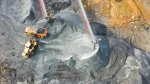
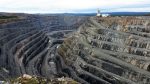
A large open-pit copper mine with heavy machinery extracting minerals from the earth.
One, as we talked about previously, we commenced the process to install covers over the stockpiles to increase heat retention and drive higher recoveries. Two, we gained access to areas in the stockpiles that have not previously had the benefit of leach solution initiative, we call leach everywhere. Three, we started using drilling techniques to specifically target areas within the stockpile where solution was lacking. And importantly, the fourth area is developing more sophisticated models using data analytics to optimize the application of solutions to improve performance, and using this data as a valuable tool in guiding work in all the areas of initiatives in this important program. As we look at where the impacts came from, you can see most of the incremental production was from our Morenci mine.
That mine has a very long history of leaching operations. We have a massive set of stockpiles there and a very large opportunity set at Morenci. As we go to Phase 2 of the project where we are working to essentially double the initial target from 200 million pounds to 400 million pounds, we really are looking at just scaling these practices further. And by continuing to scale the operating practices, we think we can double the initial target over the next two to three years. And as we continue to work to sustain the production, we can add to our reserve position, and that's a real focus of ours to capitalize the progress into long term reserve additions. The first and second phase of this initiatives is really operationally driven using existing technologies.
The third phase, which is also very exciting, is really the work that we and others are doing to advance the leaching process using different additives and different techniques, and this is more of an R&D effort but it's being advanced. We're commencing a large scale testing activity to evaluate the response to new additives. And we're also evaluating opportunities to get more heat retention in our stockpiles, and heat really is an enabler of more copper production and higher recoveries. In aggregate, these initiatives have the potential to reach 800 million pounds per annum and that's equivalent to a large scale copper mine. And notably, it's got very low capital intensity and you have seen how much new copper mines cost. This is a very low capital intensity, low incremental operating costs and a low carbon footprint.
The value potential here is very attractive, particularly for a company like Freeport to take advantage of given our large quantities of suitable materials that we previously mined. Richard touched on copper markets earlier and we have some information on Slide 9. Physical markets have continued to tighten, inventories have declined and demand is growing. Despite the weak sentiment over the last several quarters on the Chinese economy and property sector, the reality is that China's copper consumption was strong throughout 2023 and this reflected the intensity of copper used in energy infrastructure, renewables and electric vehicles. In the US, our customers continue to report solid demand for copper with growth in several sectors. At the same time, supply disruption increased meaningfully in recent months.
In total, near term supplies of copper had been reduced by over 700,000 tons in a very short period of time. The market was previously expecting that 2024 would be a small surplus market and turning to deficit beginning in 2025 timeframe and continuing for some time. With the recent supply disruptions and continued demand growth, the deficit market has been advanced into 2024, setting up for tight market conditions in the near term. While the fundamentals have become significantly more positive, macro conditions tied to US dollar strength and sentiment about China have influenced copper price movements. Richard mentioned we believe the fundamentals of the market will lead to significantly higher copper prices in the future and that's supported by anticipated strong growth in demand associated with secular trends and the global economy's requirements for copper.
Also, the realities of the cost and time frames required for new supply development is an important factor when we look at the fundamental outlook for copper. Turning to how Freeport is positioning to try to grow production in response to this market demand. On Slide 10, we really look at the sizable reserve position of copper and even larger resource position that Freeport has that supports a pipeline for future growth options. Within the portfolio, we look for opportunities to get more out of what we have through innovation and operating efficiencies. We look for investments and projects so we have large resource positions and where we have established track records and opportunities to leverage the existing infrastructure, our people and capabilities, all with the drive focused on increasing value.
We categorized on Slide 10 our near term, medium term and longer term development options. And we have outlined identified projects totaling about 1.7 billion pounds of copper in the Americas. And we have also highlighted on the slide the ongoing development of the Kucing Liar project in Indonesia, which is expected to support long term production profiles in the Grasberg District. The opportunities that are shown on the slide in the two to three year category they center around scaling our leach initiatives and achieving incremental production from our operational improvement projects. Together the potential from these opportunities total 400 million pounds of incremental copper per annum and do not require significant investment or long lead times.
We discussed earlier the leach projects but we're also dedicating significant resources to enhancing productivity and asset efficiencies, rebuilding the experience of our workforce given the large number of new hires in recent years and utilizing new technologies and automation to restore and improve on productivity metrics that weakened somewhat during the pandemic. As we indicated, we completed a feasibility study late in the year 2023 to evaluate a project to more than double the size of our Bagdad operation in Northwest Arizona. The reserves at Bagdad are — span for decades and they support expansion of infrastructure at the site to bring value forward. The incremental capital costs to build a new concentrator and support infrastructure for significantly higher mining and milling rates is on the order of $3.5 billion.
And an expanded operation would not only substantially increase copper production but would produce economies of scale and reduce unit costs. The project does not require major permitting and is relatively straightforward. But given the tight labor market conditions and general market factors, we're not making a decision right now on the timing of the project. We'll continue to evaluate the timing of when we would go forward, but we are taking steps now to enhance optionality for the future by making some investments in the autonomous haulage for our mining operations, making some investments in housing and also advancing investments in the tailings infrastructure that will put us in a position and we make the decision we could get the project online within a few years.
In Chile, at El Abra, we've talked about this. Our resource is very large. We have a major opportunity to install a new concentrator on the order of magnitude size of the concentrator we added at Cerro Verde in 2015. We'll continue to work to retest the economics and updating our project capital costs in light of recent capital cost experience of other large projects. And in parallel, we're starting work in preparation for environmental impact statement that would give us the ability to advance the project and provide optionality for future development. We mentioned the Kucing Liar development project in the Grasberg District, which we've initiated development on. This is a multiyear development project and it's proceeding on schedule and we expect to commence production by 2030, ramping up to over 500 million pounds of copper and over 500,000 ounces of gold.
We're also conducting additional exploration in the Grasberg District where we have identified potential. We've got a big potential below our Deep MLZ orebody, and we expect to have additional opportunities in the future at Grasberg. We have a major opportunity in the US at the Safford Lone Star District. We've identified a significant resource there. This year, we're going to work to complete metallurgical testing and mine planning, and start a pre-feasibility study to assess future development options there. We continue to see this district as one that has big potential and potentially being a cornerstone asset in the US adjacent to the Morenci operations. In Indonesia, we’re focused on this extension of our rights beyond 2041 because that would open up substantial opportunity for reserve and resource expansion and a continuation of the large scale mining in one of the world's largest and highest grade copper and gold mine districts.
We are in a really strong position to continue our leadership role in supplying copper to a world with growing requirements. But we are going to continue to be disciplined in our approach and focused on executing projects where we can create value for shareholders. We have a lot of history in developing big projects, we included a slide on Page 11 that you can take a look at. A key strength of our company is the ability to execute projects successfully. This does not come easy. It requires a focused hands-on approach. And we have got a business model of pairing internal resources with trusted contractors and that has served us well. We have listed several projects that we have led over the years and we have developed very complex projects around the world.
We are going to continue to approach future projects with the same level of preparedness, rigor and a focus on execution. As we look at 2024, turning to Slide 12, we have got our focus areas listed here. And first and foremost, we remain committed to safe and reliable execution of our operating plans across the global business. It seems like a simple thing but this involves discipline and hard work day in and day out. We discussed our focus on enhancing performance in the US through our Leach initiatives and productivity. This is particularly important to mitigate low grades and to manage costs, which have experienced higher inflation in recent years. We are going to have another big year in Indonesia. A key priority for us is to complete the smelter and ramp-up safely and efficiently and to finalize an agreement for extension of our long term operating rights.
We are also very focused on enhancing optionality, definition and the value of our embedded growth options. On Slide 13, as usual, we show a three year outlook for sales volumes of copper, gold and molybdenum. For 2024, the copper sales volumes are slightly reduced less than 2% below our prior estimate and are now expected to be similar to 2023 levels. The gold sales are 10% higher than our prior estimate and higher than they were in 2023, higher sales in Indonesia for the year of 2024 offset by slightly lower sales from the Americas. In 2025, our sales estimates are similar to the prior estimates and we have added 2026 estimates, which you can see are slightly above the 2025 levels. For 2024, we currently estimate our consolidated unit costs to approximate $1.60 per pound.
We have got some details in the reference materials, I believe, on Page 30 that you can look at the composition of those costs, but $1.60 very similar to what we had in 2023. On Slide 14, we put together our projected volumes and cost projections and we model the results for our EBITDA and cash flow at various copper prices ranging from $4 to $5 copper. These models use the average of 2025 and 2026 and our current volume estimates and our cost estimates and holding gold flat at roughly current levels of $2,000 per ounce and molybdenum flat at $19 per pound. And you can see here on the charts that annual EBITDA in these periods would range from $10 billion per annum at $4 copper to over $14 billion per year at $5 copper and operating cash flows under these price scenarios would range from $7 billion to over $10 billion.
And we've got sensitivities to the various commodities on the right hand side of the chart. We're really well positioned with long line preserves, large scale production. We not only have current exposure to copper but all of our future projects and growth opportunities are well positioned to benefit from future metals intensive growth, and this will give us the ability to generate returns on projects and enhance cash returns under our performance based payout framework. Turning to the capital expenditures, on Slide 15. We show our current forecast for 2024 and 2025, which also show where we ended up for 2023, which total of $3.1 billion and that was slightly lower than what we've guided to in October of $3.2 billion. And capital for 2024 is currently forecast to approximate $3.6 billion compared with the $3.9 billion previously.
The 2025 estimates that are new here are currently estimated to total $3.8 billion that includes $1.2 billion in discretionary growth projects, which totaled $2.4 billion over the 2024 and 2025 years. This category reflects the capital investments we're making in new projects to generate returns that under our financial policy are funded with 50% of available cash that's not distributed. They're value enhancing projects that are detailed in the reference materials on Slide 33. We're going to continue to be very disciplined around capital expenditures, carefully managing those. You saw we adjusted the capital expenditures down for 2024. And as we go forward, we'll continue to look at opportunities to do things, to sustain our business and to do things on a low capital intensity basis.
And finally, before we take your questions, we — just on Slide 16, we reiterate our financial policies and those are prioritized, centered on a strong balance sheet, cash returns to shareholders, and investments in value enhancing growth projects. Balance sheet is solid. We've got strong credit metrics and a lot of flexibility within our debt targets to execute on our projects. You may have seen that Moody's upgraded our credit rating in December and that just demonstrates our strong financial profile. Indicated on the slide, we've distributed almost $4 billion to shareholders through dividends and share purchases since the payout framework was implemented in the second half of 2021, and we have an attractive future long term portfolio that will enable us to continue to build value, long term value for shareholders.
The global team, as we go forward, is really highly focused on our strategy of being foremost in copper. And we're driven to continue pursuing long term value in the business and executing our plans responsibly, safely and efficiently. And I want to thank everybody for their attention, and we'll now take your questions.
See also 30 Cities with Highest Average Salary in the US and 25 Entry-Level High Paying Jobs With Low/No Experience.
To continue reading the Q&A session, please click here.
-
Shares of Freeport-McMoRan Inc. FCX increased 4.1% after reporting fourth-quarter 2023 adjusted earnings of 27 cents per share, beating the Zacks Consensus Estimate of 21 cents.
-
General Dynamics Corporation’s GD shares jumped 4.7% after reporting fourth-quarter 2023 revenues of $11.7 billion, beating the Zacks Consensus Estimate of $11.5 billion.
-
Shares of AT&T Inc. T fell 3% after reporting fourth-quarter 2023 adjusted earnings of 54 cents per share, missing the Zacks Consensus Estimate of 55 cents.
-
American Electric Power Company, Inc.’s AEP shares fell 1.4% on utilities becoming one of the biggest losing sectors in the session.
Want the latest recommendations from Zacks Investment Research? Today, you can download 7 Best Stocks for the Next 30 Days. Click to get this free report
General Dynamics Corporation (GD) : Free Stock Analysis Report
AT&T Inc. (T) : Free Stock Analysis Report
Freeport-McMoRan Inc. (FCX) : Free Stock Analysis Report
American Electric Power Company, Inc. (AEP) : Free Stock Analysis Report
To read this article on Zacks.com click here.
Freeport-McMoRan (NYSE:FCX) Full Year 2023 ResultsKey Financial Results
-
Revenue: US$22.9b (flat on FY 2022).
-
Net income: US$1.85b (down 47% from FY 2022).
-
Profit margin: 8.1% (down from 15% in FY 2022).
-
EPS: US$1.28 (down from US$2.40 in FY 2022).
All figures shown in the chart above are for the trailing 12 month (TTM) period
Freeport-McMoRan Meets Expectations
Revenue was in line with analyst estimates. Earnings per share (EPS) was also in line with analyst expectations.
Looking ahead, revenue is forecast to grow 4.4% p.a. on average during the next 3 years, compared to a 4.1% growth forecast for the Metals and Mining industry in the US.
Performance of the American Metals and Mining industry.
The company's shares are up 3.9% from a week ago.
Risk Analysis
What about risks? Every company has them, and we've spotted 1 warning sign for Freeport-McMoRan you should know about.
Have feedback on this article? Concerned about the content? Get in touch with us directly. Alternatively, email editorial-team (at) simplywallst.com.This article by Simply Wall St is general in nature. We provide commentary based on historical data and analyst forecasts only using an unbiased methodology and our articles are not intended to be financial advice. It does not constitute a recommendation to buy or sell any stock, and does not take account of your objectives, or your financial situation. We aim to bring you long-term focused analysis driven by fundamental data. Note that our analysis may not factor in the latest price-sensitive company announcements or qualitative material. Simply Wall St has no position in any stocks mentioned.
Participants
Kathleen Lynne Quirk; President & Director; Freeport-McMoRan Inc.
Mark J. Johnson; President & COO of Freeport-McMoRan Indonesia; Freeport-McMoRan Inc.
Richard C. Adkerson; Chairman & CEO; Freeport-McMoRan Inc.
Alan Henri Spence; Research Analyst; BNP Paribas Exane, Research Division
Alexander Nicholas Hacking; Director & Head of Americas Metals and Mining Sector; Citigroup Inc., Research Division
Brian MacArthur; MD & Head of Mining Research; Raymond James Ltd., Research Division
Carlos De Alba; Equity Analyst; Morgan Stanley, Research Division
Christopher LaFemina; Senior Equity Research Analyst; Jefferies LLC, Research Division
Edward Goldsmith; Research Associate; Deutsche Bank AG, Research Division
Lawson Winder; VP & Research Analyst; BofA Securities, Research Division
Michael Stephan Dudas; Partner; Vertical Research Partners, LLC
Orest Wowkodaw; MD & Senior Equity Research Analyst of Base Metals; Scotiabank Global Banking and Markets, Research Division
William Chapman Peterson; Analyst; JPMorgan Chase & Co, Research Division
Presentation
Operator
Ladies and gentlemen, thank you for standing by. Welcome to the Freeport-McMoRan Fourth Quarter Conference Call. (Operator Instructions). I would now like to turn the conference over to Ms. Kathleen Quirk, President. Please go ahead, ma'am.
Kathleen Lynne Quirk
Thank you, and good morning. Welcome to the Freeport-McMoRan conference call. Earlier this morning, we reported our fourth quarter and full year 2023 operating and financial results, and a copy of today's press release, the supplemental schedules and slides are available on our website at fcx.com. Our conference call today is being broadcast live on the Internet, and anyone may listen to the call by accessing our website home page and clicking on the webcast link for the conference call. In addition to analysts and investors, the financial press has been invited to listen to today's call, and a replay of the webcast will be available on our website later today. Before we begin our comments, I'd like to remind everyone, today's press release and certain of our comments on the call include non-GAAP measures and forward-looking statements, and that actual results may differ materially. We'd like to refer everyone to the cautionary language included in our press release and presentation materials and to the risk factors described in our SEC filings. Also on the call with me today are Richard Adkerson, our Chairman and CEO; Maree Robertson, our Chief Financial Officer; Josh Olmsted, our COO of the Americas; Mark Johnson, Operating Officer for Indonesia; Mike Kendrick, who runs our Molybdenum business; and Steve Higgins, who's our Chief Administrative Officer. We'll start the call with some opening comments from Richard and then we'll go through the slide presentation materials and then open up the call for questions. So I'll turn it over to Richard.
Richard C. Adkerson
Okay. Good morning, everyone. As you can see, our first quarter was really a sound quarter and outstanding in several respects in terms of our operations. It was really led by PT-FI during the whole year of 2023. We began our ramp-up in 2019 of the underground, and now we are fully operationally and the team has been setting records consistently out there and it just outperformed for the full year and faces some really challenges, which is just part of that business. But I'm very proud of our PT-FI team at job site in Jakarta. We are making great progress in fulfilling our 2018 commitment to the government to invest in down streaming and the copper concentrate business. In December, I was there for the inauguration of the expansion of the older smelter, PT Smelting, with President, Joko Widodo, and that was a good event. And then with our new smelter at Manyar in Eastern Java, we reached an important 90% milestone at the end of the year, and we're progressing for physical completion of the smelter and ramping it up on schedule in 2024. A couple of words about the markets. It continues to be the micro versus macro story. Notably, in 2023, the macro factors strengthen notably, 2023 had long been forecasted to be a year of surplus because of new mines coming on stream, but it ended up being a small deficit, and at the same time there were stronger-than-expected demand for copper in the United States and in China in spite all the issues of China's property business, other sectors created notable growth for copper in China. Then there were the supply shortfalls throughout the industry for some significant mines and these for range of factors that are kind of common to our business. The copper business — mining business is a tough business, but it was political issues in some countries, community issues, and then operating issues. As a result of all that, inventories of copper around the world are at historically low levels and the inventory levels are really inconsistent with the current copper price. The copper price clearly been driven by macroeconomic factors. The currency, the strong U.S. dollar carryover effects of inflation, government fiscal policies. And there are concerns about economies in China and Europe. But if the macro outlook — and I'll just say when the macro outlook improves, watch out for the copper price. Looking ahead, the world is going to need significantly more copper in the future for a variety of factors. The world is becoming increasingly electrified, and that's what copper is used for. And it's at a time when the industry is simply not investing to grow production, that the outlook indicates that will be required for economic, operational and resource nationalism, a series of factors, but the facts are there's an outlook for strong demand and supply challenges. That's why I'm so personally confident about where Freeport is positioned and pleased with it. We have high-volume existing production that's sustainable. We have large sustainable reserves and resources. We have growth opportunities that we will pursue prudently from this really exciting Leaching initiatives that Kathleen will be talking about, and from brownfield expansions of our existing ore bodies. Before turning over to Kathleen, I just want to send a note of condolences to our friends at Rio Tinto. You may have seen the news, but they had a (inaudible) to go down in Canada heading to their diamond operations there. Rio has been a special part of Freeport's history, of course, through our partners for many years at Grasberg. I've worked with 6, 7, 8 CEOs of my career, some of my closest colleagues have been with that company. And the toughest part of being a CEO is to lose people, and I'm just so sad to hear this news and the whole Freeport families' heart goes out to our friends at Rio. With that, Kathleen, I'll turn it over to you.
Kathleen Lynne Quirk
Okay. Thank you, Richard, and I'll be covering the presentation materials, starting with Slide 3. Our achievements for 2023 are summarized here. Our sharp focus on executing our plans in an effective, safe, and responsible manner, managing the controllable drivers and navigating challenges successfully all translated into solid operating results over the year. A big highlight for the year was the outstanding progress in Indonesia, where we grew production levels for the fourth year in a row. We posted several new operating records and we continue to enhance values for this large-scale, low-cost, and [long-last] resource. We were also successful in reaching several milestones during the year, including our — reaching our target run rate for incremental leach production in the Americas, enhancing optionality in the Americas for our brownfield growth projects, and reaching our targeted 90% completion milestone for the Indonesian smelter project by the end of 2023. As a leader in the industry, we were one of the first companies to have all of our operating sites certified under the Copper and Molybdenum Marks, and this demonstrates our performance and commitment to responsible mining practices. We ended the year 2023 in a strong financial position, a positive outlook, and as we work together to enhance long-term value for shareholders. On Slide 4, we summarize the key results for 2023 compared with historical levels. After growing our volumes from 2020 to 2021 and 2022, we were able to (inaudible) production of copper in 2023 despite a challenging environment for copper supplies, Richard discussed, and we reported another year of growth in gold production. Our unit net cash costs for 2023 were above the 2022 level as expected, but they came in very close to our original guidance for the year. We're continuing to actively manage costs and productivity initiatives to address cost inflation, and we'll be working on that as we go forward. For the year 2023, we generated strong EBITDA of $8.8 billion and operating cash flows of over $5 billion. We're continuing to carefully manage not only our operating costs but also capital expenditures with a priority on spending on projects to sustain production, improve efficiencies and enhance optionality for future development options with attractive rates of return. During 2023, we returned $860 million to shareholders, bringing the total shareholder returns to $3.8 billion since we implemented our performance-based payout framework in 2021. We ended the year with net debt of approximately $800 million, and that excludes the smelter-related debt, which is being financed separately. I will move to Slide 5 and talk about the fourth quarter. During the fourth quarter, our sales were 3% above our estimates going into the quarter. Our gold production was also very strong, but our shipments have grown in the fourth quarter was slightly below the previous estimates, and that reflected timing in these shipments we made in the first quarter. Unit net cash cost averaged $1.52 per pound in the fourth quarter, that was better than our guidance of $1.58 per pound, and slightly below the year ago period. Notably, unit net cash costs Indonesia were 0 in the fourth quarter, $0.00 per pound, meaning our gold credits completely offset the production cost for copper. Average capital realizations in the fourth quarter were $3.81 per pound, and we generated $2.3 billion of EBITDA and operating cash flows of $1.3 billion. If you go around the world and talk a little bit about our various operations in the fourth quarter. In the U.S., we made progress in increasing our mining rates. That's been a big focus during the quarter with a 9% increase over the year ago quarter. We have a continued focus on improving our asset efficiencies and workforce experience levels. These are important initiatives as we seek to increase productivities to combat lower ore grades. Our innovative leach initiatives met expectations and also helped to mitigate the impact of lower ore grades in the U.S. Labor market conditions in the U.S. continue to be tight. We're taking steps to expand housing options in our remote locations for recruiting and retention, and we're also continuing to pursue technology solutions to enhance productivity. Conversion of the Bagdad truck fleet to fully autonomous is advancing, and we're targeting to commence the transition in the second half of next year. In South America, our ore milled was sustained above 400,000 metric tons per day, and our ore stacking rates increased at a (inaudible). Mill recoveries at Cerro Verde in the fourth quarter of 2023 were below the year ago level because of the material types that we're mining in the fourth quarter. This is continuing for mining phases in early 2024, and we're working to optimize performance. As Richard discussed, the fourth quarter performance in Indonesia was exceptional. Underground ore mined averaged over 214,000 tons per day, and that was 8% higher than the year ago period combined with strong wage and recoveries, our copper and gold production in the fourth quarter was over 20% higher than last year's fourth quarter. We completed the installation of a new SAG mill at PT-FI in December, and that will provide additional opportunities for us going forward. And the team is just doing outstanding work, sustaining and optimizing value from this large resource position. We thought it's good to look back in history of how the underground transition has gone, Slide 6 covers this. We show a history of the progression of the transition. As Richard mentioned, we stopped mining from the surface in the Grasberg Open Pit at the end of 2019, transition to fully underground operations beginning in 2020. We have a long history in Indonesia, spanning over 56 years, and a great track record for building value over many years for all stakeholders. We're extremely proud of the team's execution, our transition. We now have the world's largest underground mining complex, and it's been developed in a modern, efficient operation. The Grasberg is the world's second largest copper mine and one of the largest gold mines even though gold is a byproduct. High grades of both copper and gold make it one of the lowest cost operations in the world as well. This took a lot of planning. We began planning for this underground era over 25 years ago and commenced development activities in 2004. And as you can see from the graph, the project is performing exceptionally well and generating strong margins and cash flows. As we look forward, we're continuing to make investments in this resource to enhance value and sustain long-term performance. We're working on the extension of our operating rights beyond 2041 and increasingly confident about securing our long-term rights. And that would extend the lives of our resources and open a whole new set of opportunities for this district. Richard touched on the smelter progress, and this is really important for us in terms of securing long-term rights. We reached 2 important milestones on these initiatives in 2023. The projects include a new greenfield smelter in East Java, and the expansion of our nearby existing smelter, which was developed in the late 1990s. Richard mentioned, we celebrated in December, the completion of the expansion project with the Indonesian government and our Japanese partner. And we also reached a really important milestone on progress of the greenfield project with completion progress achieving the target we set with the government of over 90% by the end of December. We posted a video this morning on our website that shows the Greenfield Smelter project. You can see all the progress that's been made and you can see the sheer size and scale of this impressive facility, and I hope you'll have a chance to look at it. Both projects have been executed very efficiently in the context of a challenging market for major project development. The internal team that we have working on this project, together with our contractor, have done an outstanding job containing costs and maintaining schedules. We're working to complete the construction by the end of May of 2024 and to start commissioning and conduct the ramp-up period over the balance of 2024. This is a big deal for us. It's not very frequent that you see new smelters starting up, and we've done a lot of planning going into the start-up process. Our teams are well-prepared and really highly motivated to achieve a safe, efficient, and timely start-up in 2024. Turning to the U.S. and the Americas where we've got an important leach initiative ongoing, we achieved our targeted run rate where we were targeting approximately 200 million pounds of copper per year by the end of 2023. This is an exciting and innovative initiative involving new operating practices being applied to our traditional leach operations and really working to get more out of our massive stockpiles that contain material that has in place in prior years. Look, remember, as we've talked about on prior calls, the cost of this incremental cost of production is lower from both an operating and capital perspective because we're targeting material where the material has already been mined, and we're largely using existing infrastructure to extract the new metal. The first phase of this initiative essentially involved 4 basic categories of actions: One, as we've talked about previously, we commenced the process to install coverage over the stockpiles to increase heat retention and drive higher recoveries. Two, we gained access to areas in the stockpiles that have not previously had the benefit of leach solution and this initiative we call Leach Everywhere. Three, we started using drilling techniques to specifically target areas within the stockpile where solution was lacking. And importantly, the fourth area is developing more sophisticated models using data analytics to optimize the application of solutions to improve performance and using this data as a valuable tool in getting work in all the areas of initiatives in this important program. As we look at where the impacts came from, you can see most of the incremental production was from our Morenci mine. That mine has a very long history of leaching operations. We have a massive set of stockpiles there and a very large opportunity set at Morenci. As we go to Phase 2 of the project, where we are working to essentially double the initial target from 200 million pounds to 400 million pounds, we really are looking at just scaling these practices further. And by continuing to scale the operating practices, we think we can double the initial target over the next 2 to 3 years. And as we continue to work to sustain the production we can add to our reserve position, and that's a real focus of ours, to capitalize the progress into long-term reserve additions. The first and second phase of this initiative is really operationally driven using existing technologies. The third phase, which is also very exciting is really the work that we and others are doing to advance the leaching process using different additives and different techniques, and this is more of an R&D effort, but it's being advanced. We're commencing a large-scale testing activity to evaluate the response to new additives and we're also evaluating opportunities to get more heat retention in our stockpiles and heat really is an enabler of more copper production and higher recoveries. In aggregate, these initiatives have the potential to reach 800 million pounds per annum, and that's equivalent to a large-scale copper mine. And notably, it's got very low capital intensity, and we've seen how much — how much new copper mines cost. This is a very low capital intensity, low incremental operating costs, and a low carbon footprint. The value potential here is very attractive, particularly for a company like Freeport to take advantage of given our large quantities of suitable material that we previously mined. Richard touched on copper markets earlier, and we have some information on Slide 9. Physical markets have continued to tighten, inventories have declined and demand is growing. Despite the weak sentiment over the last several quarters on the Chinese economy and property sector, the reality is that China's copper consumption was strong throughout 2023. And this reflected the intensity of copper use and energy infrastructure, renewables, and electric vehicles. In the U.S., our customers continue to report solid demand for copper with growth in several sectors. At the same time, supply disruption increased meaningfully in recent months. In total, near-term supplies of copper have been reduced by over 700,000 tons in a very short period of time. The market was previously expecting that 2024 would be a small surplus market and in turning to deficit beginning in 2025 time frame and continuing for some time. With the recent supply disruptions and continued demand growth, the deficit market has been advanced into 2024, setting up for tight market conditions in the near term. While the fundamentals have become significantly more positive, macro conditions tied to U.S. dollar strength and sentiment about China have influenced copper price movements. Richard mentioned, we believe the fundamentals of the market will lead to significantly higher copper prices in the future, and that's supported by anticipated strong growth in demand associated with secular trends, and the global economy's requirements for copper. Also, the realities of the cost and time frames required for new supply development is an important factor when we look at the fundamental outlook for copper. Turning into how Freeport is positioning to try to grow production in response to this market demand, really look at the sizable on Slide 10. We really look at the sizable reserve position of copper and even larger resource position that Freeport has that supports a pipeline for future growth options. Within the portfolio, we look for opportunities to get more out of what we have through innovation and operating efficiencies. We look for investments and projects, so we have large resource positions and where we have established track records and opportunities to launch the existing infrastructure, our people and capabilities, all with the drive focus on increasing value. We categorized on Slide 10, our near-term, medium-term, and longer-term development options. And we've outlined identified projects totaling about 1.7 billion pounds of copper in the Americas. And we've also highlighted on the slide the ongoing development of the Kucing Liar project in Indonesia which is expected to support long-term production profiles in the Grasberg District. The opportunities that are shown on the slide in the 2- to 3-year category, they center around scaling our rich initiatives and achieving incremental production from our operational improvement projects. Together, the potential from these opportunities total 400 million pounds of incremental copper per annum and do not require significant investment or long lead times. We discussed earlier that the leach projects, but we're also dedicating significant resources to enhancing productivity and asset efficiencies, rebuilding the experience of our workforce given the large number of new hires in recent years, and utilizing new technologies and automation to restore and improve on productivity metrics that weakened somewhat during the pandemic. As we indicated, we completed the feasibility study late in the year 2023, to evaluate a project to more than double the size of our Bagdad operation in Northwest Arizona. The reserves at Bagdad are span for decades, and they support expansion of infrastructure at the site to bring value forward. The incremental capital cost to build a new concentrator and support infrastructure for significantly higher mining and milling rates is on the order of $3.5 billion and an expanded operation would not only substantially increase copper production but would produce economies of scale and reduce unit costs. The project does not require major permitting and it's relatively straightforward. But given the tight labor market conditions and general market factors, we're not making a decision right now on the timing of the project. We'll continue to evaluate the timing of when we would go forward. But we are taking steps now to enhance optionality for the future by making some investments in the autonomous haulage for our mining operations, making some investments in housing, and also advancing investments in the tailings infrastructure that will put us in a position when we make the decision, we could get the project online within a few years. In Chile, at El Abra, we talked about this. Our resource is very large. We have a major opportunity to install a new concentrator on the size of — on the order of magnitude size of the concentrator we added at Cerro Verde in 2015. We'll continue to work to retest the economics and updating our project capital costs in light of recent capital cost experience of other large projects and in parallel, we're starting work in preparation for an environmental impact statement that would give us the ability to advance the project and provide optionality for future development. We mentioned Kucing Liar development project in the Grasberg district, which we've initiated development on. This is a multiyear development project, and it's proceeding on schedule, and we expect to commenced production by 2030, ramping up to over 500 million pounds of copper and over 500,000 ounces of gold. We're also conducting additional exploration in the Grasberg district, where we have identified potential — we've got a big potential below our Deep MLZ ore body and we expect to have additional opportunities in the future at Grasberg. We have a major opportunity in the U.S. at the Safford/Lone Star District. We've identified a significant resource there. This year, we're going to work to complete metallurgical testing, and mine planning, and start our prefeasibility study to assess future development options there. We continue to see this district as one that has big potential and potentially being a cornerstone asset in the U.S. on adjacent to the Morenci operations. In Indonesia, we're focused on this extension of our rights beyond 2041, because that would open up a substantial opportunity for reserve and resource expansion and a continuation of the large-scale mining in one of the world's largest and highest grade copper and gold mining districts. We're in a really strong position to continue our leadership role in supplying copper to a world with growing requirements. We're going to continue to be disciplined in our approach and focused on executing projects where we can create value to shareholders. With a lot of history in developing big projects, we included a slide on Page 11 that you can take a look at a key strength of our company is the ability to execute projects successfully. This does not come easy. It requires a focused hands-on approach and we've got a business model of pairing internal resources with trusted contractors, and that has served us well. We've listed several projects that we've led over the years, and we've developed very complex projects around the world. We're going to continue to approach future projects with the same level of preparedness rigor and a focus on execution. As we look at 2024, turning to Slide 12, we've got our focus area is listed here. And first and foremost, we remain committed to safe and reliable execution of our operating plans across the global business. Seems like a simple thing, but this involves discipline and hard work day in and day out. We discussed our focus on enhancing performance in the U.S. through our leach initiatives and productivity. This is particularly important to mitigate low grades and to manage costs, which experienced higher inflation in recent years. We're going to have another big year in Indonesia. A key priority for us is to complete the smelter and ramp up safely and efficiently and to finalize an agreement for extension of our long-term operating rights. We're also very focused on enhancing optionality, definition, and the value of our embedded growth options. On Slide 13, we show, as usual, we show a 3-year outlook for sales volumes of copper, gold, and molybdenum. For 2024, the copper sales volumes are slightly reduced, less than 2% below our prior estimate and are now expected to be similar to 2023 levels. The gold sales are 10% higher than our prior estimate and higher than they were in 2023. Buyer sales in Indonesia for the year of 2024 offset by slightly lower sales from the Americas. In 2025, our sales estimates are similar to the prior estimates and we've added 2026 estimates, what you can see are slightly above the 2025 levels. For 2024, we currently estimate our consolidated unit costs to approximate $1.60 per pound. We've got some details in the reference materials. I believe, on Page 30 that you can look at the composition of those costs but $1.60 very similar to what we had in 2023. On Slide 14, we put together our projected volumes and cost projections, and we model the results for our EBITDA and cash flow at various copper prices ranging from $4 to $5 copper. These models use the average of 2025 and 2026, and our current volume estimates and our cost estimates and holding gold flat at roughly current levels of $2,000 per ounce and molybdenum flat at $19 per pound. And you can see here on the charts that annual EBITDA in these periods would range from $10 billion per annum at $4 copper to over $14 billion per year at $5 copper, and operating cash flows under these price scenarios to range from $7 billion to over $10 billion. And we've got sensitivities to the various commodities on the right-hand side of the chart, really well positioned with a lot of lot reserves, large-scale production. We not only have current exposure to copper, but all of our future projects and growth opportunities are well positioned to benefit from future metals intensive growth, and this will give us the ability to generate returns on projects and enhance cash returns under our performance-based payout framework. Turning to the capital expenditures. On Slide 15, we show our current forecast for '24 and '25. We should also show where we ended up for '23, which totaled $3.1 billion, and that was slightly lower than what we had guided to in October of $3.2 billion and capital for 2024 is currently forecast of approximately $3.6 billion compared with $3.9 billion preciously. The 2025 estimates that are new here are currently estimated to total $3.8 billion. That includes $1.2 billion in discretionary growth projects, which totaled $2.4 billion over the 2024 and 2025 years. This category reflects the capital investments we're making in new projects, to generate returns that under our financial policy are funded with 50% of available cash that's not distributed. They're value-enhancing projects that are detailed in the reference materials on Slide 33. We're going to continue to be very disciplined around capital expenditures, carefully managing those. You saw we adjusted the capital expenditures down for 2024. And as we go forward, we'll continue to look at opportunities to do things to sustain our business and to do things on a low capital intensity basis. And finally, before we take your questions, we — just on Slide 16, we reiterate our financial policies, and those are prioritized centered on a strong balance sheet, cash returns to shareholders, and investments in value-enhancing growth projects. Balance sheet is solid. We've got strong credit metrics and a lot of flexibility within our debt targets to execute on our projects. You may have seen that Moody's upgraded our credit rating in December, and that just demonstrates our strong financial profile. Indicated on the slide, we've distributed almost $4 billion to shareholders through dividends and share purchases since the payout framework was implemented in the second half of 2021, and we have an attractive future long-term portfolio that will enable us to continue to build value, long-term value for shareholders. The global team as we go forward is really highly focused on our strategy of being foremost in copper, and we're driven to continue pursuing long-term value in the business and executing our plans responsibly, safely, and efficiently. And I want to thank everybody for their attention, and we'll now take your questions.
Question and Answer Session
Operator
(Operator Instructions) Our first question comes from the line of Alex Hacking with Citi.
Alexander Nicholas Hacking
I guess my question is around Bagdad and the technical study. Now I was a little surprised by how high the CapEx was $3.5 billion or an incremental 100,000 tons, about $35,000 a ton. I mean, in your view, is that the new normal for a concentrate project? Or are there particular factors the fact that are raising the CapEx above historical levels?
Kathleen Lynne Quirk
Thank you, Alex. I think it is somewhat of a new normal for the cost of a concentrator and related mining infrastructure. When you do — you're dividing on the cost per ton, you're looking at how many pounds of copper are going to come out of that concentrator. And our U.S. mines are characterized by relatively low ore grades. And Bagdad has relatively low copper ore grades but also has molybdenum kicker. So molybdenum would add something like 10 million pounds of molybdenum with an expansion. So that will be another benefit. But really, what we need to do is focus on — it does bring down our overall cost per pound. So that's a big plus for us. When you look at an investment in the U.S., it may be to develop a relatively low grade mine, but something important to point out is that we don't have the tax burden in the U.S. that you have in the international location. So I think our projects in the U.S., while they're low grade, when you cut through all the economics and you look at the ability for us to — to execute the projects and look at the risk associated with them — the different than looking at a project in a different location. So there's some pluses or minuses that go into the bottom line. But we started this work on Bagdad some time ago, and we've updated all of the capital costs in line with where current capital costs are. And so I think a reality of the market is that the incentive price to develop new copper, even if it's brownfield, is much higher than it has been in the past. And that's another reason why we believe that the markets that they need, these copper units are going to have to adjust to the incentive prices required to get these projects going because we don't want to front-run the market. We want to be prepared, we want to be have options to go forward as soon as we can, but we don't want to be in a position where we're investing in making major capital commitments before the market prices are challenge to us already.
Richard C. Adkerson
Yes, Alex. Let me just add very brief very briefly that Kathleen makes a really good point about these relative economics. No royalties in the U.S., U.S. tax rate is much lower — federal tax rates much lower than outside the U.S. We have a net operating loss carryforward. Community support is strong in the U.S. and we have no minority interest there. So looking at global benchmarks needs to be adjusted for the site-specific factors that we have in the U.S., and they're very positive.
Operator
Your next question comes from the line of Carlos De Alba with Morgan Stanley.
Carlos De Alba
Question is on cost. I just want to see if you can provide a little bit more color? The guidance for the first quarter of net unit cash cost of $1.55 per pound looked very, very good relative to consensus stations and our own estimate. However, for the full year, the guidance came at $1.60, and that is a little bit higher than the market — than again, consensus and our model suggests. What are you expecting? What the viability in this were you surprised in — at the beginning of the year then maybe throughout the rest of the quarters is increasing. What is driving that? And to what extent this number for the year is conservative?
Kathleen Lynne Quirk
In terms of the first quarter, we do have some gold that was not shipped in the fourth quarter that will be shipped in the first quarter. And so the relative gold-to-copper ratio impacts the first quarter and makes that less than what we expect the average to be for the full year. I don't know what Carlos, what you had in there for export duties, but we're assuming in Indonesia that those are continuing. We are continuing to discuss with the government of Indonesia, the applicability of those duties. And I think the more that we make progress on the smelter the better our case there is. But that we factored into the estimate, but we are continuing to have that discussion. So if we are successful in reducing those duties, that would be a benefit.
Carlos De Alba
All right. And just to clarify this, Kathleen. The cash cost guidance for the year, of $1.60, includes that the duties in Indonesia concentrate exports remain throughout the entire of the year, right, the full year?
Kathleen Lynne Quirk
Yes. Our export — it only applies to export volumes. And so as we go through the year, the exports will decline because we'll be ramping up the smelter. So our goal for 2024 is to get the full ramp-up completed. And so that's not something that will continue long term, the duties, once we get the smelter up and running. But it will start to decline over the course of the second half as we ramp up and we produce more domestically.
Operator
Your next question comes from the line of Christopher LaFemina with Jefferies.
Christopher LaFemina
Richard and Kathleen, I wanted to ask about the kind of cost trends in North America, in particular, at Morenci. So I know that you're guiding to a slight increase in your site production delivery costs in 2024. And I assume that is a function of volumes being lower. But if we think about kind of where this business could be headed assuming that Morenci can kind of get back to where it was 12 or 18 months ago. And I'm not sure if that's a good assumption, but let's assume that to be the case. With the leaching ramp up with the staffing and productivity improvements within technologies, and potentially even longer term with the Bagdad expansion, where could that kind of site production and delivery cost number trend down to? Could it get back to $2.50 or lower? Or is $3 a pound sort of the new normal for that business?
Kathleen Lynne Quirk
Well, we hope it's not the — Chris. We're working hard. I mean one of the things that you've got to take into account here is we are in a low grade period in the U.S. I think the grades that we had in 2023 were the lowest that they had been in probably 10 years or so or more. So we are in a period, and that's continued to '24 where we do have some low grade that we're going through. But that is why it's so important for us to bring on units with a lower incremental cost and the leach opportunity will help us there. And as we are able to get those pounds put into reserves longer term, not just what you're mining that year or getting that year, but multiyear reserve additions for the leach that spreads the cost — all the costs over more reserves. And so it does help us with driving the economies of scale and why it's so important. We're not in a position now to say where costs could go. There's been a number of other factors that we have, inflation factors and things like the cost of basic parts and materials and supplies, has gone up from where it was just 2 or 3 years ago. But we are very focused on it. And — all of these self-help things for us have very high rates of return. There's not a lot of capital involved. It's focused resources. It's not an easy thing because it would have been done already, but it is an area we think we can make improvements. We can also focus, which we're doing now on the last couple of years, we've had to rely more on contractors because of the staffing issues but as we get staffing set up and get more experience in the workforce, we can reduce our reliance on contractors, as you probably know, have gotten expensive, and in Arizona is a very competitive market. So we're working on all those things within the things that we have within our control and are really going to be focused on trying to drive the cost down. We're also looking at Morenci specifically at different configurations. We're looking at whether it makes sense for us to be operating all of our equipment like we are today and looking at if we cut back some things would that be the cost and benefits to that because that could have volume impacts as well. But is that a better setup, a more efficient setup that will allow us to drive costs lower. So we've got some of those initiatives that are — they are being reviewed right now on what the right setup is given how costs have risen.
Operator
Your next question comes from the line of Orest Wowkodaw with Scotiabank.
Orest Wowkodaw
Given the cost — the capital costs involved and the timing of building new projects, and the strength of your balance sheet, I'm just wondering whether M&A of producing assets is something that's on the radar because it certainly seems like there could be some assets available out there, especially in jurisdictions or not currently in?
Richard C. Adkerson
Well, we're constantly monitoring the market and you can be confident that opportunities are available are presented to us, and we consider them. The facts we haven't found those attractive today. We have such great opportunities to create value totally for our shareholders by focusing on internal growth, through the leach project, through the brownfield developments in the Americas, through the Kucing Liar project in Indonesia, and now with the expectation that we'll go beyond 2041, we're going to do additional exploration there to understand what the opportunities are. Success in any of those opportunities creates value where there's no value in our current share price. So it's all for the best of our shareholders. And that makes it much more difficult for external opportunities to compete with them. And my experience has shown that small mines get smaller and big mines get bigger. So we really are — as I said in my opening comments, pleased about where Freeport is positioned for what we believe is going to be a great future for our company.
Operator
Your next question comes from the line of Edward Goldsmith with Deutsche Bank.
Edward Goldsmith
Two questions from my side. So firstly, can you give an update on the status of the negotiations over a concentrate export extension post May? And secondly, can you outline the reductions to the 2024 CapEx? I think they were the discretionary and the other CapEx bucket level.
Kathleen Lynne Quirk
Yes. On the first part of the question, our current export license in Indonesia goes to May of 2024. And we are continually having discussions with the government of Indonesia about the fact that while we will be substantially complete on construction activities by the end of May, which was really important target for us and for them that just the ordinary course of a smelter start-up, it takes 5 or 6 months to get through. And so we're having those discussions. They understand the situation, and they're encouraging us to continue to meet our targets and that those discussions will continue. (inaudible) that the alignment that we have with the 51% ownership of the state-owned company, MIND ID, in PT-FI's operations is really important here. That, combined with tax revenues, et cetera, that the government gets from having consistent operations at PT-FI is we're both aligned in that to have exports continue. So the conversations have been constructive to date, but we've just got to — we've got to continue to progress it. And have those — continuing to have the discussions with the government, and we're doing that on a regular basis.
Richard C. Adkerson
Well. Kathleen, just let me add. They're not negotiations over this issue. The mine — I mean I've spoken in recent months on at least 3 occasions directly with the President about it. He understands it, the Mines' Minister who has the business background clearly understands it. It's just administrative procedurally, they concluded not to grant that export rights beyond this date to see if we complete the smelter as we've committed to do it. But beyond that, it will be just be an administrative action to get it approved.
Kathleen Lynne Quirk
On the second question with respect to capital expenditures. We always go through a process of looking for opportunities to put out capital if it's not required in the current year, and we went through a process between the last update on this one to really look hard at what we could efficiently spend this year and cut back on some things. Some of that showing up in 2025. We'll do the same thing again because really what we want to do is deploy the capital as efficiently as we can and make sure we're sustaining the reliability of our operations, but also looking at — we don't want to be doing too many things at one time. And so we always take a hard look at it. So we'll continue to do that as we go forward and manage the capital very carefully. But there wasn't really one big thing. There was a number of things that we did and looking at the prior estimate for 2024.
Operator
Your next question comes from the line of Michael Dudas with Vertical Research.
Michael Stephan Dudas
With regard to your proposed investments in the U.S., maybe looking in Latin America, maybe you care to remind us on an internal rate of return, risk-adjusted rate return basis, what Freeport is looking for? Certainly, you mentioned, on the U.S. investments, you get benefits from royalty and tax issues. But just on a general basis, even when you're thinking about your assets in Indonesia. And then the follow-up on that, is the industry relative to a year ago today? Is the industry ahead of the curve or behind the curve on meeting what the expected demand opportunities are in the market?
Kathleen Lynne Quirk
On the first part of the question, with respect to how we evaluate projects and returns, we don't target one number. We look at what the specific project is, what the execution risk is, where it's located. And we run a range of commodity price assumptions around it to look at — what we're really focused on in deploying capital is investing and putting our infrastructure and investments in places where we can execute the plan and in places where we've got long-term reserves because anybody that tells you they can get the copper price right is wrong because it's going to move up and down. And so what we want to have is a situation where we've got a very long life reserve where you can make that capital investment upfront and realize cash flows over a long period of time and not have to get the price forecast for copper perfect in the first year or 2. And so when we look at returns, we're looking at those projects that have leverage to future copper. And we may — we look at something that is outside of the U.S., we may apply higher risk factors and we look to get higher rates of return than what we would want to have in something like the U.S. where for reasons that Richard talked about, have somewhat of a lower risk profile for us. But it is not one scientific number. It's a range of scenarios that we run around a project. And again, looking at the resource and the size of the investment and our ability to generate returns over a long period of time, that would be consistent, not that it would go away — it would fall off something that could be earned over a long period of time, has a long tail, which a lot of our projects do. And Richard might have some perspectives on the second question. I think it's obvious that there haven't been new projects sanctioned in our industry for some time. And what's happened recently in recent years with the copper prices rallying and then falling off has just caused more delays, more cautiousness by developers in developing the project. So I would say, in my opinion, the situation has become more significant because the projects are taking longer, not shorter. And we talked about when we started on Grasberg Underground, we started planning — started investing 20 years ago in it. I mean we really have — these are long lead time projects, and we really need to have started investments. And that's why we're really focused on what can we do to continue to plan for these long-term projects. So what else can we do and what can we do to take advantage of technology that's available to us? And what can we do to get more out of the resources we already have? But not everybody has that ability. And Richard, I don't know if you want to add any comments to that second part.
Richard C. Adkerson
Well, I'll add a brief comment to the first part too, Kathleen. The — my early experience in my career was in the oil and gas industry. And early on, Dan Yergin and I wrote a paper on oil price forecasting which basically evidenced how wrong forecasts can be. And so we approach, as Kathleen described, all of our investment and business planning on a scenario basis, not trying to predict a particular price or range but to look at what impact investment decisions and operating decisions have on our overall portfolio. And we look to protect ourselves on a portfolio basis from downside risk and then structure investments to take advantage of what we have is confidence in the long-term price. So it's not any kind of formal rate of return kind of criteria that you see in a lot of industries, which work elsewhere. Have the saying that figures don't lie but lie is figure. And we just really base these things, as I said, on scenario planning and portfolio impacts. The basic thesis, I believe, for the demand for copper is unchanged and continues to be supported. From the very start, my work with ICMM, its Chairman from 2 occasions, but more recently when all the issues about aspirational goals for carbon reductions were being considered in such promise, I've always said that there are a lot of unanswered questions and the movement towards these aspirational goals will not be consistent, but they'll have issues, complications and so forth, and that's certainly what we're seeing. The future of copper is really influenced significantly by investments in carbon reduction. And I think it's something the world absolutely has to do. There are other factors related to global growth, connectivity, these data centers, some of that's being driven by artificial intelligence. Just everywhere you turn, the world is getting more electrified. And that's why I think the fundamental long-term demand thesis for copper is just getting stronger and stronger.
Operator
Your next question comes from the line of Brian MacArthur with Raymond James.
Brian MacArthur
It goes back to what Alex was asking in Bagdad. So I just want to make sure, as I look at these numbers. So the project capital is $3.5 billion. And I would have to think you get some infrastructure benefit there, so it's not a true greenfield. And then you talk about a $3.50 to $4 incentive copper prices, and I understand the benefits of new royalties and taxes. Does that sort of say that if you didn't have infrastructure, the capital costs would have been higher? And if you didn't have all these tax benefits, the incentive price would be an awful lot higher, i.e., if anybody else had to do a greenfield there, you'd probably need an incentive price well over $4 to make it work, i.e., those numbers include all the tax benefits and everything that you were talking about before, if I can ask the question that way.
Kathleen Lynne Quirk
Brian, the — if somebody else has the same situation, greenfield and the grades we have, it would be a lot more expensive.
Richard C. Adkerson
A lot more. Your $4 is absolutely right. I mean you just look at recent projects and look at how costs escalate and then what would have taken from an incentive price to justify that project from the outset if the cost numbers have been known. So this is not that complicated. It's not a greenfield project. We've operated there for 80 years or so. And it's about a straightforward project as you could have, but it's telling for the industry even with this kind of straightforward project, the challenge you face. It's cost, it's tailings, and we do benefit from infrastructure. This is just a mill expansion. It's not a building a new mine, but then there's a challenge of getting workers and housing for workers. So all of this is real telling on the supply side. I just talked about the demand side support for copper. This is a great example of a simple project in terms of the relative complexities of projects in our industry, this is relatively simple. And yet, it faces these challenges of being an economically justified in today's price. At the outset, I said today's copper price is not — the price is adequate to stimulate the kind of investments that are going to be needed for this industry. And that's why we're optimistic about future prices.
Brian MacArthur
Right. And maybe if I could just ask just on the capital allocation. I mean, you've got lots of options, as you said. But if you're successful for Phase 3, I mean you get as much production there as you would hear, I assume a fraction of the capital cost. Does Bagdad get pushed in that situation? I mean, I get that the world needs probably all of it. But would they get sequenced or are they complementary? I mean, I know they don't depend on each other, but are they complementary? And you would do both at once if both work?
Kathleen Lynne Quirk
We're prioritizing the leach initiative. I mean that is one that's a no-brainer for us. It's very, very little capital that we're investing in it and very low increment — it's our lowest incremental operating cost of anything in the U.S. And so that's a no-brainer. We're pursuing that regardless. That makes a ton of sense, and we're pursuing that regardless. We think the world is going to need something beyond that, obviously. And so on the Bagdad thing, we just want to get it to where — continue to enhance the optionality in it, and we need to do some things anyway. We're doing some infrastructure on tailings that we would need to do anyway in the future, maybe not as quickly as what it would need with the new project, but we need to do those anyway. So we're going to do those to the extent we can do that efficiently. We want this autonomous thing that we're pursuing. Years ago, people thought you didn't really need autonomous in the U.S. But now we — particularly in these remote locations, you really, really do when you consider the cost of the workforce and the housing limitations and that sort of thing and the opportunities to upscale our employees, we think it checks all of those boxes. So autonomous, we want that to see how that unfolds. So we don't have to pull the trigger on Bagdad now but we want to put it in a position where it can go forward. It makes sense if the world needs more copper to get copper from where we already have it. And so it does — it's a good project. It's not a barn burner from an economic standpoint, right now, but will have it today. And I think it will get time at some point. It's just we aren't predicting exactly when.
Richard C. Adkerson
And Brian, we got a strong enough financial position that we can — capital is not a barrier for us to do in projects that make sense.
Operator
Your next question comes from the line of Alan Spence with BNP Paribas.
Alan Henri Spence
(inaudible)
Richard C. Adkerson
Alan, you're breaking up on us.
Alan Henri Spence
Sorry, I'll try again. Hopefully, you can hear me.
Kathleen Lynne Quirk
Yes, that's better.
Alan Henri Spence
The strong performance for Grasberg in December, is that a level you think could potentially be through '24? Or was there something you need about what happened last month? And also, if you could remind time line to get to 240,000 tonnes per day run rate?
Kathleen Lynne Quirk
With respect to…
Richard C. Adkerson
We've got a great — Go ahead, Kathleen.
Kathleen Lynne Quirk
Okay. I was going to say Mark Johnson is on the line, he can add to it. If you want with respect to December, what highlights, we got that SAG mill completed in December. So really, that gave us the ability to put more or throughput through the concentrators. And with the combination of higher grades and strong recoveries, we had a great month. Now we have the ability to continue to have strong performance. We achieved a lot of records in December but we do have the ability and some upside to continue that. That SAG mill was originally put in the plan because over time, we'll need the additional grinding capacity, et cetera, to take the ore that will be coming but right now, while we're in these higher-grade sections, the more we can put through the mills, the better the copper production will be. In terms of the $240 million, right now, we don't have $240 million in our plans. But over time, with the addition of Kucing Liar, we'll have that capacity to do it. But having SAG3 does give us some more opportunities in the near term to — if we continue to have high rates of ore produced from the underground will give us some upside. A mine, we don't talk a lot about but one that we're going to try to keep improving on is the Big Gossan mine. It's a relatively small mine, but very, very high grade. And we've got some plans to bring in some additional and that's reflected in the 5-year guidance, but some additional throughput from Big Gossan that will add copper production and gold production. And Mark, I don't know if you want to add to any of those comments.
Mark J. Johnson
Yes. Kathleen, the only thing I would add is as part of the KL project, we also add some — over the shorter term, we had some ore flow capacity and optionality at GBC. We — that allows us to get GBC up from like 120,000 up to 140,000 tonnes a day in 2026. And at that point, we'll be able to run close to 240,000 tonnes through the mill. The mine and mill will be matched. And then as you said, the KL come up and then GBC and KL share portions of the ore flow system, but over the short term, we sequenced that part of the KL ore flow that gives us the opportunity at GBC in the much shorter term.
Operator
Your next question comes from the line of Bill Peterson with JPMorgan.
William Chapman Peterson
Nice job on the quarterly execution. Thanks for sneaking in my question here. So I wanted to come back to the leaching efforts, the incremental 200 million pounds. I think you mentioned 2- to 3-year period. Is that a 30 (inaudible) ramp? Or is that more back-end weighted? And you've consistently talked about low capital intensity. Can you remind us what the capital associated with this is, I guess, quantified? And has there been any CapEx creep in interim similar to just other broader projects?
Kathleen Lynne Quirk
On the time frame for the incremental 200, we have not given a specific time frame. We do feel we can get it done within a couple of years, and we'll add whatever we can in the interim. This Leach Everywhere initiative that we have, where we are accessing parts of stockpiles that hadn't been accessed before getting access to some of the side slopes and some of the areas around the stockpile that we just didn't leach before. We're — that's been a big driver of success and will continue to be. The other one that we're excited about is the targeted drilling. And through our data, we can see where you have situations where the solution that needs to get to the ore has been blocked for some reason over history. And this targeted drilling allows us to get access to it. We are testing this year, some abilities to do that more at scale. And that is something that we're really interested to see how that develops and whether that will give us some additional incremental production. We haven't factored that into our plans at this point. But we're going to continue to use these covers. We still don't have everything on the — stockpiles are so massive, covering — spanning particularly Morenci, just miles of area. And so we're still doing the covers. We're still looking for other opportunities to get heat into the stockpiles. We're targeting some pyrite ores in some of our operations that have pyrite in the ores, that is a source of heat as well. But there are a number of things that we're working on that are not the big R&D effort, but things that we can do from an operational standpoint. But we'll stay tuned. We will — this is a big initiative and stay tuned as we go forward, love to give you a little bit more as we go through 2024 in terms of the time frame. We haven't spent much capital on this initiative. We've already got the infrastructure — basic infrastructure, the tank house capacity, this is copper that goes to tank house, not a smelter. And we have already excess latent tank house capacity. We've spent some money but it doesn't round to anything really big. The operating cost — the incremental operating costs of this have been very low on the order of $1 per pound and so it's just a really, really exciting opportunity for us to generate value. And so as we go forward, we don't see huge amounts of capital either that will come into play. When you get to this piece that's R&D, that's where we need to make sure that all these things can be applied and deployed at scale and can be economic. But that is just ongoing. But the first 400 million pounds, we think that we can do that without spending a lot of capital.
Richard C. Adkerson
Thanks, Kathleen. And you may have noted this, Kathleen, but importantly, there's no permitting issues. And that is a real challenge for any kind of project you do in terms of brownfield expansions and really tougher greenfield expansion. So here, no capital, low operating costs, no permitting delays.
Operator
Our final question will come from the line of Lawson Winder with Bank of America Securities.
Lawson Winder
I just — if I could just sneak in 1.5 questions. One would just be on the current level of the dividend. I mean, is your view that given the cash flow outlook, your view of the copper price, I mean, is this a comfortable level for the dividend for 2024? And then just my half question would be, is there any movement within your existing TCRC contracts to potentially renegotiate those or get the benefit of some of the really, really low spot pricing we're seeing today?
Kathleen Lynne Quirk
On the dividend question, our Board reviews the financial policy on a regular basis, and we put in place the base dividend, the variable dividend, and we've been paying at that level for some time now. We'll continue to review that with the Board. You can see from our results — the financial results that we're projecting for 2024 and it look very good but we always going to look at what's going on in the market and don't want to put ourselves in a position of running up debt, but — and — but we have a good balance sheet. So I don't want to front-run anything. The Board will look at this on a regular basis, but our financial position is in really, really excellent shape. The second question on TCRCs, we reach agreement, as you know, with — on long-term TCRCs that are done on fixed contracts once a year. And since then, spot rates have come a lot, lot lower given the tightness in supply. We do sell some things on a spot basis, but most of it is sold under these fixed contracts where we have the TCRCs fixed. The other thing is once we get the smelter in Indonesia up and running, we don't have — we still do what Cerro — still have with Cerro Verde concentrate that we sell. But everything from Indonesia will be really just processed through our own smelters.
Richard C. Adkerson
And our contracts are long term in terms of volumes, but the TCRCs are renegotiated each year. And you raised a great point for those of you who haven't followed it, but the situation right now with smelters where they can't get concentrate to process is a real strong indicator of where this market is and where it's going.
Operator
I'll turn the call back to management for any closing remarks.
Kathleen Lynne Quirk
We appreciate it, everyone. If there are any follow-ups, feel free to call David and we're available to continue to discuss and we'll report to you our progress throughout the year.
Richard C. Adkerson
Yes. Thank you for joining us today, and everyone, have a great day.
Operator
Ladies and gentlemen, that concludes our call for today. Thank you for your participation, and you may now disconnect.
FCX stock and rival Southern Copper toyed with rebounds as sudden signs of life from China’s stock market helped boost the copper price.
PHOENIX, January 24, 2024–(BUSINESS WIRE)–Freeport-McMoRan Inc. (NYSE: FCX) today announced that it has posted its fourth-quarter and year ended 2023 financial and operating results press release on the Investor Relations page of its website at https://investors.fcx.com/investors/news-releases.
As previously indicated on its website, FCX will host a conference call today with securities analysts at 10:00 a.m. Eastern Time to discuss quarterly and year end results. The conference call will be webcast on the Internet along with slides. Interested parties may listen to the conference call live and view the slides on the Investor Relations page of FCX’s website at https://investors.fcx.com/investors/presentations. A replay of the webcast will be available through Friday, February 16, 2024.
FREEPORT: Foremost in Copper
FCX is a leading international mining company with headquarters in Phoenix, Arizona. FCX operates large, long-lived, geographically diverse assets with significant proven and probable reserves of copper, gold and molybdenum. FCX is one of the world’s largest publicly traded copper producers.
FCX’s portfolio of assets includes the Grasberg minerals district in Indonesia, one of the world’s largest copper and gold deposits; and significant mining operations in North America and South America, including the large-scale Morenci minerals district in Arizona and the Cerro Verde operation in Peru.
By supplying responsibly produced copper, FCX is proud to be a positive contributor to the world well beyond its operational boundaries. Additional information about FCX is available on FCX's website at fcx.com.
View source version on businesswire.com: https://www.businesswire.com/news/home/20240123350644/en/
Contacts
Financial Contact:David P. Joint(504) 582-4203
Media Contact:Linda S. Hayes(602) 366-7824
(Adds details from conference call in paragraphs 2-4 and 10-11; updates stock in first paragraph)
Jan 24 (Reuters) – Copper miner Freeport-McMoRan beat Wall Street estimates for fourth-quarter profit on Wednesday, helped by strong production and higher prices for the red metal, sending its shares up about 6% in morning trading.
Demand for copper, which is used in nearly every electronic device as well as in construction and many other industries, remains tight due in part to strong demand in the United States and Canada, executives said.
Prices of copper rose in the quarter despite macroeconomic concerns, including regional conflicts, thanks in part to a weaker dollar, lower inventories and China's moves to boost its struggling housing and stock markets. Executives said they expect prices to rise further still in order to incentivize further production.
"We're optimistic about future prices," Freeport CEO Richard Adkerson told investors on a conference call to discuss the results.
Freeport's quarterly copper sales gained 7.1% year-over-year to 1.1 billion recoverable pounds, while average realized price per pound rose 1.1% to $3.81.
Its quarterly gold sales also rose, gaining 19.9% to 549,000 recoverable ounces with the average realized price per ounce up 13.7% at $2,034.
Average spot gold prices rose more than 13% in the quarter on a softer dollar and hopes that the U.S. Federal Reserve would cut interest rates, helping gold miners such as Freeport.
On an adjusted basis, the company earned 27 cents per share for the three months ended on Dec. 31, compared with analysts' average estimate of 22 cents, according to LSEG data.
The company reported revenue of $5.91 billion in the quarter, beating estimates of $5.86 billion.
Adkerson reiterated that the company would focus more on internal growth, saying that Freeport has not found an attractive buyout possibility. The company has been investing heavily in copper leaching operations.
In Indonesia, Freeport expects to open a new copper smelter later this year that was required as part of a deal with government officials. (Reporting by Tanay Dhumal in Bengaluru and Ernest Scheyder in Houston; Editing by Devika Syamnath)
Freeport-McMoRan (FCX) came out with quarterly earnings of $0.27 per share, beating the Zacks Consensus Estimate of $0.21 per share. This compares to earnings of $0.52 per share a year ago. These figures are adjusted for non-recurring items.
This quarterly report represents an earnings surprise of 28.57%. A quarter ago, it was expected that this mining company would post earnings of $0.32 per share when it actually produced earnings of $0.39, delivering a surprise of 21.88%.
Over the last four quarters, the company has surpassed consensus EPS estimates four times.
Freeport-McMoRan , which belongs to the Zacks Mining – Non Ferrous industry, posted revenues of $5.91 billion for the quarter ended December 2023, surpassing the Zacks Consensus Estimate by 1.45%. This compares to year-ago revenues of $5.76 billion. The company has topped consensus revenue estimates three times over the last four quarters.
The sustainability of the stock's immediate price movement based on the recently-released numbers and future earnings expectations will mostly depend on management's commentary on the earnings call.
Freeport-McMoRan shares have lost about 10.3% since the beginning of the year versus the S&P 500's gain of 2%.
What's Next for Freeport-McMoRan?
While Freeport-McMoRan has underperformed the market so far this year, the question that comes to investors' minds is: what's next for the stock?
There are no easy answers to this key question, but one reliable measure that can help investors address this is the company's earnings outlook. Not only does this include current consensus earnings expectations for the coming quarter(s), but also how these expectations have changed lately.
Empirical research shows a strong correlation between near-term stock movements and trends in earnings estimate revisions. Investors can track such revisions by themselves or rely on a tried-and-tested rating tool like the Zacks Rank, which has an impressive track record of harnessing the power of earnings estimate revisions.
Ahead of this earnings release, the estimate revisions trend for Freeport-McMoRan: mixed. While the magnitude and direction of estimate revisions could change following the company's just-released earnings report, the current status translates into a Zacks Rank #3 (Hold) for the stock. So, the shares are expected to perform in line with the market in the near future. You can see the complete list of today's Zacks #1 Rank (Strong Buy) stocks here.
It will be interesting to see how estimates for the coming quarters and current fiscal year change in the days ahead. The current consensus EPS estimate is $0.40 on $5.57 billion in revenues for the coming quarter and $1.71 on $23.74 billion in revenues for the current fiscal year.
Investors should be mindful of the fact that the outlook for the industry can have a material impact on the performance of the stock as well. In terms of the Zacks Industry Rank, Mining – Non Ferrous is currently in the bottom 13% of the 250 plus Zacks industries. Our research shows that the top 50% of the Zacks-ranked industries outperform the bottom 50% by a factor of more than 2 to 1.
One other stock from the same industry, Southern Copper (SCCO), is yet to report results for the quarter ended December 2023.
This miner is expected to post quarterly earnings of $0.75 per share in its upcoming report, which represents a year-over-year change of -35.9%. The consensus EPS estimate for the quarter has been revised 1.3% lower over the last 30 days to the current level.
Southern Copper's revenues are expected to be $2.42 billion, down 14.3% from the year-ago quarter.
Want the latest recommendations from Zacks Investment Research? Today, you can download 7 Best Stocks for the Next 30 Days. Click to get this free report
Freeport-McMoRan Inc. (FCX) : Free Stock Analysis Report
Southern Copper Corporation (SCCO) : Free Stock Analysis Report
To read this article on Zacks.com click here.
Freeport-McMoRan (FCX) reported $5.91 billion in revenue for the quarter ended December 2023, representing a year-over-year increase of 2.6%. EPS of $0.27 for the same period compares to $0.52 a year ago.
The reported revenue represents a surprise of +1.45% over the Zacks Consensus Estimate of $5.82 billion. With the consensus EPS estimate being $0.21, the EPS surprise was +28.57%.
While investors scrutinize revenue and earnings changes year-over-year and how they compare with Wall Street expectations to determine their next move, some key metrics always offer a more accurate picture of a company's financial health.
Since these metrics play a crucial role in driving the top- and bottom-line numbers, comparing them with the year-ago numbers and what analysts estimated about them helps investors better project a stock's price performance.
Here is how Freeport-McMoRan performed in the just reported quarter in terms of the metrics most widely monitored and projected by Wall Street analysts:
-
Sales in thousands of ounces – Gold – Consolidated basis: 549 Koz versus the three-analyst average estimate of 584.29 Koz.
-
Production in millions of pounds – Molybdenum – South America: 5 Mlbs compared to the 5.54 Mlbs average estimate based on three analysts.
-
Production in millions of pounds – Molybdenum – By-product – North America: 7 Mlbs compared to the 6.93 Mlbs average estimate based on three analysts.
-
Total Net Cash Cost Per Pound of Copper: $1.52 compared to the $1.51 average estimate based on three analysts.
-
Sales in thousands of Ounces – Gold – Indonesia: 544 Koz compared to the 580.34 Koz average estimate based on three analysts.
-
Revenues- Indonesia: $2.74 billion versus the three-analyst average estimate of $2.63 billion. The reported number represents a year-over-year change of +21.9%.
-
Revenues- Molybdenum: $157 million versus $220.24 million estimated by three analysts on average. Compared to the year-ago quarter, this number represents a -5.4% change.
-
Revenues- South America copper mines: $1.11 billion versus $1.10 billion estimated by three analysts on average. Compared to the year-ago quarter, this number represents a -18.4% change.
-
Revenues- North America copper mines: $1.40 billion versus $1.32 billion estimated by three analysts on average. Compared to the year-ago quarter, this number represents a -3.9% change.
-
Revenues- Rod & Refining: $1.35 billion versus the two-analyst average estimate of $1.47 billion. The reported number represents a year-over-year change of -0.7%.
-
Revenues- Atlantic Copper Smelting & Refining: $606 million versus $659.67 million estimated by two analysts on average. Compared to the year-ago quarter, this number represents a -11.3% change.
-
Revenues- Corporate, other & eliminations: -$1.45 billion versus the two-analyst average estimate of -$1.68 billion. The reported number represents a year-over-year change of -4%.
View all Key Company Metrics for Freeport-McMoRan here>>>Shares of Freeport-McMoRan have returned -10.9% over the past month versus the Zacks S&P 500 composite's +2.4% change. The stock currently has a Zacks Rank #3 (Hold), indicating that it could perform in line with the broader market in the near term.
Want the latest recommendations from Zacks Investment Research? Today, you can download 7 Best Stocks for the Next 30 Days. Click to get this free report
Freeport-McMoRan Inc. (FCX) : Free Stock Analysis Report
To read this article on Zacks.com click here.
Freeport-McMoRan Inc. FCX recorded net income (attributable to common stock) of $388 million or 27 cents per share in fourth-quarter 2023, down around 44.3% from $697 million or 48 cents in the year-ago quarter.
Barring one-time items, adjusted earnings per share came in at 27 cents, topping the Zacks Consensus Estimate of 21 cents.
Revenues rose nearly 2.6% year over year to $5,905 million. The figure also surpassed the Zacks Consensus Estimate of $5,820.7 million. The company witnessed higher copper sales in the reported quarter.
Freeport-McMoRan Inc. Price, Consensus and EPS Surprise
Freeport-McMoRan Inc. Price, Consensus and EPS Surprise
Freeport-McMoRan Inc. price-consensus-eps-surprise-chart | Freeport-McMoRan Inc. Quote
Operational Highlights
Copper production rose nearly 2.3% year over year to 1,095 million pounds in the reported quarter. The figure fell short of our estimate of 1,108 million pounds.
Consolidated sales increased around 7.1% year over year to 1,116 million pounds of copper. The figure was higher than our estimate of 1,085 million pounds. The upside can be attributed to higher mining rates.
The company sold 549,000 ounces of gold, up around 16.3% year over year. The figure was lower than our estimate of 580,000 ounces. FCX also sold 22 million pounds of molybdenum, up around 15.8% year over year during the quarter. The figure was higher than our estimate of 20 million pounds.
Consolidated average unit net cash costs per pound of copper were $1.52, flat year over year. The figure was lower than our estimate of $1.58.
The average realized price for copper was $3.81 per pound, up around 1% year over year. The figure was higher than our estimate of $3.6 per pound. The average realized price per ounce for gold rose around 13.7% year over year to $2,034. The figure was above our estimate of $1,900.
Financial Position
Cash and cash equivalents (including restricted) at the end of the quarter were $5,966 million, down around 27.8% year over year. The company’s long-term debt was $8,656 million, down around 9.7% year over year.
Cash flows provided by operations were $5,279 million for the year ended Dec 31, 2023.
Guidance
Freeport expects consolidated sales for the year 2024 to be approximately 4.1 billion pounds of copper, 2 million ounces of gold and 85 million pounds of molybdenum. This includes an estimated 1 billion pounds of copper, 575,000 ounces of gold, and 20 million pounds of molybdenum in the first quarter of 2024.
The unit net cash costs for copper are expected to average $1.60 per pound for 2024, encompassing $1.55 per pound in the first quarter of the same year. These predictions are based on the achievement of current sales volume and cost estimates, assuming average prices of $2,000 per ounce of gold and $19.00 per pound of molybdenum for the entire year.
The company is also forecasting operating cash flows of approximately $5.8 billion for 2024. Meanwhile, capital expenditures for the full year are projected to be around $4.6 billion.
Price Performance
Freeport’s shares are down 14.4% in the past year compared with a 9.8% fall of the industry.
Zacks Investment Research
Image Source: Zacks Investment Research
Zacks Rank & Key Picks
Freeport currently carries a Zacks Rank #3 (Hold).
Some better-ranked stocks in the Basic Materials space are Cameco Corporation CCJ, Carpenter Technology Corporation CRS and The Andersons ANDE, each sporting a Zacks Rank #1 (Strong Buy). You can see the complete list of today’s Zacks #1 Rank stocks here.
Cameco has a projected earnings growth rate of 188% for the current year. The Zacks Consensus Estimate for CCJ’s current-year earnings has been revised upward by 12.5% in the past 60 days. The stock is up around 75.5% in a year.
The consensus estimate for CRS’s current fiscal year earnings is pegged at $3.97, indicating a year-over-year surge of 248.3%. CRS beat the Zacks Consensus Estimate in all of the last four quarters, with the average earnings surprise being 14.3%. The company’s shares have rallied 57% in the past year.
ANDE beat the Zacks Consensus Estimate in three of the last four quarters and missed one, with the average earnings surprise being 32.8%. The company’s shares have increased 45.4% in the past year.
Want the latest recommendations from Zacks Investment Research? Today, you can download 7 Best Stocks for the Next 30 Days. Click to get this free report
The Andersons, Inc. (ANDE) : Free Stock Analysis Report
Freeport-McMoRan Inc. (FCX) : Free Stock Analysis Report
Carpenter Technology Corporation (CRS) : Free Stock Analysis Report
Cameco Corporation (CCJ) : Free Stock Analysis Report
To read this article on Zacks.com click here.
-
Net Income: Q4 net income of $388 million, $0.27 per share; adjusted net income of $393 million.
-
Revenue: Q4 revenue increased to $5.9 billion, with full-year revenue at $22.9 billion.
-
Copper Sales: Exceeded estimates with 1.1 billion pounds sold in Q4; 4.1 billion pounds expected in 2024.
-
Gold and Molybdenum Sales: Q4 gold sales of 549 thousand ounces; molybdenum sales of 22 million pounds.
-
Operating Cash Flows: Generated $1.3 billion in Q4, totaling $5.3 billion for the year.
-
Capital Expenditures: $1.4 billion in Q4, with a total of $4.8 billion for the year.
-
Debt and Cash Position: Consolidated debt at $9.4 billion; cash and cash equivalents at $4.8 billion.
On January 24, 2024, Freeport-McMoRan Inc (NYSE:FCX), a leading international mining company, released its 8-K filing, detailing its financial performance for the fourth quarter and full year ended December 31, 2023. The company, known for its significant copper, gold, and molybdenum mining operations, including the Grasberg minerals district in Indonesia and the Morenci minerals district in Arizona, reported a net income of $388 million, or $0.27 per share, for the fourth quarter. Adjusted net income, which excludes certain charges, stood at $393 million, or $0.27 per share.
Freeport-McMoRan’s revenue for the fourth quarter reached $5.9 billion, a slight increase from the $5.8 billion reported in the same period of the previous year. For the full year, the company’s revenue was stable at $22.9 billion. Copper sales volumes for the quarter exceeded the company’s October 2023 estimate and the fourth-quarter sales of the previous year, with 1.1 billion pounds sold. Gold sales for the quarter were 549 thousand ounces, while molybdenum sales reached 22 million pounds.
The company’s operating cash flows for the fourth quarter were robust at $1.3 billion, contributing to the $5.3 billion generated throughout the year. Capital expenditures for the fourth quarter amounted to $1.4 billion, with a significant portion allocated to major mining projects and the Indonesia smelter projects, bringing the total for the year to $4.8 billion.
Freeport-McMoRan’s financial position remains solid, with consolidated debt totaling $9.4 billion and cash and cash equivalents at $4.8 billion as of December 31, 2023. The company’s net debt, excluding the Indonesia smelter projects, was $3.6 billion, demonstrating its strong balance sheet and liquidity.
Richard C. Adkerson, Chairman and Chief Executive Officer, commented on the company’s performance, stating, “We enter 2024 with a focus on strong execution of our operating and investment plans, optimism on market fundamentals and a relentless drive to enhance the value of our strong portfolio of assets.” He highlighted the company’s success in advancing growth options and positioning for the future.
Freeport-McMoRan Inc (FCX) Reports Solid Q4 and Full-Year 2023 Results Amidst Global Challenges
Looking ahead, Freeport-McMoRan expects to sell approximately 4.1 billion pounds of copper, 2.0 million ounces of gold, and 85 million pounds of molybdenum in 2024. The company’s focus on productivity gains, cost discipline, and the advancement of organic growth opportunities positions it well to navigate the dynamic global market and continue delivering value to its shareholders.
For detailed financial tables and further information on Freeport-McMoRan’s performance, please refer to the full 8-K filing.
Explore the complete 8-K earnings release (here) from Freeport-McMoRan Inc for further details.
This article first appeared on GuruFocus.
BlackBerry (BB) announced a proposal for $160 million worth of convertible notes to help alleviate near-term financing concerns for the company.
Shares of Freeport-McMoRan (FCX) close 4% on Wednesday as the company released better-than-expected fourth-quarter earnings, with an adjusted EPS of $0.27.
Kimberly-Clark (KMB) reported fourth-quarter earnings, missing out on Wall Street expectations, causing shares of the stock to drop over 5% on Wednesday. For the 2024 fiscal year, the company only expects organic sales to grow in the low to mid-single digits year-over-year.
Yahoo Finance Anchors Josh Lipton and Julie Hyman break down the latest developments for these companies and what it means for them moving forward.
For more expert insight and the latest market action, click here to watch this full episode of Yahoo Finance Live.
Editor’s note: This article was written by Nicholas Jacobino
Video Transcript
JOSH LIPTON: Trending names here, BlackBerry shares in the red as the company proposes private offering $160 million of convertible notes. So of course, BlackBerry, Julie, now company focused on security software. And the news is just that. They’re offering $160 million in convertible senior notes due 2029, private offering. I do see one analyst here from RBC telling their clients the offering will alleviate, in their opinion, near-term financing concerns for the company.
JULIE HYMAN: Right, and BlackBerry– well, people have been whipsawed by BlackBerry in recent months, right? Because the company was going to be IPO’ing its internet of things business, and then in December, said, no, we’re not doing that. In fact, we’re appointing a new CEO here. So the company has tried to embark on this sort of new strategy.
Part of that is trying to raise money here, which is what this convertible note offering has to do. The problem with the convertible note offering is, it’s convertible into shares at some point. And that, then, dilutes the value for existing shareholders. So even though it might mean that the company is raising cash, because of that eventual effect, the share’s under pressure.
JOSH LIPTON: Stocks now down nearly 20% this year, down more than 30% over the past 12 months. Is all the bad news priced in? Time to step in, Julie, and buy it? Not, according to the analysts paid to cover it. Exactly one buy–
JULIE HYMAN: Wow.
JOSH LIPTON: –is left on the street.
JULIE HYMAN: All right. Let’s take a look at another story here. Freeport-McMoRan shares climbing after it reported an earnings beat and provide investors a better than expected forecast for 2024, up 4% on the day. This has to do with metal prices, and in particular, copper prices–
JOSH LIPTON: [INAUDIBLE]
JULIE HYMAN: –which we saw– yeah. Is it red? I guess it is red, or copper-colored, orangish– I don’t know. In any case, it’s up. And so Freeport doing well because of that. Its unit net cash costs per pound for 2024, that forecast is above what analysts had been predicting.
JOSH LIPTON: Yeah, the CEO is kind of sounding an optimistic tone here, just talking about how they’re entering the year here. Talks about execution, talks about optimism, he says, on market fundamentals. Stock is popping today, though, still here, it looks like we’re down year to date and down over the past year.
JULIE HYMAN: You know, I mentioned copper. It occurs to me we call gold the yellow metal. It’s not really yellow either, but in any case, it was also up, and Freeport also mines gold, so that was helpful.
JOSH LIPTON: Red and yellow, it just makes it easy.
JULIE HYMAN: Sure.
JOSH LIPTON: Sure. All right, finally, Kimberly-Clark under pressure. It’s after reporting underwhelming fourth quarter results. Company slightly missing estimates on the top and bottom line. So Kimberly-Clark, of course, you think of brands like Huggies, Julie Hyman. You think of Kleenex, well-known brands. They report they drop. It looks like Q4 organic sales growth, that came in a touch below consensus, volume unchanged. The outlook, I think, disappointed some, specifically 2024 earnings in the organic sales outlook.
Interesting commentary, I thought, from the execs, though, on the American consumer. That kind of struck me, how they talked about the consumer remains pretty healthy, in their words, and kind of echoing, actually, what we heard from Procter & Gamble, by the way, too, this week.
JULIE HYMAN: Yeah, there’s a lot of talk about effects headwinds at this company. I think I see a lot of emphasis on that, which you mentioned here. So that’s part of the issue. There was also some talk ahead of the report about a declining birth rate, and that that for a company that makes diapers is not fantastic news.
When you look at what’s happening in China, maybe there’s a little bit of a pickup there. But that has been something that has perhaps weighed on the company. And if you look at their various sectors, their various units here, personal care was up, but consumer tissue sales were down, and professional sales were down for the company.
JOSH LIPTON: All right, one to watch.
BHP Group Limited
TORONTO, Jan. 22, 2024 (GLOBE NEWSWIRE) — BHP has announced its second cohort of six companies, chosen from a pool of over 500 applicants, to join the BHP Xplor accelerator program. The accelerator program is designed to support early-stage mineral exploration companies in finding the critical resources needed to support the energy transition.
Each company will receive a grant of up to US$500,000 together with access to a network of internal and external industry experts to accelerate its growth and further build out its exploration concepts. The program aims to support development across technical, business and operational facets of the participating companies.
BHP Xplor pushes the boundaries of what has conventionally been achievable in the exploration field. Over the span of the six-month program, the six companies will work collaboratively with BHP Xplor to expedite the maturation of their geological concepts to position the projects for commercialisation or partnership.
Head of the BHP Xplor Program, Charlee Johnson, said: “The diversity and quality of the submissions amongst the applicants is amazing and inspiring. We are excited to partner with the selected cohort and help bring their ideas and passion for their exploration projects to life. We aim to accelerate this process and create disruptive results by identifying new concepts, data and testing opportunities.”
BHP Xplor provides BHP the opportunity to access some of the most exciting exploration prospects globally, enhancing the pipeline of new opportunities which may shape our future asset portfolio.
Vice President, BHP Exploration and Xplor, Sonia Scarselli said: “Exploration for critical resources is moving slowly, but to meet the needs of the energy transition we must move at pace. We will be working together with the 2024 cohort to accelerate exploration in new geographies and advance new geologic concepts.”
The six companies selected to join the BHP Xplor accelerator program are:
-
Longreach Mineral – a private company that is applying an innovative mineral systems approach by leveraging our petroleum DNA to identify new tier 1 deposits critical to the energy transition. Our expertise in seismic geophysics and AI search tools, sets us apart in the exploration industry.
-
East Star Resources – a United Kingdom-based company listed on the London Stock Exchange exploring for copper and other base and precious metals in Kazakhstan.
-
Pallas Resources – a private explorer focusing on large-scale copper, gold, nickel sulphide and lithium systems in Kazakhstan.
-
Hamelin Gold – a mineral exploration company listed on the Australia Securities Exchange, established to execute a modern exploration program at the 100% owned ~3,000km2 West Tanami Gold Project (“West Tanami”) in Western Australia. The Tanami Gold Province is prospective for high value, large scale gold deposits and for nickel-copper-PGE mineralised intrusions.
-
Cobre – an exploration company listed on the Australia Securities Exchange, concentrating on copper and base metals exploration in Botswana.
-
Equivest Minerals – a private company deploying a technology platform combining statistical insights on the location of major metal deposits with integrated machine learning and minerals systems to predict priority areas of interest within key regions.
For more information on BHP Xplor, and to stay up to date with the program news and opportunities, please visit https://www.bhp.com/xplor
Contact:xplor@bhp.com
TORONTO, January 23, 2024–(BUSINESS WIRE)–Americas Gold and Silver Corporation (TSX: USA) (NYSE American: USAS) ("Americas" or the "Company"), a growing North American precious metals producer, is pleased to provide its Q4-2023 and full year 2023 production results as well as an update to Galena Complex exploration results.
1 Silver equivalent grade for drill intercepts were calculated using metal prices of $22.00/oz silver, $3.75/lb copper and $0.95/lb lead and equivalent metallurgical recoveries were assumed for all metals (silver, lead and copper).2 Meters represent "True Width" which is calculated for significant intercepts only and is based on orientation axis of core across the estimated dip of the vein.3 Silver equivalent ounces for production in Q4-2023, Q4-2022, 2023 and 2022 were calculated based on silver, zinc and lead realized prices during the period throughout this press release.
View source version on businesswire.com: https://www.businesswire.com/news/home/20240123718885/en/
Contacts
Stefan AxellVP, Corporate Development & CommunicationsAmericas Gold and Silver Corporation416-874-1708
Darren BlasuttiPresident and CEOAmericas Gold and Silver Corporation416‐848‐9503
WHITE ROCK, BC / ACCESSWIRE / January 23, 2024 / Honey Badger Silver Inc. (TSXV:TUF) ("Honey Badger" or the "Company"), a Canadian-based company with silver projects in Canada, including the Nanisivik Project in Nunavut, reports that as of January 18th, 2024, the Canadian government has passed revisions to its mining laws aimed at boosting exploration and development in Canada's northernmost region. The Canadian government has transferred control of mineral reserves in the Territory to the legislative assembly of Nunavut, which will now dictate economic terms for companies operating in the region. The move is expected to boost mineral exploration and development in the Territory.
The Company's CEO, Dorian L. (Dusty) Nicol, commented, "We view this development as extremely positive for our wholly owned Nanisivik Project (the "Project") and for mineral explorers and developers operating in Nunavut as a whole. Honey Badger continues to focus on growing the Project to an eventual resource of up to 100 million ounces of silver at a grade of 30-50 g/t. Our target is based on the large tonnages of pyrite bodies at Nanisivik containing anomalous concentrations of silver as well as, locally, germanium, gallium, and indium, which have not been evaluated in the context of current metals prices. In addition, with the construction of a deep-sea port adjacent to Nanisivik, the pyrite bodies themselves may have significant commercial value. Nanisivik could become one of the few turnkey projects in the region with strong leverage to increasing silver prices and could be a key component of development in one of Canada's most sparsely populated regions."
About NanisivikThe Nanisivik Mine (near Arctic Bay, Nunavut) produced over 20 million ounces of silver between 1976 and 2002, from 17.9 million tons of ore, grading 9% zinc, 0.72% lead, and 35 grams per ton silver (1). In addition to the polymetallic orebody, previous exploration identified massive sulphide bodies (principally pyrite), totaling about 100 million tons (1,2), containing base metal and silver values not economic at the time.
Geological Survey of Canada, 2002-C22, "Structural and Stratigraphic Controls on Zn-Pb-Ag Mineralization at the Nanisivik Mississippi Valley-type Deposit, Northern Baffin Island, Nunavut; by Patterson and Powis.
A qualified person has not done sufficient work to classify this historic tonnage estimate as a current mineral resource and the Company is not treating the estimate as a current mineral resource. The historic tonnage estimate cannot be relied upon. Additional work, including verification drilling / sampling, will be required to verify the estimate as a current mineral resource.
Amended Stock Option PlanThe Company has amended its 10% rolling stock option plan (the "Amended Option Plan") to comply with the requirements of the new TSX Venture Exchange (the "Exchange") policy governing security-based compensation which became effective on November 24, 2021. The most significant change introduced by the new policy, and is included in the Amended Option Plan, permits the exercise of stock options which are "in the money" by eligible participants, without the holder being required to have the requisite funds to exercise such stock options, through the addition of a cashless exercise and a net exercise component, and more closely aligns with plans permitted by the Exchange.
The shareholders ratified the Amended Option Plan at the Company's annual meeting of shareholders held on December 15, 2022 (the "Meeting"). Additional details regarding the amendments are contained in the management information circular filed on SEDAR+ (www.sedarplus.ca) on November 15, 2022, in respect of the Meeting.
The Amended Option Plan remains subject to final acceptance of the Exchange.
Qualified PersonTechnical information in this news release has been approved by Dorian L. (Dusty) Nicol, the Company's CEO (PG, FAusIMM), who is a Qualified Person ("QP") for the purpose of National Instrument 43-101.
About Honey Badger Silver Inc.Honey Badger Silver is a silver company based in White Rock, British Columbia focused on the accretive acquisition and development of silver ounces. The company is led by a highly experienced leadership team with a track record of value creation backed by a skilled technical team. Our projects are located in areas with a long history of mining, including the Plata high grade silver project located 165 km east of Yukon's prolific Keno Hill and our Sunrise Lake exploration property located in the Northwest Territories, 130 kilometers northeast of Yellowknife. The Company also has a significant land holding at the Nanisivik Mine Area located in Nunavut, Canada that produced over 20 Moz of silver between 1976 and 2002.(1,2) Honey Badger Silver is positioned to be a top tier silver company with our unique approach of acquiring silver resources and prospective ground at low cost and adding value by targeted exploration on the steepest parts of the value-addition curve. Our objective is to demonstrate the value / prospectiveness of our silver projects in order to attract joint venture partners who will spend their money to advance our projects while we retain a royalty on the silver.
Geological and Powis.
ON BEHALF OF THE BOARD
Dorian L. (Dusty) Nicol, CEOFor more information please visit our website www.honeybadgersilver.com or contact Ms. Michelle Savella for Investor Relations | msavella@honeybadgersilver.com | +1 (604) 828-5886
Neither the TSX Venture Exchange nor its Regulation Services Provider (as that term is defined in the policies of the TSX Venture Exchange) accepts responsibility for the adequacy or accuracy of this release.
Cautionary Note Regarding Forward-Looking InformationThis news release contains "forward-looking information" within the meaning of the applicable Canadian securities legislation that is based on expectations, estimates, projections and interpretations as at the date of this news release. Any statement that involves discussions with respect to predictions, expectations, interpretations, beliefs, plans, projections, objectives, assumptions, future events or performance (often but not always using phrases such as "expects", or "does not expect", "is expected", "interpreted", "management's view", "anticipates" or "does not anticipate", "plans", "budget", "scheduled", "forecasts", "estimates", "believes" or "intends" or variations of such words and phrases or stating that certain actions, events or results "may" or "could", "would", "might" or "will" be taken to occur or be achieved) are not statements of historical fact and may be forward-looking information and are intended to identify forward-looking information. This forward-looking information is based on reasonable assumptions and estimates of management of the Company at the time such assumptions and estimates were made, and involves known and unknown risks, uncertainties and other factors which may cause the actual results, performance or achievements of Honey Badger to be materially different from any future results, performance or achievements expressed or implied by such forward-looking information.
Such factors include, but are not limited to, risks relating to capital and operating costs varying significantly from estimates; delays in obtaining or failures to obtain required governmental, environmental or other project approvals; uncertainties relating to the availability and costs of financing needed in the future; changes in equity markets; inflation; fluctuations in commodity prices; delays in the development of projects; other risks involved in the mineral exploration and development industry; and those risks set out in the Company's public documents filed on SEDAR+ (www.sedarplus.ca) under Honey Badger's issuer profile. Although the Company believes that the assumptions and factors used in preparing the forward-looking information in this news release are reasonable, undue reliance should not be placed on such information, which only applies as of the date of this news release, and no assurance can be given that such events will occur in the disclosed timeframes or at all. The Company disclaims any intention or obligation to update or revise any forward-looking information, whether as a result of new information, future events or otherwise, other than as required by law.
SOURCE: Honey Badger Silver Inc.
View the original press release on accesswire.com
REE Automotive Ltd.REE's P7-C electric commercial truck
REE's P7-C
REE’s P7-C can be up fit with almost any body design
REE's P7-C Chassis Cab
The P7-C chassis cab
REE's P7-C Driving on Roads
REE’s P7-C has become the first full by-wire vehicle to be certified in the U.S.
-
REE’s P7-C is the first fully by-wire truck to achieve U.S. FMVSS and EPA certifications
-
Customer deliveries of demonstration trucks has begun
-
P7-C vehicles are eligible for US federal tax credit of up to $40,000 per vehicle and are expected to be eligible for over $100,000 of incentives per vehicle with additional state credits
TEL AVIV, Israel, Jan. 22, 2024 (GLOBE NEWSWIRE) — REE Automotive Ltd. (Nasdaq: REE) (“REE” or the “Company”), an automotive technology company and provider of full by-wire electric trucks and platforms, today announced that it has begun customer deliveries of its P7-C electric chassis cab following Federal Motor Vehicle Safety Standards (FMVSS) and Environmental Protection Agency (EPA) certification, making it the first to certify a fully x-by-wire vehicle.
REE is the first to certify a fully steer-by-wire, brake-by-wire and drive-by-wire vehicle. The Powered by REE™ P7-C medium duty electric commercial truck has met the FMVSS requirements and has achieved EPA approval.
REE has initiated customer deliveries of the first batch of P7-C demonstration trucks for multiple fleets evaluations in North America via its fast-growing Authorized Dealer Network. Pritchard EV, a leading dealer in the U.S., is the first to receive the P7-C demonstration truck for a roadshow with its large fleet customers. Additional REE authorized dealers and leading fleets are expected to receive additional P7-C demonstration units in the coming weeks.
REE’s P7-C is eligible for the U.S. federal Internal Revenue Service (IRS) Commercial Clean Vehicle Tax Credit (Internal Revenue Code 45W), which allows customers to receive a tax credit of up to $40,000 per vehicle. The Company is also in the process of initiating eligibility for various state incentives, which could bring the total incentive to over $100,000 per vehicle, depending on the customer’s location.
“I believe our REEcorner is a true gamechanger, allowing us to build electric trucks that fleets will want to buy, and drivers will love to drive as we continue to see a strong demand for our work trucks,” said Daniel Barel, CEO and co-founder of REE Automotive. “I am incredibly proud of the team at REE for completing certification of the automotive industry’s first ever fully x-by-wire vehicle. Our customers have been eagerly waiting for our vehicles to be ready to deliver and now our first demo trucks are on their way to dealerships for customer evaluations.”
Benefits of REE’s proprietary REEcorner™ and x-by-wire technology can enable:
-
Superior maneuverability and volumetric efficiency
-
Enhanced safety with fail operational design via redundancies in hardware and software
-
Improved ergonomics with low step-in height and driver-centric cabin
-
Improved serviceability
-
More efficient maintenance and lower spare part inventory management
-
Improved residual value
-
Future-proofed, autonomous-ready and OTA upgrade capable
-
Modular design and quick time to market
-
Optimal energy efficiency
“Achieving this certification milestone is a testament to REE’s dedicated team and our determination to bring this technology to market safely,” said Richard Colley, REE’s VP of Government and Regulatory Affairs. “The federal and state incentives that the P7-C will be eligible for will help accelerate fleet electrification in the US, helping to improve public health and meet ambitious climate goals.”
To learn more about REE Automotive’s patented technology and unique value proposition that position the Company to break new ground in e-mobility, visit www.ree.auto.
Media Contact
Malory Van GuilderSkyya PR for REE Automotive+1 651-335-0585ree@skyya.com
Investor Contact
Kamal HamidVP Investor Relations | REE Automotive+1 303-670-7756investors@ree.auto
About REE
REE Automotive (Nasdaq: REE) is an automotive technology company that allows companies to build electric vehicles of various shapes and sizes on their modular platforms. With complete design freedom, vehicles Powered by REE™ are equipped with the revolutionary REEcorner™, which packs critical vehicle components (steering, braking, suspension, powertrain and control) into a single compact module positioned between the chassis and the wheel. As the first company to certify a fully by-wire vehicle in the US, REE’s proprietary by-wire technology for drive, steer and brake control eliminates the need for mechanical connection. Using four identical REEcorners™ enables REE to make the industry’s flattest EV platforms with more room for passengers, cargo and batteries. REE platforms are future proofed, autonomous capable, offer a low TCO, and drastically reduce the time to market for fleets looking to electrify. To learn more visit www.ree.auto.
Forward Looking Statements
This communication includes certain forward-looking statements within the meaning of the “safe harbor” provisions of the Private Securities Litigation Reform Act of 1995, Section 27A of the Securities Act of 1933, as amended, and Section 21E of the Securities Exchange Act of 1934, as amended. Forward-looking statements include, but are not limited to, statements regarding REE or its management team’s expectations, hopes, beliefs, intentions or strategies regarding the future. For example, REE is using forward looking statements when it discusses that authorized dealers and leading fleets are expected to receive additional P7-C demonstration units in the coming weeks, the potential tax credits and incentives available for the P7-C, the potential benefits of its proprietary REEcorner™ and x-by-wire technology and that the federal and state incentives that the P7-C will be eligible for will help accelerate fleet electrification in the U.S., helping to improve public health and meet ambitious climate goals. In addition, any statements that refer to plans, projections, forecasts or other characterizations of future events or circumstances, including any underlying assumptions, are forward-looking statements. The words “aim” “anticipate,” “appear,” “approximate,” “believe,” “continue,” “could,” “estimate,” “expect,” “foresee,” “intends,” “may,” “might,” “plan,” “possible,” “potential,” “predict,” “project,” “seek,” “should,” “would”, “designed,” “target” and similar expressions (or the negative version of such words or expressions) may identify forward-looking statements, but the absence of these words does not mean that a statement is not forward-looking. All statements, other than statements of historical facts, may be forward-looking statements. Forward-looking statements in this communication may include, among other things, statements about REE’s strategic and business plans, technology, relationships and objectives, including its ability to meet certification requirements, the impact of trends on and interest in our business, or product, intellectual property, REE’s expectation for growth, and its future results, operations and financial performance and condition.
These forward-looking statements are based on REE’s current expectations and assumptions about future events and are based on currently available information as of the date of this communication and current expectations, forecasts, and assumptions. Although REE believes that the expectations reflected in forward-looking statements are reasonable, such statements involve an unknown number of risks, uncertainties, judgments, and other factors that may cause our actual results, performance or achievements to be materially different from any future results, performance or achievements expressed or implied by forward-looking statements. These factors are difficult to predict accurately and may be beyond REE’s control. Forward-looking statements in this communication speak only as of the date made and REE undertakes no obligation to update its forward-looking statements, whether as a result of new information, future developments or otherwise, should circumstances change, except as otherwise required by securities and other applicable laws. In light of these risks and uncertainties, investors should keep in mind that results, events or developments discussed in any forward-looking statement made in this communication may not occur.
Uncertainties and risk factors that could affect REE’s future performance and could cause actual results to differ include, but are not limited to: REE’s ability to commercialize its strategic plan, including its plan to successfully evaluate, obtain regulatory approval, produce and market its P7 lineup; REE’s ability to maintain and advance relationships with current Tier 1 suppliers and strategic partners; development of REE’s advanced prototypes into marketable products; REE’s ability to grow and scale manufacturing capacity through relationships with Tier 1 suppliers; REE’s estimates of unit sales, expenses and profitability and underlying assumptions; REE’s reliance on its UK Engineering Center of Excellence for the design, validation, verification, testing and homologation of its products; REE’s limited operating history; risks associated with building out of REE’s supply chain; risks associated with plans for REE’s initial commercial production; REE’s dependence on potential suppliers, some of which will be single or limited source; development of the market for commercial EVs; risks associated with data security breach, failure of information security systems and privacy concerns; risks related to lack of compliance with Nasdaq’s minimum bid price requirement; future sales of our securities by existing material shareholders or by us could cause the market price for the Class A Ordinary Shares to decline; potential disruption of shipping routes due to accidents, political events, international hostilities and instability, piracy or acts by terrorists; intense competition in the e-mobility space, including with competitors who have significantly more resources; risks related to the fact that REE is incorporated in Israel and governed by Israeli law; REE’s ability to make continued investments in its platform; the impact of the COVID-19 pandemic, interest rate changes, the ongoing conflict between Ukraine and Russia and any other worldwide health epidemics or outbreaks that may arise and adverse global conditions, including macroeconomic and geopolitical uncertainty; the global economic environment, the general market, political and economic conditions in the countries in which we operate; the ongoing military conflict in Israel; fluctuations in interest rates and foreign exchange rates; the need to attract, train and retain highly-skilled technical workforce; changes in laws and regulations that impact REE; REE’s ability to enforce, protect and maintain intellectual property rights; REE’s ability to retain engineers and other highly qualified employees to further its goals; and other risks and uncertainties set forth in the sections entitled “Risk Factors” and “Cautionary Note Regarding Forward-Looking Statements” in REE’s annual report filed with the U.S. Securities and Exchange Commission (the “SEC”) on March 28, 2023 and in subsequent filings with the SEC.
A video accompanying this announcement is available at
https://www.globenewswire.com/NewsRoom/AttachmentNg/2e6ae948-5a72-4724-8701-96b5e1e09862
Photos accompanying this announcement are available at
https://www.globenewswire.com/NewsRoom/AttachmentNg/6ee6ada0-7588-491e-b25f-68610a56cfc4
https://www.globenewswire.com/NewsRoom/AttachmentNg/cbf6333d-f7d1-4457-96e4-9abeb0b8edd9
https://www.globenewswire.com/NewsRoom/AttachmentNg/37bc93fe-f267-4a89-a074-55d79315669f
(Adds detail on BHP, Wyloo, nickel market in paragraphs 4-7)
MELBOURNE, Jan 22 (Reuters) – BHP Group will temporarily shut part of its Kambalda nickel concentrator in Western Australia in June, the top global miner said on Monday, after Wyloo Metals, which supplies ore to the plant, announced a pause in mining due to low nickel prices.
"The decision by Wyloo to suspend its operations means it will no longer be viable to continue operating parts of the Kambalda concentrator from mid-year," BHP's Nickel West President Jessica Farrell said in a statement to Reuters.
Around 20 roles will be affected.
BHP's move was the latest in string of writedowns and restructures of nickel businesses in the country given a sharp jump in Indonesian supply which has hammered prices 40% in the past year.
Australia's top nickel producer said it would put the crushing, milling and flotation circuit at its Kambalda plant on care and maintenance but would continue to run part of the plant as a drying circuit to process third-party concentrate.
The announcement came after Wyloo, a private investment vehicle owned by iron ore billionaire Andrew Forrest, said it would put its Kambalda nickel operations on care and maintenance at the end of May as a result of weak nickel prices.
BHP, which has a deal to supply Australian nickel to Tesla , last week flagged it could take a writedown at the division that accounts for a key plank of its green energy transition strategy but less than 1% of its revenue.
"We are looking at a range of options to remain globally competitive in a very tough operating environment. Costs have risen sharply and continue to go up while prices have fallen as new supply comes into the market," Farrell said.
BHP said last week it would give more details on the options at its half-year results on Feb. 20.
It may write down the value of the West Musgrave nickel project, acquired with its $6.4 billion takeover of OZ Minerals last year, analysts said. Experts valued the project at $1.2 billion. Mine development, under way, could also be delayed.
(Reporting by Melanie Burton; Editing by Tom Hogue and Sonali Paul)
(Bloomberg) — A prolonged slump in nickel prices is stress-testing producers worldwide, raising the prospect of sweeping mine closures that will deepen Indonesia’s dominance of global supply.
Most Read from Bloomberg
-
Florida Governor DeSantis Drops Out of 2024 Race, Endorses Trump
-
Hong Kong Stocks at 36% Discount Show True Depth of China Gloom
-
Morgan Stanley, JPMorgan Say Buy the Dip After Treasury Rout
-
Hedge Funds Rake in Huge Profits Betting on Catastrophe Risk
The metal used in stainless steel and electric-vehicle batteries is down more than 40% from a year ago amid a growing global glut. That’s piling pressure on higher-cost operations and could pose the greatest risk to new projects outside Indonesia.
So far, the main casualties are in Australia. On Monday, billionaire Andrew Forrest’s nickel producer Wyloo Metals Pty Ltd. said it’s shutting down mines and BHP Group Ltd. said it’s partly closing a processing plant. BHP had warned last week on prospects for its nickel business, while First Quantum Minerals Ltd. suspended a mine.
But production in Indonesia — which already accounts for half of global supply — may prove more resistant to output cuts. The Southeast Asian nation has emerged as a global nickel hub after billions of dollars of investment in efficient plants that benefit from inexpensive labor, cheap power and readily available raw materials.
“Indonesian projects are more flexible in absorbing the impacts of lower nickel prices,” said Allan Ray Restauro, an analyst at BloombergNEF. That means overall global supply will keep rising despite output curbs elsewhere, he said.
Low Prices
The flood of new supply from Indonesia in the past two years has overwhelmed demand at a time when metals markets are under pressure from a sputtering global economy. For nickel, softer demand growth from the EV sector is also a headwind, and prices have recently traded near $16,000 a ton, close to their lowest level since 2021.
Mallee Resources Ltd’s Avebury mine in Tasmania, and a project by IGO Ltd. are also at risk, according to BloombergNEF. Calls to the two firms were not immediately answered.
Parts of BHP’s Kambalda concentrator will be suspended from June because they can no longer receive ore supply from Wyloo’s halted mines, BHP said. The world’s biggest miner is reviewing its Nickel West business, and last week warned it may be forced to write down the value of the assets.
First Quantum said it would suspend its Ravensthorpe nickel facility in Western Australia and cut a third of its workforce.
Citigroup Inc. sees nickel falling to $15,500 a ton in the next three months. The bank recently slashed its forecast for average prices this quarter to $16,000 a ton, from $18,000 a ton.
To be sure, Indonesia has its own uncertainties. A December accident that killed 21 people has triggered calls in the country for tighter regulation of the nickel industry ahead of a presidential election next month. One of the three candidates to become vice president criticized how the incumbent government has managed the sector during a televised debate on Sunday.
Testing Times
The announcements by BHP and First Quantum add to other signs of stress. Glencore said in September that it will only keep funding the struggling Koniambo Nickel mine until next month. Nickel plants in the French territory of New Caledonia are seen at risk of closure, the French government said last year.
“A lot of supply is still coming in from Indonesia, and we will need nickel prices to go lower to constrain supply growth in Indonesia,” said Nikhil Shah, principal analyst for base metals at CRU Group.
Nickel’s woes reflect the dynamics of other battery-materials markets, which have seen prices sink after surprisingly strong growth in supply. Demand for nickel and cobalt have suffered too as EV makers adopt types of batteries that don’t use either of them.
Despite the potential for further cuts in mine supply, the market will remain in surplus this year, given higher primary nickel output coming from Indonesia and China, said Jason Sappor, senior analyst at S&P Global Commodity Insights.
“We expect nickel prices to remain subdued this year,” Sappor said.
–With assistance from Sybilla Gross and Andrew Janes.
(Updates with BHP’s concentrator status in third and eighth paragraphs.)
Most Read from Bloomberg Businessweek
©2024 Bloomberg L.P.
Kinshasa, Democratic Republic of Congo–(Newsfile Corp. – January 22, 2024) – Ivanhoe Mines (TSX: IVN) (OTCQX: IVPAF) Founder and Executive Co-Chairman Robert Friedland and President Marna Cloete, today extended their congratulations to His Excellency Félix Tshisekedi on his re-election and inauguration as the President of the Democratic Republic of the Congo.
Ivanhoe Founder and Executive Co-Chairman Robert Friedland commented:
"On behalf of Ivanhoe Mines, we extend our congratulations to His Excellency Mr. Tshisekedi on winning a second term. This is the nation's fourth successful election since the turn of the century, which is a positive sign of the ongoing development of the Democratic Republic of the Congo's democratic process. The election reinforces our belief that the country is on the cusp of emerging as a major economic power in Africa, with its bountiful endowment of strategic minerals, youthful workforce and exceptional clean, green hydropower potential.
"Ivanhoe Mines continues its commitment to work in partnership with the people of the Democratic Republic of the Congo, developing its mining industry to unlock the rich economic and social potential of this incredible country. This year we will complete the expansion of the Kamoa-Kakula Copper Complex, making it one of the world's top-three copper complexes, as well as return the historic, ultra-high-grade Kipushi zinc-silver-copper-germanium mine to production. In addition, we are incredibly excited about the geological potential across the Western Forelands, as we increase our exploration efforts this year to find new tier-one copper discoveries. We look forward to continuing to develop our warm and long-standing relationship with the DRC government and its people under President Tshisekedi's second term."
DRC President, His Excellency Félix Tshisekedi, alongside Ivanhoe Mines' President Marna Cloete, cuts the ribbon to mark the formal opening of the Kamoa Centre of Excellence, during his visit to Kamoa-Kakula in October 2023.
To view an enhanced version of this graphic, please visit:https://images.newsfilecorp.com/files/3396/195121_60a6ee72e47e0974_002full.jpg
During his visit to Kamoa-Kakula, His Excellency Félix Tshisekedi, is shown the direct-to-blister smelter construction site by (R-L) Kamoa Copper's Dodo Mbay, Executive, Concentrators; Pontien Kalala, Kakula Mine Manager; and, Magloire Kashiba, Kakula Senior Mine Manager.
To view an enhanced version of this graphic, please visit:https://images.newsfilecorp.com/files/3396/195121_60a6ee72e47e0974_003full.jpg
Ivanhoe Mines is scheduled to attend the Mining Indaba in Cape Town, South Africa in February 2024. The annual conference, Africa's largest mining event, is attended by political leaders, government ministers and representatives of most African nations, international investors, financial institutions, mining industry executives and major news media.
About Ivanhoe Mines
Ivanhoe Mines is a Canadian mining company focused on advancing its three principal projects in Southern Africa; the expansion of the Kamoa-Kakula Copper Complex in the DRC, the construction of the tier-one Platreef palladium-nickel-platinum-rhodium-copper-gold project in South Africa; and the restart of the historic ultra-high-grade Kipushi zinc-copper-germanium-silver mine, also in the DRC.
Ivanhoe Mines also is exploring for new copper discoveries across its circa 2,400km2 of 80-100% owned exploration licences, as well as on the 247km2 of newly acquired joint venture licences, in the Western Forelands located adjacent to the Kamoa-Kakula Copper Complex in the DRC.
Information contact
Follow Robert Friedland (@robert_ivanhoe) and Ivanhoe Mines (@IvanhoeMines_) on X.
Investors
Vancouver: Matthew Keevil +1.604.558.1034
London: Tommy Horton +44 7866 913 207
Media
Tanya Todd +1.604.331.9834
Website www.ivanhoemines.com
To view the source version of this press release, please visit https://www.newsfilecorp.com/release/195121
Here are three stocks added to the Zacks Rank #5 (Strong Sell) List today:
Anglo American plc NGLOY is a mining company. The Zacks Consensus Estimate for its current year earnings has been revised 21% downward over the last 60 days.
FMC Corporation FMC is an agricultural sciences company. The Zacks Consensus Estimate for its current year earnings has been revised 7.3% downward over the last 60 days.
First Majestic Silver Corp. AG is a mining company. The Zacks Consensus Estimate for its current year earnings has been revised 25% downward over the last 60 days.
View the entire Zacks Rank #5 List.
Want the latest recommendations from Zacks Investment Research? Today, you can download 7 Best Stocks for the Next 30 Days. Click to get this free report
FMC Corporation (FMC) : Free Stock Analysis Report
First Majestic Silver Corp. (AG) : Free Stock Analysis Report
Anglo American (NGLOY) : Free Stock Analysis Report
To read this article on Zacks.com click here.
(Adds detail around BHP, Tesla, nickel supply woes)
MELBOURNE, Jan 22 (Reuters) – Wyloo Metals, a private investment company owned by iron ore billionaire Andrew Forrest, will put its Australian Kambalda nickel operations on care and maintenance at the end of May as a result of low nickel prices, it said on Monday.
The miner supplies concentrate to BHP Group's Nickel West operations south of Perth, which in turn has an agreement to supply Tesla with the metal key to electric vehicle batteries.
It comes as nickel miners are announcing writedowns and restructures across the board and after BHP last week flagged possible writedowns at its operations.
“We are exploring a number of options for the long-term future of our business," Wyloo CEO Luca Giacovazzi said in a statement.
Wyloo Metals last year bought Mincor's Kambalda nickel operations for $504 million. Kambalda nickel has capacity of 15,000 metric tons and has a contract to supply BHP Group until 2025.
Giacovazzi still believes in the long-term fundamentals for Australian nickel, he told Reuters last week. (Reporting by Melanie Burton; Editing by Lisa Shumaker and Stephen Coates)
(Bloomberg) — Wyloo Metals Pty Ltd., the private nickel producer owned by billionaire Andrew Forrest, is shutting down its Western Australian mines due to a sharp slump in prices for the key transition metal.
Most Read from Bloomberg
-
Florida Governor DeSantis Drops Out of 2024 Race, Endorses Trump
-
Hedge Funds Rake in Huge Profits Betting on Catastrophe Risk
-
Morgan Stanley, JPMorgan Say Buy the Dip After Treasury Rout
The mines near Kambalda will go into care and maintenance from May 31, the company said in a statement on Monday. Wyloo, which bought the mines only six months ago, informed BHP Group Ltd. that it won’t be able to fulfill a nickel off-take agreement that’s due to expire at the end of 2025, a spokesperson added.
Prices for nickel — used to make stainless steel and EV batteries — have slumped in the past year, mainly driven by a flood of cheap supply from Indonesia that’s threatening to disrupt the industry. Earlier this month, First Quantum Minerals Ltd. said it will halt mining at its nickel and cobalt operation in Australia and cut a third of the workforce in response to weaker metal prices and higher costs.
The closure of Wyloo’s Kambalda mines comes after BHP, the world’s biggest miner, last week warned it could be forced to write down the value of its nickel to mitigate the crash in prices.
Wyloo, which owns assets in Canada and Australia, last year also entered into a joint venture agreement with with IGO Ltd. to produce battery-ready materials at a plant near Perth. Despite the shutdown of the mines, it’s studying developing its own nickel concentrator in the Kambalda region, Wyloo said in the statement.
Most Read from Bloomberg Businessweek
©2024 Bloomberg L.P.
In this article, we will take a detailed look at the 11 Stocks That Will Make You Rich in 5-10 Years. For a quick overview of such stocks, read our article 5 Stocks That Will Make You Rich in 5-10 Years.
Can investing in stocks make you rich? This question is rarely posed anymore since data has overwhelmingly proved that investing in the stock markets is one of the best ways to increase your wealth over time. A report in October 2023 by the Wall Street Journal talked about the rise of "mini-millionaires" and how the average wealth of American families was increasing, citing data from the Federal Reserve. Mini-millionaires usually make about $150,000 and $250,000 a year. The report said between 2019 and 2022 families in the 80th to 90th percentile of the income distribution saw the biggest rise in their incomes as their median wealth increased by about 69% from 2019 through 2022, adjusted for inflation.
The report said that over 90% of these families reported owning stocks, either directly or indirectly.
Needless to say, investing in the stock market is full of crevices. You can't expect to get rich investing in low-quality stocks and random companies with no value. Investing in stocks to become rich involves patience, wise choices and sticking to traditional investing principles. Legendary value investor Seth Klarman had in 2000 foreseen the changing trends in the stock market where investors were becoming impatient, expecting to make money without paying attention to the actual fundamentals of companies. But Klarman at the time had also predicted the return of traditional methods of evaluating companies before investing. In his letter to investors Klarman had said:
"If Paul Harvey's serialized radio program "The Rest of the Story" were applied to Wall Street, it would describe the sad denouement of many such "story" stocks. The unraveling of the virtuous circle of growth is not pretty, with earnings shortfalls, plunging share prices, employees with under-water options jumping ship, overzealous shareholders receiving margin calls, accounting chicanery exposed, lawsuits filed, and, to come full circle, the final insult of deletion from the relevant major market index. At this time, attractive valuation is not considered a good story. A slow growth or no growth company trading at one half or one third of its underlying value attracts no important constituency of investors. I sometimes joke about the new market valuation rules of thumb: stocks that fail to meet earnings expectations all seem to trade at 10 times reduced earnings, while formerly profitable companies that report losses all seem to trade at five dollars per share. Many investors avoid these stocks precisely because others are staying away. Why would those kind of stocks ever go up, they wonder. Even those of us with value investing in our DNA generally prefer situations with catalysts for the realization of underlying value.
Over time, this will change. At some unknowable future point, the undervaluation of small capitalization stocks lacking exciting growth characteristics will become so gaping that investors will once again be attracted. The point of investing, after all, is not to have a great story to tell; the point of investing is to make money with limited risk. At some point, investors will drop their Pulitzer prize winning story stocks and revisit their attention on the old classics, stocks that make you money because their undervaluation creates a compelling imbalance between risk and return."
Stocks That Will Make You Rich in 5-10 Years
Seth Klarman of Baupost Group
Methodology
For this article we scoured various analyst reports and interviews to pick 11 stocks that experts believe can make one rich in the next 5-10 years.
11. ChargePoint Holdings Inc (NYSE:CHPT)
Number of Hedge Fund Investors: 16
ChargePoint Holdings Inc (NYSE:CHPT) is one of the stocks that can make one rich in the next few years according to Wall Street analysts. Oppenheimer analyst Colin Rusch last year set a $27 price target on the stock. ChargePoint Holdings Inc (NYSE:CHPT) was trading at $2.11 as of January 4. Here is why the analyst likes the stock:
“Of note, in our view, is that the company’s substantial product development cycle is slowing and management continues to expect material operating leverage as R&D spend moderates. Second, demand continues to be robust as EV sales grow in multiple geographies driving charging infrastructure buildout. Third, the company is well capitalized as it drives toward positive adjusted EBITDA in F2Y4 and manages working capital needs for growth. We remain constructive on shares as we anticipate the company will enjoy both top-line growth and margin expansion in coming quarters.”
In addition to CHPT, investors are also piling into high quality names like Microsoft Corp (NASDAQ:MSFT), Amazon.com Inc (NASDAQ:AMZN) and NVIDIA Corp (NASDAQ:NVDA).
10. Tarsus Pharmaceuticals Inc (NASDAQ:TARS)
Number of Hedge Fund Investors: 20
Biopharma company Tarsus Pharmaceuticals Inc (NASDAQ:TARS) ranks 10th in our list of the stocks that will make you rich in the next five to ten years. The average price target for the stock over the next one year is $43.25.
Oppenheimer analyst Francois Brisebois, who also has a $43 price target on the stock, explained his bullish thesis on Tarsus Pharmaceuticals Inc (NASDAQ:TARS) in the following words, according to TipRanks:
“Commercially led by eye care veteran CCO Mottiwala (ex-VP Marketing Allergan Eye Care), TARS is well-positioned to develop a new category, eyelid health. We are particularly encouraged by market research revealing an intent to prescribe for demodex blepharitis (DB) of 93%. As awareness grows, our conviction in TP-03’s market potential is reinforced. Additionally, we believe TP-03 could benefit from key differences between DB and dry eye disease (DED) markets. Finally, although we currently don’t value TARS’ pipeline, we believe it should not be dismissed and see multiple opportunities for growth and monetization.”
9. AES Corp (NYSE:AES)
Number of Hedge Fund Investors: 37
Utility company AES Corp (NYSE:AES) ranks 9th in our list of the best stocks that will make you rich in the next 5 to 10 years according to Wall Street analysts.
Sarat Sethi, DCLA managing partner, believes the stock AES Corp (NYSE:AES) has strong earnings growth potential for the next three to five years. The analyst also praised the stock’s dividend yield.
Massif Capital made the following comment about The AES Corporation (NYSE:AES) in its Q3 2023 investor letter:
“Given interest rates’ elevated state, it is perhaps unsurprising that our utility exposure has fared poorly for us this year. We should have hedged the exposure sooner with a Utility ETF short, but we did not do that until the third quarter, after much of the damage was already done. As noted above, our Utility exposure is second only to our materials exposure in terms of negative impact on the portfolio across both the third quarter and the YTD periods. This is primarily driven by our investment in The AES Corporation (NYSE:AES), which was down roughly 26% in the third quarter and 47% YTD. Our other utility exposure is up for the year, including our short position, which, as noted, was put on in the third quarter, and it is probably something we should have had on the books for the entire year.
We attribute, for right or wrong, the entirety of the sell-off in AES to the interest rate environment. Chart overlays are always tricky, so one should not read too much into them, but as a quick sense check of the claim, if one inverts the move-in rates for a generic 10-year US government bond and overlay it with AES stock price YTD, you get the following:..” (Click here to read the full text)
8. Comcast Corporation (NASDAQ:CMCSA)
Number of Hedge Fund Investors: 68
Sarat Sethi of DCLA managing partner likes Comcast Corporation (NASDAQ:CMCSA) as a stock to buy and hold for the next few years because of its strong cash flow, growing dividend and a “very strong management team.”
As of the end of the third quarter of 2023, 68 hedge funds tracked by Insider Monkey had stakes in Comcast Corporation (NASDAQ:CMCSA). The most significant stake ($1.42 billion) in Comcast Corporation (NASDAQ:CMCSA) is owned by Jean-Marie Eveillard’s First Eagle Investment Management.
ClearBridge Large Cap Value Strategy made the following comment about Comcast Corporation (NASDAQ:CMCSA) in its Q3 2023 investor letter:
“Long-term holdings Charter and Comcast Corporation (NASDAQ:CMCSA) delivered strong second-quarter results relative to expectations; their stable recurring revenue streams and undemanding valuations were rewarded in the current environment. Cable multiples compressed over the past 24 months on fears of heightened competition in their core broadband business from fixed wireless and fiber providers. While fiber remains a competitive alternative to cable broadband over the long term, high upfront investments and a materially higher cost of capital are resulting in slower buildouts than previously expected. Fixed wireless also continues to gain traction, particularly in rural markets, but share gains also appear to be moderating. At the same time, both Comcast and Charter are expanding their footprints into rural and adjacent markets while gaining wireless market share, leveraging their mobile virtual network operator agreements with Verizon. We think both cable companies are well-positioned to continue to grow while generating substantial free cash flows. We added to Comcast during the quarter.”
7. Freeport-McMoRan Inc (NYSE:FCX)
Number of Hedge Fund Investors: 73
Freeport-McMoRan Inc (NYSE:FCX) is one of the stocks that has the potential to gain a lot in value over the next few years, according to Sarat Sethi, DCLA managing partner. The analyst said while talking to CNBC that Freeport-McMoRan Inc (NYSE:FCX) is set to gain on the back of an increase in demand for EVs and copper.
As of the end of the third quarter of 2023, 73 hedge funds tracked by Insider Monkey had stakes in the company. Like FCX, hedge funds are loading up on Microsoft Corp (NASDAQ:MSFT), Amazon.com Inc (NASDAQ:AMZN) and NVIDIA Corp (NASDAQ:NVDA).
6. Tesla Inc (NASDAQ:TSLA)
Number of Hedge Fund Investors: 81
Tesla Inc (NASDAQ:TSLA) is perhaps one of the most divisive stocks out there, with some analysts saying the stock will fall while others saying the stock would skyrocket.
Cathie Wood of ARK Invest believes Tesla Inc (NASDAQ:TSLA) could hit $2000 by 2027. Wedbush's Dan Ives, who is also a notable Tesla Inc (NASDAQ:TSLA) bull, recently said in a program on CNBC that there are signs that demand for Tesla Inc (NASDAQ:TSLA) vehicles remains strong. He said that it’s important to differentiate between demand trends in the broader EV industry and demand for Tesla Inc (NASDAQ:TSLA) vehicles. In addition to Tesla, Microsoft Corp (NASDAQ:MSFT), Amazon.com Inc (NASDAQ:AMZN) and NVIDIA Corp (NASDAQ:NVDA) are among the top stocks hedge funds and Wall Street analysts are buying.
Here is what White Brook Capital has to say about Tesla, Inc. (NASDAQ:TSLA) in its Q3 2023 investor letter:
“The magnificent seven, that underpin the S&P 500 performance, which includes Tesla, Inc. (NASDAQ:TSLA), now comprise almost 30% of the market capitalization of the S&P500. At least three of the seven stocks have heightened downside risk and suffer from already high penetration, weakening end markets, competitive risk, and lofty valuation. They have been remarkably resilient to increased interest rates and the potential for slowing growth. Small and midcap stocks, on the other hand, have been systemically penalized by fears of recession and continue to price that eventuality even as significantly better outcomes have become more probable. Today, it’s relatively easy to find attractive investments in this segment.”
Click to continue reading and see the 5 Stocks That Will Make You Rich in 5-10 Years.
Suggested Articles:
Disclosure. None. 11 Stocks That Will Make You Rich in 5-10 Years was initially published on Insider Monkey.
(Bloomberg) — Whitehaven Coal Ltd. is studying options to sell a 20% stake in the Blackwater mine to global steelmakers as it works to finalize a $3.2 billion deal for two Australian assets.
Most Read from Bloomberg
-
YouTube and Spotify Won’t Launch Apple Vision Pro Apps, Joining Netflix
-
Blinken’s Return From Davos Was Delayed After Plane Broke Down
-
Airstrikes on Yemen Bring New Level of Chaos to Shipping in the Southern Red Sea
The producer is exploring opportunities as it also works to complete the acquisition of Blackwater and Daunia sites from co-owners BHP Group Ltd. and Mitsubishi Corp. by early April.
“Interest is very, very strong” in relation to a stake in Blackwater, Chief Executive Officer Paul Flynn told analysts Friday on a call. “We’ll think about the opportunity with Daunia at a later date.”
Read more: BHP to Sell Coking Coal Mines to Whitehaven for $3.2 Billion
Whitehaven’s shares advanced as much as 7.3% as of 12:10 p.m. Sydney time.
Metallurgical coal, used in steel production, is showing signs of strengthening and an “anticipated growing structural shortfall” in higher quality material to supply Asia — and particularly India — will underpin prices over the longer term, the producer said.
Whitehaven’s average received coal price fell 4% in the three months to Dec. 31 on the previous quarter, as the market continues to normalize after 2022’s shocks to energy supply. Global demand for the fossil fuel likely peaked in 2023, according to the International Energy Agency.
High-calorific value thermal coal prices are likely to remain strong over the long-term because of underinvestment in new supply and the depletion of existing mines, Whitehaven said. Russian sanctions and weather-related impacts in Queensland have also contributed to recent tightness.
(Updates to add CEO comment, share price from third paragraph)
Most Read from Bloomberg Businessweek
©2024 Bloomberg L.P.
Wall Street analysts forecast that Freeport-McMoRan (FCX) will report quarterly earnings of $0.23 per share in its upcoming release, pointing to a year-over-year decline of 55.8%. It is anticipated that revenues will amount to $5.84 billion, exhibiting an increase of 1.5% compared to the year-ago quarter.
Over the last 30 days, there has been a downward revision of 0.6% in the consensus EPS estimate for the quarter, leading to its current level. This signifies the covering analysts' collective reconsideration of their initial forecasts over the course of this timeframe.
Before a company announces its earnings, it is essential to take into account any changes made to earnings estimates. This is a valuable factor in predicting the potential reactions of investors toward the stock. Empirical research has consistently shown a strong correlation between trends in earnings estimate revisions and the short-term price performance of a stock.
While investors usually depend on consensus earnings and revenue estimates to assess the business performance for the quarter, delving into analysts' forecasts for certain key metrics often provides a more comprehensive understanding.
With that in mind, let's delve into the average projections of some Freeport-McMoRan metrics that are commonly tracked and projected by analysts on Wall Street.
Analysts forecast 'Revenues- Indonesia' to reach $2.62 billion. The estimate indicates a change of +16.9% from the prior-year quarter.
According to the collective judgment of analysts, 'Revenues- Molybdenum' should come in at $231.93 million. The estimate indicates a change of +39.7% from the prior-year quarter.
It is projected by analysts that the 'Revenues- South America copper mines' will reach $1.11 billion. The estimate indicates a change of -18.3% from the prior-year quarter.
Analysts expect 'Revenues- North America copper mines' to come in at $1.34 billion. The estimate points to a change of -8.2% from the year-ago quarter.
The average prediction of analysts places 'Sales in thousands of ounces – Gold – Consolidated basis' at 584.29 Koz. Compared to the present estimate, the company reported 458 Koz in the same quarter last year.
The collective assessment of analysts points to an estimated 'Production in millions of pounds – Molybdenum – South America' of 5.54 Mlbs. Compared to the present estimate, the company reported 5 Mlbs in the same quarter last year.
Based on the collective assessment of analysts, 'Production in millions of pounds – Molybdenum – By-product – North America' should arrive at 6.93 Mlbs. Compared to the current estimate, the company reported 7 Mlbs in the same quarter of the previous year.
The consensus estimate for 'Sales in thousands of Ounces – Gold – Indonesia' stands at 580.34 Koz. The estimate is in contrast to the year-ago figure of 455 Koz.
Analysts' assessment points toward 'Sales in thousands of Ounces – Gold – North America' reaching 3.94 Koz. The estimate is in contrast to the year-ago figure of 3 Koz.
Analysts predict that the 'Sales in millions of pounds – Copper – Indonesia – Grasberg' will reach 474.95 Mlbs. Compared to the present estimate, the company reported 387 Mlbs in the same quarter last year.
The consensus among analysts is that 'Average realized price per ounce – Gold' will reach $1,934.59. The estimate is in contrast to the year-ago figure of $1,789.
The combined assessment of analysts suggests that 'Average realized price per pound – Molybdenum' will likely reach $20.84. The estimate compares to the year-ago value of $18.94.View all Key Company Metrics for Freeport-McMoRan here>>>Shares of Freeport-McMoRan have demonstrated returns of -9.5% over the past month compared to the Zacks S&P 500 composite's +0.9% change. With a Zacks Rank #3 (Hold), FCX is expected to mirror the overall market performance in the near future. You can see the complete list of today's Zacks Rank #1 (Strong Buy) stocks here >>>>
Want the latest recommendations from Zacks Investment Research? Today, you can download 7 Best Stocks for the Next 30 Days. Click to get this free report
Freeport-McMoRan Inc. (FCX) : Free Stock Analysis Report
If you would like to receive our free newsletter via email, simply enter your email address below & click subscribe.
 Follow us on Twitter
 Become our facebook fan
CONNECT WITH US
Tweets
Tweet with hash tag #miningfeeds or @miningfeeds and your tweets will be displayed across this site.
MOST ACTIVE MINING STOCKS
Daily Gainers
 CMC Metals Ltd. CMC Metals Ltd. |
CMB.V | +900.00% |
 Eden Energy Ltd Eden Energy Ltd |
EDE.AX | +200.00% |
| GoviEx Uranium Inc. |
GXU.V | +42.86% |
| Eagle Nickel Ltd. |
ENL.AX | +41.67% |
| Citigold Corp. Limited |
CTO.AX | +33.33% |
| Mount Burgess Mining NL |
MTB.AX | +33.33% |
| Exalt Resources Limited |
ERD.AX | +31.94% |
| Casa Minerals Inc. |
CASA.V | +30.00% |
| Cariboo Rose Resources Ltd |
CRB.V | +28.57% |
| Belmont Resources Inc. |
BEA.V | +28.57% |