Most readers would already be aware that Anglo American’s (LON:AAL) stock increased significantly by 19% over the past three months. Given that the market rewards strong financials in the long-term, we wonder if that is the case in this instance. In this article, we decided to focus on Anglo American’s ROE.
Return on equity or ROE is an important factor to be considered by a shareholder because it tells them how effectively their capital is being reinvested. In short, ROE shows the profit each dollar generates with respect to its shareholder investments.
See our latest analysis for Anglo American
How To Calculate Return On Equity?
ROE can be calculated by using the formula:
Return on Equity = Net Profit (from continuing operations) ÷ Shareholders’ Equity
So, based on the above formula, the ROE for Anglo American is:
26% = US$9.3b ÷ US$36b (Based on the trailing twelve months to June 2022).
The ‘return’ is the yearly profit. Another way to think of that is that for every £1 worth of equity, the company was able to earn £0.26 in profit.
Why Is ROE Important For Earnings Growth?
Thus far, we have learned that ROE measures how efficiently a company is generating its profits. Based on how much of its profits the company chooses to reinvest or “retain”, we are then able to evaluate a company’s future ability to generate profits. Assuming everything else remains unchanged, the higher the ROE and profit retention, the higher the growth rate of a company compared to companies that don’t necessarily bear these characteristics.
Anglo American’s Earnings Growth And 26% ROE
To begin with, Anglo American has a pretty high ROE which is interesting. Additionally, the company’s ROE is higher compared to the industry average of 13% which is quite remarkable. This probably laid the groundwork for Anglo American’s moderate 19% net income growth seen over the past five years.
We then performed a comparison between Anglo American’s net income growth with the industry, which revealed that the company’s growth is similar to the average industry growth of 18% in the same period.
Earnings growth is a huge factor in stock valuation. It’s important for an investor to know whether the market has priced in the company’s expected earnings growth (or decline). Doing so will help them establish if the stock’s future looks promising or ominous. One good indicator of expected earnings growth is the P/E ratio which determines the price the market is willing to pay for a stock based on its earnings prospects. So, you may want to check if Anglo American is trading on a high P/E or a low P/E, relative to its industry.
Is Anglo American Using Its Retained Earnings Effectively?
With a three-year median payout ratio of 42% (implying that the company retains 58% of its profits), it seems that Anglo American is reinvesting efficiently in a way that it sees respectable amount growth in its earnings and pays a dividend that’s well covered.
Additionally, Anglo American has paid dividends over a period of at least ten years which means that the company is pretty serious about sharing its profits with shareholders. Our latest analyst data shows that the future payout ratio of the company over the next three years is expected to be approximately 47%. However, Anglo American’s future ROE is expected to decline to 12% despite there being not much change anticipated in the company’s payout ratio.
Summary
Overall, we are quite pleased with Anglo American’s performance. Particularly, we like that the company is reinvesting heavily into its business, and at a high rate of return. Unsurprisingly, this has led to an impressive earnings growth. Having said that, on studying current analyst estimates, we were concerned to see that while the company has grown its earnings in the past, analysts expect its earnings to shrink in the future. Are these analysts expectations based on the broad expectations for the industry, or on the company’s fundamentals? Click here to be taken to our analyst’s forecasts page for the company.
Have feedback on this article? Concerned about the content? Get in touch with us directly. Alternatively, email editorial-team (at) simplywallst.com.This article by Simply Wall St is general in nature. We provide commentary based on historical data and analyst forecasts only using an unbiased methodology and our articles are not intended to be financial advice. It does not constitute a recommendation to buy or sell any stock, and does not take account of your objectives, or your financial situation. We aim to bring you long-term focused analysis driven by fundamental data. Note that our analysis may not factor in the latest price-sensitive company announcements or qualitative material. Simply Wall St has no position in any stocks mentioned.
Join A Paid User Research SessionYou’ll receive a US$30 Amazon Gift card for 1 hour of your time while helping us build better investing tools for the individual investors like yourself. Sign up here
For those looking to find strong Basic Materials stocks, it is prudent to search for companies in the group that are outperforming their peers. Is Commercial Metals (CMC) one of those stocks right now? By taking a look at the stock's year-to-date performance in comparison to its Basic Materials peers, we might be able to answer that question.
Commercial Metals is one of 242 companies in the Basic Materials group. The Basic Materials group currently sits at #7 within the Zacks Sector Rank. The Zacks Sector Rank considers 16 different groups, measuring the average Zacks Rank of the individual stocks within the sector to gauge the strength of each group.
The Zacks Rank is a proven system that emphasizes earnings estimates and estimate revisions, highlighting a variety of stocks that are displaying the right characteristics to beat the market over the next one to three months. Commercial Metals is currently sporting a Zacks Rank of #1 (Strong Buy).
Over the past three months, the Zacks Consensus Estimate for CMC's full-year earnings has moved 13.8% higher. This shows that analyst sentiment has improved and the company's earnings outlook is stronger.
Based on the most recent data, CMC has returned 36.1% so far this year. Meanwhile, the Basic Materials sector has returned an average of -2.7% on a year-to-date basis. As we can see, Commercial Metals is performing better than its sector in the calendar year.
Another Basic Materials stock, which has outperformed the sector so far this year, is Southern Copper (SCCO). The stock has returned 0.8% year-to-date.
In Southern Copper's case, the consensus EPS estimate for the current year increased 5.4% over the past three months. The stock currently has a Zacks Rank #2 (Buy).
Breaking things down more, Commercial Metals is a member of the Steel – Producers industry, which includes 24 individual companies and currently sits at #30 in the Zacks Industry Rank. On average, stocks in this group have gained 2.6% this year, meaning that CMC is performing better in terms of year-to-date returns.
In contrast, Southern Copper falls under the Mining – Non Ferrous industry. Currently, this industry has 13 stocks and is ranked #95. Since the beginning of the year, the industry has moved +16.7%.
Commercial Metals and Southern Copper could continue their solid performance, so investors interested in Basic Materials stocks should continue to pay close attention to these stocks.
Want the latest recommendations from Zacks Investment Research? Today, you can download 7 Best Stocks for the Next 30 Days. Click to get this free report
Commercial Metals Company (CMC) : Free Stock Analysis Report
Southern Copper Corporation (SCCO) : Free Stock Analysis Report
To read this article on Zacks.com click here.
(Refiles to add Codelco to the headline)
SANTIAGO, Dec 28 (Reuters) – Anglo American PLC and Chile's Codelco said on Wednesday they are evaluating alternative copper shipment plans after a fire forced a major port in central Chile to close last week.
The fire in the Ventanas port, about 115 kilometers (71.5 miles) northwest of Santiago, left a huge cloud of smoke in the area, but did not spread to nearby facilities, including AES, an electricity company, or Codelco, the world's largest copper producer.
In a statement to Reuters, Anglo American said the fire did not affect its warehouses or infrastructure but that "authorities have completely closed the port" while the incident is investigated.
"The company is evaluating courses of action and at the same time contacting its clients to keep them informed of the status of the situation," the statement said.
The company did not specify the copper volumes that could be affected. Chile is the world's top copper producer.
Codelco said its operations had not been impacted by the fire, but added that "the company is in advanced talks with ports in the Valparaiso region and other nearby areas to continue its shipments and thus fulfill its commercial commitments." (Reporting by Fabian Andrés Cambero; Editing by Barbara Lewis and Matthew Lewis)
If you’re not sure where to start when looking for the next multi-bagger, there are a few key trends you should keep an eye out for. Amongst other things, we’ll want to see two things; firstly, a growing return on capital employed (ROCE) and secondly, an expansion in the company’s amount of capital employed. Put simply, these types of businesses are compounding machines, meaning they are continually reinvesting their earnings at ever-higher rates of return. So when we looked at the ROCE trend of Southern Copper (NYSE:SCCO) we really liked what we saw.
Understanding Return On Capital Employed (ROCE)
For those that aren’t sure what ROCE is, it measures the amount of pre-tax profits a company can generate from the capital employed in its business. The formula for this calculation on Southern Copper is:
Return on Capital Employed = Earnings Before Interest and Tax (EBIT) ÷ (Total Assets – Current Liabilities)
0.29 = US$4.6b ÷ (US$17b – US$1.5b) (Based on the trailing twelve months to September 2022).
So, Southern Copper has an ROCE of 29%. That’s a fantastic return and not only that, it outpaces the average of 18% earned by companies in a similar industry.
See our latest analysis for Southern Copper
Above you can see how the current ROCE for Southern Copper compares to its prior returns on capital, but there’s only so much you can tell from the past. If you’d like to see what analysts are forecasting going forward, you should check out our free report for Southern Copper.
What Can We Tell From Southern Copper’s ROCE Trend?
Southern Copper is showing promise given that its ROCE is trending up and to the right. Looking at the data, we can see that even though capital employed in the business has remained relatively flat, the ROCE generated has risen by 70% over the last five years. So our take on this is that the business has increased efficiencies to generate these higher returns, all the while not needing to make any additional investments. It’s worth looking deeper into this though because while it’s great that the business is more efficient, it might also mean that going forward the areas to invest internally for the organic growth are lacking.
In Conclusion…
To bring it all together, Southern Copper has done well to increase the returns it’s generating from its capital employed. And with a respectable 63% awarded to those who held the stock over the last five years, you could argue that these developments are starting to get the attention they deserve. With that being said, we still think the promising fundamentals mean the company deserves some further due diligence.
If you want to know some of the risks facing Southern Copper we’ve found 2 warning signs (1 is a bit unpleasant!) that you should be aware of before investing here.
If you’d like to see other companies earning high returns, check out our free list of companies earning high returns with solid balance sheets here.
Have feedback on this article? Concerned about the content? Get in touch with us directly. Alternatively, email editorial-team (at) simplywallst.com.This article by Simply Wall St is general in nature. We provide commentary based on historical data and analyst forecasts only using an unbiased methodology and our articles are not intended to be financial advice. It does not constitute a recommendation to buy or sell any stock, and does not take account of your objectives, or your financial situation. We aim to bring you long-term focused analysis driven by fundamental data. Note that our analysis may not factor in the latest price-sensitive company announcements or qualitative material. Simply Wall St has no position in any stocks mentioned.
Join A Paid User Research SessionYou’ll receive a US$30 Amazon Gift card for 1 hour of your time while helping us build better investing tools for the individual investors like yourself. Sign up here
Brisbane, Queensland, Australia–(Newsfile Corp. – December 21, 2022) – Graphene Manufacturing Group Ltd. (TSXV: GMG) (FSE: 0GF) (“GMG” or the “Company”) is pleased to announce the appointments of Lisa Roobottom as Chief Operating Officer (“COO”) and Paul Mackintosh as Chief Health, Safety, Environment, Quality, Risk and Sustainability Officer (“Chief HSE, Risk & Sustainability Officer”), effective on the on the 30th day January, 2023 and 6th day of February, 2023 respectively. Lisa and Paul will be members of GMG’s senior executive leadership team reporting to, and working closely with, CEO Craig Nicol.
Lisa Roobottom has a career in the Oil & Gas and Manufacturing industries spanning approximately 30 years, working in a number of roles include Refinery Operations Manager and National Health, Safety & Environment Manager at various companies including Caltex, Ampol, Australian Laboratory Services and, most recently, Alpha HPA.
Paul Mackintosh has over 20 years of experience in fulfilling senior roles in the Health, Safety and Environment function. Mr Mackintosh has worked for large organisations in the mining, energy, manufacturing and oil and gas industries including senior positions at Arrow Energy, Origin Energy, Brickworks and Caltex, as well as with Coles Myer retail and energy divisions.
GMG’s current COO, Sheena Ward, has successfully overseen both roles as COO and Chief HSE, Risk & Sustainability Officer through GMG’s recent development phase. With GMG’s growth plans currently underway, the Company has deemed it appropriate to now divide the roles. Sheena will be primarily responsible for onboarding both Lisa and Paul, after which Sheena intends on transitioning out of the Company to spend more time with her family.
GMG’s CEO Craig Nicol stated, “I am very pleased to see Lisa and Paul join the GMG team. Their capability and experience will add to maturing and progressing the Company. I also want to thank Sheena for her extreme dedication to lead and manage the operations team including production, supply chain and health, safety and environment team members through the last two years of growth and we all wish her the very best for her next opportunity that aligns with her goals to spend more time with her family.”
GMG’s Chair Guy Outen stated, “I look forward to welcoming Lisa and Paul to the leadership team at GMG to help drive the next stage of the Company’s growth. The Board and I also want to thank Sheena for her very important contributions to the company in establishing the foundations for successful production and health, safety and environment activities that we are confident will serve the Company well hereafter. We all wish her the very best with her family and with whatever she chooses to do in the future.”
About GMG
GMG is an Australian based clean-tech company listed on the TSX Venture Exchange (TSXV: GMG) that produces graphene and hydrogen by cracking methane (natural gas) instead of mining graphite. By using the company’s proprietary process, GMG can produce high quality, low cost, scalable, ‘tuneable’ and no/low contaminant graphene – enabling demonstrated cost and environmental improvements in a number of world-scale planet-friendly/clean-tech applications. Using this and other sources of low input cost graphene, the Company is developing value-added products that target the growing energy efficiency and energy storage markets.
The Company is pursuing opportunities for GMG graphene enhanced products, including developing next-generation batteries, collaborating with world-leading universities in Australia, and investigating the opportunity to enhance the performance and energy efficiency of engine oils.
For further information, please contact:
-
Craig Nicol, Chief Executive Officer and Managing Director of the Company at craig.nicol@graphenemg.com, +61 415 445 223
-
Leo Karabelas at Focus Communications Investor Relations, info@fcir.ca , +1 647 689 6041
Neither the TSX Venture Exchange nor its Regulation Services Provider (as that term is defined in the policies of the TSX Venture Exchange) accept responsibility for the adequacy or accuracy of this news release.
Cautionary Note Regarding Forward-Looking Statements
This news release includes certain statements and information that may constitute forward-looking information within the meaning of applicable Canadian securities laws. Forward-looking statements relate to future events or future performance and reflect the expectations or beliefs of management of the Company regarding future events. Generally, forward-looking statements and information can be identified by the use of forward-looking terminology such as “intends”, “expects” or “anticipates”, or variations of such words and phrases or statements that certain actions, events or results “may”, “could”, “should”, “would” or will “potentially” or “likely” occur. This information and these statements, referred to herein as “forward‐looking statements”, are not historical facts, are made as of the date of this news release and include without limitation, statements regarding the effective date of appointment of Ms. Roobottom as COO and Mr. Mackintosh as HSE & Risk Officer, and Ms. Ward’s subsequent departure from the Company.
These forward‐looking statements involve numerous risks and uncertainties and actual results might differ materially from results suggested in any forward-looking statements. These risks and uncertainties include, among other things, risks related to the successful onboarding of Ms. Roobottom and Mr. Mackintosh and that Ms. Roobottom is appointed as COO and Mr. Mackintosh is appointed as HSE & Risk Officer as of the effective dates currently anticipated.
In making the forward looking statements in this news release, the Company has applied several material assumptions, including without limitation, assumptions regarding the effective date on which Ms. Roobottom will be appointed as COO and Mr. Mackintosh will be appointed as HSE & Risk Officer, and that Ms. Ward will subsequently depart from the Company following the onboarding of Ms. Roobottom and Mr. Mackintosh.
Although management of the Company has attempted to identify important factors that could cause actual results to differ materially from those contained in forward-looking statements or forward-looking information, there may be other factors that cause results not to be as anticipated, estimated or intended. There can be no assurance that such statements will prove to be accurate, as actual results and future events could differ materially from those anticipated in such statements. Accordingly, readers should not place undue reliance on forward-looking statements and forward-looking information. Readers are cautioned that reliance on such information may not be appropriate for other purposes. The Company does not undertake to update any forward-looking statement, forward-looking information or financial out-look that are incorporated by reference herein, except in accordance with applicable securities laws. We seek safe harbor.
To view the source version of this press release, please visit https://www.newsfilecorp.com/release/148984
Wall Street is heading toward completing a terrible 2022. U.S. stock markets have seen a broad-based decline this year. Among the 11 broad sectors on the market’s benchmark — the S&P 500 Index — all except energy are in the red year to date.
Even the massive growth of the energy sector is primarily due to its low base in the pandemic-ridden last two years, the unending war between Russia and Ukraine and strict production control by OPEC.
Concerns About a Recession in 2023
On Dec 14, the Fed increased interest rates by another 50 basis points. The Fed indicated a continued increase in interest rates at regular intervals through 2023. The latest interest rate hike took the benchmark range to 4.25% to 4.50%, and the Fed projected it to top out at 5.25% before it takes a call on pausing the hikes. This is higher than the September forecast of 4.75%.
Recession fears were further ignited after central banks in Europe also hinted at hiking interest rates through 2023. Both the Bank of England and the European Central Bank slowed down their pace of rate hikes but increased interest rates by 50 basis points. Investors were once again alarmed by this as they believe that the ongoing rate increases could push the economy into a recession.
On Dec 20, global financial markets were completely surprised as the Bank of Japan suddenly widened its target range for the 10-year Japanese government bond yields. The Bank of Japan raised the yield curve control range to 0.5% from the current level of 0.25%, around its target level of 0% yield.
This has sparked widespread selling of bonds and stocks across the global financial markets as the Japanese central bank’s move was perceived by market participants as potentially hawkish. BOJ has so far maintained a 0% benchmark interest rate.
U.S. Stock Markets Seem Oversold
Year to date, the three major stock indexes — the Dow, the S&P 500 and the Nasdaq Composite — have tumbled 9.6%, 19.8% and 32.6%. On Dec 19, these three stock indexes closed at their lowest levels in five weeks.
However, peak inflation seems behind us. A less-than-expected inflation rate in October and November with respect to several measures have clearly indicated this. In fact, economic indicators like a tepid housing sector, declining commodity prices (except food and energy), growing accumulation of inventories on the part of manufacturers and retailers, a gradual slowdown of the ISM manufacturing PMI and retail sales along with a decline in the job openings rate are all pointing to the cooling down of the U.S. economy.
Our Top Picks
At this stage, it will be prudent to invest in beaten down U.S. corporate giants (market capital > $30 billion) for 2022 that have solid potential for 2023. We have selected five such stocks with a favorable Zacks Rank.
These companies have stable business model and stocks are currently available at attractive valuations. Each of our picks carries a Zacks Rank #2 (Buy). You can see the complete list of today’s Zacks #1 Rank (Strong Buy) stocks here.
The chart below shows the price performance of our five picks year to date.
Zacks Investment Research
Image Source: Zacks Investment Research
Fortinet Inc. FTNT is benefiting from rising demand for security and networking products amid the coronavirus crisis as a huge global workforce is working remotely. FTNT is also benefiting from robust growth in Fortinet Security Fabric, cloud and Software-defined Wide Area Network offerings.
Moreover, continued deal wins, especially those of high value, are solid drivers. Higher IT spending on cybersecurity is expected to aid Fortinet in growing faster than the security market. Also, focus on enhancing its unified threat management portfolio through product development and acquisitions is a tailwind for FTNT.
Fortinet has an expected earnings growth rate of 20.6% for next year. The Zacks Consensus Estimate for next-year earnings improved 6.2% over the last 60 days. The stock price of FTNT is currently trading at a 32.1% discount from its 52-week high.
salesforce.com inc. CRM is benefiting from a robust demand environment as customers are undergoing a major digital transformation. The rapid adoption of its cloud-based solutions is driving demand for CRM’s products. CRM’s sustained focus on introducing more aligned products as per customer needs is driving its top-line.
Continued deal wins in the international market are other growth drivers. The acquisition of Slack would position salesforce.com to be a leader in the enterprise team collaboration solution space and better compete with Microsoft’s Teams product. We expect CRM revenues to witness a CAGR of 12.5% through fiscal 2023-2025.
salesforce.com has an expected earnings growth rate of 14.6% for next year (ending January 2024). The Zacks Consensus Estimate for next-year earnings improved 2% over the last 30 days. The stock price of CRM is currently trading at a 50.7% discount from its 52-week high.
Workday Inc.’s WDAY revenue growth continues to be driven by high demand for its HCM and financial management solutions. WDAY’s cloud-based business model and expanding product portfolio have been the primary growth drivers.
Moreover, the growing clout of Workday Prism Analytics and Adaptive Insights business planning cloud offerings holds promise. Based on its expanding product portfolio, we believe that Workday is well positioned to gain from its strong growth prospect.
Workday has an expected earnings growth rate of 32.3% for next year (ending January 2024). The Zacks Consensus Estimate for next-year earnings improved 0.2% over the last seven days. The stock price of WDAY is currently trading at a 38.7% discount from its 52-week high.
Wells Fargo & Co. WFC has benefited from rising rates and solid average loan growth. Progress on efficiency initiatives propelled expense control and savings, which might support WFC’s bottom line in the upcoming period. Strength in the deposit balance would aid the bank’s liquidity position. WFC’s solid liquidity position will help navigate economic uncertainty and supports capital deployment moves.
Wells Fargo has an expected earnings growth rate of 34.7% for next year. The Zacks Consensus Estimate for next-year earnings improved 0.2% over the last seven days. The stock price of WFC is currently trading at a 32% discount from its 52-week high.
Southern Copper Corp. SCCO expects production to recover in 2023 and reach 971,000 tons with Peruvian production coming back on track and new production at Pilares, El Pilar and Buenavista. SCCO’s strict cost control measures will help offset the impact of inflated fuel, labor and operating costs.
Even though copper prices have declined lately, SCCO will be supported by growth in public infrastructure investment in the United States and global initiatives to address climate change. This would support Southern Copper’s top-line performance. Backed by industry-leading copper reserves as well as growth investments, SCCO is well poised to continue delivering solid results.
Southern Copper has an expected earnings growth rate of 0.2% for next year. The Zacks Consensus Estimate for next-year earnings improved 20.2% over the last 30 days. The stock price of SCCO is currently trading at a 23.8% discount from its 52-week high.
Want the latest recommendations from Zacks Investment Research? Today, you can download 7 Best Stocks for the Next 30 Days. Click to get this free report
Wells Fargo & Company (WFC) : Free Stock Analysis Report
Salesforce Inc. (CRM) : Free Stock Analysis Report
Southern Copper Corporation (SCCO) : Free Stock Analysis Report
Fortinet, Inc. (FTNT) : Free Stock Analysis Report
Workday, Inc. (WDAY) : Free Stock Analysis Report
To read this article on Zacks.com click here.
(Bloomberg) — China is about to upend the $160 billion iron ore trade with the biggest change in years as Beijing expands efforts to increase control over the natural resources needed to feed its economy.
Most Read from Bloomberg
-
Trump Hawks Superhero NFT Trading Cards as Crypto Universe Implodes
-
US Stocks Drop for a Second Day; Oil Snaps Rally: Markets Wrap
A new state-owned company called China Mineral Resources Group is poised to become the world’s biggest iron ore buyer as soon as next year, when it will begin consolidating purchases on behalf of about 20 of the largest Chinese steelmakers including leader China Baowu Steel Group Corp., according to people familiar with the situation.
CMRG has already begun discussing supply contracts with top producers Rio Tinto Group, Vale SA and BHP Group, said the people, who asked not to be identified discussing private information.
The move to consolidate buying for China’s massive steel industry will give CMRG unprecedented negotiating power in iron ore, and the new company plans to seek discounts to prevailing market prices. It’s the latest in a number of attempts by China, the No. 1 buyer of almost every major commodity, to increase its influence over global markets and pricing.
Representatives from the major iron ore miners were informed of the changes by Chinese officials in recent meetings. The current structure for “term” supply contracts — in which steelmakers place orders on a quarterly basis and use a spot index for pricing — is expected to continue, with CMRG taking over responsibility for certain contracts to begin with, said the people.
Iron ore futures slumped as much as 3.9% in Singapore on Friday, the biggest drop this month.
Multiple attempts to seek comment from CMRG were unsuccessful. Baoshan Iron & Steel Co., the listed unit of Baowu, did not respond to an emailed query. BHP and Rio declined to comment. Vale has been working closely with CMRG and sees an opportunity to strengthen its relationship with China in this new context, the company wrote in an emailed response. “We see ourselves as China’s long-term partner and a reliable supplier to the Chinese steel industry of the future.”
China, which accounts for about three-quarters of the world’s iron ore imports, has long complained the mega miners hold too much power because supply is so concentrated — the top three producers control more than half of global exports.
CMRG was established in July to buy raw materials for the giant domestic steel industry, but it has been unclear how quickly it would begin operating, or how much of the industry’s purchasing would end up being centralized.
If implemented, the move to buy through CMRG will be the biggest change to the iron ore market since 2010, when producers led by BHP took advantage of a scramble for supplies to break a 40-year system of selling iron ore at a set annual price, arguing that prices should be driven by market fundamentals.
Now, the power balance has switched. Demand is stagnating, weakening the miners’ position, and the world’s biggest steelmaker is flexing its muscles. Chinese iron ore demand has fallen from a peak in 2020, and Macquarie Group Ltd. forecasts it will not return to that level within the next five years.
Read: China Wants to Rewire Its Billion-Ton Iron Ore Trade: QuickTake
The recent discussions have spooked senior executives at the biggest miners, who are worried about the potential for China to increase its control over prices in their most profitable commodity.
China’s current plan is to move all term supply contracts for the leading steelmakers over time to CMRG, the people said, although the negotiations are still ongoing and the situation could change. The company will act as an agent for the steelmakers and has hired leaders and key traders from Chinese metals firms.
“The miners don’t have a choice – they have to sign up to this China-based price-setting agency, because there’s no one else out there to buy these tons,” said Tom Price, head of commodities strategy at Liberum Capital. Over time the move could push the big miners to work more closely, given that supply is so concentrated among a few producers, he said.
“Given this market’s structure, if China decides to dictate pricing terms then we should expect the miners to respond by behaving less competitively, and more strategically.”
Tensions between the top iron ore producers and their biggest buyer are nothing new.
For most of the industry’s recent history, iron ore was sold based on the annual “benchmark” price, set through lengthy negotiations between the Australian miners and Japan’s Nippon Steel Corp. and China’s Baoshan Iron & Steel Co., which the rest of the industry would use as a reference.
In 2010, under pugnacious Chief Executive Officer Marius Kloppers, BHP decided to break the system. Negotiations had become increasingly difficult and ugly, and the biggest miner was convinced it was leaving too much money on the table.
Read: Rio, BHP Vow to Cooperate With China’s Iron Ore Firm
With Chinese demand roaring and supply at the time increasingly tight, the miners were able to move pricing onto a spot market, where prices jumped from about $60 a ton to $150 a ton in little more than a year. Strong iron ore prices since then — with the exception of the commodity collapse in 2015 — have helped produce eye-watering profit margins at the biggest miners.
Beijing has long pointed to a power imbalance between the clutch of global mining giants on the one hand and China’s vast but fragmented steel industry on the other. The country imports 1.1 billion tons of iron ore annually to help supply about 500 steel mills, of which the top 10 companies only contribute 40% of the national output.
There was no fanfare when CMRG was established in July, but people familiar with the matter told Bloomberg at the time that its creation was encouraged and closely monitored by top leaders in Beijing. They see a consolidated platform for buying resources as a way to strengthen the country’s negotiating position in an unfriendly international environment.
Despite that, CMRG received little global attention so far. BHP, Vale and Rio’s executives have made few public comments about the company, mostly restricted to recent posts on Chinese social media pledging to work with the new venture. Analysts and investors haven’t seemed overly interested either — it didn’t come up at all in questions during a Rio Tinto investor day last month.
The fact that iron ore supply is so concentrated may limit CMRG’s negotiating power for now, said David Lennox, a resource analyst at Sydney-based Fat Prophets.
“It will only work when there are significant supply sources available for the single buyer to play off against each other, and that is well down the track.”
–With assistance from Mariana Durao and Liz Ng.
(Updates with comments from analysts.)
Most Read from Bloomberg Businessweek
-
AmEx Hooked Big Spenders and Regained the Throne With a Pricier Platinum Card
-
How a Cocaine-Smuggling Cartel Infiltrated the World’s Biggest Shipping Company
-
China’s iPhone Factory Stumbles Give India a Chance to Swoop In
©2022 Bloomberg L.P.
(Updates with context, comment)
Dec 16 (Reuters) – Rio Tinto Ltd said on Friday it had completed its long drawn-out acquisition of remaining 49% stake in Turquoise Hill Resources, giving the Anglo-Australian firm a 66% stake in Mongolia's Oyu Tolgoi, the world's largest known copper and gold deposit.
Turquoise Hill shareholders last week voted in favour of Rio Tinto's $3.3 billion bid to take the Canadian company private after months of back and forth.
Minority shareholders were against the deal over valuation, and no. 2 shareholder Pentwater Capital Management accused Rio of concealing delays and huge cost overruns at Oyu Tolgoi.
The larger stake in Oyu Tolgoi will help Rio Tinto compete better with BHP Group over battery metals production as the world speeds up the shift towards green economy.
BHP Group last month made a renewed $6.5 bln play for copper miner OZ Minerals, potentially allowing the miner to consolidate its copper assets in South Australia if the deal goes through.
"We now have a simpler and more efficient ownership and governance structure with our partner the Government of Mongolia, as we proceed together towards sustainable production from the underground mine," Rio Tinto's copper chief executive Bold Baatar said.
Shares of Rio Tinto finished 0.8% higher on the Australian Stock Exchange. (Reporting by Sameer Manekar in Bengaluru; Editing by Rashmi Aich and Subhranshu Sahu)
VANCOUVER, BC, Dec. 15, 2022 /PRNewswire/ – Copper Mountain Mining Corporation (TSX: CMMC) (ASX: C6C) (the “Company” or “Copper Mountain”) is pleased to announce that the Foreign Investment Review Board (“FIRB”) in Australia granted approval on December 13, 2022 (the “FIRB Approval”) for the previously announced sale of Copper Mountain’s wholly-owned Eva Copper Project and its 2,100km2 exploration land package in Queensland, Australia (the “Transaction”) to Harmony Gold Mining Company Limited (JSE: HAR) (NYSE: HMY) (“Harmony”). See Copper Mountain’s press release dated October 6, 2022 (“Copper Mountain Mining Announces Agreement to Sell the Eva Copper Project and the Australian Exploration Tenements for Total Consideration of up to US$230 Million“) for additional details regarding the Transaction.
The FIRB Approval was the final key condition to the closing of the Transaction. The Company expects the Transaction to be completed imminently upon the Company receiving the cash consideration for the Transaction from Harmony.
About Copper Mountain Mining Corporation
Copper Mountain’s flagship asset is the 75% owned Copper Mountain Mine located in southern British Columbia near the town of Princeton. The Copper Mountain Mine currently produces approximately 100 million pounds of copper equivalent on average per year. Copper Mountain trades on the Toronto Stock Exchange under the symbol “CMMC” and Australian Stock Exchange under the symbol “C6C”.
Additional information is available on the Company’s web page at www.CuMtn.com.
On behalf of the Board of
COPPER MOUNTAIN MINING CORPORATION”Gil Clausen”
Gil ClausenPresident and Chief Executive Officer
Website: www.CuMtn.com
Cautionary Note Regarding Forward-Looking Statements
This news release may contain “forward looking information” within the meaning of Canadian securities legislation and “forward-looking statements” within the meaning of the United States Private Securities Litigation Reform Act of 1995 (collectively, “forward-looking statements”). These forward-looking statements are made as of the date of this news release and Copper Mountain does not intend, and does not assume any obligation, to update these forward-looking statements, whether as a result of new information, future events or otherwise, except as required under applicable securities legislation.
All statements, other than statements of historical facts, are forward-looking statements. Generally, forward-looking statements relate to future events or future performance and reflect Copper Mountain’s expectations or beliefs regarding future events.
In certain circumstances, forward-looking statements can be identified, but are not limited to, statements which use terminology such as “plans”, “expects”, “estimates”, “intends”, “anticipates”, “believes”, “forecasts”, “guidance”, scheduled”, “target” or variations of such words, or statements that certain actions, events or results “may”, “could”, “would”, “might”, “occur” or “be achieved” or the negative of these terms or comparable terminology. In this news release, certain forward-looking statements are identified, including the anticipated closing date of the Transaction, anticipated production at the Copper Mountain Mine, and expectations for other economic, business and/or competitive factors. Forward-looking statements involve known and unknown risks, uncertainties and other factors that could cause actual results, performance, achievements and opportunities to differ materially from those implied by such forward-looking statements. Factors that could cause actual results to differ materially from these forward-looking statements include, among others, assumptions concerning the Transaction and the operations and capital expenditure plans of the Company following completion of the Transaction, the potential impact of the consummation of the Transaction, the diversion of management time on the Transaction, the successful exploration of the Company’s property in Canada, market price, continued availability of capital and financing and general economic, market or business conditions, the Company’s ability to comply with its financial covenants under its bond terms and meet its future cash commitments, extreme weather events, material and labour shortages, the reliability of the historical data referenced in this document and risks set out in Copper Mountain’s public documents, including the management’s discussion and analysis for the quarter ended September 30, 2022 and the annual information form dated March 29, 2022, each filed on SEDAR at www.sedar.com. Although Copper Mountain has attempted to identify important factors that could cause the Company’s actual results, performance, achievements and opportunities to differ materially from those described in its forward-looking statements, there may be other factors that cause the Company’s results, performance, achievements and opportunities not to be as anticipated, estimated or intended. While the Company believes that the information and assumptions used in preparing the forward-looking statements are reasonable, undue reliance should not be placed on these statements, which only apply as of the date of this news release, and no assurance can be given that such events will occur in the disclosed time frames or at all. Accordingly, readers should not place undue reliance on the Company’s forward-looking statements.
Cision
View original content to download multimedia:https://www.prnewswire.com/news-releases/copper-mountain-mining-receives-firb-approval-and-anticipates-imminent-completion-of-the-sale-of-the-eva-copper-project-and-the-australian-exploration-tenements-301703903.html
SOURCE Copper Mountain Mining Corporation
-
Pulsed power could transform mining and decarbonise key steps of the mineral extraction process
-
BHP invests in both I-Pulse and its affiliate, I-ROX, to develop new disruptive approaches to crushing and grinding of ores
Toulouse, France–(Newsfile Corp. – December 12, 2022) – I-Pulse Inc. (I-Pulse) and I-ROX SAS (I-ROX) are pleased to today announce a comprehensive collaboration arrangement with BHP, a world-leading resources company, to identify and develop applications of pulsed-power technology across multiple aspects of the mining industry.
Earlier this year, I-Pulse and Breakthrough Energy Ventures-Europe (BEV-E) announced the establishment of I-ROX, which is focused on demonstrating that short, high-intensity bursts of energy delivered using pulsed-power technology can quickly and efficiently shatter rocks and mineral ores. This process, which targets tensile weakness in rocks, could substantially reduce the time, energy usage and greenhouse gas (GHG) emissions currently generated by critical mining activities. The crushing and grinding of ores is the most energy- and capital-intensive aspect of the entire mining process – it is estimated to comprise approximately 4% of all electrical energy consumption globally and more than half a typical mine’s power usage.
BHP has entered into a collaboration agreement with I-ROX under which the companies will work together to seek to accelerate the development of I-ROX’s technology and business, and BHP will be offered direct access to this potentially disruptive technology. BHP has also made an equity investment in I-ROX, joining I-Pulse and BEV-E as shareholders.
BHP has also made an equity investment in, and entered into a collaboration agreement with, I-Pulse to identify new applications for pulsed-power technology in a mining context. Within the mining industry, pulsed-power technology is currently deployed by I-Pulse’s former subsidiary, Ivanhoe Electric Inc., in mineral exploration via its proprietary Typhoon™ system. Further opportunities to develop and commercialize pulsed-power-based applications include drilling, tunnel boring, blasting and explosives replacement.
These collaboration arrangements will link the mining and processing expertise of BHP with the pulsed-power technology and expertise of I-Pulse and I-ROX, in an effort to transform multiple aspects of mining with the potential for economic and environmental upside. This includes materially reducing GHG emissions associated with rock crushing.
Mike Henry, BHP’s Chief Executive Officer, explained, “The collaboration with I-Pulse and I-ROX will contribute to our growing portfolio of options with potential to both improve the competitiveness of and help decarbonise our current business, and also to unlock new growth opportunities beyond those available today. We are excited by the opportunity to work more closely with I-Pulse and I-ROX and bring our own expertise to the relationship to together develop these solutions.”
Robert Friedland, Chairman of I-Pulse said, “I-Pulse technologies offer transformational improvement potential in so many aspects of life. Pulsed power could enable significant energy savings in mining and manufacturing, as well as opportunities in relation to geothermal energy. The TyphoonTM system is being applied to precisely locate ore bodies and groundwater.
“BHP’s investment and our collaboration offer a meaningful step forward in the development and commercialisation of I-Pulse technologies for the mining industry and particularly in relation to the prospect of the crushing and grinding of rocks for a fraction of today’s energy consumption, environmental impact and costs.”
For more information, please contact:
Bradley Doig (bradley.doig@ipulse-group.com) ORPhil Mitchell (philip.mitchell@ipulse-group.com)
LinkedIn: I-ROX
About I-Pulse
Founded by Robert Friedland and Laurent Frescaline in 2005, I-Pulse Inc., a private U.S. company headquartered in Toulouse, France, uses its unique expertise in electrical energy to power disruptive industrial solutions. Mr. Frescaline is a plasma physicist and an electrical engineer who founded a successful high-technology company specialising in pulsed-power applications with domestic and international governmental agencies. The I-Pulse suite of technologies utilises proprietary capacitors that safely and repeatedly compress and release stored electricity in billionths of a second. The extremely high-powered discharges, which utilise extremely small amounts of energy, generate precise shockwaves directed to shape and assemble metals to previously unachievable degrees of precision; generate electrical fields that reveal chargeable or resistive mineral deposits, or water, at depth; and crush rock containing minerals or gemstones. I-Pulse is commercializing these applications in industries such as advanced manufacturing and mineral exploration. I-Pulse operates its I-Cube research and development facilities in Toulouse, France. Visit www.ipulse-group.com to learn more.
About BHP
BHP was founded in 1885 and is a leading global resources company headquartered in Melbourne, Australia, focused on providing the resources the world needs to grow and decarbonise. Copper for renewable energy. Nickel for electric vehicles. Potash for sustainable farming. Iron ore and metallurgical coal for the steel needed for global infrastructure and the energy transition. BHP operates in more than 90 locations including throughout Australia, Chile, and the United States, with a workforce of 80,000 employees and contractors.
To view the source version of this press release, please visit https://www.newsfilecorp.com/release/147549
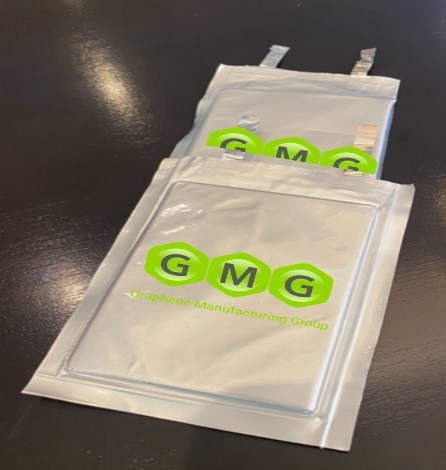
Brisbane, Queensland, Australia–(Newsfile Corp. – December 12, 2022) – Graphene Manufacturing Group Ltd. (TSXV: GMG) (“GMG ” or the “Company”) is pleased to provide an update on its ongoing investment in the Company’s Battery Development Centre (“BDC”). The GMG Board has approved an additional $AU 600,000 in capital expenditure, to accelerate the progress of semi-automatic pouch cell prototype production in the BDC for customer trials and Graphene Aluminium Ion (G+AI) Battery cell development. The Company has also successfully increased its organisational capacity by attracting new staff experienced in pouch cell manufacturing, thereby enabling the acceleration of its battery performance optimisation programme.
GMG believes its pouch cells could be used in a wide range of potential applications, including:
-
personal communication devices,
-
internet of things (IOT) sensors,
-
personal mobility devices,
-
energy storage,
-
high power industrial applications,
-
electric aviation,
-
electric vehicles, and
-
personal electronics.
GMG Pouch Pack Cell Prototype
To view an enhanced version of this graphic, please visit:https://images.newsfilecorp.com/files/8082/147626_d4942a5f64f5fbba_001full.jpg
GMG’s Managing Director and CEO, Craig Nicol, commented: “This investment adds to our existing pouch cell manufacturing capabilities and together with GMG’s internal expertise the Company is now focused on progressing collaborative partnerships with several potential battery customers to further accelerate commercial development work in 2023.”
GMG Battery Development Centre
To view an enhanced version of this graphic, please visit:https://images.newsfilecorp.com/files/8082/147626_d4942a5f64f5fbba_002full.jpg
The additional CAPEX expenditure will assist with future optimisation, prototype development and production, and assembly times in the BDC. The additional equipment is expected to be operational in Q2 2023.
GMG will continue to work with various scientific and engineering methods to optimise capacity, energy and power density, and overall design of coin cell and/or pouch cell products.
About GMG
GMG is an Australian based clean-tech company listed on the TSX Venture Exchange (TSXV: GMG) that produces graphene and hydrogen by cracking methane (natural gas) instead of mining graphite. By using the company’s proprietary process, GMG can produce high quality, low cost, scalable, ‘tuneable’ and no/low contaminant graphene – enabling demonstrated cost and environmental improvements in a number of world-scale planet-friendly/clean-tech applications. Using this and other sources of low input cost graphene, the Company is developing value-added products that target the massive energy efficiency and energy storage markets.
The Company is pursuing opportunities for GMG graphene enhanced products, including developing next-generation batteries, collaborating with world-leading universities in Australia, and investigating the opportunity to enhance the performance and energy efficiency of engine oils.
For further information, please contact:
-
Craig Nicol, Chief Executive Officer and Managing Director of the Company at craig.nicol@graphenemg.com, +61 415 445 223
-
Leo Karabelas at Focus Communications Investor Relations, info@fcir.ca, +1 647 689 6041
Neither the TSX Venture Exchange nor its Regulation Services Provider (as that term is defined in the policies of the TSX Venture Exchange) accept responsibility for the adequacy or accuracy of this news release.
Cautionary Note Regarding Forward-Looking Statements
This news release includes certain statements and information that may constitute forward-looking information within the meaning of applicable Canadian securities laws. Forward-looking statements relate to future events or future performance and reflect the expectations or beliefs of management of the Company regarding future events. Generally, forward-looking statements and information can be identified by the use of forward-looking terminology such as “intends”, “expects” or “anticipates”, or variations of such words and phrases or statements that certain actions, events or results “may”, “could”, “should”, “would” or will “potentially” or “likely” occur. This information and these statements, referred to herein as “forward‐looking statements”, are not historical facts, are made as of the date of this news release and include without limitation, statements regarding the expectation that the Pilot Battery Plant will allow the Company to develop, manufacture and test its own G+AI Battery coin cell and pouch packs in-house and that such capability may accelerate the development of the Company’s G+AI Batteries; the expectation that additional equipment to enable the manufacture of G+AI Batteries in pouch pack cell format will arrive in January 2022; GMG’s expectations relating to construction of an initial commercial coin cell G+AI Battery manufacturing facility, production and sales of G+AI Batteries and the anticipated timing of such events; the proposed location of the anticipated manufacturing facility; and the potential full commercialization of the Company’s technology.
These forward‐looking statements involve numerous risks and uncertainties and actual results might differ materially from results suggested in any forward-looking statements. These risks and uncertainties include, among other things, risks related to the deployment of the Company’s resources, including its personnel; the intention of the Company to research, develop and produce certain products; the ability of the Company to acquire additional equipment to enable the manufacture of G+AI Batteries in pouch pack cell format and the timeline for such acquisition; the ability of the Company to complete construction of an initial commercial coin cell G+AI Battery manufacturing facility, including obtaining necessary permits; timing of anticipated construction; and fluctuations in the market for graphene.
In making the forward looking statements in this news release, the Company has applied several material assumptions, including without limitation, assumptions regarding the Company’s ability to research, develop and test its products within anticipated timelines; the ability of the Company to acquire additional equipment to enable the manufacture of G+AI Batteries in pouch pack cell format in a timely manner; the costs associated with commissioning a pouch cell G+AI Battery manufacturing and testing equipment; the ability of the Company to obtain necessary production permits; the continued demand for graphene; sufficient demand for the Company’s products; and that in-house production of G+AI Batteries by the Company will be cost-effective.
Although management of the Company has attempted to identify important factors that could cause actual results to differ materially from those contained in forward-looking statements or forward-looking information, there may be other factors that cause results not to be as anticipated, estimated or intended. There can be no assurance that such statements will prove to be accurate, as actual results and future events could differ materially from those anticipated in such statements. Accordingly, readers should not place undue reliance on forward-looking statements and forward-looking information. Readers are cautioned that reliance on such information may not be appropriate for other purposes. The Company does not undertake to update any forward-looking statement, forward-looking information or financial out-look that are incorporated by reference herein, except in accordance with applicable securities laws. We seek safe harbor.
To view the source version of this press release, please visit https://www.newsfilecorp.com/release/147626
MELBOURNE, Dec 1 (Reuters) – Mining is facing a major shortage of the digital skills it needs, and must step up or lose out to the "cool kids" of Google and Amazon, a BHP Group executive said on Thursday.
Miners are increasingly reliant on computing heft to manage tasks such as automated truck fleets, and using artificial intelligence to delve into reams of data and discover the next big deposit, said Chief Technology Officer Laura Tyler.
"We need more technologists, more data scientists and more mathematicians," she told a Melbourne Mining Club lunch, according to a prepared speech.
"We compete for such talent not just with each other, but with the cool kids such as Google and Amazon … the defence and pharmaceuticals industries, government and NGOs," she told the business luncheon. "Increasingly, we need more digital skills in every aspect of what we do."
A PwC analysis last year suggested that by 2040, the industry will need 21% more mining engineers and geotech engineers, and 29% more metallurgists than it had in 2020, she said.
"We need to train them now … and we need to make sure they see the mining industry as stable, attractive, and dare I say it, exciting," she said.
Australia's mining giants BHP, Rio Tinto Ltd and Fortescue have redoubled efforts to attract new workers to an industry confronting a dire skills shortage, and concerns over job security, sexual harassment and social licence.
So far, however, efforts are bearing fruit, Tyler said.
BHP's First Year Intern program was oversubscribed seven times and resulted in 60 graduates deciding to switch to resources-facing subjects for their next year of university, she said.
A program at Adelaide University is developing a pipeline of exploration geologists, specialising in finding ore deposits deep beneath the surface.
BHP has also established a reentry program to welcome back those who left the industry, while Rio Tinto's efforts to advance jobs in automation and industry efforts to train metallurgists are all bearing fruit – but are still not enough, she said. (Reporting by Melanie Burton. Editing by Gerry Doyle)
(Bloomberg) — BHP Group Ltd., the world’s biggest miner, is warning a shortage of skilled workers from mining engineers to mathematicians will hamper efforts to meet soaring demand for metals crucial to the energy transition.
Most Read from Bloomberg
-
Musk’s Neuralink Hopes to Implant Computer in Human Brain in Six Months
-
An Arizona County’s Refusal to Certify Election Results Could Cost GOP a House Seat
-
Scientists Revive 48,500-Year-Old ‘Zombie Virus’ Buried in Ice
-
Stock Traders Cheer Powell’s Risk-Friendly Shift: Markets Wrap
-
NYC Becomes One Billionaire Family’s Haven From China Property Crash
Increasingly advanced technological expertise is needed to discover and access new deposits of “difficult to find” key metals such as copper and nickel, Laura Tyler, BHP’s chief technical officer, said in a speech in Melbourne on Thursday.
“They are becoming deeper, harder to access, in more challenging regions,” Tyler said. “As we automate and electrify our operations, move work to remote operating centers, change the very equipment our maintainers look after, we have to train for new skills.”
Demand for copper — a core metal in almost every electrical technology from power grids to electric vehicles — is expected to double over the next 30 years, while the need for nickel, a key component in lithium-ion batteries, will quadruple, Tyler said. Both “future facing” metals are key to BHP’s growth plans, along with fertilizer ingredient potash, as consumption of its main commodity iron ore plateaus and it winds back its exposure to coal.
Read more: BHP Says China Growth Will Help Offset Wider Global Slowdown
To meet demand for the so-called “green metals,” by 2040 the world will need 21% more mining and geotech engineers and 29% more metallurgists, Tyler said, citing PricewaterhouseCoopers LLP research. “We need to train them now,” she added.
“Even as we retrain our people to meet the challenges of the new way of operating, we know this will not be enough,” she said. “We need more technologists. More data scientists. And more mathematicians.”
Demand for less skilled forms of labor in the sector, however, will drop thanks to automation of vehicles and equipment, she said.
Most Read from Bloomberg Businessweek
-
TikTok’s Viral Challenges Keep Luring Young Kids to Their Deaths
-
The Avatar Sequel Is a Make-or-Break Moment for Disney’s $71 Billion Fox Deal
-
Global Debt Costs Are Soaring. Here’s Where It Will Hurt Most
©2022 Bloomberg L.P.
By Marco Aquino and Marcelo Rochabrun
TAPAIRIHUA, Peru (Reuters) – In the hills of Tapairihua in Peru's Andes, Samuel Retamozo and other artisanal miners have found a rich seam of copper on their indigenous community's land. Armed with temporary government permits, they started exploiting it earlier this year.
There's just one problem – the seam is within the site of Southern Copper Corp's planned $2.6 billion Los Chancas mine. One of the world's biggest copper miners, it also has a permit to dig in the same area.
Grupo Mexico's Southern Copper aims to start producing here in 2027 after decades of studies. The planned mine is crucial to the company's goal of producing 1.8 million tonnes of copper annually by 2030.
But the rise of artisanal copper mining – driven by high global metal prices and sustained by a messy government permitting system – is threatening billions in new investments by Southern Copper and others in Peru, according to Reuters reviews of internal company reports, interviews with executives and a visit to Tapairihua to meet the miners.
Small-scale copper miners are now challenging Big Copper for territorial control of rich deposits of the red metal. Artisanal copper mining is creating much-needed income for impoverished Andean Peruvians even as it brings them into conflict with major miners, a rare and previously unreported trend in the world's No. 2 copper producer.
"This used to happen with silver and gold, but now it's affecting copper," said Raul Jacob, Southern Copper's chief financial officer, bemoaning what the company sees as the government's poor handling of artisanal mining permits.
In Peru, artisanal mining permits have doubled to 80,000 since 2020, government records show. And copper is the new focus.
Southern Copper is not the only mining company in a stand-off with the miners. Chinese-owned MMG Ltd's nearby Las Bambas copper mine is struggling to develop two new open pits because of artisanal miners who have settled on the same land. The company says its current pit is running out.
"Informal mining is entering lands granted to formal (mining) companies and threatening the development of large-scale projects," a source close to MMG told Reuters.
While companies often call small-scale miners "informal" or "illegal," what complicates the matter are two dueling authorizations – one for artisanal mining and another to hold the mining rights to a given area. Mining companies own the latter, known as concessions.
But since 2012 Peru has been granting artisanal mining permits on lands that overlap with concessions, giving the small-scale miners some legal protection, Reuters found after checking the geolocations of the permits and reviewing an internal document in which Peru's mining ministry did the same.
POTENTIAL FOR MORE DISPUTES
Disputes between mining firms and artisanal miners may only increase over time. Peru's leftist administration presented a new framework for artisanal mining last week that declared artisanal mining is "as important" as big mining.
Southern Copper has asked the government to revoke all artisanal mining permits on its concession. About half have now been canceled, causing resentment in Tapairihua.
"We are going to defend ourselves. At the end of the day we are at home, and from home there is nowhere to go," Retamozo, a mining engineer and president of the Tapairihua Mining Association, told Reuters.
While artisanal permits have existed since 2012, lower copper prices that decade meant they were not in demand. But copper has risen more than 60% since 2020 due to demand for electric vehicles.
The surge in artisanal copper mining is forcing the government to review its artisanal permitting system, a mechanism that was meant to be a temporary bridge toward formalization and intended mostly for gold miners.
"Our country is a mining country but we haven't had until now a mining framework that gives a long-term view about small-scale mining," Alberto Rojas, Peru's top mining formalization official, told Reuters
Rojas, however, suggested artisanal miners would lose in a dispute against concession holders.
"Where we have concessions we can't have (artisanal mining permits)," Rojas said. "We can't disavow the concessions that have already been granted."
DIGGERS, TRUCKS
On a recent day in Tapairihua, Reuters visited the artisanal mining operations, where dozens of wood and blue tarpaulin homes were erected, and tunnels supported with wooden beams burrowed into the steep rocky hillside.
In Peru's Andes many feel the copper under the ground is a right, with mining dating back to the Incas and other cultures that existed before Spain's colonization. Tapairihua looks down onto the river Antabamba, meaning "copper plain" in the Andean Quechua language.
Many of the miners are also local subsistence farmers who took up mining in search of income. Many declined to be named because they have been sued by Southern Copper over their mining activities.
To extract copper, they use dynamite to explode rock that they bring out in wheelbarrows and bags. Miners earn 80 soles ($20.61) a day, extracting enough rock to fill a handful of trucks a week, usually containing around 5% copper, though this level can rise as high as 18%.
Gherson Quintanilla arrived in Tapairihua earlier this year with a background in artisanal gold mining. He came because he heard copper was abundant and expertise was low.
"My goal is to extract up to two truckloads a day," he told Reuters.
But artisanal copper mining is not always as small scale.
Graphic: Las Bambas: Small-scale miners https://www.reuters.com/graphics/PERU-MINING/zjpqjkdbyvx/chart.png
An internal Las Bambas presentation seen by Reuters estimated informal miners were blasting some 1,950 tonnes of rock per day, almost double their output a year ago.
The report said artisanal miners were using heavy machinery and diggers as well as pneumatic tools.
Overall, it estimated the government has issued 700 permits that overlap with Las Bambas's concession,
But removing those miners is not straightforward. While Las Bambas and Southern Copper hold mining rights – which grants them access to the mineral underground – in most cases they have yet to buy the property rights to the surface terrain.
That limits their options because they cannot file an eviction claim on land they do not own.
The source close to Las Bambas said MMG recognized this difficulty and anticipated it would have to buy out the miners if it wants them to leave the site of its third pit, set to open in 2027 – if there are no delays.
At the site of its second pit, which was supposed to open this year, Las Bambas has filed eviction claims against the miners there because it already owns that particular parcel of land. The company estimates almost a dozen mining sites in the area. Reuters was unable to determine the number of miners working in them.
Graphic: Las Bambas: artisanal mining https://www.reuters.com/graphics/PERU-MINING/lbvggnmarvq/chart.png
'FUEL TO THE FIRE'
In May, Southern Copper sued Retamozo and other Tapairihua miners, saying their mining permits were non-compliant.
Weeks later a fire destroyed Southern Copper's local headquarters, which is made up of tents, just minutes downhill from where the small-scale miners are operating. Burned-out cars remain there today.
Nobody was hurt in the fire and no arrests have been made. Peruvian authorities say the matter remains under investigation.
The miners have distanced themselves from the arson, though Retamozo acknowledged the lawsuits have angered them and that some individual members may have acted out of "resentment."
The number of valid artisanal mining permits in Tapairihua has fallen from 100 to 32 since May, according to government records. An internal mining ministry document seen by Reuters shows that the process is under way to revoke the remaining permits.
Retamozo cautioned about what would happen if those were canceled.
"Canceling them would add fuel to the fire," he said.
($1 = 3.8811 soles)
(Reporting by Marco Aquino and Marcelo Rochabrun; Editing by Adam Jourdan and Ross Colvin)
By Marco Aquino and Marcelo Rochabrun
TAPAIRIHUA, Peru, Dec 1 (Reuters) – In the hills of Tapairihua in Peru's Andes, Samuel Retamozo and other artisanal miners have found a rich seam of copper on their indigenous community's land. Armed with temporary government permits, they started exploiting it earlier this year.
There's just one problem – the seam is within the site of Southern Copper Corp's planned $2.6 billion Los Chancas mine. One of the world's biggest copper miners, it also has a permit to dig in the same area.
Grupo Mexico's Southern Copper aims to start producing here in 2027 after decades of studies. The planned mine is crucial to the company's goal of producing 1.8 million tonnes of copper annually by 2030.
But the rise of artisanal copper mining – driven by high global metal prices and sustained by a messy government permitting system – is threatening billions in new investments by Southern Copper and others in Peru, according to Reuters reviews of internal company reports, interviews with executives and a visit to Tapairihua to meet the miners.
Small-scale copper miners are now challenging Big Copper for territorial control of rich deposits of the red metal. Artisanal copper mining is creating much-needed income for impoverished Andean Peruvians even as it brings them into conflict with major miners, a rare and previously unreported trend in the world's No. 2 copper producer.
"This used to happen with silver and gold, but now it's affecting copper," said Raul Jacob, Southern Copper's chief financial officer, bemoaning what the company sees as the government's poor handling of artisanal mining permits.
In Peru, artisanal mining permits have doubled to 80,000 since 2020, government records show. And copper is the new focus.
Southern Copper is not the only mining company in a stand-off with the miners. Chinese-owned MMG Ltd's nearby Las Bambas copper mine is struggling to develop two new open pits because of artisanal miners who have settled on the same land. The company says its current pit is running out.
"Informal mining is entering lands granted to formal (mining) companies and threatening the development of large-scale projects," a source close to MMG told Reuters.
While companies often call small-scale miners "informal" or "illegal," what complicates the matter are two dueling authorizations – one for artisanal mining and another to hold the mining rights to a given area. Mining companies own the latter, known as concessions.
But since 2012 Peru has been granting artisanal mining permits on lands that overlap with concessions, giving the small-scale miners some legal protection, Reuters found after checking the geolocations of the permits and reviewing an internal document in which Peru's mining ministry did the same.
POTENTIAL FOR MORE DISPUTES
Disputes between mining firms and artisanal miners may only increase over time. Peru's leftist administration presented a new framework for artisanal mining last week that declared artisanal mining is "as important" as big mining.
Southern Copper has asked the government to revoke all artisanal mining permits on its concession. About half have now been canceled, causing resentment in Tapairihua.
"We are going to defend ourselves. At the end of the day we are at home, and from home there is nowhere to go," Retamozo, a mining engineer and president of the Tapairihua Mining Association, told Reuters.
While artisanal permits have existed since 2012, lower copper prices that decade meant they were not in demand. But copper has risen more than 60% since 2020 due to demand for electric vehicles.
The surge in artisanal copper mining is forcing the government to review its artisanal permitting system, a mechanism that was meant to be a temporary bridge toward formalization and intended mostly for gold miners.
"Our country is a mining country but we haven't had until now a mining framework that gives a long-term view about small-scale mining," Alberto Rojas, Peru's top mining formalization official, told Reuters
Rojas, however, suggested artisanal miners would lose in a dispute against concession holders.
"Where we have concessions we can't have (artisanal mining permits)," Rojas said. "We can't disavow the concessions that have already been granted."
DIGGERS, TRUCKS
On a recent day in Tapairihua, Reuters visited the artisanal mining operations, where dozens of wood and blue tarpaulin homes were erected, and tunnels supported with wooden beams burrowed into the steep rocky hillside.
In Peru's Andes many feel the copper under the ground is a right, with mining dating back to the Incas and other cultures that existed before Spain's colonization. Tapairihua looks down onto the river Antabamba, meaning "copper plain" in the Andean Quechua language.
Many of the miners are also local subsistence farmers who took up mining in search of income. Many declined to be named because they have been sued by Southern Copper over their mining activities.
To extract copper, they use dynamite to explode rock that they bring out in wheelbarrows and bags. Miners earn 80 soles ($20.61) a day, extracting enough rock to fill a handful of trucks a week, usually containing around 5% copper, though this level can rise as high as 18%.
Gherson Quintanilla arrived in Tapairihua earlier this year with a background in artisanal gold mining. He came because he heard copper was abundant and expertise was low.
"My goal is to extract up to two truckloads a day," he told Reuters.
But artisanal copper mining is not always as small scale.
An internal Las Bambas presentation seen by Reuters estimated informal miners were blasting some 1,950 tonnes of rock per day, almost double their output a year ago.
The report said artisanal miners were using heavy machinery and diggers as well as pneumatic tools.
Overall, it estimated the government has issued 700 permits that overlap with Las Bambas's concession,
But removing those miners is not straightforward. While Las Bambas and Southern Copper hold mining rights – which grants them access to the mineral underground – in most cases they have yet to buy the property rights to the surface terrain.
That limits their options because they cannot file an eviction claim on land they do not own.
The source close to Las Bambas said MMG recognized this difficulty and anticipated it would have to buy out the miners if it wants them to leave the site of its third pit, set to open in 2027 – if there are no delays.
At the site of its second pit, which was supposed to open this year, Las Bambas has filed eviction claims against the miners there because it already owns that particular parcel of land. The company estimates almost a dozen mining sites in the area. Reuters was unable to determine the number of miners working in them.
'FUEL TO THE FIRE'
In May, Southern Copper sued Retamozo and other Tapairihua miners, saying their mining permits were non-compliant.
Weeks later a fire destroyed Southern Copper's local headquarters, which is made up of tents, just minutes downhill from where the small-scale miners are operating. Burned-out cars remain there today.
Nobody was hurt in the fire and no arrests have been made. Peruvian authorities say the matter remains under investigation.
The miners have distanced themselves from the arson, though Retamozo acknowledged the lawsuits have angered them and that some individual members may have acted out of "resentment."
The number of valid artisanal mining permits in Tapairihua has fallen from 100 to 32 since May, according to government records. An internal mining ministry document seen by Reuters shows that the process is under way to revoke the remaining permits.
Retamozo cautioned about what would happen if those were canceled.
"Canceling them would add fuel to the fire," he said. ($1 = 3.8811 soles)
(Reporting by Marco Aquino and Marcelo Rochabrun; Editing by Adam Jourdan and Ross Colvin)
The most you can lose on any stock (assuming you don’t use leverage) is 100% of your money. But on the bright side, if you buy shares in a high quality company at the right price, you can gain well over 100%. For instance, the price of Anglo American plc (LON:AAL) stock is up an impressive 143% over the last five years. It’s also up 25% in about a month.
After a strong gain in the past week, it’s worth seeing if longer term returns have been driven by improving fundamentals.
View our latest analysis for Anglo American
In his essay The Superinvestors of Graham-and-Doddsville Warren Buffett described how share prices do not always rationally reflect the value of a business. One flawed but reasonable way to assess how sentiment around a company has changed is to compare the earnings per share (EPS) with the share price.
During five years of share price growth, Anglo American achieved compound earnings per share (EPS) growth of 14% per year. This EPS growth is slower than the share price growth of 19% per year, over the same period. This suggests that market participants hold the company in higher regard, these days. And that’s hardly shocking given the track record of growth.
You can see below how EPS has changed over time (discover the exact values by clicking on the image).
It might be well worthwhile taking a look at our free report on Anglo American’s earnings, revenue and cash flow.
What About Dividends?
When looking at investment returns, it is important to consider the difference between total shareholder return (TSR) and share price return. Whereas the share price return only reflects the change in the share price, the TSR includes the value of dividends (assuming they were reinvested) and the benefit of any discounted capital raising or spin-off. Arguably, the TSR gives a more comprehensive picture of the return generated by a stock. As it happens, Anglo American’s TSR for the last 5 years was 224%, which exceeds the share price return mentioned earlier. And there’s no prize for guessing that the dividend payments largely explain the divergence!
A Different Perspective
It’s good to see that Anglo American has rewarded shareholders with a total shareholder return of 28% in the last twelve months. That’s including the dividend. That’s better than the annualised return of 26% over half a decade, implying that the company is doing better recently. Given the share price momentum remains strong, it might be worth taking a closer look at the stock, lest you miss an opportunity. While it is well worth considering the different impacts that market conditions can have on the share price, there are other factors that are even more important. For instance, we’ve identified 2 warning signs for Anglo American (1 doesn’t sit too well with us) that you should be aware of.
For those who like to find winning investments this free list of growing companies with recent insider purchasing, could be just the ticket.
Please note, the market returns quoted in this article reflect the market weighted average returns of stocks that currently trade on GB exchanges.
Have feedback on this article? Concerned about the content? Get in touch with us directly. Alternatively, email editorial-team (at) simplywallst.com.This article by Simply Wall St is general in nature. We provide commentary based on historical data and analyst forecasts only using an unbiased methodology and our articles are not intended to be financial advice. It does not constitute a recommendation to buy or sell any stock, and does not take account of your objectives, or your financial situation. We aim to bring you long-term focused analysis driven by fundamental data. Note that our analysis may not factor in the latest price-sensitive company announcements or qualitative material. Simply Wall St has no position in any stocks mentioned.
Join A Paid User Research SessionYou’ll receive a US$30 Amazon Gift card for 1 hour of your time while helping us build better investing tools for the individual investors like yourself. Sign up here
VANCOUVER, BC, Nov. 28, 2022 /CNW/ – Copper Mountain Mining Corporation (TSX: CMMC) (ASX: C6C) (the “Company” or “Copper Mountain”) is pleased to announce that it has received bondholder approval (“Bondholder Approval”) under its US$250 million senior secured bonds (the “Bonds”) for the previously announced sale of its wholly-owned Eva Copper Project and its 2,100km2 exploration land package in Queensland, Australia (the “Transaction”) to Harmony Gold Mining Company Limited (JSE: HAR) (NYSE: HMY) (“Harmony”). See Copper Mountain’s press release dated October 6, 2022 (“Copper Mountain Mining Announces Agreement to Sell the Eva Copper Project and the Australian Exploration Tenements for Total Consideration of up to US$230 Million“) for additional details regarding the Transaction.
The receipt of Bondholder Approval is a condition to the closing of the Transaction. The closing of the Transaction remains subject to certain customary conditions, including Harmony obtaining written correspondence from the Foreign Investment Review Board (FIRB) in Australia that the Australian Government has no objections under the Foreign Acquisitions and Takeovers Act 1975. The Transaction is expected to close no later than the first quarter of 2023.
Summary of Bond Buyback Offer
In connection with obtaining the Bondholder Approval, the Company has agreed, within 30 days after completion of the Transaction, to:
-
Pay a one-time amendment fee of 0.25% of the nominal amount of the outstanding Bonds, on a pro rata basis, to the bondholders; and
-
Make an offer to buyback Bonds for an aggregate minimum principal amount of US$87,000,000 (the “Buyback Offer”) at an offered price of 103.00 per cent of the nominal amount of the Bonds (plus accrued interest on the repurchased amount).
The Buyback Offer will be funded by a portion of the aggregate net cash proceeds CMMC expects to receive from the gross US$170,000,000 cash consideration payable by Harmony on completion of the Transaction. The Company is relying on anticipated cash flows generated from the Copper Mountain Mine and the net cash proceeds from the Transaction to meet its future cash commitments.
In addition, 100% of the net cash proceeds from any future contingent consideration received by the Company from Harmony pursuant to the Transaction before the maturity date of the Bonds on April 9, 2026 will be applied to either: (i) make further offers to buyback Bonds at an offered price of 103.00 per cent of the nominal amount of the Bonds (plus accrued interest on the repurchased amount) if such contingent consideration is received prior to the applicable interest payment date in April 2024; or (ii) redeem Bonds in accordance with the call terms of the Bonds if such contingent consideration is received on or after the applicable interest payment date in April 2024.
About Copper Mountain Mining Corporation
Copper Mountain’s flagship asset is the 75% owned Copper Mountain Mine located in southern British Columbia near the town of Princeton. The Copper Mountain Mine currently produces approximately 100 million pounds of copper equivalent per year, with expected annual average production to increase to approximately 140 million pounds of copper equivalent. Copper Mountain trades on the Toronto Stock Exchange under the symbol “CMMC” and Australian Stock Exchange under the symbol “C6C”.
Additional information is available on the Company’s web page at www.CuMtn.com.
On behalf of the Board of
COPPER MOUNTAIN MINING CORPORATION
“Gil Clausen”
Gil ClausenPresident and Chief Executive Officer
Cautionary Note Regarding Forward-Looking Statements
This news release may contain “forward looking information” within the meaning of Canadian securities legislation and “forward-looking statements” within the meaning of the United States Private Securities Litigation Reform Act of 1995 (collectively, “forward-looking statements”). These forward-looking statements are made as of the date of this news release and Copper Mountain does not intend, and does not assume any obligation, to update these forward-looking statements, whether as a result of new information, future events or otherwise, except as required under applicable securities legislation.
All statements, other than statements of historical facts, are forward-looking statements. Generally, forward-looking statements relate to future events or future performance and reflect Copper Mountain’s expectations or beliefs regarding future events.
In certain circumstances, forward-looking statements can be identified, but are not limited to, statements which use terminology such as “plans”, “expects”, “estimates”, “intends”, “anticipates”, “believes”, “forecasts”, “guidance”, scheduled”, “target” or variations of such words, or statements that certain actions, events or results “may”, “could”, “would”, “might”, “occur” or “be achieved” or the negative of these terms or comparable terminology. In this news release, certain forward-looking statements are identified, including anticipated timing for the closing of the Transaction, expected proceeds from the Transaction, entitlement to any contingent consideration under the Transaction, obtaining and satisfying customary conditions (including FIRB approval) for the closing of the Transaction, completion of the Buyback Offer and any future buyback or redemption in connection with any contingent consideration received from Harmony, anticipated production at the Copper Mountain Mine, and expectations for other economic, business and/or competitive factors. Forward-looking statements involve known and unknown risks, uncertainties and other factors that could cause actual results, performance, achievements and opportunities to differ materially from those implied by such forward-looking statements. Factors that could cause actual results to differ materially from these forward-looking statements include, among others, the parties’ ability to consummate the Transaction, the ability of the parties to satisfy, in a timely manner, all conditions to the closing of the Transaction, assumptions concerning the Transaction and the operations and capital expenditure plans of the Company following completion of the Transaction, the potential impact of the announcement of the Buyback Offer or the consummation of the Transaction, the diversion of management time on the Transaction, the successful exploration of the Company’s properties in Canada and Australia, market price, continued availability of capital and financing and general economic, market or business conditions, the Company’s ability to comply with its financial covenants under the Bond terms and meet its future cash commitments, extreme weather events, material and labour shortages, the reliability of the historical data referenced in this document and risks set out in Copper Mountain’s public documents, including the management’s discussion and analysis for the quarter ended September 30, 2022 and the annual information form dated March 29, 2022, each filed on SEDAR at www.sedar.com. Although Copper Mountain has attempted to identify important factors that could cause the Company’s actual results, performance, achievements and opportunities to differ materially from those described in its forward-looking statements, there may be other factors that cause the Company’s results, performance, achievements and opportunities not to be as anticipated, estimated or intended. While the Company believes that the information and assumptions used in preparing the forward-looking statements are reasonable, undue reliance should not be placed on these statements, which only apply as of the date of this news release, and no assurance can be given that such events will occur in the disclosed time frames or at all. Accordingly, readers should not place undue reliance on the Company’s forward-looking statements.
Cision
View original content to download multimedia:https://www.prnewswire.com/news-releases/copper-mountain-mining-receives-bondholder-approval-for-the-sale-of-the-eva-copper-project-and-the-australian-exploration-tenements-and-announces-bond-buyback-offer-301687544.html
SOURCE Copper Mountain Mining Corporation
Cision
View original content to download multimedia: http://www.newswire.ca/en/releases/archive/November2022/28/c7089.html
By buying an index fund, you can roughly match the market return with ease. But if you buy good businesses at attractive prices, your portfolio returns could exceed the average market return. For example, Southern Copper Corporation (NYSE:SCCO) shareholders have seen the share price rise 53% over three years, well in excess of the market return (25%, not including dividends). However, more recent returns haven’t been as impressive as that, with the stock returning just 3.6% in the last year , including dividends .
In light of the stock dropping 3.9% in the past week, we want to investigate the longer term story, and see if fundamentals have been the driver of the company’s positive three-year return.
View our latest analysis for Southern Copper
In his essay The Superinvestors of Graham-and-Doddsville Warren Buffett described how share prices do not always rationally reflect the value of a business. One flawed but reasonable way to assess how sentiment around a company has changed is to compare the earnings per share (EPS) with the share price.
During three years of share price growth, Southern Copper achieved compound earnings per share growth of 20% per year. The average annual share price increase of 15% is actually lower than the EPS growth. So one could reasonably conclude that the market has cooled on the stock.
You can see below how EPS has changed over time (discover the exact values by clicking on the image).
We’re pleased to report that the CEO is remunerated more modestly than most CEOs at similarly capitalized companies. But while CEO remuneration is always worth checking, the really important question is whether the company can grow earnings going forward. It might be well worthwhile taking a look at our free report on Southern Copper’s earnings, revenue and cash flow.
What About Dividends?
When looking at investment returns, it is important to consider the difference between total shareholder return (TSR) and share price return. The TSR is a return calculation that accounts for the value of cash dividends (assuming that any dividend received was reinvested) and the calculated value of any discounted capital raisings and spin-offs. It’s fair to say that the TSR gives a more complete picture for stocks that pay a dividend. As it happens, Southern Copper’s TSR for the last 3 years was 77%, which exceeds the share price return mentioned earlier. And there’s no prize for guessing that the dividend payments largely explain the divergence!
A Different Perspective
It’s good to see that Southern Copper has rewarded shareholders with a total shareholder return of 3.6% in the last twelve months. And that does include the dividend. However, the TSR over five years, coming in at 11% per year, is even more impressive. Potential buyers might understandably feel they’ve missed the opportunity, but it’s always possible business is still firing on all cylinders. I find it very interesting to look at share price over the long term as a proxy for business performance. But to truly gain insight, we need to consider other information, too. Case in point: We’ve spotted 2 warning signs for Southern Copper you should be aware of, and 1 of them makes us a bit uncomfortable.
If you like to buy stocks alongside management, then you might just love this free list of companies. (Hint: insiders have been buying them).
Please note, the market returns quoted in this article reflect the market weighted average returns of stocks that currently trade on US exchanges.
Have feedback on this article? Concerned about the content? Get in touch with us directly. Alternatively, email editorial-team (at) simplywallst.com.This article by Simply Wall St is general in nature. We provide commentary based on historical data and analyst forecasts only using an unbiased methodology and our articles are not intended to be financial advice. It does not constitute a recommendation to buy or sell any stock, and does not take account of your objectives, or your financial situation. We aim to bring you long-term focused analysis driven by fundamental data. Note that our analysis may not factor in the latest price-sensitive company announcements or qualitative material. Simply Wall St has no position in any stocks mentioned.
Join A Paid User Research SessionYou’ll receive a US$30 Amazon Gift card for 1 hour of your time while helping us build better investing tools for the individual investors like yourself. Sign up here
(Bloomberg) — BHP Group Ltd. made an improved A$9.6 billion ($6.4 billion) offer to acquire copper producer OZ Minerals Ltd. as the world’s top miner seeks more exposure to rising demand from clean energy and electric cars.
Most Read from Bloomberg
-
Musk’s ‘Hardcore’ Ultimatum Sparks Exodus, Leaving Twitter at Risk
-
GOP Retakes US House by Slim Margin in Washington Power Shift
-
Elizabeth Holmes Says US Is Wrong to Suggest She Marry Her Partner to Pay Debts
OZ Minerals will recommend shareholders vote in favor of the A$28.25 a share offer, the Adelaide, Australia-based company said Friday, after rejecting an earlier A$25 per share bid in August. The proposed acquisition would be BHP’s largest since the $12.1 billion purchase of Petrohawk Energy Corp. in 2011.
Miners across the globe are hungry for copper assets to add a metal that’s regarded as critical to the energy transition due to its use in electricity networks, renewable energy and electric vehicles. Demand for copper is set to jump 58% by 2040, according to BloombergNEF, and BHP is looking to consolidate its position as one of the world’s largest producers.
BHP has said so-called future facing metals copper and nickel, as well as fertilizer ingredient potash, are key to the company’s growth as demand plateaus for iron ore, its most important commodity, and the world moves away from fossil fuels. BHP has reduced its coal business in recent years, and sold its entire oil and gas business to Woodside Energy Group this year.
“The combination of BHP and OZL’s assets, skills and technical expertise provides a unique opportunity not available under separate ownership,” BHP Chief Executive Officer Mike Henry said.
OZ Minerals shares rose as much as 4.5% to A$27.49, the highest level since April, and traded at A$27.38 as of 12:13 p.m. in Sydney on Friday.
The latest offer is 49% above the OZ Minerals share price on Aug. 5, the trading session before BHP made its first bid. BHP will now conduct due diligence and the offer will be its “best and final” proposal, the company said.
OZ Minerals, which has operations adjacent to BHP’s huge Olympic Dam mine in South Australia, would add around 7% to BHP’s annual copper production. The target also has mines in Brazil and a key nickel project in Western Australia.
“BHP’s revised proposal is a clear reflection of OZ Minerals’ unique set of highly strategic, quality assets in quality jurisdictions and an enviable multi-generational growth pipeline of copper and nickel assets in strong demand due to global electrification,” OZ Minerals Chief Executive Officer Andrew Cole said.
The offer came as Rio Tinto Group, BHP’s biggest competitor, hit another roadblock in its bid to take full control of Turquoise Hill, a Canadian company that has what would be one of the world’s largest copper mines in Mongolia.
(Adds shares in sixth paragraph. A previous version of the story corrected the currency in headline.)
Most Read from Bloomberg Businessweek
-
Fatal Crashes Highlight Rising Danger of Illicit Charter Flights
-
North America’s EV Future Hinges on a North Carolina Turtle Pond
-
Meta Confronts an Apple-Sized Hole in Its Once-Mighty Advertising Business
-
Twitter’s Layoffs Are the Perfect Example of How Not to Fire People
©2022 Bloomberg L.P.
(Bloomberg) — Oz Minerals Ltd. has requested a trading halt pending an announcement in relation to a potential change-of-control transaction, three months after the copper miner rejected a A$8.4 billion ($5.7 billion) bid by BHP Group Ltd.
Most Read from Bloomberg
-
Ukraine Latest: Biden Says Missile Likely Not Fired From Russia
-
Poland Says Russian-Made Missile Hit Territory and Killed Two People
-
Biden Says Unlikely Rocket That Hit Poland Was Fired From Russia
The securities will remain in the trading halt until the commencement of normal trading on Friday, or when the announcement is released to the market, Oz Minerals said in a statement to the Australian Securities Exchange on Wednesday.
BHP was the likely bidder, but it’s also possible it could be a new entrant because the mining giant hadn’t entered a trading halt, Shaw and Partners analyst Peter O’Connor said in a note. The bidder would need to offer “A$30 a share or close to it,” he said.
BHP’s initial offer for Oz Minerals was for A$25 a share. The company’s shares closed at A$26.30 in Sydney on Tuesday.
A spokesperson from BHP declined to comment.
See also: Oz Minerals Said to Seek A$10 Billion in Potential Sale
BHP, which hived off its oil and gas assets this year, is seeking growth in commodities tied to trends including low-emissions transport and clean energy — particularly copper for renewables and nickel for lithium-ion batteries. The mining giant is also pouring billions of dollars into a giant new potash mine in Canada to enter the fertilizer sector.
(Updates with comment from analyst in 3rd paragraph.)
Most Read from Bloomberg Businessweek
-
Google’s Moonshot Lab Is Now in the Strawberry-Counting Business
-
How Apple Stores Went From Geek Paradise to Union Front Line
-
Americans Have $5 Trillion in Cash, Thanks to Federal Stimulus
-
One of Gaming’s Most Hated Execs Is Jumping Into the Metaverse
©2022 Bloomberg L.P.
If you want to know who really controls Anglo American plc (LON:AAL), then you’ll have to look at the makeup of its share registry. We can see that institutions own the lion’s share in the company with 72% ownership. That is, the group stands to benefit the most if the stock rises (or lose the most if there is a downturn).
And as as result, institutional investors reaped the most rewards after the company’s stock price gained 14% last week. One-year return to shareholders is currently 25% and last week’s gain was the icing on the cake.
In the chart below, we zoom in on the different ownership groups of Anglo American.
See our latest analysis for Anglo American
ownership-breakdownWhat Does The Institutional Ownership Tell Us About Anglo American?
Institutions typically measure themselves against a benchmark when reporting to their own investors, so they often become more enthusiastic about a stock once it’s included in a major index. We would expect most companies to have some institutions on the register, especially if they are growing.
Anglo American already has institutions on the share registry. Indeed, they own a respectable stake in the company. This suggests some credibility amongst professional investors. But we can’t rely on that fact alone since institutions make bad investments sometimes, just like everyone does. If multiple institutions change their view on a stock at the same time, you could see the share price drop fast. It’s therefore worth looking at Anglo American’s earnings history below. Of course, the future is what really matters.
Investors should note that institutions actually own more than half the company, so they can collectively wield significant power. Hedge funds don’t have many shares in Anglo American. The company’s largest shareholder is BlackRock, Inc., with ownership of 9.0%. Public Investment Corporation Limited is the second largest shareholder owning 7.3% of common stock, and The Vanguard Group, Inc. holds about 4.2% of the company stock.
After doing some more digging, we found that the top 21 have the combined ownership of 51% in the company, suggesting that no single shareholder has significant control over the company.
Researching institutional ownership is a good way to gauge and filter a stock’s expected performance. The same can be achieved by studying analyst sentiments. Quite a few analysts cover the stock, so you could look into forecast growth quite easily.
Insider Ownership Of Anglo American
The definition of an insider can differ slightly between different countries, but members of the board of directors always count. Management ultimately answers to the board. However, it is not uncommon for managers to be executive board members, especially if they are a founder or the CEO.
Insider ownership is positive when it signals leadership are thinking like the true owners of the company. However, high insider ownership can also give immense power to a small group within the company. This can be negative in some circumstances.
Our information suggests that Anglo American plc insiders own under 1% of the company. But they may have an indirect interest through a corporate structure that we haven’t picked up on. As it is a large company, we’d only expect insiders to own a small percentage of it. But it’s worth noting that they own UK£81m worth of shares. Arguably recent buying and selling is just as important to consider. You can click here to see if insiders have been buying or selling.
General Public Ownership
With a 17% ownership, the general public, mostly comprising of individual investors, have some degree of sway over Anglo American. While this group can’t necessarily call the shots, it can certainly have a real influence on how the company is run.
Private Company Ownership
Our data indicates that Private Companies hold 10%, of the company’s shares. It’s hard to draw any conclusions from this fact alone, so its worth looking into who owns those private companies. Sometimes insiders or other related parties have an interest in shares in a public company through a separate private company.
Next Steps:
It’s always worth thinking about the different groups who own shares in a company. But to understand Anglo American better, we need to consider many other factors. Take risks for example – Anglo American has 2 warning signs (and 1 which is a bit unpleasant) we think you should know about.
If you are like me, you may want to think about whether this company will grow or shrink. Luckily, you can check this free report showing analyst forecasts for its future.
NB: Figures in this article are calculated using data from the last twelve months, which refer to the 12-month period ending on the last date of the month the financial statement is dated. This may not be consistent with full year annual report figures.
Have feedback on this article? Concerned about the content? Get in touch with us directly. Alternatively, email editorial-team (at) simplywallst.com.This article by Simply Wall St is general in nature. We provide commentary based on historical data and analyst forecasts only using an unbiased methodology and our articles are not intended to be financial advice. It does not constitute a recommendation to buy or sell any stock, and does not take account of your objectives, or your financial situation. We aim to bring you long-term focused analysis driven by fundamental data. Note that our analysis may not factor in the latest price-sensitive company announcements or qualitative material. Simply Wall St has no position in any stocks mentioned.
Join A Paid User Research SessionYou’ll receive a US$30 Amazon Gift card for 1 hour of your time while helping us build better investing tools for the individual investors like yourself. Sign up here
Eastern Platinum (TSE:ELR) Third Quarter 2022 Results
Key Financial Results
-
Revenue: US$17.2m (up 8.1% from 3Q 2021).
-
Net loss: US$4.06m (loss widened by 62% from 3Q 2021).
-
US$0.029 loss per share (further deteriorated from US$0.018 loss in 3Q 2021).
All figures shown in the chart above are for the trailing 12 month (TTM) period
Eastern Platinum shares are down 11% from a week ago.
Risk Analysis
Before you take the next step you should know about the 2 warning signs for Eastern Platinum (1 is a bit concerning!) that we have uncovered.
Have feedback on this article? Concerned about the content? Get in touch with us directly. Alternatively, email editorial-team (at) simplywallst.com.This article by Simply Wall St is general in nature. We provide commentary based on historical data and analyst forecasts only using an unbiased methodology and our articles are not intended to be financial advice. It does not constitute a recommendation to buy or sell any stock, and does not take account of your objectives, or your financial situation. We aim to bring you long-term focused analysis driven by fundamental data. Note that our analysis may not factor in the latest price-sensitive company announcements or qualitative material. Simply Wall St has no position in any stocks mentioned.
Join A Paid User Research SessionYou’ll receive a US$30 Amazon Gift card for 1 hour of your time while helping us build better investing tools for the individual investors like yourself. Sign up here
LONDON (Reuters) – BHP Group is teaming up with steelmaker ArcelorMittal and two others to test a new technology to reduce carbon emissions in steel making at two plants in Belgium and North America.
The trials, at ArcelorMittal's Gent steel blast furnace in Belgium and another plant in North America, also involve Japan's Mitsubishi Heavy Industries Engineering (MHIENG), which developed the carbon capture technology, and Mitsubishi Development Pty, another supplier of steel-making coal.
By discharging over 3 billion tonnes of carbon dioxide a year, the steel industry accounts for 7-9% of global greenhouse gas (GHG) emissions.
"What's really interesting in this partnership is that … it is not a desktop exercise but a real world application in an operational plant," said BHP Chief Commercial Officer Vandita Pant.
The world's number one miner produced more than 37 million tonnes of metallurgical coal, an essential ingredient to produce steel, in the financial year to June.
Large mining companies have been partnering with technology firms and others in the supply chain to find ways to reduce their carbon footprint and help reduce emissions in some of the most energy-intensive industries.
BHP's partnerships, for example, also include one with India's Tata Steel, which uses biomass as a source of energy.
"There isn't a silver bullet, there isn't one path or technology for low-carbon emissions in steelmaking," Pant said.
"We are covering many different technologies and geographies with these partnerships … to enable lower GHG emissions steel and support the reduction of carbon intensity in blast furnaces," Pant said.
(Reporting by Clara Denina; Editing by Tomasz Janowski)
Insiders who bought US$10.0k worth of Anglo American plc (LON:AAL) stock in the last year recovered part of their losses as the stock rose by 5.4% last week. However, the purchase is proving to be an expensive wager as insiders are yet to get ahead of their losses which currently stand at US$424 since the time of purchase.
While we would never suggest that investors should base their decisions solely on what the directors of a company have been doing, logic dictates you should pay some attention to whether insiders are buying or selling shares.
View our latest analysis for Anglo American
The Last 12 Months Of Insider Transactions At Anglo American
While there weren’t any large insider transactions in the last twelve months, it’s still worth looking at the trading.
You can see the insider transactions (by companies and individuals) over the last year depicted in the chart below. If you want to know exactly who sold, for how much, and when, simply click on the graph below!
Anglo American is not the only stock that insiders are buying. For those who like to find winning investments this free list of growing companies with recent insider purchasing, could be just the ticket.
Insider Ownership
Another way to test the alignment between the leaders of a company and other shareholders is to look at how many shares they own. I reckon it’s a good sign if insiders own a significant number of shares in the company. Insiders own 0.2% of Anglo American shares, worth about UK£67m. We’ve certainly seen higher levels of insider ownership elsewhere, but these holdings are enough to suggest alignment between insiders and the other shareholders.
So What Does This Data Suggest About Anglo American Insiders?
Our data shows a little insider buying, but no selling, in the last three months. That said, the purchases were not large. On a brighter note, the transactions over the last year are encouraging. Insiders own shares in Anglo American and we see no evidence to suggest they are worried about the future. While we like knowing what’s going on with the insider’s ownership and transactions, we make sure to also consider what risks are facing a stock before making any investment decision. At Simply Wall St, we’ve found that Anglo American has 2 warning signs (1 is significant!) that deserve your attention before going any further with your analysis.
Of course, you might find a fantastic investment by looking elsewhere. So take a peek at this free list of interesting companies.
For the purposes of this article, insiders are those individuals who report their transactions to the relevant regulatory body. We currently account for open market transactions and private dispositions, but not derivative transactions.
Have feedback on this article? Concerned about the content? Get in touch with us directly. Alternatively, email editorial-team (at) simplywallst.com.This article by Simply Wall St is general in nature. We provide commentary based on historical data and analyst forecasts only using an unbiased methodology and our articles are not intended to be financial advice. It does not constitute a recommendation to buy or sell any stock, and does not take account of your objectives, or your financial situation. We aim to bring you long-term focused analysis driven by fundamental data. Note that our analysis may not factor in the latest price-sensitive company announcements or qualitative material. Simply Wall St has no position in any stocks mentioned.
Join A Paid User Research SessionYou’ll receive a US$30 Amazon Gift card for 1 hour of your time while helping us build better investing tools for the individual investors like yourself. Sign up here
Southern Copper Corporation (NYSE:SCCO) has announced that on 23rd of November, it will be paying a dividend of$0.50, which a reduction from last year’s comparable dividend. However, the dividend yield of 6.2% is still a decent boost to shareholder returns.
View our latest analysis for Southern Copper
Southern Copper Doesn’t Earn Enough To Cover Its Payments
A big dividend yield for a few years doesn’t mean much if it can’t be sustained. Before making this announcement, the company’s dividend was higher than its profits, and made up 86% of cash flows. While the cash payout ratio isn’t necessarily a cause for concern, the company is probably focusing more on returning cash to shareholders than growing the business.
EPS is set to fall by 2.1% over the next 12 months. If the dividend continues along the path it has been on recently, the payout ratio in 12 months could be 129%, which is definitely a bit high to be sustainable going forward.
historic-dividendDividend Volatility
Although the company has a long dividend history, it has been cut at least once in the last 10 years. Since 2012, the annual payment back then was $2.46, compared to the most recent full-year payment of $3.00. This implies that the company grew its distributions at a yearly rate of about 2.0% over that duration. Modest growth in the dividend is good to see, but we think this is offset by historical cuts to the payments. It is hard to live on a dividend income if the company’s earnings are not consistent.
Southern Copper’s Dividend Might Lack Growth
With a relatively unstable dividend, it’s even more important to see if earnings per share is growing. We are encouraged to see that Southern Copper has grown earnings per share at 24% per year over the past five years. While EPS is growing rapidly, Southern Copper paid out a very high 110% of its income as dividends. If earnings continue to grow, this dividend may be sustainable, but we think a payout this high definitely bears watching.
The Dividend Could Prove To Be Unreliable
Overall, the dividend looks like it may have been a bit high, which explains why it has now been cut. While we generally think the level of distributions are a bit high, we wouldn’t rule it out as becoming a good dividend payer in the future as its earnings are growing healthily. We would be a touch cautious of relying on this stock primarily for the dividend income.
Companies possessing a stable dividend policy will likely enjoy greater investor interest than those suffering from a more inconsistent approach. Still, investors need to consider a host of other factors, apart from dividend payments, when analysing a company. As an example, we’ve identified 2 warning signs for Southern Copper that you should be aware of before investing. If you are a dividend investor, you might also want to look at our curated list of high yield dividend stocks.
Have feedback on this article? Concerned about the content? Get in touch with us directly. Alternatively, email editorial-team (at) simplywallst.com.This article by Simply Wall St is general in nature. We provide commentary based on historical data and analyst forecasts only using an unbiased methodology and our articles are not intended to be financial advice. It does not constitute a recommendation to buy or sell any stock, and does not take account of your objectives, or your financial situation. We aim to bring you long-term focused analysis driven by fundamental data. Note that our analysis may not factor in the latest price-sensitive company announcements or qualitative material. Simply Wall St has no position in any stocks mentioned.
Join A Paid User Research SessionYou’ll receive a US$30 Amazon Gift card for 1 hour of your time while helping us build better investing tools for the individual investors like yourself. Sign up here
LONDON (Reuters) – BHP Group's Chief Executive Mike Henry said on Friday he was "cautiously optimistic" about the economic outlook for China, despite uncertainty.
"There is uncertainty in China – albeit, our view is that China is still going to provide a bit of stability or underpinning to global economic growth over the next 12 months," the head of the world's largest listed mining company said in a pre-recorded interview at the FT Mining Summit in London.
China, the world's second biggest economy, accounts for more than 50% of global demand for raw materials. Its economic outlook has been clouded by stringent COVID-19 curbs, disruptions to energy and food supplies caused by the Ukraine crisis and slowing global growth on the back of sharp rises in borrowing costs to curb red-hot inflation.
The International Monetary Fund forecasts China's GDP will expand by just 3.2% this year, down from 8.1% growth in 2021.
So far, China has fought shy of the huge amounts of stimulus it introduced when economic weakness led to a drop in demand and a commodity price crash in 2015-6.
"We are seeing some green shoots in China by way of property sectors, so increased sales and increased completions," Henry said. "We are not yet seeing that pull through to an increase in housing starts but we are seeing some more supportive policy, with encouragement being given to the banks to relax some of their lending practices for the property sector."
BHP is a top producer of iron ore, used in the making of steel going into the construction industry, with more than 250 million tonnes mined in the financial year to June.
"We see steel production in China probably seeing another billion tonne-plus year, a slight decline from last year by 1-2%, and then rebounding next year by circa 1%, for what would then be the fifth year running of over a billion tonnes of steel production," Henry said.
The mining giant is currently studying whether it could increase iron ore productivity above 300 million tonnes a year, Henry added.
(Reporting by Clara Denina; Editing by Susan Fenton)
(Bloomberg) — De Beers told its diamond buyers they can purchase stones on sweetened terms at its next sale, in the first sign the market is slowing after a bonanza that started during the global pandemic.
Most Read from Bloomberg
-
Twitter Tumbles as US Weighs Security Reviews for Musk Deals
-
Trump Deposed in Suit by Investors Claiming Fraud in ‘Apprentice’ Videophone Pitches
-
Transcript: Nouriel Roubini Predicts a Crisis 'Worse' Than the 1970s
-
Fed-Obsessed Traders Lift Stocks as Yields Slide: Markets Wrap
The diamond industry was one of the surprise winners as the world economy rebounded from the first effects of the pandemic. Consumer demand for diamond jewelry grew strongly last year, while supply remained constrained.
De Beers raised prices of rough diamonds throughout much of 2021 as it sought to recover from the first year of the pandemic. The unit of Anglo American Plc has reported bumper sales so far this year after sanctions on Alrosa PJSC forced its Russian rival to stop selling through much of the spring, causing many buyers to seek supply from elsewhere.
That’s now starting to unravel. Alrosa started quietly selling again in the summer and stones from Russia have continued to flow. At the same time, Chinese demand has been hit by Covid-19 lockdowns, while surging inflation threatens wider consumer demand in the US and Europe.
De Beers responded on Friday by telling customers in a memo that it would be doubling the size of its so-called buyback process, according to people familiar with the situation.
The buyback system allows customers to handpick a percentage of the stones in any parcel and sell them back to De Beers. It allows them to remove stones they think may be unprofitable and helps prevent too much unwanted supply entering the market. De Beers told customers Friday that the buyback would be increased from 10% to 20% for diamonds bigger than 1 carat at its next sale scheduled for the end of this month, the people said, asking not to be identified as the information is private.
The increased buyback is a way for De Beers to offer sweeter terms without having to cut prices, a move that can trigger price falls across the wider market. It’s also a mechanism the company has used in the past when the market softens.
A De Beers spokesman declined to comment.
De Beers sells to around 60 handpicked customers who either cut, polish and manufacture the rough diamonds into jewelry themselves or sell to other companies which don’t have access to the sales.
The deteriorating market comes as De Beers is in the process of changing its chief executive officer. Anglo American said last week that Equinor ASA’s Al Cook will replace Bruce Cleaver, becoming only the second ever outsider to lead the iconic diamond company.
Most Read from Bloomberg Businessweek
-
The Private Jet That Took 100 Russians Away From Putin’s War
-
Europe’s Most Valuable Tech Company Tries to Avoid the Chip War
-
John Mack, Who Led Morgan Stanley Into a Crisis, Regrets Little
©2022 Bloomberg L.P.
Freeport-McMoRan (FCX) came out with quarterly earnings of $0.26 per share, missing the Zacks Consensus Estimate of $0.34 per share. This compares to earnings of $0.89 per share a year ago. These figures are adjusted for non-recurring items.
This quarterly report represents an earnings surprise of -23.53%. A quarter ago, it was expected that this mining company would post earnings of $0.76 per share when it actually produced earnings of $0.58, delivering a surprise of -23.68%.
Over the last four quarters, the company has surpassed consensus EPS estimates just once.
Freeport-McMoRan , which belongs to the Zacks Mining – Non Ferrous industry, posted revenues of $5 billion for the quarter ended September 2022, missing the Zacks Consensus Estimate by 3.75%. This compares to year-ago revenues of $6.08 billion. The company has topped consensus revenue estimates just once over the last four quarters.
The sustainability of the stock's immediate price movement based on the recently-released numbers and future earnings expectations will mostly depend on management's commentary on the earnings call.
Freeport-McMoRan shares have lost about 32% since the beginning of the year versus the S&P 500's decline of -22.5%.
What's Next for Freeport-McMoRan?
While Freeport-McMoRan has underperformed the market so far this year, the question that comes to investors' minds is: what's next for the stock?
There are no easy answers to this key question, but one reliable measure that can help investors address this is the company's earnings outlook. Not only does this include current consensus earnings expectations for the coming quarter(s), but also how these expectations have changed lately.
Empirical research shows a strong correlation between near-term stock movements and trends in earnings estimate revisions. Investors can track such revisions by themselves or rely on a tried-and-tested rating tool like the Zacks Rank, which has an impressive track record of harnessing the power of earnings estimate revisions.
Ahead of this earnings release, the estimate revisions trend for Freeport-McMoRan: mixed. While the magnitude and direction of estimate revisions could change following the company's just-released earnings report, the current status translates into a Zacks Rank #3 (Hold) for the stock. So, the shares are expected to perform in line with the market in the near future. You can see the complete list of today's Zacks #1 Rank (Strong Buy) stocks here.
It will be interesting to see how estimates for the coming quarters and current fiscal year change in the days ahead. The current consensus EPS estimate is $0.46 on $5.47 billion in revenues for the coming quarter and $2.43 on $22.67 billion in revenues for the current fiscal year.
Investors should be mindful of the fact that the outlook for the industry can have a material impact on the performance of the stock as well. In terms of the Zacks Industry Rank, Mining – Non Ferrous is currently in the bottom 33% of the 250 plus Zacks industries. Our research shows that the top 50% of the Zacks-ranked industries outperform the bottom 50% by a factor of more than 2 to 1.
Another stock from the same industry, Southern Copper (SCCO), has yet to report results for the quarter ended September 2022.
This miner is expected to post quarterly earnings of $0.56 per share in its upcoming report, which represents a year-over-year change of -50%. The consensus EPS estimate for the quarter has remained unchanged over the last 30 days.
Southern Copper's revenues are expected to be $2.37 billion, down 11.6% from the year-ago quarter.
Want the latest recommendations from Zacks Investment Research? Today, you can download 7 Best Stocks for the Next 30 Days. Click to get this free report FreeportMcMoRan Inc. (FCX) : Free Stock Analysis Report Southern Copper Corporation (SCCO) : Free Stock Analysis Report To read this article on Zacks.com click here. Zacks Investment Research
Vancouver, British Columbia–(Newsfile Corp. – October 20, 2022) – Eastern Platinum Limited (TSX: ELR) (JSE: EPS) (“Eastplats” or the “Company”) announces that Ms. Hannelie Hanson, Chief Operating Officer (“COO”), has resigned from the Company to pursue new career opportunities.
Wanjin Yang, Chief Executive Officer and President of the Company stated, “Hannelie has been a valued member of the South African management team for several years and provided significant contributions to the retreatment project, restart of Zandfontein underground operations, and the development of our eastern limb projects. On behalf of the Board, I would like to thank her for her hard work, commitment, and dedication to the Company and wish her every success in her future endeavours.”
Mr. Yang will assume the general management role in South Africa, and its tasks and responsibilities, on an interim basis.
The Company is pleased to announce the appointment of Mr. Haiying Wang as Vice President. Mr. Wang recently joined Eastplats to focus on the South Africa mining business. He has over 20 years of experience in international trading and logistics including 10 years of mineral investment and trading in North America. He has over 5 years of experience in operations, supply chain, and human resource management. Mr. Wang is responsible for new project development, planning, marketing and promotion, investment, and socio-economic strategy at Eastplats. He graduated from Guangdong University of Foreign Studies with a Bachelor’s Degree of Economics.
About Eastern Platinum Limited
Eastplats owns directly and indirectly a number of platinum group metal (“PGM”) and chrome assets in the Republic of South Africa. All of the Company’s properties are situated on the western and eastern limbs of the Bushveld Complex, the geological environment that hosts approximately 80% of the world’s PGM-bearing ore.
Operations at the Crocodile River Mine currently include re-mining and processing its tailings resource to produce PGM and chrome concentrates from the Barplats Zandfontein tailings dam.
For further information, please contact:
EASTERN PLATINUM LIMITEDWylie Hui, Chief Financial Officer and Corporate Secretarywhui@eastplats.com (email)(604) 800-8200 (phone)
No stock exchange, securities commission or other regulatory authority has approved or disapproved the information contained herein.
To view the source version of this press release, please visit https://www.newsfilecorp.com/release/141191
(Bloomberg) — Chilean regulatory uncertainties that have held up some investments in the biggest copper-producing nation are dissipating, according to BHP Group, the world’s top mining company.
Most Read from Bloomberg
-
Apple Ditches iPhone Production Increase After Demand Falters
-
Germany Suspects Sabotage Hit Russia’s Nord Stream Pipelines
-
Putin’s Mobilization Hits Russia’s Economy in Its Weak Spots
Earlier this month, Chileans overwhelmingly rejected a proposed new constitution that signaled tougher rules to protect the environment and local communities. Authorities are showing willingness to receive feedback on planned tax hikes, BHP President Minerals Americas Ragnar Udd said Tuesday.
“The uncertainties are easing,” he said in an interview from the Perumin conference in Arequipa, Peru. “We’re starting to see a bit more moderated conversations around the constitution in terms of what that’s going to look like one way or the other.”
BHP, which operates the world’s biggest copper mine in Chile, has dangled $10 billion to develop more resources in the country if those uncertainties are finally resolved. Huge investments are needed to help boost global supply at a time when demand for the wiring metal is set to rise as the world turns away from fossil fuels.
While it’s up to Chileans to decide whether they want a regulatory environment that remains competitive with other mining nations, people do recognize the importance of a stable economy, Udd said.
“The conversations I’ve had would suggest that there is a sensation that the reality is that Chile has an important role to play in the world and some of the changes that we see going forward probably won’t be as extreme as we’ve seen in the past,” he said.
Chile’s push for a bigger share of mining profit to address inequalities are part of the copper market’s growing supply-side challenges. Deposits around the world are getting trickier and pricier to find and develop, while there’s heightened scrutiny of environmental and social issues. Surging inflation, rising interest rates and global recession fears that have brought down commodity prices in recent months are adding to investment barriers.
Inflation is washing through mining projects, “to the point that I think that will create another obstacle in terms of how people think about investing for the next period of time,” Udd said.
“Organic growth is challenged in the current environment,” he said. “We for a second though are not backing off of exploration, nor are we backing off from early-stage entries or innovation. In fact, this sort of environment creates a possibility in terms of what can you unlock with what you’ve got.”
These days, BHP is focusing more on technologies such as leaching that can boost output without incurring huge upfront costs. It’s also taking a “more proactive stance” on early-stage entry, Udd said.
The company’s team in Toronto continues to scour for deal opportunities in nickel, although that hunt isn’t restricted to early-stage targets. “This is not an ‘or’ conversation, this is an ‘and’ conversation,” he said. “If it adds value, we will pursue it.”
With regards to BHP’s interest in Sydney-listed OZ Minerals Ltd., Udd said a non-binding indicative offer has been made. “If Oz would like to talk to us, we’re very receptive to that.”
In the case of its smallest mine in Chile, Cerro Colorado, BHP is exploring alternatives to continue operating beyond 2023, when current permits expire. A solution probably would include the use of seawater, he said. “That’s a process and studies we’re working through at this point.”
Udd wouldn’t be drawn in to making copper-price predictions in such a volatile market. Like most in the industry, he offered an upbeat outlook for the medium and longer term as decarbonization drives demand for the wiring metal and the industry struggles to keep pace. But with the current slowdown and some new supply coming on stream, near-term prospects are far less favorable, although BHP is still relatively bullish on China.
“It’s a volatile world and probably will continue to be for at least the next couple of years,” he said “We just need to adjust to that, recognizing though that there’s a longer term goal that we can be working on.”
Most Read from Bloomberg Businessweek
-
As Home Prices Surge, Americans Are Moving to Cheaper Places
-
Mental Health Crisis Leads Hospitals to Create a New Type of ER
-
The Supreme Court Is About to Display Its Power Imbalance Again
©2022 Bloomberg L.P.
If you would like to receive our free newsletter via email, simply enter your email address below & click subscribe.
 Follow us on Twitter
 Become our facebook fan
CONNECT WITH US
Tweets
Tweet with hash tag #miningfeeds or @miningfeeds and your tweets will be displayed across this site.
MOST ACTIVE MINING STOCKS
Daily Gainers
 CMC Metals Ltd. CMC Metals Ltd. |
CMB.V | +900.00% |
 Eden Energy Ltd Eden Energy Ltd |
EDE.AX | +200.00% |
| GoviEx Uranium Inc. |
GXU.V | +42.86% |
| Eagle Nickel Ltd. |
ENL.AX | +41.67% |
| Citigold Corp. Limited |
CTO.AX | +33.33% |
| Mount Burgess Mining NL |
MTB.AX | +33.33% |
| Exalt Resources Limited |
ERD.AX | +31.94% |
| Casa Minerals Inc. |
CASA.V | +30.00% |
| Cariboo Rose Resources Ltd |
CRB.V | +28.57% |
| Belmont Resources Inc. |
BEA.V | +28.57% |