In one of the largest transactions in the gold sector in recent years, Coeur Mining (NYSE: CDE) announced it will acquire New Gold Inc. (TSX: NGD) in an all-stock merger valued at approximately $7 billion, forming a new heavyweight in North American precious metals production. The move comes during a historic rally in gold prices, which have surged above $4,000 per ounce this year, with expectations across the industry that the metal could surpass $5,000 per ounce within the next 12 months.
Under the agreement, investors in New Gold will receive 0.4959 shares of Coeur for each New Gold share, representing a premium of about 16% based on Friday’s closing prices. The merged entity will have a combined valuation of roughly $20 billion, positioning it among the leading gold and silver producers in North America.
Combined Operations and Production Outlook
The new company will merge Coeur’s existing operations in the United States and Mexico with New Gold’s two producing mines in Canada, bringing together a geographically diversified portfolio of assets across the continent. The combined group is expected to produce approximately 900,000 ounces of gold and 20 million ounces of silver next year, significantly expanding Coeur’s current production profile.
Coeur stated that the transaction will strengthen its balance sheet and cash flow, providing “greater strategic flexibility.” The company also indicated that the integration of New Gold’s operations is expected to lower overall production costs and improve profit margins.
Following the merger, Coeur will maintain New Gold’s Toronto office and pursue a Canadian stock market listing, reflecting its expanded presence in Canada and commitment to maintaining ties with the country’s mining sector and investor base. Coeur, currently headquartered in Chicago, said the move will help facilitate broader North American market engagement.
Market Context and Industry Trends
The deal comes amid an environment of strong investor sentiment toward precious metals, driven by record gold prices and a surge in global demand for safe-haven assets. The gold price rally has propelled the valuations of mining companies across the sector, and both Coeur Mining and New Gold have seen their shares triple in 2025, reflecting renewed market confidence in the long-term fundamentals of gold and silver.
The merger continues a wave of consolidation in the mining industry as producers seek to scale up operations, reduce costs, and diversify geographically. The combined entity’s size and output will place it among the most significant gold producers operating in North America, with exposure to both gold and silver markets.
Coeur emphasized that absorbing New Gold’s assets will enhance its production base while providing a stronger platform for growth in both precious metals. New Gold’s established operations in Canada are viewed as complementary to Coeur’s existing portfolio, which includes mines in Nevada, Alaska, and northern Mexico.
Analysts have noted that the transaction gives Coeur a stronger footing in politically stable jurisdictions and adds operational diversity at a time when resource nationalism and regulatory risks are rising in some global mining regions. The expected cost efficiencies from the merger are also anticipated to improve the company’s ability to weather potential price fluctuations in the metals markets.
As gold prices continue to hover near all-time highs, the newly merged miner will begin operations in a favorable economic environment, supported by strong bullion demand and robust silver prices. With an annual gold output projected at nearly one million ounces, the new Coeur-New Gold entity will stand as one of North America’s major players in precious metals production, reflecting the broader trend of consolidation reshaping the mining landscape.
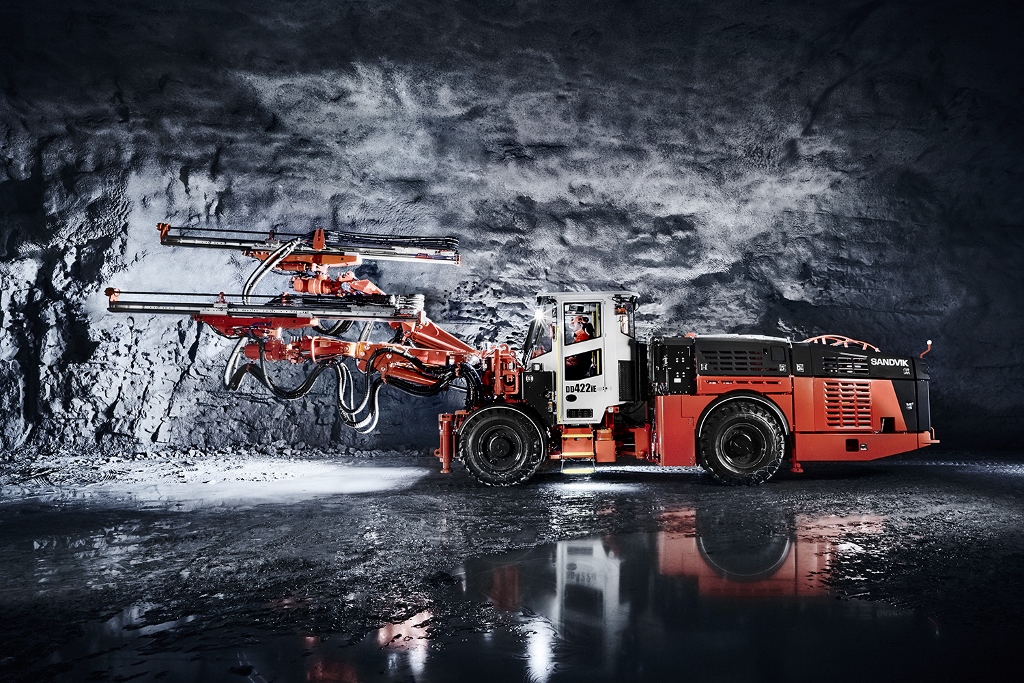
As mining companies continue to shift away from dirtier, less efficient practices, electrification is one of the first things on their to-do list. For many, reducing carbon emissions on-site and throughout operations outside of mining is critical to attracting capital and remaining competitive. The rising costs of fuel and complex maintenance for combustion engines have given companies an incentive for change, and miners are stocking up on battery-powered trucks for hauling, transportation, and other tools that previously used diesel or gasoline to get the job done.
A Scandinavian Approach
Swedish equipment manufacturer Sandvik now expects that the market for battery-electric underground mining equipment will grow at a faster clip in two to three years. The dual goals of lowering emissions and cutting costs give these companies plenty of incentives to make the switch, with investors also looking on eagerly to see what companies are doing with respect to the all-important environmental, social, and governmental principles.
Sandvik’s mining business head said that the company could sell more electric than diesel-driven underground mining equipment in the coming ten years. Epiroc and Caterpillar, two of Sandvik’s main competitors and some of the largest suppliers in the world for the mining industry, will also be going head to head with the company to supply the tools necessary for the electrification coming down the line, beginning now.
Sandvik claims that its approximately 30 battery-electric loaders and trucks operating in underground mine production is the largest amount in current operation, more than any of its competitors. Still, this amount is less than 0.5% of its total fleet and shows how much runway there still is for this market segment to expand for equipment suppliers. As it continues to gain pace, it will drive much of the new equipment sales over the coming decade. Henrik Ager, head of Sandvik Mining and Rock Solutions, said, “In the past two years, we have gone from thinking that electrification might turn into a great technology shift to becoming certain that’s where we’re heading.”
He said that in two to three years, electric machinery should be fully proven to work in mines and be part of the discussions for all procurement. Approximately 60% of an underground mine’s energy consumption comes from infrastructure, mainly electrified. Still, the rest is consumed by loaders and trucks, transporting and hauling heavy materials from the site to refinement centers and processing plants or to stockpiles. Those loaders and trucks still primarily run on diesel, carrying up to 65 tonnes of rock at a time.
Good for the Environment, Good for Investment
For investment bank UBS, the electrification of the industry is not only an environmental benefit for all stakeholders but will bring savings for mining companies as well. Analyst Guillermo Peigneux Lojo said, “In the years to come we shall see an accelerated replacement cycle for especially underground mining equipment, although surface equipment will also benefit from solid growth rates.”
Barriers still remain until full adoption of electric vehicles and fully electric mines are the new normal. Battery-driven loaders and trucks are more expensive to buy, making the upfront costs unpalatable for some mining companies at the moment. However, down the road, the benefits are numerous. Savings on ventilation and cooling, high costs in underground mines can make it beneficial and profitable for mines to go completely electric right now.
Major mining companies have already begun the process of electrification at many of their mines. Newmont’s (NYSE:NEM) Borden gold mine and New Gold’s (TSX:NGD) Afton mine currently use Sandvik’s battery-electric equipment in their operations. The loaders and trucks, as well as some of the lighter equipment, use lithium-ion batteries, a technology that allows for faster charging and higher battery density, leading to more prolonged use between charges, an essential factor for rapid adoptions.
Mirroring The Ethos of Tesla and Elon Musk
Elon Musk’s Tesla has created a similar business model, focusing on bringing battery technology to the forefront of the mission, and bringing down the cost and effectiveness of the batteries in its vehicles. Sandvik’s vision is to do the same; the company is building around the battery instead of starting with the vehicle itself. The research and development costs are much lower, and the equipment being used is already efficient and effective.
“It’s the Tesla parallel. That is what they have done, and it’s much better,” Ager added.
The above references an opinion and is for information purposes only. It is not intended to be investment advice. Seek a licensed professional for investment advice. The author is not an insider or shareholder of any of the companies mentioned above.
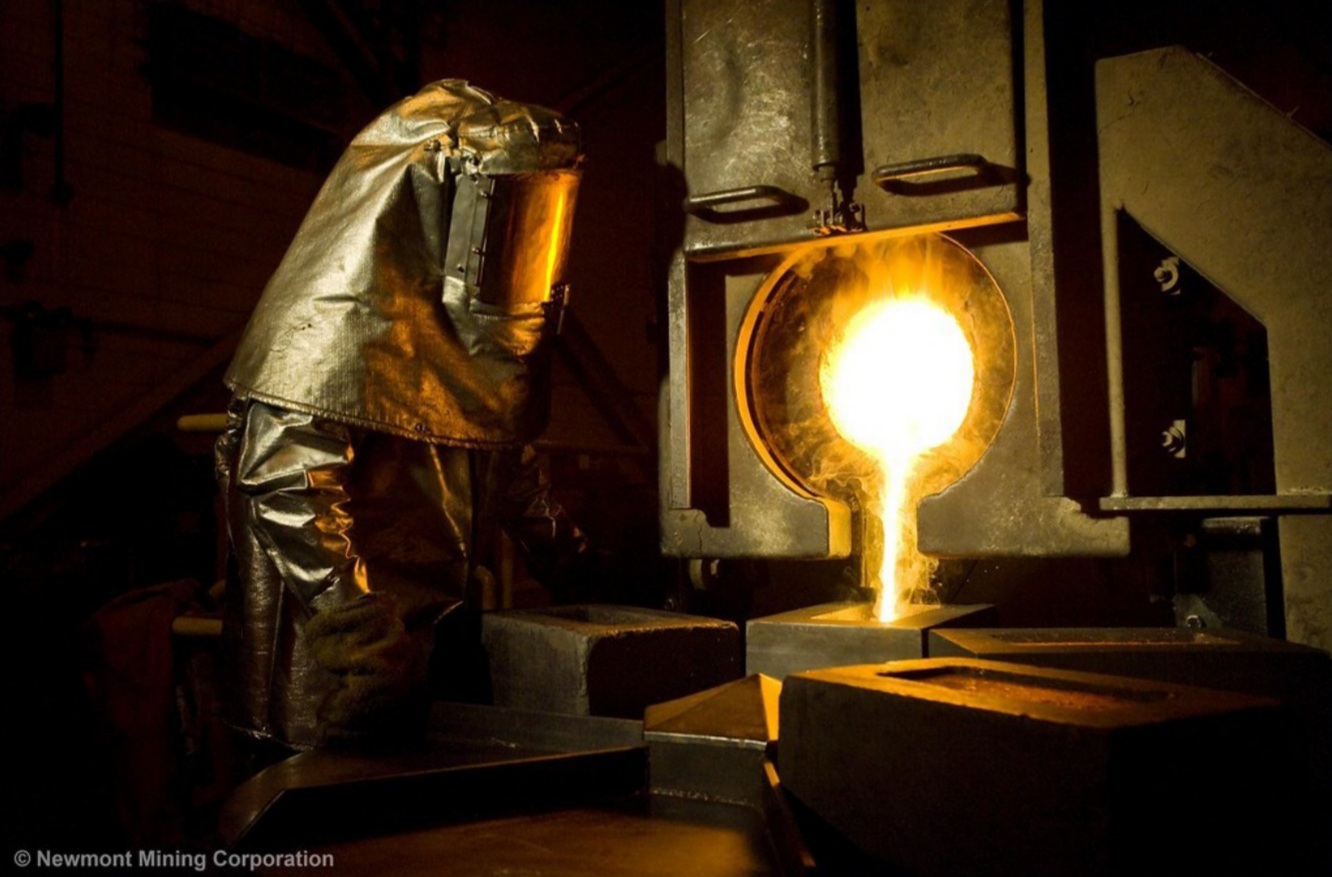
Monday, May 17 saw Newmont (NYSE:NEM) (TSX:NGT) complete its acquisition of GT Gold by scooping up the outstanding 85.1% of common shares of the Canadian exploration company in a C$393 million cash deal. Announced two months ago in March, the deal allows Newmont (NYSE:NEM) (TSX:NGT) to take control of the Tatogga gold-copper project in the Traditional Territory of the Tahltan Nation.
Tatogga sits about 14km west of Imperial Metal’s Red Chris copper-gold mine in British Columbia. For Newmont (NYSE:NEM) (TSX:NGT), the acquisition gives the US-based gold mining company a major advantage in the region, and further consolidates its position as the world’s number one gold producer.
Bigger and Better
By adding the copper-gold project to Newmont’s (NYSE:NEM) (TSX:NGT) portfolio, the company will add significant gold and copper annual production to its overall output. It also expands the company’s foothold in the area by adding to its existing interest through the company’s 50% ownership in the Galore Creek project; the acquisition includes the Saddle North asset. The company has also opened up opportunities for further exploration beyond the deposits at Saddle North with this acquisition.
Newmont (NYSE:NEM) (TSX:NGT) president and CEO Tom Palmer commented in a statement: “With the acquisition of GT Gold and the Tatogga project in the highly sought-after Golden Triangle district of British Columbia, Canada, Newmont continues to strengthen our world-class portfolio. We will partner with the Tahltan Nation at all levels, and with the Government of B.C to ensure a shared path forward as the company understands and acknowledges that Tahltan consent is necessary for advancing the Tatogga project.”
M&A Optimism Picks Up
M&A activity has picked up again after a sluggish rut in 2020 for the entire mining industry, but beautiful British Columbia’s volume has been higher than the average. Many of the deals in the last six months have involved deals with Vancouver-headquartered companies or companies with projects in the province.
In 2020, there was the sale of the New Gold (NYSE:NGD) (TSX:NGD) Blackwater property south of Prince George to Artemis Gold (TSX.V:ARTG) for a total of $190 million. The snowfield project operated by Pretium Resources (TSX:PVG) was bought by Seabridge Gold Inc. (TSX:SEA) in December 2020 for $100 million in cash, a 1.5% net smelter royalty on all production, and a future contingent payment of $20 million. Those deals began to foreshadow a pickup in M&A activity as miners’ optimism rose with the lifting of restrictions and business operations in some parts of the economy.
In early 2021, Eldorado Gold (NYSE:EGO) (TSX:ELD) made a neat and tidy acquisition of QMX Gold Corp. (TSX.V:QMX) for $132 million to kick off the new year.
More activity is likely with higher volume as well as bigger buyouts as a dearth of exploration projects or development projects makes anything operating or of a higher-quality worth even more. With everything scrambling to scoop up the same properties and projects, the competition is fierce, and it is driving bidding wars and competition not unlike the red-hot Canadian housing market.
The above references an opinion and is for information purposes only. It is not intended to be investment advice. Seek a licensed professional for investment advice. The author is not an insider or shareholder of any of the companies mentioned above.
If you would like to receive our free newsletter via email, simply enter your email address below & click subscribe.
 Follow us on Twitter
 Become our facebook fan
CONNECT WITH US
Tweets
Tweet with hash tag #miningfeeds or @miningfeeds and your tweets will be displayed across this site.
MOST ACTIVE MINING STOCKS
Daily Gainers
 CMC Metals Ltd. CMC Metals Ltd. |
CMB.V | +900.00% |
 Eden Energy Ltd Eden Energy Ltd |
EDE.AX | +200.00% |
| GoviEx Uranium Inc. |
GXU.V | +42.86% |
| Eagle Nickel Ltd. |
ENL.AX | +41.67% |
| Citigold Corp. Limited |
CTO.AX | +33.33% |
| Mount Burgess Mining NL |
MTB.AX | +33.33% |
| Exalt Resources Limited |
ERD.AX | +31.94% |
| Casa Minerals Inc. |
CASA.V | +30.00% |
| Cariboo Rose Resources Ltd |
CRB.V | +28.57% |
| Belmont Resources Inc. |
BEA.V | +28.57% |