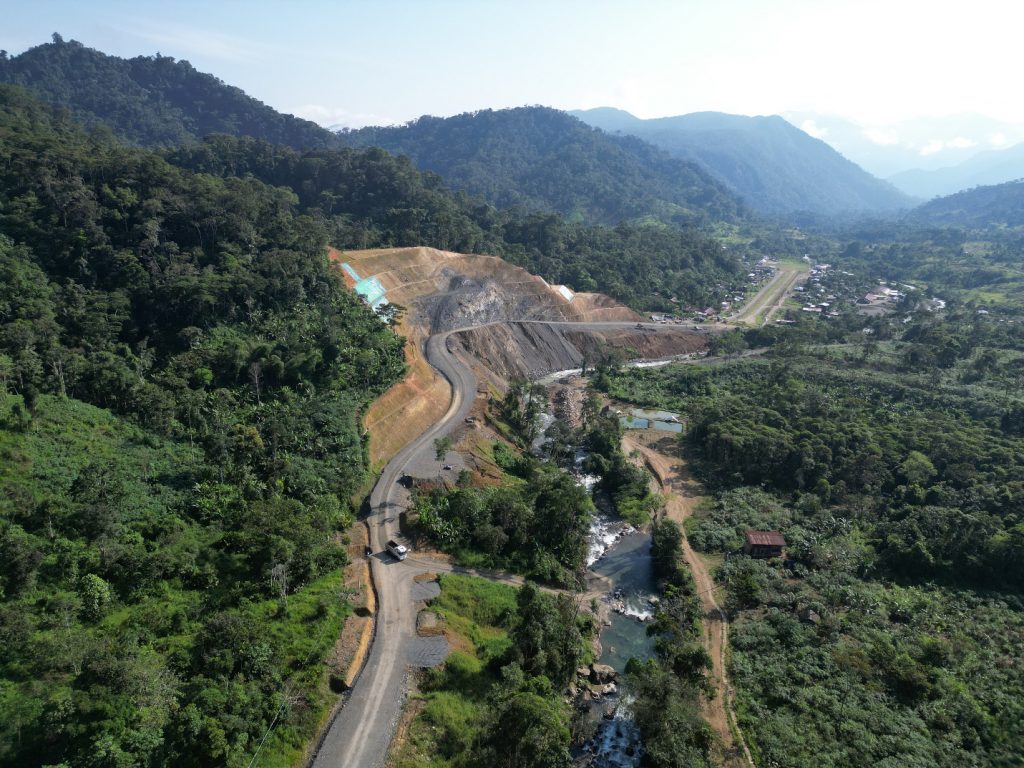
Solaris Resources (TSX:SLS) (NYSEAmerican:SLSR) says it has secured an option to acquire up to a 100 percent interest in a new set of exploration areas next to its Warintza Project in southeastern Ecuador, a move the company says would expand its land position around Warintza by roughly 40,000 hectares. The company also reported early-stage prospecting results from its Solaris 1 optioned areas, including copper anomalies and rock sample results of as much as 8.38 percent copper, and provided an update on permitting and feasibility work at Warintza.
The announcement was issued from Quito, Ecuador on January 28, 2026, by Solaris Resources Inc., which trades on the Toronto Stock Exchange under SLS and on the New York Stock Exchange under SLSR.
New option areas adjacent to Warintza
According to Solaris, Ecuador’s state-owned mining company, Empresa Nacional Minera ENAMI EP, has granted Solaris an option to acquire up to a 100 percent interest in a new portfolio of exploration areas that Solaris refers to as Solaris 2. The Solaris 2 areas are located immediately adjacent to the company’s Warintza Project.
Solaris framed the Solaris 2 award as an expansion of its footprint around Warintza by approximately 40,000 hectares. The company said the newly optioned areas capture extensions of geological trends that it interprets as continuous with Warintza. Solaris also said these new areas are interpreted to host significant copper mineralization and are characterized by widespread potassic alteration, which it described as typical of large copper porphyry systems.
In its statement, Solaris described the combined land position, including its wholly owned Warintza property as well as the Solaris 1 and Solaris 2 optioned areas, as supporting a district-scale strategy. The company said the consolidated position enables planning beyond a single deposit toward a multi-asset growth trajectory that could use shared infrastructure, coordinated environmental and social management, and phased development across an integrated copper district. Solaris added that Warintza remains its flagship and most advanced project, while the surrounding areas provide optionality and long-term value creation potential.
Executive and ENAMI comments
Solaris President and CEO Matthew Rowlinson described the Solaris 2 award as an extension of the company’s position in the broader district, and pointed to results from Solaris 1 as part of the rationale for additional follow-up work. Rowlinson said:
“The award of these areas represents a significant step forward in strengthening our position across what is proving to be a highly prolific copper district. Early prospecting results from Solaris 1 are particularly encouraging, with multiple high-priority anomalies highlighting the broader geological potential beyond Warintza itself. With this expanded concession package, Solaris is well positioned to unlock a true district-scale opportunity built on shared infrastructure, responsible development and strong partnerships with the State and local communities.”
ENAMI EP General Manager Galo García, in a separate statement included in the release, discussed the agreement in the context of ENAMI’s relationship with Solaris and the broader development framing. García said:
“We are very pleased that the second commercial agreement with Solaris has been finalized. By the end of 2024, the company had consolidated its position as a strategic partner of ENAMI EP, which has allowed us to strengthen a relationship based on cooperation and a shared vision for development. ENAMI EP is a strategic ally, committed to accompanying and supporting these processes. Together with Solaris, we are moving forward with mining projects that will represent a significant and sustainable contribution to the country’s development.”
Early-stage Solaris 1 prospecting identifies three priority target areas
Alongside the Solaris 2 option, Solaris provided detail on ongoing greenfield exploration across the broader Warintza district, including areas it owns outright and areas it holds under option arrangements.
Within the Solaris 1 optioned areas, Solaris said it has identified three high-priority target areas: Tinki Northwest, Tinki North, and Tinki South. The company said its fieldwork over the past 16 months has included 11 field prospecting expeditions, during which it collected more than 1,500 rock and soil samples. Solaris said the prospecting efforts have been primarily focused on Tinki South.
Solaris reported that initial geochemical results identified strong copper anomalies hosted within volcanic sequences affected by widespread potassic alteration. The company said this setting is indicative of shallow, potentially high-grade copper mineralization and warrants detailed follow-up.
Soil sampling grid and two anomalies at Tinki South
Solaris said a systematic soil sampling programme was completed at Tinki South using a 100-metre grid, and that the work defined two significant copper anomalies, described as western and eastern.
For the western anomaly, Solaris reported the following:
- Size described to date as approximately 1,000 metres by 300 metres
- Soil copper values ranging from 200 to 800 ppm
- Rock samples returning 0.11 percent to 8.38 percent Cu
For the eastern anomaly, Solaris reported:
- Extent described to date as approximately 2,000 metres by 600 metres
- Soil copper values ranging from 250 to 1,045 ppm
- Rock samples returning 0.10 percent to 0.99 percent Cu
Solaris also stated that surface outcrops in both areas are partially leached. The company said it anticipates higher and more consistent copper grades at depth, which it said enhances the exploration potential.
Community context and permitting approach for Solaris 1 activities
Solaris said the Solaris 1 areas are located within the Shuar community of Tinkimints, and that the community continues to provide constructive support for prospecting activities conducted under an established prospecting agreement.
The company said it is working collaboratively with relevant ministerial authorities to advance permitting in what it described as an orderly and responsible manner. Solaris added that it aims to ensure exploration programmes proceed in compliance with Ecuadorian regulations and international best practices.
Solaris 2 concession terms and award process
Solaris provided a description of the process ENAMI EP used for awarding the Solaris 2 areas. The company said the award followed a process established by ENAMI EP in which credentialed bidders submit nonbinding proposals for proposed minimum investments on the new areas.
Solaris said the award remains subject to entry into a definitive framework agreement for the Solaris 2 areas, and that the terms are expected to include the following elements:
- An upfront payment to ENAMI EP of US$0.25 million
- A proposed minimum exploration programme of US$25 million over the 4 year exploration phase
- Up to US$1.75 million subject to the achievement of certain milestones
- An exclusive option to acquire the claims from ENAMI EP at a price to be determined by independent experts
Solaris said the award follows the same commercial structure as the Solaris 1 earn in arrangement.
Permitting status at Warintza and 2026 expectations
In its project update, Solaris said it continues to advance permitting activities at Warintza and remains confident in securing approvals required to support construction and long-term development through what it described as a parallel-tracked, de-risked permitting strategy.
Environmental Impact Assessment review
Solaris said the Environmental Impact Assessment, or EIA, is in the final stages of review. The company said it anticipates receipt of a second and final round of minor technical observations imminently. Solaris added that, following clarification of any final observations, it expects technical approval of the EIA to be issued.
The company also stated that the EIA review timeline has not constrained broader project advancement. Solaris said it continues to progress multiple critical permits, technical studies, and de-risking initiatives in parallel, and that it is maintaining momentum across development workstreams. Solaris said that, through this approach, it expects Warintza to be fully permitted during the second half of 2026.
Feasibility Study underway with international engineering and technical firms
Solaris said it has commenced the Feasibility Study for Warintza and has engaged engineering and technical firms that it described as globally recognized, including Ausenco, Knight Piésold, and AMC Consultants. Solaris said these firms previously delivered the project’s Pre-Feasibility Study, or PFS, which the company said was published in November 2025.
According to Solaris, the Feasibility Study is focused on:
- Optimizing mine design and infrastructure
- Refining tailings management solutions
- Advancing capital and operating cost estimates
- Establishing a clear pathway toward an informed construction decision
Solaris’ update combined three strands: expanded access to new ground adjacent to Warintza through the Solaris 2 option, early-stage anomaly identification in the Solaris 1 areas through soil and rock sampling, and continued advancement of Warintza’s permitting and technical work, including an EIA nearing technical approval and a Feasibility Study now underway with external partners.
The company’s stated near- to medium-term timeline centers on completing remaining steps in the EIA process, continuing parallel permitting and technical studies, and advancing the Feasibility Study workstreams, alongside follow-up exploration in the Solaris 1 anomalies and the expected framework agreement steps associated with the Solaris 2 award.

Solaris Resources (TSX:SLS) (NYSEAmerican:SLSR) has entered 2026 with renewed attention from the market, not only because of its growing scale but also due to who stands to benefit most from that momentum. As the company’s market capitalization recently touched approximately CA$1.9 billion following a solid weekly gain, its shareholder structure is a defining feature of the investment backdrop.
Unlike many mid- to late-stage mining developers, Solaris is firmly insider-led. Company insiders collectively control roughly 41% of the outstanding shares, translating into an equity stake worth about CA$768 million at current levels. That concentration of ownership means the company’s leadership is highly exposed to both upside and downside, a dynamic that often sharpens focus on long-term value creation rather than short-term market noise.
At the top of that insider group sits Richard Warke, the company’s largest shareholder, with an interest of approximately 36%. Beyond him, ownership drops off quickly, with the second- and third-largest shareholders each holding just over 4%. In aggregate, the top five shareholders control around 51% of the company, effectively giving a small group meaningful influence over strategic direction and key decisions.
This ownership profile has taken on added relevance as Solaris continues to advance its flagship assets. In the middle of this valuation uplift, the pre-feasibility study (PFS) released by the company has helped frame Solaris not merely as a speculative explorer, but as a developer moving steadily along the project de-risking curve. While the PFS does not represent a final investment decision, it provides the market with a clearer picture of potential project economics, capital intensity and development pathways. For insider-heavy companies like Solaris, such milestones often carry extra weight, as they directly test management’s technical assumptions and strategic judgment.
Institutional investors have also taken notice. Institutions now hold roughly 31% of Solaris Resources, a level that suggests growing credibility among professional asset managers. Inclusion on institutional registries can support liquidity and visibility, though it also introduces the risk of “crowded trades” if sentiment were to shift. Notably, hedge funds do not appear to have a meaningful presence on the share register, leaving the institutional base more skewed toward longer-term holders.
Meanwhile, the general public owns about 27% of the company. While retail investors lack the voting power to dictate outcomes, their participation adds breadth to the shareholder base and can amplify market reactions to news flow, particularly around technical studies, permitting updates or commodity price movements.
Taken together, Solaris Resources is a case study in concentrated ownership at a critical stage of corporate evolution. Insiders are deeply invested, institutions are increasingly involved, and recent technical progress such as the PFS has begun to anchor the valuation in more tangible development metrics.
Solaris Resources (TSX:SLS) (NYSEAmerican:SLSR) President and CEO Matthew Rowlinson sits down with Kitco Mining at the 2025 NBF CEO Mining Conference in London to walk through the company’s latest milestones at the Warintza Project in Ecuador. In the interview, Rowlinson discusses the newly released pre-feasibility study and maiden reserve, highlighting a robust development plan that points to long-life, low-cost copper production with strong economics.
Rowlinson also outlines why he views Warintza as a multi-generational asset, supported by a massive 5.8-billion-ton resource, favourable mining characteristics, and established infrastructure. He explains the project’s staged permitting and development strategy, key timelines toward production, and how the PFS positions Solaris for potential strategic interest while it continues to advance Warintza with a focus on maximising long-term shareholder value.

Solaris Resources (TSX: SLS; NYSE: SLSR) released results of a Pre-Feasibility Study (PFS) for its Warintza copper-molybdenum project in southeastern Ecuador, reporting a maiden open-pit mineral reserve of 1.3 billion tonnes at 0.41% copper-equivalent (CuEq) and a 22-year life-of-mine (LOM) constrained by tailings storage design. The study outlines average annual CuEq production of more than 300,000 tonnes in the first five years and over 240,000 tonnes during the first 15 years, with a post-tax NPV (8%) of US$4.617 billion, a post-tax IRR of 26%, and a 2.6-year post-tax payback.
Production, costs and economics
The PFS contemplates 60.2 Mt per year of throughput and LOM average Cu head grades of 0.31% with 84% Cu recovery. Average annual copper production is 230 kt in years 1–5 and 183 kt in years 1–15, alongside by-products averaging 8.6 kt/y molybdenum, 57 koz/y gold and 1.3 Moz/y silver during the first 15 years. LOM totals are 3,436 kt Cu, 154 kt Mo, 1.079 Moz Au and 26.6 Moz Ag. Unit operating costs total US$9.74/t milled in the first five years (US$8.75/t LOM), including mining US$3.38/t milled in the first five years (US$2.40/t LOM), processing US$5.58/t and G&A US$0.78–0.79/t. C1 cash costs are projected at US$0.59/lb Cu payable in the first five years (US$1.01/lb LOM) and AISC at US$0.85/lb in the first five years (US$1.25/lb LOM). Average annual EBITDA is US$1.9bn in the first five years and US$1.4bn during the first 15 years; average annual post-tax free cash flow is US$1.3bn and US$1.0bn over the same periods, respectively. Total post-tax free cash flow over the mine life is estimated at US$13.5bn. Initial capital (including 15.7% overall contingency) is US$3.729bn, with sustaining capital of US$1.713bn and closure costs of US$200m. Capital intensity over the first 15 years is ~US$15,440 per average tpa-CuEq. Base-case metal prices used for the economic analysis are copper US$4.50/lb, molybdenum US$20/lb, silver US$28/oz and gold US$2,800/oz for the first three years then US$2,500/oz thereafter. Sensitivity analysis indicates the post-tax NPV (8%) is most sensitive to copper price (or equivalently copper grade), followed by LOM operating costs, initial capital and molybdenum price.
Reserves, resources and strip ratio
Proven reserves total 797 Mt at 0.49% CuEq (0.37% Cu, 0.02% Mo, 0.05 g/t Au, 1.37 g/t Ag) and probable reserves 503 Mt at 0.28% CuEq (0.22% Cu, 0.01% Mo, 0.03 g/t Au, 1.19 g/t Ag). Payable metal assumptions are Cu 96.5%, Au 91%, Ag 91% and Mo 100%. Oxide and mixed material comprise <0.02% of total reserves. The LOM average strip ratio is 0.53:1; the first-five-years strip ratio is 0.37:1. A maiden 2025 Mineral Resource Estimate (MRE) reports Measured plus Indicated resources of 3.746 Bt at 0.32% CuEq (0.24% Cu, 0.01% Mo, 0.04 g/t Au, 1.19 g/t Ag) and Inferred resources of 2.092 Bt at 0.20% CuEq (0.16% Cu, 0.01% Mo, 0.02 g/t Au, 1.11 g/t Ag), at a 0.1% Cu cut-off within an optimized pit and an NSR cut-off of US$6.30/t. Oxide and mixed material account for <0.01% of resources. The company reports a 312% increase in Measured + Indicated tonnage relative to its 2024 MRE following an additional ~75,000 m of drilling (total ~177,118 m) and initial inclusion of Warintza West. The 2025 MRE incorporates silver grades and a change from a 0.25% CuEq reporting cut-off in 2024 to the stated NSR + 0.1% Cu cut-off. The effective date of the resource and reserve estimates is May 1, 2025.
CuEq methodology. For sulphide material: CuEq (%) = Cu (%) + 3.94 × Mo (%) + 0.52 × Au (g/t) + 0.01 × Ag (g/t). Mixed: CuEq (%) = Cu (%) + 3.76 × Mo (%) + 0.50 × Au (g/t) + 0.005 × Ag (g/t). Oxide: CuEq (%) = Cu (%). The PFS notes that mineral resources are inclusive of reserves and that resources that are not reserves do not have demonstrated economic viability.
Mine design and schedule
Warintza is planned as a conventional owner-operated open pit developed through two main pits (Warintza Central and Warintza East) and eight phases to sequence higher-grade ore early. The operation targets steady-state ore production of ~60.2 Mt/y after a two-year pre-strip. The primary fleet includes 120-t class cable shovels, 70-t wheel loaders and 320-t haul trucks, supported by dozers, graders and water trucks. Bench heights range 15–30 m; dual-lane haul roads are 40 m wide; slope angles are 36°–47° depending on geotechnical domains. Drilling and blasting will use 311 mm holes; annual explosives consumption peaks at ~46,000–58,000 t. Approximately 221 Mt of low-grade ore is scheduled for stockpiling and later processing, with LOM balances constrained by tailings storage limits; later years transition primarily to stockpile reclaim ahead of closure and reclamation.
Processing and product
The 165,000 t/d (60.2 Mt/y) concentrator is a conventional Cu-Mo flowsheet treating predominantly hypogene chalcopyrite with some supergene chalcocite/bornite. Ore will be primary- and secondary-crushed, then ground in two lines each with a 24 MW dual-pinion SAG mill and two 22 MW dual-pinion ball mills to P80 150 µm. Rougher flotation concentrate will be reground to P80 25 µm and cleaned in three stages to produce a bulk Cu-Mo concentrate for downstream separation. Copper and molybdenum concentrates will be dewatered for offsite smelting. Tailings will be thickened; cyclone stations will produce sand for dam construction with fines deposited in the Tailings Management Facility (TMF). The plant site is on steep terrain; footprint optimization and terracing may reduce earthworks costs. The company states both a high-quality copper concentrate and a clean molybdenum concentrate are expected, with non-material deleterious elements.
Infrastructure, logistics and power
The project is accessed by national/provincial highways with a final 58 km along the Limón–Warints road. Concentrate is planned to be transported to the Port of Bolívar near Machala; Bolívar (Machala) and Posorja (Guayaquil) are the planned ports for heavy equipment and materials. Power demand is estimated at 236 MW, to be supplied via a 62.1 km, 230 kV transmission line from the Bomboiza substation. Raw water will be supplied from a rainwater intake on the North Diversion Channel and transported by gravity; non-contact water will be diverted and contact water recycled from the TMF. Project communications will include a fibre-optic line with leased internet and radio backup, redundant switches, industrial Wi-Fi 6E (up to 40 Gbps), ~100 4K CCTV cameras with NVR redundancy, biometric/RFID access control, TETRA radios and a centralized monitoring centre. Site accommodation includes a main permanent camp near the plant and temporary camps at Piuntz, Yawi and Warintz for construction.
Tailings and waste rock
The TMF is designed to store ~1.3 Bt of tailings within the Warintza River basin over the projected mine life, contained by four dams in the Warints stream valley. Starter dams will be rockfill with a low-permeability core and a geomembrane liner on Dam No. 1, with centreline raises thereafter. Cycloning will separate coarse fractions for dam construction; fine fractions will be deposited in the TMF. Geochemical modelling indicates neutral pH at the final collection point based on current testing. The upstream Waste Rock Facility is designed for ~670 Mt and will be placed from downstream to upstream for stability.
Permitting, environmental and social
Solaris submitted an exploitation-phase Environmental Impact Assessment (EIA) in August 2024 to Ecuador’s Ministry of Environment, Water and Ecological Transition (MAATE), recently incorporated into the Ministry of Environment and Energy (MAE). The company reports it has addressed government inquiries and submitted the final Technical EIA, which is under review. In July 2025, the Sub-Secretary of MAE visited site and met Indigenous and local stakeholders regarding readiness for the Free, Prior and Informed Consultation (FPIC) process required under Ecuadorian law. The company states it is working with MAE to advance Exploitation Agreement permits, with progress on engineering facilities and water management. Environmental and social baseline programs cover biology, cultural resources, geochemistry, hydrology and groundwater.
Solaris reports formal community agreements with the Shuar centres of Warints and Yawi, including a Strategic Alliance (2019) and an Impacts & Benefits Agreement (IBA) signed in 2020 and later updated. As of September 2025, the company says it has signed cooperation agreements with all Indigenous organizations surrounding Warintza, including PSHA and FICSH, described as Ecuador’s two largest Shuar representative bodies, developed with government support. The agreements provide for employment, training, education, local procurement, infrastructure and direct financial benefits.
District context and property
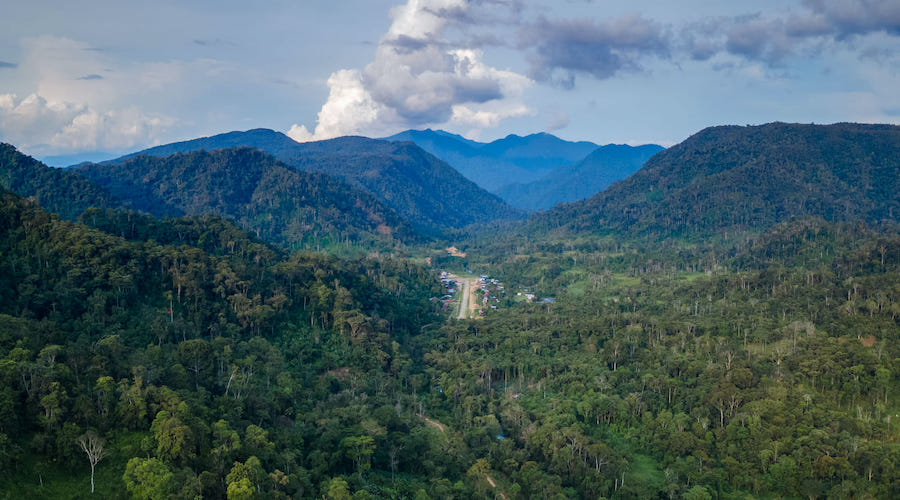
Warintza is part of a porphyry corridor in southeastern Ecuador that includes the Mirador mine to the south and the San Carlos and Panantza deposits to the west. The property comprises nine metallic mineral concessions totalling 26,773 ha (268 km²). Solaris announced an option to acquire up to 100% of ten additional adjacent concessions (~40 km²) considered prospective for porphyry copper and epithermal gold. The site’s average elevation is ~1,200 m, with regional elevations from ~800–2,700 m and slopes of 25°–40°. The climate is tropical humid (Af), ~22.9°C average temperature and ~1,900 mm annual precipitation, permitting year-round operations.
Marketing, streaming and offtake
Production is planned to be sold as copper concentrate with gold and silver by-products and as molybdenum concentrate. The company has a gold streaming agreement with Royal Gold Inc. and a partial offtake agreement with Orion Resource Partners for copper and molybdenum concentrates; the remainder is to be sold on the open market. Treatment and refining charges are based on regional benchmarks for similar products.
Company statement
Matthew Rowlinson, CEO and President of Solaris Resources Inc., said: “Warintza checks every box: global scale, size, and longevity, technical simplicity in a supportive mining jurisdiction, exceptional economics driven by a world-class strip adjusted grade, and above all, optimal timing to production in a tightening copper market. With over 3.7 billion tonnes of Measured and Indicated Resources, 2.1 billion tonnes of Inferred Resources, 1.3 billion tonnes of Mineral Reserves, a low strip ratio, and early access to high-grade material, Warintza stands as one of the most compelling copper development assets anywhere in the world. We are fully funded for a construction decision through a US$200 million non-dilutive financing from Royal Gold earlier this year, while importantly retaining 100% ownership and full strategic control. In a copper market characterized by declining grades, few new discoveries, and increasingly complex permitting environments, Warintza is uniquely positioned to come online at the right moment, helping meet a critical global supply gap, while delivering strong returns to stakeholders. This is a rare window of opportunity: a generational discovery in a mining-friendly jurisdiction, with deep community support and a proven management team driving it forward. The future is bright, and we look forward to unlocking Warintza’s real value.”
Investor presentation
Solaris plans an online presentation today at 14:00 (Zug) / 08:00 (Toronto) via the Investor Meet Company (IMC) platform; the event is open to existing and potential shareholders, and questions can be submitted during the presentation. Registration details are provided in the company announcement.
Capital and operating breakdowns
Initial capital of US$3.729bn comprises (US$M): processing plant including earthworks (1,063), camp and site infrastructure (273), EPCM (256), mine equipment (304), TMF and water management (509), pre-stripping and haul road construction (179), other preliminary works/project team & G&A/IT/light vehicles (89), indirect costs (310), contingency (505) and VAT (242). Sustaining capital totals US$1.713bn, including open pit (736), infrastructure (356), TMF (239), water management (211), processing plant (65) and indirect/studies (106). LOM operating costs sum to US$3,116m mining (US$1.38/t moved), US$7,250m processing (US$5.58/t milled) and US$1,010m G&A (US$0.78/t milled).

Solaris Resources (TSX:SLS) (NYSEAmerican:SLSR) has signed a landmark agreement with the Pueblo Shuar Arutam (PSHA), completing formal partnerships with every Indigenous organization surrounding its Warintza copper project in southeastern Ecuador.
The PSHA, representing nearly 10,000 people in 47 Shuar centers, approved a joint working group with Solaris in January 2025. A Letter of Intent followed in February, leading to the new formal agreement. Solaris already has an Impacts and Benefits Agreement with the Warints and Yawi Shuar Centres, signed in 2020 and updated in 2022 and 2024.
“This agreement reflects the strong collaboration between PSHA and Solaris, as well as our shared commitment to strengthening the communities and families of Morona Santiago. The agreement seeks to generate concrete and sustainable benefits, and we remain committed to ensuring that future generations enjoy the lasting advantages of responsible mining. We are confident that the next stages of this alliance will continue to demonstrate the broad and sustainable benefits that large-scale mining can deliver,” said Marcelo Unkuch, PSHA president.
Matthew Rowlinson, Solaris CEO and president, said, “With this signing, we have now established formal relationships with all Indigenous organisations surrounding Warintza, in addition to our ongoing collaboration with local authorities. These agreements generate strong momentum for the continued advancement of the project and reinforce our long-term commitment to inclusive, community-led development.”
The company said the PSHA deal adds to an earlier trilateral agreement with the Interprovincial Federation of Shuar Centers, Ecuador’s largest Shuar organization, and a partnership with the Alliance for Entrepreneurship and Innovation of Ecuador.
Regulatory and Technical Progress
Regulatory steps are also moving ahead. Solaris submitted a final Technical Environmental Impact Assessment in August 2024 and said it has addressed all government questions. The report is now under review by Ecuador’s Ministry of Environment and Energy.
In July 2025, ministry and Sub-Secretary of Mines officials visited the site and met Indigenous and local stakeholders to evaluate readiness for Ecuador’s Free, Prior and Informed Consultation process, which is required for large resource projects. Solaris expects the consultation to begin in the coming months.
“We are advancing every facet of project de-risking with discipline and determination.” added Matthew Rowlinson. “Warintza is a uniquely positioned asset, long-life, near-term, and aligned with the world’s future resource needs. We remain committed to delivering exceptional value for all stakeholders through responsible development.”
On the technical side, Solaris continues to work on a Pre-Feasibility Study with consultants Ausenco, Knight Piésold and AMC. The study will include an updated Mineral Resource Estimate incorporating Warintza West for the first time and is scheduled for completion in the second half of 2025.
The company said it is working toward a Final Investment Decision for the project. It also plans further exploration within the broader Warintza district and noted that a recent transaction with Royal Gold secures long-term liquidity.
Solaris described these steps; completing Indigenous agreements, advancing environmental review and pushing technical studies—as key milestones for Warintza’s development.

Solaris Resources (TSX:SLS) (NYSEAmerican:SLSR) has announced the execution of US$200 million in financing agreements with RGLD Gold AG (“Royal Gold”), a subsidiary of Royal Gold, Inc. The funding package comprises a gold stream and a net smelter return royalty. US$100 million is immediately available to Solaris. The company states that the financing will be used to repay its senior secured debt facility with Orion Mine Finance Management LP and is anticipated to provide the necessary funds for value-accretive derisking activities through to a final investment decision for the Warintza project.
According to Solaris, the gold stream is expected to represent a small percentage of the gold produced over the mine’s life. The company also noted that a stream termination provision exists without penalties in the event of a change-of-control scenario. Solaris emphasized that it has maintained strategic optionality regarding future project financing and that the funding package is restricted to the Warintza cluster, preserving exposure to exploration upside within the Warintza district.
The total US$200 million consideration from Royal Gold will be paid in three tranches:
- US$100 million upon the closing of the transaction, which was concurrent with signing.
- US$50 million following the publication of the Pre-Feasibility Study and receipt of the Environmental Impact Assessment technical approval.
- US$50 million on the first anniversary of the closing date and completion of necessary security filings.
The closing of the second and third tranches is subject to customary conditions. Solaris intends to use the proceeds for technical studies, permitting activities, early infrastructure development, repayment of the Senior Debt facility, some district exploration, general working capital, and to fully fund the company through to a final investment decision.
Under the terms of the stream agreement, Royal Gold will receive gold deliveries equivalent to 20 ounces per 1 million pounds of copper produced from the designated Stream Area of Interest. For each ounce of gold delivered, Royal Gold will pay Solaris 20% of the spot price until 90,000 ounces have been delivered, and 60% of the spot price thereafter.
The royalty agreement grants Royal Gold a 0.3% net smelter return royalty on all metal production from the Expanded Area of Interest. This royalty will increase annually by 0.0375%, up to a maximum of 0.6%, until the earlier of the first gold delivery under the stream or eight years following the closing date.
The Stream Area of Interest is limited to a defined area around the mineral resource. If commercial production does not commence within eight years and the first stream delivery has not occurred, the stream area will expand to the Expanded Area of Interest. The royalty applies to the entire Expanded Area of Interest. In the event of a change of control where Royal Gold terminates the stream, the royalty area would revert to the Stream Area of Interest. Solaris retains the option to spin out non-core properties within the Expanded Area of Interest (excluding the Stream Area of Interest), in which case a 1.2% royalty would immediately apply to those properties.
In the event of a change-of-control transaction within five years of closing or before the first stream delivery, either party may choose to terminate the stream and return all advance payments without penalty. The royalty would remain in place and could automatically increase to 0.6% under certain change-of-control circumstances. Royal Gold has also committed to financially supporting Solaris’s environmental and social programs. The financing structure is designed to subordinate the stream and royalty to any future project financing.
Matthew Rowlinson, President and CEO of Solaris, stated: “This transaction is a clear endorsement of the potential scale, geological qualities and its near surface nature, economics and stage of development of Warintza, one of the few remaining near-term, globally significant copper development opportunities not controlled by a major. Further, it’s a reflection of the strong investor confidence in Ecuador as a mining jurisdiction, supported by the government’s commitment to the sector as a pillar of long-term economic development. The Stream is expected to represent a small percentage of the gold over the life of mine and together with the Royalty, enables the Company to maintain the project’s strategic flexibility. Through partnering with Royal Gold, a leader in the precious metals streaming and royalty space, this has not only brought very competitive cost of capital to the table, but a valued strategic relationship. We are proud of our team for executing a process that brought in a high-quality partner on accretive terms and we look forward to a long and successful partnership with Royal Gold, continuing to deliver on our commitment to unlocking value for all stakeholders.”
Richard Warke, Non-Executive Chairman of Solaris, also commented in a press release: “Congratulations to the management team for successfully securing a funding package that marks a major milestone in Warintza’s development. This financing structure provides Solaris with long-term liquidity while maintaining corporate flexibility going forward, allowing the Company to fully enhance shareholder value. Their swift efforts have positioned us for growth without foreseeable share dilution — a key win for our shareholders. This progress builds on the historic work performed that laid the foundation for Warintza’s transformation into a world-class, global scale multi-generational copper asset.”
Solaris anticipates publishing its Pre-Feasibility Study in Q3 2025 and will then proceed with the Bankable Feasibility Study. The technical review of the Environmental Impact Assessment is underway, with approval targeted for mid-2025. All project exploitation permits are expected by mid-year 2026. The company also expects to publish an updated Mineral Resource Estimate in Q3 2025 following the completion of over 82,000 meters of infill drilling. Solaris is also pursuing exploration activities across its broader land package.
The above references an opinion and is for information purposes only. It is not intended to be investment advice. Seek a licensed professional for investment advice. The author is not an insider or shareholder of any of the companies mentioned above.

The above references an opinion and is for information purposes only. It is not intended to be investment advice. Seek a licensed professional for investment advice. The author is not an insider or shareholder of any of the companies mentioned above.
Solaris Resources (TSX:SLS) (NYSEAmerican:SLSR) has released its Consolidated Financial Statements for the years ended December 31, 2024 and 2023, along with Management’s Discussion and Analysis.
The financial statements show that Solaris ended 2024 with cash and cash equivalents of $31,738,000, down from $38,865,000 at the end of 2023. Total current assets decreased to $32,580,000 from $39,388,000 year-over-year.
The company’s total assets stood at $57,196,000 as of December 31, 2024, compared to $61,820,000 at the end of 2023. Property, plant and equipment doubled to $3,866,000 from $1,932,000, while exploration and evaluation assets increased slightly to $20,179,000 from $19,929,000.
Solaris reported a significant increase in total liabilities, which rose to $66,483,000 from $36,394,000 in 2023. Notable changes include:
- Accounts payable and accrued liabilities more than doubled to $12,839,000 from $5,274,000
- Loans and borrowings increased substantially to $49,206,000 from $29,363,000
- Reclamation provision grew to $3,765,000 from $1,529,000
In December 2023, Solaris entered into definitive agreements for a financing package of up to $80,000,000, including a $60,000,000 Senior Loan. To date, the company has received $45,000,000, with the remainder contingent upon meeting certain milestones.
The above references an opinion and is for information purposes only. It is not intended to be investment advice. Seek a licensed professional for investment advice. The author is not an insider or shareholder of any of the companies mentioned above.
Solaris Resources (TSX:SLS)(NYSEAmerican:SLSR) has announced the formation of an Inter-Institutional working group. This group includes the Pueblo Shuar Arutam organization (PSHA), the host communities of Warints and Yawi, and the Ecuadorian State. The PSHA and its Governing Council have approved and signed a Letter of Intent (LOI) with Solaris.
Matthew Rowlinson, President and CEO commented in a press release: “At Solaris Resources, we believe that sustainable mining is not just an economic endeavour; it is a journey that must include the insights and values of every stakeholder involved, especially our indigenous populations. Their lived experiences and deep connection to the land are vital to shaping responsible mining practices that respect both our natural environment and cultural heritage. As we move forward, its vital we embrace an open dialogue and partnership rooted in trust, understanding, and mutual respect. Together, we continue to create a model for mining that not only drives economic growth but also uplifts our communities and preserves the rich tapestry of the Ecuadorian culture. Thanks to the Pueblo Shuar Arutam organization, and all other stakeholders, for their trust and support as we look to sustainably deliver this Tier 1 asset. This project is for Ecuador, by Ecuador and for the benefit of all stakeholders today, and the generations to come.”
The signing of the LOI occurred on February 5, 2025, at the Yawi Shuar Center. This ratification followed a resolution by the PSHA on January 18, 2025, to form the working group. The PSHA, an indigenous organization in Morona Santiago, operates outside of Solaris’ direct area of influence.
This development builds upon existing agreements between Solaris and the Shuar communities of Warints and Yawi. These communities have an Impacts and Benefits Agreement (IBA) with Solaris. The IBA was initially signed in September 2020, updated in March 2022, and again in April 2024. Solaris also has a trilateral cooperation agreement with the Interprovincial Federation of Shuar Centers (FICSH) and the Alliance for Entrepreneurship and Innovation of Ecuador (AEI).
The Inter-Institutional working group and the LOI aim to facilitate transparent dialogue and workshops. These discussions intend to lead to a future Cooperation Agreement, with the consent of the communities involved.
The PSHA, located in southeast Morona Santiago, comprises nearly ten thousand people organized into 47 Shuar centers.
The existing IBA with Warints and Yawi covers the Warintza Project. It aims to provide community support for the project’s progression from exploration and development to production. The IBA includes commitments to support the communities’ social and cultural practices, mitigate adverse impacts, and provide employment, contracting, and business opportunities. It also includes education, skills training, community infrastructure development, and financial benefits.
The trilateral cooperation agreement with FICSH and AEI, announced in March 2024, aims to promote economic and social development for Shuar communities. This includes health, education, skills training, entrepreneurship, innovation, and sustainable mineral resource development programs. FICSH includes 50 associations, 500 Shuar communities, and approximately 143,000 Shuar indigenous people.
In addition to the LOI, Solaris has concluded its infill drilling program at Warintza. The program included over 75,000 meters of drilling in 2024 and an additional 5,000 meters in early 2025, totaling over 80,000 meters. The primary goal of the drilling was to convert Inferred mineral resources to Measured and Indicated, and to expand uncategorized areas within the pit shell.
The data from this drilling program will form the basis for an updated Mineral Resource Estimate (MRE), expected to be published in mid-2025. This MRE will then be incorporated into the Pre-Feasibility Study (PFS), scheduled for release in Q3 2025.
The above references an opinion and is for information purposes only. It is not intended to be investment advice. Seek a licensed professional for investment advice. The author is not an insider or shareholder of any of the companies mentioned above.
Solaris Resources (TSX:SLS)(NYSEAmerican:SLSR) has announced the expansion of its leadership team with the appointment of three key executives. Richard Hughes has been named Chief Financial Officer and Company Secretary, Patrick Chambers will serve as Vice President of Investor Relations, and Ignacio Shimamoto has been appointed Vice President of Finance. These appointments are effective immediately.
Hughes replaces outgoing CFO Sunny Lowe and will oversee the finance function. His background includes experience as CFO and Executive Director of Trident Royalties PLC, which was recently acquired. Hughes has spent over two decades in the natural resources sector, specializing in strategy, capital markets, and corporate finance.
Chambers will lead global investor engagement, leveraging his geological, investor relations, and business development experience. Over the past 12 years, he has worked with various commodities, focusing on Latin America. Prior to joining Solaris, he served as Head of Investor Relations at Horizonte Minerals.
Shimamoto will manage financial strategy, including internal and external reporting, financial modeling, procurement, and contract management. He has over 20 years of experience in financial planning, acquisitions, and business improvement within the natural resources sector. His previous roles include Finance Manager for Copper Peru at Glencore and Regional Finance Manager overseeing mining operations in Argentina, Chile, and Peru.
Matthew Rowlinson, President and CEO of Solaris, welcomed the new executives and acknowledged the contributions of the outgoing team. “I am delighted to welcome Richard, Patrick, and Ignacio to the management team. Their expertise will be crucial as we continue our strategy to maximize returns for stakeholders. I also extend my gratitude to our outgoing team for their role in establishing the Warintza project as a world-class copper deposit. 2025 is an important year for Solaris as we continue de-risking activities and advancing our projects.”
In connection with his appointment, Hughes has agreed to subscribe for C$350,000 worth of common shares in Solaris through a private placement.
Final Emigration Steps
Solaris has also confirmed that the final steps in its emigration process are complete, pending a few administrative matters. The Company previously provided details on this transition in a news release dated November 20, 2024.
Solaris continues its progress in advancing the Warintza project and strengthening its leadership team as it moves forward with key strategic initiatives.
The above references an opinion and is for information purposes only. It is not intended to be investment advice. Seek a licensed professional for investment advice. The author is not an insider or shareholder of any of the companies mentioned above.
Solaris Resources (TSX:SLS) (NYSEAmerican:SLSR) has appointed Matthew Rowlinson as its President and Chief Executive Officer, effective January 1, 2025. This announcement comes at a pivotal moment for the company as it prepares to finalize its emigration from Canada to Zug, Switzerland, marking a transformative phase in its operational strategy.
Rowlinson brings a wealth of experience to his new role. He has spent over a decade in senior executive positions within Glencore’s copper department, most recently serving as Head of Copper Business Development since 2021. In this capacity, he co-led the strategic management of Glencore’s extensive copper portfolio, one of the largest in the industry. His tenure saw the execution of several high-profile mergers and acquisitions, including Glencore’s consolidation of the MARA project, a deal that underscored his expertise in navigating complex transactions and optimizing asset value.
The Strategic Shift to Switzerland
Solaris Resources’ decision to relocate its headquarters to Zug, Switzerland, is aimed at enhancing shareholder value and aligning with Ecuadorian regulatory frameworks. The move coincides with the advancement of the Warintza Project, the company’s flagship asset, which is progressing through the permitting phase. By relocating, Solaris seeks to position itself more advantageously in the global market, facilitating future growth and operational efficiency. The new base in Switzerland, known for its favorable business environment and strategic location, is expected to provide the company with enhanced opportunities for international expansion and investment.
The transition to Switzerland also reflects a broader strategy to optimize the company’s structure and operations. Alongside this relocation, Solaris plans to execute a spin-out transaction to capitalize on its non-core assets, including La Verde, Capricho, and Paco Orco. The spin-out will form a new growth-oriented copper company focused on consolidating operating and advanced development assets. With Rowlinson at the helm, this new venture is poised to leverage his extensive industry knowledge and network to drive rapid scaling and unlock significant value.
Board and Leadership Changes
Rowlinson’s appointment is part of a comprehensive leadership overhaul at Solaris. He will join the company’s board of directors, alongside Rodrigo Borja and Hans Wick, as of January 1, 2025. At the same time, Canadian directors Daniel Earle, Poonam Puri, Kevin Thomson, and Ron Walsh will step down. This realignment reflects the company’s commitment to assembling a leadership team that aligns with its new strategic direction.
In addition to his role as CEO, Rowlinson has agreed to invest C$500,000 in Solaris shares through a private placement, demonstrating his confidence in the company’s potential and aligning his interests with those of shareholders.
Implications for the Copper Market
Rowlinson’s appointment and Solaris’ strategic realignment come at a time of growing global demand for copper. As a critical material for electrification and renewable energy technologies, copper is needed for the transition to a low-carbon economy. With its flagship Warintza Project and a portfolio of high-potential assets, Solaris is well-positioned to capitalize on this demand.
Under Rowlinson’s leadership, the company will focus on advancing the Warintza Project while exploring acquisition opportunities that align with its growth strategy. His track record at Glencore demonstrates an ability to identify and execute value-accretive transactions, a skill set that will be invaluable to Solaris Resources.
Enhancing Shareholder Value
The relocation to Switzerland and the planned spin-out are expected to unlock significant value for Solaris shareholders. By streamlining its operations and focusing on core assets, the company aims to enhance its financial performance and market positioning. The spin-out of non-core assets into a separate entity will allow Solaris to concentrate its resources on advancing the Warintza Project while providing investors with exposure to a new growth-oriented copper company.
The move to Switzerland will also facilitate potential acquisition transactions by positioning Solaris in a jurisdiction known for its strong legal and financial frameworks. This strategic shift enhances the company’s ability to attract investment and execute complex deals.
Matthew Rowlinson’s appointment as CEO marks a turning point for Solaris Resources. His extensive experience, proven leadership, and strategic acumen are expected to drive the company’s growth and transformation as Solaris completes its relocation to Switzerland and advances its key projects.
The above references an opinion and is for information purposes only. It is not intended to be investment advice. Seek a licensed professional for investment advice. The author is not an insider or shareholder of any of the companies mentioned above.
Solaris Resources (TSX:SLS) has finished a year of major change and progress in 2024, with advancements at its flagship Warintza Project in Ecuador, a strategic move out of Canada, and a new leadership team set to guide the company into its next phase of growth. Let’s take a look back at some of the developments that shaped Solaris Resources’ year, with a particular focus on the implications of the upcoming emigration to Ecuador.
Warintza Project: Advancing Towards Production
The Warintza Project remained the focal point of Solaris Resources’ mining plan throughout 2024. The company maintained an aggressive exploration and resource definition drilling program, exceeding its initial target of 60,000 meters and ultimately drilling over 75,000 meters by year-end . This ambitious campaign showed encouraging results, with drill holes consistently intersecting high-grade copper mineralization and expanding the known resource . Importantly, holes SLS-111 and SLS-107 returned impressive intercepts of 90 meters of 1.12% CuEq and 96 meters of 0.82% CuEq from surface, respectively, further highlighting the project’s continued potential.
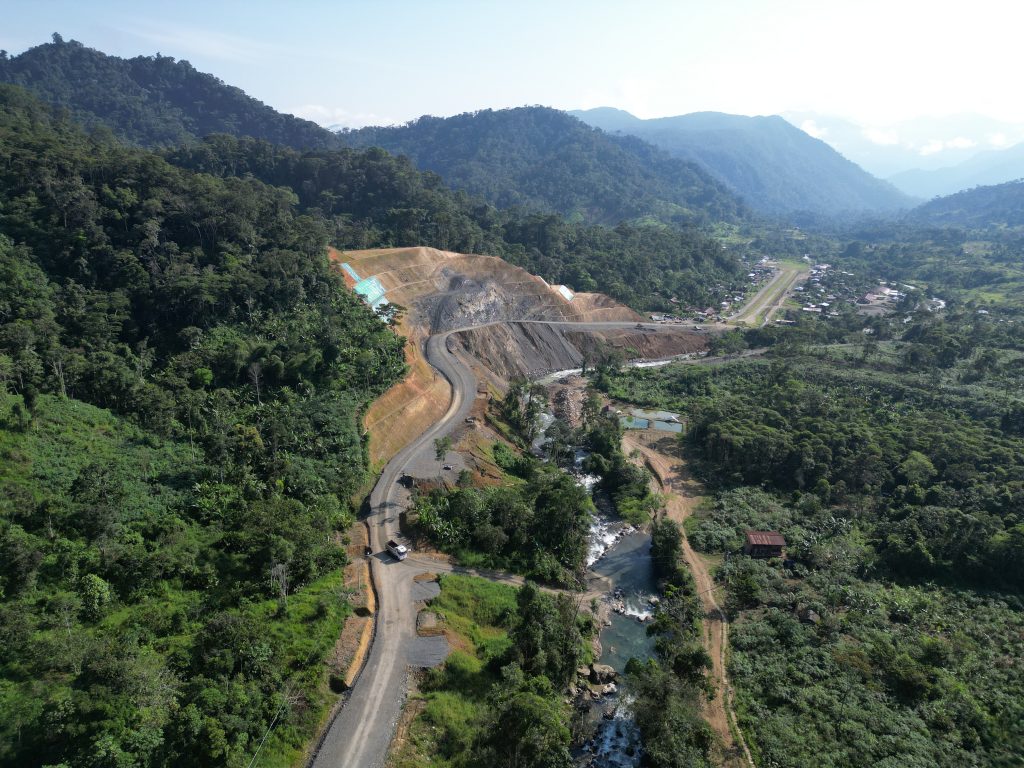
Beyond drilling, Solaris Resources made progress in developing critical infrastructure at Warintza, including improving road access, expanding the on-site camp, and initiating early works construction. These efforts support ongoing exploration, facilitating future feasibility studies, and ultimately enabling mine construction.
Solaris Resources also demonstrated its commitment to responsible mining practices and community engagement. The company signed an updated Impact and Benefits Agreement with local communities, outlining commitments to social and economic development programs. This agreement underscores Solaris’ dedication to sharing the benefits of the Warintza Project with local stakeholders and fostering positive relationships.
Emigration to Ecuador
In a move that surprised, Solaris Resources announced its decision to emigrate from Canada to Ecuador by the end of 2024. This strategic decision reflects the company’s need to align itself more closely with Ecuadorian regulators, optimize its corporate structure for the development of Warintza, and potentially benefit from a more favorable tax environment.
The emigration process involved several key steps, including management and board changes. Effective January 1, 2025, Matthew Rowlinson, former Head of Copper Business Development at Glencore, will take over as President and CEO. Rowlinson brings a wealth of experience in the copper mining industry, mergers and acquisitions, and project development, making him a valuable asset as Solaris Resources navigates the challenges and opportunities in Ecuador.
Concurrent with the CEO change, Solaris Resources also announced changes to its board of directors, with Rowlinson, Rodrigo Borja, and Hans Wick joining the board, while Canadian directors Daniel Earle, Poonam Puri, Kevin Thomson, and Ron Walsh will step down. These changes reflect the company’s commitment to aligning its leadership with its new corporate structure and strategic focus in Ecuador.
New Leadership, New Opportunities: The Potential for Zijin Mining
The appointment of Matthew Rowlinson as CEO and the company’s emigration to Ecuador could also change the company’s relationship with Zijin Mining Group. Earlier in the year, Solaris Resources terminated a proposed $130 million strategic investment from Zijin after the deal faced regulatory hurdles and delays in Canada. However, with Solaris Resources based in Ecuador and under new leadership, the possibility of reviving the transaction or exploring alternative forms of collaboration with Zijin remains open.
Zijin, a leading global mining company with extensive experience in copper development, could provide valuable technical expertise and financial resources to support the Warintza Project. A renewed partnership with Zijin could accelerate the project’s development timeline and enhance long-term prospects.
Looking Ahead to 2025
As Solaris Resources begins this new chapter, the company must manage the changing regulatory rules in Ecuador, manage relationships with local communities and stakeholders, and effectively execute its development plans for Warintza. The new leadership team’s experience and expertise will be absolutely critical in addressing these and capitalizing on the growing demand for copper.
The company’s stock price experienced some volatility throughout 2024, influenced by external factors. Now with a renewed focus on Ecuador, a strong leadership team, and the potential for renewed collaboration with Zijin Mining, Solaris Resources is gearing up to unlock the full value of its assets and deliver strong returns for all stakeholders in 2025.
The above references an opinion and is for information purposes only. It is not intended to be investment advice. Seek a licensed professional for investment advice. The author is not an insider or shareholder of any of the companies mentioned above.
The above references an opinion and is for information purposes only. It is not intended to be investment advice. Seek a licensed professional for investment advice. The author is not an insider or shareholder of any of the companies mentioned above.
Solaris Resources (TSX:SLS)(NYSEAmerican:SLSR) has released an operational update for its Warintza Project, a copper-gold-molybdenum deposit located in southeastern Ecuador. The update highlights progress in drilling, infrastructure development, and technical programs that support the project’s advancement. Solaris’ 2024 drilling program has already surpassed expectations, and its early infrastructure projects are underway for streamlined access and logistics.
Drilling Update
Solaris has exceeded its original drilling target, completing 60,000 meters of drilling by the end of October. As part of its ambitious plans, the company now expects to surpass 75,000 meters by the end of the year. Currently, nine drilling rigs are in operation at Warintza, primarily focused on the extension and infill drilling needed for the 2024 Mineral Resource Estimate (MRE). This drilling work extends beyond the resource boundary to Warintza West, an area outside the MRE that may yield further resource growth in an expanded open-pit layout.
The drilling program is pivotal to defining and expanding the Warintza resource. By incorporating data from Warintza West, Solaris hopes to broaden the scope of the project, which could enhance the economic potential of the Warintza site. As results continue to emerge, the company is aiming to build a robust geological model to support future mining plans.
Solaris has upgraded 25 kilometers of road connecting the project to Ecuador’s highway network, improving transportation efficiency. An additional 8 kilometers of new roads were constructed to facilitate the logistics of drilling activities. This infrastructure supports ongoing mobilization, ensuring a smoother process for bringing materials and personnel to the site.
Construction efforts have also extended to a further 7 kilometers of roads. These roads are part of a long-term plan designed to support future mining operations. They will provide access to key project areas, including planned locations for the process plant, Waste Rock Facility (WRF), Tailings Management Facility (TMF), and anticipated pre-stripping and drilling zones.
By establishing this infrastructure early, Solaris aims to reduce potential bottlenecks as the project advances. The expanded road network will enhance logistics and access for future operational phases, helping to streamline the mining process and reduce downtime due to logistical constraints.
Technical Programs
Solaris has also reported advances in technical programs integral to the project’s development. Geotechnical and hydrogeological work has been completed for the TMF, with additional studies underway for the anticipated open pit, WRF, process plant, and related infrastructure. These programs include field testing, sampling, and instrumentation installations to ensure that future operations adhere to safety and environmental standards.
Knight Piésold Consulting, a firm specializing in engineering for mining and environmental projects, is finalizing studies on the TMF. These studies will form a crucial part of the upcoming Environmental Impact Assessment (EIA) review period. Final reports, including essential data on water management, are expected within the next few weeks. Once finalized, these reports will serve as key documents to support regulatory reviews.
In parallel with drilling and infrastructure development, Solaris has continued its metallurgical and processing studies. A recent metallurgical drilling program has been completed to supplement prior testing results. Comminution testing has also been finalized, providing a clearer picture of the deposit’s hardness. The upper layers of the deposit show a reduced hardness level compared to earlier expectations, potentially impacting the approach to extraction and processing.
The company is now moving forward with additional flotation tests. These tests aim to optimize reagents to improve copper and molybdenum recovery rates. Completion of these tests is anticipated by the end of the year, marking a significant milestone in Solaris’ efforts to refine its processing techniques.
Ausenco Engineering, a firm working closely with Solaris on the process plant design, has developed a preliminary flowsheet for the plant. This preliminary design is built on previous test work, which indicated that Warintza’s ores can yield high-quality concentrates for copper, gold, and molybdenum. These concentrates are expected to align well with the project’s economic goals, making the design a promising blueprint for Warintza’s processing infrastructure.
Looking Ahead
As Solaris Resources advances its Warintza Project, it is on track to meet or exceed its goals for 2024. With drilling activities well ahead of schedule and critical infrastructure nearing completion, Solaris has positioned itself to begin more detailed planning and development phases. Technical reports from Knight Piésold Consulting, as well as the results of ongoing metallurgical studies, will contribute to the EIA process, which is essential for Solaris to obtain the necessary permits for future operations.
The upcoming months will focus on analyzing additional drilling data and fine-tuning processing methodologies. As the company approaches the year-end, Solaris plans to evaluate the findings from Warintza West, which could play a significant role in expanding the project’s scope. With substantial groundwork laid in infrastructure, technical analysis, and processing design, Solaris appears to be progressing steadily toward developing the Warintza Project into a major mining operation.
Assay results from the company’s most recent update are as follows:

Drill results continue to build on the MRE, with holes SLS-111 and SLS-107 improving upon the modelled grade in its vicinity, while holes SLS 110, SLS 113-116 and SLSE-64 encountered mineralization partially outside of the MRE in the southern and northeastern sectors.
- SLS-111 (drilled southeast): 90m of 1.12% CuEq² within 475m of 0.46% CuEq² from surface
- SLS-107 (drilled northeast): 96m of 0.82% CuEq² within 543m of 0.51% CuEq² from surface
Step-out exploration drilling to the northwest of the MRE testing its connection to the Warintza West deposit has been completed with assays expected in the coming weeks, representing an opportunity for expansion of the MRE in an enlarged pit.
Table 1 – Mineral Resource Extension, Infill and Condemnation Results
| Hole ID | Date Reported |
From (m) |
To (m) |
Interval (m) |
Cu (%) |
Mo (%) |
Au (g/t) |
CuEq² (%) |
Comments |
| SLS-116 | Nov 12, 2024 | 0 | 475 | 475 | 0.22 | 0.00 | 0.02 | 0.23 | Southern sector – Infill / Extensional |
| Including | 12 | 108 | 96 | 0.41 | 0.00 | 0.02 | 0.42 | ||
| Including | 12 | 252 | 240 | 0.29 | 0.00 | 0.02 | 0.31 | ||
| SLS-115 | 0 | 469 | 469 | 0.23 | 0.00 | 0.03 | 0.25 | Southern sector – Infill / Extensional | |
| Including | 42 | 249 | 207 | 0.36 | 0.00 | 0.02 | 0.38 | ||
| Including | 42 | 393 | 351 | 0.28 | 0.00 | 0.03 | 0.30 | ||
| SLS-114 | 0 | 563 | 563 | 0.21 | 0.00 | 0.03 | 0.24 | Southern sector – Infill / Extensional | |
| Including | 63 | 563 | 500 | 0.24 | 0.00 | 0.03 | 0.26 | ||
| Including | 96 | 165 | 69 | 0.49 | 0.00 | 0.02 | 0.50 | ||
| Including | 96 | 309 | 213 | 0.31 | 0.00 | 0.02 | 0.33 | ||
| SLS-113 | 0 | 656 | 656 | 0.17 | 0.00 | 0.03 | 0.19 | Southern sector – Infill / Extensional | |
| Including | 117 | 375 | 258 | 0.25 | 0.00 | 0.03 | 0.27 | ||
| Including | 159 | 342 | 183 | 0.31 | 0.00 | 0.03 | 0.33 | ||
| Including | 342 | 656 | 314 | 0.14 | 0.00 | 0.03 | 0.17 | ||
| SLS-111 | 0 | 475 | 475 | 0.36 | 0.01 | 0.04 | 0.46 | Central sector – infill | |
| Including | 0 | 384 | 384 | 0.43 | 0.01 | 0.05 | 0.54 | ||
| Including | 60 | 150 | 90 | 0.99 | 0.02 | 0.06 | 1.12 | ||
| Including | 60 | 243 | 183 | 0.70 | 0.02 | 0.05 | 0.83 | ||
| SLS-110 | 0 | 671 | 671 | 0.13 | 0.00 | 0.02 | 0.15 | Southern sector – Infill / Extensional | |
| Including | 117 | 303 | 186 | 0.22 | 0.00 | 0.02 | 0.24 | ||
| Including | 117 | 671 | 554 | 0.14 | 0.00 | 0.02 | 0.16 | ||
| SLS-108 | 0 | 513 | 513 | 0.48 | 0.02 | 0.04 | 0.63 | Central sector – Infill | |
| Including | 0 | 435 | 435 | 0.49 | 0.02 | 0.04 | 0.65 | ||
| Including | 228 | 303 | 75 | 0.68 | 0.02 | 0.04 | 0.81 | ||
| SLS-107 | 0 | 543 | 543 | 0.26 | 0.04 | 0.05 | 0.51 | Northwest sector – Infill | |
| Including | 0 | 96 | 96 | 0.62 | 0.03 | 0.09 | 0.82 | ||
| Including | 0 | 147 | 147 | 0.42 | 0.04 | 0.08 | 0.68 | ||
| Including | 204 | 543 | 339 | 0.23 | 0.04 | 0.04 | 0.47 | ||
| SLS-106 | 0 | 230 | 230 | 0.18 | 0.03 | 0.04 | 0.39 | Northwest sector – Infill | |
| Including | 0 | 204 | 204 | 0.19 | 0.04 | 0.04 | 0.42 | ||
| Including | 42 | 90 | 48 | 0.39 | 0.04 | 0.05 | 0.65 | ||
| Including | 42 | 138 | 96 | 0.30 | 0.04 | 0.04 | 0.53 | ||
| SLS-105 | 0 | 323 | 323 | 0.19 | 0.03 | 0.04 | 0.37 | Northwest sector – Infill | |
| Including | 0 | 210 | 210 | 0.22 | 0.04 | 0.04 | 0.45 | ||
| Including | 42 | 111 | 69 | 0.37 | 0.05 | 0.04 | 0.68 | ||
| SLSE-70 | 0 | 394 | 394 | 0.38 | 0.01 | 0.06 | 0.49 | Eastern sector – Infill | |
| Including | 24 | 99 | 75 | 0.60 | 0.01 | 0.05 | 0.71 | ||
| Including | 24 | 210 | 186 | 0.44 | 0.02 | 0.05 | 0.56 | ||
| Including | 210 | 394 | 184 | 0.35 | 0.01 | 0.07 | 0.47 | ||
| SLSE-69 | 0 | 208 | 208 | 0.07 | 0.00 | 0.02 | 0.10 | Eastern sector – Condemnation | |
| SLSE-64 | 0 | 391 | 391 | 0.10 | 0.00 | 0.02 | 0.14 | Northeast sector – Infill / Extensional | |
| SLSE-63 | 0 | 251 | 251 | 0.09 | 0.00 | 0.03 | 0.12 | Northeast sector – Condemnation | |
| SLSE-59 | 0 | 410 | 410 | 0.09 | 0.00 | 0.02 | 0.12 | Northeast sector – Condemnation | |
| SLST-06 | 0 | 200 | 200 | 0.10 | 0.00 | 0.05 | 0.13 | Southern sector – Infill | |
| SLST-05 | 0 | 400 | 400 | 0.10 | 0.00 | 0.03 | 0.13 | Southern sector – Infill | |
| SLST-04 | 0 | 500 | 500 | 0.10 | 0.00 | 0.04 | 0.13 | Southern sector – Infill |
Notes to Table 1: True widths are interpreted to be very close to drilled widths due to the bulk-porphyry style mineralized zones at Warintza.
Table 2 – Collar Locations
| Hole ID | Easting | Northing | Elevation (m) |
Depth (m) |
Azimuth (degrees) |
Dip (degrees) |
| SLS-116 | 800,241 | 9,647,745 | 1,710 | 475 | 243 | -74 |
| SLS-115 | 800,239 | 9,647,740 | 1,710 | 469 | 240 | -46 |
| SLS-114 | 800,235 | 9,647,740 | 1,709 | 563 | 66 | -71 |
| SLS-113 | 800,239 | 9,647,739 | 1,710 | 656 | 61 | -48 |
| SLS-111 | 800,385 | 9,648,301 | 1,411 | 475 | 117 | -55 |
| SLS-110 | 800,235 | 9,647,735 | 1,707 | 671 | 38 | -54 |
| SLS-108 | 800,383 | 9,648,303 | 1,411 | 513 | 180 | -65 |
| SLS-107 | 799,760 | 9,648,031 | 1,575 | 543 | 45 | -60 |
| SLS-106 | 799,567 | 9,648,148 | 1,402 | 230 | 233 | -46 |
| SLS-105 | 799,568 | 9,648,147 | 1,403 | 323 | 220 | -60 |
| SLSE-70 | 801,262 | 9,648,122 | 1,282 | 394 | 90 | -87 |
| SLSE-69 | 801,710 | 9,647,937 | 1,199 | 208 | 65 | -62 |
| SLSE-64 | 801,799 | 9,648,247 | 1,101 | 391 | 300 | -50 |
| SLSE-63 | 801,805 | 9,648,237 | 1,099 | 251 | 270 | -76 |
| SLSE-59 | 801,160 | 9,648,332 | 1,313 | 410 | 62 | -68 |
| SLST-06 | 800,210 | 9,647,529 | 1,601 | 200 | 90 | -47 |
| SLST-05 | 800,201 | 9,647,526 | 1,599 | 400 | 250 | -60 |
| SLST-04 | 800,207 | 9,647,528 | 1,600 | 500 | 0 | -80 |
Notes to Table 2: The coordinates are in WGS84 17S Datum.
Endnotes
- Refer to the technical report entitled “Mineral Resource Estimate Update – NI 43-101 Technical Report, Warintza Project, Ecuador” with an effective date of July 1, 2024 and available on SEDAR+ under the Company’s profile at www.sedarplus.ca and on the Company’s website.
- Copper-equivalence grade calculation for reporting assumes metal prices of US$4.00/lb Cu, US$20.00/lb Mo, and US$1,850/oz Au, and recoveries of 90% Cu, 85% Mo, and 70% Au based on preliminary metallurgical testwork. CuEq formula: CuEq (%) = Cu (%) + 5.604 × Mo (%) + 0.623 × Au (g/t).
The above references an opinion and is for information purposes only. It is not intended to be investment advice. Seek a licensed professional for investment advice. The author is not an insider or shareholder of any of the companies mentioned above.
Solaris Resources (TSX:SLS) (NYSEAmerican:SLSR) has announced assay results from its ongoing 2024 drilling program at the Warintza Project in southeastern Ecuador. The results reveal high-grade mineralization near the surface, improving previously modeled grades and expanding the potential of the resource in several key areas of the site.
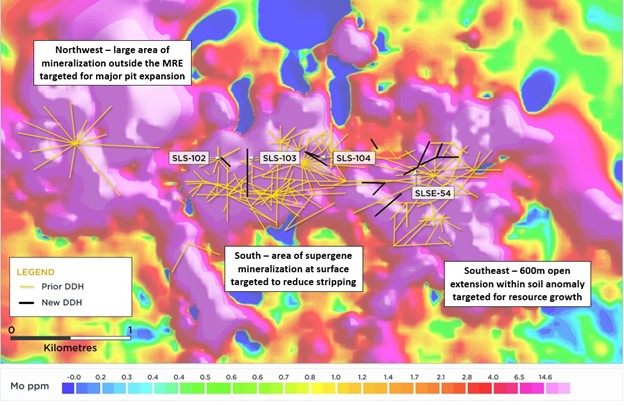
The company, which has drilled over 53,000 meters by the end of the third quarter of 2024, is aiming to exceed its 60,000-meter target for the year. The latest drill holes, SLS-103, SLSE-54, SLS-102, and SLSE-52, add significant mineralization in areas that had not been extensively drilled. Holes SLS-103 and SLSE-54, located in the northwest and northeast sectors, respectively, have intersected new high-grade mineralization at surface, with much of the mineralization falling outside the current Mineral Resource Estimate (MRE). This marks an important step in expanding the known resource, as these results indicate higher grades than previously modeled in these regions.
Key intercepts include 87 meters of 1.23% CuEq, 93 meters of 1.01% CuEq, and 84 meters of 1.00% CuEq. These findings bolster the company’s ongoing efforts to improve the quality of the resource, particularly in sparsely drilled zones within the northwest, north, and northeast areas of the project.
In addition to the resource expansion efforts, Solaris is conducting exploration drilling in an area featuring a large soil anomaly on the opposite side of a granodiorite formation, which shapes the northwestern pit wall. Assays from this exploration are expected in the coming weeks.
With high productivity on-site due to infrastructure investments, Solaris remains on track to exceed its 2024 drilling plan. Current efforts include drilling focused on expanding open extensions of the resource, infill drilling to upgrade existing resources, and further geotechnical and condemnation drilling.
Highlights from the results include:
Northwest, North and Northeast Sectors:
- SLS-102 (drilled northwest): 93m of 1.01% CuEq² within 156m of 0.74% CuEq² from surface
- SLS-103 (drilled north): 87m of 1.23% CuEq² within 528m of 0.59% CuEq² from surface
- SLS-104 (drilled southeast): 84m of 1.00% CuEq² within 485m of 0.77% CuEq² from surface
- SLSE-54 (drilled southwest): 258m of 0.52% CuEq² within 399m of 0.41% CuEq² from surface
Table 1 – Mineral Resource Extension, Infill and Condemnation Results
| Hole ID | Date Reported |
From (m) |
To (m) |
Interval (m) |
Cu (%) |
Mo (%) |
Au (g/t) |
CuEq² (%) |
Comments |
| SLS-104 | Oct 7, 2024 | 0 | 485 | 485 | 0.56 | 0.03 | 0.06 | 0.77 | Northern sector – infill |
| Including | 45 | 129 | 84 | 0.82 | 0.02 | 0.07 | 1.00 | ||
| Including | 45 | 255 | 210 | 0.69 | 0.03 | 0.07 | 0.90 | ||
| Including | 45 | 485 | 440 | 0.61 | 0.03 | 0.06 | 0.82 | ||
| SLS-103 | 0 | 528 | 528 | 0.26 | 0.05 | 0.04 | 0.59 | Northwest sector – infill and extensional | |
| Including | 21 | 108 | 87 | 1.00 | 0.03 | 0.11 | 1.23 | ||
| Including | 21 | 483 | 462 | 0.29 | 0.06 | 0.05 | 0.64 | ||
| Including | 240 | 345 | 105 | 0.28 | 0.08 | 0.02 | 0.72 | ||
| SLS-102 | 0 | 156 | 156 | 0.46 | 0.04 | 0.08 | 0.74 | Northwest sector – infill | |
| Including | 57 | 150 | 93 | 0.73 | 0.04 | 0.09 | 1.01 | ||
| SLS-101 | 0 | 307 | 307 | 0.06 | 0.01 | 0.02 | 0.14 | Northwest sector – condemnation | |
| SLSE-60 | 0 | 290 | 290 | 0.16 | 0.01 | 0.03 | 0.23 | Northeast sector – infill | |
| Including | 93 | 290 | 197 | 0.21 | 0.01 | 0.04 | 0.30 | ||
| Including | 141 | 290 | 149 | 0.24 | 0.01 | 0.05 | 0.35 | ||
| Including | 207 | 290 | 83 | 0.28 | 0.02 | 0.03 | 0.43 | ||
| SLSE-58 | 0 | 453 | 453 | 0.03 | 0.00 | 0.01 | 0.04 | Northeast sector – condemnation | |
| SLSE-57 | 0 | 660 | 660 | 0.22 | 0.01 | 0.05 | 0.30 | Southeast sector – extensional | |
| Including | 552 | 660 | 108 | 0.49 | 0.02 | 0.06 | 0.61 | ||
| SLSE-56 | 0 | 381 | 381 | 0.09 | 0.00 | 0.03 | 0.11 | Northeast sector – condemnation | |
| SLSE-55 | 0 | 473 | 473 | 0.12 | 0.00 | 0.02 | 0.16 | Northeast sector – condemnation | |
| SLSE-54 | 0 | 399 | 399 | 0.29 | 0.01 | 0.04 | 0.41 | Northeast sector – infill and extensional | |
| Including | 0 | 258 | 258 | 0.37 | 0.02 | 0.05 | 0.52 | ||
| Including | 81 | 231 | 150 | 0.43 | 0.02 | 0.05 | 0.60 | ||
| SLSE-53 | 0 | 455 | 455 | 0.04 | 0.00 | 0.02 | 0.07 | Northeast sector – condemnation | |
| SLSE-52 | 0 | 138 | 138 | 0.15 | 0.01 | 0.03 | 0.23 | Southeast sector – condemnation | |
| SLSE-51 | 0 | 257 | 257 | 0.15 | 0.01 | 0.03 | 0.20 | Southeast sector – condemnation |
Notes to Table 1: True widths are interpreted to be very close to drilled widths due to the bulk-porphyry style mineralized zones at Warintza.
Table 2 – Collar Locations
| Hole ID | Easting | Northing | Elevation (m) |
Depth (m) |
Azimuth (degrees) | Dip (degrees) |
| SLS-104 | 800383 | 9648303 | 1411 | 485 | 110 | -70 |
| SLS-103 | 799760 | 9648031 | 1575 | 528 | 360 | -56 |
| SLS-102 | 799568 | 9648147 | 1403 | 253 | 315 | -60 |
| SLS-101 | 799760 | 9648031 | 1575 | 307 | 180 | -45 |
| SLSE-60 | 801800 | 9648235 | 1102 | 290 | 243 | -54 |
| SLSE-58 | 801806 | 9648243 | 1098 | 454 | 90 | -58 |
| SLSE-57 | 801150 | 9647610 | 1396 | 660 | 45 | -60 |
| SLSE-56 | 801163 | 9648335 | 1309 | 382 | 326 | -71 |
| SLSE-55 | 801597 | 9648134 | 1155 | 473 | 25 | -50 |
| SLSE-54 | 801596 | 9648136 | 1154 | 481 | 240 | -70 |
| SLSE-53 | 801802 | 9648239 | 1100 | 455 | 23 | -68 |
| SLSE-52 | 801248 | 9647968 | 1252 | 354 | 270 | -46 |
| SLSE-51 | 801246 | 9647967 | 1252 | 257 | 225 | -45 |
Notes to Table 2: The coordinates are in WGS84 17S Datum.
Endnotes
- Refer to the technical report entitled “Mineral Resource Estimate Update – NI 43-101 Technical Report, Warintza Project, Ecuador” with an effective date of July 1, 2024 and available on SEDAR+ under the Company’s profile at www.sedarplus.ca and on the Company’s website.
- Copper-equivalence grade calculation for reporting assumes metal prices of US$4.00/lb Cu, US$20.00/lb Mo, and US$1,850/oz Au, and recoveries of 90% Cu, 85% Mo, and 70% Au based on preliminary metallurgical testwork. CuEq formula: CuEq (%) = Cu (%) + 5.604 × Mo (%) + 0.623 × Au (g/t).
The above references an opinion and is for information purposes only. It is not intended to be investment advice. Seek a licensed professional for investment advice. The author is not an insider or shareholder of any of the companies mentioned above.

Solaris Resources (TSX:SLS) (NYSEAmerican:SLSR) has announced drilling results from its ongoing exploration program at the Warintza Project in southeastern Ecuador. The company aims to expand mineral resources and upgrade existing ones while enhancing its infrastructure and operational efficiency. The latest update provides insight into the progress made through new assay results and a record-breaking month for drilling activity.
Solaris announced the latest results of its 2024 drilling campaign, which includes a planned total of 60,000 meters. The key findings from recent drilling operations highlight intercepts of high-grade mineralization that extend beyond the current Mineral Resource Estimate (MRE). These findings emerged from drill holes in the northwest and southeast sectors of the Warintza Project, targeting sparsely drilled zones where grades have historically been lower or less understood.
A standout result from the latest drilling includes an intercept measuring 475 meters at a copper-equivalent grade (CuEq) of 1.03%. This intercept came from near the surface and demonstrated the potential to significantly expand the existing resource base. This mineralization is essential for refining the geological model of the Warintza Project and providing a stronger basis for future resource upgrades.
The company also achieved a new drilling record in August 2024. Solaris reported that its team drilled 10 kilometers (km) in one month, surpassing a previous record set in 2021 when 12 rigs managed to drill 8 km. The current 10 km of drilling was achieved using just eight rigs, indicating considerable improvements in productivity and operational efficiency. This record sets the company on a strong trajectory toward completing its 60,000-meter drilling goal for the year, further advancing the exploration potential of Warintza.
Solaris attributes this increase in productivity to significant infrastructure investments made at the site. The company has been focusing on building out the necessary infrastructure to support its expanding exploration activities. The next phase of construction is already underway, which should further bolster their capacity to drill and process results at the site. These infrastructure developments are designed to improve access to drilling targets and enhance overall project efficiency, contributing to the record performance seen in August.
The Warintza Project remains the company’s flagship asset and has attracted attention due to its rich mineralization and potential for resource expansion. Located in Ecuador’s resource-rich southeastern region, the project has been the focus of intensive exploration and development work. Solaris continues to aim for a balance between upgrading known mineral resources and exploring for additional, high-grade mineralized zones. The latest drill results are expected to contribute to the upcoming updates in the MRE, which serves as a key metric for investors and stakeholders to evaluate the potential of the project. While the results highlight continued resource potential, Solaris has emphasized that much of the mineralization discovered lies outside of the currently defined resource estimate, suggesting room for further resource growth and exploration potential.
Highlights from the results are as follows:
Northwest Sector:
- SLS-100 (drilled southeast): 427m of 1.11% CuEq² within 475m of 1.03% CuEq² from surface
- SLS-99 (drilled southwest): 105m of 1.00% CuEq² within 246m of 0.75% CuEq² from surface
- SLS-96 (drilled southeast): 78m of 0.71% CuEq² within 288m of 0.47% CuEq² from surface
- SLS-97 (drilled west): 75m of 0.60% CuEq² within 308m of 0.36% CuEq² from surface
Holes SLS-96, SLS-97 and SLS-99 added new high-grade mineralization partially outside of the MRE while SLS-100 improved upon the modelled grade in its vicinity. These holes were located in the northwest sector where mineralization has now been extended to the contact with a tabular granodiorite that shapes the northwestern pit wall. Step-out exploration drilling is now testing the potential for mineralization within a large area of undrilled soil anomaly on the far side of this body.
Southeast Sector:
- SLSE-50 (southwest): 84m of 0.70% CuEq² within 445m of 0.53% CuEq² from surface
- SLSE-45 (drilled east): 285m of 0.63% CuEq² within 399m of 0.58% CuEq² from surface
- SLSE-47 (drilled southwest): 210m of 0.58% CuEq² within 399m of 0.42% CuEq² from surface
- SLSE-46 (drilled south): 75m of 0.73% CuEq² within 400m of 0.34% CuEq² from surface
Holes SLSE-45, SLSE-46, SLSE-47, and SLSE-50 added new high-grade mineralization partially outside of the MRE while SLSE-45 and SLSE-46 improved upon modelled grades in their vicinity. Mineralization remains open to the southeast for approximately 600m within a large 0.8km x 0.8km soil anomaly that defines the target opportunity in this direction.
Table 1 – Mineral Resource Extension, Infill and Condemnation Results
| Hole ID | Date Reported |
From (m) |
To (m) |
Interval (m) |
Cu (%) |
Mo (%) |
Au (g/t) |
CuEq² (%) |
Comments |
| SLS-100 | Sep 19, 2024 | 0 | 475 | 475 | 0.76 | 0.04 | 0.09 | 1.03 | Northwest sector – infill |
| Including | 48 | 475 | 427 | 0.84 | 0.04 | 0.09 | 1.11 | ||
| SLS-99 | 0 | 246 | 246 | 0.24 | 0.09 | 0.05 | 0.75 | Northwest sector – extensional | |
| Including | 21 | 126 | 105 | 0.49 | 0.08 | 0.09 | 1.00 | ||
| Including | 21 | 165 | 144 | 0.37 | 0.08 | 0.07 | 0.87 | ||
| SLS-98 | 24 | 159 | 135 | 0.24 | 0.00 | 0.05 | 0.28 | Northern sector – extensional | |
| Including | 54 | 81 | 27 | 0.53 | 0.00 | 0.07 | 0.59 | ||
| SLS-97 | 0 | 308 | 308 | 0.19 | 0.03 | 0.04 | 0.36 | Northwest sector – extensional | |
| Including | 51 | 126 | 75 | 0.37 | 0.04 | 0.05 | 0.60 | ||
| SLS-96 | 0 | 288 | 288 | 0.10 | 0.06 | 0.02 | 0.47 | Northwest sector – extensional | |
| Including | 0 | 210 | 210 | 0.13 | 0.06 | 0.03 | 0.50 | ||
| Including | 0 | 78 | 78 | 0.28 | 0.07 | 0.07 | 0.71 | ||
| SLS-95 | 93 | 397 | 304 | 0.17 | 0.00 | 0.06 | 0.22 | Northern sector – extensional | |
| SLS-94 | 54 | 381 | 327 | 0.28 | 0.03 | 0.03 | 0.45 | Northern sector – infill | |
| Including | 54 | 213 | 159 | 0.35 | 0.02 | 0.04 | 0.50 | ||
| Including | 54 | 90 | 36 | 0.60 | 0.01 | 0.06 | 0.69 | ||
| SLS-93 | 0 | 196 | 196 | 0.07 | 0.02 | 0.02 | 0.15 | Northwest sector – condemnation/geotechnical | |
| SLS-92 | 0 | 105 | 105 | 0.14 | 0.03 | 0.04 | 0.33 | Northern sector – infill | |
| Including | 69 | 105 | 36 | 0.32 | 0.04 | 0.03 | 0.54 | ||
| SLS-91 | 12 | 305 | 293 | 0.22 | 0.00 | 0.07 | 0.27 | Northern sector – extensional | |
| SLS-90 | 0 | 141 | 141 | 0.10 | 0.03 | 0.02 | 0.29 | Northwest sector – extensional | |
| Including | 75 | 141 | 66 | 0.18 | 0.03 | 0.02 | 0.34 | ||
| SLS-89 | 0 | 200 | 200 | 0.05 | 0.01 | 0.02 | 0.12 | Northern sector – condemnation/geotechnical | |
| SLS-88 | 24 | 84 | 60 | 0.11 | 0.01 | 0.14 | 0.24 | Northern sector – extensional | |
| SLSE-50 | 0 | 445 | 445 | 0.37 | 0.02 | 0.04 | 0.53 | Southeast sector – extensional | |
| Including | 132 | 445 | 313 | 0.42 | 0.03 | 0.04 | 0.60 | ||
| Including | 180 | 264 | 84 | 0.52 | 0.03 | 0.05 | 0.70 | ||
| SLSE-49 | 0 | 273 | 273 | 0.43 | 0.01 | 0.06 | 0.55 | Southeast sector – infill | |
| Including | 33 | 273 | 240 | 0.48 | 0.01 | 0.06 | 0.60 | ||
| SLSE-48 | 15 | 389 | 374 | 0.14 | 0.01 | 0.02 | 0.19 | Southeast sector – extensional | |
| SLSE-47 | 0 | 399 | 399 | 0.28 | 0.02 | 0.06 | 0.42 | Southeast sector – extensional | |
| Including | 57 | 267 | 210 | 0.43 | 0.02 | 0.05 | 0.58 | ||
| SLSE-46 | 0 | 400 | 400 | 0.26 | 0.01 | 0.04 | 0.34 | Southeast sector – extensional | |
| Including | 75 | 150 | 75 | 0.60 | 0.02 | 0.07 | 0.73 | ||
| SLSE-45 | 0 | 399 | 399 | 0.44 | 0.02 | 0.05 | 0.58 | Southeast sector – extensional | |
| Including | 33 | 318 | 285 | 0.50 | 0.02 | 0.06 | 0.63 | ||
| SLSE-44 | 0 | 341 | 341 | 0.11 | 0.00 | 0.02 | 0.13 | Northeast sector – condemnation/geotechnical |
Notes to Table 1: True widths are interpreted to be very close to drilled widths due to the bulk-porphyry style mineralized zones at Warintza.
Table 2 – Collar Locations
| Hole ID | Easting | Northing | Elevation (m) |
Depth (m) |
Azimuth (degrees) | Dip (degrees) |
| SLS-100 | 799568 | 9648147 | 1403 | 475 | 107 | -49 |
| SLS-99 | 799684 | 9648336 | 1373 | 246 | 200 | -60 |
| SLS-98 | 800616 | 9648398 | 1334 | 214 | 180 | -50 |
| SLS-97 | 799569 | 9648146 | 1404 | 308 | 270 | -60 |
| SLS-96 | 799683 | 9648335 | 1373 | 288 | 140 | -60 |
| SLS-95 | 800617 | 9648399 | 1334 | 397 | 45 | -60 |
| SLS-94 | 800196 | 9648470 | 1340 | 381 | 180 | -60 |
| SLS-93 | 799681 | 9648333 | 1372 | 196 | 0 | -60 |
| SLS-92 | 800200 | 9648475 | 1336 | 340 | 45 | -60 |
| SLS-91 | 800619 | 9648397 | 1332 | 305 | 90 | -60 |
| SLS-90 | 799684 | 9648331 | 1374 | 286 | 62 | -45 |
| SLS-89 | 800201 | 9648476 | 1336 | 200 | 45 | -45 |
| SLS-88 | 800620 | 9648396 | 1331 | 367 | 0 | -50 |
| SLSE-50 | 801593 | 9648138 | 1153 | 445 | 240 | -85 |
| SLSE-49 | 801528 | 9647846 | 1153 | 273 | 260 | -50 |
| SLSE-48 | 801248 | 9647968 | 1252 | 389 | 90 | -60 |
| SLSE-47 | 801529 | 9647845 | 1153 | 403 | 120 | -60 |
| SLSE-46 | 801250 | 9647967 | 1251 | 400 | 180 | -60 |
| SLSE-45 | 801530 | 9647847 | 1154 | 399 | 90 | -80 |
| SLSE-44 | 801613 | 9648465 | 1106 | 341 | 270 | -60 |
Notes to Table 2: The coordinates are in WGS84 17S Datum.
Endnotes
- Refer to the technical report entitled “Mineral Resource Estimate Update – NI 43-101 Technical Report, Warintza Project, Ecuador” with an effective date of July 1, 2024 and available on SEDAR+ under the Company’s profile at www.sedarplus.ca and on the Company’s website.
- Copper-equivalence grade calculation for reporting assumes metal prices of US$4.00/lb Cu, US$20.00/lb Mo, and US$1,850/oz Au, and recoveries of 90% Cu, 85% Mo, and 70% Au based on preliminary metallurgical testwork. CuEq formula: CuEq (%) = Cu (%) + 5.604 × Mo (%) + 0.623 × Au (g/t).
The above references an opinion and is for information purposes only. It is not intended to be investment advice. Seek a licensed professional for investment advice. The author is not an insider or shareholder of any of the companies mentioned above.
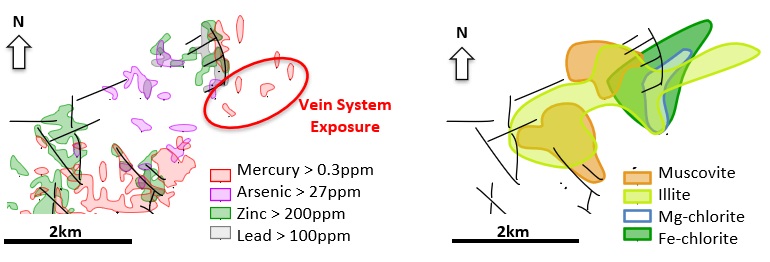
Solaris Resources (TSX:SLS)(NYSEAmerican:SLSR) has released an update on its exploration efforts at the Celestina target area, which is part of its broader district exploration program. The Celestina area is located east of the Warintza porphyry cluster and has become a focal point for the company’s search for epithermal deposits. The area is defined by a 4.5-kilometer by 3-kilometer zone of hydrothermal alteration, along with elevated levels of zinc, lead, arsenic, and mercury found in soil samples. These elements are typical indicators of potential mineralization, particularly in epithermal systems.
Highlight from the release are as follows:
- Follow-up rock chip sampling has returned high values of 16,019 g/t silver and 25.3 g/t gold, with other samples supporting the presence of an underlying silver-gold-base metals vein system
- Three parallel vein exposures were identified in creek beds within 100m on either side of the original breccia outcrop (link to release), located in a soft and chemically reactive mudstone unit that may have acted as a caprock to the hydrothermal system
- The conceptual exploration target at Celestina therefore lies in the underlying volcanic rocks that had full exposure to the hydrothermal cell while also having the properties to support robust vein and fracture formation
- Ongoing fieldwork to better define site selection for initial reconnaissance drilling
Recently, further prospecting outside of the previously identified anomalies led to the discovery of three parallel vein exposures in creek beds. These veins are located within 100 meters of the original breccia outcrop, which was reported in a press release on June 25, 2024. Follow-up sampling from these newly identified veins has returned significant results, including rock chip samples yielding up to 16,019 grams per ton (g/t) of silver and 25.3 g/t of gold. These findings have strengthened the company’s belief that there is an underlying silver-gold-base metals vein system at Celestina.
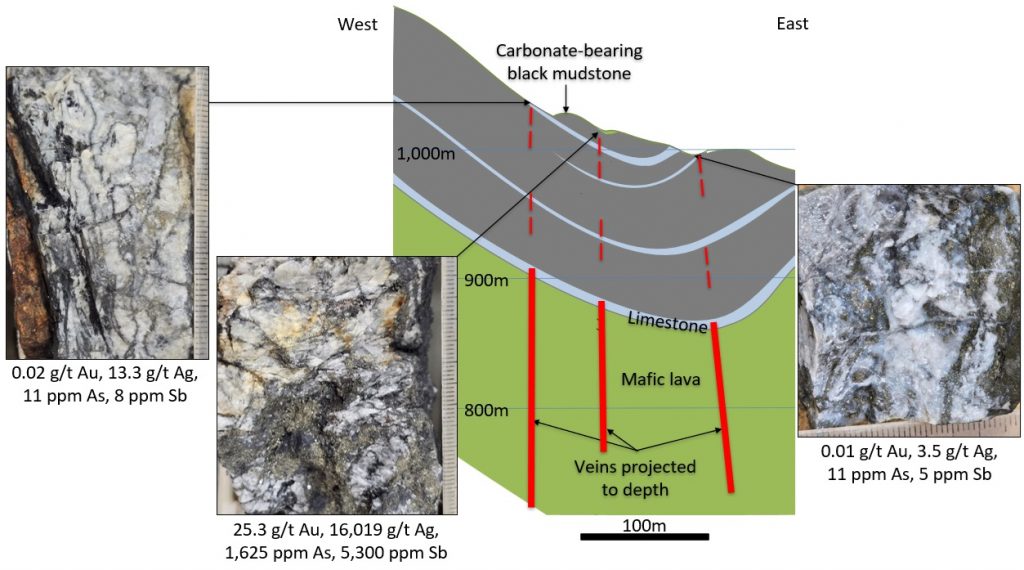
The veins identified so far have been found within a soft, chemically reactive mudstone unit. This mudstone may have acted as a caprock, potentially trapping hydrothermal fluids beneath it. As a result, the primary exploration target at Celestina is now believed to lie in the underlying volcanic rocks. These rocks would have been fully exposed to the hydrothermal system, making them more likely to host robust vein and fracture formations that could contain valuable mineralization.
Fieldwork at Celestina is ongoing, with efforts focused on locating additional vein exposures. By expanding the area covered, the team hopes to define the full extent of the vein system. More detailed mapping, sampling, and alteration studies are currently underway, aiming to better understand the zonation of the mineralization. In addition, geotechnical drilling is set to take place this month, with the goal of confirming the stratigraphic sequence of the area. These steps are essential for determining vectors that will guide the selection of sites for initial reconnaissance drilling, which will be crucial to confirming the presence of economically viable mineralization.
Solaris’ district exploration activities extend beyond Celestina. In the Caya-Mateo target area, geotechnical drilling has recently encountered evidence of epithermal clay alteration beneath overburden in a sandstone unit. This alteration is considered significant, as it indicates that hydrothermal activity occurred in the area. Drilling in the nearby Mateo area has also uncovered high-temperature alteration in volcanic rocks, further suggesting the presence of an epithermal system. The company plans to conduct additional mapping and sampling in the Mateo area, extending coverage toward the southeast where the core of the system is believed to lie.
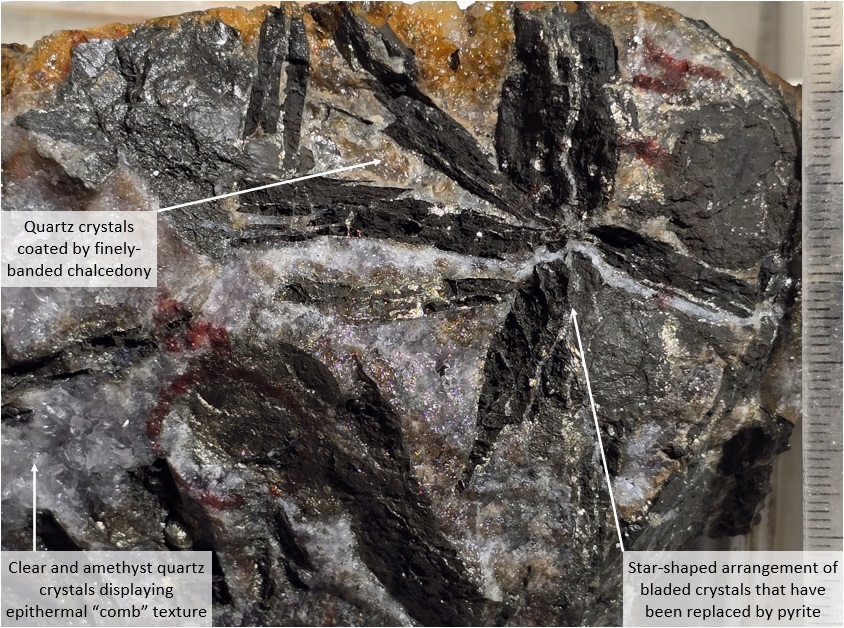
While the results at Celestina are still in the early stages, they have provided positive indications that the area could host a significant mineral system. The discovery of multiple veins with high gold and silver content underscores the potential of the Celestina target, although much more work remains to be done to fully assess the area’s mineral potential. As exploration continues, Solaris will look to refine its understanding of the geological controls on mineralization and pinpoint the best locations for future drilling. If successful, these efforts could add value to the company’s broader Warintza Project, which remains its flagship asset.
The above references an opinion and is for information purposes only. It is not intended to be investment advice. Seek a licensed professional for investment advice. The author is not an insider or shareholder of any of the companies mentioned above.
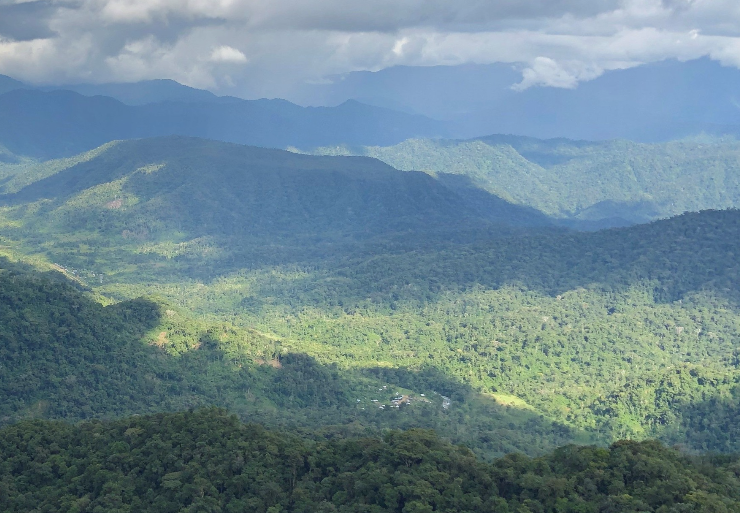
Solaris Resources (TSX:SLS) (NYSEAmerican:SLSR) has submitted an Environmental Impact Assessment (EIA) to Ecuador’s Ministry of Environment, Water, and Ecological Transition (MAATE) as part of its ongoing efforts to develop the Warintza Project in southeastern Ecuador. The EIA, comprising over 3,000 pages, reflects more than three and a half years of work, including community dialogue, environmental monitoring, and data collection. Solaris followed Ecuadorian regulations, and international best practices, and adhered to the Equator Principles framework and Performance Standards on Environmental and Social Sustainability from the International Finance Corporation.
This assessment is not Solaris’ first step in the permitting process for Warintza. The company had previously completed community consultations and submitted another EIA, which resulted in the granting of an environmental license in 2023. This enabled Solaris to advance exploration and develop infrastructure on the project site. Since then, the company has invested over $170 million in the project, with a substantial portion of procurement sourced locally. Currently, the project provides over 500 jobs, making it one of the most significant employers in the region.
Mr. Antonio Goncalves, Minister of Energy and Mines, commented in a press release: “The steady progress of the Warintza Project is positive for Ecuador. The Project is advancing in compliance with all legal regulations and will soon generate thousands of jobs and major economic growth in the Province of Morona Santiago. The administration of President Daniel Noboa supports this type of mining Project – one that has the support of the communities in its direct area of influence and is designed to meet high social, environmental, and technical standards.”
Mr. Sixto Cóndor, Governor of Morona Santiago, also commented: “Warintza is a project that will bring great opportunities and impetus to the development of the province. Like the Mirador project, which I recently visited, and its positive impacts in Zamora-Chinchipe, Warintza will be an engine for growth in Morona Santiago, with more generation of local employment sources, revitalization of the economy, social benefits, support for entrepreneurship, businesses and local suppliers. With Warintza, we will have a better province, with greater wealth to be distributed and better opportunities. We are ready to move forward.”
Mr. Antonio Castillo, Mayor of Limón Indanza, commented: “The people of Limón Indanza have benefited and will continue to benefit significantly through the creation of local employment and opportunities for the canton’s suppliers with the Warintza Project. The communities of Warints and Yawi decided to sign an agreement with the Company, through the Strategic Alliance, for the advancement of the Project and, as a Municipality, we respect and support this decision to work together.”
Mr. Javier Toro, Chief Operating Officer of Solaris, also commented: “The submission of the EIA and commencement of permitting for construction is a major milestone for the Warintza Project. We are very grateful to all our supporters, and in particular to our host communities and the Advisory Board of the Strategic Alliance of the Warintza Project who have been integral to the socialization of this EIA, the Mayor of Limón Indanza, the Governor of the Province of Morona Santiago, and the diligent professionals at MAATE.”
ESSAM Cía. Ltda., a well-regarded environmental consulting firm in Ecuador, prepared the EIA for Warintza. The firm has previously worked on other major mining projects in the country, such as the Mirador copper mine and the Fruta del Norte gold mine. ESSAM collaborated with international experts, including Knight Piésold Consulting, which provided expertise in areas such as waste management and water design, and Ausenco, which contributed to metallurgical studies and plant design.
With the submission of the EIA, Solaris is preparing to draw on the second tranche of a $15 million credit facility. This funding comes as part of an Offtake Credit Facility that the company had previously announced. Solaris currently has $84 million in available liquidity. The company expects to receive the next update on the project’s permitting process when the technical approval of the EIA is anticipated in the first half of 2025.
In addition to progressing the Warintza Project, Solaris has begun taking steps to move some of its operations to Ecuador. The company plans to transition its head office to Quito, Ecuador’s capital, where some of its senior management will be based. Solaris is evaluating further steps toward aligning its operations with local stakeholders and regulators as the project moves into its permitting phase. The company has indicated that this move is not expected to cause any adverse tax impacts or require changes to its stock exchange listings.
The Warintza Project, which has seen significant investment and progress, represents one of the few large-scale mining operations in Ecuador. It is important to the local economy, providing formal employment opportunities in a region with few alternatives. The submission of the EIA marks a major milestone for Solaris, with the company now awaiting government approvals to advance the project further.
The above references an opinion and is for information purposes only. It is not intended to be investment advice. Seek a licensed professional for investment advice. The author is not an insider or shareholder of any of the companies mentioned above.

Solaris Resources (TSX:SLS)(NYSEAmerican:SLSR) has released new drill results from its ongoing 60,000-meter, eight-rig drilling program at the Warintza Project in southeastern Ecuador. The company’s recent efforts have extended near-surface, high-grade mineralization in several directions, notably to the north, northwest, and southeast of the existing Mineral Resource Estimate (MRE).
The ongoing drilling campaign primarily focuses on open lateral extensions of mineralization. Infill drilling is also being carried out to upgrade mineral resources and convert areas previously considered waste. The main open vectors for expansion are to the northwest, southwest, and southeast.
A series of drill holes from a step-out platform have shown significant extensions of mineralization to the northwest, revealing high-grade deposits near the surface. This mineralization trend intersects a tabular granodiorite unit, which both separates and underlies the Central deposit from Warintza West. The area to the northwest also includes a large, undrilled molybdenum soil anomaly.
Key drill results from this region include:
- SLS-86 (drilled southwest) returned 57 meters of 1.11% Copper Equivalent (CuEq) within 105 meters of 0.88% CuEq from near surface.
- SLS-84 (drilled west) showed 69 meters of 0.82% CuEq within 102 meters of 0.64% CuEq from near surface.
- SLS-82 (drilled east) recorded 69 meters of 0.77% CuEq within 249 meters of 0.38% CuEq from surface.
In response to these findings, Solaris has constructed additional step-out platforms to further explore the potential of this anomaly and its connection to the Warintza West and Central deposits. Drilling is currently ongoing from the first platform, positioned approximately 1.3 kilometers northwest of SLS-86. Similar efforts are being made with platforms to the southwest, which are expected to contribute to a potential major expansion of the MRE, significantly enlarging the pit.
In addition to the northwest exploration, extensional drilling on the northern edge of the MRE has successfully extended mineralization further north. Infill drilling within this area has also been productive, with hole SLS-83 converting previously undefined waste within the pit.
Significant drill results from this northern region include:
- SLS-87 (drilled northwest) recorded 33 meters of 0.81% CuEq within 114 meters of 0.38% CuEq from surface.
- SLS-81 (drilled northeast) returned 165 meters of 0.54% CuEq within 327 meters of 0.33% CuEq from surface.
- SLS-80 (drilled east) showed 191 meters of 0.43% CuEq from near surface.
Further south, extensional drilling in the southeast sector of the project has extended mineralization, with potential for further exploration up to 600 meters within a large 0.8km x 0.8km undrilled molybdenum soil anomaly. Notably, hole SLSE-42 returned 300 meters of 0.57% CuEq within 359 meters of 0.53% CuEq from surface, reinforcing the growth potential in this area.
At Warintza East, located to the northeast, additional drilling has encountered lower-grade mineralization in several holes (SLSE-37 to SLSE-43). These results, however, are still important as they serve to convert previously undefined waste within the MRE pit shell. Further drilling is planned in this direction and to the east to better delineate the resource.
Meanwhile, Solaris continues complementary district exploration efforts. Geotechnical drilling in the Caya-Mateo target area has encountered epithermal clay alteration in sandstone and high-temperature alteration in the underlying volcanic rocks. This information is expected to assist in refining future exploration targets in the area. Additionally, fieldwork in the Celestina epithermal gold/silver area is ongoing, with the company anticipating the release of the next batch of results soon.
Table 1 – Assay Results
| Hole ID | Date Reported | From (m) | To (m) | Interval (m) | Cu (%) | Mo (%) | Au (g/t) | CuEq² (%) |
| SLS-87 | Aug 15, 2024 | 0 | 114 | 114 | 0.23 | 0.02 | 0.05 | 0.38 |
| Including | 81 | 114 | 33 | 0.64 | 0.02 | 0.06 | 0.81 | |
| SLS-86 | 54 | 159 | 105 | 0.58 | 0.04 | 0.11 | 0.88 | |
| Including | 60 | 117 | 57 | 0.77 | 0.05 | 0.13 | 1.11 | |
| SLS-85 | 0 | 123 | 123 | 0.12 | 0.02 | 0.04 | 0.23 | |
| Including | 102 | 123 | 21 | 0.41 | 0.01 | 0.03 | 0.51 | |
| SLS-84 | 54 | 156 | 102 | 0.38 | 0.04 | 0.07 | 0.64 | |
| Including | 54 | 123 | 69 | 0.52 | 0.04 | 0.10 | 0.82 | |
| SLS-83 | 15 | 265 | 250 | 0.15 | 0.00 | 0.14 | 0.25 | |
| SLS-82 | 0 | 249 | 249 | 0.17 | 0.03 | 0.04 | 0.38 | |
| Including | 48 | 117 | 69 | 0.47 | 0.04 | 0.12 | 0.77 | |
| SLS-81 | 0 | 327 | 327 | 0.20 | 0.02 | 0.04 | 0.33 | |
| Including | 84 | 249 | 165 | 0.35 | 0.03 | 0.04 | 0.54 | |
| SLS-80 | 69 | 260 | 191 | 0.34 | 0.01 | 0.04 | 0.43 | |
| SLSE-43 | 0 | 295 | 295 | 0.13 | 0.01 | 0.02 | 0.18 | |
| SLSE-42 | 0 | 359 | 359 | 0.38 | 0.02 | 0.06 | 0.53 | |
| Including | 21 | 321 | 300 | 0.42 | 0.02 | 0.06 | 0.57 | |
| SLSE-41 | 0 | 258 | 258 | 0.07 | 0.00 | 0.02 | 0.09 | |
| SLSE-40 | 6 | 39 | 33 | 0.13 | 0.00 | 0.02 | 0.16 | |
| SLSE-39 | 60 | 318 | 258 | 0.19 | 0.01 | 0.04 | 0.26 | |
| Including | 60 | 102 | 42 | 0.30 | 0.01 | 0.04 | 0.38 | |
| SLSE-38 | 93 | 152 | 59 | 0.19 | 0.00 | 0.03 | 0.23 | |
| Including | 108 | 132 | 24 | 0.26 | 0.00 | 0.05 | 0.31 | |
| SLSE-37 | 153 | 258 | 105 | 0.12 | 0.02 | 0.02 | 0.23 | |
| Including | 360 | 419 | 59 | 0.11 | 0.02 | 0.01 | 0.21 |
Notes to Table 1: True widths are interpreted to be very close to drilled widths due to the bulk-porphyry style mineralized zones at Warintza.
Table 2 – Collar Locations
| Hole ID | Easting | Northing | Elevation (m) |
Depth (m) |
Azimuth (degrees) | Dip (degrees) |
| SLS-87 | 800198 | 9648473 | 1338 | 295 | 315 | -60 |
| SLS-86 | 799685 | 9648332 | 1374 | 251 | 250 | -50 |
| SLS-85 | 800199 | 9648475 | 1336 | 274 | 0 | -60 |
| SLS-84 | 799684 | 9648330 | 1374 | 200 | 270 | -69 |
| SLS-83 | 800621 | 9648398 | 1332 | 265 | 120 | -58 |
| SLS-82 | 799682 | 9648329 | 1373 | 302 | 90 | -85 |
| SLS-81 | 800198 | 9648471 | 1339 | 400 | 65 | -52 |
| SLS-80 | 800200 | 9648473 | 1338 | 260 | 90 | -77 |
| SLSE-43 | 801615 | 9648467 | 1104 | 296 | 210 | -60 |
| SLSE-42 | 801528 | 9647849 | 1154 | 360 | 170 | -70 |
| SLSE-41 | 801612 | 9648466 | 1105 | 259 | 120 | -50 |
| SLSE-40 | 801616 | 9648469 | 1104 | 141 | 90 | -75 |
| SLSE-39 | 801385 | 9648268 | 1244 | 318 | 270 | -67 |
| SLSE-38 | 801615 | 9648469 | 1104 | 152 | 0 | -90 |
| SLSE-37 | 801388 | 9648263 | 1243 | 419 | 30 | -80 |
Notes to table: The coordinates are in WGS84 17S Datum.
Endnotes
- Refer to press release dated July 22, 2024. NI 43-101 Technical Report to be released within 45 days of the July 22, 2024 news release and available on the Company’s website and Sedar+.
- Copper-equivalence grade calculation for reporting assumes metal prices of US$4.00/lb Cu, US$20.00/lb Mo, and US$1,850/oz Au, and recoveries of 90% Cu, 85% Mo, and 70% Au based on preliminary metallurgical testwork. CuEq formula: CuEq (%) = Cu (%) + 5.604 × Mo (%) + 0.623 × Au (g/t).
The above references an opinion and is for information purposes only. It is not intended to be investment advice. Seek a licensed professional for investment advice. The author is not an insider or shareholder of any of the companies mentioned above.


The above references an opinion and is for information purposes only. It is not intended to be investment advice. Seek a licensed professional for investment advice. The author is not an insider or shareholder of any of the companies mentioned above.
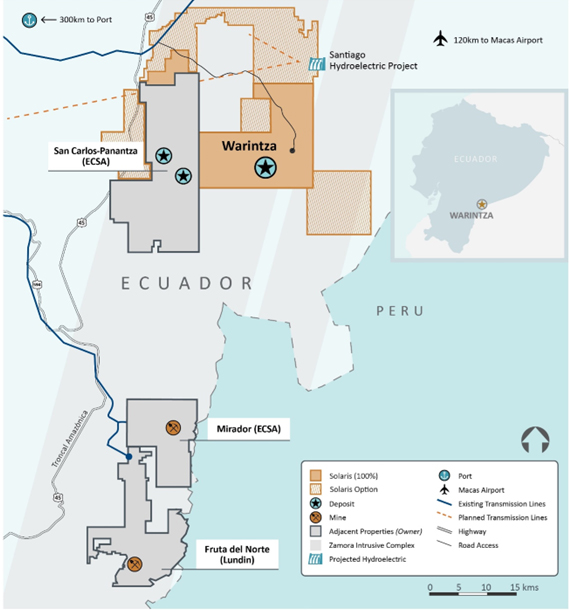
Solaris Resources (TSX:SLS)(NYSEAmerican:SLSR) has announced an In-Pit Mineral Resources Estimate (MRE) for its Warintza Project in southeastern Ecuador. The ongoing mineral resource drilling encompasses over 30,000 meters in the second half of 2024, targeting open extensions and upgrading mineral resources to support the Pre-Feasibility Study (PFS) set for the second half of 2025. Concurrent district exploration programs are also targeting complementary discoveries from an expanded portfolio of epithermal gold/silver and porphyry copper targets.
Mr. Javier Toro, Chief Operating Officer, commented in a press release: “We are very pleased to be able to release this standalone MRE which draws on our combined years of experience with open pit copper projects in the Americas. This new MRE provides a solid foundation for future updates and a robust mine plan with a low strip ratio, simple metallurgy and clean concentrates. In support of the PFS, we are doing further technical, infill and extensional drilling into open areas within and adjacent to the pit shell.”
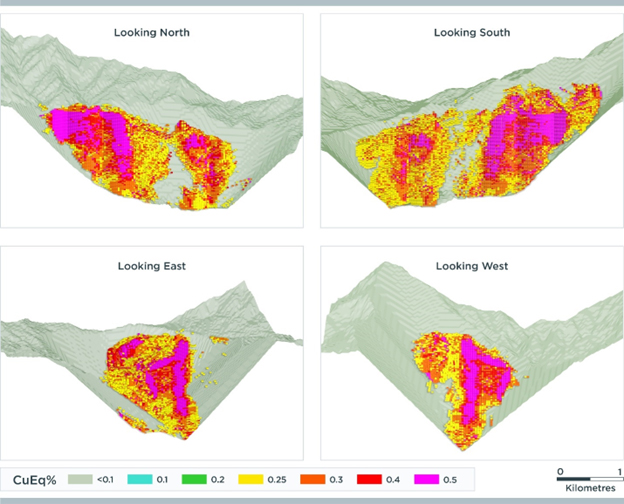
The In-Pit Mineral Resources at Warintza include 232 million tonnes (Mt) at 0.64% copper equivalent (CuEq) in the measured category and 677 Mt at 0.49% CuEq in the indicated category, resulting in a total of 909 Mt at 0.53% CuEq in measured and indicated categories. An additional 1,426 Mt at 0.37% CuEq is inferred at a base case cut-off grade of 0.25% CuEq. At a higher cut-off grade of 0.50% CuEq, the resources include 157 Mt at 0.76% CuEq in the measured category and 269 Mt at 0.69% CuEq in the indicated category, totaling 427 Mt at 0.71% CuEq in measured and indicated categories, with an additional 177 Mt at 0.62% CuEq in the inferred category.
Warintza is strategically located at a low elevation within the southeast Ecuador mining district. The site benefits from a direct highway connection to Pacific ports and access to low-cost hydroelectric grid power, with potential further development at the adjoining Santiago G8 project. The region has seen significant socioeconomic improvement from mining exploration and development over the past decade.
The 2024 drilling program involves 60,000 meters, with over 30,000 meters planned for the second half of the year. This drilling will be conducted from 140 holes on 80 platforms to provide improved coverage, targeting open lateral extensions, upgrading mineral resources, and converting remaining uncategorized blocks within the pit shell to support the PFS in 2025. Additionally, metallurgical, geotechnical, and hydrogeological drilling is ongoing.
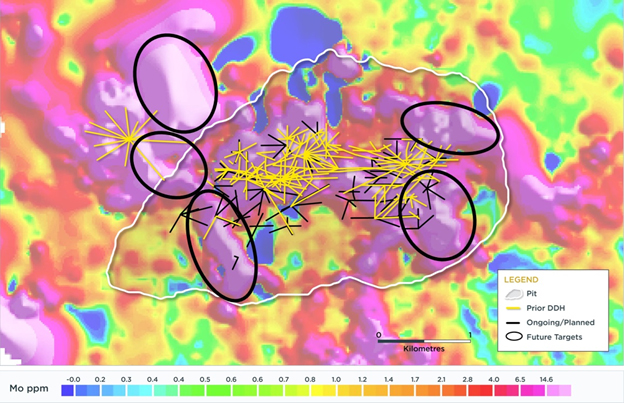
Complementary district exploration efforts are also underway. Fieldwork is targeting epithermal-style gold-silver mineralization south of Caya-Mateo, where recent sampling has returned values between 4 and 12 grams per tonne (g/t) of gold. Field crews are also focused on mapping and sampling combined geophysical and geochemical porphyry copper targets.
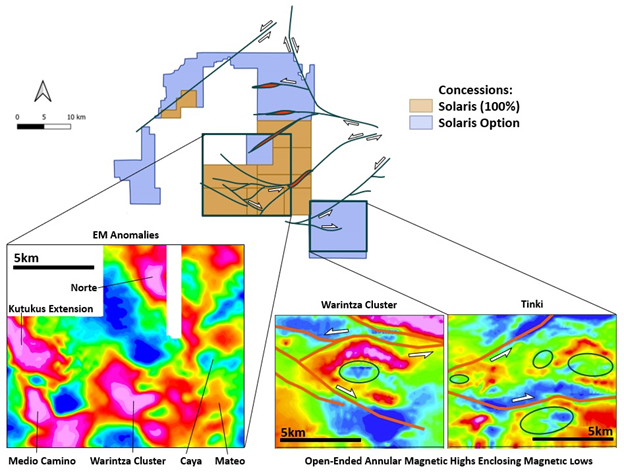
Highlights from the results are as follows:
Table 1: Warintza Mineral Resource Estimate Sensitivity
| Cut-off | Category | Tonnage | Grade | |||
| CuEq (%) | (Mt) | CuEq (%) | Cu (%) | Mo (%) | Au (g/t) | |
| 0.15% | Measured | 246 | 0.61 | 0.45 | 0.02 | 0.05 |
| Indicated | 836 | 0.44 | 0.30 | 0.02 | 0.04 | |
| M&I | 1,082 | 0.48 | 0.34 | 0.02 | 0.04 | |
| Inferred | 3,135 | 0.27 | 0.20 | 0.01 | 0.04 | |
| 0.25% (Base Case) |
Measured | 232 | 0.64 | 0.47 | 0.02 | 0.05 |
| Indicated | 677 | 0.49 | 0.34 | 0.02 | 0.04 | |
| M&I | 909 | 0.53 | 0.37 | 0.02 | 0.05 | |
| Inferred | 1,426 | 0.37 | 0.27 | 0.01 | 0.04 | |
| 0.35% | Measured | 207 | 0.68 | 0.50 | 0.03 | 0.06 |
| Indicated | 497 | 0.56 | 0.40 | 0.02 | 0.05 | |
| M&I | 704 | 0.60 | 0.43 | 0.02 | 0.05 | |
| Inferred | 640 | 0.47 | 0.34 | 0.02 | 0.05 | |
| 0.50% (Higher Grade) |
Measured | 157 | 0.76 | 0.56 | 0.03 | 0.06 |
| Indicated | 269 | 0.69 | 0.50 | 0.03 | 0.05 | |
| M&I | 427 | 0.71 | 0.52 | 0.03 | 0.06 | |
| Inferred | 177 | 0.62 | 0.45 | 0.02 | 0.07 | |
Notes to Table 1:
- The Mineral Resource Estimate was prepared in accordance with the Canadian Institute of Mining, Metallurgy and Petroleum (“CIM”) Definition Standards for Mineral Resources and Mineral Reserves, adopted by the CIM Council on May 10, 2014.
- Reasonable prospects for eventual economic extraction assume open-pit mining with conventional flotation processing and were tested using Whittle and Minesight pit optimization software with the following assumptions: metal prices of US$4.00/lb Cu, US$20.00/lb Mo, and US$1,850/oz Au; operating costs of US$1.50/t+US$0.02/t per bench mining, US$5.0/t milling, US$1.0/t G&A, and recoveries of 90% Cu, 85% Mo, and 70% Au based on preliminary metallurgical testwork.
- Metal price assumptions for copper, molybdenum and gold are based on a discount to the lesser of the 3-year trailing average (in accordance with US Securities and Exchange Commission guidance) and current spot prices for each metal.
- Mineral Resources include grade capping and dilution. Grade was interpolated by ordinary kriging populating a block model with block dimensions of 25m x 25m x 15m.
- Mineral Resources that are not Mineral Reserves do not have demonstrated economic viability.
- Copper-equivalent grade calculation for reporting assumes metal prices of US$4.00/lb Cu, US$20.00/lb Mo, and US$1,850/oz Au, and recoveries of 90% Cu, 85% Mo, and 70% Au based on preliminary metallurgical testwork and includes provisions for downstream selling costs. CuEq formula: CuEq (%) = Cu (%) + 5.604 × Mo (%) + 0.623 × Au (g/t).
- The Mineral Resources estimate was prepared by Mario E. Rossi, FAusIMM, RM-SME, Principal Geostatistician of Geosystems International Inc., who is an Independent Qualified Person under NI 43-101. The Mineral Resources estimate is at a base case of 0.25% CuEq¹ cut-off grade and other estimates at varying cut-off grades are included only to demonstrate the sensitivity of the Mineral Resources estimate and are not the QP’s estimate of the Mineral Resources for the property.
- In Mr. Rossi’s opinion, there are currently no relevant factors or legal, political, environmental, or other risks that could materially affect the potential development of Mineral Resources.
- All figures are rounded to reflect the relative accuracy of the estimate and therefore may not appear to add precisely.
- The effective date of the mineral resource estimate is July 1, 2024.
Endnotes
- Copper-equivalence grade calculation for reporting assumes metal prices of US$4.00/lb Cu, US$20.00/lb Mo, and US$1,850/oz Au, and recoveries of 90% Cu, 85% Mo, and 70% Au based on preliminary metallurgical testwork and includes provisions for downstream selling costs. CuEq formula: CuEq (%) = Cu (%) + 5.604 × Mo (%) + 0.623 × Au (g/t).
The above references an opinion and is for information purposes only. It is not intended to be investment advice. Seek a licensed professional for investment advice. The author is not an insider or shareholder of any of the companies mentioned above.

Solaris Resources Inc. (TSX: SLS)(NYSEAmerican:SLSR) recently reported drill results from its ongoing 2024 drilling program at the Warintza Project in southeastern Ecuador. The latest findings include the final assays for the upcoming updated mineral resource estimate, anticipated later this month.
- Drill hole SLSE-36, positioned at the southeasternmost platform at Warintza Southeast, revealed 148 meters of 0.72% copper equivalent (CuEq) within a larger interval of 325 meters of 0.51% CuEq from the surface. This hole remains open in strong mineralization, with the final 34 meters averaging 0.90% CuEq.
- SLS-77, located on the northern boundary of the Northeast Extension of Warintza Central, returned 108 meters of 0.70% CuEq from near the surface within a broader interval of 273 meters of 0.57% CuEq from the surface.
- SLS-78, drilled from a new platform 100 meters to the west, showed 78 meters of 0.70% CuEq within a larger interval of 114 meters of 0.65% CuEq from a depth of 72 meters before hitting low-grade granodiorite.
- SLS-79, drilled from the same platform at a steeper inclination, returned 78 meters of 0.60% CuEq from near the surface within a broader interval of 248 meters of 0.50% CuEq, ending in strong mineralization.
- SLST-03, drilled approximately 300 meters south of Warintza Central at the Trinche platform, aimed to convert undefined waste within the expected pit shell. This hole returned 312 meters of 0.62% CuEq within a larger interval of 1,028 meters of 0.30% CuEq from the surface.
- Patrimonio hole 04, consistent with holes 01 and 02, intersected a roughly 150-meter thick tabular zone of replacement mineralization dipping shallowly to the west. The source of this mineralization has not yet been found. SLSP-03, collared at a higher elevation, intersected a low-grade layer in the host lava sequence before passing into a barren, post-mineral porphyry that intruded and displaced the targeted mineralized layer. Mineral alteration zoning and geochemistry suggest that the core of the mineralized system lies to the south.
The 2024 drill program has recently expanded to 60,000 meters, comprising 140 holes from 80 platforms, providing significantly improved drilling coverage. By the end of June, 27,000 meters in 74 holes were completed. Seven rigs are targeting over 8 kilometers of drilling in July, facilitated by improved site logistics from infrastructure development.
Current drilling focuses on Patrimonio exploration, resource extension at Warintza Southeast, and infill and technical drilling to support the Prefeasibility Study (PFS) in the second half of 2025. This includes geotechnical holes that are expected to provide insights into the geology of the Caya-Mateo epithermal gold and silver target area.
Solaris Resources’ continued efforts at the Warintza Project underscore its commitment to expanding and defining the mineral resources within this promising area. The anticipated updated mineral resource estimate will likely provide further clarity on the potential and future development of the Warintza Project.
Other results include:
Table 1 – Assay Results
| Hole ID | Date Reported | From (m) | To (m) | Interval (m) | Cu (%) | Mo (%) | Au (g/t) | CuEq¹ (%) |
| SLS-79 | July 09, 2024 | 15 | 263 | 248 | 0.41 | 0.02 | 0.05 | 0.50 |
| Including | 54 | 132 | 78 | 0.52 | 0.01 | 0.05 | 0.60 | |
| SLS-78 | 72 | 186 | 114 | 0.54 | 0.02 | 0.07 | 0.65 | |
| Including | 93 | 171 | 78 | 0.58 | 0.02 | 0.08 | 0.70 | |
| SLS-77 | 0 | 273 | 273 | 0.43 | 0.02 | 0.10 | 0.57 | |
| Including | 21 | 129 | 108 | 0.56 | 0.02 | 0.10 | 0.70 | |
| SLSE-36 | 0 | 325 | 325 | 0.40 | 0.02 | 0.05 | 0.51 | |
| Including | 177 | 325 | 148 | 0.58 | 0.03 | 0.07 | 0.72 | |
| Including | 291 | 325 | 34 | 0.76 | 0.03 | 0.08 | 0.90 | |
| SLSP-04 | 30 | 204 | 174 | 0.25 | 0.02 | 0.06 | 0.35 | |
| Including | 104 | 152 | 48 | 0.30 | 0.02 | 0.08 | 0.43 | |
| SLSP-03 | 0 | 310 | 310 | 0.10 | 0.01 | 0.04 | 0.14 | |
| SLST-03 | 16 | 1044 | 1028 | 0.24 | 0.01 | 0.03 | 0.30 | |
| Including | 646 | 958 | 312 | 0.51 | 0.02 | 0.06 | 0.62 |
Notes to table: True widths are interpreted to be very close to drilled widths due to the bulk-porphyry style mineralized zones at Warintza.
Table 2 – Collar Locations
| Hole ID | Easting | Northing | Elevation (m) |
Depth (m) |
Azimuth (degrees) | Dip (degrees) |
| SLS-79 | 800197 | 9648470 | 1340 | 263 | 270 | -88 |
| SLS-78 | 800197 | 9648469 | 1340 | 220 | 270 | -65 |
| SLS-77 | 800439 | 9648493 | 1271 | 324 | 320 | -85 |
| SLSE-36 | 801529 | 9647848 | 1154 | 325 | 220 | -85 |
| SLSP-04 | 799364 | 9647811 | 1526 | 309 | 145 | -60 |
| SLSP-03 | 799349 | 9647450 | 1627 | 310 | 40 | -65 |
| SLST-03 | 800192 | 9647550 | 1592 | 1123 | 330 | -50 |
Notes to table: The coordinates are in WGS84 17S Datum.
Endnotes
- Copper-equivalence calculated as: CuEq (%) = Cu (%) + 4.0476 × Mo (%) + 0.487 × Au (g/t), utilizing metal prices of US$3.50/lb Cu, US$15.00/lb Mo, and US$1,500/oz Au, and assumes recoveries of 90% Cu, 85% Mo, and 70% Au based on preliminary metallurgical test work.
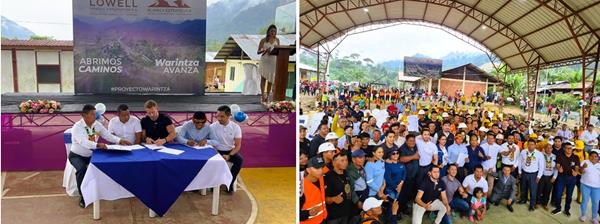
Solaris Resources (TSX:SLS)(NYSEAmerican:SLSR) has issued a statement to address false and misleading claims made by anti-mining NGOs regarding the social license of its Warintza Project in southeastern Ecuador. The company emphasizes that the Warintza Project resides on the ancestral lands of the Warints and Yawi communities, which have been officially registered and defined by the Ecuadorian government since 2002. These communities are the sole legal entities with rights and authority over these lands.
The International Labor Organization has recognized the Warints and Yawi as the sole titleholders of their ancestral lands. It has also acknowledged the legality of the Strategic Alliance, a governance structure created by Solaris to ensure community consent for the Warintza Project. This Alliance is managed by an Advisory Board of Directors comprising company representatives and democratically elected members from each community.
The Ecuadorian Ministry of Environment has conducted two consultation processes, confirming that the Warints and Yawi communities are directly influenced by the Warintza Project. These consultations have successfully facilitated the project’s progression from initial exploration to advanced exploration, following an Environmental Impact Assessment and the issuance of an Environmental License.
Solaris has obtained explicit consent for the project from the Warints and Yawi through formal community agreements. These agreements include an Impact and Benefits Agreement signed in 2020 and subsequently updated in 2022 and 2024 to reflect the project’s growth and commitment to its host communities. Notably, all surrounding communities contribute employees to the project, and many have expressed interest in partnering with Solaris regarding their own lands.
In March 2024, Solaris signed a trilateral cooperation agreement with the Interprovincial Federation of Shuar Centers (FICSH), the highest authority representing 143,000 Shuar indigenous people, and the Alliance for Entrepreneurship and Innovation of Ecuador. This agreement was signed in the presence of senior Ecuadorian government officials. Mr. David Tankamash, President of FICSH, commented at the time, “We support the Warints and Yawi communities and reject the efforts of foreign NGOs who act against the will and interest of our members.”
Solaris cautions shareholders and investors against the misinformation propagated by NGOs and other third parties. The company reiterates its commitment to transparency and encourages interested parties to seek accurate information directly from them.
Mr. Froilan Juank, President of the Yawi Shuar Center, commented: “We are the legitimate registered owners of the Ancestral Lands on which the Warintza Project resides and we have the right and have chosen, through our General Assembly, to participate in the Project through our Strategic Alliance and Impact and Benefits Agreement.”
Mr. Agustin Kayak, Trustee of the Warints Shuar Center, stated: “We and the Yawi community have decided to move forward with the Warintza Project. We are the owners of the lands where Warintza is located. We work together, the two communities of Warints and Yawi, for the well-being and development of our people.”
Mr. Emmanuel Delaune, Manager of Ecuadorean state-owned mining company, Empresa Nacional Minera, stated: “Solaris is an example to follow with its Warintza Model, which contributes to the local development of the Shuar communities through transparency, citizen participation, environmental stewardship and social development. These are the principles by which Solaris has earned the necessary credentials to operate in this area of Ecuador.”
The above references an opinion and is for information purposes only. It is not intended to be investment advice. Seek a licensed professional for investment advice. The author is not an insider or shareholder of any of the companies mentioned above.
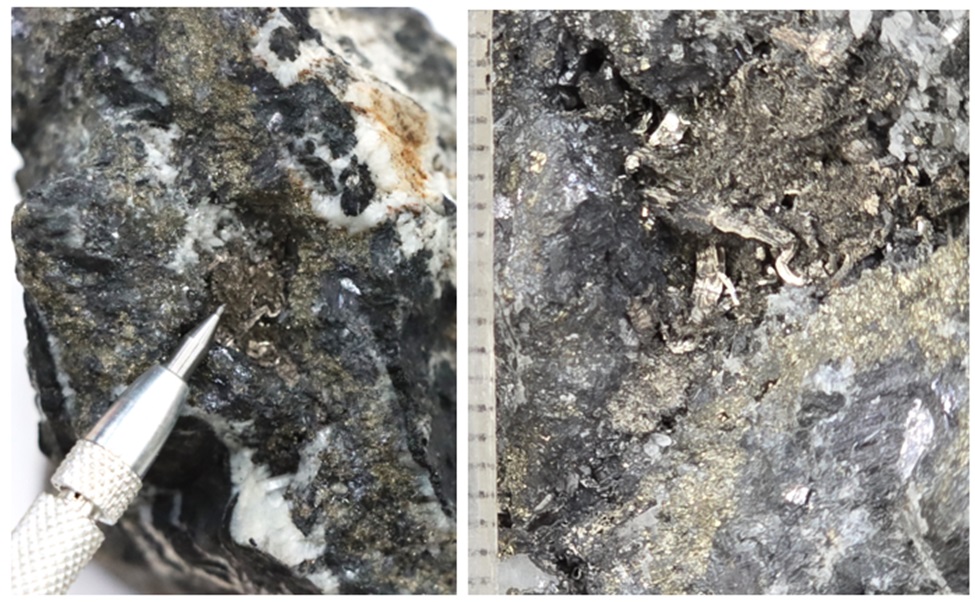
Solaris Resources (TSX:SLS) (NYSEAmerican:SLSR), has reported the discovery of significant precious metal deposits, which have substantially expanded the known area of epithermal-style mineral alteration. Initially concentrated in the Caya area, this mineralization has now been traced through the adjacent Mateo target and several kilometers further south. The expansion was identified through reconnaissance rock-chip sampling in the newly explored southern region. This sampling program yielded impressive results, with assays revealing up to 11,570 grams per tonne of silver (g/t Ag) and 12.3 grams per tonne of gold (g/t Au) across a 30-centimeter section of breccia outcrop.
These findings represent a major breakthrough in Solaris’ exploration activities at the Warintza Project. In response to these promising results, the company has intensified its fieldwork efforts to further delineate and refine potential drilling targets. Solaris anticipates commencing exploration drilling in this newly discovered area either towards the end of the third quarter or early in the fourth quarter of 2024.
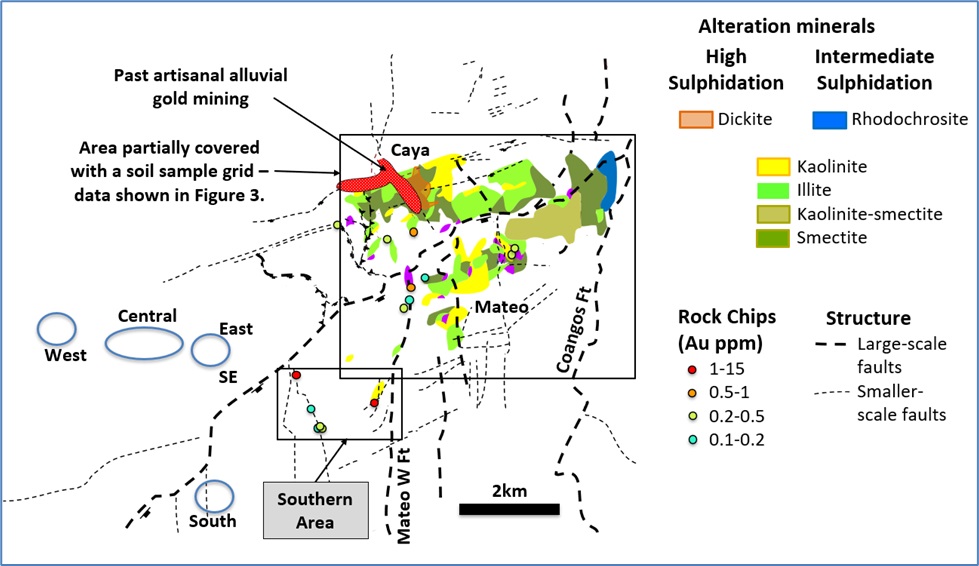
Highlights from the results are as follows:
- Ongoing regional exploration east of the Warintza cluster has expanded the area of interest for epithermal mineralization from the Caya-Mateo area several kilometres to the south (Figure 2)
- Epithermal deposits can be genetically related to porphyry systems and host rich concentrations of gold and silver, with this association well documented in southeastern Ecuador
- The newly-sampled southern area is affected by minor fault splays off a major regional fault thought to be of Jurassic age, with kilometer-scale displacement across it
- This fault separates intrusive-dominated geology to the west hosting the Warintza porphyry cluster from primarily volcanic-sedimentary geology to the east hosting epithermal mineralization
- The footwall (western side) of this fault forms the margin of an adjacent north-south pull-apart basin filled with volcanic-sedimentary sequences
- Initial reconnaissance rock-chip sampling in this area has returned values of up to 11,570 g/t Ag and 12.3 g/t Au across 30cm of breccia outcrop with exceptionally high concentrations of epithermal pathfinder elements (Figure 1)
- In addition to the above, sporadic high gold values of between 4 g/t and 9 g/t, with silver values up to 150 g/t, in rock chip sampling have also been returned, with anomalous pathfinder values consistently occurring over an area 1km by 2km
- The working exploration concept is that these samples represent high-level expressions of an intermediate sulphidation epithermal system at depth
- Detailed mapping and sampling of this area has commenced, with vectors from geochemical data and mineral alteration to be used to refine targets
- Separately, recent sampling and spectral mapping in the Caya-Mateo target area have outlined pathfinder element and alteration anomalies at the margins of overlying sandstones (Figure 3)
- Mateo requires follow-up programs to extend coverage southeast over this large target area and establish metal and alteration zonation to define its core
- A series of geotechnical holes previously planned in Caya-Mateo to support Pre-Feasibility technical studies near the epithermal target area, are expected to commence in July and are expected to provide valuable exploration data
- Initial exploration drilling at Caya, Mateo and the new southern area will be planned on the basis of the ongoing exploration work and scheduled for late Q3/24 – early Q4/24
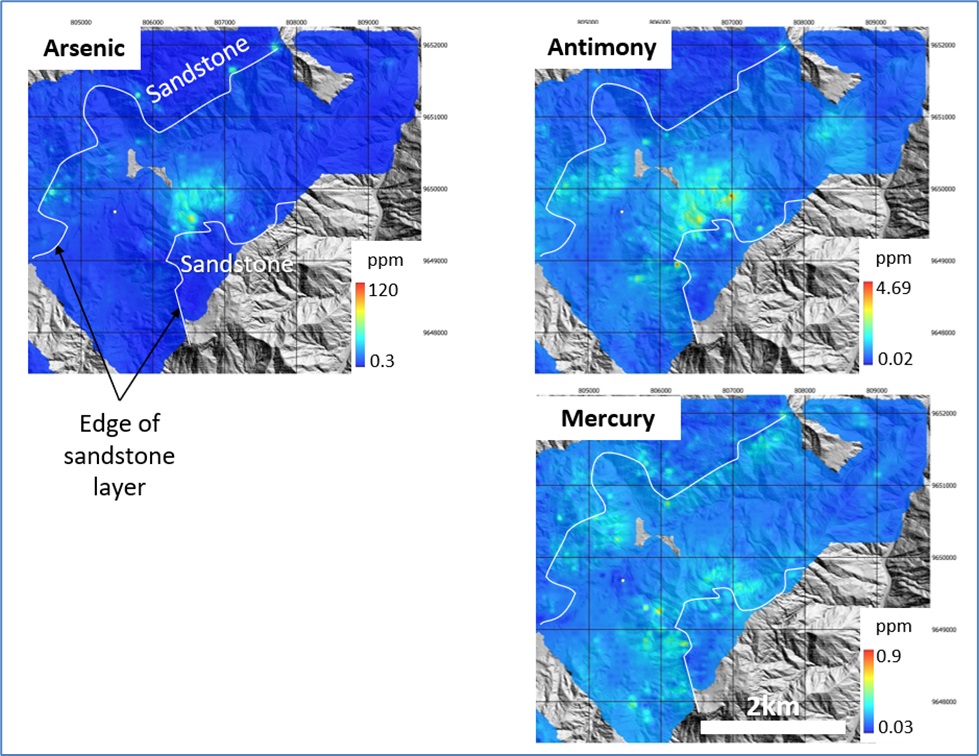
The above references an opinion and is for information purposes only. It is not intended to be investment advice. Seek a licensed professional for investment advice. The author is not an insider or shareholder of any of the companies mentioned above.

Highlights from the results are as follows:
Table 1 – Assay Results
| Hole ID | Date Reported | From (m) |
To (m) |
Interval (m) |
Cu (%) |
Mo (%) |
Au (g/t) |
CuEq¹ (%) |
| SLSE-35 | June 11, 2024 | 0 | 580 | 580 | 0.33 | 0.02 | 0.04 | 0.42 |
| Including | 0 | 189 | 189 | 0.41 | 0.02 | 0.04 | 0.50 | |
| SLSE-34 | 0 | 522 | 522 | 0.28 | 0.02 | 0.03 | 0.36 | |
| Including | 66 | 318 | 252 | 0.31 | 0.02 | 0.03 | 0.40 | |
| SLSE-33 | 6 | 550 | 544 | 0.40 | 0.02 | 0.06 | 0.50 | |
| Including | 54 | 135 | 81 | 0.60 | 0.02 | 0.07 | 0.73 |
Notes to table: True widths are interpreted to be very close to drilled widths due to the bulk-porphyry style mineralized zones at Warintza.
Table 2 – Collar Locations
| Hole ID | Easting | Northing | Elevation (m) |
Depth (m) |
Azimuth (degrees) |
Dip (degrees) |
| SLSE-35 | 801485 | 9648192 | 1129 | 580 | 90 | -80 |
| SLSE-34 | 801483 | 9648241 | 1170 | 523 | 40 | -80 |
| SLSE-33 | 801532 | 9647848 | 1154 | 550 | 50 | -85 |
Notes to table: The coordinates are in WGS84 17S Datum.
Endnotes
- Copper-equivalence calculated as: CuEq (%) = Cu (%) + 4.0476 × Mo (%) + 0.487 × Au (g/t), utilizing metal prices of US$3.50/lb Cu, US$15.00/lb Mo, and US$1,500/oz Au, and assumes recoveries of 90% Cu, 85% Mo, and 70% Au based on preliminary metallurgical test work.
The above references an opinion and is for information purposes only. It is not intended to be investment advice. Seek a licensed professional for investment advice. The author is not an insider or shareholder of any of the companies mentioned above.

The above references an opinion and is for information purposes only. It is not intended to be investment advice. Seek a licensed professional for investment advice. The author is not an insider or shareholder of any of the companies mentioned above.
Solaris Resources (TSX:SLS)(NYSEAmerican:SLSR) on April 17, 2024 reached a significant milestone for its flagship Warintza Copper Project in southeastern Ecuador. The company signed an updated Impact and Benefits Agreement (IBA) with the Shuar communities of Warints and Yawi, reflecting the continued growth and advancement of the project and reaffirming the communities’ support for responsible development. Here’s what’s behind the agreement and why it is such a major milestone for the project and the country.
The updated IBA followed the Ecuadorian government’s publication of a manual demanding prior consultation with surrounding communities for existing and new mining projects. This agreement built upon the strategic alliance formed between Solaris and the Shuar communities in August 2019, which has fostered direct and transparent dialogue regarding all project-related activities.
The Warintza deposit, discovered by David Lowell in 2000, sat dormant for two decades due to a breakdown in social acceptance from local communities. In mid-2019, Solaris undertook extensive dialogue to understand and resolve the root causes of conflict, leading to the signing of initial impact and benefits agreements in 2020 and 2022.
Key highlights of the updated IBA include explicit community consent for the Warintza Project, legally binding and ensuring the communities are informed and engaged throughout the project’s lifecycle. The agreement also includes commitments and benefits to the communities, such as impact mitigation measures, local employment and training opportunities, education and skills training programs, investments in community infrastructure, and financial benefits and compensation for the use of ancestral lands.
The IBA is governed by an elected Board of Directors that operates as a regional task force, monitoring project activities, communicating with employees, and ensuring accountability of the commitments made between the State, Community, and Company.
Solaris president and CEO Daniel Earle stated, “The signing of this updated impact and benefits agreement marks a significant milestone in the social advancement of the Warintza project through our pioneering participatory mining model for sustainable resource development.”
The timeline of agreements between Solaris and the Shuar communities includes a Memorandum of Understanding signed in January 2019, the first Impact and Benefits Agreement in September 2020, an updated agreement in March 2020 for project advancement and scope expansion, and the completion of an Environmental Impact Assessment on the project in late 2022.
The updated IBA ultimately demonstrates Solaris Resources’ commitment to responsible and inclusive mining practices, ensuring that local communities are involved and benefit from the Warintza Copper Project’s advancement.
Ms. Sonsoles García, Minister of Production, Foreign Trade, Investment and Fisheries, commented, “We value this initiative of Solaris because it strengthens positive community relations and provides for the integration of the local population in productive and sustainable activities. This allows the inclusion of a traditionally displaced population, which is a priority for us. It is also aligned with the priority we have as a National Government of territorial development and good use and management of resources.”
Mr. Daniel Earle, President & CEO, commented, “The signing of this updated IBA builds on the foundation of good faith dialogue and trust that led to the formation of a Strategic Alliance partnership with our host communities and original IBA in 2020. This marks a significant milestone in the social advancement of the Warintza Project through our pioneering Participatory Mining model for sustainable resource development.”
Mr. Agustin Kayuk, leader of the Shuar Warints Center and member of the Board of Directors of the Strategic Alliance, commented, “The signing of this updated IBA strengthens the working relationship with Solaris and brings greater opportunities for the development of our communities. The decision is supported by a permanent relationship with the Company based on mutual respect and transparent dialogue, as well as a history of positive impacts generated for our people. We look forward to continuing our relationship and playing an integral role in the advancement of the Project.”
Mr. Vicente Froilan Juank, leader of the Shuar Yawi Center and also a member of the Board of Directors of the Strategic Alliance, commented, “The updated IBA brings further support and new opportunities for our people. When Warintza advances, our communities advance with it. Since the signing of the inaugural IBA in 2020, and with the help of the Ecuadorian state, the local impacts in job creation, community infrastructure, and development of programs in health, education, skills training, entrepreneurship, and innovation have been evident in our daily lives.”
The above references an opinion and is for information purposes only. It is not intended to be investment advice. Seek a licensed professional for investment advice. The author is not an insider or shareholder of any of the companies mentioned above.
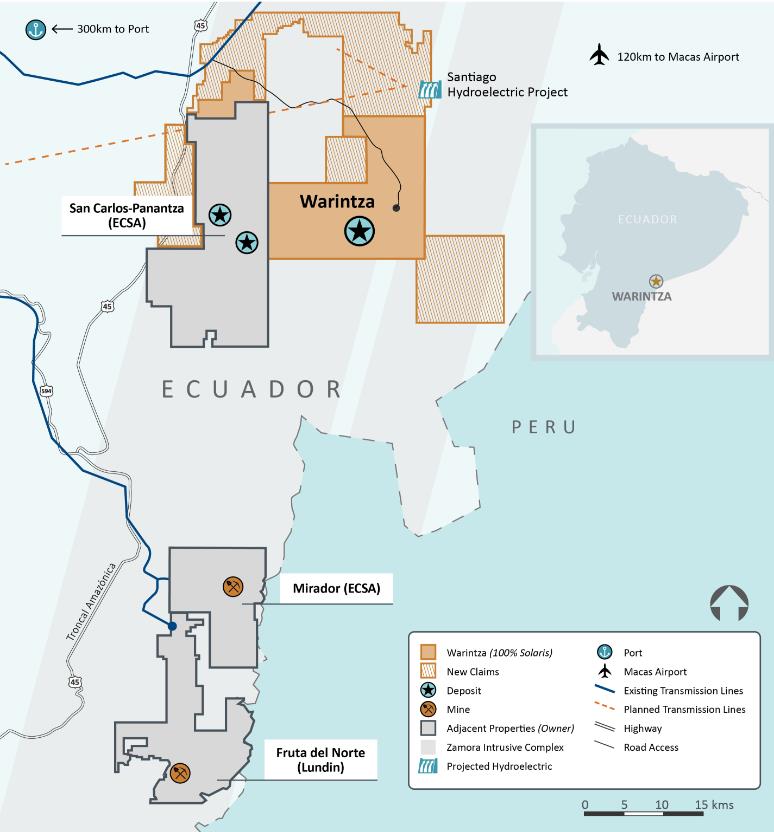
Solaris Resources (TSX:SLS) (NYSEAmerican:SLSR) has announced the termination of a previously proposed minority equity investment aimed at expanding the company’s Warintza Project in Ecuador.
The proposed investment, which would have supported both the growth of existing operations and the potential acquisition of a neighboring property, was initially announced four months ago. However, despite the anticipation of timely approval due to the minority nature of the investment and its focus on critical minerals, the transaction has not yet received the necessary regulatory clearance from Canadian authorities.
Solaris’ share price has also risen by over 35% since the initial announcement, making the terms of the investment, which included a 14% premium at the time, no longer financially advantageous for the company. This price increase, while positive in isolation, has been outpaced by similar companies in the sector due to the ongoing uncertainty surrounding the regulatory process in Canada.
The company has expressed disappointment in the delay, citing the evolved regulatory environment and heightened political sensitivity surrounding Canadian investments in foreign assets. The combination of these factors, coupled with the increasingly unattractive terms of the deal, has led Solaris to conclude that terminating the investment is the most prudent course of action to protect shareholder interests.
Despite this setback, Solaris remains financially secure, with sufficient funds to support its planned activities at the Warintza Project through 2025. This includes the ongoing exploration of a recently acquired 40,000-hectare area adjacent to the existing project site, which has already shown promising geological and geophysical similarities to the mineral-rich Warintza cluster.
Furthermore, the company has access to an additional US$40 million in funding through an existing offtake financing agreement. With these resources, Solaris intends to focus on maximizing shareholder value through a targeted strategy that prioritizes long-term growth and flexibility.
Solaris has also reiterated its commitment to the Warintza Project timeline, with an Environmental Impact Assessment expected to be delivered in the second half of 2024 and a Pre-Feasibility Study in the second half of 2025. These milestones are crucial steps in the development of the project, and Solaris remains optimistic about the potential of Warintza to become a significant source of critical minerals.
The above references an opinion and is for information purposes only. It is not intended to be investment advice. Seek a licensed professional for investment advice. The author is not an insider or shareholder of any of the companies mentioned above.
Solaris Resources Inc. (TSX:SLS)(NYSEAMERICAN:SLSR) has shared an operations update for its Warintza copper project in southeastern Ecuador. The update highlights improved productivity and cost savings under new Chief Operating Officer Javier Toro, as well as the appointment of top consultants to support the Environmental Impact Assessment (EIA) and Pre-Feasibility Study (PFS).
Mr. Javier Toro, COO, commented in a press release: “We are excited with the improvements we have made at site where our team is approaching record monthly drilling rates with significantly fewer rigs than at prior peaks. We are also pleased to be making progress in advancing studies and work programs to support the completion of the EIA in H2/24 and PFS in 2025. Warintza is a very unique project given its global scale and location in a mining district adjacent to infrastructure at low elevation.”
Drilling Ramps Up, Targeting 30km in 2024
Drilling at Warintza continues to accelerate, with six rigs completing over 5,400 meters in April, close to setting a new monthly record for the project. Solaris has budgeted a minimum of 30 kilometers of resource growth and infill drilling for 2024. Some of these holes will also provide technical data for mine design and planning to support upcoming technical studies.
The updated mineral resource estimate remains on track for completion at the end of June and release in early July. It will be completed by leading porphyry specialist Mr. Mario E. Rossi of Geosystems International Inc., who also conducted the previous estimate.
EIA Targeted for H2 2024, PFS for H2 2025
Solaris has engaged ESSAM Cía. Ltda., an Ecuadorian environmental consulting firm accredited by Ecuador’s Ministry of Environment, to finalize and submit the EIA for the Warintza exploitation phase. ESSAM has experience supporting Ecuador’s largest copper and gold mines. The EIA submission is targeted for the second half of 2024, building on over three years of baseline environmental monitoring, data collection and studies.
To support the PFS planned for the second half of 2025, Solaris has appointed leading international consulting firms:
– Ausenco Engineering for metallurgical studies, process plant design, and infrastructure assessments
– Knight Piésold Consulting for detailed technical studies and engineering designs for the pit, waste rock facility, and tailings management facility
– AMC Consultants and Minsys Mining Systems for mine scheduling and trade-off studies to optimize mine plans
Improved Site Productivity and Cost Savings
Infrastructure development, logistics optimization, and improved practices at the Warintza site have significantly increased productivity and efficiency. This has enabled a 26% reduction in drilling costs to US$229 per meter and generated substantial savings compared to the Q1 2024 budget.
Current Funding and Future Plans
As of March 31, Solaris held an unaudited cash balance of approximately US$29 million. An additional US$40 million is expected from the previously announced offtake financing package. These funds are expected to support the planned 2024 and 2025 work programs. Upon closing the strategic investment announced in January, Solaris plans to expand activities and continue the consolidation of the land package surrounding Warintza.
The above references an opinion and is for information purposes only. It is not intended to be investment advice. Seek a licensed professional for investment advice. The author is not an insider or shareholder of any of the companies mentioned above.
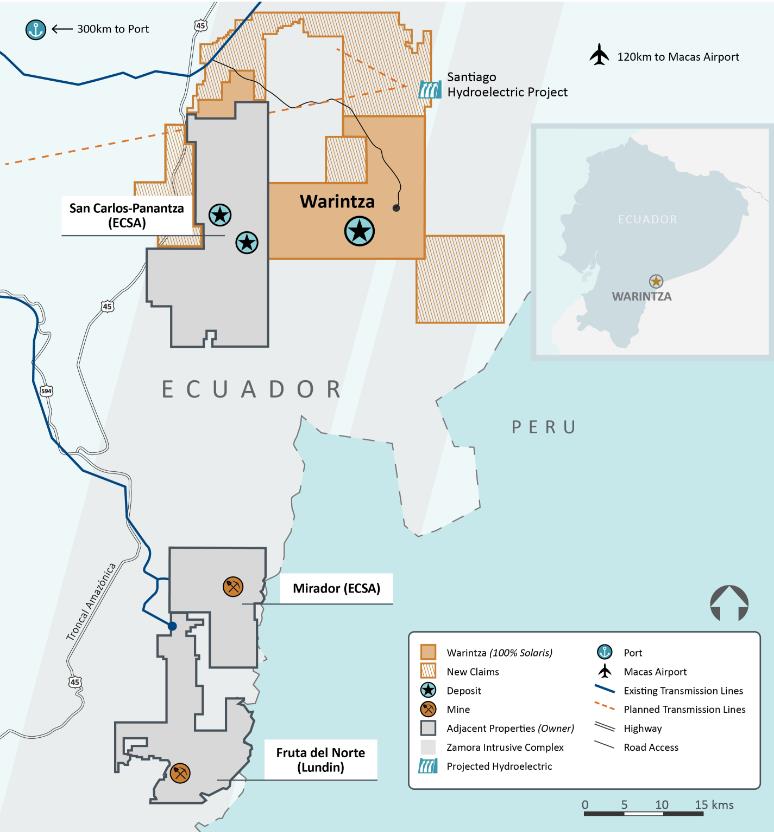
Solaris Resources (TSX: SLS)(NYSE:SLSR) has recently been awarded an option by Empresa Nacional Minera (ENAMI EP), Ecuador’s state-owned mining company, to acquire up to a 100% interest in 10 new exploration concessions. These concessions, covering approximately 40,000 hectares, are strategically located adjacent to the company’s existing Warintza Project and the San Carlos-Panantza porphyry copper-molybdenum deposits within the mineral-rich Zamora belt. This region is known for hosting some of Ecuador’s largest copper and gold mines to the south.
The newly acquired concessions are believed to hold significant potential for porphyry copper and epithermal gold deposits. This assessment is based on a comprehensive analysis of multiple layers of data, including Solaris’ extensive heliborne magnetic survey. The survey results, a portion of which is shown in Figure 2, reveal several promising indicators of mineral deposits.
Porphyry copper targets within the new concessions are characterized by open-ended annular magnetic highs surrounding magnetic lows and erosional depressions. These features are consistent with the outcropping deposits found within the Warintza porphyry cluster, suggesting a high likelihood of mineral presence.
Structural interpretation of the area supports the potential for epithermal gold deposits within dilational jogs and pull-apart basins. These geological settings are common for gold deposits in the Zamora belt and bear similarities to the Caya epithermal target, which was previously announced by Solaris in a press release dated April 23, 2024.
To expedite the exploration process, Solaris plans to deploy two field crews on the ground in May. These teams will begin conducting fieldwork to gather more detailed data and assess the mineral potential of the newly acquired concessions.
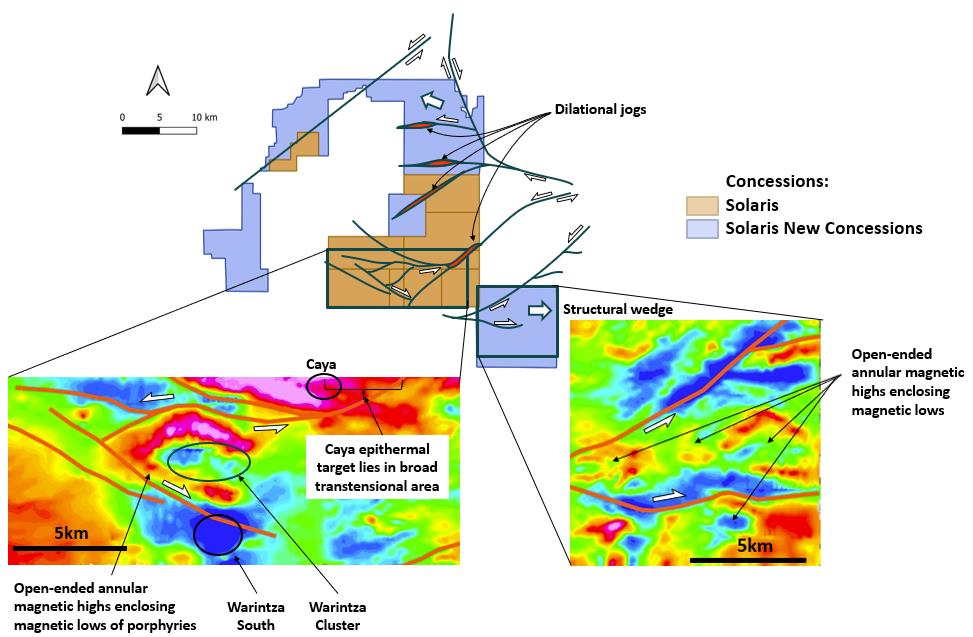
The terms of the agreement with ENAMI EP include an upfront payment of US$0.25 million, a proposed exploration program of up to US$25 million over the exploration phase, and the exclusive option for Solaris to acquire the claims from ENAMI EP at a price to be determined by independent experts. This agreement follows similar awards by ENAMI EP to subsidiaries of Barrick Gold Corporation and Hancock Prospecting Pty Ltd, which have committed to investing up to US$148 million in exploration programs in Ecuador.
Solaris’ acquisition of these new exploration concessions demonstrates the company’s commitment to expanding its presence in Ecuador’s thriving mining sector. With the promising potential for porphyry copper and epithermal gold deposits, Solaris is well-positioned to capitalize on the region’s mineral wealth and contribute to the country’s economic growth.
As fieldwork commences and more data becomes available, the mining industry and investors alike will be closely monitoring Solaris’ progress in unlocking the value of these new exploration concessions.
The above references an opinion and is for information purposes only. It is not intended to be investment advice. Seek a licensed professional for investment advice. The author is not an insider or shareholder of any of the companies mentioned above.
If you would like to receive our free newsletter via email, simply enter your email address below & click subscribe.
 Follow us on Twitter
 Become our facebook fan
CONNECT WITH US
Tweets
Tweet with hash tag #miningfeeds or @miningfeeds and your tweets will be displayed across this site.
MOST ACTIVE MINING STOCKS
Daily Gainers
 CMC Metals Ltd. CMC Metals Ltd. |
CMB.V | +900.00% |
 Eden Energy Ltd Eden Energy Ltd |
EDE.AX | +200.00% |
| GoviEx Uranium Inc. |
GXU.V | +42.86% |
| Eagle Nickel Ltd. |
ENL.AX | +41.67% |
| Citigold Corp. Limited |
CTO.AX | +33.33% |
| Mount Burgess Mining NL |
MTB.AX | +33.33% |
| Exalt Resources Limited |
ERD.AX | +31.94% |
| Casa Minerals Inc. |
CASA.V | +30.00% |
| Cariboo Rose Resources Ltd |
CRB.V | +28.57% |
| Belmont Resources Inc. |
BEA.V | +28.57% |