



The energy industry’s next chapter is being written in materials rather than megawatts. Electrification is pushing grids past capacity, data centers and industrial systems are expanding all at once, while governments are prioritizing and re-evaluating energy security policies. The intensity of focus includes increased pressure on two of today’s central inputs: copper, the wiring metal of electrification; and uranium, the fuel that underpins nuclear reliability.
For “Decade of Energy” investors, a practical checklist has emerged: where will the bottlenecks show up first, and how quickly can supply respond?
Vancouver-based venture capitalist Lucas Birdsall’s daily goal is deciphering those questions, weighing the outcomes of new policy decisions against proven commodity fundamentals. Birdsall has spent years running multiple funds in venture capital and advisory roles. But he thinks the current environment for mining and minerals is unlike anything he’s seen before.
Copper at the Center of Electrification and Digital Expansion
For Birdsall, that story starts with copper. The metal is embedded in nearly every electrification pathway: generation, transmission, distribution, electric transport, and now the rapid buildout of AI-era digital infrastructure. In a recent analysis, S&P Global projected global copper demand could rise to about 42 million metric tons per year by 2040. That’s up from roughly 28 million last year.
The analysis warns that supply could fall short by more than 10 million metric tons annually without a significant increase in new mining and recycling. The authors pointed to AI, defense, and robotics as increasingly large incremental users, on top of the energy transition’s already heavy requirements. They also pointed out that copper’s role in electrification is difficult to substitute at scale.
Why Copper Supply Is Struggling to Keep Up
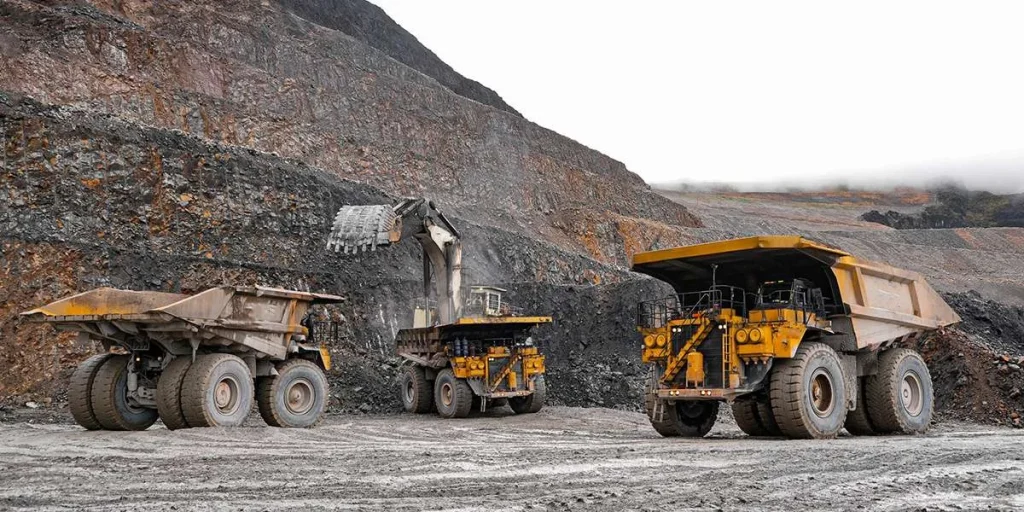
That demand picture is colliding with a familiar mining reality: lead times. Large copper projects can take a decade or more to permit, finance, and build, and many mature operations are managing declining grades or higher costs. Even when prices have surged, supply has not been able to respond quickly. The risk is that copper will become a constraint not only for clean energy targets, but for broader economic growth, because nearly every modern system that is expanding, from grids to data centers, pulls on the same metal.
This is why the market feels less like a typical commodities cycle and more like infrastructure planning. Copper is not just about how many electric vehicles are sold. It’s also about how quickly utilities can reinforce transmission, how fast developers can connect new renewable generation, and how aggressively the data-center economy can expand. The S&P report stresses that electrification is the “underlying demand factor”, and copper is absolutely central to it.
Uranium’s Fuel-Cycle Bottleneck and Geopolitical Pressure
When it comes to uranium, the constraints are less about the sheer tonnage and more about fuel-cycle security. While copper demand is being influenced in large part by the grid and the growth of the digital economy, uranium is being more directly shaped by the politics of domestic supply and safety concerns.
But uranium plans are forging ahead. In early January, the U.S. Department of Energy announced orders totaling $2.7 billion to boost domestic uranium enrichment over the next decade. The government awarded task orders to American Centrifuge Operating, General Matter, and Orano Federal Services as part of a broader effort to reduce reliance on Russian supply. The program is aimed at both conventional low-enriched uranium for existing reactors and high-assay low-enriched uranium (HALEU) for advanced reactor designs.
Enrichment capacity is the chokepoint of the policy conversation, and there are no quick and easy solutions. U.S. enrichment plans are in large part a response to Russia, which is currently the only country producing HALEU in commercial volumes. The DOE effort is positioned as a multi-year rebuild of a domestic nuclear fuel supply chain tied to U.S. legislation aimed at fully banning uranium imports from Russia by 2028. Industry coverage has also highlighted how dependent U.S. utilities have been on foreign enrichment services historically, even as policymakers emphasize reliability and secure supply for both existing plants and next-generation reactors.
Taken together, copper and uranium paint an accurate portrait of the supply-chain story in the energy industry today. Copper is the enabling material for electrification, while uranium is a reliable fuel source with major geopolitical complications. Both are increasingly shaped by the same set of forces: accelerating demand signals, long lead times, and policy intervention aimed at meeting demand safely.
Investment Discipline in a Supply-Constrained Energy Decade
Birdsall’s beliefs on investment decision-making mirror the way many investors are approaching these constraints. Writing about market volatility, Birdsall described risk assessment as a first step in any decision. He advises focusing on controllable factors, maintaining cash reserves, and resisting the temptation to react to short-term fluctuations when the long-term thesis remains intact.
That’s an ideal strategy for copper and uranium. Both have unique long-term demand arcs, but outcomes will come down to execution, the management of timelines, and the ability to withstand inevitable market swings.
For copper developers, that means proving they can navigate permitting and build infrastructure in jurisdictions where community expectations and policy combine to create a successful mining project. For uranium and nuclear-linked suppliers, it means showing that ambitious policy goals can translate into real capacity additions in conversion, enrichment, and fuel fabrication, with timelines measured in millennia, not quarters.
Copper is already experiencing periods of tightness and disruption, and uranium markets have always been shaped by contracting cycles. But what feels different as we enter 2026 is that demand drivers are multiplying exponentially. Electrification continues at pace, AI infrastructure can’t expand fast enough, and governments are actively reshaping fuel supply chains for fluctuating strategic reasons. In this environment, copper and uranium have become less like optional exposures and more like vital components of any portfolio, serving as real-time reflections of the evolution of energy.
 Follow us on Twitter
 Become our facebook fan







Comments are closed.