


A bulk freighter was carrying more than a load of fluorspar when it pushed out of the St. Lawrence, Nfld., harbour in August, since it also signalled Canada Fluorspar Inc. had become North America’s only producer of a key mineral at a time when industries in Canada and the United States are scrambling for non-Chinese supply.
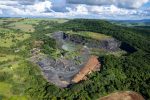
Chief executive and chair Willem Jacobs said restarting the company’s open pit mine could produce enough ore and jobs to last 30 years.
“It’s very seldom that you find industrial minerals with a mine life this long,” he said while on his way to the project site in southeast Newfoundland from South Africa this week. “The mineralogy is pretty consistent. There are other mines (worldwide) with higher grades, but they have other problems.”
The only other fluorspar mine owner in North America is Ares Strategic Mining Inc., which is in the process of restarting its Sheep Mine in Utah. Most producers shut down years ago as buyers switched to importing the mineral used to make everything from aluminum to lithium-ion batteries.
The project produces acid-grade fluorspar (acidspar), a high-purity form of the mineral. So far this year, Canada Fluorspar has processed and shipped about 8,500 tonnes to an unnamed, but well-known U.S. client.
Acidspar is an essential material for technology, industrial and defence supply chains. Global supply is tight, with China accounting for about 80 per cent of production, but it has cut exports in the past year, prompting countries such as Canada and the United States to seek domestic supplies.
Fluorspar was among 12 minerals added to the federal government’s list of critical minerals in this year’s budget, which also set aside $2 billion for a critical minerals sovereign fund to support Canadian projects. It provides equity investments, loan guarantees and offtake agreements to help develop domestic mining and processing capacity.
Jacobs said he’s looking into the supports, but so far does not believe his company qualifies. Meanwhile, he’s trying to raise $100 million.
“It will probably be a primary investor and a co-investor,” he said, adding he’d also like the government to be on board. “The reaction is slow, but I’m confident we can work something out. Government moves more slowly than the private sector, but that’s the correct approach because they don’t want to replace private money.”
The St. Lawrence mine went into receivership in 2022, leaving a trail of unpaid bills. Jacobs bought the assets in 2023, some 30-plus years after the former Barrick Mining Corp. chief operating officer became interested in fluorspar back, reviewing global supplies in South Africa, China and elsewhere.
In June that year, the court approved the $25‑million sale of the company’s assets to Fluorspar Holdings Pte. Ltd., a subsidiary of South African-based African Minerals Exploration & Development Funds Sicar SCA. Jacobs is now the majority owner.
He said there are now about 270 people employed on the project, but there is significant work to be done before production can reach full scale.
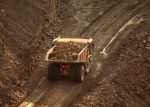
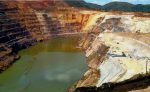
“We’re busy mining and there’s a lot of waste that has to be removed,” he said. “The previous owners mined themselves into a corner.”
The old owners took shortcuts to get the best ore out quickly, leaving less valuable material that must be cleaned before proper mining can be resumed, Jacobs said, adding the mine’s geology is “world class.”
Canada Fluorspar is spending about $4 million a month to get enough ore ready for its plant. The plan is to reach full production of about 180,000 tonnes of acidspar concentrate in 2027. He’s projecting production of more than 100,000 tonnes in 2026.
The U.S. is expected to be the primary market for the company’s fluorspar given its proximity, he said. Other potential markets include Europe, India and Japan.
Jacobs has more than 30 years of experience in global mining and industrial minerals. Before Barrick, he held leadership roles at Randgold Resources Ltd. and Imerys SA, and has led large-scale operations across Africa and the Middle East, overseeing complex projects involving exploration, mine development and operational restructuring.
But his job now is to manage and revive the St. Lawrence mine, and he believes his vast experience and technical know-how are things the previous owner lacked.
“Your on-site technical capabilities have to be very substantial. To process fluorspar, you need to get all of your recovery; otherwise, you’re not going to make money,” he said. “If you want to look at where things went wrong, it was the absolute lack of technical knowledge. It’s atrocious the technical decisions that were made.”
Upgrades have been made so that all ships will be loaded at the site’s port rather than being trucked to another port. Jacobs said he hopes to add an underground mine in a few years.
The fluorspar mine is hugely important for St. Lawrence since it once employed around 250 people. Jacobs hopes there will be jobs for 300.
“I can tell you now it’s going to be the basis of a global industry,” he said. “First of all, it’s important for Newfoundland and this town. Ninety per cent of the employees come from the town and the Burin Peninsula.”
As far as he’s concerned, there are only two industries that can turn countries around, and that’s mining and oil and gas.
“They build hospitals, they built roads, they have enormous economic engines,” he said.
-
Newfoundland and Labrador sees gold and mining boom amid exploration surge
-
These 12 critical minerals just got a tax credit boost that could spark a new wave of exploration
• Email: arankin@postmedia.com

 Follow us on Twitter
 Become our facebook fan




Comments are closed.