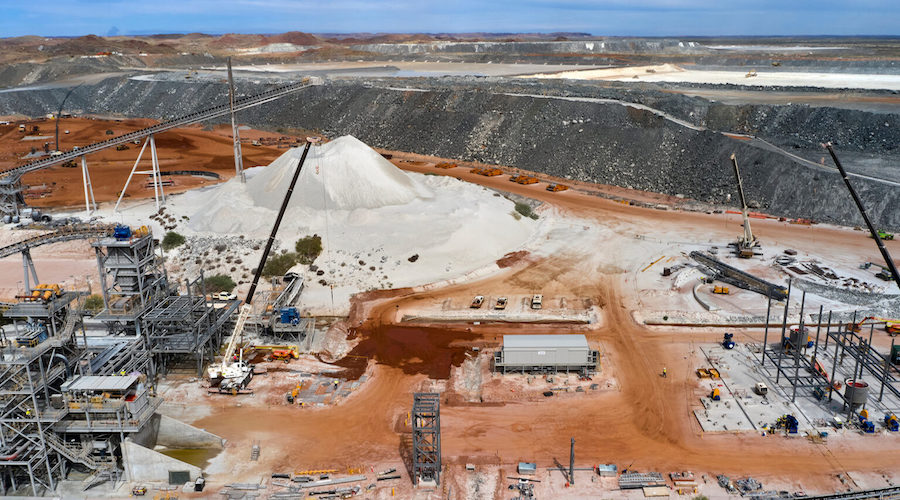
Australia’s Pilbara Minerals (ASX: PLS) is warning that the country’s lithium industry is losing ground to faster-moving competitors, particularly Brazil, where the miner says it has found operations to be smoother and more cost-effective than at home.
Speaking at the WA Mining Club in Perth on Thursday, chief executive officer Dale Henderson said that while Brazil’s Minas Gerais state shares many similarities with Western Australia, the regulatory and operational environment there has so far proven more favorable for mining companies. “We would join the chorus of many others who say it’s got more difficult [in Australia],” Henderson told attendees. “This state, and Australia at large, has been leading the world in resources, but we can lose that mantle.”
Pilbara Minerals completed a A$560 million ($363 million) acquisition earlier this year to secure its foothold in Brazil, part of a broader strategy to diversify geographically and strengthen supply chain resilience. Henderson said that after only a few months on the ground, the company’s experience in Brazil underscored the competitive pressures facing Australian miners.
Henderson cautioned that while Australia remains a dominant player in lithium production, other jurisdictions are growing faster. “Others are growing faster. We’re regressing relative to the rest,” he said. “If we don’t have a successful upstream, we certainly can’t have successful downstream – one leads to the other.” The comments highlight mounting concerns within Australia’s mining sector that regulatory delays, high energy costs, and slow infrastructure development are eroding the country’s global advantage in critical minerals. Henderson urged the government to refocus policy on competitiveness, emphasizing that shared infrastructure and energy availability should be top priorities.
Henderson pointed to the Lumsden Point port development in Western Australia as a model of effective government intervention. “That’s a no-brainer,” he said. “Then after that, it is power infrastructure. Those would be really the two key areas.”
Energy costs were singled out as a growing obstacle for lithium producers. Henderson noted that at Pilbara’s Salinas project in Brazil, electricity is expected to cost between A4–5 cents per kilowatt hour, less than half the A10–20c/kWh currently paid in the Pilbara. “Australia should have low-cost power. We’ve got the space. We’ve got the solar, wind – you name it,” he said. “That’s a key place for government to play – to leverage the incredible strengths we’ve got to bring that cost of power down.”
Market Volatility and Industry Outlook
The Pilbara chief also reflected on the challenges of operating in a still-maturing lithium market characterized by extreme price swings. Pilbara Minerals has endured wide fluctuations in spodumene prices, from lows of around $400 per tonne in 2019 to over $8,000/t during the 2022 boom. Henderson said such volatility was typical of an industry still developing mechanisms for reliable price discovery.
“It explains some of the outsized responses you can get from news or gossip, but ultimately, I think that will get remedied as the industry grows,” he said.
Despite short-term instability, Henderson maintained a positive long-term view. He said the company sees recent price gains as a sign of recovery, with spodumene rising above $900/t last month, up from around $600/t in July. “Our view remains that there’s a structural deficit to emerge, ultimately, given the strong growth, the strong growth drivers and the absence of supply chain investment,” he said. “The big question everyone is wrestling with is when?”
Brazil as a Competitive Benchmark
The contrast between conditions in Brazil and Australia appears to be reinforcing Pilbara Minerals’ strategy to internationalize its operations. Minas Gerais, a state long associated with iron ore and industrial minerals, is emerging as a new hub for lithium development, supported by improving infrastructure and a growing domestic battery materials industry.
For Pilbara, which has built its reputation as one of the world’s leading spodumene producers, Brazil offers not only a hedge against market and policy risks at home but also a testing ground for how quickly other nations can build competitive supply chains.
Henderson’s comments underscore a growing sentiment in Australia’s mining industry: that the nation’s leadership in critical minerals is not guaranteed. With rising costs, slower permitting, and intensifying global competition, miners are increasingly looking abroad for growth—and Brazil, it seems, is quickly becoming one of the preferred destinations.
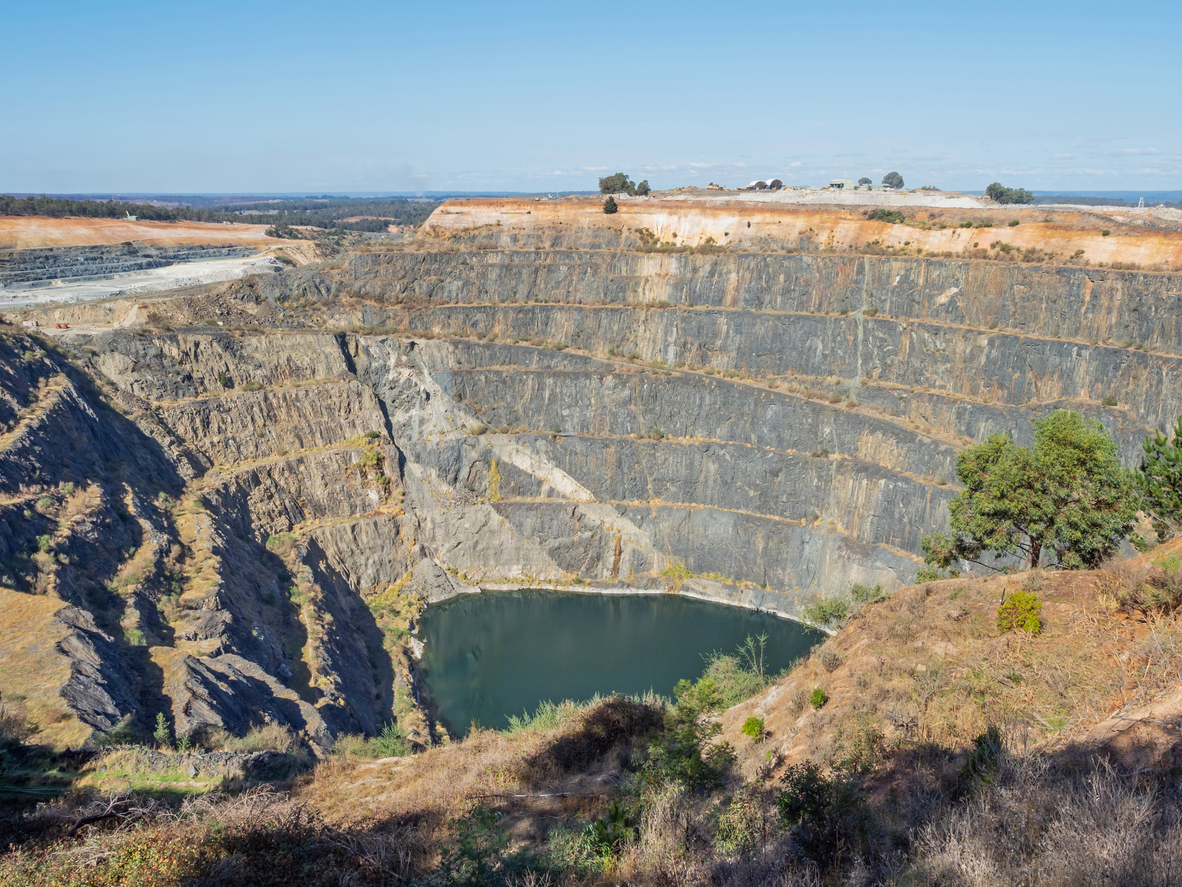
Australian lithium-focused miner Pilbara Minerals (ASX:PLS) has announced it will begin paying dividends to shareholders. The company made the announcement as it continues to benefit from favourable market conditions for lithium. It is targeting a payout ratio of 20%-30% of free cash flow, and will apply the dividend to the current 2023 financial year. As of September 30, the company has a cash balance of A$1.375 billion ($929 million), a strong position for Pilbara, allowing it to implement the dividend for the first time since its inception 15 years ago.
The dynamics in the lithium market are pushing prices higher for a few important reasons. Lithium is notoriously difficult to mine, with high costs and a low production rate. This means that the market is currently dominated by a small number of producers. A small number of companies are reportedly responsible for the vast majority of production, allowing them to control output. Many of the largest lithium deposits are 100%-owned by a handful of companies, making it difficult for the industry to begin new exploration.
The market for lithium is also growing rapidly, with an estimated compound annual growth rate of 9% over the next five years. This is due to a number of factors, including the development of green energy and the increasing demand for batteries for electronic devices.
Technology is changing rapidly, and new applications of lithium are being developed all the time. This is likely to drive the demand for lithium even further in the future. Lithium is used in many important products, such as smartphones, laptops, and electric vehicles, and it is important that the supply is able to meet the demand.
As the electrification of the global economy continues, more lithium will be needed for the lithium-ion batteries used in these devices. This is good news for investors in companies like Pilbara Minerals, as it means that the demand for the mineral is likely to remain high for decades.
Spodumene, used in the manufacturing of high-purity lithium-ion batteries for electric vehicles and electronics, is the key material for the future of the lithium industry.
Pilbara Minerals reported production of 377,902 dry metric tonnes (dmt) of spodumene concentrate in fiscal 2022. That market a 34% production boost over 2021, and the company forecasted between 540-580,000 dmt of production in fiscal 2023.
Companies are also trying to speed up their plans for mining lithium to reduce dependency on China for EV battery raw materials. The fragility of the supply chain and the potential for geopolitical disruptions means that there is significant risk in investing in lithium production, but rising prices continue to motivate lithium miners to invest in new exploration and projects.
Despite these risks, there are a number of companies that are still willing to invest in the lithium industry. Pilbara Minerals is one of these companies, and its announcement that it will begin paying dividends is a positive sign.
The above references an opinion and is for information purposes only. It is not intended to be investment advice. Seek a licensed professional for investment advice. The author is not an insider or shareholder of any of the companies mentioned above.
If you would like to receive our free newsletter via email, simply enter your email address below & click subscribe.
 Follow us on Twitter
 Become our facebook fan
CONNECT WITH US
Tweets
Tweet with hash tag #miningfeeds or @miningfeeds and your tweets will be displayed across this site.
MOST ACTIVE MINING STOCKS
Daily Gainers
 Wallbridge Mining Co. Ltd. Wallbridge Mining Co. Ltd. |
WM.TO | +1,900.00% |
| Galore Resources Inc. |
GRI.V | +100.00% |
| Midlands Minerals Corp. |
MEX.V | +66.88% |
 Redstone Resources Ltd Redstone Resources Ltd |
RDS.AX | +50.00% |
| GoviEx Uranium Inc. |
GXU.V | +42.86% |
| Mount Burgess Mining NL |
MTB.AX | +33.33% |
| Casa Minerals Inc. |
CASA.V | +30.00% |
| Castle Resources Inc. |
CRI.V | +25.00% |
| Poseidon Nickel Limited |
POS.AX | +25.00% |
 Lucara Diamond Corp. Lucara Diamond Corp. |
LUCRF | +21.25% |